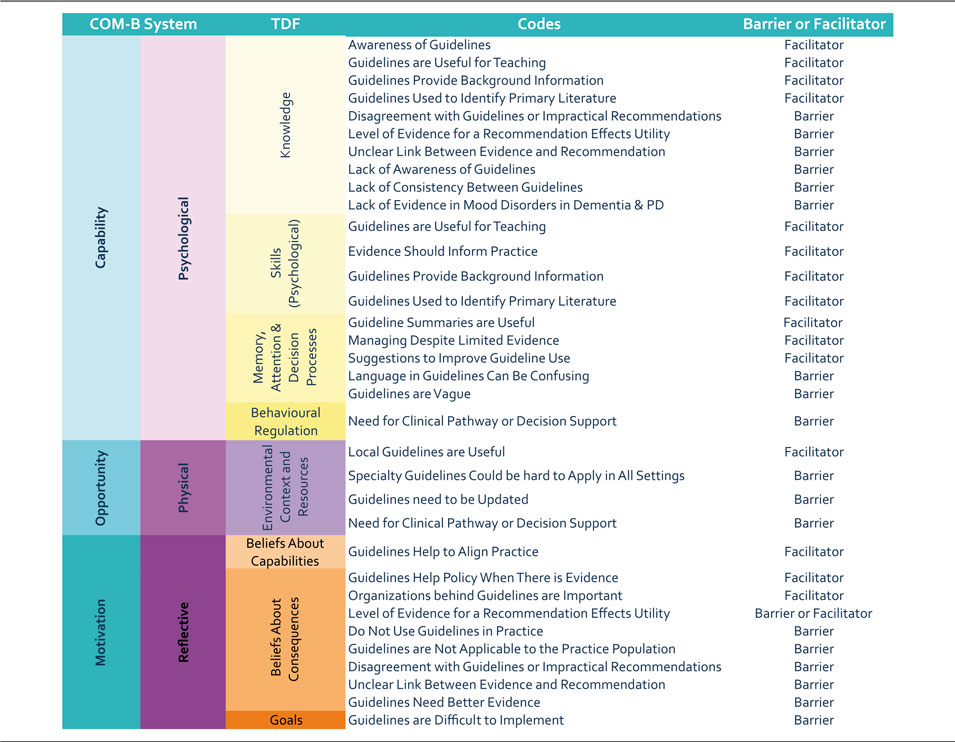
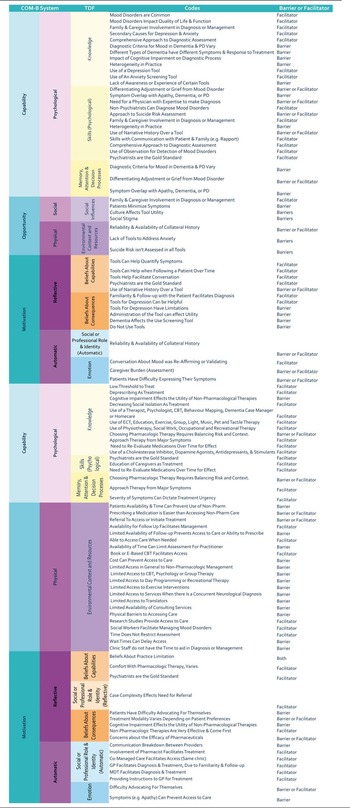
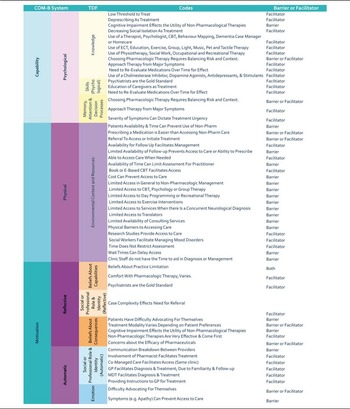
Depression and anxiety are among the most common co-morbidities for those with Parkinson’s disease (PD) and dementia (Dissanayaka et al., Reference Dissanayaka, Sellbach, Matheson, O’Sullivan, Silburn, Byrne and Mellick2010; Knapskog, Barca, & Engedal, Reference Knapskog, Barca and Engedal2011; Marsh, Reference Marsh2013; Pachana et al., Reference Pachana, Egan, Laidlaw, Dissanayaka, Byrne, Brockman and Starkstein2013; Riley, Burgener, & Buckwalter, Reference Riley, Burgener and Buckwalter2014; Schrag & Leentjens, Reference Schrag and Leentjens2012; Calleo et al., Reference Calleo, Kunik, Reid, Kraus-Schuman, Paukert, Regev and Stanley2011). Approximately 35 per cent of those with PD experience clinically relevant depressive symptoms (Reijnders, Ehrt, Weber, Aarsland, & Leentjens, Reference Reijnders, Ehrt, Weber, Aarsland and Leentjens2008). The point prevalence of anxiety in PD is estimated at 31 per cent, whereas anxiety symptoms occur in up to 75 per cent of dementia patients (Broen, Narayen, Kuijf, Dissanayaka, & Leentjens, Reference Broen, Narayen, Kuijf, Dissanayaka and Leentjens2016; Calleo et al., Reference Calleo, Kunik, Reid, Kraus-Schuman, Paukert, Regev and Stanley2011). Depression in dementia has an odds ratio (OR) of 2.64 (95% CI 2.43–2.86) (Snowden et al., Reference Snowden, Atkins, Steinman, Bell, Bryant, Copeland and Fitzpatrick2014).
Co-morbid mood disorders are associated with poor quality of life and physical and cognitive impairment (Carson, Ringbauer, MacKenzie, Warlow, & Sharpe, Reference Carson, Ringbauer, MacKenzie, Warlow and Sharpe2000; Knapskog, Barca, & Engedal, Reference Knapskog, Barca and Engedal2011; Marsh, Reference Marsh2013; Modrego & Ferrandez, Reference Modrego and Ferrandez2004; Ownby, Crocco, Acevedo, John, & Loewenstein, Reference Ownby, Crocco, Acevedo, John and Loewenstein2006; Schiffer, Reference Schiffer2009). Despite this how common and detrimental depression is, depression and anxiety are under-diagnosed and under-treated in these populations, representing a significant knowledge-to-action gap (Knapskog et al., Reference Knapskog, Barca and Engedal2011; Orgeta, Qazi, Spector, & Orrell, Reference Orgeta, Qazi, Spector and Orrell2015; Pachana et al., Reference Pachana, Egan, Laidlaw, Dissanayaka, Byrne, Brockman and Starkstein2013; Schrag et al., Reference Schrag, Barone, Brown, Leentjens, McDonald, Starkstein and Goetz2007). For example, only 20 per cent of patients with PD patients diagnosed with depression receive treatment (Frisina, Borod, Foldi, & Tenenbaum, Reference Frisina, Borod, Foldi and Tenenbaum2008).
Clinical practice guidelines (CPGs) should enable health care professionals to provide better care (Gagliardi, Brouwers, Palda, Lemieux-Charles, & Grimshaw, Reference Gagliardi, Brouwers, Palda, Lemieux-Charles and Grimshaw2011; Institute of Medicine, 2011). However, despite the availability of CPGs, they remain underused clinically (Gagliardi et al., Reference Gagliardi, Brouwers, Palda, Lemieux-Charles and Grimshaw2011).
Theoretical frameworks that explore behaviour help researchers understand possible targets for change (Cane, O’Connor, & Michie, Reference Cane, O’Connor and Michie2012; Michie et al., Reference Michie, Johnston, Abraham, Lawton, Parker and Walker2005; Michie, van Stralen, & West, Reference Michie, van Stralen and West2011). The theoretical domains framework (TDF) represents a comprehensive behaviour framework, which was synthesized from over 100 existing theories to 14 domains each representing different aspects of behaviours (Cane et al., Reference Cane, O’Connor and Michie2012; Michie et al., Reference Michie, Johnston, Abraham, Lawton, Parker and Walker2005). The behaviour change wheel (BCW) was built on this to help facilitate the development of implementation tools (Cane et al., Reference Cane, O’Connor and Michie2012; Michie et al., Reference Michie, Johnston, Abraham, Lawton, Parker and Walker2005; Michie et al., Reference Michie, van Stralen and West2011). The BCW comprises three behaviour categories – capability, opportunity, and motivation – and is called the COM-B system (Michie et al., Reference Michie, van Stralen and West2011).
In a preceding systematic review, our group synthesized high-quality CPGs for depression or anxiety in dementia or PD (Goodarzi, Mele, et al., Reference Goodarzi, Mele, Guo, Hanson, Jette, Patten and Holroyd-Leduc2016). This earlier systematic review provides a detailed understanding of the current evidence for the management of these patients and the quality of existing CPGs, but does not explain why there may be a knowledge-to-action gap.
Our primary objective in this study was to understand the barriers and facilitators associated with the implementation of CPGs for depression or anxiety in patients with dementia and PD. This was achieved through the use of a rigorous framework (TDF and BCW) to explore behaviours associated with guideline use. Understanding guideline use for these patients can contribute to the development of an implementation strategy targeting improved care of depression or anxiety disorders as experienced by patients with PD and/or dementia.
Methods
Design and Ethics
This was a qualitative focus group and interview study in which we applied the TDF (Cane et al., Reference Cane, O’Connor and Michie2012; Michie et al., Reference Michie, Johnston, Abraham, Lawton, Parker and Walker2005) to examine the understanding of CPG recommendations for depression or anxiety in dementia or PD and the barriers/facilitators to their use by knowledge/end users. Local ethics approval was received through the Conjoint Health Research Ethics Board (CHREB-14-449). All participants and researchers signed informed consent and confidentiality agreements.
Participants, Setting, and Context
Participants were divided into specialty and disease-specific groups in order to understand barriers to care specifically for each end-user group. The groups were as follows: family practitioners, geriatricians, geriatric psychiatrists, cognitive neurology (including neurologists and psychiatrists), movement disorders (including neurologists and psychiatrists), and participants with PD, dementia, and their family caregivers. All participants spoke English and were able to consent.
We recruited physicians through convenience and snowball sampling. The sampling frame included physicians from acute care sites, specialty and non-specialty clinics, and assisted living and long-term care facilities in Calgary. Physicians were included if they had experience with at least one patient with PD or dementia and co-morbid depression or anxiety. Physicians were contacted via email from existing department lists and local contacts.
Patients were recruited using a convenience sample across the movement disorder, and cognitive and geriatric medicine specialty clinics. This was purposeful, to ensure the recruitment from clinics with high proportions of patients that have the primary neurologic disorders. We achieved this by placing posters in specialty clinics and contacting patients from prior studies who consented to being contacted for future study. Patients and caregivers were included if they had a self-reported diagnosis of PD or dementia and a concurrent mood disorder confirmed by a specialist. We aimed to recruit caregivers of persons with advanced disease to help ensure we captured potential barriers across the disease continuum.
Data Collection and Handling
The interview guides (see Appendices 1 and 2 in the supplementary materials) were aimed at understanding the perspectives of the knowledge/end users regarding the barriers and facilitators to the use of these CPGs and were also informed by the preceding systematic review (Goodarzi, Mele, et al., Reference Goodarzi, Mele, Guo, Hanson, Jette, Patten and Holroyd-Leduc2016) and TDF (Cane et al., Reference Cane, O’Connor and Michie2012; Michie et al., Reference Michie, Johnston, Abraham, Lawton, Parker and Walker2005). The initial guides were reviewed by all members of the research team and approved by the CHREB. A few minor improvements to the wording of questions were made after the initial focus groups in order to improve the questions’ clarity. Participants had a summary of the review findings beforehand; however, we did not restrict discussion to the summary findings.
All groups were conducted by the facilitator (ZG), in conjunction with a co-facilitator (JHL or HH). Interviews were conducted by one facilitator (ZG). All information was audio-recorded and transcribed verbatim, and the co-facilitator recorded field notes. These notes provided the context of the discussion and served to bracket researcher bias and expectations (Tufford & Newman Reference Tufford and Newman2010). At the end of each group session, the facilitator provided a brief summary to the group as a concurrent member check (see Sandelowski, M., “Member Check”, 2008, p. 501). Following the focus groups, the facilitator (ZG) documented debriefing notes, which were reviewed by the co-facilitator (JHL or HH). All transcripts were anonymized and verified by ZG with the recordings and field notes. The data were analysed with NVivo for Mac software; QSR International, Version 11.4.0, 2016.
Analysis
We used a framework approach, which is a content analysis method that involves summarizing and classifying data within a thematic framework (Green & Thorogood, Reference Green and Thorogood2014). A key component of this analysis was the comparative capability across cases and within cases (Gale, Heath, Cameron, Rashid, & Redwood, Reference Gale, Heath, Cameron, Rashid and Redwood2013).
This analysis comprised the stages of familiarization with the data, theme identification, indexing, charting, mapping, and interpretation (Gale et al., Reference Gale, Heath, Cameron, Rashid and Redwood2013; Pope, Ziebland, & Mays, Reference Pope, Ziebland and Mays2000). This process was completed by three researchers (ZG, HH, JHL). Familiarization and identification were completed by ZG, with JHL and HH performing validation coding on 20 per cent of the first half of transcripts (Gale et al., Reference Gale, Heath, Cameron, Rashid and Redwood2013). Due to a high correlation among all researchers in initial coding, no further validation coding was undertaken. Indexing according to the TDF (Cane et al., Reference Cane, O’Connor and Michie2012), charting, mapping, and interpretation was completed by ZG and verified by JHL and HH resulting in a matrix of codes as compared to the TDF and COM-B (see Table e-2 in the supplementary materials). The team then reviewed and discussed the meaning and context of these codes and how they should be categorized (charting), and discrepancies were resolved by discussion (Gale et al., Reference Gale, Heath, Cameron, Rashid and Redwood2013; Pope et al., Reference Pope, Ziebland and Mays2000). All codes were included (Gale et al., Reference Gale, Heath, Cameron, Rashid and Redwood2013). ZG assigned codes to be either a barrier or facilitator, which was then verified by JHL and HH. The reported practices of participants were compared to the guideline recommendations to understand how physician practices align with CPGs (see Table e-1 in the supplementary materials).
Results
Participants
A total of 5 focus groups and 5 interviews were completed, including 40 participants (21 female participants). Interviews took place when participants were unable to attend focus groups. Focus groups were conducted with six different stakeholder groups: geriatricians (n = 6 participants), cognitive neurologyFootnote 1 (n = 8), family practitionersFootnote 2 (n = 6), geriatric psychiatrists (n = 8), and PD patients/caregivers (n = 7). We were unable to recruit any patients or caregivers who met the eligibility criteria for dementia. We conducted interviews for members of the movement disorders clinics, including associated psychiatrists and neurologists.
All participants were recruited from Calgary. Calgary is a city of over 1 million (City of Calgary, 2014), and the clinics are regional referral centers for Southern Alberta. Our Canadian health care system is a blend of insured and non-insured services for patients, where physicians are either salaried or on fee for service. Physicians work in an urban environment across four acute-care sites, outpatient clinics, and assisted living and long-term care institutions. Experience among the physicians varied from junior (< 1 year) to experienced (> 30 years), both as consultants and as attending physicians.
All participants in the PD group were recruited from the movement disorders clinic. Ages ranged between 43 and 76, and these individuals described having primarily depression.
Clinical Guidelines: Barriers and Facilitators
In this section, we explain the barriers and facilitators that affect the use of clinical guidelines. Words/phrases in parentheses (e.g., knowledge; beliefs about consequences) refer to the 14 domains in the TDF (see Table 1).
Barriers and facilitators to the use of guidelines: Using the theoretical domain and behaviour change wheel frameworks
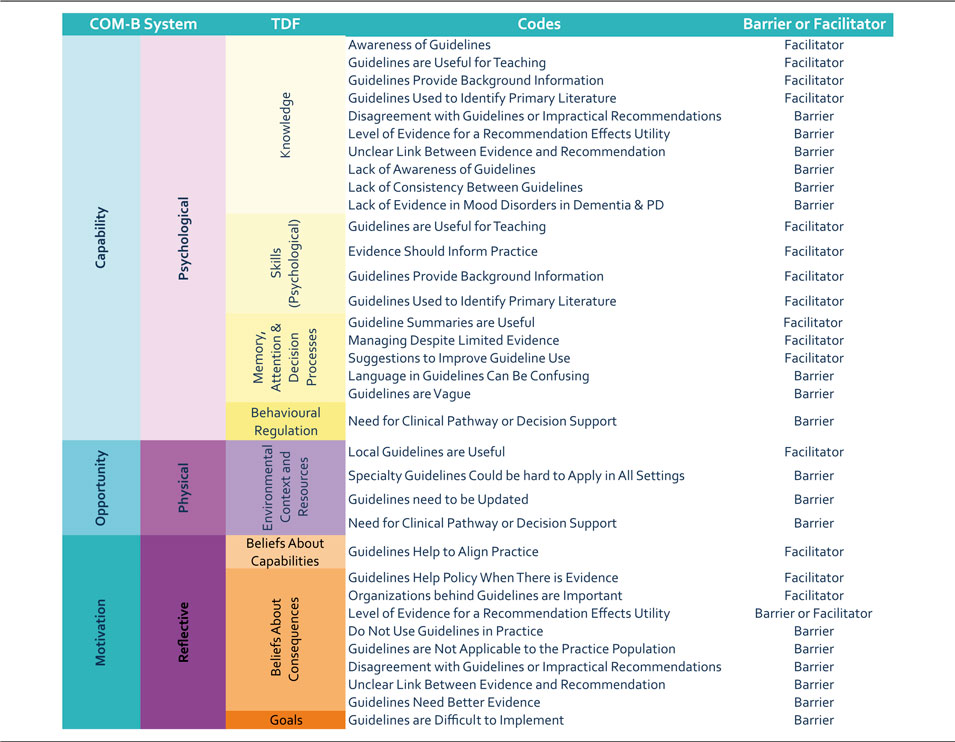
We compared the 24 extracted guideline recommendations from the preceding systematic review (Goodarzi, Mele, et al., Reference Goodarzi, Mele, Guo, Hanson, Jette, Patten and Holroyd-Leduc2016) for depression or anxiety in dementia or PD to the reported clinical behaviours and participant views (see Supplementary Table e-1). All physician groups noted awareness of some of the available CPGs; however, some participants noted that they were unaware of the breadth of CPGs in this area (knowledge).Footnote 3 Several physicians reported not using CPGs in this area for a variety of reasons (beliefs about consequences). Barriers to CPG use included a lack of evidence (knowledge), lack of consistency between CPGs (knowledge), disagreement with or clinically impractical recommendations (knowledge; beliefs about consequences), and out-of-date CPGs (environmental context and resources).
I don’t follow a specific set of guidelines because of what seems to be a real paucity of data … (Psychiatry Participant – 1)
… And the problem is there’s multiple guidelines so if you have a classic problem in Canada where they put up guidelines, the AAN [American Academy of Neurology] hasn’t put out a guideline for 10 even longer yet still their guidelines are a little bit, I think, more accurate than the Canadian guidelines. (Cognitive Neurology – 4)
… Sometimes they can suggest certain medications, that I have found clinically not to work. So you have to kind of tailor your experience based on that. And your own experience. (Movement Disorders – 1)
I know there is some evidence for TCAs [Tricyclic Antidepressants] I must say I do not go near TCAs ever. No TCAs for me! (Movement Disorders – 2)
[Referring to conflicting guideline statements] Um, the evidence is inconclusive regarding dementia in suicide risk, I’m actually surprised at that. Especially when coupled with the second statement when saying patients with depression should be evaluated for suicide risk. (Psychiatry – 1)
Some groups found that there was an unclear link between the evidence and the recommendations, and that the level of evidence affected the utility of recommendations (knowledge; beliefs about consequences). Some groups observed that the CPGs were often vague (memory; attention & decision processes) or did not directly apply to the patient population (beliefs about consequences). This all speaks to the difficulty with guideline implementation (goals), which was explicitly noted by family practitioners and movement disorder neurologists.
So they [the guideline writers] are not really studying our patients. And I think the guidelines are actually quite meaningless in a lot of our populations in nursing homes and in geriatrics generally. All we are doing is extrapolating data from studies … And yet we are expected to use these guidelines as something meaningful. Yes, so do I practice evidence-based medicine, guideline stuff? Not a lot ’cause they are not looking at my patients. (Geriatric Psychiatry – 1)
Given this difficulty, physicians often found themselves managing these co-morbidities in PD and dementia patients using their clinical experience in view of the limited evidence (memory; attention & decision processes). Physicians made several suggestions to improve implementation, including the creation of decision support tools or clinical care pathways (behavioural regulation). Family practitioners and specialists noted that the specialty CPGs are not always easy for a generalist to use (environmental context and resources).
I actually went back and read through the PD guidelines and they’re so long, they’re so much information in there that on a day-to-day period of time it would be really tough to pull those out and work with them. (Family Practitioners – 2)
There were factors that did facilitate guideline use such as local CPGs (environmental context and resources), guideline summaries (memory; attention & decision processes), or certain guideline agencies being perceived to be more reliable (beliefs about consequences). Different physicians identified different uses for the CPGs, such as for teaching, background information, or to identify primary literature (knowledge; skills).
Guideline Implementation Recommendations
Here we explain the barriers and facilitators that affect the implementation of guideline recommendations for diagnosis (see Table 2).
Barriers and facilitators to the implementation of guideline recommendations for diagnosis: using the theoretical domain and behaviour change wheel frameworks
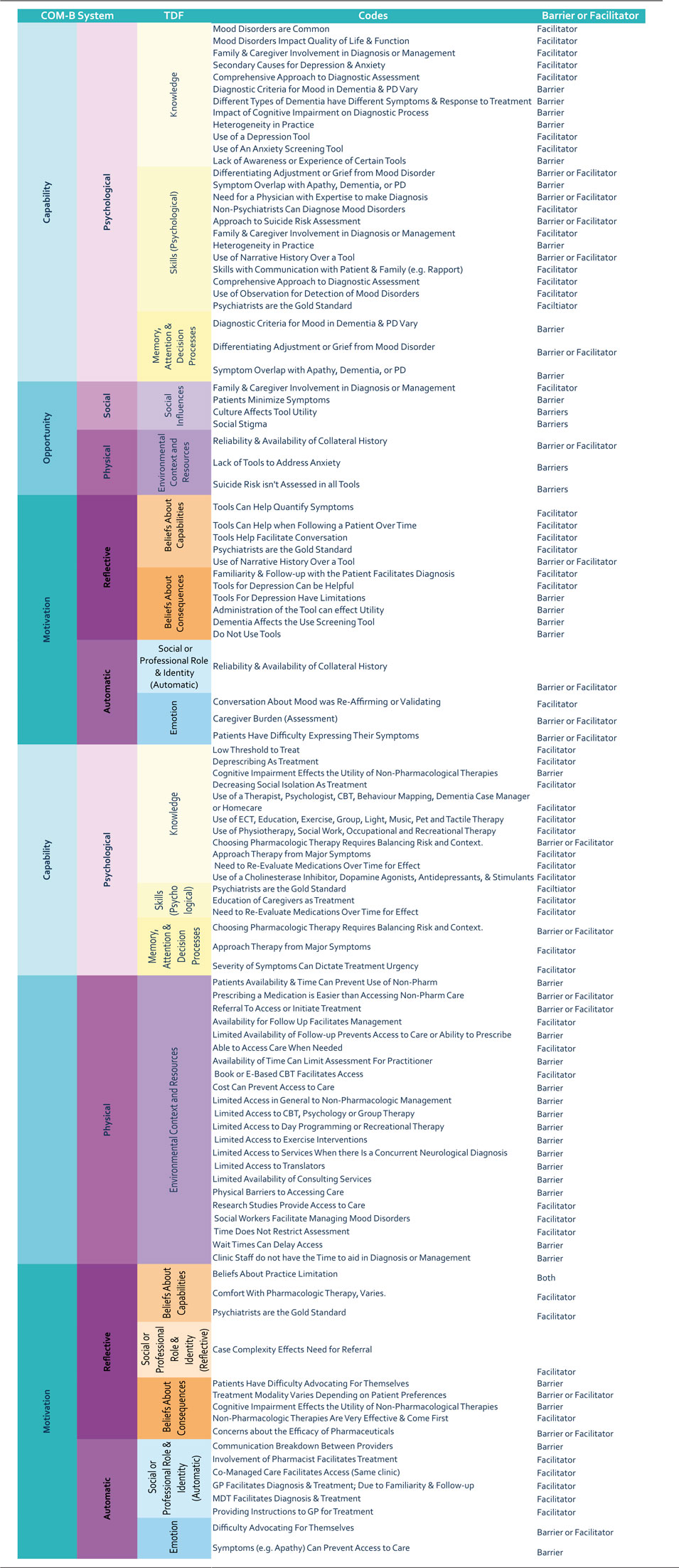
Physicians agreed that mood disorders warrant detection (knowledge; beliefs about consequences) but described in some cases a lack of awareness of tools (knowledge)and a lack of available tools (environmental context and resources). Some participants found tools helpful for screening: to quantify symptoms, follow patients over time, or facilitate conversation (beliefs about capability). Despite finding tools helpful, participants had concerns about the limitations of tools by all physicians (beliefs about consequences).
Well it’s good to have; it’s good for structure and consistently more of an objective assessment. And also for potentially following the changes over time, by being able to repeat that objective assessment. (Family Practitioners – 6)
… I actually don’t find the tools terribly helpful. My screening is any mood concerns, but I don’t routinely have everyone do a GDS [Geriatric Depression Scale] or a Cornell [Cornell Scale for Depression in Dementia]. (Geriatrician – 5)
Across the groups, psychiatrists were least likely to use the tools (beliefs about consequences). All physicians directly involved in the care of dementia patients had concerns about the effect of dementia and how the tool administrators may affect accuracy (beliefs about consequences) and diagnosis (knowledge).
Depends on the screening tool, you know. Especially if there is concurrent dementia, it’s almost routine to do the GDS. (Geriatric Psychiatry – 5)
It’s invalid. (Geriatric Psychiatry – 1)
Especially when they are cognitively impaired. (Geriatric Psychiatry – 5)
Geriatricians and psychiatrists agreed that suicide should be assessed for, despite the recommendations being divergent. Physicians commonly rely on narrative history to screen and diagnose mood disorders over tools (beliefs about capabilities).
I’d agree with that, yeah, I screen and sort of just the family members and [patient] and just leave it at that unless there’s concerns. (Geriatrician – 2)
Yeah, I use narrative history. (Geriatrician – 3)
Culture was felt to impact the accuracy of the screening tools by family practitioners and geriatricians (social influences). Patients and movement disorder neurologists found that the discussions about mood were validating to patient symptoms (emotions).
All physicians felt that a comprehensive approach was warranted, including looking for secondary causes. This was facilitated by the involvement of family or caregivers (knowledge; skills; social influences), and the use of a comprehensive approach to assessment (knowledge; skills). Most found that familiarity with the patient and available follow-up, and the use of observation, would facilitate diagnosis (beliefs about consequences).
All groups had concerns about symptomatic overlap of mood disorders with dementia, PD, or apathy (knowledge; memory; attention & decision processes). All physicians identified the psychiatrists as the gold standard for the diagnosis of mood disorders (skills; beliefs about capabilities). However, most agreed that non-psychiatrists with expertise could make the diagnosis (skills). Skills with communication were also identified as important (skills).
… Do I think everyone who has mood disorders needs to see a psychiatrist? No. But, are psychiatrists the best able to [diagnose]? Yes. (Geriatrician – 5)
Physicians find that patients often minimize their symptoms and that this is possibly related to social stigma (social influences), whereas patients describe having difficulty with expressing their symptoms (emotion).
I felt lost. It felt like nobody was able to reach it and neither was I. So I just wandered around in a fog and it just … was the way it was. (Patient – 7)
Guideline Implementation Recommendations for Treatment
As with the aforementioned guideline recommendation discussion, here we explain the barriers and facilitators that affect implementation of guideline recommendations for treatment (see Table 3).
Barriers and facilitators to the implementation of guideline recommendations for management: Using the theoretical domain and behaviour change wheel frameworks
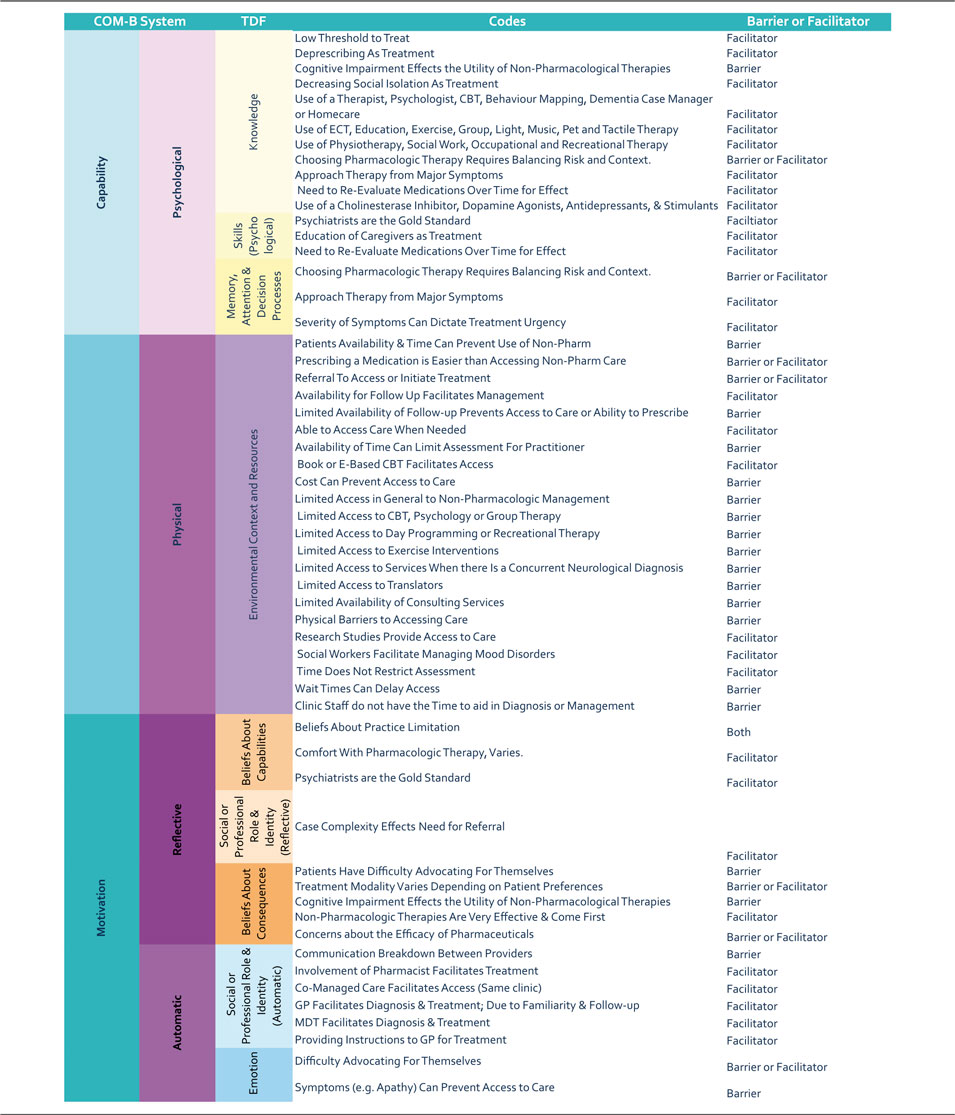
The approaches and experiences with the management of mood disorders varied between the physician and the patient groups. However, physicians were in agreement with the recommendations for an individualized approach to depression in PD: that certain agents should be avoided and that anti-PD drugs were reasonable to treat depression.
The non-psychiatric physicians explained that there were limitations to their practice competency and noted experiencing variable comfort with prescribing drugs (beliefs about capabilities). For example:
As a neurologist … in a sense I’m not that comfortable in treating depression. (Cognitive Neurology – 4)
Physicians also reported limitations when cases became complex (beliefs about capabilities). Patient preference plays a key role in determining the treatment plan (beliefs about consequences); however, patients find it difficult to advocate for themselves (emotion; beliefs about consequences). Patients and physicians had concerns about communication difficulty between specialists and family practitioners (social/professional role).
Being ill and being assertive at the same time – and I’m having to work on that because you can fall through the cracks if you’re not [assertive]. (Patient – 3)
There were many described environmental and resource limitations when it came to treatment surrounding access to specialists, limited time during appointments, and limited follow-up. Some described providing plans to the family practitioners for therapy to ensure continuity and communication with family practitioners (social/professional role).
The non-pharmacologic therapies were perceived by physicians and patients as very effective, and physicians believed they should precede medications (beliefs about consequences).
No medicine has ever worked, and so it’s just been a long history of failure in that sense until recently when I started seeing a counsellor. That seems to have helped quite a bit. (Patient – P6)
Therapies discussed were primarily cognitive behavioural, group, pet, exercise, light, music, and tactile therapy (knowledge). Other services that facilitate management included the members of the allied care team (knowledge; environmental context & resources). For all groups, decreasing social isolation was described as a simple yet effective intervention (knowledge). Despite this, there were several barriers including limited access or physical barriers to non-pharmacologic interventions (environmental context & resources), or diminished efficacy with cognitive impairment (knowledge; beliefs about consequences).
Perfect world is you could access non-pharmacologic as easy as pharmacologic, and it would be done quickly. You wouldn’t have these long lines … (Geriatrician – 1)
The psychiatrists had experience with ECT and psychotherapy, and thought that it had been demonstrated to be clinically useful despite its uncertain recommendation in PD. Non-psychiatrists were not comfortable with ECT or stimulants in dementia.
Experts agreed that antidepressants were often warranted, but had concerns about drug-disease interactions, drug efficacy, and the low evidence for both PD and dementia. It was clear across all groups that it was important to balance the risk of pharmacologic therapy when creating a plan (knowledge; memory; attention & decision processes).
… Take some time unless there’s great urgency to treat. Far away from pharmaceuticals. Because pharmaceuticals don’t work that good and they have their problems. (Geriatrician – 1).
… you want to consider what other co-morbidities they have, what other medications are they on and drug interactions, are there side effects of things that you want to take advantage of, or –(Geriatric Psychiatry-3)
– or avoid (Geriatric Psychiatry-1)
Physicians reported the use of selective serotonin reuptake inhibitors (SSRIs) commonly as a first-line agent for PD and dementia. All physicians disagreed with the recommendation for the use of tricyclic antidepressants (TCAs) and stated it was impractical due to adverse effects and represented older evidence. Cost represents a barrier to many of the above therapies, notably exercise (environmental context & resources). The use of cholinesterase inhibitors for depression or anxiety in dementia was contentious.
Discussion
In order to understand this gap in care, we examined the use of CPGs by local stakeholders, and explored the barriers, facilitators, and behaviours associated with guideline implementation. By using the TDF, we identified behaviours associated with these actions, which will inform future studies.
A major theme when examining these CPGs was the lack of quality evidence supporting practice. This was clear for all aspects of anxiety care both in dementia and in PD. The majority of the discussion in the focus groups and interviews was focused on depression, with some practitioners noting they were uncomfortable with the management of anxiety. Although there was more evidence available for depression, physicians still had concerns about the validity and quality of the evidence. This lack of comfort was akin to the concerns identified by the preceding review: that the available evidence for these disorders is minimal and does not address the breadth and complexity of patients with neurodegenerative diseases (Goodarzi, Mele, et al., Reference Goodarzi, Mele, Guo, Hanson, Jette, Patten and Holroyd-Leduc2016), suggesting the ongoing need for further research focused on issues relevant to stakeholders.
Although some study participants were unaware of the CPGs, barriers for physicians aware of them included the lack of evidence, the lack of clarity as to how the evidence informed the recommendations, the level of evidence, and disagreement with clinically impractical recommendations. This represents a concern because content is a determinant of guideline implementation, as it relates to validity (Gagliardi, Brouwers, Palda, Lemieux-Charles, & Grimshaw, Reference Gagliardi, Brouwers, Palda, Lemieux-Charles and Grimshaw2011). The lack of evidence provides a target to improve guideline use, as physicians stated that they would use them if there were more evidence and they were more applicable to their patients.
Physicians in all cases agreed that mood disorders should be screened for but were unaware of tools for anxiety, and had concerns about the validity of the depression tools. Physicians therefore described the use of narrative history, non-validated screening questions, or observation to pick up depression. The physicians’ response to the situation is consistent with prior research wherein family practitioners screening patients with dementia for depression preferred to use “general clinical indicators” instead of tools (Murphy et al., Reference Murphy, O’Connor, Browning, French, Michie, Francis and Green2014). A systematic review of 36 studies of non-psychiatrists identifying depression by interview or chart review found a sensitivity of 36.4 per cent and a specificity of 83.7 per cent when compared to a gold standard (Cepoiu et al., Reference Cepoiu, McCusker, Cole, Sewitch, Belzile and Ciampi2008). This furthers the argument for using tools with high sensitivity for depression case finding in PD or dementia. Systematic reviews have identified tools for depression case finding in these populations with sensitivities over 80 per cent (Goodarzi, Mrklas, et al., Reference Goodarzi, Mele, Guo, Hanson, Jette, Patten and Holroyd-Leduc2016; Goodarzi, Mele, Roberts, & Holroyd-Leduc, Reference Goodarzi, Mele, Roberts and Holroyd-Leduc2017). Based on our findings, there is a need for the implementation of evidence-based approaches for detection of anxiety and depression across care settings. Ideally, approaches across systems should be more uniform – for example, use a similar tool, to foster ease of communication and application of management procedures.
Symptomatic overlap between the different types of depressive illnesses or overlap with depression and apathy or the neurologic conditions were noted as key barriers to diagnosis. Additionally, physicians perceive that patients minimize symptoms due in part to social or cultural barriers. Stigma has long been recognized as a barrier in late-life depression, although this evidence is largely from the general population (Turvey, Jogerst, Kim, & Frolova, Reference Turvey, Jogerst, Kim and Frolova2012). Conversely, patients with PD did not describe stigma, but described having a difficult time expressing their symptoms to doctors. This is a nuanced difference between the perceptions of physicians and patients with PD. Neuropsychological studies of PD patients with depression demonstrate that there is memory impairment, verbal fluency, auditory attention, and concept formation among other changes (Blonder & Slevin, Reference Blonder and Slevin2011). Given this profile, it is possible that these features affect the person’s ability to communicate their symptoms. This further supports the need for physicians to actively seek information regarding these symptoms to ensure they are detected.
Physicians agreed that pharmacologic therapy is often warranted; but there were several concerns about the limited supporting evidence, drug interactions, and side effects. It was important to physicians that up-to-date evidence was linked to recommendations. For example, all physicians felt the recommendation to use TCAs was out of date and impractical given the side effect profile in these populations (PD and dementia) (Goodarzi, Mele, et al., Reference Goodarzi, Mele, Guo, Hanson, Jette, Patten and Holroyd-Leduc2016). Recommendations such as these make physicians less likely to use CPGs. Physicians found that, in some cases, the link between the recommendation and the evidence was unclear, thus leading to further concerns around validity and usability. This lack of agreement and beliefs about consequences have been previously reported as barriers to guideline use (Cabana et al., Reference Cabana, Rand, Powe, Wu, Wilson, Abboud and Rubin1999). However, here the disagreement with recommendations is specific to out-of-date evidence or concerns about evidence applicability to specific patient populations. CPGs need to be updated more regularly than most currently are, as evidence suggests about 20 per cent of the recommendations are out-of-date within three years (Martinez Garcia et al., Reference Martinez Garcia, Sanabria, Garcia Álvarez, Trujillo-Martin, Etxeandia-Ikobaltzeta, Kotzeva and Alonso-Coello2014). Physicians also noted that having a multidisciplinary team (e.g., nursing, social work, physiotherapy, occupational and recreational therapy) facilitated diagnosis and treatment of these patients.
Other barriers to CPG implementation include issues surrounding the formatting of CPGs, including vague or divergent statements and cumbersome documents. Some favoured local adapted CPGs with clear, actionable recommendations. These behaviours reflect many aspects of recent implementability frameworks in which adaptation and applicability to local context are key to use (Gagliardi et al., Reference Gagliardi, Brouwers, Palda, Lemieux-Charles and Grimshaw2011).
Physicians and patients were in agreement with the use of non-pharmacologic therapy first, with several noting profound clinical benefit. The guideline recommendations from the preceding systematic review identified for dementia that there was evidentiary support for the use of non-pharmacologic interventions, whereas in PD the recommendation was uncertain (Goodarzi, Mele, et al., Reference Goodarzi, Mele, Guo, Hanson, Jette, Patten and Holroyd-Leduc2016). Both the movement disorder neurologists and patients with PD discussed dramatic improvement with psychotherapy, in some cases more so than with medications, which resulted in physicians being surprised that the recommendation for non-pharmacologic therapy in PD was uncertain. This surprise resulted in part because of their clinical experience but also from recent evidence such as a randomized, controlled trial published after the included CPGs, which demonstrated that cognitive behavioural therapy reduced depression, anxiety, and improved quality of life among patients with PD (Dobkin et al., Reference Dobkin, Menza, Allen, Gara, Mark, Tiu and Friedman2011). This study highlights physicians’ need for up-to-date evidence in CPGs. Other treatment barriers were more physical or environmental and involved access to specialists, availability, and affordability of non-pharmacologic treatments. These represent context-specific barriers that could vary by practice location but represent targets for interventions to improve guideline uptake.
Physicians noted that treatment decisions and modalities were dependent on patient choice. Patients with PD noted that their symptoms can prevent them from accessing care and that they have difficulty advocating for themselves. Given that physicians want to engage the patients in treatment decisions, understanding that patients often struggle to advocate for themselves is important, as measures could be taken to facilitate their engagement. The non-psychiatrist physicians had more beliefs about practice limitations, in part due to implicit differences in their roles, but also due to lack of clarity within the evidence and CPGs.
Overall, when it came to the use of CPGs in general, barriers were focused on knowledge, memory, attention, and decision processes and beliefs about consequences – this situation was related to concerns about the evidence or content of CPGs and, to a lesser degree, guideline format. The main concerns for diagnosis were related to knowledge, psychological skills, beliefs about capabilities, and consequences, whereas for management the concerns were largely related to environmental context, resources, and beliefs about capabilities.
This study is unique among other studies in this area as it is not focused on one guideline but rather is a synthesis of high-quality CPGs. It also focuses on the recommendations related to mood disorders among those with PD or dementia (Goodarzi, Mele, et al., Reference Goodarzi, Mele, Guo, Hanson, Jette, Patten and Holroyd-Leduc2016). Other studies, however, have identified similar barriers. A national survey of neurologists examining barriers to CPGs in PD found that a lack of time, trouble aligning CPGs with patient preferences, lack of relevance, and lack of awareness were the major barriers (Larisch, Oertel, & Eggert, Reference Larisch, Oertel and Eggert2009). Similar barriers were noted for use of dementia CPGs by family practitioners, with additional concerns about potential bias (Pimlott et al., Reference Pimlott, Persaud, Drummond, Cohen, Silvius, Seigel and Dalziel2009). Here we have identified that a prominent barrier to providing care for those with PD or dementia and co-morbid anxiety or depression centers on lack of evidence, concerns about screening tool accuracy, symptomatic overlap of disorders, access to resources, risks and poor efficacy of pharmacotherapy and beliefs about limitations to practice.
Limitations
Given the difficulty in recruiting patients with dementia and their family caregivers for a focus group, we are unable to comment on their experiences with co-morbid mood disorders. Of those recruited to the PD patient group, none had diagnoses of anxiety; however, they did endorse symptoms of anxiety. Within the scope of this project, we were unable to include other multidisciplinary team members (e.g. nurses, psychologists, etc.) and thus are not able to comment on their perceptions.
It was only feasible to have one focus group per stakeholder category, due the size of our city and medical centre. Although the scope of this study was local, reviewing international CPGs and employing a rigorous behaviour framework increases the transferability of our results to other centres.
For pragmatic reasons, we used individual interviews concurrently with focus groups (Morgan, Reference Morgan1997). However, there were no differences in the guides or materials provided, and the overall type or breadth of information shared by interview participants did not differ from those in the focus groups.
Future Directions
In view of the above-identified gaps, it is critical that future research is conducted in this area. Further work needs to examine the role of the multidisciplinary team in the diagnostic and management process to help us understand how we can best change practice in this area. Although there are some tools, further studies are needed to examine the accuracy of currently used tools and feasibility of detection tools for anxiety or depression in patients with severe disease or those in nursing home care. Given the paucity of evidence for the management of depression in persons with Parkinson’s disease or dementia, there is also a need for high-quality trials of depression management in a variety of settings. Further work also needs to be done on guideline creation guided by a well-balanced multidisciplinary guideline development group that will ensure that the final product is applicable and implemented in practice.
Conclusions
Although there are available CPGs in this area, physicians have difficulty with the implementation of certain recommendations due to a lack of evidence. In addition, key barriers identified on the use of CPGs include concerns about screening tool accuracy, symptomatic overlap of disorders, access to resources, risks and poor efficacy of pharmacotherapy, and beliefs about limitations to practice.
Supplementary Material
To view supplementary material for this article, please visit https://doi.org/10.1017/S0714980818000053