

Introduction
Brain injury rehabilitation and longer-term disability support services often deal with clients spanning different types of acquired brain injury (ABI; AIHW, 2007). Traumatic brain injury (TBI) is one of the most common, with the impact of TBI leading to various physical, cognitive, communicative and behavioural impairments (Ponsford et al., Reference Ponsford, Sloan and Snow2013; Sabaz et al., Reference Sabaz, Simpson, Walker, Rogers, Gillis and Strettles2014; Sloan et al., Reference Sloan, Callaway and Winkler2009). An ABI can impact upon everyday functioning and participation in domains such as employment (Culler et al., Reference Culler, Wang, Byers and Trierweiler2011; Simpson et al., Reference Simpson, McRae, Hallab, Daher and Strettles2020), relationships (Norup et al., Reference Norup, Kruse, Soendergaard, Rasmussen and Biering-Sørensen2020; Thompson & Ryan, Reference Thompson and Ryan2009) and everyday living (Andrew et al., Reference Andrew, Kilkenny, Naylor, Purvis, Lalor, Moloczij and Cadilhac2014; Tate et al., Reference Tate, Lane-Brown, Myles and Cameron2020). Individuals with ABI use a range of supports to overcome their impairments and assist with community integration and participation in meaningful lifetime activities. Assistive Technology (AT) is one form of support that is well established in supporting participation by people who experience disability or health conditions (World Health Organization, 2017). AT is a broad term that can be described as products and services whose primary purpose is to ‘maintain or improve an individual’s functioning and independence, thereby promoting their wellbeing’ (World Health Organization, 2021, Assistive Technology section, para. 2). AT can encompass both mainstream technology, that is, products primarily intended for general and popular use with potential universal design to support use by people with a disability (Brunner et al., Reference Brunner, Hemsley, Togher and Palmer2017; Jamwal et al., Reference Jamwal, Callaway, Ackerl, Farnworth and Winkler2017; Wong et al., Reference Wong, Sinclair, Seabrook, Mckay and Ponsford2017); and bespoke technological solutions. While AT has historically been supplied to meet physical, mobility and sensory needs, its role in supporting cognitive function is now rapidly expanding (Gillespie et al., Reference Gillespie, Best and O’Neill2012). With the advancement and mainstreaming of intelligent technologies, the potential of these devices to support many life domains has increased (Ienca et al., Reference Ienca, Fabrice, Elger, Caon, Scoccia Pappagallo, Kressig and Wangmo2017).
Of emerging interest is electronic AT which includes but is not limited to smartphones, portable/wearable devices, home automation, environmental control systems, and augmentative and alternative communication aides (Charters et al., Reference Charters, Gillett and Simpson2015; Hassett et al., Reference Hassett, van den Berg, Lindley, Crotty, McCluskey, van der Ploeg and Sherrington2020). Electronic AT has shown to be a potentially accessible method for people with an ABI to increase independence with everyday activities (Alashram et al., Reference Alashram, Annino, Padua, Romagnoli and Mercuri2019; Leopold et al., Reference Leopold, Louri, Petras and Elias2015; Wong et al., Reference Wong, Sinclair, Seabrook, Mckay and Ponsford2017); as well as enhance communication with family and friends, enabling reconnection and establishment of social relationships (Jamwal et al., Reference Jamwal, Callaway, Ackerl, Farnworth and Winkler2017).
As we see an emergence in technological solutions to support people with ABI, the role of clinicians becomes increasingly important to demonstrate dynamic capability around technology. By skilfully assessing the range of technology available and guiding clients to make individualised, informed choices around AT, clinicians can be a conduit between the client and successful adoption of AT. However, to achieve capability around technology, the barriers and challenges that clinicians face with the adoption of technology and subsequent strategies to overcome them must also be acknowledged and addressed.
There is an absence of ABI-specific literature that has addressed clinician capability (i.e., knowledge and confidence), attitudes and barriers at a global level. Existing studies have been narrowly focused, targeting a specific, single type of AT such as cognitive orthoses, physical rehabilitation technology or smartphone applications. Challenges faced by clinicians documented in these studies include insufficient knowledge and skills to evaluate emerging AT (Gagnon-Roy et al., Reference Gagnon-Roy, Bier, Couture, Giroux, Pigot, Zarshenas and Bottari2021; de Joode et al., Reference de Joode, van Boxtel, Verhey and van Heugten2012; O’Neil-Pirozzi et al., Reference O’Neil-Pirozzi, Kendrick, Goldstein and Glenn2004; Plackett et al., Reference Plackett, Thomas and Thomas2017; Zarshenas et al., Reference Zarshenas, Gagnon-Roy, Couture, Bier, Giroux and Nalder2020), inadequate funding and opportunity to trial AT (O’Neil-Pirozzi et al., Reference O’Neil-Pirozzi, Kendrick, Goldstein and Glenn2004; Wong et al., Reference Wong, Sinclair, Seabrook, Mckay and Ponsford2017; Zarshenas et al., Reference Zarshenas, Gagnon-Roy, Couture, Bier, Giroux and Nalder2020) and limited timely technical support during the implementation process (Gagnon-Roy et al., Reference Gagnon-Roy, Bier, Couture, Giroux, Pigot, Zarshenas and Bottari2021; O’Neil-Pirozzi et al., Reference O’Neil-Pirozzi, Kendrick, Goldstein and Glenn2004). The severity of ABI was also perceived to be a significant clinical consideration that impacted effective learning of new technology by their clients (Oyesanya et al., Reference Oyesanya, Thompson, Arulselvam and Seel2021; Wong et al., Reference Wong, Sinclair, Seabrook, Mckay and Ponsford2017; Zarshenas et al., Reference Zarshenas, Gagnon-Roy, Couture, Bier, Giroux and Nalder2020). While these studies provide an insight into the clinician experience with specific types of AT, a broader understanding is required to build holistic strategies to support clinician capability with any type of AT.
International and national surveys have become a useful mechanism for understanding contemporary clinical practice within the field of ABI (Downing et al., Reference Downing, Bragge and Ponsford2019; Kelly et al., Reference Kelly, McDonald and Frith2017). Surveys of clinician AT use in ABI have a limited range of validated questionnaires to draw upon. A systematic review by Vaezipour et al. (Reference Vaezipour, Whelan, Wall and Theodoros2019) investigating the acceptance of rehabilitation technology in TBI, identified only two studies (Lloréns et al., Reference Lloréns, Noé, Colomer and Alcañiz2015; Juengst et al., Reference Juengst, Graham, Pulantara, McCue, Whyte, Dicianno and Wagner2015) that employed such questionnaires, namely the Systems Usability Scale (SUS) and the Telehealth Usability Questionnaire (TUQ). However, both the SUS and TUQ are product/service-specific scales, focused on perceived ease of use and usefulness of a single product/service. The SUS and TUQ do not enable an in-depth exploration of overall clinician experiences with AT globally.
Therefore, the current study devised a purpose-designed survey to enable investigation of global gaps in AT related to clinical practice. The survey design was framed by an established conceptual framework. As the extant literature suggested a clinician evidence-practice gap in AT use, the Capability, Opportunity, and Motivation model of Behaviour change (COM-B) was employed. The COM-B is strongly recognised for identifying the key influences involved in behaviour change in practice, acknowledging the role of individual action to change behaviours within a broader social, environmental, and cultural context (Michie et al., Reference Michie, Atkins and West2014). The model suggests that changing behaviour is based on three components: capability (an individual’s psychological and physical capability – knowledge and expertise), opportunity (factors outside the individual that enable or prompt behaviour, such as environmental factors and social support) and motivation (beliefs about benefits and harm). The COM-B model can inform an in-depth exploration of clinician capability, attitudes, and barriers in driving clinician implementation of AT for people with an ABI.
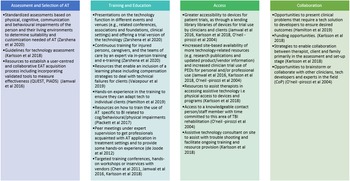
There are a number of strategies described in the literature that are important in enabling clinicians to better support their clients to use AT. These can be classified into four broad types: assessment and selection of AT, training and education, access, and collaboration. Details of each of these types of strategies can be found in Fig. 1. However, there is little to no evidence exploring which of these strategies clinicians find most valuable. Identifying the most valuable strategies ensures a user-centred, targeted approach toward resource building and promoting sustainable change. Therefore, the current study aimed to explore (a) clinician capability, attitudes, and barriers with using AT for people with an ABI, (b) age-related differences in clinician technology self-efficacy and capability (c) strategies, ranked in order of importance, perceived by clinicians to support AT prescription and (d) thematic analysis of clinician experiences with AT.
Strategies to support clinician AT use in BI rehabilitation.

Methods
Setting and participants
The survey aimed to capture clinicians working across public, private, not-for profit and sole practitioner ABI services from both metropolitan and rural settings in New South Wales (NSW), Australia. To reach this broad audience, the survey was distributed through several avenues. These included funding bodies such as icare NSW (state body responsible for lifetime support and care of people disabled through road injuries), as well as clinical discipline specialty networks such as the Australian Group on Severe Communication Impairment, Australian Neurological Physiotherapy, Social Workers in Brain Injury and NDIS special interest neurology groups. Within public services, the survey was primarily distributed to the NSW Brain Injury Rehabilitation Programs via the state-based agency, Agency for Clinical Innovation Brain Injury Rehabilitation Directorate Network. There are 15 NSW Brain Injury Rehabilitation Programs across the state that primarily target people with a TBI under the age of 65. However, a quarter of the admissions are people with other forms of ABI with similar needs who fit the same age range.
Survey respondents were eligible to participate if they (a) had clinical experience working with individuals with an ABI, and (b) were based in NSW. Clinicians from inpatient, outpatient, transitional living, and community services were targeted. The study was characterised as a Quality Assurance project and conducted in accordance with the Australian National Health and Medical Research Council guidelines for the conduct of quality assurance activities (NHMRC, 2014). The first page of the survey provided detailed information about the purpose of the study, as well as information about privacy and informed consent. Participants were informed that their data would be protected through robust privacy protection procedures and that no identifiable information would be collected (e.g., names, date of birth). All survey data were reported in aggregated format that precluded the identification of individual survey respondents. Potential respondents were instructed that commencing the survey indicated their informed consent to participate. Procedures for informed consent and confidentiality were consistent with the British Psychological Society ethical guidelines for Internet-mediated research (Hewson et al., Reference Hewson, Buchanan, Brown, Coulson, Hagger-Johnson, Joinson and Oates2021).
Measures
Purpose-designed survey
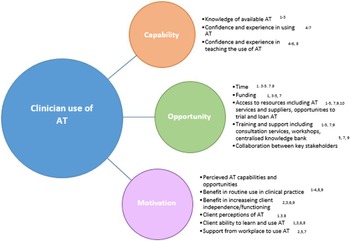
A survey combining both purpose-designed items and a validated questionnaire was developed to address the research aims. Content development for the survey involved a comprehensive process. Published literature within the last 15 years looking at clinician use of AT in neurorehabilitation settings and specifically for people with ABI was reviewed and organised into themes drawn from the COM-B model of behaviour change (See Fig. 2.). Another model, namely the Technology Acceptance Model (TAM) (Davis et al., Reference Davis, Bagozzi and Warshaw1989), one of the most studied models in the literature used to understand the determinants of user acceptance of technology, was also reviewed to inform survey design. The TAM focuses on how perceived usefulness and ease of use influence an individual’s attitude toward using the technology. This in turn influences an individual’s behavioural intention to use the technology, which ultimately leads to the actual use of the technology (Vaezipour et al., Reference Vaezipour, Whelan, Wall and Theodoros2019). The core concepts of perceived usefulness and ease of use was integrated into the survey component evaluating clinician attitudes and barriers towards AT. Consultation with ABI clinicians and researchers with experience in AT and/or survey implementation from the Liverpool Brain Injury Rehabilitation Unit, the Ingham Institute for Applied Medical Research and the Agency for Clinical Innovation Brain Injury Rehabilitation Directorate Network was sought to assist with survey design and appraisal of content validity.
COM-B model evaluation of clinician AT use in BI rehabilitation.
1. Chen & Bode, Reference Chen and Bode2011, 2. Gagnon-Roy et al., Reference Gagnon-Roy, Bier, Couture, Giroux, Pigot, Zarshenas and Bottari2021, 3. Zarshenas et al., Reference Zarshenas, Gagnon-Roy, Couture, Bier, Giroux and Nalder2020, 4. de Joode et al., Reference de Joode, van Boxtel, Verhey and van Heugten2012, 5. O’Neil-Pirozzi et al., Reference O’Neil-Pirozzi, Kendrick, Goldstein and Glenn2004, 6. Hart et al., Reference Hart, O'Neil-Pirozzi and Morita2003, 7. Karlsson et al., Reference Karlsson, Johnston and Barker2018, 8. Plackett et al., Reference Plackett, Thomas and Thomas2017, 9. Hamilton et al., Reference Hamilton, Lovarini, McCluskey, Folly de Campos and Hassett2019, 10. Vaezipour et al., Reference Vaezipour, Whelan, Wall and Theodoros2019

A draft version of the survey was then uploaded onto the Qualtrics online platform and piloted with a sample of clinicians with experience in ABI and interest in AT to address readability, relevance, layout, and completion time. The feedback was then incorporated into the final version of the survey. The survey was then made available to ABI services across NSW and distributed through avenues described earlier in this paper.
The final survey contained a total of 36 questions and was grouped as follows: Part 1, Demographics; Part 2, Technology Self-efficacy; Part 3, Influences on using AT for clients; Part 4, Opportunities to increase AT use; and Part 5, Current use of AT. The current study details parts 1–4, with part 5 to be reported in a separate paper.
Part 1 captured clinician demographic characteristics including age, gender, profession, years of experience in profession, years of experience with ABI, primary employment and regions serviced, client population and client age group. Parts 2 and 3 explored clinician capability, attitudes, and barriers towards AT. Part 2 evaluated clinician capability with general and personal technology use, using the Modified Computer Self-Efficacy Scale (MCSES). The MCSES is a validated and reliable 10-item scale that assesses self-efficacy with using everyday technology (Laver et al., Reference Laver, George, Ratcliffe and Crotty2012). Each item is rated on a 10-point scale (anchors 1 = ‘Not at all confident’ through to 10 = ‘completely confident’), with higher scores indicating higher self-efficacy. The MCSES has demonstrated construct validity and high internal consistency (α = 0.94). It is a modification to the original Computer Self-Efficacy Scale (Compeau & Higgins, Reference Compeau and Higgins1995) in that the wording of the questions was altered to ensure applicability to everyday technology as opposed to computer software specifically. Although the MCSES was designed for older people and people with a disability (Laver et al., Reference Laver, George, Ratcliffe and Crotty2012), a review of the items found that it was also applicable to practitioners in the clinical context. Within this context, the MCSES still retains strong internal consistency (α = 0.92) in the current study.
Part 3 included four purpose-designed subscales, containing items scored with a Likert type response scale, followed by a free-text option for further comments. Two subscales evaluated clinician capability by addressing knowledge of AT (1 = ‘No knowledge’ to 4 = ‘Expert Knowledge’) and confidence with using AT (1 = ‘Not at all confident’ to 5 = ‘Very Confident’). The remaining two subscales evaluated clinician attitudes towards AT and clinician barriers towards AT use (1 = ‘Strongly disagree’ to 5 = ‘Strongly Agree’).
Part 4 explored strategies to support clinician use of AT for people with an ABI. The items were scored on a 4-point Likert type response scale (1 = ‘Not important at all’ to 4 = ‘Very important’) followed by a free-text option to allow for any other strategies to be listed. The items were drawn from the four broad types of strategies described earlier in this paper and detailed in Fig. 1. For example, the item ‘guidelines on selecting suitable AT for clients’ falls under assessment and selection of AT, while the item ‘access to hands-on workshops and in-services to trial use of AT by clinicians and clients’ falls under training and education. The survey ended with a free-text option to provide any further comments or feedback on the use of AT to support people with an ABI.
Procedures
Data collection
The survey was loaded onto the Qualtrics platform, and information about the survey including a survey link was emailed through mailing lists or posted on social media platforms across the several professional and service networks outlined above. The email also encouraged clinicians to forward the survey onto other colleagues. Over the 6-week period, one prompt was sent at 4 weeks to remind respondents to complete the survey by the study deadline.
Data analysis
Survey data were imported into IBM SPSS Statistics v.27 from Qualtrics. To address aims (a) and (c), descriptive statistics were generated for demographic, professional and AT-related close-ended survey items. As the majority of study variables were purpose-designed and employed ordinal scales, non-parametric statistics were employed. Addressing aim (b), given the association between age and technology use, Kruskal–Wallis H tests were conducted between age and the MCSES and Capability (Knowledge and Confidence subscales) total scores, with participants divided into four age bands (20–34, 35–44, 45–54, 55+ years). Significant overall tests were followed-up with pairwise Mann–Whitney U tests, and effect sizes were generated (Pearson correlation coefficient, r). Given the exploratory nature of the study, the significance level was set at p < .05 for all analyses. Finally, a Spearman’s correlation was conducted to examine the relationship between MCSES and other key outcome variables. The correlation coefficient/Mann–Whitney U effect size was interpreted in line with Cohen (Reference Cohen1992) (.1 small, .3 medium, .5 large).
To address aim (d), a thematic analysis was undertaken of clinician experiences with AT. The free-text responses for the six open text items were exported from SPSS into a word document and analysed using a two-step approach. Firstly, an inductive approach to thematic analysis was employed (Braun & Clarke, Reference Braun and Clarke2006). One investigator (KP) familiarised themselves with the data by reading and re-reading all free-text responses. Each response was linked back to the respondent with a unique numerical identifier to allow for de-identified verbatim data to be quoted. Using an open coding process, free-text responses were coded independently using line by line coding. Codes were then collated to identify initial themes (Braun & Clarke, Reference Braun and Clarke2006). The themes were reviewed and discussed with other investigators (BW, GKS) to clarify any differences and then further refined. Following these refinements, themes were defined and named, and peer debriefing was used, with the themes discussed with an experienced qualitative researcher (LC). Secondly, the identified themes were deductively mapped back to the three components of the COM-B model, namely capability, opportunity, and motivation, described earlier in this paper to gain an understanding of their influence on clinician behaviour (Atkins et al., Reference Atkins, Francis, Islam, O’Connor, Patey, Ivers and Michie2017). Themes were mapped using the standard definitions of the COM-B components (Michie et al., Reference Michie, Atkins and West2014) by one reviewer (KP), then cross checked by another member of the team (GKS).
Results
Data were collected for a 6-week period between August 2021 and September 2021.
A total of 166 clinicians logged onto the survey and a total of 123 clinicians provided complete responses, with analysis focused on these completed surveys.
Demographics
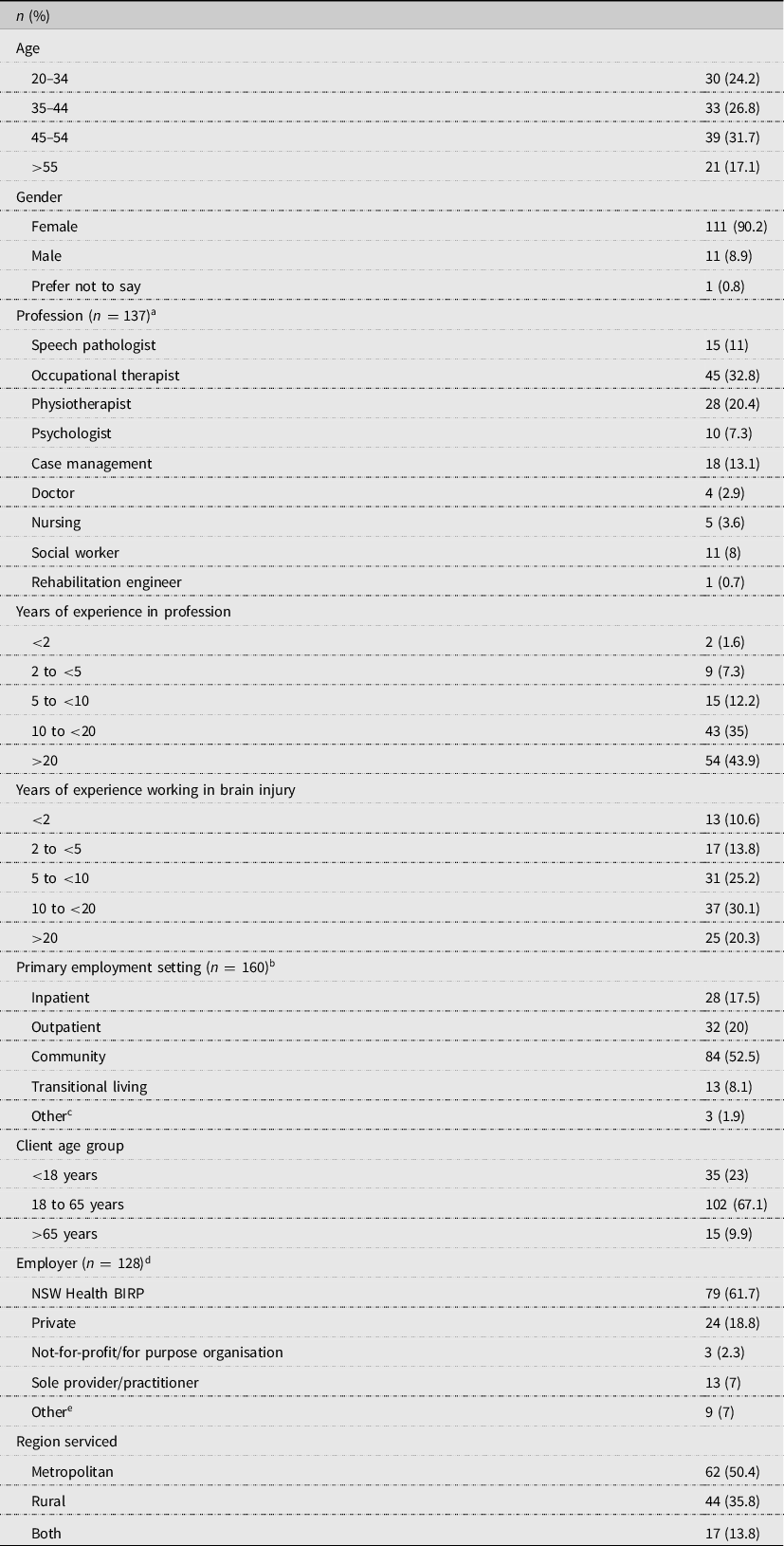
The sample of clinicians (n = 123) were evenly distributed across age groups from 20 years to greater than 55 years (see Table 1.). The majority were female and occupational therapists or physiotherapists by profession. Other allied health, nursing and medicine were also represented. Half (50%, n = 62/123) had more than 10 years of experience working in ABI and just over half (52%, n = 84/160) worked primarily in a community setting.
Respondent Demographics (N = 123)

a n = 14 clinicians had multiple professions.
b n = 37 accounted for multiple settings selected, whereby 26 clinicians worked in more than one setting.
c Telehealth.
d n = 5 accounted for multiple employers selected, whereby 4 clinicians had more than one employer.
e NSW Health excluding BIRP, Public Health, Research Institute, Spinal Injury Unit.
Self-efficacy and capability (knowledge and confidence)
Clinicians scored a median of 76 with an interquartile range of 19 on the Modified Computer Self-Efficacy scale (MCSES). Analysis of the MCSES total score by age groups was significant (H[3] = 9.667, p = .022). Follow-up pairwise analyses found that the 20–34 age group had significantly higher MCSES scores than the 45–54 (U = 347.000, p = .004, r = −0.347) and 55+ age groups (U = 206.500, p = .038, r = −0.291), both of which corresponded to a medium effect size (See Supplementary Table 1).
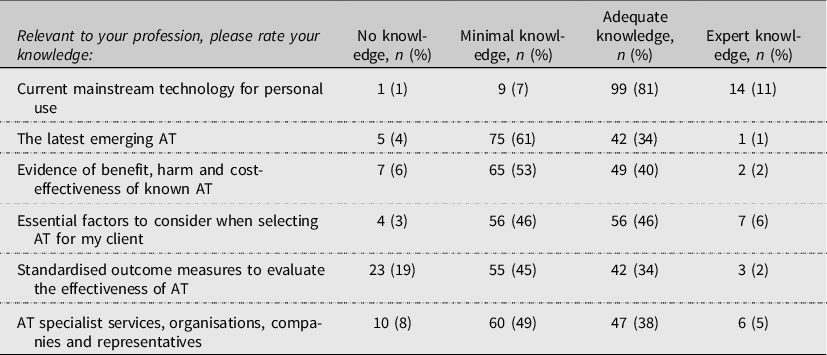
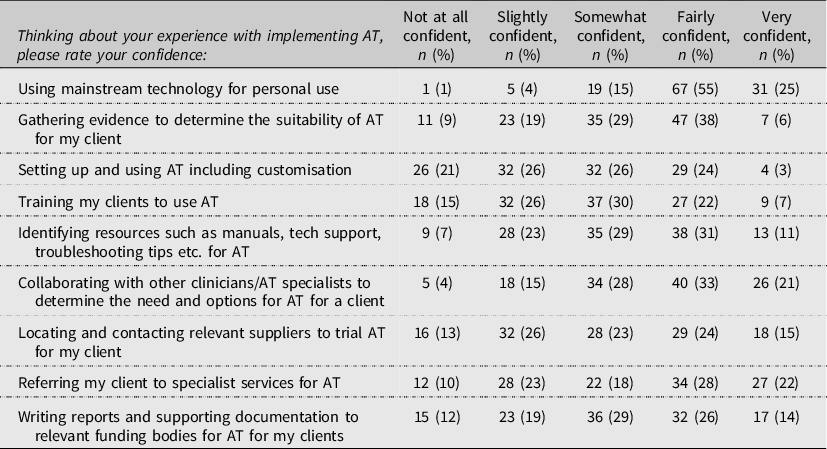
Whilst most clinicians were knowledgeable of mainstream technology for their own personal use, more than half had insufficient knowledge of emerging AT for their clients (See Table 2). A similar paucity in knowledge was reported with specialist AT services and organisations; the evidence of benefit, harm, and cost-effectiveness of known AT; and standardised outcome measures to evaluate the effectiveness of AT. Almost half of the clinicians had minimal to no knowledge of essential factors to consider when selecting AT for their clients.
Capability – Knowledge Subscale

The knowledge subscale total score differed by age group (H[3] = 15.443, p = .001). Follow-up pairwise analyses found that the 35–44 age group had significantly higher knowledge scores than the 20–34 (U = 343.000, p = .035, r = −0.265), 45–54 (U = 330.500, p < .001, r = −0.419) and 55+ age groups (U = 201.000, p = .009, r = −0.353), all corresponding to medium sized effects (See Supplementary Table 1).
Clinician confidence mirrored clinician knowledge with using mainstream technology for personal use with four in five clinicians being fairly or very confident (See Table 3.). About half were fairly to very confident at collaborating with other clinicians or AT specialists to determine the need and options of AT for a client; as well as referring their client to specialist AT services. However, less than half of the clinicians were fairly to very confident in gathering evidence for a piece of AT to determine its suitability for their clients; identifying resources such as manuals, tech support and troubleshooting tips for AT implementation; locating and contacting relevant suppliers to trial AT for their clients; and writing AT-specific reports and supporting documentation to relevant funding bodies for their clients. Confidence was poorest in setting up and using AT including customisation and training clients to use AT.
Capability – Confidence Subscale

Analysis of the confidence subscale total score by age groups was also significant (H[3] = 10.473, p = .015). Follow-up pairwise analyses found that the 34–45 age group had significantly higher confidence scores than the 20–34 (U = 346.500, p = .041, r = −0.258), 45–54 (U = 385.000, p = .003, r = −0.345) and 55+ age groups (U = 216.500, p = .021, r = −0.314), all corresponding to a medium effect size (See Supplementary Table 1).
Attitudes
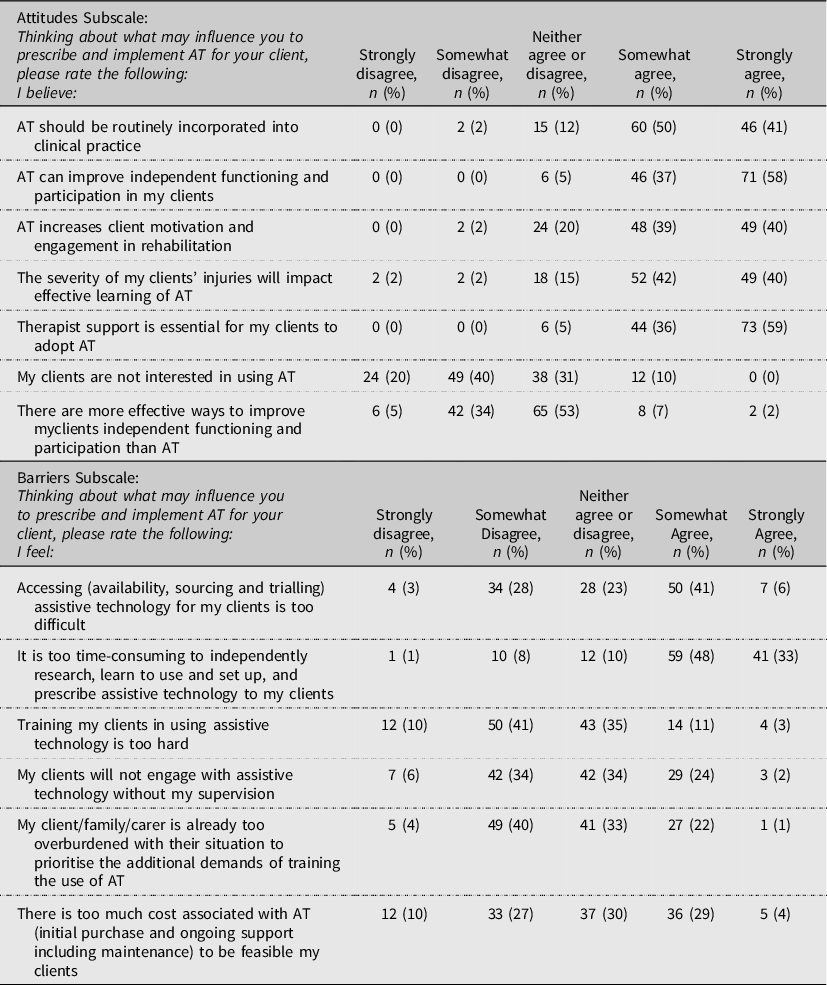
Most clinicians had a positive attitude towards AT with 95% (n = 117) somewhat or strongly agreeing that AT can improve independent functioning and participation in their clients (See Table 4.). Almost all clinicians agreed that AT should be routinely incorporated into clinical practice, with three quarters agreeing that AT increases client motivation and engagement in rehabilitation. Almost two-thirds disagreed with the statement that their clients are not interested in using AT.
Attitudes and Barriers Subscales

Most clinicians agreed that important considerations for clients adopting AT are therapist support and injury severity. Whilst most clinicians identified the benefits of AT for their clients, about half were neutral in their belief that there are more effective ways than AT to improve their clients independent functioning and participation.
Barriers
Clinicians identified that their biggest barrier to using AT was the intensive time involved with independently researching, learning to use, setting up and prescribing AT for their clients (See Table 4.). Close to half the clinicians believed accessing AT for their clients was too difficult. Only one out of three clinicians believed AT was too costly to be feasible for their clients or that their client/family/carer was too overburdened with their situation to prioritise the additional demands of being trained to use AT. Only a quarter of the clinicians agreed that their clients would not engage with AT without their supervision.
Correlational analysis
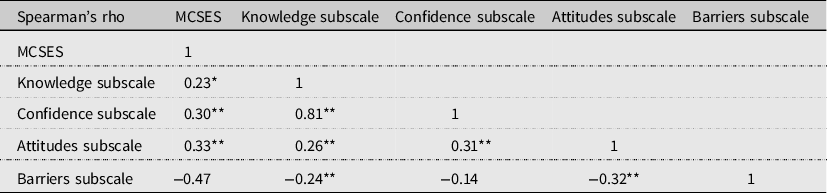
A total sum score of each of the subscales in Part 3 of the survey (i.e., knowledge, confidence, attitudes and barriers) was calculated, and used to determine relationships between the MCSES and the other four variables, using Spearman’s rank-order correlations (See Table 5). For the attitude subscale, scores from the item ‘The severity of my clients’ injury will impact effective learning of AT’ were omitted from the total sum score as it was decided that the statement did not reflect a positive or negative attitude, but rather a consideration when using AT for people with an ABI.
Correlations Matrix

* Correlation is significant at the 0.05 level (2-tailed).
** Correlation significant at the 0.01 level (2-tailed).
There was a significant positive correlation between clinician knowledge and clinician confidence in using AT, corresponding to a very large effect size (ρ = 0.81, p < .01). Medium positive effects were observed between clinician capability [knowledge (ρ = 0.26, p = .004) and confidence (ρ = 0.31, p < .001)] and having positive attitudes towards AT that were statistically significant. Similarly, medium size effects were observed between MCSES total score and positive attitudes towards AT (ρ = 0.33, p < .01). Finally a medium effect size was found for an inverse correlation between perceived barriers and having positive attitudes towards AT (ρ = −0.32, p < .01).
Strategies to support clinician use of AT
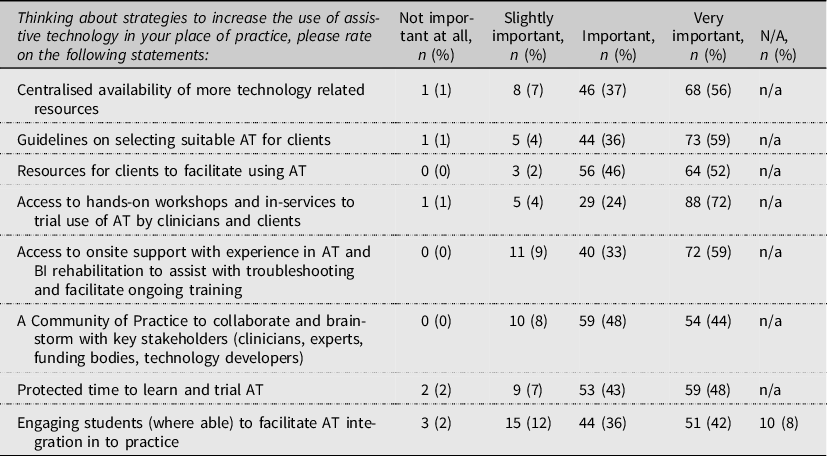
Most strategies listed in the survey were identified to be very important by at least half of the clinicians (See Table 6.). The most favoured strategy to support clinician AT use for people with an ABI was access to hands-on workshops and in-services to trial AT. More than half of the clinicians believed it was also very important to have guidelines on selecting suitable AT for clients; centralised availability of technology related resources (e.g., research publications and updated product/vendor information including options to trial the technology); access to onsite support with experience in AT and ABI rehabilitation to assist with troubleshooting and facilitate ongoing training ; and resources for clients to facilitate using AT. Just under half believed having a community of practice to collaborate and brainstorm with key stakeholders, and protected time to learn and trial AT was very important. Where applicable, 45% (n = 51/113) of clinicians believed it was very important to engage students to integrate AT into practice.
Strategies to Support Clinician Use of AT

Themes identified from free-text responses
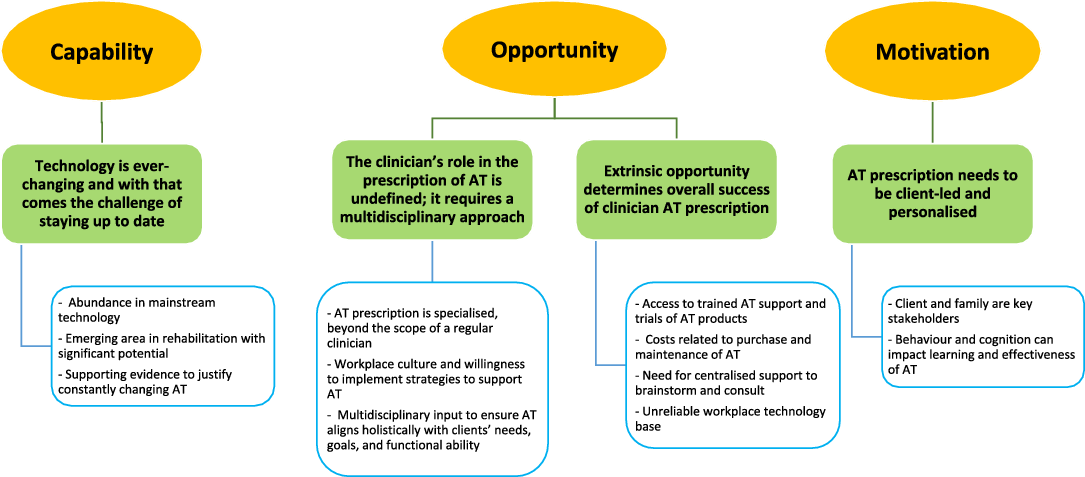
There was a total of 114 free-text responses from 61 respondents. Following analysis of free-text responses, the following four key themes were identified as important clinician experiences with AT; technology is ever-changing and with that comes the challenge of staying up to date, the clinician’s role in the prescription of AT is undefined and requires a multidisciplinary approach, extrinsic opportunity determines overall success of clinician AT prescription, and, AT prescription needs to be client-led and personalised. Additionally, these four themes have been mapped back to the COM-B model to illustrate clinician experiences with the components of behaviour change. A graphical summary of the themes, using the COM-B model is represented in Fig. 3. The following themes include verbatim data linked to each respondent’s unique numerical identifier, along with their profession(s).
Thematic analysis of clinician experiences with AT.

Technology is ever-changing and with that comes the challenge of staying up to date
This theme draws a connection to the capability component of the COM-B model. The gap in capability highlighted by ABI clinicians can be attributed to a rapidly growing technology market. Respondents identified that with so many products and services now available, it is impractical to be able to know all of them. The process of independently researching, learning to use, upskilling, and then determining the right AT to prescribe and teach a client can be time-consuming:
It feels like I would be opening Pandora’s Box if I started. I imagine I would need to learn lots and I would not have sufficient time to do it justice plus the amount of time needed to teach the client (P76, Occupational Therapist)
Furthermore, high-quality research and evidence to support its use is still catching up which is in dissonance to a key component of best practice: evidence-based care. A case manager and occupational therapist highlighted ‘I think it is hard to keep up to date with all the available options, and it’s hard to justify the rationale for recommending the equipment to funding bodies as there is often no literature to support its effectiveness’. (P45). However, in saying that, there was an acknowledgement that mainstream technology is now commonplace in community participation with great potential to assist clients in achieving more independence and functioning. An occupational therapist stated ‘Within our population more often than not clients are already familiar with mainstream AT…’ (P102) and a nurse, stated ‘…assistive technology can be very useful for patients with individualised care needs post TBI. It will give them confidence and motivation to be independent in their ADLs’. (P121).
The clinician’s role in the prescription of AT is undefined; it requires a multidisciplinary approach
Clinicians resonated with the concept that AT prescription requires multidisciplinary team input. Respondents reported that a client’s needs, goals and functional abilities should be thoroughly assessed to inform options of suitable AT:
It is not possible to have access to all the available mainstream AT however it is possible as the MDT to complete all the assessment of your clients’ needs, goals and functional abilities so that trials can be set up as a therapist…When there are more complex clients or more complex needs this is where working in collaboration with your experts can be helpful (P102, Occupational Therapist).
The theme can be linked to the capability component of the COM-B model, where clinical practice around AT is undefined, influencing the intention the build skill. Some clinicians, such as psychologists and social workers discussed that AT prescription could be beyond their scope of practice; their role would be limited to identifying and recommending that their client may have an AT need and then refer to an MDT member or specialist service with experience in AT prescription:
As a psychologist we don’t usually do prescribing or setting up but do make recommendations and liaise with other relevant professionals. I have recommended smart watches and smart phones but always asked for help from other professionals to get the funding over the line (P24, Psychologist).
Other clinicians, such as physiotherapists, occupational therapists and speech pathologists felt that with adequate support provided, they would be able to gain the skill and experience to be able to identify the need, prescribe, and teach their clients to use AT. An occupational therapist stated ‘Working alongside a specialist service would be a great way for me to learn, that is, I refer my client [and] attend sessions together [with the specialist] and increase my knowledge and skills through doing/experience’. (P76). Hence, the theme could also be linked to the opportunity component of the COM-B model, whereby access to trained support can promote growth in capability around AT.
Extrinsic opportunity determines overall success of clinician AT prescription
This theme links directly to the opportunity component of the COM-B model, highlighting the factors outside the clinician’s intrinsic beliefs that influence their use of AT. The factors that were reported by clinicians included cost and funding of AT, access to AT, and resources and strategies to support AT use in ABI rehabilitation. Areas of need identified by clinicians included access to trial AT, access to AT suppliers and services, funding for non-compensable clients and consideration of costs involved in the time taken to train clients. An occupational therapist stated ‘It is difficult without having access to the technology to know how it can be used. (P24). It is also difficult for a lot of our clients who have limited income to even consider using AT’. Another occupational therapist stated ‘…hours for training and set up needs to be supplied via the funding bodies and follow up for updating’. (P116).
Other factors that were raised included support to family and carers in using AT to ensure its sustainability and effectiveness; the need for centralised availability of resources, technology support and consultation services; and access to a strong technology base (strong network and internet connection, updated computers). A case manager reported ‘My workplace has a poor technology base; slow internet and old laptops/computers’. (P104).
The theme of extrinsic opportunity strongly resonated with rural and regional clinicians, who reported that there was an inequity even in the limited support currently available. A physiotherapist stated ‘It’s really difficult [as] a sole trader regionally, no one to ask/brainstorm with, and suppliers are not that helpful out here. [There are] less trial options as equipment isn’t held in town’ (P4) and an occupational therapist reported ‘Please consider hands on training options for rural and regional clinicians’. (P22).
Some comments also mentioned how managerial support and being in a workplace focused on innovation would help drive AT implementation within their service. For instance, an occupational therapist stated ‘My manager is really supportive but it’s the technology barriers. Generally, if I want to explore apps I download them onto my personal phone and look at them in my own time’. (P76).
AT prescription needs to be client-led and personalised
This theme links in with the motivation component of the COM-B model. related to clinicians’ views on what they believe influences their clients to use AT successfully. Clinicians reported that the uptake of AT needs to be motivated by the client. An occupational therapist stated ‘[a] client’s motivation, goals and interest in using AT is the driving force of whether it is worth the effort’. (P16). Some clinicians reflected on how differences in younger and older clients in their prior exposure and use of technology may influence their willingness to adopt AT. For example, a physiotherapist and case manager stated ‘Younger clients are often very open to assistive technology as they have grown up with smart phones etc. Older clients it is often dependent on their prior use/exposure to technology’. (P14).
Early buy-in from clients, their family and their carers are crucial. Clinicians acknowledged the impact of behavioural and cognitive impairments on the use of and benefits derived from AT and how the training process needs to be personalised and meaningful for successful uptake and sustainability of AT. An occupational therapist reported ‘Training for client, family and carers is also important and including them in the decision making about best AT and also their skill level, familiarity with AT and/or motivation to support its use’ (P75) and another occupational therapist was also in agreeance, stating
People with brain injury are often not able to picture an item described to them, they need to have it shown to them, sometimes they need support trialling it, they may like to trial it a few times to get a feel of it. They need time to learn something new. Once they have had the opportunity it normally works well for them (P111).
Some clinicians reported that for clients with behavioural limitations, certain types of AT can be fragile and easily breakable. The risk of damage to AT needs to be considered particularly when AT is acquired through funding bodies, as the subsequent costs for repair needs to be managed within the funding available for the client. An occupational therapist stated ‘Assistive tech is very breakable which often causes problems with repair times…’ (P99).
Discussion
This study provides novel insights into the clinician experience with supporting AT use for clients with an ABI. Notable key findings are the influence of age on technology self-efficacy, the overwhelming gap in clinician capability; the intricacies and rich narrative behind the barriers and lack of extrinsic opportunities for clinicians; and the most valuable strategies identified by clinicians to support the implementation and prescription of AT.
The study highlights that overall, clinicians have strong positive attitudes towards AT in improving client engagement in rehabilitation as well as community participation. This is consistent with published evidence investigating user experiences that has found that both clinicians and people with ABI are optimistic about using AT, and expect favourable outcomes (Charters et al., Reference Charters, Gillett and Simpson2015; de Joode et al., Reference de Joode, van Heugten, Verhey and van Boxtel2010). Despite this, the current study identifies an overwhelming call from clinicians to facilitate capability building within AT implementation. Brunner et al. (Reference Brunner, Hemsley, Togher and Palmer2017) stresses that tailoring technology to the person’s individual goals and needs, and providing ongoing support and assistance are key factors in the successful adoption of technology in rehabilitation and everyday life after ABI. This requires skill and expertise from clinicians across multiple domains including navigating through the range of AT and reviewing the evidence behind them, assessing the suitability of AT against essential attributes important to the client, trialling AT with the client, and subsequently training and providing ongoing support to the client and their family/carer to use AT independently.
In a study by Wong et al. (Reference Wong, Sinclair, Seabrook, Mckay and Ponsford2017) investigating smartphone use amongst people with TBI, difficulty in learning how to use a smartphone was identified by participants with TBI, however only 10% were shown how to use it by a clinician. The current study identified that the youngest age group of clinicians had significantly higher levels of technology self-efficacy than older age groups. However, in terms of the knowledge and confidence in the application of AT to the clinical setting, the 35–44 group had significantly higher scores than the other age groups, suggesting that while the younger age group had strong technology self-efficacy, they were not as knowledgeable and confident in the application of that generalised self-efficacy into the clinical context. At an organisational level, acknowledging this variance in technology use and clinical expertise can enable more targeted support with capability building.
According to the COM-B model, successfully building capability comes with having the right extrinsic opportunities and social supports available (Michie et al., Reference Michie, Atkins and West2014). Clinicians in the study overwhelmingly agreed that time involved with researching, trialling and prescribing AT, and access to AT were the biggest barriers for supporting their clients in their AT journey. Surprisingly, contrary to previously published literature (Chen & Bode, Reference Chen and Bode2011; Gagnon-Roy et al., Reference Gagnon-Roy, Bier, Couture, Giroux, Pigot, Zarshenas and Bottari2021; de Joode et al., Reference de Joode, van Boxtel, Verhey and van Heugten2012; O’Neil-Pirozzi et al. Reference O’Neil-Pirozzi, Kendrick, Goldstein and Glenn2004; Vaezipour et al., Reference Vaezipour, Whelan, Wall and Theodoros2019; Zarshenas et al., Reference Zarshenas, Gagnon-Roy, Couture, Bier, Giroux and Nalder2020) cost was not identified as a major limiting factor. This may be explained by the fact that while AT can be purchased on the open market in Australia, there are also a range of government and non-government funding schemes that assist people to access AT. However, the emerging themes from the free-text responses of clinicians who completed the survey also highlighted the complexity of these funding schemes, which may not extend to mainstream technologies. Ineligibility of mainstream technologies for public subsidies leads to the provision of incomplete, non-specific assistive solutions that do not adequately address the goals and needs of clients (Steel et al., Reference Steel, Layton, Foster and Bennett2016).
The study informs the need to support increased training and resources to build clinician capability and access to AT, with particular attention to rural and remote regions where limitations in the use of technology are magnified. This aligns with Jamwal et al. (Reference Jamwal, Callaway, Ackerl, Farnworth and Winkler2017), who identified a significant association between house location and the total number of devices in use amongst people with a disability in Victoria, Australia. The study highlights that urban dwellers used more devices than expected compared to rural-based electronic AT users, who were using less devices than expected. Future strategies should be targeted at increasing knowledge and confidence with using AT through the provision of face-to-face and virtual workshops to trial AT products as well as developing guidelines on prescribing goal-centred AT. Access to AT and related resources should be more readily available. This can be achieved by creating a centralised resource with research publications, emerging AT products and AT suppliers in rural and metropolitan regions, as well as having in-house support or a remotely accessible hotline for troubleshooting AT-related concerns.
The findings need to be interpreted within the following limitations. Clinicians from public services were limited to the NSW Brain Injury Rehabilitation Programs and did not extend to other public specialty ABI or general rehabilitation services. Furthermore, the study respondents were primarily occupational therapists, physiotherapists and speech pathologists (with other disciplines represented by only a handful of respondents) and hence may not capture the broad perspectives of all clinicians involved in the treatment and/or support of people with an ABI. Additionally, clinicians with more negative views or a lack of experience in relation to AT may not have participated in the survey, and therefore, the results may overstate the knowledge and attitudes of clinicians in general. The study was also focused on a single jurisdiction (NSW), and therefore may not be representative of the perspectives of clinicians at a national level.
Part 5 of the survey used in this study captured quantitative data on the frequency and types of AT used by ABI clinicians, and qualitative data of specific examples of AT used by ABI clinicians including their benefits and challenges. It is anticipated for these results to be reported in a separate paper and will provide insight into existing patterns of clinician AT use in ABI. Future research could be focussed at broadening the scope of the survey to capture clinician perspectives at a national level, particularly with differences in funding programmes and health governance within states. Furthermore, clinical implementation research is needed to examine the feasibility and effectiveness of implementing strategies that address AT globally in enhancing clinician capability and mitigating barriers to AT use. The subsequent implications of these strategies on total AT devices prescribed by clinicians and whether this in turn has improved functional outcomes in individuals with ABI, may provide evidence to support behaviour change locally within healthcare settings to drive AT use, but also more broadly within funding bodies and policy development to support funding of a wider range of AT, including mainstream technologies. Lastly, the findings highlight the importance of staying at the forefront of AT clinical practice to ensure individualised and up-to-date prescription, which requires continuous education and training. Further research might seek to better understand how expert AT clinicians achieve this within their own clinical practice.
Supplementary materials
For supplementary material for this article, please visit https://doi.org/10.1017/BrImp.2023.5
Acknowledgements
Agency for Clinical Innovation Brain Injury Rehabilitation Directorate.
Lauren Christie, Senior Implementation Science Research Fellow-Allied Health, St Vincent’s Health Network, Sydney.
Thomas Gates, Research Fellow, Brain Injury Rehabilitation Research Group, Ingham Institute for Applied Medical Research.
Financial support
This work was supported by a project grant from icare NSW, the state statutory authority responsible for the LifeTime Care scheme for people injured in road accidents.
Conflicts of interest
Authors KP and BW have no conflicts of interest or disclosures to report.
Authors KP and BW salaries were funded by icare NSW as part of a project grant titled ‘Establishing the Assistive Technology Research, Education and Development Hub (AT Hub).’ icare NSW provide part of the salary of author GS through their financial support of the John Walsh Centre for Rehabilitation Research. icare NSW had no input into the design, administration, and analysis of the survey or write-up of this manuscript.
Ethical standards
The author asserts that all procedures contributing to this work comply with the ethical standards of the relevant national and institutional committees on human experimentation and with the Helsinki Declaration of 1975, as revised in 2008.