Introduction
In response to the need for the discipline of disaster health to build its science on data that may be generalizable and comparable, a set of five Frameworks has been developed to structure the information and research of the health aspects of disasters. These Frameworks provide a standardized format for studying and comparing the epidemiology of disasters as well as evaluations of the interventions (responses) provided prior to, during, and following a disaster, especially as they relate to the health status of the people affected or at-risk. The components of each of these Frameworks are broken down (deconstructed), defined, and simplified in order to describe the interactions and identify the underlying evidence. These Frameworks are conceptual, and, as with all conceptual models, they are dynamic, and open to challenge and change as new evidence is gleaned. Although these disaster Frameworks may be useful to other disciplines, they were created specifically for the study of the health aspects associated with a disaster. The details of each of the Frameworks and supporting information are provided in the set of papers that accompany this Overview.
Disaster Research
Research is a studious inquiry or examination; an investigation or experimentation aimed at the discovery and interpretation of facts, revisions of accepted theories or laws in the light of new facts, or the practical application of such new or revised theories or laws.Reference Guralnik and Friend 1 These definitions are inclusive of reports that entail the gathering and synthesis of data/information, i.e., situation reports, progress reports, as well as after-action and final reports and summaries.
Goals of Disaster Research
The ultimate goals of conducting disaster research are to obtain information to: (1) decrease the mortality associated with disasters; (2) decrease the morbidity; (3) decrease the pain and suffering; and (4) enhance the recovery of the affected population. Theoretically, dead victims should not create a burden for the Medical Care and Public Health systems, but, it is important to define the mechanisms and causes of death in order to develop interventions to mitigate the numbers of deaths from future events. Deaths that potentially could have been prevented should be studied. Morbidity resulting from the structural damage created by an event includes temporary and permanent disabilities sustained. Disabilities have profound social and economic implications in addition to the physical compromise. Pain and suffering are inevitable components of disasters, but often their occurrence and severity can be mitigated if methods to minimize these problems, whether related directly or indirectly to the damages caused by the event, are identified. Appropriate management of the various manifestations of pain and suffering remain to be codified.
Recovery is complete only when the pre-event status of the affected society is restored. Recovery of the affected individuals and population often is slow and incomplete. There is little documentation regarding the recovery from the functional damage created by an event. Research is necessary to identify ways to enhance the speed and comprehensiveness of recovery from a disaster.
Various stakeholders have different needs for disaster research findings. For example, governments have the mandate to protect their constituency and thus, must use research findings to find optimal ways to protect the population at minimum costs. On the other hand, donors look to research findings to support the interventions provided with maximal efficiency and minimum waste. Responders to a disaster look to evidence from research to choose appropriate interventions. All of the stakeholders require knowledge from epidemiologic studies of a disaster that define what to expect when a hazard becomes manifest as an event and progresses to a disaster. Although there is an abundance of information of health changes in relation to disasters, most of the information exists in the grey literature (not scientifically peer-reviewed) and lacks the structure necessary for comprehensive analyses and comparisons.
Research involving evaluations of the interventions provided before, during, and after an event are scarce, particularly the evaluation of the outcomes and impacts of the interventions provided. Unfortunately, baseline, pre-event inventories often are not available, which complicates the interpretation of the findings. In addition to evaluating the effects (outputs), outcomes, impacts, and costs of specific interventions, it is important to study the processes used in an effort to determine critical points of success/failure in the process and avoid future errors. Few such studies currently exist, but are essential to determine accountability.
In order to move out of the current morass in disaster health research and develop a standardized format for obtaining information, five modified Frameworks for structuring the research of disasters are provided: (1) Conceptual; (2) Longitudinal; (3) Transectional Societal; (4) Relief-Recovery; and (5) Risk-Reduction. The first three of these Frameworks are useful in both epidemiological and interventional research, while the Relief-Recovery and Risk-Reduction Frameworks are components of interventional research. These Frameworks provide the structure necessary for analysis and reporting and will facilitate comparisons of various components of a disaster. Each of these Frameworks is described briefly.
The Conceptual Framework
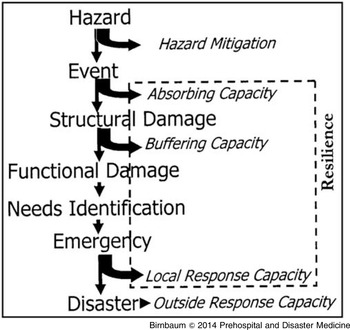
Critical to all five Frameworks is the inclusion of standardized definitions of the terms used to describe factors that lead to and affect the occurrence and severity of a disaster. The progression of the occurrences that lead to a disaster begins with a hazard that becomes an event, that causes structural damage and functional damage (decrease or loss of function), that, in turn, are synthesized into needs that lead to a disaster (Figure 1).
Hazard
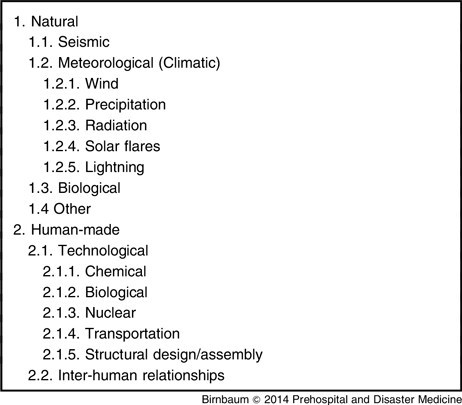
A hazard is anything that poses a danger or threat. Hazards may be natural, or human-made, or a combination of both.Reference Sundnes and Birnbaum 2 Natural hazards are classified as seismic (or geophysical), climatic (meteorological), or biological (Table 1). Human-made (anthropogenic) hazards may be classified as technological, or related to man's potential for conflict. Some hazards, such as poorly constructed buildings, and existing seismic activity, represent a combination of natural and human-made hazards.
Classification of Hazards by Type

Event
An event is the actualization of a hazard; it is the release of energy that has the potential to negatively affect living things and/or the environment.Reference Sundnes and Birnbaum 2 Events may be caused by natural or human-made hazards, or by a combination of the two (Table 1). For example, a severe rainstorm (an event related to a natural hazard) may cause mudslides related to deforestation (a human-made hazard).
The use of the term event is most commonly confused in disaster reporting; frequently, and erroneously, the event is referred to as the disaster. However, an event is not a disaster, and it may or may not cause a disaster. Identifying the event, or events, that resulted in a disaster is essential in order to make comparisons between events and to discern those commonalities that may exist in many or all events.
The probability that any hazard will become an event may be reduced through human actions to modify the risks associated with that hazard. The likelihood that a hazard will become an event depends on the natural vulnerability (i.e., the vulnerability determined by nature), as well as the vulnerability of the society as a result of human actions.Reference Sundnes and Birnbaum 3 While risk modification to reduce the probability of an event from a hazard is possible for the anthropogenic hazards, few natural hazards are amenable to modifying their likelihood for occurrence.
Structural Damage
Structural Damage is the harm or injury an event causes to any structures, both living and manmade, and/or the environment. Structural Damage impairs the value or usefulness of something; it is the negative consequence(s) of the energy released by the event.Reference Sundnes and Birnbaum 2 The physical collapse of buildings or bridges, or the injuries (physical or psychological) sustained by victims of an event are examples of Structural Damage. Some damage to structures may be reparable and some irreparable. Just as not all hazards cause an event, not all events cause structural damage. And as with an event, the occurrence of structural damage does not necessarily result in a disaster.
In order for damage to result from an event, the structure must be exposed to the forces created by an event. If an event occurs, but no one is exposed to the forces of the event, no injuries will result. The likelihood that an event will result in structural damage is determined not only by the amount of energy released by the event and exposure to the energy released by the event, but, also, by the capacity of the affected society (its environment, living beings, structures, infrastructures, and financial system) to absorb some or all of that energy. This is referred to as the Absorbing Capacity Reference Guralnik and Friend 1 and may be modified (increased or decreased) by human actions (Figure 1). For example, constructing buildings with quake-resistant materials increases the Absorbing Capacity for the energy released by an earthquake, while extensive logging and deforestation may decrease the Absorbing Capacity for the energy released by heavy rains.
Functional Damage (Changes in Functions)
The damage to some structure or the environment that results from an event may impair the function of that living or man-made structure (Functional Damage). The resultant damage may be a decrease in the level of function, or a total loss of function. For example, a broken pipe (Structural Damage) may lead to a reduction or loss of water supply (Functional Damage), causing some of the functions of the organizational structure of the society to be diminished or unavailable. Or, the collapse of a bridge (Structural Damage) may lead to the loss, at least temporarily, of the transportation of people, goods, and services; it alters the functioning of the society (Functional Damage). Not all Structural Damage caused by an event leads to Functional Damage. For example, if a storm causes a loss of electrical power to a hospital, but a back-up generator takes over, no loss/decrease of function occurs. If no change in function occurs, no disaster occurs.
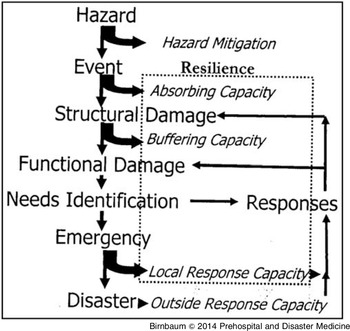
The probability that a change in function will result from the Structural Damage caused by an event is determined by the extent of the structural damage and the ability of the affected society to cope with that structural damage and to continue to function despite a change in available resources. This ability is referred to as the Buffering Capacity Reference Sundnes and Birnbaum 2 of the society and can be modified (increased or decreased) by human actions (Figures 1 and 2). For example, the stockpiling of drugs and medical supplies increases the Buffering Capacity for the structural damage caused by an epidemic, while locating back-up generators in the basement of hospitals decreases the Buffering Capacity for the structural damage resulting from flooding. The stockpiling of drugs may allow the healthcare system to continue to function during an epidemic, while generators placed in the basement of the hospital are likely to be damaged by flooding, and thereby render the hospital only partially functional, or completely non-functional.
The Conceptual Framework (revised from reference 2)

Needs
A compromise of the functional status of any Societal System generates needs. Needs are the differences between the available goods and services and those required to either stop or slow further losses of function, or to return the function to its pre-event level of function. Identifying the needs requires converting the degradation in function to the goods and services needed to restore function. This conversion involves the synthesis of many assessments and requires substantial expertise and experience. Often, the conversion is based on assumptions (see Disaster Logic Model). Therefore, there is a risk that this conversion may not yield an accurate determination of actual needs. Inaccurate/inappropriate synthesis of the assessments data (lack of validity) can lead to undesirable consequences for the affected community, for the responders, and/or for the donors. The process of setting goals and objectives of interventions is part of Strategic Planning to meet the defined need(s). In some circumstances, needs may be anticipated from the characteristics of the event and the structural damage likely to occur. Anticipated needs are a product of the experience of those synthesizing the data from the assessments. The identification of needs is an ongoing process as more information becomes available and is integrated into the current Strategic Plan.
Responses
Responses are interventions/actions undertaken to meet the relief or recovery needs that resulted from an event. As noted above, needs are expressed as the goods and services required to sustain or restore the levels of function (relief) or to contribute to recovery. Each response must be related to a specific need or set of needs (Figure 2). Every response (intervention) must have a stated overarching goal and objectives that contribute to attaining that goal. Given the defined goal and the objectives for interventions designed to meet all or part of the goal, the most appropriate, efficient intervention is selected, providers are identified, and the selected response is implemented according to an Operational Plan (see Relief-Recovery Framework). In general, responses are directed either to correcting the functional damage or to repairing/replacing the damaged structure, which, in turn, will decrease the functional damage and decrease the needs.
Response Capacities
Responses consist of the use of the goods and services contained within the respective response capacities and are reflected in the Conceptual Framework (Figures 1 and 2). Response Capacity often is referred to as “preparedness”. It includes the Disaster Response Plan, competent individuals/organizations, equipment, supplies, and plans (often referred to as “contingency plans”) required to support the responses/interventions selected to meet the needs that are expected or have resulted from an event. The Local Response Capacity consists of the plans, goods, and services that are contained within the community (individual, family, neighborhood, community, province/state, etc.) and available to the affected community or a community-at-risk for an event. Response Capacity and capabilities increase as one proceeds up the hierarchy of government: an individual's capacity is less than that of the neighborhood, which is less than that of the community, which is less than that of the state/province, which is less than that of the national government, which is less than the capacities of the international community. Thus, as responses move up the hierarchy, more and more resources can be brought to assist the affected society. Any response capacity from higher in the hierarchical level than the community affected by the event is considered to be part of the Outside Response Capacity. All Response Capacities can be augmented by human actions (see Risk-Reduction Framework).
Emergency
When the goods and services within the Local Response Capacity are sufficient to meet the needs that result from the changes in function (Functional Damage) to one or more components of the community affected by an event, the status of the affected community can be called an “Emergency”. An Emergency exists when all of the needs created by an event can be met by the goods and services contained within the “local” response capacity; no outside assistance (use of the Outside Response Capacity) is required. The Local Response Capacity is sufficient to meet the needs of the affected community or part of the society that is compromised. During an Emergency, the resources in the Local Response Capacity are used. For example, if the community fire department is able to extinguish the fire, or the community emergency medical services and medical facilities are able to provide all of the care required from an event that resulted in multiple casualties, no Outside Response Capacity is required. When outside responses are required to meet the needs of an affected society, a disaster has occurred for that community or part of that community (see Transactional Societal Framework).
Disaster
The probability that Functional Damage from an event will result in a disaster is determined by the extent of the damage, and whether or not a vital function is diminished or lost, and the capacity of the Local Response System. If the Local Response System is able to manage the Functional Damage (i.e., meet the needs), and eventually restore any loss of function using available local resources, a disaster for that community (or part of the community) does not occur.
The commonly used definition of a disaster is “serious disruption of the functioning of a society, with widespread human, material, and/or environmental losses that exceed the ability of an affected society to cope using its own resources”.Reference Sundnes and Birnbaum 2 However, this definition is too diffuse and difficult to apply. For the purposes of this work, a disaster occurs for a society or a part of a society any time outside assistance is required to meet the needs created by an event. A disaster always requires outside assistance, whether that outside assistance comes from a neighboring community, county, state, province, territory, or country. Thus, the affected society's ability to cope with or manage the changes or losses in function (s) that resulted from the structural damage caused by an event will determine whether or not a disaster occurs. The Outside Response Capacity is used to supplement the Local Response Capacity. The overwhelming change(s) in function (s) that cause a disaster in one society may be manageable by local responses in another society, and not result in a disaster for that society. Disasters occur at the local community level. 4
Resilience and Vulnerability
Resilience is the ability to recover quickly from illness, change, or misfortune; the property of a material that enables it to resume its original shape or position after being bent, stretched, or compressed; elasticity;Reference Pickett 5 the ability of a system, community, or society exposed to hazards to resist, absorb, accommodate to, and recover from the effects of a hazard in a timely and efficient manner. 6 In terms of a disaster or an emergency, Resilience is comprised of the Absorbing, Buffering, and Response Capacities of a society (Figures 2 and 3). The resilience of a community may be modified by human actions or by changes in the environment caused by events from natural hazards. Resilience increases as the Absorbing, Buffering, and/or Response Capacities are increased.
Conceptual Framework with Responses added. Responses use the goods and services that are part of the Response Capacity to meet the Needs derived from the Functional Damage.

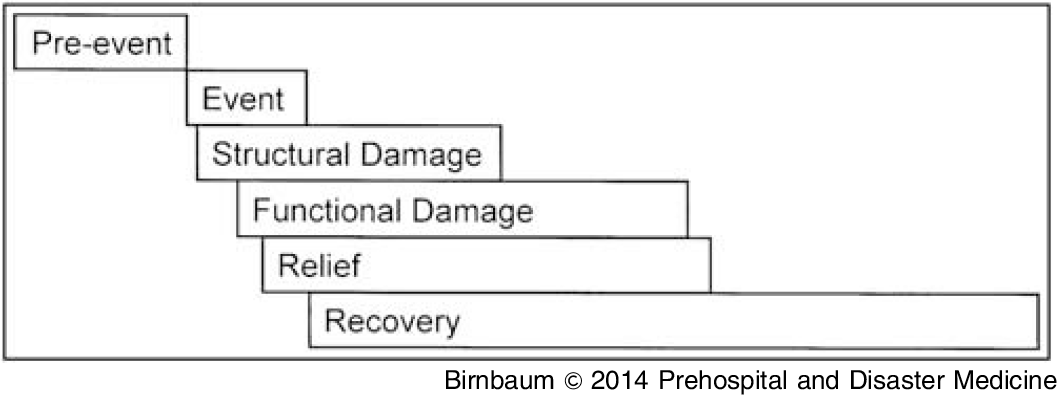
Longitudinal Framework. The phases of a disaster progress in chronological order, but defined by their properties rather than intervals of time. The phases usually overlap—some of the phases may run concurrently.

On the other hand, vulnerability is the degree to which people, property, resources, systems, and cultural, economic, environment, and social activity are susceptible to harm, degradation, or destruction on being exposed to a hostile agent or factor; 7 a capacity leading to a higher risk due to the combined effect of susceptibility and differences in exposure to a given hazard. Vulnerability decreases as the Absorbing, Buffering, and Response Capacities are increased. Capacity-building activities decrease the vulnerability to a hazard.
The Longitudinal Framework
The elements of the Conceptual Framework can be related longitudinally against time (Figure 3). The chronological progressive phases of a disaster are deconstructed longitudinally in order of their appearance in time, even though some of them may occur concurrently. For the purposes of studying disasters, and for interpreting, understanding, and comparing the findings of such studies, it is imperative to distinguish each of the phases of a disaster. These phases are identified by their properties rather than by a time component and include: (1) the Pre-event Phase; (2) the Event; (3) the Structural Damage; (4) the Functional Damage (changes in function); (5) the Relief Response Phase; and (6) the Recovery Response Phase. The Relief Response Phase includes all interventions aimed at alleviating the pain or suffering of the disaster-affected society. The Recovery Response Phase includes those interventions that are not directed towards lifesaving or relief efforts, but, rather, towards restoration of the society's functional systems to their pre-event state. When the pre-event state of the functional systems of the society is restored, recovery is complete, and the disaster for that system is over. Capacity-building and risk-reduction interventions and actions that improve one or more of the Societal Systems to a higher level of function than it was before the event are part of development, as they improve the society's ability to withstand a future event; they are not a phase of a disaster.
The Transectional Societal Framework
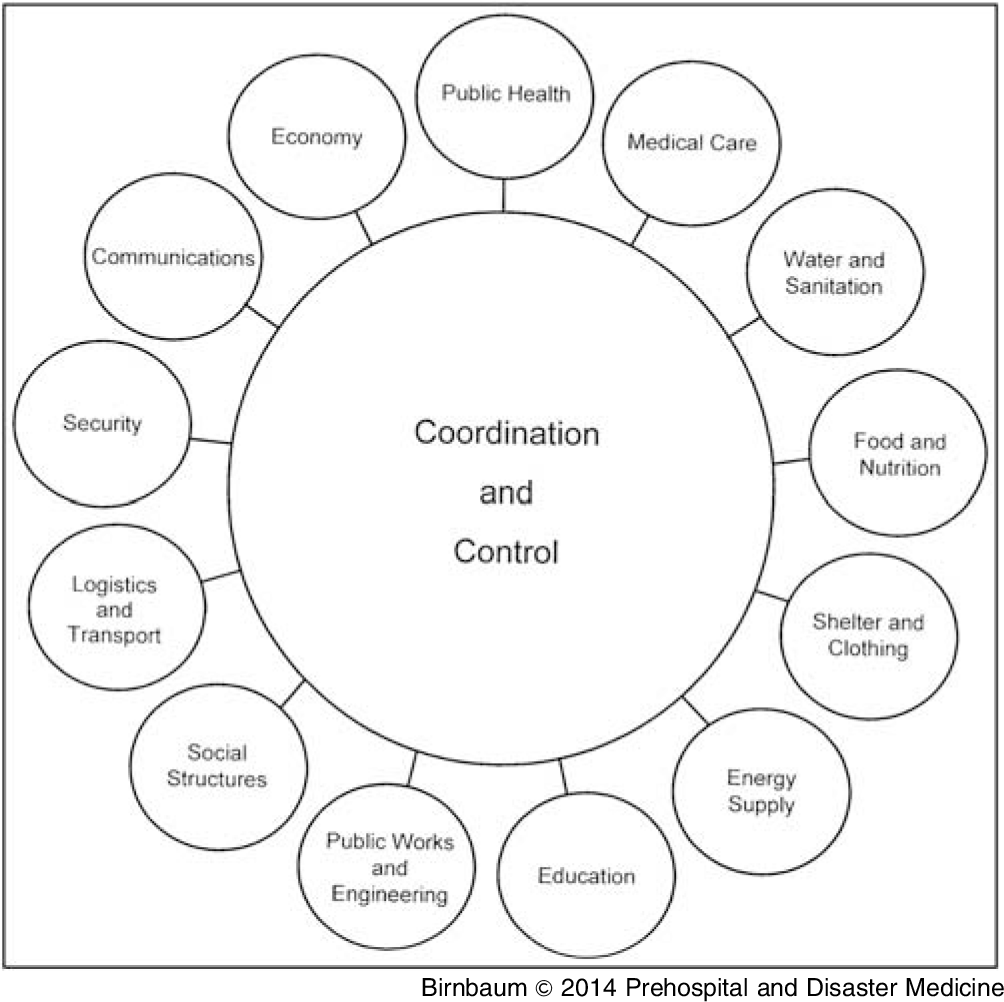
The structural and functional damages and the disaster that occur following an event are relevant only in terms of their impact on a society's population, constructions, functions, or environment. In order to study and compare the effects of an event on the complex amalgam that constitutes a society, the essential functions of a society have been deconstructed into 13 systems or components (Figure 4),Reference Sundnes and Birnbaum 2 in much the same way that the human body is organized by functional organ systems for purposes of clinical assessment. These functional descriptors are generic and exist in some form or another in virtually all societies, and are referred to as Basic Societal Systems. Each of the Basic Societal Systems consists of multiple functions and sub-functions, and most are dependent upon one or more functions of other Systems to remain operational. For example, the Medical Care System depends on the Education System for the training of healthcare personnel, and the Transportation System for the delivery of patients, staff and supplies; and virtually all of the Systems are dependent on the Energy Supply System.
Transectional Societal Framework with 13 Basic Societal Systems linked together by a Coordination and Control function. The Societal Systems may have dependencies and interdependencies between them.

The organization of the Basic Societal Systems is similar to the organization of the Clusters defined by the UN Inter-Agency Standing Committee. However, for the purposes of analysis and research, it is necessary to categorize or assign functions to only one Basic Societal System, using the same indicators of function with each assessment. This allows evaluations to be repeated and the findings to be compared both between evaluations, between societies, and between disasters.
A disaster is functional damage of one or more of the Basic Societal Systems that requires outside assistance for relief and/or recovery. The magnitude of functional damage from an event is dependent, in part, on the number of Societal Systems affected: the more Societal Systems that lose functions, the greater is the disaster for the community as a whole, and the greater is the need for outside assistance.
Types of Research and Evaluations
There are two basic types of disaster research: (1) Epidemiological; and (2) Interventional. Epidemiology is the study of the incidence and distribution of diseases and of other factors related to health;Reference Thompson 8 the science concerned with the study of factors determining and influencing the frequency and distribution of disease, injury, and other health-related events and their causes in a defined human population for the purpose of establishing programs to prevent and control their development and spread; the sum of knowledge gained in such a study.Reference Pickett 9 Thus, epidemiological disaster research attempts to define the causes of disasters and the progression from a hazard to a disaster. The use of standard definitions can augment the ability to analyze and synthesize information from such studies, and develop the scientific base of disaster health.
Interventions are action(s) by humans to prevent, attenuate, create, or enhance change.Reference Sundnes and Birnbaum 2 To evaluate means to assess or appraise.Reference Guralnik and Friend 10 In the context of disaster health, evaluation is an assessment of the effects, effectiveness, efficacy, costs, efficiencies, outcomes, and impacts of interventions provided during any phase of a disaster. The evaluation of such interventions constitutes interventional disaster research.
Unfortunately, due to the paucity and non-uniform structure of reports of disaster interventions, little is known about the processes, effects, effectiveness, efficacy, costs, efficiency, outcomes, and impacts of interventions used before, during, and after disasters. Because of this, it has not been possible to identify which interventional processes resulted in benefit(s) to the society affected or failed to do so. However, this knowledge is essential for the codification of standards and best practices.
Epidemiological Disaster Research
Thus far, epidemiological research has been the most common form of disaster research used for the study and understanding of disasters. It consists primarily of case, situational, progress, and final reports and summaries. Unfortunately, most of the reports are widely dispersed in the literature and much has been published in the grey literature (non-peer reviewed, non-scientific, literature that may be self-serving). Currently, the best and most accessible repository for disaster epidemiological reports is maintained by the Center for Research on the Epidemiology of Disasters (CRED) at Louvain University in Brussels. 11 The three Frameworks that are proposed for use in the documentation and study of the epidemiology of disasters are the: (1) Conceptual; (2) Longitudinal; and (3) Transectional Societal Frameworks. The study of the outcomes and impacts of specific interventions do not constitute epidemiological research.
The Conceptual Framework in Epidemiological Research
The Conceptual Framework provides a uniform terminology and a structure for reporting disaster epidemiological information, as well as reports, and summaries. Its use tracks the progression from the existence of a hazard to the development of a disaster, and should facilitate gaining an understanding of a disaster. The Conceptual Framework provides a structure for use in reporting the epidemiology of a disaster, and should be used in writing and publishing disaster reports (e.g., case studies, situation, progress, after-action, and final reports and summaries). Use of the Conceptual Framework should facilitate the synthesis of reports from the same disaster, from similar disasters, and even the integration of information between dissimilar disasters.
The Longitudinal Framework in Epidemiological Research
The Longitudinal Framework provides the structure required for describing the phases of a disaster. The phases are not time bound, are not strictly consecutive (i.e., they may overlap), and relate to the properties that characterize each of the phases. When reporting a case study or in reports, summaries, and research, the specific phase of a disaster being discussed should be noted. This facilitates comparisons between disasters, and hence, the synthesis of what happened, when it happened, and why it happened.
The Transectional Societal Framework in Epidemiological Research
The Transectional Societal Framework is used to define the functional status of a societal component or system at a particular time during one of the phases of a disaster. Use of the Transectional Societal Framework facilitates the description of the numerous components or systems of the affected society or a society-at-risk, and permits the comparison of disasters/emergencies. As previously mentioned, a disaster occurs when an event causes one or more of the Basic Societal Systems to reduce or cease operation, and outside help is required to provide assistance. Studying and/or reporting the functional damage sustained from an event cannot be done of the society as a whole, but, rather, must be focused on one or more of its functional systems. For instance, it is not appropriate to compare the assessments’ findings of the functions of the Medical Care System with those of Water and Sanitation, even though they are dependent and inter-dependent on each other. Each of the Basic Societal Systems has specific functional responsibilities.
The Conceptual, Longitudinal, and Transectional Societal Frameworks provide the structure required for describing and understanding the epidemiology of disasters. The use of these three Frameworks should be required for all reports that describe or influence disaster epidemiology.Reference Kulling, Birnbaum, Murray and Rockenschaub 12 Without the use of such structure, the case studies and reports of the health effects of a disaster will remain elusive, and will continue to prevent the synthesis of available information into meaningful science that can be used for education and training. Detailed descriptions of each of these Frameworks are provided in subsequent papers in this series.
Interventional Disaster Research
Interventional research involves the evaluation of interventions whether they are directed at relief, recovery, hazard mitigation, capacity building, or performance. The processes used for the evaluations of interventions provided before, during, or after a disaster are quite similar. Currently, few reports of the effects, effectiveness, efficacy, costs, efficiencies, outcomes, and impacts of interventions have been published in the scientific literature. Unlike the CRED database for epidemiological research, 11 a common, accessible repository for interventional research in the health aspects of disasters currently does not exist. Interventional disaster research incorporates the use of the Conceptual, Longitudinal, and Transectional Societal Frameworks as well as the Relief-Recovery and Risk-Reduction Frameworks.
The Disaster Logic Model
A logic model is a graphic representation of a program [project] that depicts the intended relationships between investments and results. A logic model is a framework for describing relationships between investment, activities, and results. 13 Since the 1970s, logic models have been used for quality management and planning by private, public, and non-profit organizations in the domestic and international arenas (including by some donors). 13 - 19
Logic models are used to describe a program and its theory of change. “A theory of change is a description of how and why a set of activities—be they part of a highly focused program or a comprehensive initiative—are expected to lead to early, intermediate, and long-term outcomes over a specified period.”Reference Funnell 14 The use of logic models helps to match evaluations to the interventions, define what should be assessed, and to focus on key information, including prioritization and what really must be known and why. Therefore, logic models are useful in planning, implementing, evaluating, and communicating projects or interventions.
The University of Wisconsin-Extension (UWEx) model has promulgated a logic model for the design and evaluation of educational programs. 16 , 18 , 19 This logic model defines logical relationships between inputs, outputs (activities and participation), outcomes, and impacts over the short-, medium-, and long-term. A logic model provided by the Kellogg Foundation separates the components of the logic model into resources and inputs, activities, outputs, outcomes, and impacts. 17
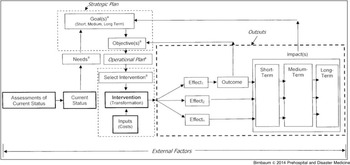
However, none of the logic models identified are precisely applicable to the evaluation of interventions provided before, during, or following disasters. All disaster-related interventions seek to change the current functional status of a population affected by or at risk for a catastrophic event. Thus, the outputs from the transformation process should be a change(s) in the functional status of the society. The existing logic models do not require definition of the goals or objectives of the interventions, nor do they relate the needs, outputs, outcomes, and impacts to the goals and objectives. Therefore, for use in the study of disasters, the logic model has been revised to include relating: (1) the goals and objectives with the needs; (2) the effects of the intervention to the goal and objectives for which the intervention was selected; (3) the outcomes to the objectives of the intervention; and (4) the impacts to the overarching goal of the interventions. Separating the outcomes from the impacts is essential for the evaluation of a disaster intervention. This iteration of the logic model is termed the “Disaster Logic Model” and is illustrated in Figure 5.
The Disaster Logic Model Used for Structuring Evaluations of Interventions.
aAssumptions are required to complete this step.

Use of the Disaster Logic Model provides the needed structure for evaluations of any intervention or project. It can be used to identify the effects (outputs); the outcome(s) (effects related to the objective(s) of the intervention); impacts (effects related to the goal) on the affected population or the population-at-risk; and the resources (human, materials, financial, environmental, and opportunity costs) consumed by the transformation process. Cost:benefits, cost:effectiveness, and efficiency in achieving the objectives can be derived and can be compared with those from other interventions by the same or different providers.
The Relief-Recovery Framework in Interventional Disaster Research
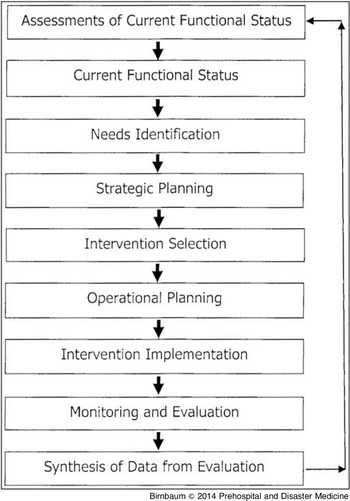
Once an event has occurred and caused damage, human actions (interventions) are undertaken to prevent losses of function (Relief), and to restore the levels of function back to their respective pre-event state (Recovery). The need for a specific intervention is determined by synthesizing the data/information obtained from assessments, and a Strategic Plan is developed to meet these needs. Interventions are selected, an Operational Plan is developed, and the intervention is implemented with the intent of satisfying (at least in part) the need(s) for which it is intended. Following implementation, all interventions must be evaluated for their effects, effectiveness, efficacy, costs, efficiency, outcomes, and benefits/impacts to the affected society, as well as for the critical points of success and/or failure of the entire process. The findings from these evaluations are integrated back into risk-reduction plans, hopefully, to improve outcomes for the next time.
The Relief-Recovery Framework (Figure 6) is based on the Disaster Logic Model and provides the structure necessary to systematically evaluate specific interventions provided during the Relief and Recovery Phases of a disaster. Each intervention is a production (transformation) process that results in changes to the current status. The use of the Relief-Recovery Framework not only facilitates the identification of the effects of a specific intervention, but also its outcomes as related to the objectives of the intervention and its contribution towards achieving the overall goal. The Relief-Recovery Framework allows the dissection of the multiple processes that are involved in the identification of needs and the selection and implementation of each intervention. Analyzing these processes facilitates comparisons of interventions in order to identify those most successful in achieving the objectives and contributing most to the strategic goal with the greatest efficiency and the least number and lowest severity of undesirable effects. This information is necessary to build an evidence-based repository of effective disaster-related interventions.
Relief-Recovery Framework provides the structure used for evaluations of interventions designed for Relief or Recovery.

The Relief-Recovery Framework is utilized to evaluate interventions/responses provided during a disaster AND to evaluate the underlying performance process. It is quite possible that the reason a particular intervention did not have the anticipated positive outcome is related to a failure in process (e.g., insufficient funding, inappropriate needs identification) rather than to the conceived intervention. Each of the processes of the Relief-Recovery Framework should be identified in reports of every disaster relief/recovery intervention.
The structure provided by the Relief-Recovery Framework should facilitate the development of useful interventions, demonstrate the worth of the project to the sponsors, and build the evidence to support best practices for use for future events and education and training.
Risk, Risk Reduction, Risk Management, and Capacity Building
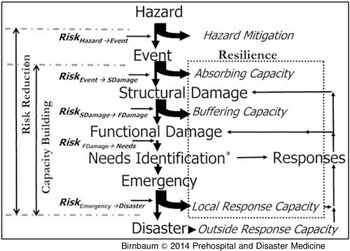
The risk, or likelihood, of a disaster is a continuum of risks from a hazard to an event, to structural damage, to functional damages that create needs, to the local response capacity to meet those needs. Each step in this continuum/cascade can be characterized by its probability of occurrence, and the possible consequences of its occurrence; each risk is dependent upon the preceding occurrence in the progression of a hazard to a disaster (Figure 7). A consequence of each risk in the continuum is the next occurrence in the Conceptual Framework, i.e., the risk that: (1) the hazard will produce an event; (2) the event will produce structural damage; (3) the structural damage will result in functional damage; (4) the functional damage will be correctly synthesized into needs; and (5) the needs created by the functional damage will exceed the local response capacity and result in a disaster. Risk-reduction measures can be directed at any point along this continuum. Interventions may be implemented to: (1) decrease the risk that a hazard will become manifest as an event; (2) decrease the amounts of structural and functional damages that will result from the event; and/or (3) increase the ability to respond to the needs that result from an event. Capacity building increases resilience by augmenting the absorbing, and/or buffering, and/or response capacities of a population-at-risk, and thereby decreases the risk that a hazard will result in a disaster.
Conceptual Framework with Risks, Risk Reduction, and Capacity Building Added
Abbreviations: Fdamage, Functional Damage (changes in function); Sdamage, Structural Damage.

The Risk-Reduction Framework in Interventional Disaster Research
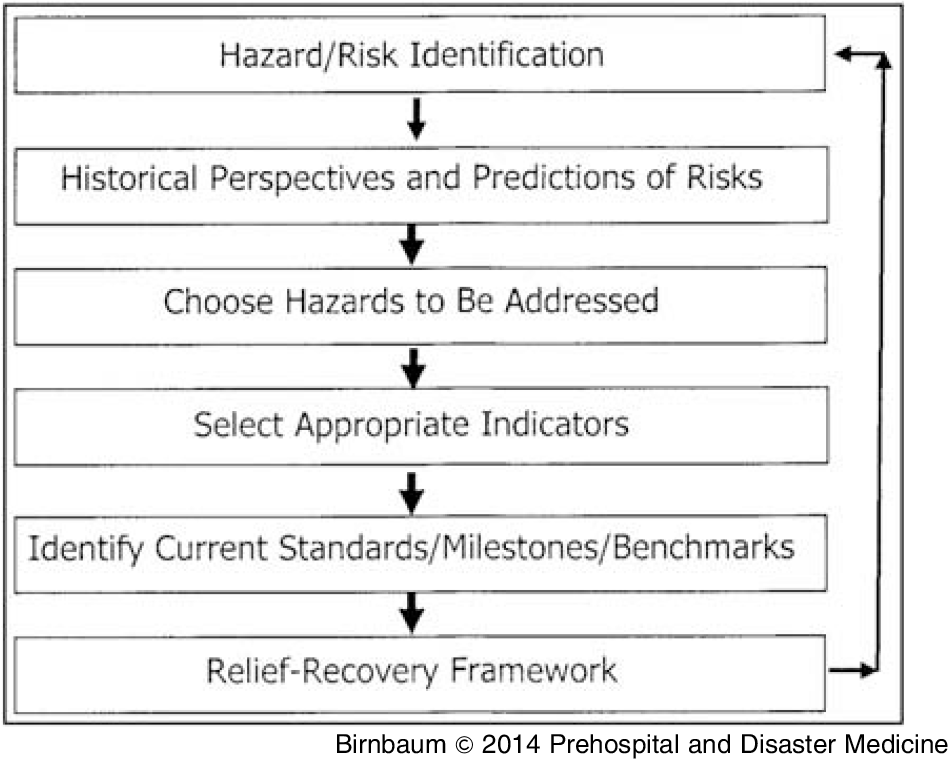
A disaster is a failure of resilience. Implementing measures to mitigate the destructive capabilities of a hazard and/or increase the resilience of a “community” (family, neighborhood, province/state, country, or region)-at-risk requires careful analysis, planning, and execution. The Risk-Reduction Framework details the processes involved in: (1) mitigating the risk that a hazard will produce a destructive event and/or (2) building capacity to augment the resilience of a community to the consequences of an event. Capacity building includes all interventions directed towards increasing the absorbing, buffering, and/or response capacities of a society-at-risk for an event that could result in a disaster. The Risk-Reduction Framework consists of five additional steps that precede those outlined in the Relief-Recovery Framework. These additional elements include (1) Hazard and risk identification; (2) Historical perspectives and predictions of risks; (3) Selection of hazard(s) to be addressed; (4) Selection of appropriate indicators; and (5) Identification of current standards, milestones, and benchmarks (Figure 8).
Risk-Reduction Framework provides the structure for used for evaluations of interventions designed for Risk Reduction and Capacity Building (Relief-Recovery Framework as described in Figure 6).

Use of the Risk-Reduction Framework should enhance the ability to evaluate the impact of measures directed at the reduction of risks and enhance the ability to compare preparedness actions and document their relative effectiveness when used during a disaster. Positive findings identified through evaluations using the Risk-Reduction Framework support ongoing use of preparedness interventions that were shown to be effective during and following a disaster either in a community in which a disaster has occurred, or within a community attempting to augment its capacity to cope with the next event (capacity building). Risk-reduction includes both hazard mitigation and capacity building. Implementation of capacity-building measures should modify the pre-event status of a “community-at-risk”.
Using the Disaster Research Frameworks
While the proposed five research Frameworks provide a structure for evaluation and reporting of the health aspects related to a disaster, they may be adapted for use in studying other aspects of a disaster. Likewise, they can be used employing various research methodologies as well as in prospective and retrospective analyses.
The following hypothetical examples of health-related studies of disasters are provided to illustrate the application of the Frameworks in disaster health.
Epidemiologic Disaster Study
Example 1
In this hypothetical example, disasters caused by earthquakes of similar magnitude in two different countries are being compared.
1. Identify the question or hypothesis.
Example: What were the differences in structural and functional damages caused by the earthquake between the two affected countries?
2. What was the pre-event status?
Example: From city/county/state and/or country building records of the two affected areas, obtain information on the number, type, and structural integrity of their buildings and local infrastructure. From public records, obtain the number, demographics, and public health profile of the people residing in the affected area and any pertinent historical information regarding similar events. For the Medical Care System, identify the number and types of hospitals, clinics, Emergency Medical Services, and healthcare providers in existence prior to the earthquakes.
3. What was the event?
Example: Describe the two earthquakes in terms of the hazards that caused them, their onset, duration, scope, and scale.
4. What was the structural damage from the events?
Example: Describe overall structural damage as well as specific damage to the buildings, infrastructure(s), and number of persons injured as well as the number and types of injuries sustained in each of the affected countries. For the Medical Care System, describe the number and services offered by hospitals, clinics, emergency medical services, and healthcare providers including the numbers damaged/injured from the event. For the Public Health System, describe the facilities and providers affected. Include descriptions of any actions that had been taken in both countries to increase the absorbing capacity, such as enforced building codes and use of earthquake-resistant materials, earthquake preparedness education programs, and warning systems.
5. What was the functional damage (loss of function) of the specific Basic Societal System being studied in each country, and how was it assessed?
Example: For the Medical Care System, determine and compare the functional status of existing hospitals, clinics, and Emergency Medical Services post-earthquake. For the Public Health System, describe the functional status of existing facilities providing services. From information obtained from healthcare providers, hospitals, morgues, and official records, compare the mortality rates between the two affected countries. For the Water and Sanitation System, determine the functional status of the water supply to each of the affected communities from city/county water utility systems. Define the phase of the disaster in which these assessments occurred (i.e., Relief or Recovery). Include descriptions of any actions that had been taken to increase the buffering capacity of each of the systems being studied. For example, the buffering capacity for the Medical Care System may have been augmented by the creation of alternate care sites, the stockpiling of drugs and medical supplies, cross-training of medical personnel, backup power and water supply systems, community education efforts, etc.
Example 2
In this hypothetical example, disasters caused by wildfires of similar magnitude in two different states are being compared.
1. Identify the question or hypothesis.
Example: What were the differences in structural and functional damages caused by the wildfires between the two affected states?
2. What was the pre-event status?
Example: From public records, describe and compare the geography and topography of the affected areas, the climate of the regions, the land utilization (agricultural, industrial, urban), the population density, and existing hazards in the areas. From city/county/state and/or country building records of the two affected areas, obtain information on the number, type, and structural integrity of their buildings and local infrastructure. From public records, obtain the number and demographics of the people residing in the affected area and any pertinent historical information regarding similar events. For the Medical Care System, identify the number and types of hospitals, clinics, Emergency Medical Services, and Fire Services in existence prior to the wildfires.
3. What was the event?
Example: Describe the two wildfires in terms of the hazards that caused them, their onset, duration, scope, and scale.
4. What was the structural damage from the events?
Example: Describe overall structural damage as well as specific damage to the land, homes and buildings, infrastructure(s), and number of persons injured as well as the number and types of injuries sustained in each of the states. For the Medical Care System, describe the number and services offered of hospitals, clinics, emergency medical services, and healthcare providers including the numbers damaged/injured from the event. For the Public Health System, describe the facilities and providers affected. Include descriptions of any actions that had been taken in each state to increase the Absorbing Capacity, such as enforced building codes and use of fire-resistant materials, fire prevention and preparedness education programs, warning systems, evacuation plans, and the availability of personal protection equipment.
5. What was the functional damage (loss of function) of the specific Basic Societal System being studied in each country, and how was it assessed?
Example: For the Medical Care System, determine and compare the functional status of existing hospitals, clinics, and Emergency Medical Services following the onset of the wildfires. For the Public Health System, describe the functional status of existing facilities providing services. From information obtained from healthcare providers, hospitals, morgues, and official records, compare the mortality rates between the two affected states. From public record information, describe and compare the loss of shelter in the affected areas. For the Water and Sanitation System, determine the functional status of water supply to each of the affected communities from city/county water utility systems. Include descriptions of any actions that had been taken to increase the Buffering Capacity of the Medical Care System and Water and Sanitation System, such as the creation of alternate care sites, the stockpiling of drugs and medical supplies, cross-training of medical personnel, backup power and water supply systems, community education efforts, etc.
Interventional Disaster Study
Example 1
In this hypothetical example, the disaster being studied is caused by a wildfire.
1. Identify the question or hypothesis.
Example: What is the effectiveness of an intervention to provide potable water to the affected community?
2. What was the pre-event status?
Example: Determine the average daily consumption of water per person per day prior to the event from utility records.
3. What was the event?
Example: Describe the wildfire event in terms of the hazard that caused it, its onset and duration, and its scope. Include any risk modification efforts that may have been undertaken, such as fire prevention and control programs.
4. What was the structural damage from the event?
Example: Describe overall structural damage as well as specific damage to the structure(s) related to the intervention being studied. In this case, it would be damage to the Water and Sanitation System. Include descriptions of any actions that had been taken to increase the absorbing capacity, such as measures to protect the Water and Sanitation System.
5. What was the functional damage (loss of function) of the specific Basic Societal System being studied, and how was it assessed?
Example: Compare current water consumption to the pre-wildfire water consumption from utility company records and cluster neighborhood sampling. Determine any health effects in terms of morbidity and mortality from information obtained from healthcare providers; compare to pre-wildfire information. Include descriptions of any actions that had been taken to increase the buffering capacity, such as backup water supply systems (on an individual or community level), community education efforts, etc.
6. What was the result of the assessments of functions, what needs were identified, and what plans were formulated?
Example: Describe the assessment tool(s) used, how the information was obtained, which indicators of function were used, and when (including which phase of the disaster) the assessment occurred. Detail the identified needs and the planned intervention to meet these needs. In this hypothetical case, the assessed available supply of water was 2 liters/person/day. As part of strategic planning, a goal to supply a sufficient quantity of potable water to meet the basic functional threshold level was identified. The functional threshold for water in the affected community was determined to be 5 liters/person/day in these conditions. Therefore, an additional 3 liters/person/day was needed to meet the functional threshold. Thus, a Strategic Plan was developed to determine mechanisms to provide an additional 3 liters of water/person/day to the affected population. The final intervention selected was to provide water to affected neighborhoods from an outside source using tanker delivery trucks. A company from outside of the area was contracted to obtain and deliver the required amount of water.
7. What was the intervention and how was it implemented?
Example: Describe in detail the intervention provided including who provided the intervention, how, when, where, and to whom it was provided, as well as any pre-existing arrangements that may have facilitated the intervention. In this example, the objective was to provide 3 liters/per person/day to the affected population. The contractor developed an Operational Plan to meet this objective that included at least: (1) identifying a source for the needed water; (2) obtaining access to the water needed; (3) committing the vehicles required for the transport, the required drivers and load masters, and the required fuel; (4) accessing, loading, transporting the required water; (5) defining the reception and distribution process to be used in the affected neighborhoods; (6) acquiring the staff necessary to unload the water and the storage facilities for the transported water; (7) providing an equitable distribution system; (8) providing a timetable for the project; and (9) providing an evaluation of the project's effectiveness, efficacy, costs (economic, opportunity), efficiency with which it was conducted, as well as other effects generated by the project, the outcomes relative to the objectives, and the impacts (benefits) achieved. An outside water delivery company was contracted to supply potable water to the community in the amounts indicated through a pre-event memorandum of understanding.
8. What were the effects of the intervention?
Example: Describe the effects of the intervention, in terms of meeting its objective and contribution to the overarching goal, how efficiently the objective was achieved, the costs (economic, human, opportunity, environmental) of the intervention, barriers encountered, the benefits of the intervention, and any unanticipated effects that occurred as a result of the intervention. In this example, the outside delivery of potable water resulted in members of each family having 5L/day of potable water as determined from cluster neighborhood surveys. Encumbrances encountered in the delivery to and receipt of the water by each family impacted on the efficiency of this system. The benefits related to changes in the health status of the population were obtained by comparing information provided by healthcare providers before the event, after the event but before the intervention, and after the intervention. The costs of the intervention were obtained from the delivery company.
9. Did the population recover or was the health status restored?
Example: Describe the results of repeated assessments using the same indicators of function and compare them to the pre-event status to determine if recovery has occurred. In this example, the intervention studied restored the community's functional status related to the quantity of potable water as determined by repeated assessments. Thus, this evidence indicates that the method to provide water may be useful in similar settings during other disasters.
Example 2
This next example focuses on an interventional project with a goal of reducing the incidence of influenza in a community affected by an influenza epidemic.
1. Identify the question or hypothesis.
Example: What is the effectiveness of a school nurse surveillance and hand-washing educational program for elementary school children on school absenteeism due to an influenza-type illness?
2. What was the pre-event status?
Example: From school records, determine the average daily absentee rate prior to the event and the intervention, and from a brief survey, determine pre-intervention hand-washing practices.
3. What was the event?
Example: Describe the epidemic event in terms of cause, its onset and duration, and its scale. Include any risk modification efforts that may have been undertaken, such as community education programs, vaccination programs, etc.
4. What was the structural damage from the event?
Example: Describe the structural damage in terms of numbers of individuals with flu-like symptoms, hospitalizations, deaths, etc. Include descriptions of any actions that had been taken to increase the absorbing capacity, such as social distancing, barriers employed, working at home, community education programs, prophylactic immunizations, etc.
5. What was the functional damage (loss of functions) of the specific Basic Societal System being assessed, and how it was assessed?
Example: Compare school absentee records in terms of numbers of people and numbers of days absent before and after the onset of the event (epidemic). Determine morbidity, hospital admissions, and student and teacher absenteeism from information obtained from healthcare providers and school administration compared to pre-event information. Include descriptions of any actions that had been taken to increase the buffering capacity, such as community education efforts, previous hand-washing efforts, community education programs, etc.
6. What was the result of the assessments of the current status, what needs were identified, and what plans were formulated?
Example: Describe the assessment tool used, how the information was obtained, which indicators of function were used, and when the assessments occurred. In this case, the assessments consisted of observation of current hand-washing techniques and a brief, self-reporting cluster sampling survey of current hand-washing practices. The Strategic Plan developed had as its overarching goal a decreased incidence of influenza among the population. The Plan was to provide a weekly education and video program to all school children stressing the importance of proper hand-washing techniques, and to have the school nurses visit each classroom each day to assess the children's overall health, and to contact the family of each absent child to document the reason for the absence.
7. What was the intervention?
Example: Describe in detail the intervention provided including who provided the intervention, how, when, where, and to whom it was provided, as well as any pre-existing arrangements that may have facilitated the intervention. In this example, a video and an educational program were presented weekly to all elementary school children, and a daily health surveillance program was instituted by the school nurses.
8. What were the effects of the intervention?
Example: Describe the effects of the intervention in terms of meeting its goal, how efficiently the goal was met, the costs of the intervention, the benefits of the intervention, and any unanticipated effects that occurred as a result of the intervention. In this example, rates of absenteeism were compared to schools in other districts without these interventions. The increased surveillance by the school nurses revealed other, non-flu related issues that were managed by the nurses and provided early identification of symptomatic students. The costs of the intervention included the costs of the educational program and the increased nursing personnel costs.
9. Did the population recover or was the health status restored?
Example: In this example, the intervention was prophylactic (i.e., risk reduction) and not directed at restoration or recovery.
Conclusion
Using structured Frameworks with clearly defined terminology facilitates the development of a sound body of evidence regarding the factors that influence the health status of a population affected by an event. The Frameworks provide a conceptual and standardized approach for use in the study of the health aspects related to a disaster. Such an approach facilitates comparisons between evaluations, between different societies, and between different disasters.
Conflicts of interest:
The authors declare no conflicts of interest.