Introduction
In the nineteenth and early twentieth century, otology was an emerging field that lagged well behind more developed medical disciplines in applying the best of contemporary science and technology. For example, otology was one of the last fields in surgery to adopt the antiseptic technique.Reference Sioshansi, Jackler and Alyono1 In the mid to late twentieth century, otology moved to the forefront, most notably through popularising use of the microscope in surgery, and later by developing the cochlear implant, the first technological replacement for a lost human sense. These advances occurred despite the relative paucity of funding for hearing research when compared to the much more abundant funding available for vision disorders. Today, new scientific tools and methods have rendered the ear, long considered notoriously difficult to study, open to investigation. Otology is poised to make fundamental contributions in a wide spectrum of fields, including regenerative medicine, genetics and gene therapy, neural prostheses, and an array of communication technologies. The bevy of newly launched biotechnology start-ups focused on developing novel treatments for hearing loss is indicative of the energetic efforts being applied to invention and discovery in otology.
One hundred and forty years ago, sceptics predicted that telephones would tear apart families and threatened to ruin the cohesion of society.Reference Aronson2 While few of us would choose to return to the era in which 20 volumes of Encyclopaedia Britannica occupied our book shelves, similar notes of caution can be heard today regarding the internet. Surgeons, by our nature, tend to be conservative and sceptical. Regularly, ‘miraculous new procedures’ and ‘breakthroughs’ are trumpeted, which ultimately prove to be little more than puffery and hype. Not surprisingly, cochlear implants were vigorously opposed by the scientific orthodoxy in their early years.Reference Mudry and Mills3 At the turn of the millennium, one sophisticated observer opined that ear surgery had reached its ‘pinnacle of elegance’ during the twentieth century and would certainly decline in the twenty-first.Reference Hughes4–Reference McKenna6 It is also true that in otology we have our share of ‘luddites’, conservative sceptics who voice opposition to any and all emerging ideas, and lament the possibility that remunerative surgical procedures of today might be replaced by non-surgical therapies.
In our prognostication that follows, we shall endeavour to achieve balance between buoyant optimism and realism. We acknowledge that prognosticating the future is a perilous endeavour, as pithily expressed by American baseball player Yogi Berra: ‘It's tough to make predictions, especially about the future’.
Artificial intelligence and the rise of the robots
A question in many surgeons’ minds is whether, in the foreseeable future, they will be replaced in performing procedures by robotic systems, and in making intelligent diagnoses and therapeutic decisions by artificial intelligence enriched clinical decision making tools.Reference Rodriguez-Ruiz, Lång, Gubern-Merida, Broeders, Gennaro and Clauser7,Reference Esteva, Kuprel, Novoa, Ko, Swetter and Blau8 The traditional role for robots has been to replace humans in tasks that involve relatively simple and repetitive physical labour. While advances in robotics are occurring at a rapid pace, the complexity and high risk inherent in human surgery means that it will be among the last tasks to be entirely overtaken by robots. Cultural receptivity to fully robotic tasks that risk human life in the case of malfunction will be accelerated by the approaching widespread adoption of autonomous cars and trucks. Meanwhile, today's robot-assisted surgery, with the human surgeon firmly in command of each step of the procedure, may evolve to a model more analogous to an aviation autopilot, in which the surgeon closely oversees automated actions and is prepared to immediately step in manually should the need arise.
Recent advances in artificial intelligence have made occupations that require repetitive intellectual effort vulnerable to replacement by automated systems. Virtually any process that can be described by an algorithm can be emulated by a computer. The initial wave of this transition is encompassing tasks such as data collection, processing and analysis. Occupational examples include accounting, tax preparation, and examples in medical practice include coding and billing. Least susceptible to replacement by a machine are tasks that involve managing a team of people and jobs requiring human empathy, both of which are attributes of surgical fields.
Today's machine learning algorithms are superb at pattern recognition, and they are already making headway in image-focused medical disciplines such as radiology, pathology and dermatology. Stand-alone artificial intelligence systems have already achieved diagnostic parity with human radiologists in mammography.Reference Rodriguez-Ruiz, Lång, Gubern-Merida, Broeders, Gennaro and Clauser7 Using convolutional neural networks, a team of scientists and dermatologists trained a computer algorithm to be able to correctly diagnose the most common skin cancer (squamous cell carcinoma) and the deadliest cutaneous malignancy (melanoma) from images, with the same accuracy as board-certified dermatologists.Reference Esteva, Kuprel, Novoa, Ko, Swetter and Blau8
What does machine learning foretell about the future of otology? Consider computed tomographic (CT) evaluation of the chronically discharging ear: is cholesteatoma present or not? There are two methods by which a machine learning algorithm can be trained: supervised and unsupervised learning.Reference Hashimoto, Rosman, Rus and Meireles9 A supervised artificial intelligence system is based upon programmed expert criteria such as scutum erosion, ossicular displacement, semicircular canal fistula and tegmen erosion as patterns indicative of cholesteatoma. When an inaccurate result occurs, an expert human instructor gives corrective feedback to the system explaining the features used in arriving at the correct diagnosis, thus enhancing the programme's expertise and future accuracy. With these systems, the role of the human radiologist is essentially a quality control engineer, with progressively less and less to do over time as the capabilities of the automated system improve. In unsupervised learning, large batches of CT scans with either known cholesteatoma or non-cholesteatoma chronic otitis media would be analysed by a learning algorithm. The system would determine its own differentiating criteria, possibly including some that human radiologists have never perceived.
Using artificial intelligence, electronic medical records systems will suggest ways of augmenting our clinical decision making. For example, when an otologist sees a patient with progressive sensory hearing loss and a complex medical history including keratitis and aortitis, the artificial intelligence enhanced electronic medical record will query whether Cogan's syndrome might be considered. When a diabetic with impaired renal function and multiple antibiotic allergies presents with otitis externa caused by a resistant strain of pseudomonas, the artificial intelligence system will specify an antibiotic regimen, including recommended dose, duration and ongoing monitoring. To the consternation of more creative practitioners, artificial intelligence enhanced electronic medical record systems may well make deviations from evidence-based best practices a cumbersome process.
Artificial intelligence systems can alleviate the tedious keyboarding that burdens today's clinicians. In history taking, natural language processing algorithms may listen to your conversation and create a medical record without any manual data entry or keyboarding.Reference Hashimoto, Rosman, Rus and Meireles9,Reference Verghese, Shah and Harrington10 Otologists take the same histories and deliver the same advice, over and over again, on hearing loss, vertigo, tinnitus, otosclerosis, cholesteatoma and so on. Automated systems will be able to both conduct interviews and deliver standardised advice, even in the physician's own voice, thus reducing the tedium of medical practice, and enabling the clinician to focus on unique attributes of the patient's condition and answering questions.Reference Petersen, Houston, Qin, Tague and Studley11
The bottom line is that, in the near future, there will be two kinds of otologists: those whose practice is enhanced by artificial intelligence systems and those whose is not, the latter being at a clear disadvantage.
Transformation of audiology
The current standard audiometric test battery falls into a category of repetitive intellectual work.Reference Ross12,Reference Ford13 While these tasks are presently performed by highly trained professionals, in the future, the standard audiogram will be administered by machines augmented by artificial intelligence algorithms. Testing hearing might become as routine and convenient as blood pressure testing in a local pharmacy. Alleviated from routine diagnostic chores, future audiologists will spend more time on advanced diagnostics, auditory rehabilitation and device fitting. The standard audiometric test battery has not changed in over six decades. Very few diagnostic tests have not been improved over such a lengthy period.Reference Fitzgerald and Jackler14 As the leading complaint of many hearing-impaired patients is an inability to understand speech in background noise, the incorporation of speech-in-noise testing into the routine audiometric test battery is long overdue.15
Ear surgery of the future
Stapedectomy
Stapedectomy is the most delicate of all microsurgical procedures, requiring dexterity at the very limits of human hand–eye co-ordination. Stapes surgery has as much as a 1 per cent deafness rate, indicating the pressing need for it to be made safer. After all, few would have refractive eye surgery if there was a 1 per cent chance of blindness in each eye operated upon. The fact that our otosclerotic patients are willing to undergo such a risk says much about the perceived stigma of wearing a hearing aid.
Researchers have long used technologies that enable controlled manipulation on the scale of microns rather than millimetres. There have already been studies on stabilised robotic instruments that are programmed to make calibrated fine movements in simulated stapedectomy and other middle-ear operations.Reference Vendrametto, McAfee, Hirsch, Riviere, Ferrigno and De Momi16–Reference Yasin, O'Connell, Yu, Hunter, Wanna and Rivas18 As an additional benefit, such systems may also extinguish human tremors. A challenge for the field of otology will be to reduce the incidence of profound sensory loss in stapes surgery to that of refractive eye surgery.
Tympanoplasty
While robotics and artificial intelligence will no doubt augment the technical and repetitive tasks of future otologists, the other major frontier for otology will be advancements in molecular biology and genetics. It is remarkable that the injured tympanic membrane often heals spontaneously, as the repairing membrane needs to span thin air. Stimulating the healing of tympanic membrane perforations by applying biogenic growth factors to the remnant is presently the most advanced regenerative therapy in otology, and is approaching clinical implementation. There are currently clinical trials underway to re-awaken the inherent regenerative properties of the tympanic membrane using growth factors such as heparin-binding epidermal growth factor-like growth factor, fibroblast growth factor and various bioactive membranes.Reference Jackler19–Reference Santa Maria, Weierich, Kim and Yang21 Regenerative treatment will likely reduce the number of microsurgical tympanoplasties performed, and will enable the treatment of perforations in the developing world without the need for surgeons with specialised training and capital-intensive operating theatre technology.
Ossiculoplasty
Repair of the ossicular chain has evolved over the decades and now relies largely upon titanium prostheses; these are biologically well tolerated, and possess superior acoustic properties and mechanical stability. Unfortunately, favourable early results tend to deteriorate over time.Reference Cox, Trinidade, Russell and Dornhoffer22 Part of this is related to mechanical instability, but many failures are biological in nature, and due to poor middle-ear ventilation, scar tethering of the prosthesis or recurrent disease. While most ossiculoplasty innovations have concentrated on the prosthesis itself, research is needed on maintaining the tympanum as a pneumatised space with healthy mucosal lining. This may involve a combination of mucosal regeneration, scar inhibition and tubal function restoration.
Cholesteatoma
Cholesteatoma is notoriously tenacious, with a notable tendency for recidivism even after surgery in the best of hands. Reducing remnants of cholesteatoma may someday be aided by molecular imaging techniques that highlight inapparent islands of keratinising squamous epithelium. Endoscopic ear surgery is increasingly popular, especially for chronic ear disease with cholesteatoma.Reference Kozin, Kiringoda and Lee23,Reference Tarabichi24 Endoscopes are being adapted for otological use via improvements in illumination and resolution, through scopes of narrow diameter in various angles of visualisation.
Cholesteatoma recurrence, in which repeat retraction occurs despite an occlusive cartilage graft, is a most recalcitrant problem. As cholesteatoma invagination is driven by migrating epithelium, biological inhibition or mechanical impediment may counter the tendency for recurrence. Biological inhibition of epithelial migration has conceptual appeal; however, it may interfere with healing after surgery and could alter the tympanum's response to infection. Mechanical inhibition of epithelial migration may theoretically be achieved by applying a biocompatible membrane to the outer surface of a cartilage graft, with nanoscale spikes oriented to impede the most likely direction of repeat retraction. Although hypo-aeration may not be the principal driver of cholesteatoma recurrence, as evidenced by the observation that ventilation tubes do not prevent recurrence, methods to dilate the Eustachian tube, such as with balloons, may alter the biological milieu that encourages regrowth.Reference Poe, Anand, Dean, Roberts, Stolovitzky and Hoffmann25
Skull base tumours
While microsurgery of vestibular schwannoma and paragangliomas were mainstays of twentieth century operative neurotology, the frequency of surgery for these tumours has been reduced in recent years. This is a result of more conservative attitudes, leaning towards watchful waiting, and the increasing role for stereotactic radiation therapy. Early progress has been made in developing targeted molecular therapies for both of these benign tumours, with the promise that effective biological therapies will be developed at some point.Reference Mak, Hayes, Khoo and Grossman26,Reference Allaway, Angus, Beauchamp, Blakeley and Bott27 Neurofibromatosis type 2 and familial paraganglioma, as genetic syndromes, may yield to gene therapy in the future.
Cochlear implants
While cochlear implantation technology was revolutionary, with the implant being the first successful neural prosthesis for sensory restoration, electrode design has not undergone fundamental advancement since its inception. Current manufacturing technology requires that each one of its fine wire electrodes be laboriously placed into a bundle, a time-consuming and costly process.
Fabricating electrodes using photolithographic solid state technology may become feasible if issues of flexibility and biocompatibility are overcome. In the future, neural stimulation may be photonic, in which arrays of minute light-emitting diodes control small groups of auditory neurons.Reference Xu, Xia, Lim, Tan, Tran and Boulger28 Hybrid devices, which electronically stimulate the high frequencies (basal turn) and maintain acoustic stimulation of the lower frequencies (more apical), are currently in development. If concerns over preservation of residual hearing are overcome, these hybrid devices are likely to find important use in presbyacusis and other high frequency sensory losses.Reference Gantz, Dunn, Oleson and Hansen29
Microscopes, endoscopes and exoscopes
Contemporary microscopes, currently the mainstay of ear surgery, are the product of many generations of refinement in optics, illumination and mechanical systems. Recently, endoscopes have become increasingly popular, as they afford a wider field of view into inaccessible recesses such as the sinus tympani and facial recess. They also provide an ability to peer into the epitympanum without removal of the scutum, and enable visualisation of the lateral recess of the internal auditory canal.Reference Kiringoda, Kozin and Lee30,Reference Hunter and Rivas31 Increasingly, ear surgeons are putting their microscopes aside and operating entirely endoscopically. However, until a system is invented that frees the hand holding the endoscope, implementation may be limited. Many delicate otological surgical manoeuvres require the co-ordinated use of both hands and a depth of field not yet provided by endoscopes.
Recently, exoscopes – remotely positioned high-definition cameras that project a three-dimensional image – have been applied to skull base surgery.Reference Garneau, Laitman, Cosetti, Hadjipanayis and Wanna32 Their remote positioning enables wider access to the operative field and better instrument mobility, and eliminates obstacles to passing instruments. Once the resolution of these systems reaches parity with optical microscopes, they may develop an increasing role in ear and skull base surgery.
Augmented reality in image-guided surgery
Most contemporary otologists are familiar with the current generation of surgical navigation systems that provide localising cues based upon CT or magnetic resonance imaging (MRI) scans. Future systems will incorporate augmented reality technology that provides additional visual cues overlain on real-world images, through interactive holograms anchored to specific points in physical space. For example, the semicircular canals and cochlea could be outlined in a vibrant colour, with the jugular bulb blue and the carotid artery deep red. Optimal trajectories around vital structures to reach difficult-to-assess lesions, such as the petrous apex, could be designed via pre-operative simulation, and displayed during surgery as highlighted corridors projected onto the patient's anatomy.Reference Barber, Wong, Kanumuri, Kiringoda, Kempfle and Remenschneider33–Reference Marroquin, Lalande, Hussain, Guigou and Grayeli35
Surgery within the inner ear
Contemporary surgeons can operate inside all human organs without destroying their function, including the heart, lung, liver, kidney, brain and eye, with the sole exception of the inner ear. The minute size and extreme fragility of the cochlea to mechanical trauma means that instrumentation within it by current microsurgical methods results in either major loss of hearing or complete deafness.
An important otological frontier will be the development of methods to enable manipulations within the inner ear, while preserving its structure and physiology. The first step needed is the creation of a ‘cochleaport’, either artificial or via the natural windows, which can be traversed by instrumentation, and subsequently resealed to restore scalar fluids and their ionic environment. There are promising methods to chemically dissolve bone atraumatically, in order to avoid drill-induced vibratory trauma.Reference Alyono, Corrales, Huth, Blevins and Ricci36 Endocochlear access is essential for the targeted application of drugs, transplanted cells and gene therapy vectors.
Surgical manipulation within the living inner ear will require delicacy and dexterity well beyond that achievable by the human hand alone. Micromanipulator-guided procedures may involve tasks such as retrieval of dislodged canaliths, repair of Reissner's membrane ruptures, and depletion of the dark cell population to alleviate endolymphatic hydrops. Visualisation on a micron scale will require the development of manoeuvrable micro-endoscopes, perhaps employing optical coherence tomography.Reference Iyer, Batts, Chu, Sahin, Leung and Tearney37,Reference Monfared, Blevins, Cheung, Jung, Popelka and Schnitzer38
Advances in bioscience: implications for otology
Precision medicine in otology
The multi-omics revolution that involves genomics, epigenomics, transcriptomics, proteomics, metabolomics and microbiomics will likely be used in the next phases of understanding inner-ear biology, taking us closer to deciphering the secrets of the inner ear.Reference Hasin, Seldin and Lusis39
In October 2016, in London, phase 1 of the Human Cell Atlas collaborative was initiated.Reference Regev, Teichmann, Lander, Amit, Benoist and Birney40 The mission of the Human Cell Atlas project is to ‘define all human cell types in terms of their distinctive patterns of gene expression, physiological states, developmental trajectories, and location’ at the single cell level. Massively parallel sequencing technology now allows for the acquisition of data at an unprecedented speed on millions of individual cells simultaneously, as demonstrated during a study on murine organogenesis.Reference Cao, Spielmann, Qiu, Huang, Ibrahim and Hill41 While still in its preliminary stages, phase 3 of the Human Cell Atlas involves the cataloguing of the human inner ear at a cellular resolution and defining cell states that have eluded scientists for over 150 years. This comprehensive map of human cells may permit the future otologist to monitor, diagnose and treat diseases of the ear at the molecular level.Reference Wang and Puel42
Auditory genetics and gene therapy
Congenital sensory hearing loss occurs in 1–3 of 1000 live births, of which upwards of 50 per cent of cases are attributed to known genetic aetiologies.Reference Mehta, Noon, Schwartz, Wilkens, Bedoukian and Scarano43 There are currently over 200 known deafness genes, as curated by the Hereditary Hearing Loss Homepage.44 The relatively rapid advancement in the discovery of these genes has relied on the available technologies for sequencing. Gone are the days of Sanger sequencing, when it took years to sequence the human genome, a notable feat.Reference Shendure, Balasubramanian, Church, Gilbert, Rogers and Schloss45 With the advent of next-generation sequencing, since 2005, more properly termed second-generation sequencing, the price, speed and accuracy of sequencing technology has vastly improved.Reference Shendure, Balasubramanian, Church, Gilbert, Rogers and Schloss45,Reference Shendure and Ji46 Third-generation sequencing technology, where longer sequence reads are obtained, is already being used in combination with single cell transcriptomics, to reveal novel complex splice variants of deafness genes.Reference Shendure, Balasubramanian, Church, Gilbert, Rogers and Schloss45,Reference Ranum, Goodwin, Yoshimura, Kolbe, Walls and Koh47
Several companies now offer comprehensive testing of over 150 genetic causes of hearing loss (e.g. Otoscope, Athena Diagnostics). In the future, lower-cost sequencing will mean that the entire genome will be stored in the medical records for individuals, enabling query of this database to identify known genetic causes of hearing impairment. Consumer genetic companies are now beginning to report deafness gene traits (e.g. in early 2019, the company 23andMe reports Pendred syndrome, Usher syndrome and non-syndromic autosomal recessive deafness DFNB1). Otologists may be ill-prepared to handle the counselling of the increasing number of individuals who have been identified as having a genetic predisposition for hearing loss, many of whom are presently asymptomatic. With the rapid growth in consumer genetics (23andMe boasted over 10 million customers in 2019), genetic counselling services are in high demand.
Investigators have started studying therapeutic mechanisms for targeting genetic hearing loss. Viral and non-viral mechanisms (e.g. liposomes) of gene delivery to the inner ear have been explored, and promising results have been obtained in animal models.Reference Ahmed, Shubina-Oleinik and Holt48 There remain significant challenges with the safety and functional efficacy of these therapies for humans, which will likely be overcome in the coming years. Otologist-scientists have started phase 1 clinical trials of inner-ear gene delivery using viral vectors.49 In the not too distant future, CRISPR/Cas9 gene editing technology will be used to rescue genetic phenotypes of hearing loss using different modes of delivery, including viral vectors, lipid vesicles or nanoparticles, all of which are techniques employed today in the laboratory using animal models.Reference Ahmed, Shubina-Oleinik and Holt48,Reference Cong, Ran, Cox, Lin, Barretto and Habib50–Reference Landegger, Pan, Askew, Wassmer, Gluck and Galvin55 Inspired by the success of ocular gene delivery, the biotechnology industry is actively pursuing gene therapy for the inner ear.
Inner-ear drug delivery
Liquid injected into the middle ear through the tympanic membrane reaches the inner ear via diffusion across the round window; there is a short and unpredictable period of time during which the drug vehicle remains in moist contact with it.Reference Tandon, Kang, Robbins, Spencer, Kim and McKenna56 This current method of delivering pharmaceuticals to the inner ear is both inefficient and variably effective. There are investigators and companies working on hydrogels that will deliver medications to the inner ear in a more calibrated and perhaps sustained way.Reference Mura, Nicolas and Couvreur57–Reference Brock, Maibach, Childs, Rajput, Roebuck and Sullivan60 Others are studying the physical properties of the round window and pushing the boundaries on manipulating the round window membrane for drug delivery. In the future, micropumps that deliver drugs to the inner ear in a calibrated and predictable manner are likely to supplant current methods.Reference Tandon, Kang, Robbins, Spencer, Kim and McKenna56
Methods to access the inner ear via the blood stream, overcoming the blood–labyrinth barrier, offer promise. Investigators are using nanotechnology based vesicles with very specific targeting strategies involving RNA sequences to affect only particular cell types.Reference Ren, Sagers, Landegger, Bhatia and Stankovic53 Scientists have already described stimuli-responsive nano-carriers that will deploy their cargo upon the appropriate stimulation in the form of thermal energy, magnetic stimulation, ultrasound, light or pH changes.Reference Mura, Nicolas and Couvreur57 One can imagine the deployment of these vesicles to the inner ear after overcoming the challenges of the blood–labyrinth barrier.Reference Nyberg, Abbott, Shi, Steyger and Dabdoub58
Ototoxicity prevention
Certain cancer chemotherapy and antibiotic drugs cause hearing loss because of cochlear injury, predominantly the platinum and aminoglycoside classes of drugs, resulting in the loss of hair cells. There are three methods of ameliorating ototoxicity: monitoring, chemoprevention, and chemical modifications to eliminate ototoxicity. Monitoring procedures are fairly standard in childhood cancer therapy, but are not as routinely followed in adults.Reference Clemens, van den Heuvel-Eibrink, Mulder, Kremer, Hudson and Skinner59 Ototoxic chemoprotection has demonstrated promise in recent studies. The delayed administration of either sodium thiosulphate or N-acetylcysteine following cisplatin has been shown to reduce ototoxicity, without jeopardising its therapeutic effects.Reference Brock, Maibach, Childs, Rajput, Roebuck and Sullivan60,Reference Muldoon, Wu, Pagel and Neuwelt61
The ideal way of preventing ototoxicity is to modify the drug molecules, such that they maintain their pharmacological effect while eliminating the ototoxicity. Aminoglycoside antibiotics, because of their low cost, effectiveness and low rates of antibiotic resistance, remain highly utilised by both developed and developing nations.62,Reference Van Boeckel, Gandra, Ashok, Caudron, Grenfell and Levin63 Aminoglycosides are known to damage hair cells principally via entry through the mechano electric transduction channel.Reference O'Sullivan, Perez, Lin, Sajjadi, Ricci and Cheng64 One approach to inventing non-ototoxic aminoglycosides began with elucidating the structural dimensions of the mechano-electrical transducer channel. Aminoglycosides were then chemically modified by adding an inert moiety away from the active site, so that the drug became physically too bulky to traverse the channel.Reference O'Sullivan, Perez, Lin, Sajjadi, Ricci and Cheng64,Reference Huth, Han, Sotoudeh, Hsieh, Effertz and Vu65 These designer aminoglycosides, which lacked ototoxic side effects in animal models, retained potency against Gram-negative bacteria.Reference O'Sullivan, Perez, Lin, Sajjadi, Ricci and Cheng64 In the future, approaches to modify existing ototoxic drugs to make them safer, or to replace them with non-ototoxic alternatives, will likely greatly reduce medically induced ototoxicity.
Therapeutic challenges in infectious ear disease
Pseudomonas aeruginosa, the most important pathogen in chronic otitis media, is increasingly found to be resistant to both classes of anti-microbials most often used in their therapy: fluoroquinolones and aminoglycosides.Reference Song, Lee, Lee, Lee, Park and Park66 Fluoroquinolone resistance may emerge during oral therapy, and such strains are often also resistant to most aminoglycosides. A concern for the future is that the rate of emergence of resistance is outstripping the rate of introduction of new, more effective anti-microbials. There is promise in modern biotechnological techniques such as high-throughput screens, genome mining and advances in protein structural biology.Reference Kealey, Creaven, Murphy and Brady67
An important limitation in treating chronic ear infection is the limited armamentarium of topical antibiotics available for tympanic membrane perforation. At present, only fluoroquinolones have been shown to be non-ototoxic. The development of non-ototoxic drugs may be facilitated by the biological screening of hair cell damage, either in vivo via high-throughput screening of zebrafish or in vitro via effects on cultured hair cells.Reference Todd, Philip, Niihori, Ringle, Coyle and Zehri68
Infectious disease experts have long voiced concerns about the emergence of so-called superbugs. Candida auris, a recently recognised species of multidrug-resistant yeast, is one example. Named for its initial isolation in chronic otitis media in 2009, C auris can be invasive and is associated with high mortality among hospitalised patients.Reference Navalkele, Revankar and Chandrasekar69 Despite intensive infection control measures, it has proven difficult to eradicate from hospital and nursing home environments. It has also been reported as a cause of otomastoiditis.Reference Choi, An, Hwang, Moon and Son70 The increasing use of immunosuppressants in cancer therapeutics and transplantation may also contribute to increased invasive infections such as otogenic fungal skull base osteomyelitis.
Tinnitus remediation
The suppression of tinnitus has been among the most refractory challenges in otology. While tinnitus initiates from peripheral dysfunction, when chronic it results from abnormal synchrony in the auditory nervous system. This means that novel approaches to chronic tinnitus remediation are likely to be neuroscience based.Reference Tzounopoulos, Balaban, Zitelli and Palmer71 Studies are beginning to localise areas of spontaneous activity within the auditory cortex that may be responsible for tinnitus.Reference Ryan and Bauer72–Reference Roberts, Eggermont, Caspary, Shore, Melcher and Kaltenbach74
Interventions that disrupt synchrony within the auditory nervous system, such as acoustic co-ordinated reset modulation (which employs stimulation tone patterns tailored to the dominant tinnitus frequency), show initial promise.Reference Adamchic, Toth, Hauptmann, Walger, Langguth and Klingmann75 Other avenues of research include deep brain stimulation for the suppression of synchronous signals.Reference Shi, Burchiel, Anderson and Martin76
Inner-ear regeneration
While many advances have been realised in the remediation of conductive hearing loss, sensory hearing loss remains largely incurable. This not only disappoints patients, who expect modern medicine to have solutions more appealing than amplification, but is also a source of endless frustration among practising otologists. Unlike most severely damaged solid organs, the cochlea retains its architecture when dysfunctional, except for the loss of a small population of sensory cells, making it conceptually a favourable target for regeneration. It has been recognised for several decades that spontaneous auditory hair cell regeneration occurs following injury in avian, reptilian and fish species, but not in mammals.Reference Corwin and Cotanche77,Reference Atkinson, Huarcaya Najarro, Sayyid and Cheng78 This has stimulated research to induce regeneration in mammalian animal models.
One active avenue of research towards inventing ways of stimulating hair cell regeneration in humans has been through the study of the mechanisms that underlie regeneration in avian species.Reference Janesick and Heller79 Advances have also been made in identifying remnant progenitor cells within the organ of Corti of young mammals.Reference Oshima, Grimm, Corrales, Senn, Martinez Monedero and Géléoc80 Efforts to recapitulate the steps of embryology in the deafened adult animal by activating master developmental regulatory genes (e.g. ATOH1) have succeeded in inducing sensory cell formation. There are research groups using the latest transcriptomics technologies to identify candidate developmental genes within the developing human inner ear.Reference Roccio, Perny, Ealy, Widmer, Heller and Senn81 Another method is via manipulation of cell fate defining pathways, such as Notch, canonical Wnt and Hedgehog. Rather than transplanting cells, there will more likely be opportunities to reprogram remnant epithelial cells, to allow for cell proliferation and differentiation towards a hair cell fate, with progenitor cells becoming innervated through the use of neurotrophic factors.Reference Atkinson, Kim and Cheng82 Restoration of synaptic communication between hair cells and spiral ganglion neurons has been demonstrated.Reference Kujawa and Liberman83,Reference Liberman and Kujawa84
Challenges exist that must be overcome before the full promise of regenerative therapies may be realised. Proliferating progenitor cells, or turning off cell cycle inhibitors, can trigger oncogenesis. Regeneration of a functional organ of Corti requires more than merely proliferating hair cell progenitors. Restoration of auditory function requires correct localisation of the regenerated cells, proper orientation and correct polarity. The aspirational goal for the coming decades is that cochlear hearing loss will become as treatable as conductive hearing loss. With steady progress being made, there is reason to be optimistic that this goal will ultimately be realised.Reference Simoni, Orsini, Chicca, Bettini, Franceschini and Martini85
Advances in hearing technology
Hearing devices
While there are innumerable hearing devices on the market, only a minority of hearing-impaired individuals who could benefit use them. By contrast, nearly all who need help with vision choose to have it corrected. One factor is cost. Eyeglasses in the USA have an average cost of around $200 (for both eyes), while hearing aids average nearly $3000 (for each ear), which is beyond the means of many retired seniors on fixed incomes. Another factor is the perception that hearing aids offer limited benefit, largely a legacy of older analogue hearing devices and use by patients whose hearing is distorted in ways not correctable via amplification.
It is probable that the near future will bring much wider use of hearing devices because of technological advances, disruption to the entrenched marketplace by the entry of lower-cost devices, and changing demographics. Contemporary digital hearing aids have better programmability, improved signal-to-noise ratio, effectively squelch feedback, and use open moulds to reduce the occlusion effect. Future improvements, such as faster processing speed at lower power consumption, will increase performance in noisy environments. Rather than cram ever more sophisticated electronics into a miniature ear-level device, the robust processing power resident in the ubiquitous smart phone can be employed. Connectivity with smart phones, digital personal assistants, computers, remote microphones and myriad other devices greatly enhances the value of hearing aids. The intelligent hearing aids’ use of machine learning for speech enhancement and unprecedented customisation is already being incorporated.Reference Zhang, Mustiere and Micheyl86
Personal sound amplification products, now proliferating on the consumer market, will become as ubiquitous as reading glasses, with costs that are an order of magnitude lower than current hearing aid technologies. Some inexpensive personal sound amplification products are comparable to much more expensive modern hearing aid technology, without the associated costs.Reference Reed, Betz, Kendig, Korczak and Lin87 The so-called ‘grey tsunami’ of active and engaged seniors assures a growing market, helping to motivate companies to invest in innovation. Increasing awareness that sensory deprivation contributes to cognitive decline with ageing will contribute to wider acceptance.Reference Lin, Yaffe, Xia, Xue, Harris and Purchase-Helzner88,Reference Loughrey, Kelly, Kelley, Brennan and Lawlor89
In terms of the devices themselves, an emerging trend is their placement deep within the external auditory canal, perhaps even with the direct drive of the tympanic membrane.Reference Sperling, Yerdon and D'Aprile90 Aside from cosmetic advantages, the osseous canal lies internal to cerumen production, and is more stable than the cartilaginous canal which tends to deform with mastication, creating adventitious noises during meal conversations. An open ear canal also conveys acoustic advantages. Several active middle-ear implants have been developed in recent years.Reference Chang91 While it is conceivable that they may capture a significant market share in coming years, steady improvements in non-surgical hearing aids predict the routine adoption of implanted devices decades in the future.
Bone conducting hearing aids, both osseointegrated and transcutaneous, are in use for those who cannot utilise air conducting devices because of malformation or ongoing infection.Reference Ghossaini and Roehm92,Reference den Besten, Monksfield, Bosman, Skarzynski, Green and Runge93 However, their relatively high power consumption and reduced sound quality limit their wider applicability. Consumer bone conduction listening devices are marketed as a means of preserving natural hearing for increased situational awareness (e.g. AfterShokz™ bone conduction headphones). Some are designed to couple with the mastoid, while others attach pre-auricularly and transmit vibrations via the mandibular condyle.
Ear piece as multifunctional connected communication device
Beginning in the 1980s, personal computers began to appear in large numbers in workplaces and homes. By the turn of the millennium, these computers were extensively networked and connected to vast resources via the internet. Despite these remarkable technological advances, the primary interface between humans and these machines today remains the keyboard, an entry method which would have been familiar to a nineteenth century typist. This human–machine interface is poised to rapidly evolve, with much more robust connections. The human ear and larynx, both central to otolaryngology, are essential to this coming revolution. Contemporary ear phones are conduits for both hearing and voice.
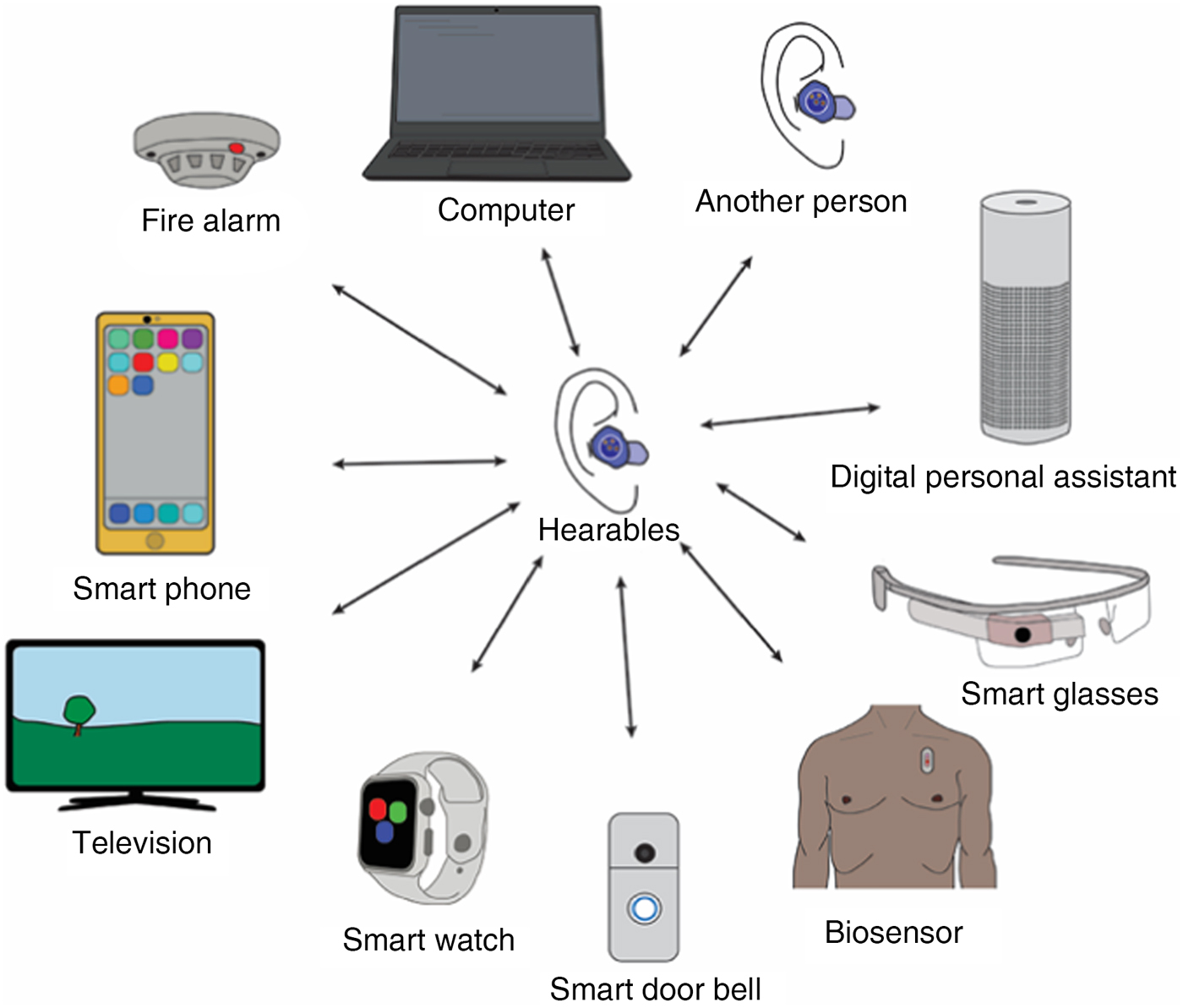
The new connectivity begins with freeform hand motion, unconstrained by a set of keys and thus able to convey a much richer set of information. Eyes will steer the cursor, ears will receive sound and communicate biometrics, and voice will convey commands and input running text. The ear will be an integral component of an intelligent ecosystem of connected devices that include computers, mobile phones, smart watches, biosensors and personal digital assistants (Figure 1). Ears will also be connected to the so-called ‘internet of things’, namely those previously non-internet-enabled ‘dumb’ physical devices such as light switches, thermostats, door locks and innumerable other everyday objects. With connected ‘hearable’ devices, museum paintings can tell you about themselves, and, should you step off the curb in front of a fast approaching bus, they will scream a warning into your ear along with precise avoidance instructions.
In the future, the ear will be ever more integrally connected to an intelligent ecosystem of digital devices. As ear phones are conduits for both hearing and voice, earpiece-to-earpiece connection among companions will afford clearer conversations in adverse listening situations. The ear piece will inevitably be extensively integrated into the ‘internet of things’, namely those previously non-internet-enabled inert physical devices such as light switches, thermostats, door locks and innumerable other everyday objects.

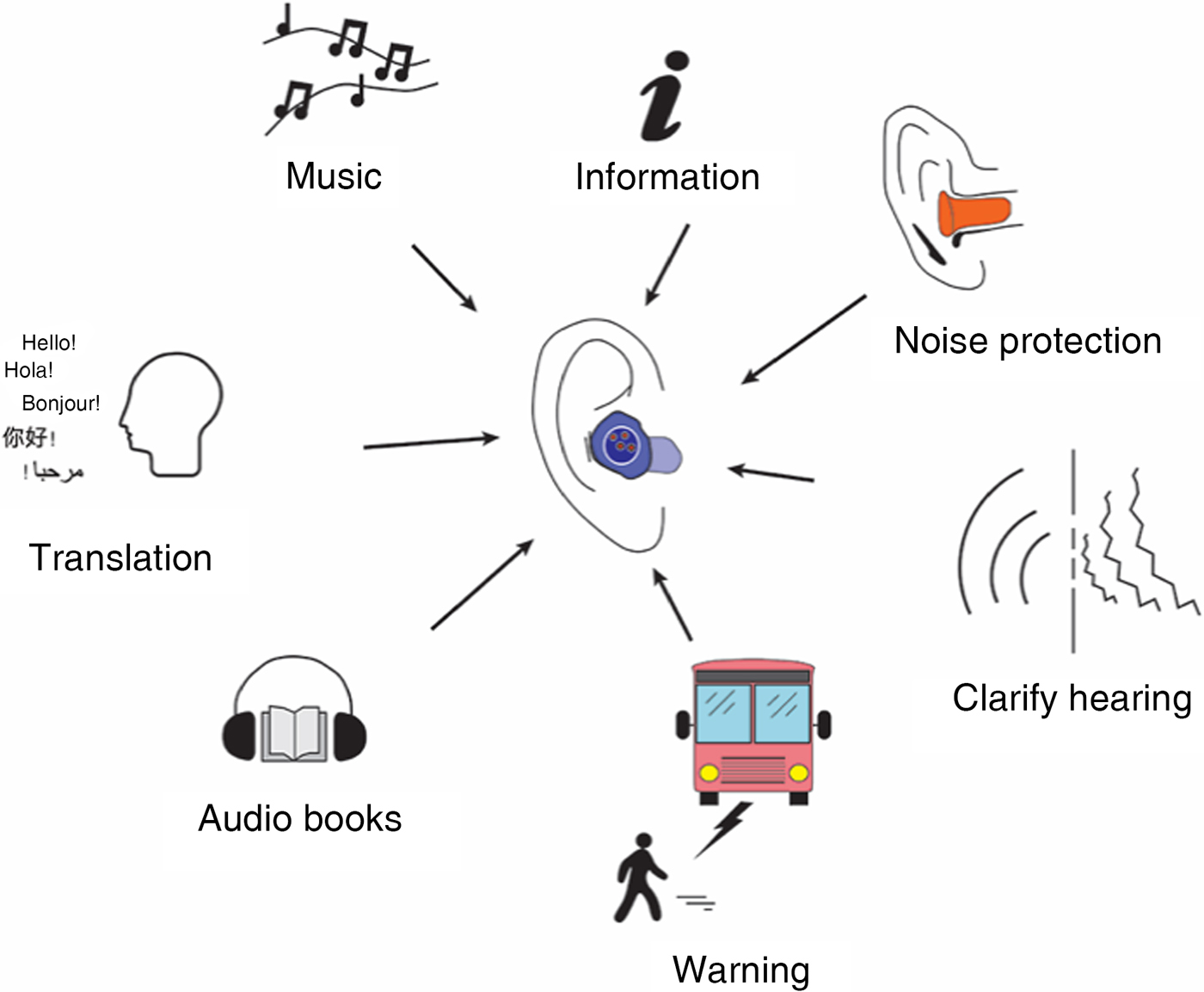
Early generation ear devices are appearing on the market today which, coupled with a smart phone, will instantly translate languages (Figure 2). This transformative capability has profound implications for global culture, business and politics. This may take the form of ‘dubbing’, in which a person's conversation is delivered to the listener in their native language. Alternatively, eyeglasses could project a running subtitle. Such speech-to-text technology could be of great benefit to deaf individuals, and may even be useful for less severely impaired listeners in adverse listening situations.
The ear piece will become a highly capable, multifunctional consumer device that will improve the sense of hearing in the population at large, extracting speech from background noise and protecting against noise injury. It will also convey information, provide directions, play music and books, give warnings, and have myriad other functionalities. Coupled with the processing power within a smart phone, the ear piece will provide instantaneous translation between languages, with profound implications for global culture, business and politics.

Recently, a hearing aid company introduced a multifunctional device that exploits embedded sensors, and utilises artificial intelligence to monitor activity and heart rate. This device also provides fall warnings, includes a tinnitus masker and even translates languages working in tandem with a smart phone.94 This is but the initial wave of highly capable consumer multifunctional devices.
Improving sense of hearing
Consumer hearable devices may be programmed in ways that enhance the sense of hearing in the population at large, even in those with perfectly normal hearing. Algorithms to enhance human speech and de-emphasise background noise, to preferentially focus hearing in a desired direction, or to wirelessly connect with ear pieces worn by companions, will make experiencing restaurants, bars and parties more enjoyable, and noisy workplaces more functional. Importantly, once hearable devices become widely used consumer products, it is straightforward to build accommodation for hearing loss into them.
Hearing protection
Open mould hearing aids and consumer earpieces are not especially effective hearing protection devices. Future ear pieces may be designed to maintain healthy ears by protecting against acoustic injury through the squelching of high level noises via technologies such as noise cancellation. Embedding a decibel meter into the earpiece would measure exposure at the level of the ear, rather than the less accurate measure at the smart phone which may be muffled in one's pocket or purse. Warning of potentially injurious exposure could be delivered via smart phone vibration or by a low tone chirp into the ear. In addition, the intensity and duration of exposure over 85 dB, including its frequency spectrum and impulse characteristics, could be tracked, stored and trended separately for each ear. This might be especially useful in industrial and military settings. Stored exposure data in large populations will help us to better understand the varying vulnerabilities to noise injury.
Ear piece as locus for biometric monitoring
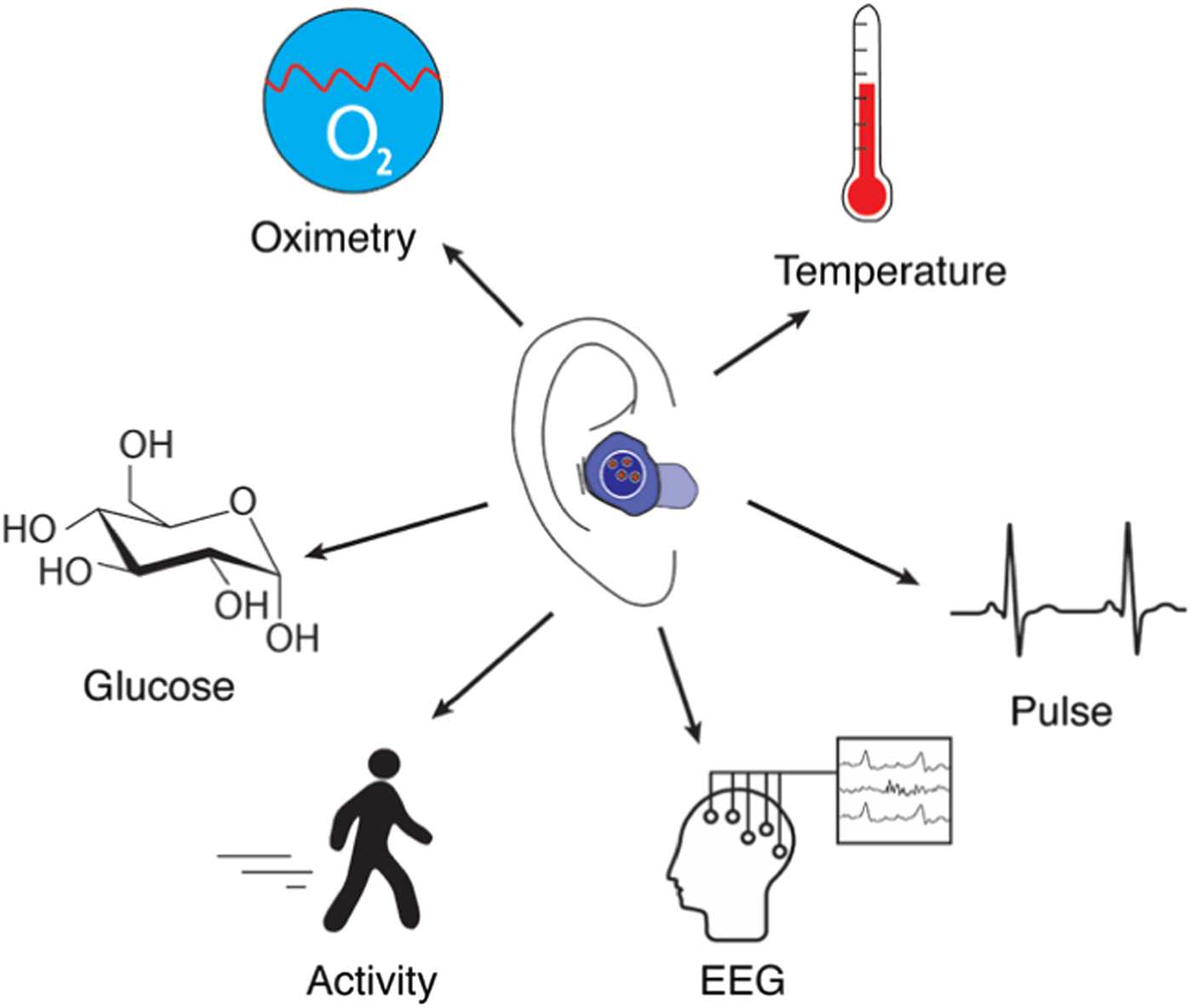
Wearable biometric monitors have an enormous future. Today's wrist-worn sensors (e.g. FitBit, Apple Watch) measure activity and pulse, but future devices will continuously monitor a wide spectrum of physiological parameters, including electrocardiography, blood pressure, body temperature, oxygenation, glucose level and many other measures.Reference Li, Dunn, Salins, Zhou, Zhou and Schüssler-Fiorenza Rose95 Data derived from continuous monitoring in large populations, such as Google's ‘Baseline Project’ or the National Institutes of Health's ‘All of Us’ project, will enhance our understanding of both normal physiology and many chronic disease states.Reference Maxmen96
The ear canal has a number of advantages over the wrist for physiological monitoring (Figure 3). As an activity monitor, accelerations measured at the ear more accurately measure truncal motion than do arms, which are subject to many extraneous motions not necessarily related to gait. Physiologically, parameters measured in the ear canal more closely reflect the state of the brain, while arms are exposed to the elements, and, as part of the body's adaptive thermoregulatory system, have highly variable temperature and blood flow.
The ear canal is a superior locus for biometric monitoring compared with wrist devices. Physiologically, parameters measured in the ear canal more closely reflect the state of the brain, while arms, exposed to the elements and part of the body's adaptive thermoregulatory system, have highly variable temperature and blood flow. As an activity monitor, accelerations measured at the ear more accurately measure truncal motion than do arms, which are subject to many extraneous motions not necessarily related to gait. EEG = electroencephalography

End of stigma of wearing an ear device
While under long-established social norms, eyeglasses make a person look stylish and smart, wearing a putty-coloured hearing aid suggests to some that a person is old and of diminished intellect, a legacy of the traditional ‘deaf and dumb’ stereotype. Fortunately, since the Bluetooth revolution, young people are making wearing an earpiece fashionable, and these antiquated cultural assumptions are gradually fading.Reference Jackler97 Once an earpiece is used by a large fraction of the population as a consumer electronic device, it is straightforward to incorporate programming designed to accommodate for hearing loss. This means that, unlike today, in the future virtually everyone who would benefit from amplification will actually use it.
Balance devices
Implantable technology for patients suffering from bilateral vestibular loss has been under investigation in the last decade.Reference Perez Fornos, Guinand, van de Berg, Stokroos, Micera and Kingma98–Reference Chow, Gimmon, Schoo, Trevino, Boutros and Rahman102 A series of three patients who underwent multichannel vestibular implants inserted via a series of labyrinthotomies was reported recently, with favourable initial results.Reference Della Santina103 Preliminary results demonstrate that electrical stimulation provides vestibular nerve input which can influence gait and the vestibulo-occular reflex connection.Reference Chow, Gimmon, Schoo, Trevino, Boutros and Rahman102 Importantly, these were accomplished with minimal to no hearing loss, at least in the short term.Reference Schoo, Bowditch, Marsiglia, Boutros, Chow and Gimmon104
Virtual reality goggles, which have potentially much wider use for vestibular stimulation, create immersive sensations that trigger motion sickness when the visual input does not synchronise with the user's vestibular system. Disorientation may also occur with so-called altered reality, during which a computer generates multiple sensory modalities that overlay the real world. While surgical intervention of the vestibular system may be justified for patients suffering from debilitating bilateral vestibular dysfunction, it would be overly invasive for adapting to the virtual reality world. Non-invasive means of stimulating the vestibular system need to be developed. Magnetic forces can activate the vestibular system via magneto-rheological effects; this offers promise for delivering the needed vestibular phantom.Reference Ward, Otero-Millan, Jareonsettasin, Schubert, Roberts and Zee105
A second focus of balance devices is fall reduction. Falls, especially in the elderly, are a major cause of morbidity and have a substantial cost burden on the healthcare system.Reference Agrawal, Carey, Della Santina, Schubert and Minor106,Reference Agrawal, Ward and Minor107 Fall reduction technology may utilise a sensor system. Such a sensor system may involve pressure sensors, built into shoes, which alert the unsteady individual when they are beginning to tip and provide input on maintaining an upright posture. A recently introduced hearing aid includes an inertial sensor that detects falls.94 Mitigating the effects of a fall via an air bag system that inflates to protect against hip fractures is another promising technology.
Self-diagnosis and home monitoring
Mobile device applications and online tools relating to hearing and balance are proliferating rapidly. At-home hearing tests, sometimes offered by hearing aid or personal sound amplification product companies, enable consumers with quality earphones to produce a reasonably accurate basic audiogram. Without bone conduction, masking, reflexes or other standard components of a professional hearing test, the results are limited. Nevertheless, self-diagnosis in the future is likely to reduce medical involvement in the management of prevalent symmetrical forms of sensory loss such as presbyacusis and noise-induced hearing loss. Where permitted by regulation, direct sales of programmed ear devices to hearing-impaired patients may become commonplace. In patients with sudden or fluctuating losses, at-home tests can be helpful for the ongoing monitoring of hearing changes.
While decibel meters have traditionally been the exclusive province of technical experts, reasonably accurate decibel meter mobile device applications are now available on smart phones. Some convey simple messages (green-yellow-red), while others provide highly technical analysis of detected sound levels. These enable patients to identify potentially injurious levels of sound in their environments. Mobile device applications are also available for tinnitus suppression and as a guide for balance-related physical therapy.
Clinicians today are accustomed to patients quoting internet sources, which, for better or worse, have shaped their opinions on the diagnosis and management of their ear problems. Because there is so much unreliable information online, companies and healthcare delivery systems are working towards providing trusted information. This represents a trend towards the more active engagement of patients in their hearing and balance care.
Education in otology
Otological surgical training is only now beginning to incorporate simulation methods. By contrast, the aviation industry routinely uses highly realistic simulators to train pilots, when introducing new features and to assess competence in ongoing periodic evaluations. While surgery involves one patient at a time rather than a plane full, it involves procedures of major human consequence and has a considerably greater risk of adverse outcome than modern jet travel. The contrast is striking: in the USA, medical errors result in many thousands of preventable deaths each year, while, in most years, there is not a single death in American commercial aviation.Reference Shojania and Dixon-Woods108 It has been pointed out that when an airplane crashes, the pilot goes down with the plane, whereas the surgeon goes on to the next procedure. While there are notable differences between pilots and surgeons, the need to more closely emulate the aviation culture of safety in surgery, as has been adopted in the use of pre- and post-procedure checklists, is clear.
Simulation has long been practised in otological surgery by dissection in temporal bone laboratories. The increasing difficulty in acquiring specimens and the high cost of maintaining lightly used dissection laboratories point to the necessity of developing realistic computer simulators. Fabricating anatomically correct specimens using three-dimensional printers may be helpful, but virtual simulations enable the creation of multiple scenario variations that present the learners with realistic technical challenges of types encountered during procedures.Reference Javia and Sardesai109,Reference Barber, Kozin, Dedmon, Lin, Lee and Sinha110 While a pilot may have to recover from a simulated stall, hydraulic failure or engine loss, the otologist might be challenged by a cerebrospinal fluid ‘gusher’, semicircular canal fistula, sigmoid or carotid rupture, and so on.
Virtual reality based temporal bone simulators are evolving, with some systems enabling a variety of haptic reinforced tools (e.g. drills, micro instruments). These early generation systems have been shown to improve temporal bone dissection performance among trainees.Reference Locketz, Lui, Chan, Salisbury, Dort and Youngblood111,Reference Lui and Hoy112 By incorporating clinical CT and MRI data, simulation can be customised to the peculiarities of a specific patient's anatomy and disease process. This enables a practice session in advance of the planned procedure.Reference Won, Hwang, Lim, Cho, Paek and Losorelli113 Networked haptics enable a novice surgeon to hold surgical tools while the system plays back the manoeuvres performed by an expert surgeon.Reference Chan, Li, Locketz, Salisbury and Blevins114 Such systems will, for example, enable the learning surgeon to feel the amount and duration of pressure applied in fenestrating the stapes footplate or decompressing the facial nerve.
A second role for simulation will be the evaluation of competence. Presently, board examinations assess knowledge, but not technical performance. Future board examinations may test technical skills using simulation. This is already performed in other fields, such as general surgery for laparoscopic operations, where certification in the fundamentals of laparoscopic surgery is a pre-requisite for the American Board of Surgery qualifying examination.Reference Scott, Pugh, Ritter, Jacobs, Pellegrini and Sachdeva115,Reference Hafford, Van Sickle, Willis, Wilson, Gugliuzza and Brown116 The latest artificial intelligence machine learning technology takes advantage of convolutional neural networks to determine the level of a surgeon's skill based on video analysis of the surgery.117 This will be used in the future to quantify and determine when a trainee is ready to undertake a procedure independently, potentially accelerating training programmes. Such systems can also be used to monitor an ageing surgeon's technical skills, providing an objective metric for recommended retirement from the operating theatre.
Future of otology as a specialty
A great many patients in need of otological care do not require the skills of a highly trained surgeon. The most prevalent diseases in the field are non-surgical. Examples include cerumen impaction, external otitis, uncomplicated otitis media, Eustachian tube dysfunction, presbyacusis, noise-induced hearing loss and most vestibular disorders. When highly trained surgeons find their technical skills under-utilised, they tend to loosen their indications for surgery – a circumstance not beneficial to the patients they serve.
One way of meeting the needs of non-surgical patients would be the creation of a field of medical otology with a shortened training schema. Another would be broadly trained comprehensive otolaryngologists who emphasise the medical aspects of the field. There are well-established models in medicine: cardiology and cardiac surgery, neurology and neurosurgery, nephrology and urology, and so on. If otology and/or otolaryngology do not create a medical specialty, neurology or primary care might well do so. We should also anticipate an increasing role for non-physicians in otological care. Nurse practitioners, physician assistants, audiologists and even hearing aid dispensers are increasingly managing otological cases that do not require a practitioner with six to seven years of specialised surgical training after completion of medical school.
Perspective
It could be considered that otology has had three renaissance periods. The initial was the mid-nineteenth century era, during which the specialty was founded, mastoid surgery became widely practised and scientific otology was born. A century later, during the 1950s, many observers predicted that antibiotics would lead to the demise of otology as a surgical field. A second renaissance, which followed shortly thereafter, was the coming of microsurgery, and the transition of the field from draining infection to functional restoration with transformational procedures for conductive (e.g. stapedectomy) and sensory (e.g. cochlear implants) hearing loss.
• Otology is increasingly at the forefront of innovation in science and medicine
• Promising advances of potential clinical impact have occurred in recent years in biological fields
• The interface of the ear with digital technology to remediate hearing loss or as a consumer device is receiving enormous creative energy
• Automation and artificial intelligence can enhance otological medical and surgical practice
• This paper speculates on the direction otology will take in the coming decades
A third renaissance, in its infancy today, may well be grounded in advanced biological cures for middle- and inner-ear diseases and ever more sophisticated implanted devices. Of equal importance will be the central role of the human ear in an intelligent ecosystem of connected digital devices. The otologist of the future may not exclusively care for those suffering from ear diseases, but may be involved in procedures designed to augment the sense of hearing in the population at large, including those with normal hearing. The ear has become high value real estate in emerging technologies. As otologists are experts in the interface coupling the ear with digital technology, our participation is essential in their design and implementation.
Some ear surgeons lament the decreasing number of stapedectomies, vestibular surgical procedures and vestibular schwannoma resections, perceiving the passage of a ‘golden era’ which they enjoyed earlier in their career. In every modern era, it has always been thus. While it is true that growth factor mediated regeneration of the tympanic membrane may soon render microsurgical tympanoplasty obsolete, we should warmly welcome this kind of obsolescence. Such inventions do not herald the decline of our field any more than did antibiotics in the 1950s. Ear surgery of the future may be centred more on coupling the ear with devices than on remediating diseases. As more non-surgical methods of curing ear diseases are discovered, management of implanted devices will likely become a progressively more dominant component of otology. Some of these newly introduced technologies will be derivatives of those in use today (e.g. cochlear implants and middle-ear hearing aids), while others will have designs not yet conceived of, and employ materials and methods not yet invented. Technical advances will open new fields of otological surgery, notably therapeutic manipulations within the living inner ear.
The future path for otology, driven by its pace of discovery and invention, is not preordained. Its evolution will be driven by our creativity, perseverance, and especially our ability to recruit experts in other fields of science and technology to engage in innovation relevant to hearing and balance. Management guru Paul Drucker advised us well: ‘The best way to predict the future is to create it’. Today's otologists faced with incurable diseases should not lament, but rather recognise obstacles as an opportunity to think creatively and strive to invent novel forms of cure.
Competing interests
None declared