

[P]eople will ignore borders whenever it suits them…. Local inhabitants cross them whenever services or products are cheaper or more attractive on the other side; and traders are quick to take advantage of price and tax differentials. (Baud and van Schendel Reference Baud and van Schendel1997: 211)
Illegal and unrecorded trade was not haphazard but institutionalized, operating according to a system of rules known to all participants. Examples included the standardized equivalences observed for barter transactions, the set rate for paying border guides, the arrangements set up for the terms of clientage, and the reciprocal obligations of other personal ties. (Chingono Reference Chingono1996: 114)
Cross-border trade between Burma and Yunnan
Following its independence from British colonization in 1948, as a young nation state, Burma was torn by severe political factionalism and incessant ethnic wars. Using national unity as his justification, General Ne Win overthrew the short-lived parliamentary government by a military coup in 1962, and subsequently steered the country with an oppressive military rule based on the ideology of the ‘Burmese Way to Socialism’ (Callahan Reference Callahan2003; Smith Reference Smith1993; Thant Myint-U Reference Thant2006). The new military junta implemented a series of economic measures to nationalize trade and industry. In addition to long-existent ethnic division, these changes quickly drew Burma into a mire of economic recession and scarcity of essential goods (Kyaw Yin Hlaing Reference Yin Hlaing2001). To cope with the nation's consumption demands, the black-market economy thrived, in connection with illicit transborder trade with neighbouring countries, and became the alternative mechanism paralleling the ill-functioning state-controlled economy. An estimated 80 per cent of Burma's total consumption originated as smuggled merchandise, and a primary portion of the trade was carried out with mule caravans that went back and forth between Burma and Thailand (Chang Reference Chang2009; Lintner Reference Lintner1988: 23; Mya Than Reference Than1996: 3).
In 1988, the Burmese socialist junta finally stepped down following a series of nationwide revolts. By that time, in part from decades of ethnic turmoil, the country's economy had plummeted to such a degree that it was ranked as one of the least developed in the world. Anger seethed amongst the general population (Lintner Reference Lintner2011). To save the nation from economic destitution, the new military junta, the State Law and Order Restoration Council (SLORC),Footnote 2 was compelled to implement a market-oriented economy and subsequently opened several border gates for bilateral trade with its neighbouring countries. Among them were towns such as Muse, Loije, Laiza, Chinshweshaw, and Kambaitti adjacent to China; Tachilek, Myawaddy, and Kawthaung connecting Thailand; and Tamu and Reed bordering India (Maung Chan Reference Maung2005). The government signed a series of border trade agreements with India, Bangladesh, China, Thailand, and Laos (Kudo Reference Kudo and Kagami2010: 272). Among these border gates, Muse, which connects with Ruili in Yunnan Province, has been the busiest since the mid-1990s owing to the rapid growth of Sino-Burmese trade. In 2011, China outstripped Thailand to become Burma's largest trading partner (Aye Thidar Kyaw Reference Aye2012), accounting for $6.5 billion in trade according to International Monetary Fund figures (Kurtenbach Reference Kurtenbach2012). Over half of this amount was accrued in cross-border trade via Yunnan (Li and Li Reference Li and Li2011). From 2013 to 2014, the amount of bilateral trade increased from $10 billion to $25 billion (Sun Yun Reference Sun2015) and the portion of this that was channelled via Muse accounted for 83 per cent of the total border trade (Kyaw Hsu Mon Reference Hsu Mon2015).
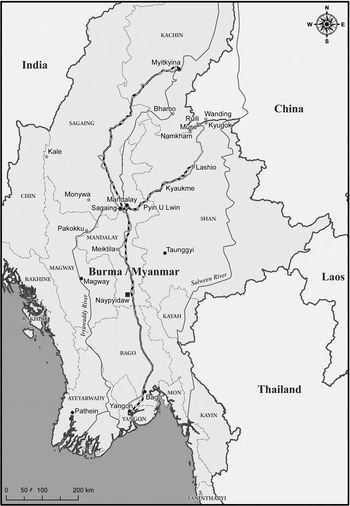
In 2000, following its increasing cross-border trade with Burma, China made Jiegao, originally a Tai village of 1.92 km2 located in the southeastern corner of Ruili, its first extraterritorial commercial area. Through Jiegao, many import-export goods enjoy reduced tariff rates and, from there, the traffic enters Muse and connects southward via the new Burma Road with Lashio, Mandalay, and Yangon, and west-northward via the Stilwell Road with Bamo, Myitkyina, and Ledo (India). It is also possible for traders to take the Irrawaddy River from Bamo to Yangon. The Ruili-Muse link is strategically important for China as it provides access to the Indian Ocean (Li Reference Li and Rieffel2010).
On the Burmese side, the government set up the Muse-105-Mile Trade Zone (hereafter Muse-105-Mile) in Mang Yu in 1996, originally a 370-acre (1.498 km2) village, 7 miles south of Muse and 105 miles north of Lashio (Kudo Reference Kudo and Kagami2010: 284). This trade zone is the largest in Burma and is responsible for the customs inspection and taxation of the import-export trade via the border points of Muse, Namkham, and Kyugok, accounting for more than 60 per cent of the nation's trade (Kudo Reference Kudo and Kagami2010: 279). Between Muse-105-Mile and Mandalay, there are still sixteen checkpoints. Although it takes approximately ten to twelve hours from Muse to Mandalay (by car) in smooth traffic, irregular inspections at checkpoints can prolong the route by many hours (Kudo Reference Kudo and Kagami2010: 289–290).
The bustling traffic on the new Burma Road echoes the significance of the original Burma Road during the Second World War, when it was used to transport supplies of their Western Allies from Burma to China prior to the Japanese occupation of Burma in 1942. The construction of the Burma Road, which took only approximately a year between 1937 and 1938, was a remarkable project that met the challenge of numerous, precariously high mountain ranges. The road is 717 miles long, running between Kunming and Lashio, passing the Wanding-Kyugok connection at the Sino-Burmese border. The Allies transported material from Yangon to Lashio by train and then from Lashio to Kunming by truck. During its service from December 1938 until May 1942, the Burma Road conveyed an average of over 10,000 tons of goods per month (Niu and Ren Reference Hongbin and Jia2005: 19).Footnote 3
According to historical records, transportation depending on mules and horses had been active along this line since the Ming (1368–1644 CE) and Qing (1644–1911 CE) periods (Lu Reference Lu2000: 113). Even after the construction of the Burma Road, shipment by mule trains continued on a range of routes between Yunnan and Burma (YNWS 1993). Looking further back, the inter-regional trade between southwestern China, Burma, and northern India, presumably also via mule transportation, can be traced back more than 2000 years. An episode recorded in Shiji (SJ 1988), describing Zhang Qian's (a Chinese marquis) diplomatic visit to Daxia (Bactria, present Afghanistan) and his encounter with Chinese commodities there, has often been quoted as proof of its long trade history (Sang Reference Sang1969).
After the war, the cross-border trade between Yunnan and Burma increased by means of both vehicle and animal convoys. However, from the 1950s through the 1970s, the bilateral trade was largely reduced and went underground due to trading restrictions from both sides. The border trade between Burma and Yunnan was not officially resumed until 1988 (Kudo Reference Kudo and Kagami2010: 271; Kyaw Yin Hlaing Reference Yin Hlaing2001: 280).
Today, the new Burma Road accommodates a rapidly increasing volume of traffic. Toshihiro Kudo, a Japanese economist, attributes this development primarily to “regularization and institutionalization of cross-border transactions and road development” on both sides (Kudo Reference Kudo and Kagami2010: 279). His study, based on official data and observations in Jiegao and Muse, presents an optimistic prospect. However, it completely overlooks the reality of persistent contraband trade via alternative routes between Yunnan and Burma. In fact, prior to 1988, underground economic activities, particularly via Loijie, Namkham, and Kyugok, had been active due to the economic opening of China since the early 1980s and the ongoing demands for consumer goods in Burma. Traders smuggled large amounts of Chinese products to Burma while jade stones, gems, teak wood, and crops were secretly sold from Burma to China. Lashio was the major black-market hub. Even today, informants engaging in transportation point out the continuity of illicit cross-border trade (Chang Reference Chang2013). In this paper, taking the smuggling of Chinese motorcycles as a case study, I attempt to shed light on this illicit activity as an alternative economic system upon which many Burmese people depend for their livelihood. Before examining motorcycle smuggling, in the following section I review the relevant works on shadow economies for later comparison.
Shadow economies in borderlands
As quoted at the beginning of this paper, borderlanders’ economic agency cannot be confined by a state's borderline demarcation. The persistence of transnational trade in the borderlands stretching from southwestern China to upland Southeast Asia and northeastern India, or what van Schendel (Reference van Schendel, Kratoska, Raben and Nordholt2005) and Scott (Reference Scott2009) term ‘zomia’, has attested to this fact. The Shiji episode referred to earlier provides a case in point. Looking back through human history, the formation of nation-states predicated on territorial sovereignty is a relatively recent occurrence tied to two major forces: colonialism and nationalism (Chouvy Reference Chouvy2013; Donnan and Wilson Reference Donnan and Thomas M.1999; High Reference High and Gainsborough2009; Johnson and Michaelsen Reference Johnson, Scott, Michaelsen and Johnson1997; Lugo Reference Lugo, Michaelsen and Johnson1997). While diverse transborder acts, be they flows of goods or people, are rendered illegal by modern states, one should keep in mind that they may have been part of the everyday lives of frontier people for a very long time.
Since the 1980s, many underground trade publications have focused on Africa, Latin America, and Eastern Europe, where economic practices of this kind are essential to the welfare of populations. A core discussion of the literature addresses the ambivalent nature of this kind of commerce. Some of these activities are clearly illegal and in opposition to official law, but in other cases, the legality is less clear, inhabiting a grey zone that often shifts in status between licit and illicit. Such activities may even overlap with legal and official enterprises and be conducted openly. Nordstrom thus states: “clear distinctions between legal and illegal, state and non-state, or local and international are often impossible to make” (2000: 42 [italic in original]). The degrees of legality among these ‘unofficial’ economic practices are often vague and nuanced. To help distinguish between them, scholars use a variety of terms to identify the economies described in their research: shadow, informal, non-formal, underground, parallel, second, unrecorded, hidden, black-market, and alternative. Nevertheless, despite efforts to coin precise terminology, the topic remains elusive, and careful investigation of interrelated social, political, and economic factors that can be traced along a historical process is required.
Among studies on shadow economies, case studies on Africa are particularly relevant to the present study, as most nation-states therein were formed after long periods of Western colonization and have endured ongoing tribal/ethnic wars and regime changes. Burma, as a nation-state established after British colonization, and moreover one with incessant ethnic conflicts, has undergone a similar history. In many African countries, abusive governance and corruption have become the norm in daily life. Janet MacGaffey, in collaboration with local researchers, investigates what she calls the ‘second’ economy in Zaire (the former state of the Democratic Republic of the Congo, or Congo-Kinshasa), as well as the trade between Paris and present-day Congo-Kinshasa and Congo-Brazzaville (MacGaffey Reference MacGaffey1987; MacGaffey with Mukohya, et al. Reference MacGaffey and Mukohya1991; MacGaffey and Bazenguissa-Ganga Reference MacGaffey and Rémy2000). In another work, Aili Mari Tripp examines the ‘informal’ economy in Tanzania by investigating the relationship between human agency and socio-political structural factors (1997). Regardless of a difference in terminology,Footnote 4 MacGaffey's and Tripp's research concerns by and large overlap. The trading activities they examine cover a wide range of commodities, including crops, manufactured goods, ivory, diamonds, and precious minerals. Using Scott's (Reference Scott1985) theory, they frame these economic practices as resistances to complexities generated by historical, social, cultural, and political events and contexts that have resulted in oppressive governments. Both MacGaffey and Tripp present the nature of this trade through the everyday lives of their study subjects and share the viewpoint that the people have initiated alternative institutions, predicated on their connection networks, to regulate their operations and consequently create alternative economic resources.
In addition to MacGaffey's and Tripp's writings, Chingono's (Reference Chingono1996) monograph on Mozambique provides another illustrative example of the political instability and social turmoil in many parts of Africa. Based on fieldwork in Chimoio, a town near the border, the author investigates the impacts of ongoing wars on ordinary lives. The rise of the grass-roots economy is a major theme. Despite dramatic effects generated by wars, Chingono argues, violence also stimulates vigorous entrepreneurialism, resulting in smuggling, illegal money dealing, and piracy. Corresponding to MacGaffey's and Tripp's emphasis on alternative institutions and social connections, he argues that these informal economic engagements are not “haphazard but institutionalized” (114). This finding recurs time and again in other scholars’ writings on the shadow economy in Africa and beyond, and has become a primary element in studies in the field.
Regarding research on illicit commerce in contemporary Southeast Asia, only a meagre number of publications have focused on the issue of opium trade before the mid-1990s (Lintner Reference Lintner1994; McCoy Reference McCoy1991; McCoy and Read Reference McCoy and Read1972; Renard Reference Renard1996). Since then, scholars of the younger generation, apart from continuing study on the issue, have worked on topics related to the smuggling of other commodities, such as human trafficking and illicit trade in timber, wild animals, artefacts, arms, gem stones, and so on (e.g. Chang Reference Chang2004; Chin Reference Chin2009; Chouvy Reference Chouvy and Chouvy2013; Jelsma et al. Reference Jelsma, Kramer and Vervest2005; Nagashima Reference Nagashima2002; Stenross Reference Stenross2011; van Schendel et al. Reference van Schendel, Lyons and Ford2012; Woods Reference Woods, Tagliacozzo and Chang2011). By tackling these underground activities from a range of disciplinary perspectives – anthropological, environmental, criminological, economic, and sociological – they add to our knowledge of the underlying problems of social inequality, political unrest, and convoluted connections between governmental apparatuses and transnational corporations or syndicates. Those integrating a long historical perspective shed light in particular on the continuum of regional and transregional systems of exchange in relation to indigenous cultures and the development of institutionalized regulations among competing parties. A good example is Walker's The Legend of the Golden Boat (1999), which examines cooperation in the Upper Mekong area. Walker concludes that transnational movements in the Quadrangle region represent only the most recent of such regulations in Upper Mekong history. Another example is Stenross's Madurese Seafarers (2011), which explores the current livelihoods of the Madurese as sailors, traders, and smugglers in relation to their shipping traditions.
Drawing on the above review, I attempt to answer several questions for the present case study on motorcycle smuggling from China to Burma: What does a border mean to the people involved? How do we understand their engagement considering the ambivalent nature of underground trade? Vis-à-vis state institutions, what are the alternative means used by smugglers to form their trading mechanism? Moreover, how does this mechanism relate to the long tradition of mule transportation in the region? In the following sections, I first present the organization and operation of this contraband and then proceed to make further analyses and interpretations.
Nodes of suppliers from China
During annual field trips to Burma since 2000, I have noticed the increasing rate of motorcycle riding in major cities (apart from Yangon where the government has banned motorcycle use), and this phenomenon has become especially prominent since 2004. Friends informed me of the high demand for motorcycles in the country as they could enhance physical mobility and trade opportunities, but the government did not open its market to motorcycle imports, and the number of issued licences was comparatively small. Hence, cheap Chinese motorcycles were brought in illegally and became a popular means of transportation.
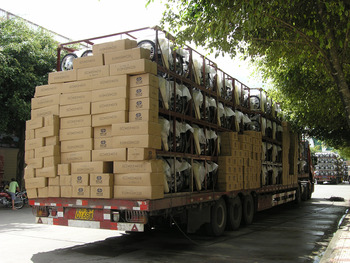
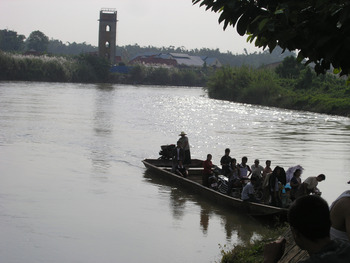
In October 2009, I commenced my research in Ruili and Jiegao, observing shipments of motorcycles by truck from Kunming and their unloading at shops in Jiegao (Figure 1). I also saw groups of young people from Burma, primarily males including Shans, Burmans, Kachins, Yunnanese,Footnote 5 and Indians, arriving in Jiegao to purchase motorcycles. They mostly travelled by pick-up truck from Lashio in the morning and arrived in Muse by noon, an approximately three-and-a-half-hour ride. They then passed the border gate to Jiegao on foot, purchased motorcycles and rode them back to Burma. A motorcyclist said that the number of motorcyclists from Burma to Jiegao could reach 400 to 500 a day. Most purchased two motorcycles – one which they rode on the way back and another that was disassembled and packaged to carry. Instead of passing through the official border gateway, these motorcyclists took small boats (Figure 2) across the Ruili River to avoid border checks. After reaching Muse, they rode on mountain routes to bypass the Muse-105-Mile checkpoint.
Shipment of motorcycles by truck. (Source: Taken by the author)

Illicit border crossing by boat from Jiegao. (Source: Taken by the author)

During this trip, and through a friend's introduction, I met Daili,Footnote 6 one of the most successful export agents of motorcycles in Jiegao. Daili was in her mid-30s, a second-generation Yunnanese migrant from northern Thailand. Her parents escaped from Yunnan to Burma in the 1950s, fleeing due to class struggle and a series of political movements carried out by the Communists. In the 1960s, they moved to Thailand and settled in a village near the border of Chiang Mai Province adjacent to Burma, which has been one of my major research sites since 1995.Footnote 7 Daili's father was engaged in the cross-border trade between Thailand and Burma by means of mule caravans from the 1960s through the 1980s. Daili and her Teochiu ChineseFootnote 8 husband went to China for better opportunities in the wake of the 1997 economic crisis in Southeast Asia. They engaged in a few endeavours, but all failed due to the couple's lack of familiarity with the respective businesses and a lack of local connections. By 2000, however, the Yunnan-Burma border trade was booming. They observed this trend and noticed the demand for motorcycles from Burma. With the help of a distant paternal uncle who is a high-ranking official in Dehong Prefecture in which Ruili and Jiegao are located, they made some inquiries about the business and gained access to a major motorcycle company – Jialing (嘉陵). Daili said:
I have a cousin in Kunming who introduced us to a distant uncle from my father's lineage who was the Chief of the Provision Board in Dehong Prefecture. Owing to his help, we were able to establish our business in Jiegao and obtained a contract from the Jialing Corporation as its sole agent for motorcycle export to Burma. The Jialing Corporation is a privatized section of a national enterprise which produces munitions. The corporation collaborates with the Japanese Honda company and produces motorcycles…. It was the right decision to come to Yunnan. Learning from previous failing experiences, we hired a former chief, retired from the Board for Overseas Affairs in Dehong Prefecture, as our company's executive manager. He was in charge of all the contacts with the official units. He helped a great deal as we were not familiar with the local environment and authorities. He worked for several years until he asked to leave because of old age.
Daili and her husband went to Jiegao in 2000 and opened their shop the following year. It was a good time to launch the business. China granted the ‘intra-boundary extra-customs’ (jinnei guanwai 境內關外) status to Jiegao that year and gave favourable taxation to export commodities in order to promote its business. From 2000 to 2003, export goods enjoyed a tax-free status and for the following two years a 50 per cent tax discount.Footnote 9 Chinese goods arriving in Jiegao are destined for export to Burma and cannot be shipped back to China. Daili said the establishment of Jiegao as an extraterritorial trade zone was partly to cope with Burmese irregular trading policies. Take the export of motorcycles as an example: Instead of shipping large quantities of the products via the official border gateway, sellers must rely on the motorcyclists from Burma to smuggle in small quantities via alternative routes. “Jiegao is like a huge storeroom that accommodates the goods waiting for export”, Daili commented. Behind their shop, Daili and her husband own a thirteen-acre piece of land for storage of the motorcycles. As Jialing's sole agent for export to Burma, they also sold their motorcycles to other shops in Jiegao prior to 2008. That year, with stronger capital, they decided to stop the wholesale business, allowing them to control the quality of the motorcycles they sold and avoid debts from procrastinating wholesale dealers. Unlike many other shops that sell motorcycles assembled with components from a range of producers, their shop guarantees genuine Jialing products whose prices are slightly higher than inferior brands.Footnote 10 Daili said the price of a motorcycle was at least 4000 RMB (approximately 650,000 kyat) during the first few years. Following the high demand from Burmese consumers and competition among producers, the price has reduced to approximately 2000 RMB (approximately 320,000 kyat) per motorcycle since 2009.Footnote 11 However, the quality has also reduced. A Burmese informant commented that Burmese consumers like cheap products and are little concerned with quality.
Apart from tax reduction, for the first few years, Daili and her husband were able to purchase products from Jialing on credit. This allowed them to expand their business and set up shops in other border towns, including Kachang, Nabang, Zhangfeng, Mengding, and Daluo, but the one in Jiegao is the largest. They sold more than 9000 motorcycles in 2001, more than 10,000 in 2002, more than 20,000 in 2003, nearly 40,000 in 2004, and more than 40,000 every year since, until 2012.Footnote 12 According to Daili, there were approximately 40 motorcycle shops in Jiegao in 2009, but fewer than 10 of these were major ones.
The above story underscores two central points: first, the (il)legality of border trade and, second, social networks. On the first point, we see a disparity in law between China and Burma regarding cross-border trade. While the Chinese government has promoted the trade between Yunnan and Burma by assigning special status to Jiegao and granting favourable taxation, the Burmese government is much more restrictive. According to my informants, Burma did not open its market for motorcycle imports until 2010, and since then, only companies have been permitted to apply for import licences. Legally imported motorcycles are taken in by truck. The import taxation is as high as 50 per cent, costing approximately 1000 RMB for every imported motorcycle. Only traders with ample capital have taken this legal channel. The high rate of motorcycle smuggling continued until 2014 when the demand in Burma started to decline. By that time, according to informants, most families in major cities and towns already owned one or two motorcycles. Although, on the one hand, the legal disparity creates obstacles to the smooth flow of commodities via the official border gate, it has also created economic opportunities for Burmese people who have demonstrated a high demand for motorcycles (at least until 2014) and are willing to take the risk in order to make a living via unofficial channels. Therefore, in this case, the border not only denotes the state's territorial sovereignty, but has also become what Bruns and Miggelbrink (Reference Bruns, Judith, Bruns and Miggelbrink2012: 15) call an “economic resource” for the people, which is derived from “differences in demand and supply, differences of taxation [and] differences in the legality of trading certain goods”.
On the second point, Daili and her husband's launch in the motorcycle trade in Ruili and their later expansion was essentially due to their social connections in Yunnan, personal and institutional, and also at the official and non-official levels. Daili's Yunnanese descent certainly plays a key role. In addition, she and her husband's entrepreneurship and management skills are important factors. In order to compete with other traders, in 2010, Daili and her husband set up four shops in Burma – in Mandalay, Taunggyi, Sagaing, and Bago – that provide repair services to customers with replacement parts from the Jialing company. These shops are overseen by one of Daili's cousins in Burma.Footnote 13 For the smugglers, social connections are also a fundamental feature, as I will illustrate in the next section.
Nodes of smugglers from Burma
Markets in Lashio, Pin U Lwin, and Mandalay
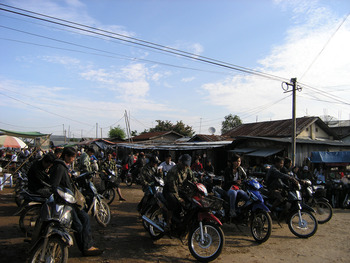
In approximately 2000 and 2001, motorcycle markets were set up in Burma, and Lashio, Pin U Lwin, and Mandalay are the major places for trade in contraband motorcycles from China (see Figure 3). Their transaction sites are all located on side streets near tea shops and restaurants and, in Lashio, they are located around an intersection in the fifth quarter, the largest motorcycle market on the new Burma Road. It was there that I carried out my research in 2010 and 2011. Beginning at five o'clock in the morning, hundreds of motorcyclists gathered there, drawing streams of potential buyers (Figure 4), mostly from Lashio or other nearby places. They purchased motorcycles in Jiegao and rode them back to Lashio overnight. A Burman informant told me that there was a Kachin village only one hour from Muse where all the adult villagers were involved in smuggling motorcycles from Jiegao and selling them in Lashio. Selling one motorcycle earned between 4000 and 7000 kyat in Lashio, making it more lucrative than farming.
Map of Burma. (Source: Produced by the Center for Geographic Information Science, RCHSS, Academia Sinica)

The motorcycle transaction site in Lashio. (Source: Taken by the author)

At the time of my visit, the transaction site in Lashio was animated and bustling. Local people estimated that the number of sellers and purchasers exceeded 1000 each day. There were many booths set up on either side of the roads, selling tea and breakfast. In addition, a few stalls were selling motorcyclists’ outfits, including sunglasses, helmets, raincoats, headscarves, tapes, T-shirts, and even fake licence plates made from plastic and iron.Footnote 14 Buyers also used a great deal of tape on their motorcycles to prevent damage as they rode. Due to the long distances and bad road conditions, particularly on mountain routes and during the rainy season, the motorcycles would be mud-stained by the time they reached the market in Burma. The motorcyclists then had to wash them and remove the protective tape before selling them on.
The Lashio site attracted many buyers from Mandalay, Pin U Lwin, Kyaukme, Meiktila, and other places. After buying motorcycles, the purchasers rode them back for further sale. In other words, Lashio was the first node in a series of motorcycle transactions in Burma, while other places further south of Lashio were the second or third nodes. (There were also motorcycle dealers from Pin U Lwin and Mandalay who went to Jiegao to buy motorcycles and rode them back to Pin U Lwin and Mandalay to sell.) The Lashio market ended at approximately nine o'clock in the morning, by which time the sellers who had sold all their motorcycles had left in groups by pick-up truck for Muse.
The market site for motorcycle transaction in Pin U Lwin is on the so-called ‘Gorlakha Lane’, the dwelling place of many ethnic South Asians,Footnote 15 while the market site in Mandalay is on 59th Street, between 34th and 35th Streets. During my research there in 2010, 2011, and 2012, the transactions in these two locations took place from morning to afternoon, but business was concentrated in the morning. Many buyers came from a wide range of places, including Taunggyi, Magway, Meikitla, Sagaing, Kale, and Pakokku. An Indian informant in Pin U Lwin said that there was a group of motorcycle buyers from Kale that came to Pin U Lwin every five days and another group from Magway that came once every two to three days. As it was more risky and costly to smuggle motorcycles to Pin U Lwin and Mandalay than to Lashio, the profit in these places was higher. Selling one motorcycle there may earn as much as 10,000 kyat.Footnote 16
Smugglers
As job opportunities are scarce in Burma, motorcycle smuggling has become a popular alternative means for making a living, especially prior to 2014. Informants reported that anyone who has the capital to buy a motorcycle may join the venture. Motorcyclists originate from various ethnic groups as referred to earlier, with Burmans and Shans in the majority. Although smugglers are predominantly male, there is no restriction on females’ participation. The informants estimated that the latter account for slightly less than five per cent. People who have a regular job may also take up the activity during holidays. Participants thus comprise a wide variety of people, including traders, students, government employees (teachers, officials, etc.), and even military men. The most peculiar phenomenon is that soldiers and government employees clad in uniforms sell their motorcycles at these market sites. The informants reported that while most people have to take mountain routes to avoid official checkpoints, soldiers and government employees, by wearing uniforms, can ride on the main road from Lashio to Pin U Lwin and do not need to pay underground tolls to the policemen or customs officials. However, unlike those who ride one motorcycle and carry one or two disassembled ones, in order to avoid complications, soldiers and officials only take the one motorcycle they are riding. Moreover, they only go as far as Lashio to purchase motorcycles and do not cross the border to Jiegao. The following paragraphs illustrate the backgrounds of a few motorcyclists.Footnote 17
A-lin (interviewed in 2010) is a third-generation Yunnanese migrant, born in 1991. Influenced by friends, he engaged in motorcycle transaction between 2008 and 2010 while still a student. Seeing some of his friends making a good profit from smuggling motorcycles, he repeatedly asked his parents to give him money for a try. In the beginning, his parents were not willing to let A-lin join the venture, considering his student status and the dangers entailed in the undertaking, but they finally agreed and gave him 650,000 kyat. A-lin started by buying and selling motorcycles in Pin U Lwin via a Burman middleman whom he called saya (master). A-lin said his saya had approximately ten apprentices, both Chinese and Burmans. He helped them buy motorcycles in Pin U Lwin and earned between 1000 and 3000 kyat as a broker for each motorcycle. He said:
Saya was experienced and helped negotiate with sellers for a cheaper price. I sold my first motorcycle two days after buying it via saya’s help. I earned 20,000 kyat. The profit was good at that time…. Saya also taught us tactics in selling motorcycles. To buyers from rural areas, we could put a higher price than to local buyers, as the former did not know much about motorcycles.
A-lin sold six motorcycles within two weeks and earned more than 100,000 kyat. He then joined a group of six that went to Lashio twice to buy motorcycles. The journey was strenuous and risky. Indeed, on his second return trip, his purse containing more than 100,000 kyat was stolen while he and his fellow group members were sleeping in a shed frequented by many motorcyclists. After the two trips, he stopped the engagement for a while but took it up again for a month the following year. This time, he only conducted the transaction locally, going to the transaction site in Pin U Lwin every day after school. He sold ten motorcycles and then stopped again.
Ko Min Thein (interviewed in 2012) was a 41-year-old Burman motorcyclist living in Mandalay. He was originally from Yangon and was a mechanic at a government-owned factory. He moved to Mandalay as his wife is from that city and rented a small shop built of straw in which he ran an electronic repair business. From time to time, he joined a motorcycle group to Jiegao. He had been engaged in motorcycle smuggling for ten years.
Ko Maung (interviewed in 2011) was an Indian trader in his mid-40s from Pin U Lwin, whom I met in Lahsio. While motorcycle smuggling is primarily dependent on motorcyclists, there are also traders like Ko Maung who have a large amount of capital to invest in the business. Ko Maung said that he began transporting motorcycles by truck in 2001. Every three days, he came to Lashio and bought 40 to 50 motorcycles. He hired people to disassemble the motorcycles and pack the parts, which were then hidden among other commodities in trucks for transportation. Other informants in Pin U Lwin said that car transportation could go as far as Monywa, Bago, Pathein, and even Bangladesh. Moreover, they pointed out that when checks on roads were tight, shipment via the Irrawaddy River from Bhamo to Mandalay offered another option. Naturally, the operation involved bribery of relevant officials.
Bi Nang Huan (interviewed in 2010) was a Shan woman living in Lashio. She and her husband hired 20 motorcyclists to ride from Jiegao to Lashio. They also joined the trip and paid for all costs on the way, including food, gasoline, and underground tolls, which required approximately 25,000 kyat for each accompanying motorcyclist. In addition, they paid 10,000 to 15,000 kyat to one particular motorcyclist. When business was good, they went to Jiegao every day. If less good, they went every other day or every three days. Bi Nang Huan said the dry season when many Buddhist ceremonies take place was the high period for selling motorcycles, while, in contrast, the rainy season, also Buddhist Lent, was a relatively quiet time. Despite the good income generated by the venture, it was risky. Once when the road control was tight, six of their motorcycles were confiscated by officials along the way.
Organized groups of motorcyclists and their journey
The journey of motorcycle riding is difficult and dangerous. Apart from road control by the officials, the motorcyclists encounter the perils of bad road conditions and robbery by gangs. To better protect themselves, motorcyclists organize in groups to Jiegao or any of the nodes in Burma when setting off to buy motorcycles. An organized group of motorcyclists normally consists of at least five people, although a large group can be composed of approximately 20 people or more. Group members largely comprise friends and acquaintances and may be ethnically mixed. As not everyone sells off his/her motorcycle(s) at the same time, the participants in each trip may vary somewhat. Moreover, smaller groups from the same place may join together on the return trip after buying their motorcycles. Despite the flexible formation of travelling members, informants stressed that the core principle for a joint trip is collaboration. While competition may exist among members to sell motorcycles at the transaction site, they observe the principle of collaboration during the journey in order to cope with potential risks. Xiao Yu, a young Yunnanese Muslim woman from Tangyang in northern Shan State, related a trip experience. As tyros, she and a friend (also female) asked a young man to be their guide on a night-time trip from Jiegao to Lashio. Unexpectedly, Xiao Yu's motorcycle broke down on the way. Upon discovering that Xiao Yu and her friend had not kept up, the man riding ahead returned to look for them. After finding them and learning the problem, he tried to fix Xiao Yu's motorcycle, but to no avail. They then waited for other riders to pass by. Eventually, four or five men stopped to solve the problem and they continued their journey together.
Informants said it takes approximately six hours to get from Jiegao to Lashio, eight hours from Lashio to Pin U Lwin, and one and a half hours from Pin U Lwin to Mandalay. However, when the road controls are tight, they have to take detours or even stop for a time along the way. Furthermore, during the rainy season, the bad road conditions not only prolong the duration of a journey, but may also entail unpredictable dangers. A-lin shared an experience he had while traveling from Lashio to Pin U Lwin with a group of six, usually about an eight-hour trip. A-lin's group left at eight am and arrived in Pin U Lwin after one o'clock on the following morning. He said there had been heavy rain a few days earlier and during the journey they had to ford a few streams. They were able to ride through the first, knee-high stream, but the water of the second stream was waist deep. Together, they had to carry the motorcycles one by one across the river.
Each motorcycle group has a leader who is responsible for taking care of toll payment and watching out for the journey's safety. Group leaders are primarily male and experienced motorcyclists. Prior to setting off on the return journey, every member contributes an agreed-upon amount of money for toll payment to the leader. While official checkpoints are set up on the main road, unofficial checkpoints exist on alternative routes. The former are controlled by the customs agents and the latter by the police or ethnic paramilitary groups. Underground toll payment for one checkpoint costs between 500 and 1500 kyat, depending on the road and also the size of a group. When the official controls are tight, the underground toll fees become high. (An informant reported that the police may even charge as much as 3000 kyat for one motorcyclist in special situations, such as when checks are strict because high-ranking officers are visiting.) The leader may negotiate with the police or a militia guard for a lower payment, especially when the group is large. Moreover, ethnicity plays a role in negotiation with the officials/ethnic guards. According to A-lin, officials tend to demand high toll fees if the leader is Chinese, as the Chinese represent a wealthy ethnic group in Burma and are the targets of extortion. Therefore, Chinese motorcyclists usually join groups that have a Burman or Shan leader.
After the leader and police/militia guard has fixed the toll fee, group members pass the checkpoint one by one. The leader must then ensure that no member is left behind; he pays the police/ethnic guard at the end. Usually, the leader's fee is waived. From Muse to Lashio, motorcyclists take mountain routes, and from Lashio to Mandalay, motorcyclists may use the main road, but while approaching an official checkpoint, they still take detours. Motorcyclists often ride during the night to avoid toll fees, but then risk encountering bandits and reduced visibility on the road. A Burman motorcyclist from Mandalay who goes to Jiegao regularly said that the total toll fees from Muse to Lashio cost between 5000 and 8000 kyat, while those from Lashio to Mandalay cost between 15,000 and 20,000 kyat. In addition, motorcyclists must spend money on bus fares (to Muse), gasoline, and food. Thus, the total cost for a round trip is approximately 50,000 kyat.
A former Shan motorcyclist now located in Jiegao, who had smuggled motorcycles from Jiegao to Mandalay for seven years, said that he could take as many as twelve round-trips a month. He rode one motorcycle and took another in packages on each return trip, earning 50,000 kyat from the sale of two motorcycles. Despite this high earning, he was once caught by the police and jailed for a year.Footnote 18
In addition to the above-mentioned risks, the government sometimes launches sudden searches in towns. Informants in Pin U Lwin told me that in September 2011 the local police sent three military trucks to surround the transaction site and confiscated more than 80 motorcycles. Usually, the police allowed motorcyclists to redeem their motorcycles if they paid bribes, but not on this occasion. It was later said that the police only reported the confiscation of 20 motorcycles to the higher authorities and embezzled the rest. Local motorcyclists were angry with the police corruption and filed a complaint to the higher authorities. However, this action irritated the local police who in turn threatened the motorcyclists with tighter controls in the future. In relation to the tension between police and motorcyclists, an informant told me another story. He said that the police in a certain village not far from Lashio were very corrupt and often charged high tolls. Some motorcyclists took a chance and killed one of the policemen. Accordingly, the relationship between the motorcyclists and police is not necessarily dominated by the latter, but is balanced by mutual understanding on both sides.
From mule caravans to motorcycle bands
With reference to the shadow economy in other parts of the world and the long tradition of mule transportation in this region, how do we interpret motorcycle smuggling? Comparing the above illustration of motorcycle smuggling and the reviewed works on shadow economies, we find essential similarities featuring an ambivalent nature that straddles legality and illegality and the formation of alternative institutions. As discussed earlier, the ambivalent nature connects to a range of complex factors, including the disparity in law between two adjacent countries, the different meanings of the border to the state and its people (in particular the borderlanders), and the corruption of state authorities, whereby the commodity status moves in and out of legality over time and/or locations. In my case study, informants’ stories show that government employees’ and soldiers’ participation in this venture, whether by receiving underground tolls or directly joining the trade, contributes to its prevalence and continuity. Many scholars have also pointed out that the participation of official agents is a necessary factor in the shadow economy in every part of the world (e.g. Abraham and van Schendel Reference Abraham, van Schendel, van Schendel and Abraham2005: 9; Chouvy Reference Chouvy and Chouvy2013: 27; McMurray Reference McMurray2001; Nordstrom Reference Nordstrom2000; Roitman Reference Roitman2005). By using their authority to demand bribery or putting a hand in illegal deals, they are transgressing the law that begets their authority, but in practice they are also incorporated into this smuggling venture.Footnote 19
In countries where the rule of law does not function well or where civil wars prevail, the unofficial economy naturally becomes an essential part of people's livelihoods. The rampant phenomenon of state-business cronyism in Burma since the socialist period testifies to this fact (Kyaw Yin Hlaing Reference Yin Hlaing2001). However, one should not consider that shadow economies exist exclusively in poor and unstable nations. Think of examples of illegal immigrant workers in industrialized nations and international trafficking of drugs and arms. Moreover, the consequences for commoners and officials respectively of engaging in shadow economies can be very different. While ordinary people risk their lives to make illegal border crossing a means of livelihood, the involvement of high-ranking officials in international underground flows may “translate into political authority” as pointed out by Nordstrom (Reference Nordstrom2000: 48). Nordstrom hence emphasizes that the ramifications of the shadow economy are not merely felt at an economic level, but embrace legal, political, social, and cultural aspects as well. It is beyond the scope of this paper to investigate each level in depth, as research into the shadow economy in Burma is still at an initial stage. However, drawing on the findings of the present case study, we may proceed to make some perceptive reflections.
Regarding legality, apart from the disparity in law between China and Burma in cross-border trade as pointed out earlier, informants commonly complain that they are compelled to break the law because the government issues regulation changes frequently and abruptly. For example, the legality of import-export commodities alters from time to time, while the rates of levied taxes are arbitrary and exceedingly high. Going underground has thus been the coping strategy used by traders. Perhaps under pressure from the public and perhaps for the purpose of increasing revenue, the Burmese government issued licences to unregistered motorcycles on a few occasions in 2004, 2008, 2009, 2010, and 2012. Although the tax charge for licences was said to be very high – approximately 85 per cent of a motorcycle's cost – the licence granting on each occasion incited more motorcycle smuggling, as this provided an opportunity to alter the contrabands’ status.
For a political interpretation, following MacGaffey, Tripp, and other researchers, I draw on Scott's (Reference Scott1985, Reference Scott and Colburn1989, Reference Scott1990) theory on everyday forms of resistance of the powerless against the powerful. We may perceive the act of motorcycle smuggling as a form of resistance applied by Burmese smugglers against the government's restriction on border trade. According to Scott, commoners’ everyday forms of resistance cover a wide range of possibilities. In his ethnography (1985) on the political acts of the peasantry against the large landowners and farmers in a Malaysian village, these acts include passive noncompliance, evasion, deception, dissimulation, slander, and pilfering. This multiplicity illustrates the dynamics and creativity of the powerless. In relation to Scott's everyday form of resistance, Kerkvliet (Reference Kerkvliet2009) describes the everyday politics of the subordinate, highlighting their tactics ranging from support, compliance, modifications, and evasion, to resistance.
In my case study, while smugglers’ undertakings violate official policies and regulations, they try to avoid confrontation with the authorities as much as possible by adopting a range of tactics, including organizing into groups, riding motorcycles via mountain routes, and paying underground tolls to the police. In effect, these tactics result in the formation of an alternative institution, which characterizes ordinary people's daily struggle against domination and exploitation from above, and underlines its non-revolutionary nature. Comparatively, they are consistent with the non-violent pattern of the Malaysian peasants’ resistance documented by Scott, or what Kerkvliet terms the subordinate's everyday politics. Unlike formal political protests, the smuggling is covert and does not directly target the state. It resembles a game predicated on a balanced interaction between the smugglers and official agents. Unless the balance is upset, no aggressive action will be triggered. Notwithstanding its non-revolutionary nature, its persistence and prevalence challenge the state's legitimacy and accountability and may, as Scott argues, generate a forceful impact in the long run (1989: 13).
Regarding the social and cultural ramifications, we may connect motorcycle smuggling with the tradition of the mule caravan trade between Yunnan and upland Southeast Asia that existed for over 2000 years. Many academics have explored the mechanism of this distinctive traveling trade and reconstructed its organization, trading routes, traded commodities, and underlying socio-cultural and political meanings (e.g. Chang Reference Chang2009; Forbes and Henley Reference Forbes and David1997; Giersch Reference Giersch2006; Hill Reference Hill1998; Ma and Ma Reference Jianxiong, Ma and Oh2016: 237–257; Wang and Zhang Reference Wang and Zhang2008). Its composition ranged from a few to 100s and even 1000 mules. Every two to three mules required a muleteer in the long-distance trade. Traders and muleteers were from the same ethnic group, often from the same village, and even shared kinship ties (Ma and Ma Reference Jianxiong, Ma and Oh2016: 239; Wang and Zhang Reference Wang and Zhang2008: 104). Over centuries, the accrued knowledge and ethos regarding this peripatetic engagement developed into what is called ‘mule caravan culture’ (mabang wenhua 馬幫文化), characterized by strict compliance in terms of discipline, division of labour, observance of religious beliefs and taboos, and political expertise for mastering good relations with local powers.Footnote 20 Analytically, we may attribute these elements to two broad features: local knowledge and social networks.
As the main ethnic groups in the mule caravan trade, Yunnanese Han and Yunnanese Muslims (or generally referred to as Yunnanese Chinese) termed their undertaking to the land of ethnic others ‘venturing into barbarous regions’ (zouyifang 走夷方). While denoting a sense of ethnocentrism, in practice this required a reciprocal relationship with ethnic forces and local people. There were rules to learn and respect, as emphasized to me by my informants participating in the trade (Chang Reference Chang2009).
Although motorcycle smuggling is a recent occurrence, the investigation of its organization described above has shown that it embodies the two main features – local knowledge and social networks – that also sustained the traditional mule caravan trade. While these features also prevail in the informal trade elsewhere, as pointed out by Bruns and Miggelbrink (Reference Bruns, Judith, Bruns and Miggelbrink2012: 11), their contents and patterns differ from culture to culture or region to region. It is thus meaningful to adopt a long historical perspective to compare the relevant economic activities of a certain region during different periods and trace the line of change and continuity.
A mule caravan was like a community characterized by leadership and hierarchy. Its rigorous organization was for coping with the arduous and perilous journey. Participants were aware that they shared the same fate and that collective cooperation was required to prevent potential dangers. It was headed by a commander (maguotou 馬鍋頭) who was in charge of maintaining internal order and external relations and who meted out punishments to those who broke the rules. He had to be familiar with trading routes and possible conditions on the way, and proficient in interacting with other ethnic communities. Whenever emergencies occurred, he had to respond quickly (Chang Reference Chang2009; Ma Reference Ma1985; Wang and Zhang Reference Wang and Zhang2008). These prerequisites point to a good commander's expertise in local knowledge and skilfulness in social networking. Resembling the formation of a mule caravan, an organized band of motorcyclists has a leader who oversees the group's safety and helps mediate with local officials or militia guards. In addition, the group's movement requires the same cooperation as described earlier. A-lin and Xiao Yu's stories provide good evidence of this. While sharing these similarities, the organization of a motorcycle band is comparatively more flexible than that of a mule caravan, as the latter proceeded with a clear division of labour. Muleteers were assigned to specific tasks based on their experience and seniority. Major work included loading and unloading packed goods, arranging camping sites, feeding the animals, cutting wood and making fires, preparing meals, and washing dishes. In contrast, a motorcycle band's journey is much shorter and does not require this range of chores. Moreover, strangers and ethnic others may unite in a motorcycle band, and, most distinctively, women participate in motorcycle smuggling whereas mule caravan trade was exclusively male. The ban on women's participation in the latter can be attributed to the socio-cultural restrictions on women's movement in the past. In addition, women's physical constraints were a practical factor as a mule caravan's journey often lasted for weeks or months.Footnote 21
Another comparative aspect between the mule caravan trade and motorcycle smuggling lies in the close connection between trade and politics, which has long existed in ‘zomia’ (e.g. Giersch Reference Giersch2006; Harris Reference Harris2013; Scott Reference Scott2009; van Schendel Reference van Schendel, Kratoska, Raben and Nordholt2005; Walker Reference Walker1999) and has been taken in by traders as part of local knowledge learning and networking practice. Hill has provided insights into this subject in her research on the borderland economy, in which she configures the interactions between merchants and local power structures in Yunnan and neighbouring countries. She points out that to undertake trade in these ethnically diverse areas, the traders had to emulate hill chiefs who skilfully dealt with border feudalism institutionalized by the Chinese government (1998: 53). Many of the chiefs were said to be highly Sinicized, making use of Han cultural traits to legitimize their claim for the institutionalized collection of tolls paid by traders for safe passage (Hill Reference Hill1998: 58; Giersch Reference Giersch2006: 159–186). Yet, their interactions were not devoid of strife, and the resolution of conflicts of interest involved both accommodation and demonstration of power. In line with Hill's findings, the present study emphasises the motorcyclists’ agency in terms of local politics, alongside their risk-taking nature. While the payment of underground tolls illustrates the motorcyclists’ accommodation to the political configuration of the Burmese government, the occasional conflicts between them and the officials attest to a strong resistance to corrupt power. Accordingly, despite the change of transportation mode from mules to motorcycles, it stands on the continuation of the interplay between trade and politics and also on the borderland knowledge in relation to human networking.
Motorcycle smuggling is still ongoing, albeit on a smaller scale, since 2014 due to the drop in demand and import competition from companies.Footnote 22 On 23 November 2016, I arrived in Ruili with the aim of updating my data on motorcycle smuggling. During my one-week stay, the import-export trade via the Jiegao-Muse link was halted due to fighting between four allied ethnic armed groups and the Burmese army around the border region. Despite a series of political and economic reforms since Thein Sein's reign (2011–2015) and now continued by Aung San Suu Kyi's government, Burma remains unstable. A great part of its population still struggle to make a living. As long as this disjuncture exists between government policies and market rationality, the shadow economy in the country will continue.
Motorcycle smuggling is an alternative institution that evolved to cope with the state's capricious policies and inadequate socio-economic infrastructure. While corresponding to the views of Chingono and other researchers that the shadow economy is not haphazard but institutionalized, I advance on their studies by integrating a historical comparison with the region's traditional transportation system and argue that not only does the formation of motorcycle smuggling from China to Burma have its own system of rules, but it also adheres to the aged ethos of the mule caravan trade that is predicated on local knowledge and social networks. In other words, embedded in this alternative institution is the persistence of an inter-regional trade throughout history, which has been configured as an essential part of the local economy and socio-cultural formation. While continuing the aged ethos, this modern shadow economy also embraces new characteristics of trans-ethnic networking and the breaking of gender restrictions.
Acknowledgements
I am indebted to the two reviewers who provided critical and invaluable comments that pushed me to better articulate my argument. An earlier version of the paper was presented at the ‘International Conference of Social Formations of Southeast Asian Frontier Societies’, held at the Institute for East Asian Studies, Sogang University, Seoul, Korea on 25–26 October 2012. I am grateful to the National Research Foundation of Korea Grant funded by the Korean Government (NRF-2008-362-B00018) which sponsored this conference and Sang Kook Lee for organizing the conference. The research was funded by Academia Sinica, Taiwan.