








1 Introduction
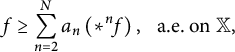
While conducting a recent study on the physical problem of the ground state energy of the Bose gas in [Reference Carlen, Jauslin and LiebCJL20], Carlen et al. were propelled to look at the real, integrable solutions of the following convolution inequality almost everywhere on
$\mathbb R^d$
 :

While it is easy to observe that the equality case of (1.1) fails to produce any nontrivial integrable solution, in [Reference Carlen, Jauslin, Lieb and LossCJLL21], Carlen et al. produced a family of nontrivial radial solutions in
$L^1(\mathbb R^d)$
 for the inequality (1.1) by considering

the Fourier transform of the functions

They observed that the functions
$f_{a,t}$
 are nonnegative and satisfy

Then the authors proceeded to show that the above examples
$f_{a,t}$
 are surprisingly typical of all integrable solutions by proving [Reference Carlen, Jauslin, Lieb and LossCJLL21, Theorem 1]: any real
$f \in L^1(\mathbb R^d)$
 satisfying the convolution inequality (1.1) is nonnegative with

We note that by simply integrating out the inequality (1.1), one only gets the a priori bound

and thus (1.2) is nontrivial. The nonnegativity of f is also special to the case
$L^1(\mathbb R)$
 as for any
$p>1$
 , one can get counter-examples belonging to
$L^p(\mathbb R)$
 by simply considering the Fourier transform of the indicator function of symmetric intervals centered at the origin.
Recently, Nakamura and Sawano generalized the above result of Carlen et al. by studying the integrable solutions of the m-fold convolution inequality on
$\mathbb R^d$
 for
$m \ge 2$
 :

Under the additional condition that
$\int _{\mathbb R^d} f \ge 0$
 , if m is odd, they showed that [Reference Nakamura and SawanoNS25, Theorems 1.2 and 1.4]: any real
$f \in L^1(\mathbb R^d)$
 satisfying the convolution inequality (1.3) is nonnegative with

An inquisitive mind is naturally led to inquire what happens when the iterated convolution inequalities (1.1) or (1.3) are replaced by a genuine polynomial:

where
$N \ge 2$
 is an integer, for
$2 \le n \le N$
 ,
$a_n$
 are nonnegative integers with at least one of them positive and

In this article, we study the convolution inequality (1.4) on
$\mathbb R^d$
 and Riemannian symmetric spaces of non-compact type. Intimately connected to our analysis of the inequality (1.4) will be the polynomial

where
$a_n$
 are as in (1.4). It is easy to observe that
$\mathcal Q$
 attains a unique positive maximum on
$(0,\infty )$
 say at
$t_{\mathcal Q}$
 and

Moreover, by Descartes’ rule of signs, the polynomial
$\mathcal Q'$
 has a unique zero in
$(0,\infty )$
 and thus is given by
$t_{\mathcal Q}$
 .
Upon a brief glance at the inequality (1.4), one may inquire whether the class of real-valued
$f \in L^1(\mathbb R^d)$
 satisfying the iterated convolution inequality (1.4) to begin with is sufficiently rich. Our first result (Theorem 1.1) shows that it is indeed the case for G a second countable, locally compact, Hausdorff topological group and in fact, one can have a concrete realization of the structure of such solutions. In the following statement,
$L^1(G)$
 is considered with respect to a fixed left Haar measure.
Theorem 1.1 Let
$N \ge 2$
 be an integer, for
$2 \le n \le N$
 ,
$a_n$
 be nonnegative integers with at least one of them positive,
$\mathcal Q$
 be as in (1.5) and
$t_{\mathcal Q}$
 be the unique zero of
$\mathcal Q'$
 in
$(0,\infty )$
 . Let G be a second countable, locally compact, Hausdorff topological group. Now consider any nonnegative
$\psi \in L^1(G)$
 with

Define
$\Psi _j$
 ,
$j \in \mathbb N \cup \{0\}$
 , inductively by

Then
$\{\Psi _j\}_{j=0}^\infty $
 converges to an element
$\Psi $
 in the topology of
$L^1(G)$
 , which satisfies

Next, we study the properties of the solutions of the inequality (1.4).
Theorem 1.2 Let
$N,\:a_n,\:\mathcal Q,\:t_{\mathcal Q}$
 be as in Theorem 1.1. Suppose a real-valued
$f \in L^1(\mathbb R^d)$
 with
$\int _{\mathbb R^d} f \ge 0$
 satisfies

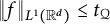
Then f is nonnegative and satisfies
$\|f\|_{L^1(\mathbb R^d)}\le t_{\mathcal Q}$
 .
Remark 1.3
-
(i) The proof of Theorem 1.1 consists of a combinatorial argument.
-
(ii) The proof of Theorem 1.2 involves Fourier Analysis and crucial applications of a nontrivial result from complex analysis regarding singularities of power series, known as the Vivanti–Pringsheim theorem (Lemma 2.1).
-
(iii) Theorem 1.2 is false for the unit circle $\mathbb {T}$
 . This is illustrated by a counter-example in Remark 3.1.

We now come to the main results of this article, on Riemannian symmetric spaces of non-compact type. These are homogeneous spaces
$\mathbb X=G/K$
 , where G is a connected, non-compact, semi-simple Lie group with finite center and K is a maximal compact subgroup of G. All integrals or Lebesgue spaces considered on G will be with respect to a fixed Haar measure, which we denote by
$dx$
 .
Theorem 1.4 Let
$N,\:a_n,\:\mathcal Q,\:t_{\mathcal Q}$
 be as in Theorem 1.1. Suppose a real-valued
$f \in L^1(\mathbb X)$
 , that is, a right K-invariant, real-valued
$f \in L^1(G)$
 with
$\int _G f \ge 0$
 , satisfies

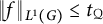
Then f is nonnegative and satisfies
$\|f\|_{L^1(G)}\le t_{\mathcal Q}$
 .
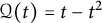
In the simplest case, when
$\mathcal Q(t)=t-t^2$
 , we have
$t_{\mathcal Q}=1/2$
 . Thus, the
$L^1$
 functions satisfying
$f \ge f * f$
 almost everywhere, with

can be viewed as the extremizers of the convolution inequality. Our next result entails a surprising nature of such K-bi-invariant extremizers.
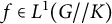
Theorem 1.5 Let
$f \in L^1(G//K)$
 such that
$f \ge f*f$
 and
$\int _G f= 1/2$
 . Then

In particular, f cannot be an
$L^1$
 -Schwartz class function on G.
In this article,
$L^1(G//K)$
 is the class of K-bi-invariant members of
$L^1(G)$
 and for
$x \in G$
 ,
$\|x\|:=|x^+|$
 , where
$x^+ \in \overline {\mathfrak {a}^+}$
 , is the corresponding component in the Cartan decomposition.
Remark 1.6
-
(i) Proof of Theorem 1.4 comprises technical subtleties in the form of the operator-valued group Fourier transform, arising from the representation theory of non-compact semi-simple Lie groups. It also crucially utilizes the decay of the ground spherical function away from the identity.
-
(ii) Theorem 1.5 is obtained by means of a transference method based on the Abel transform.
As an application of Theorem 1.4, we look at an integro-differential equation, which generalizes the equation on
$\mathbb R^d$
 , related to the physical problem of the ground state energy of the Bose gas, studied by Carlen et al. [Reference Carlen, Jauslin and LiebCJL20]. To state our result, we need to introduce some notations. Let
$\Delta $
 be the Laplace–Beltrami operator corresponding to the left-invariant Riemannian metric on
$\mathbb X$
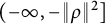
 . The
$L^2$
 -spectrum of
$\Delta $
 is given by
$(-\infty ,-\|\rho \|^2]$
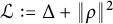
 (for unexplained notations, we refer to Section 2). We now consider the shifted Laplace–Beltrami operator
$\mathcal L:= \Delta + \|\rho \|^2$
 and the integro-differential equation of a K-bi-invariant function u:

under a constraint

where m is a positive integer,
$\mu \ge 0$
 ,
$\xi ,\delta>0$
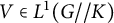
 are given parameters, and V is a given nonnegative potential in
$L^1(G//K)$
 . Then we have the a priori estimate.
Theorem 1.7 Let
$m \in \mathbb N,\: \mu \ge 0\:,\:\xi , \delta>0$
 satisfy

Suppose
$V \in L^1(G//K)$
 is nonnegative and real
$u \in L^1(G//K)$
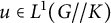 is a solution of (1.9) and (1.10) such that
$u \le 1$
 almost everywhere on G. Then u is nonnegative almost everywhere on G.
This article is organized as follows. In Section 2, we recall the necessary preliminaries about Riemannian symmetric spaces of non-compact type and the Fourier analysis thereon. In Section 3, we prove Theorems 1.1 and 1.2. In Section 4, we prove Theorems 1.4, 1.5, and 1.7.
2 Preliminaries
In this section, we recall the essential preliminaries and fix our notations. We refer the reader to [Reference Gangolli and VaradarajanGV88, Reference HelgasonHel08] for more details.
Two nonnegative functions
$f_1$
 and
$f_2$
 are defined to satisfy
$f_1 \lesssim f_2$
 if there exists a constant
$C>0$
 such that
$f_1 \le Cf_2$
 .
$\mathbb N$
 will denote the set of positive integers.
Let G be a connected, non-compact, semi-simple Lie group with finite center, and let K be a maximal compact subgroup of G. Then
$\mathbb X=G/K$
 is a Riemannian symmetric space of non-compact type. The class of K-bi-invariant functions on G is naturally identified with left K-invariant functions on
$\mathbb X$
 .
Let
$\mathfrak {g}$
 be the Lie algebra of G, and let
$\mathfrak {g}=\mathfrak {k}+\mathfrak {p}$
 be the Cartan decomposition on the Lie algebra level. The Killing form of
$\mathfrak {g}$
 induces a K-invariant inner product
$\langle \cdot ,\cdot \rangle $
 on
$\mathfrak {p}$
 and hence a G-invariant Riemannian metric on
$\mathbb X$
 .
We fix a maximal abelian subspace
$\mathfrak {a}$
 of
$\mathfrak {p}$
 . The rank of
$\mathbb X$
 is the real rank of G, which is given by the dimension of
$\mathfrak {a}$
 .
$\mathfrak {a}^*$
 , the real dual of
$\mathfrak {a}$
 will be identified with
$\mathfrak {a}$
 via the inner product inherited from
$\mathfrak {p}$
 . Let
$\Sigma $
 denote the set of restricted roots of the pair
$(\mathfrak {g}, \mathfrak {a})$
 and W be the Weyl group associated with
$\Sigma $
 . For
$\alpha \in \Sigma $
 , let
$\mathfrak {g}_\alpha $
 and
$m_\alpha $
 denote the root space corresponding to the root
$\alpha $
 and the dimension of
$\mathfrak {g}_\alpha $
 , respectively. We make the choice of a positive Weyl chamber
$\mathfrak {a}^+ \subset \mathfrak {a}$
 , and let
$\Sigma ^+$
 and
$\Sigma ^+_r$
 be the corresponding set of positive roots and positive reduced (indivisible) roots, respectively. Let
$\rho =\frac {1}{2}\sum _{\alpha \in \Sigma ^+} m_\alpha \alpha $
 .
The Cartan decomposition of G is given by

For
$x \in G,$
 we denote by
$x^+ \in \overline {\mathfrak {a}^+}$
 the corresponding component in the Cartan decomposition. We also have the Iwasawa decomposition given by
$G=KAN$
 and corresponding to the decomposition, we write for
$g \in G$
 ,
$g=k(g)\exp H(g) n(g)$
 , where
$k(g) \in K,\: n(g) \in N,$
 and
$H(g) \in \mathfrak {a}$
 . The Haar measure on G relative to the Iwasawa decomposition
$G=KAN$
 is given by

for all
$f \in L^1(G)$
 . For
$g \in G$
 , setting
$\|g\|:=|g^+|$
 , we have

Let M be the centralizer of A in K. For
$\lambda \in \mathfrak {a}_{\mathbb {C}}$
 , one has the spherical principal series representation
$\pi _\lambda $
 of G on
$L^2(K/M)$
 given by

(see [Reference Gangolli and VaradarajanGV88] for more details). We consider an orthonormal basis
$\{e_j\}_{j=0}^\infty $
 of
$L^2(K/M)$
 with the unique K-fixed vector
$e_0 \equiv 1$
 . For
$\lambda \in \mathfrak {a}$
 , the Group Fourier transform of
$f \in L^1(X)$
 defined by

is a bounded linear operator on
$L^2(K/M)$
 and can be identified with the Helgason Fourier transform of f via

The Helgason Fourier transform of f is injective on
$L^1(G/K)$
 , that is, if
$\widehat {f}(\pi _\lambda )=0$
 for all
$\lambda \in \mathfrak {a}$
 , then
$f=0$
 almost everywhere [Reference HelgasonHel08, Theorem 1.9, Chapter 3, p. 213].
For
$\lambda \in \mathfrak {a}$
 , the spherical function
$\varphi _\lambda $
 is given by

where
$A(g)=-H(g^{-1})$
 . This function is identified as the following matrix coefficient of the principal series representation
$\pi _\lambda $
 :

On
$\mathfrak {a}$
 ,
$\|\cdot \|$
 denotes the norm inherited from
$\mathfrak {p}$
 . For
$\lambda \in \mathfrak {a}$
 , the spherical function
$\varphi _\lambda $
 is a smooth K-bi-invariant eigenfunction of the Laplace–Beltrami operator
$\Delta $
 :

For
$\lambda \in \mathfrak {a}$
 , one has

In fact, one has the following bounds which are decay estimates away from the identity [Reference Anker and JiAJ99, Proposition 2.2.12]:

For
$\lambda \in \mathfrak {a}$
 and
$f \in L^1(G//K)$
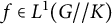 , the spherical Fourier transform of f,

is naturally identified with the matrix coefficient of the group Fourier transform given by
$\left \langle\hspace{1pt} \widehat {f}\left (\pi _\lambda \right )e_0\:,\:e_0\right \rangle $
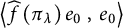 .
$\mathcal H f$
 is continuous on
$\mathfrak {a}$
 and also satisfies the Riemann–Lebesgue lemma [Reference HelgasonHel08, Theorem 1.8, Chapter 3, p. 209]:

For
$f \in C^\infty _c(G//K)$
 , we have the Abel transform
$\mathscr {A}f$
 defined by

If
$f \in L^1(G//K)$
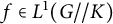 , then
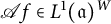
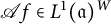
$\mathscr {A}f \in L^1(\mathfrak {a})^W$
 and moreover, by identifying
$\mathfrak {a} \cong \mathfrak {a}^* \cong \mathbb R^d$
 , where
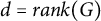
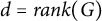
$d=rank(G)$
 , we have for
$\lambda \in \mathbb R^d$
 ,

where
$\mathscr F$
 is the classical Fourier transform on
$\mathbb R^d$
 .
Let
$\mathcal {U}(\mathfrak {g})$
 be the universal enveloping algebra of
$\mathfrak {g}$
 . The elements of
$\mathcal {U}(\mathfrak {g})$
 act on
$C^\infty (G)$
 as differential operators, on both sides. Following the notation of Harish-Chandra, we shall write
$f\left (D;g;E\right )$
 for the action of
$(D,E) \in \mathcal {U}(\mathfrak {g}) \times \mathcal {U}(\mathfrak {g})$
 on
$f \in C^\infty (G)$
 at
$g \in G$
 . More precisely,

if
$D=X_1 \dots X_d$
 and
$E=Y_1 \dots Y_e$
 , for
$X_1, \ldots , X_d, Y_1, \ldots , Y_e \in \mathfrak {g}$
 .
We now come to the definition of
$L^1$
 -Schwartz class functions.
$\mathscr S^1(G)$
 , called the
$L^1$
 -Schwartz class on G, is the collection of all
$f \in C^\infty (G)$
 such that for each
$D,E \in \mathcal {U}(\mathfrak {g})$
 and all nonnegative integers m,

$\mathscr S^1(G//K)$
 is the sub-collection of functions in
$\mathscr S^1(G)$
 that are also K-bi-invariant.
The
$L^2$
 -spectrum of
$\Delta $
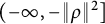
 is given by
$(-\infty ,-\|\rho \|^2]$
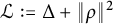
 . We consider the shifted Laplace–Beltrami operator
$\mathcal L:= \Delta + \|\rho \|^2$
 , with
$L^2$
 -spectrum
$(-\infty ,0]$
 . Then for
$\xi>0$
 , the resolvent operator
$\left (\xi I - \mathcal L\right )^{-1}$
 is realized by convolution on the right with the K-bi-invariant tempered distribution
$K_\xi $
 on G given by [Reference AnkerAnk92, pp. 279–280]

where
$h_t$
 is the heat kernel on
$\mathbb X$
 .
We will also require the following result from complex analysis which is known as the Vivanti–Pringsheim theorem.
Lemma 2.1 [Reference RemmertRem91, p. 235]
Let the power series
$g(z)=\sum _{\nu =0}^\infty b_{\nu }\:z^{\nu }$
 have positive finite radius of convergence R and suppose that all but finitely many of its coefficients
$b_{\nu }$
 are real and nonnegative. Then
$z_0:=R$
 is a singular point of g.
3 Proofs of Theorem 1.1 and the Euclidean result
In this section, we prove Theorems 1.1 and 1.2. But first, we recall the definition of convolution.
On a second countable, locally compact, Hausdorff topological group G, equipped with a left Haar measure
$\omega $
 , the convolution of two functions
$f_1,f_2 \in L^1(G)$
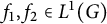 is defined as [Reference FollandFol15, p. 55]

We now present the proof of Theorem 1.1.
Proof of Theorem 1.1
Let

We will inductively show that for each
$j \in \mathbb N \cup \{0\}$
 , there exists a sequence
$\{m_{j,l}\}_{l=1}^\infty $
 of nonnegative integers such that

satisfying

To prove (3.2), we see that it is true for
$j=0$
 as

Let us assume (3.2) to be true for
$j=k$
 and then prove it for
$j=k+1$
 . By the iterative definition,

Now using the induction hypothesis, we can write

for some nonnegative integers
$b_l$
 for
$l \in [1,N^{k+1}_2]$
 . This gives (3.2).
We now claim that

To prove (3.3), we see that it is true for
$l=1$
 as
$N_1 \ge 2$
 and hence
$m_{j,1}=1$
 for all
$j \in \mathbb N \cup \{0\}$
 . Now assuming (3.3) to be true for
$l \le k$
 , we get (3.3) for
$l=k+1$
 by noting that

and the induction hypothesis.
By (3.2) and (3.3), we get that
$\{\Psi _j\}_{j=0}^\infty $
 is an increasing sequence of nonnegative integrable functions on G. We next claim that

To prove (3.4), we note that

and for
$j \ge 1$
 ,

Now as
$N_1 \ge 2$
 , (3.4) follows.
From (3.4), it follows that
$\Psi _j \uparrow \Psi $
 , where

Finally, we will show that

Assuming (3.6), we see that the series in (3.5) converges absolutely. Then the desired properties of
$\Psi $
 follow. So we are left to prove (3.6). To show (3.6), we note that for
$j=0$
 , the assertion is true as by (1.6), it follows that

For general
$j \ge 1$
 , by construction and the hypothesis, the equality and the first inequality in (3.6) follow. So we assume

to be true for
$j=k$
 and show it to be true for
$j=k+1$
 . Now consider a nonnegative
$\psi \in L^1(G)$
 with
$\int _G\psi = \mathcal Q\left (t_{\mathcal Q}\right )$
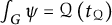 . Then defining
$\{\Psi _j\}_{j=0}^\infty $
 iteratively and then integrating out the relation,

with respect to the fixed left Haar measure, we get that

Now using (3.1) and (3.2), we get

and also

Then plugging (3.9) and (3.10) in (3.8) and using (3.7) for
$j=k$
 along with the fact that the polynomial
$\mathcal P(t):=\sum _{n=2}^N a_n\:t^n$
 is strictly increasing on
$(0,\infty )$
 , it follows that

This completes the proof of (3.6) and hence also of Theorem 1.1.
We now present the proof of Theorem 1.2.
Proof of Theorem 1.2
Let f be as in the hypothesis of Theorem 1.2. We now define

Then
$\psi \in L^1(\mathbb R^d)$
 is nonnegative. Moreover, keeping in mind the hypothesis that
$\int _{\mathbb R^d} f \ge 0$
 , we integrate the relation (3.11) and then use the fact that
$\mathcal Q$
 attains a unique positive maximum on
$(0,\infty )$
 at
$t_{\mathcal Q}$
 to obtain

Hence, we also get

Then applying Theorem 1.1, we get a
$\Psi \in L^1(\mathbb R^d)$
 such that

Now if we can show that the Fourier transforms
$\mathscr F f$
 and
$\mathscr F \Psi $
 agree, that is,

then by injectivity of the Fourier transform, it will follow that
$f=\Psi $
 as elements of
$L^1(\mathbb R^d)$
 and f will inherit the desired properties from
$\Psi $
 stated in (3.12), which will then complete the proof of Theorem 1.2. Thus, it is enough to prove (3.13).
As
$\Psi $
 is nonnegative, we claim that

If
$\Psi $
 is a trivial element in
$L^1(\mathbb R^d)$
 , that is,
$\Psi $
 is zero almost everywhere, then trivially

To see (3.14) for
$\Psi $
 nontrivial, by nonnegativity of
$\Psi $
 , we have for all
$\xi \in \mathbb R^d$


We now find out for which
$\xi $
 , one can actually expect to get equality in (3.15). The equality above and the fact that
$\Psi>0$
 on a set of positive Lebesgue measure would yield a constant
$\alpha \in {\mathbb {C}}$
 such that

holds on a set of positive Lebesgue measure and hence, by real-analyticity, actually holds on
$\mathbb R^d$
 . Then for
$1\le j \le d$
 , considering jth partial derivatives
$\frac {\partial }{\partial x_j}$
 , we get

which implies
$\xi _j=0$
 for all
$1\le j \le d$
 . Thus, (3.15) is strict inequality unless
$\xi =0$
 . Then by (3.12),

This proves the claim (3.14).
We now define

and by adopting a topological argument, we show that
$\Omega = \mathbb R^d \setminus \{0\}$
 . Since both
$\mathscr F f$
 and
$\mathscr F \Psi $
 are continuous, it follows that
$\Omega $
 is closed in
$\mathbb R^d \setminus \{0\}$
 . To show that
$\Omega $
 is also open in
$\mathbb R^d \setminus \{0\}$
 , we let
$\xi _0 \in \Omega $
 . Then by (3.14), there exists
$\varepsilon>0$
 such that

By continuity of
$\mathscr F f$
 , there exists
$\delta>0$
 such that

where
$B(\xi _0,\delta ) \subset \mathbb R^d \setminus \{0\}$
 is the Euclidean ball with center
$\xi _0$
 and radius
$\delta $
 . Now as
$\xi _0 \in \Omega $
 , by (3.16), we have

which combined with (3.17) yields

So, in particular, both


by taking the Fourier transform, we have

Then in view of (3.18), we consider the complex polynomial
$\mathcal Q : {\mathbb {C}} \to {\mathbb {C}}$
 and the disk

We claim that
$\mathcal Q$
 is injective on
$\mathcal {D}$
 . To prove the claim, we write

Then

and hence
$\mathcal Q'(0)=1$
 and
$\mathcal P'(0)=0$
 . Now as
$\mathcal Q'$
 is a polynomial in one complex variable, by the fundamental theorem of algebra, it has finitely many zeros. Let
$z_0$
 be a zero of
$\mathcal Q'$
 of smallest modulus. We now consider the disk

Now as
$z_0$
 is a zero of
$\mathcal Q'$
 of smallest modulus,
$\mathcal P'(z) \ne 1$
 for all
$z \in \mathcal {D}'$
 . We focus on the line segment
$(0,|z_0|) \subset \mathcal {D}' \cap (0,\infty )$
 . As the coefficients
$a_n$
 are nonnegative with at least one strictly positive, it follows that
$\mathcal P'$
 is strictly increasing on
$(0,|z_0|)$
 . Combining it with the (already noted) facts that
$\mathcal P'(0)=0$
 and
$\mathcal P'(z) \ne 1$
 for all
$z \in \mathcal {D}'$
 , it follows that

Then by nonnegativity of the coefficients
$a_n$
 and (3.20), it follows that for all
$z \in \mathcal {D}'$
 ,

Then by the geometric series expansion, we can write
$1/\mathcal Q'$
 in the form of a convergent power series in
$\mathcal {D}'$
 ,

with real and nonnegative coefficients and radius of convergence
$|z_0|$
 . Then by the Vivanti–Pringsheim theorem (Lemma 2.1),
$|z_0|$
 is a singularity of
$1/\mathcal Q'$
 . Hence,
$|z_0| \in (0,\infty )$
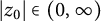 is a zero of
$\mathcal Q'$
 . But since
$t_{\mathcal Q}$
 is the unique zero of
$\mathcal Q'$
 in
$(0,\infty )$
 , it follows that
$|z_0|=t_{\mathcal Q}$
 and
$\mathcal {D}=\mathcal {D}'$
 . Consequently, we get that

Now for two distinct
$z_1,z_2 \in \mathcal {D}$
 , we have

where the above line integral is along the line segment joining
$z_2$
 to
$z_1$
 . Then by triangle inequality and (3.21), it follows that

This proves the claim that
$\mathcal Q$
 is injective on
$\mathcal {D}$
 .
Now (3.18) can be rewritten as

which along with (3.19) and the injectivity of
$\mathcal Q$
 on
$\mathcal {D}$
 yield

that is,
$B(\xi _0,\delta ) \subset \Omega $
 and hence
$\Omega $
 is also open in
$\mathbb R^d \setminus \{0\}$
 .
We finally show that
$\Omega $
 is non-empty. By the Riemann–Lebesgue lemma, there exists
$\xi _0 \in \mathbb R^d \setminus \{0\}$
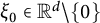 such that

Thus, by (3.14), we get that both
$\mathscr F f(\xi _0), \mathscr F \Psi (\xi _0) \in \mathcal {D}$
 and then by (3.19) and the injectivity of
$\mathcal Q$
 on
$\mathcal {D}$
 , we obtain
$\mathscr F f(\xi _0)= \mathscr F \Psi (\xi _0)$
 , that is,
$\xi _0 \in \Omega $
 and hence
$\Omega $
 is non-empty. Moreover, for the special when
$d=1$
 , implementing the above argument involving the Riemann–Lebesgue lemma on both the connected components of
$\mathbb R \setminus \{0\}$
 , we can also see that
$\Omega $
 has non-empty intersections with both the connected components of
$\mathbb R \setminus \{0\}$
 .
For
$d \ge 2$
 , since
$\Omega $
 is a non-empty subset of
$\mathbb R^d \setminus \{0\}$
 which is both closed as well as open, we have
$\Omega =\mathbb R^d \setminus \{0\}$
 and thus (3.13) is true for
$\mathbb R^d \setminus \{0\}$
 . For
$d=1$
 ,
$\Omega $
 is both closed as well as open in
$\mathbb R \setminus \{0\}$
 and, moreover, has non-empty intersections with both the connected components of
$\mathbb R \setminus \{0\}$
 and thus (3.13) is true for
$\mathbb R \setminus \{0\}$
 . The equality at
$0$
 then follows by continuity. This completes the proof of Theorem 1.2.
Remark 3.1
-
(1) The nonnegativity of the integral condition in Theorem 1.2 is necessary. For the counter-example, we refer to [Reference Nakamura and SawanoNS25, point (2) of Remark $1.3$
]. -
(2) The analogue of Theorem 1.2 fails for the unit circle $\mathbb T$
which is identified with
$[-\pi ,\pi ]$
equipped with the normalized Lebesgue measure
$\frac {dx}{2\pi }$
. On
$\mathbb T$
, we consider the trigonometric polynomial $$ \begin{align*} f(x):= 1+2\cos(x). \end{align*} $$Then $\int _{\mathbb T} f = 1$
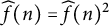
and the Fourier transform of f is given by $$ \begin{align*} \widehat{f}(n)= \begin{cases} 1\:, \text{ if } n \in \{-1,0,1\}, \\ 0\:, \text{ if } n \in \mathbb Z \setminus \{-1,0,1\}, \end{cases} \end{align*} $$which yields $\widehat {f}(n)=\widehat {f}(n)^2$
for all
$n \in \mathbb Z$
and thus
$f=f*f$
on
$\mathbb T$
. But f assumes negative values on
$[-\pi ,-\frac {2\pi }{3}) \cup (\frac {2\pi }{3},\pi ]$
and a simple computation yields $$ \begin{align*} \|f\|_{L^1(\mathbb T)}= \left(\frac{1}{3}+\frac{2\sqrt{3}}{\pi}\right)>1. \end{align*} $$






4 Results on symmetric spaces
In this section, we prove Theorems 1.4, 1.5, and 1.7. We first present the proof of Theorem 1.4.
Proof of Theorem 1.4
Let f be as in the hypothesis of Theorem 1.4. We now define

Then
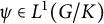
$\psi \in L^1(G/K)$
 is nonnegative. Moreover, keeping in mind the hypothesis that
$\int _G f \ge 0$
 , integrating the relation (4.1) and then using the properties of
$t_{\mathcal Q}$
 , we again get

Then applying Theorem 1.1, we get a
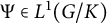
$\Psi \in L^1(G/K)$
 such that

Now by injectivity of the Helgason Fourier transform, it suffices to show that

as then it will follow that
$f=\Psi $
 as elements of
$L^1(G/K)$
 and f will inherit the desired properties from
$\Psi $
 stated in (4.2), which will then complete the proof of Theorem 1.4. Thus, it is enough to prove (4.3).

which upon taking the group Fourier transform becomes

The equality above is of bounded operators on the Hilbert space
$L^2(K/M)$
 . We consider an orthonormal basis
$\{e_j\}_{j=0}^\infty $
 of
$L^2(K/M)$
 with the unique K-fixed vector
$e_0 \equiv 1$
 . Now for
$(p,q) \in \left (\mathbb N \cup \{0\}\right )^2$
 , the equality (4.4) yields the corresponding equality in matrix coefficients

where

and so on. We first note that as f is right K-invariant,

and similarly for
$\Psi $
 . We now claim that for all
$n \ge 2$
 ,

We prove the above claim by induction. For
$n=2$
 ,

Thus, if
$q \in \mathbb N$
 , by (4.6) and the above,

For
$q=0$
 , again by (4.6) and the above,

and hence (4.7) is established for
$n=2$
 .
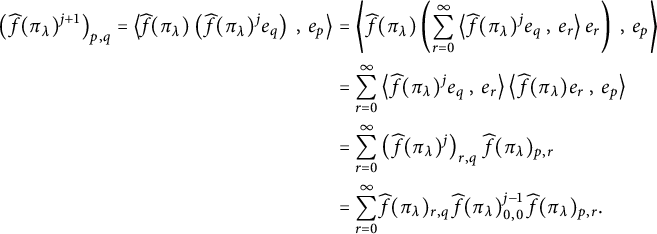
Now assuming (4.7) for
$n=j$
 , we see that
Now if
$q \in \mathbb N$
 , by (4.6),

and for
$q=0$
 ,

This proves the claim (4.7). Similar result is true for
$\Psi $
 as well.
Now noting (4.6) and plugging (4.7) in (4.5), we obtain for
$p \in \mathbb N \cup \{0\}$


For
$p=0$
 , (4.8) turns out to be

We define

and by adopting a topological argument, we show that
$\Omega = \mathfrak {a}$
 . Since both
$\lambda \mapsto \widehat f(\pi _\lambda )_{0,0}$
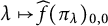 and
$\lambda \mapsto \widehat \Psi (\pi _\lambda )_{0,0}$
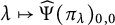 are continuous, it follows that
$\Omega $
 is closed in
$\mathfrak {a}$
 . To show that
$\Omega $
 is also open in
$\mathfrak {a}$
 , we first note that by nonnegativity of
$\Psi $
 and the bound of the spherical functions (2.3), we have for all
$\lambda \in \mathfrak {a}$


If
$\Psi $
 is a nontrivial element of
$L^1(G/K)$
 , that is,

is a set of positive Haar measure, then we claim that one actually has strict inequality above, that is,

Indeed, if there exists
$\lambda _0 \in \mathfrak {a}$
 such that

then one has equality throughout (4.10) for
$\lambda _0$
 and hence, in particular,

Then using the nonnegativity of
$\Psi $
 and the definition of E, we get that

Now positivity of
$\Psi $
 on E along with the boundedness (2.3) of spherical functions yield the existence of a set of positive Haar measure, say F, such that

Then the inequalities (2.3) and (2.4) yield for all
$x \in F$
 ,

and hence

Now as F is a set of positive Haar measure and
$\varphi _0$
 , being an eigenfunction of
$\Delta $
 , is real-analytic, we must have that

but this contradicts the decay of
$\varphi _0$
 away from the identity (2.4). Hence, we have the strict inequality (4.11), which combined with (4.2), yields that

On the other hand, if
$\Psi $
 is zero almost everywhere, then trivially we have that

Hence, in either cases, we have

Now given
$\lambda _0 \in \Omega $
 , there exists
$\varepsilon>0$
 , such that

By continuity of
$\lambda \mapsto \widehat f(\pi _\lambda )_{0,0}$
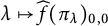 , there exists
$\delta>0$
 such that

where
$B(\lambda _0,\delta )$
 is the ball in
$\mathfrak {a}$
 with center
$\lambda _0$
 and radius
$\delta $
 with respect to the norm on
$\mathfrak {a}$
 inherited from
$\mathfrak {p}$
 . Now as
$\lambda _0 \in \Omega $
 , by (4.13), we have

which combined with (4.14) yields

So, in particular, both

Then in view of (4.9) and the fact that the complex polynomial
$\mathcal Q$
 is injective on the disk
$\mathcal {D}$
 in
${\mathbb {C}}$
 with center
$0$
 and radius
$t_{\mathcal Q}$
 (whose proof is contained in the proof of Theorem 1.2), it follows that

Thus,
$B(\lambda _0,\delta ) \subset \Omega $
 and hence
$\Omega $
 is also open in
$\mathfrak {a}$
 .
We finally show that
$\Omega $
 is non-empty. To show this, we consider
$f^\#$
 , the left K-average of f,

Now as
$f \in L^1(G/K)$
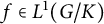 , we note that
$f^\# \in L^1(G//K)$
 and moreover, for all
$\lambda \in \mathfrak {a}$
 ,

the spherical Fourier transform of
$f^\#$
 . Then, by the Riemann–Lebesgue lemma (2.5) on
$\mathcal H f^\#$
 , there exists
$\lambda _0 \in \mathfrak {a}$
 such that

Thus, by (4.12), we get that both
$\widehat f(\pi _{\lambda _0})_{0,0},\: \widehat \Psi (\pi _{\lambda _0})_{0,0} \in \mathcal {D}$
 and then by (4.9) and the injectivity of
$\mathcal Q$
 on
$\mathcal {D}$
 , we obtain
$\widehat f(\pi _{\lambda _0})_{0,0}\:=\: \widehat \Psi (\pi _{\lambda _0})_{0,0}$
 , that is,
$\lambda _0 \in \Omega $
 and hence
$\Omega $
 is non-empty. Since
$\Omega $
 is a non-empty subset of
$\mathfrak {a}$
 which is both closed as well as open, we have
$\Omega =\mathfrak {a}$
 , that is,

Now in view of (4.12), we reconsider the complex polynomial

and now aim to show that the polynomial

has no zeros in
$\mathcal {D}$
 . To show this, it suffices to prove that

This is clearly true for
$z=0$
 . To show (4.16) for
$z \in \mathcal {D}\setminus \{0\}$
 , we first note that
$\mathcal P(0)=0$
 and then recall (3.21) which states that

Then for any
$z \in \mathcal {D}\setminus \{0\}$
 , we get

Thus, we get (4.16) as

Hence,
$\mathcal Q_1$
 has no zeros in
$\mathcal {D}$
 . Now by plugging (4.15) in (4.8), we note that

Then in view of (4.12) and the fact that
$\mathcal Q_1$
 has no zeros in
$\mathcal {D}$
 , we get that

The above along with (4.6) yields (4.3) which completes the proof of Theorem 1.4.
We now study the K-bi-invariant extremizers of the convolution inequality
$f \ge f*f$
 on G. But before that, we recall its Euclidean counterpart.
Lemma 4.1 [Reference Carlen, Jauslin, Lieb and LossCJLL21, Theorem 2]
Let
$f \in L^1(\mathbb R^d)$
 satisfy
$f \ge f*f$
 and
$\int _{\mathbb R^d} f=1/2$
 . Then
$\int _{\mathbb R^d} |x|\:f(x)\:dx=\infty $
 .
We now present the proof of Theorem 1.5.
Proof of Theorem 1.5
In this proof, we will make use of the convolutions on both G, as well as
$\mathfrak {a}$
 (as the additive group
$\mathbb R^d$
 , where
$d=rank(G)$
 ) and hence will mention the group under consideration to avoid confusion. Let
$f \in L^1(G//K)$
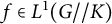 be as in the statement of Theorem 1.5, that is, f satisfies


We now consider the Abel transform defined in (2.6). Then
$\mathscr {A}f \in L^1(\mathfrak {a})^W$
 . Moreover, it follows from (4.17) that

Now by repeated applications of (2.7), we have that for
$\lambda \in \mathfrak {a}$
 ,

and hence,

which along with (4.19) yields

We set
$\gamma $
 on
$\mathfrak {a}$
 (almost everywhere) by

By Theorem 1.4,
$f \ge 0$
 and hence so is
$\gamma $
 . Then combining (4.18), the Iwasawa decomposition of the Haar measure given by (2.1), the left K-invariance of f, the Fubini–Tonelli theorem, and the definitions of the Abel transform and
$\gamma $
 , it follows that

Indeed,

Moreover, using (4.20), we have for almost every
$H \in \mathfrak {a}$


Then combining (4.21), (4.22), and Lemma 4.1, it follows that

Then plugging in the definitions of
$\gamma $
 , the Abel transform, the Fubini–Tonelli theorem, the Iwasawa decomposition of the Haar measure, and the left K-invariance of f, the last equation becomes

Finally, using the fact that
$f \ge 0$
 and invoking the relation (2.2), we obtain

Next, we prove Theorem 1.7.
Proof of Theorem 1.7
For
$\xi>0$
 , the resolvent operator
$\left (\xi I - \mathcal L\right )^{-1}$
 is realized by convolution on the right with the K-bi-invariant tempered distribution
$K_\xi $
 on G given by

where
$h_t$
 is the heat kernel on
$\mathbb X$
 . Hence,
$K_\xi $
 is nonnegative and moreover, an application of the Fubini–Tonelli theorem yields

Now the integro-differential equation (1.9) can be rewritten as

Then as
$K_\xi ,V,$
 and u all are K-bi-invariant, the convolutions commute and we can write

Now defining

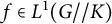
we note that
$f \in L^1(G//K)$
 is real-valued and then rewrite the above as

Next, by integrating out f and plugging in the constraint (1.10) and (4.23), we obtain

and thus in view of the hypothesis (1.11), it follows that

Now convolving (4.24) with
$\mu ^{1/m} K_\xi $
 , we get

Then as
$K_\xi $
 is nonnegative and from the hypothesis, we also have that V is nonnegative and
$u \le 1$
 almost everywhere on G, it follows that

Then in view of (4.25), we note that Theorem 1.4 is applicable on f to conclude that f is nonnegative. Now define for any real-valued h,

and also

and thus
$h=h_+-h_-$
 . Then by (4.24) and nonnegativity of
$K_\xi $
 , V,
$1-u,$
 and f, it follows that

Integrating the above inequality and then invoking (4.25) yields

The above inequality combined with the hypothesis (1.11) yields

which in turn implies that
$u_- = 0$
 almost everywhere on G and hence
$u \ge 0$
 almost everywhere on G. This completes the proof of Theorem 1.7.
Acknowledgements
The author would like to thank the anonymous referee for helpful suggestions which improved the exposition. The author is thankful to Prof. Swagato K. Ray for bringing [Reference Carlen, Jauslin, Lieb and LossCJLL21] to his attention.



