In 1868, a Gujarati work of nearly 400 pages titled Cı̄nanı̄ Musāpharı̄ (China travels) was published by the Parsi printer Nowrojee Framjee in Bombay. Its author was Damodar Ishwardas, a Gujarati-speaking Hindu employed by a Muslim commercial firm who undertook a three-year trip to China between 1860 and 1863. By his own telling, Ishwardas had hoped to visit China for many years, until, through the “grace of God” (īśvar krpāthı̄), his request to visit that “celestial country” was granted in 1860 (Ishwardas Reference Ishwardas1868, “Praveśak [prologue]”).Footnote 1 Whatever the role of divine providence, Ishwardas stressed that his account was based on his own personal observations and interactions with the Chinese, whose many virtues he extolled at length. Unsurprisingly, with close to no Gujarati texts available to illuminate the world of Qing China for the Indian reader, Ishwardas faced robust conceptual barriers in relaying what he witnessed in China. Yet spurious statements such as “[in China] the people originally performed religious rites like those of the Hindus” were the exception rather than rule. In Ishwardas's account, the strictures of analogy were only stretched so far, and immediately yielded to the exigencies of empirical observation.
Containing passages on subjects as multifarious as Daoist and Buddhist beliefs, Qing imperial rituals, and Chinese mercantile practice, Cı̄nanı̄ Musāpharı̄ is best read as an artifact of Ishwardas's Gujarati-speaking milieu in Bombay, insofar as it adopted the academic methods of his anthropologist and physician companions and the commercial literacy and numeracy of his mercantile backers. Indeed, this work was financed by a coterie of Bombay merchants and civil servants, whom Ishwardas listed in the appendix. All bearing the Gujarati honorable title śeṭh (master), this stratum of Hindu, Jain, Muslim, and Parsi professionals had taken on bureaucratic careers in the civil service of the Bombay Presidency or made their fortunes through trade over the preceding decades. In turn, they had acquired the requisite “middle power” that permitted them to enmesh themselves in the apparatus of the colonial-ethnographic state and straddle the realms of colonial capital and native labor. With their growing empire-wide ambitions, strengthened in large measure by their penchant for international travel, this group had become a lucrative market for Gujarati printed literature, and thus they constituted the principal audience for whom Ishwardas wrote his primer on all things Chinese.
In a more prosaic sense, Cı̄nanı̄ Musāpharı̄ is a compelling empirical contribution to existing accounts of China-India connections. With the exception of the opium and tea trades (which recently received brilliant treatment in the work of Andrew Liu [2020]), little is still known about the character of these links from the late medieval period to the emergence of pan-Asian movements at the turn of the twentieth century (Pollock and Elman Reference Pollock and Elman2018; Subrahmanyam Reference Subrahmanyam2016, 35; Thampi Reference Thampi2005a, Reference Thampi2005b). Cı̄nanı̄ Musāpharı̄ thus constitutes a much-needed empirical supplement to these obscure centuries. Yet to reduce Cı̄nanı̄ Musāpharı̄ to such an instrumental function would mean forfeiting the opportunity to pursue in its many pages some salient themes in the historiography of global intellectual history (especially the subfield of “vernacular intellectual history”) and to revisit questions pursued by historians in recent years on the character of “vernacular capitalism” in the Indian Ocean and South China Sea (Birla Reference Birla2009; Liu Reference Liu2019). Besides signaling a specific historiographical intervention, “vernacular” is a fitting term to describe Ishwardas and his readership. Here, it performs two functions: First, “vernacular” captures the circulatory limits of Ishwardas's text, as expressed in linguistic barriers and printing obstacles, that prevented it from moving in latitudes truly global in scope. Second, the term signifies the distinctive economic constraints that distinguished Indian participation in the China trade from their Chinese, European, and American interlocutors.
To better clarify how Ishwardas's Cı̄nanı̄ Musāpharı̄ fuses historiographical questions pertaining to both vernacular capitalism and intellectual history, this article makes three arguments with regard to the text. The first is that Ishwardas framed China as a unique “profit order” where Indian traders could not only attain wealth and social equity but also find new models for the organization of their own commercial enterprises. A “profit order,” a phrase coined by the historian Song-Chuan Chen (Reference Chen2017, 150) in a study of mercantile lobbying and the First Opium War, signifies “an economic regime through which the creation of political order and the making of knowledge become mutually reinforcing and that in turn gives rise to a discourse of justice in profit making for a particular group of people.” “Profit order” is a term tailor-made for vernacular capitalism and intellectual history, as it underscores the nexus between the expansion of mercantile activity and the emergence of new intellectual networks, a hallmark of Indian business in the colonial era.
The second argument advanced in this article is that Cı̄nanı̄ Musāpharı̄ highlights the obstacles faced by Indian merchants—non-English speakers in particular—in acquiring systematic market and cultural information about China that was equal to Anglophone sources. Ishwardas's attempts in Cı̄nanı̄ Musāpharı̄ to position China as a profit order fit for Indian merchants demanded a reckoning with the fundamental reality of informational and institutional asymmetry endemic to vernacular capitalist and intellectual networks. His text could not singlehandedly resolve this structural reality. As historians from Morris D. Morris onward have stressed, Indian firms found the acquisition of information (especially about the export trade) far more costly than their British counterparts (Gupta Reference Gupta, Chaudhary, Roy, Gupta and Swamy2015, 72; Morris Reference Morris, Kumar and Raychaudhuri1983, 557), and the China trade perhaps presented an even more marked contrast from prevailing discrepancies in South Asia.
Third, this article argues that Ishwardas was not merely an enumerator of Chinese economic conditions, but a capable vernacular ethnographer and sinologist in his own right. His work demonstrates that Bombay's Gujarati-speaking elites had acquired an assortment of technical skills that were integral features of nineteenth-century anthropological and philological research. They partly derived these methodologies from their association with the apparatus of the colonial-ethnographic state as embodied by administrators such as Mountstuart Elphinstone and James Tod (Scott Reference Scott2017). This expertise furnished them with a modest degree of social mobility and the means to engage with global networks of intellectual exchange, albeit mainly as consumers and translators. With that said, the centrality of empirical observation and Ishwardas's unacknowledged reliance on English textual sources capture the obstacles preventing the elaboration of a Gujarati-vernacular sinology that was self-replicating and institutionalized. Put another way, Ishwardas and those in his milieu were vernacular intellectuals in the same way they were vernacular capitalists: constrained by a range of conditions that were beyond their agency to surmount, but able to creatively operate within these boundaries to pursue commercial profits and intellectual interests.
Ishwardas and the Study of Vernacular and Global Intellectual History
Little is known of Damodar Ishwardas's background. In his study of Gujarati literature, which contained a single sentence on Cı̄nanı̄ Musāpharı̄, the scholar Krishnalal Mohanlal Jhaveri (Reference Jhaveri1924, 276) registered him as “Damodar Ishwardas Librarywala,” with the cognomen signifying that Ishwardas was a librarian. Meanwhile, a catalogue of native publications produced by the colonial government in 1867 listed Ishwardas's full name as “Brahma Kshatri Damodar Ishwardas” (Catalogue of Books 1868, 2), suggesting that he was of Brahmakshatriya extraction—that is, one having a Brahmin father and Kshatriya mother. This was hardly a self-evident label given that this caste classification has encompassed varying groups over time (Schaflechner Reference Schaflechner2017, 57–61). Caste status, however, was not the principal determinant in the relationships that Ishwardas forged within other white-collar Indians in Bombay. As he explained in the first lines of his work, Ishwardas was a clerk for the commercial firm Cassumbhoy Nathubhoy & Sons, which he called mārā śeṭhiyā (my employer) (Ishwardas Reference Ishwardas1868, “Praveśak”).
The firm's proprietor, Qasimbhai Nathabhai (d. 1863 or 1864), had become a multimillionaire through trade with Zanzibar, and he utilized that wealth to become a justice of the peace and the founder of Bombay's Sunni Khoja jamāʿat khāna, established shortly after the Khoja community fractured into sectarian groups upon the arrival of the Ismaili imām, the Agha Khan, in the late 1840s (An Account of the Khoja Sunnat Jamat 1969, 34). Ishwardas's employment in a Muslim commercial firm is noteworthy in itself, given the tendency to see Muslims and Hindus as inhabiting two distinct institutional spheres in the economy of the colonial period (Kuran and Singh Reference Kuran and Singh2013). Sunni and Shīʿa Khojas—along with their fellow Muslims, the Bohras—entered into the China trade from the 1840s, slowly eclipsing the earlier prominence of Parsi firms (Chandavarkar Reference Chandavarkar1994; Karaka Reference Karaka1884; Morris's Directory 1870). As one later Khoja trader sardonically put it, the Parsis slowly relinquished their mastery over the China trade to Indian Muslims because their uncritical admiration for English education transformed them into “priests of the job goddess,” by which the author meant that they abandoned commerce and adopted bureaucratic and legal professions (Jinnah Master Reference Master and Lavji1922–23, 4). Less humorously, historians have maintained that the entry of Khoja entrepreneurs into the China trade fueled communal violence in Bombay between Parsis and Khojas in 1851 and 1874 (Chandavarkar Reference Chandavarkar1994, 60). Yet it was precisely the Khojas’ pivot to China that fulfilled Ishwardas's long-coveted wish to visit the country.
An associate of Muslim magnates and Parsi printers, Ishwardas was also a companion of the famous Brahmin antiquarian and physician Dr. Bhau Daji. Educated at Elphinstone College, Bhau Daji exemplified that rising class of Bombay elites who, by matriculating at prestigious colonial institutions of higher education, acquired the technical and administrative expertise needed to secure careers in the colonial-ethnographic state. As a member of the Royal Asiatic Society and sometime correspondent of Max Müller, Bhau Daji exhibited considerable interest in the links between ancient India and China, not least the recently translated travelogue of Xuanzang, the seventh-century Chinese monk who brought many Buddhist scriptures to the Tang court from India (Mainkar, Bhandarkar, and Dar Reference Mainkar, Bhandarkar and Dar1974). Indulging a vicarious enthusiasm for Ishwardas's forthcoming travels, Nathabhai and Bhau Daji were among the many well-wishers who assembled on April 22, 1860, to see Ishwardas depart for China on a three-story steamer, filled to the brim with Malwa opium and cotton for Chinese consumers.
Ishwardas's social network also included the Hindu activist Karsandas Mulji, who traveled to England in the 1860s and was christened the “Indian Luther” by the British press for his attacks on the Hindu religious leader Jadunathji Brijratanji Maharaj (Scott Reference Scott2015). Ishwardas subscribed to ideas of Hindu “reformism” similar to those propounded by Mulji, which included criticism of the stigma of kala pani (black sea) prevalent among high-caste Hindus who feared the loss of their caste status if they crossed the seas. Compelled to write his account for the benefit of his countrymen (deśione), Ishwardas hoped that his travels would encourage wealthy Hindus in particular to dispense with the “hundreds of years” of hesitation that had purportedly prevented them from traveling overseas (Ishwardas Reference Ishwardas1868, “Praveśak”). This centering of the term deś was in keeping with the new spatial meaning it assumed among Indian intellectuals from the 1860s, as a byword for the “national territory” of the subcontinent rather than smaller geographical units (Goswami Reference Goswami2004, 196).
In like measure, Ishwardas's account of China represents a moment of transition in Bombay's vernacular intellectual scene. Until Ishwardas's travels, commercial networks of Gujarati origin had facilitated British trade in the South China Sea by supplying commercial knowledge, as has been noted in passing (Thampi Reference Thampi2005a, 50). Despite this, Gujarati traders generally did not produce vernacular printed texts on China, apart from translations of English sources on the opium trade and technical manuals on computing exchange rates in China, India, and London (Hīnduśthān ane Cīn Vacenā Aphīmanā Vepār 1854; Cinai Reference Cinai1851).Footnote 2 Moreover, Gujarati works on Africa or Asia published in the years around Cı̄nanı̄ Musāpharı̄—such as a text on Ethiopia published in Bharuch in 1868 following the punitive expedition against the Emperor Tewodros II the previous year—were also largely translations of European accounts, with small interjections of original material by Indian authors (Dadabhai Reference Dadabhai1868). In contrast, Ishwardas's Cı̄nanı̄ Musāpharı̄ heralded a moment when Bombay's Indian denizens began writing vernacular travel texts of their own rather than producing cribbed English translations. It helped that the 1860s saw an enormous expansion of what Manu Goswami (Reference Goswami2004, 167–71) has called “new institutional spheres of publicity in regional vernaculars,” driven in part by colonial sponsorship of Indian vernacular education. This instigated dramatic growth in print media and facilitated unprecedented levels of discursive exchange among Indian interpretive communities. The cumulative effect was to reduce the colonial monopoly over “regimes of publicity” and to increase the number of socially concrete vernacular interpretive communities.
Gujarati writing on the imperial metropole accelerated this trend in the early 1860s (Scott Reference Scott2015), but an identifiable uptick in Gujarati writing on other portions of the British Empire can be detected from the publication of Cı̄nanı̄ Musāpharı̄ at the end of the decade. These developments dovetailed with a new Indian (initially Gujarati) critique of colonial economic policy, as embodied in Dadabhai Naoroji's “Expenses of the Abyssinian War” of 1868 (Naoroji Reference Naoroji and Parekh1887). When read against texts like Ishwardas's, this motion and Naoroji's later elaboration of the “drain of wealth” theory represent merely a fraction of the many competing profit orders elaborated by Indian commentators in this period (Patel Reference Patel2020). These dual trends—rising production of vernacular tracts and participation in empire-wide economic debates—ballooned in the decades after Cı̄nanı̄ Musāpharı̄ was printed in 1868.
For all this precocious contact with colonial and regional intellectual and business networks, Ishwardas is best conceived as a vernacular capitalist and intellectual because his capacity to share his findings with broader audiences was circumscribed by the language in which he wrote and by his reliance on English secondary sources. As an illustration, the pains that Ishwardas endured in procuring images for the text—at the cost of extended printing delays—are a telling indication of his work's mobilization of local and global contacts and the hurdles he encountered in the process. To obtain these graphics, he corresponded with his Gujarati contacts in China and England, as well as British newspaper editors, but initially had little luck in procuring them. In time, he bore considerable personal cost to have a handful of images dispatched to Bombay and included in the publication. In all, some eighteen pages of illustrations produced in England with Gujarati captions adorn the pages of Cı̄nanı̄ Musāpharı̄ (see figures 1–4).
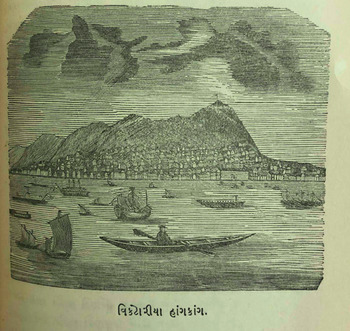
“Victoria Hong Kong.”

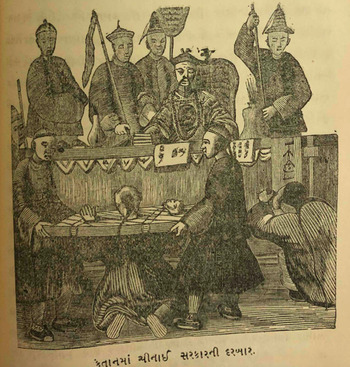
“Chinese Government Court in Canton.”

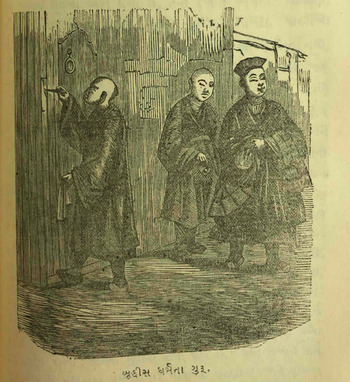
“Buddhist Religious Teachers.”

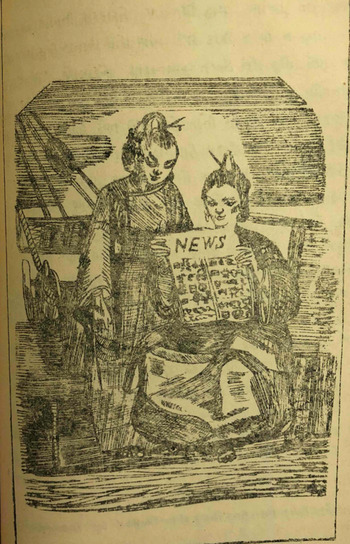
“A Love of Reading.”

With his audience confined to the small upper crust of Gujarati-speaking professionals, Ishwardas's book would have been inaccessible to Indian readers untutored in the language. For all its later diasporic status in Durban and Rangoon, and its crucial role as a language of trade and religion throughout the Indian Ocean, Gujarati never became anything but a “provincial” language in South Asia. Translations from Hindi and Urdu into Gujarati were common enough, but rarely, if ever, were texts of a utilitarian or religious nature converted from Gujarati to other South Asian languages. Gujarati was among those local languages that in the medieval and early modern periods remained at the lower rung of a pecking order dominated by “prestige” languages such as Sanskrit, Persian, and Arabic (Busch Reference Busch2011, 118). In the colonial era, it was not these languages that ensured Gujarati's resolutely “local” status, but the rise of transregional vernaculars such as Hindi and Urdu, which became the languages of choice for leading all-India nationalist organizations. This is not to discount the intellectual vitality of Gujarati print culture into the present, nor to forget that Indian nationalists (not least Gandhi, himself a native Gujarati speaker) encouraged a degree of provincial language autonomy that boosted its prominence in later decades. It is only to foreground the circulatory limits of Ishwardas's text and to convey that the book moved within only one of the rival and overlapping public spheres characteristic of modern South Asia.
Although Ishwardas's Gujarati text may productively be brought into conversation with studies of “vernacularization” and “vernacular literature” in the historiography of South Asia (Busch Reference Busch2011; Mir Reference Mir2010; Pollock Reference Pollock2006, Reference Pollock, Moyn and Sartori2013; Sartori Reference Sartori2014; Shulman Reference Shulman2016), this article positions it primarily in the rising subfield of “vernacular intellectual history.” To speak of vernacular intellectual history as a subfield is apt given that it is a self-conscious corollary of the growing discipline of global intellectual history. Recently, Nile Green (Reference Green2018) has elaborated a sophisticated framework for vernacular intellectual histories of the Indian Ocean by conceiving of that space as one not of cosmopolitanism, but rather of “heterotopia.” Adapting Michel Foucault's idea of the hétérotopie, Green (Reference Green2018, 848–49) defines heterotopia as “a space that entrants find disturbingly incompatible with their more familiar social, and thence conceptual, arenas of experience,” thereby foregrounding the multiple ways in which actors wrestled with difference.
Vernacular authors like Ishwardas grappled with difference by grafting venerable paradigms of alterity—drawn from both precolonial and colonial-era native discursive traditions—onto the new ethnographic lexicons adopted from the modalities of British imperial technology and governance in the Indian Ocean. One sees this notion of heterotopia at play throughout Ishwardas's work, not least in his regular employment of such terms as deśī (Indian), pardeśī (foreigner, European), and Cīnāī (Chinese). This schema permitted Ishwardas to catalogue difference while rendering China legible for a vernacular audience in western India that was accustomed, as a consequence of colonial rule, to the binaries of deśī/vilāyatī (Indian/British).
Heterotopia's accent on the manifold outcomes intrinsic in social exchange—and the central function it accords to acts of translation—ensures that it is an equally innovative means for thinking afresh about vernacular capitalism. Rather than tracing a purportedly universalist capitalist world system dictated by the methods and assumptions of colonial capital, heterotopia captures the hallmarks that distinguish various avatars of vernacular capitalism. Features common to all vernacular capitalisms included the fusion of imported and local economic institutional forms, the reality of linguistic disparity and incommensurability, the prevalence of informational asymmetry and high transaction costs, the organic unity of interpretive community and business enterprise, and a reliance on the colonial infrastructure of steam, print, and law.
Coined by the historian Ritu Birla (Reference Birla2009) in her first-rate study of Marwari traders, “vernacular capitalism” concerns the processes by which indigenous communities were subjected to “market governance” by colonial legislation and discipline; the manner in which indigenous commercial hierarchies and customs were grafted onto newly adapted capitalist institutions of European origin; and the challenges faced in writing histories of capitalism that do not take a mythical Euro-American experience as the yardstick. Nevertheless, despite its name, the historiography of vernacular capitalism runs the risk of leaning too heavily on the colonial archive. The tendency to bypass noncolonial sources downplays the agency of indigenous merchants in effecting institutional transformation and assimilating novel economic categories and obscures the intellectual interests some of them possessed concerning the regions where they conducted business. What is more, colonial sources, in the limited insight they provide into the inner workings of indigenous firms, tend to portray Indian enterprise as rooted in self-contained communities or caste networks. Vernacular sources like Ishwardas's contradict this overwrought picture by showing how Indian firms employed personnel from across religious and caste divides—and even regarded Chinese business practice as an exemplar to follow. Therefore, it is plain that incorporating vernacular sources is among the best means to mitigate culturalist caricatures of South Asian capitalism and attend to the fissiparous, paradoxical consequences arising from capitalist enterprise in the colonial era (Washbrook Reference Washbrook1990). Vernacular sources likewise enliven the expanding, albeit US-centric, field of the “new history of capitalism,” preoccupied as it is with blurring old historiographical barriers between capital and labor and tracing how capitalist institutions are modulated by moral economies and the vicissitudes of translation (Beckert and Desan Reference Beckert and Desan2018; Sklansky Reference Sklansky2014), while also calling into question its universalizing speculations about the character of global capitalism.
A similar imperative to augment empirical horizons exists in studies of vernacular intellectual history pertaining to economic thought, especially in South Asia. Since very little is known about vernacular traditions of political economy in the region, even during the high colonial period (Moyn and Sartori Reference Moyn and Sartori2013; Subrahmanyam Reference Subrahmanyam2015), Ishwardas's text offers a means to redress the preference bias in the present literature, where anticapitalist and anticolonial thinkers tend to be preferred. Beyond this, for all the recent work on regimes of knowledge circulation between Britain, India, and China, the place of Indians as producers, translators, and recipients of that knowledge is overlooked in favor of the familiar figure of the British Orientalist, bureaucrat, and naturalist (Lightman, McQuat, and Stewart Reference Lightman, McOuat and Stewart2013). Recent developments in Qing intellectual history have equal relevance to appreciating Ishwardas's text as an artifact of vernacular capitalism and vernacular intellectual history. The exceptional contributions of Matthew Mosca (Reference Mosca2013) and Jenny Huangfu Day (Reference Day2018) have demonstrated how Qing bureaucrats came to terms with the empire's crises by reordering their geographic knowledge and disseminating their ideas through various writing genres as part of a larger campaign against “geographic agnosticism” (the phrase is Mosca's). Ishwardas displayed a similar eagerness to root out “geographical agnosticism” among his compatriots, and he was thus a paragon of those figures Martin Bayly (Reference Bayly2016) has called “knowledge entrepreneurs,” who generated new geographical intelligence about the British Empire's peripheral zones. But rather than producing knowledge for the benefit of the colonial state, Ishwardas did so for the benefit of those he earnestly referred to as his fellow deśīs (although, it must be added, his book did not escape the notice of British authorities, which is why a copy now sits in the archive of the India Office).
Finally, given the central role of the “epistemology of direct observation” (Green Reference Green2018, 259) in Ishwardas's text, to say that he was operating primarily through a “colonial episteme” would not only fail to give Ishwardas his rightful due as an enterprising intellectual but, more seriously, would necessitate an abnegation of conscientious methods of historical inquiry. Following Norbert Peabody (Reference Peabody, Peers and Gooptu2012), the historiographical emphasis on the maximal effect of colonial epistemes has both downplayed the participation of indigenous actors in generating knowledge and ignored how novel administrative structures and technologies of rule functioned as arenas for the articulation of vernacular ideas. Heterotopia affords a positive alternative to this historiographical impasse by underlining the dynamism and multiplicity of vernacular traditions that intersected with “colonial” texts and authors.
The Deśī, the Pardeśī, and the Cīnāī: Heterotopia and Mercantile Hierarchies in China
Like the British merchants advocating war against the Qing in the 1830s, Ishwardas advocated a peculiar vision of a “profit order” in which China, India, and the globe were intertwined. Although he endorsed the benefits of free trade and British imperial power alike, Ishwardas's profit order was not the gospel of militarist interventionism propounded by figures such as William Jardine in 1830s Canton to justify war with the Qing, nor did it draw inspiration from the paradigm of Palmerstonian “gunboat diplomacy” and advocate for British consular protection of Indian merchants. Instead, Ishwardas's brand of profit order framed Indians, Europeans, and Chinese as equal beneficiaries of a system of free trade undergirded by a shared ecumene of mercantile honor, respectability, and credit. Participating as a full member of that order required local knowledge of matters as heterogeneous as Chinese business organization, foot-binding, and ancestor worship. Ishwardas's rendition of a Chinese profit order stemmed, it bears emphasizing, from an exceptional economic and intellectual moment in the histories of colonial India and Qing China. His travels occurred in the immediate aftermath of the Second Opium War (1856–60), the treaty terms of which guaranteed an influx of European and American traders and missionaries into mainland China. Indian merchants followed suit, in fewer numbers to be sure, but beneficiaries nonetheless of the treaty.
In retrospect, for all the distinguished patronage it acquired, Ishwardas's text appears to have marked China's denouement as an attractive profit order for Bombay's indigenous elites. That shift owed partly to China's dwindling share of Bombay's foreign trade: whereas from the 1820s to 1860s, 25 to 30 percent of China's imports were from India, this number fell to 20 percent during the 1870s and 1880s and to 11 percent by 1900–1901 (Bickers Reference Bickers, Bickers and Howlett2016, 65). Yet the diminution of Bombay's China trade also echoed the pivot of British imperial conquest away from East Asia to Africa in the wake of the Second Opium War. From the 1870s, Gujarati capitalists found more abundant profit orders in East Africa and Burma on the heels of British imperial conquest. Echoes of this shift are detectable when one compares Ishwardas's depictions of China and the Chinese with later Indian accounts. If Ishwardas highlighted China's commercial and moral virtues from his authorial perch in the 1860s, then later Indian writers tended—with exception, as shown in an excellent translation of the memoirs of a Sikh soldier involved in the suppression of the Boxer Rebellion (Yang, Sheel, and Sheel Reference Yang, Sheel and Sheel2017)—to accent Chinese decadence and xenophobia. By 1900, one Indian writer felt compelled to publish his short work on China precisely to combat the popularity of these negative perceptions of China among the Indian public (Dehlavi Reference Dehlavi1900). The contrast with Ishwardas's earlier portrayal is unmistakable, and it owed in large measure to his vision of China as a profit order.
The commercial world that Ishwardas glimpsed in the South China Sea was one with many resemblances to the western Indian Ocean, especially around Bombay, its greatest metropolis. This was a realm crisscrossed by the concrete institutional life of firms, bosses, agents, steamers, and letters of credit and the more metaphysical values of mercantile honor, trust, and reputation. Yet for all that was analogous, it is plain from Ishwardas's account that he did not regard the character of capitalism in each region as identical. Far from it: China supplied another paradigm of vernacular capitalism by which Bombay's own version might be tested and measured. Its chief attribute was a profit order favorable to Indian capitalists, in terms of both the commercial dividends and the social mobility it promised. Needless to say, that did not preclude the reality that foreign (pardeśī) merchants enjoyed select economic fruits of which Chinese and Indians could only dream (Ishwardas Reference Ishwardas1868, 288).
Ishwardas undoubtedly saw much that he admired in the China trade, and it is difficult to conclude whether he intended his portrayal of relations among Westerners, Indians, and Chinese to be a coded critique of Bombay's more racially segmented commercial life. He did not offer such a criticism in explicit terms, and though no moral protests were made against the opium trade or British policies, he did object to exploitation of Chinese laborers and agents by European and American firms. Whatever the case, his refrain that Indians working in southern China possessed a status of “equality” (barābarī) on par with Europeans and Chinese suggests a heightened contrast with conditions in Bombay. This contrast was likely worth emphasizing because it was anomalous in comparison with the prevailing hierarchies in metropolitan India. To be sure, as Amar Farooqui (Reference Farooqui1996, 2750) has argued, Bombay's urban space did not exhibit the dualism of other bifurcated colonial/indigenous cities, but rather was segmented on the basis of class differentiation. In any case, numerous sections of Cı̄nanı̄ Musāpharı̄ reveal that Ishwardas found China peculiar precisely because the level of social association among Europeans, Indians, and Chinese was such an ingrained, quotidian feature of the regional profit order.
That profit order was not merely composed of British colonial spaces, and Ishwardas's journey from western India to the South China Sea took him through Goa, Travancore, Singapore, Malacca, Java, Labuan, Palawan, Manila, and Hainan. Throughout his journey, he documented the sizable presence of Chinese, Parsi, Hindu, and Malay merchants in many of these locales (Ishwardas Reference Ishwardas1868, 96–100). While in China, he spent time in Hong Kong, Canton, and Macau (long a bastion of the Portuguese but not a formal Portuguese colony until 1887). Nor was this profit order populated only by Europeans, Chinese, or Gujaratis. While in Canton, alongside Arabs and traders from the Caspian, he found Indian merchants who had traveled the lengths of the Indus and Ganges into the interior of the Chinese empire, before trickling down into the trade settlement on the Pearl River (325). Macau, meanwhile, boasted large numbers of Indian opium and cotton traders hailing from Bengal and Patna (309).
But it was not only the commercial Johnny-come-latelies who caught his attention, for Ishwardas also possessed some familiarity with the historiography of European trade in China. In his narrative of Macau, for example, he supplied an abbreviated history of the Portuguese settlement there, which was prefaced by an account of the expedition to Canton undertaken by Rafael Perestrello and Fernão Pires de Andrade in 1516–17 (Ishwardas Reference Ishwardas1868, 300) and subsequent negotiations between the Portuguese and Ming court over trade relations. This is a reminder that, although he did not have access to a Gujarati apodemic (interpretive guide for travelers) before his trip, he did have access to European texts that inflected his own portrayal of China.
Ishwardas's perceptions of this miscellany of territories as a mélange of pardeśī (foreign), deśī (Indian), and Cīnāī (Chinese) elements makes it clear that he regarded China as neither an arena ripe for Indian subimperial exploitation nor as an entity whose relationship with the British Empire was primarily bilateral in profile. Rather, he regarded this profit order as something like a condominium of merchants in which Europeans, Indians, and Chinese alike stood to gain from the China trade, provided that each observed the social protocols intrinsic in this system. At any rate, as Ishwardas recognized from the start, Hong Kong was very much a colonial space, though perhaps not yet the racially segmented city it later became. His first encounter with “Victoria Hong Kong” (figure 1) suitably made much of the city's leading colonial landmarks, such as its race course, port facilities, clocktower (ghaḍiyāḷ), and major boulevards. Colonial institutions were an episodic, if formative, presence in Ishwardas's account of Hong Kong, as his descriptions of Governor Robinson and the Supreme Court convey (Ishwardas Reference Ishwardas1868, 166–67). Nonetheless, with merchants from England, France, Germany, America, Italy, Russia, Australia, and India all crowded together on the small island, this was hardly a monochromatically colonial realm (255).
The first indication in Ishwardas's text that China represented a profit order undergirded by the intermixture of the pardeśī, deśī, and Cīnāī comes in his analysis of Hong Kong's Jardine Point. This area was named after the famous Scottish firm Jardine, Matheson & Company, whose fortune was bound up with Hong Kong from the inception of British rule (Jardine and Matheson were among the prime agitators of the First Opium War in both Canton and London). It was the panoply of Chinese buildings that grabbed Ishwardas's attention along this promenade: “Here small Chinese houses and mansions were constructed; if you were to gaze upon it, you would see it is full of beauty, like a resplendent village” (Ishwardas Reference Ishwardas1868, 127). Living adjacent to the ostentatious homes, offices, and warehouses of the commercial magnates were the bevy of clerks and partners (bhāgīdāro) with their dwellings capped by traditional Chinese roofs. In what appears to be a matter of some surprise for the author, there was little physical separation between the European and the Chinese merchants. In fact, Jardine & Matheson's headquarters were only two or three miles away from the cluster of offices managed by a host of Chinese and foreign (pardeśī) merchants.
But the heart of Ishwardas's profit order did not primarily reside in the close spatial proximity that he observed among merchant groups. The local moral economy—as manifest in considerations of ābarū (honor and reputation; also spelled ābrū)—counted for far more. Douglas Haynes (Reference Haynes1991, 56–57) has examined the central role that notions of ābarū played in modulating the commercial and philanthropic habits of high-caste Indian merchants throughout the colonial period. As Haynes understands it, the chief attribute of ābarū was upholding the rules governing social conduct as encapsulated in communal notions of dharma (Ishwardas Reference Ishwardas1868, 57). One of the first instances in which Ishwardas discerned the contours of ābarū at work in Hong Kong was at the race course. In this section he observed, “In this city the honor (ābarū) of the deśı̄ merchants is considered the same as that of the English. For at all the events and large celebrations here the English regard the Indians their equals, and treat them with respect and honor (mān anē ābarūthī)” (125). The Chinese, in observing the English esteem for the Indians, also accorded a high degree of ābarū to the deśı̄s, he added. Ābarū even dictated the ways in which foreign merchants decorated their homes, suggesting once again that this was part of a common mercantile moral economy that made Hong Kong function (180).
High levels of social mixing and a fair amount of acculturation among Western, Chinese, and Indian merchants thus distinguished the profit order of the South China Sea. To be sure, Indian businessmen and agents did retain many of their community-inflected sartorial customs, including the wearing of turbans (pāgaḍī) (Ishwardas Reference Ishwardas1868, 287). But there were many cases in which Indian merchants took on the same airs as their Chinese and European counterparts: as one illustration, some of the Indian brokers in Hong Kong adopted the custom of riding out to meet the steamers astride a “Chinese palanquin (pālakhī)” carried by local porters (287). In a bid to acquire social parity with Europeans, it no doubt helped that many Indian institutions in Hong Kong were positioned in the heart of the city's social life. For one, the Parsis’ place of worship (rūvān rākhavānī jagyā) was situated in a garden opposite the race course, complete with a bungalow. The complex also featured several Parsi tombs, and the entire enterprise was managed by Hong Kong's Parsi anjuman (125).
Kindred arrangements were visible elsewhere in the South China Sea: in Macau, the Parsi dakhma (tower of silence)—where the remains of the community's deceased were disposed of—was situated in an area of prime real estate (Ishwardas Reference Ishwardas1868, 292). But for all that, brick-and-mortar institutions alone did not dictate spaces of interaction, for, as Ishwardas related, Indians, Europeans, and Chinese also rubbed elbows at the barber's stalls (hajām) managed by local Chinese. There, bosses and agents alike, regardless of origin, gathered not just for a haircut and shave, but also to conduct business. When foreigners in particular came for a trim many local Chinese gathered in large numbers to haggle. Such was the impression this scene left on Ishwardas that one of the illustrations included in the book featured a depiction of a Chinese barber plying his trade (291).
In places, however, Ishwardas did not mask the hierarchies that foreign merchants had erected in the country. For example, it was Chinese partners (bāghīdār) employed by foreign companies who typically performed the onerous task of trading on the Chinese mainland (Ishwardas Reference Ishwardas1868, 129). These individuals were kept on a tight leash by their employers, as Ishwardas explained. After a trial period in which a Chinese contractor proved himself trustworthy, he was accepted as a full-fledged partner or agent (āḍatīā) in the firm, but was subjected to a contract replete with “severe conditions” lasting any number of years (129). Most jarring to Ishwardas's mind was the stipulation that a Chinese agent may not marry, and English merchants generally refused to employ a married Chinese man as a partner or proxy. “It was out of greed for being accepted as a partner,” he stated, “that many [Chinese] do not get married.” Other restrictions pertained to these merchant-agent contracts, such as the requirement that when foreign merchants drew up agreements with European, Chinese, or Indian agents (gumāstā), the latter were strictly forbidden from carrying on private trade of their own or seeking profits beyond the nominal pay (pagār) outlined in the contract (288).
Whatever the common moral economy subscribed to by Hong Kong's leading merchants, these anecdotes and others are ample evidence that the profit order of the South China Sea was no commercial Eden. Elsewhere, Ishwardas condemned the prevalence of piracy and unfree labor not only because they were morally offensive, but also because they were illegitimate commercial activities that violated the essential equity he catalogued in the wider profit order. His censure applied to Western and Chinese merchants alike. One blemish in this otherwise happy commercial world was the presence of pirates in the South China Sea who terrorized pardeśı̄ ships (Ishwardas Reference Ishwardas1868, 139). In many cases, sailors adopting the guise of destitute Chinese fishermen—whose virtues Ishwardas otherwise praised at length—were actually marauders prowling the seas in search of unsuspecting ships to loot.
Foreign privateers, at any rate, bore the brunt of Ishwardas's criticism. In one instance, he condemned the actions of American traders for operating what was tantamount to a “slave trade” (gulāmī vepār) around Macau and Canton. The system worked as follows: poor Chinese from the mainland were coaxed into working in American-owned factories by promises of decent pay, but upon arrival, they were holed up in the factory premises and given provisions barely above subsistence level. In the dark of night, they were herded onto ships and sent to the United States. Since their families were never told of their whereabouts, Ishwardas recorded that relatives typically waited seven years before performing last. The smuggling of poor Chinese was supposedly so prevalent, he added, that the Hong Kong Legislature passed a bill to combat the trade in June 1867 (Ishwardas Reference Ishwardas1868, 316–17). In certain ways, these sections on illegal trafficking serve in Ishwardas's text as exceptions to the many virtues of the free-trade profit order that made southern China such an attractive venue for Indian capitalists.
In surveying the ways in which Ishwardas envisioned China as a profit order, this section has stressed that the territories of the South China Sea exemplified a heterotopia for the author, a place unlike anything he knew in western India. This was particularly so in matters of business and social relations. As a space of unfamiliarity, it possessed considerable didactic potential, likewise serving as a canvas upon which Ishwardas projected ideas of social reform and extolled the benefits of free trade and Indian advancement. Yet for all the manifold instances of social mixing that Ishwardas witnessed, many Indians (especially newcomers from the subcontinent) were subjected to the mercantile hierarchies that the contract and agency system afforded European merchants with their access to greater capital reserves and institutional depth. Notwithstanding the clear signs of Indian mobility in the China trade, a dominant feature of vernacular capitalism in Ishwardas's age was precarity, and he did not disguise its prevalence in the profit order he outlined. The next section studies the recommendations Ishwardas put forward for mitigating these disadvantages, a primary manifestation of which was informational and institutional asymmetry.
“Ways of Making Money”: Mitigating Asymmetries in the China Trade
The previous section demonstrated that Ishwardas conceived of China as a profit order in which Indians, Europeans, and Chinese enjoyed something akin to equal status and reputation. The chief argument of this section is that Ishwardas's text simultaneously reflects the informational and institutional asymmetries and attendant high transaction costs inherent in vernacular capitalism. From the first, it is crucial to emphasize that, for all their proximity to colonial institutions, Bombay's leading Indian entrepreneurs, even those with links to colonial capital, often had something less than a full command of English. As late as the 1880s, Gujarati-speaking Indian merchant princes, such as the Daudi Bohra industrialist and millionaire Adamji Pirbhai, did not possess an advanced grasp of the language (Sahibjee Reference Sahibjee1882). When combined with the increasing resort of European commercial firms to policies of racial exclusion in the last quarter of the nineteenth century (Bagchi Reference Bagchi1972), this proved to be a real barrier to Indian merchants’ access to up-to-date market information. Added to this was the practice of European and Indian firms to safeguard the privileged commercial knowledge obtained by their agents (as all mercantile entities are wont to do), measures that ensured the segmentary nature of the capitalist information order.
A recent work by Steven Marks (Reference Marks2016) maintains that what distinguishes capitalism as an economic system from precapitalist forms of exchange is the preoccupation with “informationism,” and the fostering of institutions that efficiently facilitate the transfer of market intelligence. Colonial India was replete with a constellation of information orders (Bayly Reference Bayly1996), but one common trend throughout the period was the privileged information that Europeans possessed in transcontinental trade (Bagchi Reference Bagchi1972). To be sure, European firms relied heavily on Indian intermediaries for market information (Dejung Reference Dejung and Lee2011), and Ishwardas's text is filled with ample evidence of the obstacles encountered by Chinese, Indian, and European actors alike in their struggle to manage information. Having said that, Indians remained at a structural disadvantage. As Bishnupriya Gupta (Reference Gupta, Chaudhary, Roy, Gupta and Swamy2015, 73–74) has argued, while informational asymmetry in colonial India accorded select social groups a distinct edge, it also “segregated trade and industrial investment.” What is more, Gupta's assertion that informational constraints compelled Indians to adopt the managing agency system—with its clear-cut social and racial hierarchies—finds corroboration in Ishwardas's text in his regular expositions on the middle stratum of Indian and Chinese brokers (dalāl) and agents (āḍatīāo) employed by foreign firms. Hemmed in by a feedback loop of capital and informational restrictions, vernacular capitalists often had to content themselves with the mercurial pickings afforded by the commission agent business.
The three decades before Ishwardas's arrival saw the amalgamation of institutionalized, Anglophone forms of collecting and disseminating trade information about China. The publication in London of the trade returns of the Imperial Maritime Customs Service—and its successor, the Chinese Maritime Customs Service—from the 1840s was one vestige of this (Brunero Reference Brunero2006), though “official” channels were not solely responsible for the institutionalization of Anglophone knowledge of Chinese trade. European missionary societies in the South China Sea, with their global reach and expansion into the Chinese heartland, also played an energetic part in the consolidation and propagation of trading and political knowledge about China. When read alongside printed journals such as the near-contemporary Chinese Repository—a Protestant missionary publication that operated between the 1830s and 1850s and featured sophisticated articles on Chinese language, government, and daily life—both Ishwardas's sources and descriptions lacked the linguistic and historical depth prevalent in the pages of that journal (Malcolm Reference Malcolm1973). In truth, the very ephemerality of empirical observation was one of the principal disadvantages shouldered by vernacular capitalists and intellectuals like Ishwardas. It ensured that Gujarati knowledge of China perpetually ran a deficit with the Anglosphere, a reminder that vernacular capitalism was a category reified as much by economic inequity as the dependency of indigenous capitalists on knowledge produced by export-oriented foreign firms. For all its ambition, Ishwardas's text alone could never compensate for this.
Economists have debated at length the relationship between a firm's proclivity for portfolio diversification and the problems posed by informational asymmetry, with some holding that the extent to which a firm engages in the former ensures they encounter higher rates of the latter. Even so, though he may not necessarily have understood matters in these terms, to Ishwardas, there was no debate: portfolio diversification was both a means to succeed in the China trade and a method to combat asymmetry. If historians tend to regard opium and tea as the crucial threads linking colonial India and the South China Sea, then the bevy of institutions and commodities that Ishwardas documented point to other largely uncharted economic ties between the two regions. Cı̄nanı̄ Musāpharı̄ therefore represents a preliminary empirical response to Claude Markovits's (Reference Markovits2009, 110–11) warning that one can overstate the importance of opium to indigenous capital accumulation in western India and that historians must look elsewhere to explain how India's leading business classes first emerged. Undoubtedly, deliberations on opium run right through Ishwardas's text, with the numerous references to Bengalis involved in opium trafficking an equal reminder that Calcutta and Patna, and not just Bombay, also benefited substantially from links with the South China Sea (Ishwardas Reference Ishwardas1868, 101–2).
All the same, the almost encyclopedic attention that Ishwardas devoted to a survey of the various bazaars, currencies, paper instruments, and traders that greased the wheels of commercial life between Bombay and Hong Kong is of still greater advantage for the study of midcentury vernacular capitalism in the Indian Ocean and South China Sea. In spite of all the spatial heterogeneity of Ishwardas's profit order, it was one governed by a uniform temporal mandate. This was a world that obeyed “office time” (ophisano vakhat): “in the offices of the merchants of Europe and India the work continues from ten in the morning until four or five in the evening” (Ishwardas Reference Ishwardas1868, 229). When coupled with Ishwardas's descriptions of what various classes of Chinese did with their “leisure time” (phursadanō vakhat), these sections point to the same vision of temporality that historians have long recognized as singular to capitalist modernity (229–30). But unlike many European and American accounts of the China trade that emphasized the lax rhythms of daily business (punctuated invariably by long sojourns at the club), Cı̄nanı̄ Musāpharı̄ points to the physical limitations that compelled Chinese merchants to indulge in “leisure time,” often against their will. According to Ishwardas, Chinese merchants, bankers, and servants typically worked only two to four hours a day, while those who labored any longer than this failed to obtain sufficient food. “Were this not enough,” he continued, “by reducing their mental strength, they then fall into the grip of devastating diseases. Such is the main reason that the Chinese do not work harder” (229). For the Chinese in Ishwardas's profit order, leisure time was conditioned by the elemental needs of survival.
There is no mistaking that the Chinese and Indians in Ishwardas's account lived insecure, precarious existences. Despite this, the institutional and informational commonalities that Ishwardas observed among Chinese, Europeans, and Indians compels one to reexamine the argument that the commercial worlds of the Indian Ocean and the South China Sea in this epoch were bifurcated between the “informal” realm of the bazaar and the “formal” realm as embodied by European institutions (Ray Reference Ray1988, Reference Ray1995). Instead, Ishwardas's text shows a high degree of synergy and interpolation between these two forums. In critical ways, even when one accounts for the omnipresence of information asymmetries, Ishwardas's survey may suggest that the structural divide drawn between the “bazaar” and European institutions is either overstated or, more probably, the product of later decades. Arguably, this bifurcation might better be dated to the last two decades of the nineteenth century, when colonial legislation obstructing social mixing between Indians, Chinese, and Europeans in South Asia and the South China Sea drove a deeper wedge in the two regions’ commercial life that was hitherto less pronounced.
The blurring of these ideal boundaries is made plain in Ishwardas's elucidation of how commercial information in the South China Sea circulated. As he highlighted often, the structure of exchange was underpinned by a multitude of commodities, personnel, ships, and rumors swirling among Chinese and foreign communities alike (Ishwardas Reference Ishwardas1868, 127–28). In a memorable episode, Ishwardas described the cacophony of commercial gossip (aphavā) that permeated the environment around Jardine Point and other landing areas in Hong Kong. It is worth quoting this passage at length to give the reader a sense of Ishwardas's style:
In this way, with the help of hundreds of managers and partners who remain in secluded areas, [Jardine, Matheson & Company] operates a huge administration in large parts of China, but not only this, for they also carry out extensive business with the vilāyat (a general term meaning “abroad,” but often connoting England). This magnate and one or two other big merchants have some steamers which work on the northern side of the island and also come and go to this port. Frequently, for the sake of transporting them to the northern part of the island, opium and other commodities belonging to the company and other merchants are loaded up [on the steamers] and sent to various countries; on those occasions, the steamers heading to the coast move rapidly in order to be the first to deliver the latest news coming from Bombay or the vilāyat. Upon reaching there the first thing they do is relay the papers of their bosses with considerable urgency….
When the steamers’ arrival is anticipated, all sorts of commodity transactions occur with great speed. The merchants always maintain hope that the price of the commodities en route to the northern part [of the island] from the Chinese empire will fluctuate. Before the trading vessels (bārakas) arrive at the port of Hong Kong, all manner of rumors (aphavā) circulate. Some say that the steamers of Jardine are bearing good news of opium and other commodities from the coast, and are sheltering out of sight near the mountains of Hong Kong island. Still more rumors are disseminated to the effect that the steamers of other merchants are bringing news of the coast and have covertly moored outside of the port. They advance in such a way that even government officials have no idea of their comings and goings. Accordingly, these steamers remain in place, concealed at anchor. From there, all the papers and parcels are transferred by means of small boats and relayed to their agents and bosses. They receive their reply, then the boat returns. However many hours or days that the steamer remains at anchor, the captain is compelled to abide by whatever the owners and agents order, and the trading vessels (bārakas) are likewise forced to remain in a secret place. Whenever the commodities are being purchased this is done by the owner of the steamer, and the same [commodities] are sold by means of [their] agents. In this way, all the buying and selling is managed by a handful of agents. For that reason, the opium trade is mainly carried out either in cash or promissory notes (vāyadā). Invariably, all sorts of gossip related to the anticipated arrival of the merchants’ steamers make the rounds in the region. Some say the price has increased in the north, others say it has fallen. Some end up losing out, others end up taking a profit in the transactions occurring there. (127–28)
In its insistence on the unkempt nature of commercial and information transactions, this passage highlights not only the hierarchies intrinsic to the China trade, with large firms able to acquire special informational advantage, but also the permeability of this mercantile realm that confutes any strict divide between the formal realm of European exchange and the informal one of the bazaar. Though a firm like Jardine, Matheson & Company might throw its weight around at will, and a key divide in the scale of enterprise lay between the great steamers and more modest merchantmen (bārakas), it is plain from Ishwardas's description that vernacular capitalists could steal a march on larger rivals and secure both precious information and profits. The omnipresence of rumor and promissory notes guaranteed this, but these, in turn, fostered a mixed climate of suspicion and trust, both present and prospective. Of greater import than the policy of any one entity were the actions of individual firms who could utilize their own transport and personnel infrastructures, strung out along the environs of Hong Kong, to exploit this tangled world of commercial exchange. As far as Ishwardas was concerned, trade was a dissonant affair, obeying an internal logic of its own no doubt, but whose heartbeat was regularly contorted by the unruly capillaries of circulating brokers, correspondence, and ships. Whether the portrait Ishwardas painted in this passage survived into the 1870s is another question, with Liu (Reference Liu2020, 53–54) noting that from this moment European and American buyers began advocating the abandonment of the system of direct advances to “teamen,” as Chinese intermediaries were called, presaging a broader turn by Western firms to exclusionary, racialized business practices in decades to come.
But in the 1860s, the ripple of vernacular information throughout Ishwardas's profit order still had the capacity to modulate the operation of even leading economic institutions. The movement of financial instruments in the region demonstrates this in sharpest relief, with their passage among firms of disparate backgrounds reinforcing the argument that a divide between “formal” and “informal” spheres does not fit neatly onto Ishwardas's profit order. This was all the more so because of the centrality of notions of ābarū (honor) that transcended both spheres. According to Ishwardas, financial instruments circulated widely among respectable (ābarūdār) merchants who relied upon hundis (bills or exchange) denominated in lakhs of rupees to purchase copious amounts of Chinese commodities for export (Ishwardas Reference Ishwardas1868, 129). Ideas of sākh (goodwill) dictated which merchants had access to sizable quantities of credit. These hundis were guaranteed either on the reputation of the merchant's own firm or even his Chinese agent, and might run to a period of six months. Nearly the entire framework of commodity sales in China was dependent upon this system of hundis, and all honorable merchants (sārī ābarūnā vepārīo) made enormous profits in the China trade without the need of investing any liquid capital (129). Anxieties over ābarū were even at work when Western banks operating in Hong Kong determined which merchants could purchase Chinese government promissory notes (277). That said, there was considerable room for graft: in one instance, Ishwardas remarked that the Orient Bank, an institution at the apex of the regional profit order, was forced to withdraw its paper currency after various Chinese “scoundrels” introduced counterfeit notes (175).
Though he expressed praise for the enterprises run by foreign merchants, Ishwardas was likewise convinced that a Bombay vernacular audience had much to learn from the Chinese manner of commercial management, especially its low operating costs. It was significant that a section titled “Ways of Making Money” was entirely about Chinese commercial institutions. Here he praised the trait shared by both rich and poor Chinese: their admiration for acquiring wealth (Ishwardas Reference Ishwardas1868, 250). Becoming wealthy did not happen by accident, but was part and parcel of the values inculcated in the Chinese family. Many Chinese boys, Ishwardas wrote, spent several years studying not only religion, ethics, and composition, but also obtained on-the-job training as laborers, craftsmen, traders, bankers, and factory administrators (vahīvaṭ). An apprentice system was typically the way in which many inexperienced youths learned the ropes, although they were rarely compensated until they had proven themselves to be worthy investments. Over many years, as these apprentices became masters of their own, they maintained links with their families in the villages by circulating between rural areas and the maritime centers, building up mixed portfolios in the process. Through such means, those poor Chinese who made respectable profits by becoming agents for larger firms were praised by Ishwardas for keeping their expenses low and saving sizable sums for reinvestment (251). They also showed considerable restraint, with Ishwardas writing “when a boy also obtains a sizable profit, he does not indulge in excessive spending by getting involved in nefarious activities” (251). To Ishwardas, Chinese agents’ loyalty to the firm's principal and their frugality were worthy of emulation by Indian aspirants to Chinese riches.
Imitating the Chinese and shifting into the brokerage business was thus one way for Indians to succeed in China. The annual brokerage commission (haksaī) that an Indian might accumulate was not to be snuffed at (Ishwardas Reference Ishwardas1868, 277), and, as Ishwardas recorded, British, Parsi, Khoja, Bohra, and Memon brokers all successfully entered the commission agent game (276). (It is worth remarking that the largest portion of these brokers came from the ranks of western India's commercial castes, with the predominance of Muslim communities, both Sunni and Shīʿa, foreshadowing their later predominance in the commission business of colonial territories from South Africa to Burma.) In Hong Kong, Ishwardas noticed that all of these groups had gained a mastery over carrying out transactions involving a wide array of commodities, currencies, and paper instruments. If Ishwardas's narrative is any indication, then the aptitude these groups had in both literacy and numeracy was a prime driver in strengthening market links between India and China in these decades, and its patois was often Gujarati in expression.
As Ishwardas chronicled at some length, Chinese fishing and commodity trading was in no sense a man's world, and on any given boat there were as many as five to ten women and a litter of children, none of whom exercised restraint when it came to running the affairs of the vessel. In reality, it was Chinese women mariners who Ishwardas commended the most. With some five to ten women aboard any single ship, Ishwardas asked, “The question is where have these women on some of these boats come from?” (Ishwardas Reference Ishwardas1868, 134–35). With great courage, he wrote, they not only managed the ships with children tied to their backs, but audaciously jumped into the sea when the moment demanded it. Even during raging storms, Chinese women who had fallen overboard were known to have saved their own lives and those of their young children by swimming back to the ship and pulling themselves back on board. But, as fate sadly had it, it was not uncommon for Chinese women to drown in typhoon surges along with their small children (134).
The autonomy enjoyed by Chinese fisherwomen, and their outsized economic contribution, was sharply contrasted with the rigidly regulated sphere to which many elite and poor Chinese women were subjected on land. To Ishwardas, the most egregious expression of this subjugation was the practice of foot-binding. This, he maintained, was only followed by wealthy merchant and bureaucratic families in Hong Kong and mainland China, with poor families eschewing the custom because it would prevent women from contributing to the family's livelihood—or, as he put it, “in poor families, women are expected to earn their own livelihood and labor out of devotion to their husband” (Ishwardas Reference Ishwardas1868, 235). Ishwardas deemed the practice not only offensive to foreigners, but profoundly injurious to Chinese women, as it deprived them of the capacity to travel long distances, or even within the confines of their own home without the support of servants. Singularly galling in his eyes were those instances when wealthy and bureaucratic families suffered misfortune, which forced women with bound feet into prostitution in order to support the family (236–37). Neither the Chinese women mariners he so admired, nor even the Chinese urban poor, lacked such fundamental economic and bodily autonomy. China's profit order and its virtuous people offered much that was admirable to the Indian reader, but Ishwardas saw foot-binding as a stain on China's otherwise stellar reputation.
The attention Ishwardas reserved for this intermediate tier of the profit order can be understood as part of his book's larger concern with what Marks has identified as “informationism.” The “thick description” in which Ishwardas indulged displayed a profit order in which success required amalgamating different models of commercial behavior and organization on offer in the South China Sea; it necessitated observing other communities and learning from them. This was, by the historian's reckoning, an inspired way to counter the institutional and informational asymmetries afflicting India vernacular capitalists engaged in the China trade. Yet, as stressed throughout this section, Ishwardas's expositions were extemporaneous, lacking the sophisticated scaffolding and sheer assiduity of Anglophone commercial reportage. For all the benefits it presented to the vernacular capitalist, as a stand-alone text with a limited print run, his book also revealed the logistical pitfalls hampering the elaboration of a vernacular profit order in which knowledge making and economic enterprise were truly synchronic and self-reproducing.
Conclusion
While Ishwardas did define China as a country situated upon the “continent of Asia,” he did not conceive of Indians and Chinese as possessing a shared “Asian” heritage (Subrahmanyam Reference Subrahmanyam2016). His text reveals an earlier Indian vernacular conception of the relationship between India and China that had few parallels in later Indian writings. The application of the term “vernacular” to Ishwardas is not a diminution of his many achievements in rendering such a visceral portrait of China. Rather, it is intended to confront the reality of his position (and that of his text) in a context shaped by the exclusion of Indians from executive power structures and the diminished, if precocious, status of regional Indian vernaculars in the Raj's high politics, education systems, and even later Indian nationalist movements.
Ishwardas's chronicle was followed by at least three more Gujarati texts on China: Keshvaram Govardhandash's Reference Govardhandash1871 Jñān Nidhi (Treasure house of knowledge; a plagiarized, semi-bowdlerized version of Ishwardas's work, by the current author's estimation), Framji Dinshaji Pitit's Reference Pitit1889 Yurōp, Amerikā, Jāpān anē Cīn: Phrāmajī Dīnśājī Pīṭītnī Musāpharīnī Nōndh (Framji Dinshaji Pitit's travel notes on Europe, America, Japan, and China), and H. K. Dhabar's Reference Dhabar1892 Cīn Deś (The country of China). In their treatment of China, none of these was on a comparable scale to Ishwardas's Cı̄nanı̄ Musāpharı̄, but they do speak to an overlooked Indian vernacular tradition of sinology that was a direct outgrowth of a growing Indian commercial engagement with China. By 1900, however, the geography of Indian commercial expansion—and the models for self-strengthening sought out by Indian nationalists—had shifted irrevocably away from China. Gujarati firms continued to make fortunes in China and Indian writers penned sympathetic portrayals of the country (Sen Reference Sen2017), but the pull of competing imaginaries and profit orders ensured China's eclipse.
If Ishwardas was never anything other than a vernacular capitalist and intellectual, then his text at least stands as a relic of how Bombay's Gujarati-speaking bureaucratic and commercial elite read and patronized works that helped them re-situate themselves in a changing geopolitical order. In the 1860s at least, it was an order porous enough to permit privileged Indian traders like Ishwardas to pursue mercantile opportunities, to discover alternative profit orders, and to indulge those antiquarian and scientific interests that were truly global in scope. Meanwhile, for the historian, texts like Ishwardas's are not merely artifacts of quaint empirica, worth rummaging through only inasmuch as they can be mined for trivia or used to fill in the edges of a received narrative of global capitalism. Rather, on account of an intellectual vigor that belies their physical fragility, such texts can attain afterlives never dreamed by the authors, and they can function as building blocks for histories of capitalism that consider how regional connections between the western Indian Ocean and South China Sea need not have replicated the logics of the Atlantic nor operated by the norms and assumptions of the Anglosphere. Should Ishwardas's book be any indication, then many unknown voices in that space remain unheard. The historiography of capitalism would do well to resemble more of that frenetic arena of unannounced entrances and exits so memorably conjured up by Ishwardas—if only to hear those who have been drowned out by the likes of Jardine and Matheson.
Acknowledgments
Many people contributed to the development of this article. Choon Hwee Koh, Patricia Dooley, Dong Yan, Sean Heath, Frederick Walter Lorenz, Kaleb Herman Adney, Sohaib Baig, Roy Bar Sadeh, and Nile Green sharpened its analytical angle. Thanks are reserved above all to my friend and teacher, Yusuf Mallu, for help with the translations. Any mistakes are entirely of my own making.