





Introduction
In the November 2022 issue of the Monthly Review, the article “What Comes After a Cycle of Protests? The Case of the 2020 Women’s Protests in Poland” chronicled the massive mobilizations that marked a turning point in the Polish struggle for gender equality and reproductive rights. These protests, including the Black Protests ( Czarne Protesty ) of 2016 and the nationwide Women’s Strikes (Strajki Kobiet) of 2020, highlighted the urgency of feminist advocacy in Poland, reflecting broader resistance to right-wing populism and antigender politics (Graff & Korolczuk, Reference Graff and Korolczuk2022; Korolczuk et al., Reference Korolczuk, Kowalska, Ramme and Snochowska-Gonzalez2018). While the 2016 protests rooted in local activism demonstrated how grassroots efforts could connect with broader feminist struggles (Muszel & Piotrowski, Reference Muszel and Piotrowski2018), the 2020 strikes marked a transformative moment in fostering new feminist agency and expanding the scope of feminist advocacy (Grabowska, Reference Grabowska2023; Gwiazda, Reference Gwiazda2021; Hall, Reference Hall2019).
In this context, the emergence and rapid proliferation of Women’s Councils (Rady Kobiet) in Poland represents a significant and understudied development in the country’s feminist and civic landscape. The first Women’s Council was established in Wrocław in 2010. Initially a solitary example, it set the stage for a broader movement that would gain momentum during the years of intensified feminist mobilization. The real expansion began around 2016, when massive protests over reproductive rights exposed the need for sustained, structured channels to influence public policy. As a result, new Councils emerged in cities such as Słupsk, Warsaw, and Wałbrzych, marking a significant transition from spontaneous protest to organized advocacy. Online workshops, such as those focused on preparing women to run for public office, also played an important role in equipping women for civic engagement (Warchala-Kopeć, Reference Warchala -Kopeć2024). The Women’s Strikes of 2020 further accelerated this process, serving as a catalyst for institutional proliferation, and as these Councils multiplied across the country, their socio-political impact has become increasingly significant year by year, reflecting a steady transformation of feminist mobilization into enduring structures of local governance and civic participation.
The Women’s Council in Piaseczno, a town of around 100,000 inhabitants within the Warsaw metropolitan area, exemplifies how this transformation has materialized in practice, as it was established in 2017 as one of the earliest such bodies in Poland and emerged directly from grassroots mobilization following the 2016 Black Protests. Initiated by local activists, the Council developed in close cooperation with the municipal government and was deliberately designed as a bridge between civic engagement and formal governance structures. Its composition combines representatives of key local institutions with women connected to civil society organizations, creating a platform that integrates institutional authority with grassroots knowledge and networks. At the same time, the Council employs flexible, extended forms of participation that engage a broader circle of collaborators beyond its formal membership, reflecting a strategic shift from protest-based mobilization toward locally embedded, collaborative forms of influence. The Piaseczno case thus exemplifies how feminist mobilization is translated into durable, context-sensitive institutional arrangements within local governance.
Between 2021 and September 2025, the number of Women’s Councils in Poland grew from 21 to 76 (Women’s Councils in Poland, 2024, 2025). This rapid growth was closely linked to post-2020 feminist activism and coincided with the local and parliamentary election cycles of 2023 and 2024, which created favorable conditions for embedding gender equality concerns within local governance frameworks.
Women’s Councils in Poland (as of 17 March 2026). Source: Map developed by the Presidium of the Women’s Councils and presented at the 5th National Forum of the Women’s Councils on 12 April 2025. https://www.facebook.com/RadyKobiet.

Fig. 1 Long description
Starting in the northwest, orange circles mark cities such as Słupsk, Gdynia, Rumia, and Koszalin. Moving east, Suwałki and Białystok are labeled. In the central region, Warsaw is prominent, surrounded by cities including Płock, Piaseczno, and Łowicz. The southwest features a dense cluster around Wrocław, Polkowice, Wałbrzych, and Kłodzko. The southeast shows high density in Rzeszów, Przemyśl, Sanok, and Krosno. Each orange circle represents either a Women's Council (RK) or a Council for Women's Affairs, as indicated in the legend at the bottom left. The legend uses an orange circle for Women's Council and a yellow circle for Council for Women's Affairs, though only orange circles are visible on the map. Labels are distributed across all regions, with the highest concentration in the south and southwest. Major cities and regional councils are clearly marked, with some circles representing county or voivodeship-level councils.
By institutionalizing feminist activism within local governance, they amplify women’s voices and shape public policies that affect their daily lives. While their work remains primarily local in focus, national debates—such as those concerning gender budgeting or antidiscrimination measures—increasingly influence their agendas. Women’s Councils also act as incubators for civic and political leadership, preparing women for engagement in local and national elections and thereby contributing to the broader feminist objective of equitable political representation. In our March 2024 survey, 82% of the respondents agreed that Councils should serve as a “training ground” for political leaders, and 36 of 126 members declared candidacy in the April 2024 local elections, evidencing pathways from civic engagement to formal politics.
This article approaches Women’s Councils as hybrid institutional formations, situated at the intersection of grassroots feminist activism and local state structures. Their hybrid character lies in the combination of informal, volunteer-based activism with formal recognition as consultative bodies, operating without binding decision-making authority. This positioning creates both constraints and opportunities: on the one hand, Councils’ advisory status, limited resources, and dependence on local political will circumscribe their capacity to effect systemic change; on the other, they provide channels for sustained advocacy, leadership development, and policy input.
Recent studies underline both the necessity and the challenge of these efforts. Analyses of women’s political participation in Poland consistently document persistent gender inequalities in political representation, the limited permeability of local power structures, and the structural barriers women face when entering formal politics, including party gatekeeping, informal networks, and gendered norms of leadership (Gwiazda, Reference Gwiazda2015; Kaczmarek, Reference Kaczmarek2024; Rincker, Reference Rincker2009). At the same time, analyses of feminist activism and its engagement with institutional frameworks in Poland indicate that attempts to translate grassroots mobilization into durable policy influence are shaped by processes of delegitimization, selective inclusion, and the instrumental use of gender equality agendas, often without corresponding decision-making power (Graff & Korolczuk, Reference Graff and Korolczuk2022; Rawłuszko, Reference Rawłuszko2021).
Against this background, the article addresses the following research question: How do Women’s Councils in Poland translate feminist grassroots mobilization into institutional engagement within local governance, and how are their capacities for influence shaped by institutional and normative constraints?
To address these questions, the empirical part of this article is organized thematically, with one section examining the obstacles faced by Women’s Councils and another analyzing the strategies they use to navigate these constraints and to advance feminist principles in governance.
The aim of this article is to explore the transformative potential of Women’s Councils in local governance by analyzing how these advisory bodies address the everyday struggles of women in their communities and integrate feminist perspectives into formal decision-making. Although Women’s Councils operate without formal decision-making authority, their initiatives—including evidence-based recommendations and gender-sensitive advocacy—underscore both their transformative capacity and the systemic barriers they confront. This duality highlights their role as catalysts for systemic change and as case studies in the challenges feminist movements face in achieving institutional recognition.
The significance of this study extends beyond Poland, contributing to both theory and practice. Theoretically, it situates the Councils at the intersection of feminist governance and civic engagement, illustrating how social movements transition from protest to institutional participation. From a policy standpoint, it examines how local governance structures can become more inclusive through feminist advocacy. In practice, the findings illuminate strategies that Women’s Councils employ to navigate systemic barriers, collaborate with local authorities, and advocate for meaningful policy change. These insights offer valuable lessons for activists and practitioners seeking to adapt similar models in other socio-political contexts. To the best of our knowledge, this article constitutes the first systematic, empirically grounded, and theoretically informed scholarly analysis of Women’s Councils in Poland as a form of institutionalized feminist governance. Given the absence of prior research on Women’s Councils, this article draws on adjacent bodies of scholarship in a comparative and theoretical manner, using them to illuminate analogous mechanisms, patterns, and structural dynamics rather than as direct empirical studies of these institutions.
To provide a comprehensive analysis, the article proceeds as follows: the next section outlines the theoretical framework, situating the study within broader discussions of feminist governance and civic engagement. This is followed by the methodology section, detailing the mixed-methods approach employed to examine the structure, strategies, and impact of Women’s Councils. The subsequent sections explore their organizational dynamics and strategic innovations and discuss the implications for feminist theory, policy, and practice. The article concludes with reflections on the broader potential of grassroots activism to reshape governance frameworks.
Theoretical framework
This study is grounded in the theoretical contributions of civic engagement and the role of voluntary associations in democratic governance, alongside feminist governance frameworks, which together provide a robust foundation for understanding the transformative potential of Women’s Councils in Poland.
Research on civic engagement shows that involvement in voluntary associations is linked to greater political participation, via recruitment networks, exposure to participatory norms, and the development of civic skills. At the same time, they are shaped by organizational and contextual conditions (Verba et al., Reference Verba, Schlozman and Brady1995; Van der Meer & Van Ingen, Reference Van der Meer and Van Ingen2009; Van Ingen & Van der Meer, Reference Van Ingen and Van der Meer2016). Feminist scholarship on governance extends this perspective by focusing on how institutionalized participatory bodies can address the gendered patterns of exclusion that are embedded in formal political structures (Squires, Reference Squires2007).
In this light, Women’s Councils can be understood as participatory arrangements that link forms of collective advocacy to local governance. They institutionalize feminist advocacy, amplify women’s voices, and incorporate grassroots activism into formal decision-making processes. They empower communities, tackle structural inequalities, and incorporate principles such as equity, intersectionality, and inclusivity into local governance structures. Krook and Mackay’s (Reference Krook, Mackay, Krook and Mackay2011) feminist institutionalism provides a framework for analyzing how bodies such as Women’s Councils challenge patriarchal norms embedded in political institutions. Korolczuk’s (Reference Korolczuk2014) work on Polish civil society underscored the necessity of grassroots advocacy in addressing gendered institutional outcomes. By engaging in initiatives such as gender-sensitive budgeting, reproductive rights advocacy, and community education, Women’s Councils serve as both advisory bodies and platforms for feminist activism.
Metzendorf and Cnaan’s (Reference Metzendorf and Cnaan1992) analysis of feminist nonprofit organizations shows that volunteer labor, while essential for sustaining feminist initiatives, simultaneously generates tensions between feminist critiques of unpaid care work and the practical dependence on women’s unremunerated engagement. Women’s Councils reflect this dynamic, relying on unpaid members to navigate structural barriers and drive local initiatives. Drawing on McDuie-Ra’s (Reference McDuie-Ra2007) and Mitra and Knottnerus’s (Reference Mitra and Knottnerus2008) analyses of women’s volunteering in civil society organizations in India, we understand volunteer-based initiatives as ambivalent sites where women negotiate agency within persistent structural and gendered constraints, at once challenging and reproducing traditional gender roles. This ambivalence is also visible in Women’s Councils, which rely on unpaid members to sustain feminist advocacy while operating inside institutional environments shaped by entrenched gender norms. By blending grassroots mobilization with institutional advocacy, Women’s Councils create a hybrid governance model bridging informal activism and formal structures. The Councils exemplify also elements of “empowered participatory governance,” as described by Fung and Wright (Reference Fung and Wright2001), where grassroots organizations directly influence governance processes. Building on Parente and Martinho’s (Reference Parente and Martinho2018) analysis of the “places and non-places” held by women in social economy organizations, we can conceptualize Women’s Councils as both concrete forums for dialog and symbolic spaces of feminist governance. Their work in promoting gender-sensitive policies, preparing women for political leadership, and addressing systemic inequalities highlights their innovative governance contributions.
Local democratization processes are critical for fostering civic participation and ensuring governance reflects community needs. Moghadam’s (Reference Moghadam2005) analysis of transnational feminist networks illustrated the impact of feminist movements on local and global governance, while Tripp (Reference Tripp2013) demonstrated women’s political participation in Uganda, highlighting the broader influence of feminist activism. Early social movement scholarship by (Alvarez et al., [1998] Reference Alvarez, Dagnino and Escobar2018) emphasized the culturally contextualized approaches required for democratizing governance, aligning with strategies employed by Women’s Councils in Poland. Cornwall and Molyneux (Reference Cornwall and Molyneux2006) highlighted dilemmas of feminist praxis, emphasizing sustained advocacy and strategic alliances. Women’s Councils navigate these complexities through initiatives such as gender budgeting, policy advocacy, and community education, addressing overt and insidious gender inequalities (Htun & Weldon, Reference Htun and Weldon2012).
By integrating civic engagement theories with feminist governance frameworks, this study situates Women’s Councils in Poland within a broader theoretical context. These Councils serve as compelling examples of how grassroots activism navigates institutional constraints to stimulate systemic change, contributing to the theory and practice of participatory democracy and feminist political engagement. Their innovative hybrid model demonstrates the potential for feminist movements to reshape governance, ensuring gender equity and inclusivity remain central to democratic processes.
Methodology
This study employs a mixed-methods approach, integrating quantitative and qualitative data to comprehensively understand the structure, functioning, and impact of Women’s Councils in Poland. Conducted in February and March 2024, the research was strategically timed to coincide with the lead-up to local elections, a period of heightened activity for these Councils. Rooted in a pragmatic research paradigm, this approach combines quantitative breadth with qualitative depth, offering a robust exploration of the transformative potential of Women’s Councils.
The quantitative component involved a structured survey distributed to all 51 Women’s Councils active across Poland as of March 2024. Developed collaboratively by the Presidium of Women’s Councils and the authors, the questionnaire was distributed by the Presidium to ensure broad participation. Responses were collected from 136 members, representing 34 diverse Councils in both urban and rural areas. The survey addressed themes such as Council composition, strategic goals, funding mechanisms, activities, and challenges, providing an overview of operational landscapes and identifying trends across regions.
To complement the survey findings, the qualitative component included two 120-minute focus group interviews with representatives from 14 different Councils. Facilitated by the authors, the interviews explored Council members’ experiences, challenges, and successes, as well as strategies for navigating their advisory role and engaging with local governments. These in-depth discussions provided insights into the internal dynamics of Women’s Councils and their interactions with external stakeholders. One author’s membership in the Presidium of Women’s Councils significantly facilitated participant recruitment and ensured the smooth execution of the research.
Formation and structure of women’s councils
Poland’s local government structure is divided into three tiers—gminas (municipalities), powiats (counties), and voivodeships (regions)—each with varying degrees of autonomy. Gminas, playing a key role in delivering public services and implementing local policies, are a primary arena for Women’s Councils. These Councils are often initiated by individuals or groups motivated by recognizing gender inequities and inspired by movements or experiences of discrimination. Data indicate that their establishment commonly stems from grassroots activism within NGOs or feminist movements, often formalized through appointments by municipal or county officials. Formally recognized as advisory bodies, Women’s Councils review and suggest policies affecting women’s rights and community welfare, acting as bridges between citizens and government.
However, the lack of a legal obligation for municipal governments to implement Council recommendations remains a significant challenge. Despite this, Women’s Councils influence local gender budgeting and public service auditing, ensuring these services meet the needs of all citizens, including women. They also engage in community education and awareness campaigns on issues like domestic violence, gender equality, and women’s health through workshops, seminars, and public discussions aimed at empowering women (Strzałkowska & Białczak, Reference Strzałkowska and Białczak2022).
Women’s Councils exhibit complex internal dynamics shaped by their voluntary nature, diverse membership, and alignment with feminist principles. Relying heavily on unpaid members often creates tensions between volunteer capacities and organizational goals, but it also underscores their resilience and dedication. As one member of the Wałbrzych Women’s Council explained during the IV National Forum of Women’s Councils: “We all work professionally somewhere else, some of us in education, some in NGOs. This is completely social work, for which we often have to find time late in the evening or on weekends” (Participant statement, IV National Forum of Women’s Councils, Piaseczno, March 22–23, 2024). Balancing advocacy with personal and professional commitments is challenging but integral to their work.
Additionally, Women’s Councils may be understood, in certain respects and by analogy, as reflecting elements of grassroots philanthropy and empowerment-oriented collective practices, functioning as localized platforms where women pool resources—their time, expertise, and networks—to address shared goals (Eikenberry, Reference Eikenberry2006).
Eikenberry’s (Reference Eikenberry2006) study of giving circles—informal, member-driven groups that collectively donate resources to support community initiatives, offers a useful point of comparison in this regard. While her analysis does not concern Women’s Councils directly, both phenomena share an emphasis on collective action, civic participation, and women’s empowerment through shared resource mobilization. They prioritize community-driven solutions and foster collaboration to influence local governance. By integrating feminist theories into actionable practices, they bridge systemic barriers such as gender inequality and societal resistance to feminist interventions (Gillespie, Reference Gillespie2021). This dual focus allows them to address immediate community needs while driving broader systemic change.
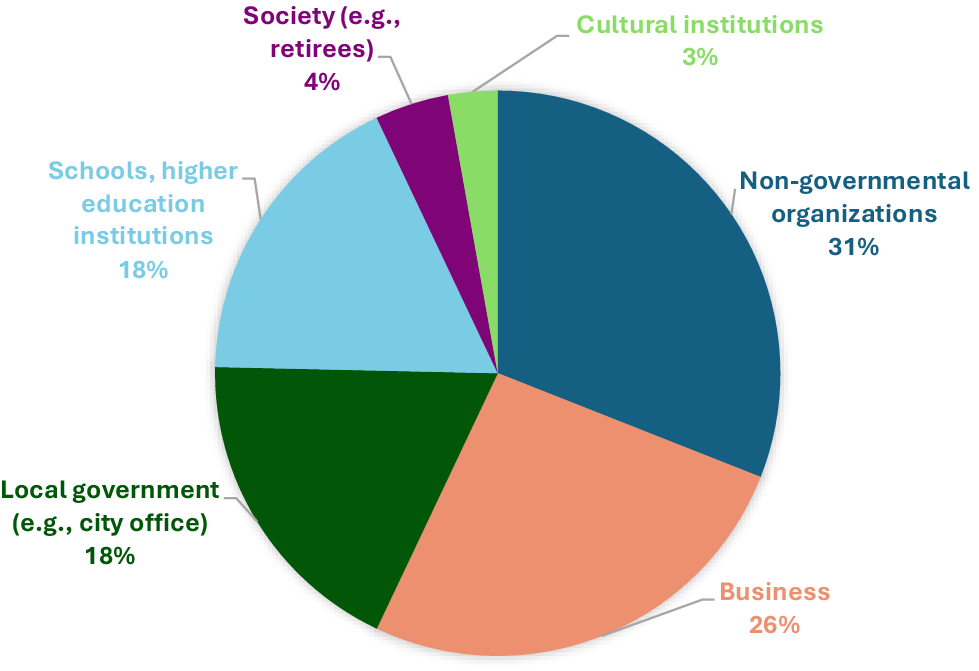
Councils typically range from 7 to over 39 members, composed largely of women from NGOs focusing on social issues, advocacy, and empowerment (44%). The business sector represents 37% of members, reflecting efforts to integrate gender equality into business communities. Women from local government make up 26%, playing a crucial role as natural links between local authorities and Councils, bringing administrative expertise to their work. Academic professionals from schools and universities account for 25%, highlighting their key contributions. Retired individuals constitute 6%, reflecting a multigenerational approach, while cultural institutions are less represented at 4%.
Representation of diverse backgrounds in Women’s Councils. Source: Based on the results of a survey conducted by the Presidium of Women’s Councils in March 2024 among representatives of 51 Women’s Councils in Poland. N = 136.

The prominence of women from NGOs in Women’s Councils reflects the broader role of civil society in advancing women’s rights, as well as its capacity to mobilize collective action and influence policy processes (Htun & Weldon, Reference Htun and Weldon2012). Similarly, the significant participation of women from the business sector can be interpreted in light of research highlighting the importance of gender diversity in organizational leadership and decision-making, and showing that diverse boards improve financial outcomes (Post & Byron, Reference Post and Byron2015). The involvement of women from local government may be understood in relation to existing scholarship demonstrating how women’s participation in formal institutions can enhance gender-responsive governance and participatory inclusion (Beaman et al., Reference Beaman, Duflo, Pande and Topalova2012; Berevoescu & Ballington, Reference Berevoescu and Ballington2021; Chattopadhyay & Duflo, Reference Chattopadhyay and Duflo2004).
The presence of representatives from academic and educational institutions highlights the broader role of education in shaping gender equality agendas. Educational actors contribute both to policy development and to wider processes of social change (Sperling & Winthrop, Reference Sperling and Winthrop2015), bringing research-based perspectives essential for informed policymaking. Conversely, the relatively low representation of women from cultural sectors may reflect barriers limiting their participation, while increasing female representation in this sector could improve expressions of gender equality, as cultural policies play a role in promoting gender equity (Throsby, Reference Throsby2012). The inclusion of retired women further contributes to a multigenerational perspective, offering a historical and nuanced understanding of gender issues and aligning with scholarship emphasizing the importance of life-course experiences in shaping understandings of gender and social participation (Calasanti & Slevin, Reference Calasanti and Slevin2006).
To strengthen coordination and amplify the collective impact of these diverse local bodies, in 2023, the Presidium of Women’s Councils (Prezydium Rad Kobiet) was established as a national representative body aimed at strengthening coordination across local Councils. Serving as a strategic hub, the Presidium enhances communication, facilitates knowledge-sharing, and amplifies the collective voice of Women’s Councils in both local and national policymaking. By organizing joint campaigns, preparing strategic documents, and advocating for legislative reforms, the Presidium works to institutionalize the Councils’ advisory role in municipal governance. It also plays a crucial role in securing recognition for Women’s Councils as stable, civic structures that contribute to gender-responsive local democracy. Through these efforts, the Presidium not only supports the sustainability of existing Councils but also helps to expand the model nationwide.
The Białystok Women’s Council (Białostocka Rada Kobiet), established on May 25, 2023, under the patronage of the Mayor of Białystok, exemplifies how Women’s Councils in Poland translate grassroots activism into impactful local governance initiatives. Focused on promoting gender equality, addressing social issues, and enhancing civic engagement, the Council has achieved significant outcomes despite its advisory status. During its first term (May 2023–March 2024), the Council secured Białystok’s declaration as a “Human Rights City,” embedding human rights standards into local governance, and successfully advocated for amendments to the city’s 2024 budget to fund health education campaigns on cervical and breast cancer prevention, endometriosis, infertility, and mental health. It also engaged in national and international advocacy through campaigns like “One Billion Rising” and “Nie śpij, bo Cię przegłosują” (Do not Sleep, or You’ll Be Outvoted) to combat gender-based violence and increase voter awareness. The Council empowered women economically through initiatives like the “Przedsiębiorcza Białostoczanka” (Enterprising Women of Białystok) workshops, providing training for women entrepreneurs. Collaboration with regional organizations and the Podlaskie Province Women’s Commissioner further amplified its impact, while media and community outreach helped reshape societal norms around gender equality.
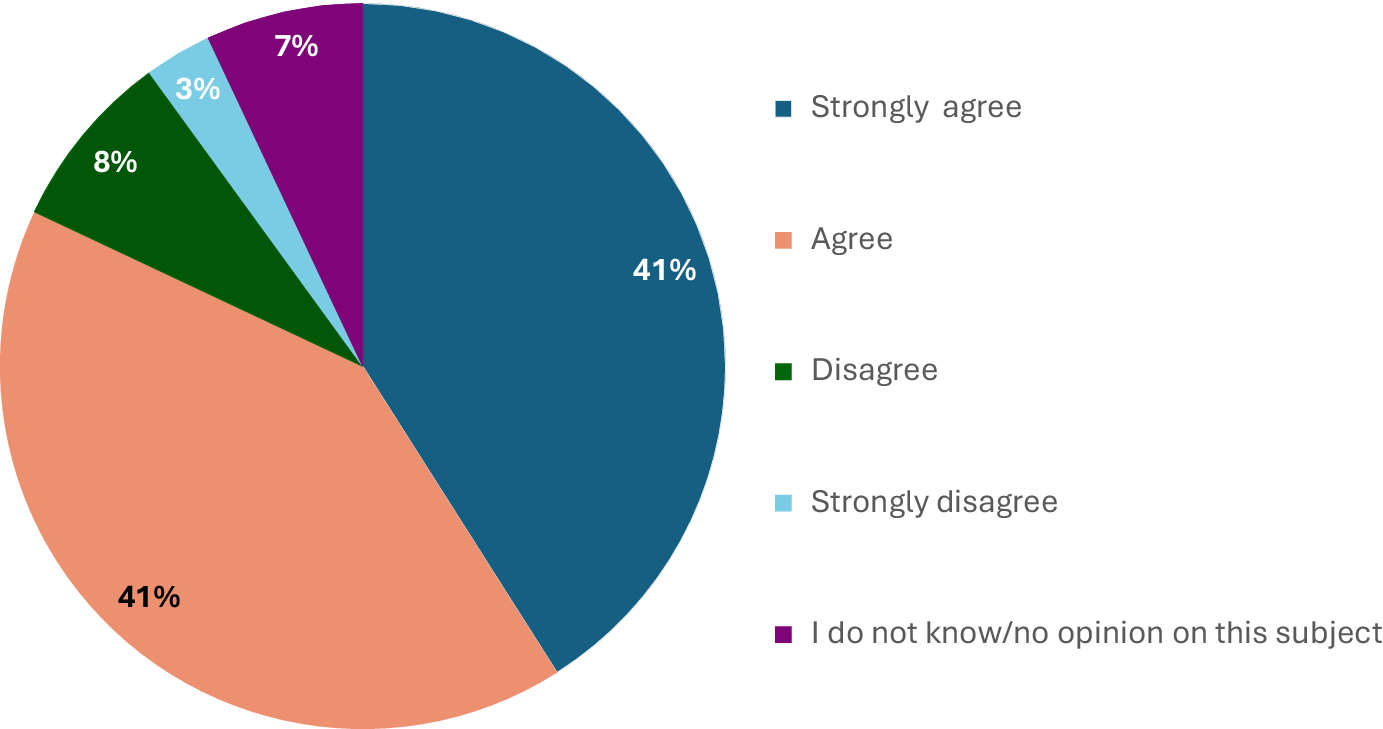
One of the key questions posed to participants in the March 2024 Women’s Council survey was whether they saw Women’s Councils as a “training ground” for political candidates. This question highlights the Councils’ potential to not only advocate for gender equality but also prepare women for formal political roles. Survey results show that 41% strongly agree and another 41% agree that Women’s Councils should serve this purpose. This aligns with the approach that grassroots advocacy and decision-making on women’s issues develop critical skills, enhance visibility, and build networks essential for political careers (Franceschet et al., Reference Franceschet, Piscopo and Thomas2012, Niewiadomska-Cudak, Reference Niewiadomska-Cudak2024). The perception of Councils as preparatory platforms underscores their role as spaces to hone political skills like public speaking, policy analysis, and negotiation, which are vital for political success (Krook & Norris, Reference Krook and Norris2014).
However, 11% of members (8% disagree and 3% strongly disagree) and 7% who were undecided highlight a critical perspective. This minority may recognize limitations, such as the lack of direct pathways to political power or insufficient recognition from the broader political community. These challenges align with research on the structural and societal barriers hindering women’s transition from advocacy to formal politics (Milazzo & Goldstein, Reference Milazzo and Goldstein2019).
Do you think that Women’s Councils should be a “training ground” for political leaders? Source: Based on the results of a survey conducted by the Presidium of Women’s Councils in March 2024 among representatives of 51 Women’s Councils in Poland. N = 136.

Moreover, the dissenting views may also stem from a realistic assessment of the political landscape, recognizing that while Councils provide a forum for engagement and advocacy, they do not necessarily translate into formal political advancement. This interpretation is consistent with broader research on women’s political trajectories, which demonstrates that structural factors, such as party dynamics, electoral systems, and persistent gender biases, continue to shape access to leadership positions (O’Brien & Rickne, Reference O’Brien and Rickne2016). In this context, it is crucial to recognize that the role of Women’s Councils can be multifaceted. While they offer invaluable experience and training that can be used for political advancement, the extent to which this potential is realized is highly dependent on both the internal dynamics of the Councils and the external political and social environment. Addressing these nuances is essential for Councils not only to support women’s advocacy goals, but also to effectively bridge the gap between grassroots activism and formal political power.
The March 2024 survey of Women’s Council members included also a question that directly asked whether respondents were planning to run in the upcoming local elections in April 2024. Out of the 126 respondents who answered this question, 36 confirmed their candidacy. This data offers a significant insight into the transition of women from advocacy roles within Women’s Councils to active political candidates, highlighting the practical application of their experiences within these Councils.
This transition from advocacy to candidacy highlights the role of Councils in political socialization. Women’s Councils not only foster leadership skills but also encourage members to undertake more prominent roles in public decision-making. This finding is consistent with theories that posit grassroots organizations as critical platforms for building political capabilities among women (Childs & Krook, Reference Childs and Krook2006; Goyal, Reference Goyal2024). Women’s Councils appear to serve as potential incubators for political talent, providing members with the necessary exposure, networking opportunities, and confidence to enter the competitive arena of electoral politics.
Nevertheless, despite the supportive role of Women’s Councils, a significant proportion of members were not interested in running for political office, which may be indicative of systemic barriers in the political landscape. Women often face higher perceived barriers to entering politics, including self-doubt about their qualifications, limited encouragement from political gatekeepers, and structural disincentives, related to the dominance of long-serving incumbents and the high costs of electoral competition (Lawless, Reference Lawless2015; Niewiadomska-Cudak, Reference Niewiadomska-Cudak2024; Wauters et al., Reference Wauters, Devroe, Vandeleene and Coffé2025), which may not be fully mitigated by Councils Societal expectations, and gender norms also play a significant role in discouraging women from seeking political office, despite having the necessary skills and ambition. The external environment, including party politics and electoral systems, can pose additional significant challenges that influence women’s decisions to engage in politics (Dahlerup & Leyenaar, Reference Dahlerup and Leyenaar2013). While there is optimism about the potential of Women’s Councils to serve as stepping stones into politics, there is also a need for a realistic approach that takes into account the broader socio-political challenges that may affect this transition.
Challenges and barriers
Understanding how structural, cultural, and organizational barriers limit the Councils’ influence is crucial to evaluating their capacity for feminist governance. The discussion that follows sheds light on this aspect of the inquiry by exploring the nature and implications of these constraints. The research with Women’s Councils’ members highlights several challenges that hinder their effectiveness. Financial constraints were cited by 77% of respondents, making it difficult to sustain activities and initiatives. Additionally, 32% of members feel a lack of agency, reporting limited influence or power to effect change, often linked to the advisory-only status of Women’s Councils, which allows local authorities to disregard their recommendations. This frequently results in limited tangible outcomes despite advocacy efforts. Engaging younger members is another challenge, with nearly a quarter of Councils struggling to attract and involve young people. Setting clear objectives and strategic direction is a concern for 18% of respondents, suggesting a need for better planning and clarity in the Councils’ purposes. Furthermore, 17% of members face difficulties in networking and sharing experiences, essential for collaboration and learning from past successes and failures.
Active member involvement and commitment is lacking in some Councils, reflecting challenges in engagement and organizational dynamics. Internal conflicts or ideological differences affect 13% of members, potentially hindering consensus and unified action. Working with local authorities is also a concern for 8% of respondents, as effective collaboration is critical for policy influence and implementation. Lastly, 5% of respondents report that Council composition is sometimes determined unilaterally, raising concerns about inclusiveness and representativeness, which can impact the legitimacy and breadth of perspectives included in decision-making.
Major challenges of Women’s Councils in Poland. Source: Based on the results of a survey conducted by the Presidium of Women’s Councils in March 2024 among representatives of 51 Women’s Councils in Poland. N = 136.

Fig. 4 Long description
From top to bottom, the chart lists challenges with corresponding percentages: Lack of Funding 77 percent, Lack of Agency 32 percent, Lack of Young People 23 percent, Lack of Clearly Defined Goals and Strategies 18 percent, Lack of Networking and Experience Sharing 17 percent, Lack of Member Engagement 14 percent, Ideological Differences Within the Council 13 percent, Lack of Cooperation with Local Authorities 8 percent, Unilaterally Determined Council Composition 5 percent. The bars decrease in length as the percentage decreases, visually emphasizing the predominance of funding issues.
The challenges faced by Women’s Councils illustrate the complex socio-political and organizational dynamics within which these bodies operate, requiring a multifaceted strategic approach.
Financial insecurity remains a core obstacle. Many Councils rely on personal contributions or sporadic municipal support. As a representative of the Opolska Women’s Council put it in a focus group interview, the financial support they receive can sometimes feel like “scraps.” This underscores the importance of strategic funding diversification, discussed in the next section, as critical to institutional sustainability. From a feminist governance perspective, however, dependence on external or competitive funding mechanisms can introduce tensions between autonomy and institutional alignment (Cornwall & Molyneux, Reference Cornwall and Molyneux2006; Krook & Mackay, Reference Krook, Mackay, Krook and Mackay2011). While such funding ensures sustainability, it may also risk reproducing hierarchies or diluting feminist priorities if accountability shifts toward donors rather than local communities. Furthermore, the organizational weaknesses of Women’s Councils, such as a lack of clear objectives and strategic vision, also highlight deeper issues that may undermine their effectiveness and affect the motivation of activists from the Council. These concerns were frequently voiced by participants in focus group interviews, who emphasized that without a shared vision, it becomes difficult to coordinate activities or maintain continuity across Council terms.
It is all about strategy. We made the mistake in our first term of not having a leader who led from the bottom up, but this line up of different women, often haphazardly, was not set out in which direction we were going (FGI 2, Podkarpacka Rada Programowa Kobiet).
At the same time, this apparent “lack of strategic clarity” may reflect a deliberate choice to prioritize inclusivity and openness, both of which are key principles of feminist governance (Verloo & Lombardo, Reference Verloo and Lombardo2012). While horizontal decision-making, diversity of voices, and reflexivity can undermine managerial efficiency, they strengthen democratic legitimacy and collective ownership. Thus, the tension between being strategic and participatory reveals the Councils’ hybrid nature, as they negotiate between bureaucratic expectations and feminist ideals of shared leadership. Additionally, from a theoretical perspective, scholarship on female representation emphasizes that the legitimacy of such bodies depends on inclusive and participatory processes that reflect the diversity of those represented (Phillips, Reference Phillips2015; Young, Reference Young2002). In this sense, the long-term legitimacy of Women’s Councils, particularly those constituted through top-down mechanisms, relies on their capacity to ensure meaningful inclusion and representational plurality.
Strategic vision, leadership development, and dense internal networks provide the foundation for turning feminist activism into systemic change (Batliwala, Reference Batliwala2013; Kabeer, Reference Kabeer2003). These capacities nurture the cohesion that enables Women’s Councils to sustain and coordinate their advocacy (Verloo & Lombardo, Reference Verloo and Lombardo2012). However, such strategic capacities must evolve without compromising inclusivity or flattening internal diversity. Balancing the desire for coherence with the need for open participation remains one of the defining tensions shaping Women’s Councils in Poland. Moreover, internal strength must be coupled with outward-facing alliances—partnerships with local authorities and civil-society actors that amplify influence and secure policy impact (Krook & Mackay, Reference Krook, Mackay, Krook and Mackay2011; Mackay et al., Reference Mackay, Kenny and Chappell2011). This process reflects the feminist principle of “embedded autonomy,” where collaboration with institutions is necessary but must remain critically reflexive to avoid co-optation (Htun & Weldon, Reference Htun and Weldon2012).
Statements by representatives of Women’s Councils in FGI interviews also indicate that Women’s Councils sometimes face cultural resistance and disregard, which are most often underpinned by stereotypes and entrenched gender norms. This cultural resistance and disregard can significantly hinder the effectiveness of the Councils’ initiatives. Additionally, there is a tendency to pigeonhole the Councils into narrow roles, neglecting their broader contributions.
Women’s Councils must not be stereotypically associated only with the protection of kittens, dogs, disadvantaged, beaten women, because that is a superficial message. Women’s Councils are business women, all-rounders, self-confident women. It’s a wide range of issues that are important to women. Not just abortion. Showing that versatility is one way of ensuring that we are not ignored and that we are better received. (Podkarpacka Rada Programowa Kobiet, FGI 2).
Additionally, bureaucratic hurdles and resistance from local governments can significantly hinder the Women’s Councils’ ability to implement changes. This resistance often stems from a lack of understanding of gender issues or a reluctance to alter the status quo. In some cases, local officials may feel threatened by the Councils’ push for transparency and accountability, perceiving it as a challenge to their authority. For example, in Dębica, the Women’s Council formed independently through a notarial act after the local government showed disinterest and resistance toward the establishment of a Council that could potentially critique and influence local policies directly affecting women.
In Debica, the subject of the Debica Women’s Council, Women’s Councils in general, is like putting a stick in an anthill. In fact, most of the men react terribly. Recently there was a discussion and we were, I mean, women’s rights were compared to a hole in the road, that holes in the road are more important than women’s rights (FGI 2, Dębicka Rada Kobiet).
Prevailing social attitudes toward gender roles and feminism can also be a significant external challenge. In more conservative regions, efforts by Women’s Councils to promote gender equality may be met with skepticism or hostility, seen as unnecessary or contrary to traditional values. Such attitudes can stifle discussion and progress, making it difficult for Councils to gain broader community support. Outreach and education are becoming critical components of their work, requiring Councils to invest significant effort in changing social attitudes and stereotypes to promote a more inclusive understanding of gender equality. This illustrates the challenge of operating within so-called gendered opportunity structures (Beckwith, Reference Beckwith2000; Krook & Mackay, Reference Krook, Mackay, Krook and Mackay2011; Lovenduski, Reference Lovenduski2005; Mackay et al., Reference Mackay, Kenny and Chappell2011), where cultural resistance limits institutional uptake of feminist ideas despite organizational innovation.
In addition, there is a marked generational divide in engagement, with younger women often more difficult to reach and involve in Council activities.
I think the biggest challenge, because we are in a small town and maybe it is easier in a bigger town, is to gain the trust of the women in the town in what we are doing, because we have already made an effort to announce that we are there, that we are active. In general, in my town, older people, older women, go to various meetings of this kind organised by the town. It’s a form of, I do not know, entertainment for them. And I’d like it to be the case that in our town, when there’s an announcement that the Women’s Council is doing something, it’s not just older women who come, for whom it’s a reason to go out, but we want women of all ages to come, younger women too. And it’s not going to be easy in my town (Opolska Rada Kobiet, FGI 1).
Bridging this gap is essential for the long-term success and inclusivity of Women’s Councils.
Overcoming challenges
To respond effectively to these multidimensional challenges, Women’s Councils have developed a range of adaptive strategies. These approaches—grounded in local knowledge, context-sensitive governance practices, and coalition-building—enhance their visibility and policy influence.
Innovative strategies
One of the primary strategies employed by Women’s Councils is to diversify their funding sources to reduce dependence on unpredictable local government allocations. Some Councils have turned to international grants, partnerships with non-governmental organizations (NGOs), and private sector sponsorships to secure the financial resources necessary for sustainability. For example, the Council in Białystok have organized partnership events with local businesses and international women’s organizations, which provide both funding and increased visibility for their initiatives. Anheier (Reference Anheier2014), discussing NGOs, argued for diversified sources of funding to mitigate the risks of financial instability. And while this is a strategy that some Councils have implemented, there is an expectation that, as entities established within local governments, the obvious source of funding for at least some of the activities of Women’s Councils should be the budgets of local governments themselves.
Another innovative strategy used by the Women’s Council is the inclusion of government officials as Council members; the Council benefits from streamlined administrative processes and easier access to resources. In addition, using personal relationships with officials in different departments helps to secure funding for specific projects, increasing the Council’s ability to effectively advocate for and implement its initiatives. This method of integrating personal networks and insider knowledge into the Council framework not only facilitates the acquisition of resources but also strengthens the Council’s influence.
The strategy is that our Women’s Council must have a civil servant who is very familiar with local government, NGOs and the budget. That is the essential knowledge. And if someone does not know that, they will get information from the office that there is no money. But the money is there, it’s just that, like in business, you have to know how to get it, from whom and how. And a civil servant like that knows that very well (Podlaska Rada Kobiet, FGI 1).
To address internal dynamics and enhance operational efficiency, some Councils have adopted digital tools for better communication and project management. These tools help in coordinating activities, tracking progress, and maintaining engagement among members who may be spread across large geographical areas or unable to meet frequently in person. Moreover, workshops and training sessions have been regularly organized to equip members with the skills needed to effectively participate in advocacy and policy-making processes.
Strategic collaborations
Collaborations with academic institutions, local media, and other civil society organizations have been crucial in amplifying the councils’ messages and reaching a broader audience. By collaborating with universities, for example, councils gain access to research expertise and resources that can support their policy recommendations with empirical data. This academic backing strengthens their proposals when negotiating with local governments or other stakeholders. Media partnerships are particularly valuable for addressing societal attitudes and increasing public awareness about gender issues. Councils have strategically used local radio stations, newspapers, and social media platforms to disseminate information about their activities, educate the public on gender equality, and counteract negative stereotypes.
Working with the media is key, not only to the development of the Council, but also through education and widening public debate. Talking to and engaging with the media is also important to reach new people about our Council, not only in terms of community building and building a local community around the Council, but also to stimulate public debate which then echoes into various corners of the Town Hall and beyond. (Opolska Rada Kobiet, FGI 1).
Building community networks
Building community networks is a key strategy used by Women’s Councils to increase their influence and respond effectively to challenges. As part of this strategy, Councils actively work to build strong networks within their communities. These networks include not only women from different sectors, but also allies from minority groups, youth organizations and other marginalized communities. By forming coalitions, the Councils create a stronger, unified voice that can put more pressure on local authorities to consider and implement proposed reforms.
For example, the Polonijna Rada Kobiet (Council of Polish Women Abroad), made up of Polish women activists living abroad, exemplifies this strategy by promoting networking not only at the national level in Poland but also at the European level. This is evident in its cooperation with the Landesfrauenrat Sachsen e.V., as demonstrated during a study visit in April, when meetings between women’s groups from Lower Silesia and Saxony took place in Görlitz and then in Wroclaw. This event facilitated the exchange of experiences and knowledge and presented the activities of the Wroclaw Women’s Council, the Dzierżoniów Women’s Council, and the Presidium of Women’s Councils in Poland. Additionally, the Presidium of Women’s Councils is particularly active in building these networks of cooperation, exchange of knowledge, and experience between Councils, which contributes significantly to the empowerment of women.
Engaging in policy dialog at the local and national level
Women’s Councils in Poland actively engage in continuous policy dialog with local governments, aiming to integrate women’s perspectives throughout all stages of the policymaking process—from planning to implementation and evaluation. While focused on local governance, their advocacy often intersects with national debates—such as gender equality, migration, or violence against women—thereby fostering political awareness and public engagement. For example, the Wałbrzych Women’s Council has addressed themes like refugee solidarity, intergenerational justice, and gender-based violence through promoting initiatives such as “One Billion Rising,” or “Only Yes Means ConsentFootnote 1,” campaigns, promoting empathy for the elderly and public actions in support of Ukrainian refugees. Events such as panel discussions on gender equality and civic walks held around March 8 have positioned the Council as a visible actor in the broader feminist movement (Wałbrzych Women’s Council presentation, IV National Forum of Women’s Councils, Piaseczno, March Reference Hawkesworth22–Reference Htun and Weldon23, 2024). This involvement ensures that women’s voices are heard and integrated into local policies, effectively making Women’s Councils key stakeholders in local governance. By engaging in these activities, the Councils establish a significant presence that local officials find hard to overlook, enhancing their contributions to governance.
At the IV National Women’s Forum (IV Forum Kobiet, Piaseczno, March 22–23, 2024), Council members, MPs, and activists showcased local achievements and advanced a coordinated appeal for stronger institutional recognition of Women’s Councils. Timed just ahead of the 2024 local elections, the event marked a strategic shift from local advocacy toward national policy dialog on the future of Women’s Councils. Several Members of Parliament from parties that formed the governing coalition after the 2023 parliamentary elections attended the Forum and symbolically signed a list of demands prepared by the Councils. These demands called for legislative reforms to guarantee the right to establish Women’s Councils wherever grassroots initiatives emerge, removing their dependence on the discretionary will of local authorities. They also emphasized the need for secure public funding to support the Councils’ activities and ensure their long-term effectiveness. Additionally, a powerful appeal to local authorities throughout Poland was presented:
Dear Local Authorities,
Given the growing importance and role of women in social and political life, it is extremely important to create platforms that allow for the full use of their potential, knowledge and experience. Since 2010, Women’s Councils have been established in Poland as an expression of this aspiration. Today, there are more than 50 Women’s Councils in Poland at different levels of local government. This is a strong and growing movement that is having a real impact on local communities. Women’s Councils play an important consultative and proactive role, promoting women’s perspectives and working on local solutions for gender equality. Their work is an example of community engagement that brings tangible benefits, not only in promoting gender equality, but also in fostering more open, equitable and inclusive communities. Women’s Councils contribute to women’s empowerment and also serve as a space to develop women’s effectiveness, leadership and readiness for social and political activism. In light of this experience, we urge all local governments to support and encourage initiatives to establish new Women’s Councils. This is an investment in the future that will help to increase civic participation, strengthen local democracy and build a fairer and more equal society.
This plea underlines the critical role that these Councils play not only in promoting gender equality but also in contributing to women’s empowerment and the wider social good. In advocating for gender budgeting and the integration of feminist insights into local policy-making, the Women’s Councils align themselves with feminist theoretical frameworks, such as those discussed by Hawkesworth (Reference Hawkesworth2005) and Squires (Reference Squires2007), which emphasize the transformative potential of embedding feminist principles in governance. These Councils have skillfully channeled some of the energies from the streets into the corridors of power, transforming voices of dissent into constructive political dialog and decision-making. By engaging directly with local authorities and advocating for gender-responsive budgeting and policies, the Councils are tackling both overt and subtle forms of gender inequality and ensuring that the passion of protest is translated into ongoing and structured political engagement. This approach not only sustains but also amplifies the impact of feminist movements, providing a dynamic model of how momentary actions can evolve into lasting systemic change. It is an important addition to the global conversation on sustaining and transforming the energies of feminist activism into effective governance and policy influence.
Conclusion
Women’s Councils in Poland, as examined through the lens of this study, embody the transformative potential of grassroots activism in addressing systemic gender inequalities and fostering feminist governance. Guided by the research question on how these Councils function as both agents of change and reflections of structural limitations, this article demonstrates their role in bridging the gap between protest movements and institutional engagement. Women’s Councils exemplify how feminist principles, rooted in local activism, can be integrated into formal decision-making processes, addressing overt and insidious forms of inequality through gender-sensitive budgeting, community education, and local policy advocacy.
The Councils’ dual role—as platforms for feminist leadership and as advisory bodies within local governance structures—highlights both their potential and their limitations. Despite their achievements, their advisory status constrains their formal authority, with local governments not being legally obligated to implement their recommendations. This underscores a central tension explored in this study: the Councils’ capacity to drive systemic change despite structural barriers. Addressing these barriers, particularly the lack of institutional mandates, will be crucial for fully realizing their transformative potential.
Our findings empirically extend Krook and Mackay’s (Reference Krook, Mackay, Krook and Mackay2011) framework of feminist institutionalism by illustrating how informal feminist actors negotiate access to and influence over formal governance structures. The Councils’ hybrid character exemplifies what Fung and Wright (Reference Fung and Wright2001) termed “empowered participatory governance,” albeit with significant constraints. In the case of Women’s Councils, these constraints stem primarily from their advisory status, limited financial autonomy, and dependence on local authorities for institutional recognition, which restrict their decision-making power. Nonetheless, by embedding feminist principles such as inclusivity and reflexivity, the Councils extend Fung and Wright’s model demonstrating through a gendered lens how substantive participation can persist even within asymmetrical power structures. The data also offer new insights into civic associationalism in postsocialist contexts, suggesting a gendered modality of grassroots institutionalization not yet fully theorized in existing literature on democratic resilience or feminist governance in Central-Eastern Europe. This modality takes shape through feminized forms of institutional adaptation, in which informal, volunteer-driven activism gradually solidifies into semiformal governance structures that both rely on and transform the legacy of state-dependent civic culture.
This article contributes to feminist governance scholarship by highlighting the ambivalent but strategic role of informal advisory bodies in hostile political climates. The findings suggest that feminist resilience and agency are manifested through a practice whereby activists adapt feminist principles to existing bureaucratic frameworks, negotiate limited authority to expand civic influence, and sustain advocacy by embedding feminist ethics of care into local governance routines.
This research further illuminates the Councils’ ability to navigate complex political landscapes, preparing women for leadership roles in local and national governance. By fostering civic engagement and advocating for structural changes, Women’s Councils may contribute to advancing gender equality. Their work demonstrates how grassroots initiatives can evolve into institutionalized mechanisms for systemic change, contributing to both local advocacy and broader political transformation. This aligns with the research question’s focus on how Women’s Councils influence governance structures while simultaneously preparing women for greater political participation.
As this article has shown, Women’s Councils are more than reactive formations; they represent proactive, innovative models of feminist governance. By translating the energy of protests into structured, sustained advocacy, they offer valuable insights into feminist political engagement and the role of civil society in shaping equitable policies. The findings underscore the Councils’ significance as potential catalysts for change, demonstrating their dual focus on grassroots mobilization and systemic integration.
However, as the study reveals, the potential of Women’s Councils remains constrained by institutional challenges. Niewiadomska-Cudak (Reference Niewiadomska-Cudak2024) emphasizes that women’s political participation requires, among other things, educational and cultural interventions aimed at weakening traditional gender norms, promoting equality, openness to change, and the rejection of stereotypes surrounding women’s roles in public life, as well as the strengthening of women’s solidarity and support networks based on cooperation, mutual trust, and collective action—areas where Women’s Councils already make contributions.
Although their impact is uneven and contingent upon contextual factors such as local political will, societal norms, and available resources, Women’s Councils are emerging as potential incubators for feminist leadership. Without formal recognition or mandates, however, their influence will remain limited. As the findings of this article show, the Councils that receive formal support from local authorities, such as those in Białystok and Wałbrzych, gain greater access to funding and policy influence. In contrast, those operating without such support struggle with sustainability and visibility. However, formalization also involves compromises, as closer institutional alignment can restrict autonomy and undermine feminist objectives through bureaucratic or political appropriation.
Funding statement
This research received no external funding. The study was conducted using the authors’ own resources.
Competing interests
The authors declare that they have no competing interests. Specifically, there are no financial or nonfinancial conflicts of interest that could have influenced the research, analysis, or interpretation of the findings presented in this manuscript.
Use of AI tools
The authors used artificial intelligence–based tools (DeepL and ChatGPT) solely for purposes related to language editing and technical preparation of the manuscript. Specifically, these tools were employed to support grammatical correction, improve stylistic flow and clarity, and assist in formatting the bibliography in accordance with APA 7 standards. All AI-assisted suggestions were carefully reviewed, verified, and, where necessary, revised by the authors.



 Open access

