


Arthur Harrison Cole grew up in Haverhill, Massachusetts, close enough to the town’s well-to-do to see the difference and far enough to feel it. In 1912, while studying at Harvard, he met Anna Esther Steckel, a Vassar graduate and the only child of Reuben P. Steckel, a retired hardware millionaire.Footnote 1 Their courtship, however, entered the public record not as romance but as crime. In the winter of 1913, a rejected suitor, Samuel Sinclair Jr., and an accomplice tried to abduct Anna in a taxicab as she returned from a shopping trip. She was rescued by the driver who delivered the group directly to the police station.Footnote 2 The incident became a local scandal, and Sinclair was eventually imprisoned.Footnote 3
The episode’s biographical significance, though, lies less with Sinclair than with the man he wanted to dislodge: Arthur Cole. Cole had met Anna the previous year at a social gathering in Boston. By May 1913, they were engaged. Her father died shortly thereafter, and, as the sole heir, Anna’s inheritance was reported to be about $1 million, roughly the buying power of $33 million in 2026.Footnote 4 The wedding was held on August 5, 1913, and the couple settled in Cambridge. There, their wealth soon became legible in municipal print. In a 1915 list of Cambridge’s top taxpayers, Anna appeared with a tax of $3,000, a level reached by only 127 (about 7.6%) of the 1,670 people listed.Footnote 5
That marriage gave Cole a degree of financial independence unusual for a young academic and, over time, resources that became consequential for his work as an institution builder. The middle-class boy had attached his future to a woman whose fortune quieted the question that nagged most ambitious young men: how to pay for the life they are trying to build. As he put it more than 40 years later, “without the availability of the money which Mrs. Cole inherited […] I could not have done as much for the discipline. I am much in debt to her—and, through me, a number of my colleagues in the said discipline are also.”Footnote 6 Being independently wealthy allowed Cole to support other scholars with personal gifts and place even risky intellectual bets on interdisciplinarity.
This aspect of Cole’s biography has received almost no attention. The scholarly literature on Arthur Cole, beyond memorials and obituaries, is limited.Footnote 7 What exists tends to describe him through the Harvard Research Center in Entrepreneurial History, of which he was the director from 1948 to 1958, and in the context of entrepreneurial history as a research program. In addition to Cole’s trusted collaborator Ruth Crandall’s early chronicle of the Center and Steven Sass’s dissertation on entrepreneurial history written in the 1970s,Footnote 8 the Center has featured in more recent work by Robert Fredona & Sophus Reinert, Geoffrey Jones & R. Daniel Wadhwani, and Hans Landström.Footnote 9 It also appears intermittently in broader reflections on business and economic history as academic disciplines.Footnote 10
This article reconstructs Arthur Cole’s career through the archival records of the Research Center at Harvard University Archives as well as the personal papers of Cole and his colleague Fritz Redlich at Harvard Business School’s Baker Library Special Collections and Archives.Footnote 11 Cole’s surviving correspondence and institutional files are extensive and, together with complementary sources from his friends and colleagues, could sustain a full biography. The aim here is narrower, namely, to establish an interpretive map of Cole’s approach to entrepreneurship. Rather than producing a coherent and enduring academic program or school, I argue, Cole advanced a historical understanding of entrepreneurship through two primary arguments that continue to provoke the field to this day.
First, Cole resisted the easy conflation of entrepreneurial history with great-man or great-firm narratives, arguing for an account of entrepreneurship without heroes. This stance followed from his epistemic premise that entrepreneurial outcomes are mediated by institutions and channels of information and judgment that no single actor controls. Entrepreneurship, in this sense, depends on the flow and evaluation of novelty claims. These processes, which Cole places at the center of his analytical interest, differ from approaches that focus on entrepreneurial intention, the entrepreneur as a creative genius, or psychologized motivation.Footnote 12 Cole’s specific sensitivity to the role of intermediaries in the knowledge ecosystem was sharpened by his professional work at one of them: Baker Library at Harvard Business School.
Second, Cole tracked the entrepreneurial function across multiple levels, from micro-level decisions within enterprises, to meso-level interfirm ecologies to, ultimately, macro-level regimes of legitimacy and public judgment. What links these registers is not information in the abstract but the concrete work of selection and interpretation.Footnote 13 How are conjectures made legible? How are they taken up (or not) by relevant audiences, and stabilized through public tests of credibility? Focusing on the links between levels, as Cole did, widened the field’s explanatory ambition.
Yet the same synthetic reach also helps explain why his best-known book, Business Enterprise in its Social Setting (1959), could be influential without becoming canonical.Footnote 14 Its effort to traverse micro-, meso-, and macro-levels in a single frame has made it difficult for later readers to inhabit and reuse. As a consequence, Cole’s legacy and the long-term impact of the Research Center in Entrepreneurial History are mixed. While these efforts were intellectually catalytic, raising questions and developing people, they were also temporary and could easily be sidelined or forgotten.
This article first traces how Cole’s upbringing and his work at Baker Library shaped his distinctive understanding of knowledge and entrepreneurship. It then reconstructs the Research Center’s program and Cole’s major publications in relation to adjacent postwar social science debates, before concluding with an assessment of Cole’s impact on business and entrepreneurial history.
The Making of an Entrepreneurial Historian
Arthur Cole came of age in a world where institutions, such as family, church, and school, were the main vehicles by which a respectable middle-class household could stabilize itself and, at times, climb. Born on November 21, 1889, in Haverhill, Massachusetts, a shoe-manufacturing town, Cole grew up in a family that combined professional aspiration with recurrent loss. His father, Harry Joshua Cole, was a general-practice lawyer in Haverhill. His mother, Bessie Plummer Garland Cole, died in 1897 when Arthur was only eight years old.Footnote 15 During the same short span of childhood, two sisters died (one as an infant; another at age seven), and Cole himself survived a severe bout of scarlet fever. His only remaining sibling, his sister Luella Cole, was plagued by a defective Achilles tendon that required multiple surgeries before age 10. She later attended Vassar College and became a scholar in educational psychology.Footnote 16
After his mother’s death, a paternal aunt moved in to help the family. Soon after, Cole’s paternal grandparents also joined the household, after his grandfather, a Methodist minister, had suffered a nervous breakdown. The home was firmly religious, and Cole remembered the family’s strict stance on alcohol, but he was equally attentive to the social meanings of institutional style. His father, he wrote, “shifted his allegiance from the rather informal Methodist aggregation to the more stylized Episcopal organization,” whose beauty and occasional rigidity Cole learned as a choirboy.Footnote 17 Read in context, this observation also registers an implicit class move. By the early twentieth century, many Episcopalians imagined themselves as a form of religious establishment, and that image was closely intertwined with social and financial elites who used the church to stage respectability.
This attentiveness to the social work of institutions matters for understanding why Harvard and Baker Library became Cole’s enduring platform. In the same way that denominational affiliation could signal polish and hierarchy, so too could educational pathways. Cole’s adolescence was shaped by preparatory schooling designed to funnel boys toward elite colleges. He attended Dummer Academy, a school whose stated purpose during the period was to prepare students for entrance to Harvard, Yale, and MIT. There, he was active in sports, edited the school paper The Archon, and graduated top of his class in 1907.Footnote 18
From Dummer, Cole moved to Bowdoin College (Bachelor of Arts, 1911), where he participated in debate and served as business manager of the paper The Bugle. Bowdoin’s early twentieth-century culture included classical training alongside an expanding historical and social scientific curriculum, which fed Cole’s later ability to speak to diverse audiences. As early as 1911, he published two short pieces of literary criticism in the monthly magazine The Writer, one on the short story’s aesthetics of selection, unity, and effect, and another on Edgar Allan Poe.Footnote 19 These publications showed a sensitivity to selective framing and to connecting small-scale action to larger historical movements.
Cole’s move to Harvard soon after graduation turned those sensibilities toward economics and economic history. He joined the Graduate School of Arts and Sciences, earned a Master of Arts (A.M.) on February 26, 1913, and completed his Ph.D. in 1916. While he and Anna began raising their family (with daughter Barbara born in 1918 and son Jonathan in 1925), Cole also started teaching, embedding him in Harvard’s instructional and mentoring structures.Footnote 20 In 1916–1917 and again beginning in 1920, he was a tutor and instructor at Harvard’s Economics Department. Cole’s early professional formation mixed academic apprenticeship with practical, policy-facing tasks. During World War I, he served as a special expert connected to wartime economic coordination and later worked for the US Tariff Commission. In 1919, he conducted field investigations in Great Britain on his main area of study, the wool-manufacturing industry.Footnote 21
Cole’s dissertation, The American Wool Manufacture (1926), is telling for what it reveals about his emerging professional network. He credited, in particular, Frank W. Taussig and Edwin F. Gay as formative teachers. Taussig represented Harvard’s political economy tradition, while Gay was an economic historian who helped build Harvard’s intellectual infrastructure. Cole later described him as “a man of personal magnetism in the scholarly world,” who modeled the combination of scholarship and institution building that would also become Cole’s signature.Footnote 22 It was also Gay who established a connection to the Rockefeller Foundation, which later funded Cole’s research. In addition to his academic mentors, Cole’s dissertation also acknowledged a business practitioner for illuminating criticism and Ruth Crandall, who would become his lifelong collaborator, for gathering material and preparing the study for publication.Footnote 23 This pattern of academic mentorship, connections to the business world, and the practical labor of primarily female collaborators would recur throughout his career.
Tackling the Library Problem
Harvard Business School (HBS) became Cole’s platform not simply because he held appointments there, but because it offered a distinctive institutional ecology with strong incentives to collect business evidence and proximity to practitioners. Cole’s archival turn is visible already in the by-product of his dissertation. He acquired a large body of original records from the textile company Slater & Sons of Webster, Massachusetts, of which Samuel Slater, a pioneer of the American Industrial Revolution, was one of the original owners. These records had been “stored in the attic of a large shed containing raw wool, a material instantaneously combustible.”Footnote 24 In other words, his earliest research did not merely use sources but actively recruited them into institutional custody. That move of transforming fragile, privately held records into curated collections foreshadowed Cole’s conviction that business history would rise and fall with the availability and organization of sources. “To trace the intimate history of an old industry or an early institution, nothing can take the place of original documents.”Footnote 25 His focus on historical sources shaped Cole’s agenda as a researcher and institution builder.
This commitment first grew out of the practical difficulty of locating and securing business documents. In a 1927 essay, Cole argued that business historians faced obstacles “more baffling” than those confronting political or literary historians, because much of the relevant record remained scattered in private hands, uncatalogued, and vulnerable to casual destruction, as he himself had experienced with Slater.Footnote 26 His agenda was thus not “acquisition as accumulation” but “acquisition as argument” about what should be preserved as evidence.
The shift from economic historian to librarian-architect occurred gradually, and then decisively. Through the 1920s, Cole remained a scholar and teacher at Harvard (as tutor, assistant professor, and associate professor in economics) while also taking on administrative responsibilities. During the academic year 1928–1929, Dean Wallace Donham approached Cole with the unexpected offer to join Baker Library. This was shortly after Donham had obtained funds to establish the Isidor Straus Professorship in business history—when business history was, as Harvard business historian Henrietta Larson later recalled, “little more than a name”—and had appointed Norman Gras, a former student of Gay, to this position.Footnote 27 After arriving at HBS in 1927, Gras effectively charted business history as a distinct field from economic history and pressed for research rooted in the “actual records of individual firms and executives.”Footnote 28 The library was one place to collect and catalog business historical records.
However, in Cole’s recollection, Donham had created “a library problem which was becoming larger and more complicated.”Footnote 29 The librarian initially chosen was a friend of the dean, trained in advertising and without prior library experience. Donham had furthermore agreed to acquire a large collection of early economic literature from a professor at the University of Cambridge in England, Herbert Somerton Foxwell. Cole entered Baker Library first as Administrative Curator from 1929 to 1932, at a time when the library (completed in 1927) still required purposeful collection building to define its identity. In 1932, he was appointed Librarian, a position he held for nearly a quarter century, until his retirement in 1956.Footnote 30
Cole used this role to make what amounts to a methodological intervention. His initial task was to control the disorderly growth of the library and shift the evidentiary base of business history from celebratory accounts and retrospective narratives toward a systematically built apparatus of sources. That apparatus included original business records, which Cole called “the raw material of at least one type of business history” [my emphasis, CL] but also trade literature, technical publications, annual reports, and other printed matter that made business activity comparable at scale.Footnote 31 What counted as evidence, in other words, had to be defined and classified.
This lens trained Cole to look at historical change as a knowledge problem under uncertainty. For Cole, information became actionable only when intermediaries, such as libraries, archives, and schools, organized and evaluated it. A deep concentration in one area could create interpretive leverage. Baker Library, for example, built a major strength in Adam Smith materials thanks to a 1937 gift by Homer B. Vanderblue, which included manuscript letters and books from Smith’s own library, as well as funds to strengthen that focus.Footnote 32 During his tenure, Cole maintained continuous contact with colleagues, for example, at the University of Tokyo, Japan, to strengthen this collection through further acquisitions.Footnote 33 Likewise, the Bancroft Collection held books and pamphlets about the South Sea Company and could anchor a researchable episode, in this case about the inflation of its stock and the aftermath of the speculative bubble.Footnote 34
At the same time, Cole treated acquisition also as an ongoing challenge. In his wartime essay “Business Manuscripts: A Pressing Problem,” he described the expanding reliance of economic and business history on corporate and personal papers and pointed readers to a set of handling methods developed at Baker Library.Footnote 35 Even when acquisition succeeded, it did so under constraints. Firms and families could be hesitant; records could arrive incomplete; and access could be restricted, reducing scholarly utility. The resulting archive was therefore not to be taken for granted. It reflected repeated acts of persuasion, judgment about what was worth saving, and the design of access conditions that balanced scholarly use with legitimate privacy and reputational concerns. A librarian who aimed to support business history as an emerging field had to operate simultaneously as a scout, broker, conservator, and interpreter.
Once the collection existed, it had to be made usable as a scholarly instrument. Early Bulletin notices routinely announced new collections alongside short use cases, explaining, for example, how textile or manufacturing records could support wage/price studies, process histories, or tariff analyses.Footnote 36 This practice made collection building legible as intellectual work.
Cole also sought to codify standards. He saw one of Baker’s major contributions in the classification scheme it introduced for business literature. Standard systems, he argued, had “to be strained and confused to make provision for the unanticipated books.” In contrast, the Baker scheme “puts all business subjects in a logical sequence so that books arranged on library shelves in accordance with this scheme, stand in a systematic relation to one another.”Footnote 37 His 1938 article “Business Manuscripts: Collection, Handling, and Cataloging” and related writings indicate a sustained attempt to formalize best practices for acquiring and describing business records.Footnote 38 This was necessary because, as Cole remembered in hindsight, at that time, “everyone associated with the collecting and handling of manuscript business documents was ‘flying blind,’ so to speak.”Footnote 39 Where the predecessor of the Hagley Museum and Library, the only other active collector of business records at that time, grew out of a du Pont-centered archival project and became a major repository oriented toward corporate sources,Footnote 40 Baker under Cole came to treat business history more expansively as the study of business knowledge, linking firm records to the wider informational setting represented in a diverse set of publications from within and outside companies.
One representation of this logic was the Foxwell acquisition and the institutional formation of the Kress Library. Donham’s earlier commitment to acquiring Foxwell’s economic literature became the nucleus of the “Kress Library of Business and Economics,” formally established in 1938. Cole’s role was not only to process the materials but to turn them into field-building infrastructure. Once established, Kress was designated the central repository for economic literature published before 1850, and holdings were consolidated accordingly.Footnote 41 The work that followed—processing, organizing, and extending—was a long program of selection under constraint. Foxwell’s collection had clear weaknesses (e.g., certain languages were thin or absent), and filling those gaps required prioritization and active work with booksellers. By the 1950s, Cole had “a list drawn up” of the most important works Kress should acquire, which he circulated among booksellers with “fruitful results.”Footnote 42
As he had done with other collections, Cole also worked to make Kress publicly usable. He introduced the library to business historians by emphasizing its collection of more than 30,000 items, presenting it as a means to redirect business history toward a longer-run engagement with economic literature.Footnote 43 Through bibliographic work associated with the Kress catalog project, in which he appears credited as librarian, he helped turn the acquisition into a scholarly tool.Footnote 44 At a smaller scale, Cole also suggested dissertation topics to colleagues in his correspondence, for which Baker held relevant material.Footnote 45
Cole’s own articulation of Baker’s ambitions made clear that Kress was also a lever for repositioning the library itself. In 1948, in an unpublished manuscript titled “The Baker Library as a National Research Institution,” he described how the institution “seeks to acquire all worth while books dealing with business and allied subjects that are published anywhere in the world.” This broad agenda included annual reports and other financial publications of some 2,500 US corporations, as well as the issues of over 5,000 periodicals. It also covered what the librarian described as “roots” of the field: early literatures on accounting, advertising, and other subjects, as well as “the only sizable collection of original business records in public or quasi-public hands.”Footnote 46 Such a scope, however, also required extensive resources. “A building entirely devoted to the handling, storing, and consulting of these valuable documents would be the only really satisfactory solution,” Cole argued. “Expensive buildings are provided for the housing and display of artistic heritage from the past, but no remotely equivalent custody is assured the records of business which, it may be contended, made possible those artistic creations and the very structures in which they are housed.”Footnote 47 As a librarian, he wanted to persuade donors and administrators that business records deserved expensive preservation.
The same logic underpinned Cole’s insistence that business history and economics had a common object of study. “To be sure, there is a good deal of difference between Adam Smith’s ‘Wealth of Nations’ and an advertising flyer for Fuller brushes. However, there is no clear or useful dividing line between the two general types of publication—that of economics and that of business. It is proper to conceive of all such literature as flows of information primarily for the guidance of policymakers among government officials or among businessmen. […] It seems best to regard the publications of the two affiliated areas as constituting a spectrum which cannot be broken into sections without introducing an artificial division into what is essentially a true unity.”Footnote 48 Accordingly, Baker’s status under Cole evolved from a classroom-focused support institution to a national research center: “We have become a sort of Federal Reserve Bank among libraries—a librarian’s library.”Footnote 49 The collections mattered because they allowed scholars to bridge disciplines and trace historical change through shifts in what kinds of information were available and credible. The appearance of particular forms of business and economic literature, Cole argued, should not be treated as random but analyzed for “clearly observable changes in quality” because such changes revealed what actors in a given period could plausibly know.Footnote 50
Cole’s own career choices underline how central he took this work to be. In 1936, Cole gave up his teaching in economic history. He later said self-critically that he did not “talk easily or well,” and his colleagues recalled that Cole “believed that he was ‘no good’ as a teacher” and “did not enjoy teaching, in part because of his speaking difficulties.”Footnote 51 While his early career had been a balancing act between the Harvard Economics department and Harvard Business School, he now focused his attention on the building and extending of Baker’s holdings. That labor made Baker an international research destination and a legitimating center for business and economic history.
Seen together, Cole’s librarianship was not ancillary to his scholarship; it was scholarship by other means. His appointments as Librarian of Baker Library (from 1932) and Professor of Business Economics at HBS (from 1933) reinforced one another. The library and the school became mutually sustaining sites in which sources, methods, and legitimacy could be built. Cole said, “The Business School has […] created an extraordinarily rich storehouse of knowledge regarding the past and present of business.”Footnote 52 Not least for this reason, he urged his staff at Baker Library to write continuously. “Too many libraries are just stockpiles of books—I don’t want Baker Library ever to be that. And if I want them [colleagues] to swim, I have to go swimming myself!”Footnote 53
Throughout his career, Cole carried this logic forward into publication. The Kress publication apparatus did not simply advertise the holdings but rather made them usable and revealed, in topic choice and editorial framing, the intellectual priorities of the institution builder. Cole’s own Great Mirror of Folly, issued as a Kress publication, reads as a bibliographical investigation designed to teach historians how to treat speculative episodes as source problems (what survives, how it circulates, what it can bear as evidence).Footnote 54 Likewise, works sponsored through the Kress Library, such as Raymond de Roover’s Gresham on Foreign Exchange, turned rare documentary materials into a research monograph that linked institutional history, financial technique, and interpretive method, as Cole highlighted in his foreword to this volume.Footnote 55
Most importantly for understanding Cole’s approach to entrepreneurial history, his work at Baker shaped his analytic model for historical explanation, exploring what actors could reasonably be expected to know given the literatures and access regimes that made business knowledge legible at their time. This lesson pushed Cole to treat entrepreneurship as a system of distributed knowing, in which intermediaries make information accessible and comparable. The point was not collection for its own sake, but the possibility of explanation that could outgrow individual entrepreneurs, grounded in records robust enough to understand change over time.
The Research Center in Entrepreneurial History
The Research Center in Entrepreneurial History gave organizational form to Cole’s two arguments on entrepreneurship research without heroes and on tracking the entrepreneurial function across levels. To him, entrepreneurial history was worth doing only if it generated cumulative insight into the system of knowledge flows and the process of change.
The groundwork for the Center was laid in 1940, when Joseph Willits of the Rockefeller Foundation’s Social Science Division convened interested parties in New York, including Cole.Footnote 56 By 1942, Cole was presenting “Entrepreneurship as an Area of Research” to the Economic History Association as a bid to redirect attention from static description and equilibrium economics toward change and agency.Footnote 57 In this intervention, Cole distinguished his approach also from that of his HBS colleague, the business history professor Gras. As Cole came to frame it, Gras’s approach conceived the business leader as hyper-agentic, “an independent, free-ranging individual who shapes economic conditions to his desires rather than being in large measure controlled” by them.Footnote 58 This orientation aligned with the case method for teaching and the practical acceptability of business funding during the Great Depression.Footnote 59 Yet, as Cole described it somewhat polemically, it “had the rather significant defect of leading nowhere” because the individual studies did not “add up” and had “precious little in common.”Footnote 60 Even before the Center formally existed, he was pressing for the study of an entrepreneurial system of knowledge flows, not a gallery of great companies or great men.
That emphasis on systems helps explain why Joseph Schumpeter, Harvard’s most famous theorist of entrepreneurship and capitalist development, became both an inspiration and a problem. Cole’s later memorial to Schumpeter is candid about the two ways Schumpeter fathered the Center: his “path-breaking ideas” made the unit imaginable, and his personal advocacy helped it survive the world of grants and foundations. Schumpeter, Cole recalled, urged the project “upon men who had access to foundation funds,” agreed to be named among the senior members, gave the first talk, and attended “nearly all” meetings. Without his support, Cole wrote, the Center might have “died aborning.”Footnote 61
Yet Cole’s Schumpeterianism was never simple discipleship. His internal definition of entrepreneurship (dated 1944) explicitly refused to equate entrepreneurship narrowly with technological innovation and insisted on knowledge and organization as preconditions for innovation. Key was the entrepreneur’s capacity to keep “effective overall administration” so that novelty would have “firm support in a reasonably efficient going concern.” That move toward organization, information, and institutional constraint was a corrective to Schumpeter, who “seems to me insufficiently conscious of the business milieu in which the entrepreneur must function.”Footnote 62 Cole also suggested to Schumpeter in 1946 that it might be advantageous to get “away from the old term of ‘entrepreneur.’ That term, no matter how modified, carries the connotation of a single person,” whereas Cole wanted to focus on groups of people and their institutional environment.Footnote 63
The Rockefeller Foundation formally funded the Center in May 1948 with an initial grant of $10,000. It launched with a small core of senior members, including Cole, Schumpeter, economic historian Thomas Cochran from NYU, and Leland Jenks, a sociological historian from Wellesley. This group worked alongside junior scholars supported by grants from the Committee on Research in Economic History, including one funded by a personal donation from Cole, because the Rockefeller grant did not cover predoctoral students. In total, the Center had the modest sum of $16,000 at its disposal for the academic year 1948/49, roughly $215,000 in 2026 dollars.Footnote 64 Institutionally, it was given a quasi-independent status under the auspices of the Graduate School of Arts and Sciences. Despite Cole’s appointments at the Business School, the Center was never institutionally a part of it.
To finance the Center, Cole approached more than a dozen foundations and individuals, but with limited success. The largest source of support over the next decade continued to be the Rockefeller Foundation ($230,000 over eight years; see Table 1), complemented by an additional $14,600 from the Carnegie Corporation for a specific study on Brazil, and a few fellowships for emerging scholars and visitors.Footnote 65 Cole triangulated multiple philanthropic streams, managed restricted project funds, and explored how many people the unit could afford to carry. In a 1949 note, he wrote that he had thought it “unwise to load up the center with personnel until we had sunk certain test holes,” and he urged the group to pool judgment about the “comparative advantage (so to speak)” of possible projects against “other uses of our money.”Footnote 66
Rockefeller Foundation Support for the Research Center, 1948–1956

Table 1. Long description
A table detailing grants from the Rockefeller Foundation for research from 1948 to 1956. The table has four columns: Year, Description, and Grant (in US $). Row 1: 1948, Study of entrepreneurial history (RF 48070), 10,000.00. Row 2: 1949-1950, Two-year grant for research in economic history (RF 48070, 49092), 50,000.00. Row 3: 1951, For research (RF 49092, 51126), 10,000.00. Row 4: 1951-1952, Special grant in-aid-fund for salaries and/or expenses of visiting scholars (RF 51127), 10,000.00. Row 5: 1952-1956, Five-year grant for research (RF 49092, 51126, 52081), 150,000.00. Row 6: Total, 230,000.00.
Source: Rockefeller Foundation Annual Reports, 1948–1956.
The Center’s stated objective was exploratory, creating a framework for systematic research, developing hypotheses, and “arous[ing] in young people an interest” in a “virtually novel area.”Footnote 67 In other words, the Center’s budget line was also a pedagogical line designed to socialize a cohort of researchers.
The personnel structure embodied that experimental character. It was not a department but a deliberately mixed group of faculty, junior researchers, and visitors, “in essence a group of workers,” as members later put it, who met regularly and participated in an unusually “uninhibited exchange of ideas and information.”Footnote 68 The Center’s activities revolved around regular social and intellectual gatherings. Every few weeks, members met over dinner and cocktails to share ongoing research, hear presentations from colleagues, and engage with visiting academics and invited speakers. To encourage debate rather than formal exposition, talks were restricted to 45 minutes, followed by extended discussion sessions lasting up to an hour and a half. Interaction, however, was not confined to these scheduled events. “Holyoke House,” where Cole had his office, functioned as an important meeting place where members frequently exchanged ideas in a more informal setting.Footnote 69 Cole also circulated thought-pieces and memoranda in writing to initiate debate among the Center members. This environment fostered a style of inquiry that crossed disciplinary boundaries, drew freely on different historical periods, and encouraged intellectual experimentation. The setup reflected the conviction that entrepreneurship was too complex a phenomenon to be explained solely through the lens of contemporary American business or the frameworks of any one academic discipline.Footnote 70
The Center also created outlets that made its workshop culture visible. Its house journal, Explorations in Entrepreneurial History, began in January 1949 under the editorship of Hugh Aitken and ended, like the Center itself, in 1958.Footnote 71 From the start, the Center also produced programmatic synthesis. Change and the Entrepreneur (1949) distilled the first year’s work into a book, complete with session reports, a set of analytical frameworks, and future research proposals.Footnote 72 This was a deliberate attempt to create shared concepts and comparative questions so that entrepreneurial history could become cumulative rather than episodic. A second volume produced by the Center, Men in Business (1952), served as a “finding and testing process” to assess the agenda.Footnote 73
The bet that mattered most, though, was the bet on people, and here the record aligns with later reputational outcomes. The Center played an outsized role in the early careers of scholars who would become central to postwar economic and business history. Some of them were Harvard graduate students during the Center years, such as Alfred D. Chandler, Henry Rosovsky, and David Landes, all of whom later held Harvard professorships. Others were interested scholars in the area, such as the Harvard economics professor Alexander Gerschenkron and entrepreneurship scholar Fritz Redlich, who fled Nazi Germany and was academically, socially, and even (quietly and privately) financially supported by Cole.Footnote 74
Not least thanks to the ongoing support, Cole and Redlich developed a lasting friendship, and Redlich became one of the Center’s core members. When he arrived in the United States in April 1936, he first visited Harvard to reconnect with Schumpeter, whom he had met in Germany. He then took on teaching jobs at Michigan State College in East Lansing (1936–1937) and at Mercer University in Macon, Georgia (1937–1942) to support himself.Footnote 75 In 1942, when Redlich became a naturalized US citizen, he resigned his position in Macon, amid anti-German resentments and what he perceived as a rather dull intellectual environment, and moved to Cambridge to access the Harvard libraries.Footnote 76 Cole became his mentor and intellectual sparring partner. He applauded Redlich’s accomplishments in building up “for yourself a position in this country. You have undoubtedly done far better than most of us could have done if we had been dumped into Germany under corresponding circumstances.” He also told him, frankly, that securing a faculty position in economic history was unlikely given Redlich’s lack of experience with American universities.Footnote 77 Cole supported Redlich financially through gifts and generous loans and did his best to help him secure funding for his scholarly work.Footnote 78
Redlich had cultivated an interest in entrepreneurship even before his emigration, though he more often described it as “the personal element in economic development.”Footnote 79 However, he understood this personal element to include the ideas and ideologies that motivated people to act. Like Cole, he openly rejected what he called the “Great Men theory” and was keenly interested in how ideas get formulated, reformulated, and adopted in society. “Thus the question whether economic development is a social process or the work of individuals is not put correctly if the two possible answers are understood to be mutually exclusive.”Footnote 80 Redlich’s personal element in economic development and Cole’s knowledge ecology complemented each other.
Building on their shared interests, Cole, in 1948, invited Redlich to join some of the Center’s seminars, to which Redlich responded that the “sessions seem to be so interesting that I would like to participate in the whole series.”Footnote 81 After almost a decade of deep engagement with the Center, Redlich was officially appointed a Center research fellow in 1957. There, he developed his body of work on entrepreneurship in dialogue with Cole and other members of the Center. In the preface to his The Molding of American Banking, Vol. II (1951), Redlich makes the strong statement that, in encouragement for this research, he feels “gratitude to Arthur H. Cole alone,” whereas he otherwise experienced mostly adversity.Footnote 82 Redlich’s evolving engagement with entrepreneurship remained deeply inspired by Cole and the Center throughout his career.
The Center also influenced a wider cohort of affiliated people, such as historian Hugh Aitken who became a faculty member at the University of California, Riverside, and later professor at Amherst College; Sigmund Diamond, a later professor of historical sociology at Columbia University; social historian and future Harvard professor Oscar Handlin; Margaret Albright who took a position as associate professor at York University in Canada; and a stream of national and international visitors.Footnote 83 Aitken’s 1955 resignation letter offers a rare glimpse of the Center as an interpersonal creation. He offered what reads like an unintended theory of interdisciplinary institutions. “Working closely with other people […] is never easy,” yet the Center could “absorb people like me and still survive and flourish,” which Aitken attributed largely to Cole because the Center was “in a very special sense something which you personally have created and molded.”Footnote 84 Cole’s mentoring platform was more than stipends and seminars. It worked as a social technology for making young scholars, even across disciplines, legible to one another and to a wider scholarly world.
In this setting, Cole’s feud with Harvard business history professor Gras was both a personality clash and a dispute about what counted as intellectual progress. Gras stood for a very focused, firm-based approach that helped create the field of business history. In contrast, Cole pushed toward more interdisciplinary, problem-centered work that was more ambitious but often hard to realize empirically. To Cole, Gras remained preoccupied “with the internal history of business enterprises. […] He never seemed to want to take a broad view of businessmen as factors in economic development.”Footnote 85 Similarly, Redlich critiqued Gras’s empiricism and described him as narrowing business history to the “administration and policies of individual enterprises”Footnote 86 without seeking broader conceptual development. Instead, both Redlich and Cole sought to build bridges between history and the social sciences, leading Redlich, at the end of his career, to call himself an “analytical economic and social historian” who strives for synthesis.Footnote 87 Alfred Chandler, who completed his PhD in the context of the Center, underlined this point when thanking Redlich for “dragooning me into his campaign against empiricism in the writing of business history and his invaluable assistance in developing useful concepts.”Footnote 88 As late as 1956, Cole praised Gras for opening a new subject while expressing hope that “the School give increased attention to the right sort of ‘business history.’ Personally I believe that the Gras variety was a defective first attempt,” useful chiefly as a starting point for a more synthetic cross-level ambition.Footnote 89
The Center was Cole’s attempt to pursue this ambition. Yet his own assessment of its progress was anything but triumphalist. By 1955, he described the Center’s organizational problems with candor. To the head of the Economics Department, Cole admitted that he was “not a good ‘front man’” for the Center. Moreover, the unit had been launched under “poor circumstances,” and although Schumpeter collaborated, “the rest of us were never sure how enthusiastic that courteous Austrian really was.” With little time left on the grant, the Center was “rumbling to a stop for lack of dynamic personnel.” Cole ended the diagnosis with a sentence that doubles as an epitaph for the Center’s interdisciplinary ambition: the field “calls for a person who combines economics, history, and sociology.”Footnote 90 In many ways, the Center’s fragility was built into its design because it depended on a rare kind of scholar, and on a philanthropic timetable that could not easily be converted into permanent institutional lines.
Cole retired to emeritus status in 1956 at age 67, and the Center closed its doors on June 30, 1958.Footnote 91 Measured as an institution, the Center was a 10-year experiment with a clear end date. It never secured stable lines, recurring funds, or a departmental home that would have made it permanent. Years later, Cole confided in Redlich that “I have been lebeling [sic; leveling] criticism at its [the Center’s] shallow ideas ever since its close. Perhaps I have failed to attract attention because I sought—have sought—to be constructive. After all, the horse is dead! [Emphasis in the original, CL].”Footnote 92
Despite Cole’s harsh retrospective judgment, the Center left a durable imprint on the field. That imprint took shape less as a settled doctrine than as a group of scholars who came to treat entrepreneurship as embedded in information regimes, reputational evaluation, and institutional ecology. Yet, that legacy was also uneven. The Center did not crystallize into a stable “school,” and Cole himself never canonized a synthesis that later readers could easily adopt. In that sense, the Center succeeded more as a seedbed than as an institution or paradigm. Even the Center’s outlets showed a mixed afterlife. Explorations in Entrepreneurial History ended with the Center in 1958, but the title later reappeared and ultimately continued under a different intellectual configuration.Footnote 93
For Cole’s intellectual biography, the more important ending is conceptual. The Center years were an attempt to institutionalize a way of thinking, advancing entrepreneurship as embedded in a milieu of information and social reputation. When the program began to stall due to scattering personnel, uncertain sponsorship, and the director preparing to retire, Cole moved to preserve that exploratory grammar. His 1959 monograph Business Enterprise in its Social Setting was an attempt to safeguard the Center’s focus on entrepreneurship without heroes and outline the multi-level entrepreneurial system as a sociology of business enterprise in which change is understood through the circulation and public evaluation of knowledge.Footnote 94
Business Enterprise in its Social Setting
If the Center had been the organizational experiment, the book was Cole’s effort to preserve its conceptual gains in durable written form. At first glance, it is surprising that Cole’s monograph is titled Business Enterprise in its Social Setting, not Entrepreneurship in its Social Setting. Even in the title, Cole displaced the entrepreneur in favor of entrepreneurship as a function within enterprise.
The book’s three-part structure reflects this ambition. The first part provides a conceptual toolkit for studying entrepreneurship holistically and across levels, the second applies these tools to empirical realities in vignettes, and the final part offers a synthetic account of the process of entrepreneurial change over time (see Figure 1).
Overview of the book.

The conceptual heart is a controlled widening of scale (see Figure 2). Cole begins with entrepreneurship as a decision process, often carried out by an entrepreneurial team rather than a lone individual. He then moves to the organization of the firm, and outward from there, to the “entrepreneurial stream” of supporting and service institutions, before arriving at the broad social setting composed of culture, politics, status, education, and “public censors.”Footnote 95 The important point is that the entrepreneur is not merely in society but significantly shaped by its institutions and channels of information.
Widening of scale.

This is where the title’s substitution of “enterprise” for “entrepreneurship” does important work. Cole is still writing about entrepreneurship, but he wants to “pierce the interior of the firm” to see how decision-making is shaped by role structure, authority, communication, partial information, intermediaries, and the practical problems of coordinating action.Footnote 96 Like Schumpeter (and the German Historical School that influenced him), Cole rejects the ideas of equilibrium economics that treat markets as tending toward smooth, self-correcting outcomes under full information, given prices, and instantaneous adjustment.Footnote 97 These a priori assumptions, Cole argues, make the entrepreneur disappear by assuming away the frictions that make entrepreneurial action consequential.
At the same time, Cole refuses to stop at the firm boundary. The “entrepreneurial stream” is his way of insisting that enterprise capacity depends on an evolving ecology of services and institutions that makes innovations reproducible. Cole’s stream is best read not only as an institutional ecology but as a knowledge and communication one. It describes a moving current of information, norms, skills, and reputations that flows through businesses and through what he calls “educational or information-purveying institutions.”Footnote 98
In this framing, entrepreneurship does not originate inside a single heroic mind and then radiate outward. Rather, it takes form through the circulation of knowledge by intermediaries that express, transmit, contest, and validate ideas. Much later, Metcalfe’s evolutionary account of entrepreneurship usefully distinguishes the generation of novelty (differential beliefs and new knowledge) from the circulation and public testing of novelty (information made legible, diffused, imitated, and selected).Footnote 99 This distinction helps clarify why Cole treats intermediaries and evaluative audiences as constitutive of entrepreneurship. What counts as novelty, what spreads, and what “sticks” depends on the quality of business information and how its imperfect representation in the world is being evaluated.
When Cole reaches the widest circle, “social setting” becomes constitutive. Macro-level norms and sanctions shape what entrepreneurial action is feasible and rewarded in society. This language places Cole in a broader economic development debate of this time, in which Rostow’s “take-off” schema circulated alongside a growing emphasis on institutional change and sanctions.Footnote 100 In that respect, Cole’s work resembles Bert Hoselitz’s “noneconomic factors” program and resonates with Alexander Gerschenkron’s and Albert Hirschman’s attention to institutional and relational configurations rather than single-factor accounts of growth.Footnote 101 As David Kirsch, R. Daniel Wadhwani, and Friederike Welter note, entrepreneurship research in this period was increasingly organized around the question of economic development, with entrepreneurial history and development economics serving as key sites for theorizing entrepreneurship in poorer countries.Footnote 102 Read in that context, social setting is not a psychology of entrepreneurial motivation so much as a sociology of enabling conditions. Cole makes the same point more explicitly in his later writing about cross-cultural transmission. Economic change, he argues, often follows from communication systems in which messages are translated, distorted, and recombined as they move through social channels. The key analytic fact is mediated circulation.Footnote 103
Part II’s vignettes function as “stress tests” of this argument and the widening circle framework. Much of this part of the book is based on the published work of the Center’s members. Cole’s characteristic move is multi-level causal reasoning. He refuses to explain outcomes as purely technical or managerial failures and instead traces patterns of fit and misfit among micro-, meso-, and macro-level conditions. The unit of analysis remains the enterprise, but explanation is sought in the interaction of internal organization, meso-institutions, and societal evaluation. This is also where the library becomes an analytic model rather than simply Cole’s workplace. Cole repeatedly insists that historical explanations had to be calibrated to the informational horizons available to actors. What could actors be expected to know, given their education and the literature and libraries within reach? The entrepreneurial stream specifies the conditions for knowing.
Finally, in the Postlude, Cole makes explicit that the apparatus exists to explain change. He offers a three-stage synthesis (structure, motivation, process) where “structure” is the concentric-circles world, “motivation” includes the socially measured need for achievement or recognition, and “process” names the mechanisms by which change spreads (e.g., imitation, diffusion speed, alignment across levels). The culmination is a condition rather than a law. Change is most powerful when the elements across the circles are “pointing in the same direction,” while older systems can lose flexibility as practices harden into conventions.Footnote 104
Cole’s distinctiveness emerges most clearly when seen in relation to adjacent postwar scholarship. With Schumpeter, Cole shares the insistence that entrepreneurship is central to economic development and that static analysis misses the dynamics of capitalism.Footnote 105 The difference is less about whether entrepreneurship matters than about what counts as entrepreneurship and where causality resides. Schumpeter’s entrepreneurship is fundamentally a theory of development driven by innovation. Cole repeatedly resists reducing entrepreneurship to innovation and pushes toward a broader, practice- and knowledge-based account.Footnote 106 The result is a Schumpeterian project thickened by organizational sociology and by attention to the institutions that transmit and judge novelty.
With Alfred Chandler, whose major works would soon provide business history with a powerful account of the modern managerial enterprise, Cole anticipates the importance of the rise of professional management.Footnote 107 Chandler was one of the younger scholars associated with the Center and described his experience as “intellectually the most stimulating in my life.”Footnote 108 As a PhD candidate, he first presented his work on Henry V. Poor to the Center in the fall of 1949, and in 1952, the Center financially supported him to finalize his dissertation. Cole and other members of the Center commented frequently on his progress.Footnote 109
In the work that emerged, Chandler focuses on the firm as an administrative coordinator and on the historical advantages of managerial hierarchy over markets in key sectors. Cole, too, treats the emergence of professional management as a major transformation of the entrepreneurial role, including the spread of specialist expertise and planning capacities within large firms. Yet he insists that entrepreneurship is also a social process spanning multiple levels so that legitimacy, rules, status, and public opinion are not background but variables that shape what coordination can accomplish. In effect, Cole anticipates Chandler’s managerial revolution but refuses to let it end the story. Professional management is, for him, one historically specific entrepreneurial configuration whose effectiveness depends on the surrounding stream and the social setting’s reward-and-sanction structure.
Finally, Cole’s social setting also reads like a historically thick precursor to later institutionalist arguments. William Baumol’s channeling of entrepreneurial talent by relative payoffs and Douglass North’s “institutions as constraints” logic emerge in Cole’s repeated question of why capable people choose (or avoid) entrepreneurial roles and how societies “channel” effort through relative rewards.Footnote 110 That connection is especially suggestive in North’s case, since he spent time at the Center as a researcher and maintained regular contact with Cole.Footnote 111 The difference is that Cole builds the story from the inside out, from enterprise decision-making, through the stream’s organizational ecology, and only then to the widest social world. In contrast, later institutionalism more often begins with the “rules of the game” and treats organizations largely as responders within that framework.
Throughout his work, one of Cole’s most creative habits is his use of metaphor, even though he himself argues that all “similes and metaphors are dangerous” because they selectively advance one version of understanding.Footnote 112 Cole uses them as an engine of conceptual transfer, helping readers understand an abstract thought in terms of a more familiar one. Wadhwani argues that conceptual metaphors are “a form of theorizing” in historical interpretation and that, in the context of Cole’s book, they facilitate conceptualizing entrepreneurship as cumulative, sequential, and contextual.Footnote 113 Business Enterprise in its Social Setting and Cole’s writing more generally are full of generative figures, but the most important for the book’s reception is the “entrepreneurial stream.”Footnote 114
By likening entrepreneurship to a stream, Cole redefines the object of analysis as a moving chain of enterprises and enabling institutions whose collective motion amplifies individual capacity. He sustains this thought with several analogies (the composer whose talent remains minor if restricted to a family parlor; the baseball player on a sandlot), which are designed to teach the reader to look for infrastructures of coordination, diffusion, and standard-setting, and to ask how a “fraternity of log-riders” can ride more productively together than alone.Footnote 115 His ecological stream metaphor suggests an organically grown system that expands and constricts over time, and in which entrepreneurial actions “flow” rather than “disrupt” along a multitude of potential pathways. Cole’s entrepreneurial stream is powerful, but its elegance is also what makes it selective. The stream foregrounds cumulative, multidirectional flows of enterprise and support, while at the same time muting the conflict and displacement that are equally constitutive of capitalist change, and which are more prominently displayed in Schumpeter’s work.
Read biographically, the reliance on imagery becomes even more pronounced in Cole’s later scholarly life. He gradually lost his eyesight beginning in the mid-1950s, reducing reading to minutes at a time. After retirement, his condition worsened so he could no longer drive or order food from a printed menu.Footnote 116 Cole continued working, but his disability, as one obituary noted, tended to shorten his pronouncements and increase the degree to which he wrote “off the top of his head.”Footnote 117 In that setting, metaphors can be seen not only as exposition for readers but also as cognitive structures for the author that let him hold an entire argument in mind.
The consequence is that Cole’s best-known monograph reads as attempting to do too much, presenting the audience, as one reviewer stressed, “with a menu rather than a substantial meal.”Footnote 118 The author engages in a challenging interdisciplinary endeavor to theorize entrepreneurial change by, at once, reconstructing decision-making within firms, mapping the stream of ancillary institutions, and extending the analysis outward into politics, culture, and public opinion. It is not clear “how far one is obliged to pursue this chain of relationships through the gamut of the other social sciences.”Footnote 119 The ambition to link diverse disciplines and multiple levels within a single analytic frame risks outrunning what can be demonstrated cleanly in a conventional monograph.
The higher-level abstraction that would allow the synthesis to travel is often missing. As one reviewer put it, Cole “seems to be seeking a general theory of social change, but where are we to turn for such a theory? To Marx? To Schumpeter? The author does not even hint at the answer.”Footnote 120 The constraints of failing eyesight likely raised the cost of producing the kind of crisp synthesis and cross-chapter signposting that might have made the argument more portable. As a result, many readers come away with less of the book’s full architecture than with its most vivid element, the metaphor of the entrepreneurial stream, which is still relevant in today’s scholarship.Footnote 121
An Unfinished Theory of Social Change as Legacy
Retirement did not end Cole’s scholarly life so much as expose, in unusually concrete form, the material and collaborative conditions that made that life possible. Among those conditions were private means, above all the inherited wealth that gave Cole unusual latitude to support others, make institutional bets, and, in his later years, finance the assistance on which his writing increasingly depended. As his eyesight failed, Cole had to invent new practices of research and writing, including dictation in place of reading, memory and advanced mental composition in place of incremental drafting, and a dependence on assistants, whom Redlich later described sardonically as Cole’s “women admirers.”Footnote 122 In materials for a projected (but unfinished) book, Cole wrote that he had become dependent on Ruth Crandall and other so-called “assistants” for more than simple clerical help.Footnote 123 His late scholarship was not merely supported by these collaborators but would be more accurately described as co-produced. Dictation also changed his voice, which Aitken described as Cole’s “distinctive tone and style” as he grew older.Footnote 124 When an author must hold an argument in mind, deliver it whole, and then revise through oral reworking, it is easy to see why his later work could tilt toward the aphoristic, the metaphorical, and sometimes the polemical, and why some pieces circulated with thinner citations than earlier work produced under different bodily conditions.
In substantive terms, some of his later works reinforced the agenda of the book. Cole’s article “Meso-Economics” (1968), for example, argues that the most historically consequential action in economic growth often occurs neither at the micro-level of individual firms nor at the macro-level of aggregates, but in an intermediate, evolving domain of supporting institutions. In effect, it names more clearly what Business Enterprise in its Social Setting had been reaching for all along, treating the stream as an analytical object that links decisions inside enterprises to wider social outcomes.Footnote 125
This late article also helps us speculate about the theory of social change that Cole wanted, but never fully managed to develop. He argues that the crucial dynamics of growth unfold in an intermediate institutional domain, which helps reveal “the external relationships of individual business units and the interconnections among quasi-aggregates of the whole business system.”Footnote 126 What mattered in this domain was the spread and differentiation of knowledge institutions, such as banks, trade journals, publishers, consultants, schools, credit agencies, transport networks, and other service organizations. The way that these institutions made business more effective was by widening the circulation of usable knowledge. Cole thus moved toward a theory in which change depended less on isolated innovators than on the historical quality of the social environment. In Aitken’s words, Cole “kept hammering away at the concept of the business system.”Footnote 127 Cole was concerned with the density of connections, the availability of information, and the capacity of institutions to diffuse and absorb novelty.
Given this agenda, Cole advocated for interdisciplinary dialogue. Addressing business historians specifically, Cole wrote in a 1958 article in Business History Review: “I would go so far as to suggest that business history is, or should be, essentially a part of intellectual history, concerned with the origin and flow of information with the consequences thereof […] Business history is, and should be, close to sociological history—concerned with the interactions of men and institutions, and with cultural themes.”Footnote 128 To Cole, such an approach would be comparable to art history paying attention not just to the character of paintings but also to the trade in paint ingredients.
Yet these arguments also reveal why Cole never fully arrived at a theory of social change. His work identifies the meso-level as decisive but remains vague about connections to the micro- and macro-level, about the role of conflict and power in this dynamic system, and about how exactly cultural change interacts with these institutional processes. Importantly, Cole himself recognized that his theory was nearly impossible to study empirically. “I have no illusion that we could demonstrate mastery of any considerable part of the whole subject. What I should hope to achieve is something like the guy who first showed that there were various types of blood; he just opened a vista, and research people have been working on the repercussions of the idea ever since.” The long-term goal was to reconfigure the fields of economics and history. Cole writes: “Perhaps in the end we might help to convert economics into a social science! At present it assumes away most of society!”Footnote 129
Seen in retrospect, Cole arguably did not achieve the kind of lasting impact he had hoped for. Yet, the scholars formed in and around the Center carried forward important parts of his program, including its interdisciplinary ambition and its insistence that entrepreneurship be understood within a wider social setting. Fritz Redlich pressed strongly for theorizing the business leader as a historically variable social type and increasingly connected entrepreneurship to public judgment and legitimacy. Across his writings, Redlich’s understanding of entrepreneurship became steadily broader, first defining the entrepreneur functionally as the actor who determines the purpose and strategic direction of the enterprise, and later historicizing the concept of entrepreneurship itself.Footnote 130 By the time of the two “daimonic entrepreneurship” essays (1953), entrepreneurship had become for Redlich a deeply social and ambivalent force. It was at the same time creative and destructive, even self-destructive in its large-scale institutional consequences.Footnote 131 Redlich later reflects that “from the 1940s on,” he had become “more and more convinced that economic life is part and parcel of societal life.”Footnote 132 By the 1970s, his understanding of entrepreneurship was no longer centered on exceptional individuals but on decision-making embedded in organizational hierarchies, intelligible only within wider social, cultural, and institutional settings.Footnote 133
Alfred Chandler, too, carried forward an important part of Cole’s agenda, and in a way that had a much more durable impact on business history. He powerfully developed one of Cole’s central lines of inquiry, the problem of how knowledge is organized, processed, and translated into coordinated action. In Strategy and Structure and later The Visible Hand, Chandler made the historical capacities of the firm itself, above all its administrative structures, information flows, and decision-making routines, into the central object of analysis.Footnote 134 In doing so, he translated Cole’s concern with organization into a research program that proved far more canonical than Cole’s own synthesis. If Cole had insisted that entrepreneurship could not be understood apart from the institutional and informational setting in which it operated, Chandler showed how that setting was increasingly concentrated within the managerial structures of the modern corporation. In that sense, Chandler extended Cole’s agenda by narrowing and stabilizing it. He sidelined the wider questions of public legitimacy and social sanction, but made the organizational and informational dimensions of entrepreneurial history central to the field that emerged after the Center had disappeared.
The Center’s influence also extended more diffusely into the work of scholars such as Hugh Aitken, Henry Rosovsky, and David Landes. Aitken’s work on canals and infrastructure shifted attention to the political, social, and financial settings that made entrepreneurship possible. Rosovsky’s studies of Japanese development treated entrepreneurship in relation to state policy.Footnote 135 Landes, finally, made technological change a historical problem of knowledge and cultural adaptation, asking how techniques were generated and socially embedded over time, with a strong interest in social attitudes toward entrepreneurship.Footnote 136 None of these scholars simply reproduced Cole’s program. Yet together they preserved important elements of it, most notably an understanding of entrepreneurship as embedded in larger systems of knowledge, institutions, and social change.
If others carried fragments of Cole’s agenda into business history, Cole’s own late writings reveal both how far that agenda could be extended and where it began to harden. His later writings fall into two main registers. On one track, Cole wrote retrospective and often autobiographical pieces about the expansion of economic history, such as “Economic History in the United States” (1968) and “The Birth of a New Social Science Discipline” (1974). These pieces were written in honor of friends and colleagues, and as Cole put it, a kind of historians’ “Oscars or Emmys.”Footnote 137
On the other track, Cole produced shorter, more idiosyncratic pieces—on idioms, rites of passage, leisure-time business—that read as diverse experiments in cultural diagnosis. Especially in this second category, Cole’s late years also show the darker edges of the institutional sensibility that had powered his earlier achievements. In a 1970 manuscript written in response to student unrest on campuses, he argues that Harvard was too complex to permit “experimentation with social reform,” insisting that universities should be treated as “socially sacro-sanct” guardians of “current civilization.”Footnote 138 Another paper reproduces racialized and paternalistic assumptions, allowing the “possibility” of non-white leadership in principle while questioning whether adequate “executive and planning” capacities exist, or advocating for birth control for men because children of small families allegedly had greater opportunities in life.Footnote 139 These are not incidental blemishes. They show how a historian who insisted on social setting could nonetheless naturalize hierarchies in the very act of explaining social development, and how an older guardian of institutions could respond to social change defensively.
Conclusion
Arthur Cole’s most enduring contribution lies, arguably, in an epistemology of business life. Across his roles as librarian, center director, and scholar, he treated entrepreneurship as a process of distributed knowing, where change emerges through communication systems that translate, distort, and evaluate information. His legacy is best understood through the two arguments that organized his work: that entrepreneurship can be studied without heroes, and that explanation must travel credibly between individual decision-making, institutional ecologies, and public judgment.
To write entrepreneurship without heroes and across levels was therefore to model a way of doing history. It locates causality in the infrastructures of knowledge and the social mechanisms of interpretation. In that sense, Cole’s library, the Research Center, and his unfinished theory of social change were all part of the same project, seeking to understand entrepreneurship as an ongoing experiment in how societies know and act. The account offered here is necessarily selective, while pointing toward the larger biography and institutional history that remain to be written. Cole’s legacy appears to lie in opening a line of inquiry that later scholars could narrow, adapt, and carry forward in different ways. In that sense, his own career recapitulated the argument he made about entrepreneurship, that durable achievement depends not on isolated genius, but on the conjunction of personal resources, institutional position, organized information flows, and mediating collaborators that together make action possible.
What matters in the future is whether business history can take up Cole’s arguments without repeating the vulnerabilities his career also revealed. Intellectual unruliness and interdisciplinarity can be strengths, but without explicit mechanisms, they risk becoming eclecticism. Cole’s arguments still matter because they pinpoint a specific problem. We often multiply contexts faster than we can specify causality, and as a result, entrepreneurship quietly snaps back into heroics by another name. It becomes re-personalized when the explanation ultimately hinges on the individual who “makes history happen,” because the surrounding mechanisms remain underspecified or the links between micro-, meso-, and macro-levels underexplored. The challenge is to build explanations that, in Cole’s words, “add up” by treating knowledge infrastructures and social evaluations not as external context but as forces that shape historical change.
Acknowledgements
I would like to thank Dan Wadhwani, J.C. Spender, Morten Tinning, and the participants in two seminars: the Center for Business History seminar at Copenhagen Business School and the Reading Group of the Canadian Business History Association, for their thoughtful comments on earlier versions of this article. This research is part of the Semper Ardens: Advance grant “The Entrepreneurial Age: Rethinking Entrepreneurship in Society” and I gratefully acknowledge the funding from the Carlsberg Foundation, grant CF22-1148.
Appendix Major Works of Arthur H. Cole (not including book reviews)
Books
The American Carpet Manufacture: A History and an Analysis. Cambridge, MA: Harvard University Press, 1941. With Harold F. Williamson.
The American Wool Manufacture, 2 vols. Cambridge, MA: Harvard University Press, 1926.
The Birth of a New Social Science Discipline: Achievements of the First Generation of American Economic and Business Historians—1893–1974. New York: Economic History Association, 1974.
Business Enterprise in its Social Setting. Cambridge, MA: Harvard University Press, 1959.
Economics and Business. Cambridge, MA: Harvard University Library, 1947.
Fluctuations in American Business, 1790–1860. Cambridge, MA: Harvard University Press, 1935. With Walter Buckingham Smith.
The Great Mirror of Folly (Het Groote Tafereel der Dwaasheid): An Economic-Bibliographical Study. Cambridge, MA: Harvard University Press, 1949.
The Handicrafts of France as Recorded in the Descriptions des Arts et Métiers 1761–1788. Boston, MA: Harvard Graduate School of Business Administration, 1952. With George B. Watts.
A Manual of Thesis-Writing for Graduates and Undergraduates. New York: John Wiley & Sons, 1934. With Karl W. Bigelow.
Measures of Business Change: A Baker Library Index. Chicago: Richard D. Irwin, 1952. With the assistance of Virginia Jenness and Grace V. Lindfors.
Wholesale Commodity Prices in the United States, 1700-1861: Statistical Supplement Actual Wholesale Prices of Various Commodities. 2 Vols. Cambridge, MA: Harvard University Press, 1938.
Articles
“A History of Business in the United States,” Business History Review 32, no. 4 (1958): 451–455.
“A Neglected Chapter in the History of Combinations: The American Wool Manufacture,” Quarterly Journal of Economics 37, no. 3 (1923): 436–475.
“A New Set of Stages,” Explorations in Entrepreneurial History 8, no. 2 (Dec. 1955): 99–107.
“Aggregative Business History,” Business History Review 39, no. 3 (1965): 287–300.
“Agricultural Crazes: A Neglected Chapter in American Economic History,” American Economic Review 16, no. 4 (1926): 622–639.
“American Research in Price History,” In Studies in Economics and Industrial Relations. Philadelphia: University of Pennsylvania Press, 1941, 87–98.
“An Approach to the Study of Entrepreneurship: A Tribute to Edwin F. Gay,” Journal of Economic History 6, no. 1 (1946): 1–15.
“Boyhood in the Golden Age,” Essex Institute Historical Collections 103 (April 1967): 89–139.
“Business and the Stream of Social Thought,” Harvard Business Review 23, no. 2 (1945): 203–210.
“Business History and the Kress Library,” Bulletin of the Business Historical Society 13, no. 1 (1939): 2–6.
“Business Manuscripts: A Pressing Problem,” Journal of Economic History 5, no. 1 (1945): 43–59.
“Business Manuscripts: Collection, Handling, and Cataloging,” The Library Quarterly: Information, Community, Policy 8, no. 1 (1938): 93–114.
“Basic Documentary Material and the Writing of Economic and Business History,” The Library Quarterly 6 (1936): 343–350.
“Business Data for the Lawyer,” In Fred August Eldean, How to Find the Law, 3rd ed. St. Paul, MN: West Publishing Co., 1940, 262–271.
“Business History and Economic History,” Journal of Economic History 5, Supplement (1945): 45–53.
“Committee on Research in Economic History: A Description of its Purposes, Activities and Organization,” Journal of Economic History 13, no. 1 (1953): 79–87.
“Comparative Costs in the Worsted Cloth Manufacture, American and Foreign,” Quarterly Journal of Economics 43, no. 3 (1929): 550–561.
“Conspectus for a History of Economic and Business Literature,” Journal of Economic History 17, no. 3 (1957): 333–388.
“Cyclical and Sectional Variations in the Sale of Public Lands, 1816–1860,” Review of Economics and Statistics 9, no. 1 (1927): 41–53.
“Economic History in the United States: Formative Years of a Discipline,” Journal of Economic History 28, no. 4 (1968): 556–589.
“Entrepreneurship as an Area of Research,” Journal of Economic History 2, Supplement: The Tasks of Economic History (1942): 118–126.
“Evolution of the Foreign-Exchange Market of the United States,” Journal of Economic and Business History 1, no. 3 (1929): 384–421.
“Flexibility of the Baker Classification,” Special Libraries 35, no. 6 (1944): 333–339. With Margaret Stirling.
“Joseph A. Schumpeter and the Research Center in Entrepreneurial History,” Explorations in Entrepreneurial History 2, no. 2 (1950): 56.
“Marketing Nonconsumer Goods Before 1917: An Exploration of Secondary Literature,” Business History Review 33, no. 3 (1959): 420–428.
“Meso-Economics: A Contribution from Entrepreneurial History,” Explorations in Entrepreneurial History 6, no. 1 (1968): 3–33.
“Monthly Index of Railroad Earnings, 1866–1914,” Review of Economics and Statistics 18, no. 1 (1936): 31–41.
“Notes and Comments: Entrepreneurial History in the Middle Ages,” Explorations in Entrepreneurial History 2, no. 3 (March 1950): 159–165. With Sylvia Thrupp.
“Organization and Preservation of Manuscript Collections in the Baker Library of the Harvard Business School,” The Library Quarterly 8 (1938): 380–386.
“Perspectives on Leisure-Time Business,” Explorations in Entrepreneurial History 1, no. 3 (Summer 1964): 1–37.
“Poe’s Incompleteness,” The Writer 23, no. 12 (1911): 177–179.
“Principles for the Selection of Materials for Preservation in Collections of Business Records,” The Library Quarterly 8 (1938): 349–356.
“Puzzles of the ‘Wealth of Nations,’” The Canadian Journal of Economics and Political Science/Revue canadienne d’Economique et de Science politique 24, no. 1 (1958): 1–8.
“Seasonal Variation in Sterling Exchange,” Journal of Economic and Business History 2, no. 1 (1929): 203–218.
“Statistical Background of the Crisis of 1857,” Review of Economics and Statistics 12, no. 4 (1930): 170–180.
“Statistical Background of the Crisis Period, 1837–1842,” Review of Economics and Statistics 10, no. 4 (1928): 182–195.
“The Acquisition of Publications of Foreign Governments: The Experience of Baker Library and Harvard College Library,” In Public Documents: Papers Presented at the Annual Conference of the American Library Association Committee on Public Documents (1935): 57–63.
“The American Rice-Growing Industry: Study of Comparative Advantages,” Quarterly Journal of Economics 41, no. 4 (1927): 595–643.
“The Chenille Axminster Carpet Manufacturing,” Quarterly Journal of Economics 39, no. 1 (1924): 136–144.
“The Course of Stock Prices, 1825-66,” The Review of Economics and Statistics 10, no. 3 (1928): 117–139. With Edwin Frickey.
“The Domestic and Foreign Wool Manufactures and the Tariff Problem,” Quarterly Journal of Economics 36, no. 1 (1921): 102–135.
“The Economics of Reading,” Harvard Business Review 21, no. 4 (1943): 485–495.
“The Evolving Perspective of Businessmen,” Harvard Business Review 27, no. 1 (1949): 123–128.
“The Mystery of Fuel Wood Marketing In the United States,” Business History Review 44, no. 3 (1970): 339–359.
“The New York Money Market, 1843–1862. Part I,” Review of Economics and Statistics 11, no. 4 (1929): 164–170.
“The New York Money Market, 1843–1862. Part II,” Review of Economics and Statistics 12, no. 1 (1930): 30–38.
“The Nineteenth Century and the Short Story,” The Writer 23, no. 9 (1911): 131–133.
“The Relations of Missionary Activity to Economic Development,” Economic Development and Cultural Change 9, no. 2 (1961): 120–127.
“Tracking the Elusive Document,” Bulletin of the Business Historical Society 1, no. 7 (1927): 11–14.
“Transcendental Aspects of Business,” Harvard Business Review 36, no. 5 (1958): 51–60.
“The Tempo of Mercantile Life in Colonial America,” Business History Review 33, no. 3 (1959): 277–299.
“The Textile Schedules in the Tariff of 1922,” Quarterly Journal of Economics 37, no. 1 (1922): 29–51.
“Twentieth-Century Entrepreneurship in the United States and Economic Growth,” American Economic Review 44, no. 2 (1954): 35–50.
“Underground Social Capital,” Business History Review 42, no. 4 (1968): 482–492.
“What Is Business History?,” Business History Review 36, no. 1 (1962): 98–106.
“Wholesale Commodity Prices in the United States, 1843–1862,” Review of Economics and Statistics 11, no. 1 (1929): 26–37.
“Wholesale Prices in the United States, 1825–1845,” Review of Economics and Statistics 8, no. 2 (1926): 69–84.
Dissertation
“History of the Wool Manufacture in the United States, to the Establishment of the Factory System,” Ph.D. diss., Harvard University, 1916.
Edited Works
A Finding-List of British Royal Commission Reports: 1860 to 1935. Cambridge, MA: Harvard University Press, 1935.
A Finding-List of Royal Commission Reports in the British Dominions. Cambridge, MA: Harvard University Press, 1939.
Charleston Goes to Harvard: The Diary of a Harvard Student of 1831. Cambridge, MA: Harvard University Press, 1940.
Industrial and Commercial Correspondence of Alexander Hamilton, Anticipating His Report on Manufactures. Chicago: A. W. Shaw Co., 1928. Edited by Arthur H. Cole.
Author biography
Christina Lubinski is Professor at Copenhagen Business School’s Department of Business Humanities and Law. Her research sits at the intersection of business history and entrepreneurship studies, with a particular interest in how entrepreneurial ideas and practices develop over time. Her publications include “Reinventing Entrepreneurial History” (Business History Review, 2017) and “Hype: Marker and Maker of Entrepreneurial Culture” (Journal of Business Venturing, 2025). She is principal investigator of the Carlsberg Foundation-funded research group The Entrepreneurial Age: Rethinking Entrepreneurship in Society and currently serves as Co-Editor-in-Chief of Business History.
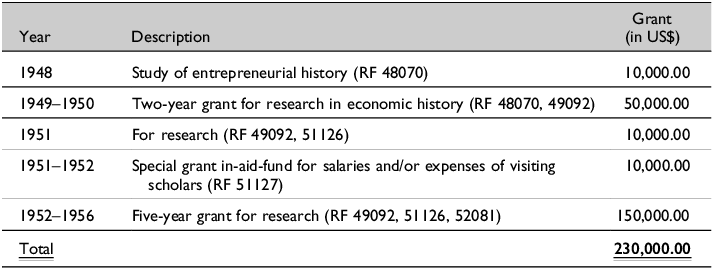
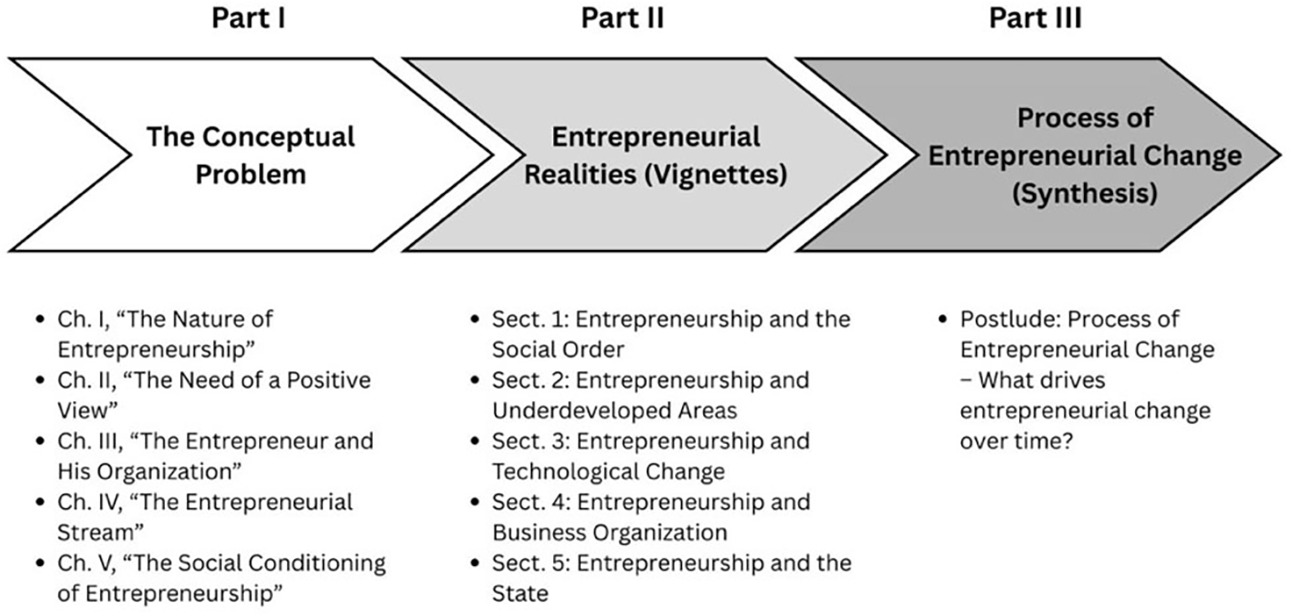
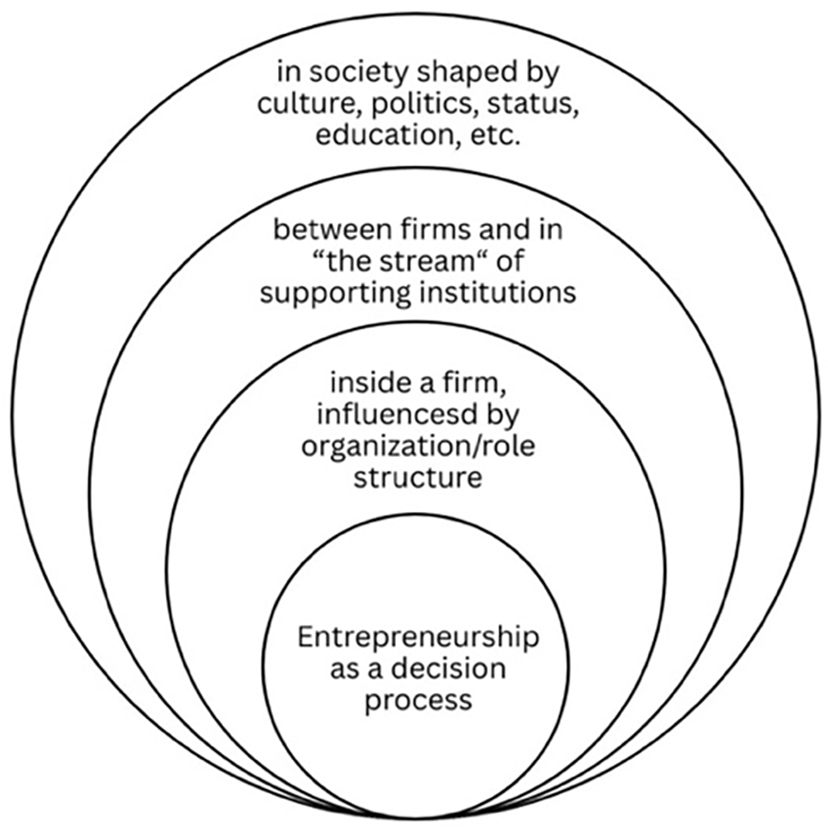

 Open access

