Antibiotic use is an important contributor to the spread and emergence of antibiotic resistance, and the majority of human-related antibiotic use occurs in outpatient care.1,Reference Suda, Hicks, Roberts, Hunkler, Matusiak and Schumock2 Emergency departments (EDs) and urgent care centers (UCCs) are major providers of outpatient care in the United States. In 2017, there were 139 million ED visits and an estimated 89 million UCC visits.3,Reference Dolan4 Antibiotic prescriptions were linked to 14% of ED visits and more than one-third of UCC visits.Reference Palms, Hicks and Bartoces5,Reference Stenehjem, Wallin and Fleming-Dutra6 In both settings, patients with viral acute respiratory infections (ARIs) are frequently prescribed unnecessary antibiotic therapy.Reference Palms, Hicks and Bartoces5,Reference Stenehjem, Wallin and Fleming-Dutra6
An antibiotic stewardship toolkit designed for EDs and UCCs recommends that stewardship efforts focus primarily on monitoring and reducing unnecessary antibiotic use for likely viral ARIs, such as acute bronchitis and upper respiratory tract infections (URIs).Reference May, Yadav and Gaona7,Reference Yadav, Meeker and Mistry8 However, this approach ignores another potential opportunity for antibiotic stewardship—antibiotic prescribing for the many infections for which antibiotics are indicated. In ambulatory care settings, including EDs and UCCs, few multicenter studies have assessed how often antibiotic use is appropriate when a bacterial infection is present and an antibiotic is indicated.Reference Suda, Livorsi and Goto9–Reference Fleming-Dutra, Hersh and Shapiro11
In this study, we evaluated ED and UCC antibiotic-prescribing practices for both viral and potentially bacterial ARIs across clinicians and across sites. Our study was conducted within the Veterans Health Administration (VHA), the largest integrated healthcare system in the United States.
Methods
The Institutional Review Board of the University of Iowa and the Research and Development Committee of the Iowa City Veterans Affairs Health Care System approved this study and waived informed consent.
We constructed a retrospective cohort of all ED and UCC encounters across the VHA from January 1, 2016, to December 31, 2018. This included 92 VHA medical centers with only an ED, 21 with only a UCC, and 16 with an ED and UCC at some point during the study period. We included ED and UCC visits if they occurred on weekdays (Monday–Friday) during daytime hours (7:00 a.m. to 3:00 p.m.). The rationale for this time frame was that many sites used non-VA pharmacies to fill outpatient prescriptions during off hours, and we did not have comprehensive access to these non-VA data. Patients were excluded if they were admitted to a VA hospital within 24 hours of the visit.
Using the Veterans’ Affairs Informatics and Computing Infrastructure (VINCI), we collected national administrative data from the VHA’s Corporate Data Warehouse (CDW), including patient demographics, antibiotics, comorbidities, and diagnoses as defined by International Classification of Diseases, Tenth Revision (ICD-10) codes.
We collected data on all oral outpatient antibiotics prescribed and dispensed between the visit intake time and up to 24 hours after the visit. We obtained data only on antibacterial agents, as defined by the National Healthcare Safety Network’s Antimicrobial Use and Resistance Module.12
ICD-10 classification scheme
We used ICD-10 codes assigned to individual visits to classify each visit into 1 of 3 tiers, based on established methodology (Supplementary Table 1 online).Reference Fleming-Dutra, Hersh and Shapiro11,Reference Chua, Fischer and Linder13 Tier 1 diagnoses included conditions for which antibiotics are almost always indicated (ie, appropriate), such as nonpurulent skin and soft-tissue infections (SSTIs), urinary tract infections (UTIs), and pneumonia. Tier 2 diagnoses included conditions for which antibiotics are sometimes indicated (ie, potentially appropriate), such as purulent SSTIs, sinusitis, and chronic obstructive pulmonary disease (COPD). Tier 3 diagnoses included conditions for which antibiotics are almost never indicated (ie, inappropriate). Tier 3 was further divided into 2 groups: (1) tier 3 respiratory diagnoses, which included acute bronchitis, nonsuppurative otitis media, allergy conditions, asthma, and URIs, and (2) tier 3 nonrespiratory diagnoses, which included all conditions with no appropriate or potentially appropriate antibiotic indication that was not already classified as tier 3 (respiratory). For each tier, we assessed the frequency at which antibiotics were prescribed across clinicians and across sites. If there was >1 ICD-10 code associated with a visit and the codes belonged to different tiers, the code from the lowest tier was assigned to the visit.
In addition to using these tiers, we also measured the frequency of antibiotic prescribing for visits associated with diagnostic codes of certain common infection types.
Assessment of guideline-concordant management
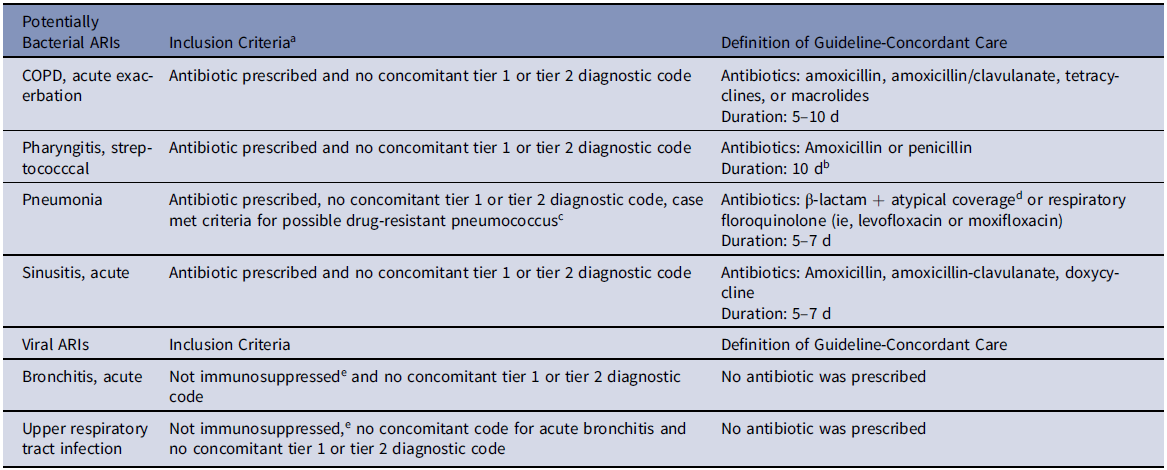
We assessed guideline-concordant management for 2 viral ARIs (acute bronchitis and URIs) and 4 bacterial or potentially bacterial ARIs (hereafter “potentially bacterial ARIs”): acute exacerbations of COPD, acute sinusitis, streptococcal pharyngitis, and bacterial pneumonia. Criteria for guideline concordance were based on professional guidelines, as summarized in Table 1.Reference Volgelmeir, Agusti and Anzueto14–Reference Harris, Hicks and Qaseem18 For viral ARIs, we only assessed guideline concordance in patients who were not immunosuppressed and did not have a concomitant tier 1 or tier 2 diagnosis. Because chronic lung diseases are included in tier 2, patients with these conditions were excluded from our assessment of viral ARIs. For viral ARIs, a decision to not prescribe antibiotics was deemed guideline concordant. For potentially bacterial ARIs, we only assessed guideline concordance in patient visits prescribed an antibiotic; we excluded patient visits who had a second tier 1 or 2 diagnosis in addition to the infection type under evaluation. For potentially bacterial ARIs, guideline concordance was based on antibiotic selection and duration. To facilitate comparison to other published studies, we considered amoxicillin to be a guideline-concordant agent for acute sinusitis.Reference Hersh, Fleming-Dutra, Shapiro, Hyun and Hicks19 For COPD, we applied the 2015 Global Initiative for Chronic Obstructive Lung Disease (GOLD) guidelines to all 3 years even though the GOLD guidelines were updated in 2017.
Criteria for Assessing Guideline-Concordant Management

Note. ARI, acute respiratory tract infections; COPD, chronic obstructive pulmonary disease.
a Patients were assigned to an ARI-type based on the ICD-10 code associated with the patient visit.
b A single dose of intramuscular benzathine penicillin G was considered to be a guideline-concordant duration.
c Risk factors for drug-resistant Streptococcus pneumoniae were based on the 2007 guidelines on community-acquired pneumonia from the Infectious Diseases Society of American and the American Thoracic Society. These included chronic heart, lung, liver, or renal disease; diabetes mellitus; alcoholism; malignancies; immunosuppressing conditions or use of immunosuppressing drugs. We did not capture data on asplenia or antibiotic use within the prior 3 months, nor did we distinguish community-acquired pneumonia from healthcare-associated pneumonia.
d β-lactam options included amoxicillin, amoxicillin-clavulanate, cefuroxime, or cefpodoxime. Options for atypical coverage were azithromycin, clarithromycin, or doxycycline.
e Immunosuppression was defined as having a diagnosis of lymphoma, leukemia, HIV/AIDs, or organ transplantation during the 12 months prior to the visit OR receipt of an immunosuppressive medication, which was defined as follows: prednisone or steroid equivalent at a dose ≥20 mg/day during the 30 d prior to the visit, chemotherapy within the 30 d prior to the visit, or an antirejection medication, biologic agent or a disease-modifying anti-rheumatic drug (DMARD) within the 3 mo prior to the visit.
Guideline concordance was assessed across clinicians and across sites. We assessed guideline concordance across all unique sites and for individual clinicians who had ≥10 qualifying visits for any given condition. However, the number of cases with streptococcal pharyngitis was too small to assess variation at the clinician level and the site level, so it was not included in further analyses.
We calculated a Pearson correlation coefficient to assess the correlation between 2 rates: (1) the frequency of guideline-concordant antibiotic selection and duration for potentially bacterial ARIs and (2) appropriate antibiotic nontreatment of viral ARIs. This correlation was assessed at the clinician level and at the site level. We used SAS Enterprise Guide version 7.1 software (SAS Institute, Cary, NC) for all data analyses.
Results
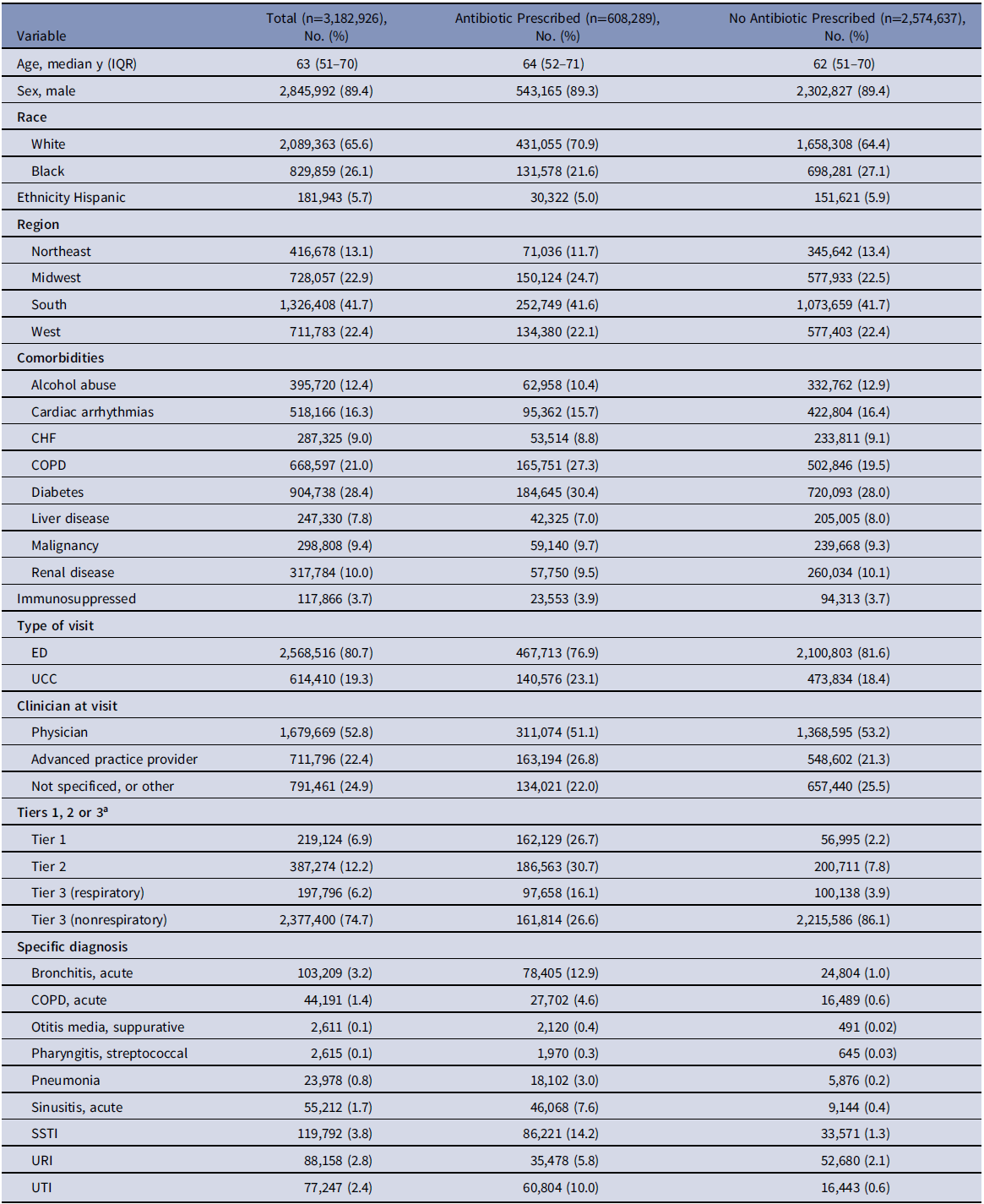
There were 3,182,926 patient visits across 129 sites from 2016 to 2018: 2,568,516 (80.7%) occurred in EDs and 614,410 (19.3%) occurred in UCCs. The mean patient age was 60.2 years (SD, 15.7), 89.4% were male, and 65.6% were white. A complete description of patient demographics is found in Table 2. The most common infections associated with visits across all sites were SSTIs (3.8%), acute bronchitis (3.2%), URIs (2.8%), and UTIs (2.4%).
Characteristics of Patient Visits to VHA Emergency Departments and Urgent Care Centers, 2016–2018

Note. IQR, interquartile range; COPD, chronic obstructive pulmonary disease; CHF, congestive heart failure; ED, emergency department; SSTI, skin and soft-tissue infection; UCC, urgent care center; URI, upper respiratory tract infection; UTI, urinary tract infection.
a There were 1,332 visits without an associated diagnostic code.
Antibiotic prescriptions
Antibiotics were prescribed to 608,289 (19.1%) visits, including 467,713 (18.2%) in EDs and 140,576 (22.9%) in UCCs. At the clinician level, physicians prescribed antibiotics for 18.5% of their visits compared to 22.9% for advanced practice providers (APPs).
In total, 643,421 antibiotic prescriptions were ordered; >1 antibiotic was prescribed at 5.8% of these antibiotic-prescribing visits. The most commonly prescribed antibiotics were amoxicillin/clavulanate (17.5%), macrolides (16.7%), tetracyclines (15.5%), cephalosporins (14.4%), and fluoroquinolones (13.0%). The median duration of antibiotic therapy was 7 days (IQR, 7–10).
Antibiotic prescribing by tiers and by diagnoses
Among all visits during which antibiotics were prescribed, 162,129 (26.7%) were classified as tier 1 (appropriate), 186,563 (30.7%) were tier 2 (potentially appropriate), and 259,472 (42.7%) were tier 3 (inappropriate), which included 97,658 (16.1%) for tier 3 (respiratory) and 161,814 (26.6%) for tier 3 (nonrespiratory). Only 125 antibiotic-prescribing visits (<0.01%) lacked any diagnostic code.
Overall, antibiotics were prescribed for 74.0% of tier 1 visits, including 80.2% of visits for UTIs, 75.5% for bacterial pneumonia, and 75.3% for streptococcal pharyngitis. Antibiotics were prescribed for 48.2% of tier 2 visits, including 83.4% of visits for sinusitis, 81.1% for suppurative otitis media, and 62.1% for acute exacerbations of COPD. Antibiotics were prescribed for 49.4% of tier 3 (respiratory) visits and 6.8% of tier 3 (nonrespiratory) visits. Table 3 shows clinician-level and site-level variations in antibiotic prescribing based on tiers. Supplementary Table 2 (online) and Supplementary Figures 1–2 (online) show antibiotic prescribing based on diagnosis tiers stratified by physicians versus APPs and EDs versus UCCs. Supplementary Tables 3 and 4 (online) show antibiotic prescribing based on diagnostic tiers stratified by US census region and year of visit, respectively.
Frequency of Antibiotic Prescribing for Patient Visits in EDs and UCCs Based on Tier of Diagnosis,a Stratified by Clinician and Medical Center, 2016–2018

Note. IQR interquartile range.
a Tier 1 diagnoses included conditions for which antibiotics are almost always indicated (ie, appropriate). Tier 2 diagnoses included conditions for which antibiotics are sometimes indicated (ie, potentially appropriate). Tier 3 diagnoses included conditions for which antibiotics are almost never indicated (ie, inappropriate). Specific diagnoses within each tier are shown in Supplementary Table 1.
b Only clinicians with ≥100 visits within the specified tier were included.
Guideline-concordant management
Criteria for assessing guideline concordance were applied (Table 1). There were 81,629 qualifying visits for acute bronchitis and 74.1% were prescribed an antibiotic. In patients prescribed an antibiotic for bronchitis, the median duration of antibiotic therapy was 7 days (IQR, 5–10), and the most common antibiotic agents prescribed were azithromycin (47.3%) and doxycycline (23.9%). There were 73,176 qualifying URI visits and 35.5% of these patients were prescribed an antibiotic. In patients prescribed an antibiotic for URI, the median duration of antibiotic therapy was 7 days (IQR 5–10), and again, the most common antibiotics prescribed were azithromycin (45.9%) and doxycycline (12.6%).
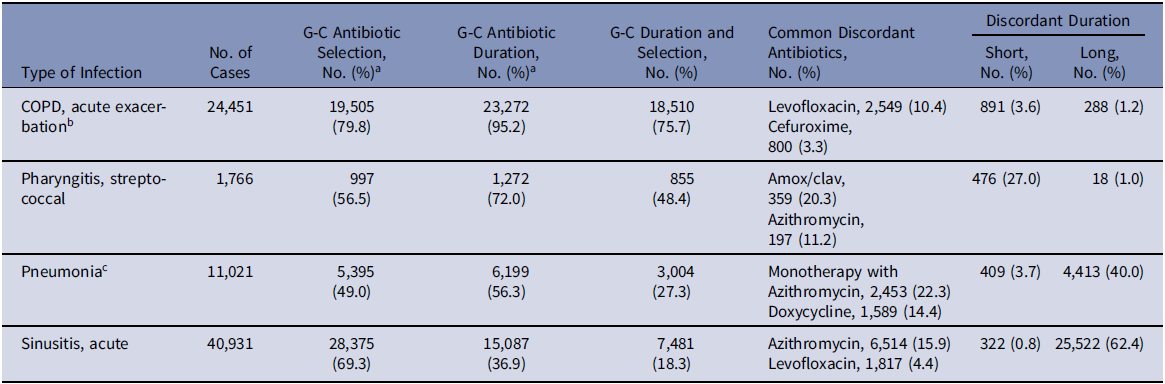
Table 4 shows guideline-concordant antibiotic selection and duration in patients prescribed an antibiotic for potentially bacterial ARIs. Guideline concordance was highest for acute exacerbations of COPD (75.7%) and lowest for acute sinusitis (18.3%). Monotherapy with azithromycin was a common discordant antibiotic regimen in patients with pneumonia and risk factors for drug-resistant Streptococcus pneumoniae (22.3% of cases). Azithromycin monotherapy was also prescribed in 11.2% of patients with streptococcal pharyngitis and 15.9% with acute sinusitis. Antibiotic duration was excessively long in 40.0% of patients with pneumonia and 62.4% with sinusitis. The median duration of antibiotic therapy was 7 days (IQR, 5–10) for pneumonia and 10 days (IQR, 7–10) for sinusitis.
Frequency of Guideline-Concordant Management for 4 Common Bacterial or Potentially Bacterial Infections Seen Across 129 EDs and UCCs, 2016–2018

Note. COPD, chronic obstructive pulmonary disease; G-C guideline-concordant.
a Criteria for defining guideline-concordant antibiotic selection and duration are defined in Table 1.
b The 2017 guidelines from the Global Initiative for COPD recommend 5–7 d of antibiotics for acute exacerbations of COPD that meet specified criteria. If guideline-concordant duration is defined as 5–7 d, then 14,511 (59.4%) had guideline-concordant duration; 891 (3.6%) were prescribed a duration that was too short and 9,047 (37.0%) were prescribed a duration that was too long.
c Only patients with risk factors for drug-resistant Streptococcus pneumoniae were included.
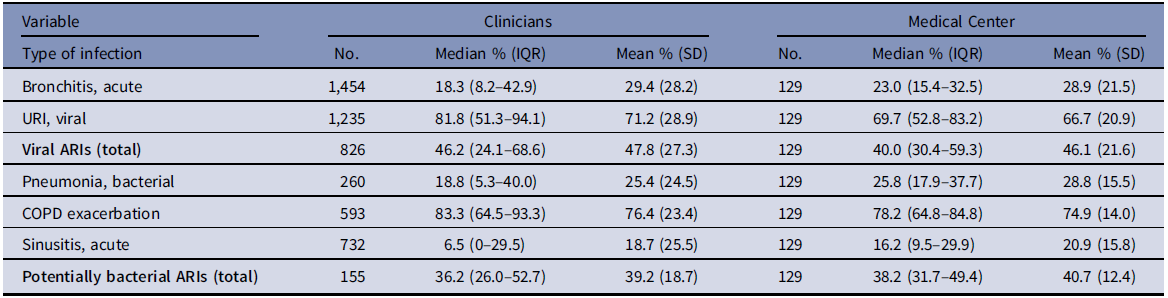
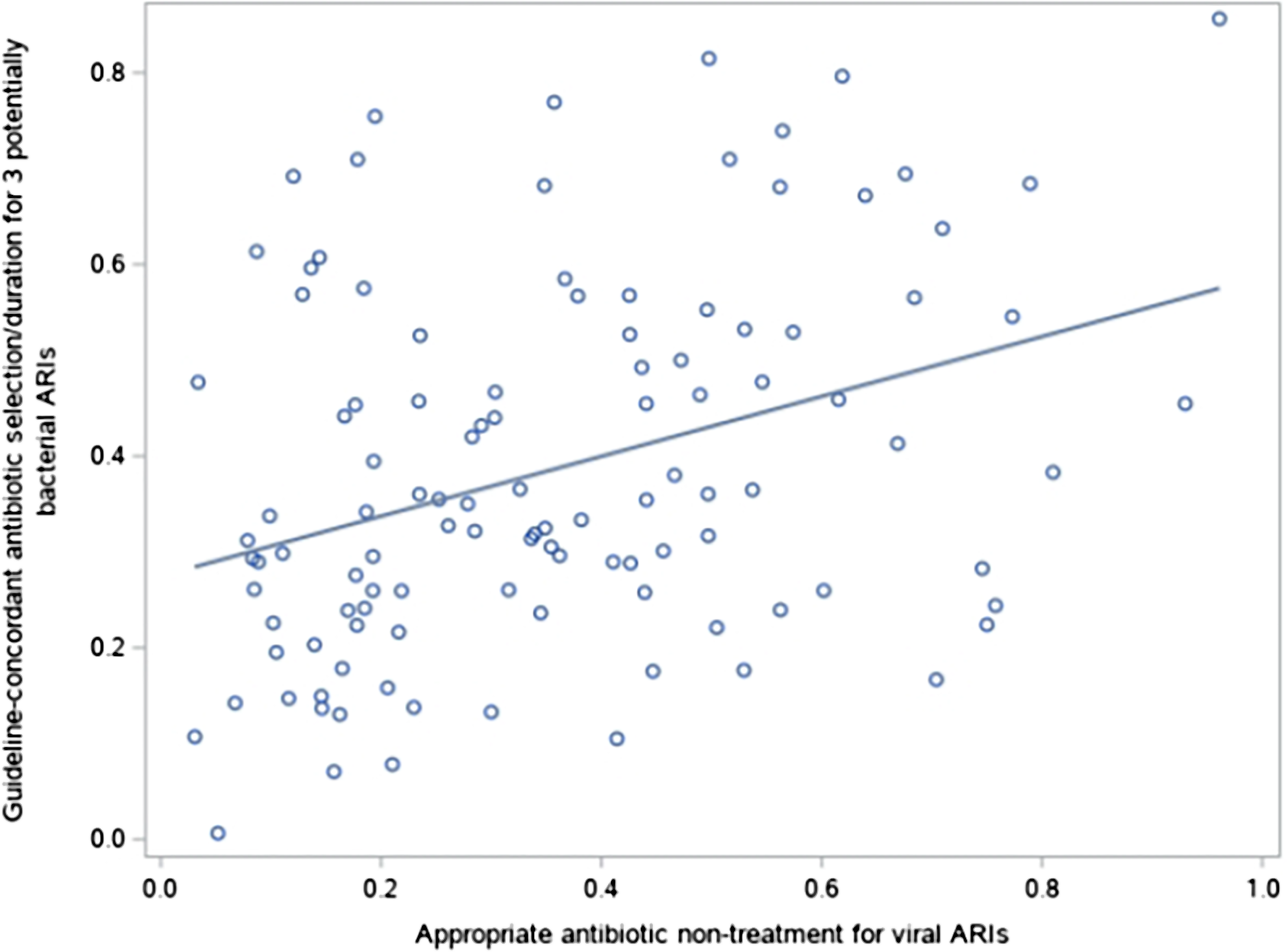
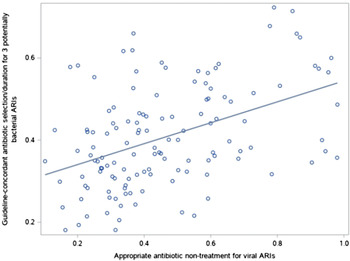
Table 5 shows variation in guideline-concordant antibiotic prescribing for common infection types at the clinician and site levels. For 112 clinicians who had ≥10 qualifying visits for each of the 5 infection types, the mean rate of appropriate antibiotic nontreatment for viral ARIs was 35.6% (SD, 21.7) and the mean rate of guideline-concordant antibiotic selection and duration for 3 potentially bacterial ARIs was 38.6% (SD, 19.1). We detected a weak, positive correlation between these clinician-level rates (r = 0.35; 95% CI, 0.18–0.51; P = .0001) (Fig. 1). For 129 sites, the mean rate of appropriate antibiotic nontreatment for viral ARIs was 46.1% (SD, 21.6) and the mean site-level rate of guideline-concordant antibiotic selection and duration for 3 potentially bacterial ARIs was 40.7% (SD, 12.4). We detected a weak positive correlation between these site-level rates (r = 0.44; 95% CI, 0.29–0.57; P < .0001) (Fig. 2).
Clinician-Level and Site-Level Variation in Guideline-Concordant Management for 5 Common Infections Seen in 129 EDs and UCCs During 2016–2018, Stratified by Clinician and Medical Centera

Note. ARI, acute respiratory tract infection; COPD, chronic obstructive pulmonary disease; IQR, interquartile range; SD, standard deviation; URI, upper respiratory tract infection.
a Guideline-concordant management for viral ARIs involved not prescribing antibiotics. For potentially bacterial ARIs, guideline-concordant management implies both guideline-concordant antibiotic selection and duration, as shown in Table 1.
Correlation among clinicians between appropriate antibiotic nontreatment for viral ARIs and guideline-concordant antibiotic selection/duration for 3 potentially bacterial ARIs (n = 112 clinicians).

Correlation among sites between appropriate antibiotic nontreatment for viral ARIs and guideline-concordant antibiotic selection/duration for 3 potentially bacterial ARIs (n = 129 VHA sites).

Discussion
In this national cohort of ED and UCC visits within the VHA, we found many opportunities to improve antibiotic prescribing. These opportunities include (1) discouraging unnecessary antibiotic use for viral ARIs, especially acute bronchitis and (2) ensuring appropriate antibiotic selection and duration for potentially bacterial ARIs, such as sinusitis and pneumonia.
It was encouraging to see a positive, albeit weak, correlation between trends in antibiotic nontreatment for viral ARIs and guideline-concordant antibiotic selection and duration for potentially bacterial ARIs at both the clinician and site levels. This finding suggests that clinicians and sites that were more likely to apply guideline recommendations for potentially bacterial ARIs were also more likely to apply guideline recommendations (ie, not prescribing antibiotics) for viral ARIs. Based on these associations, we speculate that optimal antibiotic prescribing may reflect clinician-specific behaviors as well as institutional norms and/or antibiotic stewardship interventions. During the study period, the VHA’s Academic Detailing Service released an Acute Respiratory Tract Infection dashboard that provides clinician-level data on antibiotic use for uncomplicated ARIs. Use of this dashboard has likely varied across sites and, in turn, may have contributed to some of the interfacility variation that our study has demonstrated.
Our study’s findings agree with prior reports on EDs and UCCs that have demonstrated substantial clinician-level variation in antibiotic-prescribing and frequent antibiotic use for likely viral ARIs.Reference Palms, Hicks and Bartoces5,Reference Stenehjem, Wallin and Fleming-Dutra6,Reference Bohan, Madaras-Kelly and Pontefract10,Reference Fleming-Dutra, Hersh and Shapiro11,Reference Jones, Sauer and Jones20,Reference Donnelly, Baddley and Wang21 In line with prior VHA studies, we detected a high rate of antibiotic use for acute bronchitis and sinusitis.Reference Bohan, Madaras-Kelly and Pontefract10,Reference Jones, Sauer and Jones20 In general, making comparisons across studies is difficult because some studies did not stratify antibiotic-prescribing rates by site of care (eg, ED versus primary care). Other studies included children or only persons aged <65 years, which resulted in a cohort different than our study’s older population of veterans.
Unlike our study, few prior studies have assessed guideline concordance of antibiotic prescribing in patients with potentially bacterial ARIs who were discharged from EDs and UCCs.Reference Suda, Livorsi and Goto9 A multicenter study that used claims data found that 37% of adult patients in EDs and office-based care settings who were treated for acute sinusitis received first-line antibiotics, which is lower than we detected.Reference Hersh, Fleming-Dutra, Shapiro, Hyun and Hicks19 Studies that have used manual chart reviews have also found low rates of guideline-concordant antibiotic prescribing in patients discharged from the ED, including in cases of pneumonia and sinusitis.Reference Bohan, Madaras-Kelly and Pontefract10,Reference Stoll, Feltz and Ebert22–Reference Meyer, Lund, Heintz, Alexander, Egge and Livorsi25
We found that only 74% of visits with an appropriate indication for antibiotics actually received an antibiotic prescription. Although this finding is surprising, it is consistent with a large nationwide ambulatory care study that reported antibiotic use in only 72% of UTIs and 61% of cases of pneumonia.Reference Fleming-Dutra, Hersh and Shapiro11 We suspect that these patients with an apparent antibiotic indication were already taking an antibiotic or had completed their antibiotic prescription at the time of their visit.
Our study’s findings have at least 2 broader implications for antibiotic stewardship efforts in the United States. First, although prior work has largely focused on developing outpatient stewardship metrics for unnecessary antibiotic use in viral ARIs, our findings demonstrate that metrics for antibiotic-appropriate indications are also needed.Reference May, Yadav and Gaona7 A recent white paper on research needs in antibiotic stewardship written by members of the Society for Healthcare Epidemiology of America identified the development of outpatient stewardship metrics as an important research target.Reference Morris, Calderwood and Fridkin26 Second, using the data from our study, antibiotic stewardship programs may be able to develop further strategies for evaluating and improving antibiotic prescribing for potentially bacterial ARIs. A few of the most easily achieved improvements include limiting excessive duration of antibiotic therapy for sinusitis and improving empiric antibiotic selection in patients with pneumonia. The literature on effective antibiotic stewardship interventions for EDs and UCCs is limited, but strategies that have proven to be effective include clinical decision support tools, audit and feedback, and dedicated ED pharmacists.Reference Yadav, Meeker and Mistry8,Reference Pulia, Redwood and May27 Implementing stewardship processes in ambulatory care will be important in meeting The Joint Commission’s new regulatory requirements.
We analyzed nearly 3.2 million visits across a national cohort to assess antibiotic prescribing in EDs and UCCs, healthcare settings that have been largely overlooked by prior antibiotic stewardship initiatives. We also assessed antibiotic prescribing for potentially bacterial ARIs while prior studies largely only focused on viral ARIs. However, our study has limitations. First, we acknowledge that certain nuances of antibiotic decision making are overlooked by our use of administrative data, such as allergies, recent antibiotic therapy, and risk factors for antibiotic resistance. Nevertheless, the presence of these factors would be expected to warrant deviation from guideline recommendations in a minority of cases, and we found frequent deviation from guidelines. Second, the use of administrative data assumes the diagnosis was accurately made and accurately coded in the medical record. Although we were unable to validate the appropriateness of the clinician’s diagnosis, the diagnostic code should reflect the condition that the clinician sought to treat. Prior studies have reported that the positive predictive value of outpatient diagnostic codes was ~80% for acute bronchitis and pneumonia and >90% for acute exacerbations of COPD.Reference Maselli and Gonzales28–Reference Ginde, Tsai, Blanc and Camargo30 Outpatient diagnostic codes have been leveraged in several large population-based reports on antibiotic use in ambulatory care.Reference Fleming-Dutra, Hersh and Shapiro11,Reference Chua, Fischer and Linder13,Reference Jones, Sauer and Jones20 Third, for potentially bacterial ARIs, we were not able to assess whether patients actually met criteria for antibiotic use.Reference Volgelmeir, Agusti and Anzueto14,Reference Chow, Benninger and Brook17 Although antibiotic prescribing for sinusitis and AE-COPD likely occurred even when antibiotic-use criteria were not met, guideline recommendations for antibiotic selection and duration were frequently not followed when these conditions were coded. It would be challenging to validate antibiotic-use criteria using electronic data. Fourth, we could not account for prescriptions written overnight or during weekends due to lack of available data from non-VA pharmacies. These data could have provided useful results, as EDs and UCCs could be understaffed or rely on less experienced clinicians during off hours. Fifth, we excluded several types of patients from our assessments of guideline concordance, and to assess guideline-concordance, we used guidelines that were available in January 2016. Newer versions of these guidelines may have had different recommendations, and applying these updated guidelines would have changed our results. Finally, this study was performed exclusively in the VHA and may not be generalized to other settings.
In conclusion, we have shown that optimizing antibiotic use for potentially bacterial ARIs should be a stewardship target in EDs and UCCs. Our results reveal that sites and clinicians that more frequently applied guideline recommendations to withhold antibiotics for viral ARIs were also more frequently applying guideline recommendations for antibiotic selection and duration for potentially bacterial ARIs. These findings are encouraging; they suggest that some clinicians and some centers have more broadly optimized antibiotic prescribing. However, overall guideline-concordant antibiotic prescribing was low, which demonstrates that there are still tremendous opportunities for antibiotic stewardship in these settings.
Conflict of interest
The authors report no conflicts of interest.
Acknowledgments
The views expressed in this article are those of the authors and do not necessarily reflect the position or policy of the Department of Veterans’ Affairs or the United States government.
Financial support
This work was supported in part by a Career Development Award (DJL) from the VA Health Services Research and Development Service (grant no. CDA 16-204).
Supplementary material
To view supplementary material for this article, please visit https://doi.org/10.1017/ice.2020.1289