Introduction
Continuous selection of broilers and layers for better feed efficiency and egg production is aligned with an alteration of nutrient requirements. As a result, some of the nutrients previously considered as non-essential may become essential. Therefore, re-evaluating the L-carnitine requirement of poultry has become a necessity. During the past two decades there have been more than 70 articles published dealing specifically with L-carnitine application on poultry production, but there are contradictory reports. For example, 17 studies found no effect of L-carnitine on performance of birds, although almost 14 studies noticed that growth rate improved by L-carnitine feeding. It is timely that these conflicting reports are collated and reviewed. It is not the intention of this review to discuss in detail the chemistry, structure and synthesis of L-carnitine, as this has already been completed (Bremer, Reference BREMER1962, Reference BREMER1983; Borum, Reference BORUM1983; Bieber, Reference BIEBER1988). The aim of this article is to provide a review of the important applications in poultry production by emphasizing the current knowledge of the importance of L-carnitine in poultry nutrition, and to provide useful information for researchers and students. The nutritional functions of L-carnitine will add to the few available review articles of the poultry industry.
A brief history and chemistry of L-carnitine
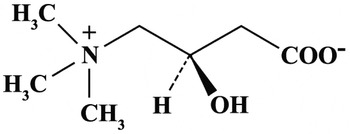
L-carnitine (C7H15NO3) (Figure 1) is present in both plasma and tissue as free carnitine, or bound to fatty acids as acyl carnitine derivatives (Tomita and Sendju, Reference TOMITA and SENDJU1927; Bieber, Reference BIEBER1988). It is a water soluble zwitterionic compound (161.2 MR). It has been recognized to be physiologically important for nearly a century; yet, its fundamental roles in some aspect such as health and disease remain to be fully understood (Mast et al., Reference MAST, BUYSE and GODDEERIS2000).
Due to its asymmetric structure at carbon two, the molecule possesses optical activity and exists in two enantiomeric forms. The D-form does not occur in nature but may be obtained by chemical synthesis (Liedtke et al., Reference LIEDTKE, NELLIS, WHITESELL and MAHAR1982) and only the L-form is biologically active and occurs in nature and it has pharmacological and nutritional properties (Mardones et al., Reference MARDONES, RIOS, VALCARCEL and CICCIARELLI1999). However, subsequent investigations have shown that D-Carnitine acts as a competitive inhibitor of active uptake systems for the L isometric form (Walter and Schaffhauser, Reference WALTER and SCHAFFHAUSER2000).
Structural formula for L-carnitine (L-3-hydroxy-4-N-trimethylaminobutyrate) (Metzler and Metzler, Reference METZLER and METZLER2003).

Synthesis and deficiency of L-carnitine
The first convincing evidence for carnitine biosynthesis in animals was obtained from chick embryos, which contained significant amounts of carnitine. None was found in eggs (Bremer, Reference BREMER1983). Endogenous biosynthesis (in the kidney, liver and brain) occurs in small amounts, but appears sufficient to cover normal requirements. However, this is not the case in neonates (Borum, Reference BORUM1983; Rebouche, Reference REBOUCHE1992; Keralapurath et al., Reference KERALAPURATH, KERIS, CORZO, BENNETT, PULIKANTI and PEEBLES2010a), where birds are under conditions of stress, higher performance and diets rich in fat (Rebouche and Paulson, Reference REBOUCHE and PAULSON1986; Rebouche, Reference REBOUCHE1992; Rabie and Szilagyi, Reference RABIE and SZILAGYI1998; Harpaz et al., Reference HARPAZ, BECKER and BLUM1999).
Two essential amino acids (lysine and methionine), three vitamins (ascorbate, niacin in the form of nicotin amide adenine dinucleotide and vitamin B6), and reduced iron (Fe2+) are required as cofactors for the enzymes involved in the metabolic pathway of L-carnitine synthesis (Borum, Reference BORUM1983; Rebouche, Reference REBOUCHE1992; Leibetseder, Reference LEIBETSEDER1995). Reports of nutritional L-carnitine deficiency are rare (Harpaz, Reference HARPAZ2005), and accumulation of toxic acyl-coenzyme (CoA) metabolites in mitochondria due to L-carnitine deficiency impair the citrate cycle, gluconeogenesis and fatty acid oxidation (Knuttel-Gustavsen and Harmeyer, Reference KNUTTEL-GUSTAVSEN and HARMEYER2007; Harpaz, Reference HARPAZ2005).
Bioavailability and absorption of L-carnitine
Mechanisms of the absorption of L-carnitine in the small intestine have not yet been completely clarified (Fischer et al., Reference FISCHER, VARADY, HIRCHE, KLUGE and EDER2009). Some reports have suggested that both, active (dependent on Na+) and passive mechanisms are involved in intestinal L-carnitine transport (Shaw et al., 1983; Matsuda et al., Reference MATSUDA, YUASA and WATANABE1998; Garcia-Miranda et al., Reference GARCIA-MIRANDA, DURAN, PERAL and ILUNDAIN2005). More recently, functional and molecular studies revealed that L-carnitine crosses the intestinal apical membrane by an active, Na+-dependent and electrogenic transport system that resembles the organic cation/carnitine transporter (OCTN2) which is a member of the solute carrier 22A gene family, localised on the apical membrane of cells (Kato et al., Reference KATO, SUGIURA, SUGIURA, WAKAYAMA, KUBO, KOBAYASHI, SAI, TAMAI, ISEKI and TSUJI2006). Another transporter that may be involved in the intestinal absorption of L-carnitine is ATB0,+ (the sodium- and chloride-coupled amino acid transporters). ATB0,+ is already known as a high-affinity transporter of cationic and neutral amino acids that also functions as a low-affinity/high-capacity transporter for carnitine (Nakanishi et al., Reference NAKANISHI, HATANAKA, HUANG, PRASAD, LEIBACH, GANAPATHY and GANAPATHY2001; Hatanaka et al., Reference HATANAKA, HARAMURA, FEI, MIYAUCHI, BRIDGES, GANAPATHY, SMITH, GANAPATHY and GANAPATHY2004).
General functions of L-carnitine
Although L-carnitine participates in several metabolic reactions, its most widely known function is probably interference in the overall context of normal fatty acid metabolism (Zeyner and Harmeyer, Reference ZEYNER and HARMEYER1999; Hoppel, Reference HOPPEL2003). A major factor controlling the oxidation of fatty acids is the rate of entry into the mitochondria. While some long-chain fatty acids (perhaps 30% in total) enter mitochondria and are converted to CoA derivatives in the matrix, the majority are ‘activated’ to acyl-CoA derivatives on the inner surface of the outer membranes of the mitochondria (Metzler and Metzler, Reference METZLER and METZLER2003). L-carnitine serves as the carrier that transports activated long chain fatty acyl groups across the inner mitochondrial membrane. L-carnitine acyl transferases are able to reversibly transfer an activated fatty acyl group from CoA to the hydroxyl group of carnitine to form an acylcarnitine ester. The reaction is reversible, so that the fatty acyl CoA derivative can be regenerated from the carnitine ester. Carnitine palmitoyl transferase I (CPTI; also called carnitine acyltransferase I, CATI), the enzyme that transfers long-chain fatty acyl groups from CoA to carnitine, is located on the outer mitochondrial membrane (Figure 2). Fatty acylcarnitine crosses the inner mitochondrial membrane with the aid of a translocase. The fatty acyl group is transferred back to CoA by a second enzyme, carnitine palmitoyl transferase II (CPTII or CATII). The carnitine released in this reaction returns to the cytosolic side of the mitochondrial membrane by the same translocase that brings fatty acylcarnitine to the matrix side. Long-chain fatty acyl CoA, now located within the mitochondrial matrix, is a substrate for β-oxidation (Smith et al., Reference SMITH, MARKS and LIEBERMAN2004).
Another function of L-carnitine is metabolic function, in this case L-carnitine act as a buffer for excess acyl residues. This function of L-carnitine beneficial effects to the cell, e.g., by elevating the mitochondrial acetyl-CoA/CoA ratio. Sufficiently high concentrations of free CoA are required to keep the substrate flux of the citric acid cycle at a high level (Zeyner and Harmeyer, Reference ZEYNER and HARMEYER1999).
A study conducted by Owen et al. (Reference OWEN, JIT, MAXWELL, NELSSEN, GOODBAND, TOKACH, TREMBLAY and KOO2001) showed that supplementation of the pigs’ diet with L-carnitine increased protein accretion. Branched chain keto acids (BCKA) are derived from transamination of branched-chain amino acids (BCAAs; valine, leucine, and isoleucine) by BCAA transaminase (Misra et al., Reference MISRA, JOHNSON and MEDEIROS2004). L-carnitine has also ability to enhance the oxidation of these derivatives and its effect was markedly dependent on its concentration (Van Hinsbergh et al., Reference VAN HINSBERGH, VEERKAMP and CORDEWENER1980). L-carnitine can interfere in the oxidation of BCKA (Hoppel, Reference HOPPEL2003). Paul and Adibi (Reference PAUL and ADIBI1978) concluded that L-carnitine stimulates decarboxylation of BCAA by increasing the conversion of their ketoanalogues into carnitine esters.
Role of L-carnitine in the transport of long-chain fatty acids through the inner mitochondrial membrane. Long-chain acyl-CoA can not pass through the inner mitochondrial membrane, but its metabolic product, acylcarnitine, can (Murray et al., Reference MURRAY, GRANNER, MAYES and RODWELL2003).

Effect of L-carnitine on poultry
Before addressing the topic, a summary of some researches which are related to nutritional effects of L-carnitine supplementing in poultry diet and their brief results has been shown in (Table 1).
performance
Feed efficiency remains the most important trait in commercial animal breeding programs, as feed represents 60-70% of the cost of raising an animal to market weight. As mitochondria are responsible for producing 90% of cellular energy, some of the variations in broiler growth performance and phenotypic expression of feed efficiency may be due to differences or inefficiencies in mitochondrial function (Bottje et al., Reference BOTTJE, TANG, IQBAL, CAWTHON, OKIMOTO, WING and COOPER2002). As it mentioned previously, L-carnitine is attributed to an increase in utilization of energy as a result of the increase in fatty acid oxidation by the mitochondria (Bremer, Reference BREMER1962; Reference BREMER1983). Some publications seek to justify the use of L-carnitine in the diet of poultry by claiming that L-carnitine has benefical effects on performance, although researchers differ in their opinion of the magnitude or existence of such benefits in published reports.
There was no noticeable influence of L-carnitine supplementation on live weight, feed consumption or feed conversion ratio in broilers (Cartwright, Reference CARTWRIGHT1986; Leibetseder, Reference LEIBETSEDER1995; Buyse et al., Reference BUYSE, JANSSENS and DECUYPERE2001; Lien and Horng, Reference LIEN and HORNG2001; Xu et al., Reference XU, WANG, MAO, ZHAN and HU2003; Cevik and Ceylan, Reference CEVIK and CEYLAN2005; Kidd et al., Reference KIDD, MCDANIEL, PEEBLES, BARBER, CORZO, BRANTON and WOODWORTH2005; Golzar Adabi et al., Reference GOLZAR ADABI, RAHIMI and MOGHADDAM2006b; Buyse et al., Reference BUYSE, QUIRINE, NIEWOLD, KLASING, JANSSENS, BAUMGARTNER and GODDEERIS2007; Corduk et al., Reference CORDUK, CEYLAN and ILDIZ2007; Kidd et al., 2009; Keralapurath et al., Reference KERALAPURATH, KERIS, CORZO, BENNETT, PULIKANTI and PEEBLES2010a,b). This was also the case for broiler and turkey (Barker and Sell, Reference BARKER and SELL1994). There was no variation in body weight in hatching chicks (Zhai et al., Reference ZHAI, NEUMAN, LATOUR and HESTER2008a), in laying hens (Deng et al., Reference DENG, WONG and NOLAN2006, Ghods-Alavi et al., Reference GHODS-ALAVI, SAMIE and JAHANIAN2010), in ducks (Arslan et al., Reference ARSLAN, CITIL and SAATCI2003), and in Japanese quails (Coturnix coturnix) (Arslan et al., Reference ARSLAN, CITIL and SAATCI2004a, Sarica et al., Reference SARICA, CORDUK and KILINC2005 and 2007).
However, Buyse et al. (Reference BUYSE, JANSSENS and DECUYPERE2001) concluded that lack of L-carnitine effects on broiler performance did not mean that L-carnitine supplementation cannot have beneficial effects in other circumstances. In view of the elevated proportional heart weights with addition of 100 mg/kg L-carnitine to basal diet, it can also be argued that L-carnitine is a potential agent for reducing the incidence of metabolic diseases in broiler chickens.
In contrast, studies on pigeons (Janssens and De Wilde, Reference JANSSENS and DE WILDE1994; Janssens et al., Reference JANSSENS, HESTA, DEBAL, DEBRAEKELEER and DE WILDE2000a; Janssens et al., Reference JANSSENS, DE RYCKE, HESTA and De WILDE1999), native Turkish geese (Arslan et al., Reference ARSLAN, CITIL and SAATCI2004b), pheasant (Suchy et al., Reference SUCHY, STRAKOVA and VITULA2008), broiler chickens and laying hens (Lettner et al., Reference LETTNER, ZOLLITSCH and HALBMAYER1992; Rabie et al., 1997a,b,c; Rabie and Szilagyi, Reference RABIE and SZILAGYI1998; Rodehutscord et al., Reference RODEHUTSCORD, TIMMLER and DIECKMANN2002; Kita et al., Reference KITA, KATO, YAMAN, OKUMURA and YOKOTA2002; Golzar Adabi et al., Reference GOLZAR ADABI, MOGHADDAM, TAGHIZADEH, NEMATOLLAHI and FARAHVASH2006a; Geng et al., Reference GENG, LI and GUO2007; Nouboukpo et al., Reference NOUBOUKPO, TONA, AGBONON, GBEASSOR, BUYSE and DECUYPERE2010) noticed improved live weight, feed consumption, feed conversion efficiency or egg production by feeding dietary L-carnitine.
A diet of 50 mg/kg dietary L-carnitine in broiler chicks from 0-3 week of old, resulted in an improved feed conversion ratio (Cevik and Ceylan, Reference CEVIK and CEYLAN2005). Considering this and similar reports it would appear that using L-carnitine during early stages of growth in poultry has a better effect on performance (Rabie and Szilagyi, Reference RABIE and SZILAGYI1998; Kita et al., Reference KITA, KATO, YAMAN, OKUMURA and YOKOTA2002).
No benefits due to L-carnitine supplementation on egg production was observed by Rabie et al. (Reference RABIE, SZILAGYI and GIPPER1997c), Corduk et al. (Reference CORDUK, SARICA, CALIKOGLU and KIRALAN2008), Zhai et al. (Reference ZHAI, NEUMAN, LATOUR and HESTER2008b), Ghods-Alavi et al. (Reference GHODS-ALAVI, SAMIE and JAHANIAN2010). In contrast, Golzar Adabi et al. (Reference GOLZAR ADABI, MOGHADDAM, TAGHIZADEH, NEMATOLLAHI and FARAHVASH2006a, Reference GOLZAR ADABI, RAHIMI, KAMALI and KARIMI TORSHIZI2007) in an experiment with broiler breeders hens that lasted from 29-34 weeks, found that L-carnitine had no effect on egg production of broiler breeder hens except at 33 and 34 weeks of age (p<0.01). In a study with black neck ostriches determined that the supplementary diet with 500 mg/kg L-carnitine increased (P<0.01) the egg production percentage (Hajibabaei et al., Reference HAJIBABAEI, SHIVAZAD, GOLZAR ADABI, LAVAF and N.2008). There are some hypotheses about mode of action of L-carnitine in improvement of the growth performance that can be summarised as thus. The improvements in body weight gain of broilers observed in some studies due to added dietary L-carnitine may be attributable to an improved utilization of dietary nitrogen, achieved through more efficient fat oxidation by L-carnitine. The increased fatty acid oxidation induced by L-carnitine may result in decreased availability of long-chain fatty acids for esterification to triacylglycerols, and at the same time can raise the mitochondrial level of acetyl-CoA. Such a situation can affect the activity of pyruvate carboxylase, which is an acetyl-CoA-dependent enzyme that can supply carbon chains for amino acid biosynthesis (Cyr et al., Reference CYR, EGAN, BRINI and TREMBLAY1991).
Enhanced growth by additional carnitine maybe partially associated with its amino-acid-sparing function in addition to its role in fatty acid metabolism. Theoretically, an exogenous carnitine supply can decrease the need for biosynthesis of carnitine from methionine, thus sparing methionine for other biological functions (La Count et al., Reference LA COUNT, DRACKLEY and WEIGEL1995). Indeed, addition of carnitine to low protein diets did have a methionine-sparing effect and promote growth in rats (Khairallah and Wolf, Reference KHAIRALLAH and WOLF1965). An increased supply of carnitine has been shown to spare branched-chain amino acids from oxidation in tissues (Owen et al., Reference OWEN, NELSSEN, GOODBAND, WEEDEN and BLUM1996).
Another hypothesis concerns the positive effect of L-carnitine on performance (Kita et al., Reference KITA, KATO, YAMAN, OKUMURA and YOKOTA2002). It is known that insulin-like growth factors (IGFs) stimulate growth rate in a number of animal species (Beccavin et al., Reference BECCAVIN, CHEVALIER, COGBURN, SIMON and DUCLOS2001), Kita et al. (Reference KITA, KATO, YAMAN, OKUMURA and YOKOTA2002) found that when dietary L-carnitine concentrations were increased from 0 to 1000 mg/kg in an adequate protein diet (200 g/kg), plasma IGF-I concentrations were increased (a 70 amino acid peptide) having the potency to stimulate body weight gain (Kita et al., Reference KITA, NAKAJIMA and NAKAGAWA2005) and thereby growth of chicken was improved.
As previously mentioned, discrepancies in growth performance in response to additional dietary L-carnitine may result from different levels of L-carnitine supplementation, L-carnitine level of basal diet, nutritional and physiological status of the animal, the nutrient composition of their diets (such as dietary lipid and protein intake, supply or absence of essential amino acids), the possible effects of enzymatic breakdown of branched chain amino acids, sparing effects of L-carnitine and its considerable precursors (lysine and methionine), interspecies differences, age, sex, feeding programme, and managerial or environmental conditions of the animals (Rabie et al., Reference RABIE, SZILAGYI and GIPPER1997c; Owen et al., Reference OWEN, JIT, MAXWELL, NELSSEN, GOODBAND, TOKACH, TREMBLAY and KOO2001; Rodehutscord et al., Reference RODEHUTSCORD, TIMMLER and DIECKMANN2002; Xu et al., Reference XU, WANG, MAO, ZHAN and HU2003; Celik and Ozturkcan, Reference CELIK and OZTURKCAN2003). Fischer et al. (Reference FISCHER, VARADY, HIRCHE, KLUGE and EDER2009) recently documented that the reason for these contradictory results is unknown.
abdominal fat
Determining abdominal fat weight as a predictor of total body fat in poultry (Sonaiya, Reference SONAIYA1985) in feeding studies is a well established methodology. In some feeding trials with L-carnitine there have been statistical differences in both abdominal and mesenterical fat percentage, meaning that the L-carnitine group produced lower levels of body fat compared to the control group (Rabie et al., 1997a; Rabie and Szilagyi, Reference RABIE and SZILAGYI1998; Buyse et al., Reference BUYSE, JANSSENS and DECUYPERE2001; Xu et al., Reference XU, WANG, MAO, ZHAN and HU2003; Kidd et al., Reference KIDD, MCDANIEL, PEEBLES, BARBER, CORZO, BRANTON and WOODWORTH2005; Ghods Alavi et al., 2010). However other studies have shown no beneficial effects of L-carnitine supplementation of diets of pigs, broilers or turkeys relative to utilization or deposition of fat (Benevenga et al., Reference BENEVENGA, STEINMAN-GOLDWORTHY, CRENSHAW and ODLE1989; Barker and Sell, Reference BARKER and SELL1994; Leibetseder, Reference LEIBETSEDER1995). Some researchers found a higher fat level in the breast of 150 mg/kg L-carnitine supplemented group than the 50 and 100 mg/kg groups (p<0.05) (Cevik and Ceylan, Reference CEVIK and CEYLAN2005).
The L-carnitine effect on decreasing abdominal fat concurs together with the L-carnitine role in biological systems. Theoretically, diets supplemented with L-carnitine, therefore, should enhance the oxidation of these fatty acids, thereby decreasing their availability for esterification to triacylglycerols and storage in the adipose tissues (Bremer, Reference BREMER1983; Lien and Horng, Reference LIEN and HORNG2001; Xu et al., Reference XU, WANG, MAO, ZHAN and HU2003).
albumen height and haugh unit score of egg
Rabie et al. (Reference RABIE, SZILAGYI and GIPPER1997c) reported that improvements in albumen height and Haugh unit score of eggs laid by L-carnitine supplemented hens may be due to the higher metabolic rate in the magnum and/or higher activity of the shell gland. Optimum activity of shell glands of uterus may result in the better integrity of eggshells, consequently lower carbon dioxide (CO2) evaporation from eggshell pores. Beside of this effect, it appears that L-carnitine may play a role in the synthesis or secretion of β-ovomucin by promoting metabolic rate in the magnum (Peebles et al., Reference PEEBLES, KIDD, MCDANIEL, TANKSLEY, PARKER, CORZO and WOOD WORTH2007; Zhai et al., Reference ZHAI, NEUMAN, LATOUR and HESTER2008b; Daskiran et al., Reference DASKIRAN, A.G., CENGIZ, TATLI and SARI2009). As reported previously the quality of the albumen is largely dependent on the amount of ovomucin, particularly β-ovomucin, secreted by the magnum. It is reported that β-ovomucin is mainly responsible for the gelatinous properties of the thick albumen gel (Robinson, Reference ROBINSON1987; Kita et al., Reference KITA, NAKAJIMA and NAKAGAWA2005; Daskiran et al., Reference DASKIRAN, A.G., CENGIZ, TATLI and SARI2009) . Improvements in albumen height and Haugh unit score of eggs was also observed by Kita et al. (Reference KITA, NAKAJIMA and NAKAGAWA2005); Rezaei et al. (Reference REZAEI, DEHGHANI, GHAFFARI and HAGHNAZAR2008) and Ghods Alavi et al. (2010).
effect of L-carnitine on immunity of poultry
Interestingly, the selection of today's modern chickens for growth and egg production has resulted in diminished inflammatory response, but selection for more robust immune responses results in diminished growth and egg production. It has recently been proposed that certain nutrients can be used as a means to specifically prevent infectious diseases in poultry (Kogut, Reference KOGUT2009). Besides taking part in the transfer of long-chain fatty acids, early experiments have demonstrated the immune-modulating properties of L-carnitine (De Simone et al., Reference DE SIMONE, FERRARI, LOZZI, MELI, RICA and SORICE1982; Famularo and De Simone, Reference FAMULARO and DE SIMONE1995). Leghorn-type chickens offered the 1000 mg/kg in feed had a higher (p<0.05) primary antibody level against sheep red blood cells (SRBC) than either of the other two groups (0 and 100 mg/kg) at week 12. These birds had a higher (p<0.05) relative thymus weight than the control at week 12 (Deng et al., Reference DENG, WONG and NOLAN2006). Similarly, Golzar Adabi et al. (Reference GOLZAR ADABI, RAHIMI and MOGHADDAM2006b) reported that the addition of 100 mg/kg L-carnitine to a broiler diet caused significantly (p<0.05) higher antibody response to SRBC and Newcastle disease virus (p<0.01) than non-treated birds. Furthermore, additional dietary 100 mg/kg L-carnitine had the highest bursa of fabricius, spleen (p<0.05) and thymus weight (p<0.01) by comparison with the other groups (0, 25 and 75 mg/kg L-carnitine in diet, respectively). Buyse et al. (Reference BUYSE, QUIRINE, NIEWOLD, KLASING, JANSSENS, BAUMGARTNER and GODDEERIS2007) confirmed that 100 mg/kg L-carnitine in the diet of broiler chickens modulates the innate immune response in terms of an enhanced acute phase protein response and L-carnitine has glucocorticoid-like effect.
With regard to the role of L-carnitine in cellular immunity, it was present in lymphocytes at high concentrations, and inhibited apoptosis of those immune cells (Famularo and De Simone, Reference FAMULARO and DE SIMONE1995; Moretti et al., Reference MORETTI, ALESSE, DI MARZIO, ZAZZERONI, RUGGERI, MARCELLINI, FAMULARO, STEINBERG, BOSCHINI, CIFONE and DE SIMONE1998) and enhanced their proliferative response to mitogens (De Simone et al., Reference DE SIMONE, FAMULARO, TZANTZOGLOU, TRINCHIERI, MORETTI and SORICE1994). Furthermore, higher levels of antibodies specific to influenza and pneumococcal vaccines were produced in L-carnitine-supplemented mice (Shug and Gravenstein, Reference SHUG and GRAVENSTEIN1996). Dietary L-carnitine supplementation significantly (p<0.05) increase total Ig G and Ig A but not Ig M responses after both primary and the secondary immunisation with bovine serum albumin in broilers (Mast et al., Reference MAST, BUYSE and GODDEERIS2000). Supplementation increased the primary bovine serum albumin specific Ig G and Ig M responses in pigeons (Janssens et al., Reference JANSSENS, MAST, GODDEERIS, COX, HESTA and DE WILDE2000b). To explain the impact of L-carnitine on the bovine serum albumin-specific serum Ig level, several possibilities are available: enhancement of lymphocyte activation or proliferation, an increased lifetime span of the lymphocytes, or a combination of these mechanisms.
There is, however, paucity of research reports delineating specific requirement estimates of L-carnitine for a given immune function in poultry. The mode of immuno-modulation by L-carnitine is not clear, but modified metabolism of lipids (La Count et al., Reference LA COUNT, DRACKLEY and WEIGEL1995) and enhanced secretion of hormones, such as insulin, insulin-like growth factor-I (Musser et al., Reference MUSSER, GOOD BAND, TOKACH, OWEN, NELSSEN, BLUM, DRITZ and CIVIS1999) and tri-iodothyronine (T3) (Buyse et al., Reference BUYSE, JANSSENS and DECUYPERE2001) may be involved, along with several lipids (Miles and Calder, Reference MILES and CALDER1998) and hormones (Marsh, Reference MARSH1994) are immuno-modulators and some researchers such as Liu et al. (Reference LIU, HEAD, KURATSUNE, COTMAN and AMES2004) believe that L-carnitine and some of its acyl esters act as very potent reactive oxygen species scavengers and are known to have immuno-modulary properties in mammalian as well as in avian species (Buyse et al., Reference BUYSE, QUIRINE, NIEWOLD, KLASING, JANSSENS, BAUMGARTNER and GODDEERIS2007).
antioxidant effect of L-carnitine in poultry
Oxidative stress constitutes an important mechanism that leads to biological damage, and it is regarded as one of the causes of several pathologies that affect poultry growth (Fellenberg and Speisky, Reference FELLENBERG and SPEISKY2006). The main free radicals are those species which superoxide anion (O2-•) and hydroxyl radical (HO•) derived from oxygen, and nitric oxide (NO•) derived from nitrogen, but non free-radical species are H2O2 and singlet oxygen (O2). These various forms of activated oxygen can cause oxidative damage in tissues and cells (Surai et al., Reference SURAI, BLESBOIS, GRASSEAU, CHALAH, BRILLARD, WISHART, CEROLINI and SPARKS1998; Fellenberg and Speisky, Reference FELLENBERG and SPEISKY2006; Gulcin, Reference GULCIN2006). For provide defences against free radicals body is naturally produced antioxidant enzymes, such as: glutathione peroxidase, glutathione reductase, catalase, thioredoxin reductase, superoxide dismutase, haem oxygenase and biliverdin reductase (Gulcin, Reference GULCIN2006). Besides these enzymes, diet can be used as a vehicle to provide compounds with antioxidant properties as they have special place in the maintenance of high production performance in poultry (Surai, Reference SURAI2007). The antioxidant role of dietary L-carnitine has been studied extensively in the last 15 years. Mode of antioxidant effect of L-carnitine can be summarized as following:
L-carnitine prevents oxidative stress and regulates nitric oxide, the cellular respiration (Brown, Reference BROWN1999) and the activity of enzymes involved in defence against oxidative damage (Kremser et al., Reference KREMSER, STANGL, PAHAN and SINGH1995).
L-carnitine acts as an antioxidant in the protection of glutathione peroxidase, catalase and superoxide dismutase enzymes from further peroxidative damage (Kalaiselvi and Panneerselvam, Reference KALAISELVI and PANNEERSELVAM1998).
L-carnitine may have functions associated with scavenging of free radicals in cellular sites (Kalaiselvi and Panneerselvam, Reference KALAISELVI and PANNEERSELVAM1998; Atroshi et al., Reference ATROSHI, RIZZO, BIESE, VEIJALAINEN, SALONIEMI, SANKARI and ANDERSSON1999; Rani and Panneerselvam, Reference RANI and PANNEERSELVAM2002; Citil et al., Reference CITIL, GUNES, ATAKISI, OZCAN, TUZCU and DOGAN2005).
L-carnitine supplementation has improved the glutathione and total thiol (-SH) status. L-carnitine has been shown to exert thiol and methionine sparing activity, and it is suggested it can be improved the antioxidant status in tissues, since L-carnitine increases glutathione peroxidase (GSH) levels (Di Giacomo et al., Reference DI GIACOMO, LATTERI, FICHERA, SORRENTI, CAMPISI, CASTORINA, RUSSO, PINTURO and VANELLA1993; Kalaiselvi and Panneerselvam, Reference KALAISELVI and PANNEERSELVAM1998).
L-carnitine is associated with buffering of excess acetyl-CoA, which in itself can cause free radicals formation and potentially toxic to the cells, and it was reported that L-carnitine has a protective effect on lipid peroxidation by reducing the formation of hydrogen peroxide (Agarwal and Said, Reference AGARWAL and SAID2004; Bayraktar et al., Reference BAYRAKTAR, PASAOGLU, PASAOGLU, KAYMAZ, BIBEROGLU and KULAKSIZOGLU2008).
The production of highly reactive oxygen species is catalysed by free iron through Haber-Weiss reaction (Haber and Weiss, Reference HABER and WEISS1934). L-Carnitine and its esters inhibits the microsomal peroxidation and it has a role in chelating free Fe2+ ions available for ascorbic acid to induce lipid peroxidation and by this way it reduces free radical generation (Arduini, Reference ARDUINI1992; Kalaiselvi and Panneerselvam, Reference KALAISELVI and PANNEERSELVAM1998; Dayanandan et al., Reference DAYANANDAN, KUMAR and PANNEER2001).
L-carnitine could prevent oxidative damage by increasing oxygen utilization and protecting from adenosine triphosphate (ATP) depletion (Di Giacomo et al., Reference DI GIACOMO, LATTERI, FICHERA, SORRENTI, CAMPISI, CASTORINA, RUSSO, PINTURO and VANELLA1993).
By its shuttle effect in the outer mitochondrial membrane (Bremer, Reference BREMER1983; Borum, Reference BORUM1987; Rebouche, Reference REBOUCHE1992; Mast et al., Reference MAST, BUYSE and GODDEERIS2000), L-carnitine profoundly influences both skeletal muscle and myocardial fatty acid oxidation, and maintains low pools of fatty acid (acyl)-coenzyme A compounds, which are potentially toxic (Bremer, Reference BREMER1962, Reference BREMER1983).
effect of L-carnitine on reproduction
A major component of broiler industry success has been the improvement in efficiency reached due to genetic selection programs applied to the parental stock. The industry anticipates that genetic improvement will continue with birds growing faster and yielding more meat. However, it is recognized that this intense selection has been accompanied by reduced reproductive efficiency and a fertility decline likely due to subfertile males within breeder flocks, to the point that male fertility may potentially become a limiting factor for growth of the broiler industry in the near future (Reddy and Sajadi, Reference REDDY and SAJADI1990; Barbato, Reference BARBATO1999). The precise causes of this fertility reduction have not been yet determined, although it has been suggested to be related to the changes in male physical conditions and behaviour, both of which that may have impaired male vigour and mating ability.
The sperm plasma membrane plays a very active function in sperm fertilisation capacity (Lenzi et al., Reference LENZI, PICARDO, GANDINI and DONDERO1996). Since the 19th century, many researchers have reported that lipids contributing to the membrane structure of spermatozoa have a major role in the metabolism, cold sensitivity, motility and viability of spermatozoa and their ability to fertilise the female gamete (Kelso et al., Reference KELSO, CEROLINI, SPEAKE, CAVALCHINI and NOBLE1997; Surai et al., Reference SURAI, BLESBOIS, GRASSEAU, CHALAH, BRILLARD, WISHART, CEROLINI and SPARKS1998). In many animal species, the major lipid components of spermatozoa membrane are phospholipids, and they contain extremely high amounts of poly unsaturated fatty acid (PUFA) (Kelso et al., Reference KELSO, CEROLINI, SPEAKE, CAVALCHINI and NOBLE1997; Surai et al., Reference SURAI, BLESBOIS, GRASSEAU, CHALAH, BRILLARD, WISHART, CEROLINI and SPARKS1998). Therefore, spermatozoa are more susceptible to reactive oxygen species (ROS) induced damage because of abundant mitochondria in the middle-piece and high concentrations of PUFA in the membrane (Fujihara and Koga, Reference FUJIHARA and KOGA1984; Surai et al., Reference SURAI, BLESBOIS, GRASSEAU, CHALAH, BRILLARD, WISHART, CEROLINI and SPARKS1998; Sanocka and Kurpisz, Reference SANOCKA and KURPISZ2004).
The presence of high concentrations of long chain PUFA in the lipid structure of sperm cells requires efficient antioxidant systems to protect against peroxidative damage and sperm dysfunction (Alvarez and Storey, Reference ALVAREZ and STOREY1989). In most experiments, researchers generally agree on the beneficial effects of L-carnitine on poultry fertility. L-carnitine does this by increasing sperm quantity and quality. It is necessary to mention that L-carnitine can be removed from blood and released into epididymal lumen by active transporters (Enomoto et al., Reference ENOMOTO, WEMPE, TSUCHIDA, SHIN, CHA, ANZAI, GOTO, SAKAMOTO, NIWA, KANAI, ANDERS and ENDOU2002; Kobayashi et al., Reference KOBAYASHI, IROKAWA, MAEDA, TSUJI and TAMAI2005) which are regulated by androgens (Cooper et al., Reference COOPER, GUDERMANN and YEUNG1986a,b) and ultimately transported into spermatozoa (Jeulin and Lewin, Reference JEULIN and Lewin1996).
The ad libitum consumption of 500 mg/kg (Neuman et al., Reference NEUMAN, Lin and Hester2002) or 125 mg/kg (Zhai et al., Reference ZHAI, NEUMAN, LATOUR and HESTER2007) of dietary L-carnitine to white leghorn roosters increased sperm concentration and reduced sperm lipid peroxidation. In a study with mature male Japanese quail breeders Sarica et al. (Reference SARICA, CORDUK, ENSOY, BASMACIOGLU H. and KARATAS2007) reported that the supplementation of dietary L-carnitine at levels of 250 or 500 mg/kg to a basal diet significantly increased sperm viability of the mature male Japanese quail breeder. In another study conducted by Golzar Adabi et al. (Reference GOLZAR ADABI, RAHIMI, KAMALI and KARIMI TORSHIZI2007) semen quantity and quality significantly (p<0.01) increased in L-carnitine-fed broiler breeders. L-carnitine treated ostriches (250 and 500 mg kg-1) have increased sperm count, sperm motility, live sperm (p<0.05) (Golzar Adabi et al., Reference GOLZAR ADABI, HAJIBABAEI, FARAHVASH, LOTFOLLAHIAN and MOSLEMI POUR2008).
Possible mechanisms for these effects can be summarised as follows. Based on the knowledge of the action of L-carnitine on cellular energy metabolism and on its anti-apoptotic effect, L-carnitine contributes directly in sperm motility and may involve in successful maturation and metabolism of spermatozoa (Lenzi et al., Reference LENZI, LOMBARDO, SGRO, SALACONE, CAPONECCHIA, DONDERO and GANDINI2003; Agarwal and Said, Reference AGARWAL and SAID2004; Lenzi et al., Reference LENZI, SGRO, SALACONE, PAOLI, GILIO, LOMBARDO, SANTULLI, AGARWAL and GANDINI2004; Balercia et al., Reference BALERCIA, REGOLI, ARMENI, KOVERECH, MANTERO and BOSCARO2005). As the level of free L-carnitine in seminal plasma declines, the process of β-oxidation in sustentacular cells decreases, which may lead to a reduction of energy-dependent and can cause sperm function, such as motility and movement capacity, to be significantly decreased.
A direct effect of L-carnitine on the functionality of sertoli cells is also plausible, as observed by Palmero et al. (Reference PALMERO, BOTTAZZI, COSTA, MESSENI LEONE and FUGASSA2000) and Caviglia et al. (Reference CAVIGLIA, SCARABELLI and PALMERO2004). These researchers reported an increase in lipid oxidation, glycolysis, and expression of specific proteins involved in the regulation of insulin-like growth factor (IGF) activity and glucose utilization by in vitro cultured sertoli cells in response to L-carnitine. They concluded that the improvement in semen quality reported after in vivo treatments could be related to its interactions with sertoli cell functions.
Intra cellular production of ROS results in the immediate accumulation of lipid peroxides in the plasma membrane and cytosol of cells (Aitken et al., Reference AITKEN, HARKISS and BUCKINGHAM1993) and induces DNA damage in the sperm nucleus and mitochondria (Aitken et al., Reference AITKEN, DE IULIIS, FINNIE, HEDGES and MCLACHLAN2010). This accretion has been correlated with the impaired ability of sperm to partake in the acrosome reaction and sperm-oocyte fusion and maybe responsible for a reduction in motility and capacity for fertilisation (Aitken et al., Reference AITKEN, HARKISS and BUCKINGHAM1993; Aitken et al., Reference AITKEN, DE IULIIS, FINNIE, HEDGES and MCLACHLAN2010). L-carnitine, through its antioxidant properties, has been shown to increase the activity and levels of antioxidant enzymes, like SOD may protect sperm membranes from toxic oxygen metabolites and protect the cell normal morphous and physiologic function (Kalaiselvi and Panneerselvam, Reference KALAISELVI and PANNEERSELVAM1998; Neuman et al., Reference NEUMAN, Lin and Hester2002; Zhai et al., Reference ZHAI, NEUMAN, LATOUR and HESTER2007).
Testicular multinucleated giant cells are described as a ‘degenerative syndrome’ resulting presumably from the inability of tetraploid primary spermatocytes to complete meiotic division; thus, maturation arrests at the spermatid stage of development (Corrier et al., Reference CORRIER, MOLLENHAUER, CLARK, HARE and ELISSALDE1985; Neuman et al., Reference NEUMAN, Lin and Hester2002; Sarica et al., Reference SARICA, CORDUK, ENSOY, BASMACIOGLU H. and KARATAS2007). Multinucleated giant cells consist primarily of aggregates of degenerated spermatocytes and spermatids and are often sloughed into the lumen of seminiferous tubules (Sur et al., Reference SUR, DOSTER, CHRISTIAN, GALEOTA, WILLS, ZIMMERMAN and OSORIO1997; Neuman et al., Reference NEUMAN, Lin and Hester2002; Sarica et al., Reference SARICA, CORDUK, ENSOY, BASMACIOGLU H. and KARATAS2007). It has been reported that dietary L-carnitine decreased multinucleated giant cells per testes both in white leghorn roosters and mature quails (Neuman et al., Reference NEUMAN, Lin and Hester2002; Sarica et al., Reference SARICA, CORDUK, ENSOY, BASMACIOGLU H. and KARATAS2007). Roosters consuming 125 and 500 mg/kg dietary L-carnitine (Zhai et al., Reference ZHAI, NEUMAN, LATOUR and HESTER2007; Neuman et al., Reference NEUMAN, Lin and Hester2002 respectively) significantly (p<0.01) decreased malonaldehyde production per billion sperm, which is the primary stable by-product of lipid peroxidation. Additionally, these results emphasize antioxidant properties of L-carnitine that may preserve sperm membranes in cocks, thereby extending the life span of sperm.
L-carnitines protective role is further sustained by accelerating repair processes following physical (Amendola et al., Reference AMENDOLA, CORDELLI, MAURO and SPANO1991; Ramadan et al., Reference RAMADAN, ABD-ALLAH, ALY and SAAS-EL-DIN2002) and chemical (Palmero et al., Reference PALMERO, LEONE, PRATI, COSTA, MESSENI LEONE, FUGASSA and DE CECCO1990) damages on the testicular parenchyma.
effect of L-carnitine on embryonic growth and hatchability
All nutrients needed for embryogenesis are provided by the hen by the time the fertile egg is laid (Buyse et al., Reference BUYSE, JANSSENS and DECUYPERE2001). If nutritional deficiencies occur during the formation of the egg, it can have significant repercussions on the developing embryo (Moran, 2007). Hen diets are composed mainly of corn and soy, which contain low levels of L-carnitine (Buyse et al., Reference BUYSE, JANSSENS and DECUYPERE2001). Therefore, eggs contain little or no L-carnitine (Chiodi et al., Reference CHIODI, CIANI, KENTROTI, MACCARI, VERNADAKIS, ANGELUCCI and RAMACCI1994). Although L-carnitine biosynthesis increases during embryonic development, its levels are still much lower than those measured in adults because of the low activity of γ-butyrobetaine hydroxylase, the essential enzyme that catalyzes γ-butyrobetaine to L-carnitine (Borum, Reference BORUM1983; Rebouche, Reference REBOUCHE1992). For this reason, it is thought that the chick embryo may have limited capability for de novo synthesis of L-carnitine during incubation (Casillas and Newburgh, Reference CASILLAS and NEWBURGH1969). Due to the limited ability of young chicks to synthesise L-carnitine, supplementation to the diet at hatch may have prolonged beneficial effects to the chicks. Conversely, yolk lipids provide essential energy to growing embryos. In fact, approximately 90% of the total energy requirement of the developing embryo is derived from fatty acid oxidation of yolk lipids (Noble and Cocchi, Reference NOBLE and COCCHI1990). In other words, approximately 50% of the initial yolk lipids oxidized for energy production; the other 50% is incorporated into the body tissue and residual yolk of hatchlings (Lin et al., Reference LIN, CONNOR and ANDERSON1991).
Chick embryonic tissues contain high levels of PUFAs (Noble and Cocchi, Reference NOBLE and COCCHI1990; Speake et al., Reference SPEAKE, MURRAY and NOBLE1998). PUFAs are susceptible to lipid peroxidation caused by free radicals, which are produced by mitochondria because of the high metabolic rate of rapidly developing embryos (Surai, Reference SURAI1999). Oxidative stress stimulates free radical generation by an increased electron leakage from mitochondria electron transport system. Over-production of free radicals results in impaired intracellular milieu and disturbed metabolism in embryos (Guerin et al., Reference GUERIN, EL MOUATASSIM and MENEZO2001; Agarwal et al., Reference AGARWAL, GUPTA and SHARMA2005). As mentioned previously, L-carnitine work as an antioxidant to scavenge free radicals and supplementation of hen's diets increases egg yolk L-carnitine concentrations (Leibetseder, Reference LEIBETSEDER1995; Golzar Adabi et al., Reference GOLZAR ADABI, MOGHADDAM, TAGHIZADEH, NEMATOLLAHI and FARAHVASH2006a; Peebles et al., Reference PEEBLES, KIDD, MCDANIEL, TANKSLEY, PARKER, CORZO and WOOD WORTH2007) and improves embryo yolk lipid mobilisation (Peebles et al., Reference PEEBLES, KIDD, MCDANIEL, TANKSLEY, PARKER, CORZO and WOOD WORTH2007). Thus, the presence of L-carnitine in the fertile egg may decrease embryonic mortality by reducing oxidative stress during the hatch process, thereby increasing hatch rate.
In recent years there has been a tendency to utilise in ovo injections of L-carnitine into embryonated eggs. In single comb White Leghorns, when L-carnitine was injected in ovo in a 0.05 to 10 μmol/egg dose range on d 17 or 18 of incubation, it was shown to have no effect on hatchability, yolk sac weight, or body weight (Zhai et al., Reference ZHAI, NEUMAN, LATOUR and HESTER2008a). Nevertheless, bearing in mind its physiological benefits and the lack of any evidence for its toxicity in poultry, when injected in doses up to 10 μmol/egg, Zhai et al. (Reference ZHAI, NEUMAN, LATOUR and HESTER2008a) considered L-carnitine as a potential candidate for improving hatchability and grow-out performance of commercial layers when injected in ovo at concentrations higher than 10 μmol/egg (Keralapurath et al., Reference KERALAPURATH, CORZO, PULIKANTI, ZHAI and PEEBLES2010b). Effects of in ovo injection of L-carnitine on body weight and the moisture and nutrient biochemical concentrations of various organs and muscles of Ross × Ross 308 broiler chicks, hatched from eggs laid by a 28-wk-old breeder flock, were determined through to 48 d post-hatch. Eggs containing live embryos were injected with L-carnitine (0.5, 2.0, or 8.0 mg dissolved in 100 μl of a commercial diluent) into the amnion on d 18 of incubation using an automated egg injector. The authors concluded that in ovo injection of hatching eggs with L-carnitine may decrease liver glucose and increase pipping muscle moisture concentrations of chicks on d 0 and d 3 posthatch (Keralapurath et al., Reference KERALAPURATH, KERIS, CORZO, BENNETT, PULIKANTI and PEEBLES2010a). Another study by Keralapurath et al. (Reference KERALAPURATH, CORZO, PULIKANTI, ZHAI and PEEBLES2010b) showed that, although in ovo injection did not significantly influence broiler grow-out performance or slaughter yield, L-carnitine has the potential for significantly (p<0.05) increasing incubation length and hatchability of broiler hatching eggs.
Levels of usage
Since L-carnitine is a relatively expensive feed supplement, the economic aspect and cost effectiveness must be considered if it is to be routinely applied in certain poultry applications. L-carnitine is available in some countries as an oral preparation of a commercialised form. From a scientific standpoint, L-carnitine can be used in broiler and laying hen diets, at inclusion levels up to 50-200 mg/kg, to support its positive effects (Lettner et al., Reference LETTNER, ZOLLITSCH and HALBMAYER1992; Rabie et al., Reference RABIE, SZILAGYI, GIPPERT, VOTISKY and GERENDAI1997b; Rabie and Szilagyi, Reference RABIE and SZILAGYI1998; Rodehutscord et al., Reference RODEHUTSCORD, TIMMLER and DIECKMANN2002; Xu et al., Reference XU, WANG, MAO, ZHAN and HU2003; Golzar Adabi et al., Reference GOLZAR ADABI, MOGHADDAM, TAGHIZADEH, NEMATOLLAHI and FARAHVASH2006a,b; Geng et al., Reference GENG, LI and GUO2007; Nouboukpo et al., Reference NOUBOUKPO, TONA, AGBONON, GBEASSOR, BUYSE and DECUYPERE2010). In order to increase semen quality and quantity some studies on breeder flocks has been done with 500 mg/kg L-carnitine (Neuman et al., Reference NEUMAN, Lin and Hester2002; Golzar adabi et al., Reference GOLZAR ADABI, RAHIMI, KAMALI and KARIMI TORSHIZI2007), although some experiments (Zhai et al., Reference ZHAI, NEUMAN, LATOUR and HESTER2007) suggest that long-term dietary treatment with 125 mg/kg L-carnitine is enough to obtain positive effects on sperm production.
Future directions and implications
The use of L-carnitine as an immuno-modulator needs further investigation of other immunological variables in order to establish a basis for possible practical applications; e.g. response potential of L-carnitine should be investigated following in ovo injection. Nutritional research has recently emphasised the role of nutrients on gene expression and on its regulation (Siddique et al., Reference SIDDIQUE, TANDON, AMBWANI, RAI and and ATREJA2009). Using new genomic technologies such as nutrigenomics, proteomics, transcriptomics and metabolomics, it may be possible to investigate the nutritional modulation of the L-carnitine and elucidate the biological effects of this supplement on cell function and gene expression simultaneously.
It may be useful to test whether the L-carnitine content of broiler feed affects the lysine and methionine requirement of the fast growing chicken. Investigate the bioavailability and the rate of absorption of L-carnitine supplements and their effects on the L-carnitine status of poultry in different ages and evaluate of absorption site and dose dependency.
L-carnitine synthesis and homeostasis in broilers and layers has not yet been studied. It seems that determination of the activity of γ-butyrobetaine dioxygenase, the enzyme which catalyses the last step of L-carnitine biosynthesis and concentrations of precursors for L-carnitine synthesis, trimethyllysine and γ-butyrobetaine will be a useful assessment of whether dietary L-carnitine supplementation could have an effect on L-carnitine biosynthesis. Future studies are required to explore dosimetric effects of L-carnitine supplementation in reproductive performance.
Acknowledgments
The authors would like to thank Lohmann Animal Health Company and Dr. Ahmad Ashrafpour in Iran. We gratefully acknowledge Miss E. Golzar Adabi (Goldis Educational Institute, Tabriz-Iran) for linguistic assistance in preparation of this manuscript.