THEATER, LITERARY PRODUCTION AND THE NAHUAS
For almost a century now there has been a lively discussion among Mesoamerican scholars about the existence or non-existence of Nahua theater before the Spanish conquest.Footnote 1 The prevailing voices do not deny that the indigenous population had a “strong theatrical instinct.” However, as Harris (Reference Harris and Carrasco2001:vol. I, p. 333) expressed it: “pre-Hispanic Mesoamerica yields little or no evidence of a literary theater in which a prescribed dramatic text was performed by a cast of actors before a single, stationary audience intended to hear every word, see every action, and limit its participation to attention and applause.” Similarly, Burkhart (Reference Burkhart1996:43) stated that “theater, in the sense of a prepared dialogue spoken by a group of role-playing individuals in front of an audience, did not exist among the Nahuas before the Spanish invasion. There were aspects of drama, however, in Nahua ritual and social life that provided a basis for Nahua appropiation of the new genre.”Footnote 2
Contrary to these opinions, Garibay, in much earlier studies of Nahua literature of allegedly pre-Hispanic origin, maintained that sixteenth-century documents contain traces of what can be considered pre-Hispanic dramatic texts. These can be found particularly in the corpus of Aztec songs, preserved mainly in two manuscripts, Cantares mexicanos (hereafter Cantares) and Romances de los señores de la Nueva España (hereafter Romances), but also scattered among other sources (e.g., Florentine Codex, Anales de Tlatelolco or Historia tolteca chichimeca; cf. León-Portilla Reference León-Portilla1994:24). Even though throughout his work Garibay emphasized that poetry itself, due to its close relation to music and dance, somehow implied a performance, he also pointed to a series of features that allowed him to identify “poemas dramáticos,” or “dramatic poems.” These are primaril the teponazcuicatl, “log-drum songs,” which, according to Garibay (Reference Garibay K.2007:35, 351), were “suitable for singing in a dance and rudimentary theatrical performance” (translation by author). What made them different from other non-theatrical songs was the rhythm indicated by the syllables ti qui to co. However, because the presence of these syllables in a song was not indispensable, Garibay classified these songs as dramatic based on the mention of the use of drums made in the text of the composition. Another diagnostic feature could be the changing voice of a person speaking, which resembled a dialogue (Garibay Reference Garibay K.2007:351–353).
Obviously, all of these opinions arise from the assumption that the theater is, above all, a literary theater. It is not my intention to enter into an epistemological discussion about what is and what is not “theater,” or whether this cultural phenomenon existed among the Nahuas before the contact. In the present paper, I will use the example of teponazcuicatl or “log-drum song” to demonstrate how the graphic layout of the text, made by the first scribes of Nahua oral discourse, established a sort of “paradigm” for their transcription which has been repeated from then on by the editors of modern publications. I will argue that this early generic classificaton created by the Europeans from the Western perspective and expressed in the graphic form (as well as in the glosses and commentaries), strongly influenced interpretation and perception of certain aspects of Nahua culture by scholars. Before that, however, I consider it necessary to begin with a brief presentation of the state of art on Nahua discursive genre.
CLASSIFICATORY APPROACH TO NAHUA DISCURSIVE GENRE: INTERNAL FEATURES AND GRAPHIC ARRANGEMENT
The first descriptions of Nahua verbal art, recorded alphabetically after the Conquest and which became the basis for the studies on what we know today as Nahua literature, date to the sixteenth century. Those who preserved this material and began to catalogue and classify it, were either Spaniards or acculturated mestizos or indigenous people, educated in accordance with the methods of the Old World. For this reason, they viewed the Nahua verbal legacy a priori through Eurochristian lenses, which did not necessarily coincide with the indigenous perspective. The same problem occurs in some contemporary studies on this corpus, initiated in the late nineteenth century. As Mignolo (Reference Mignolo2003:140) noted,
[a] large and increasing number of studies in the ethnography of speaking and on folk taxonomy over the past forty years have convincingly demonstrated that the Western categories of genres, so powerfully codified during the European Renaissance and transmitted to the colonial periphery as part of the package of spreading alphabetic literacy, are, like the Western notion of history, a regional conceptualization of discursive types and not a universal category by which non-Western discursive typologies could be established.
Such a classification served as a basis for Historia de la literatura náhuatl, one of the first thorough studies of this material (Garibay Reference Garibay K.2007). Garibay's pioneering book was the first attempt to cover the entirety of Nahua literary production, both pre- and post-Conquest, but, as its author asserted, it never pretended to be exhaustive; rather he regarded it as “just an attempt at what should be done” (Garibay Reference Garibay K.2007:48; translation by author). The basic categories that Garibay imposed on the material belonging to the pre-Hispanic period were poetry and prose. From the surviving examples of poetry he distinguished religious, lyric, epic, and dramatic poetry. Garibay's (Garibay Reference Garibay K.2007:329) own explanation leaves no doubt that what helped him to elaborate this classification were the precepts of Aristotle's Poetics. However, even though he tried to establish criteria to differentiate lyric from epic poetry by applying rules that worked well with European literature, in the end this approach to the Nahua material proved problematic (Garibay Reference Garibay K.2007:277). With regard to prose, Garibay established three main categories: didactic speeches called huehuetlatolli, historical prose, that is, alphabetical annals, and imaginative prose, in which he included mythological tales and fables, such as the stories featuring animals gathered by Sahagún in the Florentine Codex (Sahagún Reference Sahagún, Anderson and Dibble1963:7; cf. Garibay Reference Garibay K.2007:484–485). This first attempt to classify Nahua literary heritage produced a number of problems and its defects were recognized by the author himself. The proposed generic categories seem to overlap and intertwine. To give an example: within historical prose, Garibay pointed to some passages that he equated with Germanic sagas, the character of which allowed their classification as epic poetry; the presence of dialogical parts in these works, however, suggested that they also could have served as dramatic scripts (Reference Garibay K.2007:464–468).
While proposing this basic division of Nahua pre-Hispanic literature into poetry and prose, Garibay did not pay much attention to the visual and graphic rendition of Nahua oral discourse, but instead focused on internal features of the analyzed texts. As a result, in his classification, prose constituted the “core of all the production that is not adjusted to rhythm and meter” (núcleo de toda la producción no ajustada a la medida del ritmo y del metro), while poetry was defined as a “musical expression of thought” (Garibay Reference Garibay K.2007:60–61; translation by author). Nevertheless, a careful reading of the texts clasified by Garibay as prose makes it clear that the stylistic and rhetorical resources of these works endow them with a certain rhythm. Only in this way could they be easily memorized and, thus, preserved for future generations in an oral culture (cf. Ong Reference Ong1982, Zumthor Reference Zumthor1983). In a way, this also explains why it turned out to be impossible for Garibay to decide definitely to which of European or Aristotelian categories the examples of Nahua literature should be assigned.
As a matter of fact, there have been some attempts in modern editions of Nahua-written sources to reflect graphically the peculiarities of Nahua discursive strategies involved in verbal art, such as parallel structures or semantic couplets, which contribute to the poeticization of what traditionally has been viewed as indigenous prose. For instance, León-Portilla (Reference León-Portilla2002:81–90) transcribed in this way fragments of manuscripts in Nahuatl referring to the cycle of histories featuring the gods Quetzalcoatl or Huitzilopochtli. In the most recent edition of Popol Vuh, one of the best known Maya texts, which reflects the pre-Hispanic verbal art of the K'iche’, the translation of the text into Spanish published by Craveri differs substantially from the previous translations due to the unusual graphic and spacial organization of the text. The aim of Graveri's edition was “to share the linguistic analysis performed on the K'iche’ text so that the reader could peer into the semantic richness of the document, identify rhethorical structures and observe the dialogical pattern of the K'iche’ syntaxis” (Craveri Reference Craveri2013:xviii; translation by author). Thus, what in the previous edition by Tedlock (Reference Tedlock1996:95–96), was transcribed in a linear way, e.g., “At this the Xibalbans laughed again, they began to shriek with laughter, the laughter rose up like a serpent in their very cores, all the lords of Xibalba laughed themselves down to their blood and bones,” in Craveri's (Reference Craveri2013:63) version appears as follows:
Así, pues, se rieron otra vez los de Xib'alb'a
se les retorcían las tripas de la risa
se formó la culebra de la risa en sus corazones
en su sangre
en sus huesos
en la risa de todos los señores de Xib'alb'a.Footnote 3
As will be seen in due course, the spacial and graphic distribution of alphabetic transcriptions of Nahua oral discourse had a considerable influence on the classification of this material. The Western literate mind associates poetry with a text divided into verses, while prose is traditionally rendered as a linear string of words. Apparently for this reason in most of the editions (with the exception of Bierhorst's Reference Bierhorst1985 edition) of what is known as Nahuatl poetry, the text is put into verses and stanzas, even though such a division is not present in the sixteenth-century manuscripts (see below). To give an example, a fragment of a Nahua song from the folio 16v of the Cantares mexicanos, transcribed in Bierhorst's (Reference Bierhorst1985:182) publication as follows:
Xiahuilompehua xiahuiloncuican ticuicanitl huiya ma xonahuiacany, onelelquixtilon ypalnemohuani yyeo ayahui ohuaya etc.
Ma xonahuicani ye techonquimiloa ypalnemohua ye xochimaquiztica netotilo ye nehuihuio aya moxochiuh a ohuaya, yao yao ho ama y yehuaya ahuayyao aye ohuaya ohuaya
In Garibay's and León-Portilla's editions, this song has a more poetry-like graphic layout:
Xi ahuil om pehua xo ahuil on cuica
in ticuicanitl Huiya.
Ma xon ahuiacan in:
in on ellelquixtilo in ipalnemohuani. Yyeo ayahui Ohuaya
Ma xon ahuiacan in:
ye tech on quimiloa ipalnemohua.
Ye xochimaquiztica netotilo
ye nehuihuio Aya moxochiuh Ohuaya yaoho yaoho am aye Huaya
A ohuaya yao yaoho am aye Huaya [Garibay Reference Garibay K.1965:1].
Xiahuilompehua
xiahuiloncuica ticuicanitl huiya
ma xonahuiacan y,
onelelquixtilon Ypalnemohuani
yyeo ayahui ohuaya etcetera.
Ma xonahuiacan i
ye techonquimilo a Ypalnemohua
ye xochimaquiztica netotilo
ye nehuihuio aya moxochiuh
a ohuaya, yao yao ho ama y yehuaya ahuayyao aye ohuaya ohuaya [León-Portilla Reference León-Portilla, Portilla, Galeana, Baranda and Equiguas2011:196].
León-Portilla (Reference León-Portilla1983:30–31, translation by Jerome Offner) justifies such a procedure in the following way:
It is certain that examination of the cuicatl many times allows for the identification of specific stylistic procedures such as parallelism, or the repetition of the same thought at the end of different parts of the same cuicatl, which can be considered as the basis for structuring the components of its text in a particular form. Therefore, these units of expression have been divided into proposed lines or “verses” of parallel semantic content or [a unit] that appears to constitute a phrase or unitary expression that, in the way of a coda or conclusion, can be considered the natural closing of the poem.
However, even though the explanation is similar to that given by Craveri in her edition of the Popol Vuh, a question arises as to whether such a presentation of Nahua songs truly succeeds in rendering Nahua rhetorical structures as accurately as possible in an Indo-European language. There is a risk that it merely provides them with a visual form recognized in Western tradition as poetry, particularly because in the manuscripts of both Cantares mexicanos and Romances, as well as in Sahagún's (Reference Sahagún, Anderson and Dibble1981a) compilation of twenty sacred hymns included in the appendix to Book 2 of his Florentine Codex, there are no indications of verses or stanzas. The written register is continuous—the entire text is composed of what at the first sight looks like paragraphs and each “part” is similar to a phrase or a semantic unit. Karttunen and Lockhart (Reference Karttunen and Lockhart1980:16) called these parts “verses,” León-Portilla (Reference León-Portilla1983:29) used the term “units of expression” (unidades de expresión), Craveri (Reference Craveri2004:47), following Jakobson's theorical framework, prefers to consider such elements as “paradigmatic axes” (ejes paradigmáticos), whereas Stevenson (Reference Stevenson1968:48) and, after him, Tomlinson (Reference Tomlinson2007:54) prefer the term “strophes.”
Yet another form of graphic recording of alphabetic text (apart from poetry and prose) which, to a certain extent, facilitates a generic identification, is that of scripts. The contents of a script are divided into stage directions and dialogical parts assigned to particular protagonists in the play, while the narrator per se is missing. Among the sixteenth and seventeenth century manuscripts that preserve traces of pre-Hispanic oral legacy in Nahuatl, not a single one corresponds to this model. In fact, the only Mesoamerican drama widely recognized as such, the origins of which are dated to the period before the Spanish Conquest, comes from the Maya region of present-day Guatemala. It is known as Rabinal Achí, literally “Man of Rabinal.” The text, however, was published as late as 1862, thanks to the French friar Charles Étienne Brasseur de Bourbourg. He had discovered it in the village of San Pablo (Breton Reference Breton and Martínez1999:13), which hosts the representation of this drama anually during the week that includes the date of January 25, the feast day of the patron saint of the community (Breton Reference Breton and Martínez1999:17). The author, as well as the date of production of Rabinal Achí, remain unknown: in all likelihood it is a collective work that was transmitted orally and preserved in the memory of the people of Rabinal. Even though it was transcribed in the Latin alphabet, the text itself seems to date back to pre-Hispanic times and, as has been affirmed by scholars, shows no European cultural influence or intrusions of Spanish words (cf. Breton Reference Breton and Martínez1999:16). What remains unclear is the role Brasseur de Bourbourg played in making the text of Rabinal Achí known to a wider public by rendering it in alphabetic form. In one of his letters written in Guatemala dated June 3, 1855 he says: “I have discovered here, in the hands of my servant's uncle, another manuscript; it is a dialogical script and the story of an ancient dance of Rabinal Achi, the heroes of Rabinal” (cited in Breton Reference Breton and Martínez1999:20–21). However, and despite his statement quoted above, it is not certain whether Brasseur de Bourbourg saw or read the manuscript attributed to Bartolo Sis or if he was only allowed to listen to a reading of it while preparing his own copy (cf. Tedlock Reference Tedlock2003:6). At any rate, Acuña (Reference Acuña1975:37) and Tedlock (Reference Tedlock2003:6), among others, agree that alphabetic copies of Rabinal Achí must have been appearing in the very first years after the Conquest, even though none of these have survived until today. As a result, we know nothing of the possible early graphic layout of the text.Footnote 4 Nevertheless, when Brasseur de Bourbourg started to work on the text of Rabinal Achí, he was fully aware that it served as a “script” or verbal component for performance. For this reason, he arranged it graphically on the paper in the form recognized in Western culture as that of the drama, which has not been found in any known Nahua or other Mesoamerican indigenous group's document reflecting pre-Hispanic oral discourse.
Perceived shortcomings in Garibay's first generic classification of Nahua literary production, along with his adherence to Aristotelian models and the application of European paradigms to Central Mexican material, should not be surprising given that Garibay was engaged in an unprecedented effort to familiarize the world with the Nahuatl literary legacy. It also became a key part in the process of creation of national identity. As Payàs (Reference Payàs2004:546) put it:
… Garibay must make this universe intelligible. To this end, there being no model for these texts in the target culture, he will resort to the Greek models. Obviously, he will have to submit the texts to a process of normalization; that is, they will be standardized and forced into a literary canon. I would say, furthermore, that this is a case of apologetic translations: they have been entrusted with the task of representing a great civilization, comparable to the classical ones. They will therefore have to be classical too.
Nevertheless, the efforts to make Nahua oral discourse fit the molds of alien cultural conventions more often than not obscure its distinctive characteristics (see Tomlinson Reference Tomlinson2007). For this reason, other scholars, drawing on the pioneering achievements of Garibay, have tried to approach Nahua literary material from an emic perspective, that is, applying indigenous and not European criteria and categories. Probably the best-known manner of describing Nahua pre-Hispanic verbal art with the help of native categories is that proposed by León-Portilla (Reference León-Portilla1983). According to his classification, there are two main Nahua discursive modalities: cuicatl and tlatolli. Even though at first glance it might seem that such an approach consists only of using Nahuatl terminology to provide a label for concepts of European origin (where cuicatl is the equivalent of poetry and tlatolli of prose), León-Portilla argues that the differences between these European and indigenous genres are more than subtle (León-Portilla Reference León-Portilla1983:28–29; cf. Lockhart Reference Lockhart1992:394).
According to the definition given by Molina (Reference Molina1992:2:26v) in his Vocabulario the term cuicatl can be translated as “song,” in Spanish “canto, o cancion,” which stresses the links of this verbal form with music (cf. Lockhart Reference Lockhart1992:393). In some contexts cuicatl is also rendered with the words “hymn” or “poem” (León-Portilla Reference León-Portilla1983:28). However, if we are to consider these compositions as indigenous poetry, it should be remembered that “Nahuatl song-poems are quite different from the European poetic tradition in terms of structure and performance: European poems were individually authored and reading-oriented, while Nahuatl poems were anonymous, collective, and performance-oriented” (Lee Reference Lee2004:76).
Among the features that allow us to distinguish the cuicatl form from others, León-Portilla points out its construction on the basis of units of expression, the existence of rhythm and meter, as well as the use of particular rhetorical and stylistic devices, visible both at the internal (inside of each unit of expression) and external (between the units that form the cuicatl) levels (León-Portilla Reference León-Portilla1983:29). The identification of verses is possible due both to their integrity and certain semantic independence (as Karttunen and Lockhart [Reference Karttunen and Lockhart1980:17] noted, such units can be treated as mini-poems). What also helps to establish demarcation are discursive features and graphic markings included in the manuscripts by the sixteenth-century scribes. The former are non-lexical codas of exclamative character which often appear at the end of a unit (e.g., ohuaya, ahuayyao).Footnote 5 The latter allow visual identification of units by means of the symbol for the beginning of a paragraph or by a capital letter, while every “line” of the same unit is preceded by indentation (Karttunen and Lockhart Reference Karttunen and Lockhart1980:16; cf. León-Portilla Reference León-Portilla1983:30).
The second type of Nahuatl discursive modality identified by León-Portilla is tlatolli. He translates this term as “word” (palabra), “discourse” (discurso), or “relation” (relación) and includes in this category a group of texts traditionally defined as myths, legends, chronicles, as well as exemplary speeches of moralistic and educational character (León-Portilla Reference León-Portilla1983:47). Unlike in cuicatl, plot development in tlatolli is more linear. Nonetheless, there still appear what can be viewed as units of expression or scenes which “overlap in their semantic content to achieve their full meaning” (León-Portilla Reference León-Portilla1983:51; translation by Jerome Offner). They are structured on the basis of parallelisms which provided them with a particular rhythm and made the memorization of discourse much easier.
TEPONAZCUICATL AS COMPARED TO OTHER NAHUA SONGS
Both modalities, that is, cuicatl and tlatolli, have been further divided into subgenres by León-Portilla (Reference León-Portilla1983) and other authors. What served as the basis for the subdivisions of the modality cuicatl were primarily indications included by the sixteenth-century scribes in the manuscripts of Cantares and Romances in the form of titles, subtitles, and glosses. Additionally, the authors or editors of contemporeaneous sources from central Mexico written in both Nahuatl and Spanish mentioned their generic or thematic classifications. Thus, in Pomar's (Reference Pomar and Vázquez1991:61) Relación de Tetzcoco we read that the Nahua governors in their free time used to:
… listen to songs, with which they were very pleased, because, as has been said, they contained many things of virtue, deeds and achievements of famous people, and [many things] of their past, by which they lifted their spirits [to accomplish] great things, and also they had other [songs] of amusement and entertainment, and of things of love (translation by author).
In one of the passages from Book 4 of the Florentine Codex, dedicated to the celebrations of the feast day of ce xochitl, One Flower, Sahagún (Reference Sahagún, Anderson and Dibble1981b:25–26) provides the readers with a list of different types of songs:
vncã tlatlâtlamj, tlanenequj in tlatoanj, in catle cujcatl coneoaz, in anoço cuextecaiotl, tlaoancacuextecaiotl, vexotzincaiotl, anaoacaiotl, oztomecaiotl, nonooalcaiotl, cozcatecaiotl, tenjcaiotl, tepetlacaiotl, chichimecaiotl, metztitlancalcaiotl, otoncujcatl, quatacujcatl, tochcujcatl, teponazcujcatl. Etc. çioacujcatl, atzotzocolcujcatl, auh in anoço çan aujlcujcatl, ixcuecuechcujcatl, cococujcatl, quappitzcujcatl, quateçoqujc ujcatl. Etc.
At that time the ruler determined and requested the kinds of song to be intoned—perhaps after the manner of those of Cuextlan, the drunkards of Cuextlan; or of Huexotzinco or Anahuac; or the merchants; or those of Nonoalco, or Cozcatlan; or of the Tenime; or those of Tepetlan; or the Chichimeca; or those of Metztitlan; or the Otomí warriors or of the Quaquata; or the rabbit songs; or songs with two-toned drums, etc.; or women's songs; or those of the girls with the lock of hair at the side of the head. Or perchance only songs of debauchery, or of bragging; or of the sick, or of the cripples; or of the shorn ones; or of vice, etc. (translation by Anderson and Dibble).
As can be seen from the quoted fragment, the general criteria for the categorization of the known corpus of Nahua songs are manifold: from geographic or ethnic (in which case the name of the song allows it to be traced back to its place of origin or the style of the ethnic group that it imitates) to thematic. Among these Segala (Reference Segala and Mansour1990:174) indicates the existence of one more category, that is, based on the accompanying instrument. However, such a grouping would apparently include only one subgenre, that of teponazcuicatl or “log-drum song.” I will return to this aspect in the following section of this paper.
In another source of information on Nahua classification of cuicatl, the manuscripts of Cantares and Romances, the only two existing compilations of this type of indigenous verbal art (if we exclude the aforementioned twenty sacred hymns gathered by Sahagún [Reference Sahagún, Anderson and Dibble1981a:221–245]), there are hardly any examples of Sahagún's typology.Footnote 6 On the other hand, the manuscripts of Cantares and Romances contain other classes of songs. Using a thematic criterion, scholars usually identify the following three groups of songs among them. The first one includes xochicuicatl, “flower songs” or xopancuicatl, “songs of green places” (these names apparently were interchangeable), which León-Portilla (Reference León-Portilla1983:73) describes as follows: “[a]t times what is sung are the good things that are on earth, friendship and love, the beauty of flowers, the very delight which derives from poetry. On other occasions the flower songs acquire a sad tone, they evoke bitterness, and even death” (translation by author). Another group is formed by cuauhcuicatl, teuccuicatl and yaocuicatl, that is, “eagle songs,” “lordly songs” and “war songs,” with historical and military content (Garibay Reference Garibay K.2007:85, 207–215; León-Portilla Reference León-Portilla1983:72). Finally, in both manuscripts there are examples of what has been identified as icnocuicatl, “songs of desolation,” regarded as the most lyrical of all and as manifestations of “meditation and inquiry in a philosophical manner” (León-Portilla Reference León-Portilla1983:74, translation by author). If we apply a thematic criterion, still another type of composition can be discerned, teocuicatl or “divine song,” “sacred song.” Examples of these, however, seem to be absent in the manuscripts of Cantares and Romances, since this term is not mentioned in the glosses. Nevertheless, such religious songs, dedicated to different deities, were gathered by Sahagún (Reference Sahagún, Anderson and Dibble1981a:221–245; see also Garibay Reference Garibay K.1958).
When classifying material from the stylistic point of view, one can also separate a group of songs named by the glossist as tlamelauhcayotl or melahuac cuicatl, which could be translated as “plainsong” or “plainchant.” This is, however, apparently a neologism created by the Spaniards to designate a composition similar to the Medieval musical genre of plainsong, rather than a native category.Footnote 7 What is more, all the categories mentioned above are not exclusive, which means that any two or more of them can refer to the same song and, as Bierhorst (Reference Bierhorst1985:93) accurately put it, “in the Cantares we have a Chalcan female song, a plain song of green places, a Mexican song of green places and so forth.”
Teponazcuicatl
Independently of the genre of Nahuatl cuicatl and, more broadly, of the modality of oral discourse for that matter, all songs “appear to have been performed before an audience (idealized as a noble company) and at times have a strong flavor of theater or pageant” (Lockhart Reference Lockhart1992:393–394; cf. Lee Reference Lee2004:76; León-Portilla Reference León-Portilla1983:64–70). Nevertheless, from among all the types and classes of verbal art, the so-called teponazcuicatl seems to be of particular interest because it has been described as a “mimic song” and as a generic term for one of the classes of Nahua dramatic poetry (Garibay Reference Garibay K.2007:157). As has already been mentioned, the diagnostic features of teponazcuicatl are: (1) the explicit name provided by the scribe in the manuscript; (2) the indications as to the rhythm or to the tonality in the form of the syllables ti qui to co Footnote 8 ; and (3) references to the use of percussion instruments included in the text itself (see above). Also, according to Garibay, the presence of only one of these features is enough to classify the entire composition as teponazcuicatl.
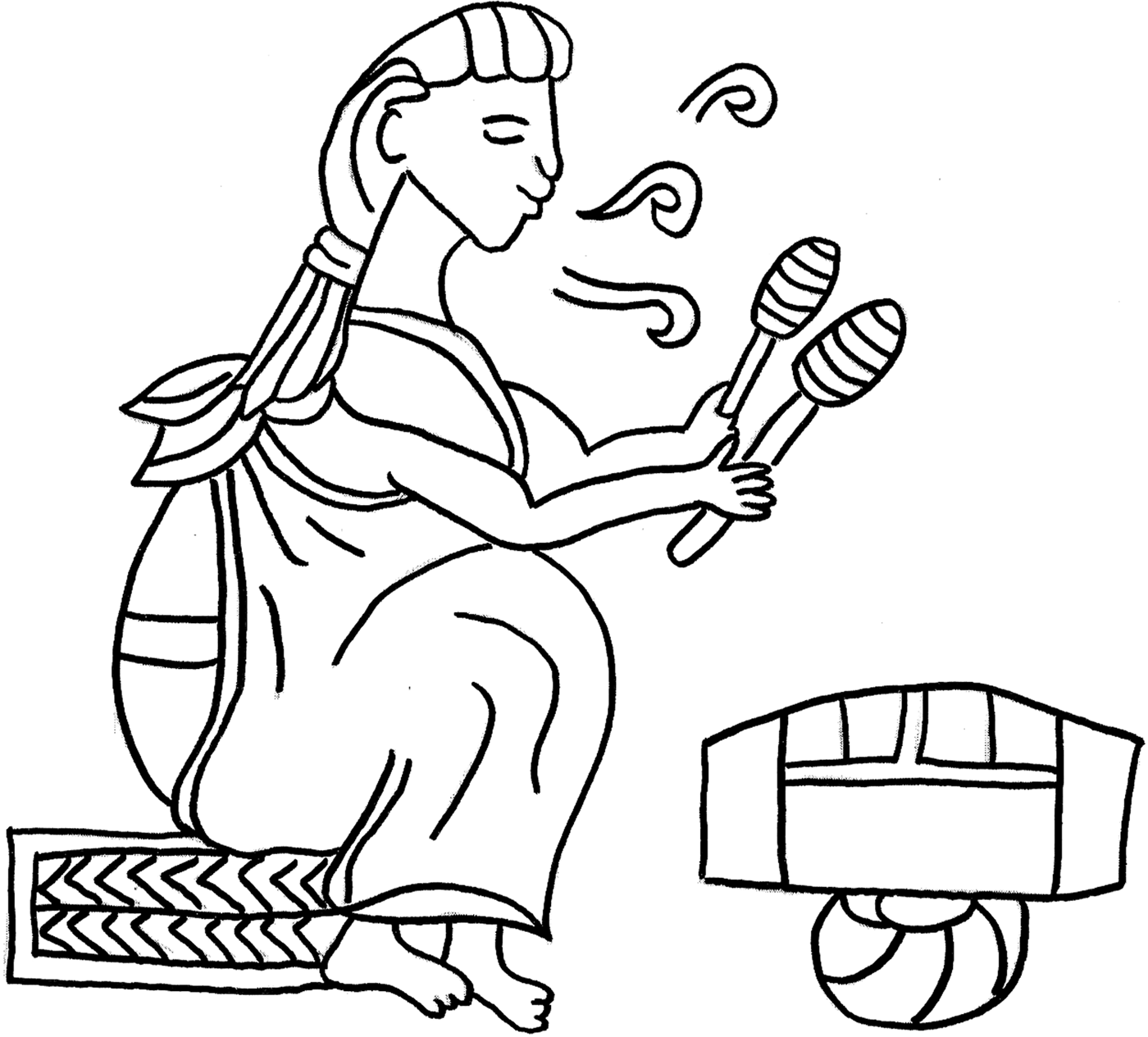
The term teponazcuicatl is usually translated as “log-drum song,” although teponaztli, the musical instrument in question, was more similar to an enlongated and horizontally-positioned xylophone with two vibrating strips of different length and width (Figures 1–2). Depending on which one of the strips the player hit (usually using gum-resin-covered drumsticks), it provided different note (see also Stresser-Péan Reference Stresser-Péan2009:154). Among the corpus of the known Nahua songs there is a fairly large group pertaining to this class, provided, of course, that the criteria of selection applied are the same as the ones presented above. In the manuscript of Cantares mexicanos (f. 26v) a gloss says: Nican ompehua Teponazcuicatl, “here begins the log-drum song” or “here begin the log-drum songs.” What follows are the texts of different “songs” which belong to the same type, defined by the instrument used. The next caesura appears on folio 31v, where, according to the gloss, melahuacuicatl, or plainchants, begin.Footnote 9 Apparently, the author or the copyist of the document decided to insert among the other songs a heterogeneous series of compositions marked by a similar rhythm. All of them contain rhythmical indications (different combinations of the syllables ti qui to co), which confirm their identification as such (at least according to the criteria indicated by Garibay [Reference Garibay K.2007:350]), though only the first and the last example are labeled as a “log-drum song.” In the comments to the rest of teponazcuicatl, the author of the sixteenth-century manuscript focused on different aspects of the discourses. Thus, there is the uexotzincayotl (“Huexotzincan piece”), with a marginal gloss saying: “those from Huexotzinco coming to ask Motecuhzoma for help against Tlaxcala” ([v]iniendo los de hue[x]otzinco a pedir socorro [a] moteucçoma ō tlaxcalla (ff. 27v–28v); the Ycuic neçahualcoyotzin, “song of Nezahualcoyotl” (ff. 28v–29v); a song entitled Ycuic Axayacatzin Ytzcoatl Mexico tlatohuani, “Song of Axayacatl Itzcoatl, governor of Mexico” (ff. 29v–30r); the Ycuic Tlaltecatzin Quauhchinanco, “song of Tlaltecatzin of Cuauhchinanco” (ff. 30r–30v); and, finally, the Ytotocuic Totoquihuatzin Tlacopã tla'toani, “Bird song of Totoquihuatzin, the governor of Tlacopan” (ff. 30v–31r).Footnote 10 Along with these songs, in other parts of the manuscript of the Cantares there are numerous other examples provided with similar syllabic indication of rythm/tonality. Garibay calculated their number as 26 in total.Footnote 11 On the other hand, in the second large corpus of Nahua songs, the Romances, on only a few ocasions did the glossist include titles or explanations with respect to the contents of the songs, and the term teponazcuicatl is not mentioned at all. In only two of the compositions from this manuscript, on folios 6v and 11r, respectively, are there indications expressed by the syllables ti qui to co.
Codex Mendoza. Indigenous priests playing teponaztli using gum-resin-covered drumsticks. Drawing by Julia Miechówka after Berdan and Anawalt Reference Berdan and Anawalt1970:f. 63r.

Florentine Codex, Book VIII. Huehuetl (left) and teponaztli (right). Drawing by Julia Miechówka after Sahagún Reference Sahagún1979:vol. II, f. 30r.).

The “log-drum songs” have a variety of themes. The first one identified as such in the manuscript of the Cantares (though not the first one within this collection if the criterion were stylistic and other internal features rather than title or gloss) occupies folios 26v–27v. For Garibay (Reference Garibay K.2007:358–361), it consists of two parts, seemingly disconnected (in the former we can hear the echoes of Quetzalcoatl’s mythological cycle and his departure from Tula, whereas the latter is a religious composition with invocations to the Virgin Mary and God), but conforming to a single composition. It is treated in this manner in all the later editions of this document (cf. Bierhorst Reference Bierhorst1985:218–221; León-Portilla Reference León-Portilla, Portilla, Galeana, Baranda and Equiguas2011:350–361). Another possibility, however, is that they are two independent pieces, separated by the words:
Tico toco toco tiquitiquiti quiti quito
Can ic mocueptiuh.
Tico toco toco tiquitiquiti quiti quito
In this way it goes returning (Cantares, f. 27r, in León-Portilla Reference León-Portilla, Portilla, Galeana, Baranda and Equiguas2011:354, translation by author).
The only element that would be missing is a gloss or a comment at the head of the following part. The rest of the teponazcuicatl deals with historical or “existential” issues; among them we can discern what otherwise would be classified as a “song of the green place” (xopancuicatl) and a “song of desolation” (icnocuicatl).
Garibay's hypothesis regarding the existence of dramatic poetry among the pre-Hispanic Nahua, the explicit (labels provided by the scribe) and implicit (syllabic markings and mentioning of percussion instruments) diagnostic traits which allegedly allow for its identification, might prove misleading when we examine Nahua song manuscripts. On folio 30r of the Cantares begins “The song of Tlaltecatzin from Cuauhchinanco,” classified without any doubt as representative of the genre of teponazcuicatl and, consequently, as a Nahua equivalent of drama. A variant of the same composition occupies folios 7r–8r of the Romances. The problematic issue here is that in the latter version the phrases of the type Titocoti tocoti tocoti, present in the Cantares, have been completely omitted. What is more, throughout the entire text not a single percussion instrument is mentioned. Taking into consideration the arguments presented above, we can call into question the classification of all the other songs included in both manuscripts in relation to the category of teponazcuicatl.
If the copyist of the Romances ignored the rhythmic indications in one of the variants of the “Song of Tlaltecatzin,” how can we be sure that this did not occur in other cases as well? After all, it has been recognized that the Nahuatl cuicatl did not imply only verbal expression but was also closely linked to music and dance, forming part of a performative and inseparable entity (cf. Baudot Reference Baudot1976:44; Garibay Reference Garibay K.2007:60–61; Johansson Reference Johansson1992; Szoblik Reference Szoblik2016:65–67; Tomlinson Reference Tomlinson2007:50; Turrent Reference Turrent1993:107, among others). Consequently, perhaps every cuicatl was a teponazcuicatl or “drum song” par excellence, since its performance always entailed the accompaniment of a percussion instrument.
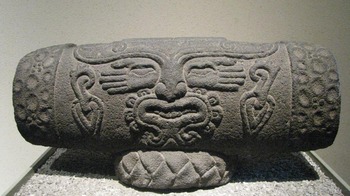
The importance of drums and, in general, of music among the Nahuas arises from its function as a means of communication not only between the singer and his audience but also between humans and the divine world (cf. Bierhorst Reference Bierhorst1985; Both Reference Both2007:95; Johansson Reference Johansson1997:83; Szoblik Reference Szoblik2016:70–71). According to one of the myths from central Mexico, which survives in two very similar and probably related versions (Histoyre du Mechique Reference Tena1997:157; Mendieta Reference Mendieta and García2002:vol. I, p. 185), music originated in the House of the Sun. The one who brought it to the earth and introduced it to people was Tezcatlipoca, who, in order to accomplish this, used one of his tricks and resorted to the help of the wind. The solar musicians broke Sun's order not to respond to the wind and thus “it happened that some of them, considering the song mellifluous, answered him, and he [the wind] brought [it] to them by means of the drum that they call huehuetl and by means of the teponaztli; and they say that from then on they started to make feasts and dances to their gods” (Mendieta Reference Mendieta and García2002:vol. I, p. 185; translation by author). From this passage we can infer that the two instruments in question were considered to be deities (see Both Reference Both2007:95; Stevenson Reference Stevenson1968:90) and they were worshipped as such (below). They were also associated with Nahua god of music and dance, Macuilxochitl-Xochipilli,Footnote 12 and the imagery of this deity was often sculpted or painted on the instruments (Figure 3; Both Reference Both2007:93; Stevenson Reference Stevenson1968:8, 41). The importance of musical instruments and music as means of communication is also apparent in another episode. According to the testimony of Sahagún's informants, wind instruments were among the objects or devices that the wise men (tlamatinime) took away from humanity when departing for TamoanchanFootnote 13 :
qujtqujque in tlilli, in tlapalli, in amoxtli, in tlacujlolli qujtqujqueal in tlamatiliztli: mochi qujtqujque in cujcaamatl, in tlapitzatli
They carried the writings, the books, the paintings. They carried the knowledge; they carried all—the song books, the flutes (translation by Anderson and Dibble in Sahagún Reference Sahagún, Anderson and Dibble1961:191).
Sculpted teponaztli with the image of Macuilxochitl. National Museum of Anthropology, Mexico City. Photograph by author.

The drums were of divine origin and they functioned as a beating axis mundi. They were also worshipped. In Durán's (Reference Durán2006:vol. II, p. 309) description of the ceremonies of investiture of one of the Tenochca governors, Tizoc, we read:
As the ruler reached the drum, incense was thrown into the burner and they incensed it [the drum], walking around it four times, with this smoke. When the incensing was finished, one of the lords took the censer from him [the king] and then they gave him quails, which he then sacrified to the drum, to the god of dance, who by most and always was painted on the drum, or at the bottom of the instrument that they call teponaztli (translation by author).
Another historian, Ixtlilxochitl (Reference Ixtlilxochitl and O'Gorman1975:vol 2, p. 95; cf. Mapa Quinatzin in Aubin Reference Aubin2002:Plate 2), mentioned that in, the palace of Nezahualcoyotl (and by implication, of other Tetzcocan rulers as well), the drum occupied a prominent place in one of the that served as a supreme court to the leaders of the Triple Alliance, a room “of science and music” (de ciencia y música).Footnote 14 Also, the teponaztli (as well as another type of drum, tlalpanhuehuetl) was among the first objects to be sacked by the Tenochca after their defeat of Tlatelolco (Tezozomoc Reference Tezozomoc, Migoyo and Chamorro1997:213; cf. Stresser-Péan Reference Stresser-Péan2009:147).
The importance of music among the Nahuas is also attested in the Colonial period. Some elements of the pre-Hispanic musical tradition were incorporated, with the permission of Spanish friars, into Christian ceremonies and in the religious edifying theater (Truitt Reference Truitt2010). Traces of it can be found in the copies of the dramatic scripts in Nahuatl, in which stage directions contain are indications of wind and percussion instruments being played between the scenes (see Sell et al. Reference Sell, Burkhart, Spira and León-Portilla2004:122, 152, 156, 164, ff.). Even though the indigenous instruments were succesively substituted by European ones, such as flutes, hornpipes (chirimías), harps, or monochords, the evidence derived from sixteenth and seventeenth century indigenous testaments proves that among the bequethed objects were also pre-Hispanic instruments like teponaztli and huehuetl (Truitt Reference Truitt2010:320–321). It is also noteworthy that in the mid-seventeenth century adaptation into Nahuatl of the Spanish Golden Age auto sacramental drama, “The Great Theater of the World” (El gran tetaro del mundo) written by Pedro Calderón de la Barca and made by Bartolomé de Alva Ixtlilxochitl, in the scene in which Discretion (Prudencia) appears on the scene, in the Spanish original she holds “un instrumento,” “a [musical] instrument,” whereas in his version Alva speficies that she holds a huehuetl (Sell et al. Reference Sell, Burkhart and Wright2008:90–91).
Both in Mendieta's version of the myth of the origin of music and in the fragment from Durán quoted above, two percussion instruments are mentioned. One of them is teponaztli; the other was called huehuetl in Nahuatl. The latter was a cylindrical drum placed vertically and the players beat it with their hands (Figure 2). Now, since in the Nahua collections of songs a song of teponaztli is included among the generic classes, one would suppose that, by analogy, there should also be a song of huehuetl. Its name in Nahuatl would be huehuecuicatl. And indeed, the manuscript of the Cantares includes two compositions glossed by the scribe with this label. One of them is on folios 15r–16v and its title in its entirety says: “Nican ompehua Huehue cuicatl yn nepapaquilizcuic tlatoque,” “Here begins the huehuecuicatl, the song of joy of the lords.” The other occupies folios 73v–74v and refers to the defeat of Axayacatl, the supreme governor of Tenochtitlan, during his military campaign in Michoacan. Both songs contain rhythmic or tonal indications, which confirm their relationship with the use of percussion instruments. Nevertheless, in none of the editions of this document is the word huehuecuicatl translated as “drum song.” Garibay (Reference Garibay K.2007) and León-Portilla (Reference León-Portilla, Portilla, Galeana, Baranda and Equiguas2011) interpret it as “old song,” (canto antiguo) and Bierhorst (Reference Bierhorst1985:179) as “old man song,” which is perfectly compatible with the meaning of the word huehue that Molina (Reference Molina1992:vol. 2, f. 157r) gives in his Vocabulario: “viejo o anciano.” Also, as Stresser-Péan (Reference Stresser-Péan2009:152) has noted, the huehuetl could only be played by an elder, huehuetzin,Footnote 15 hence the name of the musical instrument. The translation of huehuecuicatl as “old man song” was also taken into account by Garibay (Reference Garibay K.1965:vol. 2, p. xiii; translation by author) because of “the actors being dressed up as old men and because the account was supposed to be recited by the elders.” Durán (Reference Durán2006:vol. I, pp. 193–194; translation by author) briefly mentions a dance of this type performed among the pre-Hispanic Nahua: “there was another dance of old men which was danced with the masks of old hunchbacked men which is more than just a little funny and diverting, and with much laughter, in their manner.” In my opinion, in the case of huehuecuicatl we might be dealing with a wordplay, so characteristic of Nahua discourse, in which the root huehue- can allude to the musical instrument as well as to the old men masquerade.
It should be noted that these satirical representations of pre-Hispanic origin did not disappear during colonial times. Actually they have endured until the present day, sometimes wrapped in a Christian layer but still retaining some elements that can be traced back to the period before the arrival of the Spaniards. These pageants are known as “huehuenches” (a hispanicized version of the Nahua term huehuetzin) or “dance of the little old men (danza de los viejitos), and are still performed today in the Mexican states of Michoacan and Oaxaca, among others. Another important sign of the continuity of this kind of performance is the existence of a Nicaraguan drama entitled El Güegüence, o Macho Ratón. Written probably in the sixteenth century in Spanish and either peripheral Nahuatl or Pipil by an anonymous author, it is considered “a unique piece representative of cultural crossbreeding” (Arrellano Reference Arrellano1991:60). The first part of the title, “el güegüence,” is precisely the hispanicized term derived from the Classical Nahuatl huehuetzin.
Another type of theatrical performance in New Spain that draws on pre-Hispanic patterns, and which at the same time is a dramatic genre, is called “tocotín.” In his 1770 historical account, Clavijero (Reference Clavijero1974:245) describes it in the following manner:
An ancient dance, commonly called tocotin, and which is most beautiful and so proper and solemn that the Indians are allowed to perform it even in the churches. It used to be danced not only by the nobles, the priests, and the virgins from schools, but even by the king, at times in the temple, as a religious exercise, and at times for entertainment in his palace (una danza antigua que llaman vulgarmente el tocotin, la cual es bellísima y tan honesta y grave que se permite a los indios el hacerla aun en los templos. Danzaban no solamente los nobles, los sacerdotes y las vírgenes de los colegios, sino aun los mismos reyes, unas veces en el templo por ejercicio de religión y otras por recreación en su palacio, translation by author).
Obviously, the name “tocotín” derives from the syllabic indications included in many of the Nahua songs gathered and transcribed graphically (and in some cases composed) in the sixteenth century. These theatrical dance performances, modified by European influences, were very popular in the colonial period. The Jesuit Pérez de Ribas (Reference Pérez de Ribas1944:vol 3., pp. 325–327) left us a detailed description of the custom in his 1645 testimony. One of the authors of tocotines in both Spanish and Nahuatl was sor Juana Inés de la Cruz, who published them together with her religious plays (cf. Bierhorst Reference Bierhorst1985:90; León-Portilla Reference León-Portilla1983:35).
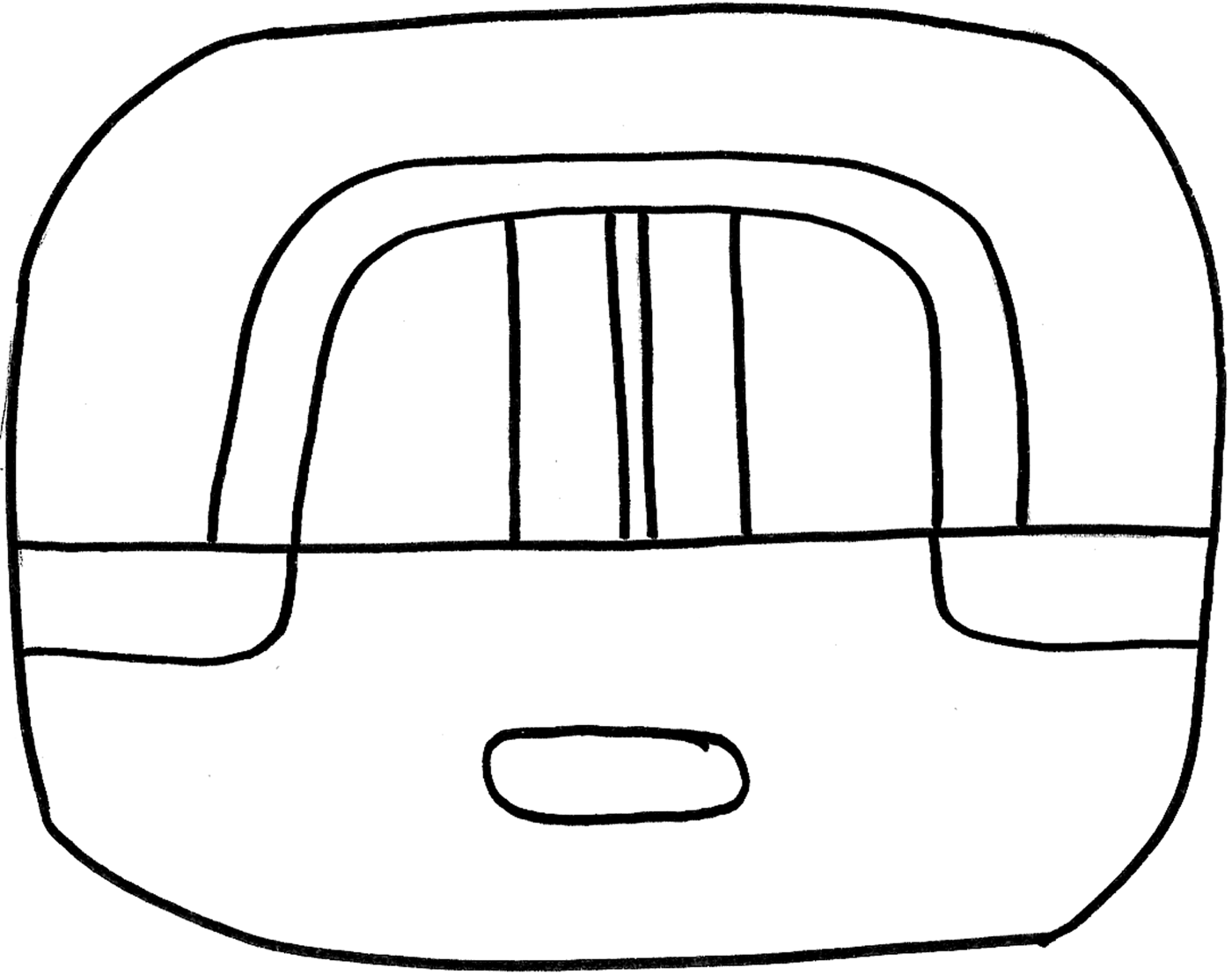
Finally, I would like to return to the case of the unique indigenous composition of pre-Hispanic origin identified as a drama, that is, the Maya script of Rabinal Achi. Its entire title is Rabinal Achi Xajoj Tun, where the last part can be translated as “dance of tun.” The word tun, according to Breton (Reference Breton and Martínez1999:15, n3), nowadays refers to a big drum with small plates that vibrated; however, as he points out, most of the older dictionaries (such as those compiled by fray Andrés Pérez de Ribas, Domingo de Basseta, Thomás de Coto or Fermín Joseph Tirado) render it as “trumpet,” “flute,” or with the name of other wind instrument. Since both trumpet and flute were of European origin, it may suggest that Rabinal Achi was not necessarily pre-Hispanic. On the other hand, the vocabularies of Mayan languages consulted by Breton had been written by, and for, the Spaniards. Their authors might have recurred to the closest Spanish equivalents of different Mesoamerican pre-Hispanic aerophones (various classes of shell, reed, or ceramic trumpet- and flute-like instruments; see Both Reference Both2007; Stevenson Reference Stevenson1968:30–85). Nevertheless, there are also premises that allow us to link the Maya tun with drums or, to be more precise, with idiophones, instruments which emit sound by vibrating (teponaztli being an example of the kind). In his edition of the Vocabulario de lengua quiché by Basseta (Reference Basseta and Acuña2005:79, n4), Acuña noted that the word tun, originally meaning “stone” in k'iche’, at some point had started to designate trumpets and, eventually, hollow trunk which was used as a musical instrument.Footnote 16 According to Calepino de Motul, a Maya-Spanish dictionary atributed to Antonio de Ciudad Real (Reference Ciudad Real and Acuña2001:562), tunkul means “instrument or wooden drum” (instrumento o atabal de madera), associated with the slit drum similar to the Nahua teponaztli. In fact, this instrument is represented graphically in the introductory glyph placed at the beginning of the calendric information in the Maya Long Count from the Classical Period, where it stands for the sound tun (Tedlock Reference Tedlock2003:157, Figure 4).
In the light of these data, we can assume that Rabinal Achi was either the Maya trumpet dance (song-dance), or slit drum/log drum dance (song-dance), that is, the equivalent of the Nahua teponazcuicatl. It has to be clarified, however, that by drawing such a parallel I do not intend to reinforce Garibay's hypothesis nor do I argue here that teponazcuicatl (or any cuicatl, for that matter) was a dramatic script. What I want to point out is that two very similar pre-Hispanic phenomena from the Nahua and Maya regions, which originally were performative acts combining music, song and dance, were submitted to alphabetization after the Conquest and reduced by the same to their verbal component. The application of different criteria during this process can be attributed to the subjective interpretation of the scribe, entangled in a Western conceptual network, as well as to the particularities of the time in which the process was taking place. As a result, cuicatl received the label of a song, or even that of a poem, and xajoj tun was forced into the mold of European drama, whilst the idiosincrasy of the indigenous performative phenomenon got lost in transcription.
Maya Long Count introductory glyph tun (No. T548 in Thomson's classification). Drawing by author.

FINAL OBSERVATIONS
Mesoamerican pre-Hispanic oral discourse, regardless of whether it belonged to Nahua or Maya culture, did not become a script in the Western sense of this term, that is, an alphabetic word for word transcription of verbal art, until after the Spanish Conquest. Before that, it was preserved in the memory of sages and transmitted orally to subsequent generations. It was also strictly bound up with performance. These examples of original indigenous “literature,” in addition to being changed from oral to alphabetic written form, were also submitted to a process of classification in accordance with Western models. The categorization of this legacy into and within the genre, visible in different sixteenth- and seventeenth-century sources, devolved primarily from the preconceptions of the scribes and collectors of the indigenous texts. These cultural mediators, never impartial owing to their education in the European system, not only significantly influenced the perception of this material in their time, but also provided modern scholars with a schema that has proven very difficult to eradicate.
I deliberately used the example of teponazcuicatl, “log drum song,” to present the problems of previously proposed classifications of different Nahua cuicatl or “song-dances,” problems which originate with the authors of our main sources of information on the subject. The fact that all pre-Hispanic verbal realizations of the cuicatl were accompanied by the rhythm of percussion instruments turns teponazcuicatl into a sort of supercategory almost synonymous with the cuicatl itself. Another issue of great importance remains how to establish adequate criteria to differentiate one class of composition from another, given that the manner of transcribing Nahua oral discourse and the inclusion of explanatory glosses were completely arbitrary. As I have shown above, the introduction or omission of certain items, in some cases considered diagnostic, depended only on the copyist.
By proposing the category of teponazcuicatl as an example of Nahua pre-Hispanic dramas, Garibay included it in a larger discussion on the existence or non-existence of the whole genre. His hypothesis has not received wide acceptance and the pre-Hispanic Nahua are still considered a people without theater. On the other hand, their southern neighbors, the Maya, managed to preserve for future generations a unique piece of an unquestionably theatrical character, their own “drum song” or “trumpet song” called Rabinal Achi. The difference between this composition and that of the Nahua corpus of teponazcuicatl or, generally, cuicatl, resides not in their internal discoursive, stylistic and rhetorical features or function within the pre-Hispanic society, but basically in the graphic display of the written text and its division into dialogues or verses. It is not my intention to argue that all Nahua verbal art should be treated as an example of dramatic genre. The case of teponazcuicatl, however, shows that the existing classifications of what has come to be called Nahua literature need revision, free from the conceptual and interpretive traps set for us by sixteenth- and seventeenth-century authors who were the first to deal with this material.
RESUMEN
En la discusión sobre la existencia o no existencia del teatro entre los nahuas prehispánicos se escuchan las voces de que asocian este fenómeno cultural con el teatro dramático y la falta de los dramas de origen prehispánico determina el hecho de que más que del teatro per se, se puede hablar de la teatralización en varios aspectos de la vida de estos indígenas. Ángel María Garibay, al trabajar con lo que el mismo llamó la literatura nahuatl, identificó un grupo particular de los textos que son la transcripción alfabética del discurso nahua prehispánico que, según él, se pueden considerar como unos dramas. Este grupo lo forman los teponazcuicatl o “cantos de tambor.”
En los intentos de considerar el conjunto del arte verbal nahua que se conserva en forma alfabética de acuerdo con las categorías indígenas y no occidentales basados en los preceptos aristotélicos, se ha dividido el material en dos grandes clases: cuicatl y tlatolli. El primero se parece más a la noción occidental de poesía, mentras que el segundo a la de prosa, aunque, como subraya el autor de tal clasificación, Miguel León-Portilla, las diferencias entre los dos sistemas son más que sútiles. No obstante, quizás para familiarizar al lector con la producción literaria nahua, en la mayoría de las ediciones modernas de las colecciones de cuicatl en náhuatl se ha optado por dividir el texto en lo que se parece a los versos y estrofas, ignorando así la distribución linear y continua del mismo en los manuscritos.
Los teponazcuicatl son uno de los subgéneros de la clase de los cuicatl o cantos que, según Garibay, son ejemplos de los dramas indígenas. Lo que permitiría distinguirlos de las demás composiciones es la presencia de por lo menos uno de estos tres rasgos: la aparición del nombre teponazcuicatl en el título del canto o en la glosa acompañante, la inclusión de las indicaciones rítmicas expresadas mediante las sílabas ti qui to co o la mención del tambor en el canto. Tal propuesta de identificación de los teponazcuicatl supone varios problemas. Uno de ellos es el hecho de que si cotejamos dos versiones del mismo canto, provenientes de distintas colecciones, resulta que una pertenece al tipo teponazcuicatl, mientras que en la otra los tres rasgos distintivos están ausentes. otra cuestión tiene que ver con el carácter performativo de la ejecución de todos los cantos y la importancia de los tambores en las representaciones, el hecho que permite sacar la conclusión de que todos los cantos (cuicatl) eran los cantos de tambor. También los nahuas prehispánicos usaban dos tipos de tambores, teponaztli y huehuetl, lo que supondría que aparte de los teponazcuicatl deberían existir algunos huehuecuicatl. De hecho, en los manuscritos se conservan los ejemplos con este último título (proveídas de las sílabas rítmicas); no obstante, su nombre se traduce como “canto antiguo” o “canto de los viejos,” ignorando la posibilidad de que viniera de huehuetl, “tambor,” y no de su homonimo huehue, “anciano,” o de que se pudiera tratar de un juego de palabras.
Por último, al hablar de los dramas mesoamericanos de origen prehispánico se suele indicar sólo una pieza, el Rabinal Achí de los mayas. Sin embargo, el manuscrito más antiguo del mismo se escribió a mediados del siglo XIX y el que lo rindió alfabeticamente, Charles Étienne Brasseur de Bourbourg, lo transcribió como un drama (división en los diálogos, la distribución gráfica del texto propia de este género occidental) porque estaba conscience de que se realizaban sus representaciones. El subtítulo de Rabinal Achí es Xajoj Tun, que se puede traducir como “danza de tun,” donde tun es un tipo de instrumento musical que se puede considerar como un equivalente de teponaztli. Con ello se demuestra que las clasificaciones genéricas existentes del discurso nahua, así como su relación con el teatro, requieren una revisión.
ACKNOWLEDGEMENTS
The present paper forms part of the project “Pre-Hispanic performances of the Nahuas: indigenous forms of theater as described in the alphabetic and pictorial sources from central Mexico” (“Los espectáculos prehispánicos de los nahuas: formas teatrales indígenas a través de las fuentes escritas y los manuscritos pictográficos del México Central”), financed by the National Center for Science (NCN) in Poland based on Decision No. DEC-2011/01/N/HS3/02188. I would like to express my deep gratitude to Jerome Offner for his valuable comments and advice, as well as for the revision of my English. In the same way, I want to thank Katarzyna Mikulska and Julia Madajczak for their observations and comments and for their help in the editing of this paper. I am also indebted to Arnd Adje Both and Jonathan Truitt for all their suggestions which helped me to strengthen my argumentation.