Introduction
Glyphosate-resistant (GR) crops were first commercialized in 1996 and have since become widely adopted as a result of increased production efficiency and flexibility, as well as the ability to reduce tillage operations (Dill Reference Dill2005). However, a potential drawback of this technology is the appearance of volunteer GR crops that cannot be controlled by glyphosate in subsequent GR cropping systems (Tao et al. Reference Tao, Zhou, Messersmith and Nalewaja2007). Volunteer GR corn, the F2 generation of hybrid corn used the previous year, can be a problematic weed in GR soybeans by reducing grain yield and quality (Andersen et al. Reference Andersen, Ford and Lueschen1982; Chahal and Jhala Reference Chahal and Jhala2015b). Although glyphosate lacks efficacy on volunteer GR corn, other viable herbicide options include the acetyl CoA carboxylase (ACCase)–inhibiting graminicides, which provide selective, POST grass control. Numerous studies have documented a high degree of efficacy from both aryloxyphenoxy propionate and cyclohexanedione graminicide families on volunteer GR corn (Alms et al. Reference Alms, Moechnig, Vos and Clay2016; Chahal and Jhala Reference Chahal and Jhala2015a; Deen et al. Reference Deen, Hamill, Shropshire, Soltani and Sikkema2006; Kniss et al. Reference Kniss, Sbatella and Wilson2012). More recently, Enlist™ corn has been developed possessing transgenic resistance to both glyphosate and the aryloxyphenoxy propionate family (Wright et al. Reference Wright, Shan, Walsh, Lira, Cui, Song, Zhuang, Arnold, Lin, Yau, Russell, Cicchillo, Peterson, Simpson, Zhou, Ponsamuel and Zhang2010), thus rendering clethodim and sethoxydim the only effective herbicides for control of volunteer Enlist™ corn in GR soybean (Soltani et al. Reference Soltani, Shropshire and Sikkema2015).
Combining glyphosate with graminicides is advantageous, as it provides broad-spectrum weed control in addition to selective control of volunteer GR corn in GR soybean. Control from glyphosate plus quizalofop-p-ethyl was either additive or synergistic (Tao et al. Reference Tao, Zhou, Messersmith and Nalewaja2007). The addition of glyphosate did not reduce graminicide efficacy of quizalofop-p-ethyl, clethodim, or fenoxaprop-p-ethyl (Deen et al. Reference Deen, Hamill, Shropshire, Soltani and Sikkema2006). Glyphosate plus clethodim provided > 95% control of volunteer Enlist™ corn (Soltani et al. Reference Soltani, Shropshire and Sikkema2015). However, novel soybean traits have been developed that enable the use of POST applications of 2,4-D (Enlist™ soybean) or dicamba (Roundup Ready 2 Xtend® soybean) in combination with glyphosate. Although the addition of 2,4-D or dicamba in these combinations provided an increase in broadleaf weed control (Frene Reference Frene2017; Spaunhorst et al. Reference Spaunhorst, Siefert-Higgins and Bradley2014), it might also exacerbate management challenges of grass weed species (Jugulam et al. Reference Jugulam, Hall, Johnson, Kelley and Riechers2011).
Observations of reduced graminicide efficacy when applied with auxinic herbicides are widely cited in the literature (Blackshaw et al. Reference Blackshaw, Harker, Clayton and O’Donovan2006; Fletcher and Drexler Reference Fletcher and Drexler1980; Mueller et al. Reference Mueller, Witt and Barrett1989; Olson and Nalewaja Reference Olson and Nalewaja1981; Todd and Stobbe Reference Todd and Stobbe1980). The physiological basis for this antagonism appears not to be related to graminicide retention or absorption differences but rather to reduced translocation to meristematic tissues (Barnwell and Cobb Reference Barnwell and Cobb1994; Mueller et al. Reference Mueller, Barrett and Witt1990). Moreover, the contrasting nature of the modes of action of these herbicides has been implicated as the cause of antagonism, as ACCase-inhibiting graminicides reduce proton efflux whereas auxinic herbicides stimulate proton efflux (Barnwell and Cobb Reference Barnwell and Cobb1993; Hull and Cobb Reference Hull and Cobb1998).
Herbicide rate and formulation, as well as the inclusion of an adjuvant, can influence herbicide interactions. Often, manipulation of these variables can overcome antagonistic interactions. The most common method for overcoming antagonism is increasing the dose of the antagonized herbicide (Green Reference Green1989). Increasing the rate of fenoxaprop-p-ethyl, haloxyfop-methyl, or sethoxydim in combination with a fixed rate of 2,4-D largely overcame reductions in johnsongrass [Sorghum halepense (L.) Pers.] control (Mueller et al. Reference Mueller, Witt and Barrett1989). Similarly, antagonism of quizalofop-p-ethyl or clethodim by dicamba on volunteer GR corn could be reduced by increasing graminicide rate (Underwood et al. Reference Underwood, Soltani, Hooker and Robinson2016). Results are variable when evaluating the influence of herbicide formulation on herbicide interactions. The technical 2,4-D acid, dimethylamine (DMA) salt, butoxyethyl ester (BOE), and isopropylamine (IPA) formulations of 2,4-D all reduced haloxyfop-methyl activity equally on johnsongrass, indicating that formulation components did not influence antagonism (Mueller et al. Reference Mueller, Barrett and Witt1990). However, the diethanolamine salt, Na salt, and BOE formulations of 2,4-D reduced glyphosate phytotoxicity on wheat (Triticum aestivum L.), whereas the IPA salt of 2,4-D did not (Nalewaja and Matysiak Reference Nalewaja and Matysiak1992). Additional research has suggested that alterations in clethodim formulation may be capable of overcoming antagonism through increased retention, deposition, and absorption in grasses (Zollinger and Howatt Reference Zollinger and Howatt2005). Activator adjuvants are either included in the product formulation by the herbicide manufacturer or mixed at the time of spraying by the herbicide applicator. Inclusion of an activator adjuvant may assist in negating antagonistic interactions by improving herbicide retention on foliage for absorption through the leaf cuticle, and in turn, increasing the concentration of the antagonized herbicide available for translocation (Penner Reference Penner2000). For example, antagonism of sethoxydim by dicamba on annual grass control was largely overcome by the addition of crop oil concentrate (COC) (Young et al. Reference Young, Hart and Wax1996).
As POST use of 2,4-D or dicamba in soybean has previously been restricted because of crop safety concerns, limited research exists on the interaction of mixtures containing a graminicide, glyphosate, and either auxinic herbicide for potential use of volunteer GR corn control in glyphosate-resistant and 2,4-D- or dicamba-resistant soybean. In one case, dicamba antagonism of graminicides was documented (Underwood et al. Reference Underwood, Soltani, Hooker and Robinson2016). However, the latter work did not investigate mixtures containing glyphosate or the effect of an activator adjuvant. Therefore, the objective of this research was to determine the effect of 2,4-D or dicamba in combination with glyphosate and various clethodim formulations on control of volunteer GR corn.
Materials and Methods
Field
Two separate field trials were conducted at the Agronomy Research Center, near Carbondale, IL (37.70° N, 89.24° W) in 2011 and 2012 (Table 1). A surrogate volunteer corn population was established by planting a GR corn hybrid ‘DeKalb 64-83’ in 76-cm rows and 4 cm deep at a population of 69,190 seeds ha−1. Plots were 3 m wide by 6 to 8 m long. Soybeans were not planted in the trial area, as several herbicide treatments would reduce soybean growth and present a confounding factor for corn survival.
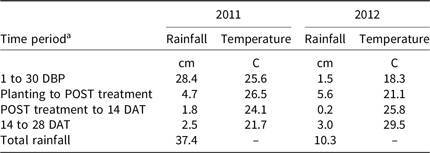
Total rainfall and average temperature data for critical periods of 2011 and 2012 field trials.

a Abbreviations: DAT, days after treatment; DBP, days before planting.
When corn reached a height of 45 to 55 cm, herbicide treatments were applied using a CO2-pressurized backpack sprayer calibrated to deliver 140 L ha−1 at a pressure of 207 kPa using a 2-m handheld boom equipped with extended-range, flat-fan nozzles (XR 8002VS; Teejet Spraying Systems, Wheaton, IL 60187). Corn height was measured from the soil surface to the arch of the uppermost leaf pointing downward. Because of the uniformity of hybrid seed corn, evaluations consisted of visual estimates of control at 14 and 28 d after treatment (DAT). Ratings were on a scale of 0 to 100, with 0 being no visible injury and 100 being plant death.
Herbicide treatments for the first trial were arranged as an incomplete factorial of clethodim formulation (2), clethodim rate (3 or 4), and mixture herbicides (4), with a nontreated control used for comparison. The two clethodim formulations included one without an adjuvant, hereafter referred to as clethodim-A, and an adjuvant-inclusive formulation, hereafter referred to as clethodim-SM (Table 2). Both formulations of clethodim were applied alone at 35, 70, and 105 g ai ha−1; clethodim-A was also applied alone at 140 g ha−1. The aforementioned rates of clethodim were also applied in combination with the DMA salt of glyphosate at 840 g ae ha−1, the DMA salt of 2,4-D at 840 g ae ha−1, and glyphosate plus 2,4-D both at 840 g ha−1. Treatments containing clethodim alone or the combination of clethodim plus 2,4-D included COC (Prime Oil®; Winfield Solutions LLC, St. Paul, MN 55164) at 1% v/v. Treatments containing glyphosate did not include COC, as clethodim labels do not recommend COC in mixtures with glyphosate formulations that contain a built-in adjuvant (Anonymous 2015a, 2015b).
Sources of commercial herbicides used in field and greenhouse trials.

Herbicide treatments for the second trial were similar, with the exception of a diglycolamine (DGA) salt of dicamba at 420 g ae ha−1 substituted for 2,4-D and the use of a potassium (K) salt of glyphosate substituted for the DMA salt of glyphosate. At the time of this research, the specific herbicide formulations to be used in 2,4-D– or dicamba-resistant soybean systems were not available. Thus, the formulation selection of glyphosate and auxinic herbicides was oriented to provide the greatest representation of potential commercial herbicide combinations.
Greenhouse
Two separate greenhouse trials were conducted at the Horticulture Research Center (37.71° N, 89.26° W) near Carbondale, IL, in 2011. A GR corn hybrid ‘DeKalb 64-83’ was planted and grown in 10- by 10-cm pots containing potting soil (Fafard® Growing Mix 2; Conrad Fafard Inc., Agawan, MA 01001), with one corn plant per pot. Each pot was watered for optimal growth and fertilized with 5 g of a slow-release fertilizer (Osmocote Pro, 20-4-8; Scotts Co. LLC, Marysville, OH 43041). High-pressure sodium bulbs on a 16-h photoperiod supplemented natural lighting. Herbicide treatments were applied when corn reached the V2 growth stage (two fully formed leaf collars) using a single-nozzle spray chamber equipped with an even flat-fan nozzle (XR 8002EVS; Teejet Spraying Systems, Wheaton, IL 60187) calibrated to deliver 140 L ha−1 at a pressure of 207 kPa. At 14 DAT, shoot material was harvested above the soil line and oven dried at 65 C for 72 h for dry-weight measurement.
Herbicide combinations were designed to observe the influence of 2,4-D and dicamba rate on clethodim efficacy, as well as to evaluate the inclusion of an activator adjuvant. Both greenhouse trials used clethodim-A applied at 18 g ha−1. In the first trial, clethodim was applied in combination with COC at 1% v/v, the DMA salt of glyphosate at 840 g ha−1, and COC plus glyphosate. These treatments were applied alone and in combination with increasing rates of the DMA salt of 2,4-D at 420, 840, 1,260, and 1,680 g ha−1. Treatment combinations for the second trial were similar, with the exception of a DGA salt of dicamba substituted for 2,4-D and a K salt of glyphosate substituted for the DMA salt of glyphosate.
Experimental Design and Analysis
Field and greenhouse trials were arranged as randomized complete-block designs with three and six replications, respectively. Field trials and the 2,4-D greenhouse experiment were performed twice, whereas the dicamba greenhouse experiment was conducted four times. Data were evaluated for normality and homogeneity of variance using PROC UNIVARIATE and Levene’s test in SAS 9.4 (SAS Institute, Inc., Cary, NC 27513) following an arcsine square root transformation. PROC MIXED was used to perform ANOVA treating replication (block) as a random effect. Because of a significant year-by-treatment interaction (P < 0.05), 2011 and 2012 field data were analyzed separately. Data from experimental runs in the greenhouse were pooled because of a nonsignificant run-by-treatment interaction. Means were separated using Tukey-Kramer’s HSD (α = 0.05). For the field experiments, efficacy data were regressed against increasing clethodim rates using a linear or inverse first-order model:
 $${\rm{Control}} = {y_0} + {a \over x}$$
where y 0 is the y-asymptote and a is the curvature. For the greenhouse experiments, efficacy data were regressed against increasing auxinic herbicide rates using a linear or quadratic model:
 $${\rm{Control}} = {y_0} + ax + b{x^2}$$
where y 0 is the y-intercept, a is the slope, and b is the quadratic coefficient.
Results and Discussion
Field
Clethodim Mixtures with 2,4-D and/or Glyphosate
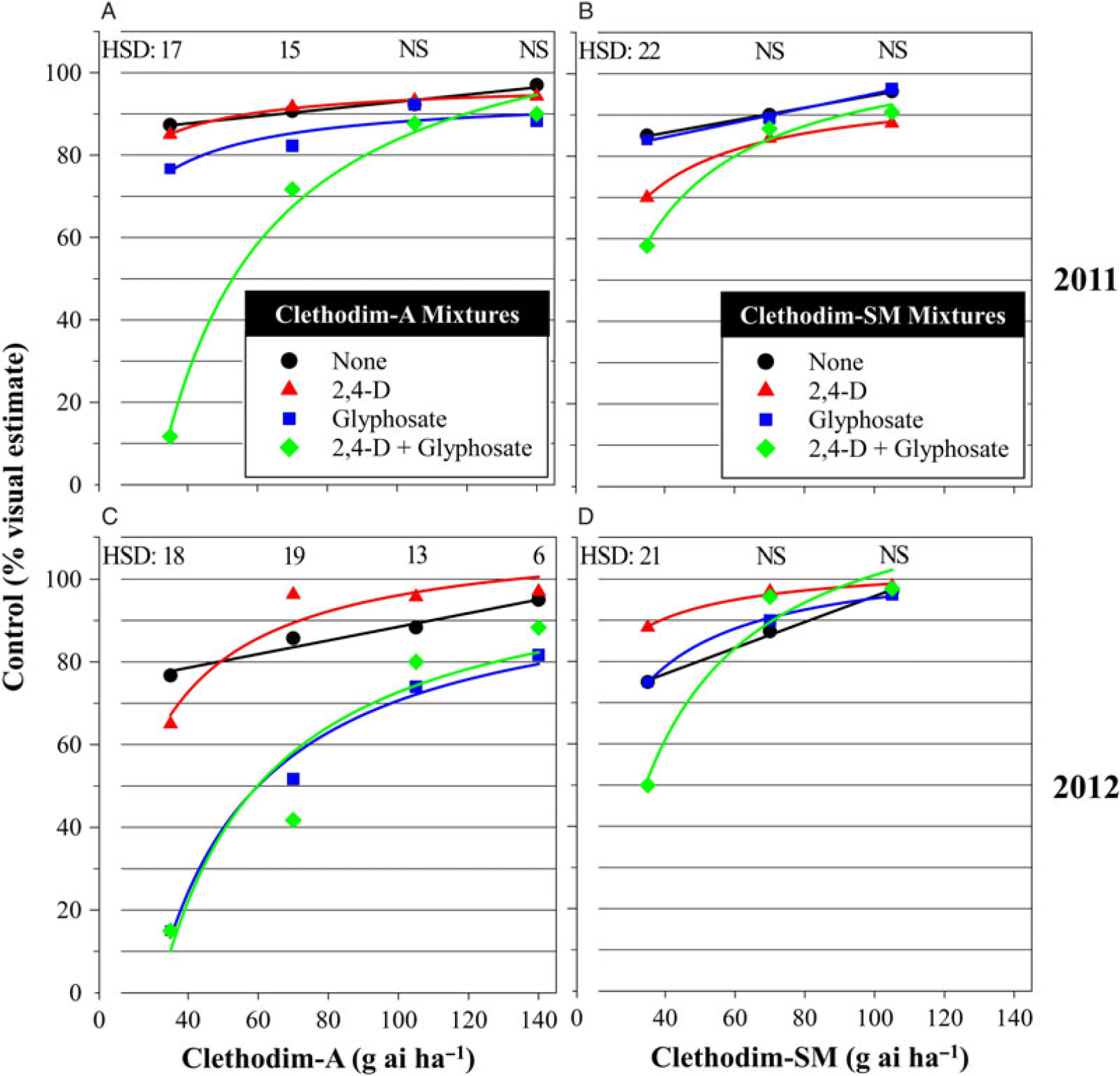
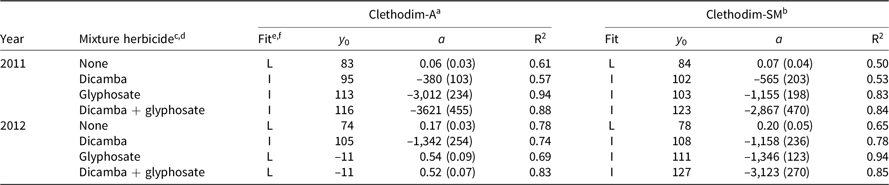
In 2011, control of volunteer GR corn ranged from 87% to 97% from clethodim-A applied alone at 35 to 140 g ha−1 (Figure 1A). Similar levels of control were observed across clethodim-A rates from mixtures with 2,4-D or glyphosate. However, the combination of 2,4-D plus glyphosate at the lower rates of clethodim-A resulted in substantially less volunteer GR corn control—most notably, a 75% reduction at the 35 g ha−1 clethodim-A dose. When clethodim-SM was applied alone in 2011, control of volunteer GR corn ranged from 85% to 96% (Figure 1B). Similar to mixtures with clethodim-A, 2,4-D plus glyphosate was the only combination that reduced clethodim-SM efficacy, with 27% less control at the 35 g ha−1 dose. Reduced clethodim efficacy was not observed in any herbicide combination when clethodim-A was applied at 105 and 140 g ha−1 or when clethodim-SM was applied at 105 g ha−1, which are in the range of recommended field-use rates per each herbicide label (Table 2).
Visual estimates at 28 d after treatment of percent volunteer glyphosate-resistant corn control from clethodim in mixture with 840 g ae ha−1 of dimethylamine salts of 2,4-D and/or glyphosate in 2011 (A and B) and 2012 (C and D) field trials. Control was regressed against increasing rates of clethodim-A (formulated without an adjuvant) (A and C) and clethodim-SM (adjuvant-inclusive formulation) (B and D) by fitting data to a linear or inverse first-order model. Parameter estimates are presented in Table 3, and Tukey-Kramer’s HSD (α = 0.05) for each clethodim rate is presented along the top of each graph. NS, not significant.

In 2012, control of volunteer GR corn ranged from 77% to 95% from clethodim-A applied alone across all rates (Figure 1C). Similar to the previous year, the addition of 2,4-D did not alter clethodim-A efficacy at any dose. However, in 2012 the addition of glyphosate reduced clethodim-A efficacy to a similar degree as mixtures with 2,4-D plus glyphosate at the 35 and 70 g ha−1 clethodim-A rates (33% to 60% reduction). Even at the 105 and 140 g ha−1 clethodim-A rates, control was less from mixtures containing glyphosate compared to clethodim-A alone. Control of volunteer GR corn with clethodim-SM in 2012 was reduced by the addition of 2,4-D plus glyphosate only at the 35 g ha−1 clethodim-SM dose (Figure 1D).
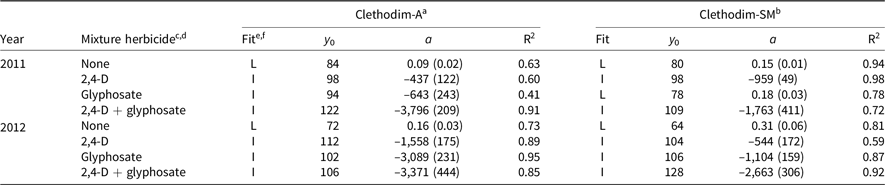
Comparison of the response in volunteer GR corn control across increasing clethodim rates is useful in assessing herbicide interactions, as it highlights the relative importance of proper rate selection depending on which herbicide combination is used. For example, in 2011, increasing the rate of clethodim-A in mixture with 2,4-D plus glyphosate enhanced control to a greater degree than the mixture with either 2,4-D or glyphosate alone. In contrast, in the droughty year of 2012, the benefit of increasing clethodim-A rates was similar between combinations with 2,4-D plus glyphosate and glyphosate alone (Table 3; Figures 1A and 1C). During both years, the response in volunteer GR corn control to increasing rates of clethodim-SM was greatest for the combination of 2,4-D plus glyphosate (Table 3; Figures 1B and 1D).
Regression parameter estimates of volunteer glyphosate-resistant corn control from combinations of increasing clethodim rates with 2,4-D and/or glyphosate in field trials.

a Clethodim-A (formulated without an adjuvant) applied at 35, 70, 105, and 140 g ai ha−1.
b Clethodim-SM (adjuvant-inclusive formulation) applied at 35, 70, and 105 g ai ha−1.
c Dimethylamine salts of 2,4-D and glyphosate each applied at 840 g ae ha−1.
d Crop oil concentrate applied at 1% v/v in all treatments except those containing glyphosate.
e Abbreviations: L, linear parameters: y 0, y-intercept; a, slope (± SE).
f Abbreviations: I, inverse first order (Equation 1) parameters: y 0, y-asymptote; a, curvature (± SE).
Clethodim Mixtures with Dicamba and/or Glyphosate
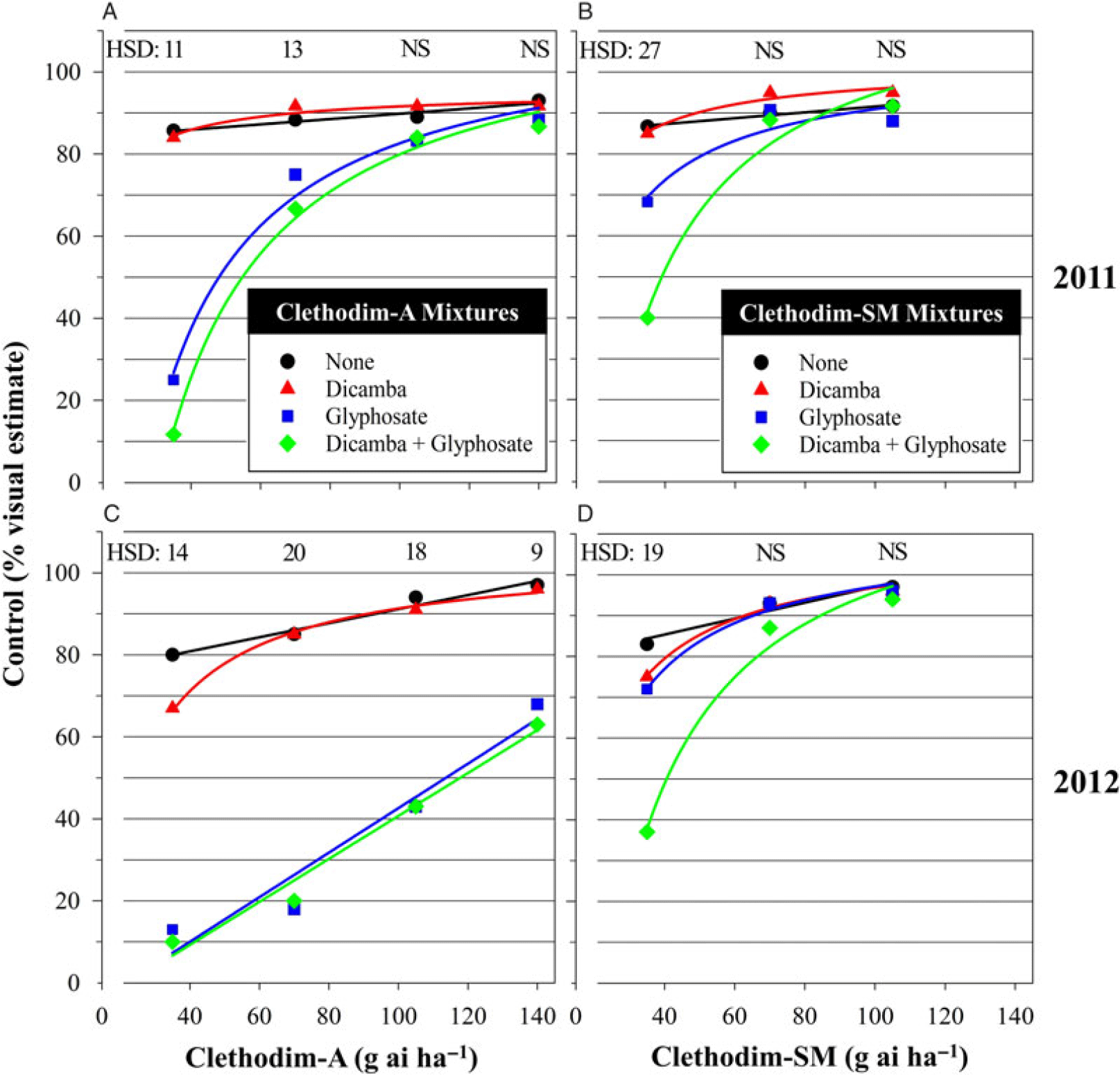
Dicamba alone did not reduce clethodim-A efficacy on volunteer GR corn in 2011 (Figure 2A). However, control was reduced by 61% and 13% by the addition of glyphosate to clethodim-A at 35 and 70 g ha−1, respectively. The combination of both dicamba and glyphosate reduced control by 74% at the 35 g ha−1 clethodim-A dose. Similar to results with clethodim-A, the addition of dicamba to clethodim-SM in 2011 did not reduce control of volunteer GR corn; however, the addition of glyphosate to the 35 g ha−1 rate reduced control by 19% (Figure 2B). The combination of dicamba plus glyphosate caused the largest reduction in clethodim-SM efficacy, with a 47% reduction at the 35 g ha−1 rate. Clethodim efficacy was not reduced by any mixture when either formulation was applied at ≥ 105 g ha−1.
Visual estimates at 28 d after treatment of percent volunteer glyphosate-resistant corn control from clethodim in mixture with 420 g ae ha−1 of a diglycolamine salt of dicamba and/or 840 g ae ha−1 of a potassium salt of glyphosate in 2011 (A and B) and 2012 (C and D) field trials. Control was regressed against increasing rates of clethodim-A (formulated without an adjuvant) (A and C) and clethodim-SM (adjuvant-inclusive formulation) (B and D) by fitting data to a linear or inverse first-order model. Parameter estimates are presented in Table 4, and Tukey-Kramer’s HSD (α = 0.05) for each clethodim rate is presented along the top of each graph. NS, not significant.
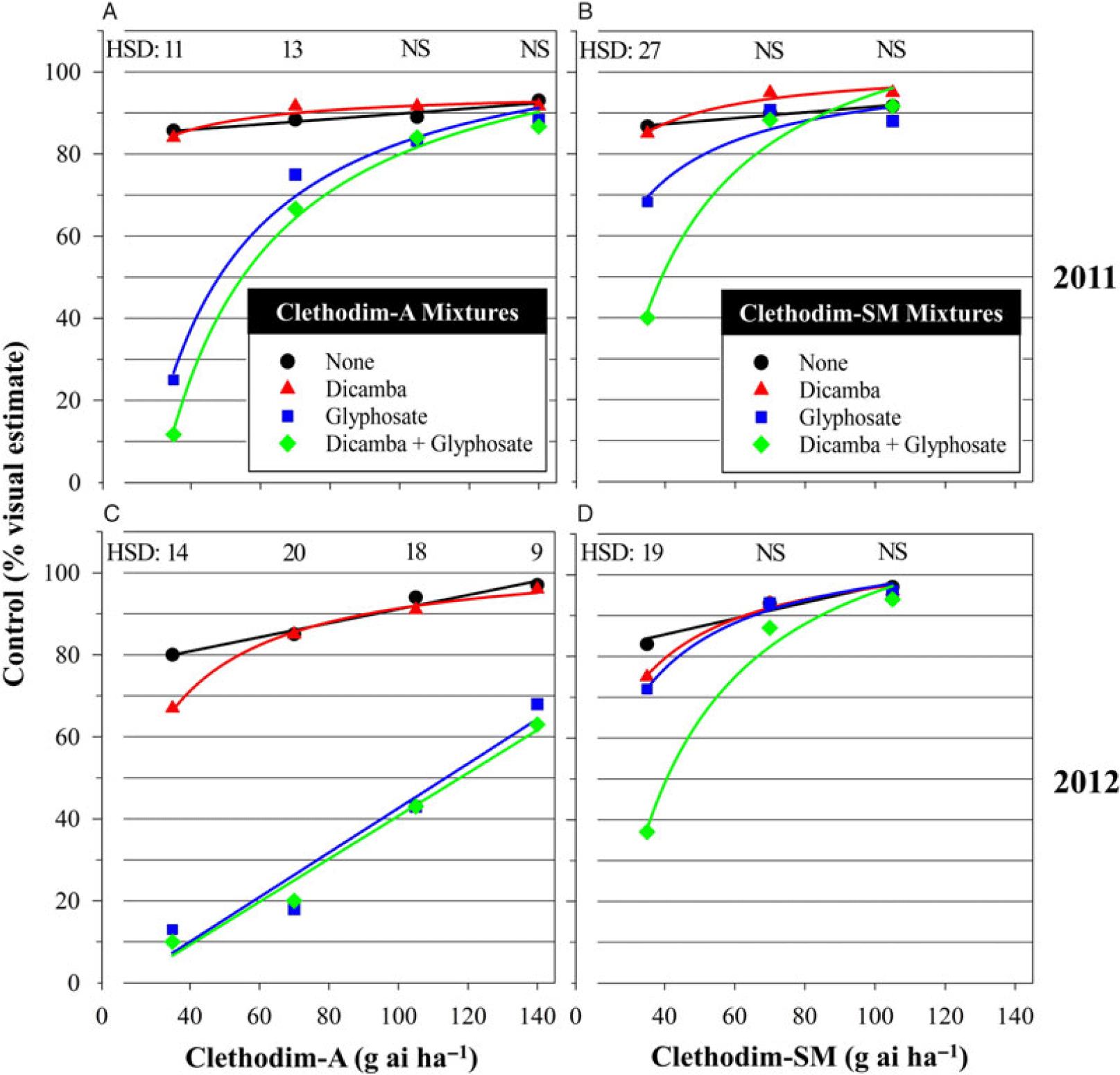
In 2012, volunteer GR corn control was similar between clethodim-A alone and in mixture with dicamba (Figure 2C). The addition of glyphosate or glyphosate plus dicamba reduced clethodim-A efficacy across all clethodim rates from 29% to 67%. Efficacy of clethodim-SM in 2012 was only reduced by the addition of dicamba plus glyphosate at the 35 g ha−1 clethodim-SM dose (Figure 2D). When applied with glyphosate or dicamba plus glyphosate, increasing clethodim-A rates improved volunteer GR corn control to a greater degree than clethodim-A alone or in mixture with dicamba during both years (Table 4; Figures 2A and 2C). In 2011 and 2012, the benefit of increasing clethodim-SM rates on control was more apparent when applied with dicamba plus glyphosate compared to either herbicide alone (Table 4; Figures 2B and 2D).
Regression parameter estimates of volunteer glyphosate-resistant corn control from combinations of increasing clethodim rates with dicamba and/or glyphosate in field trials.

a Clethodim-A (formulated without an adjuvant) applied at 35, 70, 105, and 140 g ai ha−1.
b Clethodim-SM (adjuvant-inclusive formulation) applied at 35, 70, and 105 g ai ha−1.
c Diglycolamine salt of dicamba and potassium salt of glyphosate applied at 420 and 840 g ae ha−1, respectively.
d Crop oil concentrate applied at 1% v/v in all treatments except those containing glyphosate.
e Abbreviations: L, linear parameters: y 0, y-intercept; a, slope (± SE).
f Abbreviations: I, inverse first order (Equation 1) parameters: y 0, y-asymptote; a, curvature (± SE).
Across all field trials, the K salt of glyphosate reduced clethodim-A efficacy in both years, whereas the DMA salt of glyphosate reduced efficacy only in 2012. However, given that neither glyphosate formulation reduced clethodim-SM efficacy and in view of scant evidence in the literature to validate these observations, it is not possible to conclude whether clethodim efficacy from these mixtures is contingent upon the specific glyphosate formulation. Although the addition of glyphosate tends to lower spray solution pH (Mueller and Steckel Reference Mueller and Steckel2019), it is unlikely this acidifying effect is responsible for poor clethodim performance, as research indicates efficacy is unaffected across a pH range of 3.5 to 6.5 (Bridges Reference Bridges1989). On the contrary, reduced clethodim efficacy was consistently observed only when 2,4-D or dicamba was applied with glyphosate. These results are in contrast to previous research demonstrating antagonism of graminicides by auxinic herbicides alone (Aguero-Alvarado et al. Reference Aguero-Alvarado, Appleby and Armstrong1991; Blackshaw et al. Reference Blackshaw, Harker, Clayton and O’Donovan2006; Mueller et al. Reference Mueller, Witt and Barrett1989; Underwood et al. Reference Underwood, Soltani, Hooker and Robinson2016). This difference can be explained by the addition in this study of COC to clethodim treatments containing either auxinic herbicide alone, as activator adjuvants have been shown to improve performance of antagonistic herbicide combinations and improve clethodim absorption (Jordan and York Reference Jordan and York1989; Nandula et al. Reference Nandula, Poston, Reddy and Koger2007; Wanamarta et al. Reference Wanamarta, Kells and Penner1993).
Across both years, the addition of an auxinic herbicide plus glyphosate reduced clethodim-A efficacy at rates of 35 and 70 g ha−1. Increasing the rate of clethodim-A to 105 or 140 g ha−1 restored efficacy of these mixtures to levels similar to clethodim-A alone in 2011. However, reduced efficacy of clethodim-A was still observed even at the highest dose in 2012 when mixed with glyphosate plus either auxinic herbicide. Minimal rainfall during the 2012 field trials imposed visible drought stress that was not evident in 2011 (Table 1). These environmental conditions are probably responsible for clethodim-A treatment differences between years, as research has indicated that drought stress can reduce absorption, translocation, and phytotoxicity of graminicides and alter herbicide interactions (Godley and Kitchen Reference Godley and Kitchen1986; Kells et al. Reference Kells, Meggitt and Penner1984; Varanasi et al. Reference Varanasi, Prasad Vara, Jugulam and Sparks2016; Xie et al. Reference Xie, Hsiao, Quick and Hume1996). Research elsewhere has shown that differences in clethodim formulation may overcome antagonism through increased foliar retention and absorption (Zollinger and Howatt Reference Zollinger and Howatt2005) and may explain why results for clethodim-SM mixtures were more consistent between years and the addition of an auxinic herbicide plus glyphosate was less detrimental to clethodim-SM efficacy.
Greenhouse
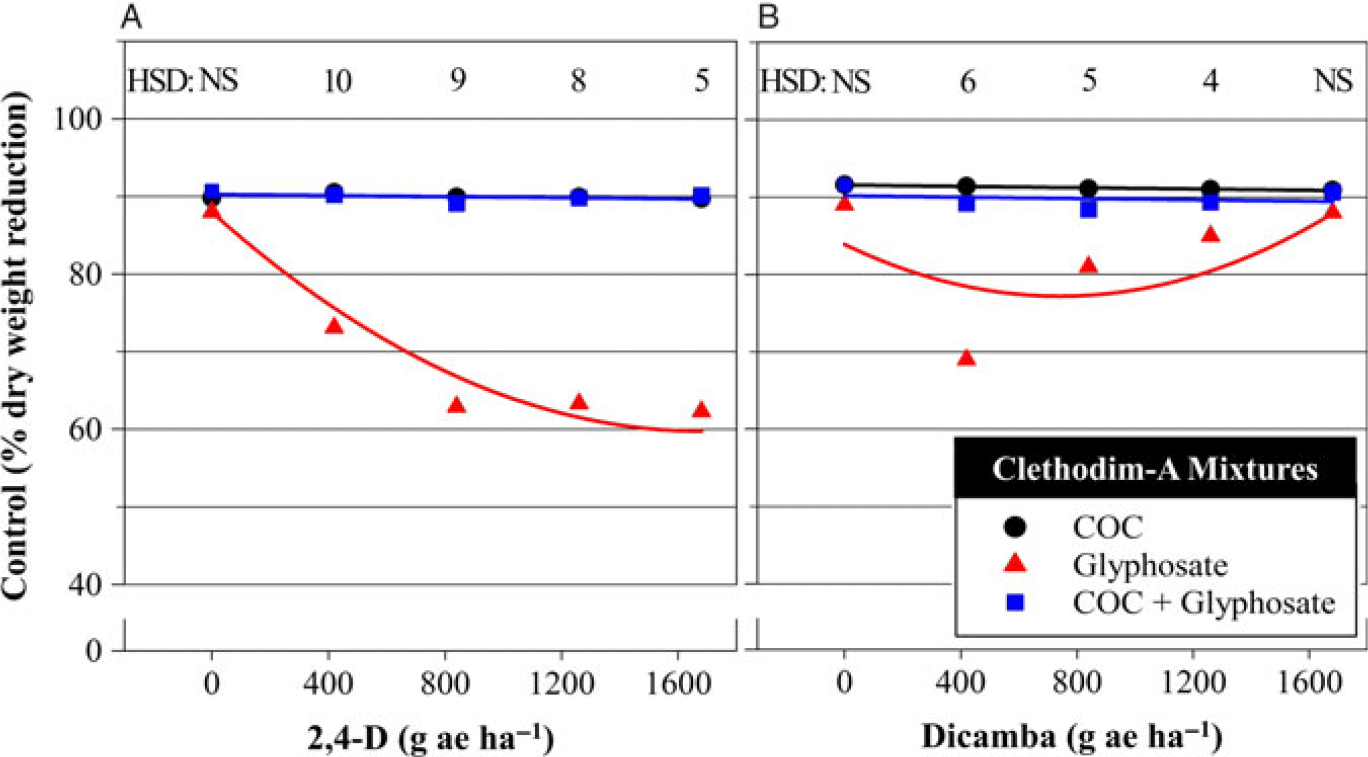
The combination of clethodim-A plus COC resulted in 90% control of GR corn and was not influenced by the addition of 2,4-D or dicamba at any dose (Table 5; Figure 3). In the absence of COC, control decreased when clethodim-A was combined with glyphosate and 2,4-D (Figure 3A). For example, as the rate of 2,4-D increased from 420 to 1,680 g ha−1, clethodim-A efficacy was reduced by 17% to 28%. These findings are similar to previous research reports that antagonism from 2,4-D increased concurrently with rate (O’Sullivan and O’Donovan Reference O’Sullivan and O’Donovan1980). In contrast, when glyphosate was applied with clethodim-A in the absence of COC at the dicamaba rate of 1,680 g ha−1, control was similar to that of clethodim-A plus COC (Figure 3B). However, efficacy was reduced by 17% at the same 420 g ha−1 dose of dicamba used in field trials. When COC was included with the three-way combinations of clethodim-A, glyphosate, and either auxinic herbicide, efficacy was fully restored regardless of auxinic herbicide dose. These results are in agreement with previous research concluding that reductions in herbicide efficacy due to antagonistic combinations can be overcome with the addition of an activator adjuvant (Jordan and York Reference Jordan and York1989; Wanamarta et al. Reference Wanamarta, Kells and Penner1993).
Regression parameter estimates of glyphosate-resistant corn control from combinations of clethodim with increasing auxinic herbicide rates in greenhouse trials.

a 2,4-D and dicamba applied at 0, 420, 840, 1,260, and 1,680 g ae ha−1.
b Clethodim-A (formulated without an adjuvant) applied at 18 g ai ha−1.
c Crop oil concentrate (COC) applied at 1% v/v.
d Glyphosate applied at 840 g ae ha−1 in the form of a dimethylamine and potassium salt in 2,4-D and dicamba mixtures, respectively.
e Abbreviations: L, linear parameters: y 0, y-intercept; a, slope (± SE).
f Abbreviations: Q, quadratic (Equation 2) parameters: y 0, y-intercept; a, slope (± SE); b, quadratic coefficient.
Percent dry-weight reduction at 14 d after treatment of glyphosate-resistant corn from 18 g ai ha−1 clethodim-A (formulated without an adjuvant) in mixture with a dimethylamine salt of 2,4-D (A) and a diglycolamine salt of dicamba (B) in greenhouse experiments. Crop oil concentrate (COC) was applied at 1% v/v. Glyphosate was applied at 840 g ae ha−1 in the form of a dimethylamine and potassium salt in mixture with 2,4-D and dicamba, respectively. Control was regressed against increasing rates of auxinic herbicides by fitting data to a linear or quadratic model. Parameter estimates are presented in Table 5, and Tukey-Kramer’s HSD (α = 0.05) for each auxinic herbicide rate is presented along the top of each graph. NS, not significant.

Auxinic herbicide use in 2,4-D- or dicamba-resistant soybean enables more effective management of GR broadleaf weed biotypes (Byker et al. Reference Byker, Soltani, Robinson, Tardiff, Lawton and Sikkema2013; Frene Reference Frene2017; Moechnig et al. Reference Moechnig, Simpson, Ruen, Rosenbaum, Johnson, Campbell, Scherder and Tewari2016; Spaunhorst et al. Reference Spaunhorst, Siefert-Higgins and Bradley2014) and often will be applied concomitantly with glyphosate to broaden the spectrum of weed control. The combination of clethodim with glyphosate would also align with best management practices regarding GR grass species (Norsworthy et al. Reference Norsworthy, Ward, Shaw, Llewellyn, Nichols, Webster, Bradley, Frisvold, Powles, Burgos, Witt and Barrett2012). To manage volunteer GR corn in these soybean systems, the use of clethodim remains among the most effective control options (Soltani et al. Reference Soltani, Shropshire and Sikkema2015). Collectively, this research documents that reduced performance of clethodim-A (formulated without an adjuvant) on volunteer GR corn by 2,4-D or dicamba was not apparent unless also combined with glyphosate. Increasing the rate of clethodim-A to within herbicide label recommendations (105 to 140 g ha−1), relative to a fixed auxinic herbicide and glyphosate rate, tended to restore efficacy. However, under environmental conditions conducive to drought stress, selection of a higher rate of clethodim-A was not sufficient to fully restore control from mixtures with glyphosate plus 2,4-D or dicamba. Moreover, relative to a fixed clethodim-A rate, increasing the dose of 2,4-D exacerbated efficacy when COC was not included in the spray solution. Clethodim labels do not require addition of COC in mixtures with adjuvant-loaded glyphosate products and instead recommend ammonium sulfate, a restricted additive of approved dicamba formulations for use in soybean. Therefore, these results advocate that to optimize control of volunteer GR corn and safeguard against reduced clethodim performance in three-way mixtures with glyphosate and 2,4-D or dicamba, mixtures should contain no less than 105 g ha−1 clethodim and include an activator adjuvant in the form of COC and/or an adjuvant-inclusive clethodim formulation. However, another confounding factor is the required addition of a drift-reducing agent for dicamba mixtures with glyphosate and clethodim herbicides approved for use in dicamba-resistant soybean. These drift-reducing agents will further complex the spray solution by affecting droplet size and potentially altering foliar retention and clethodim absorption on grass leaf surfaces.
Acknowledgments
This research received no specific grant from any funding agency, commercial or not-for-profit sectors. No conflicts of interest have been declared.