Introduction
Spodoptera litura is an important global agricultural pest on cotton, soybean, peanut, tobacco, sweet potato, taro and cruciferous crops (El-Aswad et al., Reference El-Aswad, Abdelgaleil and Nakatani2004). The most commonly used method of pest control worldwide is insecticides, but long-term use of insecticides leads easily to insect resistance and the cross-resistance between different insecticides, with the normal growth of crops affected by the reduction in insecticide efficiency (Rehan & Freed, Reference Rehan and Freed2014). The effects of insecticides on pests has long been studied (Lockwood et al., Reference Lockwood, Sparks and Story1983), and pest resistance to insecticides is unavoidable (Brogdon & McAllister, Reference Brogdon and McAllister1999), including the resistance of S. litura to insecticides (Kranthi et al., Reference Kranthi, Jadhav, Kranthi, Wanjari, Ali and Russell2002; Sayyed et al., Reference Sayyed, Ahmad and Saleem2008). Moreover, the mixing of a variety of insecticides to control S. litura generates high selection pressure and cross-resistance develops (Brogdon & McAllister, Reference Brogdon and McAllister1999; Sayyed et al., Reference Sayyed, Ahmad and Saleem2008). Chlorpyrifos, emamectin benzoate and fipronil are common and effective insecticides for controlling S. litura, although the resistance of S. litura to these three insecticides has continued to increase (Ahmad et al., Reference Ahmad, Sayyed, Saleem and Ahmad2008). Chlorpyrifos is a thiophosphate insecticide that is an acetylcholinesterase inhibitor, poisoning pests through fumigation, contact and the stomach (Tang et al., Reference Tang, Sun, Shu, Zhou and Zhang2009). Emamectin benzoate stimulates the nerve endings to release large amounts of GABA, and the GABA persists when firmly combined with the neuronal cell membrane (López et al., Reference López, Latheef and Hoffmann2010). As a result, irreversible activation of the chloride ion channel occurs that prevents muscle contraction, and the insect usually ceases to eat and dies (López et al., Reference López, Latheef and Hoffmann2010). Emamectin benzoate can control lepidopteran and other pests at comparatively low application rates (Ishaaya et al., Reference Ishaaya, Kontsedalov and Horowitz2002). Fipronil is a phenylpyrazole compound that inhibits GABA receptors in insects, controlling and blocking chloride channels (Gant et al., Reference Gant, Chalmers, Wolff, Hoffman, Bushey, Kuhr and Motoyama1998). Fipronil has low toxicity to vertebrates (Ikeda et al., Reference Ikeda, Nagata, Kono, Yeh and Narahashi2004).
Many olfactory sensory proteins are involved in insect recognition, including odorant-binding proteins (OBPs) and chemosensory proteins (CSPs) (Pelosi et al., Reference Pelosi, Iovinella, Zhu, Wang and Dani2017). OBPs include pheromone-binding proteins (PBPs), general odorant-binding proteins (GOBPs) and antenna-binding proteins (ABPs) (Picimbon, Reference Picimbon2003). OBPs are a class of water-soluble, small-molecule acidic proteins, with a polypeptide chain of approximately 144 amino acids and a signal peptide in the N-terminal and six conserved cysteine sites. OBPs are highly concentrated in the lymph of olfactory sensilla in insects and act as solvents and carriers to selectively bind fat-soluble odour molecules, dissolving and transporting these compounds through the hydrophilic liquid (Steinbrecht, Reference Steinbrecht1998). Finally, OBPs are rapidly inactivated after receptors are stimulated by odour molecules (Steinbrecht, Reference Steinbrecht1998). PBPs have a dual role of carrying and inactivating pheromones and are not expressed during larval stages, beginning biosynthesis and expression in only the last few days of the pupal stage (Keil & Steiner, Reference Keil and Steiner1991). Similar to OBPs, CSPs are soluble proteins of small molecular weight but are slightly smaller than OBPs, containing four conserved cysteines and two disulphide bonds (Xu et al., Reference Xu, You and Zhang2015). A CSP protein includes six α-helixes and is composed of a spherical hydrophobic cavity, with hydrophilic amino acids distributed on the surface of globular protein; thus, CSPs are highly water-soluble but with a core of hydrophobic amino acids located on the inner surface of globular proteins (Xu et al., Reference Xu, You and Zhang2015). The odour receptor has seven trans-membrane domains in insects, and with the receptors located in the dendrites of olfactory neurons; olfaction also requires the transport of small, soluble protein odour molecules to olfactory receptors (Picimbon, Reference Picimbon2003). In locusts and ants, CSPs are hypothesized to play a role in olfaction as odour-binding proteins that transport hydrophobic sensory molecules to sensory neurons (Angeli et al., Reference Angeli, Ceron, Scaloni, Monti, Monteforti, Minnocci, Petacchi and Pelosi2001; Ozaki et al., Reference Ozaki, Wadakatsumata, Fujikawa, Iwasaki, Yokohari, Satoji, Nisimura and Yamaoka2005). CSP and OBP proteins play important roles in the recognition of a wide variety of features in the environment, including identification of food, searching for breeding sites and spouses, and the avoidance of natural enemies, among others (Field et al., Reference Field, Pickett and Wadhams2000). In the absence of CSPs, the development of the head of Apis mellifera is abnormal (Maleszka et al., Reference Maleszka, Forêt, Saint and Maleszka2007).
Different doses of insecticides have different degrees of physiological effect in insects (Tricoire-Leignel et al., Reference Tricoire-Leignel, Thany, Gadenne and Anton2012), and OBPs and CSPs are affected by insecticides (Gong et al., Reference Gong, Luo and Hu2012; Guo et al., Reference Guo, Ning, Dong, Hong, Zhong, Yu, Picimbon, Yu, Su and Yao2014; Liu et al., Reference Liu, Xuan, Chu, Xie, Fan, Bi, Picimbon, Qin, Zhong, Fa Li, Gao, Pan, Wang and Rajashekar2014). The expression level of CSP1 decreased after treatment with a low concentration of thiamethoxam (Guo et al., Reference Guo, Ning, Dong, Hong, Zhong, Yu, Picimbon, Yu, Su and Yao2014; Liu et al., Reference Liu, Xuan, Chu, Xie, Fan, Bi, Picimbon, Qin, Zhong, Fa Li, Gao, Pan, Wang and Rajashekar2014), whereas at a high concentration, the expression decreased at 4 and 72 h after treatment but increased tenfold after 24 h (Guo et al., Reference Guo, Ning, Dong, Hong, Zhong, Yu, Picimbon, Yu, Su and Yao2014; Liu et al., Reference Liu, Xuan, Chu, Xie, Fan, Bi, Picimbon, Qin, Zhong, Fa Li, Gao, Pan, Wang and Rajashekar2014). When also treated with thiamethoxam, the expression patterns of B- and Q-type Bemisia tabaci CSP2s were almost the opposite (Liu et al., Reference Liu, Ma, Xie, Xuan, Guo, Fan, Rajashekar, Arnaud, Offmann and Picimbon2016). The expressions of two CSPs and one OBP in the head of Plutella xylostella was found to be increased after treatment with permethrin (Bautista et al., Reference Bautista, Bhandary, Wijeratne, Michel, Hoy and Mittapalli2015). When the coding pathway of the antennae is destroyed, the entire olfactory system cannot translate correctly (Sakurai et al., Reference Sakurai, Mitsuno, Haupt, Uchino, Yokohari, Nishioka, Kobayashi, Sezutsu, Tamura and Kanzaki2011). Furthermore, the downregulation of CSP proteins can also lead to moth death; for example, when the expression of SexiCSP3 decreased significantly in Spodoptera exigua, the mortality also increased significantly (42.5%) (Gong et al., Reference Gong, Luo and Hu2012).
The OBPs and CSPs in S. litura are reported in our previous study and another study (Feng et al., Reference Feng, Lin, Zheng, Qian, Chang and Du2015; Zhang et al., Reference Zhang, Zhu, Fang, He, Wang, Chen, Sun, Ye, Deng and Li2015). With insecticide use, we hypothesized that the ability of S. litura to identify outside information would be limited and therefore survival would be affected (Haynes, Reference Haynes1988). In this study, the change in expression of OBP and CSP genes was detected after treatment with insecticides, and the survival rate of S. litura was observed following RNA interference of OBP and CSP genes to explore the correlation between insecticide use and the function of these genes.
Materials and methods
Insect collection and insecticide treatments
Z9, Z11–14: OAc was prepared using the moth trap (Model: PT-NT; Ningbo Newcomb Biotech Co, Ltd, Ningbo, China) and PVC pheromone lure (SL02-SP; Ningbo Newcomb Biotech Co, Ltd, Ningbo, China) Z9, Z12–14: OAc. The male S. litura moths were collected from Hangzhou, Zhejiang (30°19′34.19″ N, 120°22′50.77″ E). The three insecticides chlorpyrifos, emamectin benzoate and fipronil were added to water with 10% sucrose, with the control only water with 10% sucrose. Three sets of biological replicates were set up for each treatment. After 48 h, the antennae were cut and placed in Trizol and ground thoroughly and stored in an ultra-low-temperature refrigerator (−80 °C).
RNA extraction and cDNA synthesis
An RNAiso Plus (TAKARA, Dalian, China) kit was used to extract total RNA. The RNA was solubilized with DEPC-treated water, the concentration and purity were determined with a NanoDrop, and cDNA was synthesized using a PrimeScript RT-PCR kit (Roche, Shanghai, China). The second step was as follows: 4 µl of buffer, 2 µl of dNTP, 0.5 µl of inhibitor, 0.5 µl of transcriptase, 1 µl of oligdT primer and 11 µl of water in a 65°C water bath for 10 min; followed by a second step of a 55 °C water bath for 30 min; and a third step of an 85 °C water bath for 5 min, and then −20°C for cryopreservation.
Real-time quantitative polymerase chain reaction
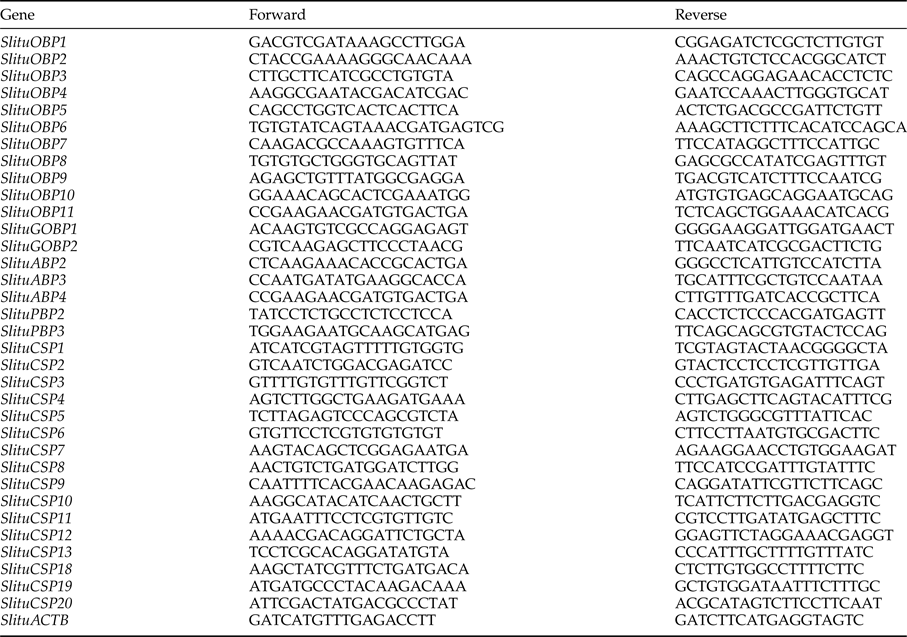
The expression of S. litura OBP and CSP genes was measured by real-time quantitative polymerase chain reaction (qRT-PCR) after treatment with the three insecticides. The primers were designed using primer 5. SlituACTB was selected as the reference gene (Lu et al., Reference Lu, Yuan, Gao, Kang, Zhan, Hu and Li2013). The primer sequences are shown in table 1. The kit used for RT-qPCR was KAPA SYBR FAST qPCR Kit Master Mix Universal (KAPA biosystems, Wilmington, Maryland, USA), and the system consisted of 10 µl of 2× KAPA SYBR FAST qPCR Master Mix 2 Universal, 0.4 µl of each of the primers and 50× ROX High, with PCR-grade water added to 20 µl. The NTC used DEPC-treated water as a template instead of cDNA. Three replicates were set for each sample. The entire qRT-PCR experiment was performed using ABI StepOnePlus (Thermo Fisher Scientific, San Diego, California, USA). The first step was denaturation at 95°C for 3 min, and the second step of the PCR reaction was 95°C for 3 s and 55°C for 20 s for 40 cycles. All quantitative data were analysed using the 2−ΔΔC Ct method (Livak & Schmittgen, Reference Livak and Schmittgen2001).
Primers for quantitative real-time PCR (qRT-PCR).

Cloning of SlituCSP18 and SlituOBP9
The cloning primers were designed using S. litura transcriptome data, and the primer sequences were SlituCSP18F: CCTCTTCAATAGAAGCAAAATGA, SlituCSP18R: GTAGCTTAAAACCCGGCAAC and SlituOBP9F: AAACGAACACCGCGAGAAA, SlituOBP9R: ACGTCATCTTTCCAATCGCT. The fragments were amplified by ExTaq enzyme (TAKARA, Dalian). The positive clones were sequenced (Shanghai Sonny Biological Company), and the sequences were analysed using BLAST.
Synthesis and injection of double-stranded RNA
The primers were designed to amplify SlituCSP18, SlituOBP9 and GFP using PMD18T-SlituCSP18, PMD18T-SlituOBP9 and PMD18T-GFP plasmids, respectively, kept in the laboratory as templates. The products were used to synthesize double-stranded RNA (dsRNA) of SlituCSP18, SlituOBP9 and GFP. The primers were the following: CSP18dsF: TAATACGACTCACTATAGGGAGACCACGTGGCTCTCGT TGTAACCAT, CSP18dsR: TAATACGACTCACTATAGGGAGACCACCGGATGCTTCGAATTTGGGA; OBP9dsF: TAATACGACTCACTATAGGGAGACCACGGAGCGCTACAACAAGATGA, OBP9dsR: TAATACGACTCACTATAGGGAGACCACACGTCATCTTTCCAATCGCT; and GFPdsF: TAATACGACTCACTATAGGGAGATTTGTATAGTTCATCCATGCCATGT, GFPdsR: TAATACGACTCACTATAGGGAGAATGAGTAAAGGAGAAGAACTTTTCA.
The dsRNA was synthesized using an RNA Production System-T7 kit [RiboMAX (TM) Large Scale; Promega, Shanghai]. RNA concentration was measured using a micro-spectrophotometer Nano-100, and the concentration was adjusted to 2 µg µl−1 with DEPC-treated water. Two microlitres of SlituCSP18, SlituOBP9 or GFP dsRNA was injected into the abdomens of male S. litura moths trapped on the same day with a 5 µl microlitre injector (Hamiltom, USA). The injected males were then placed in a plastic feeding basket with 10% sugar water plus one of the three insecticides chlorpyrifos, emamectin benzoate or fipronil (1 ppm) or with sugar water without insecticide as the control. Viability of the moths was recorded, and moths were collected after 48 h.
Data analyses
The results of the RT-qPCR were analysed with Office Excel 2013 (Student's t-test) and analysis of variance using the SPSS 19.0 statistical software package (IBM-SPSS, Somers, NY, USA). OriginPro 9.0 and Adobe Photoshop CS6 were used to prepare figures.
Results
Chlorpyrifos and emamectin benzoate reduced the survival rate of male S. litura moths
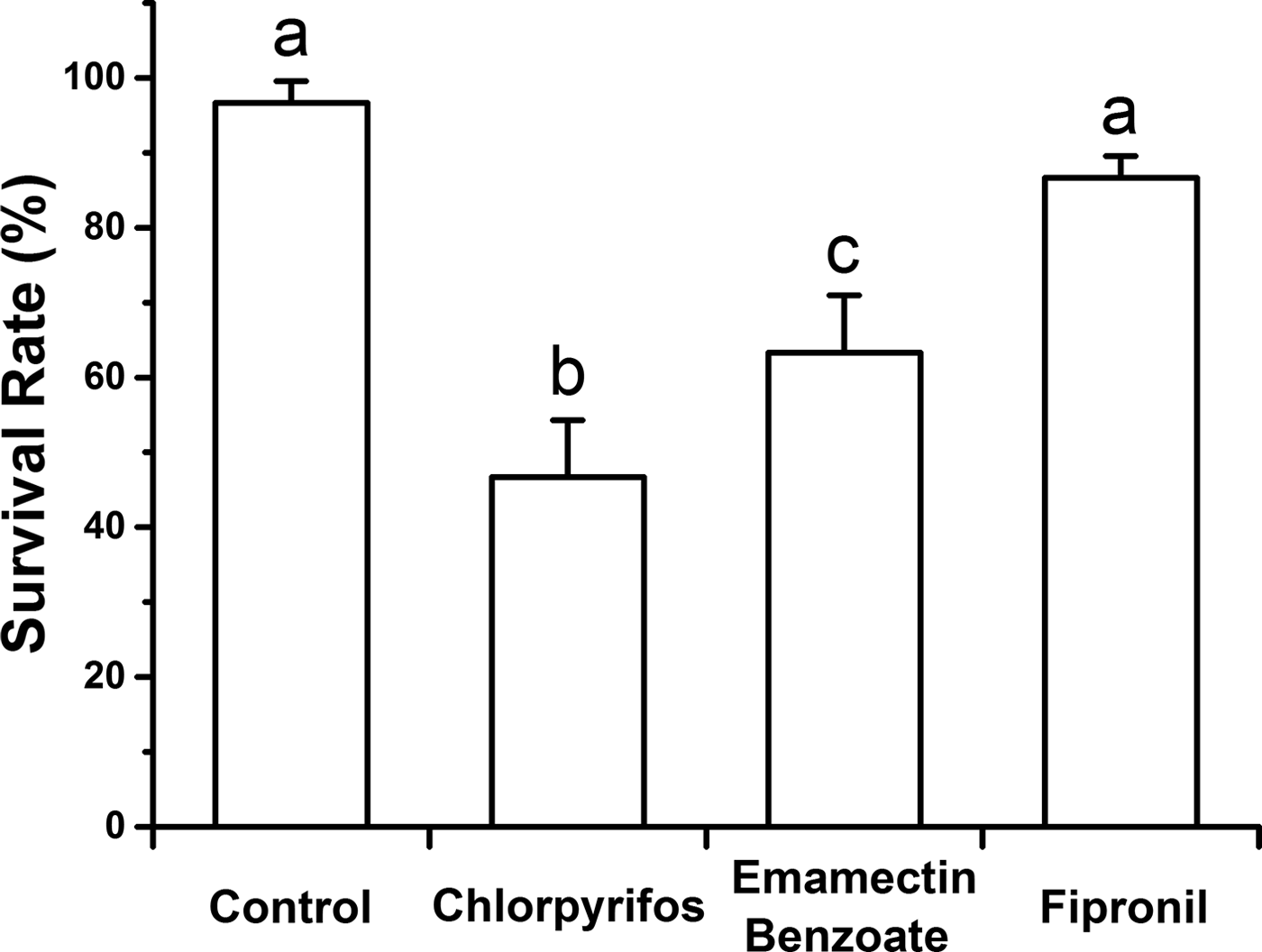
The survival rates of male S. litura moths were significantly reduced compared with those of the control group after treatment with chlorpyrifos and emamectin benzoate (1 ppm) (fig. 1). Compared with the control group (survival rate 97%, fig. 1), chlorpyrifos had the greatest effect on the survival rate of male S. litura (47%), followed by emamectin benzoate (64%), and fipronil had the least effect (P > 0.05, 87%).
Effects of three insecticides, chlorpyrifos, emamectin benzoate and fipronil, on the survival rates of male Spodoptera litura moths. Control: 10% sucrose in water. Concentration of insecticide: 1 ppm. Duncan's multiple-range test was used, P < 0.05.

Effects of chlorpyrifos, emamectin benzoate and fipronil on the expression of OBP genes
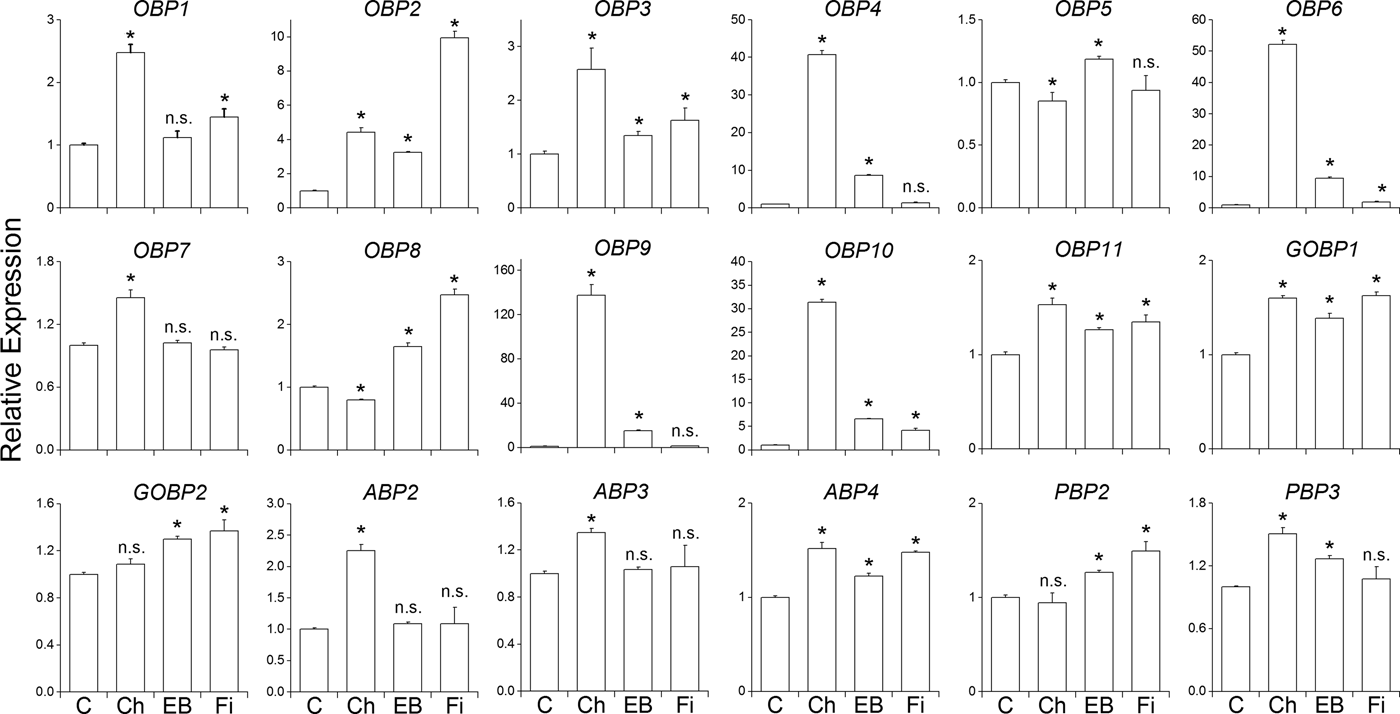
To evaluate the effect of the three insecticides on the expression of OBP genes, we used qRT-PCR to measure the expression after insecticide treatment. Expression of OBP4, OBP6 and OBP10 increased 30–50-fold in the chlorpyrifos-treated group and OBP9 increased 137-fold compared with the control (fig. 2). The other OBP genes were also induced, but the change in GOBP2 and PBP2 was not significant, and the expression of OBP5 and OBP8 was slightly reduced. OBP genes were induced after emamectin benzoate treatment, except for OBP1, OBP7, ABP2 and ABP3 (fig. 2). The highest expression was for OBP9, which increased approximately 15-fold. The expression of OBP4 and OBP10 increased sixfold to eightfold, whereas that of the other genes increased between onefold and twofold, compared with the control. After treatment with fipronil, similar to emamectin benzoate, no OBP gene showed inhibited expression (fig. 2). Among the seven induced genes, the expression of OBP2 increased approximately fourfold, that of OBP9 increased twofold, and the expression of the other nine genes increased onefold to threefold (fig. 2).
Effects of the three insecticides on the expression of OBP genes in male Spodoptera litura moths. Shown here is the comparison between the control and each of the pesticides. C, control; Ch, chlorpyrifos; EB, emamectin benzoate; Fi, fipronil. *P < 0.05 (Student's t-test).

Effects of chlorpyrifos, emamectin benzoate and fipronil on the expression of CSP genes
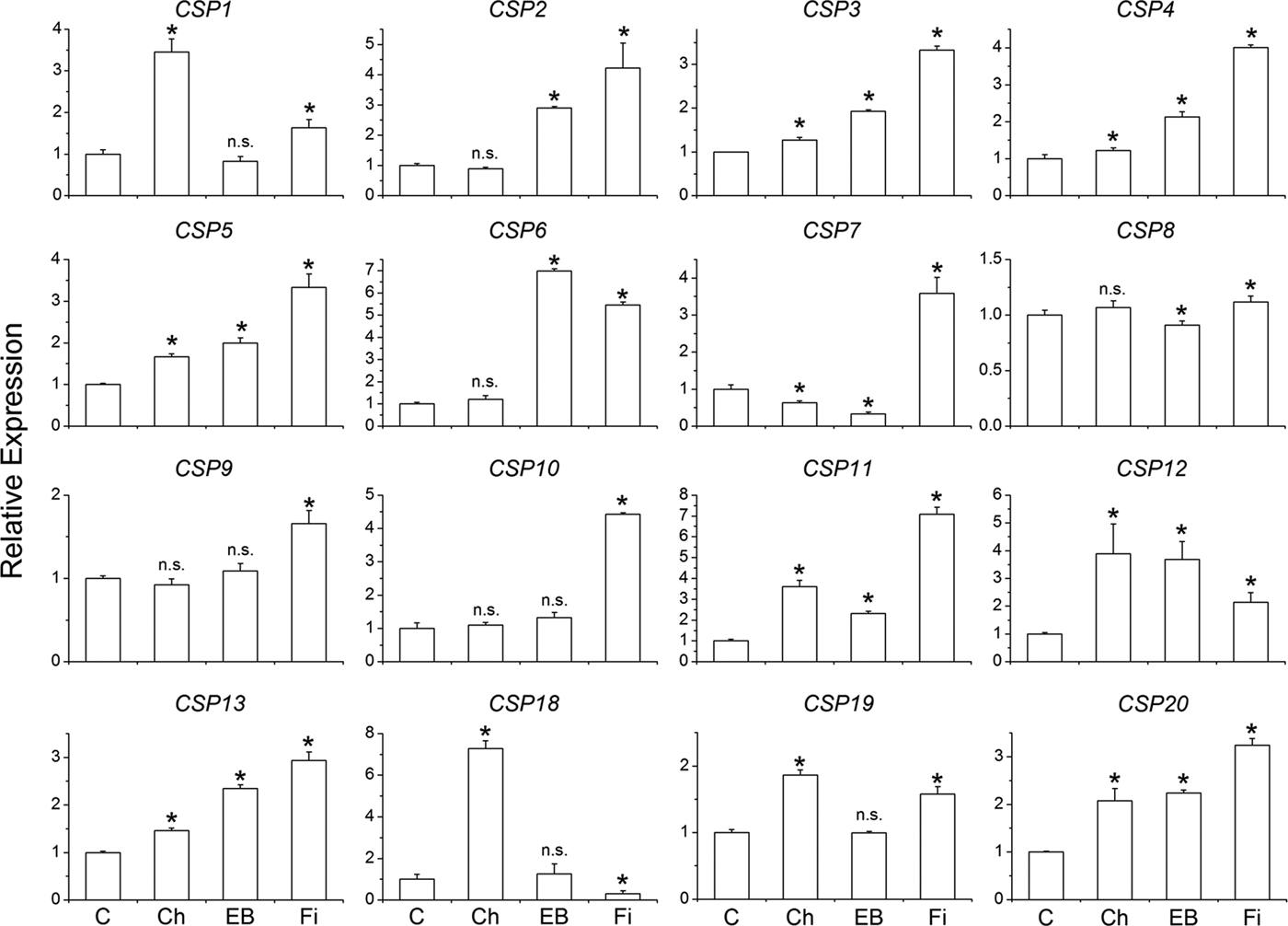
Most of the CSP genes were also induced after insecticide treatment (fig. 3). Ten CSP genes were induced by chlorpyrifos. Compared with that of the control, the expression of CSP18 increased sevenfold, other genes were induced less than threefold, the expression of five CSPs was not significantly different (CSP2, CSP6, CSP8, CSP9, CSP10), and only the expression of CSP7 was inhibited (fig. 3). After treatment with emamectin benzoate, nine CSP genes were induced, with the highest expression for CSP6 and an approximately sevenfold increase. The expression of five CSP genes did not change (CSP1, CSP9, CSP10, CSP18, CSP19), the expression of two CSP genes was inhibited (CSP7, CSP8), and the expression of CSP7 was reduced threefold; for the others, the reduction was less than fourfold (fig. 3). After fipronil treatment, only the expression of CSP18 was reduced threefold, and the other 15 genes were all induced (fig. 3). For CSP11, CSP2, CSP4, CSP6 and CSP10, the expression increased approximately fivefold, whereas the expression of the other genes were increased onefold to threefold (fig. 3).
Effects of the three insecticides on the expression of CSP genes in male Spodoptera litura moths. Shown here is the comparison between the control and each of the pesticides. C, control; Ch, chlorpyrifos; EB, emamectin benzoate; Fi, fipronil. n.s., not significant; *P < 0.05 (Student's t-test).

The numbers of OBP and CSP genes affected by chlorpyrifos, emamectin benzoate and fipronil
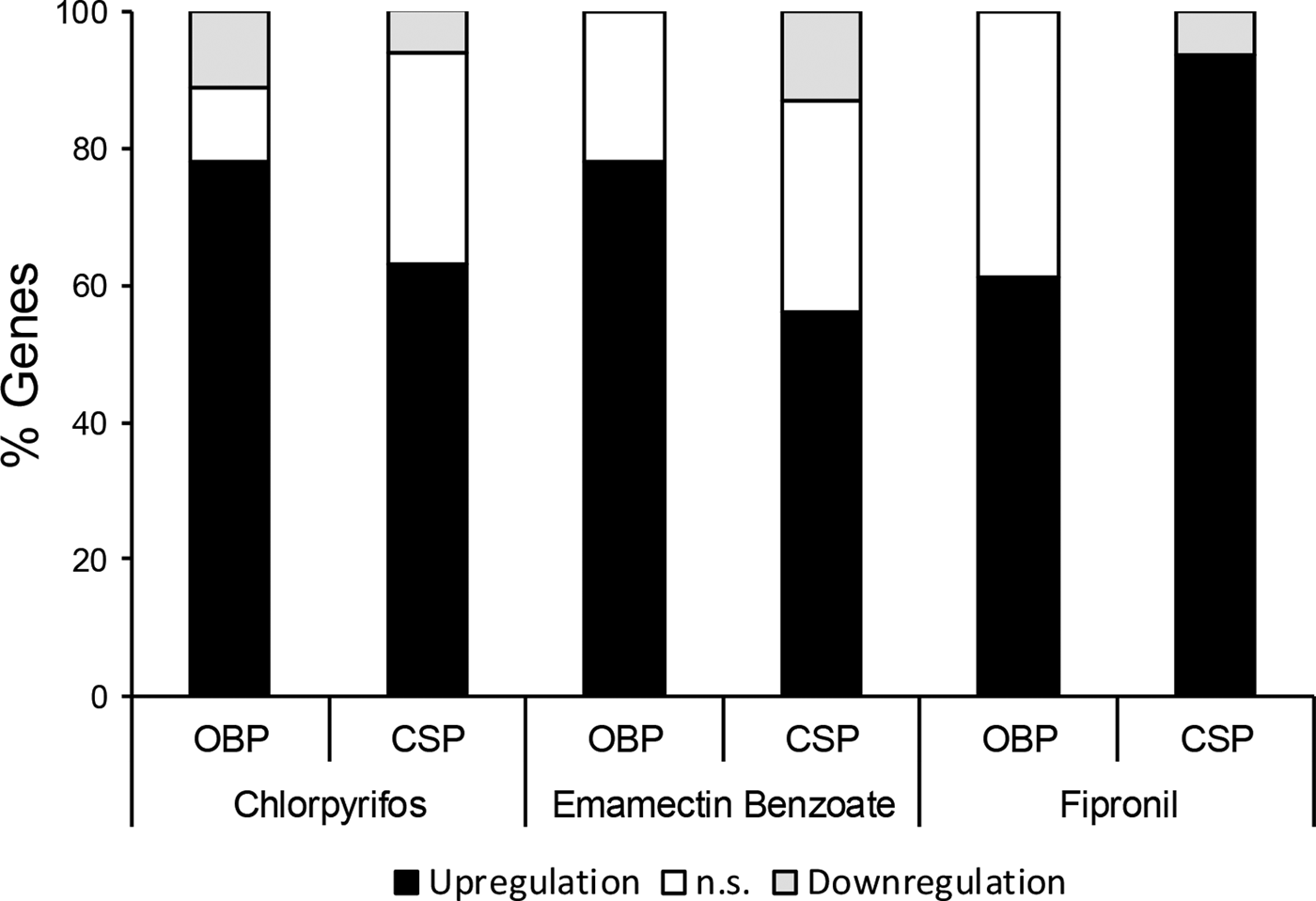
The percentages of OBP and CSP genes induced, inhibited and unchanged were calculated based on the qRT-PCR results. Of the OBP and CSP genes, 71% were induced, 23% were unaffected and 6% were inhibited (fig. 4). The percentage of OBP genes induced by both chlorpyrifos and emamectin benzoate was 78%, and the percentage of CSP genes induced was 63 and 56%, respectively; thus, the proportion of OBP genes induced was higher than that of CSP genes (fig. 4). However, for fipronil, the proportion of CSP genes induced was 94%, which was higher than that for OBP genes and was 1.5-fold more than that by chlorpyrifos or emamectin benzoate. The percentage of OBP genes inhibited by treatment with the three insecticides was 11% (chlorpyrifos), 0% (emamectin benzoate) and 0% (fipronil), i.e. only 11% of the OBP genes was inhibited by chlorpyrifos and inhibition was not observed with emamectin benzoate and fipronil (fig. 4). The percentage of CSP genes inhibited in the three insecticide treatments was 6% (chlorpyrifos), 13% (emamectin benzoate) and 6% (fipronil), indicating that the CSP genes were more likely to be inhibited than OBP genes, particularly by emamectin benzoate (fig. 4). The percentage of OBP genes not affected by the three insecticide treatments was 11% (chlorpyrifos), 22% (emamectin benzoate) and 39% (fipronil). The percentage of CSP genes that was not affected by the treatments was 31% (chlorpyrifos), 31% (emamectin benzoate) and 0% (fipronil).
Ratio of the numbers of OBP and CSP genes affected by the three insecticides in male Spodoptera litura moths. Total, total number of changed OBP and CSP genes; OBP, number of changed OBP genes; CSP, number of changed CSP genes. The ratios of total/OBP/CSP genes were calculated. Moths were fed chlorpyrifos, emamectin benzoate or fipronil at 1 ppm in 10% sucrose water. Upregulation, number of genes upregulated; n.s., not significant; downregulation, number of genes downregulated.

Effects of chlorpyrifos, emamectin benzoate and fipronil on the survival rate of male S. litura moths after downregulation of SlituCSP18 and SlituOBP9 by RNA interference
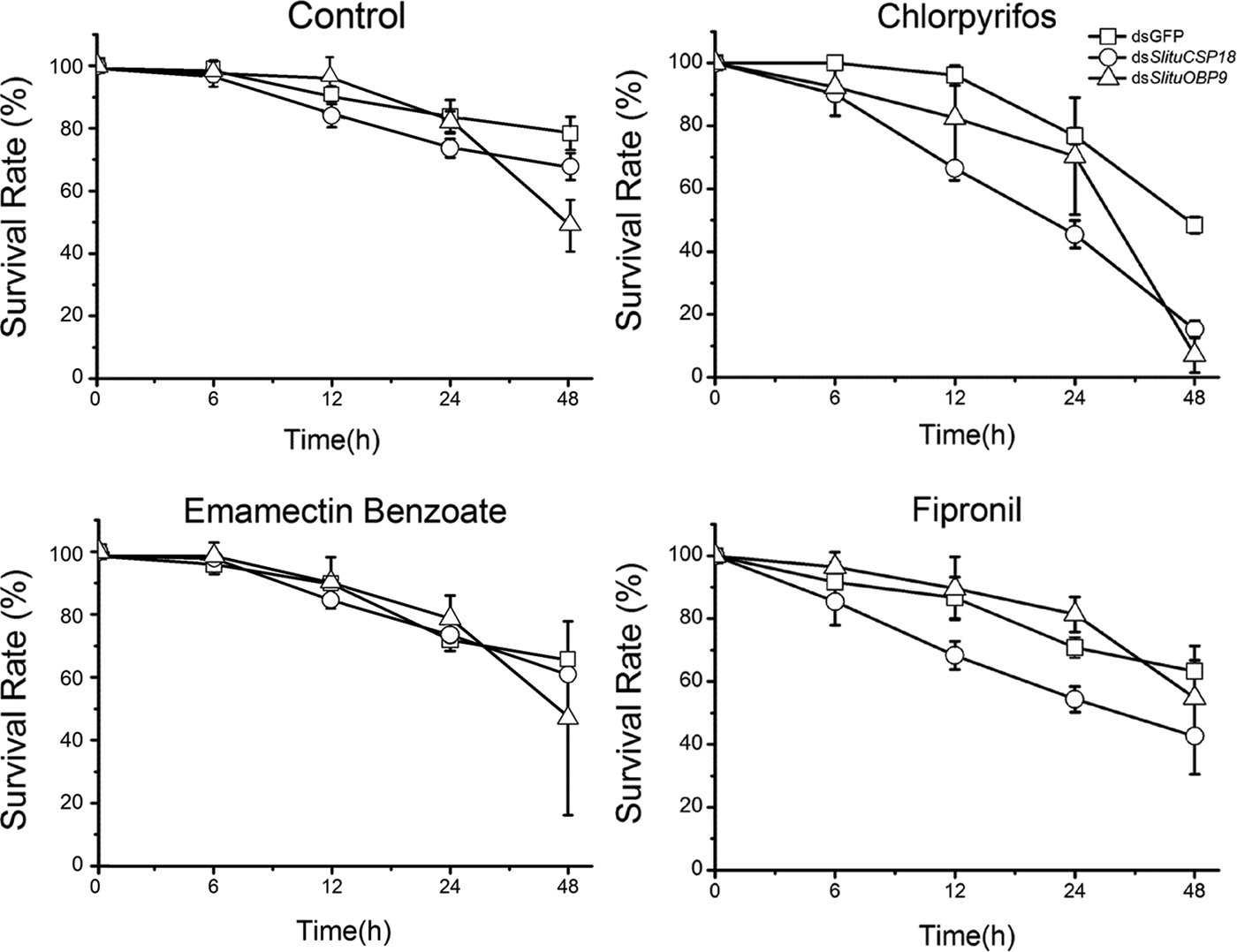
Previous studies and our results (fig. 3) show that CSP genes are induced by insecticide treatment (Liu et al., Reference Liu, Xuan, Chu, Xie, Fan, Bi, Picimbon, Qin, Zhong, Fa Li, Gao, Pan, Wang and Rajashekar2014). To further study the correlations between the three insecticides and the CSP/OBP genes, we synthesized and then injected SlituCSP18 dsRNA and SlituOBP9 dsRNA separately into wild-caught male S. litura moths. After injection of dsRNA, the moths were fed 1 ppm chlorpyrifos, emamectin benzoate or fipronil, and then the survival rate was recorded. The results showed that the survival rates of the moths after insecticide treatment all decreased in 48 h (fig. 5). However, injections of SlituCSP18 dsRNA and SlituOBP9 dsRNA had different effects on the survival of the moths. The survival rate of moths injected with SlituCSP18 dsRNA decreased to 15.29% and 42.58% when treated with chlorpyrifos and fipronil, respectively (fig. 5), which was significantly lower than the survival of moths injected with GFP dsRNA (48.39 and 63.29%, respectively, after 48 h) and that of moths treated with water without insecticides after injection (79.29 and 68.14%, respectively, after 48 h, fig. 5). The survival rate of moths injected with SlituCSP18 dsRNA and then treated with emamectin benzoate showed no significant difference from survival in the GFP dsRNA control (fig. 5). The survival rate of moths injected with SlituOBP9 dsRNA and treated with chlorpyrifos decreased to 7.17% (fig. 5b), a significant reduction compared with that of the control (fig. 5a), but the survival rates were not significantly different between emamectin benzoate and fipronil (48.18 and 54.84%, respectively; fig. 5c, d).
Survival rates of male Spodoptera litura moths injected with SlituCSP18 and SlituOBP9 dsRNA and followed by feeding on one of the three insecticides. The survival rates of the moths injected with dsGFP were compared with SlituCSP18 or SlituOBP9 dsRNA. In the control, moths were fed 10% sucrose water; in the chlorpyrifos, emamectin benzoate and fipronil treatments, moths were fed 10% sucrose water with 1 ppm of insecticide. The points in time were 0, 6, 12, 24 and 48 h (the time that samples were counted).

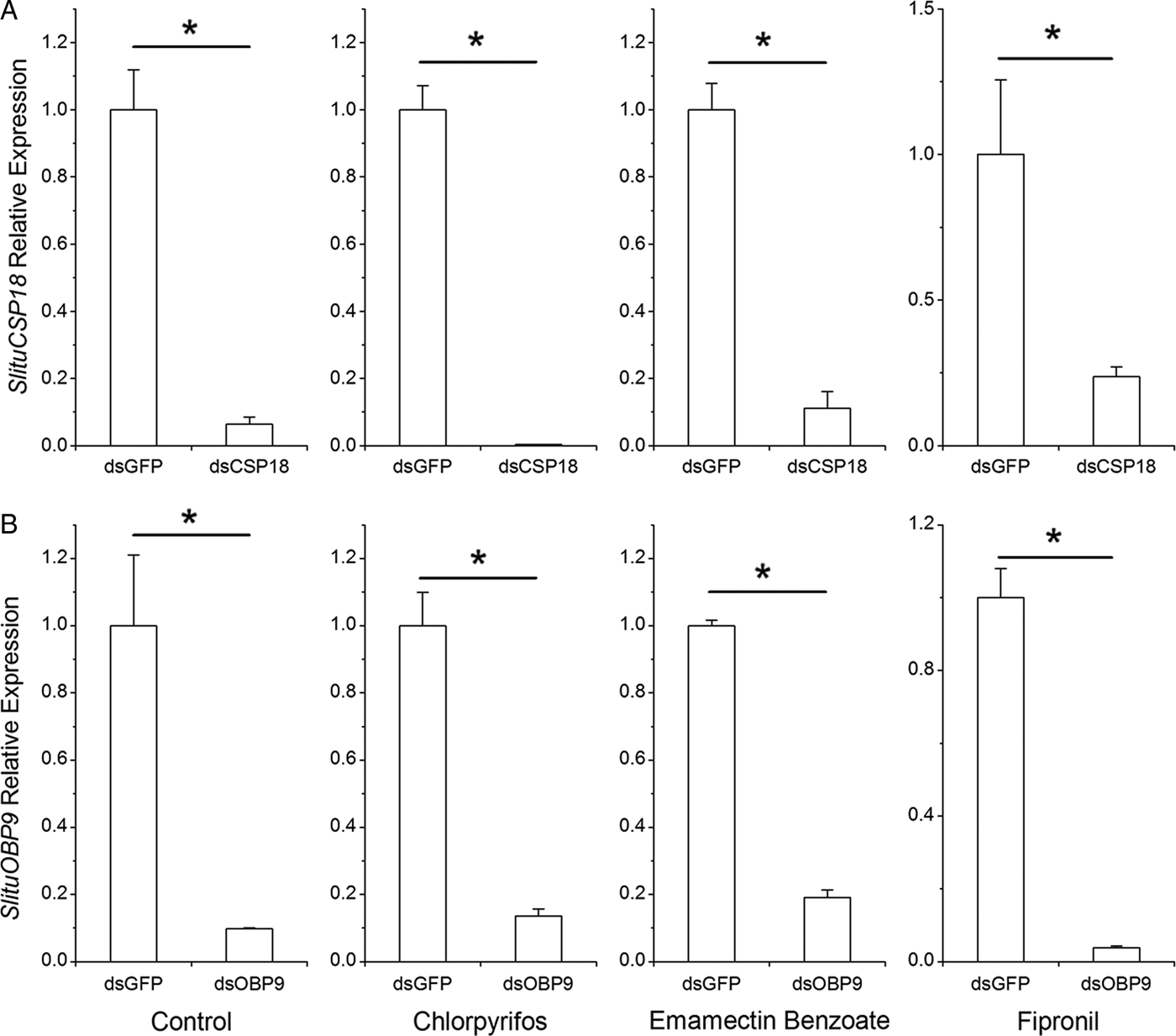
The results of qRT-PCR showed that the expression levels of SlituCSP18 and SlituOBP9 decreased significantly after injection of SlituCSP18 dsRNA and SlituOBP9 dsRNA, respectively, both in the control and the insecticide treated moths. In the control, the expression levels of SlituCSP18 and SlituOBP9 decreased to 6.45 and 9.77%, respectively (fig. 6), indicating that the RNA interference was successful for both genes. The expression levels of SlituCSP18 were reduced to 0.34, 11.14 and 23.63% in the moths fed chlorpyrifos, emamectin benzoate and fipronil, respectively (fig. 6); whereas the expression levels of SlituOBP9 were reduced to 13.62, 19.07 and 3.80%, respectively (fig. 6).
Expression levels of SlituCSP18 and SlituOBP9 after feeding on each of the three insecticides and injected with dsRNAs in male Spodoptera litura moths. In the control, moths were fed 10% sucrose water; in the chlorpyrifos, emamectin benzoate and fipronil treatments, moths were fed 10% sucrose water with 1 ppm of insecticide. *P < 0.05 (Student's t-test).

Discussion
For most of the OBP/CSP genes, expression was induced by treatments with the three insecticides commonly used for S. litura control (figs 2 and 3). Only a few OBP/CSP genes were downregulated or did not change at the transcriptional level (figs 2 and 3). The correlations of the expression of OBP/CSP genes in S. litura with these insecticides were not clear. Different insecticides have different effects on insects (Ahmad & Mehmood, Reference Ahmad and Mehmood2015). For example, the expression of CSP genes increased in almost every silkworm treated with avermectin (Xuan et al., Reference Xuan, Guo, Xie, Lou, Lu, Liu and Picimbon2014). In this study, the expression of OBP/CSP genes increased from as low as twofold to fivefold to up to more than 100-fold with insecticide treatment, which indicated that the different insecticides shared some common effects on the regulation of the expression of OBP/CSP genes.
The three insecticides that we used had different effects on the OBP/CSP genes of S. litura. The expression of SlituCSP18 did not change significantly with emamectin benzoate treatment (fig. 3). However, SlituCSP18 was significantly induced after treatment with chlorpyrifos, whereas expression was significantly reduced by the fipronil treatment (fig. 3). SlituOBP9 was highly induced by chlorpyrifos (137-fold) and was also induced by emamectin benzoate (fig. 3). In this study, only one reference gene (SlituACTB) was used based on the previous report (Lu et al., Reference Lu, Yuan, Gao, Kang, Zhan, Hu and Li2013). However caveat should be taken because previous work by Liang et al., showed that the expressions of reference genes varied among the treatment of intra- and inter-classes of insecticides (Liang et al., Reference Liang, Guo, Zhou and Gao2014). The differential response of S. litura male moths to the three insecticides indicated the potential specificity of SlituCSP18 and SlituOBP9 to chlorpyrifos. The expressional responses of OBP/CSP genes are possibly caused by sensing of the insecticides by OBP/CSP and then transmitted by the olfactory system, finally lead to the transcriptional changes of the OBP/CSP genes. Therefore, in the future, this hypothesis would be supported by testing the binding ability of the insecticides and OBP/CSP. Our RNAi experiments also indicated that SlituCSP18 and SlituOBP9 might be key CSP/OBP genes mediated by or correlated with the effects of insecticides on the expression of CSPs/OBPs. The striking difference in gene expression in response to chlorpyrifos and fipronil could be resulted from the treatment itself. Because we treated with all three pesticides at concentration of 1 ppm, which have different effects on mortality, the difference of gene expression could be smaller if moths were treated at LC50 of each insecticide.
Treatments with the three insecticides all reduced the viability of the moths. Although it is not significantly reduced for fipronil, possibly because the concentrations we used for all three insecticides are 1 ppm. For fipronil, this is relatively low. Feeding the moths with chlorpyrifos, emamectin benzoate, fipronil after injection of SlituCSP18 dsRNA and SlituOBP9 dsRNA showed that different insecticide treatments resulted in different rates of survival. Forty-eight hours after the injection of SlituCSP18 dsRNA or SlituOBP9 dsRNA and the insecticide treatment, the final survival rates were reduced. The survival rates with dsGFP, SlituCSP18 dsRNA and SlituOBP9 dsRNA were similar when treated with emamectin benzoate (fig. 5). The survival rates of dsRNA injection and fipronil-treated moths were also reduced; however, no significant difference was detected when comparing the dsGFP-injected moths with SlituCSP18 dsRNA- and SlituOBP9 dsRNA-injected moths (fig. 5). The survival rate of male moths after treatment with chlorpyrifos increased significantly with injection of SlituCSP18 dsRNA and SlituOBP9 dsRNA after 48 h but was less affected by treatment with emamectin benzoate or fipronil, which indicated that CSP/OBP genes might play different roles in the responses to insecticide treatment. Therefore, the effect of chlorpyrifos on male moths might be correlated with the expression of SlituCSP18 and SlituOBP9, further demonstrating that the three insecticides changed the physiological processes of S. litura by different pathways or mechanisms. Exposure to chlorpyrifos increases the expression of OBP9/CSP18 but knocking them down with insecticide exposure causes even higher mortality, which indicates that the role of OBP9/CSP18 might be protective, because if OBP9/CSP18 have high binding affinity with chlorpyrifos, increasing of their expressions would decrease the toxicity of chlorpyrifos by high affinity binding to sequest and masking the insecticide, which could consider to be a kind of insecticide resistance (Pelosi et al., Reference Pelosi, Iovinella, Zhu, Wang and Dani2017). Thus, we hypothesize that SlituOBPs and SlituCSPs might mediate their effects by increasing their expression levels to improve survival. We conclude that the effects of the insecticides chlorpyrifos, emamectin benzoate and fipronil on S. litura might be correlated with OBPs/CSPs and mediated by SlituCSP18 and SlituOBP9 and the mechanism are to be explored in the future.
Acknowledgements
The authors thank Mr Bo Wang for the collection of insects. The Special Fund for Agro-scientific Research in the Public Interest in China (Grant No. 201203036) supported this work.