The vast majority of the United States, by land mass, has fewer than six people per square mile, and is considered rural or frontier. (Throughout this article and the Institute of Medicine [IOM] workshop summary [2011], rural is used to capture both rural and frontier settings.)1 In a rural environment, a mass casualty incident (MCI) does not necessarily refer to the magnitude of affected patients but rather the ratio of need to resource capacity. A 2012 IOM consensus report defines the resource environment in which the health care system operates as directly affecting the type of care that can be provided to patients; as a specific resource—staff, equipment, or space—becomes increasingly scarce, the system is forced to adapt to its absence.1 In a rural environment, crucial resources already can be scarce on a daily basis. Thus in an emergency, a small number of patients, by urban standards, could quickly overwhelm a small rural hospital or emergency medical services (EMS) agency. In fact, a 2006 survey of rural hospital emergency departments found that one-third of respondents reported being overwhelmed by an MCI at least once within the prior two years; more than one-half reported activating their disaster plans within that same time period.Reference Manley, Furbee and Coben2 The survey noted that MCIs can encompass incidents from vehicular crashes and hurricanes to mass shootings and floods. Following two such examples of rural MCIs, the IOM's Rural Mass Casualty Incident Workshop began with a discussion of the realities of these experiences and lessons learned by those responsible for responding to them (see Table 1, Table 2, Table 3, Table 4, and Table 5).
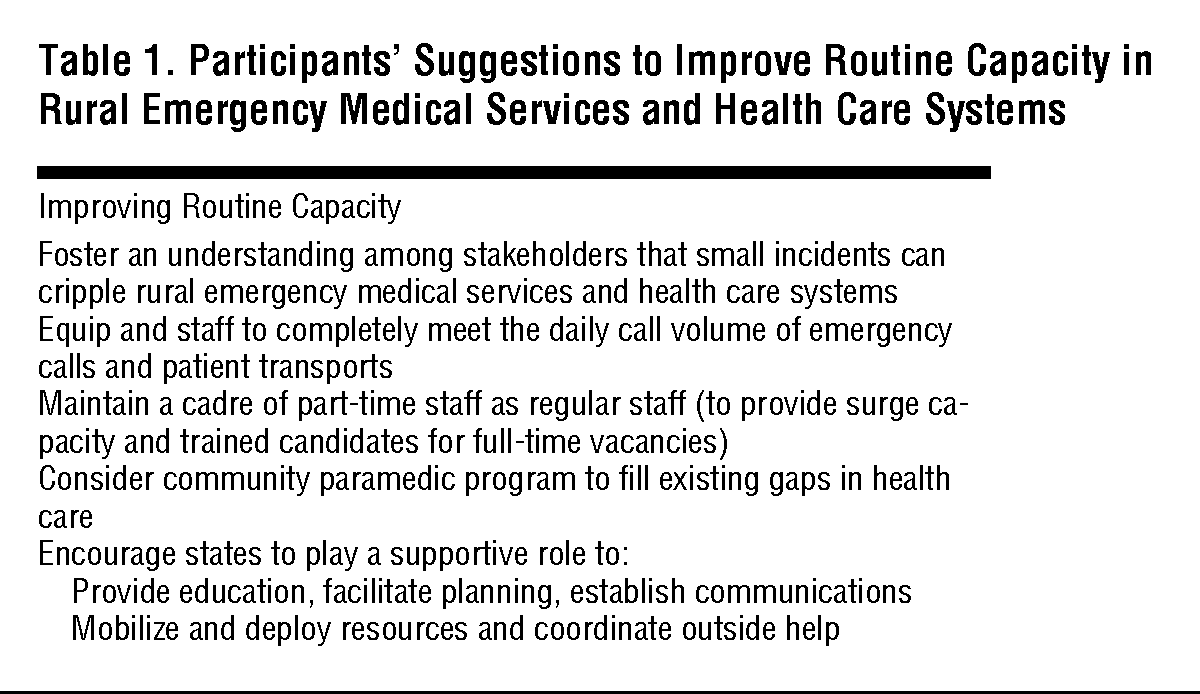
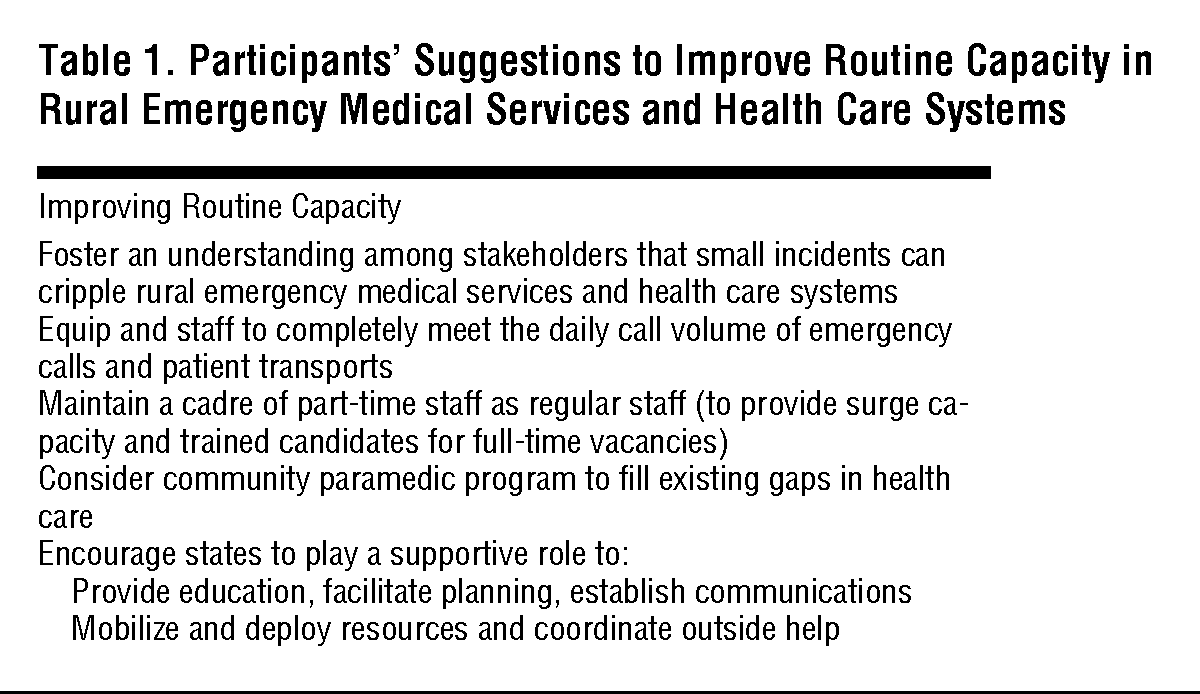
Participants' Suggestions to Improve Routine Capacity in Rural Emergency Medical Services and Health Care Systems
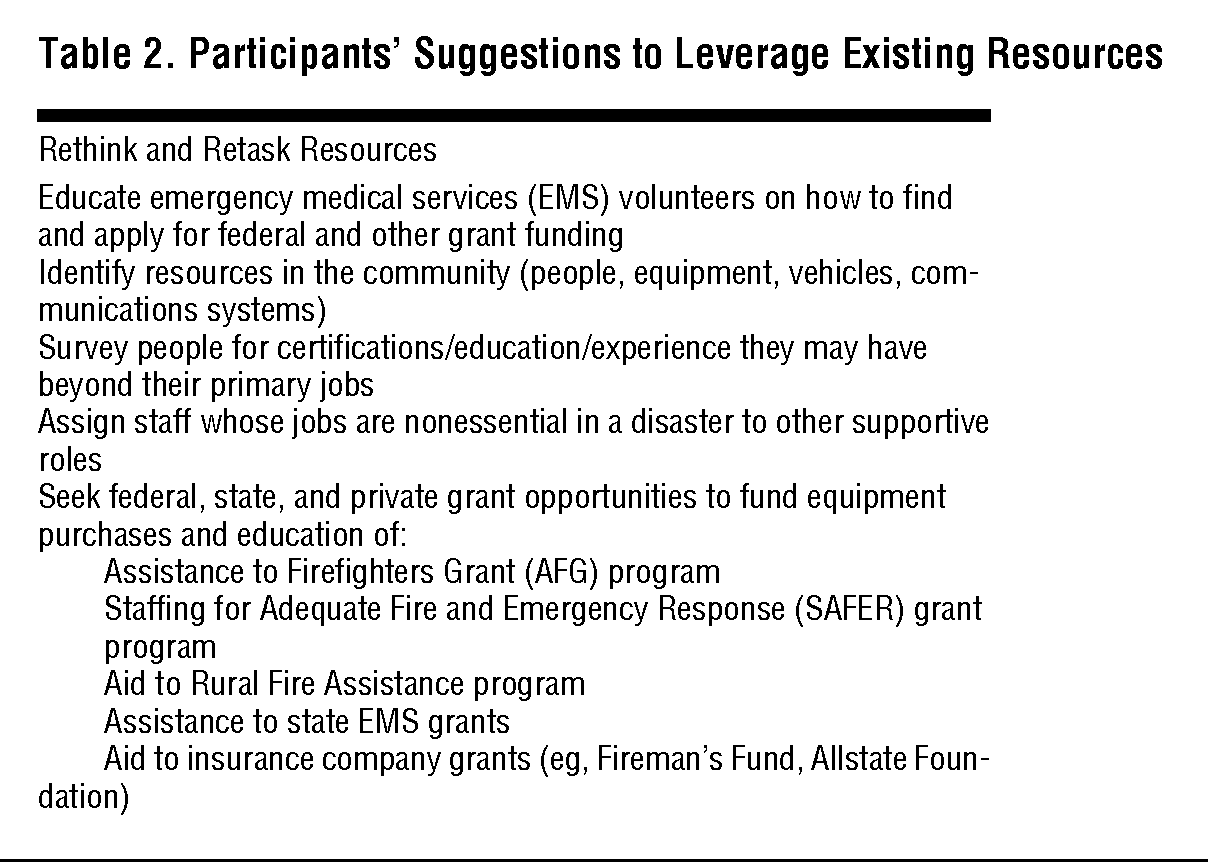
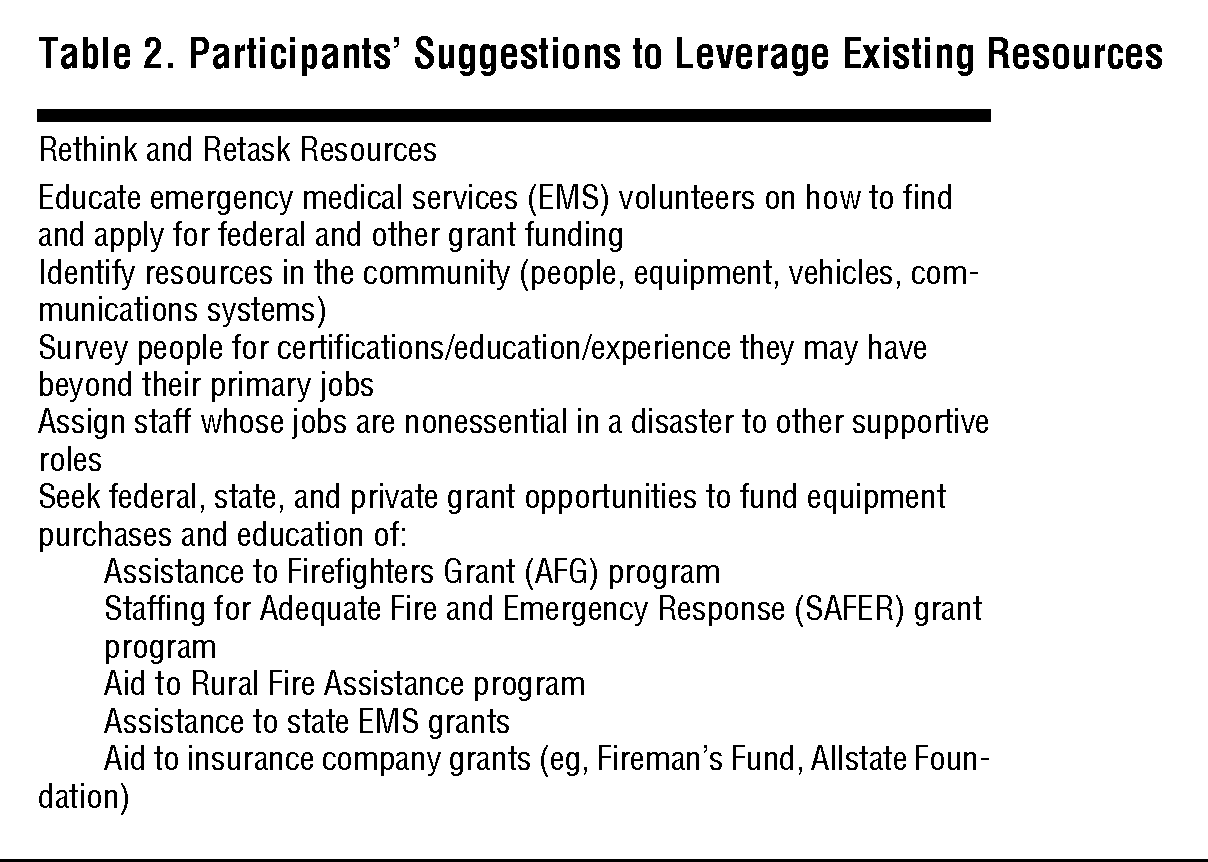
Participants' Suggestions to Leverage Existing Resources
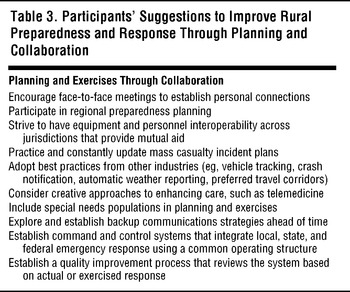
Participants' Suggestions to Improve Rural Preparedness and Response Through Planning and Collaboration

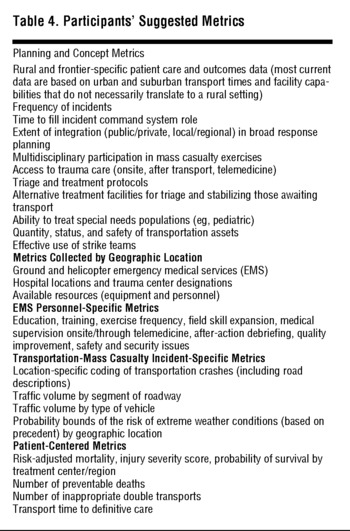
Participants' Suggested Metrics

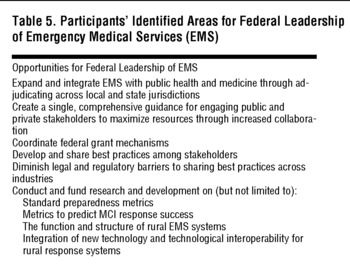
Participants' Identified Areas for Federal Leadership of Emergency Medical Services (EMS)

Following the investigation of the Mexican Hat, Utah, bus crash, the National Transportation Safety Board (NTSB) tasked the Federal Interagency Committee on Emergency Medical Services (FICEMS) with “evaluat[ing] the system of emergency care response to large-scale-transportation-related rural accidents and, once that evaluation is completed, develop guidelines for emergency medical service response and provide those guidelines to the states.”3 FICEMS requested that the IOM's Forum on Medical and Public Health Preparedness for Catastrophic Events review the findings from this NTSB report and discuss near- and long-term opportunities to improve response capabilities in rural settings, explore existing standards and guidance in place for state and local jurisdictions, and discuss opportunities to improve the integration and coordination with public health systems to address challenges to national public health security in rural settings.
In spite of the specificity of the impetus provided by the Mexican Hat, Utah, and Albert Pike, Arkansas, incidents, the IOM workshop focused on the common challenges, and potentially widely-applicable solutions, that rural EMS and health care systems face in responding to MCIs. Presenters and participants were encouraged to confront rural preparedness and response broadly and comprehensively, from the initial notification that an incident has occurred (often via 911), through the prehospital response mounted from the scene and including transportation to hospitals, and to quality improvement and self-assessment activities post-response. Therefore the discussion of infrastructure improvements focused on the realities of demands on rural EMS systems vs the potential for new and retasked resources. The source of challenges and themes of solutions enumerated fall into six broad categories:
• improving rural response to MCI through improving daily capacity and capability,
• sustaining and strengthening relationships,
• developing and sharing best practices across jurisdictions and sectors,
• leveraging current and emerging technology to overcome infrastructure deficits,
• establishing metrics development and sharing, and
• fostering the need for federal leadership to expand and integrate EMS into a broader rural response framework.
The statements, recommendations, and opinions expressed herein, and in the full-length workshop summary,4 solely represent the viewpoints of individuals, and should not be construed to indicate consensus or endorsement by the workshop planning committee, the IOM's Forum on Medical and Public Health Preparedness for Catastrophic Events, or the National Academies.
Specific programs identified by participants and listed in the full workshop summary include: the National Association of State EMS Officials (NASEMSO) Model Inventory of Emergency Care Elements; NASEMSO Event Response Readiness Assessment, Centers for Disease Control and Prevention metrics' development associated with Public Health Emergency Preparedness Cooperative Agreements; American Association of State Highway and Transportation Officials Highway Safety Manual; AAA Foundation for Traffic Safety US Road Assessment Program; US Joint Forces Command, Joint Concept Technology Demonstrations; and National Highway Traffic Safety Administration Data-drive Approaches to Crime and Traffic Safety.
IMPROVING RURAL RESPONSE TO MCI MEANS IMPROVING DAILY CAPACITY
A rural health care system that is unable to provide daily, routine emergency services will not be able to effectively respond to an MCI. Several participants drew a direct link from daily capacity to surge capacity because of the small berth between the two: for a small rural hospital, the simultaneous arrival of 10 vehicle-crash patients might be sufficient to outstrip and overwhelm EMS and hospital resources. A system must be able to provide adequate care on a daily basis in responding to routine emergency calls and inpatient management before it can be expected to augment that capacity during an MCI. Planning is paramount. The remainder of the themes reflected in this summary and in the full-length report identifies challenges and solutions to increase both daily and surge capacity.
The incident command system (ICS) is one of the aspects of routine emergency response that is crucial in managing an MCI. Consistently training in and use of the ICS during routine emergency care will help to ensure it functions as efficiently as possible in an MCI response, according to several workshop participants. Communication is the cornerstone of a strong ICS. The ICS provides a common definition of the roles and responsibilities that can then be adapted to the specifics of any MCI, and it sets the tone as one of the first systems activated to communicate and perform triage at a scene. The common theme of rethinking and retasking existing resources pervaded participant suggestions of how to bolster ICS communications; one suggestion was the use of the communications component of critical care systems as a point of contact with the ICS. Numerous participants noted the importance of a real-time, redundant communications system that takes into account the likelihood that extenuating circumstances, such as the inclement weather conditions that can lead to MCI, will complicate the response effort itself. Practically, this approach means placing redundant systems strategically, so that one lightning strike or flood, for instance, cannot disable both simultaneously. Strengthening the ICS through routine training and consistent practice at the local level should hinge on self-assessments that use quality improvement metrics to identify gaps and leverage existing resources to fill them.
LEVERAGING CURRENT AND EMERGING TECHNOLOGY TO OVERCOME INFRASTRUCTURE DEFICITS
The challenge posed by incomplete, or in some cases nonexistent, rural infrastructure was highlighted in the discussion of the need to improve communications systems for MCI response. The importance of cell phone service to emergency response is undisputed: one-third to one-half of all 911 calls are made from a wireless phone, noted one participant. Yet there are about 125 counties, the majority of which are rural, that do not provide enhanced 911 service, which means that the callers' location and phone number are not available to the dispatcher.
Incompatible technology between EMS agencies across jurisdictions and a lack of communication between the incident scene and EMS resources and hospitals significantly hamper the prehospital response. Several participants suggested that in this climate of shrinking budgets and personnel cutbacks, existing federal programs and grants should be leveraged to bring enhanced communications to rural areas. State EMS and 911 directors said they saw their role as that of a broker between local needs and federal funding opportunities. Even in spite of the acquisition of new technologies, panelists said that the challenges of interoperability and the need to improve the infrastructure of rural communications, such as increased broadband access, persisted. Several participants cautioned that the rural EMS focus should be split between upgrading to next generation of technology and improving the use of traditional land mobile radio systems, so that limited funds are apportioned as efficiently as possible.
Telemedicine was a specific technology some participants endorsed as a solution to the following rural EMS challenges: long transportation times from the incident scene to a hospital; irregular communication between the scene and hospitals to assess triage capacity in real-time; difficulty in sharing best practices across regional jurisdictions; and the burden on personnel to measure detailed outcome metrics during an MCI. One presenter demonstrated the potential benefits of telemedicine, citing an example in rural Arizona of a seriously wounded infant who was saved because the attending emergency department physician, who was new to the job, had remote access to the guidance of expert trauma surgeons hundreds of miles away. Standardizing telemedicine platforms would facilitate this kind of real-time access to logistical and clinical information that has the potential to positively benefit patients. However, other participants expressed the need to proceed cautiously because significant impediments remain to telemedicine's implementation, including cost, reimbursement, frequency of use, and credentialing. They instead suggested developing demonstration projects to assess the capability and feasibility of using telemedicine technology as a means to improving EMS in rural communities.
SUSTAINING AND STRENGTHENING RELATIONSHIPS
Creating sustainable relationships through regionalization, inclusive and repeated exercising, and with the private and nonprofit sectors is crucial to supplementing limited resources and strengthening preparedness in the short and long term. One of the primary concerns of several local public health administrators represented at the workshop was that regionalization was synonymous with centralization, wresting control and resources from local jurisdictions. Yet a major theme of the presentations was just the opposite: regionalization aims to strengthen local EMS preparedness efforts by efficiently coordinating available, collective resources. The limited resources and geographic isolation of many rural MCIs can overwhelm individual local jurisdictions, no matter how well they are prepared. Therefore, standardization among communication protocols and real-time information on available resources can draw regional aid more quickly to where it is most needed. One participant suggested building trust through individual relationships among the organizational leadership to allay concerns regarding centralization. Several participants concluded that through attitudes of inclusion, in which notions of a zero-sum power structure between jurisdictions in one region have little or no place, regionalization can accomplish sustained improvements to rural preparedness and save more lives.
Panelists representing state and county public health entities relayed the need for repetition in exercising MCI plans to build skills, trust, and relationships among responders, especially when planning for a regional response. The entire range of traditional and nontraditional responders (eg, mental health counselors, religious leaders) should be included not only to engage a community's full resources, but to foster awareness of planning efforts and fill identified gaps. Citing local examples, panelists described the public as a stakeholder willing to participate in exercises, and engaged on the issue of preparedness if repeatedly informed. Engagement is more than providing information, participants noted; it sets stakeholder expectations around the realities of local response capabilities. Locally-driven engagement has the additional benefit of incorporating public knowledge of previous MCIs and accompanying responses and tailoring plans to specific community needs and opportunities.
In a funding-limited environment, participants focused on strategic partnerships with public, private, and nonprofit organizations within rural communities as a mechanism for overcoming resource challenges. Partnerships can develop through a mutual identification of needs and current capacity. For instance, one participant suggested turning to local service groups such as civil air patrols or local flying clubs as trained personnel that could aid with landing zone command during an MCI response. Another participant noted that partnerships between public and private owners of infrastructure, especially communications and transportation infrastructure, would increase capacity without necessarily increasing costs. Localities should consider instituting agreements to use compatible wireless and other infrastructure during an MCI. Other potential partners in preparedness are neighboring reservations and military bases. Although outside of local jurisdiction, these entities should be incorporated into preparedness plans and regional exercises. Such strategic partnerships, suggested several participants, would benefit from the establishment of formal mutual aid agreements that clearly define individual responsibilities and lines of communication during an MCI. Coordinating across jurisdictions not only increases the breadth of resources from which local EMS can pull, but often it is an incentive for private companies that are otherwise reticent to construct many different agreements, with different jurisdictional partners, within one region.
DEVELOPING AND SHARING BEST PRACTICES
Best practices can be identified through learning from prior experience and adapting from parallel fields. Several presentations noted the importance of quality improvement through after-action reports and comprehensive assessment at every level to improved preparedness. The establishment and cross-jurisdictional reporting of standard metrics would also benefit from the identification and sharing of best practices (discussed herein). However, adapting the experience of parallel fields can be just as valuable. Participants drew such parallels with efforts mounted by the Federal Emergency Management Agency (FEMA), the National Aeronautics and Space Administration (NASA), and the military. One participant noted that retired military personnel within his local health department made significant contributions to preparedness plans because combat experience has the same element of operating in resource-limited environments, with long transportation times to trauma facilities, as occurs in rural America. Other participants noted that civilian universities were beginning to incorporate military-developed modeling and simulation for scenario training in EMS and physician training. Another area of best practice that can be gleaned from military examples is training subordinates for transitions in leadership.
Best practices information is also important to the education and communication components of rural emergency preparedness. Distance learning programs employed by a number of academic fields could be adapted to update the training of rural EMS personnel whose local budgets cannot afford to send them to regional or national training events. Several participants suggested the use of continuing education programs, like those mandated for physicians, to keep EMS administrators and personnel abreast of emerging innovations in preparedness and response. Other industries whose operations depend on real-time communication and accessible, aggregated data could similarly provide best practices for rural MCI responders. In fact, an overall increase in information sharing between organizations with MCI experience or responsibilities would benefit local EMS response. State and federal governments might be better positioned to lead those efforts with national organizations, while local providers might focus on learning from community-specific parallels.
ESTABLISHING METRICS RESEARCH AND DEVELOPMENT
Establishing MCI metrics and aggregating existing data so that it is assessable to local planners would significantly increase the ability to prepare for and improve MCI response. Allowing cross-jurisdictional comparisons could increase integration and stakeholder collaboration as a result of increased information flow. Participants identified several programs under development by public, private, and civilian and military organizations that provide tools to model risk based on previous occurrence and available resources, and to self-assess to identify gaps and improvements opportunities.4 Suggestions for future metrics development included: (1) fully integrated, statewide trauma registries (eg, Centura Health Trauma System), (2) local and regional health statistics and information on hospital inpatient and emergency department utilization (eg, Agency for Healthcare Research and Quality's Healthcare Cost and Utilization Project database), and (3) regional or state dispatch data systems (event logs and location information across EMS, fire departments, and law enforcement).
Yet it is not just the amount of data, but the type of the data that is necessary to fulfill this unmet need. The dearth of rural EMS and health data has meant that current models rely on extrapolations from urban and suburban data, environments that do not face the same challenges that rural areas do. Therefore, a theme among workshop participants' comments was the need to integrate existing data with research on innovative ways to measure and collect rural data, and create accessible databases that can inform policy setting specific to rural areas.
EXPANDING AND INTEGRATING EMS: THE NEED FOR COORDINATED AND DEDICATED FEDERAL EMS LEADERSHIP
Several representatives of state and local EMS organizations stressed the need to ensure EMS is an equal partner in the health system, both on a daily basis and in preparedness and response to MCIs. As one presenter observed, EMS is a critical support to any MCI response, urban or rural. The workshop themes of coordination and maximizing resources are no more important in integrating EMS services, providers, and administrators into the larger public health and medical framework than in creating interoperable communications systems and conducting inclusive exercises. All responses are ultimately local, one participant reminded the group, and therefore local jurisdictions have a primary role to play in ensuring the strength and reciprocity of this EMS-medicine-public health partnership. Nevertheless, the federal government could play a more active role in integrating and expanding EMS by adjudicating across these interstate, regional, and national jurisdictions to provide a standard, comprehensive framework to engage the full spectrum of potential public and private stakeholders.
Although no specific agency was singled out, several participants voiced agreement around a leadership role for the federal government in general that would include facilitating a realistic public perception of what emergency services are available and what they can do within resource constraints. Mirroring on-going discussions in the various federal government agencies that play a part in funding and regulating rural EMS, several workshop participants identified the need to coordinate federal grant mechanisms as paramount to sustained preparedness planning at the local level. Such synchronization could stabilize EMS funding streams through state and local governments, insulating them from vast oscillation between “boom” years and economic recessions. Elevating EMS to the same priority level as other emergency responders, such as fire and law enforcement, is long overdue at all levels of the government, suggested one participant, as their role in MCI planning and response is primary. Yet another participant said the onus of ensuring funding streams does not rest solely on the federal government. Local EMS and state governments must actively advocate for themselves, and ensure that the funding they receive can be used in a timely fashion. This statement was in response to several anecdotes offered during the workshop of the purchase of expensive, technologically-advanced equipment for rural EMS, but its inability to be used, or used properly, because of grant restrictions or a lack of local expertise and systems' interoperability.
Beyond funding, participants identified several other productive roles the federal government can play. One participant commented that the federal government is in a key position to develop and share best practices across the cogs of an MCI response wheel. Specific attention should be paid to diminishing the legal and regulatory barriers to sharing best practices that might exist. Suggestions were also offered that would place the federal government in a position to identify and share innovative strategies to overcome rural response challenges discussed throughout the workshop, including sustaining an EMS workforce, and providing and updating EMS education and training. One participant identified research and development—of standard preparedness metrics and metrics to predict response success, and on rural EMS systems—as natural arenas for productive federal engagement.
SUMMARY
The themes of collaboration, rethinking and retasking resources, and planning and exercising pervaded the workshop discussions. First, participants noted the importance of integrated, coordinated relationships as the foundation of unified advocacy for prioritizing EMS in government budgets, public health preparedness, and as a field in need of continued research support. Second, many participants recognized the difficulty of securing new funds during a climate of national recession, and therefore elevated the need to make use of existing funds and resources as a primary solution. Finally, the issue of physical distance was brought up not only with regard to transportation from the incident site to a hospital but as a challenge to cross-jurisdictional planning, and education and training programs that require funds and time away from work for attendees. Several participants agreed that local, state, and federal advocates for rural EMS are necessary to ensuring the constant improvement of preparedness and response to MCI, with the ultimate goal of saving more lives.
Acknowledgments: The activities of the IOM's Forum on Medical and Public Health Preparedness for Catastrophic Events are supported by the sponsoring members of the Forum, including the American College of Emergency Physicians; American Hospital Association; American Medical Association; American Nurses Association; Association of State and Territorial Health Officials; Department of Defense; Department of Health and Human Services—Agency for Healthcare Research and Quality, Centers for Disease Control and Prevention, and Office of the Assistant Secretary for Preparedness and Response, Department of Homeland Security—Federal Emergency Management Agency and Office of Health Affairs; Department of Veterans Affairs; Emergency Nurses Association; National Association of County and City Health Officials; National Association of Emergency Medical Technicians; National Highway Traffic Safety Administration; National Institutes of Health—National Institute of Allergy and Infectious Diseases and National Library of Medicine; Pharmaceutical Research and Manufacturers of America; The Robert Wood Johnson Foundation; and United Health Foundation.
The efforts and dedication of the workshop planning committee, the workshop participants, and particularly the speakers are acknowledged.
Members of the planning committee include Robert Bass, chair (Maryland Institute for Emergency Medical Services Systems), John Chiaramonte (Booz Allen Hamilton), Dia Gainor (Idaho EMS Bureau), Michael Handrigan (Emergency Care Coordination Center, Health and Human Services Office of the Assistant Secretary for Preparedness and Response), Kelly Hardy (American Association of State Highway and Transportation Officials), Eileen Holloran (Health Resources and Services Administration Office of Rural Health Policy), Richard C. Hunt (Division of Injury Response, National Center for Injury Prevention and Control Center), Jerry Johnston (Henry County Hospital Center EMS, Mt Pleasant, Iowa), Jon Krohmer (Department of Homeland Security), Deborah Levy (Centers for Disease Control and Prevention), Robert Pollack (Federal Highway Administration), Nels Sanddal (Critical Illness and Trauma Foundation), Jolene Whitney (Utah Bureau of Emergency Services), and Gamunu Wijetunge (National Highway Traffic Safety Administration).
Disclosure: The responsibility for the content of this article rests with the authors and does not necessarily represent the views of the Institute of Medicine, its staff, its committees, or its convening activities.