In the two decades since the fall of state socialism, the widespread phenomenon of nostalgie in the former Soviet satellites has made clear that the everyday life of state socialism, contrary to stereotype, was experienced and is remembered in color.Footnote 1 Nonetheless, popular accounts continue to depict the Soviet bloc as gray and colorless. As Paul Manning (Reference Manning2007) has argued, color becomes a powerful tool for legitimating not only capitalism, but democratic governance as well. An American journalist, for example, recently reflected on her own experience in the region over a number of decades:
It's hard to communicate how colorless and shockingly gray it was behind the Iron Curtain … the only color was the red of Communist banners. Stores had nothing to sell. There wasn't enough food… . Lines formed whenever something, anything, was for sale. The fatigue of daily life was all over their faces. Now… fur-clad women confidently stride across the winter ice in stiletto heels. Stores have sales… upscale cafés cater to cosmopolitan clients, and magazine stands, once so strictly controlled, rival those in the West. … Life before was so drab. Now the city seems loaded with possibilities (Freeman Reference Freeman2008).
Compare this with one written during the Stalinist period in Poland, penned by the poet Czeslaw Milosz:
In the countries of the New Faith, cities lose their former aspect. The liquidation of small private enterprises gives the streets a stiff and institutional look. The chronic lack of consumer goods renders crowds uniformly gray and uniformly indigent. When consumer goods do appear, they are of a single, second-rate quality. Fear paralyzes individuality and makes people adjust themselves as much as possible to the average type in their clothing, gestures and facial expressions (Reference Milosz1953: 62–63).
Both of these depictions collapse the literal with the metaphoric, so that elements of the material world—consumer goods, buildings, industrial pollution, landscape, weather, and human bodies—become iconic of something else. For Freeman, this something else is, put simply, deprivation. This is the idiom that makes the most sense in contemporary capitalist, consumer society, which associates shopping with animated “desires” rather than the fatigue of daily provisioning. Color in Freeman's description has come to signify the pleasures and possibilities of capitalist consumption, of human value indexed by access to abundant and luxurious consumer goods and environments, of the freedom to express one's unique identity through style. In the political rhetoric of the 1990s, the claim that state socialism failed because the state could not satisfy the consumer desires of its populations became uncontroversial. “Capitalism” rapidly replaced “democracy” as the ultimate victor of the cold war.
A closer look at the discourse of “grayness” by intellectuals from the region, however, reveals a different logic.Footnote 2 Czeslaw Milosz's description of Stalinist Poland stands out in this genre, as he collapses un-restored buildings and lack of consumer goods with the embodied retreat of citizens into self-imposed invisibility. Here, the “grayness” of the material world is iconic, not of deprivation, but of political repression. The run-down built environment, second-rate consumer goods, and uniformity are indexes not of scarcity, but of an oppressive and negligent state. “Desire” is less for consumer goods in and of themselves, as for a kind of political-economic system that allows for creative productivity, social relationships, aesthetic pleasure, and expression without fear of state retribution.
In what follows, I do not intend to lose sight of the “color” signifying coeval value to life during the socialist period, nor of the many lost benefits of living in a socialist state. Instead, I argue for the importance of recognizing the politics imbedded in the consumer arenas and goods that were produced by the state in order to better understand the socialist period as well as some of the dynamics of the ensuing decades. Scholarship on postsocialist consumption has paid little attention to the legacy of the socialist state as a material entity—robustly present in everything from Cuban oranges and East German paper napkins to the pseudo-Modernist built environments that became its signature style. This is so in part because scholarship on socialism continues to be defined by paradigms of “shortage” which have been so fruitfully used to understand the workings of socialist production, distribution, and bureaucratic power structures. However, the paradigm of shortage itself falls short when transferred to the study of consumer culture, positing absence and deprivation as objects of analysis, rather than investigating the tangible material worlds produced by the state.
In this article, I argue that a more visceral relationship developed between consumption and political subjectivity during the socialist period in Eastern Europe than between consumption and citizenship in capitalist contexts (Auslander Reference Auslander1996; Cohen Reference Cohen, Daunton and Hilton2001). Political subjectivities were generated through regular engagement with the particular qualities of official state consumer culture—how it was framed by advertising, retail settings, and salesclerks, the bureaucratic obstacles to acquisition, and, especially, by the material properties of goods themselves once in use. The particularities of socialist consumption increased the difficulty with which citizens were able to integrate, or appropriate, mass-produced commodities into their lives. Struggles with socialist places and things generated and reinforced widespread alienation from the Party apparatus and state bureaucratic institutions.Footnote 3
The “socialist state,” of course, was not a monolithic entity, with all parts moving in concert towards a unified objective, but was made up of persons and organizations with diverging interests and structural conflicts (in fact, such conflicts contributed to the production of defective goods [Filtzer 1992, cited in Gille Reference Gille2007: 30–32]). The activities of the “state” in the realm of official consumer culture were rarely in harmony. Nonetheless, as others have argued, from the vantage point of the citizen as consumer, the “state” was indeed conceptualized as the “unitary” entity responsible for everything, including goods, even if at times those consumers themselves constituted “the state” as producers, managers, salesclerks, and so forth. Likewise, state-produced goods and environments stood in metonymically for “the” state.Footnote 4
This materialization of political subjectivity had far-reaching consequences not just for how citizens of state-socialist regimes understood the state and their relationship to it, but also for the particular ways they idealized capitalist systems. As the decades wore on, waning faith in the state's ability to materialize an alternative modernity was intensified by increased exposure to images and material evidence of the consumer transformations occurring in the postwar West. In this context, the opposition between state-socialist and democratic market systems became embodied in their respective products, generating a peculiar political logic. Emblematic goods of state-socialist production as well as their settings came to be seen as evidence of the failure of a state-socialist-generated modernity, but more importantly, of the regime's negligent and even “inhumane” treatment of its subjects. In contrast, select commodities imported from the West (including socialist goods produced solely for export) were encountered as prized valuables and icons of a different world.Footnote 5 The properties of these goods—designed, it seemed, to make life easier and more pleasurable—were not just evidence of a better production system, but served as icons of a more humane political and economic system, a place where living a “normal” life was possible. Thus, the political logic of state-socialist material culture illuminates the appeal of neoliberal ideologies after the regime changes of 1989–1990 for many political elites and for much of the population in general. It also provides historic context for the nostalgie movements, explaining why some state-socialist products, re-contextualized, were so “good to think.”
Central to this analysis are theoretical approaches to material culture, including that of mass-produced commodities, which emphasize its importance for materializing (or objectifying, in Daniel Miller's terms [1987; Reference Miller2005]) social relationships, collective identities, and political orders, as well as class distinctions. I draw particularly on approaches to material culture informed by a Peircian semiotics (Keane Reference Keane2003; Reference Keane and Tilly2006; Munn Reference Munn1986). The commodity and consumer culture as objects of analysis are challenged in new ways when transposed from market settings to that of centrally planned, but nonetheless commodified and monetized economies (see also Manning and Uplisashvili Reference Manning and Uplisashvili2007). My use of terms taken from capitalist contexts to describe state-socialist consumer culture (commodities, employees, managers, retail establishments, corporate entities, branding) is also meant to dislodge the actual experience of state-socialist material culture from its more admirable ideological claims—whether genuine or convenient.
Although much of what I describe here will resonate with experience in other east European satellite states (and, to some extent, with that of Soviet citizens [cf. Humphrey Reference Humphrey2002: ch. 3]), the analysis is shaped by my ethnographic focus on state-socialist Hungary, and particularly the steel town of Dunaújváros. Hungary was widely known as the “happiest barracks of the eastern bloc” for its relatively high standard of living and consumer culture, linked to the market reforms begun in the 1960s. Moreover, Dunaújváros, built in the Stalinist 1950s (and initially called Sztálinváros), was an exemplar of the “socialist” material worlds produced by the state: a pseudo-Modernist, planned city, where the politicization of the built environment was particularly marked.
The article is structured as follows: After outlining how the socialist state framed its legitimacy, in part, on its ability to produce consumer goods and housing, I offer a critique of the shortage paradigm. I then turn to the consumer culture of the socialist state, limiting my analysis to goods of state production and distribution as opposed to those of the black or gray markets.Footnote 6 I conclude by showing how the logic of this particular configuration of politics and mass-produced material goods was extended to western consumer goods.
CONSUMPTION AND STATE LEGITIMACY
With the end of the Stalin era and a Cold War shift of terrain, socialist states in Eastern Europe increasingly tied their legitimacy not simply to the equitable distribution of resources, but to their ability to provide citizens with standards of living comparable to those in the West—indeed, eventually to surpass those of the West. Along with housing, education, employment, and medical care, the socialist state added consumption to the “rights” due to all working citizens (Verdery Reference Verdery1996: 28). Unlike modern, capitalist states in the postwar period, which increasingly served as the mediator between commercial interests (manufacturing, retail, and advertising) and the “rights” of consumer-citizens, the socialist state designated itself solely responsible for determining and fulfilling material “needs.”Footnote 7 The highly bureaucratic, institutionalized state acted not only as a distributor of resources as it can in capitalist welfare states, but it was also the “corporation” or source of most mass-produced goods, owned the retail establishments, employed the staff, and, finally, dictated the qualities, aesthetics, and prices of goods. This was carried out according to an ideology conflating national economics with an imposed morality for citizens, in which the state dictated what counted as legitimate material necessity. This “dictatorship of needs,” as Hungarian theorists Fehér, Heller, and Márkus (Reference Fehér, Heller and Márkus1983) called it, included the state's attempt to determine not only what the population consumed (type of good, design, and quality), but where (state stores with appropriate advertising and displays) and how (dictating “socialist” modes of consumption as well as taste).
The state reinforced its alignment with and responsibility for the qualities of its mass-produced material goods in a number of ways. First, post-Stalin-era policies boosting the production of consumer goods were presented as signs of state munificence and caring for its subjects. This paradigm had already been established in the 1950s, as state-built apartments had been described as “gifts” from a generous, paternalistic state to deserving citizens, and not just the “socialism workers were building for themselves.” Second, though citizens were not allowed to criticize the Party, the principle of central planning, or the Soviet Union, they were encouraged to protest certain things like manufacturing flaws through institutionalized venues for lodging complaints (reklámálás) (see also Fitzpatrick Reference Fitzpatrick1999: 175–78; Zatlin Reference Zatlin2007: ch.7). Finally, by making a modernist design the dominant aesthetic for state-production, particularly of housing and furnishing, the socialist state (both the political entity and its legitimating ideology) created a recognizable style, something I will analyze below in terms of brand identity. Through these practices, the state effectively invited the population to evaluate it in terms of its consumable material production.
One might object to the ways in which I generalize the Hungarian population throughout this essay, disregarding the great diversity in how state-produced goods were received across the population and over time, not to mention how reception might vary within the same individual in different contexts. My argument, however, focuses on the citizen-consumers that were produced over time through extended engagement with material worlds aligned with state socialism, rather than on how consumer preferences and responses to goods reflected class-status, age, region, and so forth (which of course they also did). The story I am telling here is about how political subjectivities, or the understandings citizens had about their relationship to the state, became imbedded in and generated by the material.
Before turning to an analysis of the political effects of state-socialist material culture, I first discuss the paradigm that has obscured its importance.
WHERE “SHORTAGE” FALLS SHORTFootnote 8
Anthropological studies of postsocialist material culture tend to rely on János Kornai's characterization of state socialism as an “economy of shortage” (1992). Brief accounts of official consumer culture (rather than of the second economy) focus on the tension between the state's promises to deliver a modern “good life” and its ability or willingness to do so. They draw on short but influential passages by Katherine Verdery (Reference Verdery1996: 26–29) and John Borneman (1990: 17–18), both of which describe a scarcity that produces frustrated desires. Verdery writes of the “politicization of consumption,” where “even as the regimes prevented people from consuming by not making goods available, they insisted that under socialism the standard of living would constantly improve…. The system's organization exacerbated consumer desire further by frustrating it and thereby making it the focus of effort, resistance, and discontent” (1996: 28). She cites Borneman's observation that “Socialism … aroused desire without focalizing it, and kept it alive by deprivation” (ibid.).
There is no question that shortages were a critical component of state-socialist consumer culture, even in Hungary, where food shortages ended by the 1960s and other types of consumer goods were widely available thereafter.Footnote 9 Acute shortages of food and heating fuel in particular were the catalysts for many of the political uprisings in the region, exacerbated by state-dictated price hikes. Shortage, as Kornai (Reference Kornai1992) demonstrated, was central to the workings not only of the centrally planned economy, but also of the “socialist system” in general. In a system governed by soft budget constraints, state firms suffered few consequences for failing to meet production targets and had few incentives for effectively distributing their products. Instead, the object was to bargain for resources and to hoard scarce supplies in order to maximize all-important redistributive powers (see Verdery Reference Verdery1991: 420–26).
From the perspective of the consuming public, that certain goods were not available at all or only available in certain places, at certain times of the year, and in certain quantities, led to the emergence of various phenomena related to acquiring goods from state shops. Some of these involve what Ina Merkel identifies as three types of “waiting,” using the example of a sports equipment shop rumored to be selling snowshoes and fiberglass sleds right before Christmas: first, waiting for news that the snowshoes have been delivered; second, entering a long line to wait for the store to open after the lunch break; and third, waiting for the wooden sleds to be sold out so that the fiberglass sleds can be purchased (1998: 291–93).
Nonetheless, the structural opposition Kornai establishes between a capitalist economy driven by consumer demand and a socialist economy driven by production and supply, poses a number of problems for the analysis of a distinctly socialist consumer culture (Vörös Reference Vörös1997: 17). To begin with, it calls into question the very possibility of a consumer society in a “supply side” economy; in such a model, the buyer becomes an unimportant variable, compelled to purchase whatever is produced (Kornai Reference Kornai1992). What is lost, of course, is not simply the effect of consumer practices on the economy, but what happens when citizens' worlds are forcibly structured by the materiality of that production.
Just as problematic is the claim that consumer society can only exist when “consumer demand becomes the fulcrum of economic growth” (Livingston Reference Livingston, Strasser, McGovern and Judt1998: 415). By other definitions, it was during the state-socialist period that Hungarian consumer culture, emerging in the late nineteenth and early twentieth centuries, developed and expanded. Like consumer societies elsewhere (see Auslander Reference Auslander and Koshar2002: 300; Livingston Reference Livingston, Strasser, McGovern and Judt1998: 415–16), Hungarian society before 1948 had become characterized by a loosening of ties to kin and place-based networks with urbanization, industrialization, and migrations; people identified less with what they produced or with their workplaceFootnote 10; fewer consumers ever met the producers of goods; and subjectivities, identities, and social relations became increasingly shaped by and through an ever-increasing volume of commodified goods in everyday life. With massive urbanization campaigns, attempts to rationalize the social division of labor, and the civilizing projects already mentioned, state socialism accelerated this process.Footnote 11
A focus on scarcity also obscures other, equally important aspects of the experience of socialist consumption. In Hungary after the 1950s, “shortage” came to refer to specific goods, hiány cikk (shortage goods), that were unavailable because state planners had “overlooked” the need for them. Such lacunae in central planning included the kitchen tool used to make Hungarian noodles (galuska deszka); bath plugs that fit tubs in stock; cosmetics shelves; and the metal box necessary for electrical wiring in new apartment buildings. As one editorial in the Dunaújváros local newspaper put it, these things “don't seem important until the moment one needs them, and suddenly they are very important!” (Dunaújvárosi Hírlap [hereafter DH] 1960, 16 Feb.). Some shortages came about when the state discontinued production of an item that had become popular among consumers, for example a cabinet for storing bedding (Lakáskultúra 1967, 3: 2), a problem familiar to consumers used to regimes of planned obsolescence. In later years, complaints centered on the lack of selection or a limitation in diversity of goods, rather than in supply of a type of good itself—like cosmetics, jams, or table lamps. In fact, mismanagement often led to the oversupply of some things not in demand, such as the wooden sleds in the earlier example. The lack of demand extended at times to high-quality products, released at propitious times. For example, in 1971, only thirteen Videocolor televisions sets had been sold in Budapest (population two million) after two months on the market; color sets were slow to catch on because of the combination of high cost per set and limited broadcasting time (Népszabadság 13 Aug. 71, cited in Gerő and Pető Reference Gerő, Pető and Patterson1999: 225).
The term “scarcity” itself has been constructed from the perspective of a society characterized by abundance (Sahlins Reference Sahlins1972); as Ina Merkel has argued, this obscures local definitions of what counts as scarce, and how these perceptions are reflected in daily routines and basic mental patterns (1998: 283). Indeed, throughout the former Soviet bloc, the postsocialist scenario highlights aspects of socialist abundance, not only of consumer goods no one wanted, but of sometimes lavish subsidies for food and drink; for cultural events, books, and vacations; for health and childcare services, and for basic utilities such as heat—making for warm and cozy apartments in mid-winter Hungary. Zsuzsa Gille has shown that instead of generating enormous waste, as economists would have it, socialist economies established extensive systems for the constant recycling and reuse of consumer goods and resources, systems which rapidly disintegrated after 1989 (2007). Again, thinking in terms of shortage can cloud the significance of practices that arise, not from shortage, but from relative poverty or “hard budget constraints” on household income (Vörös Reference Vörös1997). In place of the throw-away society that emerged in the West in the postwar era (Packard Reference Packard1960), state-socialist societies maintained for longer a culture of frugality; goods were kept for long periods of time and well-cared for, while disposable items were rationed out in full consciousness of their value. An example is the common practice of peeling two-ply paper napkins apart and refolding them for use, something not explained by a shortage of paper napkins (they were plentiful) but by the relative imbalance between rising norms for modern lifestyles and limits on disposable income. While shortage of some goods added to the frustrations inherent in the “endless commodity chase,” for many it also contributed to the sense of victory of a successful acquisition (Verdery Reference Verdery1996: 27), whether through luck, persistence, special contacts, or networks.
A definition of consumer culture which links developments in both socialist and capitalist spheres reveals how the opposition between the two, one “open” and the other “closed,” has elided the critical ways in which socialist societies were active participants in a capitalist, global economic order (see also Gal and Kligman Reference Gal and Kligman2000: 63). This participation took place economically through foreign trade and massive debt, particularly by Hungary and Poland, taken on largely to finance imports of consumer goods from the West.Footnote 12 But just as important were the transnational flows of mass culture and forms of knowledge, including fashions and new technologies, particularly during and after the Khrushchev “thaw.” Through these commodities, and information about commodities (itself commoditized, as Appadurai points out [1986: 41]), the West served as the standard by which the fortunes of state-socialist modernity were measured.
THE CONSUMER CULTURE OF THE SOCIALIST STATE
In the interests of analysis, the following description of official state-socialist consumer culture is somewhat schematic and synchronic. While I discuss the role of shortage, I give equal weight to other factors in the alignment of material worlds with political subjectivity. These are: (1) the broader context for mass consumption, from socialist advertising to the retail environment; (2) the properties of state-produced goods themselves; and (3) the way the state was indexed by a particular, ideologically-loaded style, that of socialist modernism, particularly visible in mass-produced housing and furnishing. A fourth factor encompasses these three, namely that all are set within a context where the West is a continuing presence in imagination, conversation, and local systems of distinction, and embodied in images as well as materialized in select consumer goods (Fehérváry Reference Fehérváry2002; see also Yurchak Reference Yurchak2006 on the “imaginary West” in the Soviet Union).
Institutional Alienation and the Labor of Appropriation
Paradoxically, the very commodities produced by the state and presented as evidence of an emergent socialist modernity for citizens were often exceedingly difficult for citizens to appropriate—not just in finding and buying them, but in putting them to use and integrating them into daily life. Here, I draw on anthropological approaches to the question of commodity alienation and appropriation, using this formulation as a heuristic to conceptualize how such relations might extend into the political.Footnote 13 Conventional definitions hold that the mass-produced object remains in a commodity form, and thus alienated from social moorings until the moment of purchase or allocation, when its commensurability with the vast array of possible goods ends. It then becomes singularized as a unique object, a material token of an abstract type, inserted into a particular context and generally associated with a specific person or social group (see Miller Reference Miller1987: 190; also Kopytoff Reference Kopytoff and Appadurai1986 on the process of singularization). It is only after this moment that the labor of appropriating the commodity, that is, transforming it into an inalienable possession, takes place. In this account, any effect that advertising and commerce have on making commodities less alienated pre-purchase does not replace the “actual process [of appropriation] performed as a significant cultural practice by people in society” (Miller Reference Miller1987: 191).
James Carrier, however, points to the varying degrees in which the consumer confronts the commodity as alienated in the first place, showing that the labor of appropriation can be initiated well in advance of the actual purchase or allocation through production techniques, retail, and advertising (Reference Carrier1990). If, in the “career of a commodity,” it can move from a state of alienation into a state of appropriation (inalienability) and then back again, as Igor Kopytoff has argued (1986; see also Appadurai Reference Appadurai and Appadurai1986; Weiner Reference Weiner1985), why could not the work of appropriation begin before the moment of acquisition?Footnote 14 Carrier focuses on the narratives and layouts in consumer catalogs to demonstrate that such forms of product placement can go a long way toward providing realistic, singularizing “contexts” for their goods, presenting each as one-of-a-kind, with a unique history, origin, and even producer, tailored to the individual needs and desires of the buyer—thus, reducing the sense of an impersonal, alienated object upon receipt.
Carrier's insight can be extended from advertising and media forms to the work of product designers, store layouts and displays, and the behaviors of sales clerks, real estate agents, and so forth, who “sell” through constructing and then naturalizing the unique “fit” between the product and the consumer. It should not be overlooked that much of this pre-purchase appropriation can happen in non-commercial settings, such as when certain goods are singularized on the bodies or in the houses of our friends. This view helps to reconcile the concept of the a priori alienation of the commodity form with the evident pleasures of some consumerism, not just in acquisition, competitive distinction, and as a form of entertainment, but in the ways goods and the practices of consumption constitute and materialize social relationships. In the following examination of official state-socialist consumer culture, we can see that it worked instead to maintain the “alienated” form of commodities sold or allocated.
If seen in its entirety, of course, the material culture of state socialism was far from “alienated.” As has long been noted, people were extraordinarily successful in “appropriating” the artifactual environment around them, creating lifestyles and living conditions that were far from the “undifferentiated, homogenized, and uniform” of stereotype (Merkel Reference Merkel, Strasser, McGovern and Judt1998: 284). They modified or transformed state products and living spaces, from individualizing a pair of jeans purchased at a state shop with studs to transforming interiors of institutionally designed and allocated apartments into welcoming, domestic spaces. They produced their own “commodities” by reproducing clothes, interior décor, or forms of sociability seen in western media (like keeping whiskey decanters in a cabinet), and devised a vast range of alternative strategies to obtain consumer goods of domestic and foreign origin. The sphere of the “second economy,” so fundamentally intertwined with social networks and instrumental personal relations, produced its own configurations of alienation and invidious distinction.Footnote 15 Nonetheless, contrasted with the alienating process of consuming and provisioning through official channels, such cultural strategies to materialize private worlds and selves only reinforced the tendency to interpret experience through contrasts between an appropriated “private” and an alienated “public.”
Framing Official Socialist Consumption: The Shopping Experience
The socialist state attempted to control consumption in its efforts to differentiate itself from capitalist consumerism, efforts that often dovetailed with political-economic considerations. The latter was characterized as based upon exploitative modes of production, unequal distribution, competition and misrepresentation—fomenting desire for products people did not need, and wasting collective resources. Nonetheless, the symbolic power of bananas for citizens of socialist countries, for example, came from the fact that they seemed abundant and cheap in Western Europe, but were deemed an unnecessary “luxury” by the socialist authorities. While definitions of an appropriate “socialist” mode of consumption was a recurring topic for heated intellectual debate, Party functionaries as well as professionals involved in commercial spheres had to apply ideology to practice. Though they often took their cue from the model of the Soviet Union, increasingly after the thaw they attempted to modify select western trends for the socialist context. Advertising, store fronts and window displays, exhibitions, magazine spreads and newspaper editorials bore signs of the tension between an imperative to display socialist consumer products in the best possible light and to promote their correct (and tasteful) use in order to modernize and civilize the populace, but at the same time to discourage conspicuous consumption for social distinction, the undue influence of fashion, and unnecessary waste (see György Reference György, Turai and György1992: 19–21).
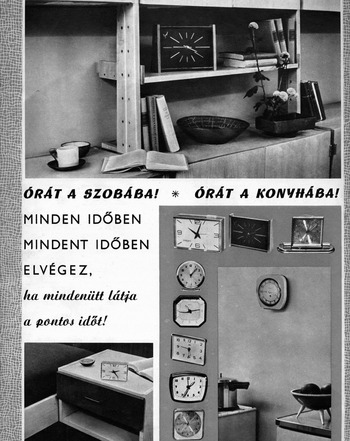
A desire for transparency and truth in comparison to capitalist deceit and misrepresentation was a major principle behind the ways consumer goods were promoted and displayed, echoing modernist avant-garde ideologies from the 1920s in everything from buildings to letter fonts. Advertisements were supposed to educate consumers about newly available products and the use of new technologies, and in the process encourage them to modernize their habits, raise their standards of hygiene, or become more discriminating in their tastes.Footnote 16 A political subtext was to instill pride in socialist production. In the 1950s, women were (unsuccessfully) encouraged to buy fruit preserves of state production rather than making their own, and thus conform to a more efficient division of labor. Beginning in the 1960s, men and women alike were admonished in magazine ads to become more materially “demanding” (igényes) in all aspects of household technology, from the use of power tools to buying the latest socialist innovations in pots and pans. A resurrected modernist aesthetic, widely publicized via television, print media, and design exhibitions, wedded design with ideologies of openness, functionality, efficiency, and the war on bourgeois kitsch. A print ad for clocks, for example, was used to plug the disciplining virtues of ‘timely production’ (see Image 1). It features images of modern-design clocks in a kitchen, on a bedside table, and on living room shelving, all furnished in the socialist modern style: “Clock in the (living) room! Clock in the kitchen! At all times, everything done on time, when one sees everywhere the exact time!” (Lakáskultúra 1967, 1: 18).
Full-page advertisement for clocks in the home décor magazine, Lakáskultúra (1967, 1). Reproduced with permission of Lakáskultúra, Axel-Springer Verlag Budapest, Hungary.

The importance of transparency extended to shops and window displays, a practice that emphasized rather than mitigated the mass-produced qualities of state-produced consumer goods and their abstract origins. The names of many shops, for example, reinforced a sense of institutional standardization through their resolute literalness, differentiated only by number. In every town and city in Hungary, shoe stores were designated by block type reading “Shoe Store” (Cipő bolt) and stationary shops by the acronym for “State Paper and Writing Implements Store” (ÁPISZ bolt). Window displays, done by the same window designers working out of a central office, were often uniform—highlighting that the handful of shoes displayed in each window was also identical across the shops. Understaffing meant that products in the windows were often visibly dusty and that displays were seldom changed (a March 1964 editorial in the DVH complained that Christmas displays would not be removed until Easter). Finally, state-socialist goods were rarely framed by the elaborate packaging that became the norm in the commercial West, a practice that frames commodities as gifts. Ironically, imported western goods such as Colgate and Palmolive toiletries were packaged in cellophane-wrapped gift boxes and sold for higher prices at state stores, exacerbating perceptions of their comparative value.
Despite frequent attempts from above to improve customer service through legislation and establishing consumer “rights,” the shopping experience itself remained fraught with tension. This aspect of the state-socialist experience has been much described, particularly the lines, the bureaucratic settings, and the hostility of retail staff to customers, so I will focus on how such encounters with official consumer culture contributed to political subjectivity. As in any retail setting, sales personnel provided the human face for the establishment, mediating between consumers, goods, and the sources of those goods. But instead of bridging the distance between goods and potential purchasers, salesclerks actively discouraged appropriation a number of ways. Customers were compelled to implore, cajole, or even bribe clerks into looking for and handing over a desired good in the right size, weight, and color, particularly for goods like shoes, bathing suits, and sunglasses, where customers were separated from goods by a counter and dependent on the good graces of the staff to try them on. When in a self-service shop or a deli, the sales clerks' position of power was often symbolized by being seated on a platform looking down on the hapless customer. As with other professions, many clerks used their position to hoard goods in demand, releasing them to favored customers or to barter with in the second economy after hours. The result was a system that continued to reward forms of privilege rather than one upholding socialist principles of equitable distribution. As often as not, it was what came to be seen as “abnormal” circumstances of the shopping experience itself rather than the inability to procure a good (Merkel Reference Merkel, Strasser, McGovern and Judt1998: 291–95), which created intense dissatisfaction with the regime and spilled over onto perception of socialist products.
In Hungary, these problems were regularly discussed in the state-run media. In the mid-1960s, an out-of-work writer named Mária Pataki convinced the state to publish a national interior furnishings magazine and hire her as editor-in-chief (interview, 10 Oct. 1997). Called Lakáskultúra (roughly translated here as “home culture”) it became enormously popular and influential, in part for its ostensible advocacy of the socialist consumer. An article entitled “In Defense of the Furniture Buyer” lamented, “Even though many regime and ministry orders have been passed to serve the interests of the shopper … it often happens that the factories, the shippers and the furniture stores don't abide by them” (Lakáskultúra 1967, 3: 10). In Dunaújváros, the local paper reported in 1970 that the People's Quality Control committee (Népi Ellenörzési Bizotság) had met to discuss problems confronting shoppers in the city (DH 8 Aug. 1970). The report concluded that the regulations governing the “defense of the consumer” were only partially functioning. For some things, like shoes, retailers were generally good about replacing the faulty pair or offering a refund, but the exchange of more durable consumer goods, particularly of furniture, “is often torturous for consumers with complaints” (ibid.). One should note that these published pieces attempt to shift blame from the unitary state and the socialist economic system in general to factories, shippers, and retailers—all of whom are failing to carry out orders coming down from a benevolent regime.
“In place of the joy that comes with shopping (vásárlással járó öröm),” the 1967 article on furniture continues, “come problems, aggravations and unpleasantness” (Lakáskultúra 1967, 3: 10). Zygmunt Bauman has written that the western “homo consumens, brought up on the breath-taking raptures and nerve-breaking tensions of the capitalist market [would find] … little attraction in the paltry ‘socialist’ equivalent which offers the same tensions of endless commodity chase but little joy of acquisition” (1976: 102–3). But does Bauman suppose that the homo consumens exists only in openly capitalist contexts? As we have seen, in its objective to produce a modern society, state socialism brought up a population of homo consumens as well, without perhaps the same raptures and tensions, but dissatisfied nonetheless with the failures of official state consumer culture to provide excitement and aesthetic pleasure. A retired architectural draftsman often recounted to me how in the 1980s, after Hungary had legalized a wide range of private enterprise, he would board a bus from Dunaújváros to Budapest for the day just to walk the “ring” (körút) or the commercial road lined with window displays. He was bitterly conscious of the fact that he had spent over thirty years of his life walking to and from work along the town's main street, called ‘Steel Avenue’ (Vasmű út), with “nothing to look at.” Similarly, in 1983 the city paper described the twenty-minute walk from its newly completed residential district to the center as deathly boring. “It's a different feeling to make this twenty-minute stroll past shops, places of entertainment and streets crowded with things to look at,” the author points out, “than on a dead, garden-city side street, where even a dog barking counts as an ‘event’” (DH, 1 Apr. 1983).
That is not to say that in Hungary all stores, displays, and manufacturers were nameless and uniform. Already in the late 1950s and early 1960s, the new emphasis on providing more consumer goods and a higher quality of life—including leisure time activities and entertainment venues—was extended to the retail sector.Footnote 17 In the 1960s, the state introduced a department store chain, the Blue Danube (Kék Duna). In the 1970s, the SKÁLA chain opened its “flagship” store in Budapest, ensconced in a hyper-modern building covered by large plates of tinted glass. The first furniture warehouse was opened in Budapest by the Domus firm in 1978 (Vadas Reference Vadas1992: 183). Following the worldwide trend towards “self-service,” the state opened a line of convenience stores playfully called ABC for having a wide variety of things under one roof. Similarly, advertising and the practice of manufacturing and promoting “brand” name items also proliferated. Certain styles of shoes, such as thick-soled sandals, became the rage in the mid-1970s, with three brands dominating the shoe market: Corso, Alföldi, and Tisza (Papp Reference Papp1998).
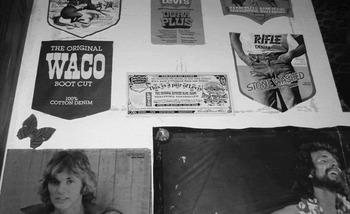
The public met these innovations with widespread approval, but positive effects on political subjectivity were often tempered by other factors. Brands like Tisza, with their distinguishing logo, shifted the source of the shoes from generic state production to that of a unique producer, the Tisza shoe factory, which had a pre-socialist history as a private company; consequently, the “state” as a production system was, in a sense, robbed of credit for a quality product, even though Tisza was still a nationalized company.Footnote 18 Other brands suffered by their constant comparison to the West; local socialist brand-name sodas (Bambi) and blue jeans (Trapper Farmer), while appreciated, were nonetheless understood to be imitations of the Coca-Cola and Levis that most Hungarians had some knowledge of, simulacra rather than “the real thing” (see Image 2). (It is no surprise that precisely these brands came to be revalued as “authentic” in the 1990s, iconic of socialist everyday life [Merkel 2006].)
The wall décor from a teenage girl's room in the late 1970s, including advertisements and labels from Western jeans. Photo by K. Fehérváry.

Despite the mitigating effects of these innovations, it can be argued that the state-sponsored context for consumption in its broadest reaches worked to maintain the alienated form of commodities. Even in Hungary, with its increased attention to consumer culture, little of the work of appropriation was done in advance of acquisition. The generic names, functional window displays, and institutional interiors framed the mass-produced commodities on offer as fundamentally opposed to socialist citizens, rather than as the wealth produced by and for collective labor. Retail staff, as the human face of official state consumption, exacerbated rather than mitigated the alienation arising from the impersonal exchange of money for object. As we shall see below, the physical properties of state goods often contributed to this alienation by the ways they resisted appropriation after acquisition.
THE GOODS ON STATE-SOCIALIST CONSUMER GOODS
Although situated by the contexts of socialist retail spaces, mass media, and state moralizing discourses, the physical properties of state-socialist consumer products played the most visceral part in how they were experienced and evaluated, both relative to and independent of comparisons with “western” goods. Here, I refer particularly to durable goods, including comestibles (such as brandy, canned food stuffs, and perfumes), rather than to perishables for which freshness, and thus local origins, is an important factor (see Caldwell Reference Caldwell2002). By “state-socialist” consumer products, I refer to goods of Hungarian state manufacture as well as imports from COMECON nations.Footnote 19 “Western” goods, by contrast, refers to goods produced for the consumption of citizens in western capitalist nations, and not necessarily to the West as the site of their production. In fact, the often multi-sited origins of products consumed in the West ironically included goods made in socialist bloc countries for export, a critical fact to which I shall return. In what follows, I address three of the most frequently invoked pejoratives for state-socialist production, namely: (1) “shoddy” (concerns with quality); (2) “uniform” (concerns with diversity); (3) and “unfashionable” or “drab” (concerns with indexing modernity).
The Quality and Qualities of State-Socialist Consumer Goods
Socio-cultural anthropologists are once again attending to the properties of the material world in ways extending beyond symbolism or representational value, including the materiality of signs themselves. The question of how objects come to be evaluated in terms of “quality” continues to be very much tied to cultural and historic contexts that include shifting economies (see, for example, Schneider [Reference Schneider1994] on the transforming virtues of polyester).Footnote 20 Nonetheless, the role of the qualities or properties of objects in these evaluations are being increasingly scrutinized. Such analyses (Keane Reference Keane2003; Reference Keane and Tilly2006; Munn Reference Munn1986) demonstrate how the physical properties of an object/person limit or create possibilities for signification, drawing on a Piercean semiotics to counter the notion of goods as arbitrary signs; they also allow for the mutual construction of persons and objects. Such analyses do not refute the social processes through which desires for things are created.
Socialist goods were evaluated in the context of increasing awareness of and contact with shifting material worlds elsewhere, although as we have seen the continued presence of built environments, artifacts, and well-known manufacturers of the prewar era (now in state ownership) also exerted considerable influence. Socialist leaders were well aware of problems with product diversity and quality standards, and worried about unfavorable comparisons with western goods and the negative image such goods produced of the socialist modernizing project. Throughout the bloc, political functionaries and factory managers clashed with cultural producers pushing modernist designs. Some architects and designers appear to have been hard-line modernists, considering themselves more leftist than official ideology (Crowley, personal communication Dec., 2003). Others seem to have been at least as motivated by the prestige of modernist styles in the West as by ideological principles. But, as Merkel writes for East Germany, “Party leaders were suspicious of objects designed in a consistently functional way. They looked ascetic, frugal, and cheap. They therefore failed to serve one of their most important functions: suitable representation of prosperity in order to document socialism's superiority” (1998: 290).
Quality was also evaluated simply by measuring products against expectations of their ostensible function, durability, and craftsmanship. The results of the 1970 meeting of the People's Quality Control committee, mentioned earlier, were reported in the Dunaújváros paper (DH 1970, 8 Aug). Shoes, the committee discovered, had not improved their quality but had become more expensive. In Shoestore # 54, complaints had been lodged “against the quality of 1,200 pair of shoes, 500 of these rightfully so.” Clothing seemed to have encountered fewer problems, though the committee acknowledged that there were no published figures on the number of complaints. They did concede the following:
It is a fact that quite a few of the “luxury” clothes available in Dunaújváros's “Modellház” [department store] have flaws. For example, the imported women's fake-fur coat called “Corál” from the Minta Ktsz. starts shedding its artificial fur after a few wearings… . The Páva Women's Lingerie Factory's “Sheherezade” blouses shrink when washed… . Part of the problem is a lack of qualified sales personnel to inspect the clothes before the store accepts them, but also some items which require special handling don't come with instructions, so not even the shop girls can offer this information.
Furniture complaints had increased:
The Nagykanizsa furniture factory, once recognized as providing good quality products for commerce, recently shipped furniture that had flaws which only appeared after 2–3 months of use.… Cabinet doors warped … metal legs on the sofa beds fall off after a short time. A new furniture set arrived that is more expensive than the sought-after Vária wardrobe, and already has spots under the laquer. The one-person sofa-bed of the [Olympia] furniture set is 135 (!) [sic] centimeters instead of 190. The investigation found that when a company discontinued a line because of quality flaws, it would bring the same product back into circulation under a different name, perhaps with some small change, and at a higher price.
Some goods of socialist production were noted for their quality and good design, such as the “sought-after Vária wardrobe” above, produced by the nationalized Lingel firm. An engineer in his thirties once showed me a particular Soviet camera as an exceptional example of sturdy design. East Germany was known for, among other things, the quality of its toys—which were proudly displayed in the windows of the GDR cultural center in downtown Budapest. Hungarian acquaintances would make annual trips to Czechoslovakia to buy the higher-quality lingerie, linens, and glassware produced there. Commodities “made in Hungary” which were appreciated on an international market—like state-produced Ikarusz buses and Tungsram light bulbs, the historically renowned Zsolnay or Herend porcelain, or the privately developed Rubik's cube—were the source of considerable national pride.Footnote 21 These commodities were popularly appropriated in the sense that they were claimed as “ours,” as locally produced material forms willingly put into export circulation to expand the nation's “fame” or reputation in the world (see Munn Reference Munn1986).
But, as we have seen, many products simply failed to fulfill their promised function, were produced out of inappropriate materials, or were designed in such a way as to create intense aggravation. Sandals fell apart after one wearing because of poor-quality glue. Bedrooms in new buildings were made too small to furnish with a bed and still allow for opening the closet door. Concrete walls radiated heat in summer and cold in winter. Milk was sold in flimsy plastic bags, impossible to pour without spilling. Even luxury objects held hidden frustrations, such as the Soviet-made, embossed, silver cigarette case a friend once brandished in exasperation, manufactured too short for standard-size cigarettes.
We are familiar with analogous products in capitalist settings, but in the state-socialist context flaws stemming from ill-conceived design or inadequate materials were experienced in explicitly political terms. Consumers interpreted them as evidence of malicious intent, cheapness, negligence, or simple incompetence on the part of the Hungarian state, as unitary designer/producer. If imported from a COMECON nation, these flaws were evidence of the failure of the Soviet system. The materiality of socialist currency was often used as metonymic of devalued socialist production, especially as compared to the value of valuta, or “hard” currencies. Paper currency was often worn and tattered, and coins—like the denominations of the Hungarian forint, the aluminum fillér—were feather light, especially relative to the palpable weight of, for example, a Deutschmark (see also Lemon Reference Lemon1998). The wildly popular satiric film Kojak in Budapest (Szalkai Reference Szalkai1980) centered on this equation between dysfunctional objects and a dysfunctional socialist regime. The logic extended to goods that were positively valued: if they happened to break or were discovered to have flaws, the state rather than the manufacturing entity governed by it was blamed.Footnote 22 Over time, evaluations of the “quality” of state-produced goods became isomorphic with the state's evaluation of its citizens, and extended to relations among citizens. While in official discourse quantity was prioritized over quality by the aim of providing equitably for all, in practice, the sacrifice of quality (which did not always translate to quantity) was understood as reflection of the “quality” of the people, who were supposed to be grateful for the substandard goods “thrown” at them.Footnote 23
The Overproduction of Sameness: Procrustean Standardization
For socialist regimes, product diversity invited a host of problems, from the role of diverse goods in encouraging invidious distinction to the economic costs of diversified production. For my purposes, the relevant question is how standardization in goods and housing came to be interpreted as the state's “standardization” of its citizens, indeed, as evidence of the state's intolerance for human diversity. After all, similar criticisms of homogenous, standardized, mass-produced consumer goods and housing emerged in the United States in the 1960s, at the height of Fordist production systems and the dominance of the International Style for capitalist architecture and public housing.
Consumer research done in capitalist contexts has demonstrated the capacity of a product, through its design and branding, to convey affective messages such as “caring” from the source company to the consumer, and so enhance brand loyalty as well as contribute to the value of the brand itself (see Foster Reference Foster2005; Moore Reference Moore2003). Specialized products are designed to construct and fulfill a specified need, such as a deodorant “strong enough for a man but made for a woman,” packaged in pink and issued in feminine scents. Such targeting of consumers as unique individuals, like advertising, collapses the perceived distance between a standardized, mass-produced product and person (subjectively and physically); at the same time, brands aim to be seen as dependable and familiar as well as compatible with other products through standardization. Through focus groups and other forms of consumer research, companies discover (and produce) the desires of consumers, their specific needs, and what “features” they will come to appreciate about a product to command their loyalty. Extending Carrier's insight mentioned earlier, such tailoring can contribute to a sense of appropriation of a good before acquisition, appearing as something “made for me” (or “us”).
In contrast, state-socialist production was opposed to the targeting of individual “needs” ideologically and pragmatically. In place of a user-centered approach, in which goods are produced conforming to the perceived needs/desires of people, state-socialist design was based on an object-centered approach, where populations were to conform to the needs/desires of production. From the state point of view, diversification was expensive and standardized mass production better reflected principles of efficiency, rationality, and the needs of the collective. For example, furniture design in Hungary was centrally orchestrated in the 1950s and 1960s, with a handful of designers producing furnishings for the entire country; in 1961, only three designs of modern furniture were in mass-production (Vadas Reference Vadas1992: 179). From the user's point of view, however, homogenization of material production became equated with attempts to homogenize the people compelled to use those goods. Socialist citizens were supposed to conform to a Procrustean standard imposed from above. That Party elites and others with special privileges were not limited to these products and spaces only reinforced this perception.Footnote 24 A wonderful articulation of these sentiments can be found in the German film, Good Bye Lenin! (Becker Reference Becker2003), in which a Party functionary spends her days writing letters of complaint, deploying the rhetoric of efficiency and self-criticism to make her point. In one, she decries the overproduction of large, short, and boxy shirts, but writes (bitterly) that for the sake of socialist production, “In the future, we will endeavor to become ourselves shorter, stouter, and boxier!”
The state's disregard for individual difference, including that of families and their shifting configurations, was most visible and acutely politicized in the revitalized modernist architecture and furnishings that became standard throughout the Soviet sphere beginning in the 1960s. As we will see below, the relative uniformity of state-produced living environments arose out of a convergence between production biases and modernist design ideologies, which were explicit about the role of such architectural styles in transforming the population into a modern, socialist citizenry. Official rhetoric which attempted to attribute socialist values of equality and egalitarianism to material forms contributed to how these forms were experienced, and transformed the values in the process. Thus, austere buildings visibly segmented into equal units, indexing uniform apartments, were supposed to be iconic of equality among people brought together in a collective; instead, they were “read” as authoritarian, dehumanizing, and atomizing. These buildings were also the most difficult to personalize or integrate into particular lives and family configurations. Not only were residents prohibited from making substantive transformations to their apartments, but, as one woman put it, the concrete walls meant that something as “simple as hanging a picture” required a power drill.
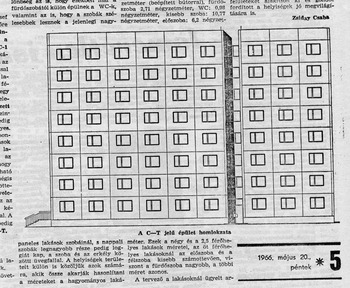
The sense of official homogeneity was exacerbated by a rhetoric of statistics and abstraction in Five-Year Plans, and in the constant barrage of reporting on the numbers of, for example, television sets planned for, produced, or behind quota. The influence of avant-garde theory and practice was particularly apparent in formulations abstracting and standardizing living space and promoting ahistorical designs. The state routinely dictated the meters of living space to be allotted per person and proscribed population density—literally forcing conformity upon populations with diverse physical and social needs. At the same time, the state was not held accountable for its own regulations, as planners regularly violated prescribed density norms and minimum spatial requirements became standards.Footnote 25 The publicized discourse of city planners and Party officials engaged in endless attempts to reassure the population that a specified number of apartments would be built by the end of the year, providing housing for a specified number of persons, and would include x-number of shops, nurseries, and schools. New apartment designs were routinely discussed in terms of meters squared, as in Image 3 above: “kitchen 6.05 m2 with built-in cabinets; bathroom, 2.71 m2; WC 0.98 m2; smaller room 10.77 m2; foyer 6.2 m2” (DH 20 May 1966). Some units were described as designed for “2.5” persons. This sense of abstraction was reinforced by the de-contextualized representations of apartment complexes and furnishings, pointedly drawn with no reference to the surrounding environment or personalization of space (see Image 3). When these designs were realized in built form, the resulting disorientation and difficulty of finding one's way home became a standard trope in jokes, literature and film.
A sketch of the C-T housing type in the Dunaújváros newspaper 20 May 1966. Reproduced with permission of the Dunaújvárosi Hirlap, Hírlap Press Kft., Dúnaújváros, Hungary.

The popularity of the magazine Lakáskultúra (Home culture) stemmed in part from its departure from this form of representation. Especially after the 1960s, it rarely depicted furnishings from trade shows and fairs, and never used staged or professionally designed interiors. Instead, it featured the infinitely diverse interior furnishings, room arrangements, decorative inclinations, clutter, and order, of “real” families in the country. Ironically, the magazine's popularity also stemmed from the fact that so many people occupied similar floor plans. In its own abstractions of these apartments, Lakáskultúra rendered private spaces as exemplary floor plans to demonstrate ingenious solutions for maximizing space and personalizing (appropriating) otherwise standard living arrangements.
By the 1970s, the Hungarian Institute of Market Research was doing far more to evaluate consumer needs and desires than the isolated efforts of the past (Hanson Reference Hanson1974: 117–18), but it was difficult to translate findings into shifts in production. By the early 1980s in Hungary, economic reforms had allowed for small, private businesses to manufacture and sell goods. While this reform greatly expanded the diversity of goods and services available, from fast food stands to clothing boutiques, the continuing necessity of using state mass-produced goods in quotidian ways—from shoes that did not quite fit to beds that were too short—remained a constant if often un-remarked irritant with direct implications for political subjectivity.
Socialist Modernity and the Problem of Fashion
The relevant dimensions of fashion for socialist consumer culture are inextricably related: first, how it reflects and produces social distinctions, and second, how it binds forms of material culture (of dress, food, music, interior decor) to the passage of time, specifically, to the ever-changing, modern “present” identified by the spatial coordinates of certain urban centers (New York, Paris). In this nexus of modern time, power, and orders of distinction, fashion was a central problem for socialism theoretically and logistically.
Fashion in modern consumer society depends upon the constant generation of goods in a certain style as well as diversity within that style. It also requires the constant introduction of new goods (innovation) as well as variation in models of existing goods (sped up in capitalism through planned obsolescence), all of which are presented as qualitatively better for being newer. As they are replaced by new fashions, such goods serve to link certain kinds of material culture to historical moments, providing yet another order of distinction. Fashionable goods mark those who have appropriated them with signs of the ever-changing Present. As the Comaroffs note for a different context, fashion in this way “situated those who kept up with the styles of the moment in the cosmopolitan here and now; those who did not, by contrast, were rendered ‘out-of-date,’ provincial, parochial” (Comaroff and Comaroff Reference Comaroff and Comaroff1997: 220).
Looked at another way, however, the constant pressure to remake one's material forms of representation can be seen less as an effort to recreate the self than one to maintain a stable sense of self within a shifting context. It is not just that a person must adjust the material ways they constitute themselves to changes in their own status (as they age, change jobs, move in status hierarchies). As the world shifts around them, the significance of the material culture they appropriate for themselves also changes (something especially relevant for the postsocialist context). As Kopytoff has noted, “cultural aging” of commodities can be out of synch with “physical aging” (1986). Thus, merely to remain the same one has to perform the regular labor of adjusting one's material culture to fit shifting systems of signification and distinction, particularly if a critical component of one's identity is to remain modern, or of the present.
The Soviet regimes' relationship to fashion was as ambivalent as one might imagine. Fashion was ridiculed by the state as a form of capitalist exploitation and a tool for promoting social inequalities, but also feared for its potential stress on the economy (Reid and Crowley Reference Reid and Crowley2000: 3).Footnote 26 At the same time, the state's tireless promotion of a socialist modernity dictated that the populace restyle itself according to state-sanctioned aesthetics, part of modernizing campaigns that worked to instill the populace with consuming subjectivities, laying great store in being up-to-date, demanding, and technology-savvy (Fehérváry Reference Fehérváry2002).
The rehabilitation of the concept of style throughout the region in the 1960s was justified by the notion that “even socialist modernity must find its own modern or contemporary style” (Reid and Crowley Reference Reid and Crowley2000: 3). Again, such notions drew on older theories of avant-garde movements in less developed European nations (especially in Italy) and the newly formed Soviet Union, which sought to escape the ceaseless change of a western-dominated modernity, and create a timeless aesthetic which would not only transparently reflect the ideals and social relations of a new society, but would shape them in the process. When a modern “design of socialism” had replaced the last vestiges of bourgeois material culture, it was theorized, fashion would cease to exist. Thus the widespread dissemination of a socialist Modern aesthetic in state-built housing and furnishings throughout the region arises, however distantly, out of this notion of a one-time transformation into a socialist modernity, a triumph over time itself.
In Hungary, the campaign to introduce the “Contemporary Style” of modern furnishing was initiated in 1960, well before such furnishings had entered into mass production. The object was to convince the population to rid themselves of their dark and heavy, decorative furnishing with all of its ideological baggage, and adopt the clean lines, light colors, and functional rationality of a minimalist, modern interior decor arranged according to an “open” floor plan—far easier and cheaper for the state to mass produce, but also reflective of a modernized population (see Buchli Reference Buchli1997 for the Soviet Union). Paradoxically, western standards of living and fashions continued to be the measure of the “modern.” While the campaign was successful in making bourgeois decor old-fashioned, the widespread adoption of the contemporary style can also be attributed to the perception that it was all the rage throughout Europe and the United States, particularly for a younger generation attuned to the new trends of the postwar era. The rhetoric of designers articulated as much with the minimalist aesthetics of their contemporaries pushing modern designs in the West as with the collectivist aims of socialism.
While many state-produced goods, such as furnishings upholstered with a dark orange fabric, were considered fashionable in the 1960s to the mid-1970s, by the 1980s knowledge about shifting fashion trends in the West had rendered them out-of-date.Footnote 27 The state had fostered a mentality by which achieving and then maintaining an identity as “modern” involved forms of consumption the socialist manufacturing system was unable to produce. The cultural as well as physical aging of state-socialist products, especially those designed according to a socialist modern style, eroded residual faith in the state's ability to produce a viable alternative modernity. More to the point, these goods of state production constrained consumers in their ability to represent to themselves and others their full participation in a modern present.
The Design of Socialism
The socialist modern aesthetic, particularly in architecture, city planning, furnishing, and plastic functional and decorative objects, became the signature style of socialism, what Stade has called “the design of socialism” (Reference Stade1993). The set of qualities routinely applied to socialist products relative to select western or even homemade goods, however, cemented its communicative force as a brand, reflective of the corporate entity regulating its production. In capitalist contexts, design had shifted its role from the handmaiden of industry before World War II to that of a tool for appealing to and producing the desires of consumers (Sparke Reference Sparke1986). Design thus became a primary way companies build upon perceptions of their identity as a “brand” through their products. As Rob Moore defines it, “A branded product is partly a thing and partly a language… it communicates information about the source, producer, and/or type of thing, and can provide rich sociocultural and ideological ‘captioning’ for the object” (2003: 334).
While it is perhaps jarring to transfer this concept of a brand to a socialist context, many products manufactured through official state channels ‘communicated information about their source.’Footnote 28 Negative experiences with the properties of state-produced goods contributed to the devaluing of the socialist brand. Deployed in the realm of social distinction, “Made in Hungary” lacked cachet, something the state found difficult to overcome when it began limited production of luxury or higher-quality goods. The state-socialist devaluing of Hungarian production in the eyes of an international community, moreover, was the cause of considerable bitterness at home and a basis for accusations that under socialism Hungary as a nation had lost its standards.
WESTERN GOODS, WESTERN WORLDS
From the 1960s on, increased exposure to foreign goods imported for their particularly desirable qualities only exacerbated such negative evaluations. Certain western goods, often categorized as luxuries, were available in special hard-currency stores while others made their way into the Soviet bloc as gifts or were smuggled in.Footnote 29 These goods ranged from perfumes, records, and brand name blue jeans to Band-Aids, tools, and “fun or playful objects” (Hammer Reference Hammer2002:116). As in other Soviet bloc countries, in Hungary western products intended for everyday use were often put on display; indeed, the empty packaging—Coke cans, shampoo bottles, cigarette boxes—was also pressed into service as decor (see Image 2). Daphne Berdahl points out the tremendous symbolic significance of these consumer items as evidence of western connections and their use as social capital (1999a: 124).Footnote 30 But many people prized these objects as well for their intrinsic properties—bright colors, packaging, design, or craftsmanship—and what these properties must index about life “out there” (oda kint), even if these things also had the power to produce the “strange suffering” that Drakulic describes (Reference Drakulic1993: 59; see also Borneman Reference Borneman1991). The state's moral censorship of certain western commodities as decadent and corrupting contributed to the perception of their enhanced quality and the pleasures offered by the system that produced them. A bank clerk who was in her twenties in the mid-1960s vividly recalled to me her first sip of Coca-Cola. A boyfriend had managed to smuggle a bottle, with its distinctive shape, into the country, and served tiny portions in champagne glasses. They all thought they would experience some kind of hallucinogenic effect, but to their chagrin, nothing happened.Footnote 31
That these select western goods functioned as metonyms of another world can be attributed to a cosmology set up by the state itself and fed by propaganda efforts of western intelligence agencies (Hixson Reference Hixson1997). The logic by which socialist material culture became emblematic of a unitary, personified state's low-regard for its citizens and the failure of its economic system was extended to these western goods. Their very qualities seemed more than simply the result of a better production system, but as iconic of a superior political system based upon human dignity. If state-socialist mass production claimed to prioritize quantity over quality in order to make goods available to all, western consumer imports were seen to be of high quality and carefully designed to make people's lives easier, create comfort, or provide entertainment and pleasure.Footnote 32 Thus, the opposition between state-socialist and market-democratic systems in the Hungarian context resulted in sedimentation of politics in their respective products. Day-to-day encounters with a variety of goods and commercial spheres contributed to an incremental materialization of political subjectivity.
The production and trade systems of the COMECON states further reinforced the unfortunate equation between the value of goods and the value of people by the systematic export of higher-quality goods westward, and lower-quality goods eastward. This dynamic was driven by global markets, as COMECON countries attempted to balance their trade deficits with the West by exporting those goods that could compete in capitalist markets; at the same time, the quality of exports headed to the Soviet Union was affected by low, fixed prices. These economic contingencies nonetheless reinforced perceptions of a population's “standards” for consumption.Footnote 33 Thus, within all the Soviet bloc countries, many high-quality goods were reserved for export to the West and were consequently not available at home, except perhaps in expensive hard-currency outlets; here, select domestic goods, packaged for western consumption, were for sale to Party officials or those with access to western money. An example from my own experience was a choice brand of Polish ham, only available in Poland in the pewex, or hard-currency shop. In the process, the political logic of state-socialist material culture reinforced a different message: high-quality goods were for the consumption of peoples in the West; state-socialist citizens had become the proletarian producers of those goods, and could only buy them back with capitalist coin. It is no wonder that by the 1980s many people were convinced a market economy run by a democratic state would allow them to translate hard work into hard currency, and avail themselves of the consumer pleasures and attendant sense of value they had long imagined their western counterparts enjoyed.Footnote 34 It is also no wonder, given the vastly different configurations of consumer capitalism, that this illusion was shattered almost immediately after 1989.Footnote 35
CONCLUSION
The question of “grayness” remains relevant in a world where such negative stereotypes continue to haunt the former Soviet bloc countries, as elsewhere in the world, though with renewed force as these populations internalize the equation of persons and things—that is, of modern value accruing to those privileged by their access to and use of brand-name, “quality” consumer goods and environments (see Fehérváry Reference Fehérváry2002; Reference Fehérváry2006; Patico Reference Patico2005; Berdahl Reference Berdahl2005). Despite the fact that state socialism was experienced in full color, it seems destined to be remembered in terms of a grayness that once materialized political oppression, but through the retrospective lens of consumer capitalism, has simply come to index material poverty. Narratives implying that state socialism collapsed because of its failure to satisfy consumer desires rely on impoverished understandings of the role of material culture in social and political life—they reduce it to mere “consumerism.” Problems like shortages, poor quality of goods, and poverty alongside perceptions of more abundant lifestyles elsewhere, can plague any nation-state, but in themselves are incapable of producing a political logic. In contrast, the political logic of state-socialist material culture was produced by the all-encompassing role the state took toward material goods and environments, guided by moralizing tenets suspicious of goods and yet convinced of their potency. Political subjectivities were shaped through daily experience with the state as materialized in retail settings, clerks, goods, and built environments, all seemingly working to obstruct attempts by citizens to “make” their own worlds. At the same time, “the state” as the abstract, unitary source behind flawed goods was constructed as an entity regarding its citizens with disdain and neglect. It was within this particular configuration of authoritarian politics and material worlds that iconic western goods took on the significance they did, and their properties acquired the power to project fantastic understandings of the “system” that produced them.