Introduction
Current guidelines for chronic rhinosinusitis recommend first-line treatment with intranasal steroids or a short course of oral steroids if nasal polyposis is present.Reference Rosenfeld, Piccirillo, Chandrasekhar, Brook, Ashok Kumar and Kramper1,Reference Fokkens, Desrosiers, Harvey, Hopkins, Mullol and Philpott2
Probiotics are defined as non-medicinal substances or supplements that contain live, microbiologically active organisms that are administered with the aim of conferring a health benefit on the patient. In chronic rhinosinusitis treatment, probiotic therapy has been examined as a viable adjunctive treatment following increased understanding of the human–host mucosa microbiome changes in chronic rhinosinusitis, including dysbiosis of the airway microbiomeReference Cope and Lynch3 and the link between certain bacterial strains and successful treatment.Reference Psaltis and Wormald4
Although chronic rhinosinusitis pathogenesis reflects a complex interplay between sinonasal mucosal epithelial barrier dysfunction, immune dysfunction and local microbiome disturbances,Reference Orlandi, Kingdom, Smith, Bleier, DeConde and Luong5 probiotic therapy attempts to manipulate and rebalance the alterations in the local microbiome. Postulated mechanisms include propagation of healthy commensals, limiting pathogenic colonisation and biofilm eradication in treating recalcitrant chronic rhinosinusitis.Reference Lee6,Reference Smith, Buchinsky and Post7
Pre-clinical probiotic therapy models, such as animal modelsReference Cleland, Drilling, Bassiouni, James, Vreugde and Wormald8 and peripheral blood mononuclear cell challenge models have demonstrated successful probiotic-mediated microbiome manipulation.Reference Schwartz, Peres, Mfuna Endam, Cousineau, Madrenas and Desrosiers9 However, consistent therapeutic effects in chronic rhinosinusitis from probiotics have not been demonstrated clinically.Reference Yang, Liu and Yang10 Although probiotic supplementation has immune-modulatory effects on chronic sinus inflammation, its benefits in chronic rhinosinusitis remain undetermined.Reference Kramer and Heath11
This systematic review aimed to critically review all randomised, controlled trials (RCTs) to determine the efficacy of probiotics in chronic rhinosinusitis.
Materials and methods
This study was conducted according to Preferred Reporting Items for Systematic Reviews and Meta-Analyses (‘PRISMA’) guidelines,Reference Liberati, Altman, Tetzlaff, Mulrow, Gotzsche and Ioannidis12 with registration in the international database of prospectively registered systematic reviews (‘PROSPERO’)) in July 2020 (Centre for Reviews and Dissemination number: 42020193529).
Literature search strategy
PubMed, Embase and Cochrane Central Register of Controlled Trials databases were searched from database inception up to August 2022.
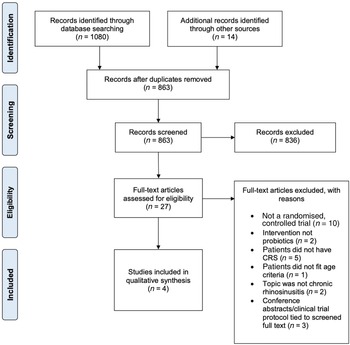
Chronic rhinosinusitis was defined to include studies featuring patients with chronic nasal symptoms including nasal obstruction, nasal purulence, hyposmia or anosmia, and facial pain or pressure for a period of at least 12 weeks in the presence of either endoscopic or imaging features compatible with chronic rhinosinusitis, in accordance with European Position Paper on Rhinosinusitis guidelines.Reference Fokkens, Desrosiers, Harvey, Hopkins, Mullol and Philpott2 Probiotics were defined to include all substances or non-medicinal substances that contained live, microbiologically active organisms administered with the aim of conferring a health benefit on the patient, according to the World Health Organization.Reference Hill, Guarner, Reid, Gibson, Merenstein and Pot13 The complete search strategy is shown in Figure 1. The references of included studies were hand-searched. All screenings were conducted by two authors independently, and any discrepancies were resolved with a third author.
Preferred Reporting Items for Systematic Reviews and Meta-Analyses (‘PRISMA’) flow diagram of included articles. CRS = chronic rhinosinusitis

Eligibility and selection criteria
Articles published in English were included using the following inclusion criteria: studies with patients aged above 12 years with chronic rhinosinusitis and studies that were RCTs. This review excluded studies with patients who had other concomitant sinonasal conditions such as the following but not limited to: congenital nasal deformities or conditions, sinonasal neoplasms, and previous head and neck radiotherapy.
Data extraction
The following data were extracted: (1) RCT characteristics including first author, year published, country, study design, trial registration, ethics approval and participant consent; (2) sample characteristics including number of arms, study populations, sample size of recruitment and treatment completion, and age range; (3) intervention characteristics including treatment type, treatment intervention, dosage and duration, treatment provider, control; and (4) outcome characteristics including efficacy evaluated with symptom improvement outcome scores and safety monitored with adverse effects. Corresponding authors were contacted for missing data.
Outcome measures
In order to assess the change in severity of chronic rhinosinusitis symptoms from baseline to latest follow up, the primary outcome was symptomatic improvement, which was measured with Sino-Nasal Outcome Test (SNOT)-22 or SNOT-20 scores, symptom frequency, relapses and time intervals to relapse. Other outcomes to assess the effects of probiotics included microbiological profiles and inflammatory product changes.
Risk of bias and quality assessment
Risk of bias of all RCTs was assessed by the Cochrane Risk of Bias Tool for randomised, controlled trials.Reference Higgins, Altman, Gotzsche, Juni, Moher and Oxman14 Results were entered into Review Manager Software (version 5.4.1, The Cochrane Collaboration, 2020).
Data synthesis and analysis
Symptomatic improvement was recorded as a continuous variable using the SNOT-20 or SNOT-22 symptom score. Standardised mean difference (SMD) was calculated from the mean score reduction, and standard deviations were used for analyses. Standard errors were converted to standard deviations when they were the only values presented. Meta-analysis for SNOT-20 or SNOT-22 symptom scores was performed using Review Manager software and the random effect model. Fisher's exact test was performed for analysis of categorical variables including the incidence of adverse events and side effects of probiotic therapy both within and between studies, using SPSS® statistical software (version 25). Statistical significance was defined with an alpha threshold at 0.05. Other outcomes were qualitatively collected and analysed.
Results
Study selection
Our search yielded 1080 records. Three independent reviewers (PF, KL and AG) performed the screening of the article list returned from the initial search. After screening the titles and abstracts, 217 duplicates and 836 irrelevant records were excluded (Figure 1). Twenty-seven potentially relevant studies were further examined, with 23 articles excluded for the following reasons: 10 were not RCTs,Reference Abuzeid, Girish, Fastenberg, Draganski, Lee and Nosanchuk15–Reference Feazel, Robertson, Ramakrishnan and Frank24 2 did not employ probiotics as the intervention for chronic rhinosinusitis,Reference Zheng, Zhao and Xu25,Reference Jiang, Liang, Wu, Lin and Tsai26 5 did not recruit chronic rhinosinusitis patients as their participantsReference Mårtensson, Greiff, Lamei, Lindstedt, Olofsson and Vasquez27–Reference Guillemard, Tondu, Lacoin and Schrezenmeir301 explored the use of probiotics in paediatric chronic rhinosinusitis patients only,Reference Maestroni and Losa31 2 were conference abstracts on self-administered topical probiotics for refractory chronic rhinosinusitis and antimicrobial photodynamic therapy, and 1 was a clinical trial protocol tied to an excluded full text.Reference JE32 The remaining four studies were included in our qualitative synthesis,Reference Mukerji, Pynnonen, Kim, Singer, Tabor and Terrell33–Reference La Mantia, Gelardi, Drago, Aragona, Cupido and Vicini36 2 of the RCTs were included in our meta-analysis for SNOT-20 or SNOT-22 scoresReference Mukerji, Pynnonen, Kim, Singer, Tabor and Terrell33,Reference Mårtensson, Abolhalaj, Lindstedt, Mårtensson, Olofsson and Vasquez35 and 2 RCTs were evaluated for their incidence of side effects using Fisher's exact tests.Reference Habermann, Zimmermann, Skarabis, Kunze and Rusch34,Reference Mårtensson, Abolhalaj, Lindstedt, Mårtensson, Olofsson and Vasquez35
Study characteristics
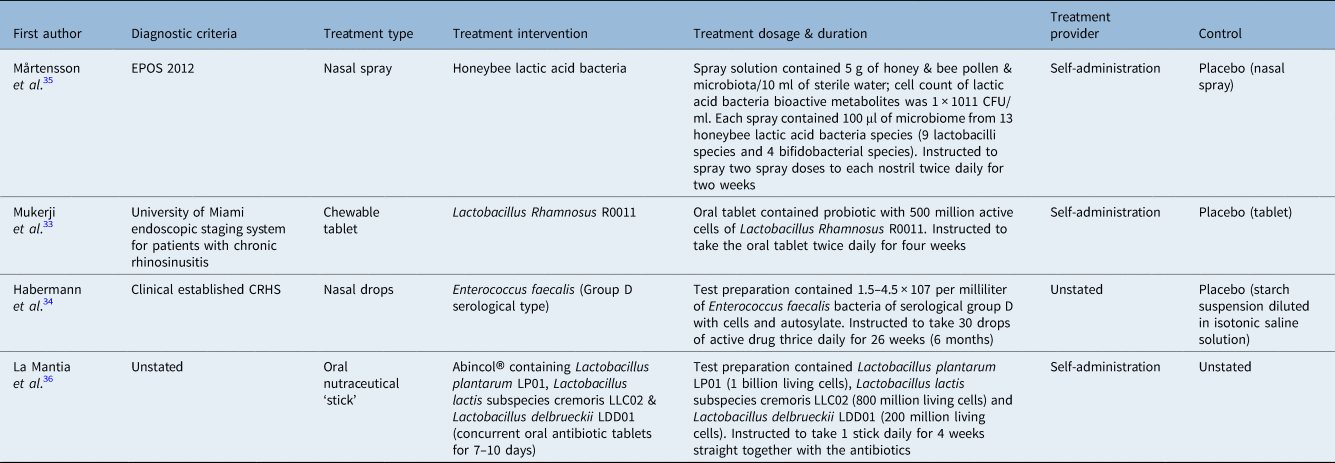
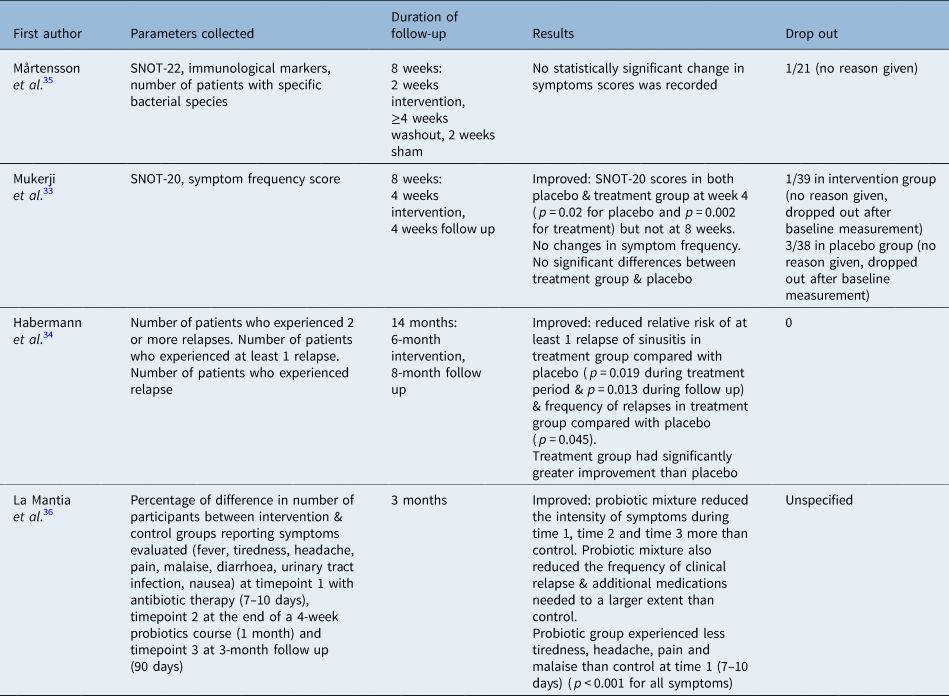
Four studiesReference Mukerji, Pynnonen, Kim, Singer, Tabor and Terrell33–Reference La Mantia, Gelardi, Drago, Aragona, Cupido and Vicini36 with a total of 318 chronic rhinosinusitis patients were evaluated in our review (Tables 1 and 2). A total of three parallel RCTsReference Mukerji, Pynnonen, Kim, Singer, Tabor and Terrell33,Reference Habermann, Zimmermann, Skarabis, Kunze and Rusch34,Reference La Mantia, Gelardi, Drago, Aragona, Cupido and Vicini36 and one crossover RCTReference Mårtensson, Abolhalaj, Lindstedt, Mårtensson, Olofsson and Vasquez35 from four different countries were included. Two trialsReference Mukerji, Pynnonen, Kim, Singer, Tabor and Terrell33,Reference La Mantia, Gelardi, Drago, Aragona, Cupido and Vicini36 included all chronic rhinosinusitis patients, one trialReference Mårtensson, Abolhalaj, Lindstedt, Mårtensson, Olofsson and Vasquez35 included only chronic rhinosinusitis without nasal polyps patients and one trialReference Habermann, Zimmermann, Skarabis, Kunze and Rusch34 included patients with chronic recurrent hypertrophic sinusitis. Most included studies comprised middle-aged adults in Western populations, published within the past two decades. Three RCTsReference Mukerji, Pynnonen, Kim, Singer, Tabor and Terrell33,Reference Mårtensson, Abolhalaj, Lindstedt, Mårtensson, Olofsson and Vasquez35,Reference La Mantia, Gelardi, Drago, Aragona, Cupido and Vicini36 had a probiotic formulation with bacterial strains belonging to the lactobacillus family, while oneReference Habermann, Zimmermann, Skarabis, Kunze and Rusch34 had probiotic formulation with bacterial strain belonging to the enterococcus family. Two RCTsReference Mukerji, Pynnonen, Kim, Singer, Tabor and Terrell33,Reference La Mantia, Gelardi, Drago, Aragona, Cupido and Vicini36 used oral administration and twoReference Habermann, Zimmermann, Skarabis, Kunze and Rusch34,Reference Mårtensson, Abolhalaj, Lindstedt, Mårtensson, Olofsson and Vasquez35 used the intranasal route. The follow-up duration of these included studies ranged from eight weeks to three months (Table 3).
Summary of included studies’ protocol and sample characteristics

RCT = randomised, controlled trial; CRSsNP = chronic rhinosinusitis without nasal polyps; CRS = chronic rhinosinusitis; CRHS = chronic recurrent hypertrophic sinusitis
Main sample characteristics of the study interventions

EPOS = European Position Paper on Rhinosinusitis; LAB = lactic acid bacteria; nasal polyps CFU = colony forming unit; CRHS = chronic recurrent hypertrophic sinusitis
Summary of results of the included studies

The following species of bacteria were utilised the study: *Lactobacillus apinorum Fhon13N, Lactobacillus mellifer Bin4N, Lactobacillus mellis Hon2N, Lactobacillus kimbladii Hma2N, Lactobacillus melliventris Hma8N, Lactobacillus helsingborgensis Bma5N, Lactobacillus kullabergensis Biut2N, Lactobacillus kunkeei Fhon2N, Lactobacillus apis Hma11N + Bifidobacterium asteroides Bin2N, Bifidobacterium coryneforme Bma6N, Bifidobacterium Bin7N and Bifidobacterium Hma3N. SNOT = Sino-Nasal Outcome Test
Evaluation of methodological quality and bias
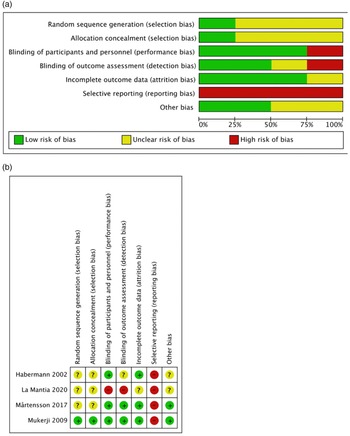
Overall, one study had a low risk of biasReference Mukerji, Pynnonen, Kim, Singer, Tabor and Terrell33 and three had unclear riskReference Habermann, Zimmermann, Skarabis, Kunze and Rusch34–Reference La Mantia, Gelardi, Drago, Aragona, Cupido and Vicini36 (Figures 2a and b). All trials reported dropouts, which ranged from 4.8 per cent to 5.2 per cent.
(a) Risk of bias graph. (b) Risk of bias summary.

Summary of findings
All studies included one or more of the following: safety outcomes, symptom severity score (SNOT-20 or SNOT-22), temporal score measures of clinical relapses and intranasal endoscopic and microbiological profile changes (Table 3).
Safety
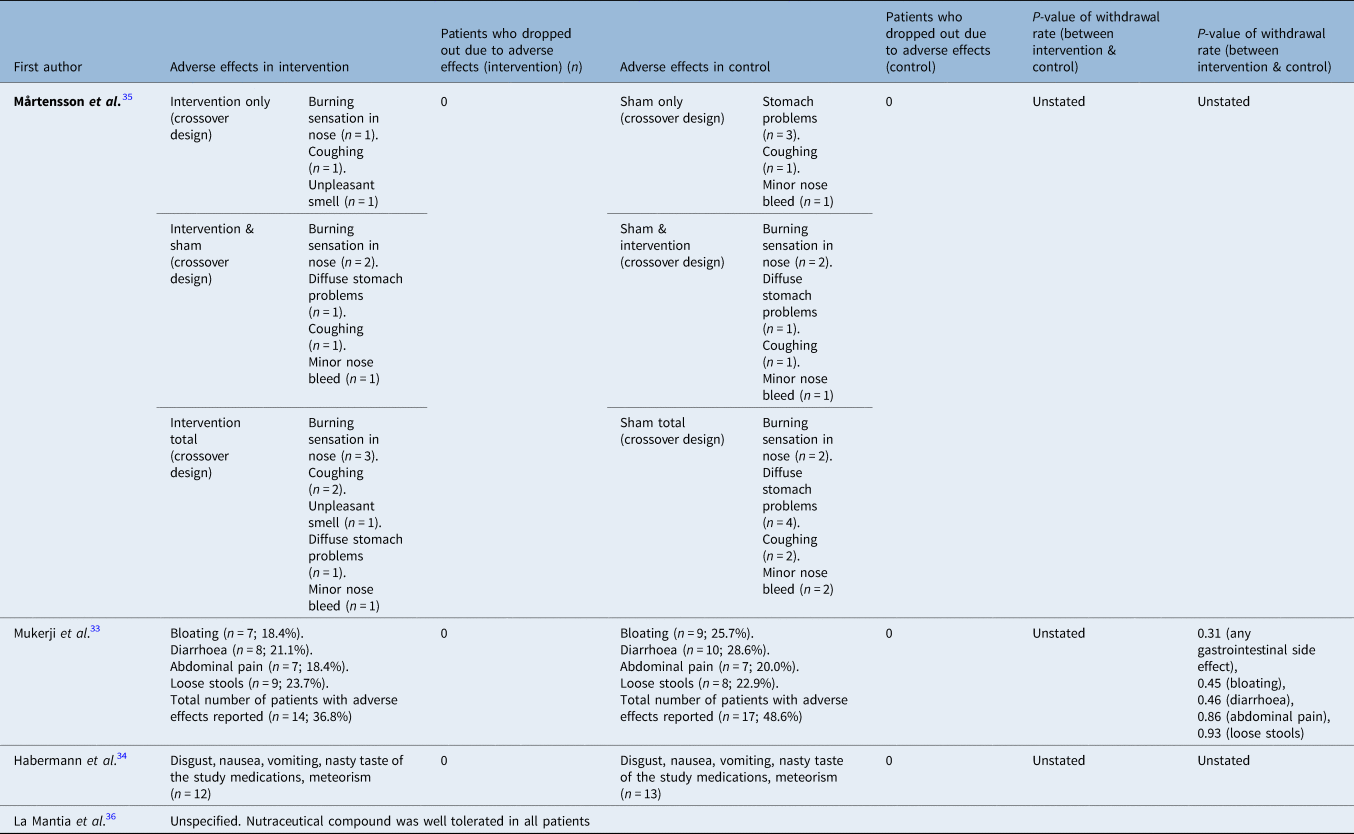
Three out of four studies reported data on safety monitoring,Reference Mukerji, Pynnonen, Kim, Singer, Tabor and Terrell33–Reference Mårtensson, Abolhalaj, Lindstedt, Mårtensson, Olofsson and Vasquez35 whereas one studyReference La Mantia, Gelardi, Drago, Aragona, Cupido and Vicini36 only reported that the nutraceutical compound was well tolerated in all patients. All included trials only reported minor side effects, where none of the participants withdrew because of side effects. Primary side effects included gastrointestinal symptoms such as nausea and vomiting, abdominal discomfort, and loose stools. A Fisher's exact test was used for analysis of side effect incidence. Within each study, there was no significant difference in side effect incidence when comparing intervention and treatment arms for Mukerji et al.Reference Mukerji, Pynnonen, Kim, Singer, Tabor and Terrell33 (p = 0.358), Mårtensson et al.Reference Mårtensson, Abolhalaj, Lindstedt, Mårtensson, Olofsson and Vasquez35 (p = 0.525) or Habermann et al.Reference Habermann, Zimmermann, Skarabis, Kunze and Rusch34 (p = 0.854). We next compared side effect incidence between studies that employed similar probiotic preparations. Mårtensson et al.Reference Mårtensson, Abolhalaj, Lindstedt, Mårtensson, Olofsson and Vasquez35 and Habermann et al.Reference Habermann, Zimmermann, Skarabis, Kunze and Rusch34 both utilised nasal probiotic preparations. Incidence of side effects (epistaxis, unpleasant smell or taste) in the intervention arms appeared to be markedly higher in the study by Mårtensson et al.Reference Mårtensson, Abolhalaj, Lindstedt, Mårtensson, Olofsson and Vasquez35 compared with Habermann et al.Reference Habermann, Zimmermann, Skarabis, Kunze and Rusch34 (40 per cent vs 15.4 per cent, respectively; p = 0.0148); however, it should be noted that the sample sizes are markedly different.
Specifically, the incidence of nasal-related side effects in the study by Mårtensson et al.Reference Mårtensson, Abolhalaj, Lindstedt, Mårtensson, Olofsson and Vasquez35 was non-significant for epistaxis (p = 0.548) and nasal burning sensation (p = 0.633) (Table 4). The relative incidence of gastrointestinal side effects between Mårtensson et al.Reference Mårtensson, Abolhalaj, Lindstedt, Mårtensson, Olofsson and Vasquez35 (nasal probiotics) and Mukerji et al.Reference Mukerji, Pynnonen, Kim, Singer, Tabor and Terrell33 (oral probiotic) was non-significant (p = 0.072).
Summary of the adverse effects profile of the included studies

Sino-Nasal Outcome Test scores
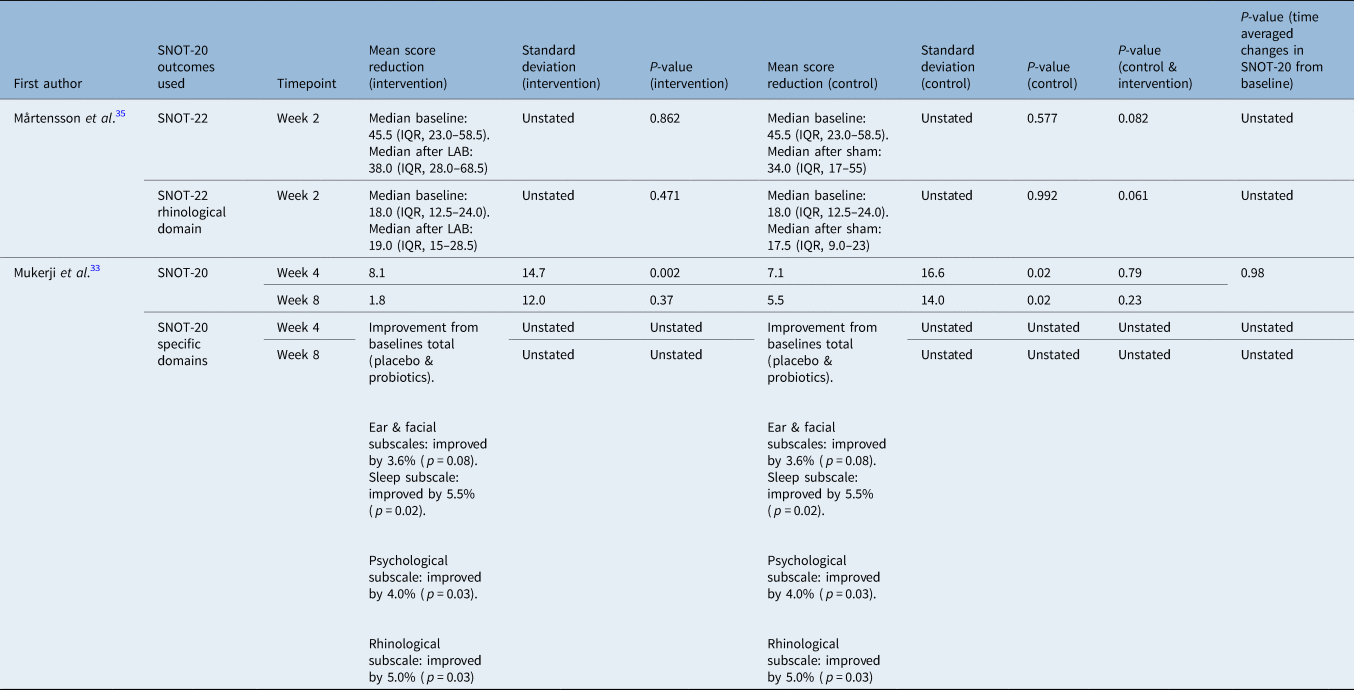
Both Mårtensson et al.Reference Mårtensson, Abolhalaj, Lindstedt, Mårtensson, Olofsson and Vasquez35 and Mukerji et al.Reference Mukerji, Pynnonen, Kim, Singer, Tabor and Terrell33 showed that probiotics had no significant difference in mean end-point SNOT-20 or SNOT-22 score reduction for treatment and control groups (Table 5). Probiotic treatment in the study by Mukerji et al.Reference Mukerji, Pynnonen, Kim, Singer, Tabor and Terrell33 showed a significant reduction in SNOT-20 score by 8.1 points (p = 0.002) at 4 weeks post-treatment, but it did not sustain significance at 8 weeks (p = 0.37). Individual SNOT subscale score domain improvements included sleep (5.5 per cent reduction; p = 0.02) and psychological (4.0 per cent reduction; p = 0.03) and rhinological subscales (5.0 per cent improvement; p = 0.03).
Summary of SNOT scoring outcomes for included studies

SNOT = Sino-Nasal Outcome Test; IQR = interquartile range; LAB = lactic acid bacteria
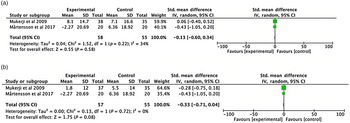
Meta-analysis of pooled SNOT score outcomes showed no reduction in SNOT scores at either timepoint of equal to or less than 4 weeks (standardised mean difference, −0.13; 95 per cent confidence interval (CI), −0.60 to 0.34; p = 0.58) (Figure 3a) and at both study endpoints, which were week 8Reference La Mantia, Gelardi, Drago, Aragona, Cupido and Vicini36 and week 2,Reference Mårtensson, Abolhalaj, Lindstedt, Mårtensson, Olofsson and Vasquez35 respectively (standardised mean difference, −0.33, 95 per cent CI; −0.71 to 0.04; p = 0.08) (Figure 3b).
(a) Effects of probiotics on SNOT outcomes at timepoint less than or equal to 4 weeks. (b) Effects of probiotics on SNOT outcomes at experimental endpoints. Std. = standardised; SD = standard deviation; CI = confidence interval; IV = inverse variance

Symptom-based outcomes
The study by Mukerji et al.Reference Mukerji, Pynnonen, Kim, Singer, Tabor and Terrell33 examined patients’ self-reported severe symptom frequency. At week 4 of study, a decrease of 33.3 per cent of probiotic-treated and 26.3 per cent of control patients reported severe symptoms. Similarly at week 8, there was no significant difference in reduction of severe symptom frequency in patients when compared with baseline (probiotics 15.3 per cent, control 26.3; p = 0.75).
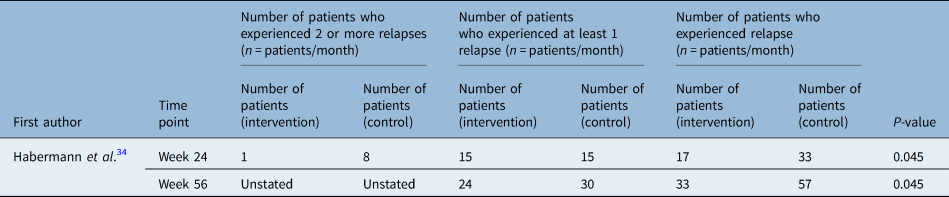
Habermann et al. reported a median time to first relapse of 88 days in the probiotic group and 92 days in the control groupReference Habermann, Zimmermann, Skarabis, Kunze and Rusch34 (Tables 6 and 7). Across all timepoints, there was a significant increase in symptom relapse incidence for control patients compared with probiotic groups (p = 0.045). Probiotic-treated patients were also determined to have a significantly lower risk of developing at least one relapse than control-group patients (risk ratio = 0.49; p = 0.019) during study periods and the 8-month follow-up period (risk ratio = 0.56; p = 0.013).
Summary of included studies’ relapse outcomes

Summary of included studies’ relapse outcomes

Microbiological profile
Mårtensson et al. examined the microbiological biome changes following probiotic therapy.Reference Mårtensson, Abolhalaj, Lindstedt, Mårtensson, Olofsson and Vasquez35 No significant differences in bacterial composition between observations before and after lactic acid bacteria treatment (p = 0.219) or placebo treatment (p = 0.263) were observed. Moreover, there were no significant differences in inflammatory cytokine levels (interleukin-6 or 8, interferon-c, tumor necrosis factor-a, myeloperoxidase) within nasal lavage assays following lactic acid bacteria treatment (p > 0.05).
Discussion
Although the definition of chronic rhinosinusitis in our included RCTs varied between studies, all included studies met basic definitions of nasal symptoms for at least 12 weeks, with endoscopic or radiological evidence of chronic rhinosinusitis. We acknowledge that chronic rhinosinusitis is a heterogeneous disease with an evolving spectrum of endotypes. Our review attempted to work with an overall diagnosis of chronic rhinosinusitis, defined broadly to account for heterogeneity in definition across various regions and patient populations. In our review, we opted to include studies of non-paediatric chronic rhinosinusitis populations, with the consideration that adult and paediatric chronic rhinosinusitis may have very different pathophysiology, mandating differing treatment approaches.
Our review showed that probiotics are safe for clinical use, with extremely low adverse event risks. The most common side effects were gastrointestinal in nature. The systemic side effects of probiotics were interesting as there was no direct systemic absorption of probiotics into the gastrointestinal tract for 2 of 3 studies that used nasal probiotic preparations, yet gastrointestinal symptoms were the predominant side effects. We note the non-significant difference in relative incidence of gastrointestinal side effects between Mårtensson et al.Reference Mårtensson, Abolhalaj, Lindstedt, Mårtensson, Olofsson and Vasquez35 (nasal probiotics) and Mukerji et al.Reference Mukerji, Pynnonen, Kim, Singer, Tabor and Terrell33 (oral probiotics). The study by La Mantia et al.Reference La Mantia, Gelardi, Drago, Aragona, Cupido and Vicini36 did not report any gastrointestinal side effects with the use of an intranasal probiotic nutraceutical ‘stick’, despite concurrent use of antibiotic treatment for 7–10 days, which may affect the gut microbiome. Although these studies were unable to ensure that dietary intake of the study participants did not contain any probiotic-containing foods during the study period, we acknowledge gastrointestinal side effects remain prevalent regardless of probiotic delivery method, and this requires further studying. Current trials examining the effect of ingested oral probiotics with respect to alterations in both nasal and intestinal microbiomes are under way.Reference Wu, Pei, Wang, Wang, Huang and Wang37 Early studies report alterations in nasal microbiomes following oral probiotic treatment, but have yet to establish if the reverse is true.Reference Gluck and Gebbers38 Similar to intranasal steroids, which are a mainstay of medical chronic rhinosinusitis treatment because of excellent safety profiles,Reference Macias-Valle and Psaltis39 the systemic side effect profile of probiotics should be determined if intended for application as chronic rhinosinusitis adjunctive treatment.
We attempted to evaluate study outcomes by directly comparing the included studies with the subtypes of probiotic preparation used. However, this proved untenable because of the small number of included studies, heterogeneity of study outcomes with little overlap and significant variation in reporting of outcomes.
Our review also examined pre- and post-study changes in validated symptom scores, such as SNOT scores. Overall, a meta-analysis of pooled data illustrates that there was no significant reduction in SNOT scores at either timepoint of less than four weeks or at both study endpoints at eight weeks and two weeks. Although both studies reported no significant reduction in SNOT scores, we performed a pooled analysis to factor in the effect size of each RCT and to quantify the absolute decrease in mean SNOT scores, which ranged from a maximum of 6.5 to 8 points at initial stages. This does not consistently meet the minimum clinically important difference for SNOT-22 scores of 8 points (for medical therapy) or 9 points (for endoscopic sinus surgery) as established in the current literature, where minimum clinically important difference is defined as the minimum change in an objective clinical outcome value following a clinical intervention that is associated with a clinically detectable change for the patient.Reference Chowdhury, Mace, Bodner, Alt, Deconde and Levy40 This suggests that from a patient symptom perspective, overall symptom reduction may be marginal or insignificant with probiotic use. However, SNOT subscale breakdown analysis showed significant improvements in the sleep (5.5 per cent reduction; p = 0.02) and psychological (4.0 per cent reduction; p = 0.03) and rhinological subscales (5.0 per cent improvement; p = 0.03).Reference Mukerji, Pynnonen, Kim, Singer, Tabor and Terrell33 Although overall sleep and psychological effects may be multifactorial, probiotics may be effective in improving nasal symptoms. The actual percentage decrease of 5 per cent in these subscores may appear minimal but may illustrate a trend towards improvement with consistent probiotic use. As chief symptoms in chronic rhinosinusitis tend to be rhinological, a considerable proportion of chronic rhinosinusitis patients may derive symptom improvement following probiotic use. An alternate study by La Mantia et al.Reference La Mantia, Gelardi, Drago, Aragona, Cupido and Vicini36 affirmed that probiotic use significantly reduced intensity of sinusitis symptoms (tiredness, headache, pain, malaise) in both acute and chronic rhinosinusitis patients. Together, these findings suggest promising symptom-control efficacy of probiotics in chronic rhinosinusitis.
Our review attempted to ascertain the optimal regime and application of probiotics for chronic rhinosinusitis. Mukerji et al.Reference Mukerji, Pynnonen, Kim, Singer, Tabor and Terrell33 showed a significant reduction in SNOT-20 score of 8.1 points (p = 0.002) at 4 weeks post-treatment, but this treatment effect did not sustain significance at 8 weeks (p = 0.37). This suggests an optimal period for duration of therapy (i.e. between four and eight weeks) as there may be a rebound phenomenon in prolonged probiotic therapy beyond eight weeks. Further studies are warranted to determine whether local mucosal changes following prolonged treatment bears resemblance to the clinical entity of rhinitis medicamentosa following prolonged nasal decongestant therapy. The probiotic formulation in the study by Mukerji et al.Reference Mukerji, Pynnonen, Kim, Singer, Tabor and Terrell33 used single-strain probiotics, whereas in the study by Mårtensson et al.Reference Mårtensson, Abolhalaj, Lindstedt, Mårtensson, Olofsson and Vasquez35 they employed a composite formulation (13 species of honeybee lactic acid bacteria). Current understanding of probiotics’ therapeutic effect suggests that probiotic multi-species formulas may be more effective against a wide range of endpoints when compared with single species formulas.Reference Vitetta, Coulson, Thomsen, Nguyen and Hall41 More studies are required to determine the optimal probiotic composition for adjunctive use in chronic rhinosinusitis.
The findings from Mukerji et al.Reference Mukerji, Pynnonen, Kim, Singer, Tabor and Terrell33 of decreasing severe symptom frequency rate for the probiotic intervention group from 33.3 per cent at week 4 to 15.3 per cent at week 8 highlights the effect of probiotic therapy in reducing symptom severity. Because the efficacy of probiotics in symptom reduction appears to taper off towards eight weeks of treatment, an optimal treatment duration of adjunct probiotic therapy may be between 4 and 6 weeks.
Finally, we explored alternative clinical contexts for adjunctive probiotic use. Habermann et al.Reference Habermann, Zimmermann, Skarabis, Kunze and Rusch34 reported that the relative risk of sinusitis relapse was much lower in probiotic treatment groups compared with their control counterparts (risk ratio = 0.49; p = 0.019) during the study period and the 8-month follow-up period (risk ratio = 0.56; p = 0.013). Similarly, La Mantia et al.Reference La Mantia, Gelardi, Drago, Aragona, Cupido and Vicini36 reported that probiotic treatment reduced episodes of chronic rhinosinusitis relapse by between 31 and 45 per cent within 1 month and up to 20 per cent within 3 months. These studies suggest that probiotics may have a key role in minimising the risks of acute chronic rhinosinusitis episodes.
Strengths and limitations
Firstly, very few previous studies have summarised the evidence for probiotics in chronic rhinosinusitis, where only in vitro potential has been demonstrated, but clinical benefits are yet to be explored.Reference Cope and Lynch3,Reference Kramer and Heath11,Reference Cervin42 This study is the first review to comprehensively assess the efficacy of probiotics in all RCTs evaluating probiotics in chronic rhinosinusitis and provide updated recommendations for future trial designs. Secondly, this review is also the first to holistically evaluate both the safety profile and clinical effectiveness demonstrated by SNOT, symptom-based outcomes and microbiological profile across all RCTs.
However, this review is limited by the small number of RCTs exploring probiotic treatment in chronic rhinosinusitis, which affects consequent stratification to explore variation in response to probiotics among different patient profiles. These include stratification by age, gender and disease characteristics including nasal polyp percentage and duration of prior medical treatment for chronic rhinosinusitis. Moreover, there is heterogeneity in modes of probiotic administration and outcome measures. Ideally, the studies that administered oral probiotics should be separately analysed from studies that utilised non-oral probiotic formulations (e.g. nutraceutical nasal stick). Furthermore, studies could have been analysed based on species of probiotic bacteria (e.g. lactobacillus vs enterococcus). However, the extremely small number of included RCTs rendered the above stratification unfeasible. As such, our study aimed to pool the available evidence on probiotic use to evaluate the utility of probiotics in chronic rhinosinusitis treatment. Further studies investigating nasal probiotics as an adjunct treatment for chronic rhinosinusitis are awaited. Standardised reporting outcomes using validated rhinological and symptom scores are recommended for future RCTs.
Besides utility as an adjunctive therapy for chronic rhinosinusitis patients on maximal medical therapy, the role of probiotics in high-risk patient groups can be potentially examined. These include recurrent sinusitis subgroups (more than four sinusitis episodes with intervening symptom-free periods) or in post-operative endoscopic sinus surgery patients in whom risks of acute sinusitis may compromise surgical outcomes. We further observed the complex interplay of commensal and pathogenic bacteria in the sinonasal microbiome. Cho et al.Reference Cho, Skinner, Lim, McLemore, Koch and Zhang43 demonstrated via in vitro study that the effect of single-strain intranasal probiotics can have vastly differing growth effects on pathogenic bacteria. Intranasal application of a probiotic rinse containing Lactococcus lactis suppressed growth of Pseudomonas aeruginosa in one strain but induced growth in a mucoid strain. In contrast, Endam et al.Reference Endam, Alromaih, Gonzalez, Madrenas, Cousineau and Renteria21 demonstrated that intranasal probiotic irrigation with live L. lactis W136 bacteria in patients with refractory chronic rhinosinusitis was safe. This was further associated with beneficial effects on symptoms, mucosal aspect and microbiome composition. Within our included studies, Mårtensson et al.Reference Mårtensson, Abolhalaj, Lindstedt, Mårtensson, Olofsson and Vasquez35 did not report any significant difference in the concentration of pathogenic bacteria species or inflammatory cytokine levels, although it is relevant to note that probiotic therapy (lactic acid bacteria) administered using the study dose of 108 CFU of lactic acid bacteria to each nose twice daily did not exert any bacterial or inflammatory process interference. These must be factored into devising adjunctive probiotic therapy regimes for chronic rhinosinusitis.
Conclusion
Probiotic therapy does not exert significant adverse events as adjunctive treatment in chronic rhinosinusitis and shows efficacy in improving primarily rhinological symptoms. This review calls for future RCTs to explore optimal treatment duration and bio-absorption of intranasal topical probiotics and their effects on high-risk sinusitis patient subgroups to fully determine the utility of probiotics in chronic rhinosinusitis.
Acknowledgements
We would like to thank Ms Hui Cheng, senior statistician in Clinical Governance, Sengkang General Hospital, for her input and consult regarding statistical design and direction for this study.
Competing interests
None declared