INTRODUCTION
The European anchovy, Engraulis encrasicolus (Linnaeus, 1758), is one of the economically most important Mediterranean small pelagic species widely distributed in the Adriatic Sea, inhabiting all its parts down to depth of 210 m (Mužinić, Reference Mužinić1973). It is distributed in the Atlantic, from the western coast of Africa up to Bergen, as well as in the North Sea, the Baltic, the Mediterranean and the Black Sea (Whitehead et al., Reference Whitehead, Bouchot, Hureau, Nielsen and Tortonese1986). The European anchovy has a short lifespan, relatively high growth rates, early sexual maturity, long spawning season, high fecundity, schooling behaviour and seasonal migrations (La Mesa et al., Reference La Mesa, Donato, Giannetti and Arneri2009).
Anchovy reaches sexual maturity at the end of the first year. Fifty per cent of the anchovy population reach maturity at the minimum total length (TL) from 8.2 to 9.0 cm, while 95% of specimens become mature at 11.00 cm (Sinovčić & Zorica, Reference Sinovčić and Zorica2006). At 11.5 cm the whole anchovy population is sexually mature (Sinovčić, Reference Sinovčić1999). The biological cycle in the Mediterranean is about 3 years long, during which it reaches a maximum length of approximately 20 cm (Marrano, Reference Marrano2001).
Anchovy spawns in areas characterized by high primary production like upwellings, river runoffs and convergence areas (Palomera, Reference Palomera1992; Zarrad et al., Reference Zarrad, Missaoui, Alemany, Salah, Garcia, Ridha, Othman and Amor2006). The river runoff influences the spawning and the survival rate of anchovy in its early life stages which consequently affect recruitment (Lloret et al., Reference Lloret, Palomera, Salat and Sole2004; Zorica et al., Reference Zorica, Vilibić, Čikeš Keč and Šepić2013).
Spawning areas of small pelagic species in the Adriatic Sea, especially of anchovy and sardine (Sardina pilchardus Walbaum, 1792), have been well studied and the results show that these species spawn in areas that include almost the entire continental shelf, up to depths of 200 m (Piccinetti et al., Reference Piccinetti, Regner and Specchi1980; Gamulin & Hure, Reference Gamulin and Hure1983; Regner, Reference Regner1996). The main spawning area of anchovy is in eutrophic waters of the western part of the shallow northern Adriatic and along the Italian coast to the peninsula of Gargano (Regner, Reference Regner1996).
The spawning behaviour of anchovy in the western Mediterranean was described by Fage (Reference Fage1935) and Palomera (Reference Palomera1992) who suggested that adults come inshore to spawn. Merker & Vujošević (Reference Merker and Vujošević1972) pointed out that the adult population of anchovy in the Boka Kotorska Bay also come inshore to spawn, and after spawning, the fish migrate towards the open part of the Montenegrin coast.
From 2002 estimates of the anchovy biomass in the eastern part of the south Adriatic Sea were done by the acoustic method (within the scope of the FAO AdriaMed Project) while from 2005 those estimates were obtained also with the daily egg production method (FAO AdriaMed, 2005, 2009). Over the years (2002–2005) estimated biomass of anchovy in this area show quite large fluctuations (in 2002 it was 90 383 t or 66.4% of the total estimated biomass of small pelagic fish; in 2004 it was 3454 t or 8.8%, and in 2005 estimated biomass was 23 220 t or 47.5%; Regner et al., Reference Regner, Joksimović, Kasalica, Đurović, Pešić and Mandić2006). It seems that the anchovy population dynamics have large annual oscillations, which are explained by fluctuations of abiotic and biotic factors in the southern Adriatic Sea (Regner, Reference Regner1996).
The first ichthyoplankton studies in the south Adriatic Sea, and partly in the Boka Kotorska Bay, date back to 1966, when spatiotemporal dynamics of sardine spawning were investigated (Merker & Vujošević, Reference Merker and Vujošević1972). Soon after that, the density and distribution of anchovy eggs were studied within the Boka Kotorska Bay (Merker, Reference Merker1971).
Considering that the information on the anchovy spawning ecology in the southern Adriatic Sea is very scarce, and the importance that this species has in fisheries, this study was carried out with the aim to analyse the timing and place of anchovy spawning in relation to environmental conditions.
MATERIALS AND METHODS
Study area
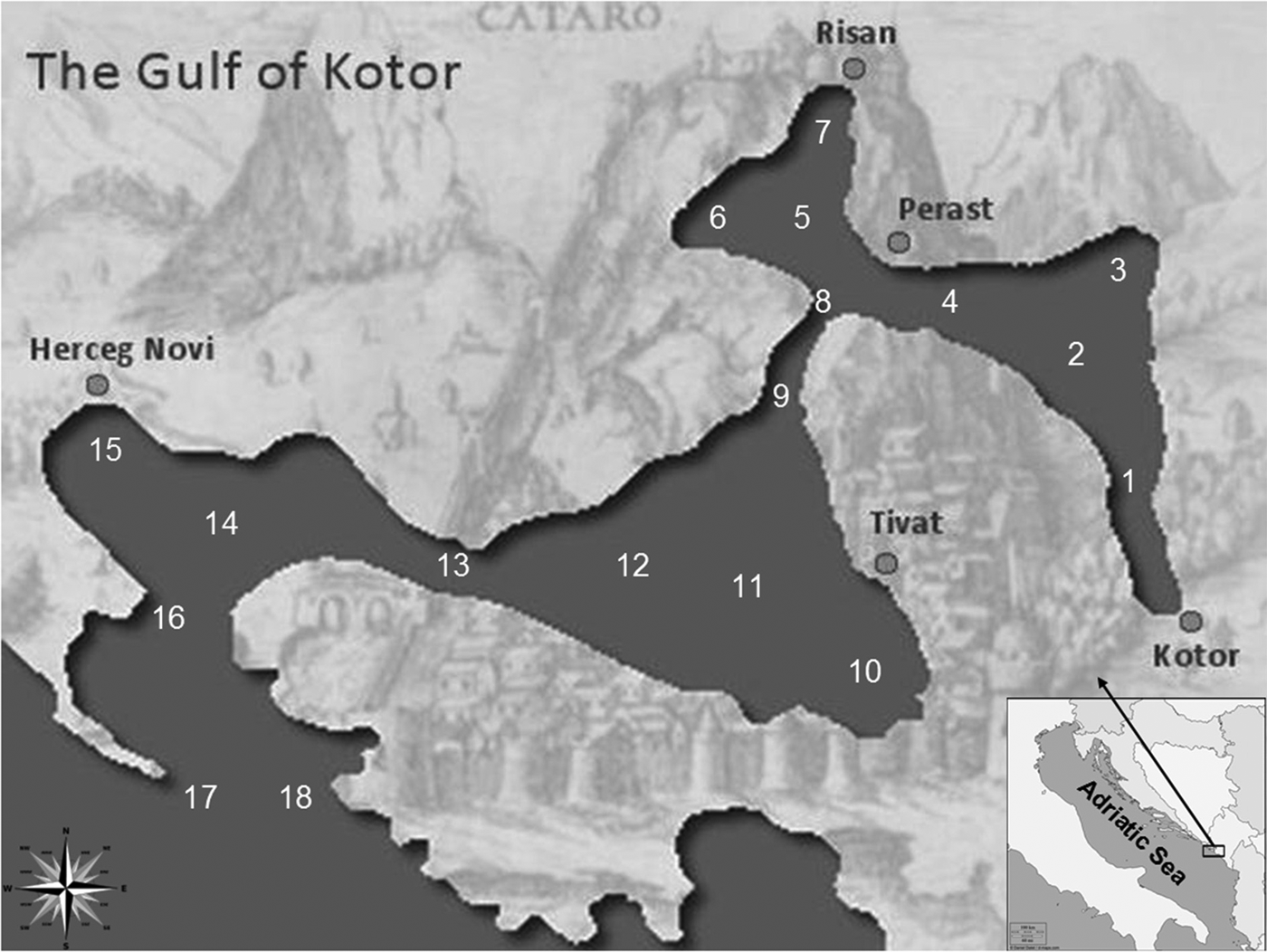
The Boka Kotorska Bay is a large bay situated in the southern part of the eastern Adriatic coast, on the Montenegrian part of the Adriatic Sea. Due to its deep indentation into the land, its size, and especially its significant historical, geographic and geostrategic role, it stands out among other bays of the Mediterranean Sea (Figure 1). The innermost point is 15 nautical miles away from the open sea. The Boka Kotorska Bay is one of the most indented parts of the Adriatic coast (Magaš, Reference Magaš2002).
Map of Montenegro and the Boka Kotorska Bay (study stations 1–18).

The Boka Kotorska Bay is rich in river and underwater runoffs, which makes this area favourable for anchovy spawning. The bay consists of four smaller sub-bays: the Bay of Kotor, the Bay of Risan, the Bay of Tivat and the Bay of Herceg Novi. Two rivers empty into the Bay of Kotor: the Škurda River, which flows during the whole year, and the Ljuta River, which is inactive during the summer period. Besides these two rivers, there are several smaller streams, brooks and underwater springs that represent an important influx of fresh water into the bay. The place with the largest quantity of rainfall in Europe – Crkvice, from where water flows into the sea through a number of streams, is located in the Bay of Risan. This runoff brings high quantities of suspended particles, which have a strong impact on ecological conditions within the bay (colour, transparency, salinity and density). There are also two rivers that flow into the Bay of Tivat – the Široka River and the Gradiošnica River. The Sutorina River flows into the Bay of Herceg Novi, and this river is active during autumn, winter and spring periods. All river runoffs, as well as winds, provoke surface streaming from the bay towards the open sea.
Material and sampling techniques
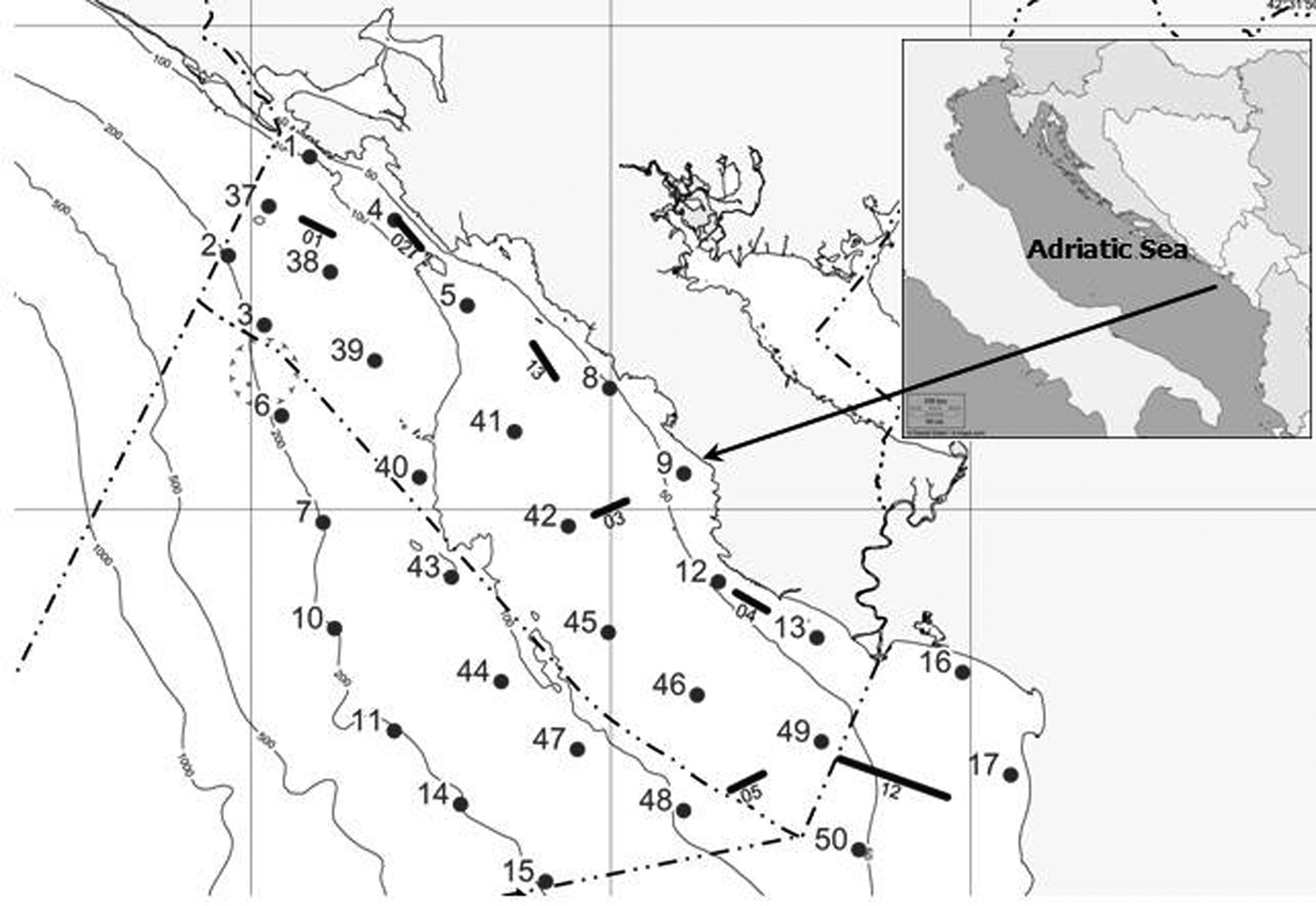
Three ichthyoplankton surveys were carried out within the Boka Kotorska Bay in July 2006, April 2007 and August 2007, in the period of intensive spawning of anchovy. The biomass of anchovy in the Boka Kotorska Bay was estimated from the survey data that were obtained in August 2007, when all stations were positive for anchovy eggs. An additional survey was carried out in Montenegrin and Albanian territorial and adjacent international open waters of the south-eastern Adriatic Sea in July 2008 (Figure 2).
Map of the territorial waters of Montenegro, with positions of plankton sampling (dots) and pelagic trawl transects (lines).
Plankton samples were taken with PairOVET (modified CalVet) plankton net. Diameters of net cylinders were 25 cm each, and the total mouth area was 0.098 m2, with mesh size of 0.160 mm. Net was towed vertically at a speed of 0.5 m s−1, from the depth of 5 m above the bottom. The maximal depth within the bay is 60 m, and the maximal depth of sampling in the open water was 70 m.
Plankton material was preserved immediately on board in 2.5% solution of buffered formaldehyde. Anchovy eggs were counted, staged and aged (Regner, Reference Regner1985) at the laboratory of the Institute of Marine Biology, Kotor, and data were further processed using the Surfer Golden Software 8 and applying the kriging interpolation method. The diameter of anchovy eggs (longer axis) was measured under the binocular Nikon SMZ 800 Stereomicroscope with Motic camera, in order to compare eggs from different seasons. The samples collected in the open waters of the south-eastern Adriatic Sea were analysed at the Laboratory for Ichthyology and Marine Fisheries at the Institute of Marine Biology of Montenegro.
The spawning frequency of anchovy was analysed from samples of sexually mature specimens, taken with commercial purse seines during the same months. A sample of 65 and 92 females was taken within the bay and in the open waters, respectively. Ovaries were removed for histological analyses.
For the estimation of the length at first maturity, a total of 750 small-sized anchovy were obtained by random sampling from the Boka Kotorska Bay. Anchovy were caught by purse seines with 6–8 mm mesh, under artificial light during the night. Samples were collected monthly from September 2007 to September 2008. Total length (TL: ±1.0 cm) and total body weight (W: ±0.01 g) were measured in the laboratory. Anchovy and gonad maturity stages were determined macroscopically according to the MEDITS protocol (MEDITS, 2007). The mean size at 50% sexual maturity was estimated for both males and females.
Length at first maturity was calculated using the linear regression on a ratio of mature individuals over the total number of sexed individuals for a given length category, transformed using the ln (1/P − 1) expression (where P is the proportion of mature individuals over the total number of sexed individuals for any given length class). The regression gives the parameters α (intercept) and β (slope) of the maturity ogive. These parameters are then used to calculate lengths at which 25, 50 and 75% of the population reaches sexual maturity (L25%, L50% and L75%, respectively), according to the formulae:
 $$L 25\% =\lpar \alpha -{\rm ln \lpar 3\rpar }\rpar / \beta$$
 $$L 50\% =\alpha / \beta$$
 $$L 75\% =\lpar \alpha+{\rm ln \lpar 3\rpar }\rpar / \beta$$
Temperature and salinity were measured on site with a Marimatech HMS 1820 CTD probe, from the sea surface to the maximum depth reached, during each sampling of anchovy.
Data analysis
The number of eggs was presented per unit of surface (1 m2) per day, using the function given by Tanaka (Reference Tanaka1973), while the estimation of anchovy egg developmental time was calculated using the function given by Regner (Reference Regner1985).
Anchovy eggs were classified in 10 developmental stages (Regner, Reference Regner1985). Temperature of the sea surface was used for calculation of developmental time from fertilization to hatching (in days). This function has been used for all estimates of developmental time of anchovy eggs since 1979 (Regner, Reference Regner1985):
 $$D=1/1.012896 \times [ 1+{\rm e}^{\lpar 4.914322 - \lpar 0.257451 \times T\rpar \rpar }] $$
where D is developmental time of eggs in days, and T is the temperature in °C.
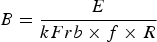
The daily egg production method (DEPM) is based on the model described by Parker (Reference Parker1980):
 $$B=\displaystyle{E \over {kFrb \times f \times R}}$$
where: B = spawning biomass in metric tons, E = number of eggs produced per day over the area surveyed, k = conversion factor from grams to metric tons, Frb = relative batch fecundity, f = spawning frequency and R = sex ratio (fraction of mature females by weight).
Biomass estimation of anchovy with the daily egg production method requires the analysis of reproductive parameters of the adult population (sex ratio, batch fecundity, spawning frequency), and it is necessary to simultaneously estimate the abundance and distribution of anchovy eggs (egg production per day and determination of the main spawning areas).
Spawning frequency was calculated by the postovulatory follicle method (D-1 and D-0) and the hydrated oocytes method (Hunter & Macewicz, Reference Hunter, Macewicz and Lasker1985). Postovulatory follicles are present in ovaries after ovulation and spawning, after which they start to degenerate. Depending on the degree of their degeneration, it is possible to determine the precise day of spawning (Day, Day-0).
Batch fecundity was estimated by counting the most developed and largest oocytes in gonads using the method described by Hunter & Macewicz (Reference Hunter, Macewicz and Lasker1985) for Engraulis mordax.
RESULTS
Eggs
Anchovy eggs were present in most parts of the studied area, which comprise a total surface of 87 334 km2. The diameter of anchovy eggs (longer axis) ranged from 1.15–1.4 mm in July, from 1.07–1.62 in April and from 1.02–1.44 mm in August 2007.
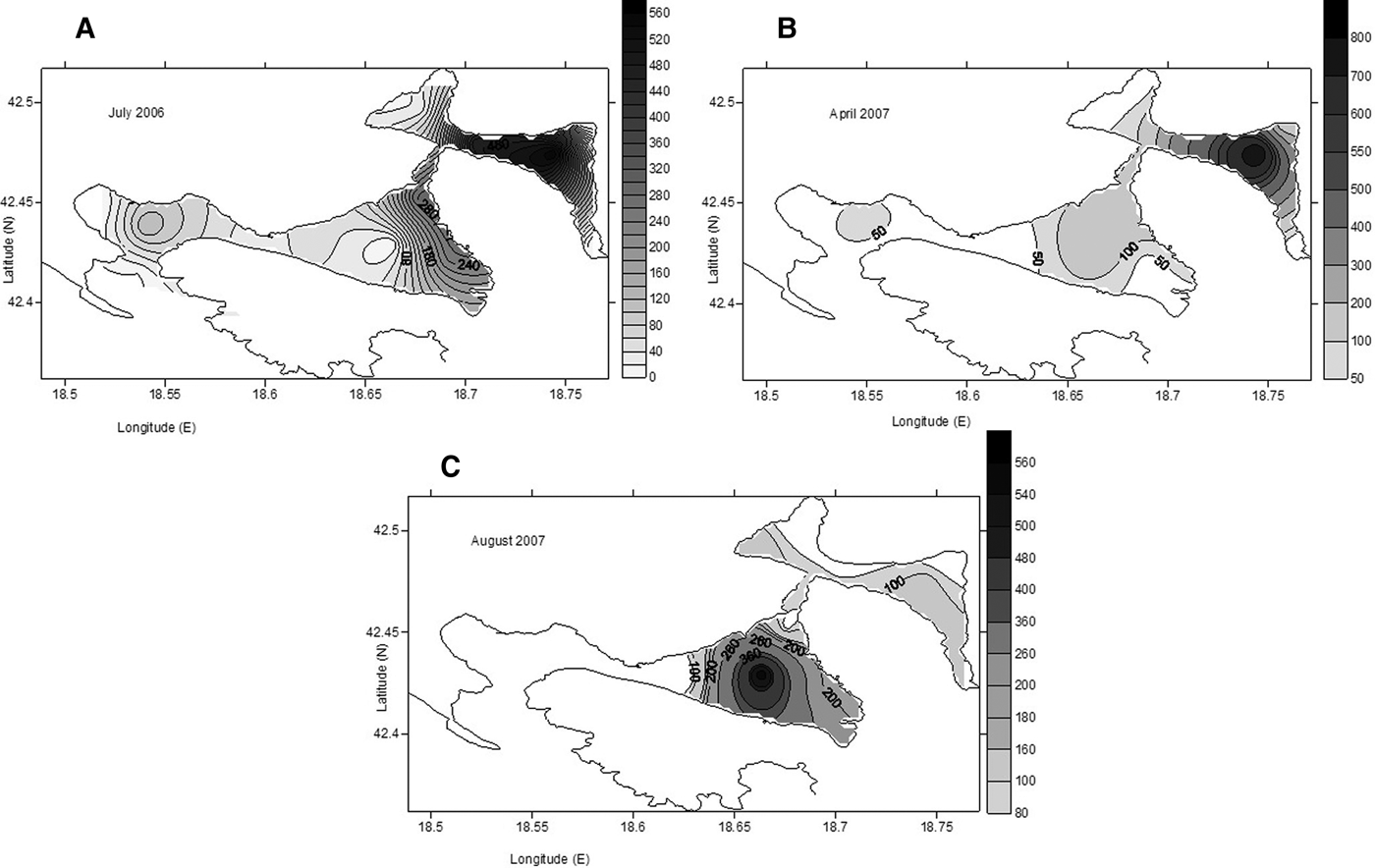
During the cruise in July 2006, six centres of intensive spawning (N eggs day−1 ≥100) were observed (at stations 2, 4, 8, 10, 11 and 14). The highest abundance was noted at station 2 (565.05 eggs day−1) and at station 4 (474.67 eggs day−1), followed by stations 8 (170.64 eggs day−1), 10 (237.33 eggs day−1), 11 (283.81 eggs day−1) and 14 (123.95 eggs day−1).
In April 2007, six centres of intensive spawning were found again (at stations 2, 3, 4, 8, 9 and 11). The highest abundance was found inside the Bay of Kotor at station 2, with 823.10 eggs day−1. At station 3, 199.11 eggs day−1 were found, followed by station 4 with 334.78 eggs day−1, station 8 with 104.00 eggs day−1, station 9 with 203.77 eggs day−1 and station 11 with 112.86 eggs day−1.
In August 2007, five centres of intensive spawning were found (at stations 1, 2, 6, 9 and 10). The highest abundance was found at station 9, with 581.11 eggs day−1. At station 1, 125.54 eggs day−1 were found, followed by station 2 with 116.84 eggs day−1, station 6 with 146.05 eggs day−1 and station 10 with 214.43 eggs day−1.
The average time of incubation of anchovy eggs (D) from fertilization to hatching was 1.36 days in July 2006, 3.15 days in April 2007, and 1.28 days in August 2007.
The reproductive parameters of adult anchovies are presented in Table 1. The daily egg production of anchovy eggs within the Boka Kotorska Bay was within the range of 13–581 eggs day−1, while in the open waters it was 42–110 eggs day−1 (Table 2, Figure 3). The comparative data from a survey conducted in the open waters of the Montenegrin coast in August 2005 (Regner et al., Reference Regner, Joksimović, Kasalica, Đurović, Pešić and Mandić2006) are also presented.
Spatiotemporal distribution of anchovy eggs in the Boka Kotorska Bay in 2006 and 2007 (number of eggs m−2 day−1).
Reproductive parameters of adult anchovy population
R, sex ratio; W, average weight of mature females (g); F, batch fecundity; Frb, relative batch fecundity; f, spawning frequency (histological, POF).
Data on daily egg production and spawning biomass of anchovy in the open part of Montenegrin coast (2005 and 2008) and in the Boka Kotorska Bay (2006 and 2007).
Hydrography
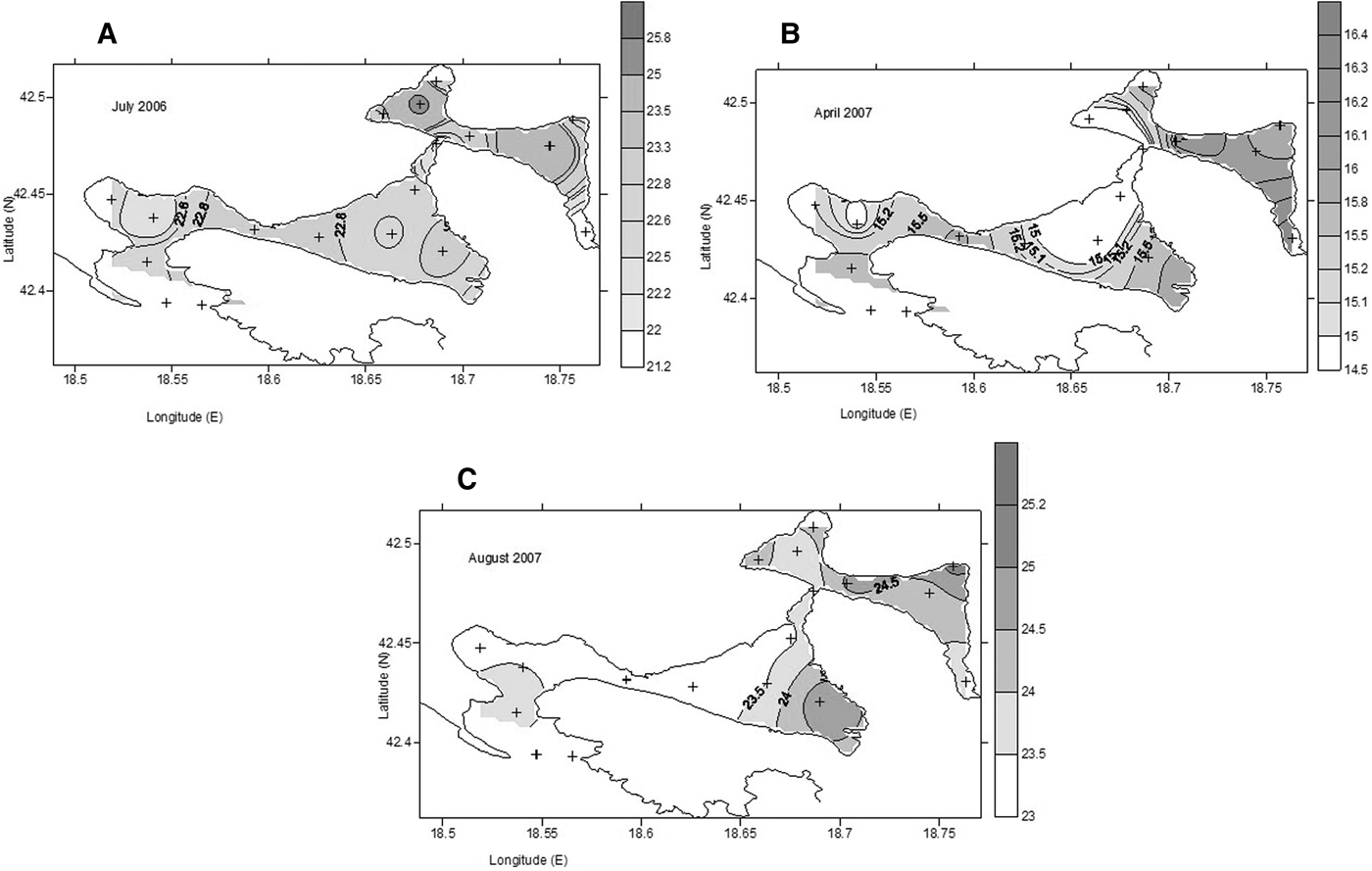
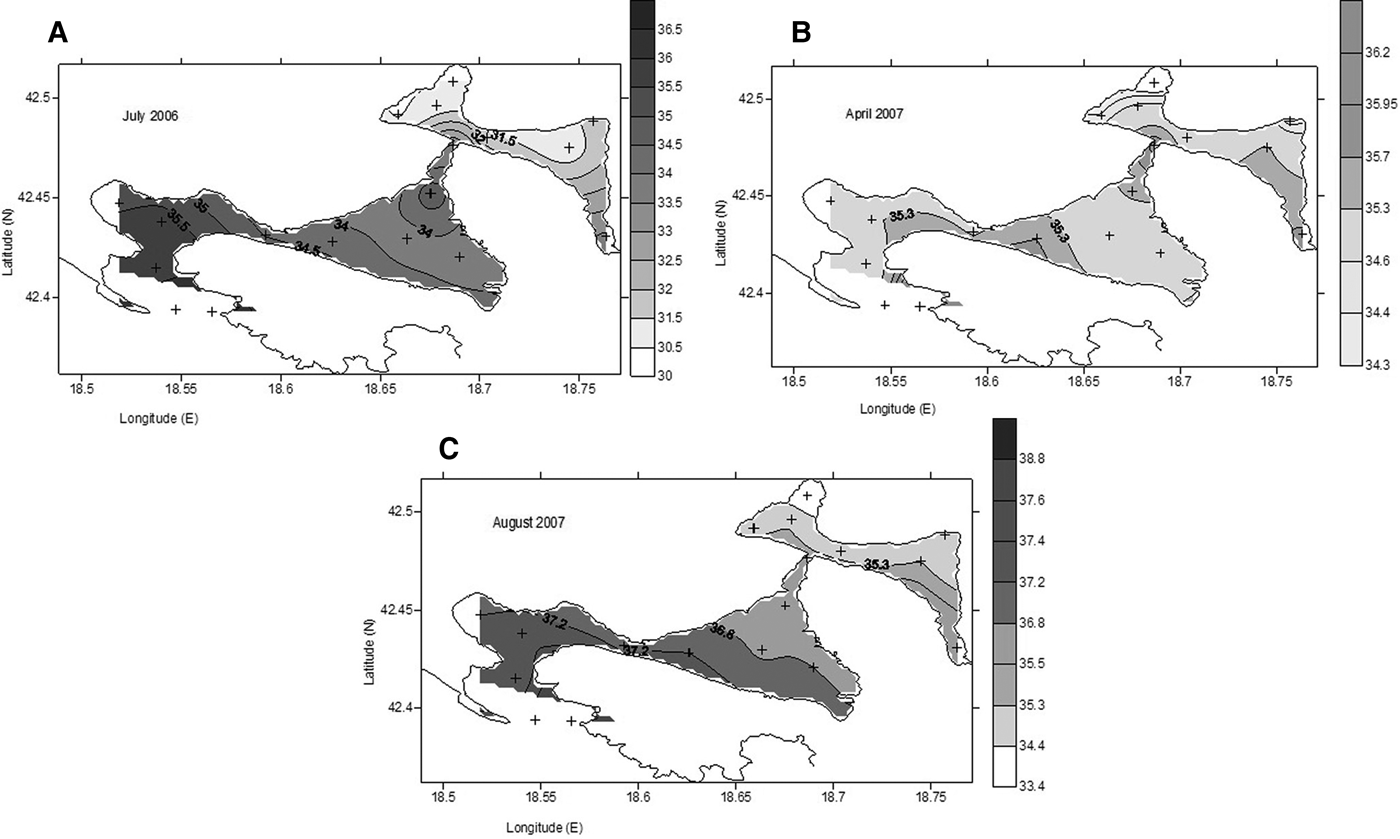
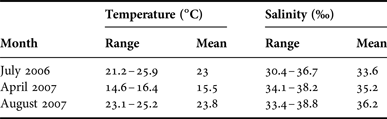
In all seasons, in the outer part of the Boka Kotorska Bay waters were more salty, while the inner part of the bay was characterized with salinity lower by 2–3‰ (Table 3; Figures 4 and 5). This is related to numerous river runoffs in the inner part of the bay.
Seasonal spatial distribution of sea surface temperature (SST °C) in the Boka Kotorska Bay.
Seasonal spatial distribution of sea surface salinity (SSS ‰) in the Boka Kotorska Bay.
Temperature and salinity in the Boka Kotorska Bay.
Length at first maturity
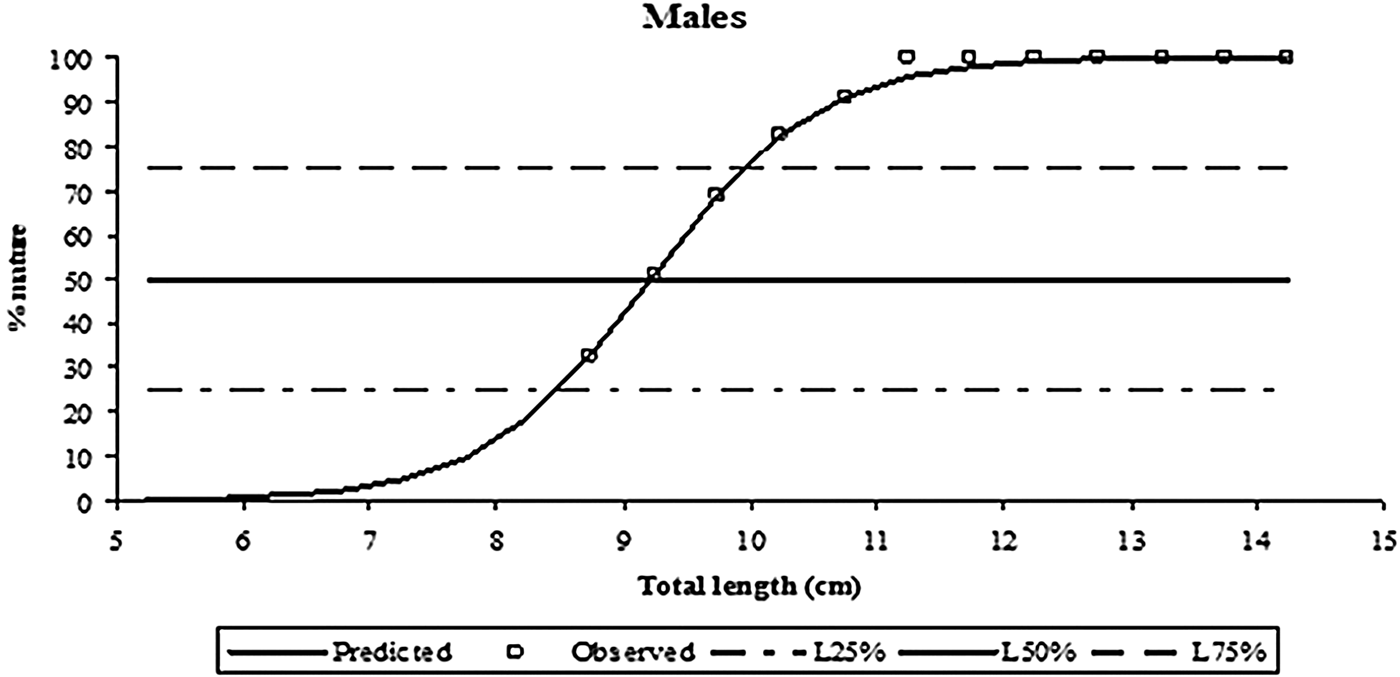
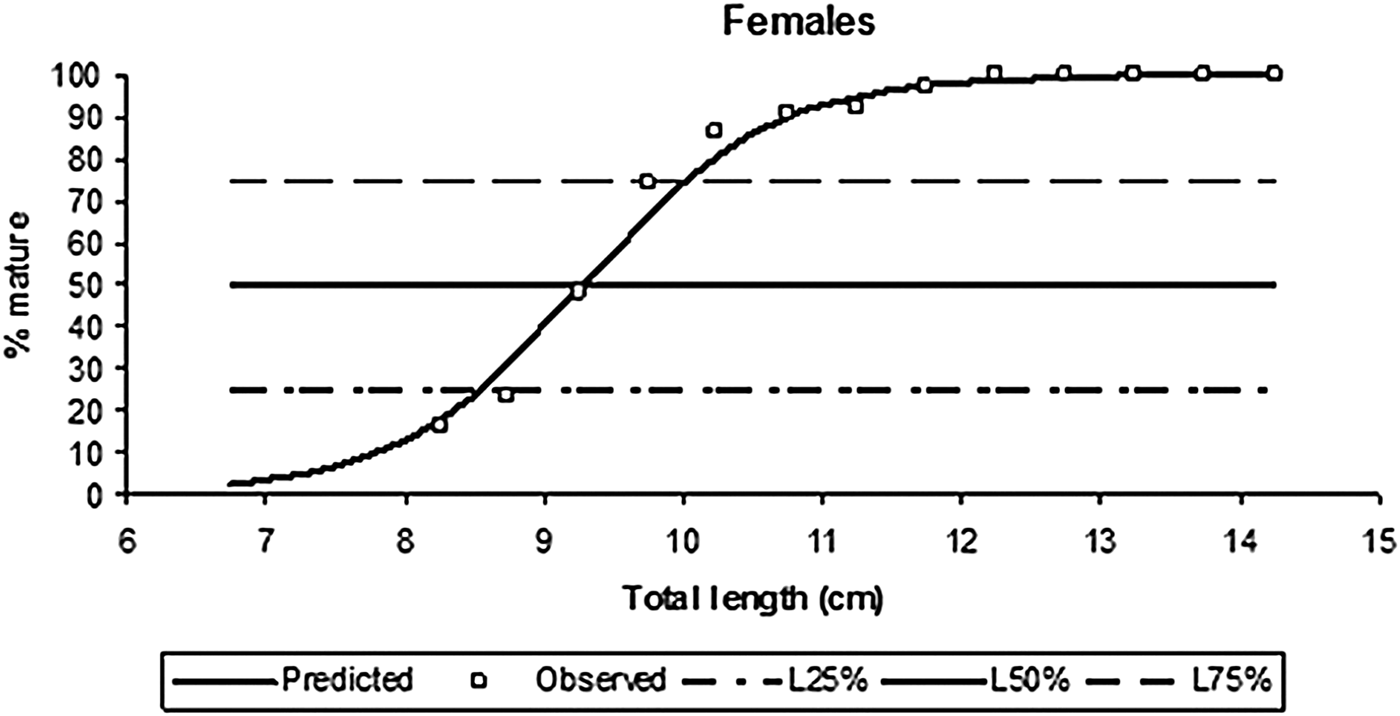
Data displayed in Figures 6 and 7 present the sexual maturation of anchovy from the most progressive stages of gonads at different lengths, on the basis of a logistic regression model. The minimal length at maturity was 5 cm. The total length of adult anchovy ranged from 5 to 14.4 cm and the weight (digestive tract included) from 0.92 to 20.96 g. The length at which 50% of anchovy were mature (L50) was calculated as 9.28 for females and 9.02 for males (Figures 6 and 7).
Length at maturity for male E. encrasicolus.
Length at maturity for female E. encrasicolus.
DISCUSSION
Generally, the south Adriatic Sea is less productive then the central and north Adriatic. However, it is under the strong influence of the Mediterranean waters that carry nutrients to this relatively nutrient-poor basin. The currents in the south Adriatic Sea are usually rapid, and flow in variable directions. A cyclonic gyre is observed in all seasons (Artegiani et al., Reference Artegiani, Bregant, Paschini, Pinardi, Raicich and Russo1997). Current data also show the existence of a cyclonic circulation regime (Zore-Armanda et al., Reference Zore-Armanda, Grbec and Morović1999).
The distribution of anchovy eggs is under the significant influence of environmental conditions (especially temperature and salinity) as well as several other oceanographic conditions, such as sea currents, river runoffs, mixing, nutrients etc. These factors have a strong influence upon adult populations, particularly upon place and timing of their reproduction (Lloret et al., Reference Lloret, Palomera, Salat and Sole2004; Zorica et al., Reference Zorica, Vilibić, Čikeš Keč and Šepić2013).
It is reasonable to suppose that constant temperatures, stable salinity levels and water transparency represent very favourable factors for the onset of the reproductive season of anchovies. Also, it is very important that small pelagic fish biomass fluctuations seem to be linked to the relatively high mortality rate of eggs, larvae and juveniles (Piccinetti et al., Reference Piccinetti, Regner and Specchi1982).
However, high abundance of anchovy eggs cannot be related only to the favourable values of temperature and salinity, but to the combination of several environmental and biological factors (Marrano, Reference Marrano2001). The timing of seasonal spawning peak and the location of the anchovy spawning grounds are generally associated with areas of high productivity, and specifically with conditions favouring adult feeding (Somarakis et al., Reference Somarakis, Palomera, García, Quintanilla, Koutsikopoulos, Uriarte and Motos2004; Martin et al., Reference Martin, Bahamon, Sabatés, Maynou, Sánchez and Demestre2008).
The results of long-term ecological investigations of the Montenegrin coastal waters, with more than 20 different parameters analysed (sea water transparency, colour, chemical parameters and biological characteristics), show that the Montenegrin coastal waters are eutrophic, particularly inside the Boka Kotorska Bay (Regner et al., Reference Regner, Joksimović, Kasalica, Đurović, Pešić and Mandić2006). Even during the winter period, when the sea water column is distinctly stratified, a very high abundance of microphytoplankton on the sea surface was found, which is characteristic for extremely eutrophic waters (Vuksanović & Krivokapić, Reference Vuksanović and Krivokapić2005).
Temperature, salinity and seawater density are greatly influenced by hydrometeorological parameters, which are specific and often liable to local changes. As a result, stratification of these parameters within the Boka Kotorska Bay does not follow the regular seasonal pattern observed in the open sea.
Abiotic parameters vary both spatially and seasonally, which leads to changes in conditions for survival and development of early life stages of fishes (Petereit et al., Reference Petereit, Hinrichsen, Voss, Kraus, Freese and Clemmesen2009).
The influence of temperature and salinity on anchovy spawning has been well studied. Results show that anchovy spawns within temperature ranges of 11.6–27.5°C and salinity of 9.1–38.5‰ in the North Adriatic, and 13.1–27.3°C and salinity of 33.8–39.6‰ in the Central and South Adriatic, with the maximal egg production at 17–22°C (Varagnolo, Reference Varagnolo1965; Štirn, Reference Štirn1969; Zavodnik, Reference Zavodnik1970; Merker & Vujošević, Reference Merker and Vujošević1972; Regner, Reference Regner1972, Reference Regner1985, Reference Regner1985, Reference Regner1996).
The water temperature at which anchovy eggs were sampled in this study ranged from 14.6 to 25.9°C. Anchovy is a species that tolerates a wide range of salinity, and eggs can be found between 17–40‰ (Demir, Reference Demir1968). Taking into account that salinity in this study ranged between 30.4 and 38.8‰, it could be presumed that neither temperature nor salinity were the limiting factors for the spawning of anchovy in the Boka Kotorska Bay. However, these environmental factors probably influenced the formation of spawning centres, since the centres were observed at localities with highest values of temperature and lowest values of salinity.
Garcia & Palomera (Reference Garcia and Palomera1996) suggest that the spawning period of anchovy is longer in southern latitudes of the Mediterranean Sea (7 months) than in the northern ones (5 months). However, the high production of anchovy eggs in the Boka Kotorska Bay in April 2007 indicates that the spawning period is longer, and last 5–7 months, or even more.
Although the detected main spawning areas are in accordance with earlier investigations (Merker, Reference Merker1971), the abundance is different. Namely, Merker (Reference Merker1971) found eggs in April at just a few stations, with the main spawning area within the Bay of Tivat (73 eggs m−2), while the main spawning season was in June and July (max. 376 eggs m−2), in the central part of the Bay of Kotor. This kind of distribution of anchovy eggs (with the main spawning areas within the bays of Kotor and Tivat) could be explained by the facts that, beside very favourable values of temperature and salinity, these bays are eutrophic and represent favourable spawning and nursery areas for anchovy. High abundance of anchovy eggs in April could also be explained by high values of nutrients and by mixing of the water column as a whole, as anchovy is known to be associated with waters rich in nutrients and with low salinity levels (Martin et al., Reference Martin, Bahamon, Sabatés, Maynou, Sánchez and Demestre2008).
A positive correlation was found between the quantity of anchovy eggs and the number of phytoplankton cells (Vučetić, Reference Vučetić1975), and the zooplankton peaks with a phase lag of about 2 months, which can be related to intensive feeding of adult anchovy in the pre-spawning period (Regner, Reference Regner1985). Phytoplankton biomass expressed as the value of chlorophyll a in the Boka Kotorska Bay have 2 maximums, one in spring and another in autumn, when maximal values of microphytoplankton were found, especially in the Bay of Kotor. In the period March–April and September–December, this bay becomes hypereutrophic (Krivokapić et al., Reference Krivokapić, Vuksanović and Stanković2005).
Large anchovies (14.0–18.5 cm) are spring-summer spawners, whereas first-time spawners (11.0–13.5 cm) are mainly late spring-middle summer spawners (Millán, Reference Millán1999). The length at first maturity of a species is an important life-history trait for the management of fish resources (Basilone et al., Reference Basilone, Guisande, Patti, Mazzola, Cuttitta, Bonanno, Vergara and Moneiro2006). The results from this study are in very good accordance with the results obtained from the Novigrad Sea bay (the central-eastern Adriatic), where Sinovčić (Reference Sinovčić1998) found that 50% of anchovy reached maturity at 9.0 cm total length, and at 9.74 cm the whole population was sexually mature. The biological cycle of anchovy in the Mediterranean Sea is about 3 years long, during which it reaches a maximum length of 20 cm (Marrano, Reference Marrano2001).
The results from the Zrmanja River (Sinovčić & Zorica, Reference Sinovčić and Zorica2006) confirm that small anchovies spawn in the bays, while large anchovies spawn in the open parts of the Adriatic Sea (Regner, Reference Regner1996). Our results confirm these findings, as in the Boka Kotorska Bay the average length during three seasons was 8.78 cm (in July 2006), 9.11 (in April 2007) and 10.18 (in August 2007). These results disagree with earlier assumptions that all adults come inshore to spawn (Fage, Reference Fage1935; Merker & Vujošević, Reference Merker and Vujošević1972). In the open waters of the south-eastern Adriatic Sea, in August 2005 the average length of anchovy females was also small (10.2 cm), as well as in July 2008 (12.97 cm). However, the difference in average weight is evident in these two groups, as the average female weight in the bay was 8.16 g, while in the open waters it was 14.42 (in July 2008) and 15.68 in August 2005 (Regner et al., Reference Regner, Joksimović, Kasalica, Đurović, Pešić and Mandić2006).
Despite of their importance, studies of egg and larval fish distribution and abundance in the south Adriatic Sea are very scarce. Considering that no long-term ichthyoplankton studies have been realized so far in this area, this investigation, continued after several decades of intermission, shows that the Boka Kotorska Bay is a nursery and a feeding ground for early life stages of anchovy.
ACKNOWLEDGEMENTS
The present study was supported by the Ministry of Education and Science of Montenegro and represents a part of the scientific project ‘Qualitative and quantitative composition of the ichthyoplankton in the Boka Kotorska Bay’ (Grant No 05-1/3-1157/2007).