Introduction
Methylene blue (MB) is one of the most commonly used cationic dyes. It has a stable molecular structure, toxic and carcinogenic properties, and is harmful to the eyes, skin, and respiratory system of humans (Hameed et al., Reference Hameed, Din and Ahmad2007). Treating wastewaters containing such dyes is, therefore, essential. Removing these dyes from wastewaters, however, is challenging especially at relatively low concentrations (Mu & Wang, Reference Mu and Wang2016). In recent decades, various technologies have been developed for such applications, including coagulation (Román et al., Reference Román, Valente Nabais, Ledesma, González, Laginhas and Titirici2013; Cai et al., Reference Cai, Li, Yang, Wang, Li, Yang, Li and Cheng2015), chemical oxidation (Liu et al., Reference Liu, Liao, Wu, Zhao, Lei and Ji2015), adsorption (Shi et al., Reference Shi, Zhang, Feng, Xiong and Chen2014), photocatalytic degradation (Wei et al., Reference Wei, Hu, Liu, Wang and He2015), and so on. Among these techniques, adsorption is one of the most effective and feasible methods, owing to its high efficiency, ease of operation, and insensitivity to toxic pollutants. For example, Yamur and Kaya (Reference Yamur and Kaya2021) prepared a magnetically-activated carbon composite to investigate its adsorption ability toward methylene blue dye. Char (ACz) activated by ZnCl2 from coconut shell (char:ZnCl2 = 2:1), followed by magnetic activation (MACz) was prepared by chemical co-precipitation of Fe3+/Fe2+. The results showed that ZnCl2 can easily produce a good activation effect due to its low boiling point and its maximum adsorption capacity was calculated to be 156.25 mg/g. Madankar et al. (Reference Madankar, Bhagwat and Meshram2021) synthesized porous activated carbon derived from pine-fruit residue (a low-cost industrial biomass) by ZnCl2-impregnation followed by physical activation under an inert atmosphere. The results revealed that the carbon adsorbent (ZnAC) derived from pine-fruit residue after ZnCl2-activation effectively removed Cd2+ from synthetic water.
Palygorskite (Plg), also known as attapulgite, is an aquo-magnesium-rich aluminosilicate clay mineral, with a theoretical formula of Mg5Si8O20(OH)2(OH2)4·4H2O (Chen et al., Reference Chen, Zhong, Wu, Zhao and Yan2012; Suárez & García-Romero, Reference Suárez and García-Romero2013). The structure comprises a 2:1 trioctahedral unit cell that is repeated laterally to a limited degree and to a large extent vertically to form 3-dimensional ribbons, in contrast to the expansive two-dimensional layers found in phyllosilicates. In recent years, Plg, as a natural adsorbent material, has received widespread attention in wastewater treatment because of its large specific surface area, high cation exchange capacity, and the number of Si–OH groups on the surface (Wang & Wang, Reference Wang and Wang2016; Li et al., Reference Li, Kou, Wu and Wu2017; Wang et al., Reference Wang, Feng, Jiang and Yao2019). Activated carbon-based adsorbents have been used widely to remove contaminants from wastewaters (Khezami et al., Reference Khezami, Chetouani, Taouk and Capart2005; Uçar et al., Reference Uçar, Erdem, Tay and Karagöz2009; Benadjemia et al., Reference Benadjemia, Millière, Reinert, Benderdouche and Duclaux2011; Saka, Reference Saka2012; Islam et al., Reference Islam, Benhouria, Asif and Hameed2015; Marrakchi et al., Reference Marrakchi, Ahmed, Khanday, Asif and Hameed2017). Commercially available activated carbon is very expensive so the development of affordable, activated carbon-based adsorbents with large adsorption capacity would be of great benefit. Palygorskite could be used for that purpose.
In view of the above, the purpose of the present study was to obtain a product with high adsorption capacity for methylene blue, consisting of the rod crystals of Plg with carbon spheres attached through the hydrothermal carbonization of glucose, thus forming palygorskite/carbon (Plg/C) composites, followed by k impregnation with ZnCl2 at a relatively low temperature to impart a higher specific surface area. The hypothesis was that the resulting ZnCl2-activated Plg/C composite would give high-performance with respect to MB adsorption.
Experimental
Materials
Raw Plg was acquired from Mingguang, Anhui Province, China (Mingguang Feizhou New Material Co., Ltd). Sodium hexametaphosphate, sodium hydroxide, and anhydrous ethanol were purchased from Aladdin Chemical Reagent Co., Ltd (Shanghai, China). Hydrochloric acid, anhydrous zinc chloride, and methylene blue were provided by Sinopharm Chemical Reagent Co., Ltd (Shanghai, China). All reagents were used without further purification.
Preparation of Composites
In a typical procedure, 0.6 g of purified Plg and 3.0 g of glucose were dispersed in 40 mL of distilled water with the aid of stirring and shaking to achieve dispersion at room temperature. The dispersion was then placed in a polytetrafluoroethylene reactor with a volume capacity of 50 mL, which was sealed and heated at 200°C for 20 h. After the reaction was completed, the autoclave was allowed to cool naturally to room temperature. Finally, the as-prepared Plg/C nanocomposites were collected through filtering, rinsing, and drying.
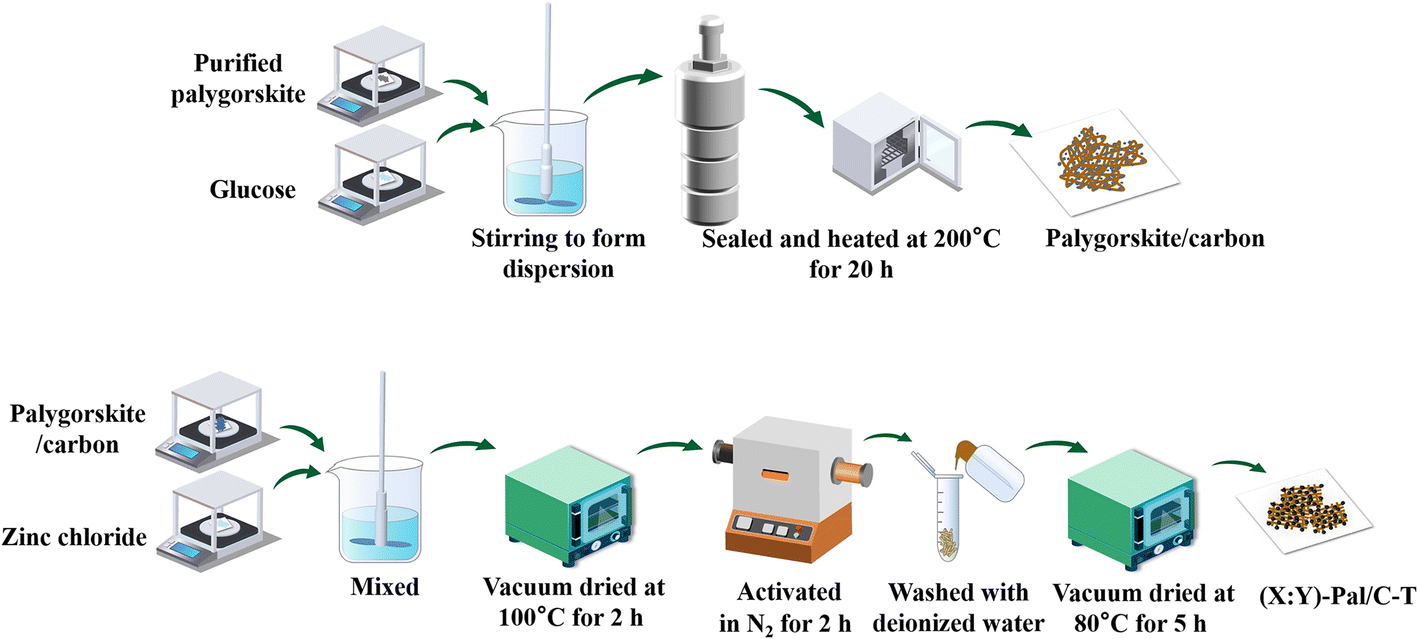
For activation, 2 g of ZnCl2 and 1 g of Plg/C composite, together with an appropriate amount of distilled water, were mixed and stirred until the suspension was dispersed evenly (2:1 impregnation ratio). After that, the mixture was vacuum dried for dehydration at 100°C for 2 h. The dried sample was activated at 400°C for 2 h in N2 (heating rate of 5°C/min). After the reaction was completed, the activated Plg/C composite was washed with deionized water. Finally, the activated Plg/C was vacuum dried at 80°C for 5 h. Similarly, the samples were also activated at 350°C and 450°C. Meanwhile, for an activation temperature of 400°C, impregnation ratios of 1:1 (ZnCl2:Plg/C) and 3:1 were also examined. The synthesis process is shown in Fig. 1. The activated samples were denoted as (X:Y)-Plg/C-T, where (X:Y) stands for the impregnation ratio of ZnCl2 and Plg/C composites and T for activation temperature.
Schematic diagram of the sample-fabrication process

Characterization
The phase composition of the powder samples on the carrier plate was characterized using XRD (LabX, XRD-6000 instrument, Shimadzu, Kyoto, Japan). The FTIR spectra were recorded with a Nicolet Nexus FT-IR spectrometer (Nicolet IS-40, Thermo Fisher Scientific, Waltham, Massachusetts, USA) over the range 4000 to 500 cm−1 using KBr pellets at room temperature. Microstructure and morphology of the gold-sprayed samples were analysed by using field emission scanning electron microscopy (FESEM, Zeiss, Gemini Sigma 300/VP, Oberkochen, Baden-Wurberg, Germany). Thermogravimetric analysis (TGA) was conducted by using a differential scanning calorimetry (DSC) (STA 449 F3 Jupiter, Bavaria, Germany) at a heating rate of 10°C/min from room temperature to 800°C in air. Pore-size distribution data and nitrogen adsorption–desorption isotherms of the samples were obtained by using a nitrogen adsorption device (V-Sorb 2800P, Beijing, China). The absorbance of the dye solution was measured using a UV−2600 (Yuanxi Instruments Co. Ltd., Shanghai, China) ultraviolet visible spectrophotometer.
Adsorption Experiments
In order to observe the adsorption properties of the activated Plg/C samples, 20 mg of adsorbent was dispersed in 80 L of 100 mg/L dye solution, the pH value of the solution was adjusted to 7 with hydrochloric acid and sodium hydroxide. The solution was then stirred at room temperature for 10 h at 200 rpm (RCF = 1.34 g) to achieve adsorption equilibrium. Finally, the absorbance of the supernatant was measured and the dye concentration at equilibrium was calculated, according to the following equations:


where Q e (mg/g) is the adsorption capacity at equilibrium; η (%), the removal rate of MB; C 0 (mg/L) and C e (mg/L) are the initial and equilibrium MB concentrations, respectively; V (L) is the volume of the solution; and M (g) is the amount of adsorbent used.
Results and Discussion
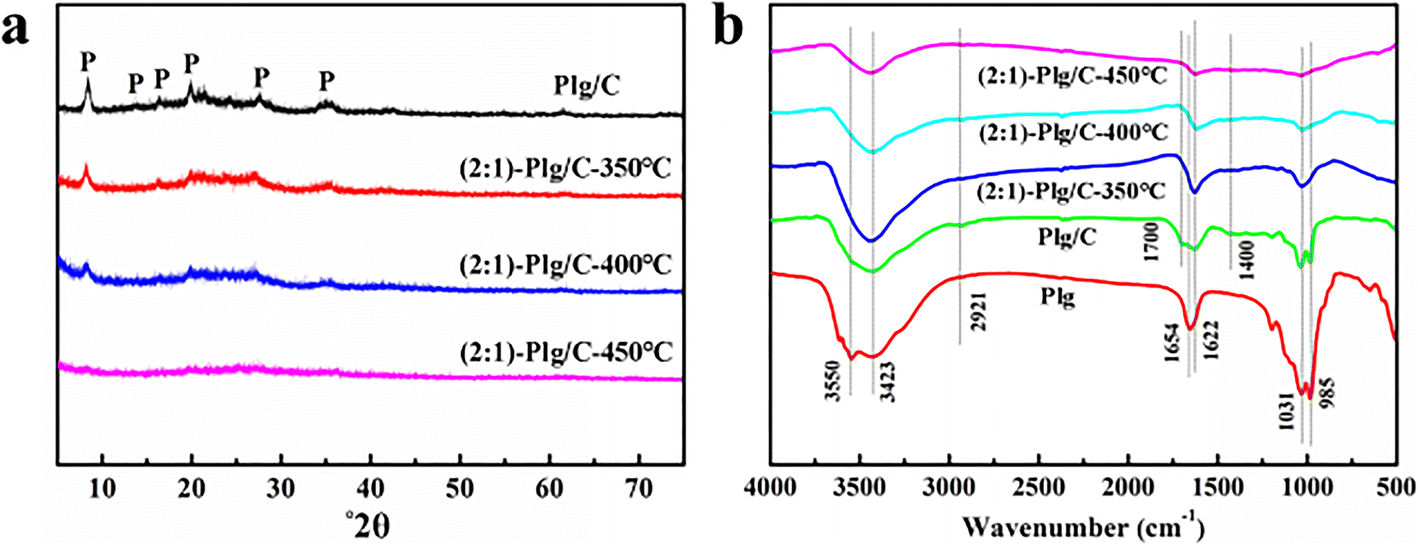
The XRD patterns of Plg, Plg/C, and activated Plg/C at various temperatures with a 2:1 immersion ratio (Fig. S1 and Fig. 2a) revealed that the Plg/C composite has characteristic diffraction peaks at 8.4, 13.8, 16.5, 19.9, 27.8, and 34.5°2θ, which correspond to (110), (200), (130), (040), (400), and (061) crystal planes of Plg, respectively (Bai et al., Reference Bai, Feng, Chen, Tan and Qiu2018; Tang et al., Reference Tang, Mu, Zong and Wang2019). As the temperature increased, the characteristic diffraction peaks of the Plg in the Plg/C composites decreased gradually, indicating that the increase in temperature accelerated the destruction of the Plg crystal structure. Moreover, the signs of an amorphous carbon peak in the (2:1)-Plg/C-400°C and (2:1)-Plg/C-350°C samples were more evident, due to the increased amount of porous carbon in the two groups of samples. For FTIR spectra of the samples (Fig. 2b), the band at 3550 cm−1 was attributed to the stretching vibration of Mg–OH. The absorption bands at 3423 and 1654 cm−1 were assigned to the characteristic O–H stretching and H–O–H bending vibrations of the adsorbed water in Plg, respectively (Suárez & García-Romero, Reference Suárez and García-Romero2006). The absorption bands at 1031 and 985 cm−1 belong to the Si–O stretching vibrations (Mingelgrin, Reference Mingelgrin1978; McKeown et al., Reference McKeown, Post and Etz2002). After hydrothermal reaction with glucose, several new bands appeared in the FTIR spectrum of Plg/C, including the C=O carbonyl band at 1400 and 1700 cm−1, the C=C band at 1620 cm−1, and a C–H absorption peak at 2921 cm−1 (Li et al., Reference Li, Li and Liu2011; Nata et al., Reference Nata, Wang, Wu and Lee2012), indicating that the functional carbonaceous substance has been grafted successfully onto the surface of Plg after the hydrothermal reaction. After the Plg/C composites were activated at various temperatures (2:1 immersion ratio), the C–H and C=O carbonyl bands in Plg/C disappeared, indicating that the activated samples had been further carbonized. After activation at 350°C, the characteristic absorption peak of the Plg (985 cm−1) was basically broken, but the Si–O skeleton at 1031 cm−1 remained, suggesting that the tetrahedral and octahedral structures of the Plg collapsed and the crystal structure was destroyed due to erosion by ZnCl2.
a XRD patterns of the samples, b FTIR spectra of Plg, Plg/C, and activated samples at various temperatures with a 2:1 immersion ratio

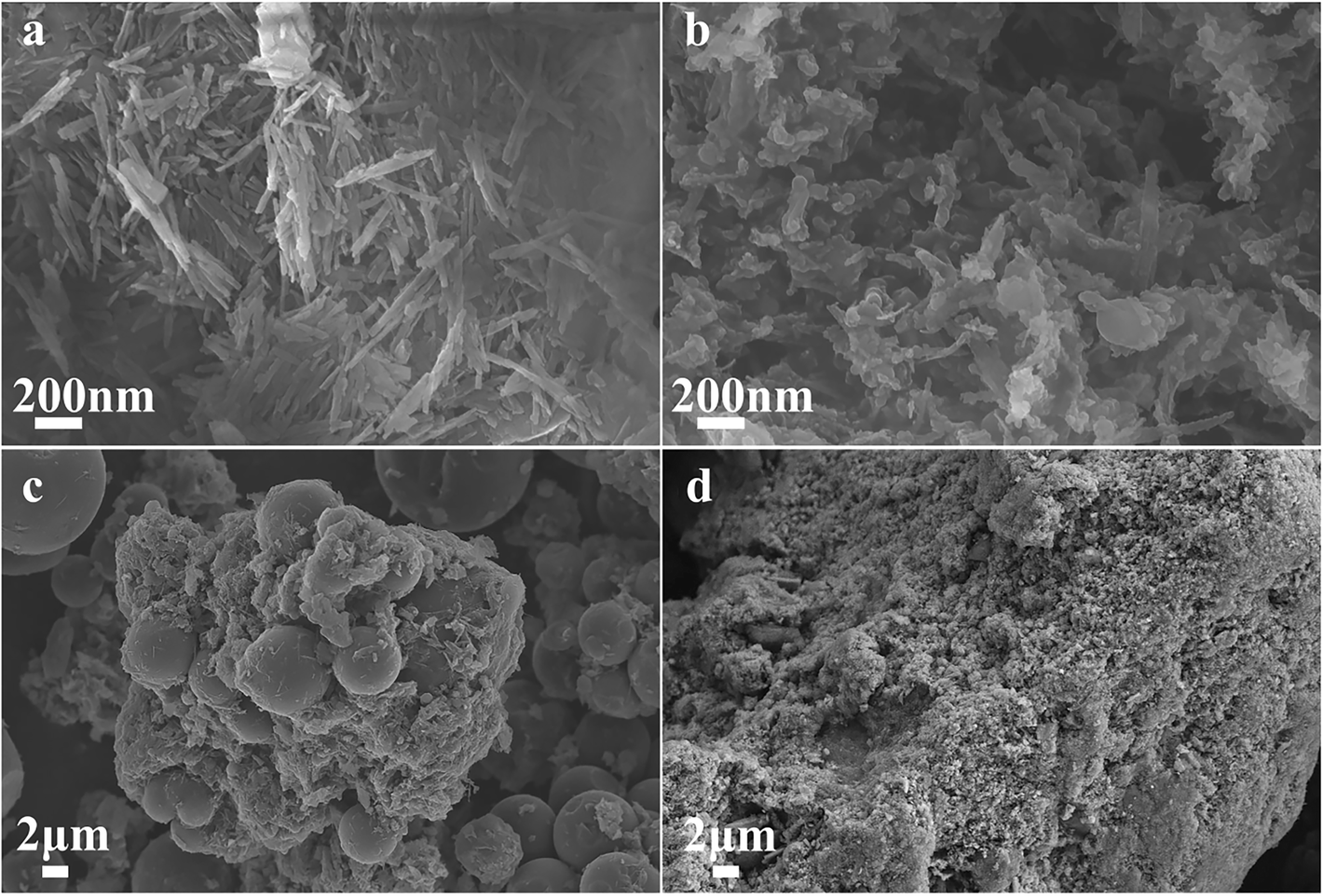
Scanning electron microscopy images of the samples (Fig. 3) showed that Plg exhibits rod-like structures and bundles formed by cross accumulation of the rods (Fig. 3a). Furthermore, the presence of Plg apparently induced a tight and uniform encapsulation of carbon species by the rod crystals (Fig. 3b) so that aggregation of the carbon nanostructures was prevented. Only some of the carbon spheres were eroded to form a porous structure due to the small amount of ZnCl2 used for activation, while the remaining spheres were attached tightly to the irregular Plg fibers (Fig. 3c). In addition, the amorphization of the rod crystals ensured that some of the carbon spheres were exposed readily. When the impregnation ratio increased to 2:1, the spherical carbon structure largely disappeared (Fig. 3d), while more irregular carbon nanostructures were present, which were coated compactly on the surface of Plg.
FESEM images of the samples: a Plg, b Plg/C, c (1:1)-Plg/C-400°C, and d (2:1)-Plg/C-400°C

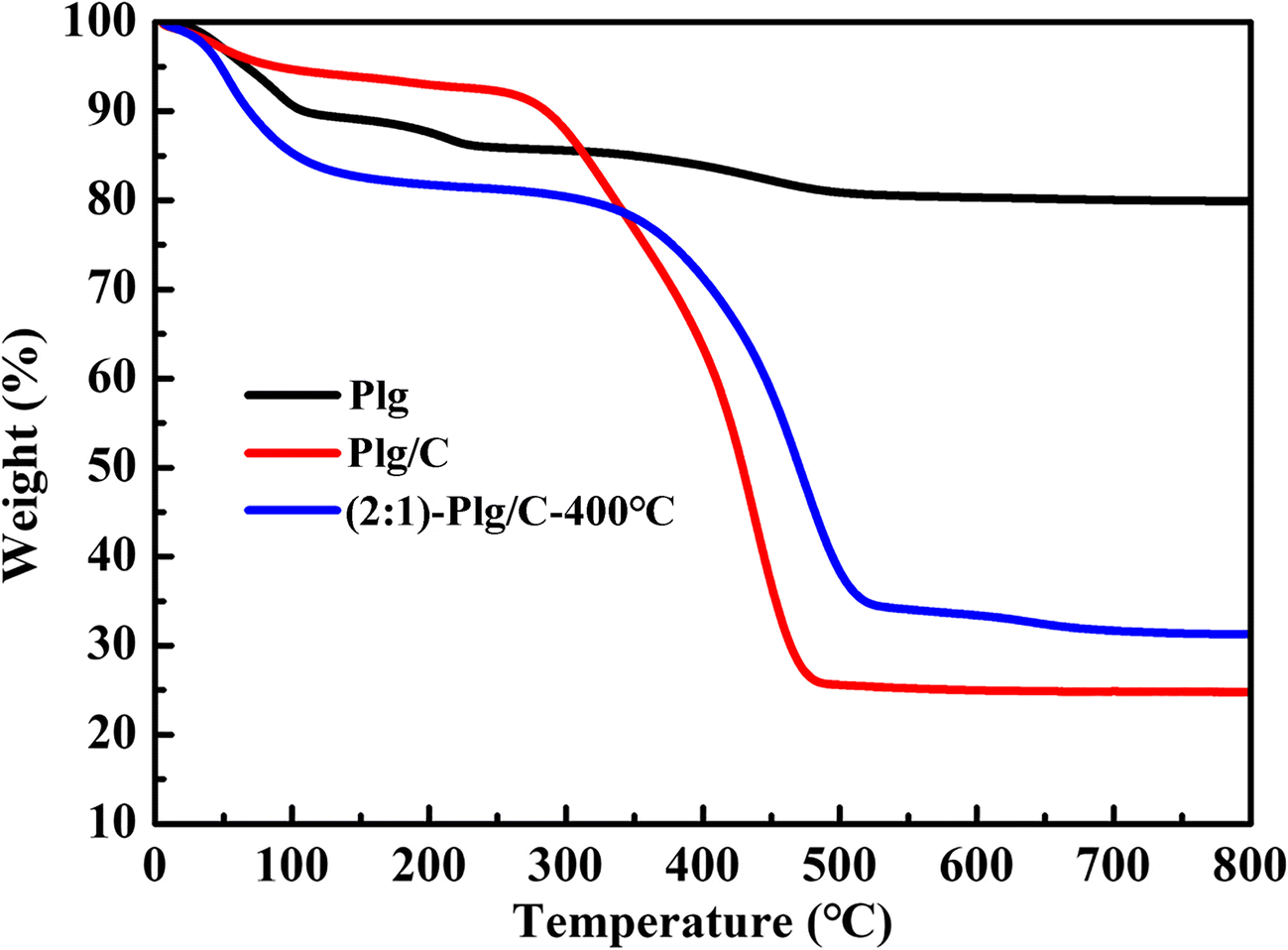
The TGA curves of Plg, Plg/C, and (2:1)-Plg/C-400°C (Fig. 4) showed that the weight loss of Plg started at ~120°C, due to the dissociation of the adsorbed water and possible zeolitic water (Kuang et al., Reference Kuang, Facey and Detellier2004; Cheng et al., Reference Cheng, Yang and Frost2011), while the weight loss above 120°C may have been caused by the complete removal of the residual zeolitic water and structural water (Yener et al., Reference Yener, Önal, Üstünιşιk and Sarιkaya2007). The Plg/C composite has a significant weight loss between 200 and 550°C, which was attributed to the oxidative degradation of carbon in air. This observation further confirmed the successful coating of carbon on the surface of Plg. According to TGA analysis, the amount of carbon species in the Plg/C composite was ~65 wt.%. However, after activation at 400°C, the carbon content of the sample with a 2:1 immersion ratio decreased to 47.67 wt.%, due mainly to the loss of carbon after ZnCl2 activation. At the same time, the carbon species were transferred to a porous carbon structure.
TGA curves of Plg, Plg/C, and (2:1)-Plg/C-400°C

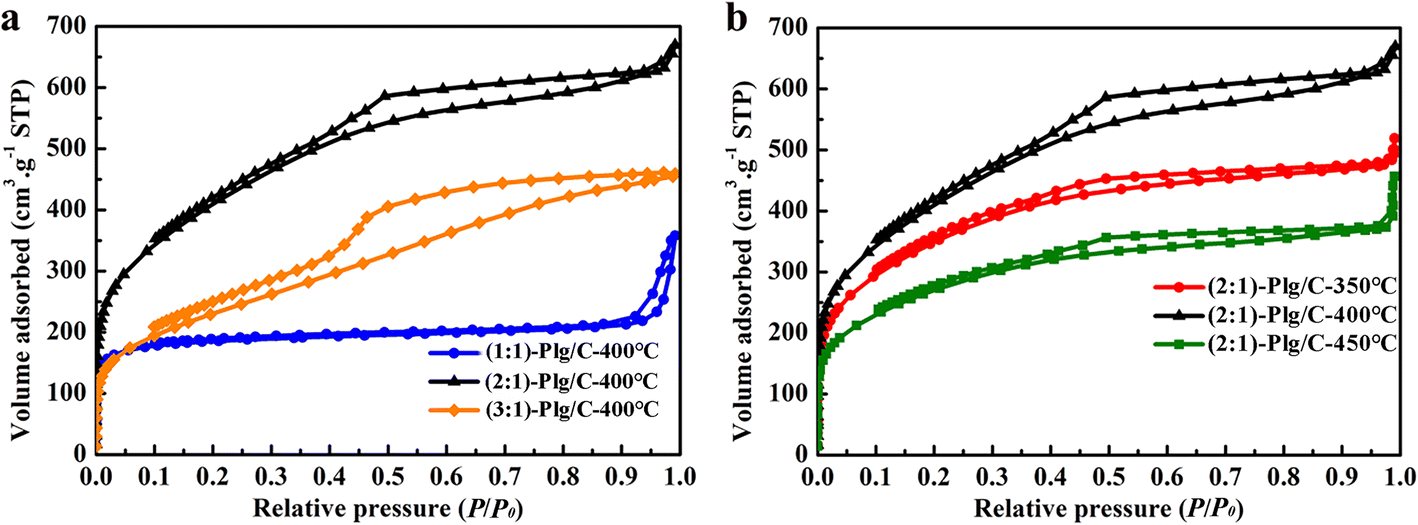
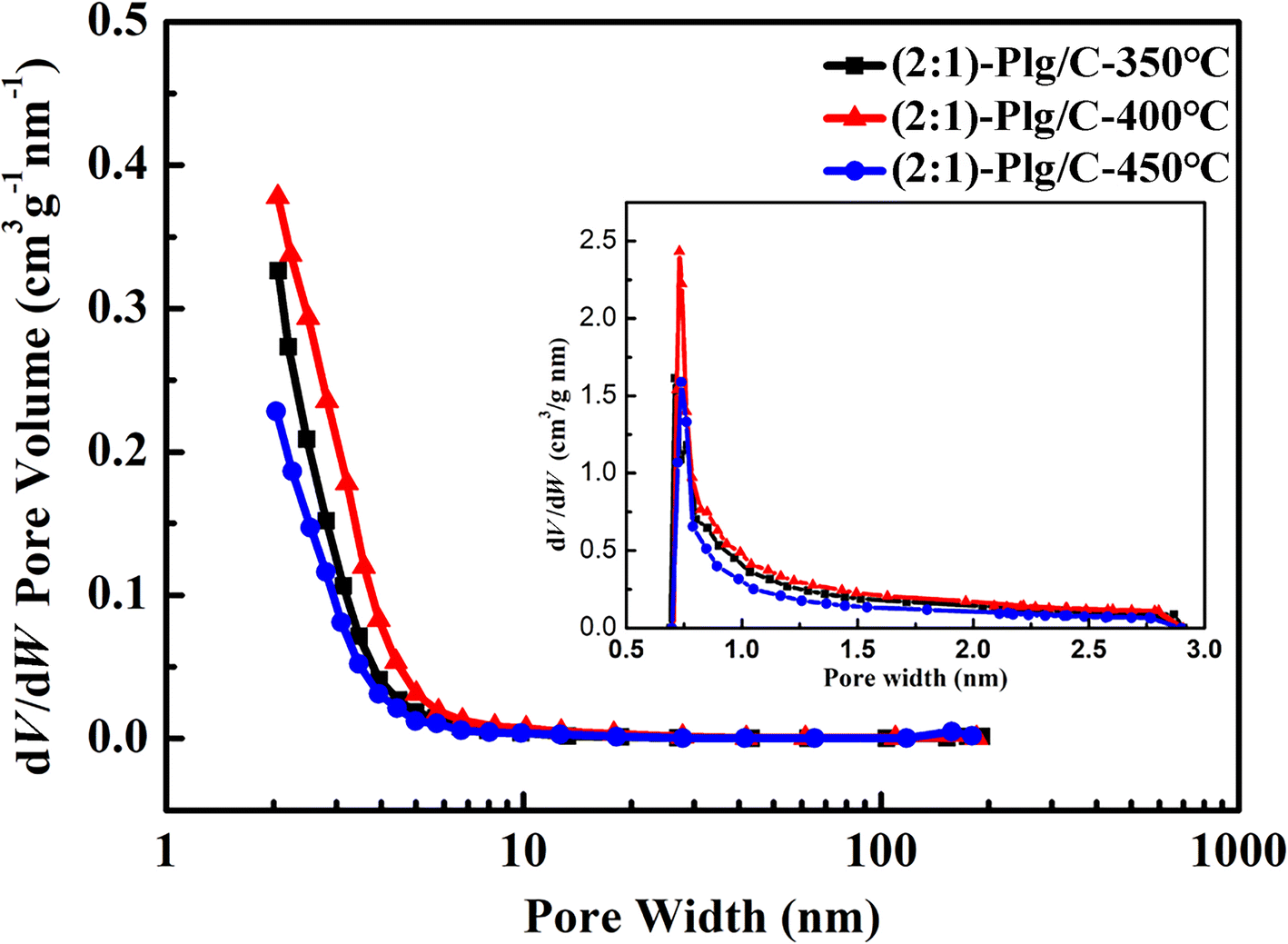
N2 adsorption-desorption isotherms of the activated samples calcined at 400°C with different impregnation ratios (Fig. 5a) showed very little hysteresis for (1:1)-Plg/C-400°C, which is a typical type I adsorption isotherm according to the IUPAC classification (Sing et al., Reference Sing, Everett, Haul, Moscou, Pierotti, Rouquerol and Siemieniewska2008) and implies the presence of a certain number of micropores in the sample. The specific surface area was 663.27 m2/g. The curves of (2:1)-Plg/C-400°C and (3:1)-Plg/C-400°C exhibited a mixed profile of type I and type IV isotherms, with a pronounced H4-type hysteresis loop from P/P 0 = 0.30 to 0.90. In other words, a large number of mesopores was present in both samples. However, the specific surface area of the (3:1)-Plg/C-400°C sample (852.92 m2/g) was significantly smaller than that of the (2:1)-Plg/C-400°C sample (1497.88 m2/g), indicating that the use of excessive activator had a negative effect on the formation of the porous carbon structure on the surface of Plg. The isotherms of Plg/C activated at 350, 400, and 450°C, with an immersion ratio of 2:1 (Fig. 5b) all were of the H4-type with hysteresis loops, implying that the activation temperature did not influence the microporous and mesoporous characteristics of these materials (Chen et al., Reference Chen, Mi, Lao, Shi, Tong, Li and Hu2019). This conclusion was also confirmed by the pore-size distribution profiles of the activated samples (Fig. 6). In addition, with increasing carbonization temperature, the nitrogen adsorption of the activated samples first increased and then decreased. Accordingly, the pore volume increased from 0.8025 to 1.0355 cm3/g and then decreased to 0.7068 cm3/g, corresponding to the specific surface areas of 1252.94, 1497.88, and 976.54 m2/g, respectively (Table 1). Compared with 350°C, 400°C activation was more effective in producing Plg/C composites with pore structures. As the temperature increased to 450°C, the activation effect of ZnCl2 was enhanced, leading to the transformation of a certain number of micropores into mesopores or macropores, but the specific surface area was reduced. In summary, selecting the correct impregnation ratio and activation temperature is very important.
N2 adsorption/desorption isotherms of the activated samples a calcined at 400°C with various impregnation ratios and b at various activation temperatures

BJH pore-size distribution of the activated samples at various activation temperatures

Micro-structural characteristics of the activated samples

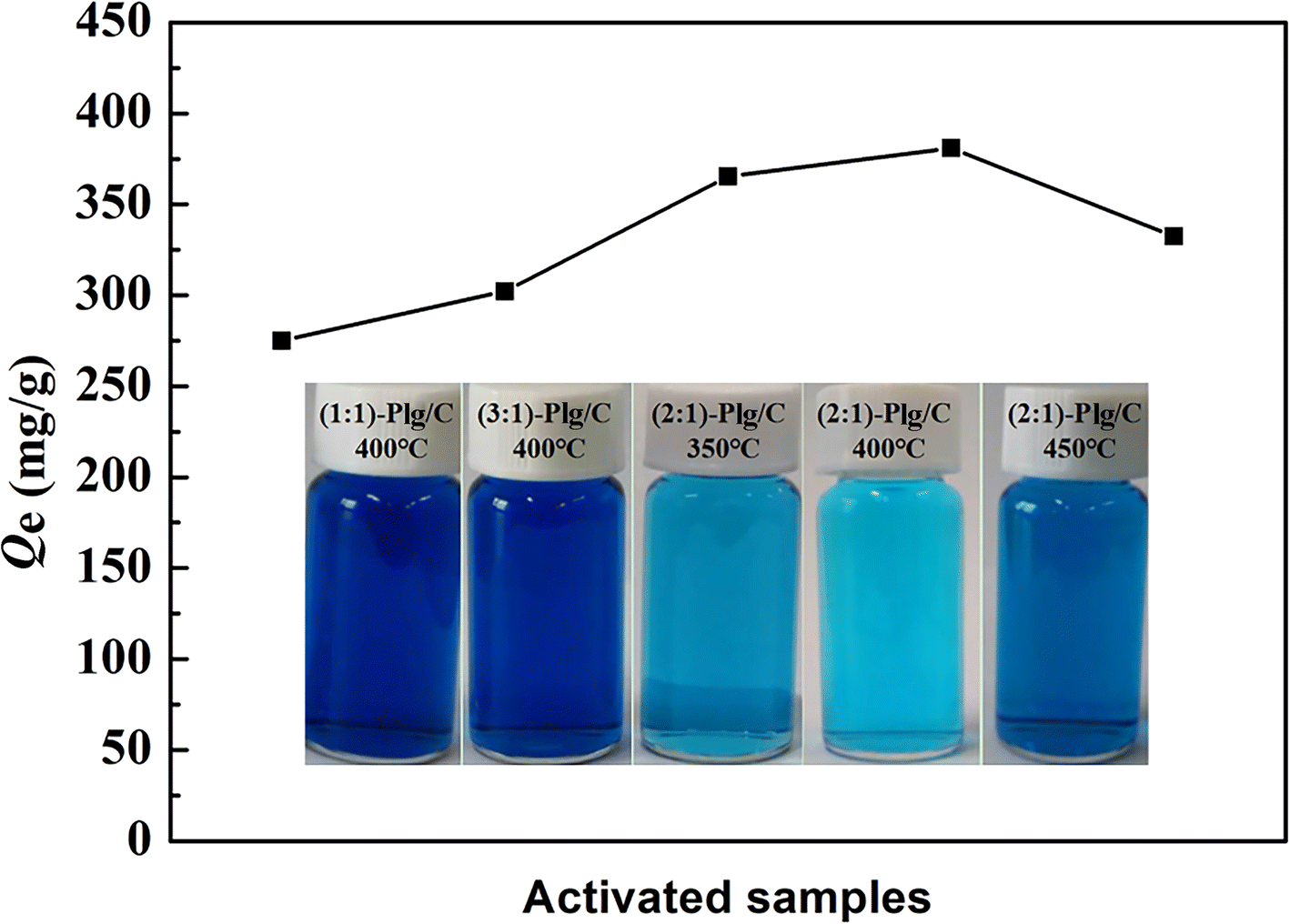
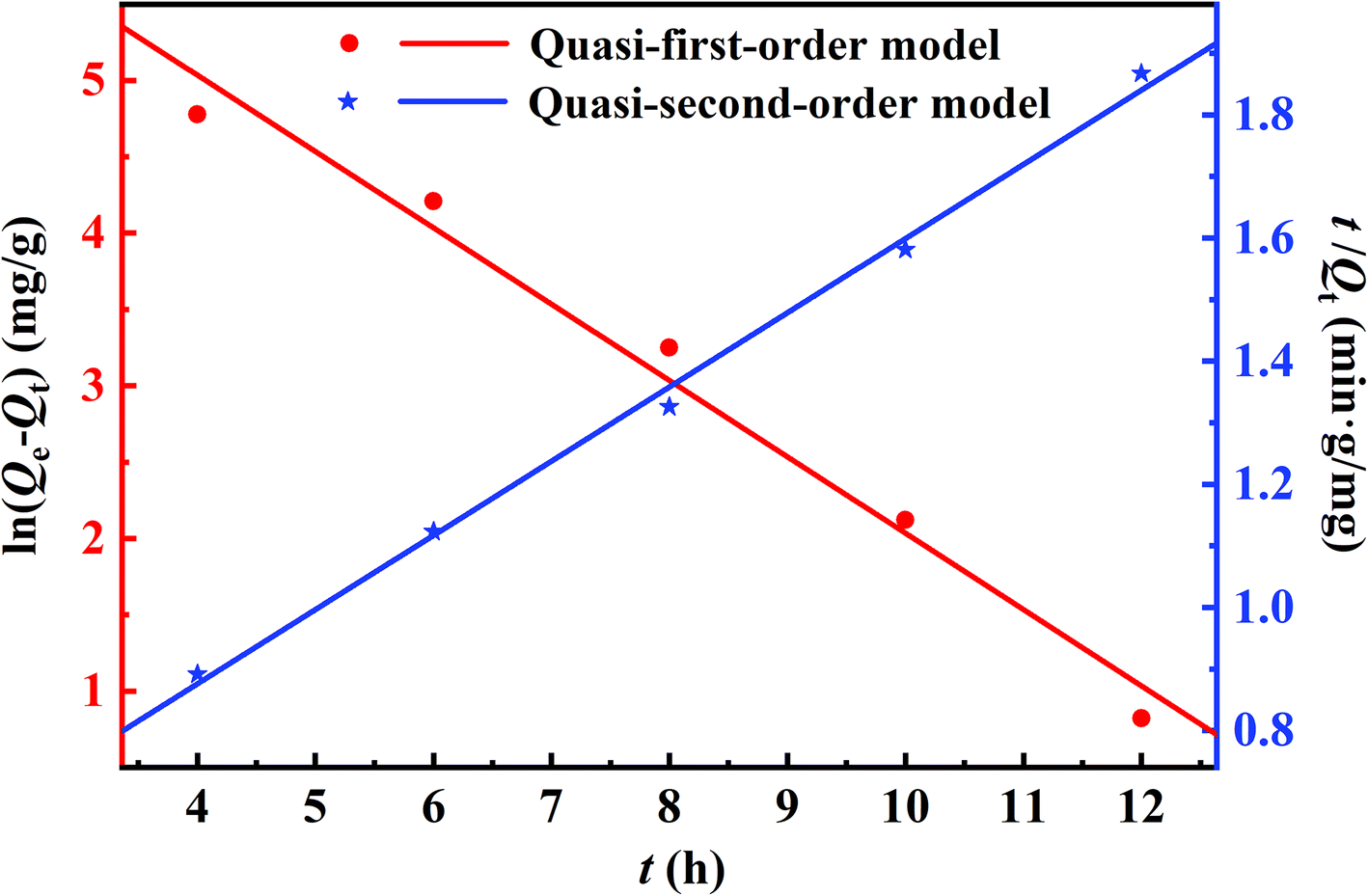
The adsorption performances of five groups of activated Plg/C samples were based on 80 mL of MB solution with a concentration of 100 mg/L (Fig. 7). The activated sample with a 1:1 impregnation ratio exhibited an adsorption capacity of 275.16 mg/g, corresponding to a MB removal rate of 68.79%. When the impregnation ratio was increased to 3:1, some mesoporous structure appeared, the adsorption capacity increased to 302.21 mg/g, and the removal increased to 75.56%, which indicated that the appearance of such mesopores has a positive effect on the adsorption of MB (Liu et al., Reference Liu, Wang and Wang2012). The samples with a 2:1 impregnation ratio activated at 350, 400, and 450°C exhibited adsorption capacities of 365.28, 381.04, and 332.37 mg/g, corresponding to removal rates of 91.32, 95.26, and 85.34%, respectively. Obviously, the (2:1)-Plg/C-400°C had the highest adsorption capacity and removal rate, which compares well with similar materials reported by others (Table S1). The average pore diameters of the three groups of samples were 2.56, 2.77, and 2.90 nm, respectively, which are all larger than the size of the MB molecule of 0.8 nm (MB molecule length of 1.43 nm, width of 0.61 nm, and thickness of 0.4 nm) (Mouni et al., Reference Mouni, Belkhiri, Bollinger, Bouzaza, Assadi, Tirri, Dahmoune, Madani and Remini2018). In addition, the adsorption capacity of the sample increased gradually with time (Fig. 8.) and the adsorption equilibrium was reached after 12 h. The first-order and second-order kinetic models of the optimal sample showed that the adsorption process followed the second-order model (R 1 2 = 0.98077, R 2 2 = 0.99589). Therefore, one concludes that the activated samples rely mainly on their micropores and mesopores to accommodate MB molecules. In addition, the adsorption capacities of the activated samples could be closely linked to their pore structures (Table 1).
Adsorption properties of the activated samples

Kinetic model of (2:1)-Plg/C-400°C

Conclusions
Palygorskite/carbon (Plg/C) composites can be obtained through hydrothermal reaction of purified Plg with glucose, the resulting porous Plg/C composites then can be developed through activation by ZnCl2. The sample with an impregnation ratio of 2 mole ZnCl2 to 1 g of Plg activated at 400°C exhibited optimized MB adsorption capacity. Under these conditions, the crystal structure of Plg was destroyed and the rod-like structure was transformed to nanofibers due to the activation by ZnCl2. The specific surface area reached 1497.88 m2/g, corresponding to a MB adsorption capacity of 381.04 mg/g and MB removal rate of 95.26%. The introduction of Plg, therefore, has a strong possibility of reducing the cost for the preparation of activated carbon, showing much potential for application in wastewater treatment.
Supplementary Information
The online version contains supplementary material available at https://doi.org/10.1007/s42860-022-00187-4.
Acknowledgments
The authors gratefully acknowledge the financial support from the Foundation of State Key Laboratory of High-efficiency Utilization of Coal and Green Chemical Engineering (Grant No. 2021-K19), the Opening Project of State Key Laboratory of High Performance Ceramics and Superfine Microstructure (Grant No. SKL202003SIC), Anhui International Joint Research Center for Nano Carbon-based Materials and Environmental Health (Grant No. 2020R0109), the Shenzhen Technology University (SZTU) for the financial support of Start-up Grant (2018) and Natural Science Foundation of Top Talent of SZTU (Grant No. 2019010801002), and the Key Technologies R&D Program of Anhui Province of China (Grant No. 202104a05020033).
Author Contributions
Liu, Y. and Li, J.J. provided the idea, Wang, S. and Wang, Y. wrote the paper, Zhuang, Y. modified format, Kong, L.B. and Chen, H.Y. revised the paper, all authors were involved in the revision of the manuscript.
Funding
Funding sources are as stated in the Acknowledgments.
Data Availability
All raw data in this study are available from the corresponding author upon reasonable request.
Declarations
This manuscript has not been published in full or in part previously and has not been submitted to another journal.
Compliance with ethical statements and all authors consent to participate
Consent for Publication
All authors give consent for publication.
Conflict of Interest
The authors declare that they have no conflict of interest.