Plasma B-type natriuretic peptide is a hormone secreted by the atria and ventricles and is part of an intricate homoeostatic network that regulates the circulating blood volume. It is elevated under conditions of increased wall stressReference Law, Hoyer, Reller and Silberbach 1 such as with increased preload or afterload and decreased systolic or diastolic function. In adult cardiology, natriuretic peptides are used as cardiac biomarkers, although the use in paediatric cardiology is still questionable. Brain natriuretic peptide values for healthy children have been publishedReference Mir, Flato and Falkenberg 2 and small studies have shown brain natriuretic peptide to be elevated in various types of congenital cardiac defects.Reference Law, Keller, Feingold and Boyle 3 Elevated brain natriuretic peptide level has been reported across a wide spectrum of congenital lesions, correlating with a worsening New York Heart Association functional class and systemic ventricles dysfunction.Reference Book, Hott and McConnell 4 The present study assessed the usefulness of brain natriuretic peptide level measure to evaluate cardiovascular status in children and grown-ups with congenital heart defects with congenital or acquired disease affected by chronic cardiac failure.
Methods
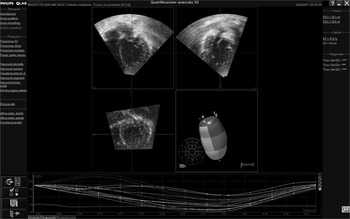
Children and grown-ups with congenital heart defects with chronic cardiac failure (defined as NYHA class more than II–III) have been evaluated. Patients with advanced chronic renal failure, a significant hepatic dysfunction, concurrent systemic infections or malignancy were excluded. A total of 31 patients, including 14 male and 17 female patients, were enrolled in the study: all of them were symptomatic, 85% in III NYHA class and 15% in II–III class. All patients routinely underwent clinical examination and two- and three-dimensional echocardiogram examination using the following semi-quantitative classification for systolic ventricular function: normal when ejection fraction was less than 55%; mildly impaired when ejection fraction was between 35% and 45%; moderate to severely impaired when ejection fraction was less than 35%. Systolic ventricular dysfunction was mildly impaired in 25% patients and moderate–severe in 75% patients (Fig 1). Brain natriuretic peptide was determined using immunoradiometric assays, and the results were compared with healthy patients.Reference Mir, Flato and Falkenberg 2 Brain natriuretic peptide evaluation was carried out at enrolment and after 7 months of medical treatment characterised by ACE inhibitors, beta-blocker, diuretics, dicumarol and digoxin.
Three-dimensional echocardiogram study for resynchronisation therapy in a child with dilated cardiomyopathy-associated long QT syndrome.

Results
The mean brain natriuretic peptide concentrations for congenital and acquired heart disease is shown in Table 1. The brain natriuretic peptide values did not differ with respect to gender and type of systemic ventricle, that is, morphologically right versus left. After treatment – using diuretics, digoxin in 60% of cases, ACE inhibitors, beta-blockers, dicumarol, and/or aspirin – the brain natriuretic peptide level was significantly reduced in patients with dilated cardiomyopathy. A mild reduction was observed in patients with single-ventricle operation. In the cases with pulmonary hypertension or a restrictive cardiomyopathy, the brain natriuretic peptide level describes a variable profile for a single patient.

BNP = brain natriuretic peptide level; BNP 1 level = first measure; BNP 2 level = measure after 7 months; DCM = dilated cardiomyopathy; PAH = pulmonary arterial hypertension; RCM = restrictive cardiomyopathy; sd = standard deviation
The brain natriuretic peptide also showed an increased level with increasing disease severity and systemic ventricle dysfunction in patients with dilated cardiomyopathy.
Discussion
In adult patients with cardiac failure, serum brain natriuretic peptide level has been correlated with New York Heart Association class and is used to estimate the severity of disease and predict adverse outcomes.Reference Harrison, Morrison and Krishnaswamy 5 Recent recommendations for the use of biomarker testing in adults with cardiac failure indicate that brain natriuretic peptide levels are useful in the screening and risk stratification for selected patients.Reference Lin, Landt, Trinkaus, Balzer, Kort and Canter 6 There are several conditions in paediatric cardiology where clinical decision making is different despite modern imaging technology and good clinical shill's. Studies in both children and adults with acquired or congenital heart disease have shown elevated serum brain natriuretic peptide levels in patients with increased ventricular wall stress and ventricular dysfunction.Reference Law, Keller, Feingold and Boyle 7 , Reference Mir, Marohn, Läer, Eiselt, Grollmus and Weil 8 Brain natriuretic peptide correlates well with systolic ventricular function and with increasing pulmonary pressure and pulmonary resistance in patients with left-to-right shunt. The reduction of volume load in patients with functional univentricular hearts could not decrease the elevated brain natriuretic peptide levels.Reference Giannakoulas, Dimopoulos and Bolger 9 In children with congenital heart defects, plasma brain natriuretic peptide levels do not reflect directly the extent of ventricle pressure or volume load, but reflect more liberally the degree of impairment of the ventricles because of the increased volume and pressure work.Reference Koch, Zink and Singer 10 A normal brain natriuretic peptide value cannot preclude any pathology, but reflects a compensated status of the heart.
Conclusion
Brain natriuretic peptide levels should be included in the risk stratification of children with dilated cardiomyopathy affected by cardiac failure and higher brain natriuretic peptide levels should warrant surveillance and management for worsening cardiac failure and the optimal timing of transplantation in this population. In grown-ups with congenital heart defects, the brain natriuretic peptide level describes a variable profile for a single patient and it is useful to tailor the optimal medical strategy to individual patients.