Introduction
The prevalence of HIV and AIDS in Iran has risen from a ‘low’ to a ‘concentrated’ epidemic (Center for Disease Control, 2008). The rate of HIV/AIDS in the general population is below 1%, but exceeds 5% in some high-risk groups such as injecting drug users (UNAIDS, 2004; Mojtahedzadeh et al., Reference Mojtahedzadeh, Razani, Malekinejad, Vazirian, Shoaee and Saberi-Zafarqhandi2008). Recent evidence, obtained in 2012, has shown that the HIV prevalence among adults in Iran is 0.15% (0.06–1.08%), and the number of HIV-infected people was estimated to be 106,000 in 2014 (Haghdoost et al., Reference Haghdoost, Mostafavi, Mirzazadeh, Navadeh, Feizzadeh and Fahimfar2011). Approximately 7000 new cases of HIV are added annually and the mode of HIV transmission is shifting from injection to sexual contact. It is anticipated that the number of new cases of infection via unsafe sex will increase in the future, while transmission via unsafe injection will decrease. In fact, it is expected that the HIV epidemic in Iran will remain almost constant at a concentrated level, but that the mode of transmission will change from injection to sex (Haghdoost et al., Reference Haghdoost, Mostafavi, Mirzazadeh, Navadeh, Feizzadeh and Fahimfar2011).
Statistics show that in Iran 20% of those affected by HIV are aged 20–29 years and 38% are aged 25–34 years. Given the long incubation period for HIV infection, it is clear that many young adults with AIDS are infected while they are teenagers. Several factors contribute to a higher risk of HIV infection among young people. These include the initiation of sexual activity during adolescence, the higher proportion of sexually transmitted diseases among adolescents and drug/alcohol addiction, which usually begins at a young age. Since sexual contact among adolescents is likely to be unprotected, and due to the lack of sex education, and also because of postponement of marriage, young people in Iran are considered a high-risk group for HIV/STIs.
The majority (69%) of HIV infection in Iran occurs among male adults (Haghdoost et al., Reference Haghdoost, Mostafavi, Mirzazadeh, Navadeh, Feizzadeh and Fahimfar2011). Thus unsafe sex in young men with their sexual partners (male or female) and spouses warrants investigation. There is very little detailed information about unsafe sexual relationships and HIV risk perception among young educated men in Iran. Detailed information about number and type of sexual partners, condom use and homosexual relationships among young people is very limited in Iran. Comprehensive data are lacking on the percentage of young people aged 15–24 who had sex before the age of 15, had sex with multiple partners over the last 12 months, and, of those who had multiple partners, did not use condoms consistently (National AIDS Committee Secretariat, 2015). There has been no comprehensive study of HIV/STI risk perceptions among sexually experienced young men in the country.
Young people aged 10–29 years constitute approximately 39% of the population in Iran (Statistical Centre of Iran, 2011). The trend for premarital heterosexual relationships, including sex among young people, is rising (Mohammadi et al., Reference Mohammadi, Mohammad, Khalajabadi Farahani, Alikhani, Zare and Ramezani2006), but there is little available knowledge about the details and circumstances of male’s sexual behaviours (process, nature, motivations, type of sex, protection and determinants). An unpublished study in 2004 by the National Youth Organisation of Iran found that nearly a third of sexually experienced young people aged 18–29 reported having had casual sex (sexual activity outside of a romantic relationship, which implies an absence of commitment, emotional attachment or familiarity between sexual partners), and the rate was even higher (48%) among young men.
Despite these risks for unmarried youth in Iran, there are significant cultural, religious and political constraints and efforts to promote safe sex and provide sexual and reproductive health education and services to unmarried youth. Thus it is very probable that involvement in sexual relationships endangers youth’s sexual and reproductive well-being. Most sexual behaviour is clandestine with poor access to reliable information and confidential services. Even if sex leads to unwanted pregnancy, there is little knowledge about outcomes, including abortion.
Previous research suggests that youth in Iran are more concerned about the risk of pregnancy than HIV/STI when having premarital sex (Khalajabadi Farahani, Reference Khalajabadi Farahani2008). People who think that their risk of HIV/STI infection is low are probably not inclined to take precautions and use condoms consistently in their sexual contacts.
Accordingly, this study aimed to describe the nature of sexual behaviour before marriage among young sexually experienced males in Iran (age at sexual debut, partner’s age, partner type, protection at first sex) and to assess HIV/STI-related sexual risk-taking behaviours and risk perception. The aim was to answer the following questions: How much are sexually experienced males involved in HIV/STIs sexual risk-taking behaviours (multiple partners and inconsistent condom use)? Which factors can predict having multiple partners and inconsistent condom use? To what extent do young men feel vulnerable to HIV/STIs? Finally, the implications of these findings are discussed to inform the planning of HIV prevention programmes for adolescents and young people in Iran.
In the paper, high-risk sexual behaviour refers to ‘having lifetime multiple sexual partners’ (more than one lifetime sexual partner). ‘Inconsistent condom use in sexual intercourse (nazdiki-e-Jensi) in last 30 days’ and ‘HIV/STI risk perception’ refer to ‘the extent to which the person perceives himself to have been at HIV risk over the last year and the extent to which the person perceives their risk of STIs in future’.
Literature review
Despite the large number of studies conducted on the sexual behaviour of young people in developing (Brown et al., Reference Brown, Shah and Yount2001) and developed (Kirby & Lepore Reference Kirby and Lepore2007) countries, relevant literature in Iran is scarce. Some studies have illustrated recent rises in other stigmatized risky behaviours among young people, such as smoking, alcohol consumption and drug use (Mirmolaee & Rahimikia et al., Reference Mirmolaee and Rahimikia2005; Mohammadi et al., Reference Mohammadi, Mohammad, Khalajabadi Farahani, Alikhani, Zare and Ramezani2006; Haghdoost & Moosazadeh, Reference Haghdoost and Moosazadeh2013; Amin-Esmaeli et al., Reference Amin-Esmaeli, Yunesian, Sahimi-Izadian and Rahimi-Movaghar2016), which lead to an expectation that high-risk sexual activity might also be rising. Of 1192 female high school students in Tehran, one-third (33.1%) had ever smoked, 18% had ever used alcohol and 2.8% had ever used illegal substances (Mirmolaee & Rahimikia, Reference Mirmolaee and Rahimikia2005). Since alcohol is illegal in Iran, these rates are alarming. Alcohol use diminishes both inhibitions and rational decision-making and increases the likelihood of unprotected sex and the risk of pregnancy, STIs and HIV transmission.
A few studies have been conducted in different provinces of Iran and they have important limitations (Khalajabadi Farahani, Reference Khalajabadi Farahani2016). A study of 1744 female university students in Tehran in 2005–06 revealed that 23% reported premarital sexual contact, while only 11% reported penetrative sex. Young women who were either disadvantaged or very liberal reported premarital sex (Khalajabadi Farahani, Reference Khalajabadi Farahani2008). In 2002, 27.7% of adolescent boys aged 15–18 in Tehran reported ever having sexual contact (Mohammadi et al., Reference Mohammadi, Mohammad, Khalajabadi Farahani, Alikhani, Zare and Ramezani2006; Mohammad et al., Reference Mohammad, Khalajabadi Farahani, Mohammadi, Alikhani, Zare and Ramezani Tehrani2007). Sexually experienced youth tend to have unsafe sex because of a lack of access to, or inappropriateness of, family planning services for unmarried people, or even a lack of accurate and detailed knowledge about sexual health (Simbar, Reference Simbar2003). In another study of 1192 female high-school students in Tehran, 12.8% reported intercourse, while type of sex and other circumstances were not elicited (Mirmolaee & Rahimikia, Reference Mirmolaee and Rahimikia2005).
Some studies assessed HIV knowledge and attitude among different groups of people (truck drivers, sex workers and youth) and showed that youth have important misperceptions about HIV and STIs (Ramezani Tehrani & Malek-Afzali, Reference Ramezani Tehrani and Malek-Afzali2008). A study among high-school students showed significant misperceptions about HIV/AIDS (Tavoosi et al., Reference Tavoosi, Zaferani, Enzevaei, Tajik and Ahmadinezhad2004). Consequently, there is huge gap in knowledge about high-risk behaviours among male university students and HIV/STI risk perception in Iran.
Methods
Study sample and design
The survey was performed among 1357 male university students in Tehran from October 2013 to March 2014. The sample was selected from both government and private universities using two-stage stratified cluster sampling with inclusion of all subjects at the second stage (all male students in the class as a cluster). Thirty-five respondents did not report their sexual experience, and of the remaining 1322, 462 (35%) reported having ever had sex and were included in the analysis. The survey instrument was a pilot-tested, structured, self-administered anonymous questionnaire. Sections of the questionnaire were adopted from similar instruments that had been tested and used previously among university students (National Center for Health Statistics, 1993; Cleland et al., Reference Cleland, Ingham and Stone2001; Khalajabadi Farahani, Reference Khalajabadi Farahani2008).
Ethical approval was obtained from the ethical committee of the Avicenna Research Institute, Tehran. Three governmental universities and one private university were selected. Their authorities were briefed about the survey and their approval was obtained before commencing the study. In addition, the study’s aims and objectives were explained to the lecturers and their consent was received to devote at least 25 minutes of a formal class to the investigator for data collection. Female students were asked to leave the class and males were briefed about the study’s aims and objectives and assured of confidentiality and anonymity. They were invited to ask any question about the research. Finally, non-volunteers were asked to leave the class. Due to confidentiality and anonymity, only verbal informed consent was obtained. Completed questionnaires were placed in a sealed envelope in order not to be linked with individuals. Four male interviewers were recruited and trained to administer the questionnaires.
Variables
Two outcome variables for high-risk sexual behaviours were used in bivariate and multivariate analysis: 1) ‘Inconsistent condom use at sexual intercourse over the past 30 days’ as a dichotomous variable (yes, no). Those who answered ‘yes’ were considered to have inconsistent condom use during the previous month; 2) ‘Having multiple lifetime sexual partners’, constructed from the number of sexual partners ever had in their lifetime, as asked in the survey instrument. A dichotomous variable was constructed: men with only one lifetime sex partner were categorized as ‘men with one sexual partner’, and those who reported having had more than one sexual partner were categorized as ‘having multiple sexual partners’.
Two variables for HIV/STIs risk perception were employed, measured by the questions: 1) ‘How much were you worried about HIV infection over the last 12 months?’ (none, little, moderate, very much, do not know) and 2) ‘How much are you worried about STIs in the future?’ (none, very little, moderate, somewhat, very much).
Independent variables comprised individual factors (age, age at sexual debut and working status), environmental factors (university type, partner’s age, number of partners, type of partner and having risky partners), leisure activities (access to satellite TV and internet and ever watched pornography), other risk-taking behaviours (alcohol, injecting drug use and ever use of psychoactive drugs) and other sexual risk taking behaviours (ever had casual or commercial sexual partner, ever had a partner who was an injecting drug user, and ever used drug and alcohol with sex). Casual sex in the study refers to ‘sexual activity taking place outside of a romantic relationship’ and implies an absence of commitment, emotional attachment or familiarity between sexual partners.
A scale of HIV knowledge was constructed using confirmatory factor analysis. Scores on nine items enquiring about HIV transmission were summed to form a scale called ‘Knowledge about HIV’ (range: 9–18). The items were: Can a healthy looking person be HIV infected? Can HIV be transmitted by touching an infected person, sharing glasses with an infected person, having unprotected sex with an infected person, sharing a toilet with an infected person or sharing a sharing needle with an infected person? Can HIV be transmitted by insects? Can HIV be transmitted by touching the blood of an HIV-infected person with intact skin? Can HIV be transmitted by blood transfusion using a new needle? The direction of responses was reversed where appropriate such that men who provided a correct answer scored ‘2’, while those giving an incorrect response scored ‘1’. The lower the score, the poorer the HIV knowledge, and vice versa. In bivariate analysis, where needed, the scale was converted to three categories. According to percentile, the cut-off point for making three categories was 12, 13 and 14. Hence, scores lower than 12 were considered as having poor knowledge, a score of 13 was considered as moderate and scores of 14 and higher were considered as having a good knowledge.
Data analysis
Data was entered, cleaned, verified and analysed in SPSS version 16. Characteristics of sexual behaviour and HIV risk perception were described. To examine correlates and predictors of high-risk sexual behaviour, bivariate analysis and logistic regression were employed.
Results
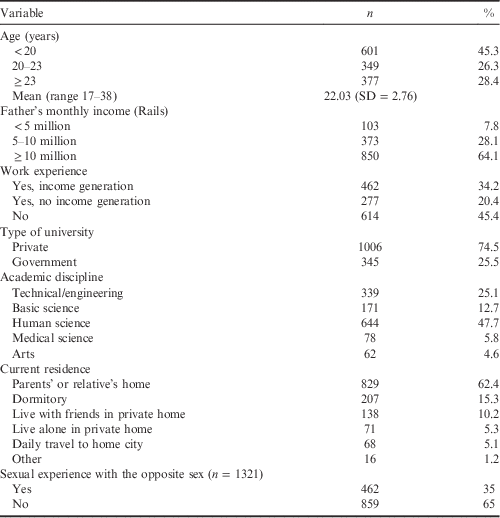
The mean age of the participants (both sexually experienced and inexperienced) was 22 years (SD=2.76). The selected characteristics of the participants are described in Table 1.
Demographic and socioeconomic characteristics of male university students (n=1322), Tehran, 2013–14

Note: sample size for each variable might be slightly different due to non-response to, or missing values for, some questions.
Initiation of sexual activity
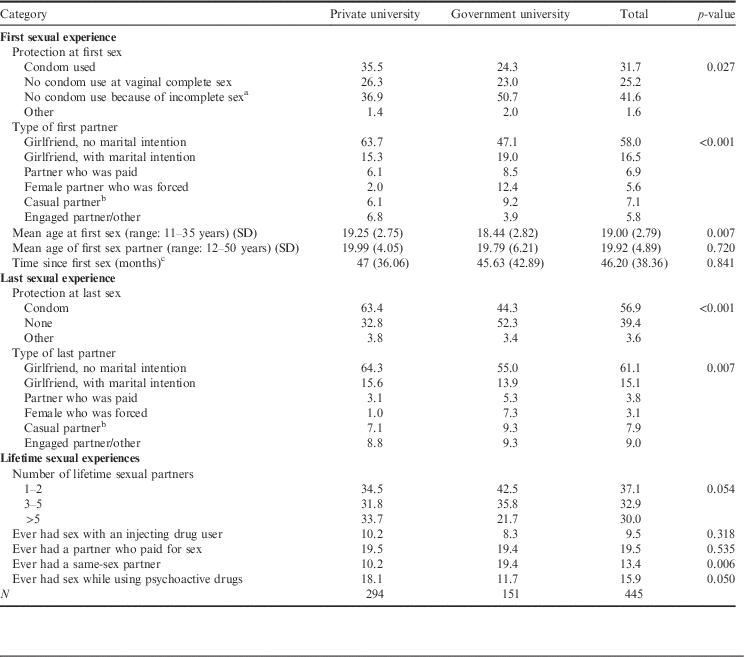
Table 2 shows the sexual behaviours of respondents by type of university attended. About 35% of all respondents (n=462) reported ever having had sexual contact with females. Mean age at sexual debut was 19 years (SD=2.79). Surprisingly respondents reported having their first sex with older partners (mean age of first female partner=19.9 years, SD=4.89). The majority described their first sex partner as a steady girlfriend with no marital prospect (58%); only 16.5% had their first sex with a steady girlfriend with marital prospect. About 7% reported having sex with someone who was paid. Only 32% used a condom at first sex. Condom use at first sex was significantly greater among students of private universities than those of government universities (35.5% vs 24.3%, p<0.05).
Sexual behaviours among sexually experienced men by type of university (n=446)

Note: six males reported they did not know how many sex partners they’d ever had because their numbers were very high.
a Since some males reported their first sex as non-penetrative vaginal sex, they reported non-condom use because their sex was not complete sex (vaginal penetrative sex).
b Casual partner is a sex partner with whom there is no romantic relationship and implies an absence of commitment, emotional attachment or familiarity between sexual partners.
c Range of duration from first sex to the date of the study varies from one month to 225 months.
Sixty-one per cent of men reported their last partner to be their steady girlfriend with no marital intention. These findings show that marriage intention has a limited role in sexual experimentation in the Iranian context. Only 57% used a condom at their last intercourse, and this was significantly greater among men from private than government universities (63.4% vs 44.3%, p<0.001). Among sexually experienced males, 9.5% had ever had a partner who used injecting drugs and 19.5% reported ever having a paid sex partner (sex worker). About 13% had ever had a same-sex partner, which was significantly more common among students of government universities than students of private universities (19.4 vs 10.2, p<0.01). About 16% reported ever having had sex while using psychoactive drugs.
HIV/STI risk-taking sexual behaviours and risk perception
Table 3 shows the HIV/STI sexual risk-taking behaviours and risk perception of respondents. Among sexually experienced males, 80.5% reported having multiple lifetime sex partners (more than one lifetime sexual partner). Of the 372 respondents who had sex in the last month, 54.3% reported inconsistent condom use over in the last 30 days. Very few (only 6.5%) sexually experienced men were highly concerned about HIV infection over the past year. About 17% had a moderate and 22% a low risk perception, while about 45% were not worried at all about contracting HIV in the preceding year. An even lower percentage of men (3.4%) were highly worried about contracting STIs in the future, about 23% were somewhat worried and 25% had no fear at all.
HIV/STI sexual risk-taking behaviours and HIV/STI risk perception among sexually experienced males (n=381)

Multiple sexual partners
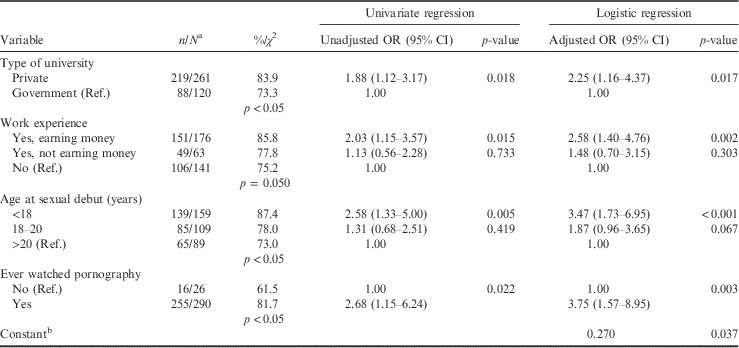
Table 4 shows the predictors of having multiple lifetime sexual partners among respondents. Multivariate analysis showed that having multiple sex partners was 2.25 times greater among students of private universities than their counterparts in government universities after controlling for other significant factors (adjusted OR=2.25, p<0.05). The likelihood of having multiple partners among males with work experience was nearly 2.6 times greater than the corresponding rate among males with no work experience (adjusted OR=2.58, p<0.01). The likelihood of having multiple sex partners was 3.47 times greater among those who initiated their first sex when they were younger than 18 years, than among subjects who initiated sex when they were 20 years of age and older (adjusted OR=3.47, p<0.001). Moreover, the probability of having multiple sex partners in their lifetime among those who had ever watched pornographic movies was 3.75 times the corresponding rate among those who had never watched pornography (OR=3.75, p<0.01). Therefore, sexually active men had a greater likelihood of reporting having multiple sex partners if they studied in a private university, had ever worked for money, had initiated their first sex earlier than age 18 years and had ever watched pornographic material. Access to pornography and earlier age at sexual debut appeared to be particularly strong determinants of having multiple sex partners.
Significant associated factors and predictors of having multiple lifetime sexual partners among sexually experienced male university students (n=307)

Note: Among sexually experienced males, six reported that they did not know their number of sexual partners because they had many different partners.
a n is the number of respondents reporting multiple partnerships; N is the number of respondents with the listed characteristics. N varies based on the number of responses.
b Negelkerke R 2=0.123.
Inconsistent condom use
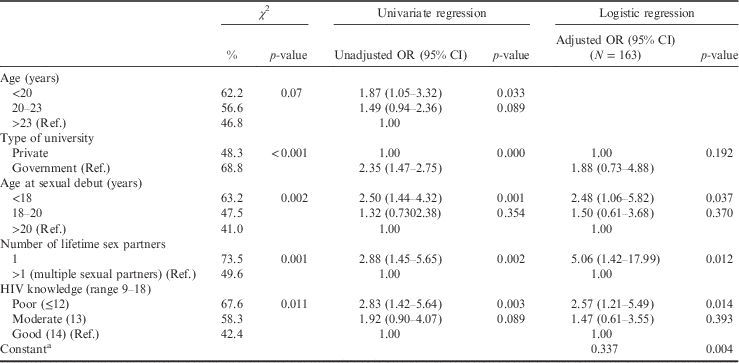
Table 5 shows the predictors of inconsistent condom use at sexual intercourse in the last 30 days among respondents. Multivariate logistic regression showed that the probability of inconsistent condom use in the last 30 days among males who had their sexual debut at ages younger than 18 was 2.48 times higher than the rate among males who had their first sex after the age of 20 years, after control of other factors (p<0.05). This probability was also 5.06 times greater among males with only one lifetime partner than among those with multiple sex partners (p<0.05). Another predictor of inconsistent condom use was poor HIV knowledge. Males with poor HIV knowledge (scores <12, range 9–18) had an odds of inconsistent condom use 2.57 times greater than those with good HIV knowledge (score of 14 or higher) (p<0.05). Hence, males who had a very early sexual debut (earlier than 18 years), with poor HIV knowledge and with one lifetime sex partner tended not to use condoms consistently during sex in the last 30 days, adjusted for other important factors.
Significant associated factors and predictors of inconsistent condom use at sexual intercourse in last 30 days among sexually experienced males (n=423)
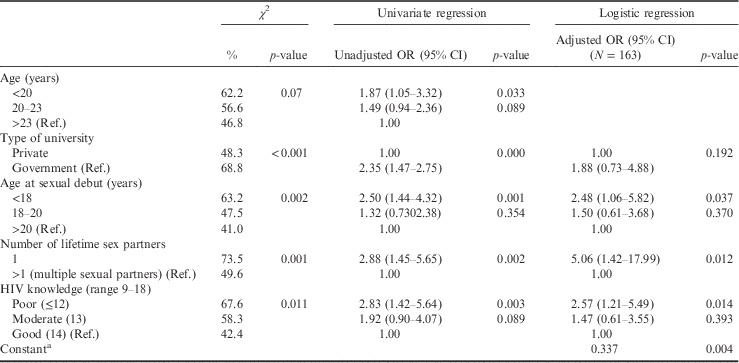
Note: of the significant correlates of inconsistent condom use, since age and age at sexual debut were highly correlated, age was removed from logistic regression model.
a Negelkerke R 2=0.168.
Discussion
This study shows that a significant minority (35%) of young elite Iranian men are involved in premarital sex (referred to as ‘sexual intercourse’ or Nazdiki-e-Jensi in the questionnaire). A previous study among adolescent males aged 15–18 in Tehran showed a lower percentage of sex before marriage (28%), which is not unexpected (Mohammadi et al., Reference Mohammadi, Mohammad, Khalajabadi Farahani, Alikhani, Zare and Ramezani2006). Premarital sex among young men seems to be more prevalent than among young women in Tehran according to a study conducted in 2005–6 in which 12% reported having had sexual intercourse. These rates are concerning, are not trivial and cannot be ignored, particularly in a context such as Iran, with its strong taboo surrounding premarital sex and no formal comprehensive education and communication about HIV and unsafe sex for unmarried adolescents and young people.
Since sexual activity before marriage is highly sensitive and people often feel embarrassed or threatened when they are asked about their sexual encounters, the influence of socially desirable answers on self-reported measures of sexual behaviours has always been of particular concern (Meston et al., Reference Meston, Heiman, Trapnell and Paulhus1998). In this study, despite all the efforts that were made to maximize confidentiality and anonymity, the findings might be subject to social desirability bias. Hence, young men in the study might have overestimated their condom use or, in contrast, they might have misreported their type of sex partners, for instance by misrepresenting sex workers or same-partners as regular girlfriends. Thus interpretation of the results needs to be cautious.
According to a previous study, sexually active young people in Iran are more concerned about pregnancy than HIV/STIs in their sexual relationships (Khalajabadi Farahani, Reference Khalajabadi Farahani2008), and because of the importance of virginity, non-vaginal sex was commonly practised by educated unmarried females, mostly unprotected.
In a context with no formal education and communication on sexual and reproductive health before marriage and no formal service provision for unmarried youth, sexually active youth in Iran are at greater risk of STIs and HIV than those in other more liberal settings where sex education and sexual health services are provided. Studies have also demonstrated important misperceptions about HIV and STIs among youth in Tehran (Ramezani Tehrani & Malek-Afzali, Reference Ramezani Tehrani and Malek-Afzali2008). Educated females in a previous study only associated vaginal sex with contracting HIV/STIs, not other types of sex, and condoms were only used to prevent pregnancy, rather than HIV/STI transmission (Khalajabadi Farahani, Reference Khalajabadi Farahani2008). This is because of a low HIV risk perception among young people, which also reflects a lack of comprehensive knowledge about HIV/STIs.
In this study, an appreciable fraction of sexually experienced men reported sex with high-risk partners or exhibited high-risk sexual behaviours. Together with inconsistent condom use, these results are of concern.
Many factors were identified as significant predictors of having multiple lifetime sexual partners. The probability of having multiple sex partners among men with work experience was 2.6 times greater than that among men with no work experience. This might be partly due to their older age, which is consistent with the findings of previous studies (Mmari & Blum, Reference Mmari and Blum2009; Magnani et al., Reference Magnani, Seiber, Gutierrez and Vereau2001, Reference Magnani, Karim, Weiss, Bond, Lemba and Morgan2002). Another reason might be their better economic situation with money to spend on their partners. They also tend to live apart from their parents. Moreover, the probability of having multiple sexual partners among men of private universities was about 2.25 times higher than those of government universities. This is surprising in view of the fact that students of private universities initiate their first sex later than students of government universities. This needs further exploration. Private students tend to have more liberal attitudes and initiate relationships mostly without marital intentions. They are also more affluent than students of government universities (Khalajabadi Farahani, Reference Khalajabadi Farahani2008). Another predictor of multiple sexual partnership was younger age at first sex (<18 years), consistent with the findings of previous studies (Kapiga Reference Kapiga1996; Rwenge, Reference Rwenge2000). Exposure to X-rated material or pornography was also shown to be a predictor of multiple partners in this study, which is compatible with the results of previous studies (Kapiga, Reference Kapiga1996; Rwenge, Reference Rwenge2000; Mmari & Blum, Reference Mmari and Blum2009). Men with access to pornography tend to be more liberal, and are more involved in other risk-taking behaviours as well.
Selected factors were identified as significant predictors of inconsistent condom use in the past 30 days among sexually active males. Younger age at first sex was identified as a significant determinant of inconsistent condom use. This can be due to many factors such as their poor knowledge or their lack of expectation for sex in casual relations. A systematic review has shown mixed results about the association between age and condom use (Mmari & Blum, Reference Mmari and Blum2009).
This study also showed that inconsistent condom use was directly associated with having only one partner. Obviously, having only one partner is more protective than having many, though the degree of protection depends on the sexual history of the partner (Adefuye et al., Reference Adefuye, Abiona, Balogun and Lukobo-Durrell2009). Finally, this study revealed that inconsistent condom use among men with poor HIV knowledge (HIV mode of transmission) was 2.57 times higher than among men with good HIV knowledge. Hence, HIV intervention programmes for young people need to focus on factors such as postponement of first sex, and increase awareness about modes of HIV/STI transmission among youth.
Perception of risk is likely to have a strong influence on behaviour, particularly for those with control over protective measures (Witte et al., Reference Witte, Berkowitz and Cameron1998). Despite the fact that sexually experienced male university students in Tehran are engaged in various HIV risk behaviours, they have a poor perception of HIV risk and this sense of invulnerability no doubt contributes to risky behaviour. In this study, only two questions addressed HIV risk perception and it is recommended that further studies assess risk perception in greater detail and also investigate the reasons for low HIV risk perception. However, it must be acknowledged that establishing a causal link between risk perception and risk behaviour is problematic because causation operates in both directions.
The findings can only be generalized to male university students in Tehran, and not females, students of other provinces and to Iranian youth in general. Nevertheless, the behaviours of these priviledged young men are of considerable interest, because they may form the vanguard of change (Khalajabadi Farahani, Reference Khalajabadi Farahani2014). Although this study is limited to Tehran, its merits derive from its methodology and coverage of detailed information on sexual behaviours. Further comprehensive studies are needed among different groups of young population in Iran to broaden perspectives on the susceptibility of the general population towards STIs and HIV.
Policy implications
These findings have important implications for HIV prevention interventions among young people in Iran. Such preventions need to focus on adolescents before they get involved in sexual behaviour and unsafe sex. Since the majority of young people might not be involved in premarital sex, a holistic, comprehensive and culturally appropriate approach needs to be implemented. A combination of promoting abstinence, postponement of first sex and also clear health messages for protecting different groups of youth from STIs and HIV is recommended. Interventions need to focus on ‘enhancing comprehensive knowledge on HIV/STIs mode of transmission, particularly through unsafe sex, correct some myths and misperceptions regarding HIV risks’. This intervention is particularly important and urgent due to the increasing access of young people to pornographic material, which appears to be associated with the acquisition of multiple sexual partners. Though Iran still has a ‘concentrated’ HIV epidemic, the risk of an unexpected outbreak to the general population is possible if no appropriate prevention strategy for youth is introduced (Sawires et al., Reference Sawires, Birnbaum, Abu-Raddad, Szekeres and Gayle2009).
Acknowledgment
The authors appreciate the invaluable contribution of Professor John Cleland, from the London School of Hygiene and Tropical Medicine, towards the conceptualization of the study and for his help with the final editing of the paper.