





Introduction
Paragonimiasis, also known as lung fluke disease, is a systemic foodborne parasitic infection primarily affecting the lungs, caused by infection with Paragonimus species. It has represented a significant global public health issue. The disease exhibited 2 major epidemiological patterns: first, persistent local transmission in traditional endemic regions; second, recurring imported or newly emerging cases in non-endemic areas. Endemicity is predominantly observed in East and Southeast Asia, with additional foci in parts of Africa and North America (Luo, Reference Luo1995). According to the World Health Organization, approximately 290 million people globally were estimated to be at risk of infection, with around 23 million active cases, including over 5 million severe cases. China’s reported infection burden was approximated at 10 million individuals (World Health Organization, 1995; Farrar et al. Reference Farrar, Hotez, Junghanss, Kang, Lalloo, White and Garcia2023). Infection can cause multi-organ damage with diverse clinical manifestations, affecting patients across a wide age range (1–90 years) who often present to different clinical departments. However, due to insufficient awareness of the disease’s clinical manifestations among clinicians and the lack of simple, reliable pathogen diagnostic methods in most medical institutions, misdiagnoses and missed diagnoses were frequently documented worldwide. Several sample-based studies in China reported misdiagnosis rates as high as 45.16%–92.3%, with individual cases having durations of misdiagnosis reaching up to 10 years (Zhang et al. Reference Zhang, Wang, Yang and Zhang2004; Li et al. Reference Li, Wang, Jiang and Duan2010; Mao et al. Reference Mao, Xiao and Jiang2025).
Paragonimiasis testing was conducted in certain regions of China. Surveillance in Hubei Province from 2012 to 2017 revealed an overall population seropositivity rate of 1.46% (52/3561) (Dong et al. Reference Dong, Zhou and Sun2019). This rate increased to 9.5% (376/3947) during the 2018–2020 period (Zhang et al. Reference Zhang, Xia, Zhang, Zhu, Wu, Wan and Cao2021). In Sichuan Province, 282 cases were reported during the 2015–2020 monitoring period, with a population seroprevalence rate of 1.6% (210/13 397) (Li et al. Reference Li, Chen, Xu, Zhang and Lu2022). Anhui Province recorded a serological positivity rate of 10.69% (74/692) during 2013–2016 (Liu et al. Reference Liu, Guo, Wang, Zhang and Zhu2017). Chongqing Municipality previously conducted a survey on paragonimiasis infection prevalence among its population. The study selected 9073 individuals across 18 sites in 6 districts and counties of Chongqing. Among these individuals, 363 were serologically positive, with a positivity rate ranging from 0% to 12.42%, averaging 4.00%. Among these serologically positive cases, Chengkou County in northeastern Chongqing exhibited a relatively high serological positivity rate of 7.14%. Additionally, sputum and stool examinations for parasite eggs were conducted on 152 and 188 serologically positive individuals, respectively. A total of 11 and 14 positive cases were detected, with positivity rates of 7.24% and 7.45% (Jiang et al. Reference Jiang, Yan, Li, Luo and Liu2005). Serological surveys were also conducted in Peishi Town, Wushan County and in Wansheng Township and Kangle Town, Fengjie County, in the northeastern part of Chongqing Municipality. A total of 419 serum samples were tested, with enzyme-linked immunosorbent assay (ELISA) detecting positive IgG antibodies for lung fluke in 92 individuals, yielding a positivity rate of 21.96%. The serological positivity rate in Peishi Town, Wushan County, was 25.85%, while the rates in Wansheng Township and Kangle Town, Fengjie County, were 21.43% and 16.67%, respectively (Yang et al. Reference Yang, Liu, Song, Wang and Zhang2002). The Yangtze River basin, particularly the Chongqing section, offers favourable conditions for lung fluke transmission due to its abundant freshwater resources and complex ecological environment (Wang, Reference Wang1988; Wang et al. Reference Wang, Wang, Yang, Li and Lyu2009). Previous studies indicated that the Three Gorges Reservoir area in Chongqing was an endemic zone for Paragonimus skrjabini, with adolescents comprising the majority of infected individuals (Liu et al. Reference Liu, Liu, Yi, Gu and Luo1988). As humans are accidental hosts for this fluke, infection leads to ‘larval migration syndrome’, causing damage to multiple tissues and organs and posing serious health risks (Shen, Reference Shen2000; Nakamura-Uchiyama et al. Reference Nakamura-Uchiyama, Onah and Nawa2001).
The 2001–2004 Chinese Parasitic Disease Survey revealed a seroprevalence rate of 1.71% for paragonimiasis in the population, with Chongqing recording the highest rate at 4.00% (Xu et al. Reference Xu, Chen, Sun, Cai, Fang, Wang, Liu, Li, Feng and Li2005). Paragonimiasis was widely distributed in Chongqing, particularly in mountainous areas along the Yangtze, Jialing and Fu rivers (Peng et al. Reference Peng, Zhang, Zhang, Wang and Zhang2018). In the Sichuan–Chongqing region, the practice of adolescents wading in water to catch crabs and consuming them raw constituted a major risk behaviour for infection. However, no systematic surveys on population infection status, endemic sources, or intermediate hosts had been conducted in Chongqing since 2003. This retrospective analysis of paragonimiasis cases reported by 13 medical institutions in Chongqing from 2010 to 2024 systematically described the epidemiological characteristics of the disease. It aimed to provide scientific evidence for the citywide seroepidemiological and ecological survey planned for 2026.
Materials and methods
Research content and data sources
A retrospective review was conducted of all documented cases of paragonimiasis diagnosed at medical institutions in Chongqing between 1 January 2010 and 31 December 2024. The review encompassed basic case information, epidemiological history, clinical symptoms and signs, diagnostic criteria and treatment details. Twenty-four medical institutions were selected for the paragonimiasis case investigation based on scientific rigour and feasibility of the epidemiological design for the following reasons: (1) Comprehensive geographic coverage: The selection spanned Chongqing’s main urban area and surrounding counties with diverse institutional tiers, which avoided geographic bias and reflected the citywide prevalence of paragonimiasis. (2) Authoritative institutional credentials: Institutions included leading comprehensive, specialized, military hospitals and traditional Chinese medicine hospitals with standardized diagnostic protocols and extensive clinical experience, which ensured accurate and complete case documentation. (3) Standardized data acquisition: Participating institutions possessed robust case management systems, which enabled coordinated extraction of standardized data to ensure compliance and traceability. List of participating medical institutions: Chongqing Public Health Medical Rescue Center, Chongqing University Affiliated Tumor Hospital, First Hospital Affiliated to the Army Medical University, The Second Affiliated Hospital of Army Medical University, The First Affiliated Hospital of Chongqing Medical University, The Second Affiliated Hospital of Chongqing Medical University, Chongqing Emergency Medical Center, The Third Affiliated Hospital of Army Medical University, Children’s Hospital of Chongqing Medical University, Chongqing Maternal and Child Health Hospital, Chongqing Traditional Chinese Medicine Hospital (Daomenkou Campus), The First Affiliated Hospital of Chongqing Medical and Pharmaceutical College, The Fifth People’s Hospital of Chongqing, Armed Police Hospital of Chongqing, Chongqing Ninth People’s Hospital, Chongqing University Affiliated Three Gorges Hospital, University-Town Hospital of Chongqing Medical University, The First Affiliated Hospital of Chongqing Medical University Jinshan Campus, The Third Affiliated Hospital of Chongqing Medical University, Chongqing People’s Hospital, People’s Hospital of Chongqing Banan District, Chongqing Seventh People’s Hospital, 958th Hospital of the PLA Army and Chongqing Traditional Chinese Medicine Hospital (Nanqiaosi Branch), totalling 24 institutions. Diagnostic keywords, such as ‘paragonimiasis’, ‘paragonimiasis encephalopathy’ and ‘paragonimotic pleurisy’, were used to search electronic medical record systems across outpatient, inpatient and discharge diagnosis databases at each institution. Cases were extracted using a standardized questionnaire to collect demographic characteristics, epidemiological history, clinical manifestations, diagnostic criteria and treatment details.
Case definition and classification
Based on WS380-2012 Diagnosis of Paragonimiasis (Expert Panel For Diagnostic Standard of Paragonimiasis, 2012) and assessment of case record completeness, reported cases were categorized into 3 types: Confirmed cases: Cases in which parasite eggs or larvae were detected via fecal examination or biopsy. Clinically diagnosed cases: Cases with a positive immunological test (e.g. ELISA) or a positive skin test accompanied by relevant clinical symptoms. Suspected cases: Cases exhibiting symptoms and signs consistent with paragonimiasis but lacking documented results from pathogen detection or immunological testing.
Data management and statistical analysis
A database was established using Microsoft Excel, and data cleaning was performed. Statistical analysis was conducted using R software (version 4.4.1). Descriptive statistics were calculated as frequencies and percentages. The Mann–Kendall trend test was employed to assess temporal trends in annual case counts. Seasonal patterns in case reporting were examined using seasonal decomposition alongside the Kruskal–Wallis test. Statistical significance was defined as P < 0.05.
Spatial analysis
Spatial autocorrelation analysis was conducted using ArcGIS 10.8 software. The 38 districts and counties under Chongqing’s jurisdiction were defined as spatial units, with case report counts as the variable. First, the Global Moran’s I index was calculated to assess overall spatial clustering. Subsequently, stratified analysis was performed by dividing the study period into 3 phases: 2010–2014, 2015–2019 and 2020–2024. Local Moran’s I (LISA) statistics were applied to identify statistically significant hotspots (high–high [HH] clusters), cold spots (low–low [LL] clusters) and spatial outliers (high–low [HL] outliers and low–high [LH] outliers). HH clusters indicated districts with high case counts surrounded by similarly high-incidence neighbours, signifying genuine high-risk areas; LL clusters denoted districts with low case counts surrounded by low-incidence neighbours; HL outliers represented districts with high case counts surrounded by low-incidence neighbours, suggesting localized isolated high-risk points. LH outliers indicated districts with low case counts adjacent to high-case clusters, potentially representing ‘protective’ zones or underreported areas. These patterns aided in distinguishing genuine spatial clustering from random variation and provided insights into disease transmission dynamics and potential risk factors. A spatial weight matrix was constructed based on the Queen contiguity rule and row-standardized. Significance testing was performed using a Monte Carlo simulation with 999 permutations. All cases were geographically attributed to patients’ residential locations rather than healthcare facility locations in spatial analyses to ensure that the results reflected regional infection risk rather than healthcare-seeking behaviour or hospital distribution.
Sensitivity analysis
A sensitivity analysis was performed to assess the robustness of the spatial results to potential misclassification bias, including only cases with clinical and confirmed diagnoses. The global and local spatial autocorrelation analyses were repeated using the same methods described earlier.
Results
Case overview
From 1 January 2010 to 31 December 2024, 13 of the 24 medical institutions reported cases of paragonimiasis. These institutions collectively reported a total of 1986 cases. Among these, 33 confirmed cases (1.66%) were identified: 2 cases with fecal examination (1 ELISA-positive), 2 cases with live tissue biopsy revealing parasites and 29 cases with egg detection (28 ELISA-positive). Additionally, 468 clinically diagnosed cases (23.57%) were recorded: 467 ELISA-positive cases and 1 case with a positive skin test, along with 1485 suspected cases (74.77%).
Misdiagnosis of cases
A review of the initial diagnostic records for all 1986 paragonimiasis cases (all final diagnoses confirmed as paragonimiasis-related conditions, including ‘paragonimiasis’, ‘paragonimotic pleurisy’ or ‘paragonimiasis encephalopathy’) was conducted. The study defined ‘misdiagnosis’ as the failure to consider paragonimiasis or parasitic infection in the clinician’s initial diagnosis at the first visit. Results showed that 604 cases (30.40%) were misdiagnosed at initial presentation (i.e. the initial diagnosis did not include paragonimiasis or parasitic infection). Among these, 20 cases had undocumented misdiagnosis details. The distribution of known misdiagnoses among the remaining 584 cases was as follows: pneumonia (165 cases), pulmonary tuberculosis (52 cases), pleurisy (69 cases), pleural effusion (201 cases), epilepsy (23 cases), intracranial infection (37 cases) and pericardial effusion (44 cases). Notably, a single case could be misdiagnosed with multiple conditions, resulting in the cumulative count across categories exceeding 584. Other rare misdiagnoses included cerebral vascular malformations, viral encephalitis and intracerebral hematomas.
Population distribution
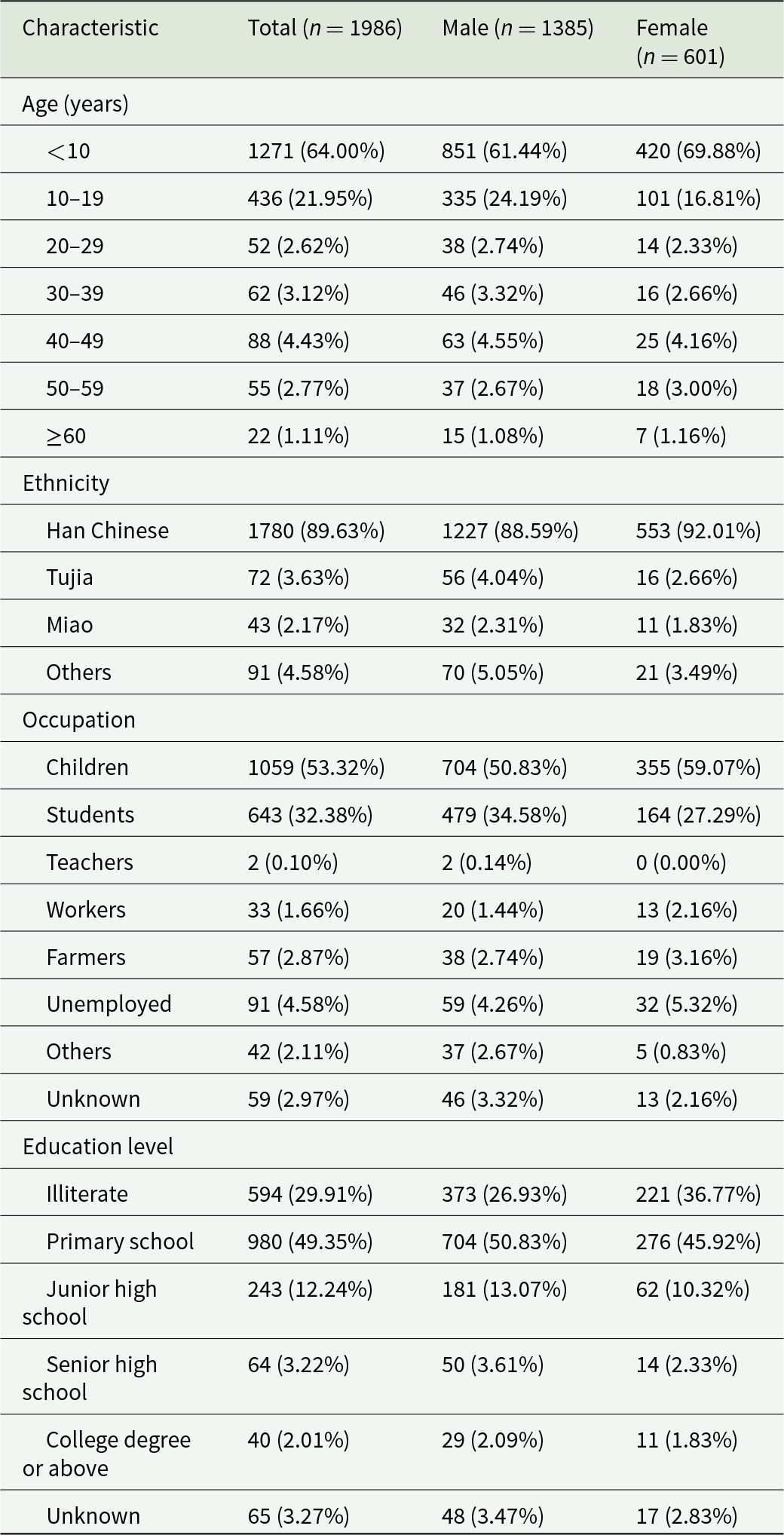
As shown in Table 1, male cases predominated (1385 cases, 69.74%), while female cases accounted for 601 (30.26%). The age distribution demonstrated a trend toward younger age groups: 1271 cases (<10 years, 64.00%) and 436 cases (10–19 years, 21.95%). Within the <10-year age group, female cases (69.88%) exceeded males (61.44%); conversely, in the 10–19-year age group, male cases (24.19%) outnumbered females (16.81%). Ethnic distribution was dominated by Han Chinese (1780 cases, 89.63%), followed by Tujia (72 cases, 3.63%) and Miao (43 cases, 2.17%). The occupational distribution was primarily comprised of children (1059 cases, 53.32%) and students (643 cases, 32.38%). Educational attainment was mainly at the elementary school level (980 cases, 49.35%) and illiteracy (594 cases, 29.91%).
Characteristics of reported cases

Table 1 Long description
Reported cases are summarized by age group, ethnicity, occupation, and education level for all 1,986 people and separately for 1,385 males and 601 females. Children under 10 years make up the majority overall (1,271; 64%), with a higher share among females (420; 69.88%) than males (851; 61.44%). Ages 10 to 19 are the next largest group (436; 21.95%), higher among males (24.19%) than females (16.81%), while each older age band contributes only a small fraction and those 60 years or older are rare (22; 1.11%). Ethnicity is predominantly Han Chinese (1,780; 89.63%), especially among females (92.01%), with smaller proportions for Tujia (3.63%), Miao (2.17%), and other ethnicities (4.58%). Occupation is mainly children (53.32%) and students (32.38%); females are more often categorized as children (59.07%) and males more often as students (34.58%). Education level is concentrated in primary school (49.35%) and illiterate (29.91%), with females having a higher illiteracy share (36.77%) than males (26.93%); small percentages have senior high school or college education, and some entries are marked unknown for occupation and education.
Time distribution
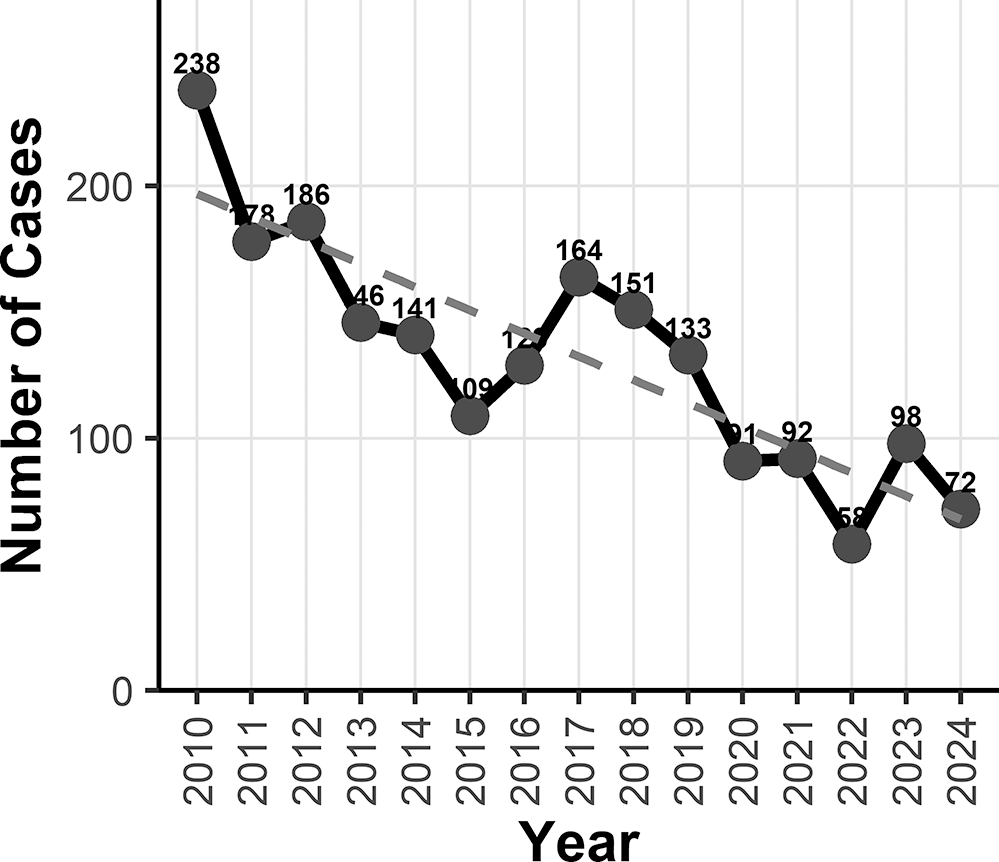
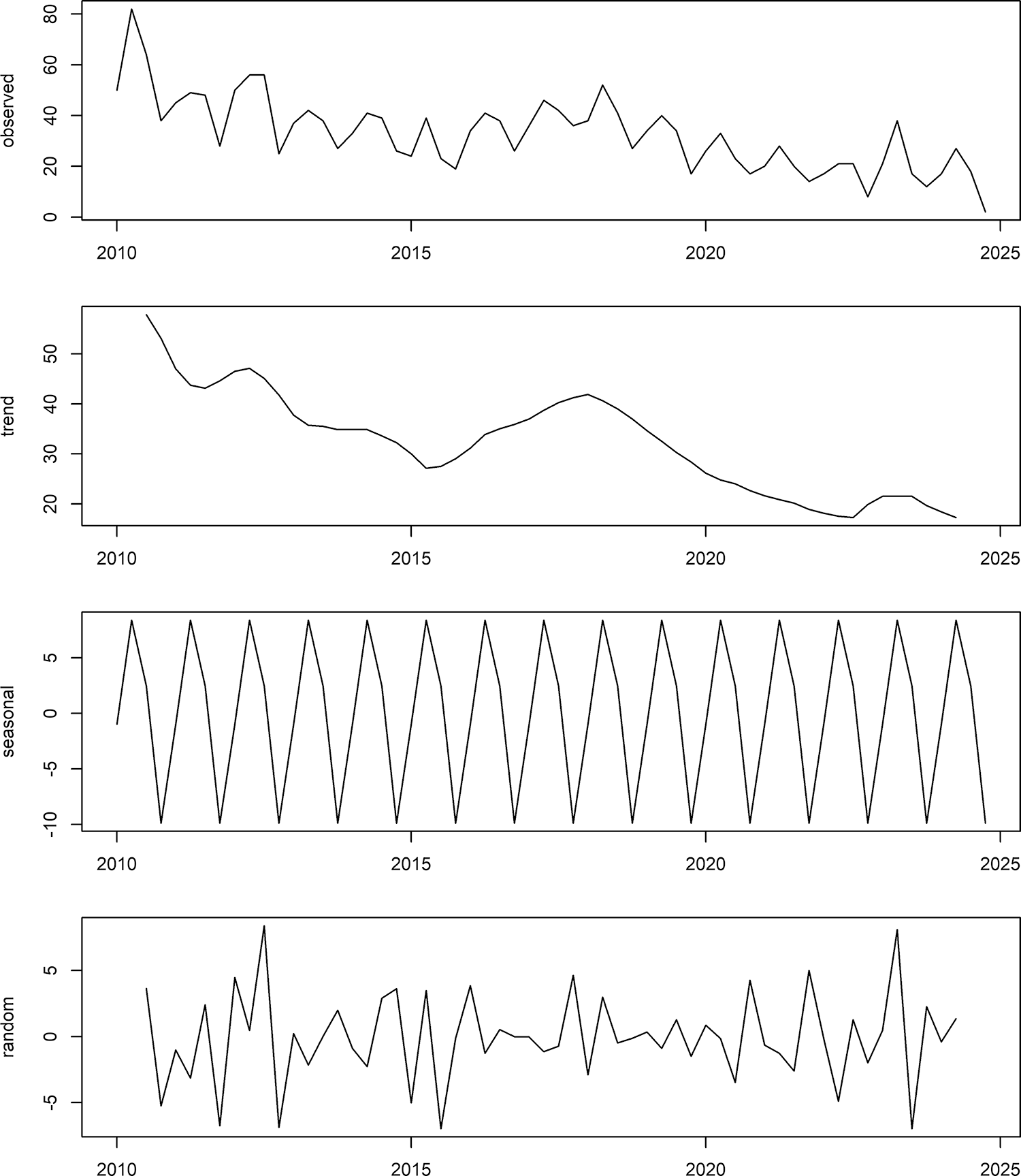
The number of reported cases showed an overall downward trend from 2010 to 2024 (Mann–Kendall τ = −0.676, P < 0.001), with the highest number of cases reported in 2010 (238 cases) and the second-highest in 2012 (186 cases) (Figure 1). Seasonal decomposition of paragonimiasis cases reported by 13 medical institutions in Chongqing from 2010 to 2024 revealed a significant seasonal pattern (Figure 2). Kruskal–Wallis test results (H = 17.108, P < 0.001) confirmed the seasonal characteristics of paragonimiasis, with the majority of cases occurring between March and August, accounting for 56.20% of total reported cases during the study period (2010–2024).
Annual trends in paragonimiasis cases reported by 13 medical institutions in Chongqing, 2010–2024.

Seasonality and temporal trends in paragonimiasis cases reported by 13 medical institutions in Chongqing, 2010–2024.

Figure 2 Long description
Four stacked line graphs. Top graph: y-axis label is observed. Y-axis range is 0 to 80. X-axis range is 2010 to 2025. The line starts near 50 at 2010, rises to near 80, then drops to around 40. From 2011 to 2019 it fluctuates mostly between about 20 and 50. From 2020 to 2025 it fluctuates mostly between about 10 and 35, ending near 20. Second graph: y-axis label is trend. Y-axis range is 10 to 60. X-axis range is 2010 to 2025. The line starts near 60 at 2010, declines to around 30 by about 2015, rises to around 40 by about 2018 to 2019, then declines to near 15 by about 2023, with a small rise and then a slight decline toward 2025. Third graph: y-axis label is seasonal. Y-axis range is negative 10 to 10. X-axis range is 2010 to 2025. The line shows a repeating pattern with peaks near 10 and troughs near negative 10 across the full time range. Bottom graph: y-axis label is random. Y-axis range is negative 5 to 5. X-axis range is 2010 to 2025. The line fluctuates around 0 with frequent spikes and dips, including values near negative 5 and near 5 at multiple points and ends above 0 near 2025.
Spatial distribution
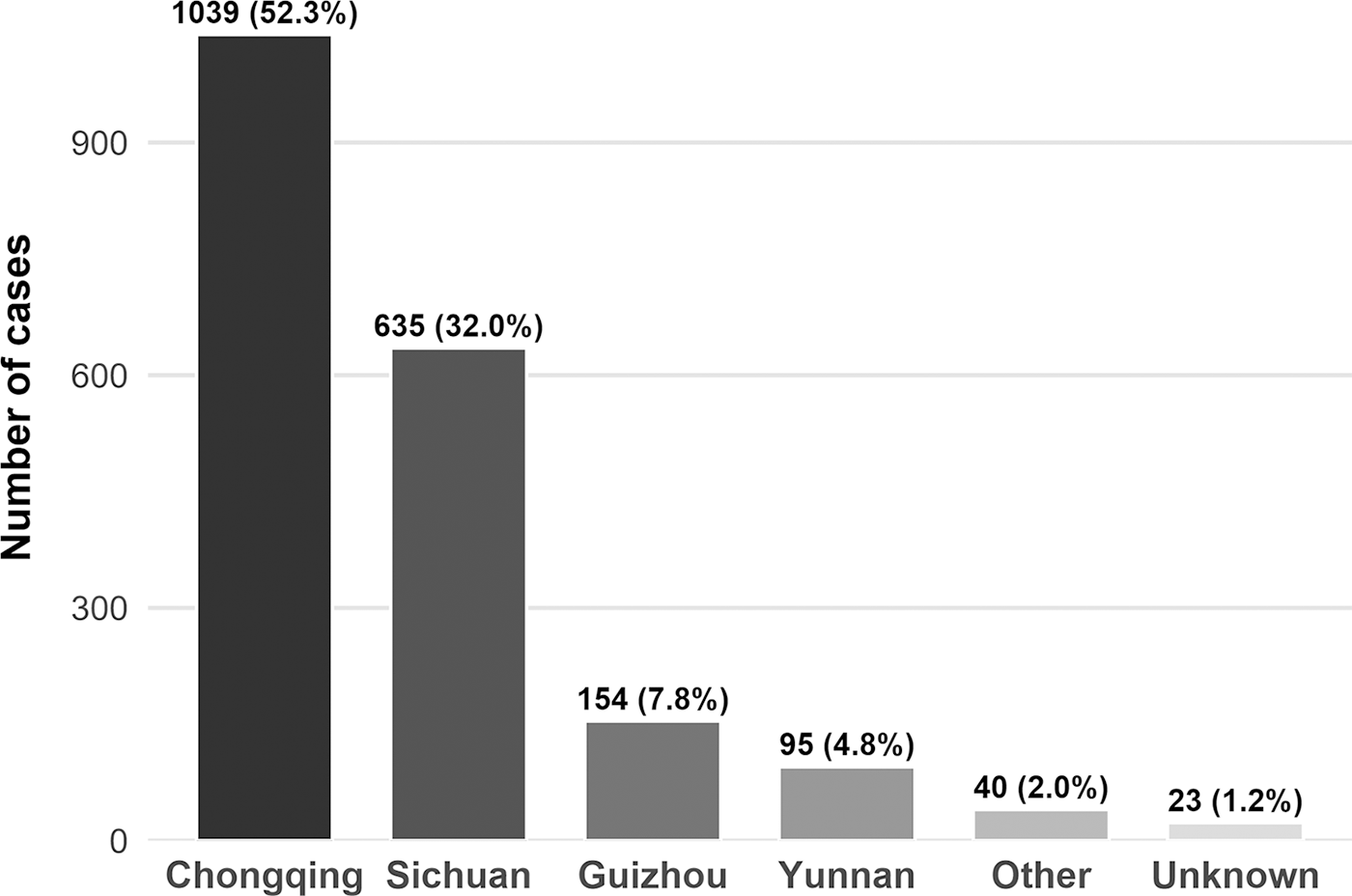
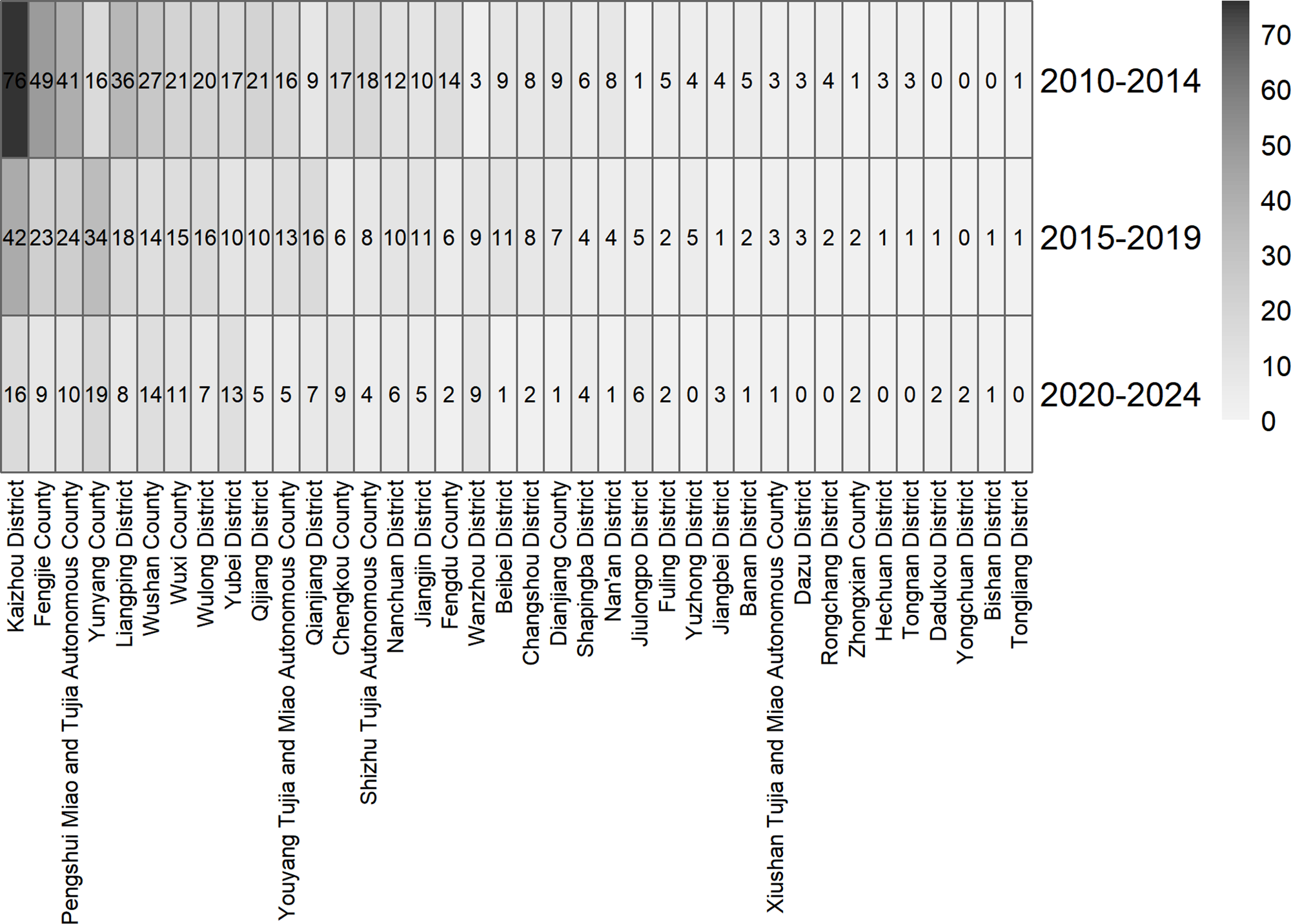
As shown in Figure 3, the majority of cases were reported in Chongqing Municipality (1039 cases), followed by Sichuan Province (635 cases). Smaller numbers were distributed across Guizhou Province (154 cases) and Yunnan Province (95 cases). Within Chongqing, case distribution was highly uneven. Kaizhou District recorded the highest number of cases (134 cases, 12.90%), followed by Fengjie County (81 cases, 7.80%) and Pengshui County (75 cases, 7.22%). The northeastern region of Chongqing exhibited relatively higher case counts, whereas the western region reported fewer cases (Figure 4).
Geographic distribution of paragonimiasis cases by patient residence, reported by 13 medical institutions in Chongqing, 2010–2024.

County-level distribution of paragonimiasis cases reported by 13 medical institutions in Chongqing, 2010–2024.

Figure 4 Long description
Heat map illustrating paragonimiasis case distribution across counties from 2010 to 2024. The vertical axis lists three time periods: 2010-2014, 2015-2019 and 2020-2024. The horizontal axis includes county names: Kaizhou District, Pengshui Miao and Tujia Autonomous County, Wushan County, Yunyang County, Liangping District, Wuxi County, Wulong District, Qianjiang District, Youyang Tujia and Miao Autonomous County, Shizhu Tujia Autonomous County, Fengdu County, Fuling District, Wanzhou District, Changshou District, Dianjiang County, Nanchuan District, Hechuan District, Jiangjin District, Banan District, Yubei District, Jiulongpo District, Yuzhong District, Xichuan Tujia and Miao Autonomous County, Rongchang District, Dazu District, Beibei District, Tongnan District, Yongchuan District. The color gradient ranges from light to dark, indicating lower to higher case counts. Key observations include Kaizhou District consistently showing high counts across all periods, with 76 cases in 2010-2014, 42 in 2015-2019 and 16 in 2020-2024. Pengshui Miao and Tujia Autonomous County also shows significant counts, with 49 cases in 2010-2014, 23 in 2015-2019 and 9 in 2020-2024. Overall, case counts tend to decrease over time, with fewer cases reported in the most recent period. The legend on the right indicates a scale from 0 to 70, with darker shading representing higher case counts.
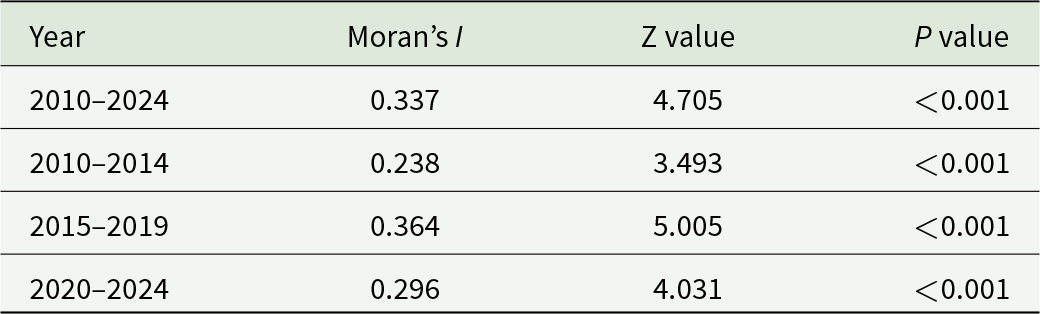
Global spatial autocorrelation analysis indicated significant spatial clustering of cases (Global Moran’s I = 0.337, Z = 4.705, P < 0.001). Stratified analysis revealed the strongest spatial clustering during the 2015–2019 period (Moran’s I = 0.364, P < 0.001), followed by a slight decline but still significant clustering in 2020–2024 (Moran’s I = 0.296, P < 0.001). The lowest clustering was observed during 2010–2014 (Moran’s I = 0.238, P < 0.001) (Table 2).
Global spatial autocorrelation analysis of paragonimiasis cases in Chongqing, 2010–2024
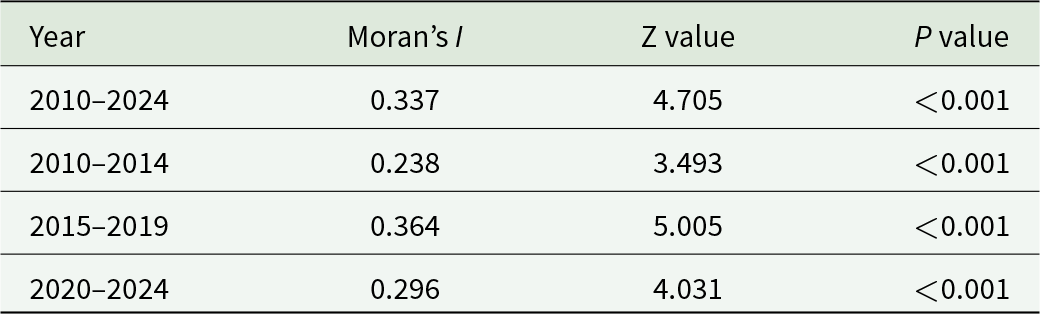
Table 2 Long description
Global Moran’s I results summarize spatial autocorrelation of paragonimiasis cases in Chongqing across four time spans, with accompanying Z-values and P-values. All periods show positive Moran’s I values, indicating clustering rather than a random spatial pattern. For 2010 to 2024, Moran’s I is 0.337 with Z-value 4.705 and P-value below 0.001. The weakest clustering is in 2010 to 2014 with Moran’s I 0.238, Z-value 3.493, and P-value below 0.001. The strongest clustering is in 2015 to 2019 with Moran’s I 0.364, Z-value 5.005, and P-value below 0.001, followed by 2020 to 2024 with Moran’s I 0.296, Z-value 4.031, and P-value below 0.001. Differences in Moran’s I suggest clustering intensity varies over time, but the table does not indicate effect size thresholds, spatial scale, or how cases were aggregated, which can affect interpretation.
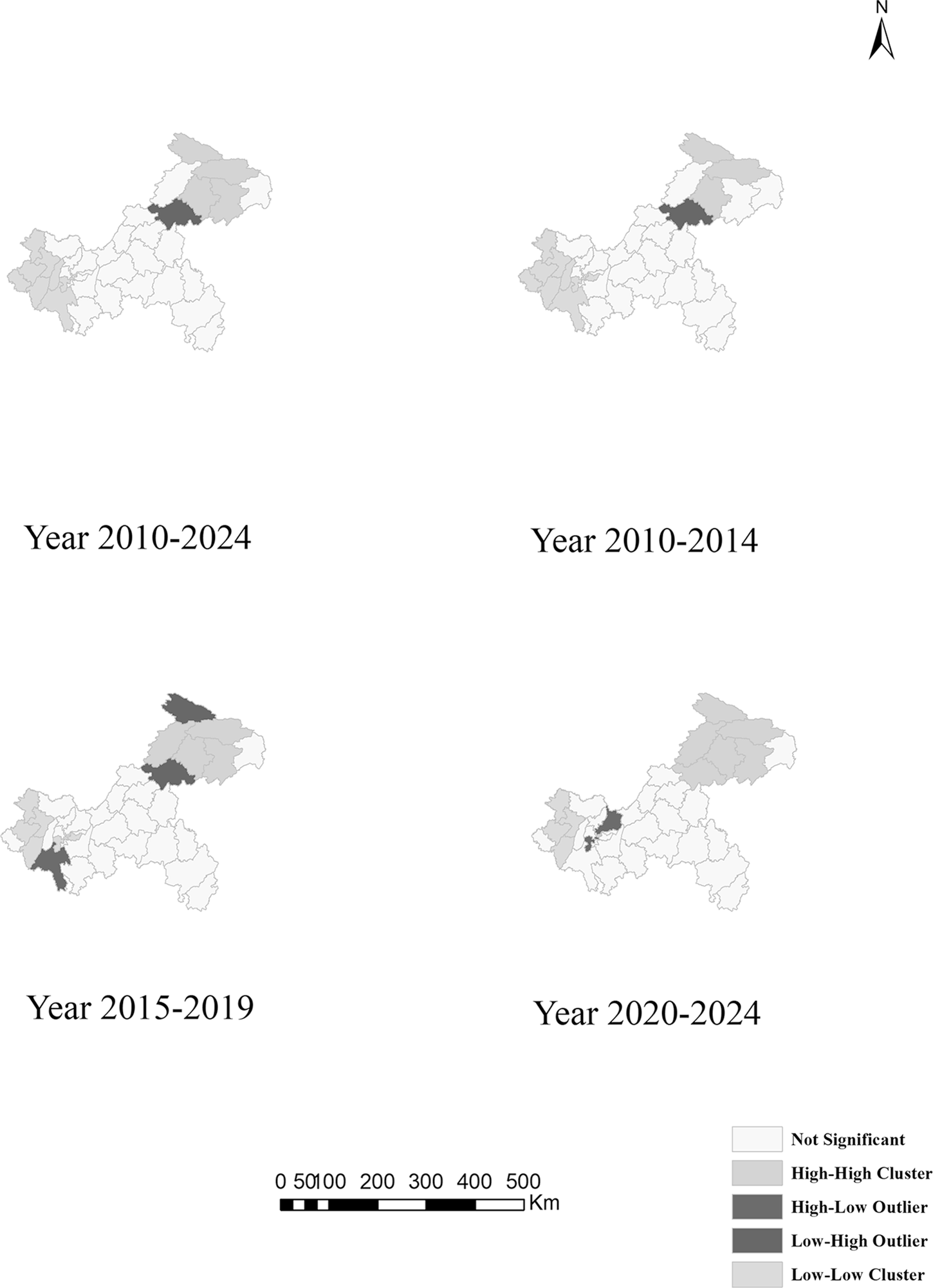
Local spatial autocorrelation analysis (Figure 5) revealed dynamic changes in high-incidence clusters over time. From 2010 to 2024, the northeastern Chongqing region formed a stable HH cluster, primarily encompassing Chengkou, Yunyang, Wuxi and Fengjie counties. In contrast, the western Chongqing region maintained a stable LL cluster. During 2010–2014, HH clusters were concentrated in Chengkou, Yunyang and Wuxi counties of the northeastern region, while Wanzhou District exhibited a LH outlier pattern. The western region sustained an LL cluster. From 2015 to 2019, the HH cluster expanded significantly, incorporating Kaizhou and Fengjie districts as new hotspots alongside Yunyang and Wuxi. Chengkou District shifted from an HH cluster to an LH outlier, while Wanzhou District remained an LH outlier. The LL cluster in western Chongqing contracted, with Jiangjin District emerging as a HL outlier. From 2020 to 2024, HH clusters in northeastern Chongqing increased and merged into contiguous high-incidence zones. Wanzhou District transitioned from an LH outlier to an HH cluster, and Chengkou District reverted to an HH cluster. Kaizhou, Yunyang, Wuxi and Fengjie districts remained persistent hotspots, while the LL cluster in western Chongqing further diminished. HL outliers were identified in Yubei District and Jiulongpo District.
Local spatial autocorrelation analysis of paragonimiasis cases in 38 districts and counties of Chongqing, 2010–2024.

Figure 5 Long description
Four maps depict the spatial autocorrelation of Paragonimiasis cases in Chongqing from 2010 to 2024. Each map represents a different time period: 2010-2024, 2010-2014, 2015-2019 and 2020-2024. The legend indicates categories: Not Significant, High-High Cluster, High-Low Outlier, Low-High Outlier and Low-Low Cluster. In the 2010-2024 map, a high-high cluster is visible in the northeastern region, while a low-low cluster is in the west. The 2010-2014 map shows high-high clusters in the northeast and a low-high outlier in the central area. In 2015-2019, the high-high cluster expands and a high-low outlier appears in the southwest. The 2020-2024 map reveals an increase in high-high clusters in the northeast, with a diminished low-low cluster in the west. The scale bar indicates distances from 0 to 500 kilometers.
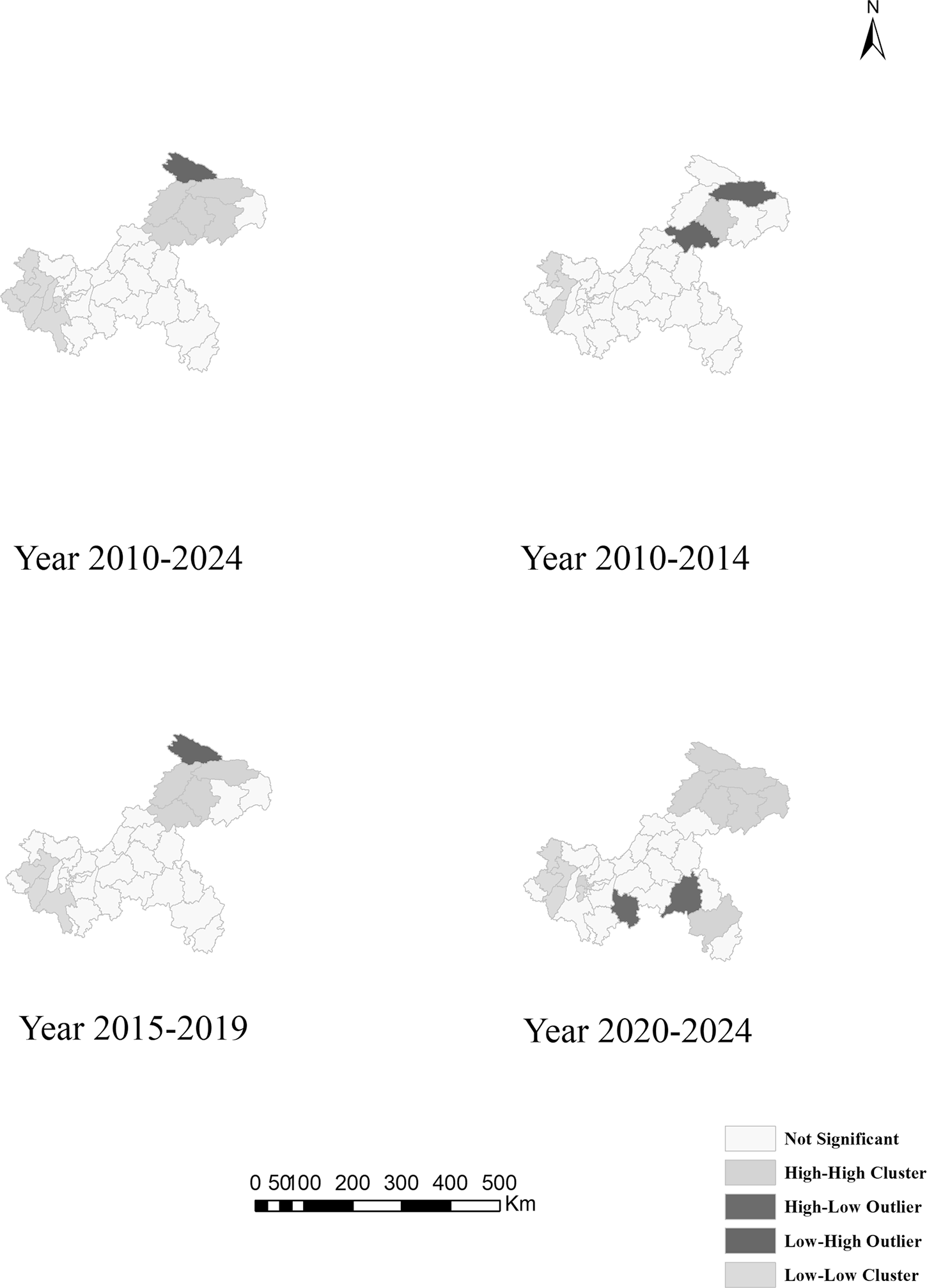
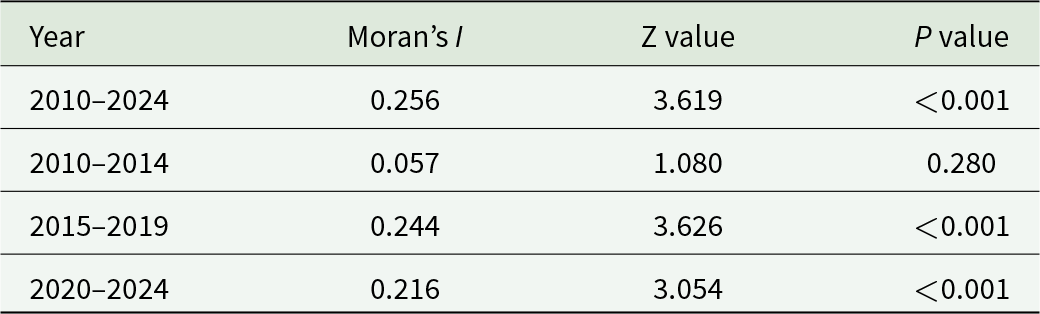
Sensitivity analysis of global spatial autocorrelation revealed significant spatial clustering in the distribution of clinically diagnosed and confirmed cases (Global Moran’s I = 0.256, Z = 3.619, P < 0.001). Period-specific analysis showed the strongest spatial clustering during 2015–2019 (Moran’s I = 0.244, P < 0.001), with a slight but still significant reduction in 2020–2024 (Moran’s I = 0.216, P < 0.001). No significant spatial clustering was observed in the distribution of cases during 2010–2014 (Moran’s I = 0.057, P = 0.280) (Table 3). Sensitivity analysis of local spatial autocorrelation (Figure 6) demonstrated dynamic shifts in high-incidence clusters. From 2010 to 2024, northeastern Chongqing exhibited a stable HH cluster, consistent with previous findings. This cluster primarily encompassed Kaizhou District, Wanzhou District, Yunyang County, Wuxi County and Fengjie County. Western Chongqing formed a stable LL cluster. During 2010–2014, the HH cluster was concentrated in Yunyang County within northeastern Chongqing, while Wanzhou District and Wuxi County served as LH outliers. Stable LL clusters developed in certain areas of western Chongqing. From 2015 to 2019, the HH cluster expanded significantly. Beyond the original Yunyang County, Kaizhou District emerged as a new hotspot. The spatial patterns of Wanzhou District and Wuxi County shifted from LH outliers to HH clusters, while Chengkou County became an LH outlier. Western Chongqing maintained its LL cluster. From 2020 to 2024, HH clusters in northeastern Chongqing further increased and merged, forming contiguous high-incidence areas. Chengkou County transformed from a previous LH outlier into an HH cluster. The HH cluster in Wanzhou District disappeared, replaced by clusters in Fengjie County and Wushan County. Youyang County exhibited an HH cluster for the first time, while Nanchuan District and Pengshui County showed HL outliers for the first time. Western Chongqing continued to maintain an LL cluster.
Local spatial autocorrelation analysis of clinically diagnosed and confirmed cases in 38 districts and counties of Chongqing, 2010–2024.

Figure 6 Long description
Four thematic maps show local spatial autocorrelation cluster categories within Chongqing administrative boundaries for four time ranges: Year 2010-2024, Year 2010-2014, Year 2015-2019 and Year 2020-2024. A north arrow indicates north is up. Legend categories shown are: Not Significant, High-High Cluster, High-Low Outlier, Low-High Outlier and Low-Low Cluster. Areas are filled with different grayscale shades to represent these categories. Year 2010-2024: A High-High Cluster appears in the northeastern part of the mapped area. Most other areas are shown as Not Significant, with a Low-Low Cluster visible in the western part. Year 2010-2014: A High-High Cluster appears in the northeastern part. A separate area in the northeast is marked as a Low-High Outlier. Most remaining areas are Not Significant. Year 2015-2019: A High-High Cluster remains in the northeastern part and covers a larger area than in 2010-2014. A Low-Low Cluster is visible in the western part. Most other areas are Not Significant. Year 2020-2024: Multiple High-High Cluster areas appear in the eastern to northeastern part, forming a larger connected zone than in earlier periods. Two areas in the southern part are marked as High-Low Outlier. A Low-Low Cluster remains visible in the western part. Other areas are Not Significant. A scale bar at the bottom is labeled 0, 50, 100, 200, 300, 400, 500 Km.
Sensitivity analysis of global spatial autocorrelation for clinically diagnosed and confirmed paragonimiasis cases in Chongqing, 2010–2024
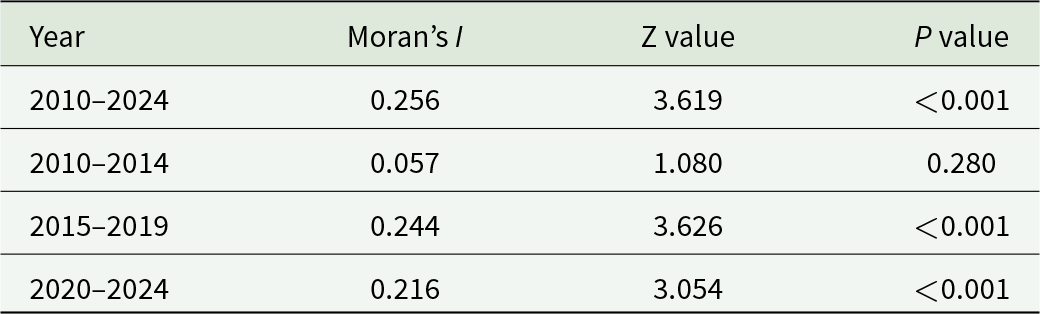
Table 3 Long description
Global spatial autocorrelation results for clinically diagnosed and confirmed paragonimiasis cases are summarized by time period using Moran’s I with corresponding Z-values and p-values. Across 2010–2024, Moran’s I is 0.256 with Z-value 3.619 and p-value below 0.001, indicating statistically significant spatial clustering overall. The early period 2010–2014 shows weak autocorrelation (Moran’s I 0.057) with Z-value 1.080 and p-value 0.280, suggesting no statistically significant clustering then. Clustering is stronger and statistically significant in 2015–2019 (Moran’s I 0.244; Z-value 3.626; p-value below 0.001) and remains significant in 2020–2024 (Moran’s I 0.216; Z-value 3.054; p-value below 0.001). Comparing periods, the strongest clustering appears in 2010–2024 overall and 2015–2019, with a modest decline in Moran’s I in 2020–2024. Interpretation should note that these are global measures that summarize overall spatial pattern and do not identify where clusters occur.
The sensitivity analysis demonstrated that after excluding suspected cases, the primary spatial patterns – particularly the persistent HH clustering in northeastern Chongqing and the LL clustering in western Chongqing remained robust despite observed spatio-temporal variations.
Discussion
Among paragonimiasis cases reported by 13 medical institutions in Chongqing, males accounted for a significantly higher proportion than females. This finding aligned with findings from passive surveillance in Sichuan Province (2015–2020) and active surveillance in Anhui Province (2013–2016) (Liu et al. Reference Liu, Guo, Wang, Zhang and Zhu2017; Li et al. Reference Li, Chen, Xu, Zhang and Lu2022). The observed disparity was attributed to greater male exposure to endemic water bodies, coupled with higher engagement in catching or handling freshwater crustaceans due to societal behavioural roles (Li et al. Reference Li, Chen, Xu, Zhang and Lu2022). The age distribution of cases was predominantly concentrated in the <10-year and 10–19-year groups, with occupations primarily involving children and students. Educational attainment was mainly categorized as illiteracy (470 preschool children, 79.12%) or at the elementary school level. This trend toward younger age groups was likely related to adolescents’ insufficient awareness of disease risks, weak protective consciousness and prevalent habits of wading to catch crabs and consuming them raw or undercooked. Additionally, underdeveloped immune systems in children and adolescents increase susceptibility to parasitic infections. Limited disease awareness among younger individuals and their guardians may have contributed significantly to transmission dynamics (Zhang et al. Reference Zhang, Wang, Huang, Chen, Huang, Li and Qin2002).
From 2010 to 2024, the number of paragonimiasis cases reported by medical institutions in Chongqing showed an overall downward trend, consistent with the decline in serological positive rates observed in the 2015–2020 paragonimiasis surveillance results for Sichuan Province (Li et al. Reference Li, Chen, Xu, Zhang and Lu2022). This may indicate that the disease’s prevalence intensity had reached a relatively low level. Economic and social development, widespread health education and improved dietary hygiene practices among residents, particularly standardized cooking methods for potential vectors such as Potamoidea and Cambaridae, likely contributed to reduced infection risks (Lu et al. Reference Lu, Shi, Hu, Zhu, He and Zheng2006). Case reports exhibited a pronounced seasonal pattern, with 56.20% of cases concentrated between March and August. This aligned with a prior retrospective analysis of paragonimiasis incidence in Chongqing, which noted that over 50% of patients experienced peak onset during March–July (Peng et al. Reference Peng, Zhang, Zhang, Wang and Zhang2018). This pattern may be attributed to climatic conditions during March–August, directly enhancing the ecological efficiency of the transmission chain. Studies confirm that warm, humid climates favour the growth and reproduction of intermediate hosts such as freshwater snails, Potamoidea and Cambaridae (Zhu and Su, Reference Zhu and Su2013). Other studies indicated that within a certain temperature range, rising temperatures accelerated the reproduction rate of freshwater snails and shortened their generation time. Simultaneously, warmer environments favoured the survival of metacercariae in the external environment, prolonging their infectivity (Guan et al. Reference Guan, Liu, Wu, Lyu, Lu and Song2016). Furthermore, increased outdoor activities during spring and summer, such as farming, picnicking and water recreation, were associated with heightened exposure to metacercaria-contaminated water. Traditional practices of consuming Potamoidea and Cambaridae crustaceans raw or partially cooked were also prevalent during this period, with more frequent harvesting and consumption of these intermediate hosts significantly elevating the risk of oral infection. Although reported cases of paragonimiasis in Chongqing medical institutions showed a declining trend year by year, continuous strengthening of health education and behavioural interventions targeting adolescents was deemed necessary to enhance protective awareness. Health education and prevention awareness were found to directly influence residents’ understanding of paragonimiasis and their self-protection capabilities (Lu et al. Reference Lu, Shi, Hu, Zhu, He and Zheng2006; Lall et al. Reference Lall, Sahni and Rajput2013).
The regional distribution of paragonimiasis cases revealed that 52.3% originated from Chongqing. Spatially, cases were predominantly concentrated in northeastern Chongqing, consistent with previous surveys identifying the Three Gorges Reservoir area (Wushan, Wuxi, Fengjie and Yunyang) as moderately to highly endemic zones (Luo et al. Reference Luo, Yi, Liu and Gu1990). Analysis indicated that northeastern Chongqing constituted a persistent HH cluster, reflecting sustained high transmission intensity and shared high-risk characteristics among adjacent counties. Despite a declining case trend, the epidemic’s spatial scope continued to expand: the HH cluster expanded from 4 counties (Chengkou, Yunyang, Wuxi and Fengjie) during 2010–2014 to 6 counties by 2020–2024. Wanzhou District transitioned from an LH outlier to an HH cluster member, providing empirical evidence for geographic infection risk spread. Research indicated that rising water levels following the Three Gorges Project reservoir formation created additional stream habitats suitable for freshwater crabs, potentially elevating lung fluke transmission risk (Zhang et al. Reference Zhang, Wang, Wang, Chen, He, Niu, Li, Chen and Wang2012). Northeastern Chongqing lies within this ecological influence zone. Furthermore, studies documented uneven water conservation capacity distribution in the reservoir area, characterized by stronger downstream capacity and weaker upstream capacity. Northeastern Chongqing, dominated by forest ecosystems, possessed the strongest water conservation function (Ye et al. Reference Ye, Yang, Zhang, Wang, He and Zheng2022). This function sustained water resource availability for ecosystems and human populations. Abundant water resources and suitable ecological conditions provided favourable breeding habitats for lung fluke intermediate hosts (snails and stream crabs), explaining the high case clustering in this region.
Conversely, western Chongqing remained a low-incidence area. A stable LL cluster persisted throughout the study period, suggesting limited exposure to intermediate hosts in urban environments and distinct regional dietary habits. Local spatial autocorrelation analysis identified sporadic HL outliers, indicating isolated high-risk points: Jiangjin District reported an HL outlier during 2015–2019 (local cases surrounded by low-incidence counties), while Yubei and Jiulongpo Districts exhibited HL outliers during 2020–2024. These HL outliers indicated localized high-risk points within the overall low-incidence region, potentially arising from specific environmental conditions (e.g. suitable streams or crab populations) or behavioural factors (e.g. raw crab consumption). Although Jiangjin’s HL outlier did not persist in 2020–2024, the emergence of new HL outliers in Yubei and Jiulongpo suggested potential new localized transmission risks near urban centres. Targeted investigations were warranted to address these risks.
To assess spatial pattern robustness, a sensitivity analysis was conducted on clinically diagnosed and confirmed cases. Results showed that persistent HH clustering in northeastern Chongqing and stable LL clustering in western Chongqing remained significant after excluding suspected cases, confirming genuine spatial heterogeneity rather than classification bias. During 2010–2014, global clustering was not significant, but local analysis revealed HH clusters limited to counties like Yunyang and LH outliers in areas such as Wanzhou District. This indicates localized hotspots dominated early-stage distribution, with dispersed patterns preventing citywide global clustering. This aligns with early disease transmission dynamics, where focal outbreaks precede regional spread.
In summary, the spatial patterns indicated that northeastern Chongqing, as a persistent HH cluster, required prioritized cross-county collaborative prevention and control measures. Meanwhile, the LL cluster region in western Chongqing, despite a lower overall case burden, necessitated vigilance toward sporadic HL outliers, with in-depth investigations recommended when necessary to prevent the emergence of new transmission hotspots.
The case composition in this analysis highlights diagnostic challenges in clinical practice regarding Paragonimus infection. Only 1.66% of cases were confirmed by pathogen, with the majority classified as suspected or clinically diagnosed. Pathogen detection remains the gold standard for diagnosing paragonimiasis. Consistent with these findings, parasitological examinations during the 2013–2016 surveillance in Anhui Province (Liu et al. Reference Liu, Guo, Wang, Zhang and Zhu2017), the 2015–2020 surveillance in Sichuan Province (Li et al. Reference Li, Chen, Xu, Zhang and Lu2022) and the 2018–2020 infection survey in Hubei Province (Zhang et al. Reference Zhang, Xia, Zhang, Zhu, Wu, Wan and Cao2021) also failed to detect parasites or eggs. Most cases reported by medical institutions originated from Chongqing and Sichuan, regions endemic for P. skrjabini, where egg detection in sputum or stool samples is technically challenging (Zhu et al. Reference Zhu, Wei, Liu and Yang2016). This limitation arises from complex parasitological procedures and their limited availability in primary healthcare settings. Consequently, misdiagnosis and missed diagnosis remain persistent concerns in clinical management. The initial misdiagnosis rate of 30.40% closely aligned with that reported in a clinical analysis of 110 paediatric paragonimiasis cases (30.91%) (Chen et al. Reference Chen, Wang, Ju, Wang and Li2009), but was lower than misdiagnosis rates documented in some prior studies (45.16%–92.3%). Findings indicated that approximately one-third of paragonimiasis cases were not clinically suspected during initial consultations, suggesting misdiagnosis remains prevalent in clinical practice. This quantifies the extent of diagnostic challenges and underscores the need to enhance clinicians’ awareness of paragonimiasis in endemic regions.
Acknowledgement is made that healthcare system factors, including disparities in diagnostic capacity (e.g. ELISA test availability) and variations in testing methodologies, may have influenced observed spatial patterns. Diagnostic practices for paragonimiasis in Chongqing likely evolved throughout the 15-year study period, with increased clinician awareness and broader immunological testing potentially contributing to higher case detection rates in later years. This may partially explain the expansion of HH clusters in northeastern Chongqing after 2015. Conversely, regions with limited diagnostic tool accessibility may have experienced underreporting of cases, potentially contributing to persistent LL clusters in western Chongqing. However, sensitivity analyses incorporating only clinically diagnosed and confirmed cases demonstrated that the primary spatial patterns, particularly the enduring HH clustering in northeastern Chongqing and stable LL clustering in western Chongqing, remained robust even after excluding suspected cases. This consistency suggests that observed clustering is unlikely to be driven solely by healthcare-related biases and may instead reflect genuine geographic heterogeneity in infection risk, though healthcare system factors may contribute to the intensity and precision of these patterns. Several limitations are acknowledged. First, the data were obtained from reports submitted by medical institutions and did not include community-based populations, which may have contributed to an underestimation of the true infection burden. Second, ecological investigations of intermediate hosts and infection sources were not performed concurrently, thereby hindering the establishment of comprehensive evidence for the ‘environment-host-population’ transmission chain.
In summary, the number of paragonimiasis cases reported by 13 medical institutions in Chongqing from 2010 to 2024 showed a declining trend and exhibited distinct epidemiological characteristics, including concentration in younger age groups, marked seasonality and spatial clustering. Despite this decline, multiple lines of evidence indicate that paragonimiasis remains a public health concern, particularly in the Three Gorges Reservoir area of northeastern Chongqing (Zhang et al. Reference Zhang, Wang, Wang, Chen, He, Niu, Li, Chen and Wang2012, Reference Zhang, Peng, Liu, Fan, Zhang, Chen, He, Wu, Liu, Yang, Yu and Yun2014). It was recommended that in-depth epidemiological investigations be conducted in the Three Gorges Reservoir area of northeastern Chongqing, that community-based health education be strengthened, and that efforts be made to promote behavioural changes related to high-risk dietary practices among residents. Such measures would help reduce the health risks posed by Paragonimus infection, especially among children and adolescents. For medical institutions, specialized training for physicians across departments should be intensified to improve recognition of clinical manifestations of paragonimiasis, thereby reducing misdiagnosis and missed diagnosis resulting from limited awareness. Immunological detection methods, such as ELISA, should be actively promoted and implemented as primary tools for clinical supportive diagnosis and epidemiological screening. Furthermore, case detection and reporting systems require optimization, with enhanced information collection and quality control for reported cases.
Data availability statement
The datasets used and/or analysed during the current study are available from the corresponding author upon reasonable request.
Author contributions
F.L. and L.Z. conceived and designed the study. Y.T. and Y.D. conducted data gathering. Y.T. performed statistical analyses. Y.T., S.Z. and Y.D. wrote the article.
Financial support
This work was supported by the Medical Research Project of the Science and Health Commission of Chongqing [2025ZDXM031].
Competing interests
The authors declare there are no conflicts of interest.
Ethical standards
This study was approved by the Ethics Review Committee of Chongqing Center for Disease Control and Prevention (Approval No.: KY-2025-020-1, Approval Date: 9 June 2025). As this was a retrospective study using only anonymized medical records without direct patient contact or intervention, a waiver of informed consent was granted by the ethics committee. All patient data were anonymized prior to analysis to protect patient confidentiality.

 Open access

