





Introduction
One of the main reasons to extend intersection theoretic techniques to motivic homotopy theory is that one can get much richer invariants. Indeed, in the motivic homotopy category
$ \mathrm {SH}(\mathbb {k}) $
 , by a celebrated theorem of Morel, we have that the endomorphisms of the sphere spectrum correspond to quadratic forms in the Grothendieck-Witt ring:
$ \mathrm {End}_{\mathrm {SH}(\mathbb {k})}(\mathbb 1_{\mathbb {k}})\simeq \mathrm {GW}(\mathbb {k}) $
 . In recent years, this led to much progress in the field, now called
$ \mathbb {A}^1 $
 -enumerative geometry, with a lot of new interesting results by Hoyois, Kass, Levine, McKean, Pauli, Solomon, Wendt, Wickelgren and many others (for example one can look in [Reference Bachmann and Wickelgren9] and references therein).
In this paper we are going to compute the
$ \mathrm {KW} $
 -Euler classes for some special rank 2 vector bundles of the ind-scheme
$ {B}\mathrm{N} $
 , where N is the normaliser of the standard torus in
$\mathrm{SL}_2$
 . The main source of inspiration was [Reference Levine20], where Levine computed Euler classes in Witt-sheaf cohomology. In our attempt to reproduce similar formulas for the spectrum
$ \mathrm {KW} $
 , representing Balmer’s derived Witt groups, we had to dive into some Künneth formulas and into the theory of twisted symplectic bundles, obtaining different results that are of independent interest.
One can think of Witt sheaf cohomology, used in loc. cit., and the Witt spectrum as quadratic analogues of Chow groups and K-theory. Indeed, Witt sheaf cohomology and Witt theory capture the essentially quadratic information in Chow-Witt groups and Hermitian K-theory, which are quadratic refinements of Chow groups and K-theory respectively.
Notably, Witt sheaf cohomology is a homotopy module and, therefore, it is simpler to work with from a homotopical perspective: it is bounded in the sense of [Reference Levine21, Definition 4.13]. However,
$ \mathrm{SL}_{\eta } $
 -oriented spectra, like Witt theory
$ \mathrm {KW} $
 , are not bounded. Care is needed when working with general spectra on algebraic stacks or ind-schemes; the necessary technical tools are provided in [Reference D’Angelo12].
Here is a detailed synopsis of the paper. In the first section we will provide the reader with a recollection of facts ranging from intersection theory on algebraic stacks, to orientations and Thom isomorphisms in the motivic context. We will then show how to reduce computations of characteristic classes from general vector bundles to special linear ones. In the third section we will deduce some Künneth formulas for
$\mathrm{SL}_{\eta }$
 -oriented theories: in this kind of generality, these formulas are new to the best of the author’s knowledge, and of independent interest. In particular we will prove:
Proposition 1 (Proposition 3.5).
Let
$ \mathrm{S} \in \mathbf {Sm}_{/ {}{\mathbb {k}}} $
 . Let
$ \mathrm {A} $
 be an
$ \mathrm{SL}_{\eta } $
 -oriented ring spectrum. Let
$ \mathcal {X}=\prod _\mathrm{i=1}^\mathrm{s} \mathcal {B}\mathrm{GL}_\mathrm{n_i,S} \times \prod _\mathrm{j=s+1}^\mathrm{s+r} \mathcal {B}\mathrm{SL}_\mathrm{n_j,S} $
 . Then we have:

with
$ \mathrm{L}:=\mathrm{L}_1 \boxtimes \ldots \boxtimes \mathrm{L}_\mathrm{s+r} $
 and
$ \mathrm{L}_i\in \mathrm {Pic}(\mathcal {B}\mathrm{GL}_\mathrm{n_i}) $
 for
$ i=1,\ldots ,s $
 and
$ L_j\in \mathrm {Pic}(\mathcal {B}\mathrm{SL}_{n_j}) $
 for
$ j=s+1,\ldots ,s+r $
 and where
$ \widehat {\otimes } $
 denotes the completed tensor product.
In the fourth section, we will introduce twisted symplectic bundles to handle formal ternary laws (in the sense of [Reference Déglise and Fasel14]) that will be crucial for our last computation, Proposition 5.3. We will prove a twisted quaternionic projective bundle formula and a twisted version of the Cartan sum formula for
$\mathrm{SL}$
 -oriented spectra (cf. Theorem 4.9 and Corollary 4.18 respectively):
Theorem 2 (Theorem 4.9).
Let
$ \mathbb E $
 be an
$ \mathrm{SL} $
 -oriented ring spectrum with a twisted Thom structure. Let
$ (V, \omega ^\mathrm{L}) $
 be a twisted symplectic bundle of rank 2n over a scheme
$ \mathrm{X}\in \mathbf {Sm}_{/ {}{\mathrm{S}}} $
 , let
$ (\mathcal {U}, \left. {\omega ^\mathrm{L}}\right|_{\mathcal {U}}) $
 be the tautological rank 2 bundle over
$ \mathrm H\mathbb {P}^n_L $
 and let
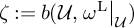
$ \zeta :=b(\mathcal {U}, \left. {\omega ^\mathrm{L}}\right|_{\mathcal {U}}) $
 be its Borel class. Write
$ \pi : \mathrm H\mathbb {P}^n_L \rightarrow \mathrm{X} $
 for the projection map. Then for any closed subset
$ Z \subseteq \mathrm{X} $
 we have the isomorphism of
$ \mathbb E(\mathrm{X}) $
 -modules:

We will then use the theory of twisted Borel classes to extend [Reference Ananyevskiy4, Lemma 8.2] to general vector bundles in Lemma 4.19. Finally, we will end by providing the formulas for the Euler classes of the bundles
$\widetilde {\mathcal {O}_{}}^{\pm }(\mathrm{m}) $
 (already introduced in [Reference Levine20]), getting a complete description in terms of recursive formulas:
Theorem 3 (Proposition 5.3).
In
$\mathrm {KW}^{\bullet }\left ( BN, \det (\widetilde {\mathcal {O}_{}}^{\pm }(m)) \right ) $
 , denoting by
$\gamma $
 the generator of
$\mathrm {Pic}(BN)$
 , we have the following:
-
1. For $ m=2n+1 $
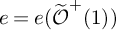
 : (1) $$ \begin{align} \mathrm{b}_1\left(\widetilde{\mathcal{O}_{}}^{+}(\mathrm{m})\right)=\sum_\mathrm{k=0}^\mathrm{n} (-1)^\mathrm{n-k}\alpha_\mathrm{k,n}\gamma^\mathrm{k}\mathrm{e}^\mathrm{2k+1} \end{align} $$with $ e=e(\widetilde {\mathcal {O}_{}}^{+}(1) ) $
and
$ \alpha _{k,n} $
defined by recurrence relations.
-
2. For $ m=2n $
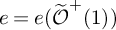
: (2) $$ \begin{align} \mathrm{b}_1\left(\widetilde{\mathcal{O}_{}}^{+}(\mathrm{m})\right)=\tilde{e}\left(\sum_\mathrm{k=0}^\mathrm{n-1} (-1)^\mathrm{n-k+1}\beta_\mathrm{k,n}\gamma^\mathrm{k}\mathrm{e}^\mathrm{2k}\right) \end{align} $$with $ e=e(\widetilde {\mathcal {O}_{}}^{+}(1) ) $
,
$\tilde e=e(\widetilde {\mathcal {O}_{}}^{+}(2) )$
and
$ \beta _{k,n} $
defined by recurrence relations.






Notations and conventions
-
1. The categories $ \mathbf {Sch}_{/ {}{B}}, \mathbf {Sch}_{/ {}{B}}^{G} $
will always denote quasi-projective schemes over a base scheme
$ B $
of finite Krull dimension, without or with a (left)
$ G $
-action. If we write
$ \mathbf {Sm}_{/ {}{B}},\mathbf {Sm}_{/ {}{B}}^{G} $
then we only consider smooth quasi-projective schemes. -
2. We will denote by $ {} {1.25}{\mathcal{ASt}}_{/ {}{S}} $
the
$ \infty $
-category of algebraic stacks over some base
$ \mathrm{s} $
(that could be either a scheme or a stack, but for us will always be a scheme). Moreover given
$ \mathrm{X} \in \mathbf {Sch}_{/ {}{B}}^{G} $
, we will denote the associated quotient stack as
$ \left [/ {X}{G}\right ] $
. -
3. If not specified otherwise, whenever we are working over a field $ \mathbb {k} $
, we will assume it is of characteristic different from
$ 2 $
. If we work over a general base scheme
$ \mathrm{B} $
, we will always assume
$ \dfrac {1}{2} \in \mathcal {O}_\mathrm{B}^{\times } $
. -
4. Recall that a morphism of quasi-projective schemes $ f: \mathrm{X} \rightarrow \mathrm{S} $
in
$ \mathbf {Sch}_{/ {}{B}} $
is called lci (that stands for local complete intersection) if there exists a factorisation of
$ f $
as
$ \mathrm{X} \stackrel {i}{\hookrightarrow } {M} \stackrel {p}{\rightarrow } {S} $
with
$ {i} $
a regular closed immersion and
$ \mathrm{p} $
a smooth map. In the conventions of [Reference Déglise, Jin and Khan15], these are called smoothable lci maps, but we do not need such a distinction. -
5. If not specified otherwise, $ \mathrm{G} $
will always denote a closed sub-group scheme inside
$ \mathrm{GL}_n $
for some
$ \mathrm{n} $
. -
6. Given a group $ \mathrm{S} $
-scheme
$ \mathrm{G} $
, we will always denote by
$ \mathfrak g^{\vee }_S $
the sheaf associated to the co-Lie algebra of
$ \mathrm{G} $
. If the base scheme is clear from the context, we will only write
$ \mathfrak g^{\vee } $
. -
7. In [Reference Morel and Voevodsky24, §4], some ind-schemes were introduced to approximate quotient stacks. For a given algebraic group $ \mathrm{G} $
, those ind-schemes were denoted in loc. cit. as geometric classifying spaces
$ B_{gm}{G} $
. To distinguish between actual quotient classifying stacks
$ [/ {{S}}{{G}}]\in {} {1.25}{\mathcal{ASt}}_{/ {}{{S}}} $
, over some base
$ {S} $
, and geometric classifying spaces (that are just ind-schemes), we will use a dual notation: $$\begin{align*}\mathcal{B}{G}&:=\left[/{S}{{G}}\right] \in {}{1.25}{\mathcal{ASt}}_{/{}{S}}\\{BG}&:= {B}_{gm}{G} \in {Ind}(\mathbf{Sch}_{/{}{S}})\end{align*}$$
We will try to use the calligraphic font $ \mathcal {X}, \mathcal {Y}, \mathcal {B}\mathrm{G} $
, etc., for algebraic stacks. -
8. Given a scheme (or an algebraic stack) $ \mathrm{X} $
, we will denote its Thomason-Trobaugh K-theory space as
$ \mathrm K(\mathrm{X})=\mathrm K({} {1.25}{\mathcal{Perf}}(\mathrm{X})) $
, where
$ {} {1.25}{\mathcal{Perf}}(\mathrm{X}) $
is the infinity category of perfect complexes on
$ \mathrm{X} $
. Given
$ \mathrm{X} \in \mathbf {Sch}_{/ {}{B}}^{\mathrm{G}} $
with associated quotient stack
$ \mathcal {X}:= \left [ / {X}{\mathrm{G}} \right ] $
, the genuine equivariant
$ \mathrm K $
-theory of
$ \mathcal {X} $
will be denoted as
$ \mathrm K^\mathrm{G}(\mathrm{X}):=\mathrm K({} {1.25}{\mathcal{Perf^\mathrm{G}}}(\mathrm{X}))=\mathrm K(\mathcal {X}) $
. -
9. Given an infinity category $ {} {1.25}{\mathcal{C}} $
, we will denote by
$ \operatorname {\mathrm {Map}}_{{} {1.25}{\mathcal{C}}}(-,-) $
the mapping space of
$ {} {1.25}{\mathcal{C}} $
. If moreover
$ {} {1.25}{\mathcal{C}} $
is closed monoidal, the internal mapping space of
$ {} {1.25}{\mathcal{C}} $
we will denote as
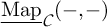
$ \operatorname {\mathrm {\underline {Map}}}_{{} {1.25}{\mathcal{C}}}(-,-) $
. -
10. When dealing with bivariant theories, also known as Borel-Moore homology for us, we will have to take into account twists by perfect complexes. For example given a scheme (or an algebraic stack) $ \mathrm{X} $
and a perfect complex
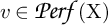
$ v \in {} {1.25}{\mathcal{Perf}}(\mathrm{X}) $
, we can define the
$ v $
-twisted Borel-Moore homology
$ \mathbb E(\mathrm{X},[v] ) $
as done in [Reference Déglise, Jin and Khan15], where
$ [v]\in K_0(\mathrm{X})=K_0({} {1.25}{\mathcal{Perf}}(\mathrm{X})) $
. When
$ \mathcal {V} $
is a locally free sheaf with associated class
$ v:=[\mathcal {V}]\in K_0(\mathrm{X}) $
, to the automorphism in
$ \mathrm {SH}(\mathrm{X}) $
given by v-suspension
$ \Sigma ^{v} $
, it will then correspond the element
$ \mathrm {Th}_{\mathrm{X}}\left ( V \right ):=\Sigma ^{v}\mathbb 1_X $
, where
$ V:=\mathbb V_{\mathrm{X}}(\mathcal {V}):=\operatorname {\mathrm {Spec}}(\operatorname {\mathrm {Sym}}^{\bullet }(\mathcal {V}^{\vee })) $
is the vector bundle given by
$ \mathcal {V} $
. We will always use calligraphic letters
$ \mathcal {V},\mathcal {E} $
, etc., for perfect complexes and Roman letters for vector bundles. We are also using calligraphic letters for algebraic stacks, but this should not be a source of any confusion since it will be clear from the context to which kind of object we are referring to. -
11. We will stick with the conventions and notation of [Reference Déglise, Jin and Khan15] for the general theory of motivic bivariant theories. But from the second section onward, we will use the twisting conventions of [Reference Levine20], [Reference Levine22], [Reference Levine21] that clashes with the one of [Reference Déglise, Jin and Khan15] when we twist by line bundles: what in the former three papers is denoted $ \mathbb E^{a,b}\left ( \mathrm{X}; L \right ) $
is actually
$ \mathbb E^{a+2,b+1}\left ( \mathrm {Th}_{\mathrm{X}}\left ( L \right ) \right ) $
, that in the notation of the latter one is
$ \mathbb E^{a+2,b+1}\left ( \mathrm{X}; -[\mathcal {L}] \right ) $
where
$ \mathcal {L} $
is the invertible sheaf corresponding to the line bundle
$ L $
. More precisely we have: $$\begin{align*}\mathbb E^{a,b}_{\mathrm{Levine}}\left( \mathrm{X}; L \right):=\mathbb E^{a+2,b+1}\left( \mathrm{Th}_{\mathrm{X}}\left( L \right) \right) =: \mathbb E^{a+2,b+1}_{\mathrm{DJK}}\left( \mathrm{X}, -[\mathcal{L}] \right) \end{align*}$$where the double index conventions on the right-hand side are defined in [Reference Déglise, Jin and Khan15, §2.2]. Although slightly confusing, both notations have their pros and cons. It should be clear what we are using from the context and from the fact that we will always use the semi-colon for one and just a comma for the other (and square brackets if we want to stress that we are considering K-theoretic classes). The rule of thumb should be: if we are working with cohomology theories and if it is a twist by a line bundle (and not by an invertible sheaf), we are using the $ \mathbb E_{\mathrm {Levine}}(-;-) $
-convention, otherwise we are following [Reference Déglise, Jin and Khan15].














1 Recollections
1.1 Geometric approximations
We will now work over a base scheme
$ \mathrm{S} $
 and we will denote by
$ \mathrm{GL}_n $
 the group scheme
$ \mathrm{GL}_{n,\mathrm{S}}:=\mathrm{GL}_n\times _{\mathbb {Z}} \mathrm{S} $
 defined over
$ \mathrm{S} $
 , where
$ \mathrm{GL}_n $
 is the usual group scheme of invertible
$ (n\times n )$
 -matrices defined over
$ \operatorname {\mathrm {Spec}}(\mathbb {Z}) $
 . Whenever we encounter a group scheme
$ \mathrm{G} $
 over
$ \mathrm{S} $
 , we will always assume that
$ \mathrm{G} $
 is smooth.
We describe a version of the construction of the classifying space of
$ \mathrm{G} $
 , found in [Reference Morel and Voevodsky24, §4.2]. We can consider
$ V_m=\mathbb {A}^{n(n+m)}_{\mathrm{S}}\simeq \operatorname {\mathrm {Hom}}(\mathbb {A}^{n+m}_{\mathrm{S}}, \mathbb {A}^{n}_{\mathrm{S}}) $
 equipped with the natural (left)
$ \mathrm{GL}_n $
 -action (hence we also have an induced natural
$ \mathrm{G} $
 -action). Once we identify
$ V_m $
 with the scheme of
$ (n,n+m) $
 -matrices, we can restrict to the open subset
$ {E}_mG\subseteq V_m $
 made of those matrices with rank
$ n $
 . On
$ {E}_mG $
 we have a free
$ \mathrm{GL}_n $
 -action (hence a free
$ \mathrm{G} $
 -action too). We can define a map
$ s_m: {E}_mG \hookrightarrow E_{m+1}\mathrm{G} $
 sending an element
$ B \in {E}_mG $
 to a matrix of the form:

Notation 1.1. Since we will closely follow [Reference Levine21] and [Reference Levine22], we will adapt the same notation too. Choose as a base point
$ x_0=(I_n, 0_n, \ldots , 0_n) $
 where
$ I_n $
 is the
$ (n\times n) $
 identity matrix and
$ 0_n $
 is the zero vector column of length
$ n $
 . We will denote by
$ {E}\mathrm{GL}_n $
 (occasionally
$E\mathrm{SL}_n$
 ) the presheaf on
$ \mathbf {Sm}_\mathrm{S} $
 given by
$ \underset {m}{\mathrm {colim}}\ \ {E}_m\mathrm{SL}_n $
 . For any closed subgroup
$ \mathrm{G} $
 of
$ \mathrm{GL}_n $
 or
$ \mathrm{SL}_n $
 , we will denote the quotient
$ {B}_mG:=/ {{E}_m\mathrm{GL}_n}{\mathrm{G}} $
 whose limit gives us the approximation
$ {B}\mathrm{G}:=\underset {m}{\mathrm {colim}}\ {B}_mG $
 for the quotient stack
$ \mathcal {B}\mathrm{G}:=\left [ / {\mathrm{S}}{\mathrm{G}} \right ] $
 . For
$ \mathrm{G}=\mathrm{GL}_n $
 , the spaces
$ {B}_m\mathrm{GL}_n\simeq \mathrm {Gr}_S(n, n+m) $
 are represented by the Grassmannians.
The normaliser of the torus in
$\mathrm{SL}_2$

Let
$ \mathrm{N} $
 be the normaliser of the standard diagonal torus
$ T\subseteq \mathrm{SL}_2 $
 . Note that
$ T\simeq \mathbb G_m $
 , where for
$ R $
 a ring, we map
$ t \in \mathbb G_m(R)= R^{\times } $
 to the diagonal matrix:

We often simply write this matrix as
$ t $
 , when there is no cause of confusion. Notice that
$ \mathrm{N} $
 is generated by
$ T $
 plus the element:

Recall from [Reference D’Angelo13] the following:
Lemma 1.2. Let
$ \mathbb {k} $
 be a field. The Picard group
$ \mathrm {Pic}(\mathcal {B}\mathrm{N}) $
 of
$ \mathcal {B}\mathrm{N} \in {} {1.25}{\mathcal{ASt}}_{/ {}{\mathbb {k}}} $
 is generated by the line bundle
$ \gamma _N \in \mathrm {Pic}^{\mathrm{SL}_2}(\mathbb {P}^2\setminus C)\simeq \mathrm {Pic}(\mathcal {B}\mathrm{N}) $
 coming from
$ \mathcal {O}_{\mathbb {P}^2}(1) $
 , with its natural
$ \mathrm{SL}_2 $
 -linearisation. Moreover
$ \mathrm {Pic}(\mathcal {B}\mathrm{N})\simeq / {\mathbb {Z}}{2\mathbb {Z}} $
 .
Remark 1.3. We will always identify the classifying space
$\mathcal {B}\mathrm{N}$
 with its geometric approximation
$ BN $
 by [Reference D’Angelo12, Proposition 3.33], so with some abuse of notation we will still denote by
$\gamma $
 the corresponding system of line bundles on
$ BN $
 .
Remark 1.4. The representation
$ \rho ^{-}: \mathrm{N} \rightarrow \mathbb G_m $
 sending
$ \sigma $
 to
$ -1 $
 corresponds exactly to the line bundle
$ \gamma _N$
 generating
$ Pic(\mathcal {B}\mathrm{N}) $
 .
1.2 BM motives and operations on algebraic stacks
We will freely use the six functor formalism developed for algebraic stacks in [Reference Chowdhury and D’Angelo11]. A summary is given by the following:
Theorem 1.5 [Reference Chowdhury and D’Angelo11, Theorem 4.26].
We have a functor:

extending the analogous functor defined on schemes. This functor encodes the following data:
-
1. For every $ \mathcal {X} $
NL-stack, we have the tensor- hom adjunction in
$ \mathrm {SH}(\mathcal {X}) $
: $$\begin{align*}-\otimes - \dashv \operatorname{\mathrm{\underline{Map}}}_{\mathrm{SH}(\mathcal{X})}(-,-) \end{align*}$$
-
2. For any map $ f: \mathcal {X} \longrightarrow \mathcal {Y} $
in
$ {} {1.25}{\mathcal{ASt}} $
, we have a pair of adjoint functors: $$\begin{align*}f^*\dashv f_* \end{align*}$$and if $ f $
is smooth we also have: $$\begin{align*}f_{\#}\dashv f^* \dashv f_* \end{align*}$$
-
3. For $ f: \mathcal {X} \longrightarrow \mathcal {Y} $
a locally of finite type (lft for short) map in
$ {} {1.25}{\mathcal{ASt}} $
, we have another pair of adjoint functors: $$\begin{align*}f_!\dashv f^! \end{align*}$$
-
4. Given a cartesian diagram in $ {} {1.25}{\mathcal{ASt}}$
: where p is lft, we have the base change equivalence:
$$\begin{align*}f^*p_!\overset{Ex^*_!}{\simeq} q_!g^* \end{align*}$$
-
5. For any lft map f, the projection formula holds:
$$\begin{align*}f_!(-)\otimes - \simeq f_!( - \otimes f^*(-)) \end{align*}$$
-
6. For any smooth map f, the smooth projection formula holds:
$$\begin{align*}f{}_{\#}(-)\otimes - \simeq f{}_{\#}( - \otimes f^*(-)) \end{align*}$$





These functors satisfy the usual compatibilities given by exchange transformations:

and they give rise to localisation fibre sequences like in [Reference Chowdhury10, Proposition 4.2.1]. Moreover, for a given smooth map f, we have the following natural purity equivalence:

Definition 1.6. Let
$\mathcal {X}$
 be an algebraic stack and let
$p: E \rightarrow \mathcal {X}$
 be a vector bundle on
$\mathcal {X}$
 , associated to a locally free sheaf
$\mathcal {E}$
 , with the corresponding zero section denoted by
$s: \mathcal {X} \rightarrow E $
 . The adjoint equivalences:

are called Thom transformations. We will denote by:

the Thom space of
$ E $
 , with inverse
$ \Sigma ^{-\mathcal {E}}\mathbb 1_{\mathcal {X}} $
 .
Notation 1.7. Let:

be the Borel J-homomorphism as defined in [Reference Chowdhury and D’Angelo11, §4.1]. For a given NL-stack
$ \mathcal {X} $
 and a given
$ v \in \mathrm K_0(\mathcal {X}) $
 , we will denote the associated automorphism of
$ \mathrm {SH}(\mathcal {X}) $
 as
$ \Sigma ^{v} $
 , with inverse
$ \Sigma ^{-v} $
 .
Definition 1.8. Let
$ g: \mathcal {X} \rightarrow \mathcal {B} $
 be a lft map of NL-stacks and
$ w \in \mathrm K_0(\mathcal {X}) $
 and let
$ \mathbb E \in \mathrm {SH}(\mathcal {B}) $
 .
-
(BM Motive) The twisted Borel-Moore motive over $ \mathcal {B} $
is defined as: $$\begin{align*}\left( /{\mathcal{X}}{\mathcal{B}} \right)^{\mathrm{BM}}(w):= g_! \Sigma^{w} \mathbb 1_{\mathcal{X}} \end{align*}$$
-
(BM Homology) The twisted Borel-Moore homology over $ \mathcal {B} $
is defined as: $$\begin{align*}\mathbb E^{\mathrm{BM}}\left(/{\mathcal{X}}{\mathcal{B}}, w\right):=\operatorname{\mathrm{\underline{Map}}}_{\mathrm{SH}(\mathcal{B})}\left( \left( /{\mathcal{X}}{\mathcal{B}} \right)^{\mathrm{BM}}(w), \mathbb E \right) \end{align*}$$
The BM-homology groups will then be defined as:
$$\begin{align*}\mathbb E^{\mathrm{BM}}_{a,b}\left(/{\mathcal{X}}{\mathcal{B}}, w\right):=\pi_0\left( \Sigma^{-a,-b} \mathbb E^{\mathrm{BM}}\left(/{\mathcal{X}}{\mathcal{B}}, w\right) \right) \end{align*}$$
-
(Generalised Cohomology) The twisted cohomology of $ \mathcal {X} $
is defined as: $$\begin{align*}\mathbb E\left( \mathcal{X}, w \right):=\operatorname{\mathrm{\underline{Map}}}_{\mathrm{SH}(\mathcal{B})}\left( \mathbb 1_{\mathcal{B}}, g_*\Sigma^{w}g^*\mathbb E \right)\end{align*}$$and its twisted cohomology groups as:
$$\begin{align*}\mathbb E^{a,b}\left( \mathcal{X}, w \right):=\pi_0\left( \Sigma^{a,b} \mathbb E\left( \mathcal{X}, w \right) \right) \end{align*}$$


As for the case of schemes (cf. [Reference Déglise, Jin and Khan15]), we can talk about smooth pushforwards, proper pullbacks and Gysin maps for maps of algebraic stacks, and associated operations in BM-homology and cohomology.
Definition 1.9. Let
$ \pi _{\mathcal {X}}: \mathcal {X} \rightarrow \mathcal {B} $
 and
$ \pi _{\mathcal {Y}}: \mathcal {Y} \rightarrow \mathcal {B} $
 be lft maps in
$ {} {1.25}{\mathcal{ASt}}_{/ {}{B}} $
 and let
$ f: \mathcal {X} \rightarrow \mathcal {Y} $
 be a map between them.
-
(SPf) If $ f $
is smooth and
$ v \in \mathrm K_0(\mathcal {Y}) $
, then we have a smooth pushforward map between BM-motives: $$\begin{align*}f_!: \left( /{\mathcal{X}}{\mathcal{B}}\right)^{\mathrm{BM}}(v+ \mathbb L_f) \longrightarrow \left( /{\mathcal{Y}}{\mathcal{B}}\right)^{\mathrm{BM}}(v) \end{align*}$$induced by $ f_!\Sigma ^{\mathbb L_f}f^*\stackrel {\mathfrak p_f}{\simeq } f_{\#}f^* \stackrel {\eta _{\#}^{*}(f)}{\longrightarrow } Id $
.
-
(PPb) If $ f $
is representable and proper, then we have a proper pullback map between BM-motives: $$\begin{align*}f^*:\left( /{\mathcal{Y}}{\mathcal{B}}\right)^{\mathrm{BM}}(v) \longrightarrow \left( /{\mathcal{X}}{\mathcal{B}}\right)^{\mathrm{BM}}(v) \end{align*}$$
-
(GPf) If $ f $
is smooth and it admits a section
$ s: \mathcal {Y} \rightarrow \mathcal {X} $
, then we have a natural transformation: $$\begin{align*}Id\simeq (f\circ s)_! (f\circ s)^!=f_!s_!s^!f^! \stackrel{\eta_!^!(s)}{\longrightarrow} f_! f^!\simeq f_!\Sigma^{\mathbb L_f} f^* \end{align*}$$
This natural transformation induces then a Gysin pushforward on BM-motives:
$$\begin{align*}s_!: \left( /{\mathcal{Y}}{\mathcal{B}}\right)^{\mathrm{BM}}(v) \longrightarrow \left( /{\mathcal{X}}{\mathcal{B}}\right)^{\mathrm{BM}}(v+\mathbb L_f) \end{align*}$$
When $ f $
is a vector bundle, then by homotopy invariance the smooth pushforward
$ f_! $
is an isomorphism on BM-motives with inverse given by the Gysin pushforward
$ s_! $
(the same argument in [Reference Levine19, Lemma 2.2] works verbatim).


The operations we just defined on BM-motives will respectively induce smooth pullbacks, proper pushforwards and Gysin pullbacks on BM-homology as in the case of schemes.
1.3
$ \mathrm{SL} $
- and
$ \mathrm{SL}_{\eta }$
-orientations


From now on in this chapter, we will assume our base field
$ \mathbb {k} $
 to be perfect. We will denote by
$ \mathrm{S} $
 our general base scheme, and by
$\mathbb 1_S $
 the (absolute) sphere spectrum in
$\mathrm {SH}(\mathrm{S})$
 . We have a very special element in
$ \mathbb 1_S^{-1,-1}(\mathrm{S}) $
 , the so-called algebraic Hopf map. Indeed, consider:

sending
$ (x,y)\mapsto [x:y] $
 , this gives us a unique element
$ \eta : \Sigma _{\mathbb G_m}\mathbb 1_\mathrm{S} \rightarrow \mathbb 1_\mathrm{S} \in \mathbb 1_S^{-1,-1}(\mathrm{S}) $
 known as the stable Hopf map (cf. [Reference Ananyevskiy2, Def. 9]). For any motivic ring spectrum
$ \mathbb E $
 , via the unit map
$ \mu : \mathbb 1_\mathrm{S} \rightarrow \mathbb E $
 , we get a corresponding element
$ \eta _{\mathbb E} \in \mathbb E^{-1,-1}(\mathrm{S}) $
 .
Definition 1.10. A motivic ring spectrum
$ \mathbb E \in \mathrm {SH}(\mathrm{S}) $
 is said to be
$ \eta $
 -invertible if multiplication by
$ \eta _{\mathbb E} $
 ,
$ -\times \eta _{\mathbb E}: \mathbb E^{0,0}(\mathrm{S})\rightarrow \mathbb E^{-1,-1}(\mathrm{S}) $
 , is an isomorphism.
Definition 1.11 [Reference Ananyevskiy1, Def.1].
An
$ \mathrm{SL}_n $
 -vector bundle
$ (E, \theta ) $
 on some
$ X \in \mathbf {Sch}_{/ {}{\mathrm{S}}} $
 is the data given by a vector bundle
$ E $
 of rank
$ n $
 , together with a trivialisation of the determinant,
$ \theta : \det (E)\stackrel {\sim }{\rightarrow } \mathcal {O}_{X} $
 . We will often denote the
$ \mathrm{SL}_n $
 -vector bundle by just the underlying vector bundle
$ E $
 . If there is no need to specify the rank of the bundle, we will say that
$ E $
 is an
$ \mathrm{SL} $
 -vector bundle.
After Panin-Walter, we will use the following definition:
Definition 1.12 (cf. [Reference Ananyevskiy5]).
Let
$ \mathbf {C} $
 be a full subcategory of
$ \mathbf {Sch}_{/ {}{\mathrm{S}}} $
 . Given a ring spectrum
$ \mathbb E \in \mathrm {SH}(\mathrm{S}) $
 , a (normalised) SL-orientation with respect to
$ \mathbf {C} $
 for
$ \mathbb E $
 is a rule which assigns to each
$ \mathrm{SL}_n $
 -vector bundle
$ V $
 , over
$ \mathrm{X} \in \mathbf {C} $
 , an element:

with the following properties:
-
1. For any isomorphism $ \varphi : V_1\rightarrow V_2 $
of
$ \mathrm{SL} $
-vector bundles over
$ \mathrm{X} \in \mathbf {C} $
, we have: $$\begin{align*}\varphi^*\mathrm{th}(V_2)=\mathrm{th}(V_1) \end{align*}$$where $ \varphi ^* $
is the pullback map induced by
$ \varphi $
.
-
2. For any morphism $ f: X \rightarrow Y $
in
$ \mathbf {C} $
, and
$ V $
an
$ \mathrm{SL} $
-vector bundle over
$ Y $
, we have: $$\begin{align*}f^*\mathrm{th}(V) =\mathrm{th}(f^*V)\end{align*}$$
-
3. For $ V_1, V_2 \mathrm{SL} $
-vector bundles on some
$ \mathrm{X}\in \mathbf {C} $
, we have: $$\begin{align*}\mathrm{th}(V_1\oplus V_2)=p_1^*\mathrm{th}(V_1)\cup p_2^*\mathrm{th}(V_2) \end{align*}$$where $ p_i: V_1 \oplus V_2 \rightarrow V_i $
are the projection maps.
-
4. We have:
$$\begin{align*}\mathrm{th}(\mathbb{A}^1_S)=\Sigma_{T}1=[ \Sigma_{T} \mathbb 1_S \stackrel{\Sigma_T u_{\mathbb E}}{\longrightarrow } \Sigma_{T} \mathbb E] \in \mathbb E^{2,1}(T) \end{align*}$$where $ u_{\mathbb E}: \mathbb 1_S \rightarrow \mathbb E $
is the unit map of the ring spectrum and
$T=/ {\mathbb {A}^1}{(\mathbb {A}^1\setminus 0)}$
.


We refer to the elements
$ \mathrm {th}(V) $
 as Thom classes. If a ring spectrum
$ \mathbb E $
 has a normalised
$ \mathrm{SL} $
 -orientation with respect to
$ \mathbf {C}:=\mathbf {Sm}_{/ {}{\mathrm{S}}} $
 , we simply say that
$ \mathbb E $
 has an
$ \mathrm{SL} $
 -orientation, and we will say that
$ \mathbb E $
 is
$ \mathrm{SL} $
 -oriented. If
$ \mathbf {C}:=\mathbf {Sch}_{/ {}{\mathrm{S}}} $
 , then a normalised
$ \mathrm{SL} $
 -orientation with respect to
$ \mathbf {C} $
 will be called an absolute SL-orientation, and
$ \mathbb E $
 will be said to be absolutely
$ \mathrm{SL} $
 -oriented (following the conventions in [Reference Déglise and Fasel14]).
Remark 1.13. We will consider basically just absolute
$ \mathrm{SL} $
 -orientations. What will follow is already well known to the experts and it will be very similar to the material already presented in [Reference Bachmann and Wickelgren9, §4.3]. We only need to concentrate on
$ \mathrm{SL} $
 -oriented spectra and, by [Reference Ananyevskiy3, Theorem 4.7], we know that those are strongly
$ \mathrm{SL} $
 -oriented in the sense of [Reference Bachmann and Wickelgren9], so the reader can safely refer to the latter if they prefer.
Notation 1.14. Given an
$ \mathrm{SL} $
 -oriented spectrum
$ \mathrm A \in \mathrm {SH}(\mathrm{S}) $
 that is also
$ \eta $
 -invertible, we will say for short that
$ \mathrm A $
 is
$ \mathrm{SL}_{\eta } $
 -oriented. We will use the letter
$ \mathrm A $
 whenever we want to stress the fact that we are working with
$ \mathrm{SL}_{\eta } $
 -oriented spectra.
Remark 1.15. Following the conventions of [Reference Ananyevskiy1, Def.19], any
$ \eta $
 -invertible spectrum
$ \mathrm A $
 will be regarded just as a graded theory through the isomorphisms
$ \mathrm A^{\bullet }:=\mathrm A^{a-b,0}\simeq \mathrm A^{a,b}$
 induced by
$ \eta $
 .
Definition 1.16. Let
$ \mathbf {C} $
 be a full subcategory of
$ \mathbf {Sch}_{/ {}{\mathrm{S}}} $
 and let
$ \mathbb E \in \mathrm {SH}(\mathrm{S}) $
 be a motivic ring spectrum. A system of SL-Thom isomorphism for
$ \mathbb E $
 (over
$ \mathbf {C} $
 ) is the data given by a collection of isomorphism
$ \tau _V: \mathbb E^{\bullet ,\bullet }(\mathrm{X}) \stackrel {\sim }{\rightarrow } \mathbb E^{\bullet +2n,\bullet +n}(\mathrm {Th}_{\mathrm{X}}\left ( V \right )) $
 , for
$ \mathrm{X}\in \mathbf {C} $
 and
$ V \mathrm{SL}_n $
 -vector bundle on
$ \mathrm{X} $
 , such that:
-
1. Given a map $ f: \mathrm{X} \rightarrow Y $
in
$ \mathbf {C} $
and
$ V $
an
$ \mathrm{SL}_n $
-vector bundle on
$ \mathrm{X} $
, we have the following commutative diagram: where the vertical arrows are induced by the pullback on cohomology. -
2. Given an isomorphism $ \varphi : V \stackrel {\sim }{\rightarrow } W $
of
$ \mathrm{SL}_n $
-vector bundles on
$ \mathrm{X}\in \mathbf {C} $
, we get a commutative diagram: -
3. Given $ V_1, V_2 \ \mathrm{SL} $
-vector bundles of rank
$ j,k $
over
$ \mathrm{X} \in \mathbf {C} $
, the Thom isomorphisms are multiplicative, that is, we have the following commutative diagram: where the vertical arrows are induced by multiplication map of $ \mathbb E $
, together with the identification
$ \mathrm {Th}_{\mathrm{X}}\left ( V_1 \right )\otimes \mathrm {Th}_{\mathrm{X}}\left ( V_2 \right )\simeq \mathrm {Th}_{\mathrm{X}}\left ( V_1\oplus V_2 \right ) $
.
-
4. If $ V $
is an
$ \mathrm{SL}_n $
-vector bundle on
$ \mathrm{X}\in \mathbf {C} $
isomorphic to the trivial
$ \mathrm{SL}_n $
-vector bundle
$ \mathbb {A}^n_X $
, then we have that
$ \tau _{V}\simeq \Sigma ^{2n,n} $
.


Remark 1.17. If we had a collection of maps:

satisfying (1),(2), and (4) in the previous proposition, then we automatically get that
$ \tau _V $
 are isomorphism by a Mayer-Vietoris argument (cf. [Reference Ananyevskiy6, Lemma 3.7]).
Remark 1.18. Notice that working with a special group like
$ \mathrm{SL} $
 , giving Thom classes
$ \mathrm {th}(V) $
 , for
$ \mathrm{SL} $
 -vector bundles
$ V $
 over
$ \mathrm{X} \in \mathbf {C} $
 , amounts to the same data as giving a system of Thom isomorphisms:

From a system of Thom isomorphism, we can get a family of Thom classes just taking
$ \mathrm {th}(V):=\tau _V(1) $
 . Vice versa, giving a family of Thom classes
$ \left \{ \mathrm {th}(V) \right \} $
 , we can define
$ \tau _V(-):=\mathrm {th}(V)\cup p^*- $
 with
$ p: V \rightarrow \mathrm{X} $
 the projection map and
$ -\cup -: \mathbb E^{\bullet ,\bullet }(\mathrm {Th}_{\mathrm{X}}\left ( \mathrm{X} \right ))\times \mathbb E^{\bullet ,\bullet }(V)\rightarrow \mathbb E^{\bullet ,\bullet }(\mathrm {Th}_{\mathrm{X}}\left ( V \right )) $
 the usual cup product map.
So an
$ \mathrm{SL} $
 -orientation will correspond to giving (a system of) Thom isomorphisms for all
$ \mathrm{X} \in \mathbf {Sm}_{/ {}{\mathrm{S}}} $
 , while an absolute
$ \mathrm{SL} $
 -orientation will correspond to giving Thom isomorphisms for all
$ \mathrm{X} \in \mathbf {Sch}_{ / {}{\mathrm{S}}} $
 .
By [Reference Bachmann and Hoyois8, Example 16.30] (applied to
$ \mathrm{G}=(\mathrm{SL}_n)_n $
 ), for any scheme
$ \mathrm{X} \in \mathbf {Sch}_{ / {}{\mathrm{S}}} $
 and any
$ V $
 vector
$ \mathrm{SL} $
 -bundle of rank
$ n $
 , we have an isomorphism
$ \tau _V: \Sigma ^V\mathrm {MSL}_X\stackrel {\sim }{\rightarrow } \Sigma ^{2n,n} \mathrm {MSL}_X $
 , where
$ \mathrm {MSL}_X:=f^*\mathrm{MSL}_S $
 is the pullback of the special linear algebraic cobordism spectrum of [Reference Panin and Walter26] along the structure map
$ f: \mathrm{X} \rightarrow \mathrm{S} $
 . If we denote
$ u_{\mathrm {MSL}_X}: \mathbb 1_X \rightarrow \mathrm {MSL}_X $
 the unit map of
$ \mathrm {MSL}_X $
 , then we have:

Notice that
$ \Sigma ^{V}u_{\mathrm {MSL}_X} $
 lives in
$ \mathrm {MSL}_X^{2n,n}(\mathrm {Th}_{\mathrm{X}}\left ( V \right ))\simeq \mathrm {MSL}_S^{2n,n}(\mathrm{X}, -[V]) $
 and it is not hard to check that these elements satisfy all the properties in definition 1.12.
Definition 1.19. For any
$ \mathrm{X}, V $
 as above, we will denote the elements
$ \mathrm {th}_{\mathrm {MSL}}(V):=\Sigma ^{V}u_{\mathrm {MSL}_X} \in \mathrm {MSL}_X^{2n,n}(\mathrm {Th}_{\mathrm{X}}\left ( V \right ))\simeq \mathrm {MSL}_S^{2n,n}(\mathrm{X}, -[V]) $
 and we will call
$ \mathrm {th}_{\mathrm {MSL}}(V) $
 the canonical
$\mathrm {MSL}$
 -Thom class of
$ V $
 .
Canonical
$ \mathrm {MSL} $
 -Thom classes give us an absolute orientation for
$ \mathrm {MSL}_S $
 that restricts on smooth schemes to the usual
$ \mathrm{SL} $
 -orientation of
$ \mathrm {MSL}_S $
 . For any
$ \mathrm{SL} $
 -oriented ring spectrum
$\mathbb E\in \mathrm {SH}(\mathrm{S}) $
 , by [Reference Ananyevskiy3, Theorem 4.7, Lemma 4.9], there exists a map
$ \varphi : \mathrm {MSL}_S \rightarrow \mathbb E $
 such that
$ \varphi (\mathrm {th}_{\mathrm {MSL}}(V))=\mathrm {th}_{\mathbb E}(V) $
 for each smooth
$ \mathrm{X} \in \mathbf {Sm}_{/ {}{\mathrm{S}}} $
 and any vector
$ \mathrm{SL} $
 -bundle
$ V $
 on
$ \mathrm{X} $
 . In loc. cit. this map is shown to be a ring spectrum map when restricted to compact objects; but for an
$\mathrm{SL}_{\eta }$
 -oriented spectrum
$\mathbb E$
 the
$\mathrm {lim}^1$
 -term obstruction to the map being multiplicative vanishes since we can compute explicitly
$ \mathbb E(\mathrm{BSL}_n\times \mathrm{BSL}_m)$
 . This can indeed be done either via geometric approximations of the form
$ B_{k}\mathrm{SL}_{n}\times \mathrm{BSL}_m $
 or via descent techniques as in Theorem 3.3.
Remark 1.20. Once we have Thom classes and Thom isomorphism in cohomology for some
$ \mathbb E \in \mathrm {SH} $
 , we will get Thom isomorphisms also in Borel-Moore homology using the cohomology product action on Borel-Moore homology (cf. [Reference Levine21, §3.3]). In particular if
$ \mathbb E $
 is
$ \mathrm{SL} $
 -oriented with respect to
$ \mathbf {C} $
 , for any
$ V $
 vector
$ \mathrm{SL} $
 -bundle over
$ \mathrm{X} \in \mathbf {C}\subseteq \mathbf {Sch}_{/ {}{\mathrm{S}}} $
 , of rank
$ r $
 , we will have:

Definition 1.21. Given
$ \mathbb E\in \mathrm {SH}(\mathrm{S}) $
 an
$ \mathrm{SL} $
 -oriented ring spectrum and a map
$ \varphi : \mathrm {MSL} \rightarrow \mathbb E$
 of ring spectra, we call
$ \varphi $
 an SL-orientation map.
Since
$ \varphi $
 is a map of ring spectra, if we define for any
$ \mathrm{X} \in \mathbf {Sch}_{/ {}{\mathrm{S}}} $
 and any vector
$ \mathrm{SL} $
 -bundle
$ V $
 on
$ \mathrm{X} $
 :

we get an absolute
$ \mathrm{SL} $
 -orientation on
$\mathbb E $
 extending the given
$ \mathrm{SL} $
 -orientation we already had.
Definition 1.22. Consider
$ \mathbb E\in \mathrm {SH}(\mathrm{S}) $
 an
$ \mathrm{SL} $
 -oriented ring spectrum, and suppose we are given an
$ \mathrm{SL} $
 -orientation map
$ \varphi : \mathrm {MSL} \rightarrow \mathbb E $
 . Then we call the
$ \varphi $
 -induced absolute SL-orientation the orientation data given by Thom classes:

for any
$ \mathrm{X} \in \mathbf {Sch}_{/ {}{\mathrm{S}}} $
 and any vector
$ \mathrm{SL} $
 -bundle
$ V $
 on
$ \mathrm{X} $
 . For short we will just say
$\varphi $
 -induced SL-orientation.
We do not know a priori if the
$ \varphi : \mathrm {MSL} \rightarrow \mathbb E $
 that can be associated with an
$ \mathrm{SL} $
 -orientation is unique. While a similar unicity statement holds true for
$ \mathrm{GL} $
 - and
$ Sp $
 -orientations by [Reference Déglise and Fasel14, Remark 2.1.5], for
$ \mathrm{SL} $
 -orientations it is still open: there could be an obstruction preventing the uniqueness of
$ \varphi $
 living in
$ \lim ^1 \mathbb E^{2n-1,n}(\mathrm {MSL}_n^{fin}) $
 by [Reference Panin and Walter26, Theorem 5.8], where
$ \mathrm {MSL}_n^{fin} $
 are the Thom spaces associated to the tangent bundle of the special linear Grassmannian
$ SGr(n,n^2) $
 (cf. [Reference Panin and Walter26, §5],[Reference Ananyevskiy3, Def. 4.5]).
Proposition 1.23. Let
$ \mathrm A \in \mathrm {SH}(\mathbb {k}) $
 be an
$ \eta $
 -invertible motivic ring spectrum. Then
$ \mathrm{SL} $
 -orientations are in one to one correspondence with
$ \mathrm{SL} $
 -orientation maps
$ \varphi : \mathrm {MSL}_{\mathbb {k}}\longrightarrow \mathrm A $
 .
Proof. Let
$ SGr_{\mathbb {k}}(n,m) $
 be the special linear Grassmannian, defined as the complement of the zero section of the determinant bundle associated to the universal bundle
$ E(n,m) $
 over the Grassmannian
$ Gr_{\mathbb {k}}(n,m) $
 (see [Reference Ananyevskiy1] for more details). Let us denote
$ \mathrm {Th}(n,m):=\mathrm {Th}_{SGr(n,m)}\left ( {} {1.25}{\mathcal{T}}(n,m) \right ) $
 the Thom space associated to the tautological bundle
$ {} {1.25}{\mathcal{T}}(n,m) $
 of the special linear Grassmannian
$ SGr(n,m) $
 . Since
$ \mathrm A $
 is
$ \eta $
 -invertible, we can adopt the single graded convention
$ \mathrm A^{\bullet } $
 . By [Reference Panin and Walter26, Theorem 5.8], we know that
$ \varphi : \mathrm {MSL}_{\mathbb {k}} \rightarrow \mathrm A $
 as in our claim exists and the obstruction to the uniqueness of
$ \varphi $
 lies in
$ \lim ^1 \mathrm A^{n-1}(\mathrm {MSL}_n^{fin}) $
 , where
$ \mathrm {MSL}_n^{fin}=\mathrm {Th}(n,n^2) $
 are the finite approximation spaces for
$ \mathrm {MSL}_{\mathbb {k}} $
 . By a cofinality argument, we have that the same proof as in loc. cit. works also if we use, as finite level approximation for
$ \mathrm {MSL}_{\mathbb {k}} $
 , the spaces
$ \mathrm {MSL}_{2n}^{fin} $
 . So it turns out that
$ \varphi $
 is unique if:

Notice that it is enough to show the surjectivity of the maps:

induced by the maps of the direct system:

But since
$ A $
 is
$ \mathrm{SL} $
 -oriented, for every
$ k $
 , we have isomorphisms:

where
$ \mathrm {th}(2n,k) $
 denotes the Thom class of
$ {} {1.25}{\mathcal{T}}(2n,k) $
 . Using the last Thom isomorphism together with the computations in [Reference Ananyevskiy1, Theorem 9], we get that
$ i_n^* $
 are surjective and hence
$ \lim ^1 \mathrm A^{2n-1}(\mathrm {MSL}_{2n}^{fin})=0 $
 , giving us the uniqueness of
$ \varphi $
 .
Given an
$ \mathrm{SL} $
 -oriented ring spectrum
$ \mathbb E $
 , with an
$ \mathrm{SL} $
 -orientation map
$ \varphi : \mathrm {MSL} \rightarrow \mathbb E $
 , the
$ \varphi $
 -induced
$ \mathrm{SL} $
 -orientation is uniquely determined. On the other hand, given an absolute
$ \mathrm{SL} $
 -orientation, its restriction to smooth schemes
$ \mathrm{X} \in \mathbf {Sm}_{/ {}{\mathrm{S}}} $
 uniquely determines an associated
$ \mathrm{SL} $
 -orientation, thus we get the following:
Corollary 1.24. Let
$ \mathrm A \in \mathrm {SH}(\mathbb {k}) $
 be an
$ \eta $
 -invertible motivic ring spectrum. Then we have a one to one correspondence between the following data:
-
1. $ \mathrm{SL} $
-orientations on
$ \mathrm A $
; -
2. maps of ring spectra $ \varphi : \mathrm {MSL}\longrightarrow \mathrm A $
such that
$ \varphi (\mathrm {th}_{\mathrm {MSL}}(V))=\mathrm {th}_{\mathrm A}(V) $
for any
$ V $
vector
$ \mathrm{SL} $
-bundle over
$ \mathrm{X}\in \mathbf {Sm}_{/ {}{\mathbb {k}}} $
; -
3. absolute $ \mathrm{SL} $
-orientations.


Remark 1.25. We will only deal with
$ \mathrm{SL}_{\eta } $
 -oriented theories over smooth
$ \mathbb {k} $
 -schemes or just over some field
$ \mathbb {k} $
 . So from now on, with a slight abuse of notation, we will just say
$ \mathrm{SL} $
 -orientation instead of absolute
$ \mathrm{SL} $
 -orientation. According to the corollary above, this will do no harm in the case we are working over a field. Using a Leray spectral sequence argument we can also extend proposition 1.23 to smooth
$ \mathbb {k} $
 -scheme
$ \mathrm{S} $
 (cf. proposition 3.1), but for most of our applications we will just work over a field, hence we will not need this result in such generality. Thanks to [Reference Déglise and Fasel14, Remark 2.1.5], we also need no distinction between
$ Sp $
 -oriented and absolutely
$ Sp $
 -oriented theories.
Recall from [Reference Panin and Walter25] that there exists a spectrum
$ \mathrm {BO}_\mathrm{S} \in SH(\mathrm{S}) $
 , whenever
$ \dfrac {1}{2} \in \mathcal {O}_{\mathrm{S}}^{\times } $
 , that represents Hermitian K-theoryFootnote
1
.
Definition 1.26. Let
$ \mathrm {KW}_{\mathrm{S}}:=\mathrm {BO}_{\mathrm{S},\eta } $
 be the Witt theory (absolute) spectrum defined by inverting the element
$ \eta \in \mathrm {BO}^{-1,-1}_{\mathrm{S}}(\mathrm{S}) $
 as done in detail in [Reference Ananyevskiy3, §6 and Theorem 6.5].
Remark 1.27. The spectrum
$ \mathrm {BO}_S $
 is
$ Sp $
 -oriented (cf. [Reference Panin and Walter25]) and hence
$ \mathrm{SL} $
 -oriented. This induces an
$ \mathrm{SL} $
 -orientation on
$ \mathrm {KW} $
 , and indeed
$ \mathrm {KW} $
 will be our main example and focus point as an
$ \mathrm{SL}_{\eta } $
 -oriented theory.
1.4 Thom isomorphism and Euler classes
For any
$ \mathrm{SL} $
 -oriented theory, we can then talk about Euler classes
$ e(E,\theta ) $
 for
$ \mathrm{SL} $
 -bundles
$ E $
 .
Notation 1.28. As already mentioned in the introduction, we will adopt the convention of [Reference Levine20] for twisted cohomology theories. That means that given
$ \mathbb E $
 an
$ \mathrm{SL} $
 -oriented theory and
$ L \rightarrow \mathrm{X} $
 a line bundle over some
$ \mathrm{X} \in \mathbf {Sch}_{/ {}{\mathrm{S}}} $
 , we denote the
$ L $
 -twisted
$ \mathbb E $
 - cohomology by:

Similarly, given a vector bundle
$ V\rightarrow \mathrm{X} $
 , we will denote the
$ L $
 -twisted
$ \mathbb E $
 -cohomology on
$ \mathrm {Th}_{\mathrm{X}}\left ( V \right ) $
 as:

Remark 1.29. Notice that if
$ L\simeq \mathbb {A}^1_X $
 is the trivial line bundle, then
$ \mathbb E^{a,b}(\mathrm{X};L):=\mathbb E^{a+2,b+1}(\mathbb {P}^1_X)\simeq \mathbb E^{a,b}(\mathrm{X}) $
 .
Given any vector bundle
$ V $
 of rank
$ r $
 on
$ \mathrm{X} \in \mathbf {Sch}_{/ {}{\mathrm{S}}} $
 , if
$ L:=\det (V) $
 , we can construct the associated
$ \mathrm{SL} $
 -vector bundle given by
$ V \oplus L^{-1} $
 with its canonical trivialisation of the determinant
$ \omega _{can}: V\oplus L^{-1}\rightarrow \mathcal {O}_{\mathrm{X}} $
 .
Definition 1.30. Let
$ \mathbf {C} $
 be a full subcategory of
$ \mathbf {Sch}_{/ {}{\mathrm{S}}} $
 and let
$ \mathbb E \in \mathrm {SH}(\mathrm{S}) $
 be a ring spectrum with an
$ \mathrm{SL} $
 -orientation with respect to
$ \mathbf {C} $
 . Let
$ p: V \rightarrow \mathrm{X} $
 be a rank
$ r $
 vector bundle on
$ \mathrm{X} \in \mathbf {C} $
 with determinant
$ L:=\det (V) $
 .
-
1. We define the Thom class in $ L^{-1} $
-twisted cohomology by: $$\begin{align*}\mathrm{th}(V):=\mathrm{th}_{V\oplus L^{-1}}\in \mathbb E^{2r,r}(\mathrm{Th}_{\mathrm{X}}\left( V \right); L^{-1}):=\mathbb E^{2r+2,r+1}(\mathrm{Th}_{\mathrm{X}}\left( V\oplus L^{-1} \right)) \end{align*}$$
-
2. Let $ s_{0,L}: \mathrm{X} \oplus L^{-1} \stackrel {s_0\oplus Id}{\longrightarrow } V\oplus L^{-1} $
be the map induced by the zero section
$ s_0 $
of
$ V $
; then we define the (twisted) Euler class as: $$\begin{align*}e(E):=s_{0,L}^*\mathrm{th}^{\varphi}(V) \in \mathbb E^{2n+2,n+1}(\mathrm{Th}_{\mathrm{X}}\left( L^{-1} \right))=\mathbb E^{2n,n}(\mathrm{X}; L^{-1}) \end{align*}$$


Proposition 1.31 (Twisted Thom Isomorphism).
Let
$ p:V\rightarrow \mathrm{X} $
 be a rank
$ r $
 vector bundle over a scheme
$ \mathrm{X} $
 , and let
$ \mathbb E\in \mathrm {SH}(\mathrm{S}) $
 be a
$ \mathrm{SL} $
 -oriented ring spectrum together with an
$ \mathrm{SL} $
 -orientation map
$ \varphi $
 . Then we have an isomorphism:

Proof. Denote by
$ L:=\det (V) $
 the determinant bundle of
$ V $
 and let
$ \mathcal {V} $
 ,
$ \mathcal {L} $
 be the locally free sheaves associated to
$ V $
 and
$ L $
 . Using the absolute
$ \mathrm{SL} $
 -orientation induced by
$ \varphi $
 , the construction in [Reference Levine and Raksit23, §3.10] works verbatim in our case. Let us briefly sketch how one should proceed (more details can be found in loc. cit). The Thom class
$ \mathrm {th}_{V\oplus L^{-1}}^{\varphi } $
 gives us a Thom isomorphism:

This means that we have an equivalence of spectra:

Similarly we have
$ \Sigma ^{[\mathcal {O}_{}^{2}]-[\mathcal {L}]-[\mathcal {L}^{-1}]}\mathbb E\simeq \mathbb E $
 , and hence:

The equivalence of (1) (together with homotopy invariance for
$ p: V \rightarrow \mathrm{X} $
 ) gives us our isomorphism
$ \vartheta _{V}^{\varphi } $
 .
Remark 1.32. If
$ \mathbb E\in \mathrm {SH}(\mathbb {k}) $
 is an
$ \mathrm{SL}_{\eta } $
 -oriented motivic spectrum, we will drop the
$ \varphi $
 from the notation by virtue of corollary 1.24. Notice also that the Euler classes defined by the
$ \mathrm{SL} $
 -orientations will coincide, under the relevant Thom isomorphism, with the Euler classes defined in Chapter 1 using the formalism of [Reference Déglise, Jin and Khan15].
References with more details for Euler classes in
$ \mathrm{SL} $
 -oriented theories can be found in [Reference Ananyevskiy5, §3] and [Reference Levine and Raksit23, §3] (even if they work with
$ \mathrm{SL} $
 -orientations, everything can be adapted to our
$ \varphi $
 -induced, absolute
$ \mathrm{SL} $
 -oriented case). A treatment of Euler classes closer to the one given here can also be found in [Reference Bachmann and Wickelgren9, §5].
Remark 1.33. Consider an
$ \mathrm{SL} $
 -oriented spectrum
$ \mathbb E \in \mathrm {SH}(\mathrm{S}) $
 , with an
$ \mathrm{SL} $
 -orientation map
$ \varphi $
 , and
$ V $
 a vector bundle over
$ \mathrm{X} \in \mathbf {Sch}_{/ {}{\mathrm{S}}} $
 with determinant
$ L:=\det (V) $
 (and associated locally free sheaves denoted by
$ \mathcal {V} $
 and
$ \mathcal {L} $
 ). Similarly to remark 1.20, using
$ L $
 -twisted Borel-Moore homology:

we get
$ L^{-1} $
 -twisted Thom isomorphism:

using the
$ \varphi $
 -induced Thom classes
$ \mathrm {th}^{\varphi }(V)\in \mathbb E^{2r,r}(\mathrm{X}; L^{-1}) $
 . To remember how twisted Thom isomorphism works (both for cohomology and Borel-Moore homology), it is enough to remember that:

or equivalently:

Construction 1.34. We will now construct a symbol element associated to a section of a line bundle, using the construction of a symbol associated to an invertible function on a scheme
$ \mathrm{X} $
 as done in [Reference Ananyevskiy5, Definition 6.1]. For simplicity we will restrict to the case of a scheme, but the same procedure will work for any NL-stack without changing a word. Recall from loc. cit. that given
$ u \in \Gamma (\mathrm{X}, \mathcal {O}_{\mathrm{X}}^{\times }) $
 , for
$ \mathrm{X} \in \mathbf {Sm}_{/ {}{\mathrm{S}}} $
 and
$ \mathbb E \in \mathrm {SH}(\mathrm{X}) $
 , we have a well-defined element
$ \langle u\rangle \in \mathbb E^{0,0}(\mathrm{X}) $
 induced by the multiplication by
$ u $
 on
$ T=/ {\mathbb {A}^1_X}{\mathbb G_{m,\mathrm{X}}} $
 . This element
$ \langle u \rangle $
 is called the symbol associated to
$ u $
 . Consider now a line bundle
$ p:L\rightarrow \mathrm{X} $
 , and consider
$ \lambda : \mathrm{X} \rightarrow L $
 a section. Denote by
$ \mathcal {Z}(\lambda ) $
 the vanishing locus of
$ \lambda $
 :

Let
$ j_{\lambda }:U(\lambda )\hookrightarrow \mathrm{X} $
 be the open complement in
$ \mathrm{X} $
 of
$ \mathcal {Z}(\lambda ) $
 . Then
$ \lambda $
 induces a non-vanishing section
$ j^*\lambda : U \rightarrow j^*_{\lambda }L^{\times } $
 of
$ j^*_{\lambda }L $
 . But this means we can trivialise
$ j_{\lambda }^*L $
 , i.e. we have:

with associated inverse:

Taking the associated Thom spaces, we get:

Twisting by
$ \Sigma ^{-\mathcal {O}_{}} $
 , we have:

Definition 1.35. With the same notation above, let
$ \mathbb E\in \mathrm {SH}(\mathrm{S}) $
 be a ring spectrum with unit
$ u: \mathbb 1 \rightarrow \mathbb E $
 ; then we define the
$ \mathbb E $
 -symbol associated to
$ \lambda : \mathrm{X} \rightarrow L $
 to be:

Example 1.36. Consider the section of
$ \mathcal {O}_{\mathbb {P}^2}(2) $
 given by
$ Q=T_1^2-4T_0T_2 $
 ; then
$ U(Q)=\mathbb {P}^2\setminus C $
 with
$ C $
 the zero-locus of
$ Q $
 . Then for any
$ \mathbb E\in \mathrm {SH}(\mathrm{S}) $
 we have:

Suppose that
$ \mathbb E $
 is either an element of
$ \mathrm {SH}(\mathrm{S})[\eta ^{-1}] $
 or it is
$ \mathrm{SL} $
 -oriented. Then for any scheme
$ \mathrm{X} $
 and any line bundle
$ L $
 over
$ \mathrm{X} $
 , by [Reference Haution17, Proposition 3.3.1] or [Reference Ananyevskiy5, Theorem 4.3] respectively, there exists an isomorphism:

Hence we get a well-defined element:

Example 1.37. Consider
$ p:L\rightarrow \mathrm{X} $
 , a line bundle over
$ \mathrm{X} $
 . Let:

be the tautological section. Then
$ U(t_{can})=L^{\times }=L\setminus 0 $
 and for any
$ \mathbb E\in \mathrm {SH}(\mathrm{S}) $
 we get:

Consider
$ \mathrm{X}=\mathrm{BGL}_n $
 and
$ L=\mathcal {O}_{}(1) $
 . Then
$ L^{\times }\simeq \mathrm{BSL}_n $
 and we get:

Sometimes we will refer to
$ \langle t_{can}\rangle $
 as the tautological symbol associated to
$ L $
 .
1.5
$ \mathrm{SL} $
-orientations for NL-stacks

We will now present an easy way to get Thom classes and Euler classes on NL-stacks. The methods used here can be adapted to most of the common
$ \mathrm{G} $
 -orientations used in the literature, but since we will need to specialise to
$ \mathrm{SL} $
 -oriented spectra anyway, we will only talk about those.
Consider
$ {} {1.25}{\mathcal{U_n}}\rightarrow \mathcal {B}\mathrm{SL}_n $
 the universal bundle over
$ \mathcal {B}\mathrm{SL}_n $
 (the one corresponding, under Yoneda, to the identity map of
$ \mathcal {B}\mathrm{SL}_n $
 ).
Proposition 1.38. Let
$ \mathbb E \in \mathrm {SH}(\mathrm{S}) $
 be an
$ \mathrm{SL} $
 -oriented ring spectrum. Then we have a natural equivalence of mapping spectra:

Proof. First of all we need to construct the map
$ \tau $
 and then we will prove it is indeed an isomorphism. Let
$ SGr_S(j,k) $
 be the special linear Grassmannian, with tautological bundle
$ {} {1.25}{\mathcal{T}}(j,k) $
 . For each double index
$ (j,k) $
 , we have natural maps
$ \sigma _{j,k}: SGr_S(j,k)\rightarrow \mathcal {B}\mathrm{SL}_n $
 classifying the tautological bundles, that is, we have cartesian squares:

By [Reference D’Angelo12, Proposition 3.33], we have a natural equivalence:

But the left hand side is by definition
$ \mathrm {MSL}_n:=\underset {m}{\mathrm {colim}}\ \pi _{SGr_S(n,m)} {}_{\#} \mathrm {Th}_{SGr_S(n,m)}\left ( {} {1.25}{\mathcal{T}}(n,m) \right ) $
 as defined in [Reference Panin and Walter26, §4]. By construction of
$ \mathrm {MSL} $
 as a spectrum (cf. [Reference Panin and Walter26, §4]), we have natural maps:

By [Reference Panin and Walter26, Theorem 5.9] we have a map of motivic spectra
$ \varphi : \mathrm {MSL}\rightarrow \mathbb E $
 . Consider the following composition of maps:

This means that we have an element
$ \mathrm {th}_{{} {1.25}{\mathcal{U}}_n}\in \mathbb E^{2n,n}(\mathrm {Th}_{\mathcal {B}\mathrm{SL}_n}\left ( {} {1.25}{\mathcal{U}}_n \right )) $
 . Let
$ p_n: {} {1.25}{\mathcal{U}}_n\rightarrow \mathcal {B}\mathrm{SL}_n $
 be the projection map and let us finally define the map we are looking for:

Rewriting
$ \mathbb E(\mathcal {B}\mathrm{SL}_n) $
 and
$ \Sigma ^{2n,n}\mathbb E(\mathrm {Th}_{\mathcal {B}\mathrm{SL}_n}\left ( {} {1.25}{\mathcal{U_n}} \right )) $
 in terms of mapping spectra, we want to show that the map:

is indeed an equivalence. Since
$ \mathrm{SL}_n $
 is special, we can take
$ a: \mathrm{S} \rightarrow \mathcal {B}\mathrm{SL}_n $
 as our NL-atlas. By [Reference Chowdhury10, Lemma 4.1.1], the map
$ a^*: \mathrm {SH}(\mathcal {B}\mathrm{SL}_n)\rightarrow \mathrm {SH}(\mathrm{S}) $
 is conservative, hence
$ \tau $
 is an equivalence if and only if
$ a^*\tau $
 is an equivalence. Notice that
$ a^*{} {1.25}{\mathcal{U}}_n\simeq \mathbb {A}^n_S $
 and denote by
$ q_n:=a^*p_n: \mathbb {A}^n_S\rightarrow \mathrm{S} $
 the projection map. Then we have:

But this means that
$ a^*\tau $
 is the Thom isomorphism map associated to
$ \mathbb {A}^n_S $
 , so it is indeed an equivalence as we wanted to show.
Definition 1.39. We define the canonical Thom class of
$ {} {1.25}{\mathcal{U_n}} \rightarrow \mathcal {B}\mathrm{SL}_n $
 as the element:

where
$ 1_{\mathcal {B}\mathrm{SL}_n} \in \mathbb E^{0,0}(\mathcal {B}\mathrm{SL}_n) $
 is the identity element in the
$ \mathbb E $
 -cohomology of
$ \mathcal {B}\mathrm{SL}_n $
 .
Now, let
$ \mathcal {X} \in {} {1.25}{\mathcal{ASt}}_{/ {}{\mathrm{S}}}^{NL} $
 be a NL-stack. Let
$ v: V \rightarrow \mathcal {X} $
 be a vector bundle of rank
$ n $
 with trivialised determinant. The vector bundle
$ V $
 is classified by a map
$ f_V $
 such that:

Definition 1.40. We define the Thom class of the special linear vector bundle
$ V \rightarrow \mathcal {X} $
 with values in a
$ \mathrm{SL} $
 -oriented ring spectrum
$ \mathbb E\in \mathrm {SH}(\mathrm{S}) $
 as:

where
$ f_{ V}: \mathcal {X} \rightarrow \mathcal {B}\mathrm{SL}_n $
 is the map classifying the special linear bundle
$ V $
 .
As we did for schemes, once we have Thom classes for vector bundles with trivialised determinants, we can define Thom classes for general vector bundles living in twisted cohomology. Indeed if
$ V\rightarrow \mathcal {X} $
 is a vector bundle of rank
$ n $
 with determinant
$ L:=\det ( V) $
 , then
$ V \oplus L^{-1} $
 is a vector bundle of rank
$ n+1 $
 with trivial determinant. We can define:
Definition 1.41. The Thom class for
$ V $
 in
$ L^{-1} $
 -twisted
$ \mathbb E $
 -cohomology is the element:

Definition 1.42. In the same notation as above, we define the
$ \mathbb E $
 -valued Euler class of a vector bundle
$ V \rightarrow \mathcal {X} $
 of rank
$ n $
 as:

where
$ s^* $
 is the pullback map induced by the zero section
$ s_0: \mathcal {X} \rightarrow V $
 .
2
$ \mathrm{SL}_{\eta } $
-theories on
$ \mathrm{BGL}_n $


Recall from [Reference Levine20, §4] that for any
$ \mathrm{SL}_{\eta } $
 -oriented ring spectrum
$ \mathbb E $
 we have a map:

Indeed we have the pullback map:

induced by
$ \pi _0: \mathrm{BSL}_n \longrightarrow \mathrm{BGL}_n $
 . Now consider the tautological rank
$ n $
 vector bundle
$ E_n \rightarrow \mathrm{BGL}_n $
 with
$ \det (E_n)=\mathcal {O}_{}(1) $
 , then its pullback
$ \pi _0^*E_n $
 will be the tautological special linear bundle over
$ \mathrm{BSL}_n $
 , so we have a canonical trivialisation
$ \theta : \det \left ( \pi _0^*E_n \right )\simeq \pi _0^*\mathcal {O}_{}(1)\stackrel {\sim }{\rightarrow } \mathcal {O}_{ \mathrm{BSL}_n} $
 . Composing the pullback map on the twisted theories with
$ \theta _*:=(\tau _{\pi _0^*\mathcal {O}_{}(1)})^{-1} $
 , given by the inverse Thom isomorphism (cf. 1.16), we get:

and we denote this map as
$ \pi _1^*:=\theta _* \circ \pi _0^* $
 . Then putting together
$ \pi _0^* $
 and
$ \pi _1^* $
 we get our desired
$ \pi ^* $
 .
We would like to reduce the computations of characteristic classes from general vector bundles to special linear ones. With a minor adaptation of the arguments in [Reference Levine20, Proposition 4.1] we can prove the following:
Proposition 2.1. Let
$ \mathrm{S}\in \mathbf {Sm}_{/ {}{\mathbb {k}}} $
 . Let
$ E_n $
 be the universal tautological bundle of
$ \mathrm{BGL}_n $
 , and let
$ \mathrm A\in \mathrm {SH}(\mathrm{S}) $
 be an
$ \mathrm{SL} $
 -oriented ring spectrum. Then the map (4):

is an isomorphism. In particular we have:
-
(n = 2m)
$$\begin{align*}\pi^*\left( \mathrm A^{\bullet}\left( \mathrm{BGL}_n \right) \right)\simeq \mathrm A^{\bullet}(\mathrm{S}){[\![} p_1,\ldots, p_{m-1} , e^2 {]\!]} \end{align*}$$
$$\begin{align*}\pi^*\left( \mathrm A^{\bullet}\left( \mathrm{BGL}_n; \det(E_n) \right) \right)\simeq e\cdot \mathrm A^{\bullet}(\mathrm{S}){[\![} p_1,\ldots, p_m , e^2 {]\!]} \end{align*}$$where $ p_i=p_i({} {1.25}{\mathcal{T}}(n,\infty )) $
are the Pontryagin classes (cf. [Reference Ananyevskiy1, Theorem 10]) of the tautological bundle
$ {} {1.25}{\mathcal{T}}(n,\infty ) $
over
$ \mathrm{BSL}_n $
and
$ e=e({} {1.25}{\mathcal{T}}(n,\infty )) $
is the Euler class of the tautological bundle.
-
(n = 2m + 1) Then $ \mathrm A^{\bullet }\left ( \mathrm{BGL}_n; \det (E_n)\right ) \simeq 0 $
and: $$\begin{align*}\pi^*\left( \mathrm A^{\bullet}\left( \mathrm{BGL}_n \right) \right)\stackrel{}{\longrightarrow} \mathrm A^{\bullet}\left( \mathrm{BSL}_n \right) \end{align*}$$is an isomorphism.


Proof. Let us consider the line bundle
$ q:\mathcal {O}_{}(1):=\det (E_n) \longrightarrow \mathrm{BGL}_n $
 . We can identify the map
$ \pi _0:\mathrm{BSL}_n \longrightarrow \mathrm{BGL}_n $
 with the
$ \mathbb G_m $
 -principal bundle
$ q\circ j:\mathcal {O}_{}(1)\setminus \left \{ 0 \right \} \longrightarrow \mathrm{BGL}_n $
 where
$ j: \mathcal {O}_{}(1) \setminus \left \{ 0 \right \} \hookrightarrow \mathcal {O}_{}(1) $
 . By homotopy invariance we can also identify
$ \mathrm A(\mathrm{BGL}_n)\simeq \mathrm A(\mathcal {O}_{}(1)) $
 , thus we have the localization sequences:


By [Reference Levine20, lemma 4.3] the cup product with
$ e(L) $
 for any line bundle
$ L $
 is zero in any
$ \eta $
 -inverted
$ \mathrm{SL} $
 -oriented ring spectrum, so the long exact sequence (5) splits in short exact sequences:

We want now to find a splitting for
$ \partial $
 and we already have a natural candidate
$ \pi _1^* $
 , in the notation used above the proposition. Let us consider the tautological section
$ can: \mathcal {O}_{}(1)\rightarrow q^*\mathcal {O}_{}(1) $
 . Using definition 1.35, the tautological section defines an element
$ \langle t_{can} \rangle \in \mathrm A^{0,0}(\mathrm{BSL}_n, \pi ^*_0\mathcal {O}_{}(1))\simeq \mathrm A^{0,0}(\mathrm{BSL}_n, \pi ^*_0\mathcal {O}_{}(-1)) $
 . The map
$ \pi _1^* $
 we constructed before was:

but
$ \theta _* $
 is just multiplication by
$ \langle t_{can} \rangle $
 . To show that the short exact sequence actually splits we need to prove that
$ \partial \circ \pi _1^*$
 is an isomorphism. As a first step we claim that for any
$ x \in \mathrm A^{\bullet }(\mathrm{BGL}_n; \mathcal {O}_{}(1)) $
 we have:

Indeed:

and
$ \partial $
 is
$ \mathrm A^{\bullet }(\mathrm{BGL}_n; \mathcal {O}_{}(1)) $
 -linear, with
$ \mathrm A^{\bullet }(\mathrm{BGL}_n; \mathcal {O}_{}(1)) $
 acting on
$ E^{\bullet }(\mathrm{BSL}_n) $
 via multiplication through
$ q^*j^* $
 and on
$ E^{\bullet }(\mathrm{BGL}_n; \mathcal {O}_{}(1)) $
 just via multiplication, and this proves the claim.
We want now to prove that multiplication by
$ \bar \partial (\langle t_{can} \rangle ) \in \mathrm A^{-1,-1}(\mathrm{BGL}_n) $
 is an isomorphism:

Using a Mayer-Vietoris argument on the finite approximation pieces
$ {B}_m\mathrm{GL}_n $
 we can reduce ourselves to a local computation, where we already know the result by [Reference Ananyevskiy5, Lemma 6.4]. Indeed given two open sets
$ U, V $
 of
$ {B}_m\mathrm{GL}_n $
 , we get a Nisnevich excision square related to
$ \left \{ U,V, U\cup V \right \} $
 and a Mayer-Vietoris exact sequence for any Nisnevich sheaf. In particular multiplication by an element
$ u \in \mathrm A^{-1,-1}({B}_m\mathrm{GL}_n) $
 gives us a map of Mayer-Vietoris sequences:

So to show that multiplication by
$ \bar \partial (\langle t_{can}\rangle ) $
 is an isomorphism, it is enough to show that
$ \bar \partial (\langle t_{can}\rangle ) $
 restricts to an invertible element when passing to open sets
$ U_i $
 covering
$ {B}_m\mathrm{GL}_n $
 . But in local coordinates
$\bar \partial (\langle t_{can}\rangle ) $
 restricts to
$ \eta $
 by [Reference Ananyevskiy5, Lemma 6.4] and thus we get our desired splitting for
$ B_m\mathrm{GL}_n $
 . This implies that for any
$ k $
 we have:

where
$ \pi _m^* $
 is the map induced by
$ \pi ^* $
 at the finite level approximations. Since the isomorphism holds for any
$ k $
 , we have an equivalence of mapping spectra:

where
$ \mathrm A(B_mG)=\operatorname {\mathrm {\underline {Map}}}(\Sigma ^{\infty } B_mG, \mathrm A) $
 (and similarly for the twisted version). But since
$ \mathrm A(BG)=\operatorname {\mathrm {\underline {Map}}}(BG, \mathrm A)=\lim _m \operatorname {\mathrm {\underline {Map}}}(B_mG, \mathrm A) $
 , from the equivalence of mapping spectra
$ \pi _m^* $
 , we get:

again at the level of mapping spectra, and this gives us our claim.
For the explicit presentation of the image of
$ \pi ^* $
 the same argument as in the proof of [Reference Levine20, Proposition 4.1] will give us the result, using the statement of [Reference Ananyevskiy1, Theorem 10] generalised over any smooth
$ \mathbb {k} $
 -scheme
$ \mathrm{S} $
 in theorem 3.3 (we will actually generalise it to smooth NL-stacks).
Remark 2.2. The previous proposition was already proved independently in [Reference Haution17, Remark 6.3.7] using stronger results. Indeed in loc. cit. it is proved that
$ \mathrm{BGL}_{2r}\simeq \mathrm{BGL}_{2r+1} $
 and
$ \mathrm{BGL}_{2r+1}\simeq \mathrm{BSL}_{2r+1} $
 in
$ \mathrm {SH}(\mathrm{S})[\eta ^{-1}] $
 (these are respectively [Reference Haution17, Theorem 6.3.3, Theorem 6.3.6]).
The proof of proposition 2.1 used as a key input the fact that
$ \mathrm{BSL}_n $
 can be seen as the complement of the zero section of the determinant tautological bundle of
$ \mathrm{BGL}_n $
 . That is all we actually need: the same proof goes through verbatim if we consider
$ BN \rightarrow BN_G $
 where
$ N_G $
 is the normaliser of the torus inside
$ \mathrm{GL}_2 $
 . The model for
$ BN_G $
 is given by
$\left ( {\unicode{x0022}} {\mathrm{GL}_2}{N_G}\right )\times ^{\mathrm{GL}_2} \mathrm{EGL}_2 $
 , where again
$ {\unicode{x0022}} {\mathrm{GL}_2}{N_G}\simeq {\unicode{x0022}} {\mathrm{SL}_2}{\mathrm{N}}\simeq \mathbb {P}^2\setminus C $
 . We then have:
Proposition 2.3. Let
$ \mathrm{S}\in \mathbf {Sm}_{/ {}{\mathbb {k}}} $
 . For any
$ \mathrm{SL}_{\eta } $
 -oriented ring spectrum
$ \mathrm A\in \mathrm {SH}(\mathrm{S}) $
 we have an induced isomorphism:

Proof. Use the same exact proof as in proposition 2.1, replacing
$ \mathrm{BSL}_n $
 with
$ BN $
 and
$ \mathrm{BGL}_n $
 with
$ BN_G $
 and pulling back the appropriate maps along the morphisms
$ BN \rightarrow \mathrm{BSL}_2 $
 and
$ BN_G \rightarrow \mathrm{BGL}_2 $
 induced by
$ \mathrm{N}\hookrightarrow \mathrm{SL}_2 $
 and
$ N_G \hookrightarrow \mathrm{GL}_2 $
 respectively.
Remark 2.4. The previous proposition was also proved in [Reference Viergever28, Proposition 2.5.10] under the assumption that the unit map of
$ \mathrm A $
 makes the
$ \mathrm A^{\bullet }(-) $
 -cohomology into a module for the sheaf of Witt groups
$ H\mathcal {W} $
 .
Remark 2.5. As a corollary of proposition 2.3, it is not hard to get an additive description for
$ \mathrm A^{\bullet }(BN_G) $
 , using [Reference D’Angelo13, Proposition 3.18], and a multiplicative description of
$ \mathrm {KW}^{\bullet }(BN_G) $
 using [Reference D’Angelo13, Corollary 3.26]. We are very grateful to A. Viergever, who made us realise we could improve and apply our results to the case of
$ BN_G $
 .
3 Künneth formulas
We want now to prove some Künneth formulas for
$ \mathit{BSL}_n, \mathcal {B}\mathrm{GL}_n$
 . Let us start with an extension of [Reference Ananyevskiy1, Theorem 9]. Notice that using our model for the approximations
$ B_m\mathrm{SL}_n $
 we have that
$ B_m\mathrm{SL}_n\simeq SGr(n, n+m) $
 . Since we will work over different base schemes we will denote the special Grassmannian over some scheme
$ \mathrm{S} $
 by
$ SGr_{\mathrm{S}}(n,k) $
 .
Proposition 3.1. Let
$ \mathrm{S} \in \mathbf {Sm}_{/ {}{\mathbb {k}}} $
 and let
$ \mathrm A \in \mathrm {SH}(\mathrm{S}) $
 be an
$ \mathrm{SL}_{\eta } $
 -oriented ring spectrum. Let
$ T_1:={} {1.25}{\mathcal{T}}(2n,2k+1) $
 be the tautological bundle of rank
$ 2n $
 on
$ SGr_{\mathbb {k}}(2n, 2k+1) $
 , with Pontryagin classes
$ p_i(T_1) $
 . Then there is an isomorphism of
$ \mathrm A^{\bullet }(\mathrm{S}) $
 -algebras:

where:

is defined with the same polynomials as in [Reference Ananyevskiy1, Theorem 9] and
$ \varphi $
 is defined by sending
$ \varphi (p_i):=p_i(T_1) $
 and
$ \varphi (e):=e(T_1) $
 .
Proof. If
$ \mathrm{S}=\operatorname {\mathrm {Spec}}(\mathbb {k}) $
 , then this is just [Reference Ananyevskiy1, Theorem 9]. For a general smooth
$ \mathbb {k} $
 -scheme
$ \mathrm{S} $
 , we have a map:

sending
$ p_i $
 to
$ p_i(T_1) $
 and
$ e$
 to
$ e(T_1) $
 . The structure map
$ \pi _S: \mathrm{S} \rightarrow \operatorname {\mathrm {Spec}}(\mathbb {k}) $
 induces a pullback map:

The tautological bundle
$ T_1 $
 on
$ SGr_S(2n,2k+1) $
 is the pullback of the tautological bundle
$ T_{1, \mathbb {k}} $
 on
$ SGr_{\mathbb {k}}(2n,2k+1) $
 , hence the Pontryagin and Euler classes of
$ T_{1} $
 satisfy all the relations in
$ J_{2m,2k+1} $
 since they hold for the classes of
$ T_{1,\mathbb {k}} $
 (by [Reference Ananyevskiy1, Theorem 9]). This implies that
$ \varphi $
 passes to the quotient, that is, we get a map:

By [Reference Asok, Déglise and Nagel7, Theorem 4.2.9], we have Leray spectral sequences both for source and target of
$ \varphi $
 :


The map between spectral sequences by
$ \varphi $
 is an isomorphism by [Reference Ananyevskiy1, Theorem 9], hence
$ \varphi $
 is an isomorphism too as claimed.
Theorem 3.2. Let
$ \mathrm{S} \in \mathbf {Sm}_{/ {}{\mathbb {k}}} $
 and let
$ \mathcal {X} \in {} {1.25}{\mathcal{ASt}}_{/ {}{\mathrm{S}}}^{NL} $
 be a smooth NL-algebraic stack. Let
$ \mathrm A \in \mathrm {SH}(\mathrm{S}) $
 be an
$ \mathrm{SL}_{\eta } $
 -oriented ring spectrum. Then we have a map:

that is an isomorphism, where:

and
$ \varphi $
 is defined by sending
$ \varphi (p_i):=p_i(T_1) $
 and
$ \varphi (e):=e(T_1) $
 with
$ T_1 $
 the tautological bundle of
$ SGr_S(2n,2k+1) $
 .
Proof. Via the pullback map induced by the first projection
$ p_1: \mathcal {X}\times _S SGr_S(2n,2k+1) $
 , we get an
$ \mathrm A^{\bullet }(\mathcal {X}) $
 -algebra structure on
$ \mathrm A^{\bullet }(\mathcal {X} \times _S SGr_S(2n,2k+1)) $
 . Since the Pontryagin and Euler classes in
$ \mathrm A^{\bullet }(\mathcal {X}\times _S SGr_S(2n,2k+1)) $
 are the pullback of the respective classes in
$ \mathrm A^{\bullet }(SGr_S(2n,2k+1)) $
 , then there exists a unique map of
$ \mathrm A^{\bullet }(\mathcal {X}) $
 -algebras:

defined by sending
$ p_i $
 to
$ p_i(T_1) $
 and
$ e $
 to
$ e(T_1) $
 . Let
$ \mathrm{x}: \mathrm{X}\rightarrow \mathcal {\mathrm{X}} $
 be a NL-atlas and let
$ \mathrm{X}^r_{\mathcal {X}}:=\check {C}_{r}(/ {X}{\mathcal {X}}) $
 be the scheme at the
$ r $
 th level of the Čech nerve. By proposition 3.1 we have isomorphisms:

for each
$ r $
 and for each bi-degree
$ (p,q) $
 . This implies that we have an equivalence of mapping spectra:

where
$ A_{J_{2n,2k+1}} $
 is the ring spectrum representing
$ {\unicode{x0022}} {\mathrm A^{\bullet }(-)[p_1,\ldots ,p_n,e]}{J_{2n,2k+1}} $
 . The equivalence (7), by [Reference D’Angelo12, Remark 3.38], implies that we have:

In other words:

is an equivalence as claimed.
Theorem 3.3 (Künneth for BSL).
Let
$ \mathrm{S} \in \mathbf {Sm}_{/ {}{\mathbb {k}}} $
 and let
$ \mathcal {X} \in {} {1.25}{\mathcal{ASt}}_{/ {}{\mathrm{S}}}^{NL} $
 be a smooth NL-algebraic stack. Denote by
$ {} {1.25}{\mathcal{U}}_r $
 the universal tautological rank
$ r $
 bundle over
$ \mathcal {B}\mathrm{SL}_{r,\mathrm{S}} $
 . Let
$ \mathrm A \in \mathrm {SH}(\mathrm{S}) $
 be an
$ \mathrm{SL}_{\eta } $
 -oriented ring spectrum. Then there are unique
$ \mathrm A^{\bullet }(\mathcal {X}) $
 -algebra maps:


that are continuous with respect to the topology given by the restriction to the finite level approximations
$ \mathcal {X}\times _S SGr_S(2n,2k+1) $
 , resp.
$ \mathcal {X} \times _S SGr_S(2n+1,2k+1) $
 , and with
$ \varphi _{\mathcal {X}}(p_i)=p_i({} {1.25}{\mathcal{U}}_{2n}) $
 , resp.
$ \varphi _{\mathcal {X}}(p_i)=p_i({} {1.25}{\mathcal{U}}_{2n+1}) $
 and
$ \varphi _{\mathcal {X}}(e)=e({} {1.25}{\mathcal{U}}_{2n}) $
 .
Moreover the maps
$ \varphi _{\mathcal {X}} $
 are isomorphisms. In particular we get an isomorphism:

Proof. Let us start with the even case (the only case we are actually interested in for future applications). We know that the ind-scheme
$ \mathrm{BSL}_{n,\mathrm{S}}=\underset {k}{\mathrm {colim}}\ SGr_{\mathrm{S}}(n, 2k+1) $
 , since the system made of
$ SGr_{\mathrm{S}}(n,2k+1) $
 is cofinal inside the system made by all special linear Grassmannians. Then theorem 3.2 tells us that the system
$ \left \{ \mathrm A^{\bullet }(\mathcal {X} \times _S SGr_{\mathrm{S}}(n,2k+1)) \right \} $
 satisfies the Mittag-Leffler condition. Hence by [Reference D’Angelo12, Proposition 3.33], applied to the spectrum
$ \mathrm A_{\mathcal {X}} $
 as constructed in [Reference D’Angelo13, Lemma 3.17], we have:

By theorem 3.2 this gives us the isomorphism:

For the odd case, it is enough to use the identification
$ \mathrm A^{\bullet }(SGr_S(2n+1, 2k+1))\simeq \mathrm A^{\bullet }(SGr_S(2k-2n,2k+1)) $
 as pointed out in [Reference Ananyevskiy1, Remark 14] and hence reduce to the same argument used in the even case.
Now for the last statement of the theorem, it is enough to show that:

and then iterate. Let us suppose that
$ k_1=2n $
 and
$ k_2=2m+1 $
 . Denote the Pontryagin and Euler classes of
$ \mathcal {B}\mathrm{SL}_{k_1,\mathrm{S}} $
 by
$ p_{i,1}, e_{1} $
 and denote the Pontryagin classes of
$ \mathcal {B}\mathrm{SL}_{k_2,\mathrm{S}} $
 by
$ p_{i,2} $
 . Then by what we just proved, for
$ \mathcal {X}= \mathcal {B}\mathrm{SL}_{k_1,\mathrm{S}} $
 , we have:

as we wanted. All the other cases are totally analogous and then we can iterate the computations for the general case
$ \prod _{j=0}^{s}\mathcal {B}\mathrm{SL}_{k_j} $
 .
Corollary 3.4 (Künneth for BGL).
Let
$ \mathrm{S} \in \mathbf {Sm}_{/ {}{\mathbb {k}}} $
 and let
$ \mathcal {X} \in {} {1.25}{\mathcal{ASt}}_{/ {}{\mathrm{S}}}^{NL} $
 be a smooth NL-algebraic stack. Let
$ {} {1.25}{\mathcal{U}}_r $
 be the universal tautological bundle over
$ \mathcal {B}\mathrm{GL}_{r,\mathrm{S}} $
 . Let
$ \mathrm A \in \mathrm {SH}(\mathrm{S}) $
 be an
$ \mathrm{SL}_{\eta } $
 -oriented ring spectrum. Then there is a unique
$ \mathrm A^{\bullet }(\mathcal {X}) $
 -algebra map:

that is continuous with respect to the topology given by the finite level approximations
$ Gr_S(2n,k) $
 , resp.
$ Gr_S(2n+1,k) $
 , and such that the elements
$ p_i $
 are sent to the Pontryagin classes
$ p_i({} {1.25}{\mathcal{U}}_{2n}) $
 , resp.
$ p_i({} {1.25}{\mathcal{U}}_{2n+1}) $
 .
Moreover
$ \varphi _{\mathcal {X}} $
 is an isomorphism. In particular, we get an equivalence:

Proof. Under the identifications
$ \mathrm{BGL}_{2n,\mathrm{S}}\simeq \mathrm{BGL}_{2n+1,\mathrm{S}}\simeq \mathrm{BSL}_{2r+1} $
 of [Reference Haution17, Theorem 6.3.3, Theorem 6.3.7] in
$ \mathrm {SH}(\mathrm{S})[\eta ^{-1}] $
 , the corollary follows from theorem 3.3.
Proposition 3.5. Let
$ \mathrm{S} \in \mathbf {Sm}_{/ {}{\mathbb {k}}} $
 . Let
$ \mathrm {A} $
 be an
$ \mathrm{SL}_{\eta } $
 -oriented ring spectrum. Let
$ \mathcal {X}=\prod _{i=1}^{s} \mathcal {B}\mathrm{GL}_{n_i,\mathrm{S}} \times \prod _{j=s+1}^{s+r} \mathcal {B}\mathrm{SL}_{n_j,\mathrm{S}} $
 . Then we have:

with
$ L:=L_1 \boxtimes \ldots \boxtimes L_{s+r} $
 and
$ L_i\in \mathrm {Pic}(\mathcal {B}\mathrm{GL}_{n_i}) $
 for
$ i=1,\ldots ,s $
 and
$ L_j\in \mathrm {Pic}(\mathcal {B}\mathrm{SL}_{n_j}) $
 for
$ j=s+1,\ldots ,s+r $
 and where
$ \widehat {\otimes } $
 denotes the completed tensor product.
4 Twisted symplectic bundles and twisted Borel classes
To aid in computing Euler classes of certain interesting rank 2 bundles on
$ \mathcal {B}\mathrm{N} $
 , we introduce the notion of twisted Borel classes. We will always work over some base scheme
$ \mathrm{S}\in \mathbf {Sm}_{/ {}{\mathbb {k}}} $
 .
In analogy with the fact that any rank 2
$ \mathrm{SL} $
 -bundle has a canonical symplectic structure, we would like to consider a general rank 2 vector bundle with non-trivial determinant as a twisted symplectic bundle:
Definition 4.1. Given a vector bundle
$ V $
 over a scheme
$ \mathrm{X} $
 and a line bundle
$ L \in \mathrm {Pic}(\mathrm{X}) $
 , an
$ L $
 -twisted symplectic form on
$ V $
 is a non-degenerate alternating form
$ \omega ^{L}: \Lambda ^2 V \stackrel {}{\longrightarrow } L $
 . A vector bundle
$ V $
 equipped with an
$ L $
 -twisted symplectic form will be an
$ L $
 -twisted symplectic bundle
$ (V, \omega ^{L}) $
 .
Remark 4.2.
-
1. Any rank 2 vector bundle $ V $
over any scheme
$ \mathrm{X} $
has a canonical
$ \det (V) $
-twisted symplectic form
$ \omega _{can}: \Lambda ^2 V \stackrel {\sim }{\longrightarrow } \det (V) $
given by the identification of its second exterior power with its determinant. -
2. For trivial twists $ L\simeq \mathcal {O}_{\mathrm{X}} $
, we recover the notion of symplectic bundles.


Definition 4.3. A twisted symplectic Thom structure on an
$ \mathrm{SL} $
 -oriented ring cohomology theory
$ \mathbb E $
 is a rule that assigns to each rank 2
$ L $
 -twisted symplectic bundle
$ (E, \omega _L) $
 over
$ \mathrm{X} $
 , a class:

such that:
-
1. For an isomorphism of twisted symplectic bundles $ u: (E_1,\omega _{L_1}) \stackrel {\sim }{\rightarrow } (E_2,\omega _{L_2}) $
, we have
$ u^*\mathrm {th}(E_1, \omega ^{L_1})=\mathrm {th}(E_2,\omega ^{L_2}) $
. -
2. For a map $ f: \mathrm{X} \longrightarrow Y $
and a twisted symplectic bundle
$ (E, \omega ^\mathrm{L}) $
over
$ Y $
, we have
$ f^*\mathrm {th}(E, \omega ^\mathrm{L})=\mathrm {th}(f^*E, f^*\omega ^\mathrm{L}) $
. -
3. For $ can: \Lambda ^2 \mathcal {O}_{\mathrm{X}}^2 \stackrel {\sim }{\rightarrow } \mathcal {O}_{\mathrm{X}} $
the canonical isomorphism, the class
$ \mathrm {th}(\mathcal {O}_{\mathrm{X}}^2, can) $
is the image of
$ 1\in \mathbb E^{0,0}(\mathrm{X}) $
under the suspension isomorphism: $$\begin{align*}\mathbb E^{0,0}(\mathrm{X})\simeq \mathbb E^{4,2}(\Sigma^{4,2}\mathbb 1_X)=\mathbb E^{4,2}(\mathrm{Th}_{\mathrm{X}}\left( \mathcal{O}_{\mathrm{X}}^2 \right)) \end{align*}$$


Notation 4.4. To distinguish between Thom classes coming from (twisted) symplectic bundles and the ones coming from
$ \mathrm{SL} $
 -vector bundles, we will denote the latter as
$ th^{\mathrm{SL}}(\cdot ) $
 .
The following is basically due to Ananyevskiy [Reference Ananyevskiy2, Corollary 1]:
Proposition 4.5. Any
$ \mathrm{SL} $
 -oriented ring spectrum
$ \mathbb E $
 admits a twisted symplectic Thom structure.
Proof. For a rank 2 vector bundle
$ V $
 over some
$ \mathrm{X} \in \mathbf {Sch}_{/ {}{\mathrm{S}}} $
 , we get the canonical identification
$ \omega _{can}: \Lambda ^2V \longrightarrow \det (V) $
 . Then we define:

where
$ \mathrm {th}^{\mathrm{SL}}(V) $
 is the
$ \mathrm{SL} $
 -Thom class living in the twisted cohomology as defined in Definition 1.30, and where we implicitly used the fact that:

since for
$\mathrm{SL}$
 -oriented theories we have a natural equivalence
$\mathbb E(-; - \otimes L^{\otimes })\simeq \mathbb E(-; -)$
 .
It is not difficult to check that this class satisfies the desired relations, see for example [Reference Levine and Raksit23, §3] for a detailed account of these classes (in the case
$ \mathrm{X} \in \mathbf {Sm}_{/ {}{\mathrm{S}}} $
 ).
Definition 4.6. Given a scheme
$ \mathrm{X} $
 ,
$ L \in \mathrm {Pic}(\mathrm{X}) $
 and an
$ L $
 -twisted symplectic bundle
$ (V, \omega ^\mathrm{L}) $
 of rank
$ 2n+2 $
 , we define the
$ L $
 -twisted quaternionic Grassmannian as:

We will often denote the corresponding tautological rank
$ k $
 bundle as
$ \mathcal {U}^{L}_{V} $
 if not specified otherwise. When
$ k=2 $
 , we will call this the twisted quaternionic projective space and we will denote it with
$ \mathrm H\mathbb {P}^L_X(V) $
 .
Let
$ (V, \omega ^\mathrm{L}) $
 be a twisted symplectic bundle of dimension
$ 2n+2 $
 over a scheme
$ \mathrm{X} $
 ; if the base scheme
$ \mathrm{X} $
 is clear from the context we will just write:

Consider now any rank 2 vector bundle
$ V $
 over
$ \mathrm{X} $
 with its zero section
$ s_0:\mathrm{X} \rightarrow V $
 ,
$ \mathbb E $
 an
$ \mathrm{SL} $
 -oriented ring spectrum. By the twisted Thom isomorphism (cf. proposition 1.31), we get an induced map
$ s_*: \mathbb E^{0,0}(\mathrm{X}) \rightarrow \mathbb E^{4,2}(\mathrm {Th}_X(V); \det ^{-1}(V)) $
 such that
$ s_*(\mathbb 1)=\mathrm {th}(V, \omega _{can})$
 . Post-composing with the map forgetting supports, we also get
$ \bar {s}_*: \mathbb E^{0,0}(\mathrm{X}) \rightarrow \mathbb E^{4,2}(V; \det ^{-1}(V)) $
 . In particular the element
$ \bar {s}_*(\mathbb 1) $
 will be the image of the class
$ (\mathrm {th}(V), \omega _{can}) $
 through the map forgetting supports.
Definition 4.7. Let
$\mathbb E$
 be an
$ \mathrm{SL} $
 -oriented ring spectrum with a twisted symplectic Thom structure, and let
$ (V, \omega _L) $
 be a rank 2 L-twisted symplectic bundle over
$ \mathrm{X} $
 with zero section
$ s: \mathrm{X} \rightarrow V $
 . Let
$\alpha ^*: \mathbb E^{\bullet ,\bullet }(\mathrm {Th}_{\mathrm{X}}\left ( V \right ); L)\rightarrow \mathbb E^{\bullet ,\bullet }(V; L) $
 be the map forgetting supports. We define the twisted Borel class of
$ V $
 as:

If the ring spectrum
$ \mathbb E $
 is clear from the context we will drop it from the notation.
Remark 4.8. If
$ V $
 is an
$ \mathrm{SL} $
 -bundle of rank 2 over
$ \mathrm{X} $
 , then its twisted Borel class
$ b_{\mathcal {O}_{\mathrm{X}}}(V, \omega _{can}) \in \mathbb E^{4,2}(\mathrm {Th}_X(V); \mathcal {O}_{X})=\mathbb E^{6,3}(\mathrm {Th}_X(V)\otimes \mathrm {Th}_X(\mathbb {A}^1_{\mathrm{X}}))\simeq \mathbb E^{4,2}(\mathrm {Th}_X(V)) $
 corresponds to the classical untwisted Borel class coming from the
$ \mathrm{SL} $
 -orientation of
$ \mathbb E $
 , so no harm is done if we just refer to the Borel class of
$ V $
 .
Theorem 4.9 (Twisted Quaternionic Projective Bundle Theorem).
Let
$ \mathbb E $
 be an
$ \mathrm{SL} $
 -oriented ring spectrum with a twisted Thom structure. Let
$ (V, \omega ^\mathrm{L}) $
 be a twisted symplectic bundle of rank 2n over a scheme
$ \mathrm{X}\in \mathbf {Sm}_{/ {}{\mathrm{S}}} $
 , let
$ (\mathcal {U}, \left. {\omega ^\mathrm{L}}\right|_{\mathcal {U}}) $
 be the tautological rank 2 bundle over
$ \mathrm H\mathbb {P}^n_L $
 and let
$ \zeta :=b(\mathcal {U}, \left. {\omega ^\mathrm{L}}\right|_{\mathcal {U}}) $
 be its Borel class. Write
$ \pi : \mathrm H\mathbb {P}^n_L \rightarrow \mathrm{X} $
 for the projection map. Then for any closed subset
$ Z \subseteq \mathrm{X} $
 we have the isomorphism of
$ \mathbb E(X) $
 -modules:

Moreover there are unique classes
$ b_j^{L}(\mathcal {E}, \omega ^\mathrm{L}) \in \mathbb E^{4j,2j}(\mathrm{X}; L^{\otimes j}) $
 such that:

and if
$ (E, \omega ^\mathrm{L}) $
 is the trivial symplectic bundle then
$ b_j(E, \omega ^\mathrm{L})=0 $
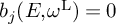 for
$ j=1, \ldots , n $
 .
Proof. The map we are looking for is given by:

Find opens that trivialise
$ L $
 over
$ \mathrm{X} $
 and use them with a Mayer-Vietoris argument to reduce to the untwisted case proved in [Reference Panin and Walter25, Theorem 8.2].
Definition 4.10. The classes
$ b_i^{L}(\mathcal {E}, \omega ^\mathrm{L}) $
 of the theorem above are the Borel classes associated to
$ (V, \omega ^\mathrm{L}) $
 with respect to the twisted Thom structure defined over
$ \mathbb E $
 . For
$ i>n $
 and
$ i<0 $
 set
$ b_i^{L}(\mathcal {E}, \omega ^\mathrm{L})=0 $
 and set
$ b_0^{L}(\mathcal {E}, \omega ^\mathrm{L})=1 $
 . We define the total twisted Borel class as:

Construction 4.11. Let
$ (E,\omega ^{L}) $
 be an
$ L $
 -twisted symplectic bundle of rank
$ 2r $
 : we now want to construct a twisted version of the quaternionic flag bundle. First consider:

Then over
$ \mathrm {HFlag}_X^{L}(1, r-1; E) $
 we have the tautological rank 2 twisted bundle
$ U_{1,1} $
 (the one classified by the identity map of
$ \mathrm {HGr}^{L}_X(2; E) $
 ). The bundle
$ U_{1,1} $
 is a sub-bundle of
$ \pi _1^*E $
 , therefore we can consider:

that is the tautological sub-bundle of rank
$ 2r-2 $
 over
$ \mathrm {HFlag}_X^{L}(1, r-1; E) $
 . Let us rename
$ U_{1,1}^{\perp } $
 as:

This gives us a decomposition:

where
$ \omega _{1,1}:=\left. { \pi _1^*\omega ^{L}}\right|_{U_{1,1}} $
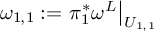 and
$ \omega _{W_1}:=\left. { \pi _1^*\omega ^{L}}\right|_{W_1} $
 .
Now we iterate; to ease the notation we will drop the upper and lower scripts from the twisted hyperbolic Grassmannians
$ \mathrm {HGr} $
 . Consider the natural map:

and denote by
$ U_{2,2} $
 the universal tautological rank 2 bundle over
$ \mathrm {HFlag}_X^L(1^2,r-2; E) $
 . This bundle is a natural sub-bundle of
$ p_2^*W_1 $
 and again, naming
$ W_2:=U_{2,2}^{\perp } $
 , we get:

where
$ \omega _{2, 2} $
 and
$ \omega _{W_2} $
 are the restrictions of
$ p_2^*\omega _{W_1} $
 to
$ U_{2,2} $
 and
$ W_2 $
 respectively. In particular, if
$ \pi _2: \mathrm {HFlag}_X^L(1^2,r-2; E)\rightarrow \mathrm{X} $
 is the map given by
$ \pi _1\circ p_2 $
 , we have the following decomposition:

Notice that on
$ \mathrm {HFlag}_X^L(1^2,r-2; E) $
 we have three tautological bundles, namely
$ U_{1,2}:=p_2^*U_{1,1} $
 ,
$ U_{2,2} $
 and
$ W_2 $
 .
Proceeding again in the same way, we can inductively construct:

together with a natural map:

Over
$ \mathrm {HFlag}_X^L(1^k,r-k; E) $
 we have the following (inductively defined) tautological bundles:


where
$ U_{k,k} $
 is the tautological rank 2 bundle of
$ \mathrm {HGr}(2; W_{k-1}) $
 . By construction, we have:

Definition 4.12. Let
$ (E, \omega ^\mathrm{L}) $
 be an
$ L $
 -twisted symplectic bundle of rank
$ 2r $
 , then we define the complete twisted quaternionic flag bundle as:

and we denote its tautological rank 2 bundles as
$ (\mathcal {U}_i, \omega _i^{L}):=(U_{1,r}, \omega _{i,r} )$
 for
$ i=1,\ldots , r $
 .
Let
$ q: \mathrm {HFlag}_{\mathrm{X}}^{L}(E,\omega ^{L}) \rightarrow \mathrm{X} $
 be the projection map, then by construction we have:

Definition 4.13. Let
$ (E, \omega ^\mathrm{L}) $
 be an
$ L $
 -twisted symplectic bundle of rank
$ 2r $
 and let
$ \mathrm {HFlag}_{\mathrm{X}}^{L}(E,\omega ^{L}) $
 be its associated complete flag variety. Given
$ \mathcal {U}_i $
 tautological rank 2 bundle over
$ \mathrm {HFlag}_{\mathrm{X}}^{L}(E,\omega ^{L}) $
 , we define the
$ i^{th} $
 twisted Borel root of
$ (E, \omega ^{L}) $
 to be:

Definition 4.14. Let
$ \mathrm{GL}_{2,\det }^{\times r} $
 be the following sub-group of
$ \mathrm{GL}_2^{\times r} $
 :

We have an inclusion
$ \mathrm{SL}_2^{\times r}\subseteq \mathrm{GL}_{2,\det }^{\times r} $
 fitting into the following exact sequence:

Remark 4.15. Let
$ {} {1.25}{\mathcal{D}}_r $
 be the universal bundle over
$ \mathcal {B}\mathrm{GL}_{2,\det }^{\times r} $
 . The quotient stack
$ \mathcal {B}\mathrm{GL}_{2,\det }^{\times r} $
 is the stack classifying
$ r $
 -tuples of rank 2 vector bundles
$ V_i $
 , over some scheme
$ \mathrm{X} $
 , together with isomorphisms
$ \rho _i: \det (V_i)\stackrel {\sim }{\rightarrow } L $
 for
$ L \in \mathrm {Pic}(\mathrm{X}) $
 . In other words, if
$ {} {1.25}{\mathcal{V}}:=( \left \{ V_i \right \} _i, L, \left \{ \rho _i \right \} _i ) $
 denotes a collection of such objects over
$ \mathrm{X} $
 , then there exists a classifying map
$ f_{{} {1.25}{\mathcal{V}}} $
 fitting in the following cartesian diagram:

The map:

induces a map:

Denote by
$ \mathcal {U}_{\mathcal {B}\mathbb G_m} $
 the universal bundle of
$ \mathcal {B}\mathbb G_m $
 . The universal bundle
$ {} {1.25}{\mathcal{D}}_r $
 is given by an
$ r $
 -tuple of rank 2 bundles
$ \mathcal {V}_i $
 , together with isomorphisms
$ \det (\mathcal {V}_i)\simeq \widetilde {\det }^*\mathcal {U}_{\mathcal {B}\mathbb G_m} $
 .
The inclusion
$ \mathrm{SL}_2^{\times r}\subseteq \mathrm{GL}_{2,\det }^{\times r} $
 gives rise to a natural map:

Let
$\mathcal {O}_{}(1)$
 be the tautological bundle of
$ B\mathbb G_m $
 ; with a little abuse of notation we will denote with
$ \mathcal {O}_{}(1) $
 also the pullback to
$ \mathrm{BGL}_{2,\det }^{\times r} $
 of the tautological bundle of
$ B\mathbb G_m $
 along the natural map
$ \mathrm{BGL}_{2,\det }^{\times r} \stackrel {}{\longrightarrow } B\mathbb G_m $
 . The pullback
$ \mathfrak i_0^*\mathcal {O}_{}(1) $
 is isomorphic to the determinant of the rank 2 tautological bundles of
$ \mathrm{BSL}_2^{\times r} $
 and therefore it gets trivialised. Let
$ \vartheta : \det (\mathfrak i_0^*\mathcal {O}_{}(1))\stackrel {\sim }{\rightarrow } \mathcal {O}_{\mathrm{BSL}_2^{\times r}} $
 be such trivialisation. For any
$ \mathrm{SL} $
 -oriented spectrum
$ \mathrm A $
 , via the (inverse of the) Thom isomorphism associated to
$ \vartheta $
 , we have an identification map:

Then the pullback
$ \mathfrak i_0^* $
 induces the two following maps:


Considering
$ \mathfrak i_0^* $
 and
$ \mathfrak i_1^* $
 together we get the map:

Proposition 4.16. Let
$ \mathrm A $
 be an
$ \mathrm{SL}_{\eta } $
 -oriented ring spectrum. Then the map (8):

is an isomorphism.
Proof. Recall that we have:

The bundle
$ \mathcal {O}_{}(1) $
 is the tautological bundle of
$ B\mathbb G_m $
 pulled back to
$ B \mathrm{GL}_{2,\det }^{\times r} $
 , and we have that
$ \mathrm{BSL}_2^{\times r}\simeq \mathcal {O}_{}(1)\setminus \left \{ 0 \right \} $
 . Then, we can identify
$ \mathrm{BSL}_2^{\times r} \longrightarrow \mathrm{BGL}_{2,\det }^{\times r} $
 with the natural map
$ \mathcal {O}_{}(1)\setminus \left \{ 0 \right \} \rightarrow \mathrm{BGL}_{2,\det }^{\times r} $
 given by the composition of the open immersion
$ j: \mathcal {O}_{}(1)\setminus \left \{ 0 \right \} \hookrightarrow \mathcal {O}_{}(1) $
 with the projection map from
$ \mathcal {O}_{}(1) $
 . From here, the same argument used to prove the first part of proposition 2.1 applies verbatim replacing
$ \mathrm{BSL}_n $
 with
$ \mathrm{BSL}_2^{\times r} $
 and
$ \mathrm{BGL}_n $
 with
$ \mathrm{BGL}_{2,\det }^{\times r} $
 , and we are done.
Theorem 4.17 (Twisted Symplectic Splitting Principle).
Let
$ \mathbb E $
 be an
$ \mathrm{SL}_{\eta } $
 -oriented ring spectrum with its canonical twisted Thom structure and let
$ \mathrm{X}\in \mathbf {Sm}_{/ {}{\mathrm{S}}} $
 be a smooth
$ \mathrm{S} $
 -scheme. Take
$ L\in \mathrm {Pic}(\mathrm{X}) $
 , let
$ (E,\omega ^\mathrm{L}) $
 be a twisted symplectic bundle and let
$ q:\mathrm {HFlag}^L_X(E,\omega ^\mathrm{L})\rightarrow \mathrm{X} $
 be the associated complete twisted quaternionic flag bundle. Then the map:

is injective. Moreover we have that:

with
$ (\mathcal {U}_i,\omega ^{L}_i) $
 the universal rank
$ 2 $
 bundles of
$ \mathrm {HFlag}_{\mathrm{X}}^{L}(E, \omega ^{L}) $
 .
Proof. The first claim is just an iterated application of the Twisted Projective Bundle Theorem 4.9. For the remaining claim, we already noticed that
$ q^*E \simeq \bigoplus _{i=1}^{r} \left ( \mathcal {U}_i, \omega ^{L}_i \right ) $
 . Now these
$ (\mathcal {U}_i, \omega ^{L}_i) $
 are twisted symplectic bundles of rank 2, but that means they are just rank 2 vector bundles together with isomorphisms
$ \omega ^{L}_i: \det \left (\mathcal {U}_i\right ) \stackrel {\sim }{\rightarrow } \left. {L}\right|_{\mathcal {U}_i} $
 . Therefore, we get a natural map:

classifying
$ ( \left \{ \mathcal {U}_i \right \} , L, \left \{ \omega _i \right \} ) $
 (cf. remark 4.15). The universal bundle
$ {} {1.25}{\mathcal{D}}_r $
 of
$ \mathcal {B}\mathrm{GL}_{2,\det }^{\times r} $
 is given by an
$ r $
 -tuple of rank
$ 2 $
 bundles
$ \mathcal {V}_i $
 , together with isomorphisms
$ \rho _i: \det (\mathcal {V}_i)\stackrel {\sim }{\rightarrow }\mathcal {O}_{}(1) $
 , where
$ \mathcal {O}_{}(1) $
 is the pullback of the tautological bundle over
$ \mathcal {B}\mathbb G_m $
 . We can regard the
$ \mathcal {V}_i $
 as twisted symplectic bundles, with twisted symplectic forms given by
$ \omega _{i,can}: \Lambda ^2 \mathcal {V}_i\simeq \det (\mathcal {V}_i) \stackrel {\rho _i}{\rightarrow } \mathcal {O}_{}(1) $
 . Then by construction of
$ p $
 , we get that:

If we prove the claim of our theorem for the bundle
$ \bigoplus (\mathcal {V}_i, \omega _{i,can}) $
 , then, via the pullback map
$ p^* $
 , we get the relation we want for
$ q^*(E,\omega ^{L}) $
 . This means that it is enough to prove the following:

By proposition 4.16, we have an injective map:

induced by
$ \mathfrak i_0: \mathcal {B}\mathrm{SL}_2^{\times r} \rightarrow \mathcal {B}\mathrm{GL}_{2,\det }^{\times r} $
 . For each
$ i $
 , the pullback
$ \mathfrak i_0^* \mathcal {V}_i $
 is isomorphic to the universal rank 2
$ \mathrm{SL} $
 -vector bundle
$ \mathcal {W}_i $
 of
$ \mathcal {B}\mathrm{SL}_2^{\times r} $
 . Recall that the map
$ \mathfrak i_1^* $
 was given by the pullback map
$ \mathfrak i_0^* $
 , together with the inverse of the Thom isomorphism associated to the determinant of the
$ \mathrm{SL} $
 -vector bundles
$ \mathfrak j^*\mathcal {V}_i $
 . By injectivity of (9), we can therefore reduce ourselves to prove:

with
$ \psi _{i,can} $
 the canonical symplectic form given by their
$ \mathrm{SL} $
 -structure. But this amounts to the usual Cartan Sum formula for (untwisted) symplectic bundles, and therefore we can conclude by [Reference Panin and Walter25, Theorem 10.5].
Corollary 4.18 (Twisted Cartan Sum Formula).
If we have
$ \left ( F, \psi ^{L} \right )\simeq \left ( E_1, \omega _1^{L} \right )\oplus (E_2,\omega _2^{L}) $
 a direct sum of
$ L $
 -twisted symplectic bundles, then:

Proof. Using the twisted symplectic splitting principle, we can just follow the same steps as in [Reference Panin and Walter25, Theorem 10.5].
Remember that the spectrum
$ \mathrm {BO}^{\bullet ,\bullet } $
 defined in [Reference Panin and Walter25] is
$ (8,4) $
 -periodic, with periodicity isomorphism:

with
$ \gamma \in \mathrm {BO}^{-8,-4}(pt) $
 the element corresponding to
$ \mathbb 1 \in \mathrm {BO}^{0,0}(pt) $
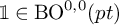 under the periodicity isomorphism:

and
$ \mathrm {GW}^{[n]}_{i} $
 are the higher Grothendieck-Witt groups of [Reference Schlichting27]. We will call
$ \gamma $
 the Bott element of Hermitian K-Theory. This element will induce the 4 periodicity on
$ \mathrm {KW} $
 once we invert the
$ \eta $
 -map.
Now to explicitly compute the Euler classes of
$ \widetilde {\mathcal {O}_{}^{\pm }}(m) $
 , we need a twisted version of [Reference Ananyevskiy4, Lemma 8.2]:
Lemma 4.19 (Ananyevskiy).
Let
$ E_1,E_2,E_3 $
 be rank 2 bundles over some scheme
$ \mathrm{X}\in \mathbf {Sm}_{/ {}{\mathrm{S}}} $
 , with the determinants
$ L_1,L_2,L_3 $
 respectively, together with their canonical twisted symplectic structures; let
$ E:=E_1\otimes E_2 \otimes E_3 $
 be the
$ L_1\otimes L_2\otimes L_3 $
 -twisted symplectic bundle of rank 8, with the induced twisted symplectic structure. Let
$ L:=L_1\otimes L_2\otimes L_3 $
 ,
$ \xi _i:=b^{L}_1(E_i) \in \mathrm {KW}^{4,2}(\mathrm{X}; L_i) $
 and denote by
$ \sigma (n_1,n_2,n_3) $
 the sum of all the monomials lying in the orbit of
$ \xi _1^{n_1}\xi _2^{n_2}\xi _3^{n_3} $
 under the action of
$ S_3 $
 . Then:

Remark 4.20. Notice that
$ (\mathrm{mod} \ 2) $
 , the sequences
$ (n_1,n_2,n_3) $
 (and their permutations) appearing in the formulas above for
$ b_i^{L}(E) $
 are the same. This means that the terms land in the same twists, under the canonical identifications:

for:

Proof of 4.19.
It is enough to prove the theorem for
$ \mathrm{X}=\mathcal {B}\mathrm{GL}_2^{\times 3} $
 , but again by the Künneth formula 3.5 and proposition 2.1 we can reduce to the
$ \mathcal {B}\mathrm{SL}_2^{\times 3} $
 case. Taking the finite level approximation
$ \mathcal {B}_m\mathrm{SL}_2 $
 we can use Ananyevskiy’s result [Reference Ananyevskiy4, Lemma 8.2] and since Witt theory for
$ \mathcal {B}\mathrm{SL}_2 $
 satisfies the Mittag-Leffler condition by [Reference Ananyevskiy1, Theorem 9] (or by proposition 3.1), taking the limit of the theories on the finite level approximation we get the desired result for
$ {B}\mathrm{SL}_2 $
 .
Remark 4.21. Let us remark that a broad generalisation of [Reference Ananyevskiy4, Lemma 8.2] was recently carried out in [Reference Fasel and Haution16, Thm 6.6, Rmk 6.7]. It is plausible that twisted symplectic bundles might help extend the formulas of Fasel–Haution as well, but this goes far beyond the current scope of this paper.
5
$\mathrm {KW}$
-Euler classes for
$ \widetilde {\mathcal {O}_{}}^{\pm }(m) $


Before actually computing the Euler classes we are interested in, let us recall some facts about the rank 2 vector bundles on
${B}\mathrm{N}$
 . Let us identify:

where
$ T_{\mathrm{SL}_2} $
 is the torus in
$ \mathrm{SL}_2 $
 . We will denote as done before:

Definition 5.1. For an integer
$ m\geq 1 $
 , let
$ F^{\pm }(m):=\mathbb {k}^2 $
 , then we define representations
$ (F^{\pm }(m), \rho ^{\pm }_{m}) $
 by:


We call
$ (F_0, \rho _0) $
 the trivial one-dimensional representation, and
$ (F_0, \rho _0^{-}) $
 the one defined by
$ \rho _0^{-}(t)=1 $
 and
$ \rho _0^{-}(\sigma )=-1 $
 .
We denote by
$ p^{(\pm m)}: \widetilde {\mathcal {O}_{}}^{\pm }(m) \longrightarrow {B}\mathrm{N} $
 the rank 2 vector bundle:

corresponding to
$ \rho ^{\pm }_m $
 , with zero section
$ s^{(\pm m)}_0: {B}\mathrm{N} \longrightarrow \widetilde {\mathcal {O}_{}}^{\pm }(m) $
 and
$ \mathrm {th}^{(\pm m)} \in \mathrm {KW}\left ( \widetilde {\mathcal {O}_{}}^{\pm }(m), \det (\widetilde {\mathcal {O}_{}}^{\pm }(m)) \right ) $
 the Thom class defined as
$ (s^{(\pm m)}_0){}_*(\mathbb 1) $
 .
Remark 5.2. We recall that
$ \mathrm {Pic}\left ( {B}\mathrm{N} \right )\simeq / {\mathbb {Z}}{2\mathbb {Z}} $
 can be generated by
$ \gamma := \widetilde {\mathcal {O}_{}}^{-}(0) $
 . For the one-dimensional representation
$ \det (\rho _m^{\pm }) $
 we choose the generator given by
$ e_1\wedge e_2 $
 , with
$ e_1=(1,0) $
 and
$ e_2=(0,1) $
 the standard basis of
$ \mathbb {k}^2 $
 . Then we have canonical isomorphisms
$ \det \left ( \widetilde {\mathcal {O}_{}}^{\pm }(m) \right )\simeq \mathcal {O}_{{B}\mathrm{N}} $
 for
$ m $
 odd and
$ \det \left ( \widetilde {\mathcal {O}_{}}^{\pm }(m) \right )\simeq \gamma $
 for
$ m>0 $
 even.
Given a triple tensor product of rank 2 bundles
$ U_1 \otimes U_2 \otimes U_3 $
 , we denote their bases as
$ \left \{ e_1,e_2 \right \} , \left \{ f_1,f_2 \right \} , \left \{ g_1,g_2 \right \} $
 . We have the isomorphism:

where the base chosen for this identification is given by dual pairs
$ \left \{ v_i,w_i \right \} $
 that are perpendicular to all other vectors:

In a similar way, for any
$ m>1 $
 we have:

where the base is given by:

We also have:

with bases:

Proposition 5.3. In
$\mathrm {KW}\left ( BN, \det (\widetilde {\mathcal {O}_{}}^{\pm }(m)) \right ) $
 , we have the following:
-
1. For any $ m $
: $$\begin{align*}e(\widetilde{\mathcal{O}_{}}^{-}(m))=-e(\widetilde{\mathcal{O}_{}}^{+}(m)) \end{align*}$$
-
2. For $ m>1 $
the recurrence relation: $$\begin{align*}b_1(\widetilde{\mathcal{O}_{}}^{+}(m+2))=(\gamma e^2-2)b_1(\widetilde{\mathcal{O}_{}}^{+}(m))-b_1(\widetilde{\mathcal{O}_{}}^{+}(m-2)) \end{align*}$$
In particular $ b_1(\widetilde {\mathcal {O}_{}}^{+}(m)) $
is always a multiple of
$ e:=e(\widetilde {\mathcal {O}_{}}^{+}(1) ) $
for
$ m $
odd and
$ \tilde {e}:=e(\widetilde {\mathcal {O}_{}}^{+}(2)) $
for
$ m $
even respectively. -
3. For $ m=2n+1 $
: (12) $$ \begin{align} b_1\left(\widetilde{\mathcal{O}_{}}^{+}(m)\right)=\sum_{k=0}^{n} (-1)^{n-k}\alpha_{k,n}\gamma^{k}e^{2k+1} \end{align} $$with $ e=e(\widetilde {\mathcal {O}_{}}^{+}(1) ) $
and
$ \alpha _{k,n} $
defined by the recurrence relation: $$\begin{align*}\begin{cases} \alpha_{0,n}=2n+1 & \forall \ n\geq 0 \\ \alpha_{k,n}=\sum_{j=1}^{n} j \cdot \alpha_{k-1, n-j} & \forall \ n \geq k>0 \\ \alpha_{k,n}=0 & else \end{cases} \end{align*}$$
-
4. For $ m=2n $
: (13) $$ \begin{align} b_1\left(\widetilde{\mathcal{O}_{}}^{+}(m)\right)=\tilde{e}\left(\sum_{k=0}^{n-1} (-1)^{n-k+1}\beta_{k,n}\gamma^{k}e^{2k}\right) \end{align} $$with $ e=e(\widetilde {\mathcal {O}_{}}^{+}(1) ) $
,
$\tilde e=e(\widetilde {\mathcal {O}_{}}^{+}(2) )$
and
$ \beta _{k,n} $
defined by the recurrence relation: $$\begin{align*}\begin{cases} \beta_{0,n}=n & \forall \ n\geq 0 \\ \beta_{k,n}=\sum_{j=1}^{n} j \cdot \beta_{k-1, n-j} & \forall \ n \geq k>0 \\ \beta_{k,n}=0 & else \end{cases} \end{align*}$$
-
5. We also have:
(14) $$ \begin{align} \tilde{e}^2=-4e+\gamma e^4 \end{align} $$


Proof. Recall that we can compute the Witt theory of
$ {B}\mathrm{N} $
 by its finite level approximations
$ {B}_mN $
 . In particular, we get that the Cartan Sum Formula and Ananyevskiy’s Lemma hold true for
$ {B}\mathrm{N} $
 too.
The first assertion of the proposition follows from the fact that
$ \rho ^+_m $
 and
$ \rho _m^{-} $
 are isomorphic as representations through
$ (x,y)\mapsto (-x,y) $
 , but this map induces a
$ (-1) $
 on the determinant, so we get
$ e(\widetilde {\mathcal {O}_{}}^{-}(m))=-e(\widetilde {\mathcal {O}_{}}^{+}(m)) $
 as an easy consequence of [Reference Ananyevskiy5, Lemma 7.3].
The decomposition (10) and the Cartan Sum Formula 4.18, for
$ m>1 $
 , gives us:

while for
$ m=1 $
 we have:

At the same time, using Ananyevskiy’s lemma 4.19 we have:

Putting this all together we get:

and for
$ m>1 $
 :

From this, by induction, it is not difficult to see that
$ e $
 and
$ \tilde e $
 divide
$ b_1(\widetilde {\mathcal {O}_{}}^{+}(m+2)) $
 for odd or even
$ m>1 $
 respectively, but it will be even more clear from the recursive formulas we are going to show. Now let us consider
$ m=2n+1 $
 . We want to prove the recursive formula (12). We just saw the formula for
$ m=3 $
 . Now we proceed by induction on
$ n $
 , let us suppose we know the formula for
$ m=2n+1 $
 and we want to prove it for
$ m+2=2(n+1)+1=2n+3 $
 . Using the induction hypothesis on (15), we have:

where in the third line we used again the induction hypothesis to get
$\alpha _{n,n-1}=0$
 . It is easy to see that the coefficients
$ \alpha _{0,n+1} $
 and
$ \alpha _{n+1,n+1} $
 are already of the desired form. The only thing left to check is that:

is actually:

for
$ k=1,\ldots , n $
 . Using the induction hypothesis:

And this completes the proof of the claim for the odd case
$ m=2n+3 $
 .
For the even case
$ m=2n $
 the proof is basically the same and we will leave it as an exercise.
Lastly, again using Ananyevskiy’s lemma 4.19 and the Cartan sum formula on the decomposition from (11), we have:

And from what we proved before, this means:

but since
$ \gamma $
 is an isomorphism, multiplication by
$ \gamma e $
 is injective on the first summand of
$ \mathrm {KW}^{\bullet }(BN)\simeq \mathrm {KW}^{\bullet }(\mathrm{S}){[\![} e {]\!]} \oplus q_0 \cdot \mathrm {KW}^{\bullet }(\mathrm{S}) $
 and hence:

Remark 5.4. Here is a table of easy examples of coefficients
$ \alpha _{k,n} $
 of the odd Euler classes:

It is not hard to show that
$ \alpha _{1,n}=\sum _{j=1}^{n} j^2=\frac {n(n+1)(2n+1)}{6}, \alpha _{n-2,n}=n+1(2n+1), \alpha _{n-1,n}=2n+1, \alpha _{n,n}=1 $
 . Recall that the coefficient of the lowest degree term in the recursive formula will be
$ (-1)^{n}(2n+1)=(-1)^n\cdot m $
 for
$ m=2n+1 $
 , so the lowest degree term of
$ e^{\mathrm {KW}}\left ( \widetilde {\mathcal {O}_{}}^{+}(m) \right ) $
 will have the same form as the Witt cohomology Euler class computed in [Reference Levine20, Theorem 7.1].
For even Euler classes, the table of the first coefficients looks like:

Again the coefficient of the lowest degree term in the recursive formula will be
$ (-1)^{n-1}n=(-1)^{n-1}\frac {m}{2} $
 for
$ m=2n $
 , so the lowest degree term of
$ e^{\mathrm {KW}}\left ( \widetilde {\mathcal {O}_{}}^{+}(m) \right ) $
 will have the same form as the formula obtained for the Witt cohomology Euler class in [Reference Levine20, Theorem 7.1]. But this is not just a coincidence:
Corollary 5.5 [Reference Levine20, Theorem 7.1].
Let
$ H\mathcal {W} $
 be the spectrum representing Witt-sheaf cohomology. Denote by
$ e^{H\mathcal {W}}:=e^{H\mathcal {W}}\left (\widetilde {\mathcal {O}_{}}^{+}(1)\right ) $
 and
$ \tilde {e}^{H\mathcal {W}}:=e^{H\mathcal {W}}\left ( \widetilde {\mathcal {O}_{}}^{+}(2) \right ) $
 . Then:

Proof. By [Reference Fasel and Haution16, Remark 6.7], we know that the formal ternary law of Hermitian K-theory recovers the computations of [Reference Ananyevskiy4, Lemma 8.2]. Setting
$ \gamma =0 $
 , we recover the formal ternary law for Witt sheaf cohomology by [Reference Déglise and Fasel14, Theorem 3.3.2]. Using the formulas for Witt sheaf cohomology obtained from lemma 4.19 for
$ \gamma =0 $
 , we can proceed by induction as we did for
$ \mathrm {KW} $
 in proposition 5.3. In this way we recover the (closed form) formulas of [Reference Levine20, Theorem 7.1] as claimed.
Remark 5.6. Clearly
$ \widetilde {\mathcal {O}_{}}^+(1)\simeq p^*E_2 $
 where
$ p: {B}\mathrm{N} \rightarrow {B}\mathrm{SL}_2 $
 and
$ E_2 $
 is the bundle arising from the universal bundle of
$ \mathcal {B}\mathrm{SL}_2 $
 , so the class
$ e:=e\left ( \widetilde {\mathcal {O}_{}}^+(1) \right ) $
 is the free generator of
$ \mathrm {KW}^{\bullet }\left ( {B}\mathrm{N} \right ) $
 by [Reference D’Angelo13, Corollary 3.26]. Similarly the class
$ \tilde e:=e\left ( \widetilde {\mathcal {O}_{}}^+(2) \right ) $
 is the free generator of
$ \mathrm {KW}^{\bullet }\left ( {B}\mathrm{N}; \gamma _N \right ) $
 again by [Reference D’Angelo13, Corollary 3.26] and [Reference Levine20, Lemma 6.1].
The reason we are so interested in these rank 2 vector bundles
$ \widetilde {\mathcal {O}_{}}^{\pm }(m) $
 is that the
$ \rho _m^{\pm } $
 ’s classify irreducible representations of
$ BN $
 with a choice of the determinant. This together with [Reference Ananyevskiy1, Splitting Principle, §9], proposition 2.1, and the structure theorem [Reference D’Angelo13, Corollary 3.26] tells us that the characteristic classes of these bundles, and their symmetric powers, will recover all the characteristic classes of any vector bundle on
$ BN $
 .
Remark 5.7. Let us notice that given any rank two vector bundle
$ E\rightarrow \mathrm{X} $
 over some
$ \mathrm{X} $
 , we have
$ e(\operatorname {\mathrm {Sym}}^{k}E)=0 \in \mathrm {KW}^{k+1}(\mathrm{X}; \det ^{-1}\operatorname {\mathrm {Sym}}^kE) $
 for
$ k $
 even since
$ \operatorname {\mathrm {Sym}}^kE $
 will have rank
$ k+1 $
 and thus we can apply [Reference Levine20, Lemma 4.3]. For
$ k=2r+1 $
 odd,
$ e(\operatorname {\mathrm {Sym}}^kE) $
 , seen as a polynomial in
$ e:=e(\widetilde {\mathcal {O}_{}}^{+}(1)) $
 , will have as lowest degree term
$ k!! \cdot e^{r+1} $
 , where
$ k!!:=k\cdot (k-2)\cdot \ldots \cdot 3 \cdot 1 $
 . The proof of this fact is basically the same proof used in [Reference Levine20, Theorem 8.1] using the concrete description we have for the lowest degree term of
$ e(\widetilde {\mathcal {O}_{}}^{+}(m)) $
 given by proposition 5.3 and the fact we remarked above that they recover the same computations done in [Reference Levine20, Theorem 7.1]).
Acknowledgements.
This paper was part of the author’s PhD thesis and he would like to thank his supervisor M. Levine for the countless discussions and insights he patiently shared with him: this work could not have been accomplished without his encouragement and inspiration. The author would also like to thank C. Chowdhury for many helpful discussions and the whole ESAGA group at the University of Essen for providing a stimulating working environment.
The author was supported by the ERC through the project QUADAG. This work is part of a project that has received funding from the European Research Council (ERC) under the European Union’s Horizon 2020 research and innovation programme (grant agreement No. 832833).

Competing interests
The authors have no competing interests to declare.
Data Availability
None.


 Open access

