Post-operative nausea and vomiting occurs frequently in the paediatric population but has seldom been studied in the context of congenital cardiac surgery. Reference Höhne1,Reference Gan, Belani and Bergese2 Vomiting causes patient discomfort and distress after surgery and can delay the ability to resume enteral intake, oral medications, and the discontinuation of intravenous fluids when it occurs repeatedly. Reference Lee, Faraoni and Lee3
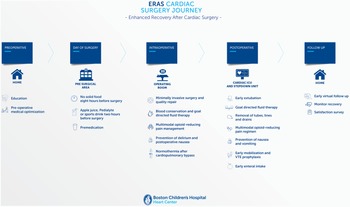
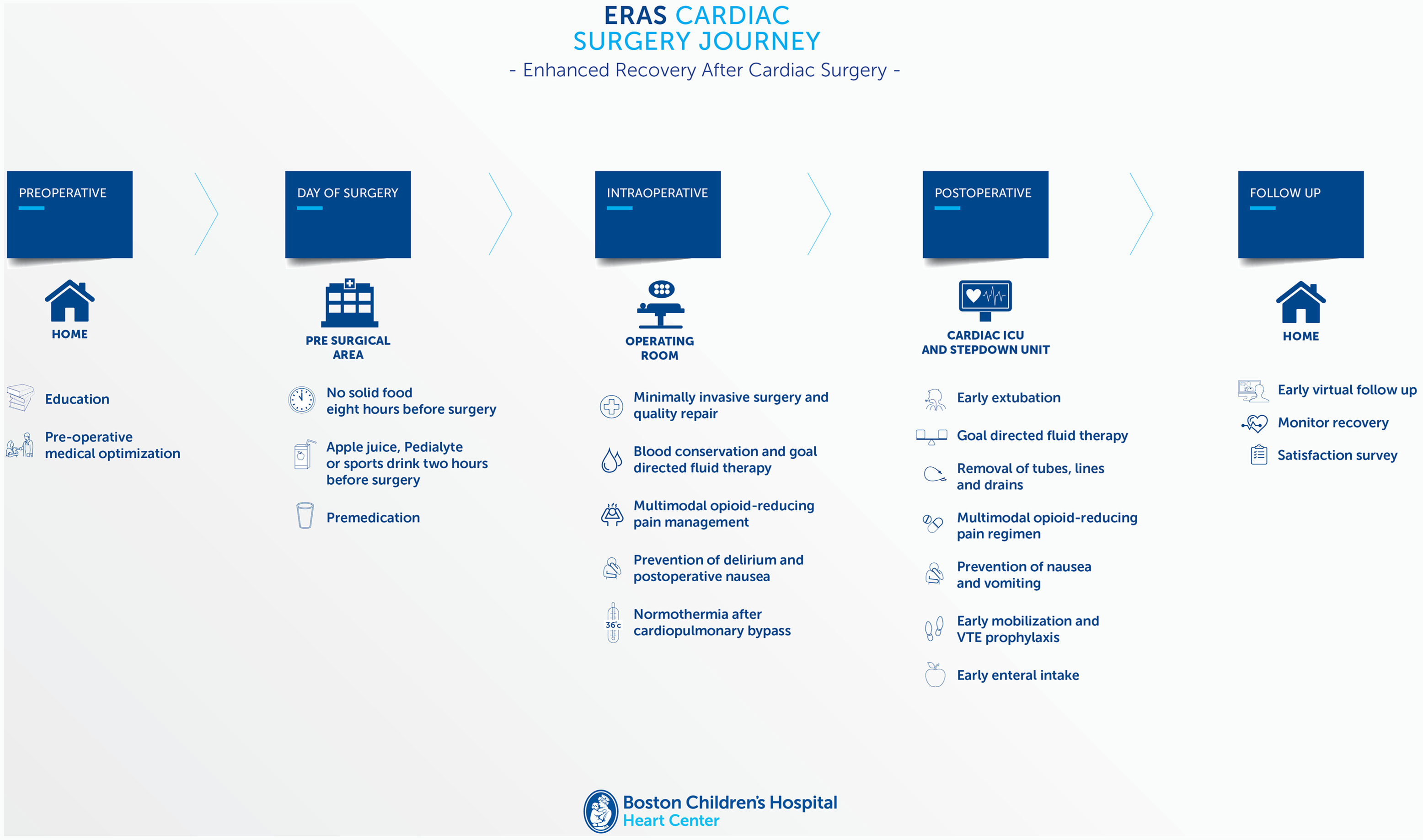
In 2018, we implemented an enhanced recovery after surgery programme in congenital cardiac surgery with the goal to ameliorate surgical outcomes, reduce duration of hospitalisation, and improve patient and family satisfaction. The programme consists of multiple steps or programme components, targeting the reduction of perioperative stress and/or associated with improved outcomes in congenital cardiac surgery (Fig 1). This value-based programme spans the entire surgical period. Reference Roy, Parra and Brown4 Recently, this approach has been gaining broad interest in congenital cardiac surgery, and the evidence behind the approach and its major components were reviewed in an expert consensus document spearheaded by the American Association for Thoracic Surgery Congenital Cardiac Surgery Working Group. Reference Fuller, Kumar and Roy5
Enhanced recovery after cardiac surgery program at Boston Children’s Hospital. Note: All rights reserved, Roy et al. Journal of Thoracic and Cardiovascular Surgery Reference Roy, Parra and Brown4 .
In an early review of programme outcomes at our institution, we found an incidence of post-operative vomiting of 50%, despite high adherence to a nausea and vomiting prophylaxis protocol (66% adherence), Reference Roy, Parra and Brown4 and it became an area of focus for quality improvement. In children undergoing atrial septal defect closure, a previous study found that age and bypass duration were found to be associated with post-operative vomiting, Reference Gan, Belani and Bergese2 but the scope of the enhanced recovery programme includes a wider variety of procedures. Reference Roy, Parra and Brown4 Therefore, with this analysis, we sought to determine factors associated with severe post-operative vomiting after elective congenital cardiac surgery and the impact on post-operative outcomes in an enhanced recovery programme. We hypothesised that severe post-operative vomiting would be associated with a delay in patient recovery and thus, a longer duration of hospitalisation.
Materials and methods
Enhanced recovery programme patient selection and data collection
Patients >30 days of age with few comorbidities undergoing elective, low-to-moderate complexity cardiac repairs are eligible for the enhanced recovery after cardiac surgery programme, a quality improvement perioperative initiative at Boston Children’s Hospital. This programme consists of a goal-directed evidence-based programme with protocols including early extubation, opioid-sparing multimodal pain regimen, and prophylaxis against post-operative nausea and vomiting. Reference Roy, Parra and Brown4
We retrospectively reviewed data from all patients who underwent elective cardiac surgical repair as part of the cardiac-enhanced recovery programme for the first year of the programme from October, 2018 to September, 2019. The study was approved by the institutional review board (IRB-P00034189). Patient baseline characteristics and intraoperative and perioperative variables were retrieved from the electronic medical record. Opioids were converted into oral morphine equivalents per kilogram using standard conversion factors and reported intraoperatively, and at 24 and 48 hours after surgery. 6 Since young children are often not able to describe nausea, severe post-operative vomiting, defined as three or more episodes of post-operative vomiting, was used as the primary end point. Reference Rose and Watcha7,Reference Woodward, Sherry and Harrison8 Adherence to the enhanced recovery programme components, such as the use of antiemetics prior to extubation, were monitored and obtained from a quality improvement database. Major post-operative outcomes including complications, as defined by the Society for Thoracic Surgery (STS), cardiac reinterventions at 30 days, readmissions at 30-day post-discharge, and length of stay were obtained from the Society for Thoracic Surgery congenital database.
Statistical analysis
Data were presented as frequency (%) for categorical variables and median (interquartile range) for continuous non-normally distributed variables. Patient characteristics and perioperative variables potentially influencing severe post-operative vomiting were evaluated by univariate analysis using Fisher’s exact test, the Chi-squared test, or the Wilcoxon rank-sum test for categorical and continuous data, as appropriate. All variables with p < 0.1 upon univariate analysis were included in the multivariable analysis, and a multivariable backward elimination model building was implemented with p-removal > 0.2. Logistic regression modelling was used to obtain odds ratios and 95% confidence intervals for severe post-operative vomitting. Receiver operating characteristic curve analysis was implemented to dichotomise intraoperative opioid equivalents, with Youden’s J index used to determine the optimal cut-off values by maximising sensitivity and specificity. Results from the receiver operating characteristic analyses were summarised with the area under the curve and corresponding 95% confidence interval. Pearson’s correlation was used to analyse the relationship between predictors of severe post-operative vomiting. Multivariable median regression was used to evaluate the association between severe post-operative vomiting and non-normally distributed continuous post-operative outcomes, with results expressed as the adjusted coefficient with 95% confidence intervals. Multivariable logistic regression was used to analyse post-operative complications. Logistic regression results are presented as adjusted odds ratios with 95% confidence intervals. A two-tailed alpha level of 0.05 was used to determine statistical significance. Stata (version 15.0, StataCorp LLC., College Station, Texas) was used to perform all statistical analyses.
Results
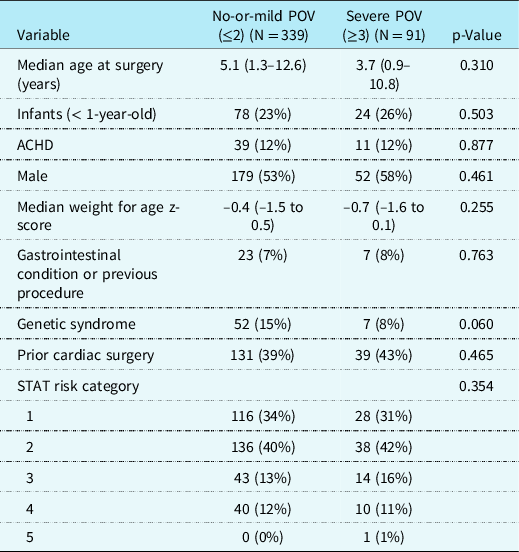
A total of 430 patients were enrolled in the enhanced recovery after cardiac surgery programme from 1 October, 2018 to 30 September, 2019. The median age was 4.8 years (interquartile range 1.2–12.6) and 54% (231/430) were male. Demographics and patient characteristics are presented in Table 1. All patients received an inhalational-based anesthetic for maintenance, including during cardiopulmonary bypass. No patients received a total intravenous anesthetic approach. Post-operative vomiting within 24 hours of surgery was observed in 19% (80/430) of patients at a median of 12 hour (interquartile range 7–15) from admission to the ICU. Fifty per cent (211/430) of patients experienced post-operative vomiting, and 21% (91/430) had severe post-operative vomiting (≥ 3 vomiting episodes) at a median of 22 hours (interquartile range 10–56) after admission to the ICU. There were no significant differences in patient characteristics between groups, except for a history of post-operative nausea and vomiting with anesthesia documented at the pre-operative visit: 11/49 (22%) for severe post-operative vomitting versus 21/211 (10%) for no-or-mild vomiting; p = 0.016.
Pre-operative demographics and patient characteristics
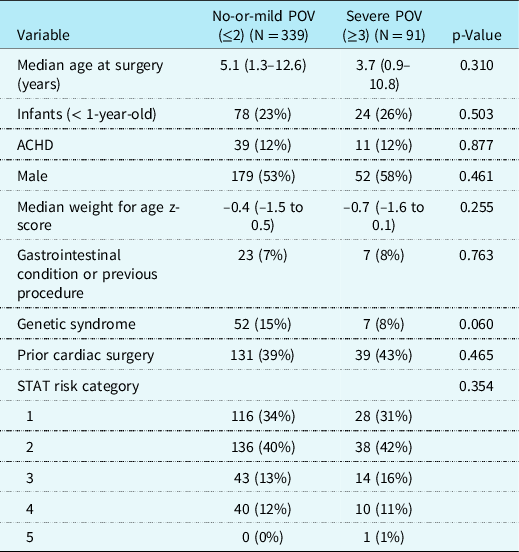
POV = post-operative vomiting, N = number, ACHD = adults with congenital heart disease, STAT = Society of Thoracic Surgeons-European Association for Cardio-Thoracic Surgery.
Data are presented as frequency (%) for categorical variables and median (interquartile range: IQR) for continuous non-normally distributed variables.
Fisher’s exact test, the Chi-squared test or the Wilcoxon rank-sum test were applied for categorical and continuous data, as appropriate.
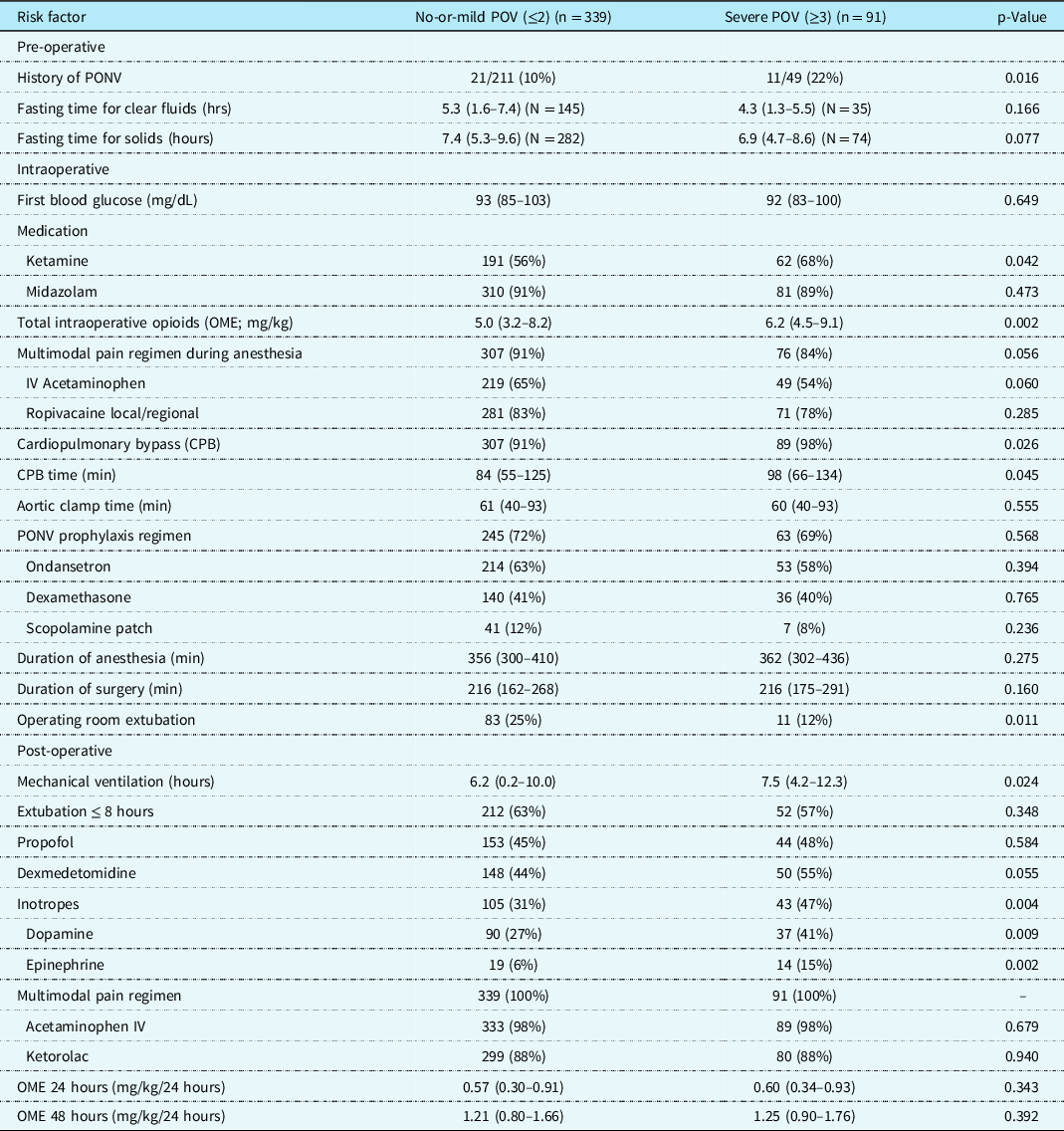
Perioperative variables are presented in Table 2. Twenty-two per cent of the total patient population (94/430) were extubated in the operating room and 72% (308/430) received prophylaxis against nausea and vomiting prior to extubation (either in the operating room and/or in the ICU). There was no difference between patients who experienced severe post-operative vomiting, and no-or-mild vomiting in receiving prophylaxis, or the type of medication(s) used. By univariate analysis, use of ketamine as premedication or during surgery, surgery on cardiopulmonary bypass, cardiopulmonary bypass duration, total intraoperative opioids reported as oral morphine equivalents, longer mechanical ventilation after surgery, and the need for post-operative inotrope infusion(s) were significantly associated with severe post-operative vomiting. There was no significant difference in post-operative opioid utilisation at 24 and 48 hours after surgery between groups. Extubation in the operating room was inversely associated with severe post-operative vomiting, and the patients extubated in the operating room received significantly less intraoperative opioids (median = 2.6 mg/kg of oral morphine equivalents, interquartile range 2.3–3.4) compared to those who were extubated in the ICU (median = 7 mg/kg of oral morphine equivlents, interquartile range 5.2–9.4) (p < 0.001).
Factors associated with severe post-operative vomiting
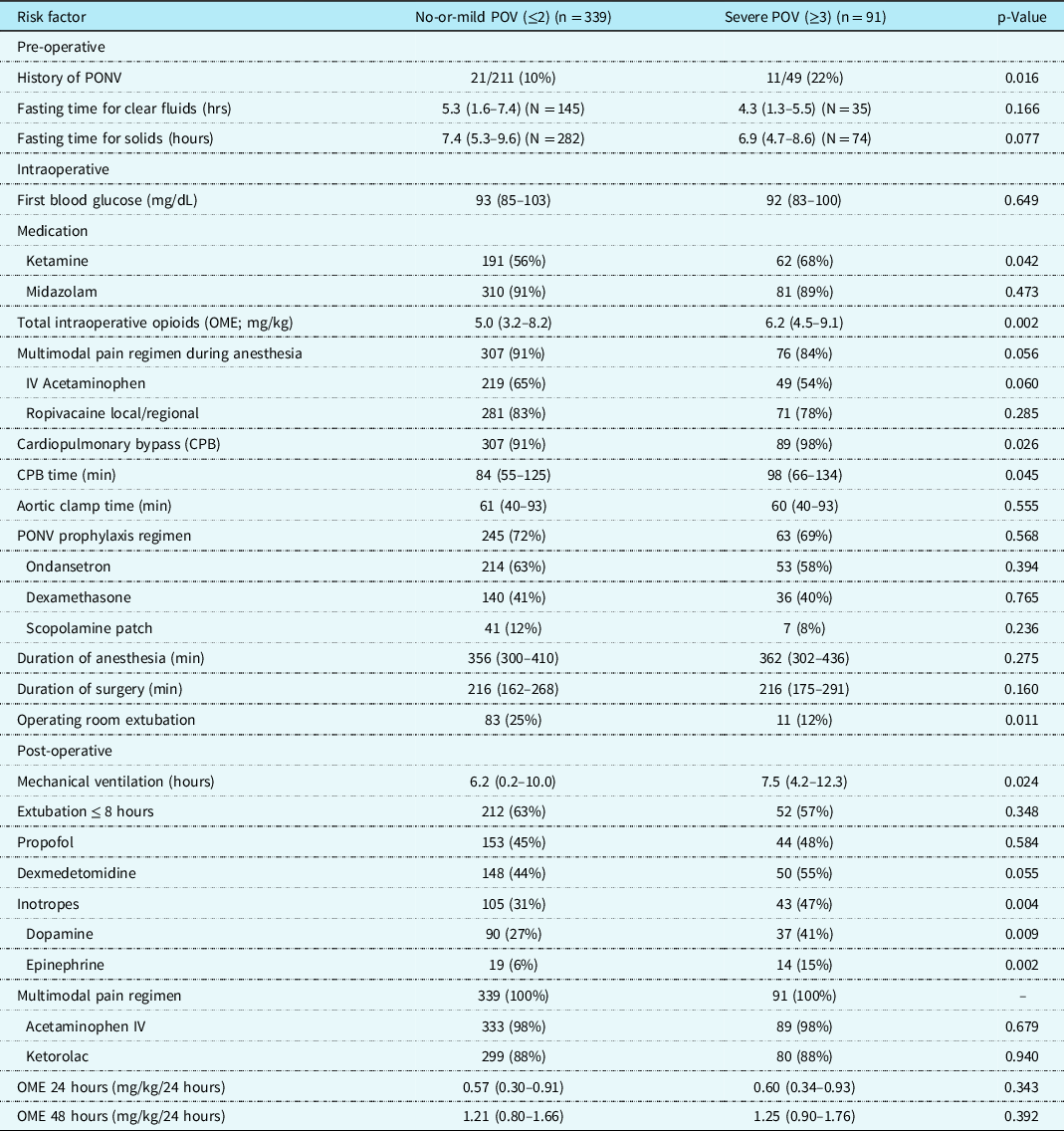
POV = post-operative vomiting, PONV = post-operative nausea and vomiting, OME = oral morphine equivalent, IV = intravenous, CPB = cardiopulmonary bypass.
Data are presented as frequency (%) for categorical variables and median (interquartile range) for continuous non-normally distributed variables.
Fisher’s exact test, the Chi-squared test or the Wilcoxon rank-sum test were applied for categorical and continuous data as appropriate.
Total dose of intraoperative opioids was dichotomised using a receiver operating characteristic curve analysis. A cut-off of > 5.0 oral morphine equivalents in mg/kg was determined based on Youden’s J index in receiver operating characteristic analysis, with an area under the curve equal to 0.608 (95% CI: 0.546, 0.670) in predicting severe post-operative vomiting.
By multivariable logistic regression analysis, total intraoperative opioids reported as oral morphine equivalents (adjusted OR 1.72; 95% CI: 1.01, 2.92) and the use of post-operative inotrope infusion(s) (adjusted OR 1.64; 95% CI: 1.01, 2.67) were identified as independent predictors for severe post-operative vomiting (Table 3).
Multivariable logistic regression analysis for factors associated with severe post-operative vomiting

OR = odds ratio, CI = confidence interval, OME = oral morphine equivalent, mg = milligram, kg = kilogram.
Odds ratios for severe emesis with 95% confidence intervals, and p-values were obtained using multivariable logistic regression modelling with backwards elimination model.
When comparing post-operative outcomes after adjusting for inotrope infusion (Table 4), hospital length of stay was significantly longer in patients who had severe post-operative vomiting (median 5.8 days, interquartile range 4.1–8.0) compared to patients with no-or-mild vomiting (median 5.0 days, interquartile range 4.0–6.1) (adjusted coefficient, 0.89; 95% CI: 0.36, 1.42). In addition, patients with severe post-operative vomiting had significantly more pulmonary complications post-operatively (7%, 6/91) compared to patients with no-or-mild vomiting (1%, 4/339), (adjusted OR, 5.18; 95% CI: 1.40, 19.1).
Association between severe post-operative vomiting and major post-operative outcomes

POV = post-operative vomiting; n = number; OR = odds ratio; CI = confidence interval; LOS = length of stay.
* Pulmonary complications are defined by STS: infection, effusion requiring drainage, and pneumothorax.
Data are presented as frequency (%) for categorical variables and median (interquartile range) for continuous non-normally distributed variables.
All models are adjusted for use of inotropes post-operatively.
Discussion
Post-operative nausea and vomiting are common in children after surgery, Reference Höhne1,Reference Gan, Belani and Bergese2,Reference Eberhart, Geldner and Kranke9,Reference Bourdaud, Devys and Bientz10 and despite adherence to medical prophylaxis, 50% of patients in our enhanced recovery after cardiac surgery experienced post-operative vomiting. This study found that total intraoperative opioids and the need for post-operative inotrope infusion(s) were independently associated with an increased risk of severe post-operative vomitting. Dopamine was the most frequently used inotrope and was infused post-operatively in 41% of the patients with severe post-operative vomiting. Dopamine receptors may have a role in post-operative nausea and vomitting centrally, Reference Nakagawa, Kuri and Kambara11 but additionally inotropes in the post-operative period may be a marker of reduced cardiac output, hypotension, and higher complexity, and this may impact overall outcomes. Reference Roeleveld and de Klerk12 After adjusting for inotrope infusion, this study identified that patients experiencing severe post-operative vomiting had longer hospitalisation.
In the enhanced recovery programme, patients who were extubated in the operating room received less intraoperative opioids than those extubated in the ICU and intraoperative extubation was inversely correlated with post-operative vomiting. Historically, the management of pain during cardiac surgery has been principally controlled by high narcotic doses due to its analgesic and anesthetic effects, as opioids have been demonstrated to reduce the stress response to surgery. Reference Kern and Hickey13,Reference Gruber, Laussen and Casta14 However, in enhanced recovery programmes, application of protocol-based multimodal anesthesia with limited intraoperative use of respiratory depressant is recommended to enable early, sustained extubation. Reference Fuller, Kumar and Roy5 Multimodal pain regimens including non-opioid medications are effective strategies and decrease opioid use in the post-operative period. Reference Fuller, Kumar and Roy5,Reference Frankel, Maul and Chrysostomou15 Furthermore, regional anesthesia techniques have shown their efficacy in children undergoing cardiac surgery and reduce the need for opioids in the perioperative period. Reference Fuller, Kumar and Roy5,Reference Monahan, Guay, Hajduk and Suresh16–Reference Caruso, Lin and O’Connell19 Emerging studies using superficial blocks, such as bilateral erector spinae, show promise and low risk for complications. Reference Roy, Brown and Parra18–Reference Macaire, Ho and Nguyen20
In children aged >3 years undergoing non-cardiac surgery, increased duration of anesthesia, type of surgery (strabismus), opioid doses, and a previous anesthetic history of post-operative nausea and vomiting have been reported as risk factors for post-operative nausea and vomiting, and these factors have been incorporated in scoring systems. Reference Eberhart, Geldner and Kranke9,Reference Bourdaud, Devys and Bientz10 Studies in adult patients undergoing cardiac surgery identified female gender, and a previous anesthetic history of post-operative nausea and vomiting as risk factors. Reference Kogan, Eidelman, Raanani, Orlov, Shenkin and Vidne21–Reference Grebenik and Allman23 Regarding medication prophylaxis, randomised trials demonstrated the effect of intravenous ondansetron or ramosetron in decreasing post-operative nausea and vomiting. Reference Choi, Chin and Lee24 Droperidol has also been shown to ameliorate post-operative nausea and vomiting in patients who underwent cardiac surgery, Reference Grebenik and Allman23 and metoclopramide was found to be more efficacious than ondansetron in a comparative study (24.8% versus 42.6%). Reference Woodward, Sherry and Harrison8 Perioperative prophylaxis against nausea and vomiting is a well-adhered protocol and an important step of the enhanced recovery after cardiac surgery at our institution. Reference Roy, Parra and Brown4 At 1 year, 72% of patients in the enhanced recovery programme received prophylactic medication against nausea and vomiting prior to extubation, including 42% (180/430) intraoperatively. Metoclopramide use in our institution is low and was only used in 2% (10/430) of the patients, in favour for ondansetron 62% (267/430) and dexamethasone 41% (176/430). Older teenagers and adults may receive a scopolamine patch intraoperatively. Reference Roy, Parra and Brown4 As a result of the high level of adherence to the programme protocol, prophylaxis or the choice of medication was not found to be statistically different in preventing post-operative vomiting.
Important limitations include the retrospective nature of this single-centre study and the biases inherent to this type of analysis, which limit generalisability. Furthermore, important factors such as a previous anesthetic history for post-operative nausea and vomiting could not be evaluated in the multivariate model due to the absence of documentation in the medical record from a large number of patients. An additional limitation is that the presence of nausea was not considered in this study, since young children have difficulty reporting it.
In summary, this study demonstrated that severe post-operative vomiting is associated with a longer hospitalisation, and that total dose of intraoperative opioids is independently associated with severe post-operative vomiting after elective congenital cardiac surgery. This study highlights that opioid-sparing strategies in the operating room including adjunct medication and regional techniques, and early extubation are essential components of an enhanced recovery programme. A better understanding of these relationships is also important to improve patient comfort and family satisfaction and to reduce complications and post-operative hospitalisation with this type of quality improvement initiative.
Acknowledgements
The authors would like to acknowledge the support of Shuthi Suresh M.S. for data extraction and Jaye Espy-Engquist for bibliographic support.
Financial support
This research received none for this project. NR received a surgical investigator award from the American Association for Thoracic Surgery (AATS) 2018–2020.
Conflict of interest
The authors report no conflict of interest.