Introduction
Most orphans in rural China are cared for in informal kinship care relationships without government financial or other support. Increasingly this rural situation contrasts with the experience of orphans cared for by relatives in urban areas of China, where the children and carers are more likely to receive government assistance (Shang, Reference Shang2008c: 25). This research is the first widespread study to examine the nature of these care relationships to discover why so many children need kinship care, the risks to the care relationships and why some rural orphans do not even have access to this extended family care. The article examines the impact on children's rights of the lack of government support to informal kinship carers. It draws conclusions for the development of the Chinese child welfare system and state support to orphaned children and their kinship carers.
The article summarises the background to the research about mixed welfare provision to Chinese rural orphans, gaps in the literature and methods used in the research. It presents the data about the reasons children become orphaned in rural China, the relationship they have with kinship carers, access to kinship care, risks to the relationship and other sources of support. It discusses the impact of unsupported kinship care on children's rights and draws conclusions for implications for policy change.
Background
In developed countries, government supported kinship care is a preferred type of alternative care for children in need (Farmer and Moyers, Reference Farmer and Moyers2008). Reasons are that in kinship care, children are raised in a family environment, consistent with their own identity and values; and they have the opportunity to build relationship attachments with carers with whom they already have a familial or social connection (Farmer and Moyers, Reference Farmer and Moyers2008). Compared to children in other forms of alternative care, they are more likely to achieve positive developmental and wellbeing outcomes (Brown-Lyons et al., Reference Brown-Lyons and Robertson2001).
Orphans and kinship carers in rural China
Child welfare in developing countries differs greatly from that in developed countries. For example, China has no formal system to support children cared for by relatives, nor does it have a formalised child protection system (Shang et al., Reference Shang, Wu and Wu2005; Shang, Reference Shang2008b). China has at least 573,000 orphans, 63 per cent of whom are cared for by relatives, either required by law or not (Shang, Reference Shang2008c). The Chinese Marriage Law 2005 requires that grandparents and adult siblings care for orphans (National People's Congress, 2005).
Informal kinship care, without government assistance, is the dominant form of alternative care for supporting orphaned children (Shang, Reference Shang2008c). The government has a strictly applied residual policy for orphans, where formal support is only provided to children whose parents and other legal guardians and relatives are dead or cannot be found. These children are cared for and supported by the state, mainly within children's welfare institutions in urban areas. The government did not provide support to children who have relatives to care for them or support to their relatives to sustain that care when we conducted the investigation. Many informal kinship carers receive neither financial nor other support from the government if they care for children in need. Little has been researched about how these unsupported informal alternative care practices in rural China affect the care and protection rights of orphans.
Definitions of orphan (gu er) depend on social and cultural assumptions and government definitions (Panter-Brick and Smith, Reference Panter-Brick and Smith2000). In some Chinese rural communities, the term orphan refers to a child without a father because a father is the main source of economic support in a family (Shang, Reference Shang2008c). Governments responsible for delivering social assistance and alternative care to children often define orphans more narrowly than the communities (Liu and Zhu, Reference Liu and Zhu2009). The definition of orphan used in this research is broad to include anyone aged less than 18 years, whose situation meets one of the following three criteria, based on norms in the rural communities: both parents have died; one parent has died and the other has been absent for more than two years; or both parents have abandoned or relinquished the child. Because their parents are no longer able to provide support, these children need care and protection from a third party, such as kinship carers, other community members, organisations or the government.
We use the term ‘informal kinship carers’ to mean grandparents or relatives other than parents, who have a blood connection with the orphan they care for and who take primary responsibility for the child after the parents die or leave. In traditional Chinese society, they are usually members of the paternal extended family of the children.
Mixed welfare provision to Chinese rural orphans
The Chinese government accepted the principle of children's rights by signing the United Nation's Convention on the Rights of the Child (UNCRC 1989). In law, children's rights are the basis of the policy framework and minimum standards for the care and protection of children in China. In practice, the policies to support orphans are residual. They rely on extended family having primary responsibility to support and care for its children. In urban areas, most orphaned children receive some support from the government or are cared for in the state child welfare institutions (Shang Reference Shang2008c: 28, 29). However, most rural orphans get no support.
The dominant model of care and protection for orphans in rural China is informal kinship care, complemented by residual social welfare provision (Shang, Reference Shang2008c). Kinship care is an expected responsibility in the kinship system in rural China. In most traditional Chinese communities, many people lived in a large joint or extended family. Extended families were characterised by a common budget, shared property and a household economy that relied on a strict pooling of income (Yan, Reference Yan2005). Once a woman was married, she became a member of her husband's family. Responsibilities for caring for older and younger members of the extended family were also shared by paternal family members.
Rural communities are undergoing rapid social and economic change from migration towards urban areas and the polarisation of rich and poor (Ye and He, Reference Ye and He2008). Traditional extended family living arrangements are no longer common in China and nuclear families are now dominant (Yan, Reference Yan2005). However, some traditions still continue in rural areas. For example, families from the same large extended family might live in the same village or area. Shared responsibilities of supporting and caring for older disabled family members and orphans among the extended family are also still prevalent (Shang, Reference Shang2008c). Caring responsibilities are usually still shared among the members of the paternal extended family.
The government provides some financial support for rural households living in poverty, which sometimes includes orphaned children. These include the Five Guarantees (wu bao) policy, for the government to supply of food, clothing, heating and cooking fuel, health care and education. Orphans, like people living in other poor households, are eligible if the orphan is less than 16 years old and has no legal guardian or the guardian has no ability to support the orphan (Shang, Reference Shang2008b: 50–51). Other orphans live in households that receive Minimum Living Security (MLS) for rural residents, whose household income is below the local poverty line.
Aside from income assistance, if orphans do not have any relatives, they might be placed in rural welfare homes for older and disabled people (urban areas usually have state child welfare institutions, but they are rare in rural areas). These are unsuitable for children in terms of their equipment, staff, administration and management practices. Nationwide, approximately 12,000 rural orphans are supported this way (Shang, Reference Shang2008c).
These residual child welfare policies do not guarantee that all orphans are supported and protected, due to gaps in the policy design and implementation. In policy design, the problems with residual child welfare policies include: no support services to care for rural orphans without relatives; and no financial or other support for rural orphans whose guardians have no capacity to care and support them or who are not suitable carers. Consequently, in practice, many rural orphans have no carers or they are cared for by older grandparents who do not receive government benefits. Many children are neither cared for by their kinship carers nor are eligible for the government benefits, including those whose father died and mother has left them to remarry, children of long-term prisoners, children whose grandparents are too old or infirm to care for them and children who have only grandparents from their mother's side. In some locations, these children are not defined as orphans by government, yet they have no government or kinship support or care (Shang, Reference Shang2008c: 267).
In addition to these gaps in policy, implementation also disadvantages some rural orphans. Both the wu bao and MLS programmes are funded by local governments, which means that in underdeveloped areas in China they are very poorly funded. Therefore, not all eligible children actually receive the benefits to which they might be entitled. When they do receive benefits, the level of support is often not adequate (Shang, Reference Shang2008c). A comprehensive safety net for orphans is absent in China. Shang found that over one third of orphans (35.2 per cent; approximately 202,000 orphans) did not receive regular social assistance (Shang, Reference Shang2008c). For children who did receive government benefits, the level of the benefits was too low to cover the costs of meeting even the essential needs of children. The financial assistance available to these children is only nominal and the majority of rural orphaned children live in poverty.
Existing English language research on alternative care in China has focused on abandoned children in the care of the state or non-government organisations (Shang, Reference Shang2002; Johnson et al., Reference Johnson, Huang and Wang1998), or children cared for or adopted by unrelated families (Zhang, Reference Zhang2006). Shang used a local case study to examine the care of rural orphans and found that kinship expectations were forcing widowed women to abandon their children, leaving them in the care of ageing paternal grandparents (Shang, Reference Shang2008a). This research extends the case study by testing whether Shang's findings are generalisable to the rest of rural China. The purpose is to inform policy questions about government policy to support the sustainability of traditional informal kinship care relationships.
Methodology
Field investigations were conducted at 56 villages in 19 counties and cities across 13 provinces in China in 2008. This large sample was necessary to generalise about rural Chinese kinship care practices. The research sites were selected using convenience sampling techniques. The research team recruited interviewers from postgraduate students at Beijing Normal University to conduct the interviews in their hometowns. This method of recruiting skilled researchers with local community contacts was used to maximise access to a range of rural communities otherwise inaccessible to researchers. The data collection methods were reliable because all interviewers were local community members with professional research training in sociology or social work.
Mixed method structured quantitative questionnaires and semi-structured in-depth qualitative interviews were organised with four types of respondents at each research site. Interviews were with Civil Affairs officials at the county or township level, village heads or villagers who were familiar with the care of orphans in their communities, villagers (ten randomly selected from each village) and one of the main kinship carers of orphans in every household with orphans in the villages (58). The kinship carers also completed a quantitative questionnaire with the interview. Officials and heads of villages were not present at interviews with villagers and kinship carers. All people were interviewed alone and face to face.
The research themes were the reasons the children became orphans, the nature and risks to the kinship care relationship, preferred types of care for orphans and community support for orphans. The qualitative and quantitative data were analysed against these themes and presented in the following sections. The mixed methods were used so that quantitative data could be generalised to other parts of rural China and qualitative data could be analysed so as to understand the practices and challenges to kinship care. Limitations to the research include the likelihood that practices in ethnic minority communities vary from the paternal practices described from these fieldwork data.
The 56 villages had 101 orphans, of whom 16 were from other villages and lived in the surveyed villages and eight who originated from the surveyed households but lived in kinship care in other villages. The villages had 87,255 residents (average size 1,558). Orphans were 0.12 per cent of the total population, which is higher than the rate of the total orphan population in China (0.04 per cent), because urban and developed areas have a lower rate of orphans. However, the sample is categorically big enough to cover most relationship types of informal kinship care in a rural context.
Rural orphans kinship relationships in practice
The research explored the relationship between the orphans and their kinship carers to find out how the extended family network works in practice, their obligations towards orphans within their family and risks to that relationship.
Cause of parents’ death or absence
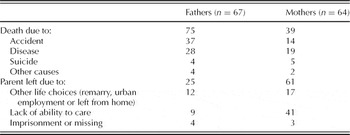
The main reasons children became orphans were their fathers died from disease or an accident and their mothers relinquished their children due to poverty (Table 1). More fathers died (75 per cent) than mothers (39 per cent). The main causes of fathers’ deaths were accidents and disease. A smaller proportion of fathers left their children behind (25 per cent) – mainly girls – due to other life choices and lack of ability to support them.
Cause of orphans’ parents’ death or absence (per cent)

Note: Percentages approximate due to rounding.
Source: Village survey, 2008, kinship carers.
Due to the kinship care traditions discussed in this article, the effect of fathers’ deaths was that many mothers were unable to continue caring for their children (61 per cent). Most children without a father still had a mother but the community traditions placed the obligation for caring for the child on the paternal extended family as if they were orphans. The research found that these patriarchal families regarded children as members of the extended paternal family and community. When a woman was married in rural China she moved to her husband's home and village (Shang, Reference Shang2008a; Yan, Reference Yan2005). While the father was alive, she was connected to the extended paternal family and was responsible for caring for her children. If a husband died, a mother's connection with the extended family was weakened. Although she continued to have a blood connection to the paternal family through her children, she was no longer expected to bear the parental responsibilities and nor was the extended family obliged to support her. If the widowed mother chose to care for her children, she could face economic and social difficulties because the husband's extended family was obliged to support the orphaned children but not her.
These mothers were forced into the position where they could not afford to stay with their children after the death or departure of their husbands, because they did not have the economic means to support themselves and the extended family members were unwilling to include them in the parenting role. Therefore, some mothers had to leave their children, often by remarrying or through seeking migrant work in cities. Their children then were left behind with the extended paternal family and treated as orphans, consistent with the findings in Shang's (Reference Shang2008a) case study in 2005. This new large sample fieldwork confirmed that this was not an isolated phenomenon, but could be generalised to other parts of China.
Children and boys in particular, belonged to the families of fathers. If a father died, the families did not allow mothers to move away with male children. The effect was that children whose fathers died and were cared for by paternal relatives could lose their right to live with their mother. In contrast, fathers whose wives died usually continued to bring up their children because a mother's death did not affect the paternal extended family membership status of fathers and their children.
In the research villages, many children were orphaned when their fathers died and their mothers had to leave. The villagers gave two explanations for this. First, some men in these impoverished areas illegally bought wives forced into marriage. When the husbands died, these widows took the chance to leave and did not return. More commonly, the second reason was that many widowed mothers experienced extreme economic pressure forcing them to leave. Widowed mothers were not entitled to land or other property after their husbands died. If they did not receive support from the extended paternal family, they had no access to money or assets in the household and they could not undertake the heavy agricultural work and child-raising alone. Without the economic means to support themselves or their children, they were forced to remarry in other areas to form new economic relationships. In some villages, when the researchers asked to interview a single mother about her living situation and willingness to look after her children alone, the villagers said it was too difficult to find a widowed single mother because in these villages, most widowed mothers remarried and left their children within one year of becoming widowed.
Due to their limited economic conditions and rights, remarried mothers normally did not have the capacity to keep their former children or provide them with economic assistance. They could not take their children with them when they remarried, because the paternal extended families claimed their right to the children and the new husbands’ families did not want responsibility for children from other families. The same economic and social pressures meant that some mothers were also unable to visit their children after they left the villages. The most significant reason for not visiting discussed by the villagers was the widowed mothers’ lack of economic capacity. Some mothers chose not to visit their children since they could not afford the cost of travel or to bring money or gifts for them.
Although by law mothers could take their children with them when they remarried, they usually left them with the paternal extended family. In addition to economic capacity reasons, mothers also considered this approach was in their children's future interests. If boys left the paternal extended family when their mothers left, they would lose their property rights. Therefore, mothers had little alternative but to leave the children behind for the sake of their economic future. This also confirms the earlier case study findings (Shang, Reference Shang2008a; Mendes and Srighanthan, Reference Mendes and Srighanthan2009: 208). Girls did not normally have a right to land after they married.
Relationship of kinship carers
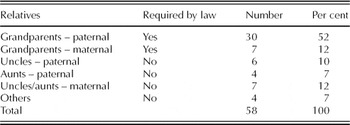
As expected in law and custom, paternal extended families were the primary care providers of rural orphans (Table 2). Nearly two thirds of the orphans were cared for by grandparents (64 per cent) as required by law, 29 per cent by uncles and aunts and the remainder by other non-relative households. This finding is consistent with the results of the 2005 national orphan census (Shang, Reference Shang2008c).
Relationship between carers and orphans

Orphans were cared for by relatives, including paternal grandparents, maternal grandparents, paternal uncles and aunts, maternal uncles and aunts, and others. Relatives other than these primary carers generally did not provide substantial help. Anyone who began to care for an orphan took the primary responsibility for care, while other family members offered in-kind assistance rather than cash. Among the 58 orphan kinship care cases, 32 households received some assistance from relatives and only 20 received cash. Only two households received regular financial aid from relatives (300 RMB and 500 RMB annually; less than 50 UK pounds stirling).
Unequal access to kinship care
The research identified the gender and disability profile of orphans who receive kinship care and asked villagers about their willingness to care for disabled children in order to find out if girls and disabled orphans had equal access to informal kinship care in rural China. The village interview findings showed that a problem of the informal practices of care for orphans was that children were not equally protected and some groups of children were discriminated against. It was more likely, for example, that boys rather than girls were cared for by their relatives. Girls and disabled children were more likely to be abandoned to the state.
Similarly, the orphan census in 2005 found that the sex ratio among rural orphans, who were mainly cared for by relatives, was 1.47 boys to 1 girl (Shang, Reference Shang2008c: 13), significantly higher than the general child population (1.27 boys to 1 girl born 1996–2007; Bureau of Development and Planning, China Population Planning Committee, 2007). The rural orphan gender imbalance indicates that boys were more likely than girls to be cared for by relatives. Orphaned rural girls appeared in the urban orphan statistics because state-run children's welfare institutions are only generally available in urban areas. There were more girls than boys because more girls were abandoned in urban as well as rural areas (Shang, Reference Shang2008c).
This bias towards kinship care for rural orphaned boys reflected the interests of the paternal extended family rather than the rights of children. Boys were cared for by relatives according to blood lineage and the intergenerational social contract. This meant that children were protected in a family because of the future contributions that boys could make to the family, such as continuing the family's bloodline and the economic and social support for other family members. Girl orphans were less likely to be accepted in a paternal extended family because they would marry away from the family and would not be expected to make further contributions to their maternal family. Disabled children were assumed to be unable to take responsibility for their families. Their access to kinship care was restricted too and they were discriminated against within the kinship practices compared to other children. Disabled girls faced a double disadvantage from their lack of property rights and assumptions about their inability to provide care when their kinship carers were older.
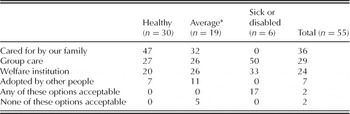
Kinship carers were asked about which alternative care arrangements they would prefer, such as kinship care within the family, group care (children's villages), state welfare institutions (orphanages) and adoption by unrelated families. Relatives only willingly cared for non-disabled children (Table 3).
Kinship carers’ preferred alternative care by orphan's health and disability (per cent)

Notes: n = number of kinship carers of orphans with each health and disability condition.
*Average = sick sometimes.
Percentages approximate due to rounding.
Source: Village survey 2008, kinship carers.
The extended families of the disabled and sick orphans would have preferred not to care for these children but no other alternative care options were actually available to them. In contrast, almost half the extended families of healthy orphans preferred to care for the children within the extended family (47 per cent).
Most of the village kinship carers for both girls and boys provided loving support to the orphans in their care. However, a small proportion considered the costs of caring and future returns. For example, some kinship carers intended to try to get their costs of looking after girls back through a dowry from the groom's family. ‘When the girls marry out, I will demand money from their husbands’ families or I would suffer many losses’, said an older grandfather caring for two girls.
Risks to the stability of kinship care
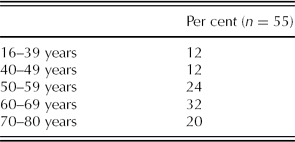
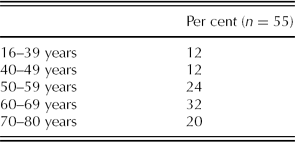
Most of the kinship carers were aged 50 years or older (76 per cent), half were aged 60 years and over and one fifth were aged 70 or more years (Table 4). Because their grandparent carers were already aged, orphans faced the risk of losing these kinship carers, in addition to the loss of their parents.
Age distribution of primary carers
Source: Village survey 2008, kinship carers.
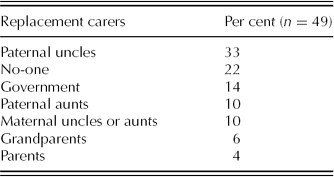
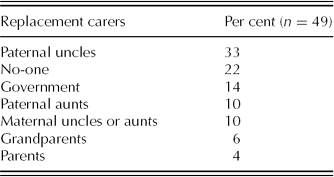
Kinship carers were asked about who would care for the orphan if they could no longer do it themselves (Table 5). In most families, alternative carers would still be sought within the family, but 14 per cent said the orphans would need to be cared for by the government in the absence of any kinship care alternatives.
Kinship carers’ preferred replacement carers if unable to continue to care
Notes: missing = 6.
Source: Village survey 2008, kinship carers.
Many relatives said the practice of kinship care was becoming unfeasible and they hoped that the government would provide alternative protection for orphans. They said that if the current carers were no longer available, a high proportion of children cared for by grandparents had no alternative carers. Their right to stable, safe and protective care was at risk.
Risks from poverty and stress in kinship care households
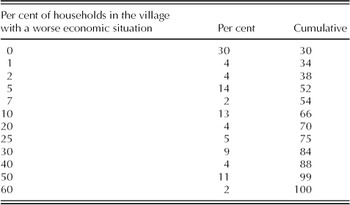
Almost all the kinship care families said they were living in poverty (Table 6). Nearly one third of the households said they were the poorest in their villages. About two thirds of the kinship carers were among the poorest 10 per cent of households. Almost all the kinship carers were below the mean economic level of households in the villages.
Self-assessed economic situation of kinship care households

Notes: n = 56. Percentages approximate due to rounding.
Source: Village survey 2008, kinship carers.
The majority of households providing kinship care to orphans faced economic difficulties. The ongoing social and economic changes in China have resulted in smaller families and higher costs of caring for children (Saunders et al., Reference Saunders, Shang and Li2007), which places more pressure on the kinship carer. Grandparents who lost their sons were also a vulnerable population in a rural society, so they could not ensure appropriate care and support for the orphans’ healthy growth and development (also Shang, Reference Shang2008c).
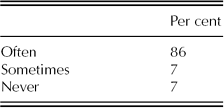
With greater social and emotional risks and the economic pressures of poverty, older kinship carers in particular often felt a heavy psychological burden. Eighty-six per cent of the carers admitted that they often felt depressed or under pressure (Table 7).
Psychological Pressure on Carers
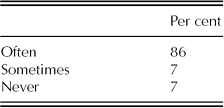
Notes: n = 58. Question: How often are you mentally under pressure or feel depressed?
Source: Village survey 2008, kinship carers.
Vulnerable life circumstances, poverty and stress not only undermined orphans’ social rights, but also imposed dual burdens on rural older people who had lost their sons and daughters. The case of a ten-year-old girl, living with her grandfather aged over 80 years, illustrates the hardship faced by older kinship carers. The household lived on social assistance benefits (wu bao) totalling 1,300 RMB per year (100 UK Pounds Stirling) from the county's Civil Affairs Bureau, and they also collected and sold hoarded items. The two received no help from relatives or friends. According to the villagers, the old man bore the burden of supporting the family and raising the granddaughter. During contact with village officials, the researcher observed the officials’ indifference towards the old man's family due to their wealth disparity. The village head owned a luxurious house, while the old man lived in a shabby, cold house. When the head official was celebrating the Spring Festival at a mah-jong table, the grandfather and his granddaughter were picking up junk in the intensely cold weather.
Family network and community support
Whilst it is known that the government only takes a residual role in supporting orphans, traditional kinship care is also supported by other rural community networks. The fieldwork explored the attitude of community members to supporting orphans. Rural villagers were asked how they perceived their responsibilities for child welfare. Villagers were asked: ‘Suppose there is an orphan who needs protection. Some people think that the relatives, friends or extended family should assume the responsibility for the provision of kinship care; some people believe the government should do it; and others think that villagers should jointly take responsibility. You have 30 points to allocate to the three sides and more points mean more obligations.’
From the 541 valid responses, they ranked related family highest (14.1 points), government second (10.9) and villagers third (5.0). The fact that extended family was ranked first reflects the current alternative kinship care practices. The popular lower ranking of community responsibility might reflect the institutional changes in the economic transition and a preference for welfare provision to vulnerable people away from community responsibility to government obligations. Villagers generally regarded relatives and families as the primary carers of orphans, and the government as the alternative when relatives were not available or unsuitable.
In these rural villages, almost all the orphans were cared for by their relatives. However, sometimes neighbours and friends offered in-kind assistance. Over one third of the orphans (38 per cent) received help from neighbours or friends, in the form of food, clothes and goods, or help with farm work. Only one family received cash support.
Although family networks and rural communities are declining, new types of community organisations – such as civil society groups – have yet to be developed. Mutual support from villagers or social organisations is a potential source of funds and in-kind benefits to orphan family carers that they were not yet experiencing.
Orphans’ rights under kinship care
The research confirmed that rural orphans were usually cared for by paternal kinship carers, without government assistance. The rural extended family plays a central role in the realisation of orphans’ rights to care and protection. They provide children with care, shelter and financial support. The positive aspect of kinship care is that orphans are cared for by their close relatives – grandparents, uncles and aunts – and grow up in their own communities.
However, the research also found a number of severe limitations to rural kinship care practices, which without government support, have a detrimental impact on children's rights. The most extreme case was that in addition to rural children becoming orphaned if both parents die, some children were treated as orphans because their father died and rural traditional kinship care obligations restrict the viability of widowed mothers continuing to care for their child. When mothers are forced for economic and social reasons to leave the paternal extended family, children effectively become orphans, dependent on ageing grandparents. The traditional paternal kinship care practices that exclude widowed mothers’ economic and social rights and guardianship of her children breach the right of children to be cared for by their mothers.
These rural orphans in the care of older relatives are at risk of unstable care if their grandparents can no longer care for them and they are likely to live in poverty if their grandparents do not have work or government support. As rural family sizes shrink and costs of caring for children increase, the quality of care through informal kinship practices is further threatened because the extended families do not have the capacity to provide adequate living conditions for the children's development relative to other local children.
Worse still, not all rural orphans even have the protection provided through kinship care. Kinship obligations to girls and disabled children are weaker, so they are more likely to be abandoned to institutional care. Some girls and disabled children are discriminated against because under traditional kinship obligations it is not expected that they will contribute to the economic and social wellbeing of the extended family or continue the family lineage. Although other girls and disabled children who are not orphaned also face this discrimination in rural areas, orphans are more vulnerable to neglect or abandonment.
The current unsupported kinship care practices are not providing children with effective protection or meeting their needs. The residual model of child welfare is not sufficient to support the rights of orphans. Rural orphans, widowed mothers, kinship carers need external support to adequately protect children's rights.
Conclusion
This research used empirical data from a large sample of Chinese rural villages to examine the kinship care practices that protect orphans. The findings confirm that the Chinese government takes a residual approach to caring for and supporting rural orphaned children, which firmly places the responsibility on the orphans’ extended family with very little assistance from the government. The informal kinship practices limit the care and protection of orphans, especially to girls and disabled children and are inconsistent with a children's rights approach to social policy. The rights of rural orphans are not fully realised relative to other children in their communities under the current policy. Despite this, the residual policy is that the state will only intervene when the extended family cannot fulfil their duty of care and implementation of the residual policy depends on the financial capacity of the local government.
The policy implications are that the rural kinship care practices, which predominantly rely on grandparents, are unable to adequately protect orphans’ rights relative to other children, without government support. This research particularly highlighted the negative impact of unsupported kinship care on children's right to be cared for by their widowed mothers, the right to economic security and the rights of girls and disabled children to care and protection within a family and community context.
In addition, the rights of widowed mothers and ageing grandparents were also compromised. In a social policy system that does not economically support widowed or single mothers, they were forced to succumb to the pressures of paternal kinship traditions and leave their children so that they can find alternative social and economic support. Grandparents were also negatively affected by the residual child welfare policy because despite their lack of access to adequate income support for themselves, they were also expected to support their orphaned grandchildren both materially and emotionally.
The negative impact on children, mothers and grandparents of these inadequate policies are likely to be exacerbated by the social changes in Chinese rural communities from rapid urbanisation. The social support functions of rural communities are weakening. Urgent policy implications are to implement financial and other support to orphans, widowed mothers and kinship carers to improve the sustainability of these rural family relationships.
Acknowledgements
Ethics approval was from University of New South Wales. Thank you to the fieldwork interviewers, research participants and anonymous reviewers.