Introduction
Thyone Oken, Reference Oken1815 and Havelockia Pearson, Reference Pearson and Herdman1903 are worldwide-distributed dendrochirote genera composed of 65 and 26 valid species, respectively (WoRMS, 2018a, 2018b). Of these, four species of Thyone and two species of Havelockia occur in the South-western Atlantic. Thyone and Havelockia share many morphological similarities; for instance, both are characterized by the presence of 10 (8 + 2) dendritic tentacles, tube feet scattered on the body wall, calcareous ring with posterior processes, and body wall ossicles with two-pillared tables. These similarities have challenged taxonomists attempting to classify new species and revisions of some species have been performed to improve such classifications. At least 63 species originally described as Thyone were transferred to other genera, eight of these to Havelockia; and five species originally described as Havelockia were transferred to other genera, four of these to Thyone (WoRMS, 2018a, 2018b). Despite those similarities, the morphology of the calcareous ring of Thyone and Havelockia is different and both genera are currently placed in separate families: Phyllophoridae and Sclerodactylidae, respectively.
In this paper, we provide the morphological description of a new species of Thyone and a new species of Havelockia from the Brazilian coast. We also provide illustrations, morphological diagnoses of both genera, a synoptic table of their Western Atlantic species, and a brief discussion of the taxonomic significance of the dermal ossicles and the calcareous ring.
Materials and methods
Morphological techniques and terminology follow Martins & Souto (Reference Martins and Souto2015). Multilocular tables are tables with more than eight perforations; crown of teeth refers to table spires ending in five or more teeth. Table spires were considered to be tall if their heights were larger than the table disc diameter. Body size measurements were obtained from ethanol-preserved specimens and refer to the maximum body length in millimetres (mm).
To enhance the contrast between the calcareous ring pieces, we submerged the calcareous rings in a 1% iodine and 96% ethanol solution for about 10 min, and then let them air-dry for about 30 min (modified from Gignac & Kley, Reference Gignac and Kley2014). After the morphological analysis and imaging, the calcareous rings were washed in distilled water and returned to 70% ethanol.
Abbreviations and acronyms: Todos os Santos Bay (BTS); Museu de Zoologia, Universidade de São Paulo, Brazil (MZUSP); Museu de Zoologia, Universidade Federal da Bahia, Brazil (UFBA); National Museum of Natural History Smithsonian Institution, Washington DC (NMNH); North-western Atlantic (NWA) and South-western Atlantic (SWA).
Results
SYSTEMATICS
Order DENDROCHIROTIDA Grube, Reference Grube1840
Family SCLERODACTYLIDAE Panning, Reference Panning1949
Genus Havelockia Pearson, Reference Pearson and Herdman1903
DIAGNOSIS
(modified from Thandar, Reference Thandar1989) Calcareous ring stout, only anterior projections of radial and interradial plates free; posterior paired processes of radial plates divided into several pieces. Body wall ossicles four-holed tables with oval discs; eight-holed tables with four large central and four smaller peripheral holes, and with squarish to irregular discs; and/or multilocular tables. Table spires with two pillars joined at apex and terminating in few blunt teeth.
TYPE SPECIES
Havelockia versicolor (Semper, Reference Semper and Semper1867).
Havelockia oraneae sp. nov.
(Figures 1 & 2; Table 1)
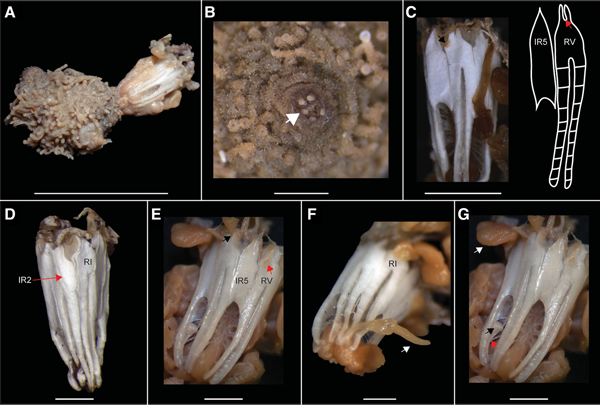
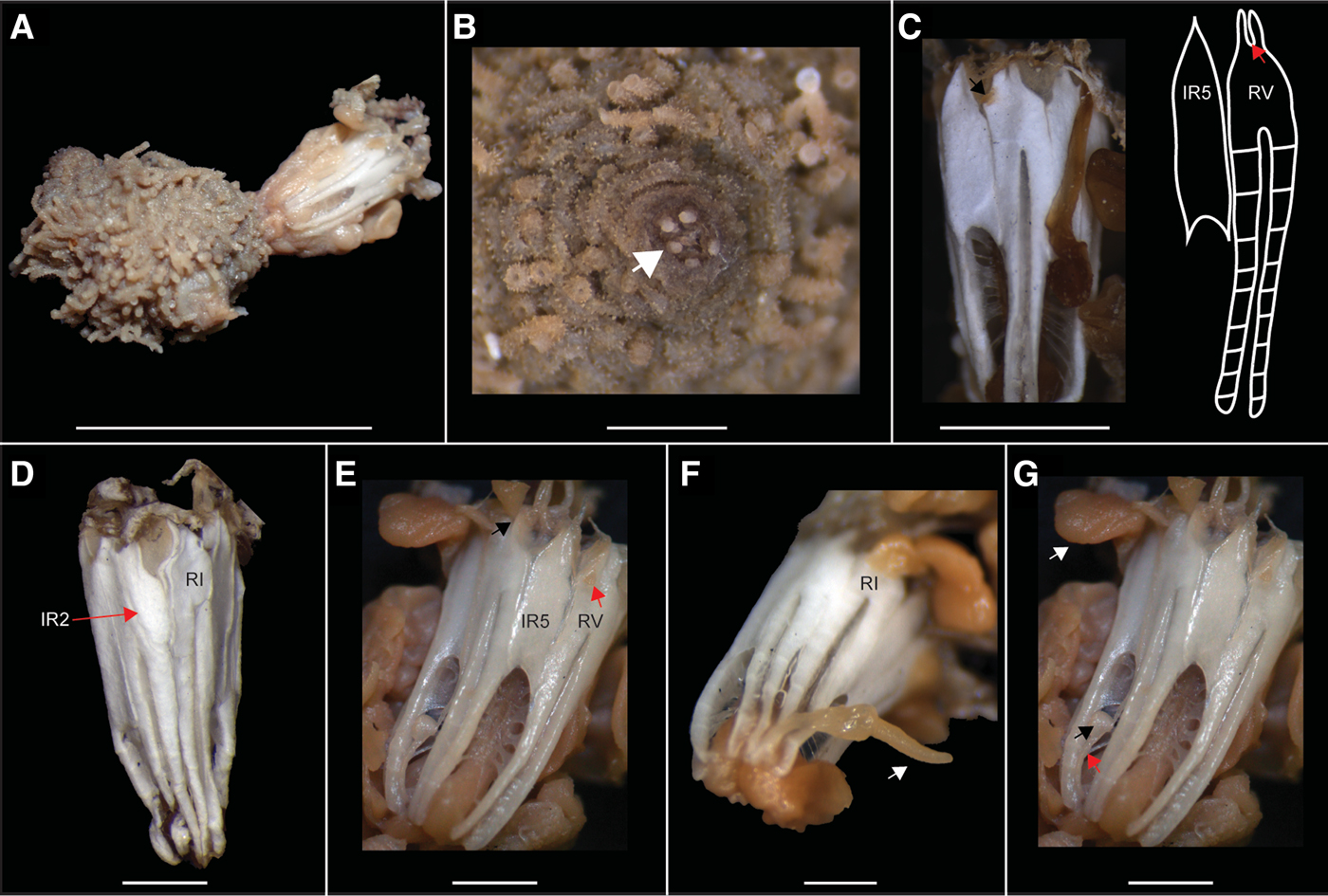
Havelockia oraneae sp. nov., Holotype (MZUSP 1636): (A) specimen preserved in ethanol; (B) anal papillae (white arrow); images of the calcareous ring showing (C) attachment of retractor muscle (black arrow) and anterior notch (red arrow on schematic representation on the right), (D) ventral view of calcareous ring, (E) points of attachment of the retractor muscle, which can be below (red arrow) or in the middle (black arrow) of the muscular process; (F) Polian vesicle (white arrow); (G) retractor muscle (white arrow), stone canal (red arrow) and madreporite (black arrow). R, radial plate; IR, interradial plate; labels on calcareous ring follow Ludwig's (Reference Ludwig and Bronn1889–1892) scheme. Scale bars: A, 10 mm; B, 1 mm; C, D–G, 2 mm.
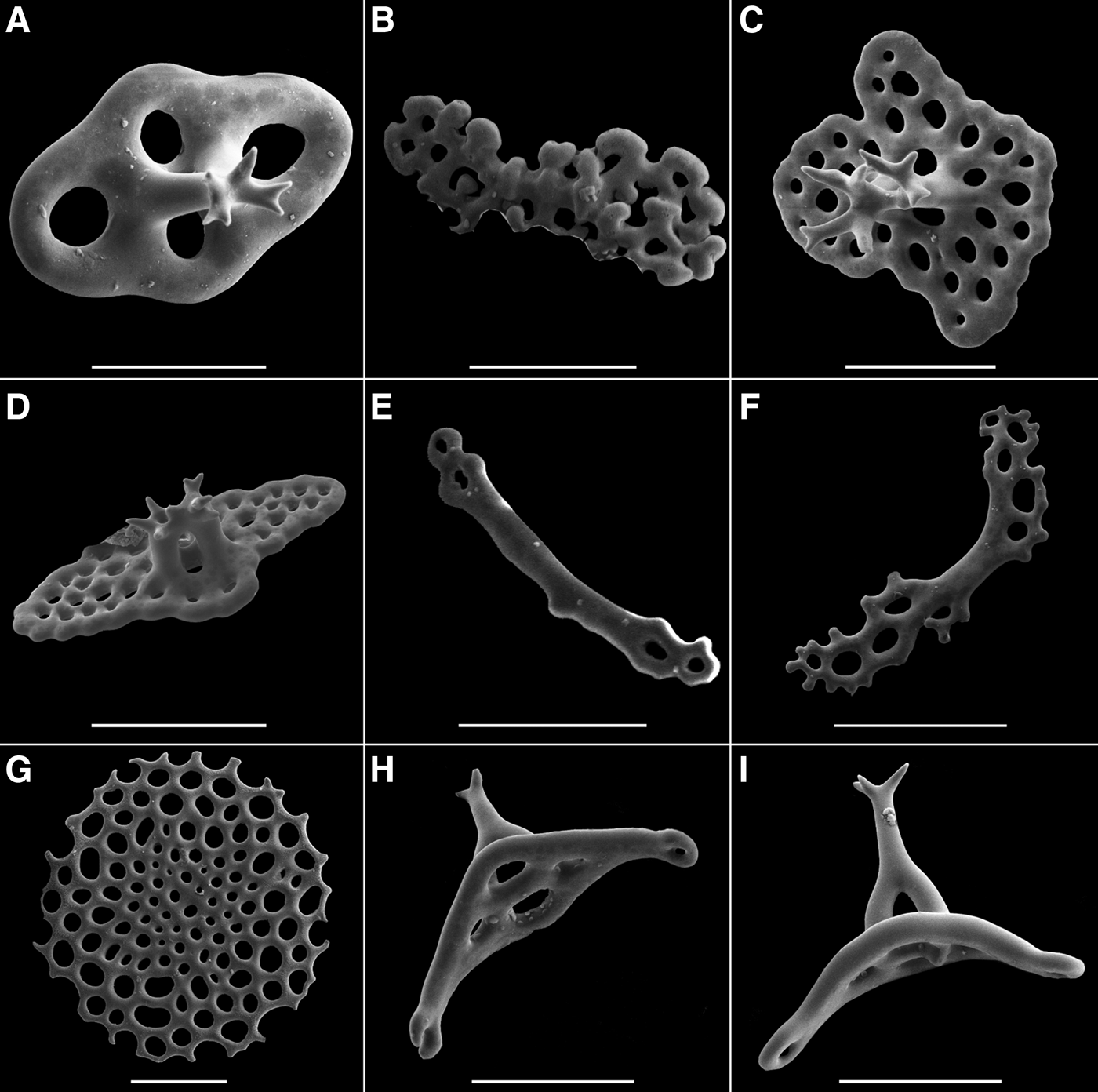
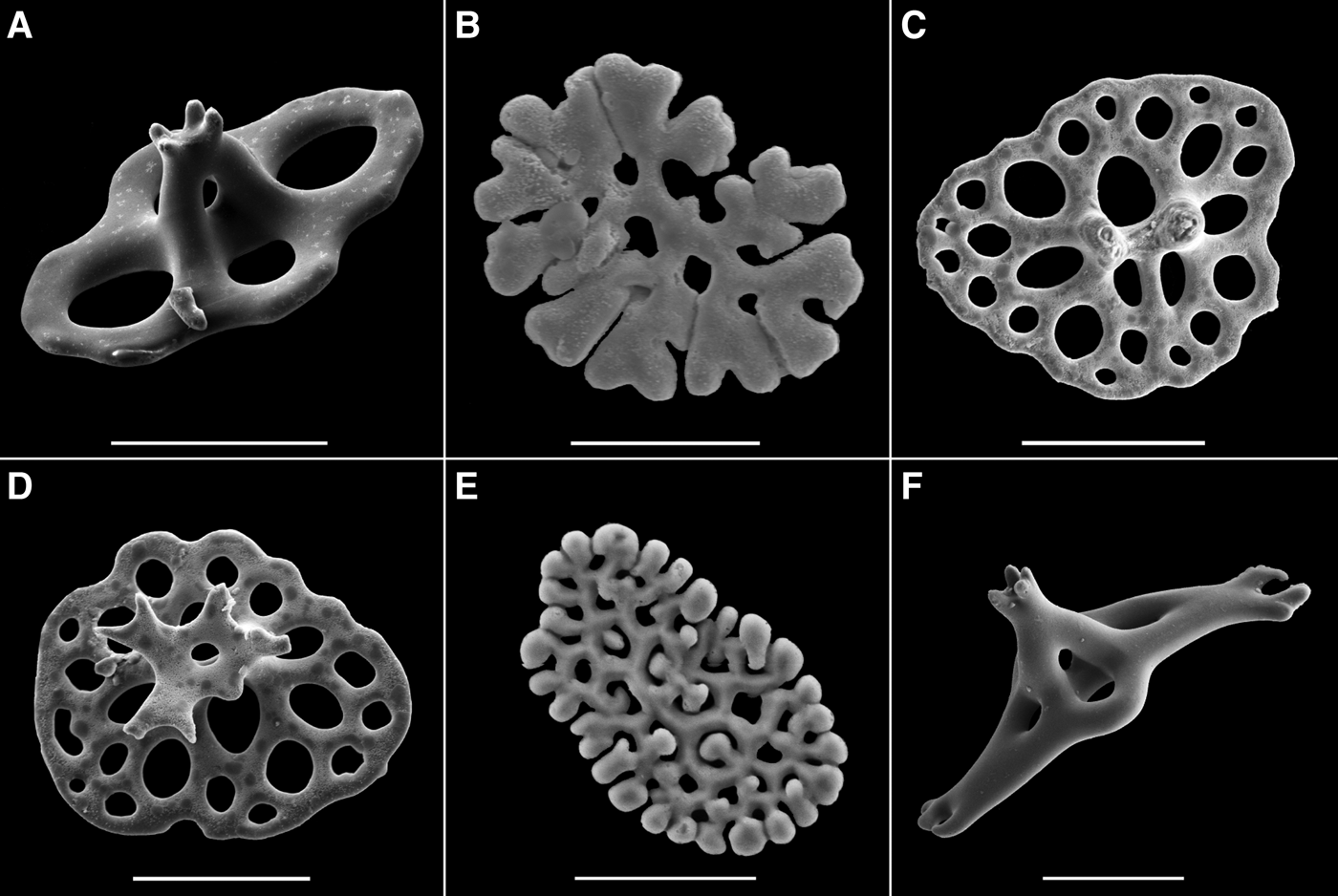
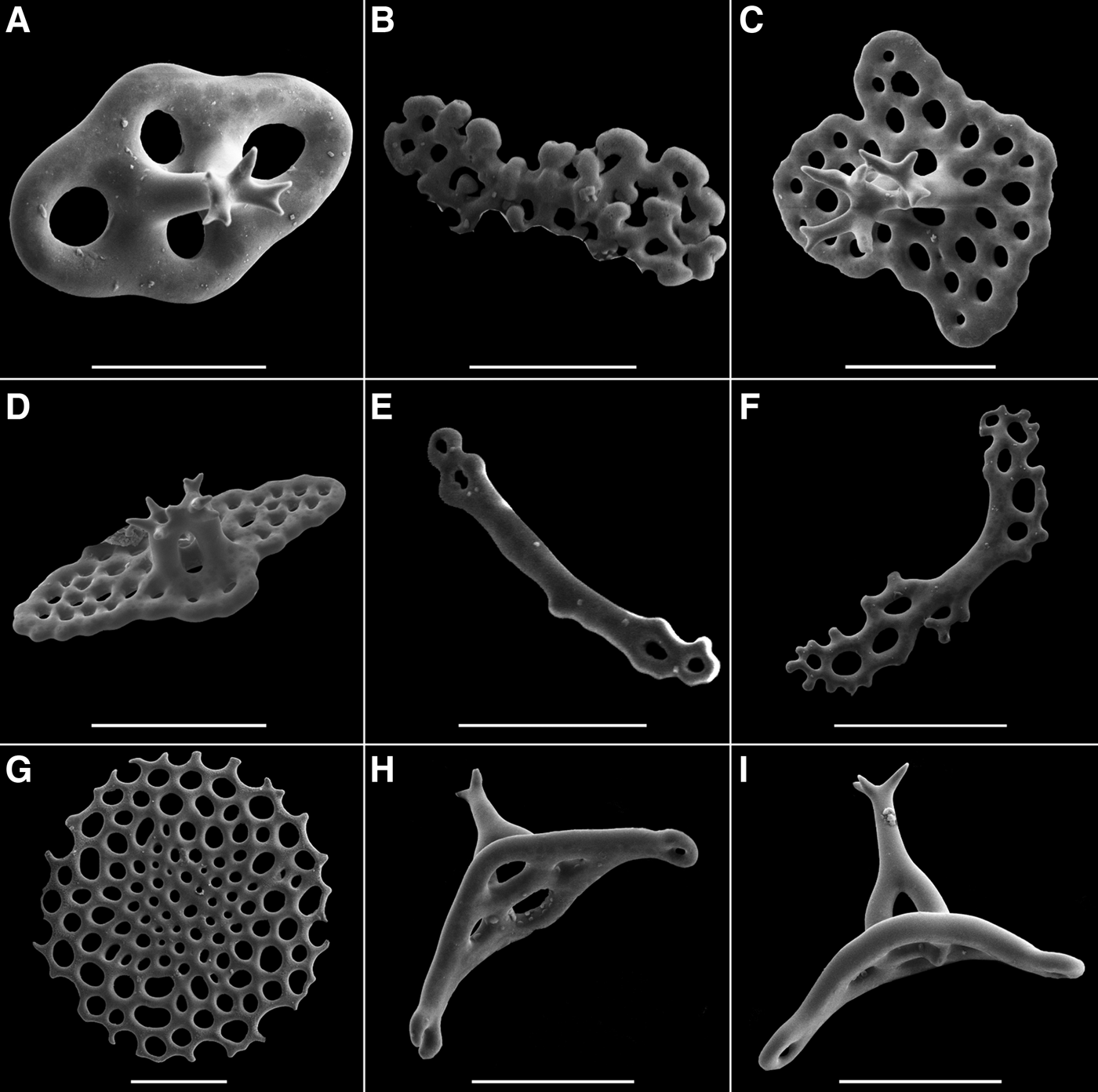
Havelockia oraneae sp. nov., Holotype (MZUSP 1636), SEM images of the ossicles: (A) body wall table in upper view; (B) rosette from introvert; introvert tables in (C) upper and (D) lateral oblique view; (E–F) rods from tentacles; (G) endplate; supporting tables from tube feet in (H) lower oblique and (I) lateral view. Scale bars: A, C–D, G–I, 50 µm; B, E, 20 µm; F, 100 µm.
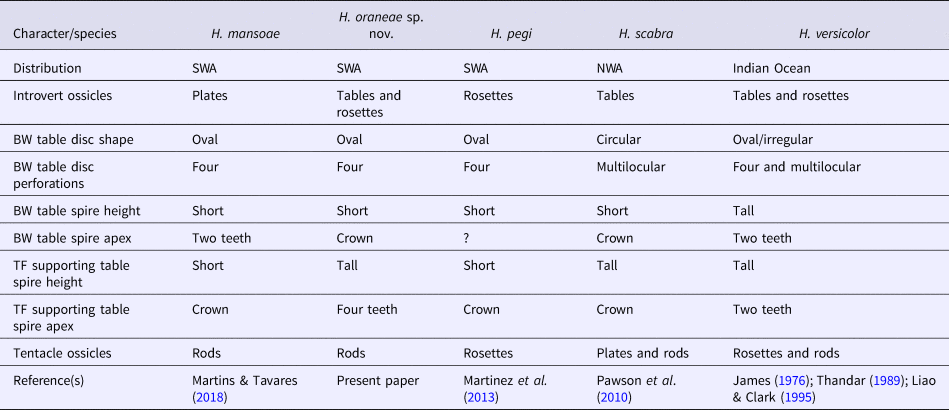
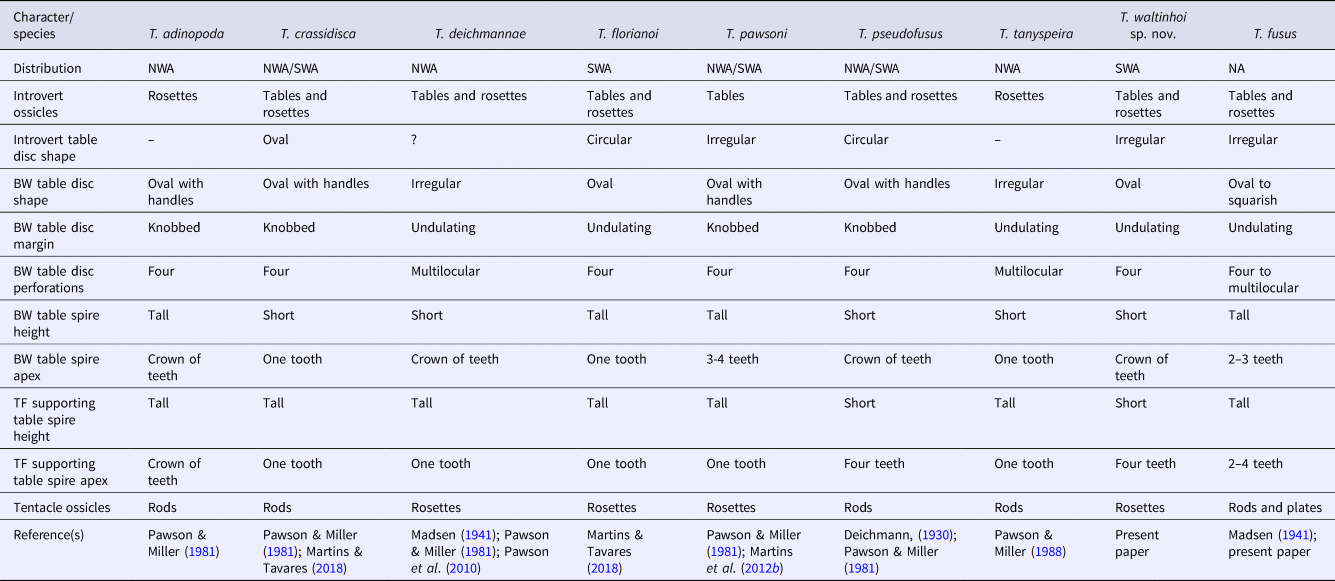
Synoptic table of morphological characters and distribution of the Western Atlantic Havelockia and type species of genus
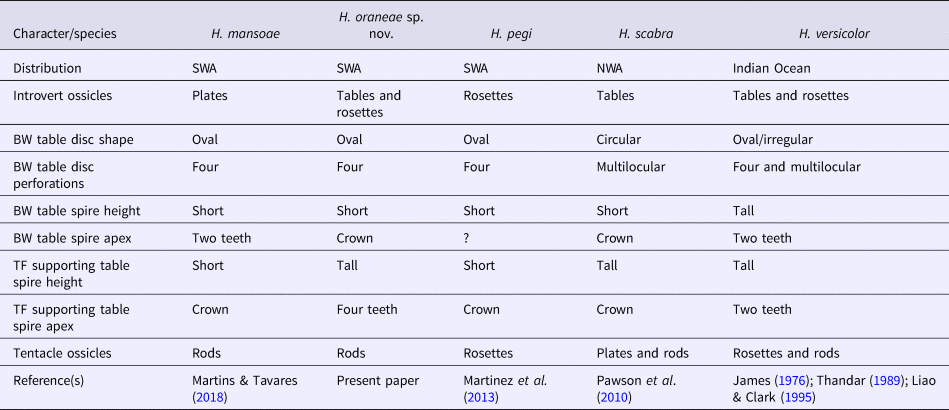
BW, body wall; TF, tube feet, NWA, North-western Atlantic; SWA, South-western Atlantic.
TYPE MATERIAL
Holotype: Continental shelf adjacent to the BTS, Salvador, Brazil (13°02′S 38°37′W), 5 April 1997, 16 m, 1 specimen, 12 mm (MZUSP 1636). Paratypes: same collection data as Holotype, 1 specimen, 7 mm (MZUSP 1637); Guarajuba, Camaçari, Brazil (12°45′S 38°05′W), 20 July 2005, 26 m, 1 specimen, 10 mm (MZUSP 1641).
ETYMOLOGY
Named after Orane Falcão de Souza Alves for her support and dedication to undergraduate students doing research on echinoderms and for collecting the specimens described here.
COMPARATIVE MATERIAL EXAMINED
Havelockia mansoae Martins & Tavares, Reference Martins and Tavares2018 – Santos, São Paulo, 3 October 1967, depth unknown, 1 specimen, 30 mm (MZUSP 1525). Havelockia scabra (Verrill, Reference Verrill1873) – Mississippi, USA, Gulf of Mexico, 1941, depth unknown, 7 specimens, 30–60 mm (NMNH E 24004).
DIAGNOSIS
Calcareous ring tubular, radial plates notched anteriorly, interradial plates arrow-shaped with an anterior depression, radial plate smaller than interradial plate. Body wall tables two-pillared; discs four-holed, with oval and undulating margins; spire short and ending in a cluster of teeth. Introvert with rosettes and two-pillared tables; table pillars united at the top and forming a cluster of teeth. Tentacles with rods and tube feet with two-pillared supporting tables.
DESCRIPTION
Body U-shaped in vivo, barrel-shaped when fixed; tube feet scattered throughout body (Figure 1A). Ten dendritic tentacles, ventral pair reduced. Anal papillae present (Figure 1B). Calcareous ring tubular, up to 50% of total body length, radial and interradial plates united along entire length, radial 2× smaller than interradial (Figure 1C). Radial plates notched anteriorly for the passage of the radial nerves and radial canal, and with long and subdivided (~9 small pieces) posterior processes; mid-ventral plate (RI) shorter than the others but with long posterior processes (Figure 1D). Interradial plates arrow-shaped, with an anterior depression and reduced posterior processes; interradial plate 2 (IR 2) reduced and fused to radial plate III (Figure 1D). Longitudinal muscles thick, one of them split in the anterior region of the body; retractor muscle long, flat, and enlarged in the anterior region where it attaches slightly below or in the middle of the muscular process (Figure 1E). One Polian vesicle (Figure 1F); stone canal single and short, attached to a bean-shaped madreporite (Figure 1G). Colour in ethanol: brown.
Ossicles: body wall with two-pillared tables with oval disc; disc perforated by four large holes and with undulating margin; spire short and ending in a crown of teeth (80–100 µm long, Figure 2A). Introvert with rosettes (40–60 µm long, Figure 2B) and two-pillared tables; table pillar united at the apex forming a cluster of teeth; table disc multilocular, with irregular and undulating margins (80–150 µm long, Figure 2C–D). Tentacles with two types of rods: minute rods perforated at both ends (40–60 µm long, Figure 2E) and large curved rods almost entirely perforated (150–210 µm long, Figure 2F). Tube feet with endplate (up to 150 µm long, Figure 2G) and supporting two-pillared tables; table disc curved, with four central holes and a single perforation at both ends; table spire tall and ending in a cluster (~4) of teeth (100–120 µm long, Figure 2H–I).
TYPE LOCALITY
BTS, Bahia state, Brazil. Collected in sandy bottom.
REMARKS
Three species from the Western Atlantic are recognized. The new species differs from H. scabra in having four-holed body wall tables (vs multilocular), and from H. mansoae and H. pegi Martinez, Thandar & Penchaszadeh, Reference Martinez, Thandar and Penchaszadeh2013 mainly by the types of introvert ossicles (see Table 1).
The South-western Atlantic species share similar morphology of the body wall tables (i.e. four-holed tables) with Havelockia vankampeni Sluiter, Reference Sluiter1901 (Indo-Pacific) and H. versicolor (Indian Ocean). However, the South-western Atlantic species differs from these two species in having tables with short spires (vs tall).
Family PHYLLOPHORIDAE Östergren, Reference Östergren1907
Genus Thyone Oken, Reference Oken1815
Diagnosis. (After O'Loughlin et al., Reference O'Loughlin, Barmos and VandenSpiegel2012) Tentacles 10; tube feet scattered on body wall, never restricted to radii; calcareous ring tubular with long posterior prolongations comprising a mosaic of small pieces; body wall ossicles tables with a spire of one or two pillars.
Type species. Thyone fusus (O.F. Müller, Reference Müller1776)
Thyone waltinhoi sp. nov.
(Figures 3–5; Table 2)
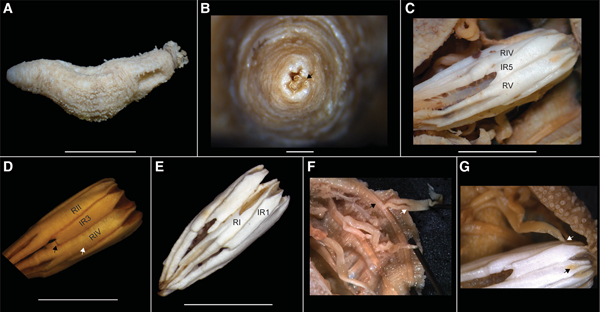
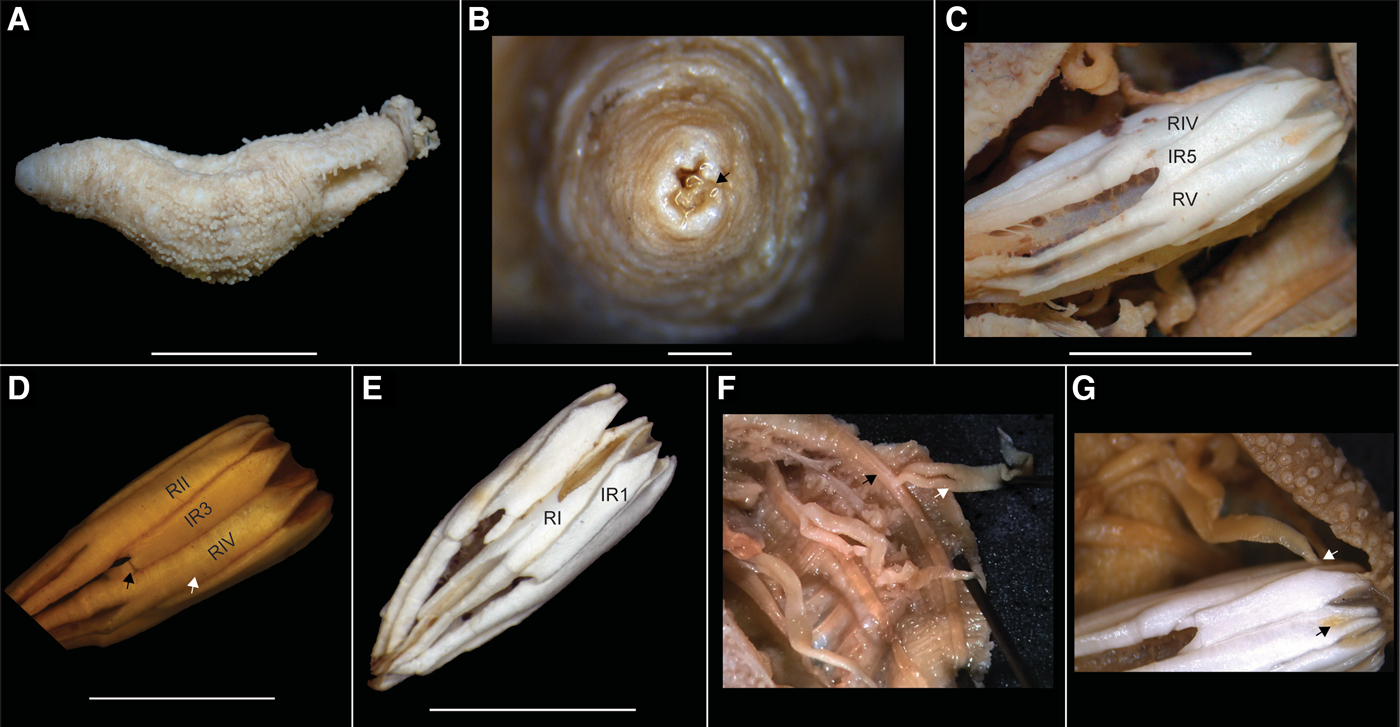
Thyone waltinhoi sp. nov., Holotype (MZUSP 1635): (A) specimen preserved in ethanol; (B) anal papillae (black arrow); calcareous ring (C) before and (D) after iodine treatment (arrows show subdivisions in radial (white) and interradial (black) plates); (E) ventral view of calcareous ring; (F) longitudinal (black arrow) and retractor (white arrow) muscles; and (G) retractor muscle attached to the calcareous ring (white arrow) and point of attachment of the retractor muscle in depression between anterior processes (black arrow). R, radial plate; IR, interradial plate; labels on calcareous ring follow Ludwig's (Reference Ludwig and Bronn1889–1892) scheme. Scale bars: A, 10 mm; B, 0.5 mm; C–E, 5 mm.
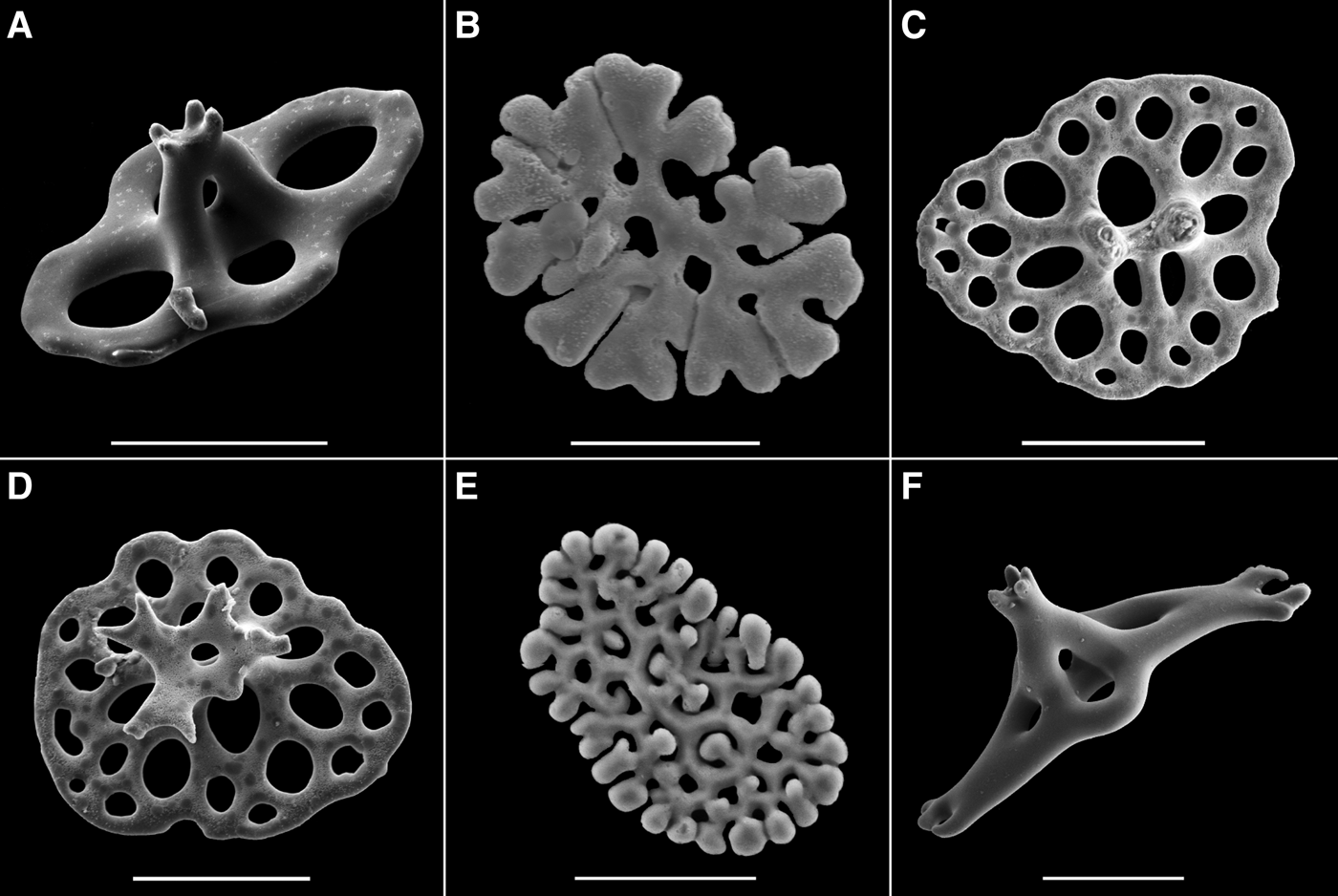
Thyone waltinhoi sp. nov., Holotype (MZUSP 1635), SEM images of the ossicles: (A) body wall table in upper oblique view; (B) rosette from introvert; (C–D) introvert table in upper view (note the two pillars in (C) and the crown of teeth in (D)); (E) rosette from tentacles; (F) supporting table from tube feet in upper oblique view. Scale bars: A, C–D, F, 50 µm; B, 10 µm; E, 30 µm.
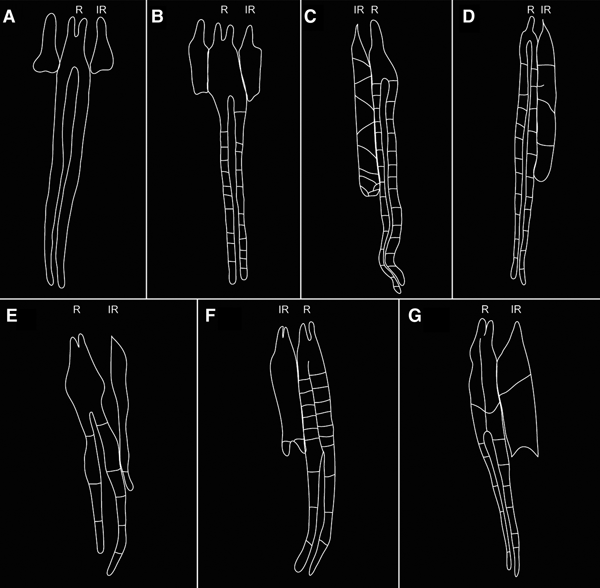
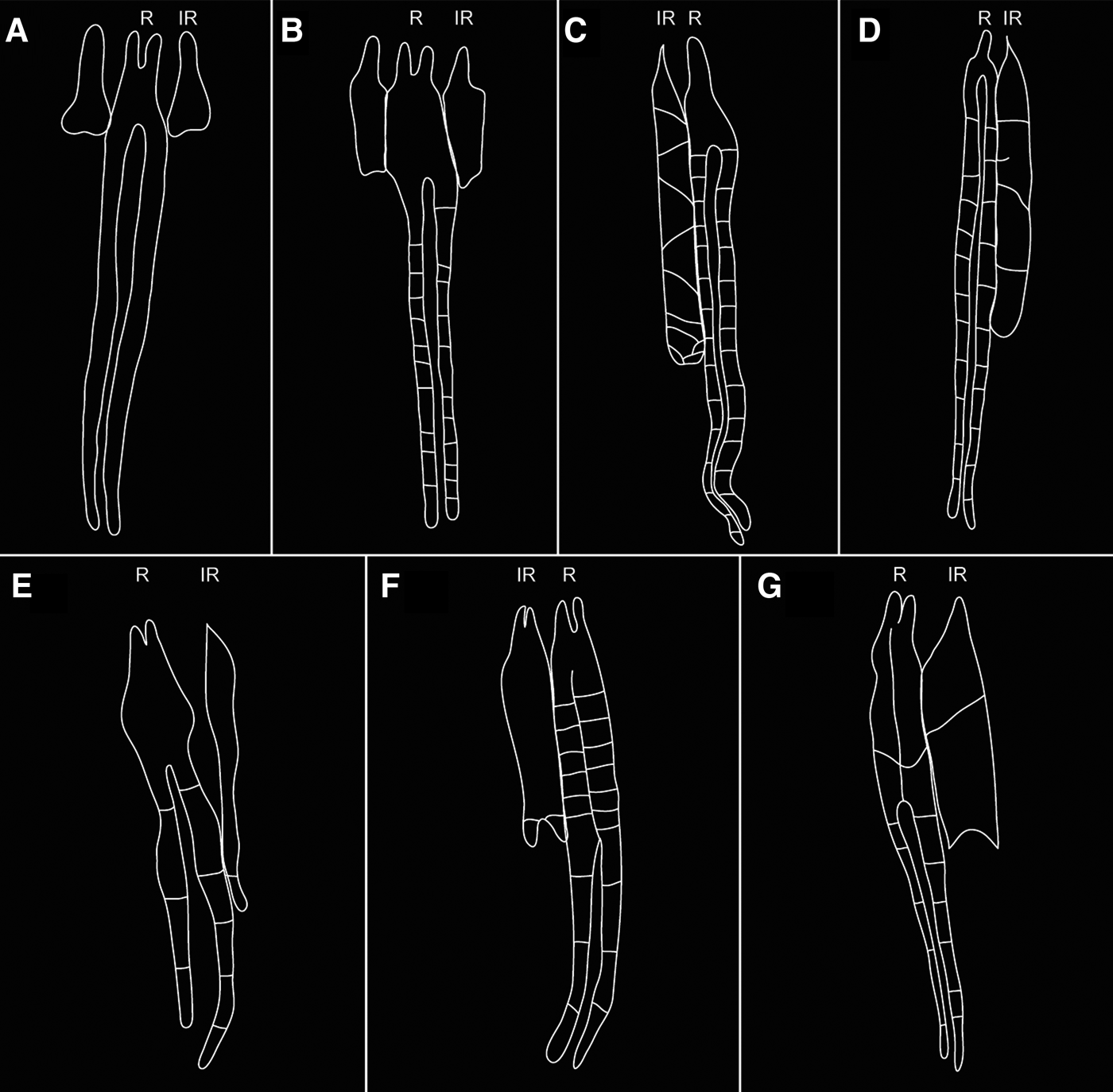
Drawing of calcareous ring of the following Thyone species: (A) T. adinopoda (drawn from Pawson & Miller, Reference Pawson and Miller1981), (B) T. tanyspeira (drawn from Pawson & Miller, Reference Pawson and Miller1988), (C) T. crassidisca (MZUSP 1353), (D) T. pawsoni (UFBA 1485), (E) T. pseudofusus (MZUSP 1066), (F) T. waltinhoi sp. nov. (MZUSP 1635); (G) T. florianoi (MZUSP 1351). R, radial plate; IR, interradial plate.
Synoptic table of morphological characters and distribution of the Western Atlantic Thyone and type species of genus
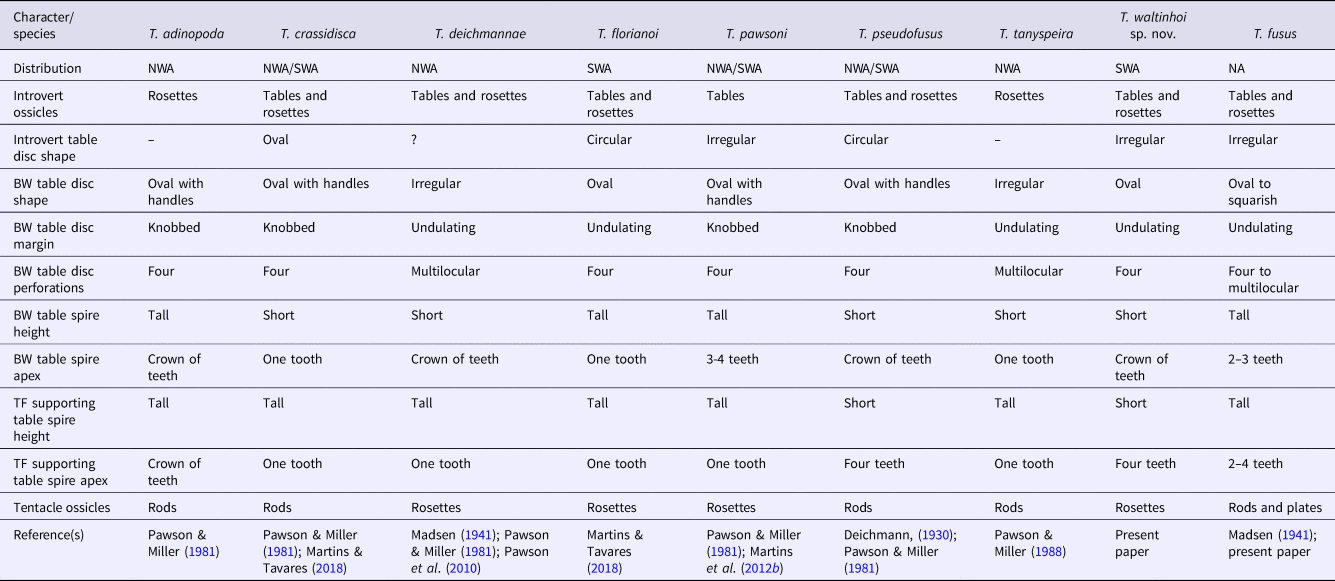
BW, body wall; TF, tube feet; NA, North Atlantic; NWA, North-western Atlantic; and SWA, South-western Atlantic.
TYPE MATERIAL
Holotype. Itapuã beach, Salvador, Brazil (12°57′S 38°21′W), 15 May 1991, intertidal, under rocks, 1 specimen, 30 mm (MZUSP 1635).
ETYMOLOGY
Named after Walter Ramos Pinto Cerqueira for his dedication to echinoderm studies, especially in North-eastern Brazil, and for collecting the specimens described here. Name composition derives from his nickname, Waltinho.
COMPARATIVE MATERIAL EXAMINED
Thyone crassidisca Pawson & Miller, Reference Pawson and Miller1981 – Off Georgia, USA, 19 February 1981, 41 m, 1 specimen, 40 mm (NMNH 19573). Brazil: Marataízes, Espírito Santo, February 1990, depth unknown, 1 specimen, 35 mm (MZUSP 1353); Santos, São Paulo, 3 October 1967, 2 specimens, 45–60 mm (MZUSP 1519). Thyone florianoi Martins & Tavares, Reference Martins and Tavares2018 – Brazil: São Sebastião, São Paulo, 1 February 1986, depth unknown, 3 specimens, 15–100 mm (MZUSP 1351, 1529); Ilha Anchieta, Ubatuba, São Paulo, 15 February 1964, 11 m, 2 specimens, 20–25 mm long (MZUSP 1516). Thyone fusus (NMNH 16416) – North Carolina, USA, 80 m, 4 specimens, 30–60 mm. Thyone pseudofusus Deichmann, Reference Deichmann1930 – Brazil: Cabo Frio, Rio de Janeiro, July 1957, depth unknown, 1 specimen, 20 mm (MZUSP 1059); Ilha Anchieta, Ubatuba, São Paulo, 28 February 1963, depth unknown, 1 specimen, 30 mm (MZUSP 1066).
DIAGNOSIS
Calcareous ring tubular, mosaic-like, radial plates notched anteriorly, interradial plates with short processes. Body wall tables two-pillared, discs four-holed, spire short and ending in four blunt teeth. Introvert with two-pillared tables and rosettes. Tentacles with rosettes.
DESCRIPTION
Body U-shaped; tube feet scattered throughout body (Figure 3A). Ten dendritic tentacles, ventral pair reduced. Anal papillae present (Figure 3B). Calcareous ring tubular, up to 50% of total body length; radial and interradial plates equal in length and united along entire length (Figure 3C–E). Radial plates notched anteriorly for the passage of the radial nerves and radial canal and with long and subdivided (~3–4 large pieces) posterior processes. Interradial plates with anterior notch and short processes (Figure 3C–D); interradial plate 1 (IR 1) arrow-shaped (anterior notch lacking) (Figure 3E). Longitudinal muscles thin, flat and split in the middle of the body; retractor muscles thick posteriorly, then split into two thin bands (Figure 3F), which join again anteriorly into a thicker band that tapers to attach between the anterior processes (Figure 3G). One Polian vesicle; stone canal single and short, attached to a circular madreporite. Colour in ethanol: brown.
Ossicles: body wall ossicles comprise two-pillared tables with oval disc perforated by four large holes; disc margins undulating; spire short with apex ending in four teeth (100–120 µm long, Figure 4A). Introvert with flat rosettes (20–30 µm long, Figure 2B) and two-pillared tables with multilocular disc; table disc irregular in outline and with undulating margins (80–100 µm long, Figure 4C–D). Tentacles with rosettes (40–60 µm long, Figure 4E). Tube feet with endplate (up to 200 µm long) and two-pillared supporting tables; table disc curved, with four central holes, one perforation in both ends; spire ending in four blunt teeth (140–160 µm long, Figure 4F).
TYPE LOCALITY
Itapuã beach, Bahia state, Brazil.
REMARKS
Thyone has been subdivided into four groups according to the type of introvert ossicles: (I) tables only; (II) rosettes only; (III) tables and rosettes; (IV) plates only (Pawson & Miller, Reference Pawson and Miller1981; Thandar, Reference Thandar1990). Thyone waltinhoi sp. nov. belongs to the group III, together with the species mentioned in the following paragraphs.
Thyone waltinhoi sp. nov. differs from Thyone avenusta Cherbonnier, Reference Cherbonnier1970, Thyone bacescoi Cherbonnier, Reference Cherbonnier1972, Thyone cherbonnieri Reys, Reference Reys1959, Thyone dura Koehler & Vaney, Reference Koehler and Vaney1908, T. fusus, Thyone gadeana Perrier, Reference Perrier1898, Thyone okeni Bell, Reference Bell1884, Thyone papuensis Théel, Reference Théel1886 and Thyone pedata Semper, Reference Semper and Semper1867 in having rosettes in the tentacles instead of rods.
Thyone waltinhoi sp. nov. differs from Thyone carens Cherbonnier, Reference Cherbonnier1988, Thyone roscovita Hérouard, Reference Hérouard1889, Thyone spinifera Liao in Liao & Clark, Reference Liao and Clark1995 and Thyone vadosa Cherbonnier, Reference Cherbonnier1988 in having tables in the body wall (vs body wall ossicles lacking).
Thyone waltinhoi sp. nov. differs from Thyone infusca Cherbonnier, Reference Cherbonnier1954 by the presence of tables in the body wall (vs plates only); from Thyone deichmannae Madsen, Reference Madsen1941, Thyone purpureopunctata Liao & Pawson, Reference Liao and Pawson2001, Thyone pohaiensis Liao, Reference Liao1986 and Thyone sinensis Liao & Pawson, Reference Liao and Pawson2001 in having four-holed tables in the body wall (vs multilocular); and from the Brazilian species T. pseudofusus and T. crassidisca in having tables with handles (vs handles lacking).
Thyone waltinhoi sp. nov. shares similar morphology of body wall tables (four-holed discs) with T. florianoi (from Brazil) and Thyone micra Clark, Reference Clark1938 (from Australia), but it is distinguished from both species in having tables with short spire ending in four teeth, whereas the tables of T. florianoi have a tall spire without teeth and of T. micra have spire ending in a crown of teeth.
Discussion
Pawson & Miller (Reference Pawson and Miller1981) considered Thyone a ‘supergenus’ for being composed of a ‘miscellany of species’. To make this genus more manageable, many authors have tried to subdivide it based on the morphological variability of two structures: the introvert ossicles and the calcareous ring.
Thyone has been subdivided into four groups based on the presence and type of introvert ossicles (see remarks) (Panning, Reference Panning1949; Pawson & Miller, Reference Pawson and Miller1981; Thandar, Reference Thandar1990), and each one of these groups can be found worldwide. The South-western Atlantic species have all four combinations of ossicles, which may indicate that these species are not so closely related or that this character is highly homoplasious. Conversely, the morphology of the body wall tables is very conserved in this geographic region, where all known Thyone species have four-holed tables. This character also seems conserved in the East Atlantic, where all species have multilocular tables. In all other regions, usually both types of body wall tables can be found.
Thandar & Rajpal (Reference Thandar, Rajpal, Candia Carnevali and Bonasoro1999) suggested three types of calcareous ring in Thyone based on the length of the radial and interradial plates: (i) radial plate larger than interradial plate, (ii) radial plate smaller than interradial plate (Figure 5C-E) and (iii) radial plate same size as interradial plate (Figure 5A-B, F-G). Thandar (Reference Thandar and Barker2001) suggested that the morphology of the calcareous ring could be related to geographic distribution and that the Western Atlantic species have exclusively type ii plates. However, our results indicate that type iii plates are also present in this region. In addition to the variability in plate size, the calcareous ring of the Western Atlantic species differs in the presence of a bifurcation in the anterior region of the radial and interradial plates, and in the size of the plate/processes’ subdivisions. The fragmentation level of these plates has been used to separate the Sclerodactylidae (plates are unbroken) and the Phyllophoridae (plates are broken into subdivisions) (Pawson & Fell, Reference Pawson and Fell1965), but the subdivisions are often difficult to visualize resulting in the misclassification of species. The iodine treatment used herein and by Martins & Tavares (Reference Martins and Tavares2018) improves the observation of such subdivisions and has proven to be a very useful technique to analyse the morphology of the calcareous ring.
Thandar (Reference Thandar and Barker2001) analysed the relationship between the morphology of the calcareous ring and the introvert ossicles in Thyone but he found no correlation. Later, Arumugam (Reference Arumugam2011) revised the genera Thyone and Havelockia and noted that the characters used to separate them are confused and often indistinguishable; but the results of her dissertation remain unpublished. Challenges to make sense of the ‘simplistic’ holothuroid bauplan are not unheard of and recently Miller et al. (Reference Miller, Kerr, Paulay, Reich, Wilson, Carvajal and Rouse2017) showed that many morphological characters used in holothuroid taxonomy have evolved independently multiple times. In addition, the dermal ossicles and the calcareous ring often present intraspecific variability and may change with ontogeny (Cutress, Reference Cutress1966; Martins et al., Reference Martins, Souto and Menegola2012a, Reference Martins, Souto and Menegola2012b; Michonneau & Paulay, Reference Michonneau and Paulay2014). Therefore, groupings based only on a couple of traits can result in artificial classifications. A molecular approach seems an important step towards the understanding of the relationship within and between these genera; nevertheless, even though the groupings based on introvert ossicles and calcareous ring morphology in Thyone are artificial and should not be taken as relationship statements, they are very useful for identification purposes.
Author ORCIDs
Luciana Martins, 0000-0002-8107-3265; Camilla Souto, 0000-0001-5575-8263.
Acknowledgements
We are grateful to Mike Reich (SNSB) and an anonymous reviewer for the helpful suggestions and comments. We also thank Jon Norenburg (NMNH) and Marcos Tavares (MZUSP) for granting us access to the echinoderm collections, and to The Instituto Gonçalo Moniz (FIOCRUZ/BA) for SEM analysis.