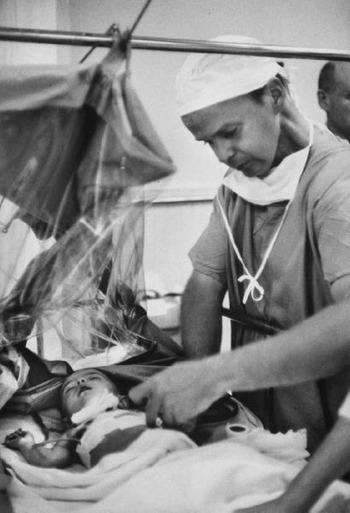
I will start with a question: “How do we get from scenes familiar to us, from a five year old with a ventricular assist device in place for idiopathic cardiomyopathy, or from a neonate on extracorporeal membrane oxygenation (ECMO), to happy, healthy first-graders? In particular, how do we do this in a program of lower volume, one that does not do 800, or 600, or even 400 cases per year? To answer one’s questions, the 17th century English philosopher, Francis Bacon, suggested that “There is surely no greater wisdom than well to time the beginning and onsets of things”.Reference Bacon1 This quote takes us to the man for whom this lecture is named, C. Walton Lillehei, the father of open heart surgery (Fig. 1).
C. Walton Lillehei.

In the early 1950s, the question confronting Lillehei was how to successfully close a ventricular septal defect in a child.Reference Miller2 On a spring day in 1954, Lillehei’s first case in the operating room was a routine inguinal hernia repair. His second case was the first closure of a ventricular septal defect in history. It was carried out in 13 month old Gregory Glidden. Lillehei used the now famous technique of cross-circulation, in which Glidden’s father served as a biological oxygenator for a period of 19 minutes. Over the next year and a half, Lillehei used cross-circulation to perform open heart surgery in 45 children, with an amazingly high success rate. At the time of Glidden’s surgery, Lillehei was only 35 years old. By today’s standards, his surgical training was somewhat abbreviated: two and a half years of clinical surgery, and two years in the laboratory. Lillehei operated with a headlight he had borrowed from an otolaryngologist. He operated without the use of measurements of arterial blood gases, a pulse oximeter, a paediatric ventilator, a pacemaker, or a defibrillator. During surgery, systemic arterial pressure was monitored by a cuff, pulse by a finger on the wrist, and temperature by a thermometer made of glass.Reference Miller2 Lillehei attributed his success to a combination of “persistence and stubbornness”.Reference Lillehei, Varco, Cohen, Warden, Patton and Moller3 To these attributes, we would certainly add skill, courage, vision, and the strength of the team around him.
Over the 50 years since the achievements of Lillehei, the changes which have occurred in all aspects of our field are staggering. One of the most dramatic changes is the spread of congenital cardiac surgery around the world. In 1955, the only 2 surgeons in the world performing open heart surgery were located 90 miles apart in the state of Minnesota: Lillehei at the University of Minnesota in Minneapolis, and John Kirklin at the Mayo Clinic in Rochester. Fifty years later, The Congenital Heart Surgery Practice and Manpower Survey of 2005, performed by The Society of Thoracic Surgeons (STS) Work Force on Congenital Heart Surgery, estimated that congenital cardiac surgery was being performed at approximately 122 programs in the United States of America.Reference Jacobs, Mavroudis, Jacobs, Tchervenkov and Pelletier4 These programs included roughly 250 surgeons. Many of these programs are smaller in size. Analysis of the Congenital Heart Surgery Database of The Society of Thoracic Surgeons from 2002–2006 showed that annual program volume ranged from 66 to 850 cases per year: nearly one third of programs performed less than 150 cases per year and 60% performed less than 250.Reference Welke, O’Brien, Peterson, Ungerleider, Jacobs and Jacobs5 Administrative databases, such as the “Nationwide Inpatient Sample”, estimate that the number of programs with low volume is even larger. In 2006, more than 300 hospitals reported paediatric cardiac surgical discharges; more than two thirds of these hospitals reported less than 100 cases per year.Reference Welke6
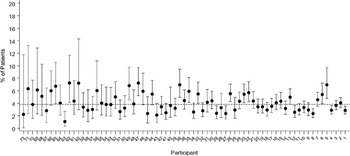
The prevalence of programs with low volume raises the important question of the relationship between the volume of a program and outcomes. The concept that “bigger is better” is hardwired in the American psyche, but is it true when it comes to paediatric cardiac surgery? Many studies have examined this relationship. Some of the most comprehensive and recent data comes from the Congenital Heart Surgery Database of The Society of Thoracic Surgeons. This database is voluntary, and primarily includes programs in the United States. The number of programs in the database has increased over time, with 75 programs from the United States of America participating in 2008.Reference Jacobs, Jacobs, Mavroudis, Lacour-Gayet and Tchervenkov7 Based on the estimate of 122 programs in the United States, as provided by The Congenital Heart Surgery Practice and Manpower Survey of 2005,Reference Jacobs, Mavroudis, Jacobs, Tchervenkov and Pelletier4 this number represents over 60% of the programs in the United States. Figure 2 summarizes overall mortality in the database from 2004–2008.Reference Jacobs, Jacobs, Mavroudis, Lacour-Gayet and Tchervenkov8 Programs are arranged in order of volume, from lowest volume on the left to highest volume on the right. The mean mortality for the entire group was 3.7%. Note that the confidence intervals are wider at lower volume, so we have a less accurate estimate of mortality in programs with lower volume. Many of the confidence intervals overlap with the mean, and with each other, so we cannot reliably detect a difference in outcome between most of the programs with low and high volume. Finally, some larger programs perform less well, as exemplified by program numbers 5 and 6 in Figure 2, while some smaller programs perform well, as exemplified by program number 63 in Figure 2.
Mortality at Discharge: The Congenital Heart Surgery Database of The Society of Thoracic Surgeons; Ninth Harvest, Fall 2008 (July 1, 2004–June 30, 2008). Values are % with 95% confidence intervals. Participants are arranged from lowest volume on the left to highest on the right. Dotted line indicates mean mortality for all participants (3.7%).

In summary, this data shows that the volume of a program, in and of itself, is not a very good indicator of quality. What approach, then, should we take to assess the quality of a program? Of course we can look at the outcome of mortality itself. If we do this analysis, it is important to do it in a risk-adjusted manner. We can also look at outcomes other than mortality, such as morbidity and complications. In the future, it is planned that the Congenital Heart Surgery Database of The Society of Thoracic Surgeons will have increased capability to take both of these approaches. It is therefore important that we all participate in the database! But this still leaves unanswered the question of how we get better. What are the systematic approaches and processes which lead to quality? There are challenges to quality which are specific to both programs with high and low volumes. How do we meet the particular challenges in a program with lower volume? Before attempting to answer this question, and by way of disclosure, I will give you some background about my institution and program.
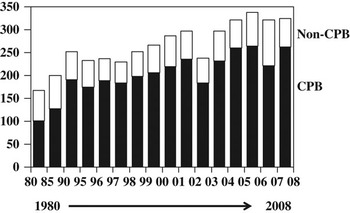
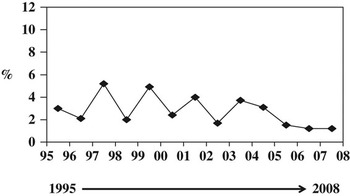
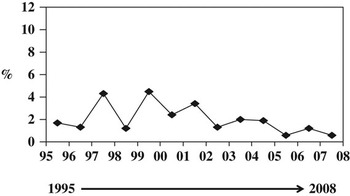
The Medical University of South Carolina (MUSC) was founded in 1824. It is currently a centre of tertiary care containing 700 beds. The Medical University of South Carolina is partially state-funded, so that finances have always been a challenge. Our Children’s Hospital was opened in 1987. It is a “hospital within a hospital”, a hospital for children functioning within a larger hospital for adults. The Medical University of South Carolina is located in Charleston, South Carolina, in the United States of America, and provides the only paediatric cardiac surgical program in the state, which has a population of about 4.5 million people. Paediatric cardiac surgery at The Medical University of South Carolina dates from the 1970s. Nonetheless, when I came to Charleston in 1995, very little of our current program was in place. There were many challenges to building this program, some of them small, and some big. For example, in 1995, the ventilator in the operating room was a “bellows ventilator” designed for patients of adult-size. The cardiopulmonary bypass pump was also designed for adults, both in its size, and its side-effects. Resources and personnel were organized vertically, along traditional departmental lines, rather than horizontally, along patient care or service lines. Figure 3 shows The Medical University of South Carolina’s congenital cardiac surgical volume. This started in the 1980s at about 100 pump cases, and under 200 total cases per year. Our current volume is about 260 cases performed on cardiopulmonary bypass per year, and 325 total cases per year. The percentage of cases in neonates, defined as patients less than 1 month of age, has increased from 7% in the 1980s, to 27% currently. Similarly, the percentage of cases in infants, defined as patients less than 1 year of age, has increased from 25% in the 1980s, to 65% currently. The operative mortality of our program, including deaths in the hospital beyond 30 days after surgery, from 1995 through 2008, has averaged 2.7%, and for the last 3 years it has been 1.2% (Fig. 4). Thirty day mortality over the same time period has averaged 2.0%, and for the last 3 years it has been 0.8% (Fig. 5). Operative survival for the Norwood procedure over the last 5 years has been 89%.
Congenital cardiac surgical annual volume: Medical University of South Carolina, 1980–2008. CPB: cardiopulmonary bypass (black). Non-CPB: non-cardiopulmonary bypass (white).

Operative mortality: Medical University of South Carolina congenital heart surgery program, 1995–2008. Mortality is for all comers, including deaths in the hospital beyond 30 days after surgery. Mean for the entire period = 2.7%. Mean for the last 3 years = 1.2%.

30 day mortality: Medical University of South Carolina congenital heart surgery program, 1995–2008. Mean for the entire period = 2.0%. Mean for the last 3 years = 0.8%.

With this as background, how do we meet the challenges to quality in a program of lower volume? Some of the answers to this question are obvious, while some are less so. At the same time that it presents particular challenges, lower volume also affords some unique opportunities. Of course there is not just a single path to this goal. The following is my colleagues’ and my “Top 10 List” of meeting challenge in a lower volume program.
10 Get a surgeon! This is obviously necessary, although not sufficient for building a surgical program. What kind of surgeon? Technical ability is important, but in practice is just a starting point. In a small program, there are other roles which the surgeon must be both willing and capable of playing. In 1995, when none of our current system of cardiac intensive care was in place yet, one of these roles was the intensivist: whenever I did a Norwood, arterial switch, or similar case, I spent the night in the hospital. Fortunately, after several years, help arrived. The operating room involves a myriad of people and equipment; it is uniquely the surgeon’s environment, but often appears as a “black box” to others. It is ultimately the task of the surgeon to oversee the hundreds of details in the operating room, and to ensure the function of this “black box”. Particularly in a small program, the surgeon may also set the tone for the program. Cardiac surgeons have not been noted for their lack of ego, which may have been fostered by some aspects of traditional surgical training. What kind of tone do you want? Perhaps one encompassing persistence, vision, self-criticism, and patience. Once you have a surgeon, if you can, get a second surgeon. This presence of a second surgeon is important for seamless coverage of the program, without exhausting a single surgeon.
9 Focus on the intensive care. In 1995 at The Medical University of South Carolina, it was clear that our strategy for intensive care would require some changes. Since 1995, we have changed from a combined unit for both paediatric and adult cardiac surgery, to a unit dedicated to paediatric cardiac surgery and cardiology. We have evolved from a system of coverage which included junior residents in general surgery with other coverage responsibilities, to one limited to fellows with paediatric experience who are primarily fellows of paediatric cardiology. This evolution has been important in many ways: not the least of these is the immediate availability of someone in the hospital at night who is capable of intubating a baby. We moved from a unit run by the surgeon, to one run by paediatric cardiac intensivists with active surgical input. The physical plant was improved from an old, cramped 7 bed unit, to a new, spacious 12 bed unit. This change improved the morale of all working there, and decreased “bed pressure”, or the need to move patients out of the unit before medically ready. A side effect of our deliberate focus on the intensive care unit for clinical care, research and training, is that some of our fellows have wanted to stay on as attendings in the intensive care unit. This retention has been a great benefit, given the rarity of paediatric cardiac intensivists.
8 “Blended cardiologists” or “subspecialists who multitask”: A distinct challenge in a smaller program is to have cardiologists who are subspecialists rather than generalists, but still cover all of the areas important to a current program: intensive care, echocardiography, cardiac catheterization, electrophysiology, transplant, adult congenital, Computerized Axial Tomography and Magnetic Resonance Imaging, fetal, exercise physiology, outpatient, and others. One solution is to have each cardiologist concentrate on a single area, generally intensive care, echocardiography, cardiac catheterization, or electrophysiology, and then take on an additional area. A particularly productive combination for us has been to have our intensivists also cover echocardiography. This combination of intensive care and echocardiography has been effective in integrating echocardiography into the intensive care unit, and in providing continuity of care from the operating room, with intraoperative transesophageal echocardiography, to the intensive care unit. The blended cardiologist approach results in a call schedule which provides subspecialty coverage 24 hours a day, 7 days a week, by a comparatively small group, but with enough redundancy to avoid burnout.
7 Maximize monitoring. Another challenge in a small program is the availability of limited personnel in-house, especially during off hours, including nights, weekends, and holidays. In this setting we have found that intensive monitoring provides data, which enables management by anticipation rather than reaction. Monitoring has included the use of intracardiac lines, liberally in the right and left atrium, and less frequently in the pulmonary artery and superior vena cava. Near infrared spectroscopy has been used since 2001, both in the operating room and intensive care unit. Data from monitoring has allowed the use of extracorporeal membrane oxygenation in a planned, rather than emergent fashion. While extracorporeal membrane oxygenation is available at all times, we have not used a system of “rapid extracorporeal membrane oxygenation”, in large part due to limited personnel in-house.
6 Have a quarterback. The quarterback knows what each person on the team is doing, even if he does not call every play. Our quarterback is Andy Atz, who is also the head of the intensive care unit. On a given day, he knows what is going on in the operating room, in the cardiac catheterization laboratory, in the intensive care unit, on the floor, and even around the state. This leadership and knowledge helps in allocation of resources and personnel, and in keeping the focus on the big picture. The opportunity to have an effective quarterback is a unique advantage of a smaller program.
5 Statewide cardiology program. What is the minimum volume necessary to support a program of good quality? While it is difficult to quantify this volume, we would all likely agree that it exists. In Charleston we face the geographical challenge that to the East for 180 degrees, there is only water: good for fishing, but not for outreach clinics. The Children’s Heart Program of South Carolina, started in the 1970s, includes all of the paediatric cardiologists in the state. Patients are followed locally, while surgery and cardiac catheterizations are performed at The Medical University of South Carolina. This statewide system has been instrumental in supporting our volume at a level adequate to provide optimal care. It has also been critical to resisting pressure to start additional surgical programs within the state. We and our patients are indebted to our colleagues from around the state for their support of our program.
4 Advanced practice nurse. Program coherence and autonomy are challenges to any small program, particularly if located in a “hospital within a hospital” setting. Our nurse practitioner, Cathy Rubinstein, has worked with us since 1997, and provides the glue that holds the surgical program together. Before Cathy, the preoperative workup might have been done by an intern from general surgery, intraoperative updates to the family of the patient generally did not occur, and postoperative clinic was run by the surgeon, if available. After Cathy, these responsibilities and many other areas were concentrated in her hands, providing coherent care and communication for the patients and families. A dedicated nurse practitioner is another example of one person having a significant impact in a small program.
3 Do clinical research. In a small program, it is a challenge to contribute new knowledge. In looking for inspiration from the literature from the era of 1995, I found papers describing 470 patients undergoing an arterial switch operation,Reference Wernovsky, Mayer, Jonas, Hanley, Blackstone, Kirklin and Castaneda9 and 400 patients undergoing a hemi-Fontan operation.Reference Jacobs, Rychik, Rome, Apostolopoulou, Pizarro, Murphy and Norwood10 Such large clinical experiences will obviously never come out of a small program. One alternative is to ask a more focused question. For us this took the form of looking at specific interventions in the intensive care unit, for example, “Does hyperventilation improve oxygenation after a superior cavopulmonary connection?”, or “Is high inspired oxygen (FiO2) harmful to a patient after a Norwood procedure”.Reference Bradley, Simsic and Mulvihill11, Reference Bradley, Atz and Simsic12 Another alternative is to participate in multi-institutional studies, such as those conducted by the Congenital Heart Surgeons’ Society (CHSS), or the Pediatric Heart Network (PHN). While a small program will contribute fewer patients to such studies, a potential advantage in a small program is uniform “buy-in” to the study, with resultant high enrollment. For example, the rate of consent at The Medical University of South Carolina for the “Infant Single Ventricle Trial” of the Pediatric Heart Network, studying Enalapril, was 82%, compared to the average in the Network average of 43%, and for the “Single Ventricle Reconstruction Trail” of the Pediatric Heart Network, comparing the modified Blalock-Taussig Shunt to the right ventricle to pulmonary conduit, was 100%, compared to the average in the Network of 83%.Reference Atz13 We have also found it helpful to incentivize research, by linking academic productivity to reimbursement in our practice plans for both paediatric cardiac surgery, and paediatric cardiology.
2 Know your limitations. This concept is of course derived from one of the memorable movie lines of Clint Eastwood: “A man’s got to know his limitations”.14 Application of this concept to our profession may mean not undertaking certain operations or programs: for us it has been transplantation of lungs. Alternatively, it may apply to individual patients: in the absence of key personnel, such as the surgeon, a patient may need to be sent out to another institution. How often this scenario occurs will depend on the size of a program, but sending out individual patients can be the right thing to do, for both the patient and the program.
1 Teamwork. Books have been written, and courses have been conducted on this topic, but good teamwork remains surprisingly elusive. A team works, at least in part, by communication, which may actually be easier to achieve with a smaller team. This communication can take the form of multidisciplinary rounds, and formalized transfer of patients from the operating room to the intensive care unit, the so called “Formula 1 handoff”. It can come from regularly scheduled meetings of the various components of the team, both formal and informal. At the core of most paediatric cardiac teams is the relationship between surgeon and cardiologist. This symbiotic relationship is perhaps unique in medicine. Each of us well understands the strengths and weaknesses of the other. The cardiologists look at my work with a transesophageal echocardiogram in the operating room before the chest of the patient is even closed, look again with an echocardiogram in the intensive care unit, and look again later on in the cardiac catheterization laboratory. The nature of our communication is important. What are the “ABC’s” of communication? The anaesthetic version is reportedly “Airway, Bagel, Coffee”, or does it stand for “Assess, Blame, Criticize”, or perhaps “Always blame cardiology”? Good communication comes from a mutual desire for cooperation, for resonance rather than dissonance. In the end, we get from the five year old with a ventricular assist device in place, to the smiling first-grader, and do it consistently, by communication and teamwork.
Good things do come in small packages. In a smaller program there is a little more time, and a little less pressure:
• time to make sure the preoperative diagnosis is correct,
• time to do the complex elective case on a Monday morning rather than a Friday afternoon,
• time to keep the patient in the intensive care unit a few extra days,
• time for personal attention to the patients and their families.
And they appreciate it – their notes tell us so. Some are brief and to the point, some are long and flowery. The best are from the patients themselves:
“Dear Dr Bradley: How are you? I feel great! Thank you for fixing my aorta. I am going back to school tomorrow. My friends like my scar. Thanks again for fixing me. Love,”