





Architectural design plays a pivotal role in shaping human experiences, influencing a broad spectrum of psychological and emotional responses. Reference Roessler1 It can evoke sensations of openness and autonomy or, conversely, impose structure and control. Its impact on the perception and utilisation of public spaces is well established, including in healthcare environments, where design elements contribute to patient well-being and institutional function. Reference Bates2 Psychiatric facilities historically employed architecture to confine and isolate, reinforcing stigma. Institutional design has long mirrored prevailing ideologies; before Philippe Pinel’s reforms, patients were restrained in cells, chained to poles or ceilings, and slept on straw – reflecting the era’s social attitudes and therapeutic practices. During the asylum era, psychiatric institutions offered basic care, including beds, hygiene and treatment. However, patients remained under constant supervision in large dormitories, sometimes housing up to 20 individuals. The architecture of these institutions was often monumental and imposing, reflecting the era’s custodial approach. Some modern psychiatric hospitals still reflect elements of historical stigma in their design and structure. Reference Bodryzlova, Lemieux, Dufour, Côté, Lalancette and Crocker3 Following the recommendations of a 2019 systematic review, which emphasised that psychiatric facility design should be guided by research evidence, it is essential to base any future restructuring of psychiatric facilities on an empirical, evidence-based foundation. Reference Jovanović, Campbell and Priebe4 The architecture and design of psychiatric hospitals should support trust and collaboration between patients and staff, promote autonomy, ensure safety and encourage social interactions among patients, to promote recovery. There is increasing evidence that optimising the physical environment of in-patient care positively affects staff efficiency, shortens treatment duration, Reference Jovanović, Miglietta, Podlesek, Malekzadeh, Lasalvia and Campbell5 enhances patient–staff relationships Reference Jovanović, Miglietta, Podlesek, Malekzadeh, Lasalvia and Campbell5 and helps patients feel safer and more in control. Reference Jovanović, Miglietta, Podlesek, Malekzadeh, Lasalvia and Campbell5 Patient satisfaction is widely regarded as a key indicator of care quality across medical fields, with higher satisfaction linked to better outcomes. Reference Nepal, Keniston, Indovina, Frank, Stella and Quinzanos-Alonso6 Early treatment satisfaction is closely associated with improved psychiatric outcomes and reduced rates of readmission to hospital. Reference Priebe, Barnicot, McCabe, Kiejna, Nawka and Raboch7 However, the complex relationship between structural elements, patient treatment satisfaction and measures of outcome quality has yet to be thoroughly explored in the psychiatric setting. Reference Jovanović, Miglietta, Podlesek, Malekzadeh, Lasalvia and Campbell5
The University Psychiatric Clinics (UPK) Basel, located in Basel, North-West Switzerland, aim to create an optimal infrastructure for psychiatric care in the coming decades through the construction of a new facility. In the present work, a feasibility study and patient survey were conducted. We aimed to assess patient views on the structural and design aspects of our current clinic and their preferences for a new facility. This study served a dual purpose: to inform the ongoing restructuring and rebuilding project of our clinic, as well as to gain general insights into patient preferences that can guide future psychiatric healthcare facility architecture and planning. The present study forms the second part of a two-part series on patient perspectives relevant to the design of future psychiatric hospitals; the first part examined patients’ views on open-door policies and locked-ward treatment. Reference Liwinski, Davidson, Sarlon, Gaupp, Imfeld and Brühl8 An earlier, non-peer-reviewed version of the present analysis is available as a preprint. Reference Davidson, Liwinski, Gaupp, Imfeld, Brühl and Vogel9
Method
Psychiatric centre
The UPK Basel at the University of Basel provide comprehensive psychiatric care for approximately 190 000 residents in Basel and its surrounding areas. Throughout the study period, the adult clinic maintained a stable in-patient capacity of 277 beds. The UPK Basel employs a decentralised, modular ‘track units’ model, organising care based on symptoms and syndromes. Reference Liwinski, Bocek, Schmidt, Kowalinski, Dechent and Rabenschlag10 This structure enables stage-specific, individualised treatment across both in-patient and out-patient settings. Reference Leweke, Hirjak, Staudter, Borgwedel, Coenen-Daniel and Heser11 In practical terms, a track unit is a syndrome-specific ward, or a small group of wards, dedicated to a defined diagnostic spectrum. For the present analysis, individual wards were aggregated into the higher-order architectural complexes described below; throughout this article, the term ‘cluster’ refers to these complex-level groupings rather than to a single track unit. As of 31 December 2023, the UPK Basel employed 834 full-time staff members. In recent years, bed occupancy has remained stable at approximately 92.0%, with an average length of stay of 37.8 days in 2023. 12
Architectural modernisation plan
The UPK Basel’s predecessor institution, the so-called ‘Friedmatt’, opened in 1886 and was constructed according to the so-called pavilion plan with free-standing, symmetrically arranged buildings, resembling regular residential properties, placed within a park styled in the English fashion. Reference Coray, Marques and Vlček13 The progressive architecture and layout were mirrored by a liberal form of psychiatric care based on the open-door and no-restraint principles, as conceptualised by Robert Gardiner Hill (1811–1878) and John Conolly (1794–1866). Reference Haenel14,Reference Goddemeier15 It can be surmised that from a historical point of view, progressive psychiatric care had continuously been closely associated with innovative architectural and structural design. The UPK Basel have systematically modernised their historical 19th-century infrastructure, integrating complementary structures from the 1960s onward, resulting in a diverse architectural ensemble. To provide context, an overview of key characteristics of the various complexes and wards within our clinic is outlined below.
The S- and U-compound structures, built in the 1960s, are characterised by a utilitarian, functional design, with flat roofs, long and predominantly windowless central corridors, low ceilings and monochrome polyvinyl flooring. The interior has been partially renovated. The U-compound (50 beds, 2 isolation rooms) is designated for patients with substance use disorders, whereas the S-compound comprises 2 wards for psychotic disorders (35 beds, 2 isolation rooms), a ward for affective disorders (19 beds) and a unit specialising in the treatment of anxiety and/or obsessive–compulsive disorders (17 beds).
The pavilions (unit C and the PTA unit) are three-storey manorial buildings, constructed in 1886, and they feature high ceilings, large windows, ample natural light and wooden flooring. Ward C (18 beds) is focused on treating patients with first episodes of psychosis and mania, whereas the PTA unit (18 beds) specialises in treating patients with personality and eating disorders.
The private wards comprise two three-storey manorial buildings, also constructed in 1886, and feature high ceilings, large windows, abundant natural light and wooden flooring. These private wards, offering a total of 34 beds, differ from other clinic wards in that they exclusively provide single-occupancy patient rooms. Although the label ‘private’ derives from the supplementary insurance class associated with these wards, their defining structural characteristic for the purposes of the present study is the provision of exclusively single-occupancy rooms. We therefore treat this ward type as a natural comparator for room configuration rather than as a marker of funding status, and the difference reported below should be read in that light.
Building P is a 2-storey structure from 1920, which has been modernised, and houses elderly patients (23 beds) and those with affective disorders (22 beds).
Building E was constructed in 1911 and accommodates the ward for elderly patients with psychosis and mania (12 beds, 1 isolation room) as well as the ward for behavioural addictions (12 beds).
The Crisis Intervention Unit (12 beds), formerly part of the University Hospital Basel near the city centre, is now located on the UPK Basel campus in a newly renovated building originally constructed in 1886 and later expanded. Responses from these patients primarily reflect their prior experiences in the previous unit.
Finally, the UPK Basel campus spans 14 hectares, with approximately 8 hectares dedicated to green spaces, featuring a diverse range of trees (including a 130-year-old Giant Sequoia), shrubs, a pond, flowering meadows and sculptural artwork.
In alignment with the institution’s historical legacy, since 2012, under current leadership, the UPK Basel have reintroduced and advanced progressive clinical practices emphasising open-door and no-restraint principles. This strategic shift has yielded significant reductions in coercive measures, including seclusion and forced medication, thereby enhancing patient satisfaction and therapeutic outcomes. Reference Kowalinski, Hochstrasser, Schneeberger, Borgwardt, Lang and Huber16,Reference Huber, Schneeberger, Kowalinski, Fröhlich, von Felten and Walter17 Consistent with these principles, the large majority of wards are operated as open units and most admissions are voluntary; involuntary admissions and temporarily locked-ward settings (for example, on the basis of a court order or acute risk) are the exception, and are kept as brief as is clinically justifiable. Because access to the surrounding park is more readily available to patients on open wards, individuals treated on temporarily restricted wards may have had more limited spontaneous access to green space – a consideration we return to when interpreting the high value respondents placed on outdoor areas. Given the increasing population in Basel and surrounding regions, 18 alongside the rising demand for psychiatric care in Switzerland, there is a growing need for the expansion and modernisation of the UPK Basel’s infrastructure. In line with recommendations emphasising that psychiatric facility design should be guided by research evidence, Reference Jovanović, Campbell and Priebe4,Reference Jovanović, Miglietta, Podlesek, Malekzadeh, Lasalvia and Campbell5 we opted for an evidence-based approach and realised it in the form of the present study.
A site plan of our clinic campus can be found in Supplementary File 1. Representative photographic impressions of the buildings and campus are collectively provided in Supplementary File 2.
Survey
This study, conducted in September 2023 at the UPK Basel, utilised a hybrid questionnaire to assess patient preferences regarding psychiatric in-patient settings. Key factors were drawn from a meta-review, focusing on ward environment, spatial design, patient autonomy, legal status and expectations at admission and discharge. Reference Modini, Burton and Abbott19 An interdisciplinary team, including physicians, nurses, psychologists, former patients, peers, quality experts and a hospital architecture specialist, developed the questionnaire, covering four key domains: person, room, ward and clinic. Using Likert scales, multiple-choice and binary questions, along with open-ended responses for qualitative insights, the survey assessed patient preferences and needs. A stratified random sample of 3163 individuals with in-patient experience (April 2021 to August 2023) was drawn from the hospital’s patient registry. Survey distribution combined electronic invitations (44.8%) via email and paper questionnaires with prepaid return envelopes for those without email access. The online survey was conducted with the Enterprise Feedback Suite by Tivian (Tivian XI GmbH, Cologne, Germany: https://www.tivian.com/de/ressourcen_/broschure-enterprise-feedback-suite/). Survey data collection continued until the end of October. Student assistants processed the paper questionnaires with Remark Office OMR (Optical Mark Recognition) version 12 (Gravic, Inc., Malvern, Pennsylvania, USA; https://remarksoftware.com/products/office-omr/) to extract and digitise the responses.
Sample size planning
In 2023, UPK Basel treated 3120 in-patient cases. Historical data suggested a response rate of nearly 20% for similar surveys among this patient population. To ensure adequate statistical power, we chose a stratified random sample of over 3000 former patients. This method surpassed the required sample size calculated with Cochran’s formula, Reference Barlett, Kotrlik and Higgins20 which determined 246 individuals sufficient to estimate the population proportion with a 5% margin of error at a 95% confidence level, assuming a 20% response rate. We received 604 usable responses, ensuring a robust basis for analysis. Research indicates that even with response rates as low as 4%, survey results can remain largely unbiased when the sample size is sufficiently large. Reference Hellevik21
Data analysis
All statistical analyses were conducted with R version 4.4.0 (The R Foundation for Statistical Computing, Vienna, Austria; https://cran.r-project.org/src/base/R-4/). Descriptive statistics are presented as absolute numbers and frequency distributions in percentages. An exploratory statistical analysis was conducted to assess the association between room satisfaction and track unit experience, using binary logistic regression with R’s glm function. Track units were grouped according to the previously introduced complexes and dummy-coded as binary variables. All figures were generated in Python (version 3.12.3; Python Software Foundation, Beaverton, Oregon, USA, https://www.python.org/downloads/release/python-3123/); the bar charts (Figs 1–5) were produced with Matplotlib (version 3.10; The Matplotlib Development Team (fiscally sponsored by NumFOCUS, Inc.), Austin, Texas, USA; https://matplotlib.org/stable/install/) and the free-text word cloud (Supplementary File 3) was produced with the WordCloud library Reference Mueller22 (version 1.9.6; Andreas Mueller and contributors, distributed via the Python Package Index; https://pypi.org/project/wordcloud/), after importing and processing the survey data via pandas (version 3.0; pandas Development Team (fiscally sponsored by NumFOCUS, Inc.), Austin, Texas, USA; https://pandas.pydata.org/getting_started.html), NumPy (version 2.4; The NumPy Developers (fiscally sponsored by NumFOCUS, Inc.), Austin, Texas, USA; https://numpy.org/install/) and pyreadstat (version 1.3; Otto Fajardo and contributors, Basel, Switzerland; https://pypi.org/project/pyreadstat/).
The free-text responses were processed in Python, using the pandas and NumPy libraries. Reference McKinney23,Reference Harris, Millman, van der Walt, Gommers, Virtanen and Cournapeau24 Preprocessing steps included converting text to lowercase, removing punctuation, numbers, stop words and uninformative words, as well as merging singular and plural forms to improve consistency.
Ethics
The questionnaire design and patient survey were part of a clinical quality development project aimed at optimising the design process for future clinic infrastructure. In accordance with current national regulations, need for ethics approval was waived by an ethics committee, as the data analyses for this study involved only secondary data with no identifiable personal information. A corresponding waiver was obtained from the Ethics Committee of Northwest and Central Switzerland for this study (reference: Req-2024-00502).
Results
Respondents characteristics
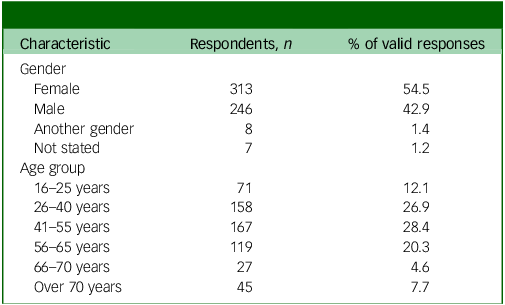
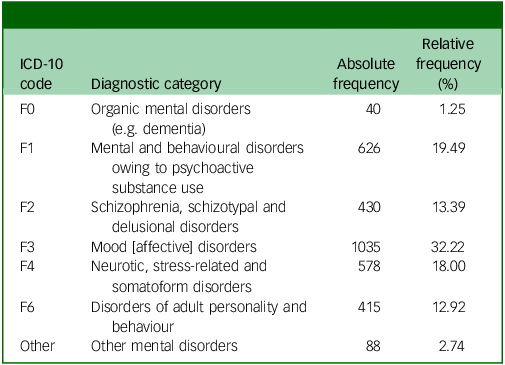
Of the 3163 surveys distributed, 604 individuals responded, resulting in a response rate of 19.1%. Because the survey was conducted on a deliberately and fully anonymous basis, returned questionnaires could not be linked to individual electronic health records. We are therefore able to describe the diagnostic composition of the invited source population, drawn from the hospital registry, but cannot attribute a clinical diagnosis to any individual respondent. Among the 3212 former patients invited, the most common primary diagnosis was mood (affective) disorder (32.22%; ICD-10 code F3), followed by mental and behavioural disorders owing to psychoactive substance use (19.49%; ICD-10 code F1; Table 1). The characteristics that respondents reported about themselves are summarised in Table 1: 313 (54.5% of valid responses) identified as female and 246 (42.9%) as male, with the remainder identifying as another gender or preferring not to state; the age distribution was 16–25 years (12.1%), 26–40 years (26.9%), 41–55 years (28.4%), 56–65 years (20.3%), 66–70 years (4.6%) and >70 years (7.7%).
Self-reported characteristics of survey respondents (n = 604)

Table 1 Long description
A table summarizing the characteristics of survey respondents, including gender and age distribution. The table has 12 rows and 3 columns. The columns are labeled Characteristic, Respondents, n, and % of valid responses. The rows are grouped into two main categories: Gender and Age group. Under Gender, the data is as follows: Female, 313 respondents, 54.5 percent; Male, 246 respondents, 42.9 percent; Another gender, 8 respondents, 1.4 percent; Not stated, 7 respondents, 1.2 percent. Under Age group, the data is as follows: 16-25 years, 71 respondents, 12.1 percent; 26-40 years, 158 respondents, 26.9 percent; 41-55 years, 167 respondents, 28.4 percent; 56-65 years, 119 respondents, 20.3 percent; 66-70 years, 27 respondents, 4.6 percent; Over 70 years, 45 respondents, 7.7 percent.
Percentages are calculated from the number of valid (non-missing) responses to each item; gender was not stated by 30 respondents and age was not stated by 17 respondents. Primary diagnosis is reported only for the invited source population (Table 1), because the deliberately anonymous design precludes linkage of returned questionnaires to clinical records.
We regard the survey’s anonymity as a methodological strength rather than a shortcoming. In a population that frequently experiences stigma, full anonymity encourages candid responses and reduces social-desirability bias, and it was a precondition of the data protection framework under which the project was approved. The unavoidable trade-off is that respondent-level diagnoses are, by design, unavailable; representativeness with respect to diagnosis therefore has to be inferred from the invited population (Table 2), rather than verified directly within the respondent sample.
Diagnostic distribution of invited former in-patients (n = 3212)

Table 2 Long description
A table showing the diagnostic distribution of invited former in-patients. The table has six rows and four columns. The columns are labeled ICD-10 code, Diagnostic category, Absolute frequency, and Relative frequency. The rows are as follows: Row 1: ICD-10 code: F0, Diagnostic category: Organic mental disorders (e.g., dementia), Absolute frequency: 40, Relative frequency: 1.25 percent. Row 2: ICD-10 code: F1, Diagnostic category: Mental and behavioural disorders owing to psychoactive substance use, Absolute frequency: 626, Relative frequency: 19.49 percent. Row 3: ICD-10 code: F2, Diagnostic category: Schizophrenia, schizoid and delusional disorders, Absolute frequency: 430, Relative frequency: 13.39 percent. Row 4: ICD-10 code: F3, Diagnostic category: Mood [affective] disorders, Absolute frequency: 1035, Relative frequency: 32.22 percent. Row 5: ICD-10 code: F4, Diagnostic category: Neurotic, stress-related and somatoform disorders, Absolute frequency: 578, Relative frequency: 18.00 percent. Row 6: ICD-10 code: F6, Diagnostic category: Disorders of adult personality and behaviour, Absolute frequency: 415, Relative frequency: 12.92 percent. Row 7: ICD-10 code: Other, Diagnostic category: Other mental disorders, Absolute frequency: 88, Relative frequency: 2.74 percent.
Given the assumption that patient preferences were shaped by recent ward experience, respondents were grouped according to the architectural complex – here, termed a cluster – in which they had been treated; as defined in the Method, these clusters map onto the clinic’s track-unit organisation. The resulting groups were of broadly similar size, with no marked imbalance in the number of respondents per complex. Together with a near 1:1 female:male ratio and a fairly even age distribution, this supports a transdiagnostic depiction of patient preferences regarding structural elements and treatment settings, while acknowledging the diagnostic caveat noted above.
Room satisfaction
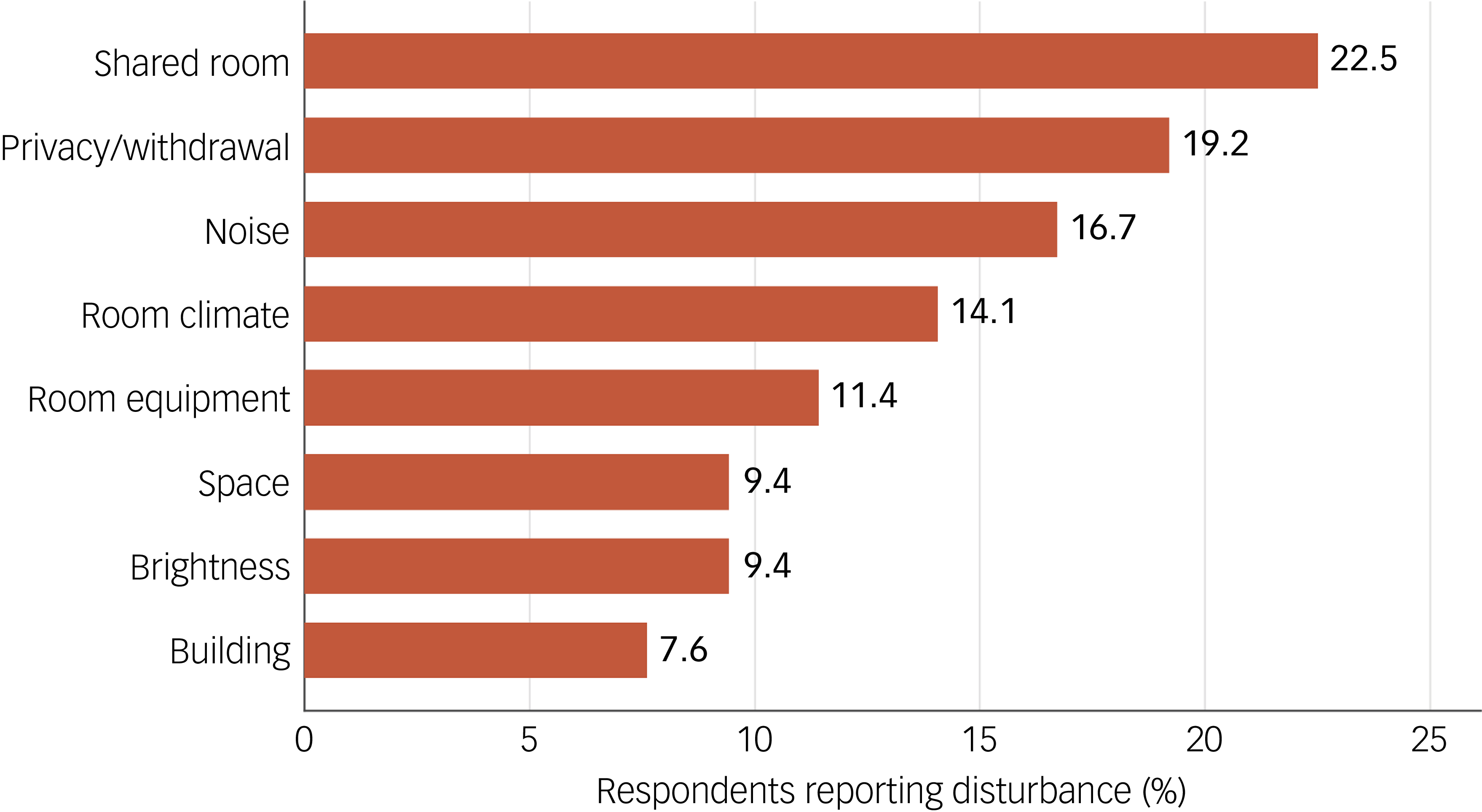
In total, 49% (282) of respondents reported being disturbed by some aspect of their room, whereas 51% (294) indicated no disturbances. This highlights a significant opportunity for improving patient satisfaction through targeted modifications to room features. In the analysis of closed-response questions on common room features, the elements most frequently reported as disturbing were shared rooms (22.5%), followed by a lack of privacy or withdrawal opportunities (19.2%) and noise (16.7%); the full ranking of features by the proportion of respondents reporting disturbance is shown in Fig. 1. Conversely, the room features least often reported as disturbing were the overall building (reported as disturbing by only 7.6% of respondents) and room brightness (9.4%).
Room features reported as disturbing, ranked by the percentage of respondents (n = 604) reporting disturbance.

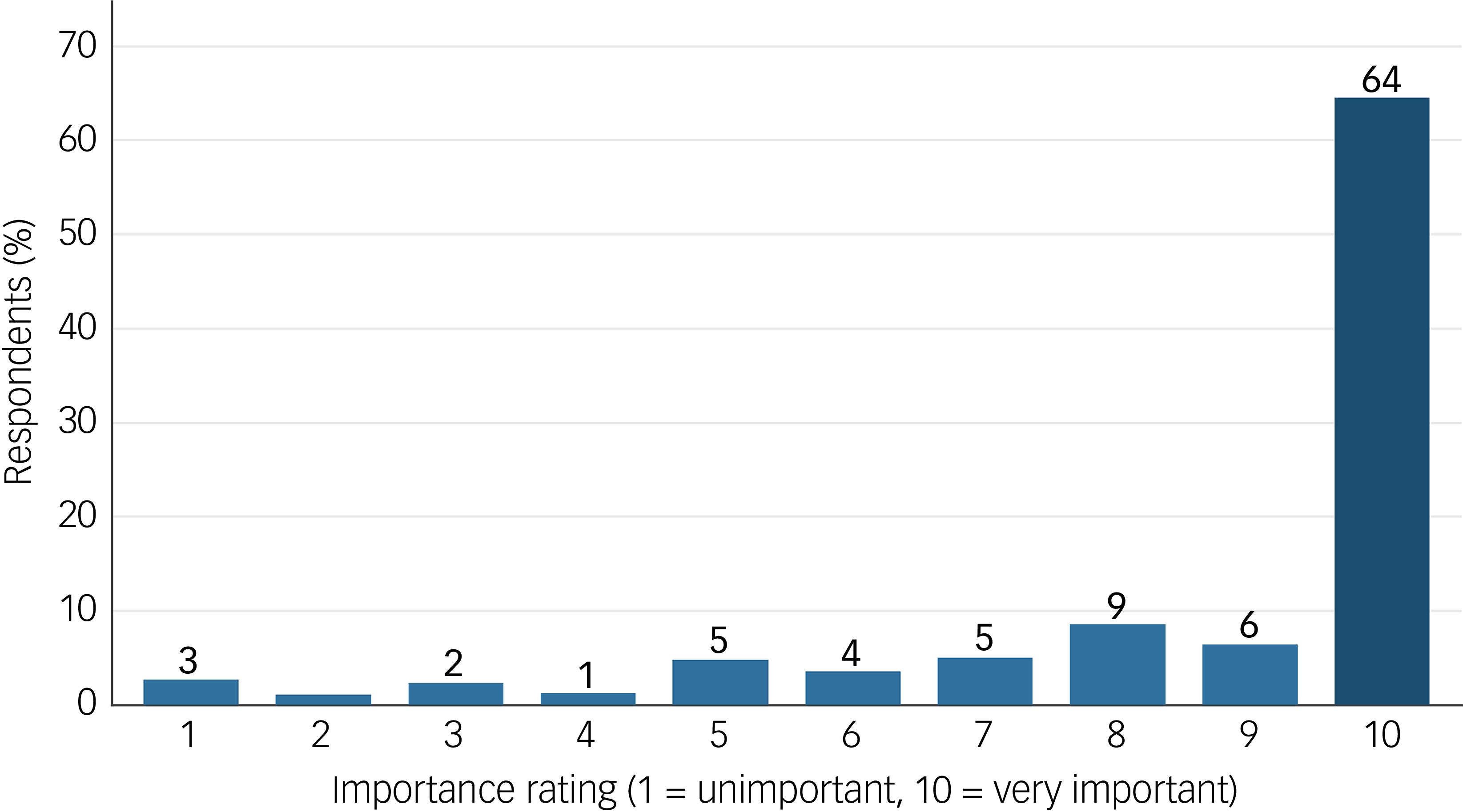
Additionally, when rating the importance of a single private room on a 10-point Likert scale, 64% of respondents rated it as ‘very important’, giving it a score of 10 out of 10 (Fig. 2).
Rated importance of a single-occupancy room (1 = unimportant, 10 = very important); 64.5% gave a rating of 10 out of 10.

The word cloud generated from the responses reveals several key themes that reflect respondents’ primary concerns regarding their accommodations (Supplementary File 3). One of the most prominent issues is related to night-time comfort and sleep quality. Terms such as ‘sleep’, ‘night’ and ‘bed’ stand out, indicating that respondents experienced significant discomfort during the night, with the bed emerging as a particular source of distress. This discomfort appears to have disrupted sleep quality, which was further exacerbated by references to ‘noises’ and ‘windows’. These elements suggest that external disturbances and issues with window functionality, such as the inability to open or close windows properly, contributed to sleep disturbances. Privacy and personal space also emerged as critical concerns. The frequent appearance of words like ‘single’, ‘space small’ and ‘roommates’ points to a lack of privacy and insufficient personal space. Sharing rooms with others was a common issue, leading to discomfort and an absence of privacy, both of which are crucial for mental well-being and recovery. Perceived sanitation and hygiene deficiencies were another significant issue, as highlighted by words such as ‘toilet’, ‘shower’ and ‘ventilation’. Problems with ventilation, showers or toilets likely created a less comfortable environment. The overall atmosphere and environment of the accommodations were at times described as ‘clinical’ or ‘sterile’. Finally, the importance of light and windows in creating a conducive environment for healing is underscored by the frequent mention of these terms.
Because the word cloud reduces free-text answers to individual terms, it necessarily loses some of the nuance and richness of patients’ own formulations, and the potential value of their verbatim wording. To complement it, we therefore also report a selection of representative verbatim responses (translated from German), which convey these concerns in patients’ own words.
The wish for privacy and a single room was expressed directly and emphatically – for example, ‘I just wanted to be alone in a room!’ and ‘One room per patient is most important for recovery!’ Shared accommodation was repeatedly linked to distress and to a loss of dignity: one respondent placed in a three-bed room described feeling ‘ashamed’ and that the situation was ‘almost degrading’, whereas another reported, ‘I have and had extreme insomnia, and no one cared that I had loud roommates.’ Sleep, light and ventilation recurred frequently, as in ‘Windows without blinds, thus too bright to sleep’ and in the remark that a window that ‘could not be opened’ detracted from an otherwise good room. The ward atmosphere formed a further theme, captured by descriptions such as ‘Very sterile – looked somewhat like a prison cell’ and rooms experienced as ‘clinical and cold’. These accounts reinforce the quantitative findings, placing shared rooms, privacy, sleep and the sensory environment at the centre of patients’ concerns.
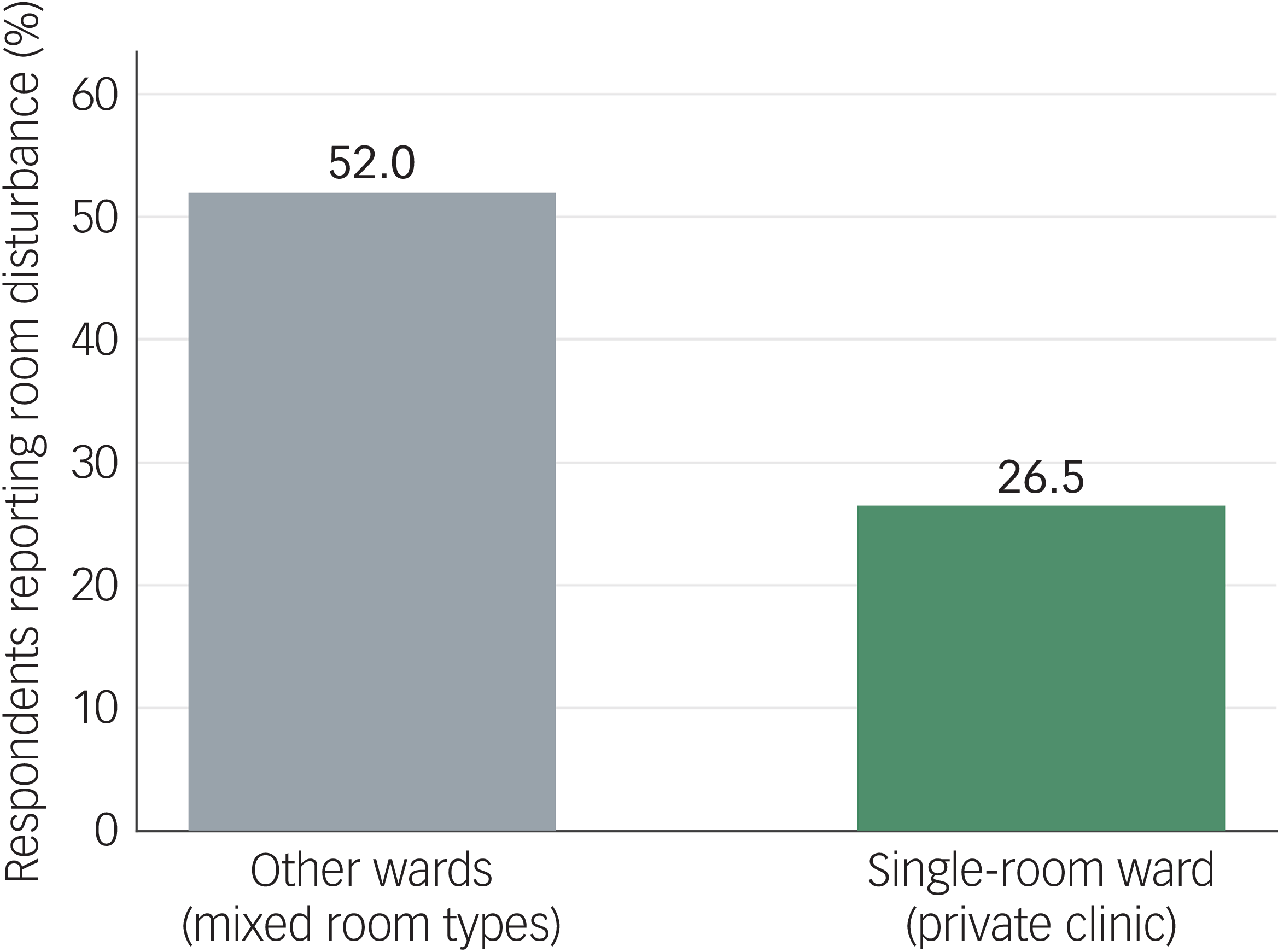
We conducted an exploratory binary regression analysis to predict whether patients reported being disturbed by any room features based on the hospital complex or ward they were treated in. No significant differences were found among the wards that do not provide exclusively single-occupancy rooms (hereafter non-private wards; all p > 0.05). However, treatment on the ward offering exclusively single-occupancy rooms – designated the ‘private clinic’ in the original survey instrument, a label that denotes this ward configuration rather than any difference in healthcare funding or insurance status – was associated with a significantly higher satisfaction rate, with only 26.5% of participants reporting any disturbance (β = −1.08, p = 0.013; Fig. 3).
Respondents reporting any room disturbance on the single-room ward (private clinic) versus the other, mixed room-type wards.

Facilities and amenities preferences
The presence of the surrounding park environment was identified as crucial by 74% of respondents, rating it as ‘very important’ (10/10), similar to the importance attributed to access to outdoor areas (75%, 10/10). In our analysis of hospital design preferences, 63.6% of respondents favoured a diagnosis-specific unit structure, supporting the organisational model of the UPK Basel’s track system. An even stronger preference emerged for accessible garden areas, endorsed by 71.4% of participants. This exceeded the perceived importance of common rooms, group therapy spaces, fitness facilities, art and music therapy options, and on-campus restaurant access (Fig. 4).
Ward and clinic design features ranked by the percentage of respondents (n = 604) endorsing each.

Notably, 68% of respondents opposed the separation of older individuals, emphasising a strong preference for integrative, age-inclusive care models. Regarding the question about optimal ward size, the majority of respondents (37.6%) preferred smaller wards with 8–12 patients. Another 23% found a ward size of 13–16 patients acceptable, whereas only 5.6% considered 17–20 patients suitable. Meanwhile, 33.8% had no specific preference.
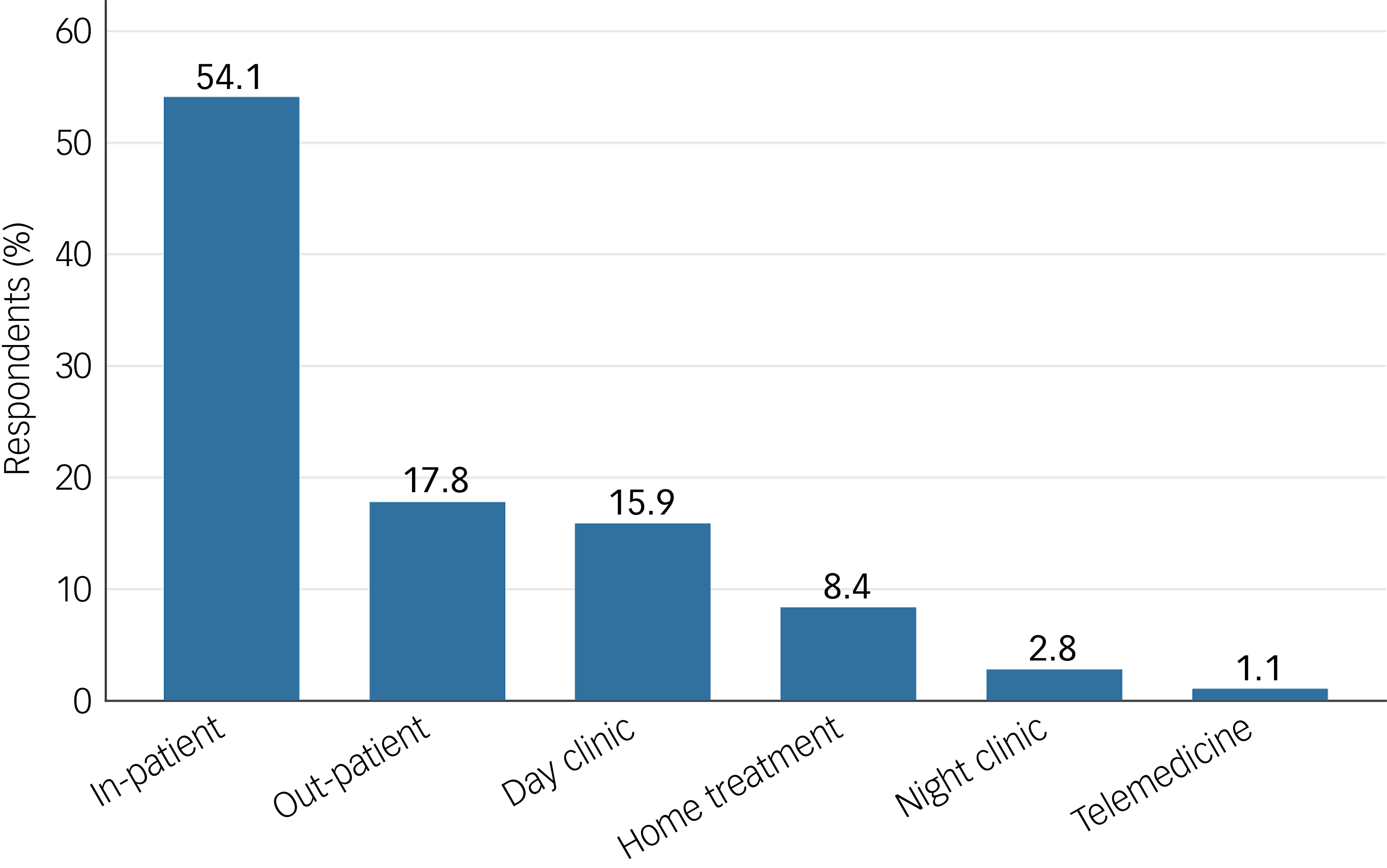
Regarding participants’ preferred treatment settings, 54.1% indicated a preference for in-patient care, and an additional 15.9% favoured day clinic treatment. Out-patient care was selected by 17.8% of respondents. Alternative treatment models, including home treatment (8.4%), night clinic care (2.8%) and telemedicine (1.1%), were less frequently endorsed (Fig. 5).
Preferred treatment setting (percentage of respondents).

Discussion
A strong preference for single-occupancy patient rooms emerged in our study, with shared accommodation frequently cited as a source of dissatisfaction. Despite this, empirical data on the impact of single-occupancy patient rooms in psychiatric settings remain limited. Our findings align with studies in general hospital environments, where patients report a preference for single-occupancy patient rooms because of privacy, comfort and flexibility. Reference Maben, Griffiths, Penfold, Simon, Anderson and Robert25 Evidence from intensive care units suggests single-occupancy patient rooms reduce noise disturbances and improve patient outcomes. Reflecting these benefits, architectural guidelines in the USA and several European countries now mandate single-occupancy patient rooms in new hospital designs. Studies highlight advantages such as reduced infections, fewer transfers, improved sleep and enhanced confidentiality. Reference Maben, Griffiths, Penfold, Simon, Anderson and Robert25,Reference van de Glind, de Roode and Goossensen26 A systematic review further supports single-occupancy patient rooms as predominantly beneficial. Reference Taylor, Card and Piatkowski27 Unsurprisingly, the private clinic, which offered only single-occupancy patient rooms, reported the highest patient satisfaction with room features. These findings suggest that public psychiatric in-patient care may also benefit from increased single-occupancy patient room availability. Conducting prospective trials on single-occupancy patient rooms in psychiatry remains challenging for financial, practical and ethical reasons. Reference Ulrich, Bogren, Gardiner and Lundin28 Although some studies suggest that single-occupancy patient rooms enhance privacy, reduce stress and mitigate aggression, Reference Ulrich, Bogren, Gardiner and Lundin28,Reference Stolker, Nijman and Zwanikken29 others have found no significant impact on patient satisfaction. Reference Jovanović, Miglietta, Podlesek, Malekzadeh, Lasalvia and Campbell5 Privacy concerns, particularly in psychiatric care, have been emphasised because of the sensitive nature of consultations and diagnoses. Nevertheless, shared rooms may provide social support, reduce loneliness and enhance safety by allowing fellow patients to alert staff in crises. Sleep disturbances, particularly difficulties initiating and maintaining sleep, are highly prevalent among psychiatric in-patients and represent a critical yet often overlooked concern. Our findings align with existing literature, underscoring the near-ubiquitous nature of insomnia symptoms in psychiatric wards. This is particularly worrisome, given the growing recognition of sleep disturbances as a key yet underexplored factor contributing to both the symptoms and functional impairment associated with psychiatric disorders. Notably, sleep improvement has demonstrated transdiagnostic benefits in psychiatric populations, enhancing overall well-being. Reference Sheaves, Isham, Bradley, Espie, Barrera and Waite30 Although empirical evidence remains surprisingly limited, Reference van de Glind, de Roode and Goossensen26 expert opinion suggests that single-occupancy patient rooms may facilitate better sleep quality. Additionally, as recently demonstrated during the COVID-19 pandemic, single-occupancy patient rooms offered logistical advantages for infection control by reducing the spread of infections and simplifying isolation measures. This highlights the need to prioritise the expansion of single-occupancy patient room availability in psychiatric in-patient settings. Most existing research on single-occupancy patient rooms is based on general hospital settings, underscoring the need for qualitative as well as quantitative studies, including randomised controlled trials, to evaluate their specific impact in psychiatric care. Given the overwhelming preference for single-occupancy patient rooms observed in our cohort, single rooms should form the predominant configuration of future in-patient wards. Retaining a small, clearly designated proportion of shared or higher-observation rooms may nonetheless serve specific clinical situations; for example, patients in acute crisis who benefit from continuous observation, those at elevated risk who should not be left alone, or individuals who explicitly prefer the reassurance of company. We acknowledge that combining room types carries practical trade-offs: when a patient’s condition changes and closer observation becomes necessary, reallocating beds can necessitate relocations that, particularly at full occupancy, may disturb several patients simultaneously. A predominantly single-room design supplemented by only a limited number of purpose-designated shared rooms may therefore best reconcile the strong patient preference for privacy with these operational realities.
Although this study was conducted in general rather than forensic psychiatry, the security dimension of the physical environment remains relevant to everyday risk management on general psychiatric wards. The widely used trinity model of security distinguishes three interdependent components: environmental (or physical) security, relational security arising from therapeutic staff–patient contact and procedural security embodied in policies and routines. Reference Kennedy31 Design decisions concerning single rooms, sight lines, communal areas and access to outdoor space inevitably interact with all three dimensions. Single-occupancy rooms, for example, enhance privacy and dignity, but may reduce passive observation, placing greater weight on relational and procedural safeguards; conversely, well-designed communal and green spaces can strengthen relational security by facilitating therapeutic contact. Considering the trinity model alongside patient preferences may therefore help reconcile the goals of a calming, dignity-preserving environment with the safety requirements of acute in-patient care.
Patients rated the surrounding park of our clinic as highly important, and most favoured diagnosis-specific wards that align with the track concept. These findings validate the UPK Basel’s historic pavilion layout. Grouping patients with similar diagnoses in dedicated wards, with ample green space between them, was recognised as beneficial for mental health in the 1880s and remains so today. Empirical research highlights the mental health benefits of green spaces and natural environments. Reference Oeljeklaus, Schmid, Kornfeld, Hornberg, Norra and Zerbe32,Reference Bratman, Anderson, Berman, Cochran, de Vries and Flanders33 Studies show that exposure to garden-like environments reduces stress and improves emotional well-being, Reference Ulrich, Bogren, Gardiner and Lundin28 with recent meta-analyses indicating that forest-based therapies contribute to mental health improvements.
Patients expressed a desire for access to various therapy resources (e.g. relaxation areas, fitness rooms, art studios, kitchens, group therapy rooms) in addition to garden spaces. This demand aligns with treatment guidelines emphasising the importance and transdiagnostic efficacy of physical exercise, occupational therapy, nature-based therapies and lifestyle interventions in quality psychiatric care. Reference Firth, Solmi, Wootton, Vancampfort, Schuch and Hoare34 Given the reduced lifespan observed in individuals with mental disorders, partly because of associated unhealthy lifestyles, a Lancet Commission has recommended incorporating lifestyle interventions into mental health services. Barriers to implementation include limited access to therapeutic facilities, insufficient supervision and lack of proximity to wards. Our respondents’ needs are consistent with findings from other studies, where patients identified boredom, limited activities Reference Staniszewska, Mockford, Chadburn, Fenton, Bhui and Larkin35 and inadequate physical exercise opportunities as significant challenges in in-patient care. Patients have also reported that inactivity negatively affected their care. Reference Staniszewska, Mockford, Chadburn, Fenton, Bhui and Larkin35 The importance of addressing these issues is underscored by a study showing that most patients (87.5%) experienced significant passivity because of the traditionally inactive role in psychiatric settings. As such, providing an enabling physical and social environment is crucial for patient well-being, as highlighted in a systematic review. Reference Staniszewska, Mockford, Chadburn, Fenton, Bhui and Larkin35
An interesting finding was the preference of patients for age-inclusive, integrative care models over dedicated geriatric departments. The limited availability of high-quality studies on the effectiveness of old-age psychiatry services means that providers and policy makers must rely on lower-quality evidence when designing care models. Reference Cations, Wilton-Harding, Laver, Brodaty, Low and Collins36 In Switzerland, geriatric psychiatry is a specialised field requiring additional training following general psychiatry residency. The ageing population in Switzerland, along with the complex needs of elderly care, highlights the necessity for an interdisciplinary approach that combines medical, geriatric and geronto-psychiatric concepts and interventions. Although geriatric psychiatry subspecialty care seems to offer distinct benefits in assessment and treatment, spatial separation may not always be required. Future research in this area will be valuable.
Since the 1970s, the ‘out-patient before in-patient’ paradigm has gained increasing importance in psychiatric care in German-speaking countries, a trend that continues today. As part of the reform processes, the de-hospitalisation of psychiatric care – i.e. reducing in-patient treatment capacities – was prioritised for many years. At the same time, out-patient treatment capacities were expanded, and new alternative care models were implemented. Day hospitals and home-based treatment provide non-in-patient care settings offering crisis intervention, acute treatment and medium- and long-term regular care. Reference Salize37 Despite the efforts and rationale behind them, our data indicate that respondents still show a strong preference for inpatient treatment. These preferences should be considered in the context of the ongoing transition of in-patient psychiatric care from restrictive environments to more open and welcoming spaces. Despite growing evidence supporting the effectiveness of innovative psychiatric care models, including home treatment, telemedicine/telepsychiatry and night clinics, Reference Sharma and Devan38 our survey reveals more cautious findings, showing limited patient acceptance among former in-patients. This highlights the need for ongoing improvements in these services, as well as increased psychoeducation and public relations efforts to foster broader interest and acceptance. A limitation of our survey is the relatively low response rate, which is partly offset by the sample’s representativeness of the overall patient population. However, more vulnerable groups, such as individuals with current psychosis, cognitive impairments, homelessness or language barriers, may be underrepresented. To address this, healthcare providers must implement alternative methods to capture the perspectives of these patients. Reference Nepal, Keniston, Indovina, Frank, Stella and Quinzanos-Alonso6 Furthermore, since we selected for in-patient experiences, the preferences expressed in regard to out-patient services should be interpreted with caution. Relatedly, the marked preference for in-patient care over more innovative or community-based treatment models is perhaps unsurprising given that all respondents were themselves former in-patients, whose familiarity with this setting is likely to shape their expectations; this preference should therefore not be interpreted as evidence against alternative models of care. In addition to patient perspectives, it would be valuable to explore hospital staff views on the design and environment of the psychiatric clinic. The study’s strengths include its stratified random sample, which ensured broad patient representation, and the comprehensive questionnaire covering multiple domains. The involvement of former patients and peers in designing the questionnaire further strengthens its relevance and accuracy. The fully anonymous survey design is a further strength, as it reduced social-desirability bias and encouraged candid responses; by design, however, it precluded linking individual characteristics – such as age, gender or diagnosis – to specific answers.
In conclusion, respondents expressed clear preferences for single-occupancy rooms, access to outdoor spaces and various complementary therapy resources. They also favoured diagnosis-specific wards and age-inclusive care models. Structural requirements in psychiatry are underexplored, and future research, including randomised controlled trials on how structure affects outcomes, is highly desirable. Such trials could be pragmatic in nature, evaluating the effectiveness of interventions in real-world, everyday clinical settings.
Supplementary material
The supplementary material is available online at https://doi.org/10.1192/bjo.2026.12078
Data availability
The data analysis scripts will be made available on GitHub. The questionnaire-derived data in a two-dimensional spreadsheet can be obtained from the corresponding author, T.L., upon reasonable request.
Acknowledgements
We extend our deepest gratitude to the patients who participated in this survey and generously shared their experiences and perspectives. Their valuable contributions were essential to this study and will directly inform improvements in psychiatric care environments.
Author contributions
R.D. and T.L. contributed equally to the study conception, design, data acquisition, analysis, interpretation and drafting of the manuscript. R.G., L.I., A.B.B., M.V., C.G.H. and U.E.L. contributed to the study design, data interpretation and critical revision of the manuscript for important intellectual content. All authors read and approved the final manuscript. C.G.H. and U.E.L. share last authorship.
Funding
This research received no specific grant from any funding agency, commercial or not-for-profit sectors.
Declaration of interest
None.
Ethical standards
This study was conducted as part of a clinical quality development project aimed at optimising the design of future clinic infrastructure. The study involved only anonymised secondary data from a patient survey, with no identifiable personal information collected or analysed. In accordance with Swiss national regulations on research involving human participants, the study was exempt from requiring formal ethical approval. A declaration of non-responsibility was obtained from the Ethics Committee Northwest and Central Switzerland under reference number Req-2024-00502. All study participants provided informed consent by voluntarily completing and returning the survey questionnaire. This procedure was explicitly described in the survey invitation and cover letter. Participant data were fully anonymised before analysis; no personally identifiable information was collected or retained.



 Open access


eLetters
No eLetters have been published for this article.