Introduction
In the memorable words of Jacobs (cited in McColl et al., Reference McColl, Carlson, Johnston, Minnes, Shue, Davies and Karlovits1998, p. 16), ‘community integration means having something to do, somewhere to live, and someone to love’. This article addresses occupation after TBI – that is, ‘something to do’, an area of vital importance given that many people with serious degrees of TBI are not able to fully resume their previous lifestyles. In terms of occupation, findings from a recent report from the Agency for Clinical Innovation (ACI, 2013) continue to document the poor vocational outcomes after severe degrees of TBI. A state-wide survey of 721 people who sustained their injury as adults and were living in the community in the state of New South Wales, Australia, and receiving brain injury services (86% of the participants were less than 5 years post-trauma), found that only 29% (n = 207) were in open employment. These return-to-work figures are comparable to other rehabilitation cohorts of similar injury severity (Andelic et al., Reference Andelic, Bautz-Holter, Ronning, Olafsen, Sigurdardottir, Schanke and Roe2012; Dikmen, Ross, Machamer, & Temkin, Reference Dikmen, Ross, Machamer and Temkin1995; Kreutzer et al., Reference Kreutzer, Marwitz, Walker, Sander, Sherer, Bogner and Bushnik2003; Olver, Ponsford, & Curren, Reference Olver, Ponsford and Curran1996; Sander, Kreutzer, Rosenthal, Delmonico, & Young, Reference Sander, Kreutzer, Rosenthal, Delmonico and Young1996; Tate et al., Reference Tate, Harris, Cameron, Myles, Winstanley and Hodgkinson2006). Moreover, in the ACI report, 54% of the sample (n = 386) were not employed and had no other work-related activity.
The question thus arises, what do you do during your day if you do not work? For people who cannot work, leisure pursuits take on an important role, not only in terms of providing an avenue for developing meaningful occupation, but leisure also has indirect benefits that improve function and mental health, enhance self-image and self-confidence, facilitate the development of social contacts and opportunities to make friends. Engagement in leisure also provides a means to improve participation and quality of life – although the results of the study by Ragheb and Griffith (Reference Ragheb and Griffith1982) suggest that it is not just the quantum of leisure activities that is important, but rather the enjoyment and satisfaction derived from the activities. They examined a cohort of 565 healthy older people (M = 70 years), a group which also fits the demographic of not being in open employment and consequently having a large amount of ‘spare time’. Even though there was a positive correlation between the frequency of participation in leisure and life satisfaction, leisure satisfaction had a stronger correlation with life satisfaction than did frequency of leisure activity.
Evidence suggests, however, that engagement in leisure activity after TBI is just as problematic as return to work. Wise et al. (Reference Wise, Mathews-Dalton, Dikmen, Temkin, Machamer, Bell and Powell2010) followed-up 160 people with TBI at 12 months post-trauma, 54% of whom had very serious injury (time to follow commands >1 day). Only 19% (n = 30) had returned to pre-injury levels of leisure by 12 months post-trauma. For the remaining 130 participants (81%) who showed a change, leisure activity significantly decreased after the injury from a mean of participation in 4.1 to 2.6 activities. These data are comparable with those from other research groups who have examined leisure use after TBI (e.g., Bier, Dutil, & Couture, Reference Bier, Dutil and Couture2009; Fleming et al., Reference Fleming, Braithwaite, Gustafsson, Griffin, Collier and Fletcher2011). A compelling finding from the study of Wise et al. (Reference Wise, Mathews-Dalton, Dikmen, Temkin, Machamer, Bell and Powell2010) was the pattern of leisure activity: some types of leisure increased and other types decreased. Specifically, there was an increase in passive activities, such as watching television: 11% who watched television prior to the injury gave it up post-trauma, but for 59% watching television was a new activity that only commenced after the injury (there was no change in the remaining 30%). By contrast, sporting and fitness activities (excluding walking) showed the opposite trend: 64% who engaged in sports/fitness activities prior to the injury gave up the activity, and only 7% took up such activities after the injury (there was no change in the remaining 2%).
At a more general level, Winkler, Unsworth and Sloan (Reference Winkler, Unsworth and Sloan2005) examined the way in which people with TBI spend their time in comparison with the general population, using data from the Australian Bureau of Statistics. The TBI sample comprised 37 people with very severe TBI (duration of post-traumatic amnesia >3 weeks), who were between 3 and 15 years post-trauma. The majority were independent in self-care, but 75% were not employed. In comparison with the subset of the general population who were unemployed, the TBI group spent significantly less time in recreation and leisure (15% vs. 23%, respectively). Compared to the general population as a whole, the TBI group also spent significantly more time alone (40% vs. 17%, respectively), and less time with family (35% vs. 55%, respectively).
All these converging data on employment rates, leisure activities and time use paint a dire picture of the lives of many people with TBI. Indeed, taking the picture as a whole, it is clear that the area of recreation and leisure could make a significant contribution to improving participation and quality of life of people with TBI. It is therefore unclear why efforts to address leisure in the context of both inpatient and community-based rehabilitation appear to be so meagre in comparison with the tremendous efforts made to maximise functional independence and return to work. This is especially curious given that only the minority of patients can be expected to return to open, paid employment.
A small number of previous systematic reviews have collated the evidence for the effectiveness of community-based rehabilitation programmes after TBI (Carlson et al., Reference Carlson, Boudreau, Davis, Johnston, Lemsky, McColl and Smith2006; Evans & Brewis, Reference Evans and Brewis2008; McCabe et al., Reference McCabe, Lippert, Weiser, Hilditch, Hartridge and Villamere2007). None of these reviews, however, specifically addressed leisure/social activity programmes, although the review by Evans and Brewis (Reference Evans and Brewis2008) provided information on measures of ‘social/leisure participation’. They identified 11 programmes, nine of which used a control group. Three of the nine controlled trials measured social/leisure participation (Bowen, Tennant, Neumann, & Chamberlain, Reference Bowen, Tennant, Neumann and Chamberlain1999; Ponsford, Harrington, Olver, & Roper, Reference Ponsford, Harrington, Olver and Roper2006; Powell, Heslin & Greenwood, Reference Powell, Heslin and Greenwood2002). None of these programmes, however, found significant treatment effects for leisure, but it should be said that in each case the rehabilitation programmes were general and multi-componential, rather than specifically focusing on leisure/social activity. Two of the 11 studies reviewed by Evans and Brewis (Reference Evans and Brewis2008) evaluated leisure-specific programmes, both using an outdoor experiential leisure (Outward Bound) programme: a non-randomised but controlled trial (Thomas, Reference *Thomas2004) and a case series (Walker, Onus, Doyle, Clare, & McCarthy, Reference *Walker, Onus, Doyle, Clare and McCarthy2005). The methodologically stronger study of Thomas (Reference *Thomas2004) focused on measuring quality of life in a small sample (n = 22) of whom 18 sustained TBI (injuries mostly severe). The programme had three components: an initial planning and fund-raising phase, a 9-day residential phase, and a post-residential phase over a 3- to 4-month period in which participants met for 2 hours per week for the purpose of transferring their experiences to achievement of personal goals. Although no significant group differences were found immediately post-programme, significant group differences were found at the 6-month follow-up (and maintained at 2 years post-programme) on the Quality of Life Inventory.
The aims of the present article are twofold. First, we report findings from a systematic review specifically focused on community-based, leisure/social activity intervention programmes for people with TBI and the efficacy of such interventions. Second, we draw on results of the searches and other literature to provide detailed description of a varied selection of pertinent programmes that aim to increase leisure/social activity after TBI with a view to highlighting future research directions.
Methods
The systematic review was conducted and prepared in accordance with the PRISMA statement (Moher, Liberati, Tetzlaff, Altman, The PRISMA Group, Reference Moher, Liberati, Tetzlaff and Altman2009). We conducted systematic searches of Medline (from 1946), PsycINFO (from 1806) and PsycBITE (from 1806), which were last updated on 23 October 2014. The target population was adults with TBI, who had participated in a trial evaluating a community-based intervention specifically targeting leisure/social activity. The search terms used for the Medline search appear in Appendix A. In addition, we hand-searched two occupational therapy journals, the Australian Occupational Therapy Journal and the American Journal of Occupational Therapy.
Selection criteria were as follows: (1) full-length article in peer-reviewed journal, (2) containing empirical, quantitative data, (3) involving people who sustained a TBI (in mixed samples at least 70% with TBI or separate data for the TBI subset provided) and (4) participated in a community-based, leisure-specific (including social activity) intervention programme, (5) that was suitable for adults. All research methodologies involving primary research studies (including uncontrolled studies and single-case reports) were accepted, but review articles were excluded. Inter-disciplinary, multi-component intervention programmes were excluded, unless they incorporated and reported on a specific leisure/social activity intervention. Similarly, interventions which were not leisure/social activity-specific, even though they measured leisure/social activity as an outcome, were excluded. Studies that aimed at improving communication/social contacts in the absence of activity that was leisure/social specific were also excluded.
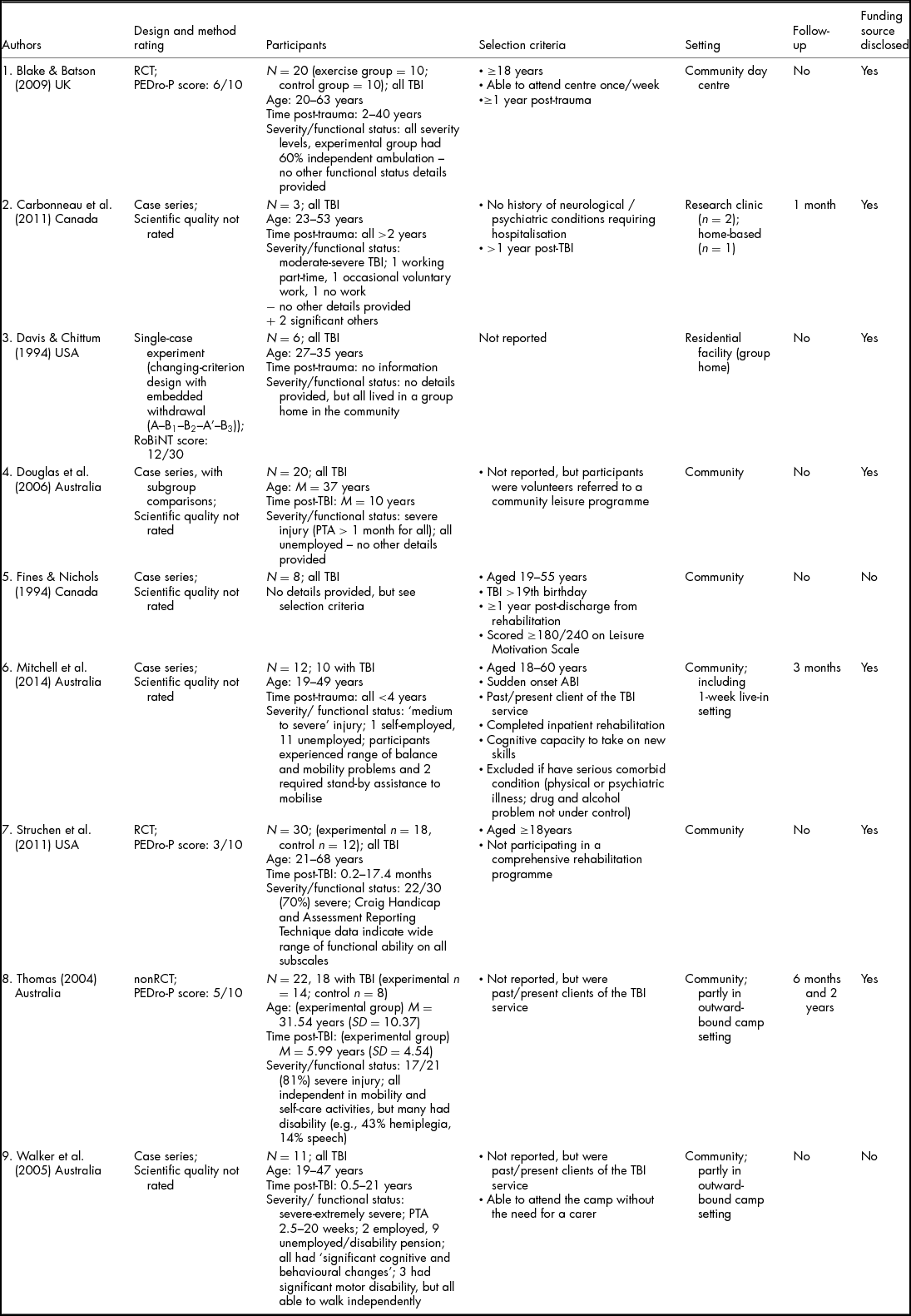
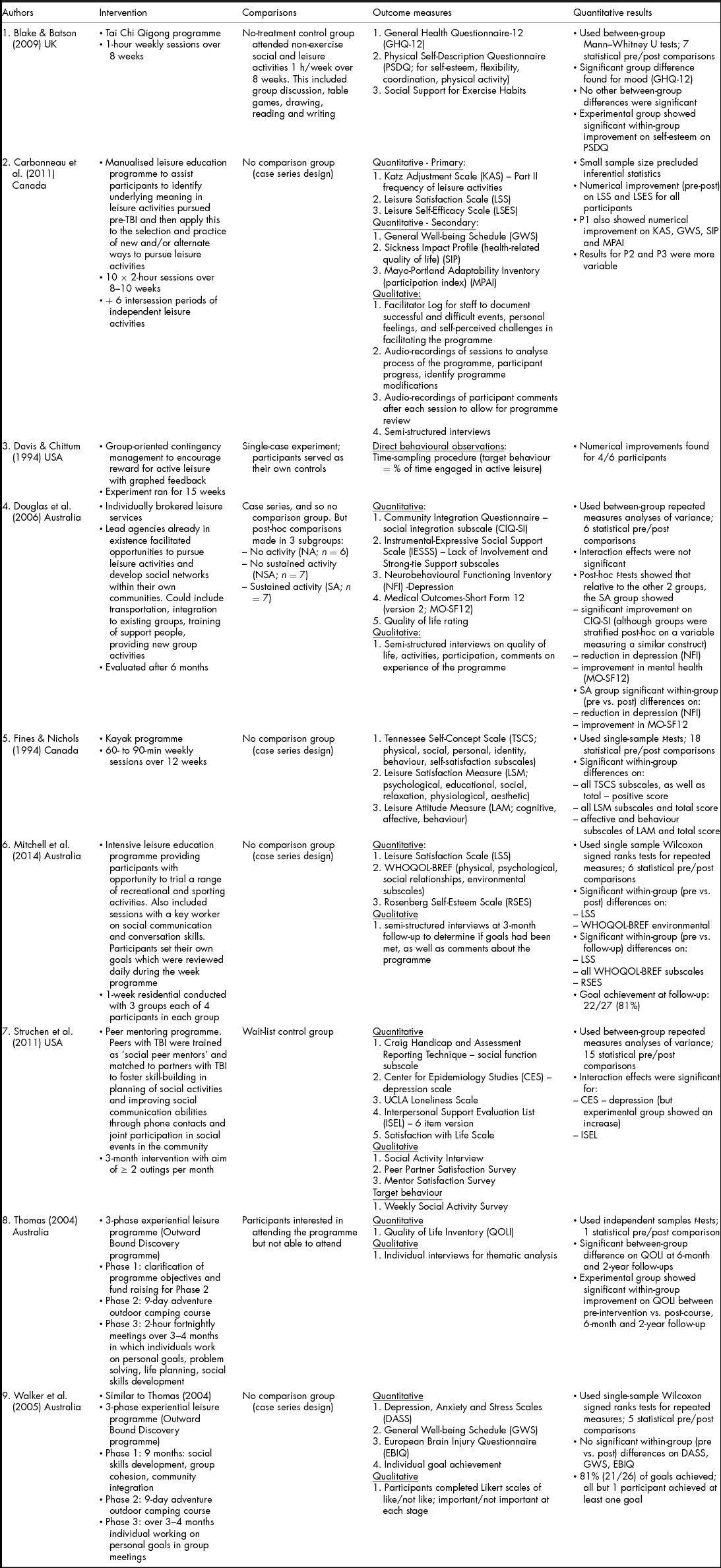
Search results were downloaded and duplicates removed. The titles and abstracts were independently reviewed by two raters (authors R.T. and D.W.) to provisionally identify those studies meeting selection criteria, and they subsequently met to resolve discrepancies by consensus. The full text article of identified papers was retrieved. In addition, reference lists were searched to source additional relevant papers, but only published papers were considered and, consequently, the grey literature (e.g., unpublished government reports, conference proceedings) was not reviewed. Data were independently extracted from eligible articles by the two raters using a specially prepared protocol (as per Tables 1 and 2), and the raters subsequently met to obtain consensus on the data extracted. Scientific quality of the studies was evaluated using the PEDro Scale (Maher, Sherrington, Herbert, Moseley, & Elkins, Reference Maher, Sherrington, Herbert, Moseley and Elkins2003) for controlled trials, as slightly adapted for use on the PsycBITE website (www.psycbite.com; Tate et al., Reference Tate, Perdices, McDonald, Togher, Moseley, Winders and Smith2004; hence PEDro-P) and the Risk of Bias in N-of-1 Trials (RoBiNT) Scale (Tate et al., Reference Tate, Perdices, Rosenkoetter, Wakim, Godbee, Togher and McDonald2013) for single-case experiments. This information was used to guide interpretation, with more rigorous studies being given greater weight in terms of evaluating the effect of the intervention. Scientific quality of case series and case reports was not evaluated because of the low level of evidence provided by those methodologies. The primary purpose for including such studies was to identify interventions reported in the literature, which could then be evaluated in the future by using rigorous research designs. It was not expected that the searches would yield a sufficient number of homogeneous studies for data synthesis and meta-analysis.
Design of Studies Identified in Systematic Review
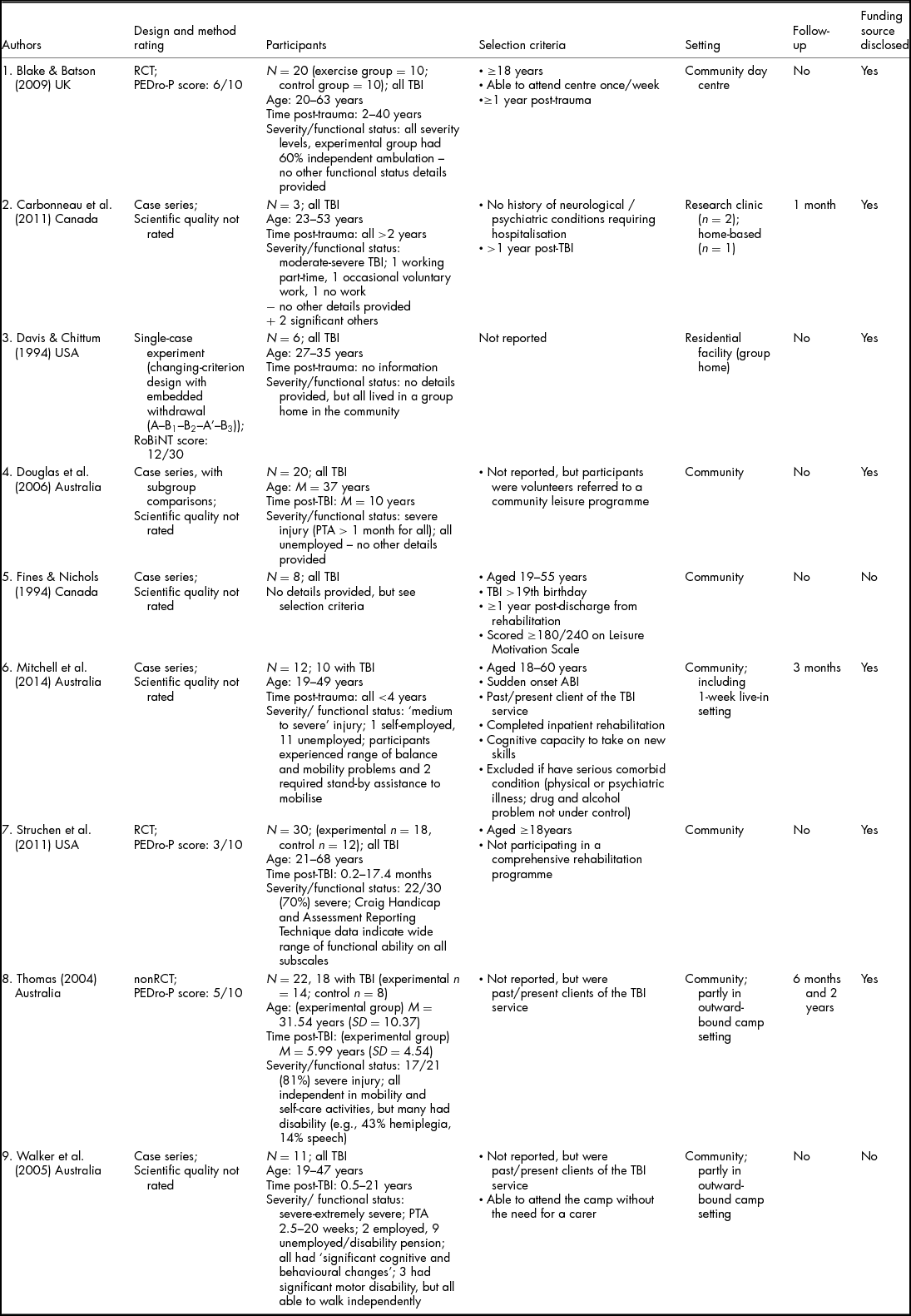
ABI, acquired brain injury; M, mean; PEDro, Physiotherapy Evidence Database Scale (PEDro-P = PEDro Scale as used on PsycBITE); PTA, post-traumatic amnesia; RCT, randomised controlled trial; RoBiNT, Risk of Bias in N-of-1 Trials Scale; TBI, traumatic brain injury.
Details of Interventions, Outcome Measures and Results of Studies Identified in Systematic Review

Results
Part 1: Systematic Review
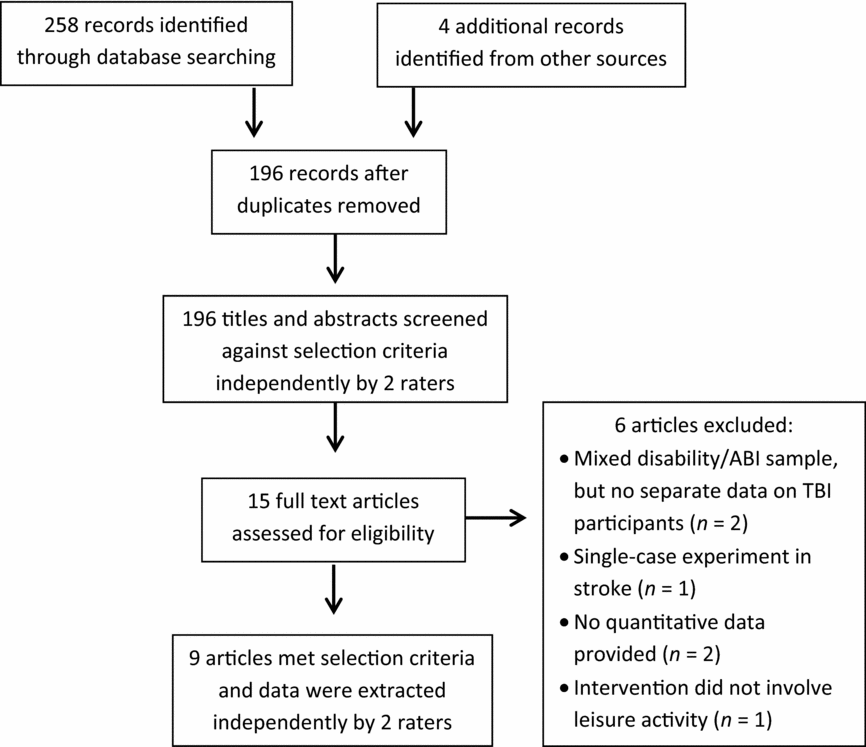
Figure 1 provides a flow diagram of the different phases of the systematic review. The searches yielded 258 records and an additional four reports were identified from examining reference lists of other articles. After removing duplicates, the titles and abstracts of 196 unique records were downloaded and independently read by the two raters to provisionally determine if they met selection criteria. The full texts of 15 potentially eligible articles were retrieved, with nine reports confirmed as meeting eligibility criteria, and data were extracted independently by the raters. The six reports that were excluded were due to the following reasons: inclusion of mixed samples of either disabled (Anderson, Schleien, McAvoy, Lais, & Seligmann, Reference Anderson, Schleien, McAvoy, Lais and Seligmann1997) or acquired brain injury (Gemmell & Leathem, Reference Gemmell and Leathem2006) populations without providing separate data for the TBI subset; participants did not sustain a TBI (Lancioni et al., Reference Lancioni, Singh, O’Reilly, Sigafoos, De Pace, Chiapparino and Spica2011); case report without quantitative data (Hodges, Luken, & Zook, Reference Hodges, Luken and Zook2001; Kunstler & Sokoloff, Reference Kunstler and Sokoloff1993); intervention did not involve leisure/social activity (Johnson & Davis, Reference Johnson and Davis1998). The reference list includes the nine eligible articles identified from the searches (denoted with an asterisk).
Flow diagram of systematic review.
Data extracted from the eligible studies appear in Tables 1 and 2. A variety of interventions was identified, including outdoor fitness/adventure programmes (Blake & Batson, Reference *Blake and Batson2009; Fines & Nichols, Reference *Fines and Nichols1994; Mitchell, Veitch, & Passey, Reference *Mitchell, Veitch and Passey2014; Thomas, Reference *Thomas2004; Walker et al., Reference *Walker, Onus, Doyle, Clare and McCarthy2005), as well as interventions drawing on leisure education (Carbonneau, Martineau, Andre, & Dawson, Reference *Carbonneau, Martineau, Andre and Dawson2011), contingency management (Davis & Chittum, Reference *Davis and Chittum1994), peer support (Struchen et al., Reference *Struchen, Davis, Bogaards, Hudler-Hall, Clark, Mazzei and Caroselli2011), and individually brokered leisure services (Douglas, Dyson, & Foreman, Reference *Douglas, Dyson and Foreman2006).
Seven of the nine studies reported results of statistical analysis (often within-group analyses). Across all these studies, 58 statistical comparisons were made, but only 25 (43%) were significant and effect sizes for improvement in the experimental group in a number of comparisons were small. An exception was the controlled trial of Thomas (Reference *Thomas2004), where effect sizes for the experimental group at the two follow-up occasions were large (1.04 and 1.75), which was all the more compelling in comparison with the very small effect sizes observed in the control group for the same time points (−0.10 and −0.18, respectively).
Four of the nine studies used a design with a control condition, the latter being a necessary feature of research studies in order to draw valid conclusions about the effectiveness of an intervention. Blake and Batson (Reference *Blake and Batson2009) used an alternative treatment (non-exercise social and leisure activities) for the control condition, but the control conditions in the other studies did not involve any intervention. Three of the four controlled studies were group designs (two RCTs and one controlled but non-randomised trial) which showed variable scientific quality (range 3–6/10 on the PEDro-P Scale), and the one single-case experimental design was subject to risk of bias (12/30 on RoBiNT Scale).
On the basis of the results of the methodologically stronger studies (Blake & Batson, Reference *Blake and Batson2009; Thomas, Reference *Thomas2004 – with PEDro-P scores of 6 and 5/10, respectively), there is support for the positive effects of Tai Chi Qigong (Blake & Batson, Reference *Blake and Batson2009) and a combined programme of outdoor adventure experiences and goal setting (Thomas, Reference *Thomas2004) on improving mood and quality of life, respectively. A notable feature of these programmes is that they are specific, focused and extended over a period of months. The risk of bias in the remaining studies cautions against any definitive statement about the effectiveness of the interventions.
Part 2: Programme Description and Future Research Directions
The foregoing results of the systematic review indicate that evidence for the efficacy of community-based interventions to improve leisure/social activity in people with TBI is available but limited. Nonetheless, in the course of conducting the systematic review, we encountered a range of interesting and potentially useful approaches to increase leisure/social activity in people with TBI. A representative selection of some of these programmes is described below, with the aim of highlighting this literature and programmes that may be suitable for evaluation in future clinical trials.
(i) Programmes Identified in the Systematic Review
Active leisure programmes
Table 2 provides brief details of the two active leisure programmes (Blake & Batson, Reference *Blake and Batson2009; Thomas, Reference *Thomas2004) showing significant treatment effects on participants’ psychological wellbeing. Three other active leisure programmes (Fines & Nichols, Reference *Fines and Nichols1994; Mitchell et al., Reference *Mitchell, Veitch and Passey2014; Walker et al., Reference *Walker, Onus, Doyle, Clare and McCarthy2005), all using case-series design without control conditions, show that this general approach to increasing leisure activity has potential application for the TBI population. Indeed, while active leisure programmes have incidentally shown improvements in mood as secondary outcome variables in the foregoing studies, such programmes are also used as a primary intervention for the treatment of depressive disorders after TBI (see the systematic review of Tsaousides, Ashman, & Gordon, Reference Tsaousides, Ashman and Gordon2013).
Future research would benefit from having more specific measurement related to leisure activities (e.g., number of activities) and the participants’ response to these (e.g., level of enjoyment). Activity logs are a useful way to track activity in a specific and quantifiable manner, as are standardised leisure satisfaction and attitudinal measures (see Table 2 for examples). Such instruments provide a direct leisure-related measure to complement the more distal measures of psychological wellbeing and quality of life usually used in such studies. In addition, control groups/conditions are essential if demonstration of programme effectiveness is the aim of the studies; the case-series design is insufficient for this purpose.
Social peer mentoring
This innovative programme was trialled by Struchen and colleagues (Reference *Struchen, Davis, Bogaards, Hudler-Hall, Clark, Mazzei and Caroselli2011) who carefully selected and trained volunteers, who themselves had previously sustained TBI, to serve as ‘social peer mentors’ for other (more impaired) individuals with TBI, to increase their social activity. The potential for such a programme to improve the activity not only of the target TBI group, but also the self-concept of the mentors themselves, appears potentially advantageous. The mentors were screened to ensure they met criteria (e.g., have good social integration, understand interpersonal issues, able to identify risk factors) and were then trained in their social peer-mentoring role in two 2-hour group sessions. The 1-month baseline was followed by a 3-month active peer-mentoring period. The mentors were instructed to contact the participant within 1 week and organise an initial outing, and thereafter to ensure that there was a minimum of two outings per month. The mentors had weekly telephone (or, if necessary, in person) support from a neuropsychologist. A weekly Social Activity Survey was used to track activity of the participants, and the mentors completed their own activity log monitor.
Some problems occurred with the conduct of this study, and the authors noted that some participants did not receive the intended treatment ‘dosage’ of at least two outings per month. This raises the question as to whether the study provided a valid evaluation of the intervention per se and this problem may account for the (mostly) non-significant results. Although an RCT, the study was subject to substantial risk of bias (PEDro-P score 3/10), and consequently it may be advantageous to re-evaluate this intervention approach using stronger methodology and tightening training procedures and treatment fidelity.
Individually brokered leisure services
A different approach that merits further investigation is the resource-efficient programme described by Douglas et al. (Reference *Douglas, Dyson and Foreman2006). Regional lead agencies already providing disability services in the community, and who were therefore in a good position to know about other existing relevant community services, were allocated additional (government) funds. The roles of the agencies were to: (a) identify interests and preferences of the TBI participants within their region; and (b) broker funds to community facilities and clubs to support the participants in the activities. Strategies to facilitate the process included preparing a calendar of activities for the participant, co-ordinating shared transport to activity venues, training and consultation to community support staff in existing activities, and starting new activity groups. The case series design used in the study cannot effectively evaluate efficacy of the programme, but after programme completion the series (n = 20) fell neatly into three virtually equal subgroups (see Tables 1 and 2): those who showed sustained activity throughout the 6-month evaluation period; those who showed initial change in activity, but such change was not sustained for the full 6 months; and those who showed no change. Data on participants’ neuropsychological status were not provided in the report, but all participants in the series sustained very severe TBI, with PTA duration being in excess of 1 month for each participant, and none was in paid employment. Consequently many of the participants may have experienced significant cognitive and behavioural deficits, and there could have been individual differences in these domains which may have adversely affected the capacity of participants from the latter two subgroups to engage in the programme (e.g., the authors commented on one participant whose social anxiety prevented him from attending new activities). Arguably, the two latter subgroups (no change and no sustained change) may have shown change/sustained change had additional supports been provided. It would be beneficial for future research with this model to give consideration to the programme being delivered within the context of a therapeutic model, as described below.
Therapeutic recreation model
A recognised approach to delivering interventions in this (and other) clinical populations is the therapeutic recreation model, whereby a clinical approach is used to assist the person to overcome barriers (either impairments or disability as a direct consequence of the injury, and/or those ubiquitous personal and environmental hindrances that are not necessarily injury-related). One programme, ‘What if I could?’, which was excluded from the systematic review because of absence of empirical data, is described by Hodges et al. (Reference Hodges, Luken and Zook2001). Participants undertook weekly sessions with a certified recreational specialist for 6 to 8 months. Depending on the participants’ goals, these sessions took place in either their home or a community location. The therapeutic alliance was established through the development and achievement of the participant's individual goals. The authors observed that ‘many of the participants had come to think that meaningful community activity was impossible or not worth the trouble, so getting them to dream – to think What if I could? – was difficult, but important; only by doing so could the participant and therapist develop a plan for re-entering or becoming more involved in the community’ (p. 361). The first two to three sessions of therapy included the identification of life goals, perception of abilities, current social and community resources, current activity levels, health and potential barriers for achieving goals. The authors provide the following example of a goal and strategy (p. 362):
Goal: To participate in rewarding social activities in the community at least 3–4 times per week, and to be able to independently schedule and plan for ongoing participation.
Strategy:
Beginning steps
• Identify possible activities
• Identify local resources
• Research transportation options
Intermediate steps
• Select preferred activities
• Sample community activities
• Choose activities to continue
• Develop or strengthen activity and compensatory skills
• Begin scheduling activities weekly
Closing steps
• Maintain weekly schedule
• Increase independence for ongoing participation
Additional steps
• Involve social network in ongoing plans as needed
In addition, therapists assisted participants to learn compensatory skills, for example: developing daily routines, using weekly calendars, recording questions and answers over the telephone, breaking down tasks into small steps, using repetition, similar routines during each session and tasks to be completed between sessions. The therapists also provided the local community and recreation organisations with education about brain injury and strategies for accommodating the participant's needs. Towards the end of the programme, therapist involvement ‘faded’ so that participants could take on more responsibility for the steps and practice strategies for their goals.
The therapeutic recreation model resonates with more general community-based rehabilitation programmes that are interdisciplinary, one component of which may be focused on leisure/social activity. As noted earlier, however, the systematic review of Evans and Brewis (Reference Evans and Brewis2008) did not find any success with these programmes in terms of demonstrating measurable improvements in the leisure/social domain. One possibility is that within the context of general rehabilitation programmes, the leisure/social activity programmes do not have sufficient ‘dosage’ (i.e., are not sufficiently specific, focused and intensive), as well as the challenge of sustaining change, as demonstrated in the study of Douglas et al. (Reference *Douglas, Dyson and Foreman2006). Powell et al. (Reference Powell, Heslin and Greenwood2002, p. 200) commented about their own programme, that ‘although the therapists did focus, often successfully during the treatment programmes, on increasing clients’ engagement in local leisure and education activities, it seems that the clients did not sustain their involvement in these activities or their social contacts once treatment had finished’. The study of Thomas (Reference *Thomas2004) provides empirical support for the effectiveness of maintenance phases. For the final component of this programme (phase 3) the experimental group comprised two subsets: those who regularly attended the fortnightly sessions (n = 9) and those who did not (n = 5). At the two follow-up time points (6 months and 2 years) those who regularly attended had significantly higher quality of life scores compared to their pre-intervention scores on the Quality of Life Inventory (effect sizes 1.33 and 2.13, respectively) in comparison with those who did not attend regularly (effect sizes 0.50 and 0.23, respectively).
The available literature regarding the therapeutic model as applied to leisure, whether as a stand-alone programme, such as Hodges et al. (2011), or within the context of a more general community-based rehabilitation programme, of which there are many examples, both in Australia (e.g., Fleming, Kuipers, Foster, Smith, & Doig, Reference Fleming, Kuipers, Foster, Smith and Doig2009; Ponsford et al., Reference Ponsford, Harrington, Olver and Roper2006; Sloan, Winkler, & Callaway, Reference Sloan, Winkler and Callaway2004; Tate, Strettles, & Osoteo, Reference Tate, Strettles, Osoteo and Wilson2003) and elsewhere (Bowen et al., Reference Bowen, Tennant, Neumann and Chamberlain1999; Cicerone, Mott, Azulay, & Friel, Reference Cicerone, Mott, Azulay and Friel2004; DeKort, Rulkens, Ijzerman, & Maathuis, Reference DeKort, Rulkens, Ijzerman and Maathuis2002; Malec, Reference Malec2001; Powell et al., 2001; Wilson, Gracey, Malley, Bateman, & Evans, Reference Wilson, Gracey, Malley, Bateman, Evans, Wilson, Gracey, Evans and Bateman2009), suggests that, to date, the approach has not been effectively evaluated in the TBI group with respect to leisure/social activity. A clear direction for future research is that any therapeutic approach needs not only to have sufficient dosage to provide a valid evaluation of the intervention, but also to have built-in ‘booster’ sessions or additional phases to the intervention (such as phase 3 used in the studies of Thomas (Reference *Thomas2004) and Walker et al. (Reference *Walker, Onus, Doyle, Clare and McCarthy2005)) to maximise maintenance of change.
Single-case experimental methodology
The systematic review identified one eligible single-case experimental design which used a changing-criterion design along with an embedded withdrawal phase to evaluate contingency management with feedback to increase leisure activity (Davis & Chittum, Reference *Davis and Chittum1994). In this study using detailed observational measures, participants living in a group home in the community were informed that if they increased their active leisure (as defined) in the 3-hour evening free-time period, they would earn a weekend activity of their choice. A time-sampling procedure was used, whereby raters observed participants for a 5-second period every hour in each of four settings in the group home (e.g., living room, kitchen) to determine whether the participant was engaged in active leisure. The resulting graphs of performance were displayed on the bulletin board in the kitchen area and were updated daily. Also posted was a list of activities that could be done more often (e.g., playing cards) and those that could be done less often (e.g., watching television), with the aim of helping the participants meet criteria and hence achieve the goal. Criteria for successful performance (25%, 40%, 50% of free time spent in active leisure in the successive phases) were derived from the highest level of performance in the preceding phase. Activity level was also tracked in the withdrawal phase when graphed feedback of performance was removed. Four of the six participants showed numerical increases in active leisure as a result of the programme.
An under-utilised methodology for the delivery of interventions in neurorehabilitation is the single-case experimental design (Perdices & Tate, Reference Perdices and Tate2009; Tate, Aird, & Taylor, Reference Tate, Aird and Taylor2012). There are many texts and guides to implementing these designs in both clinical practice and research settings (e.g., Barlow, Nock, & Hersen, Reference Barlow, Nock and Hersen2009; Gast, Reference Gast2010; Horner et al., Reference Horner, Carr, Halle, McGee, Odom and Wolery2005; Kazdin, Reference Kazdin2011; Kratochwill et al., Reference Kratochwill, Hitchcock, Horner, Levin, Odom, Rindskopf and Shadish2013; Tate & Perdices, Reference Tate, Perdices, Hamond, Malec and Todd2015). This methodology is particularly suitable for TBI (and other) clinical groups and overcomes the problem of underpowered and uncontrolled research designs which proliferate in this area of research. In this systematic review, for example, the largest total sample size of the identified studies was n = 30, and the most common research design was the uncontrolled case series (n = 5/9 studies).
Future research could fruitfully consider using the wide variety of single-case experimental designs that are available. For example, our team has developed a community-based, leisure/social activity specific programme (Program for Engagement, Participation and Activity; PEPA) that sits within the therapeutic recreational model and uses single-case methodology (multiple-baseline across behaviours design), which we are currently in the process of evaluating (trial registration number: ACTRN12613000894796).
(ii) Other Programmes Identified During theCourse of the Systematic Review
Some programmes identified during the course of the systematic review did not meet selection criteria (e.g., not TBI). Nonetheless, such programmes may be of interest to the reader in terms of providing information about current approaches used in practice to promote and increase leisure activity.
The Clubhouse model
According to Jacobs (Reference Jacobs1997), this consumer-directed, community-based day programme approach to ‘daily living and vocational challenges’ originated 50 years ago in the mental health arena. It was subsequently adapted to people with brain injury and is officially known as the ‘International Brain Injury Clubhouse Alliance’; informally as ‘the Clubhouse model’ (http://braininjuryclubhouses.net/). The alliance was established in 2004 by existing Clubhouses and currently includes 21 Clubhouses internationally. In 2008 the Alliance created 33 standards that define the acquired brain injury Clubhouse model (International Brain Injury Clubhouse Alliance, 2008).
Within a person-first philosophy, the Clubhouse is operated by, and for the benefit of, its members. The philosophy that underpins the model includes the following, as described by Jacobs (Reference Jacobs1997):
• There are no patients or clients in a Clubhouse, only members of all ages (range 17–70 years) who take responsibility for the programme's overall goals and daily direction.
• Although most people may enter the programme as a result of neurological impairment, each person is recognised according to his/her own interests, goals and abilities, rather than being identified by the clinical condition (e.g., TBI).
• Clubhouse membership is forever. Members may transition in and out of daily participation.
• Each member is regarded as an expert in expressing his/her needs and long-term goals.
The activities of the Clubhouse aim to encourage community participation, enhance social relationships and teach skills for productive activity. An individual may aim to improve his or her vocational skills in order to undertake paid employment, although this is not the focus of the Clubhouse. Jacobs (Reference Jacobs1997) described how the model works in practice. On any given day, between 15 and 60 members may attend the Clubhouse and consequently ‘tremendous work’ is required to organise and operate the programme. The Clubhouse is organised into ‘work units’ for which members take responsibility: clerical/communications, kitchen unit, maintenance unit, research unit. Salaried professional staff members are available, but are intentionally kept to a minimum number to provide opportunity for the active involvement of people with brain injury. Once individuals become official members, they decide how they would like to use the Clubhouse, in terms of the tasks they would like to do and with whom they would like to work. To our knowledge, the Clubhouse model has not been subject to experimental evaluation in the TBI group.
Leisure education programmes in the stroke population
In contrast to the situation for the TBI group, leisure/social activity programmes have been widely used and evaluated with the stroke population. A systematic review by Graven, Brock, Hill and Joubert (Reference Graven, Brock, Hill and Joubert2011) identified, inter alia, five separate RCTs that evaluated community-based interventions to enhance leisure (Desrosiers et al., Reference Desrosiers, Noreau, Rochette, Carbonneau, Fontaine, Viscoglisoi and Bravo2007; Drummond & Walker, Reference Drummond and Walker1995, Reference Drummond and Walker1996; Jongbloed & Morgan, Reference Jongbloed and Morgan1991; Parker et al., Reference Parker, Gladman, Drummond, Dewey, Lincoln, Barer and Radford2001; Shatil, Ivanova, Mochizuki, & Garland, Reference Shatil, Ivanova, Mochizuki and Garland2005). The reviewers concluded that there was ‘moderate evidence’ supporting their efficacy for improving participation and health-related quality of life.
The most widely evaluated programme is that used by the Canadian group – a theoretically based programme developed originally by Carbonneau, Hélie and Ouellet (Reference Carbonneau, Fontaine and Lussier1994) at the Université du Québec, with the aim of assisting participants to self-manage their own leisure activities. The programme was later described in the small scale (n = 14) RCT published in English by Nour, Desrosiers, Gauthier and Carbonneau (2002), and has also been evaluated in the larger-scale RCT (n = 62) of Desrosiers et al. (Reference Desrosiers, Noreau, Rochette, Carbonneau, Fontaine, Viscoglisoi and Bravo2007), as well as adapted for the TBI group and trialled in a small case series (Carbonneau et al., Reference *Carbonneau, Martineau, Andre and Dawson2011; see Tables 1 and 2).
In the clinical trials (Desrosiers et al., Reference Desrosiers, Noreau, Rochette, Carbonneau, Fontaine, Viscoglisoi and Bravo2007; Nour et al., Reference Nour, Desrosiers, Gauthier and Carbonneau2002), the programme has been conducted over 8–12 sessions. First, participants complete the detailed Individual Leisure Profile, which provides information on ‘perceptions that individuals have about themselves, their leisure and their environment’ (Nour et al., Reference Nour, Desrosiers, Gauthier and Carbonneau2002, p. 52). Then the 12-step programme, which takes the form of a decision tree with yes/no responses to questions posed at each step, is implemented. Steps 1–6 focus on self- and leisure-awareness (e.g., Step 1: ‘is leisure important for you?’ If no, Step 1A: ‘how can leisure be beneficial?’ or, if yes, Step 2A: ‘at the present time, is your leisure practice satisfactory?’). Steps 7–11 address competency development (i.e., how to do it), including barriers and resources needed. The programme concludes at Step 12, with autonomous practice and leisure satisfaction. Although the structure of the programme is the same for all participants, implementation is individualised and differs for each participant: ‘elements making the program personalized and unique are: (a) the starting point of the program, (b) the support received, (c) the barriers perceived, (d) the activities to be done or redone, (e) the environment where the activities will be performed, and (f) the individual's degree of acceptance of his/her stroke’ (Nour et al., Reference Nour, Desrosiers, Gauthier and Carbonneau2002, p. 53).
The version of this programme used by Carbonneau et al. (Reference *Carbonneau, Martineau, Andre and Dawson2011) for trialling in the TBI group was based on the programme described in Carbonneau, Fontaine and Lussier (Reference Carbonneau, Fontaine and Lussier2006). Given the success of this programme in the two stroke RCTs, in: (a) improving mood and quality of life (Nour et al., Reference Nour, Desrosiers, Gauthier and Carbonneau2002); and (b) the number and variety of leisure activities and satisfaction with leisure (Desrosiers et al., Reference Desrosiers, Noreau, Rochette, Carbonneau, Fontaine, Viscoglisoi and Bravo2007), and its adaptation for trialling in the TBI group (Carbonneau et al., Reference *Carbonneau, Martineau, Andre and Dawson2011), this programme is ready for evaluation in the TBI group using controlled trials.
Conclusions
In summary, this systematic review identified nine studies evaluating interventions to increase leisure/social activity in people with TBI. But only two studies (one RCT and one controlled but non-randomised clinical trial) had sufficient scientific rigour to provide a valid evaluation of the intervention. Although the studies evaluated different interventions (Tai Chi Qigong vs. outdoor adventure experience and goal setting), both studies showed significant between-group differences in mood (Tai Chi Qigong) and quality of life (outdoor adventure and goal setting) favouring the experimental group. They therefore provide support for the conclusion that active leisure programmes improve psychological wellbeing in people with TBI.
In spite of these positive studies, the evidence base is limited and there is a need for a larger number of better-designed studies. Although it is good to see measurement of the effects of the programmes on psychological wellbeing and quality of life, greater emphasis needs to be placed on proximal measures – in other words, do such leisure/social activity programmes result in a change in the participant's lifestyle, such that he or she actually engages in a larger number/variety of activities? In the current systematic review, the nine identified studies used a total of 26 separate standardised instruments, yet only three studies (Carbonneau et al., Reference *Carbonneau, Martineau, Andre and Dawson2011; Davis & Chittum, Reference *Davis and Chittum1994; Struchen et al., Reference *Struchen, Davis, Bogaards, Hudler-Hall, Clark, Mazzei and Caroselli2011) measured frequency of activity. In two of these studies the frequency measure was tailor-made for the study (Struchen et al. (Reference *Struchen, Davis, Bogaards, Hudler-Hall, Clark, Mazzei and Caroselli2011) used a social activity log and Davis & Chittum (Reference *Davis and Chittum1994) used direct observation). It is advantageous to have outcome measures that specifically reflect the behaviour targeted by the intervention, because arguably improvements that occur as a result of the intervention are more likely to be observed on these types of measures, in comparison with more distal measures (e.g., participation in more global terms) which may not show specific treatment effects.
It is a challenging endeavour to try to change human behaviour, and the clinical implications of the findings from this review highlight two inter-related messages. First, the approach of giving people with TBI a list of leisure options, and perhaps meeting with them for discussion over a few sessions, is unlikely to result in any meaningful and sustained change in activity pattern. The studies evaluated for this review all conducted interventions that were carefully planned and extended over a considerable period of time, averaging 13 weeks duration. Yet, in spite of their duration, overall the evidence from this review was modest, with only 43% of statistical comparisons being significant. Thus, even with the degree of programme duration used by studies in this review, success was not guaranteed. This suggests that to obtain robust treatment effects programmes may need to be even more specific and focused on leisure activity, structured and goal-driven, intensive and extensive – the intervention needs to be conducted over, at least, a number of months, rather than a few sessions. Although adequate duration of the programme appears to be a necessary feature for programme success, future research could give consideration to the intensity of intervention delivery. Admittedly, Blake and Batson (Reference *Blake and Batson2009) found treatment effects with a 1 hour per week intervention, but in their study only one of the seven statistical comparisons was significant, and there was no follow-up period to determine if the treatment effects were sustained over time. Second, the many barriers that have been identified in the literature (see Douglas et al., Reference *Douglas, Dyson and Foreman2006; Mitchell et al., Reference *Mitchell, Veitch and Passey2014; Nour et al., Reference Nour, Desrosiers, Gauthier and Carbonneau2002) are best addressed within a therapeutic model which also pays attention to maintenance, and the results from Thomas (Reference *Thomas2004) provide evidence for the importance of maintenance sessions.
Research studies are, of necessity, time-limited, but consideration should be given to the possibility that in the community setting some people with significant disability from their TBI may need the ongoing support of a leisure/social activity maintenance programme for life. At the systems level, a critical analysis of the content of inpatient and community-based rehabilitation programmes may prove informative. Carlson et al. (Reference Carlson, Boudreau, Davis, Johnston, Lemsky, McColl and Smith2006, p. 1112) are of the view that there is an underlying assumption in brain injury rehabilitation that the ‘traditional’ service model, focusing on the reduction of impairments and activity limitations, is ‘the necessary pre-requisite to participation’. That assumption is an empirical question, but the message is that more concerted efforts need to be devoted to building the evidence-base, as well as incorporating such rehabilitation strategies into mainstream programming, to enhance participation so that people with TBI are prepared for all aspects of their future lifestyle. And that includes answering the question: what are they going to do during their day for the rest of their lives?
Acknowledgements
This work is part of a larger project funded by the Lifetime Care and Support Authority of New South Wales, Australia. The funding body was not involved in the conduct, interpretation or writing of this review.
APPENDIX A
Search Terms for Medline.
1. brain injury.mp or Brain Injuries/
2. leisure.mp or Leisure Activities/
3. Recreation Therapy/or Recreation/or recreation.mp
4. 2 or 3
5. rehabilitation.mp or Rehabilitation/
6. therapy.mp or Recreation Therapy/or Occupational Therapy
7. programmes.mp
8. programs.mp
9. 7 or 8
10. treatment.mp or Therapeutics/
11. Intervention Studies/or intervention.mp
12. 5 or 6 or 9 or 10 or 11
13. 1 and 4 and 12