


As a ‘norms setting agency’, the World Health Organization (WHO) has been issuing recommendations on abortion since 2003 (Kim et al. Reference Kim, Lavelanet and Ganatra2022:e467). In March 2022, it released a landmark Abortion Care Guideline that consolidated evidence and best practice for quality abortion care (WHO 2024). Among its 54 recommendations spanning clinical practice, health systems, and law/policy domains, the guideline fully endorsed self-managed medication abortion for the first time as a safe, effective model of care and called for the complete decriminalisation of abortion. These bold pronouncements were described as grounded in public health data and international human-rights standards and hailed by reproductive health advocates as a long-awaited paradigm shift towards person-centred, rights-based abortion care. At the same time, the guideline was met with fierce criticism from some religious groups, anti-abortion organisations, and politicians who saw the WHO stance as an ideological overreach that undermines fetal life, national sovereignty, and international law.
This chapter explores the WHO 2022 guideline and some of the debates it engendered through the lens of narrative medicine, as reconceptualised and extended in this book. Rather than treating the guideline as a neutral technical document, we approach it as a value-laden story narrated by a powerful institution (the WHO) about the highly contested topic of abortion care. We examine how the WHO narrative constructs authority, assigns roles (narrators, protagonists, antagonists), selectively highlights certain types of evidence and values, and is informed by specific assumptions about evidence, morality, and care. We further contextualise this story within the broader set of narratives advanced by the guideline’s supporters as well as its opponents in order to develop a nuanced understanding of how global health policies come to be imbued with moral authority or, alternatively, contested as ‘ideological stories’, with far-reaching consequences for global reproductive health governance.
6.1 The Guideline: Declared Aims and Principles
The WHO 2022 guideline updates all previous WHO guidelines and replaces the then most recent 2012 Guideline on Abortion Care. Whereas the recommendations and best practices outlined in the 2012 guideline had primarily aimed to ‘enable evidence-based decision-making with respect to safe abortion care’ (WHO 2012:2), the 2022 guideline extends its remit beyond the field of biomedicine to address issues of well-being, equality, and human rights. It is framed at the outset as a contribution to meeting the UN Sustainable Development Goals (WHO 2024:1): ‘Strengthening access to comprehensive abortion care within the health system is fundamental to meeting the Sustainable Development Goals (SDGs) relating to good health and well being (SDG3) and gender equality (SDG5).’
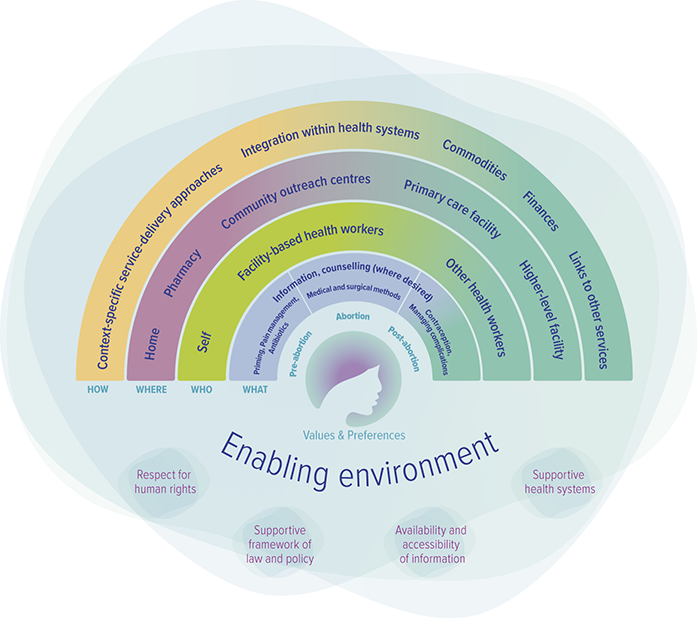
Meeting these goals requires the provision of quality abortion care, defined as ‘effective, efficient, accessible, acceptable/patient-centred, equitable and safe’ (WHO 2024:xix). These components are underpinned by an important principle that gives equal weight to the domains of health and law, namely ‘the principle that abortion care be provided in a human-rights compliant way’ (WHO 2022:2), reflecting a stronger commitment than in earlier guidelines ‘to integrate human rights into health-care programmes and policies at national and regional levels by looking into underlying determinants of health as part of a comprehensive approach to health and human rights’ (WHO 2024:xx). Access to abortion is thus narrated as both a health and human-rights issue. The overall aim is to create a robust enabling environment that can enhance the delivery of quality abortion care at different levels and in different contexts (Figure 6.1).
Conceptual framework for abortion care (WHO 2024:xxii)
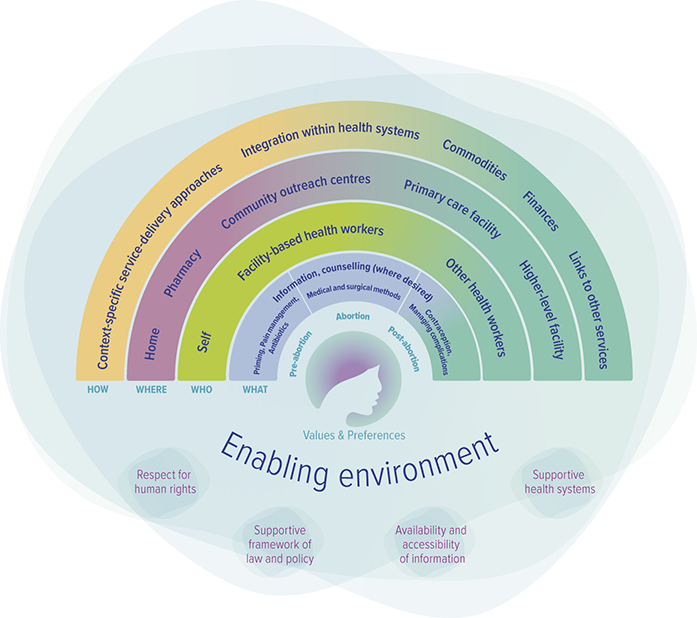
Figure 6.1 Long description
The conceptual framework for abortion care depicts 4 nested half-circles that represent the core questions of How, Where, Who and What. How contains the text: Context-specific service-delivery approaches, Integration within healthcare systems, Commodities, Finances and Links to other services. Where contains the text: Home, Pharmacy, Community outreach centres, Primary care facility, Higher-level facility. Who contains the text: Self, Facility-based health workers and Other health workers. The What half circle has 3 sections labelled Pre-abortion, Abortion and Post-abortion. The pre-abortion section contains the text: Priming, pain management and antibiotics. The abortion section contains the text: Medical and surgical methods. The post-abortion section contains the text: Contraception and Managing complications. The text Information, counselling (where desired) is included in all 3 sections. Under the half circles is a drawing of a woman’s head with the text values & preferences. The half circles are underpinned below by an Enabling Environment consisting of: Respect for human rights; Supportive framework of law and policy; Availability and accessibility of information; and Supportive health systems.
The guideline lists three requirements as the corner-stones of an enabling environment for quality abortion care (WHO 2024:xx): ‘respect for human rights including a supportive framework of law and policy’; ‘availability and accessibility of information’; and ‘a supportive, universally accessible, affordable and well-functioning health system’.
The guideline was both acclaimed and denounced by a variety of sources. Pro-abortion groups such as the Center for Reproductive Rights and MSI Reproductive Choices welcomed the guideline and seized the opportunity to produce fact sheets and policy briefs that derived their authority and credibility from the WHO, in an attempt to consolidate their long-standing position on decriminalising abortion and ensuring the equitable and unrestricted provision of abortion care. Others, such as Miller (Reference Miller2023), argued that the WHO’s self-care evidence is patchy, and that many of the studies it drew on to support its recommendations suffer from selection bias and lack long-term follow-up. The Catholic News Agency triggered significant public controversy when it ran an article titled ‘WHO guidelines on abortion imply conscience objections are “indefensible”’, accusing the WHO of ignoring ‘the right to life’ and of portraying conscientious objectors as obstacles to care (Jones Reference Jones2022).
Among its 54 recommendations covering the domains of law and policy, clinical services, and service delivery, two have proved particularly controversial, and responses to them will be discussed (where relevant) later in this chapter:
Service Delivery Recommendation 48, recommending ‘the option of telemedicine as an alternative to in-person interactions with the health worker to deliver medical abortion services in whole or in part’ (WHO 2024:97)
Law and Policy Recommendation 22, recommending that ‘access to and continuity of comprehensive abortion care be protected against barriers created by conscientious objection’ (WHO 2024:61)
In what follows, we examine narrator and voice, protagonists and agency, the selective appropriation of evidence, and the construction of temporality and plot. For each of these dimensions, we begin with the narrative articulated by the WHO guideline itself, and then consider the narrative(s) of supporters who endorse it and the narrative(s) of those who refute it.
6.2 Narrators and Narrative Authority: The Voice of the WHO versus Its Critics
The narrator of the WHO abortion guideline is a mainstream global institution that enjoys considerable reach and credibility. It speaks in a technocratic yet normative voice, reflecting and reinforcing its position as the global authority on public health evidence and human rights. The 2022 Abortion Care Guideline is narrated in the impersonal but assertive tone of expert consensus: recommendations are delivered as the product of rigorous systematic reviews and deliberation by multidisciplinary panels of clinicians, epidemiologists, ethicists, lawyers, and human-rights scholars.
The guideline’s narrative voice projects epistemic authority by grounding its claims in the WHO’s established GRADE framework for evaluating evidence. GRADE is a globally endorsed and well-established guideline methodology, first introduced in the early 2000s by the international GRADE Working Group, a collaboration of clinicians, methodologists, and guideline developers who sought to harmonise the way evidence is assessed and recommendations are made (Grade Working Group 2004). It rates the certainty of evidence supporting a given topic systematically, classifying it into four categories – high, moderate, low, or very low – based on factors such as study limitations, consistency of results, directness of the evidence, precision, and risk of publication bias (Table 6.1). Since its inception, GRADE has been adopted by more than 100 organisations worldwide, including the WHO and Cochrane Collaboration, making it the most widely used framework for evidence appraisal and guideline development to date.
| Quality level | Definition and rationale |
|---|---|
| High | We are very confident that the true effect lies close to that of the estimate of the effect. |
| Moderate | We are moderately confident in the effect estimate: the true effect is likely to be close to the estimate of the effect, but there is a possibility that it is substantially different. |
| Low | Our confidence in the effect estimate is limited: the true effect may be substantially different from the estimate of the effect. |
| Very Low | We have very little confidence in the effect estimate: the true effect is likely to be substantially different from the estimate of the effect. |
In mobilising the GRADE framework, the WHO narrator legitimises its own voice by anchoring its authority in a formalised methodology. The guideline is thus shielded from charges of arbitrariness, its legitimacy reinforced through reliance on the credibility of a widely endorsed evaluative apparatus.
At the same time, the WHO narrator explicitly weaves into its pro-abortion narrative a normative framework of human rights, dignity, and autonomy, speaking as the arbiter of not only scientific evidence but also global ethical standards. A significant methodological innovation characterising this guideline is the explicit inclusion of a ‘Human Rights Standards-to-Evidence’ crosswalk, which treats empirical health evidence and international human-rights norms as equally valid inputs into decision-making. Epidemiological data on morbidity, mortality, and complications arising from abortion are assessed in parallel with human-rights principles such as respecting bodily autonomy and eliminating discriminatory barriers, so that the two sets of considerations together form the twin pillars of each recommendation. This dual authority is crucial to the WHO narrative: the guideline adopts what we might call a ‘technocratic moral voice’, asserting that science and human rights can together tell a coherent story about how abortion should be approached.
The guideline thus frames abortion as an issue of both healthcare and the right to bodily autonomy, deploying the language of medicine, public health, and human rights rather than that of religion, morality, or criminal law. By narrating abortion from the perspective of ‘safety’ and ‘access’, it situates the practice squarely within the epistemic and institutional boundaries of health. This linguistic and conceptual framing renders abortion primarily a medical question to be addressed by health systems, rather than a political controversy or a moral dilemma. In the guideline’s own phrasing (WHO 2024:xx), ‘Multiple actions are needed at the legal, health system and community levels so that everyone who needs it has access to comprehensive abortion care. A person’s environment plays a crucial role in shaping their access to care and influencing their health outcomes.’
Narrating abortion as a primarily medical and human-rights issue transforms it from a contested social and political phenomenon into a problem of systems design: barriers must be identified, enabling environments created, and health outcomes optimised. In this configuration, the second stage of representation in Charon’s model (Reference Charon2006:138), abortion is thus emplotted within a care context, where the WHO – as narrator – speaks the idiom of patient safety, quality of care, and human-rights obligations, rather than that of sin or crime. The narrative voice is didactic: it tells member states and health providers a story in which improving access to safe abortion is emplotted as a logical, evidence-driven necessity to save women’s lives.
This reframing has important consequences. On the one hand, it allows abortion to be governed by the logics of evidence, rights, and service delivery, and to be debated in the same register as other domains of healthcare quality. Within this frame, the central questions become how to reduce delays, ensure continuity of services, regulate conscientious objection, and protect individuals from stigma or punitive laws. The discursive work of the guideline thus shifts attention away from disputes about the moral status of the fetus or the legitimacy of abortion as such, and towards questions of efficiency, equity, and access. On the other hand, by using the language of ‘care’ and recasting abortion as an issue of access, the WHO also narrows the political horizon. The moral, religious, and ideological conflicts that continue to animate abortion debates are not resolved but displaced: they appear only indirectly, as obstacles to be managed in the creation of an ‘enabling environment’. Laws criminalising abortion, mandatory waiting periods, and third-party authorisation are not treated as expressions of specific values that require further consideration but simply as barriers that undermine quality, equity, and rights. This pattern of selective appropriation allows the guideline to depoliticise the emotionally and ethically fraught issue of abortion: conflictual questions of principle and ethics are largely backgrounded by framing them as technical or managerial problems to be solved through health governance.
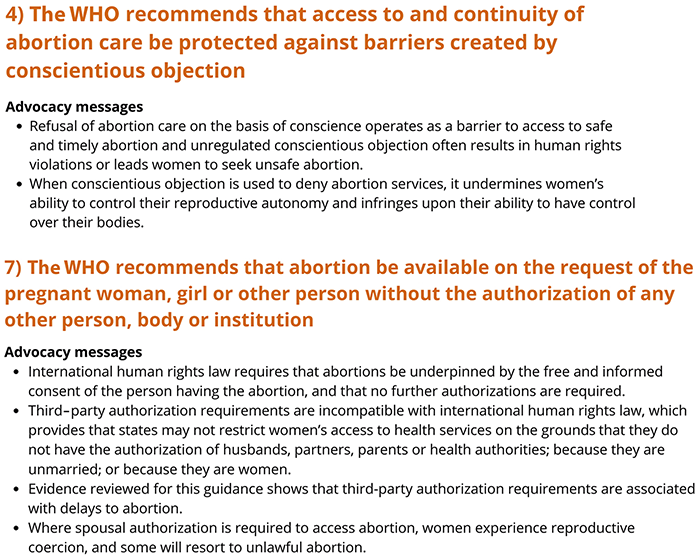
The narrative authority of the WHO voice is bolstered by appeals to universality. The guideline speaks as if its evidence and values are globally applicable, implying that the narrator’s position represents international consensus, or at least an objective standpoint ‘above’ national or sectarian interests. Relying on the institution’s long-standing legitimacy as the world’s authority on matters of health and citing various international treaties, the narrator claims a universal moral high ground. The WHO casts itself as a reliable narrator – one the audience (countries, policymakers, practitioners) should trust. In turn, supportive narratives of the guideline explicitly underscore the WHO’s moral and scientific authority. The Center for Reproductive Rights lauds the guideline for providing the first-ever UN agency definition of decriminalisation and for affirming abortion as essential healthcare grounded in human rights (Center for Reproductive Rights 2022). Likewise, in the wake of the guideline, the European Parliament invoked the WHO recommendations as authoritative evidence in its 2022 resolution urging all member states to ‘decriminalise abortion and remove … obstacles to safe and legal abortion’, explicitly calling on them to ‘guarantee access to safe, legal and free abortion services … in accordance with WHO recommendations and evidence’ (European Parliament 2022). Ipas Partners for Reproductive Health described the guideline as ‘relying on decades of research’ (Ipas 2022:21) and drew on it to formulate advocacy messages for its members to use in arguing the case for the removal of various barriers to safe abortion, such as third-party authorisation and conscientious objection (Figure 6.2). These and other supportive actors effectively amplify the WHO narrator’s voice, casting it as the impartial voice of truth and strengthening its narrative reach. The WHO narrative thus spills into a broader supportive narrative, where global health and human-rights advocates echo the storyline of evidence-based reform and use the WHO’s voice to legitimise policy change. This broad pattern of narrative accrual gradually reinforces the position of the WHO as an authoritative narrator and its recommendations as commonsensical, widely accepted principles.
Advocacy messages adapted from Ipas, based on WHO recommendations (Ipas 2022:10, 15)
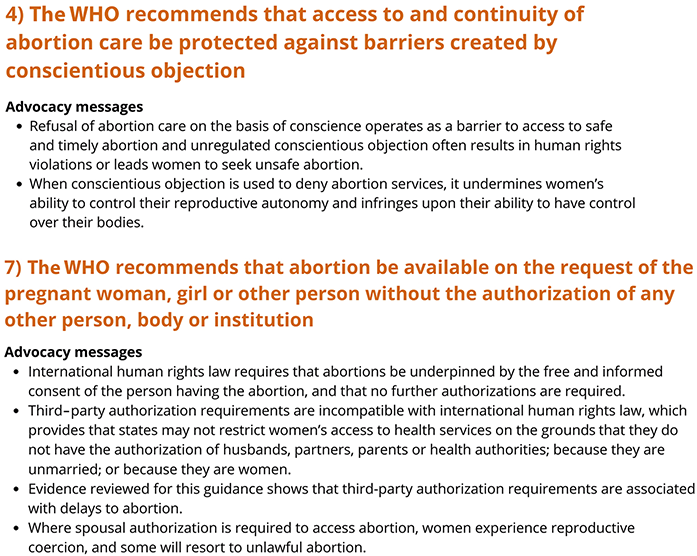
Figure 6.2 Long description
The screenshot of two I P A S advocacy messages: Recommendation 4 and Recommendation 7. The first message reads: 4) WHO recommends that access to and continuity of abortion care be protected against barriers created by conscientious objection. Advocacy messages: Refusal of abortion care on the basis of conscience operates as a barrier to access safe and timely abortion, and unregulated conscientious objection often results in human rights violations or leads women to see unsafe abortion. When conscientious objection is used to deny abortion services, it undermines women’s ability to control their reproductive autonomy and infringes upon their ability to have control over their bodies. The second message reads: 7) WHO recommends that abortion be available on the request of the pregnant woman, girl or other person without the authorization of any other person, body or institution. Advocacy messages: International human rights law requires that abortions be underpinned by the free and informed consent of the person having the abortion, and that no further authorizations are required. Third party authorization requirements are incompatible with international human rights law, which provides that states may not restrict women’s access to health services on the ground that they do not have the authorization of husbands, partners, parents or health authorities, because they are unmarried, or because they are women. Evidence reviewed for this guidance shows that third-party authorization requirements are associated with delays to abortion. Where spousal authorization is required to access abortion, women experience reproductive coercion, and some will resort to unlawful abortion.
In stark contrast to this supportive framing, the oppositional narrative challenges the WHO narrator’s legitimacy at its core. Critics of the guideline have attempted to delegitimise the WHO as a narrator by portraying it not as an impartial expert voice but as a biased or even nefarious storyteller invested in pushing a dangerous agenda. Wesley J. Smith, a conservative bioethics commentator, lambasted the guideline as ‘the most radically pro-abortion official document ever published’. Writing in The Epoch Times (reprinted in Science and Culture Today), Smith describes the WHO as an ‘out-of-touch technocratic class’ intent on imposing ‘an alien and radical pro-abortion morality on the people it presumes to serve’ (Smith Reference Smith2022). In this counter-narrative, the WHO is recast as untrustworthy – a false narrator cloaked in the language of science but guilty of ideological bias. Smith explicitly accuses the WHO of hubris and elitism, claiming that it ignores ‘fundamental moral beliefs’ of billions, and suggests that ‘the world should consider the source and stuff this awful report directly into the dumpster’. Similarly, Elyssa Koren of Alliance Defending Freedom (ADF) International, an organisation which ‘advances the God-given right to live and speak the truth’,Footnote 2 contends that ‘by stating that conscience rights may become “indefensible”’, the guideline shows that the ‘WHO aspires to not only flout international law, but also in due course, to change it’. In Koren’s narrative, the WHO ‘lacks any legal authority’ to do so and is using its ‘enormous influence’ to erode international norms by promoting the right to abortion without conscience exceptions (in Jones Reference Jones2022). Instead of being cast as saviour, as in the supportive narrative, the institution is cast here in the role of anti-hero. Rather than placing the emphasis on the value of women’s lives and the need to protect them, Koren’s alternative narrative foregrounds the imperative ‘to protect unborn life and the overall integrity of the international legal system’, both of which are under attack by the WHO. The unborn not only have a ‘human right’ but also a ‘God-given right’ to life.
The Political Network for Values, an alliance of conservative policymakers, goes further in its condemnation of the WHO, stating that its guidelines ‘reach beyond the agency’s mandate, violate the fundamental rights recognized by the Universal Declaration of Human Rights, especially the right to life and to freedom of conscience, and violate the founding agreement of the UN and the sovereignty of its member states’.Footnote 3 They describe the WHO’s approach as reductionist and colonialist, asserting that the promotion of abortion decriminalisation and facilitation through an international agency constitutes a form of ‘ideological colonization’. From their narrative location, abortion is not simply a medical matter but a complex ‘social and cultural problem from which an entire industry profits, exploiting suffering and vulnerability’. Addressing it, they argue, requires holistic engagement from political, social, and healthcare actors, and should prioritise ‘life alternatives’. The framing of this oppositional narrative thus directly undermines the guideline’s attempt to depoliticise the issue of abortion and narrate it as a purely medical and human-rights concern. Reaffirming the central role of morality in this narrative, the Network concludes, ‘The moment it is natural for a society to “discard” their babies, through a pill or another medical intervention, that society loses part of its humanity, embraces barbarism, and renounces its future.’
What we see, then, is a battle of narrators. The WHO positions itself and is positioned by its supporters as the credible narrator of a health and rights narrative; opponents counter-narrate the WHO as a rogue narrator – a global elite that has no legitimate authority. This is a high stakes battle: if the WHO’s narrative voice is established as authoritative and trustworthy, its guideline gains normative power worldwide; if it is discredited, the guideline’s influence wanes. The construction of narrator credibility is thus key in this battle of narratives. Supporters invoke the WHO’s scientific ethos – including references to systematic reviews, evidence grading, and expert consensus – to position this narrator as an arbiter of truth in all issues relating to healthcare. Opponents highlight moral and legal issues, such as the guideline’s framing of conscientious objection as ‘indefensible’, in order to cast doubt on the narrator’s neutrality. Notably, both sides underscore authority but in opposite ways: one to cement it, the other to erode it. In narrative terms, the struggle over who gets to tell the story of abortion care on the global stage and be trusted is a struggle over power and legitimacy. The WHO’s narration style, blending empirical rigour with moral assertion, is a deliberate strategy to command that trust, while its detractors use charged language (such as ‘elitist’, ‘colonialist’, ‘gross deviation’) to undermine its narrative authority.
6.3 Protagonists, Antagonists, and the Distribution of Agency
The implicit central protagonist in the WHO’s guideline narrative is the pregnant person in need of abortion care. The entire guideline is organised around improving this individual’s journey: ensuring that she (or they in inclusive terms) can obtain a safe, timely, respectful abortion if they decide to end their pregnancy.
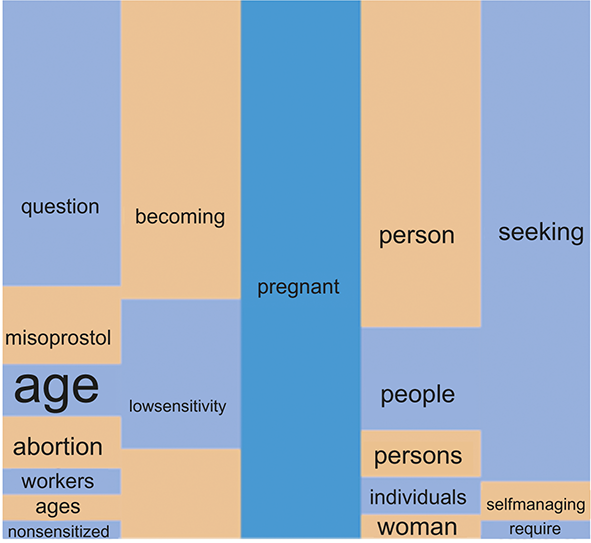
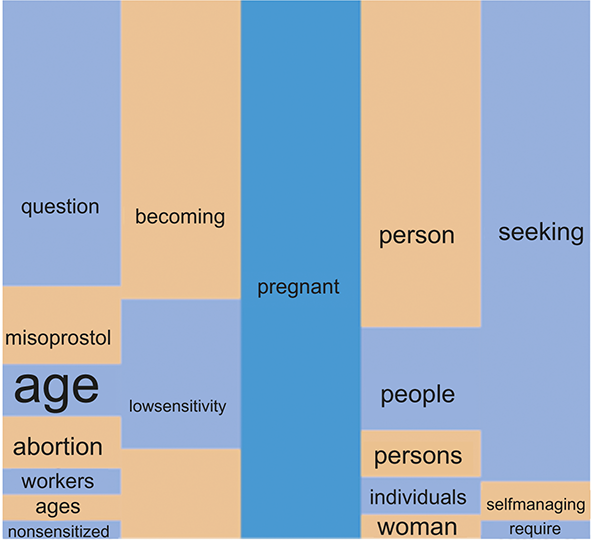
In a marked departure from earlier abortion guidelines published by the WHO, and given the institution’s ‘commitment to integrate human rights into health-care programmes and policies’ (WHO 2024:xx), the new guideline goes to some lengths to ensure that this protagonist is not narrated exclusively as a cisgender woman. Of the 132 instances of the term pregnant in the text, only eight modify woman or women; the rest vary between pregnant person(s) (98 occurrences), pregnant person/client (1), pregnant person/provider (1), pregnant people (17), pregnant individuals (5), and even pregnant uterus (1).Footnote 4 The Sustainability and Health (SHE) Corpus Mosaic representation of collocates in positions 1 and 2, on either side of pregnant in the guideline, provides a quick view of this pattern (Figure 6.3).Footnote 5
Mosaic representation of collocates two positions to the left and right of the term pregnant in the WHO 2024 guideline. The height of each tile is directly proportional to the frequency of the relevant collocate.
This patterning is consistent with the narrator’s adoption of a ‘human rights approach that advances gender equality’ and its assertion that ‘gender identity or its expression must not lead to discrimination’ (WHO 2024:4). At the same time, this human-rights-oriented position conflicts with the guideline’s declared aim of ‘enabling evidence-based quality abortion globally’ (WHO 2024:3; emphasis added). The tension in the narrative comes from the fact that the available scientific evidence is drawn exclusively from systematic reviews of trials involving populations of cisgender women. There is little to no scientific evidence to draw on to formulate recommendations relevant to transgender men and others capable of becoming pregnant.
To maintain credibility as well as narrative coherence, the narrator acknowledges this discrepancy and declares that the tension is resolved discursively in the guideline, by adopting women as a general label intended to cover all pregnant persons and to enhance readability (WHO 2024:xxii; emphasis added):
In this guideline, we recognize that most of the available evidence on abortion can be assumed to be derived from research among study populations of cisgender women, and we also recognize that cisgender women, transgender men, nonbinary, gender-fluid and intersex individuals with a female reproductive system and capable of becoming pregnant may require abortion care. To be concise and facilitate readability of this guideline, when referring to all gender diverse people who may require abortion care, we use the word ‘women’ most often, although we also variously use the terms ‘individual’, ‘person’ and ‘abortion seeker’. Providers of SRH [sexual and reproductive health] services, including abortion care, must consider the needs of – and provide equal care to – all individuals; gender identity or its expression must not lead to discrimination.
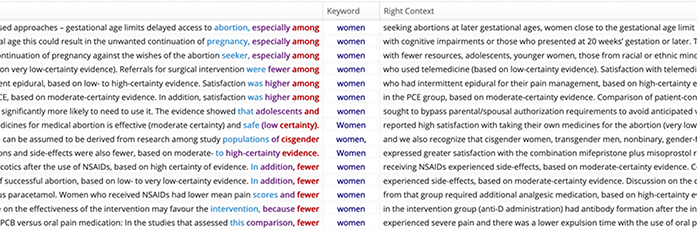
A closer look at the guideline confirms that women and woman do occur with high frequency in the text (198 and 52 times, respectively), predominantly in the context of reporting on trials, as in the examples shown in Figure 6.4.
Sample concordance of the term women in the WHO 2024 Abortion Care Guideline
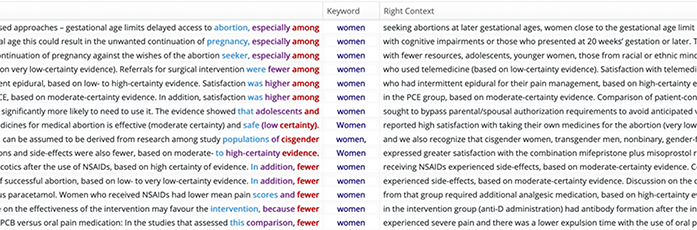
Figure 6.4 Long description
The screenshot of 15 lines of text from the WHO 2022/2024 Abortion Care Guideline, with the word women centralised in each line. The 3 words preceding women in each line are highlighted to show repeating patterns and descriptors. The context of the text indicates reporting on the results of clinical trials.
There are also examples where the narrator strives to use inclusive language alongside woman/women, even in the context of reporting on trials, as in the following example:
The evidence also indicates that mandatory waiting periods increase the cost of abortion and they may make abortion unattainable, resulting in the continuation of pregnancy against the wishes of the abortion seeker, especially among women with fewer resources, adolescents, younger women, those from racial or ethnic minorities and those who need to travel further for an abortion.
Recommendations, however, consistently use inclusive language. Some use pregnant person or pregnant individual as an umbrella term, as in Clinical Services Recommendation 15 (Pain Management for Medical Abortion): ‘Recommend that pain management should be offered routinely (e.g. non-steroidal anti-inflammatory drugs [NSAIDs]) and that it should be provided for the individual to use if and when wanted’ (WHO 2024:xxv). Others, like Law and Policy Recommendation 1, list pregnant person(s) alongside women and girls: ‘Decriminalization of abortion does not make women, girls or other pregnant persons vulnerable to forced or coerced abortion’ (WHO 2024:24). On the whole, the strategy the narrator adopts to resolve the tension between its fronting of human rights in this new guideline and the availability of scientific evidence consists of balancing an appeal to human rights (by referring to pregnant persons, people, or individuals in recommendations), with the need to be precise when referring to scientific evidence involving a predominantly cisgender female population. In between these two broad patterns, the narrator expects the reader to play along and translate woman or women into pregnant person(s) in other instances.
This incongruity in the narrative aside, the guideline repeatedly foregrounds the pregnant person, irrespective of gender identity, as the key agent whose autonomy and well-being are paramount. For example, it emphasises that the ‘values and preferences of the woman, girl or other pregnant person’ should guide decisions (WHO 2024:98; Recommendation 49) and that individuals should have the option to ‘safely self-manage their abortion process in the first 12 weeks of gestation’ (WHO 2024:2; Recommendation 49). This positions the pregnant individual as an empowered decision maker, effectively the hero(ine) of the story whose agency the health system should enable rather than restrict. By embedding autonomy and dignity into the definition of quality care, the narrative casts women and other pregnant persons seeking abortion not as passive subjects or wrongdoers but as agents who can and should control their reproductive lives. The promotion of self-managed abortion (SMA) underscores this agency, reframing what was once seen as a clandestine, unsafe act into an empowered choice that is fully situated within the bounds of safe medical practice.
Recommendation 48, which legitimises ‘telemedicine approaches to delivering medical abortion care’ (WHO 2024:97), is key to supporting the agency of the pregnant person and was welcomed by organisations campaigning for reproductive justice. FIGO (the International Federation of Gynecology and Obstetrics), for instance, hastened to express its support for the recommendation and point out that in 2021 FIGO had already endorsed ‘the permanent adoption of telemedicine’ beyond the COVID-19 crisis.Footnote 6 Gerdts and colleagues (Reference Gerdts, Bell and Shankar2022:2) welcomed the recommendation, adding that there is now a substantial body of evidence observing that ‘self-managed medical abortions do not correspond with higher biomedical health risks’. But the recommendation has also proved highly controversial. C. Miller (Reference Miller2023:11) asserts that many scholars, doctors, and professional bodies, including some who are pro-choice, are concerned that ‘poor research methodology and the selective presentation or misinterpretation of results have put women’s life and health at risk, in a new kind of unsafe self-managed abortion – this time with the imprimatur of leading abortion advocacy groups and other organisations, such as the WHO’.
Miller outlines a number of considerations to support his and others’ critique of the WHO’s authorisation of telemedicine for managing all stages of abortion, from ‘assessment of eligibility for medical abortion’ to ‘follow-up post-abortion care, all through telemedicine’ (WHO 2024:97; Service Delivery Recommendation 48). These considerations cast doubt on the safety of telemedicine in situations such as ectopic pregnancies and delayed gestation, but they also address broader issues, most notably the need to protect women who are victims of abuse or are being pressured to end their pregnancy (C. Miller Reference Miller2023:12):
Women and girls who are victims of abuse or trafficking frequently present to abortion providers, which have therefore traditionally been a centrally important opportunity to make contact with such women and girls and identify them as victims; moreover, coerced abortions make up a large minority of abortions, and a private consultation was previously the primary mechanism of determining that an abortion was really the women’s choice – private consultations obviously cannot be guaranteed via telemedicine.
This critique undermines the WHO narrator’s claim to empowering pregnant persons. It points to ways in which the WHO’s advocacy of full autonomy for pregnant women may further their oppression rather than grant them agency. It also suggests that the guideline’s exclusive focus on the domains of healthcare and human rights renders it blind to social and political considerations that impact the delivery of abortion care. The WHO narrator seems to have anticipated this particular charge and sought to deflect it, though without providing any scientific evidence to support its claim (WHO 2024:24; Law and Policy Recommendation 1): ‘Decriminalization of abortion does not make women, girls or other pregnant persons vulnerable to forced or coerced abortion. Forced or coerced abortion would constitute serious assault as these are non-consensual interventions.’
Miller further casts doubt on the trustworthiness of the WHO and its narrative by questioning the quality of the evidence that supports its recommendations. Citing a systematic review of home abortion undertaken by the Cochrane Collaboration in 2020, which concluded that the ‘evidence for the safety of these interventions was very low’, he points out that telemedicine is a subset of home abortion and that the evidence base for its safety ‘was necessarily slimmer still’ (Miller 2023:14). Accusing the WHO narrator again of selective appropriation of the evidence in the case of delayed gestation (Miller 2023:13; emphasis added), Miller further states that ‘the WHO previously recommended giving anti-D for abortions over 9 weeks, recently changing this to 12 weeks without a clear evidence base. They claimed that “theoretically there should be zero chance of antibody formation” at 12 weeks, despite clear cases contradicting this claim in the literature of Rh sensitisation in women having abortions prior to 12 weeks.’
Returning to the guideline, opposite the protagonist stands a cast of antagonists in the WHO narrative. These are not personified as villains in the traditional sense but depicted as impersonal barriers. The guideline identifies an array of such barriers that ‘hinder access to quality abortion care’: criminal laws, mandatory waiting periods, third-party authorisation requirements, provider restrictions, stigma, and so forth. These obstacles are the narrative equivalent of the trials the protagonist must overcome, with the help of supporting characters – here primarily the WHO and its recommendations. Instead of demonising specific individuals or groups, the WHO frames laws and policies themselves as the problem, including ‘laws criminalizing abortion’ and regulations that impose delays. These are narrated as unjust barriers to be eliminated. Even conscientious objection by some service providers is abstracted into an ‘obstacle’ to the delivery of medical care that must be removed (Catholic News Agency; Jones Reference Jones2022), rather than an expression of personal morality that should be respected. By treating these conflicts as technical problems or barriers in a system instead of acknowledging them as values that are deeply held by moral opponents, the WHO avoids accusing individual adversaries of blocking routes to abortion, in line with its overall depoliticising stance. The antagonist is essentially the status quo of restrictive or low-quality systems, not a particular group or individual. The guideline thus shifts the focus from morally charged debates such as pro-life versus pro-choice arguments to a seemingly value-neutral terrain of system improvement.
In the supportive narratives that echo the WHO’s position, the protagonists are often further amplified. Advocates paint women who need abortion as victims turned heroes: victims of draconian laws and unsafe conditions, who become heroes in the story of their own lives when empowered by access to safe abortion care. Supporters highlight the harm to women from unsafe abortion and criminalisation, pointing to countless cases in which women died or were injured because of restrictive laws, thereby casting these women as martyrs of a broken system and potential beneficiaries of change (Pauly Reference Pauly2024). In these narratives, the WHO and human-rights non-governmental organisations (NGOs) may also become protagonists in a collective sense: they are the champions pushing a reform that will rescue women from harm. This is apparent in statements that celebrate the WHO’s stance for preventing ‘maternal deaths and injuries’Footnote 7 as a heroic actor on the global stage of public health, wielding evidence as a tool to vanquish the scourge of unsafe abortion.
By contrast, the oppositional narrative assigns very different protagonists and antagonists to the story of abortion care. For opponents, the central protagonist of the story is often the unborn child (the fetus), portrayed as an innocent life in need of protection. The unborn baby is foregrounded as effectively the victim of abortion, the one whose fate hangs in the balance. This is central to articulating alternative patterns of causal emplotment in which the WHO’s approach inevitably leads to ‘every unwanted pregnancy end[ing] in the death of the baby’ (Smith Reference Smith2022). Such phrasing personalises the fetus as the primary subject of moral concern and its demise as the inevitable outcome of the policies advocated by the WHO. Notably, in the WHO narrative the fetus is virtually absent as an actor; there are only five instances of the word fetus in the guideline, against numerous instances of women, woman, pregnant person/people/individuals – the main protagonist(s) in this version of the story. Fetus is also used interchangeably with embryo and embryonic tissue, further downplaying the role of this potential protagonist in the narrative, as in the following examples (WHO 2024:74; emphasis added):
Missed abortion is when a pregnancy stops developing, where the embryo/fetus/ embryonic tissue or empty gestation sac remains in the uterus and the cervical os is closed …
If an ultrasound is done, the scan may show an embryo or fetus without cardiac activity, or what appears to be an early developing pregnancy, with only a fluid-filled sac visible within the uterus.
The ‘fetus’, ‘embryo’, or ‘unborn child’ is therefore backgrounded in the guideline and never appears as an independent character with agency and human rights. The oppositional narrative fills this gap by making the fetus a central character and referring to it as a ‘baby’ with full moral status and rights. The word baby does not appear at all in the WHO guideline.
Who, then, are the heroes of the oppositional story? Largely, it is those who speak for and defend the voiceless fetus: pro-life activists, religious leaders, and conscientious healthcare providers refusing to participate in the crime of abortion. These, and lawmakers who enact abortion restrictions, are cast as guardians of the protagonist fetus. Anti-abortion groups laud doctors who exercise conscience objections as brave heroes who stand up for life and truth against an unjust system. A Catholic obstetrician who refuses to perform abortions becomes a hero as well as a victim of persecution in a battle of right versus might. The Political Network for Values, for instance, frames their alliance of nations upholding restrictive laws as defenders of true human rights (specifically the right to life of the unborn and freedom of conscience of providers) against the WHO’s attempt to undermine these rights and sabotage long-standing international consensus: ‘We believe the guidelines published by the WHO reach beyond the agency’s mandate, violate the fundamental rights recognized by the Universal Declaration of Human Rights, especially the right to life and to freedom of conscience, and violate the founding agreement of the UN and the sovereignty of its member states.’Footnote 8
In the narrative of the Political Network for Values, the valiant hero standing against this assault on the unborn child and the conscientious objector is the UN Member States that signed the Geneva Consensus Declaration, which affirms that there is no international right to abortion. These are the rightful decision makers who must hold the WHO accountable for straying from its life-affirming mission: ‘The signing countries represent more than 1.3 billion people who defend the sovereignty of the states to legislate abortion without external interference and agree that “there is no right to abortion, nor any international obligation on the part of states to finance or facilitate this practice.”’Footnote 9
In this version of the story, the WHO and its allies are recast as the antagonists – even as villains. The WHO guideline itself becomes a menacing character: a gross deviation from the true purpose of healthcare, a threat to national sovereignty and to unborn lives. The language of colonisation and elitism highlighted by critics and noted earlier in this chapter reinforces the framing of the WHO as an aggressor intent on imposing its values on weaker parties.
Agency in the oppositional narrative is thus attributed quite differently: the pregnant woman is often stripped of agency and instead depicted either as a secondary character (perhaps a tragic figure who might regret an abortion or a mother who needs support to choose life) or even as potentially culpable if she actively seeks an abortion, though more often the blame is put on the system or those advocating abortion. The primary agents are those intervening to stop abortions – be they the state, the conscientious doctor, or the pro-life activist. While the WHO narrative grants agency to women and to health providers who subscribe to its account of scientific evidence and human rights, the oppositional narrative reallocates agency to legal authorities and moral guardians, implicitly suggesting that women’s choices must be guided or constrained to protect the real innocent protagonist (the fetus) or their (women’s) own well-being as defined in this alternative narrative. Accordingly, opponents argue that allowing women unfettered access to abortion does not genuinely empower them but rather exposes them to physical and psychological harm. Hence the responsible agents are those who restrict abortion for the woman’s own good or the good of society at large. This paternalistic undertone is evident in statements about protecting women from the abortion ‘industry’, which ‘exploits suffering and vulnerability’.Footnote 10 Women in this narrative are portrayed as vulnerable and potentially exploited characters, rather than as autonomous protagonists.
It is important to note that both the narratives that support and those that oppose abortion claim to be protecting the protagonist of the story from harm – but who is assigned the role of protagonist, and hence who is being protected, differs. In the WHO story, the people to be protected are women (and by extension their families), and what they need protection from are unsafe abortions, coercive laws, discrimination, and health system failures. In the oppositional story, the ones to protect (from death) are primarily fetuses, unborn babies, and in some variants of the narrative women’s souls or bodies (from the purported harms of abortion). This divergence in the choice and framing of protagonists and in the assignment of agency is key to emplotting the narrative as a whole. It leads each side to talk past the other: one side’s heroic saviour (e.g., a restrictive law that lowers abortion rates) is the other side’s villain, intent on causing suffering; one side’s champion of freedom (a doctor who provides abortions despite social opposition) is the other’s potential murderer, or at best an obstructive and irresponsible health provider. Narrative analysis lays bare these role assignments, helping explain why evidence alone cannot resolve the debate – because the cast of characters and their presumed rights and harms differ radically between the stories, leading to completely different patterns of causal emplotment, and hence to different assessments of the morality of each story.
6.4 Patterns of Selective Appropriation: Evidence, Values, and Omissions
The WHO guideline narrative is built on a very specific selection of content: it foregrounds scientific studies, epidemiological data, and international human-rights norms, while muting or excluding moral-religious arguments and contested ideological claims. It appropriates the language of evidence and rights as the building blocks of its story and filters out much of the culturally and morally charged content traditionally foregrounded in abortion debates. Even within this frame, it is highly selective. As the Center for Family and Human Rights notes (Oas Reference Oas2024), ‘Notably, none of its citations were from actual human rights documents negotiated by UN Member States. Almost all of the citations were from human rights “experts.”’
The guideline and its accompanying materials highlight statistics such as the disparity in levels of safety between countries with restrictive versus those with liberal laws, asserting that only 1 in 4 abortions are safe in the most restrictive countries, versus nearly 9 in 10 in countries with fewer restrictions.Footnote 11 This and other statistics used to support similar claims in the WHO guideline have been challenged by Miller (Reference Miller2023:9), among others, who claims that the WHO misrepresents evidence ‘despite the clarity’ of the research it cites and ‘despite repeatedly being corrected’. The potential of misrepresenting the evidence aside, the WHO narrator emphasises research findings which suggest that criminalisation does not reduce abortion incidence but rather drives it underground, leading to worse health outcomes. It cites decades of global studies linking liberalisation (as in South Africa post 1996 and Nepal post 2002) with declines in abortion-related mortality. The guideline also includes a systematic review of studies published between 2010 and 2019 which associates criminalisation with delays in care, provider reluctance (which exercises a ‘chilling effect’), and mistrust of the health system (WHO 2024:24, Supplementary Material 1:53). As in all narratives, the evidence is selectively assembled to construct a coherent story – in this case that restricting abortion harms women and yields no offsetting benefits. The pattern of causal emplotment is clear: restrictions cause unsafe abortions and suffering; removing restrictions and improving services leads to safer outcomes. This is, of course, a streamlined interpretation of the evidence, albeit one that is broadly supported by public health research.
The pattern is similar in relation to values. The WHO guideline prominently cites international human-rights treaties and expert bodies that affirm access to abortion as linked to the right to life, health, privacy, freedom from cruel treatment, and similar forms of oppression. It includes a Web Annex that lists these legal and ethical authorities to bolster its own authority. In doing so, it selectively appropriates a particular moral framework – one that treats reproductive autonomy and gender equality as core values. Absent in the WHO’s moral inventory are the values emphasised by opponents, such as the moral status of fetal life or the religious convictions of providers. The guideline treats those as, at best, external considerations manifesting as ‘obstacles’, as evident in its mention of conscientious objection only as a phenomenon to be managed or regulated, not as a value to uphold.Footnote 12 Thus the story the WHO tells is one where the only values that need considering are those that align with the health, equality, and freedom of choice of the pregnant person; values that conflict with achieving those ends are implicitly sidelined by narrative design.
On the oppositional side, the pattern of selective appropriation is almost the mirror image of the above. Opponents of the WHO guideline seize upon considerations and evidence that the WHO narrative omitted or minimised and conversely ignore much of what the guideline foregrounded. In particular, they accord great weight and significance to embryological evidence. Smith (Reference Smith2022) points out that the guideline ‘ignores the crucial scientific fact that – as embryology informs us – human life begins when the embryo comes into existence after fertilization is complete’ and quotes a textbook (Human Embryology and Teratology) to assert the individuality of the embryo. This selective use of science, specifically foregrounding the beginning of life rather than public health outcomes, serves to frame abortion as the taking of a human life. It appropriates scientific evidence to the extent that the evidence supports its moral claim and ignores it when it undermines its argument. The wealth of epidemiological data on abortion safety and mortality on which the WHO draws is largely excluded or contested.
Equally pronounced is the oppositional narrative’s selective appropriation of rights and laws. Opponents like the Political Network for Values highlight the right to life in the Universal Declaration of Human Rights and other international instruments, arguing that the WHO guideline violates that fundamental right by ignoring the unborn.Footnote 13 Alyssa Koren, Director of United Nations advocacy at ADF International, insists that while it does cover the right to life, ‘there is no foundation in international law, either implicit or explicit, to support the right to end the life of a child in the womb’ (in Jones Reference Jones2022). The National Catholic Register further emphasises freedom of conscience as a core human right that is under attack by the WHO guideline, which deems it ‘indefensible’ in some cases (Jones Reference Jones2022). The Center for Family and Human Rights (C-Fam) goes further, charging that the WHO’s ‘sole purpose’ in publishing the second edition of the guideline is ‘including harsher language against conscientious objection to the practice of abortion by health care providers’ (Oas Reference Oas2024). The right to life and the right to conscientious objection are indeed part of the vocabulary of human rights, but like the WHO guideline the oppositional narrative selectively cites those rights that serve its pattern of causal emplotment, while rejecting the interpretation of women’s rights that is central to the WHO narrative. Additionally, the oppositional narrative appropriates the concept of national sovereignty in arguing that health policy should be set by nations, not international agencies, and pointing to the Geneva Consensus Declaration to support its position. The Geneva Consensus Declaration is a statement issued in 2020 by a coalition of countries against establishing an international right to abortion and, according to the Political Network for Values,Footnote 14 has been signed by 36 states representing 1.3 billion people ‘who defend the sovereignty of the states to legislate abortion without external interference’. The declaration further states that ‘there is no right to abortion, nor any international obligation on the part of states to finance or facilitate this practice’. In invoking this declaration, the Political Network for Values sidelines other international bodies and a majority of UN Member States which have moved in the opposite direction on reproductive rights. Thus the opposition curates a set of international voices and principles to tell their version of the global story – one where many countries supposedly stand against the WHO and in defence of the unborn.
Each narrative then has blind spots created by its selective lens. In its effort to depoliticise, the WHO narrative chooses not to acknowledge that abortion is an ethically contested issue at the societal level. It treats opposition to abortion as an obstacle to be managed and contained, not a set of values that merit consideration. It does not, for instance, wrestle with the philosophical argument about fetal personhood; that is simply outside its frame. Nor does it directly address religious perspectives, except insofar as they appear as ‘stigma’ or constitute barriers to be removed. These omissions ensure that the narrative remains focused and ‘technical’. Critics exploit the silence on these values, arguing that the WHO ‘hubristically ignores these fundamental moral beliefs without acknowledging the views of those who either think abortion is wrong altogether, or that it should be legally constrained in some manner, say, after the first three months of gestation’ (Smith Reference Smith2022). In turn, the oppositional narrative downplays the lived realities that the WHO and its supporters place at the centre of their narrative: the deaths of women from unsafe abortion, public health benefits of liberalisation, the evidence that criminalisation fails to reduce the number of abortions. These are glossed over or recast in vague terms. For example, the Political Network for Values concedes that abortion causes suffering for women, but it frames the suffering as a direct result of the act of abortion or those encouraging it, not the legal barriers that make it unsafe. The oppositional narrative also typically omits discussion of women’s autonomy as a moral value: there is rarely any mention or acknowledgement of a woman’s right to control her body, except perhaps to say that that right does not extend to ending the life of a fetus or the unborn.
What we have then are two narratives that feel like alternative realities in terms of content. Each side accuses the other of ignoring the evidence, but evidence means very different things in each context. For the WHO, evidence is maternal health outcomes and statistical data; for its opponents, evidence might mean evidence of fetal humanity (ultrasound images, fetal pain debates) or evidence of the negative societal effects of abortion. Each narrative is rendered internally coherent by its narrator’s selective appropriation of facts and opinions: facts and views that don’t fit are simply left out. This highlights a classic issue in policy conflicts: debates endure and conflict persists not just because of disagreements over the interpretation of facts, but because the different sides are not even working with the same set of ‘facts’ or story elements. The narrative lens makes visible how the construction of reality itself differs through processes of inclusion and exclusion. It also underscores why engaging across the divide is challenging: the WHO and its allies speak in terms of mortal risks to women and rights, whereas opponents speak in terms of moral risks to unborn life and social values. Each finds its key concerns largely absent from or downplayed in the narrative of its opponent, leaving little room for negotiation across the divide.
6.5 Temporality and Emplotment: Stories of Progress and Decline
The WHO guideline narrative is fundamentally a story of progress in both science and policy. It looks to the past as a repository of data and lessons: decades of research and ‘grassroots activism’ led to recognition of practices like self-managed abortion, which were once outside mainstream medicine but are now validated (Ibis Reproductive Health).Footnote 15 By noting how far we’ve come – for example, comparing the new 2022 guideline to earlier WHO positions that were more restrictive – the narrative presents the guideline as the next step in an evolving trajectory toward more comprehensive, evidence-based care. The guideline itself went through a rigorous development process; this is implicitly a narrative of scientific evolution. Methods like GRADE and frameworks like WHO-INTEGRATE are portrayed as state-of-the-art means to reach better conclusions than ever before. In this sense, the WHO narrator places the guideline at the cutting edge of knowledge in 2022, superseding outdated understandings.
The present in the WHO narrative is a moment of both opportunity and urgency – a turning point. There is urgency in the guideline call for action ‘at the legal, health system and community levels so that everyone who needs it has access to comprehensive abortion care’ (WHO 2024:xx). This phrasing casts the present as the time to act decisively in order to remove the remaining barriers. The guideline’s publication itself is treated as a significant event, a landmark that could shape policies worldwide. The temporal framing suggests that we are on the cusp of major improvements in global health, if the recommendations are heeded. Notably, the WHO narrative also acknowledges a contemporary reality of backlash. It was published in the context of concern over threats to abortion rights, such as the then-looming Dobbs decision in the United States.Footnote 16 Supportive narratives seized on this timing: the European Parliament resolution of July 2022Footnote 17 explicitly came as a reaction to the US Supreme Court’s backsliding on Roe v. Wade, and it urged aligning with the WHO’s forward-looking stance. The WHO guideline is thus temporally positioned as a bulwark of progress against regressive currents – a timely intervention that the future will judge kindly if adopted.
The storyline – or emplotment – of the WHO narrative is that of a problem–solution or even a redemption arc. The problem (past and present) is the persistence of unsafe abortions and rights violations; the solution (present and future) is to implement evidence-based reforms, leading to saved lives and enhanced dignity. The narrative arc is optimistic: if we follow the guideline, the future is one of reduced maternal mortality, greater equality, and optimised health outcomes. This is essentially a meliorist narrative: things can and will get better through rational action. It is what we might call a ‘progress narrative’, particularly common in global health (see, for instance, Amouzou et al. Reference Amouzou, Barros and Requejo2025), which frames change as linear improvement through technical fixes and enlightened policies.
In contrast, the oppositional narrative’s temporal pattern often paints the present as a moment of crisis or moral decline, and the future as perilous if the WHO path is followed. Opponents frequently use apocalyptic and alarmist language that situates the future within a much-feared liberal regime that allows unfettered access to abortion. Smith (Reference Smith2022), for example, predicts that allowing the WHO and its ‘technocratic elites’ to have their way will guarantee the death of every unwanted fetus – a dystopian outcome in his view. As noted earlier, the Political Network for Values warns that a society which ‘discards’ its babies via pills or other means ‘loses part of its humanity, embraces barbarism, and renounces its future’.Footnote 18 The future is explicitly narrated here as one in which humanity is lost and our societies descend into barbarity – a dire trajectory. The oppositional narrative is thus one of decline, set within a tragic storyline. What supporters of abortion call progress, opponents call decay.
The past invoked by opponents is often a golden age, or at least a time of superior values that they seek not to abandon. They allude to foundational documents such as the UN Charter and Universal Declaration of Human Rights (implicitly the post–World War II consensus on human rights that included protecting life) and contrast it with the present WHO stance, which they argue suspends the principles enshrined in these documents. At the same time, their narrative weaves in developments that are positive from their perspective, such as ‘the progressive advance to the protection of the right of nascent life that is registered in various countries’,Footnote 19 but with the proviso that these are now being threatened. This framing suggests that time is on the side of life, with more countries adopting pro-life laws, but that the guideline and related efforts are attempting to reverse this trend. For such opponents, the WHO guideline is not a natural next step but an aberration, an aggressive acceleration of a radical agenda that undermines the right to life.
Emplotment in the oppositional narrative often follows the storyline of a moral battle or war story. It pitches forces of good against those of evil within a Manichaean plot. The release of the WHO guideline is emplotted as an event that galvanises the heroes (the pro-life advocates) to prevent a disaster. The plot is conflictual: unlike the WHO plot where conflict is obfuscated by the use of technical terms and an emphasis on the grading of evidence, the opposition plot renders the conflict highly visible. The battle is fought for the soul of global health policy and for saving millions of lives – hence Elyssa Koren’s warning that the WHO is stealthily trying to change international law and that this ‘insidious agenda must be called out and stopped’ (in Jones Reference Jones2022). The language used weaves a suspenseful, high-stakes plot: if we (inclusive of the audience aligned with her perspective) do nothing, the WHO will succeed, countless unborn lives will die, and the law will be undermined; if we act, we can thwart this scheme.
In summary, temporality in the WHO narrative follows the pattern of a linear, progressive emancipation story, freeing society from old harms and inefficiencies. In the oppositional narrative, on the other hand, it follows the contours of an urgent rescue operation intended to prevent a fall from grace or to restore a lost moral order. Each narrative favours a temporal configuration that creates momentum and moves the story forward. The WHO says, ‘Now is the time to implement what we know works’, reflecting a future-oriented sense of optimism. The opposition says, ‘Before it’s too late, we must stop this radical change’, reflecting a defensive sense of urgency. The progress narrative offers hope and a sense of modern enlightenment, while the decline narrative appeals to fear of the unknown and nostalgia for core values that are now under siege.
Notably, these temporal framings exercise indirect influence on policy-making. The WHO’s progressive timeline encourages policymakers to narrate themselves as being on the right side of history by adopting necessary reforms; indeed, several countries and bodies immediately used the WHO guidelines to push for change. The opposition’s timeline encourages resistance, even civilisational struggle, implying that conceding to the WHO is a betrayal of the past and a threat to the future. The when of the narrative – how the past and future are portrayed – is as impactful as the what and cannot be separated from it.
6.6 Conclusions: Narrative Power and the Politics of Abortion Care
Analysing the WHO abortion guideline and its reception through a narrative lens reveals far more than a disagreement over medical facts. It uncovers a struggle between competing storylines – each with its own narrator claiming authority, its own cast of protagonists and antagonists, its curated evidence and value set, and its sense of past and future. These narratives construct very different social realities around abortion care, which in turn shape policy discourse and outcomes.
The WHO 2022 guideline constructs a narrative of abortion as an issue of healthcare – a domain where evidence and human rights guide us to improve safety and access. In doing so, it claims epistemic authority: the narrator is the voice of global science and justice, above parochial moral disputes. The narrative’s protagonists are pregnant persons (predominantly cisgender women), empowered to exercise their agency, supported by enlightened health systems. The antagonists are impersonal barriers to be removed. This story arc is one of progress; it promises a better future by leveraging scientific evidence and safeguarding the autonomy of patients seeking abortion – essentially a reformist triumph narrative. By embedding abortion in the normative universe of health care, the WHO narrative also performs a strategic depoliticisation: it shifts abortion from the realm of sin and crime to that of routine health service. Yet, as we noted earlier, this is a double-edged sword. It resolves certain narrative impasses, such as how to sidestep endless moral deadlock, but creates others, including accusations of technocratic arrogance and denial of deeply held values.
Opponents respond with a counter-narrative that repoliticises the issue, casting the WHO guideline itself as a political manifesto, ‘the most radically pro-abortion official document ever published’ (Smith Reference Smith2022), rather than a neutral or objective advisory document. In this version of the story, authority lies not with global experts but with moral truths and sovereign communities. Opponents reintroduce morality where the WHO tries to abstract it away. The fetus becomes visible as a key character; conscience and tradition reappear as legitimate and focal elements of the story. The narrative is one of resistance, of principled actors (whether countries, organisations, or individuals) standing against a powerful elite agenda. It is also a narrative suffused with a sense of jeopardy – warning of dire consequences (a culture of death or loss of humanity) if the WHO’s vision prevails.
Crucially, both versions of the narrative have material consequences for global reproductive health policy. Narratives shape perceptions of legitimacy: many policymakers and citizens will accept or reject policy recommendations based on which narrative they find credible or compelling, or which narrative they affiliate with in the vocabulary of narrative medicine. A health minister in a country considering law reform might be swayed by the WHO narrative, seeing decriminalisation as an evidence-based imperative to save lives and align with international human rights. In this case, he or she might push forward or support a bill to decriminalise abortion. Indeed, since 2022 several countries (e.g., Sierra Leone) have cited WHO guidance in campaigns to liberalise abortion laws. On the other hand, narratives of ideological colonisation can also spur backlash. Some governments might hesitate to adopt WHO recommendations if they believe that these are part of a Western-driven agenda rather than objective health advice. Indeed, following the publication of the WHO guideline, coalitions like the Geneva Consensus began to double down on the assertion that there is no international right to abortion, effectively insulating themselves from the WHO narrative. At the time of writing, the signatories include many African and Middle Eastern countries, such as Niger, Kenya, Egypt, Kuwait, and Bahrain, but also Latin American, Asian, and European countries, such as Guatemala, Paraguay, Indonesia, the Russian Federation, and Hungary, among others. The US predictably rejoined in 2025. This substantial audience scattered across the world does not identify with the values, communities, and identities that animate the WHO narrative. They do not affiliate with it.
Across all three cases, we have traced how translational texts – from systematic reviews to global guidelines – do not merely transmit evidence but narratively shape its meaning, uptake, and ethical force. In the final chapter, we draw together these insights to propose a new narrative model of knowledge translation, outlining seven principles for a more context-sensitive, inclusive, and accountable translational practice.

 Open access