Implications
This paper describes a technique for measuring in situ rumen degradability of ruminant feeds, developed to avoid the use of rumen-fistulated animals. The method involved the oral dosing of intact animals with small nylon bags, containing test feeds at differing times before slaughter, when the bags were removed. The use of this technique improves animal welfare in experimental protocols, avoids the use of surgical facilities and expertise, and reduces cost and labour of continuing care of fistulates.
Introduction
The conventional technique for the determination of ruminal degradability in situ or in sacco is an animal-based biological test used to assess the microbial digestion process of feedstuffs in the ruminant reticulorumen. It is essentially an in vivo technique (Wood and Badve, Reference Wood and Badve2001) that relies on animals fitted with a rumen fistula, by which test feed samples enclosed in porous bags made of synthetic fabric are suspended in the ruminal contents for different incubation periods. Quin et al. (Reference Quin, Van Der Wath and Myburgh1938) were the first to test the technique using surgically fistulated sheep. After the publications of Mehrez and Ørskov (Reference Mehrez and Ørskov1977) on procedure reliability and Ørskov and McDonald (Reference Ørskov and McDonald1979) on mathematical modelling of degradation data, the technique received widespread attention as a tool for feed quality description and feed evaluation systems. As an in situ technique it has the merit of exposing feed substrates to conditions presumed to be similar to those occurring in vivo (Broderick and Cochran, Reference Broderick and Cochran1999). The technique is a very robust and powerful tool widely used to study digestive aspects central to ruminant nutrition (Ørskov and Shand, Reference Ørskov and Shand1997). It has been particularly useful in describing the ruminal degradation dynamics of lignocellulosic feeds and protein supplements (Ørskov and Shand, Reference Ørskov and Shand1997), with dry matter (DM), fibre and protein as the most commonly evaluated dietary components (Broderick and Cochran, Reference Broderick and Cochran1999). The information produced by the technique has demonstrated a potential to predict digestibility, feed intake and animal performance (Wood and Badve, Reference Wood and Badve2001). Also, this technique has been used to test the effect of different ruminal environments, derived from particular animal diets, on the degradation dynamics of a fixed type of incubated substrate (Ørskov and Shand, Reference Ørskov and Shand1997).
Different procedural details and constraints of this conventional technique have been discussed elsewhere in a number of reviews (Ørskov et al., Reference Ørskov, Hovell and Mould1980; Nocek, Reference Nocek1988; Vanzant et al., Reference Vanzant, Cochran and Titgemeyer1998; Broderick and Cochran, Reference Broderick and Cochran1999; Ørskov, Reference Ørskov2000; López, Reference López2005; Mohamed and Chaudhry, Reference Mohamed and Chaudhry2008).
A major disadvantage of the conventional in situ degradability technique is that it requires the use of animals surgically prepared with a rumen fistula. In many European countries, including the United Kingdom, ethical concerns about welfare of animals in experiments make the reduction or cessation of procedures which rely on surgical preparation, an important aim. In line with this restriction it has been advised that the search for alternative ruminal degradability techniques avoiding surgical modification of experimental animals should be addressed (Preston, Reference Preston1995; Mould, Reference Mould2002).
The concept addressed in this paper was to consider measuring the ruminal degradability of a feedstuff by orally dosing to sheep a series of porous bags containing the feed at differing times before slaughtering the animals to retrieve the bags from the reticulorumen, so that degradation characteristics could be determined in the same way as the conventional nylon bag method. Such an approach could be relatively simple and inexpensive to carry out if low-value animals, towards the end of their productive lives, but with functioning digestive tracts, were used.
An initial pilot study had been carried out using two non-pregnant, non-lactating ewes. The animals had been dosed with a series of small nylon bags, each containing 1 g of grass hay as the substrate and two 5 g stainless steel rod weights; the intended purpose of the rods was to cause the bags to lie at the bottom of the reticulorumen, and hence prevent regurgitation. The pilot trial was unsuccessful, as the proportion of intact bags recovered from the rumen after slaughter was very poor. One animal regurgitated the bags and spat them out, and the other animal regurgitated and re-swallowed the bags after chewing and tearing them.
The results of this pilot study led to the development of a different approach to prevent regurgitation, using similar principles adopted to prevent regurgitation of intraruminal devices used for continuous release, over days or weeks, of substances into the rumen, including chromic oxide (Laby et al., Reference Laby, Graham, Edwards and Kautzner1984) and n-alkane (Dove et al., Reference Dove, Scharch, Olivan and Mayes2002) faecal markers, antihelminthic drugs and other therapeutic agents. Such controlled devices consist of a plastic tube containing the material to be administered, with two plastic ‘wings’ attached to the closed end of the tube. The ‘wings’ are folded back alongside the tube when dosed, but spring outwards upon entering the rumen, so as to prevent regurgitation. This concept, applied to oral dosing of nylon bags for degradability measurement, would consist of attaching one or more flexible plastic strips to the bag which could be folded for dosing, by wrapping in tissue paper. After entering the rumen, the tissue paper would disintegrate, allowing the plastic strip to spring open, thus preventing regurgitation.
The purpose of the research described in this paper was to carry out preliminary work on developing an in situ rumen degradability technique using animals lacking any surgical preparation. This alternative approach proposes the oral dosing of small porous nylon bags, containing samples of the feed under test, at different times before animal slaughter. The specific objectives addressed through the experimental work of this research were: (1) to compare the degradation characteristics of a fibrous feed contained in small bags of differing shape; (2) to compare different designs of folded plastic strip devices attached to the bags in their effectiveness in avoiding bag regurgitation following oral dosing; (3) to compare the ruminal degradation characteristics of different lignocellulosic feedstuffs enclosed in the small nylon bags subjected to ruminal incubation in situ. There was no attempt to directly compare the results of this technique with those obtained by the Ørskov and McDonald (Reference Ørskov and McDonald1979) technique, as none provide actual values of feedstuff degradability in rumen.
Material and methods
Preparation of small bags for ruminal incubation
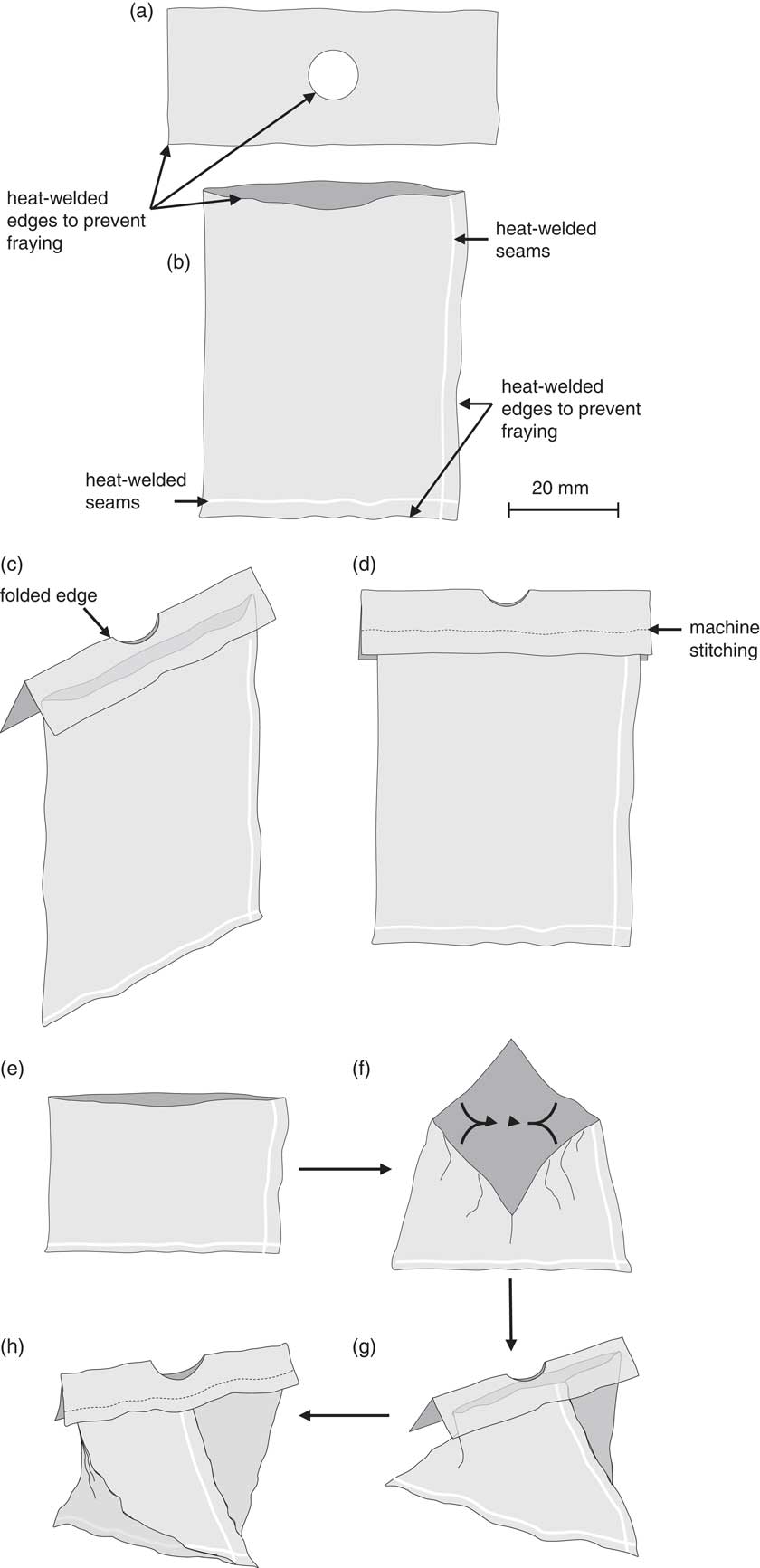
The small porous bags containing forage samples for incubation in the reticulorumen were made from a nylon woven continuous filament fabric of 40 μm mesh size; this was the same material as used for bags employed in the conventional degradability method requiring rumen-fistulated animals. The bags tested in the current work (50×65 mm) were designed to have half of the total effective surface area of those used in the conventional method (Ørskov et al., Reference Ørskov, Hovell and Mould1980). Two different designs, rectangular flat shape (F), and tetrahedral shape (T) were compared. The rectangular flat shaped bags (Figure 1a–d) were somewhat similar in design to the larger bags of the conventional nylon bag technique. The reason for testing the tetrahedral-shaped bags (Figure 1e–h) was that this second design might allow the substrate to have more space to move freely inside the bag and to be more exposed to the degradative action of ruminal microorganisms. For both flat and tetrahedral shapes, each bag was made from a rectangular piece of fabric which was folded across its middle and the side and bottom edges welded together using a heat sealer (Figure 1). To prevent fraying of the fabric the heat sealer was also applied to the cut edges of the bag material (Figure 1).
Design and fabrication of the rectangular flat shaped (a–d) and tetrahedral-shaped (e–h) nylon bags for orally dosing: (a) nylon fabric strip to close the bag and attach the anti-regurgitation device; (b) bag with heat-welded seams and edges; (c) fabric strip ready to be stitched; (d) bag closed by machine stitching, ready to be fitted with a regurgitation device (see Figure 2); (e–h) steps to fold and stitch a bag to form the tetrahedral shape.

For the ruminal incubation assays, each bag was first weighed empty, and reweighed after adding a 1 g DM sample of forage, which had been dried and ground to pass through a 2 mm sieve. The size of the bag was such that the sample weight:effective surface area ratio of about 15 mg/cm2 was similar to the conventional degradability technique which uses larger bags (Mehrez and Ørskov, Reference Mehrez and Ørskov1977). The bags with their contents were closed by machine stitching a folded strip of nylon fabric across their tops (Figure 1). With the intention of preventing their regurgitation upon oral dosing, the bags were fitted with anti-regurgitation devices made from nylon cable ties of 5 mm width and nylon fishing line. Both ends of the cable ties were removed before cutting the strips to length and rounding the cut ends in order to minimise potential harm from sharp edges. The strips were passed through the fabric closures at the top of the bags. Small holes (1 mm diameter) were drilled into the cable-tie strips to allow attachment of the nylon fishing line. The purpose of the fishing line was to secure the cable-tie strips to the bags and to constrain the degree to which they could become unfolded after entering the reticulorumen. The designs of anti-regurgitation device used for the bags (Figure 2a–c) comprised three different respective configurations: ‘Z’-shaped (ARD1), ‘double Z’-shaped (ARD2) and ‘umbrella’-shaped (ARD3). Before oral dosing, the bags were rolled up to form a cylinder (Figure 2d and e) and wrapped in a small sheet of tissue paper, which was twisted at each end (Figure 2f), so that it could be inserted into a standard dosing gun. The plastic wings of attached anti-regurgitation devices had to be folded when wrapping the bags with tissue paper as a preparative step for oral dosing (Figure 2d). To assess the length of time for the bags and plastic wings of their attached anti-regurgitation device to be released from the paper wrappers, the paper-wrapped bags were placed in a 5 l beaker containing tap water at 39 °C under agitation by magnetic stirrer.
Small nylon bags fitted with three types of anti-regurgitation devices: (a) ‘Z’-shaped; (b) ‘double Z’-shaped; (c) ‘umbrella’-shaped; preparation of a ‘Z’-shaped nylon bag by: (d) folding up the anti-regurgitation device and (e) rolling up to be (f) wrapped in tissue paper before oral dosing. The details of the knots tying the fishing lines to the cable ties are shown in the insets.

Animal experiments
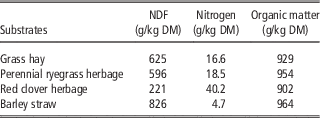
Two experimental trials were carried out in this study using Scottish Blackface cast ewes. The objectives of the first sheep experiment were: (i) to compare the effectiveness of the three anti-regurgitation device designs in preventing regurgitation; (ii) to assess whether the suggested oral dosing/slaughter procedure for characterising ruminal in situ degradation of a lignocellulosic substrate could produce a sensible degradation curve; (iii) to compare ruminal degradation characteristics obtained from two designs of dosed nylon bag containing the same lignocellulosic feedstuff. The substrate used in the first experiment was an oven-dried grass hay. The objective of the second sheep experiment was to compare the ruminal degradation characteristics of three different lignocellulosic substrates (freeze-dried perennial ryegrass, freeze-dried red clover and oven-dried barley straw) using the suggested oral dosing/slaughter in situ procedure with both the flat and tetrahedral-shaped nylon bags. Some chemical characteristics of the substrates are shown in Table 1, comprising the concentrations of NDF (Van Soest and Wine, Reference Van Soest and Wine1967), nitrogen (Pella and Colombo, Reference Pella and Colombo1973) and organic matter.
Some chemical characteristics of the forage substrates for in situ ruminal incubations

DM, dry matter.
The experiments were conducted between 31 August and 25 September 2009 at the James Hutton Institute’s Glensaugh Research Station, using six non-fistulated Scottish Blackface ewes for each trial; the non-pregnant non-lactating sheep had been obtained from the James Hutton Institute’s commercial flock having been deemed to be at the end of their productive lives. Procedures were the same for both trials. The animals were housed in individual pens with access to water at all times and fed 500 g/day dried grass pellets in two feeds at 0900 and 1630 h plus chopped hay ad libitum. The animals were subjected to an adaptation period of at least 2 weeks before beginning the bag dosing period. The bags were administered orally by dosing gun to the ewes over a period of 5 days. Animals were slaughtered on the final day by intravenous injection of sodium pentobarbitone. Before being slaughtered, the ewes were dosed with paper-wrapped nylon bags with anti-regurgitation devices at seven time points: 96, 72, 48, 24, 16, 8 and 4 h before slaughter; this was in accordance with nylon bag incubation times of the conventional technique using rumen-fistulated animals. At each time point two rectangular-shaped bags and two tetrahedral-shaped bags with either different anti-regurgitation devices (first experiment) or different substrates (second experiment) were orally dosed to the ewes. Details of the experimental treatments are summarised in Table 2. All procedures applied to the experimental animals complied with the regulations of the UK Home Office under the Animals (Scientific Procedures) Act implementing Directive 2010/63.
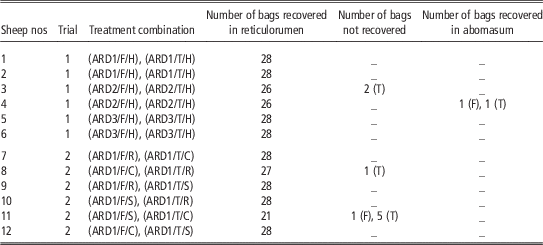
Treatment combinations in the two trials and number of bags recovered at slaughter

Anti-regurgitation devices: ARD1=‘Z’-shaped; ARD2=double ‘Z’-shaped; ARD3=‘Umbrella-shaped’; nylon bag shape: F=flat rectangular; T=tetrahedral; substrate: H=grass hay; C=freeze-dried red clover; R=freeze-dried ryegrass; S=barley straw.
Each sheep was dosed with two treatment combinations in duplicate (i.e. four bags) on each of seven occasions.
Recovery and processing of rumen-incubated bags
Immediately after the sheep were slaughtered at the end of each trial, incision of their abdominal wall was performed to allow access to the reticulorumen, which was opened up to withdraw the incubated bags. If all of the 28 dosed bags had not been recovered from the reticulorumen, the rest of the gastro-intestinal tract was dissected to search for any missing bags. The recovered bags were immediately plunged into cold water to stop microbial activity and washed under cold running tap water for 30 min as specified in the conventional protocol (International Feed Resources Unit, 2004). The anti-regurgitation devices attached to the bags were removed by cutting the nylon fishing line and the washed bags were oven-dried at 60 °C for 24 h. Towards the end of the drying period, the fabric strips and stitching used to close the tops of the bags were removed by carefully cutting the stitches; the open bags were replaced in the oven to complete the drying process. The bags were then cooled in a desiccator and weighed.
Substrate degradation calculations
The recorded weights of empty bags, forage samples and bags with forage residues enabled the calculation of percentage DM disappearance of substrates at the corresponding time of incubation. In addition, for each of the forages used in the incubation tests, an asymptotic exponential statistical model was fitted to the degradation of the substrates together with the effect of some terms (see the ‘Statistical analysis’ section).
Statistical analysis
In order to effectively compare the degradation characteristics of all four lignocellulosic substrates, data from both trials were combined and statistically analysed. Non-linear mixed-effect regression models were used to fit asymptotic exponential curves of the degree of degradation (percentage DM loss) of the four substrates against time of incubation in the reticulorumen and the effect of two fixed effects: type of anti-regurgitation device and the shape of nylon bag. The asymptotic exponential function mentioned by Ørskov and McDonald (Reference Ørskov and McDonald1979) was used to describe the degradation of the substrate:
 $$P{\,\equals\,}a{\plus}b{\times}\left( {1{\,\minus\,}{\rm exp}\,\left( {{\minus}c{\times}t} \right)} \right)$$
where p is the actual percentage degradation after incubation time t, a the intercept of the degradation curve at t=0, b the potential degradability of the substrate (i.e. asymptote) and c the rate constant for the degradation of b. Individual animal was included in the regression models as a random effect for b and c. We first attempted the most complex model of fixed effects that the design allowed, that is, the interactions between anti-regurgitation device and type of nylon bag, and between substrate and type of bag, for the asymptote and the rate constant of the exponential curve model. This model was simplified using backward elimination by removing one at a time, the non-significant fixed effect terms following the principle of marginality, that is, the highest order interactions were tested first and, if they were significant, the lower order effects were not tested for significance. This model selection procedure was carried out on the basis of P-values, rather than information criteria, as our objective was to identify the main drivers of our dependent variable, rather than creating predictive models (Murtaugh, Reference Murtaugh2014). The resulting model included anti-regurgitation device, type of nylon bag and substrate, for the asymptote and the rate of constant for the degradation, without interactions between terms. Models in which a varied across treatments were also fitted, but we found no significant differences in the a constant across treatments and, consequently, in the final model, a was fixed across treatments. The predictions of the model for each fixed effect together with the raw data of substrate degradation against incubation time, were then plotted.
All analyses and graphics were conducted in ‘R’ software (R Development Core Team, 2012), mainly using ‘nlme’ package (Pinheiro et al., Reference Pinheiro, Bates, Debroy and Sarkar2014).
Results
Ease of dosing and recovery of bags after slaughter
The dosing of bags fitted with anti-regurgitation devices was performed without major inconveniences, although it was slightly more difficult to carry out for bags with type ARD2 and ARD3 devices than the simpler ARD1 devices. To orally dose the bags, it was necessary to position the dosing gun in the correct place in the sheep’s mouth as quickly as possible. The bag tissue paper wrappings became damp in the mouth, so any delay increased the likelihood of the anti-regurgitation device wings springing out and tearing the wrapper. When this happened (about one in every 20 dosing events), it was necessary to discard the bag and use a spare one; the discarded bag could be wrapped in a new piece of tissue paper for dosing at a later time.
The results of the first experiment were highly successful in terms of recovering most of the incubated bags from the sheep reticulorumen (Table 2). No observable damage to oesophagus or the linings of the reticulorumen was found. Upon opening the reticulorumen, the bags were found to be distributed throughout the digesta, suggesting good mobility of the bags in the rumen.
In the first experiment (sheep nos 1 to 6) the recovery rates of bags, from the reticulorumen after slaughter, were 100%, 93% and 100% for bags fitted with the types ARD1, ARD2 and ARD3 anti-regurgitation devices, respectively (Table 2). Two bags were missing from sheep no. 3, which had been dosed with bags having the ARD2 anti-regurgitation device; the other bags were recovered from the reticulorumen. For sheep nos. 4, 26 of the 28 dosed ARD2 bags were recovered from the reticulorumen and the remaining two were found in the abomasum. In the second trial (sheep nos. 7 to 12), one ARD1 flat bag was missing from sheep no. 8, and in sheep no. 11 one ARD1 flat bag and five ARD1 tetrahedral bags were not found (Table 2). All of the bags recovered from all sheep were completely undamaged.
When tested in the laboratory, paper-wrapped bags unfolded their plastic anti-regurgitation device wings ~2 min after being placed in stirred warm water.
Ruminal degradation results
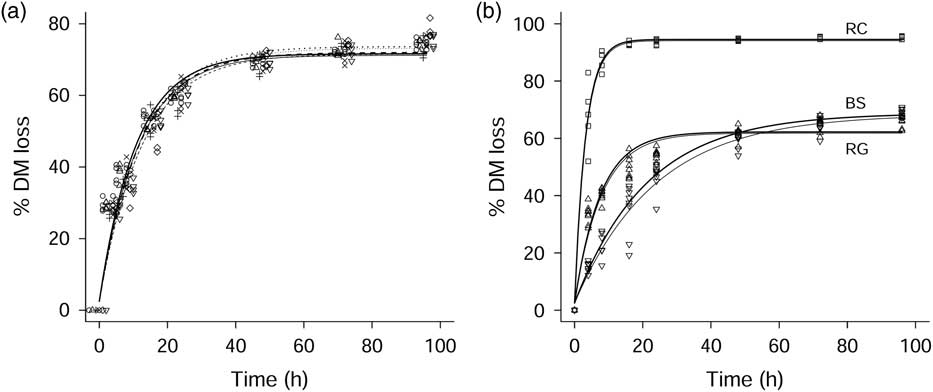
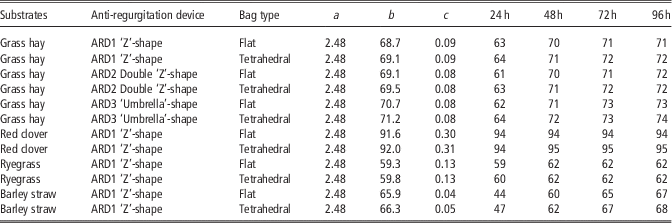
Plots of substrate degradation (percentage DM loss) from the bags against the time interval between oral dosing and slaughter are shown in Figures 3a (grass hay substrate) and b (red clover, ryegrass and barley straw substrates); degradation values for individual bags are depicted as symbols and derived degradation curves obtained from asymptotic regression model are shown as lines on the figures (see Table 3 for the relevant values for parameters a, b and c applied to the exponential asymptotic function of Ørskov and McDonald, Reference Ørskov and McDonald1979). The degradation information shown in Figure 3a and Table 3 suggests that for a single substrate (grass hay), satisfactory degradation curves could be obtained with little influence of bag shape, or design of anti-regurgitation device. It is evident from the data given in Figure 3b and Table 3, that satisfactory degradation curves were also obtained for red clover, ryegrass and barley straw, with large between-substrate differences in degradation characteristics.
(a) Degradation (percentage dry matter (DM) loss) of grass hay from orally dosed flat (F) and tetrahedral (T) bag types fitted with either ‘Z’-shaped (ARD1), ‘double Z’-shaped (ARD2) or ‘umbrella’-shaped (ARD3) anti-regurgitation devices. Symbols represent raw data from the first experimental trial; lines were derived from the model predictions (see Tables 3 and 4): F, ARD1: circle symbol and solid thin line; T, ARD1: up-triangle symbol and solid thick line; F, ARD2: cross symbol and dashed thin line; T, ARD2: diagonal-cross symbol and dashed thick line; F, ARD3: diamond symbol and dotted thin line; T, ARD3: down-triangle and dotted thick line. (b) Degradation (percentage DM loss) of three substrates (ryegrass, RG; red clover, RC; barley straw, BS) from orally dosed flat (F) and tetrahedral (T) bag types fitted with ‘Z’-shaped anti-regurgitation device (ARD1). Symbols represent raw data from the second experimental trial (both flat and tetrahedral bags): RG: up-triangle; RC: square symbol; BS: down-triangle. Lines were derived from the model (see Tables 3 and 4) predictions: F: solid thin line; T: solid thick line.

Mean values for parameters a, b and c from the asymptotic exponential function in Table 4 and predicted dry matter-degradation of the four substrates after 24, 48, 72 and 96 h before slaughter

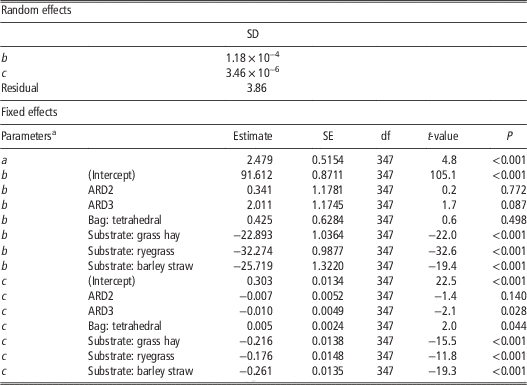
From statistical analysis of the data from both animal experiments, the asymptotic regression model indicated that, although extremely small relative to the residual (Table 4) most of the variance explained by the random effects was due to the asymptote, and two orders of magnitude less due to the rate constant; these results suggest that any effect of animal was of little importance. The fixed effects provided the major contribution to the variance explained by the model (Table 4). The model clearly indicated that neither the different types of anti-regurgitation device nor the design shape of nylon bag had any significant effect on the predicted maximum degradation (i.e. the asymptote, b) achieved by the different substrates, but ARD3 and the flat design of nylon bag had small but statistically significant negative effects on the rate constant of degradation (parameter c) in comparison with the other anti-regurgitation devices and the tetrahedral bag, respectively (Table 4). The response of the degradation of the substrates to incubation time after dosing was significantly (P<0.0001) different depending on the type of substrate. As was expected by the chemical composition of the substrates (Table 1), clover achieved the highest degree of degradation and fastest degradation rate of all substrates, as indicated by the estimates of the intercepts of the asymptote and rate constant, with independence of the type of anti-regurgitation device or nylon bag type (Figure 3a). The maximum degradation of clover was followed by the degradation of grass hay, straw and ryegrass (Table 3 and Figure 3a), and the fastest rate of degradation of clover was followed by that of ryegrass, grass hay and straw (Table 3 and Figure 3a). Degradation of the substrates at time 0 was significantly different from 0 (a=2.480, Table 3).
Coefficients of the non-linear mixed-effect regression model (asymptotic exponential function) of the degradation (percent dry matter loss from bags) in relation to the reticulorumen incubation time, of four substrates, three types of anti-regurgitation device (ARD1, ARD2, ARD3) and two nylon bag designs

Parameters of the asymptotic exponential function are response at time 0 (a), asymptote (b) and natural logarithm of the rate constant (c). The reference levels of the effects are ARD1 for anti-regurgitation device, flat shaped for bag type and red clover as the substrate.
a Parameters of the asymptotic exponential function: P=a+b×(1−exp (−c×t)), where P is substrate degradation (percent dry matter loss) at incubation time, t (Ørskov and McDonald, Reference Ørskov and McDonald1979).
Discussion
The in situ ruminal degradability technique has long been emphasised as a useful tool for screening the feeding value of ruminant feedstuffs, particularly in developing countries, due to its low requirements for laboratory facilities and electricity supply (Preston, Reference Preston1995; Adesogan, Reference Adesogan2002). In addition, it does not require the use of chemical reagents, being therefore less polluting and possibly less expensive than routine laboratory feed evaluation techniques. However, apart from a growing social concern about the welfare of animals subjected to preparative surgery, other recognised disadvantages concerning the preparation and care of fistulated animals are faced by the technique as conventionally performed. The present work explored an alternative in situ ruminal degradability technique which, in some way, is a revisiting of the experimental approach used by René Antoine Ferchault de Réaumur and Lazzaro Spallanzani in their digestion studies dating from the 18th century (Hungate, Reference Hungate1966). In contrast to those pioneer experiments, in which feed samples placed inside punctured brass tubes swallowed by sheep were exposed to ruminal digestion and recovered upon animal slaughter (Hungate, Reference Hungate1966), bags made of synthetic fabric were used instead in this work as carriers for the ruminal incubations of feed substrates.
Effectiveness of anti-regurgitation devices
The results clearly indicated that the attachment of foldable anti-regurgitation devices made from nylon cable ties attached to the nylon bags containing test feeds was an effective way of preventing regurgitation of the bags. Tests carried out in vitro by the immersion in water, of bags with their folded anti-regurgitation devices wrapped in tissue paper, demonstrated that the paper wrappers were lost within a few minutes. Thus it is likely that, following dosing, the anti-regurgitation devices quickly opened out in the rumen, giving very little time for potential regurgitation to occur. However, the percentage recovery of bags from the reticulorumen at slaughter was very high but not complete. As so few bags were not recovered in the two experimental trials (nine bags from 336 dosed), there was no evidence to suggest that bag loss was related to bag shape, anti-regurgitation device design or substrate feedstuff in the bags. However, as six of the bags were missing from one sheep, and two bags were not recovered from a second animal, it can be hypothesised that the loss of bags was an animal effect. It is not possible to establish from the current work the definitive fate of the missing bags. It is extremely unlikely that any bags (or bag fragments) could be voided with faeces, as such effects would have been clearly noticeable in dung. However, it is probable that the missing bags had been spat out from the mouth immediately after dosing, or at later times, and lost in the straw bedding material, or to the outside of the animal pen. The possibility of regurgitation from the reticulorumen is unlikely, but cannot be ruled out. The fact that two bags in one sheep were found in the abomasum without any substrate degradation having taken place suggests that these bags had bypassed the reticulorumen immediately after dosing. The finding that none of the recovered bags was damaged in any way indicates that the method of fabricating the bags and anti-regurgitation devices was satisfactory.
Degradation of substrates within nylon bags
Sensible degradation curves were obtained, using a model similar to that of Ørskov and McDonald (Reference Ørskov and McDonald1979), for forage substrates enclosed in small nylon bags that were orally dosed and retrieved at slaughter. Although statistically significant differences in the rates of degradation of substrates were observed between flat and tetrahedral-shaped bags, and between some anti-regurgitation devices (ARD1 v. ARD3), the small magnitude of these differences, together with the finding that maximum substrate degradation (i.e. asymptote) was not significantly affected, suggests that there was little benefit in using tetrahedral bags rather than the more easily made flat bags. Also, types ARD2 (‘double Z’-shape) and ARD3 (‘umbrella’-shape) anti-regurgitation devices did not improve bag recovery rate compared with the simpler ARD1 (‘Z’-shape) device. The results of the two experimental trials suggest that a standard flat bag shape fitted with the simple ‘Z’-shape anti-regurgitation device (ARD1) would give satisfactory in situ degradability results.
The degradation curves obtained were broadly in accordance with those to be expected from using the conventional nylon bag method involving fistulated animals. Significant differences in both asymptote and rate of degradation were found among substrates incubated, which demonstrate that the technique is sensitive to forages having different chemical composition and nutritive value. The estimated values of the parameters of the curve were comparable with those obtained using the conventional in situ degradability technique as reported by Huntington and Givens (Reference Huntington and Givens1995) for grass hay, Ørskov et al. (Reference Ørskov, Reid and Kay1988) for barley straw, Aufrère et al. (Reference Aufrère, Graviou and Demarquilly2003) for perennial ryegrass and Aufrère et al. (Reference Aufrère, Graviou and Demarquilly2002) for red clover.
Although the degradation curves obtained for the four forage substrates used in the oral dosing/slaughter in situ experiments described in this paper were comparable with published data obtained by the conventional nylon bag method involving the use of rumen fistulates, it is not essential that the parameters describing the degradation curves for both techniques are the same, as long as each is carried out using a standardised protocol. It is important that differences in degradation kinetics between different feed substrates reflect differences in in vivo digestion characteristics and nutritive value, and that the parameter values are reproducible. The data from the preliminary studies described in this paper strongly suggest that the dosing/slaughter degradation method meets these conditions.
It was not possible in the current study to make direct contemporaneous comparisons of the new dosing/slaughter nylon bag method with the conventional in situ technique using the same substrates because suitable rumen-fistulated sheep were not available. Although the lack of this comparative data could be considered as a poor experimental design, and whilst such comparisons would have been helpful in assessing the viability of the new technique using intact animals, they are not essential. Indeed, there are a number of theoretical reasons why degradation characteristics could differ between the two methodologies. In addition to differences in the size and shape of the bags used in the two techniques, it could be argued that degradation data obtained using the dosing/slaughter approach is, potentially, a more appropriate predictor of degradability in feed evaluation work, as the nylon bags are incubated in the reticulorumens of intact animals, whereas the conventional nylon bag method requires the use of rumen-fistulated animals. The result of such surgical intervention may potentially result in patterns of movement of digesta within the reticulorumen differing from those of intact animals (Iggo and Leek, Reference Iggo and Leek1970), which might possibly affect digesta passage rate, feed intake and digestibility. Hirayama and Katoh (Reference Hirayama and Katoh2005) observed, in sheep, that a rumen fistula fitted with a cannula of 40 mm internal diameter produced a decrease in rumen contraction amplitude and digesta passage rate, which might be the result of a reduction in contractile force.
Conditions such as immersion and free movement of bags within the ruminal contents are considered desirable for the incubation process in situ (Broderick and Cochran, Reference Broderick and Cochran1999). Unlike bags incubated in the conventional degradability technique, which are anchored to the rumen cannula, the orally dosed bags have more freedom to move anywhere in the ruminal contents, as feed particles do in response to the normal pattern of contractions of the rumen wall. Exposure to such contractions could promote squeezing of bags and their mixing with ruminal contents (Trabalza-Marinucci et al., Reference Trabalza-Marinucci, Dehority and Loerch1992; López, Reference López2005), facilitating bidirectional fluid movement across bag fabric and the colonisation of bag substrate by microorganisms. Furthermore, as a result of rumen wall contractions, small debris particles blocking the fabric pores of incubated bags could be removed when bags are compressed (Trabalza-Marinucci et al., Reference Trabalza-Marinucci, Dehority and Loerch1992), or rubbed against the fibrous digesta mat (Weakley et al., Reference Weakley, Stern and Satter1983), thus favouring the flow of rumen fluid and fermentation gasses in and out of bags. Regarding the reliability of determinations of substrate ruminal degradability by the conventional in situ technique, the position of bags within different locations in the rumen content has been found as a source of variation (Hawley, Reference Hawley1981; Yates, Reference Yates1984; Stritzler et al., Reference Stritzler, Hvelplund and Wolstrup1990). In general, published results indicate faster substrate degradation in bags located in the ventral rumen contents, compared with degradation in bags immersed in the dorsal rumen contents.
The free movement of orally dosed bags in the reticulorumen probably allowed the incubated substrates to be exposed to different locations in the ruminal contents, and therefore, the potential for incubation site as a source of variation would be reduced. This suggestion could have support considering that, upon slaughter at the end of the current experiments, bags were found throughout the reticulorumen mixed with the digesta.
Because the degradation characteristics of substrates in small orally dosed bags could potentially differ from those of substrates in bags used in the conventional techniques, it would be wise to consider a number of further investigations with the new technique, that have previously been carried out in great detail in relation to the conventional method. Such studies include consideration of the host-animal diets and feeding times, particle size of the substrate in the bags, and characterisation of degradation curve lag times and in vitro washing loss. The two latter aspects could be of importance when considering a wide range of substrates, as there is potential for lag times and washing losses to differ between substrates. In the current studies with orally dosed bags, substrate degradation at time zero (without consideration of lag time or washing loss) was similar for the tested substrates.
Potential advantages, limitations and scope for further developments of the new technique
The technique tested in this work, which frees researchers from requiring rumen-fistulated animals to carry out in situ feed degradability studies, has a number of emerging advantages as follows: (i) improvement of animal welfare in experimental protocols; (ii) avoidance of cost and labour of needing surgical preparation facilities, surgical expertise and specialist continuing care of fistulates; (iii) upon arrangement with a slaughterhouse, potential to use farm animals that would be going for slaughter anyway, either old animals or young fattened animals, as long as their eating and digestive function have been normal; (iv) arrangement of slaughter experiments on a large scale involving a large number of animals, which could allow study of the effect of different host-animal diets on selected substrates.
In spite of its potential, as shown in this work, there is a need to tackle some factors that could restrain the use of this alternative in situ technique as an easy and reliable routine for feedstuff quality characterisation. The problem of bag preparation for oral dosing should be considered in terms of making the dosing procedure rapid enough to prevent anti-regurgitation devices from bursting through tissue paper before being swallowed by the animal. The fate of missing bags dosed to sheep in this work also needs to be addressed. Although there is potential to improve the reliability of the nylon bag dosing procedure, an alternative approach would be to ensure that there is adequate replication of animals so that any missing values could be accommodated. Another aspect to explore is the possibility of facilitating the preparation of bags by changing the bag design, for example in terms of closure at their top or configuration of anti-regurgitation devices. As bag preparation is time-consuming, bags and anti-regurgitation devices could be re-used, but it is unknown how many times this could be done without losing precision in the measurements of substrate degradability. To date, tests of this new degradability method have been confined to using bags made from woven nylon fabric. The potential to use bags manufactured from polyester (Dacron) material, or from non-woven fabrics needs to be investigated.
Although we believe that slaughter over fistulation is an advantage of this technique, in relation to animal welfare cost, this is of course debatable and this assessment involves more philosophical issues. We based our statement on four points: (i) that the animals used in the experiment can be those that are going to slaughter anyway, for example, for commercial purposes or because they are at the end of their farming life but still in good physiological condition; (ii) the actual trend followed by frameworks for humane animal research and national and international legislation regulating the use of animals in scientific procedures, in which slaughter is preferred over the long term discomfort, suffering and handicap of the animal; (iii) the current aversion of the public to the use of invasive techniques in animal experimentation; and (iv) researchers are ethically obliged to reduce animal suffering as much as possible.
There might be concern that only using animals that are available before slaughter is a serious setback regarding the scientific desire to harmonise and standardise research conditions (as can be done for the conventional in situ technique). We do not suggest using any random animal that is going to slaughter, but those in good physiological condition, and subject them to an appropriate dietary regimen before the feedstuff degradation trials. Depending on the species, the dosing/slaughter technique have some limitations. For example, the conventional in situ technique is often used as input for international feed evaluation by using lactating dairy cattle. Handling and dosing large ruminants, such as cattle, and having large numbers available makes the dosing/slaughter technique of limited use. Set against this, the dosing/slaughter technique offers the opportunity to undertake sporadic feedstuff degradation trials just when they are needed, without having to look after fistulated animals during the period when they are not used. Preparing fistulated animals for a single study takes time, facilities and logistics, which might discourage researchers from carrying out studies on the subject. We believe that research teams that base their main research on feedstuff evaluation can easily justify the use of fistulated animals and the cost and labour of looking after them. Using non-fistulated animals can be advantageous on non-domestic species. In such species, post-surgery recovery and condition of the fistula can be an issue. This might be one of the reasons why there is lack of comparative studies on feedstuff degradation across non-domestic ruminant species using the in vivo conventional technique. We can envisage situations in which non-domestic species could be available to be the subject of in vivo feedstuff degradation studies (e.g. in stations dedicated to breeding endangered species used in reintroduction programmes where surgical facilities to prepare fistulated animals do not exist). In these places old but healthy animals are put down on a regular basis; they could be used to assess in vivo degradation of a collection of plant species of the native ruminant species range and in the area in which they are going to be introduced, in order to provide information to predict the success of the introduction.
It can be argued, as a weakness of the dosing/slaughter technique, that using a large number of animals, against the lesser number of animals (but with replicates across time within animals in the fistulation technique), can increase the variability of the results of feedstuff degradation. Statistically, the accuracy of the mean of a trait in a population increases with the number of independent samples. Repeated measurements on the same animal is pseudoreplication, as they are not independent and do not take into account individual variation across the population. It needs to be decided whether the goal of a feedstuff degradation trial should be to reduce the variability between samples, or to reduce the error of the estimate with respect to the population mean; in our opinion, in most cases, it should be the latter, so, using more animals is better than making repeated measurements within animal through using the same set of fistulated animals across many trials.
We have suggested that animals for commercial purposes could be slaughtered, upon arrangement, in a slaughterhouse, if the research institution does not have an approved slaughter facility. We agree that performance of the dosing technique (principally the final dosing) at a slaughter facility is not a good option for animal welfare and regulatory reasons. It would also require transporting the sheep during the treatment phase, and transport may affect their general physiology. However, with appropriate arrangements it is often possible for sheep and goats to be transported to a slaughterhouse within just a few hours, so apart from time 0, most of the required data (commencing at 4 h post dosing in the present study) could be collected. Our degradation curves indicate that it seems possible to carry out the model fitting even by dropping t i =0 dosing, which for most lignocellulosic feeds will be very close to 0, anyway. We believe that some substrates need shorter incubation times and this imposes logistic constrains, but for most herbage species, slaughter of the animals upon arrival at the slaughterhouse seems achievable. Equally, in some circumstances animals with no final value can be used and euthanized at the research facility. In developing countries, slaughter of livestock that are going to be used in the food chain is legally more relaxed than in developed countries. It would not be difficult to prepare a small slaughter facility in the research station, and obtain a licence to slaughter the experimental animals at the facility, arrange the distribution of the carcasses to local butchers or meat processing factories, without the need of transporting the animals to a slaughterhouse. We are not promoting slaughter against local regulation but rather being pragmatic within the established national legislation. In research institutions of developed countries, where the proposed technique can be used on regular basis, to arrange for a licensed slaughter facility might be worthwhile. For example in the UK it would be similar to the licensed network of deer larders of the Forestry Commission for Scotland and private estates in the Scottish highlands.
This alternative ruminal degradability technique also deserves further work by tests assessing, for example: (i) a wider range of roughages as substrates; (ii) a direct comparison with the conventional in situ technique; (iii) the contrast between data obtained from old sheep with little commercial value and young animals in their prime; (iv) increasing the number of bags per dose and reducing bag size to minimise the number of times that the animal is dosed; (v) and/or attaching more bags per anti-regurgitation device; (vi) examining the potential of widening the scope of use for the technique to other types of substrates, as for example, protein supplements and fresh undried roughages.
There is potential for the dosing/slaughter technique to be developed further and for its wide use in developed and developing countries by research teams, that do not have access to fistulated animals, with ultimate benefits for animal welfare.
Acknowledgements
JHP thanks the Stapledon Memorial Trust, Exeter, England, UK for the award of a travelling fellowship and the Universidad Nacional de La Pampa, Argentina for conceding a postdoctoral sabbatical leave. RWM and FJP-B were funded by the Scottish Government Rural and Environment Research and Analysis Directorate (RERAD), and The European Union Lifelong learning programme (Leonardo da Vinci) and Global Learning supported post-graduate students that assisted some laboratory analyses. FJP-B was granted with a visiting professor fellowship by the University of Cordoba. Pete Goddard, the editor and two anonymous referees provided constructive comments.