It is widely accepted that childhood adversity has a significant, deleterious impact on physical and emotional health later in life. Adverse childhood experiences (ACEs) such as parental physical, sexual, and verbal abuse; parental psychopathology; and early parental loss impact neurobiological development (Heim & Nemeroff, Reference Heim and Nemeroff2002; Nemeroff, Reference Nemeroff2016), which may create vulnerability for the development of mood and anxiety disorders, substance use disorders, as well as physical health conditions such as chronic pain. In addition to these neurobiological vulnerabilities, individuals experiencing childhood adversity may be less likely to develop adaptive emotion regulatory capacity in the form of adaptive coping (Gallo, Reference Gallo2009). In turn, emotion dysregulation can increase vulnerability to the development of internalizing and externalizing disorders (Beauchaine, Reference Beauchaine2015; Cole, Hall, & Hajal, Reference Cole, Hall, Hajal, Beauchaine and Hinshaw2013; Kim & Cicchetti, Reference Kim and Cicchetti2010). Opioid use disorder (OUD) may represent one key example of this pathogenic process. Epidemiological analysis of the present opioid crisis in the United States suggests that the intersecting comorbidities of trauma and adversity, dysregulated emotional states, and pain are driving the development of OUD (Case & Deaton, Reference Case and Deaton2015; Hassan, Foll, Imtiaz, & Rehm, Reference Hassan, Foll, Imtiaz and Rehm2017).
In 2017, more than 191 million opioid prescriptions were distributed to patients in the United States (Centers for Disease Control and Prevention, 2018). Recent estimates indicate that one-fifth to one-quarter of chronic pain patients receiving long-term opioid analgesic pharmacotherapy meet diagnostic DSM-5 criteria for OUD (Boscarino, Hoffman, & Han, Reference Boscarino, Hoffman and Han2015; Degenhardt et al., Reference Degenhardt, Bruno, Lintzeris, Hall, Nielsen, Larance and Campbell2015). OUD lies on a continuum from mild to severe (American Psychiatric Association, 2013), as determined by the number of symptoms endorsed during clinical diagnostic interview, including use of opioids in excess of one's intended dose; desire to constrain or discontinue opioid use; social or occupational consequences of use; relationship conflicts due to use; opioid use supplanting other valued activities; and continued use despite adverse physical or psychological problems. In DSM-5, the experience of craving or urges to use opioids was added to OUD criteria, consistent with the empirical observation that individuals prescribed opioids for chronic pain management can also experience craving (Wasan et al., Reference Wasan, Ross, Michna, Chibnik, Greenfield, Weiss and Jamison2012), a known marker of addiction.
Given the current state of the opioid epidemic in the United States, healthcare providers and policymakers are highly motivated to understand risk factors contributing to the development of OUD among individuals with chronic pain. Along with other physical and mental health conditions, childhood trauma exposure has been identified as one potential risk factor for the development of OUD. A landmark study conducted by the Centers for Disease Control and Prevention in 1998 found that ACEs such as abuse and household dysfunction were significantly and positively associated with many leading causes of death among adults, including obesity, suicide attempts, and substance use disorders (Felitti et al., Reference Felitti, Anda, Nordenberg, Williamson, Spitz, Edwards and Marks1998). Subsequent studies characterized the magnitude of the association between ACEs and substance use, finding that one-half to two-thirds of substance use problems could be explained by ACEs (Dube et al., Reference Dube, Felitti, Dong, Chapman, Giles and Anda2003). With regard to OUD in particular, ACE scores have been found to be inversely associated with age of first opioid use and positively associated with likelihood of experiencing opioid overdose (Stein, Conti, et al., Reference Stein, Conti, Kenney, Anderson, Flori, Risi and Bailey2017). ACE scores have been similarly associated with chronic pain conditions, for which opioid medications are commonly prescribed. In a large, nationally representative data set, several forms of ACEs (e.g., verbal and sexual abuse) were prospectively associated with later occurrence of painful medical conditions, and the presence of anxiety and mood disorders mediated the association between ACEs and painful medical conditions (Sachs-Ericsson, Sheffler, Stanley, Piazza, & Preacher, Reference Sachs-Ericsson, Sheffler, Stanley, Piazza and Preacher2017). Thus, ACEs may result in dysregulated negative emotional states that confer vulnerability to developing chronic pain conditions.
The cognitive–motivational–relational theory of emotion asserts that cognitive appraisals generate and modulate emotional states (Lazarus & Folkman, Reference Lazarus and Folkman1984). The cognitive process of reappraising the significance of an adverse life event can serve as a potent means of downregulating the negative emotional impact of that event. Emotion regulation may involve a top-down process of changing the subjective intensity of an emotion and its co-occurring physiological sequelae (Gross & John, Reference Gross and John2003; Ochsner, Bunge, Gross, & Gabrieli, Reference Ochsner, Bunge, Gross and Gabrieli2002). Emotion regulation modifies activation patterns in a central–autonomic network (e.g., medial prefrontal cortex → anterior cingulate cortex and anterior insula → central nucleus of the amygdala → hypothalamus → nucleus of the solitary tract → ventrolateral medullary) with downstream effects on visceral systems and functions, including the beat-to-beat modulation of heart rate by the vagus nerve, known as high-frequency heart rate variability (HRV; Appelhans & Luecken, Reference Appelhans and Luecken2006; Thayer, Åhs, Fredrikson, Sollers, & Wager, Reference Thayer, Åhs, Fredrikson, Sollers and Wager2012; Thayer & Lane, Reference Thayer and Lane2000, Reference Thayer and Lane2009). HRV in the high-frequency range (0.15–0.40 Hz) is physiologically mediated by parasympathetic influences on the sinoatrial node of the heart (Berntson et al., Reference Berntson, Bigger, Eckberg, Grossman, Kaufman, Malik and van der Molen1997).
Meta-analysis demonstrates a small but statistically significant positive association between regulatory efficacy and HRV (Holzman & Bridgett, Reference Holzman and Bridgett2017). Among individuals with no psychopathology, heightened phasic HRV in response to emotional challenge indicates regulatory efficacy (Butler, Wilhelm, & Gross, Reference Butler, Wilhelm and Gross2006; Segerstrom & Nes, Reference Segerstrom and Nes2007), whereas individuals with high neuroticism and difficulties in emotion regulation exhibit lower HRV at rest (Williams et al., Reference Williams, Cash, Rankin, Bernardi, Koenig and Thayer2015) and blunted phasic HRV during reappraisal of negative emotional stimuli (Di Simplicio et al., Reference Di Simplicio, Costoloni, Western, Hanson, Taggart and Harmer2012). For this reason, Beauchaine and Thayer (Reference Beauchaine and Thayer2015) have posited that low HRV, particularly high-frequency HRV, may represent a transdiagnostic risk factor for psychopathology. Low levels of high-frequency HRV have been observed in clinical samples of patients with both internalizing and externalizing disorders, including depression, anxiety, and schizophrenia (Beauchaine & Thayer, Reference Beauchaine and Thayer2015). In addition, low HRV has been associated with poor regulatory capacities among individuals with panic disorder (Hovland et al., Reference Hovland, Pallesen, Hammar, Hansen, Thayer, Tarvainen and Nordhus2012) and posttraumatic stress disorder (Gillie & Thayer, Reference Gillie and Thayer2014). Not unlike such emotionally dysregulated individuals, patients with substance use disorders exhibit attenuated HRV at rest (Ingjaldsson, Laberg, & Thayer, Reference Ingjaldsson, Laberg and Thayer2003; Quintana, McGregor, Guastella, Malhi, & Kemp, Reference Quintana, McGregor, Guastella, Malhi and Kemp2013) and blunted phasic HRV during regulatory attempts (Garland, Carter, Ropes, & Howard, Reference Garland, Carter, Ropes and Howard2012). More recently, opioid misusing chronic pain patients were shown to evidence a similar pattern of blunted phasic HRV during reappraisal of negative emotional stimuli relative to chronic pain patients who take opioids as prescribed (Garland, Bryan, Nakamura, Froeliger, & Howard, Reference Garland, Bryan, Nakamura, Froeliger and Howard2017). Though such blunting of HRV during reappraisal might reflect the neuropsychopharmacologic effects of prolonged exposure to high-dose opioids, it is also plausible that emotion regulation difficulties antedate and predispose individuals to OUD in accordance with the transdiagnostic risk factor model (Beauchaine & Thayer, Reference Beauchaine and Thayer2015). In that regard, chronic pain patients with extensive histories of ACEs may suffer from emotion dysregulation, and turn to opioids as a means of coping with poorly managed affective distress. Such opioid self-medication of negative affect may be quite common among individuals with OUD; for example, in a sample of inpatients with OUD, 95% reported they had used opioids to relieve negative affective states (Garland, Hanley, Thomas, Knoll, & Ferraro, Reference Garland, Hanley, Thomas, Knoll and Ferraro2015).
Thus, opioid-treated chronic pain patients may engage in disordered use of opioids as a means of self-medication, and through negative reinforcement conditioning, negative affective states may come to prime opioid craving. Opioid craving has been found to predict opioid use in individuals meeting criteria for heroin and prescription OUD (McHugh et al., Reference McHugh, Fitzmaurice, Carroll, Griffin, Hill, Wasan and Weiss2014; Tiffany & Wray, Reference Tiffany and Wray2012), as well as opioid misuse in chronic pain patients (Wasan et al., Reference Wasan, Butler, Budman, Fernandez, Weiss, Greenfield and Jamison2009). A recent study found that among individuals receiving medication-assisted treatment for OUD, those with chronic pain were three times as likely to report craving in the past week and were significantly more likely to have a positive drug screen (Tsui et al., Reference Tsui, Lira, Cheng, Winter, Alford, Liebschutz and Samet2016). The subjective experience of craving is associated with autonomic changes (Carter & Tiffany, Reference Carter and Tiffany1999), as well as activation in attentional, interceptive, and reward-related brain networks (Koob & Volkow, Reference Koob and Volkow2016; Naqvi, Gaznick, Tranel, & Bechara, Reference Naqvi, Gaznick, Tranel and Bechara2014). Such craving-related activation is often elicited by drug-related cues due to incentive sensitization induced by neuroadaptations in the mesocorticolimbic dopamine system (Berridge & Robinson, Reference Berridge and Robinson2016), yet craving can also be elicited by negative affective states (Heckman et al., Reference Heckman, Kovacs, Marquinez, Meltzer, Tsambarlis, Drobes and Brandon2013). Among individuals with OUD, negative affect has been significantly associated with opioid craving (Epstein et al., Reference Epstein, Wilner-Reid, Vahabzadeh, Mezghanni, Lin and Preston2009; Huhn et al., Reference Huhn, Meyer, Harris, Ayaz, Deneke, Stankoski and Bunce2016). As such, when faced with stimuli and contexts that elicit negative affect, chronic pain patients with ACEs may be prone to experience especially strong cravings.
Though research has demonstrated the association between ACEs and OUD outside of the context of pain, it is not yet known to what extent ACEs predict OUD severity among individuals prescribed long-term opioid analgesics for chronic pain management. Moreover, linkages between ACEs, emotion dysregulation, and opioid craving elicited by negative affective states have not been directly tested in the literature. To that end, we employed multiple levels of analysis (Cicchetti & Dawson, Reference Cicchetti and Dawson2002) to assess these factors via self-report, clinician interview, electronic health records, psychophysiology, and a performance-based assay of emotion regulation efficacy. Here, we focus on women receiving long-term opioid analgesic pharmacotherapy for several reasons. Research on sex differences in addiction suggests drug consumption elicits greater dopaminergic activity among females than males, with both human and animal studies showing the experimental presence of estradiol results in escalated drug consumption and drug acquisition motivation, as well as greater withdrawal responses (Becker, Reference Becker2016). Compounding this sex-based vulnerability, women with histories of childhood abuse have been found four times more likely than controls to develop dysregulated negative emotional states (McCauley et al., Reference McCauley, Kern, Kolodner, Dill, Schroeder, DeChant and Bass1997; Mullen, Martin, Anderson, Romans, & Herbison, Reference Mullen, Martin, Anderson, Romans and Herbison1996), and relative to controls they exhibit increased hypothalamic–pituitary–adrenal (HPA) axis and autonomic stress reactivity (including elevated heart rate), both ostensibly as a function of corticotropin-releasing factor hypersecretion (Heim et al., Reference Heim, Newport, Heit, Graham, Wilcox, Bonsall and Nemeroff2000). With these considerations in mind, we examined relations among ACEs, HRV during emotion regulation, and cue-elicited craving among a sample of women with chronic pain who were at risk for OUD due to long-term opioid exposure.
We hypothesized that female opioid-treated chronic pain patients with more ACEs would evidence significantly greater blunting of HRV during negative emotion regulation than opioid-treated pain patients with few ACEs, and that this inverse relationship between ACE and HRV during emotion regulation would be independent of opioid dose and duration. We also hypothesized that ACEs would be positively associated with negative emotional cue-elicited opioid craving and OUD severity.
Method
Participants
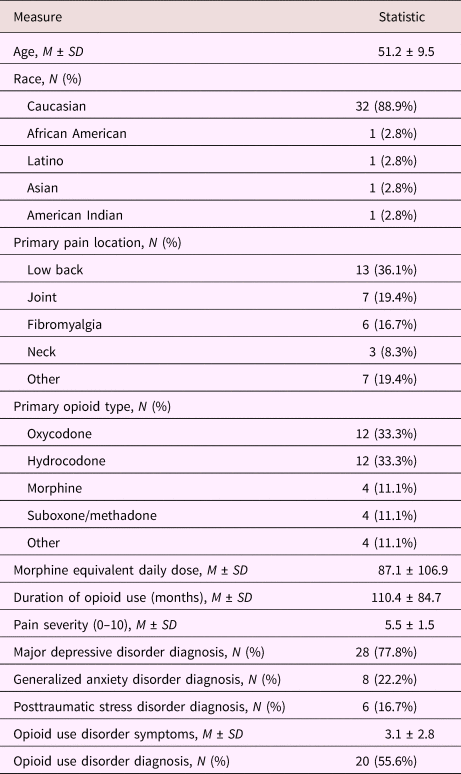
Women (N = 36; see Table 1 for demographic/clinical characteristics) were recruited from primary care and specialty pain clinics, and met inclusion criteria if they reported having a chronic pain condition and had taken opioid analgesics daily or nearly every day for at least the past 90 days (Chou et al., Reference Chou, Fanciullo, Fine, Adler, Ballantyne and Davies2009). The most frequently reported chronic pain condition was low back pain (36%), followed by joint pain (19%) and fibromyalgia (17%); mean pain severity was 5.5 ± 1.5 out of 10. Oxycodone (33%) and hydrocodone (33%) were the most frequently reported opioids used. On average, participants reported taking a high morphine equivalent daily dose (mean = 87.1 ± 106.9 mg), and had been taking opioids for an average of 9.2 years (SD = 7.1 years). More than half the sample (n = 20, 56%) met DSM-5 criteria for OUD.
Demographic and clinical characteristics of the opioid-treated chronic pain sample (N = 36)

Procedure
Participants were instructed to take their prescribed opioid medication as usual on the day of the study. Following informed consent, participants completed self-report measures of ACEs, opioid dosing, and opioid craving. Current DSM-5 prescription OUD criteria (and comorbid mood/anxiety disorders) were assessed with the Mini-International Neuropsychiatric Interview (Sheehan et al., Reference Sheehan, Lecrubier, Sheehan, Amorim, Janavs, Weiller and Dunbar1998) by trained clinical staff (e.g., psychologists, social workers, and nurses). Then participants sat quietly at rest for 5 min to allow heart rhythms to acclimate to the testing environment. Next, participants completed a blocked emotion regulation task while electrocardiogram (ECG) data was recorded. Before and after the two emotion regulation task conditions, participants made negative affect and opioid craving ratings. The study protocol was approved by the University of Utah institutional review board. All procedures complied with standards propounded in the Helsinki Declaration of 1975.
Measures
Emotion regulation task
The study utilized an emotion regulation paradigm (Jackson, Malmstadt, Larson, & Davidson, Reference Jackson, Malmstadt, Larson and Davidson2000; Ochsner et al., Reference Ochsner, Bunge, Gross and Gabrieli2002) composed of 60 trials, each presented for 6 s, separated by a 500-ms fixation cross. Stimuli included negative images (e.g., violence or injury) from the International Affective Picture System (Lang, Bradley, & Cuthbert, Reference Lang, Bradley and Cuthbert1997). There were 30 trials per condition, each presented in a single block: “view negative” and “reappraise negative.” The “reappraise” condition instructed participants to reinterpret the meaning of the image content to decrease emotional reactions to the image. The “view” condition instructed participants to simply view the image without trying to change their emotional experience. Before data collection was initiated, participants completed a brief training session with a research assistant during which they verbally described their experience engaging in the view and reappraisal instructions; trials of each instruction type were provided until the participant expressed being able to competently follow task instructions. At baseline before the emotion regulation task, and after each block, participants rated negative affect (1 = no negative affect, 5 = extreme negative affect). As a manipulation check, a main effect of condition (baseline, view negative, or reappraise negative) on negative affect ratings was observed, F (2, 34) = 16.64, p < .001, η2partial = .50. Participants reported increases in negative affect ratings from baseline to the view condition, F (1, 35) = 34.17, p < .001, η2partial = .49, indicating that exposure to negative affective stimuli successfully elicited negative affect. Participants reported decreases in negative affect from the view to reappraise conditions, F (1, 35) = 4.69, p = .037, η2partial = .12, demonstrating that participants followed task instructions to regulate their negative affect through reappraisal.
Opioid dosing and duration
Morphine equivalent daily opioid dose and duration of opioid use were obtained by self-report and corroborated by medical chart review.
Opioid use disorder
Current DSM-5 prescription OUD criteria were assessed with the Mini-International Neuropsychiatric Interview (MINI) by trained clinical staff (e.g., psychologists, social workers, and nurses). Per DSM-5, OUD severity was determined by computing the total number of OUD criteria.
HRV measurement
Ag–AgCl electrodes were attached to participants’ right and left pectoral muscles. ECG data were sampled at 1000 Hz and recorded continuously throughout the protocol on a Biopac MP150 (Biopac, Goleta, CA). Respiration rate was measured concurrently via the Biopac system to confirm that breathing fell within the respiratory frequency band for adults (0.15–0.40 Hz).
Negative emotional cue-elicited craving
At baseline, and following exposure to the negative affective images, participants rated their craving for opioids on a single item “How strong is your urge to take opioids right now?” with a numeric rating scale (1= no craving, 5 = extreme craving).
ACEs
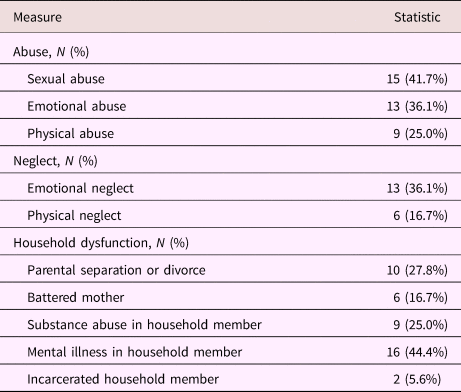
ACEs were measured with a 10-item version of the ACE questionnaire (Dube et al., Reference Dube, Felitti, Dong, Chapman, Giles and Anda2003; Felitti et al., Reference Felitti, Anda, Nordenberg, Williamson, Spitz, Edwards and Marks1998) assessing the presence or absence of 10 different types of abuse and neglect (see Table 2), each with a single-item question with dichotomous (yes/no) response options. These items can be summed to compute a continuous ACE score representing extensiveness of ACEs (Felitti et al., Reference Felitti, Anda, Nordenberg, Williamson, Spitz, Edwards and Marks1998).
Adverse childhood experiences (ACEs) of the female chronic pain sample (N = 36)

Data reduction and analysis
With respect to the HRV analyses, R-R intervals were detected in the ECG data using automated routines in Acqknowledge 4.1 software (BIOPAC, Inc.). The R-wave file was then visually inspected to correct misidentified or omitted R-waves. Kubios 2.0 (Biosignal Analysis and Medical Imaging Group, University of Finland) was used to calculate beats-per-minute and for spectral analysis of R-waves. R-R interval data were segmented into two, 3.25-min segments, each of which spanned the entire length of one of the two study conditions: “view negative” and “reappraise negative” blocks. HRV analyses were conducted on the entire segment length for each of these two conditions: a fast Fourier transform was applied separately to R-R interval data to extract normalized high-frequency HRV from a de-trended, end-tapered interbeat interval time series. The spectrum for the selected R-R interval segment was calculated via Welch's periodgram method, in which R-R interval data were reduced using Kubios 2.0 default settings of a window width of 128 s (with a window overlap of 50%). High-frequency HRV in the respiratory frequency band (0.15–0.40 Hz) was selected as our estimate of vagally mediated HRV. Analysis of respiration data showed that breathing fell within the respiratory frequency band. Following Berntson et al. (Reference Berntson, Bigger, Eckberg, Grossman, Kaufman, Malik and van der Molen1997) and Malliani, Lombardi, and Pagani (Reference Malliani, Lombardi and Pagani1994), we calculated HRV in normalized units to elucidate shifts in this frequency component that might otherwise be obscured by use of absolute units, which are dependent on total HRV power. Normalization of HRV values produces statistical averages with distributions that converge more readily to normal distributions than do raw spectral band powers, and normalization tends to produce values that are more translatable across different research studies using similar tasks with different block lengths (Burr, Reference Burr2007). HRV was averaged for each of the two emotion regulation task blocks, as well as for a 5-min resting baseline.
To test our study hypotheses, we first computed an index of phasic HRV during emotion regulation by subtracting HRV during the negative look condition from HRV during the reappraisal condition. Then we conducted a linear regression model to predict HRV during emotion regulation from ACEs, after controlling for opioid dose and opioid duration. Next, we computed an index of self-reported negative emotional cue-elicited craving by subtracting baseline craving levels from craving during the negative look condition. Then we conducted a linear regression model to predict negative emotional cue-elicited craving from ACEs, and a second regression model to predict OUD symptom severity from ACEs; both regression models controlled for opioid dose and duration. Collinearity diagnostics were assessed and no predictor variables exceeded recommended tolerance (<0.2) and variance inflation factor thresholds (>5.0). Finally, we computed bivariate correlations between resting HRV and key study variables: ACEs, cue-elicited craving, opioid dose, opioid duration, and OUD.
Results
Prevalence of ACEs
The majority of the sample (n = 30, 83.3%) reported experiencing at least one ACE, and participants reported an average of 2.8 (SD = 2.3) ACEs. Prevalence of the various domains of ACEs are reported in Table 2. More than one-third of participants reported having experienced emotional (36.1%) and sexual abuse (41.7%), whereas one-quarter experienced physical abuse. Emotional neglect was also common, experienced by more than one-third (36.1%) of participants. In terms of household dysfunction, one-quarter reported substance abuse in the household, whereas nearly half of participants (44.4%) reported mental illness in a household member.
HRV responses across conditions
At baseline, mean resting HRV was 46.75 (SD = 24.17). During the view negative condition, HRV was 47.86 (SD = 19.58). During the reappraise negative condition, HRV was 49.29 (SD = 17.29).
Associations between ACEs and HRV during negative emotion regulation
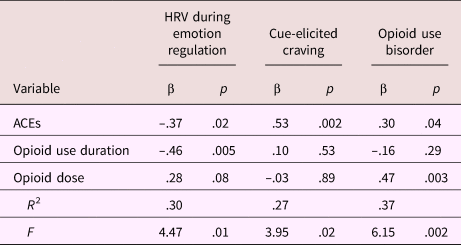
ACE scores explained a significant portion of variance in HRV during negative emotion regulation, above and beyond opioid dose and duration. Opioid duration was also significantly inversely associated with HRV during negative emotion regulation. The full model predicted 30% of the variance in HRV during negative emotion regulation (see Table 3).
Adverse childhood experiences (ACEs), duration of opioid use, and opioid dose as predictors of heart rate variability (HRV) during emotion regulation, negative emotional cue-elicited craving, and opioid use disorder in a sample of female, opioid-treated chronic patient patients (N = 36)

Associations between ACEs and negative emotional cue-elicited craving
ACE scores explained a significant portion of variance in negative emotional cue-elicited craving, above and beyond opioid dose and duration. Opioid duration was also significantly inversely associated with negative emotional cue-elicited craving. The full model predicted 27% of the variance in cue-elicited craving (see Table 3).
Associations between ACEs and opioid use disorder severity
ACE scores explained a significant portion of variance in OUD severity above and beyond opioid dose and duration. Although opioid dose was significantly positively associated with OUD severity, opioid duration was not. The full model predicted 37% of the variance in OUD severity (see Table 3).
Associations between resting HRV and key study variables
Resting HRV was not significantly associated with ACEs (r = .24, p = .18), negative emotional cue-elicited craving (r = –.01, p = .95), opioid dose (r = –.12, p = .48) or duration (r = .03, p = .87), or OUD severity (r = .08, p = .65).
Discussion
For more than a decade, studies have documented associations among trauma, emotional distress, and disordered use of opioids in individuals with chronic pain. Yet, to our knowledge, the present study is the first to examine linkages between ACEs, HRV during emotion regulation, and craving among opioid-treated chronic pain patients using a performance-based task of emotion regulation capacity. Study findings demonstrate that ACEs predict blunted HRV during emotion regulation, negative emotional cue-elicited craving, and OUD severity among women treated with opioids for chronic pain management. Women with extensive histories of ACEs evidenced attenuated capacity to regulate autonomic responses during reappraisal of negative emotional stimuli and heightened opioid craving in response to those stimuli, and thus ACEs may constitute an important risk factor in female chronic pain patients receiving long-term opioid analgesic pharmacotherapy.
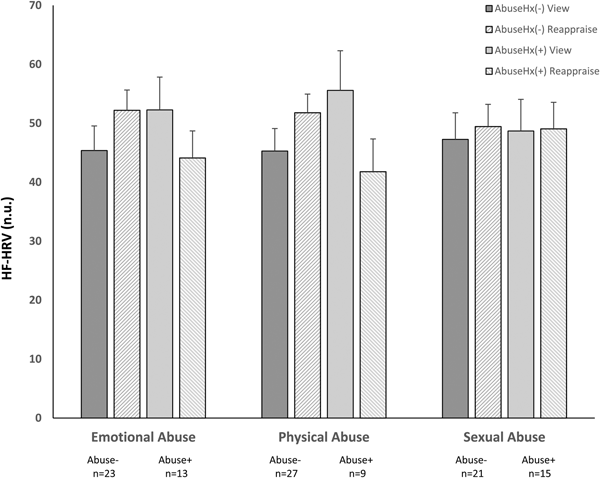
The link between childhood abuse and emotion dysregulation is well documented (for a review, see Dvir, Ford, Hill, & Frazier, Reference Dvir, Ford, Hill and Frazier2014), and findings from the present study support prior research showing that childhood abuse has long-term implications for HRV and autonomic functioning (Meyer et al., Reference Meyer, Müller, Zastrow, Schmidinger, Bohus, Herpertz and Bertsch2016). In our sample, women with more exposure to ACEs exhibited dampened HRV responses during negative emotion regulation relative to those with fewer ACEs, who evidenced increases in HRV when reappraising negative emotional images. Moreover, opioid-treated chronic pain patients with no history of childhood emotional, sexual, and physical abuse showed a HRV response profile during emotion regulation that was similar to that of healthy controls, who exhibit increases in HRV during reappraisal relative to passive exposure to negative stimuli (Di Simplicio et al., Reference Di Simplicio, Costoloni, Western, Hanson, Taggart and Harmer2012). Of note, ACEs were associated with blunted HRV during emotion regulation (i.e., phasic HRV), but not with resting HRV (i.e., tonic HRV), indicating that in this sample childhood adversity was linked with a specific deficit in the capacity to modulate autonomic function in response to regulatory demands. The observed blunting of HRV responses during reappraisal among individuals with extensive ACE history in our sample may indicate dysfunctional neurovisceral integration with resultant deficits in self-regulation of negative emotional reactivity (Thayer & Lane, Reference Thayer and Lane2009). In complementary fashion, exaggerated HPA axis responses and sympathoadrenal system arousal in response to traumatic and stressful childhood events might compromise prefrontally mediated cognitive control function, with downstream autonomic effects (Radley, Morilak, Viau, & Campeau, Reference Radley, Morilak, Viau and Campeau2015). Thus, exposure to ACEs may decrease the capacity to engage top-down cognitive regulation of autonomic responses elicited by stressors and adverse life events.
In that regard, ACEs have been associated with maladaptive neuroplastic changes to the central autonomic network that are maintained into adulthood, including smaller prefrontal cortex, hippocampus, and anterior cingulate volumes (Cohen et al., Reference Cohen, Grieve, Hoth, Paul, Sweet, Tate and Williams2006; van Hammelen, et al., Reference van Hammelen, van Tol, van der Wee, Veltman, Aleman, Spinhoven and Elzinga2010), abnormal amygdala activity (e.g., heightened startle response; Jovanovic et al., Reference Jovanovic, Blanding, Norrholm, Duncan, Bradley and Ressler2009), and elevated, chronic activation of the HPA axis (Danese & McEwen, Reference Danese and McEwen2012). Presumably, these changes develop during childhood and adolescence in adaptation to a perpetually stressful social environment, wherein the amygdala tunes attention to negative stimuli, chronically overriding inhibitory control from the hippocampus and prefrontal cortex to allow for threat detection. With chronic activation, however, this once situationally adaptive response precipitates allostatic overload (Danese & McEwen, Reference Danese and McEwen2012; McEwen, Reference McEwen2003), becoming maladaptive by sensitizing the autonomic and neuroendocrine processes integral to navigating threatening environmental stimuli. Because neurobiological resources for emotion regulation may not have fully developed in adverse childhood contexts, adults with extensive histories of ACEs may struggle to cope effectively when negative affective states co-arise with physiological arousal.
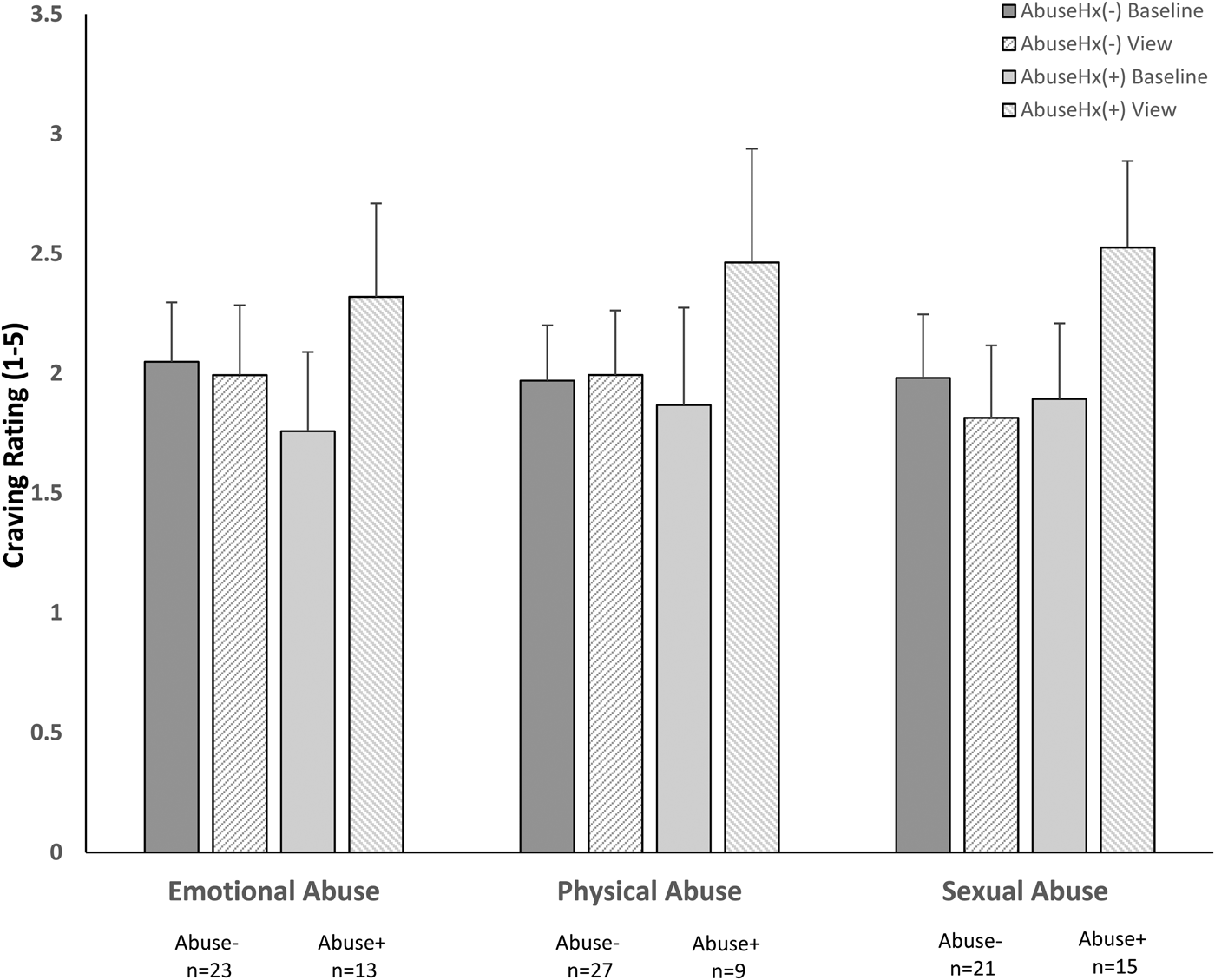
Such compromised capacity to regulate negative emotions stemming from ACEs might exacerbate addictive behavior. Emotion dysregulation has been found to mediate the relationship between childhood emotional abuse and motives for substance use (Barahmand, Khazaee, & Hashjin, Reference Barahmand, Khazaee and Hashjin2016). In the present sample, higher levels of ACEs predicted greater opioid craving elicited by negative emotional stimuli. Women with more extensive histories of childhood emotional, physical, and sexual abuse reported larger increases in craving after exposure to negative emotional images than women with no history of such abuse. Plausibly, women with ACEs may be more likely to engage in use of opioids to self-medicate or suppress negative affective states (Garland, Brown, & Howard, Reference Garland, Brown and Howard2016), and through negative reinforcement conditioning, negative emotional stimuli might come to elicit conditioned opioid craving responses. In that regard, trait negative affect is positively associated with opioid craving among opioid-treated pain patients (Martel, Dolman, Edwards, Jamison, & Wasan, Reference Martel, Dolman, Edwards, Jamison and Wasan2014), and greater negative affect during an emotion regulation task was associated with greater opioid craving among a sample of prescription opioid misusers (Garland et al., Reference Garland, Bryan, Nakamura, Froeliger and Howard2017). However, we did not measure the propensity toward self-medication directly in this study, and thus this hypothesis remains speculative given limitations in the present data.
The study was also limited by the range of negative affective images used. The set of stimuli included images associated with physical and emotional abuse, but for ethical and participant safety concerns, did not contain images related to sexual abuse. As such, the differential associations between types of abuse and HRV during emotion dysregulation/cue-elicited craving evident in Figures 1 and 2 might be explained, in part, by limitations in the image set. That said, we could not examine differences in HRV and cue-elicited craving by abuse type due to such analyses being underpowered. Future studies with larger sample sizes could disentangle the effects of various different forms of childhood adversity on emotion dysregulation and craving responses among individuals with OUD.
Adjusted high-frequency heart rate variability (HRV, in normalized units, n.u.) responses for female opioid-treated chronic pain patients (N = 36) with [AbuseHx(+)] and without [AbuseHx(–)] childhood abuse histories during viewing and reappraisal of negative affective stimuli, controlling for opioid dose and duration.

Adjusted opioid craving ratings for female opioid-treated chronic pain patients (N = 36) with [AbuseHx(+)] and without [AbuseHx(–)] childhood abuse histories at baseline and during viewing of negative affective stimuli, controlling for opioid dose and duration.

Moreover, it should be acknowledged that long-term exposure to high-dose opioid medications might also modify autonomic responses during emotion regulation and increase opioid craving; as such, we included opioid dose and duration in our analyses. We found that opioid duration, but not dose, was inversely associated with HRV during emotion regulation and positively associated with negative emotional cue-elicited craving. Plausibly, neuropsychopharmacological effects of chronic opioid exposure on neuroplasticity in corticolimbic and corticostriatal brain circuits (Jarrahi, Johnson, & Mackey, Reference Jarrahi, Johnson and Mackey2018; Upadhyay et al., Reference Upadhyay, Maleki, Potter, Elman, Rudrauf, Knudsen and Borsook2010; Younger et al., Reference Younger, Chu, D'Arcy, Trott, Jastrzab and Mackey2011) might result in deficient capacity to regulate autonomic responses to negative emotional stimuli and exaggerated negative emotional cue-elicited craving. That said, above and beyond opioid dose and duration, ACEs remained a significant predictor of blunted HRV during emotion regulation and craving. Future investigations should examine how ACEs interact with chronicity of opioid use to magnify the affective and appetitive risk factors observed in the present study.
Given that ACE scores constituted an important risk factor for blunted HRV during emotion regulation, cue-elicited craving, and OUD severity in this sample, female chronic pain patients should be assessed for childhood trauma history before initiating a long-term course of opioid analgesics. Measures such as the Screening in Trauma for Opioid Misuse Prevention (STOMP; Brown et al., Reference Brown, Deyo, Riley, Quanbeck, Glass, Turpin and Agarwal2017) are being developed to assess trauma-related risk for OUD in this population. Similarly, treatments for this population should address the symptomatic expression of emotion dysregulation and negative emotional cue-elicited craving, as well as the childhood trauma underlying these symptoms. In that regard, one such treatment for opioid misuse that has demonstrated efficacy in two Stage 2 randomized controlled trials, Mindfulness-Oriented Recovery Enhancement (MORE; Garland, Manusov, et al., Reference Garland, Manusov, Froeliger, Kelly, Williams and Howard2014; Garland et al., Reference Garland, Hanley, Riquino, Reese, Baker, Bryan and Howard2019), has been shown to enhance emotion regulation (i.e., reappraisal; see Garland, Manusov, et al., Reference Garland, Manusov, Froeliger, Kelly, Williams and Howard2014) and decrease cue-elicited craving (Garland, Froeliger, & Howard, Reference Garland, Froeliger and Howard2014), as well as reduce symptoms of traumatic stress (Garland, Roberts-Lewis, Tronnier, Graves, & Kelley, Reference Garland, Roberts-Lewis, Tronnier, Graves and Kelley2016). MORE and similar interventions may hold promise as a means of reducing OUD risk among female chronic pain patients with histories of ACEs.
In light of prior research demonstrating that traumatic experiences propel a positive feedback loop between negative affective states and substance misuse (Garland, Pettus-Davis, & Howard, Reference Garland, Pettus-Davis and Howard2013), findings from the current study demonstrate via a multiple-levels-of-analysis approach that female opioid-treated chronic pain patients exposed to ACEs are especially at risk for becoming ensnared in the downward spiral of emotion dysregulation and OUD (Garland, Froeliger, Zeidan, Partin, & Howard, Reference Garland, Froeliger, Zeidan, Partin and Howard2013). At what point along the developmental trajectory such risk arises, and how sex differences might modulate the impact of ACEs on risk for OUD, is not yet known. Future studies should seek to disentangle the interactive and independent effects of trauma, pain, and chronic opioid exposure on the capacity to regulate negative emotions and craving in OUD to more fully elucidate the mechanisms underlying this “disease of despair” (Stein, Gennuso, Ugboaja, & Remington, Reference Stein, Gennuso, Ugboaja and Remington2017).
Financial support
This work was supported by the National Institute on Drug Abuse Grant R01DA042033 (PI: Garland), and National Center for Complementary and Integrative Health Grant R61AT009296 (PI: Garland). The content is solely the responsibility of the authors and does not necessarily represent the official views of the National Institutes of Health.