Introduction
Parkinson's disease (PD) is a common neurodegenerative disorder. While it is primarily associated with progressive movement deterioration, debilitating non-motor symptoms are prevalent (Aarsland et al., Reference Aarsland1999). Neuropsychiatric symptoms, observed in more than 70% of PD sufferers (Riedel et al., Reference Riedel2010), are increasingly recognized as important contributors to patient disability (Weintraub et al., Reference Weintraub, Moberg, Duda, Katz and Stern2004), quality of life (Schrag et al., Reference Schrag, Jahanshahi and Quinn2000; Schrag, Reference Schrag2006; Dissanayaka et al., Reference Dissanayaka2010; Martinez-Martin et al., Reference Martinez-Martin, Rodrigeuz-Blazquez, Kurtis and Chaudhuri2011; Jiang et al., Reference Jiang, Tsai, Hsieh, Lee, Lin and Chen2013), and mortality (Hughes et al., Reference Hughes, Ross, Mindham and Spokes2004). In fact, anxiety, which is experienced in an average of 31% of PD patients (Broen et al., Reference Broen, Narayen, Kuijf, Dissanayaka and Leentjens2016), and depression, observed in 35% of patients (Reijnders et al., Reference Reijnders, Ehrt, Weber, Aarsland and Leentjens2008), are thought to be the strongest PD quality of life predictors (Rahman et al., Reference Rahman, Griffin, Quinn and Jahanshahi2008; Quelhas and Costa, Reference Quelhas and Costa2009; Menon et al., Reference Menon2015). Evidence for the effectiveness of pharmacological interventions in treating PD neuropsychiatric symptoms is mixed (Price et al., Reference Price2011; Troeung et al., Reference Troeung, Egan and Gasson2013), and concerns regarding unfavorable side effects, including exacerbation of motor problems in patients with complex medication regimes, have been noted (Rabinstein and Shulman, Reference Rabinstein and Shulman2000; Veazey et al., Reference Veazey, Aki, Cook, Lai and Kunik2005; Chen and Marsh, Reference Chen and Marsh2014). Furthermore, impulse-control disorder (ICD) development in PD patients has been associated with dopamine agonist pharmacotherapy (Weintraub et al., Reference Weintraub2006). Consequently, non-pharmacological, psychological interventions provide a viable treatment alternative. Many PD patients, however, do not receive mental health treatment (Frisina et al., Reference Frisina, Borod, Foldi and Tenenbaum2008; Dobkin et al., Reference Dobkin, Rubino, Friedman, Allen, Gara and Menza2013), given their significant mobility impairments, a lack of available services locally (and a high prevalence of rural and remote PD patients), and transportation burden including distance traveled and costs (Dobkin et al., Reference Dobkin, Rubino, Friedman, Allen, Gara and Menza2013).
The success of face-to-face cognitive behavioral therapy (CBT) in addressing comorbid depression and/or anxiety (Feeney et al., Reference Feeney, Egan and Gasson2005; Dobkin et al., Reference Dobkin, Allen and Menza2007; Dobkin et al., Reference Dobkin2011a; Okai et al., Reference Okai2013; Troeung et al., Reference Troeung, Egan and Gasson2014; Shinmei et al., Reference Shinmei2016) and ICDs (Okai et al., Reference Okai2013) in PD patients has triggered a recent shift toward improving psychotherapy accessibility through the use of telehealth-based delivery in this group, thus enhancing patient-centered care. PD patients report specific interest in care delivered via home-based telehealth interventions (Dobkin et al., Reference Dobkin, Rubino, Friedman, Allen, Gara and Menza2013; Lubomski et al., Reference Lubomski, Rushworth, Lee, Bertram and Williams2013). Pilot studies involving telehealth-based specialist care delivery through “virtual house calls” have demonstrated feasibility and considerable savings in travel distance and time for PD patients (Dorsey et al., Reference Dorsey2013), and large randomized-controlled trials (RCT) are underway (Achey et al., Reference Achey2014). Furthermore, remotely delivered assessments for PD patients in care facilities have demonstrated high patient and family satisfaction in addition to cost-effectiveness compared to transporting patients for face-to-face neurologist appointments (Barbour et al., Reference Barbour, Arroyo, High, Fichera, Staska-Pier and McMahon2016).
To our knowledge, no previous review has specifically examined the remote delivery of psychological interventions in PD. This review aims to provide an update of the telehealth literature in this regard, and identify future directions for remote delivery of psychotherapy in this population. Given that most work has evaluated PD-specific anxiety and/or depression treatment, this review gives deliberate weight to these topics.
Methods
Major electronic databases (PubMed, PsycInfo, and Web of Science) were searched using the terms Parkinson's disease, telehealth, telephone, video-conferencing, ehealth, psychotherapy, cognitive behavioral therapy, acceptance and commitment therapy, and mindfulness. Specified study inclusion criteria were as follows: (1) published in English, and (2) in a peer-reviewed journal; (3) conducted to evaluate the effect of a detailed psychological treatment as the primary intervention for PD patients; and, (4) the majority of the psychological treatment was delivered remotely (e.g. the initial and/or final session may be delivered in-person). Given the paucity of literature utilizing remote delivery, all trials (including uncontrolled pilot studies) published in December 2016 were considered eligible for inclusion. Abstracts were examined, and studies were excluded if psychiatric symptoms were included as secondary outcomes for (1) non-psychotherapy-based interventions or (2) remote assessment/monitoring studies without treatment. Additionally, studies focused on evaluating remote care delivery across a range of subspecialties and/or conditions were excluded. References of identified articles were checked for additional citations.
Psychotherapy for anxiety and depression
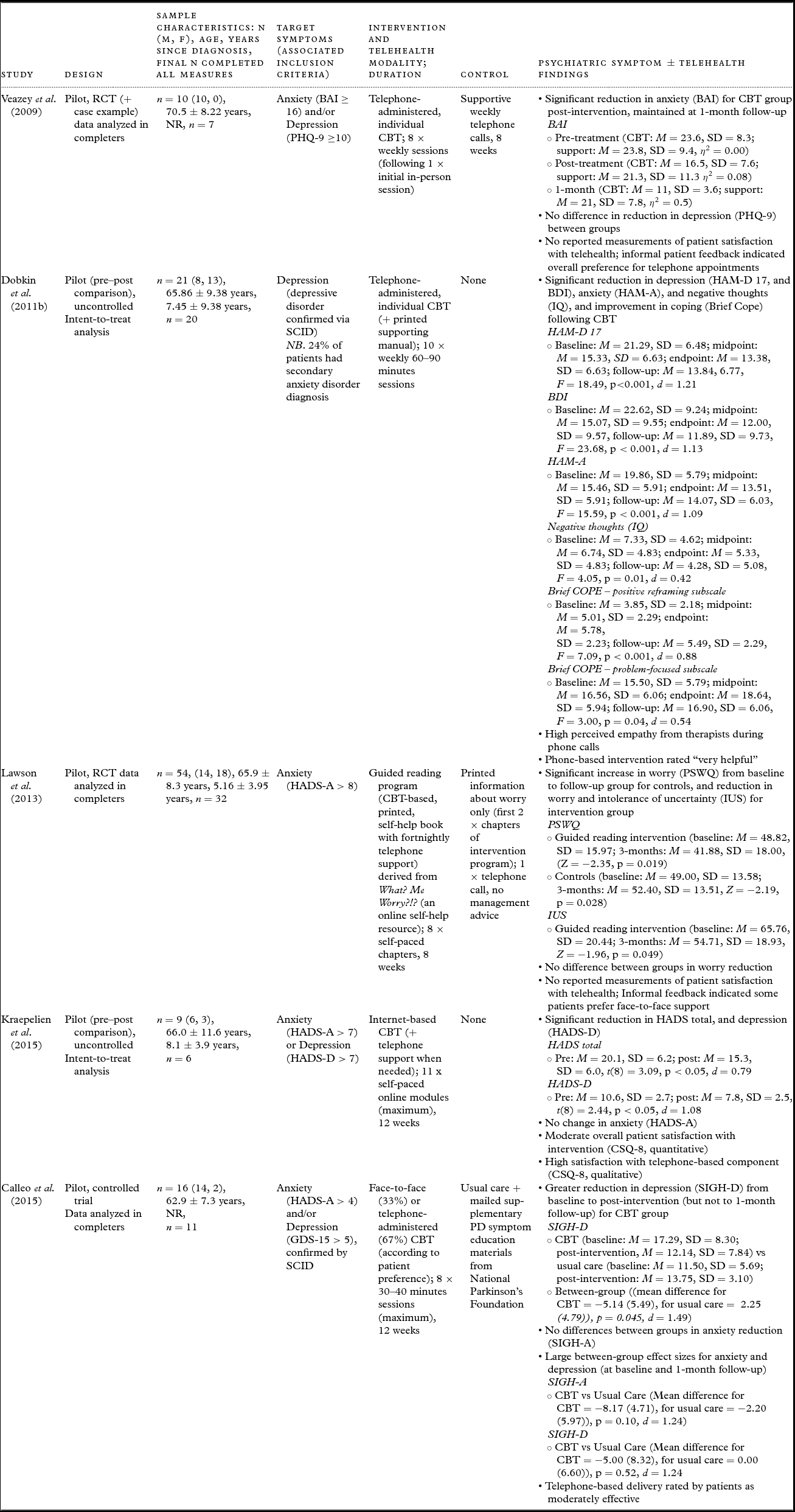
A summary of study characteristics for telehealth-based psychological interventions for anxiety and depression in PD is provided in Table 1. To date, only five such studies have been published: Three of these involved telephone-delivered CBT (Veazey et al., Reference Veazey, Cook, Stanley, Lai and Kunik2009; Dobkin et al., Reference Dobkin2011b; Calleo et al., Reference Calleo2015), one involved a hybrid of CBT-based bibliotherapy and telephone support (Lawson et al., Reference Lawson, Millar, Brown and Burn2013), and one involved internet-administered CBT (in the form of self-paced, online modules) with supplementary telephone support (Kraepelien et al., Reference Kraepelien, Svenningsson, Lindefors and Kaldo2015). All were pilot studies, and targeted comorbid depression and/or anxiety symptoms in older PD patients through one-on-one CBT.
Summary of studies involving telehealth-based CBT interventions for primary anxiety and/or depression in PD

NB. Only findings specific to psychiatric symptoms and telehealth delivery efficacy are reported. NR, not reported; BAI, Beck Anxiety Inventory; PHQ-9, Patient Health Questionnaire-9; HAM-D 17, Hamilton Rating Scale for Depression; SCID, Structured Clinical Interview for Diagnostic and Statistical Manual, Fourth Edition; BDI, Beck Depression Inventory; HAM-A, Hamilton Anxiety Rating Scale; IQ, Inference Questionnaire; HADS-A, Hospital Anxiety and Depression Scale Anxiety Score; HADS-D, Hospital Anxiety and Depression Scale Depression score; PSWQ, Penn State Worry Questionnaire; IUS, Intolerance of Uncertainty Scale; CSQ-8, Client Satisfaction Questionnaire; GDS-15, Geriatric Depression Scale-15; SIGH-D, Structured Interview Guide for the Hamilton Depression Scale; SIGH-A, Structured Interview Guide for the Hamilton Anxiety Scale.
Telephone-administered CBT
Telephone-administered CBT designed to simulate face-to-face treatment appears to be the most trialed remote delivery method for psychological interventions in this population. In more recent trials, CBT has been adapted to incorporate PD-specific symptom management and include caregivers (Dobkin et al., Reference Dobkin2011b; Calleo et al., Reference Calleo2015), and also allows patients to specifically tailor certain aspects of skill training (Calleo et al., Reference Calleo2015). Results are promising but variable, with significant improvements reported for anxiety only (Veazey et al., Reference Veazey, Cook, Stanley, Lai and Kunik2009), depression only (Calleo et al., Reference Calleo2015), or both depression and anxiety (Dobkin et al., Reference Dobkin2011b). However, the lack of a control group in Dobkin et al. (Reference Dobkin2011b) and the pilot nature of all studies (and consequential small sample sizes) likely limit statistical power in evaluation of depression and anxiety outcomes. For example, the between-group effect sizes for change scores at post-intervention and one-month follow-up for both anxiety and depression were large in Calleo et al. (Reference Calleo2015) despite only the post-intervention reduction in depression reaching statistical significance (post-treatment: d = 1.49 for depression and 1.44 for anxiety; one-month follow-up: d = 0.73 for depression and 1.24 for anxiety).
There are limitations with these studies. Since all three limited follow-up periods to one month, the long-term effects of telephone-administered treatment are unknown. Of the 54 potential study participants with clinically significant anxiety and/or depression (based on DSM criteria) identified by Veazey et al. (Reference Veazey, Cook, Stanley, Lai and Kunik2009) from neurology clinic outpatients, only 14 undertook baseline assessment, and of these only 10 of these met subsequent inclusion criteria, and 7 completed treatment. Thus, this study demonstrates that reduced interest, attrition and, non-completion can be problematic in this population, reducing sample sizes and limiting treatment effectiveness evaluation. Conversely, the higher retention rates for Dobkin et al. (Reference Dobkin2011b) (95%) and Calleo et al. (Reference Calleo2015) (69%) may be linked to caregiver inclusion in treatment; that is, caregivers were offered their own supplementary telephone-based educational sessions to encourage patient support during treatment. Caregiver participation, however, may be linked to patient improvement.
Unlike Dobkin et al. (Reference Dobkin2011b) and Veazey et al. (Reference Veazey, Cook, Stanley, Lai and Kunik2009), patients randomized to the CBT group in Calleo et al. (Reference Calleo2015) elected whether to receive their treatment via face-to-face or telephone sessions. This was offered to maximize accessibility and flexibility in delivery, and two-thirds of sessions were delivered via telephone, allowing self-selection of delivery modality limits independent evaluation of telephone delivery efficacy.
Patient perceptions of telehealth effectiveness were formally assessed in only two of these studies; however, PD patients appear receptive to the modality. In Dobkin et al. (Reference Dobkin2011b), patients reported high perceived empathy from the phone therapist and rated the treatment as “very helpful,” and in Calleo et al. (Reference Calleo2015) telephone delivery was rated as “moderately effective” with feedback indicating benefits regarding convenience, and reduced travel concerns and cost. However, some limitations were noted, including being unable to see the clinician and preferring in-person delivery for some specific skills (e.g. emotion management) (Calleo et al., Reference Calleo2015). Additionally, informal patient feedback in Veazey et al. (Reference Veazey, Cook, Stanley, Lai and Kunik2009) indicated an overall preference for telephone appointments by increasing scheduling flexibility and eliminating weekly travel burden, but the authors did note some difficulties detecting patient emotion. Thus, impaired patient–clinician emotional communication appears to be a common limitation in telephone-based delivery. This could be addressed through upgrading telecommunication to live video-conferencing (VC). To our knowledge, no prior studies have employed VC for psychological intervention delivery in this patient population. Notably, however, VC has been implemented effectively in the treatment of other PD comorbidities; for example, Lee Silverman Voice Treatment (LSVT) delivered via VC for PD-related speech and language difficulties has demonstrated non-inferiority compared to face-to-face delivery (Constantinescu et al., Reference Constantinescu, Theodoros, Russell, Ward, Wilson and Wootton2011; Theodoros et al., Reference Theodoros, Hill and Russell2016) and has been well-received by patients (Constantinescu et al., Reference Constantinescu, Theodoros, Russell, Ward, Wilson and Wootton2010, Reference Constantinescu, Theodoros, Russell, Ward, Wilson and Wootton2011; Dias et al., Reference Dias, Limongi, Barbosa and Hsing2016).
Dobkin et al. (Reference Dobkin2011a, Reference Dobkin2014) noted an association between improvements in mood and gains in executive functioning and verbal memory for depressed PD patients following face-to-face CBT. Given that their telephone-administered CBT pilot study also revealed significant improvements in PD patient mood (Dobkin et al., Reference Dobkin2011b) (post-treatment effect size for depression: d = 1.21 and for anxiety d = 1.09), a subsequent brief publication explored the neuropsychological outcomes of this treatment (Dobkin, Reference Dobkin2014). Their findings indicate that (1) gains in verbal memory were associated with phone-based CBT delivery and (2) baseline working and verbal memory predicted depression improvement post-CBT. Overall, Dobkin (Reference Dobkin2014) suggests that the intact working memory is necessary for PD patients to garner optimal CBT benefit in general, whereas verbal memory is needed to yield a positive response to telephone-based intervention delivery specifically. Importantly, this suggests that the telephone-based psychological interventions necessitate higher order functioning, and are thus more suited to PD patients without extensive cognitive impairment.
Telephone-based CBT delivery for anxiety and depression in PD is feasible and shows preliminary efficacy both for patient outcomes and service satisfaction; however, the lack of large randomized-controlled trials limits conclusions. Caregiver involvement in treatment may increase retention rates, and intact verbal memory appears to be important to maximize treatment efficacy. VC could address noted modality limitations.
Beyond pure telephone-administered psychotherapy
Aforementioned telephone-based CBT interventions for anxiety and depression effectively mirror in-person delivery (in terms of content and duration of therapist contact). Given that the milder symptoms may negate the need for intensive psychotherapy, and concerns regarding a lack of available CBT-trained therapists to deliver treatment to all those who could benefit from it (Kraepelien et al., Reference Kraepelien, Svenningsson, Lindefors and Kaldo2015), some researchers have examined the feasibility of more patient-directed, self-paced telehealth approaches to administer CBT in PD.
Lawson et al. (Reference Lawson, Millar, Brown and Burn2013) compared a hybrid of bibliotherapy (including CBT-based self-guided exercises) with fortnightly telephone support to information only in anxious PD patients. Although the intervention group demonstrated a significant reduction in worry from baseline to three-month follow-up (baseline: M = 48.82, SD = 15.97; three-month follow-up: M = 41.88, SD = 18.00, Z = −2.35, p = 0.019), there was no significant difference between groups in reduction in worry. Notably, treatment compliance was not examined and high rates of attrition and failure to complete all outcome measures reduced the final sample to only 32 participants (from 54). Self-directed programs assume a certain level of initiative and motivation. Even Veazey et al. (Reference Veazey, Cook, Stanley, Lai and Kunik2009) noted the need for participant initiative in completing homework tasks between phone-based CBT sessions. Notably, only 20% of participants in the Lawson et al. (Reference Lawson, Millar, Brown and Burn2013) intervention group attempted all self-directed exercises, and several indicated a preference for face-to-face over telephone-based contact (however, overall patient satisfaction was not reported). Importantly, no apathy assessment was conducted. Apathy is a common neuropsychiatric symptom in PD, affecting up to 40% of patients (den Brok et al., Reference den Brok, van Dalen, van Gool, Moll van Charante, de Bie and Richard2015), which could limit the capacity for self-directed care.
Kraepelien et al. (Reference Kraepelien, Svenningsson, Lindefors and Kaldo2015) conducted the first uncontrolled pilot study examining the efficacy and feasibility of internet-based CBT (ICBT) with telephone support (as needed) to treat anxiety and depression in PD. A significant reduction in depression only was observed (mean difference = −2.8 (95% CI = −5.4 to −0.1; d = 1.08; t(8) = 2.44; p < 0.05); however, the small sample and the absence of a control group limit the evaluation of intervention efficacy. Patients reported moderate overall service satisfaction, with high satisfaction for the telephone-based component; however, many participants did not complete homework exercises. Additionally, one-third of patients prematurely ceased treatment. As with Lawson et al. (Reference Lawson, Millar, Brown and Burn2013), this could indicate reduced motivation; however, no motivation or apathy measures were administered. Importantly, this study demonstrates reduced therapist requirements. Since most information was delivered through the internet platform, therapists spent less than 13 minutes in communication with each participant per week. However, patient feedback indicated a desire for greater therapist communication.
Overall, these self-directed programs offer even greater delivery flexibility and reduced therapist input. However, only a preliminary work has been conducted, long-term effects are unknown, no study has involved PD caregivers, and the common presentation of co-morbid apathy in PD has been seemingly overlooked. This should be formally assessed in future studies. Importantly, this initial work highlights an apparent PD patient preference for regular, face-to-face therapist contact, even when mild depression and/or anxiety symptoms are the targets of treatment. In Lawson et al. (Reference Lawson, Millar, Brown and Burn2013), VC (rather than telephone support) could help address requests for face-to-face therapist communication, while still maintaining remote delivery status. In Kraepelien et al. (Reference Kraepelien, Svenningsson, Lindefors and Kaldo2015), patient requests for greater therapist contact could be addressed by scheduling weekly VC sessions (rather than having patients seek telephone support on an “as needed” basis). Notably, however, this would be at the expense of reduced therapist workload—a primary advantage of self-directed treatment programs.
Other remotely delivered psychological interventions for PD
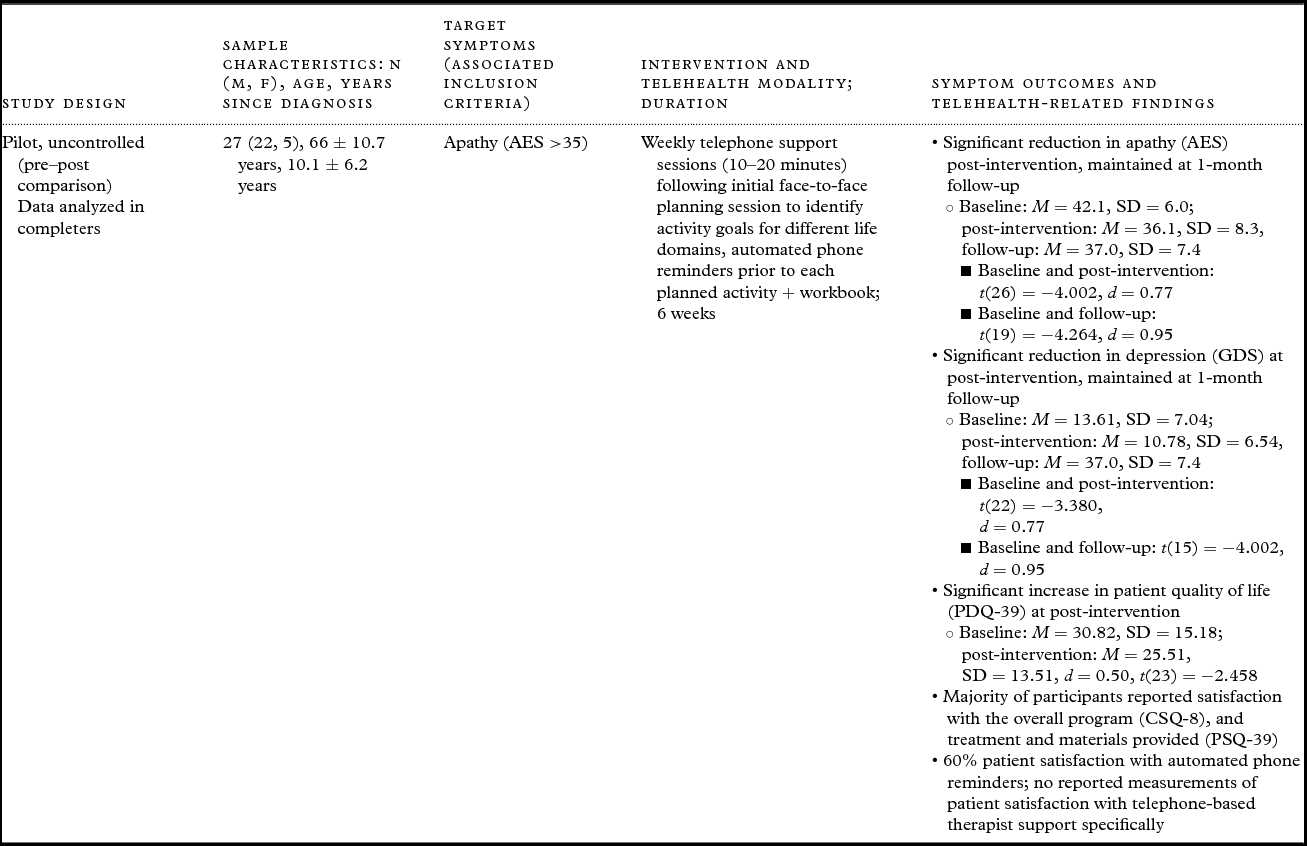
Most telehealth studies in PD have focused on the delivery of psychological interventions for anxiety and/or depression. As indicated above, apathy is being recognized as an increasingly important PD comorbidity, not necessarily associated with depression, which has been found to interfere with PD motor disability treatment, exacerbating disability, and lowering quality of life and ability to carry out activities of daily living (ADL) (Weintraub et al., Reference Weintraub, Moberg, Duda, Katz and Stern2004; Benito-Leon et al., Reference Benito-Leon, Cubo and Coronell2012; Laatu et al., Reference Laatu, Karrasch, Martikainen and Marttila2013). Thus, its consideration and treatment are essential in this population. Recently, Butterfield et al. (Reference Butterfield, Cimino, Salazar, Sanchez-Ramos, Bowers and Okun2016) uncontrolled piloted the first study involving a PD-specific telehealth-based behavioral activation intervention targeting apathy, namely the Parkinson's Active Living (PAL) program, in patients without dementia. This study is summarized in Table 2.
Study characteristics of Butterfield et al. (Reference Butterfield, Cimino, Salazar, Sanchez-Ramos, Bowers and Okun2016)

AES, Apathy Evaluation Scale; GDS, Geriatric Depression Scale; PDQ-39, Parkinson's Disease Quality of Life Scale; CSQ-8, Client Satisfaction Questionnaire; PSQ-39, Participant Satisfaction Questionnaire.
As the first study addressing PD-related apathy via telehealth, this six-week program shows promise, with significant improvements reported in psychiatric symptoms (apathy: d = 0.77; depression: d = 0.70), which were maintained for one month following program cessation. Notably, apathy levels decreased to normal limits for over a third of the sample. However, this brief follow-up period limits evaluation of long-term intervention effects, and the lack of a control group limits conclusions. Clearly, a large-scale RCT with a longer follow-up period is required. Patient satisfaction with the overall program and the delivered treatment and materials were high, and attrition was low (despite the absence of caregiver involvement in the intervention specifically), indicating program feasibility and receptiveness. Unfortunately, no explicit measure of patient satisfaction with the telephone support sessions was provided. However, the authors do indicate interest in upgrading from telephone to VC-based support delivery given its success in delivering treatment for other PD comorbidities (e.g. LSVT). The automated phone reminder element of the program received mixed support from patients, and was time-consuming for providers. As suggested by Butterfield et al. (Reference Butterfield, Cimino, Salazar, Sanchez-Ramos, Bowers and Okun2016), perhaps a more synchronized, modern approach (e.g. reminders distributed through text messages or a smart-phone application) could be feasible while still targeting self-initiative deficits.
Interestingly, verbal phonemic fluency correlated with apathy-specific response to treatment, suggesting the current PAL program necessitates intact executive function to garner greater benefit. This is an important consideration for PD given the high prevalence of dementia, and is consistent with the findings for CBT treatment benefit for depression in PD (Dobkin et al., Reference Dobkin2011b; Dobkin, Reference Dobkin2014).
Future directions for telehealth in PD
Thus far, studies involving telehealth-based delivery of psychological interventions for PD patients are preliminary, and have primarily focused on treating depression with or without comorbid anxiety using CBT strategies. Furthermore, data handling approaches used in studies were mixed. While missing data were handled using intent-to-treat analysis by Dobkin et al. (Reference Dobkin2011b) and Kraepelien et al. (Reference Kraepelien, Svenningsson, Lindefors and Kaldo2015), others analyzed data only in completers. While reviewed studies demonstrate feasibility, there is clearly a need for large-scale, non-inferiority studies comparing the efficacy of telehealth delivered interventions to conventional face-to-face treatment, and for follow-up durations exceeding one month with appropriate data analysis approaches of handling missing data, in order for full treatment potential to be realized. Moreover, none of the studies reported whether a landline or a mobile device was used for telehealth-based delivery. Given the increasing number of people using mobile devices, the sound quality and reliability of connection can be compromised in wireless modality compared to landline connections. Therefore, it is important to specify the number of persons using landline or mobile phones in future reporting. Although most papers reviewed here have indicated at least moderate patient satisfaction with overall telephone-based service provision (or part thereof), overcoming modality limitations reported by both patients and clinicians by adapting delivery to VC appears to be a common theme. The success of vocal telerehabilitation programs delivered via VC for PD could provide a guiding framework for clinicians intending to adapt telephone-delivered psychological interventions (Constantinescu et al., Reference Constantinescu, Theodoros, Russell, Ward, Wilson and Wootton2010; Reference Constantinescu, Theodoros, Russell, Ward, Wilson and Wootton2011; Dias et al., Reference Dias, Limongi, Barbosa and Hsing2016; Theodoros et al., Reference Theodoros, Hill and Russell2016). It is essential to have an appropriate internet connection for VC-based interventions and this may limit access to VC in environments that there are less likely to have internet connections such as for individuals living in remote areas or with lower socio-economic status. Furthermore, allowing patients to provide open-ended feedback on service components for formal qualitative assessment in future trials, irrespective of the specific telehealth intervention, would be beneficial. In addition to participant satisfaction, it would be of interest to measure participants’ level of concern about privacy with telehealth-based interventions in future. This may not be limited to the security of the line, but also whether the individual has a place at their residence where they feel they have sufficient privacy to engage in a verbal psychotherapy that might be overheard by others in the household.
It is important to note here that considerable symptom overlap between PD and the neuropsychiatric conditions discussed in this review has raised questions as to the suitability of established measurement tools in identifying and assessing PD-specific anxiety and depression symptoms. Recommendations have been provided (see Pachana et al., Reference Pachana2013; Dissanayaka et al., Reference Dissanayaka, Torbey and Pachana2015 for reviews). Only one identified telehealth study in the present review by Calleo et al. (Reference Calleo2015) employed a scale recommended for use with PD patients (the GDS-15); however, their assessment cut-off was not adjusted (up to seven as per recommendations) (Pachana et al., Reference Pachana2013) for this clinical group. This suggests that the measures used in these studies (including the Beck Anxiety Inventory (BAI), Hamilton Anxiety Rating Scale (HAM-A), and Hospital Anxiety and Depression Scale Anxiety Score (HADS-A)) may have been inappropriate or incorrectly implemented for PD patients, and is an important consideration for future work evaluating the true efficacy of telehealth-based psychological interventions. Future anxiety interventions could utilize the Parkinson's Anxiety Scale and/or the Geriatric Anxiety Inventory for assessment, both of which have now been validated for use in PD patients (Dissanayaka et al., Reference Dissanayaka, Torbey and Pachana2015).
Beyond depression and anxiety, telehealth-based delivery of psychological interventions for PD comorbidities is lacking, despite success in face-to-face interventions. In a waitlist-controlled trial for PD patients with associated ICDs, which are usually managed by adjusting PD medication (Zhang et al., Reference Zhang2016), 12weekly sessions of face-to-face CBT (complementing standard medical care) produced a significant reduction in ICD symptom severity and impact (Okai et al., Reference Okai2013). Secondary outcomes were significant reductions in depression and anxiety six months following treatment initiation. Despite this, no studies have delivered psychological interventions for PD-related ICDs via remote methods. In Okai et al. (Reference Okai2013) nurse-therapist visits enabled most CBT to be provided to patients within their own homes. Given this, adaptation to telehealth delivery could be feasible, especially with caregiver assistance.
To our knowledge, no study has delivered mindfulness-based or acceptance and commitment therapy (ACT) to PD patients using telehealth modalities. Preliminary face-to-face mindfulness interventions in PD have demonstrated short-term improvements in motor symptoms (Pickut et al., Reference Pickut2015; Dissanayaka et al., Reference Dissanayaka2016a) and non-motor symptoms, including depression (Cash et al., Reference Cash, Ekouevi, Kilbourn and Lageman2016; Dissanayaka et al., Reference Dissanayaka2016a), anxiety (Dissanayaka et al., Reference Dissanayaka2016a), cognition (Cash et al., Reference Cash, Ekouevi, Kilbourn and Lageman2016; Dissanayaka et al., Reference Dissanayaka2016a), distress (Dissanayaka et al., Reference Dissanayaka2016a), and coping skills (Fitzpatrick et al., Reference Fitzpatrick, Simpson and Smith2010). A recent six-week group mindfulness intervention involving lifestyle management strategies for PD patients showed a significant reduction in depression and stress, and improvements in mindfulness and ADL at six-month follow-up (Advocat et al., Reference Advocat, Enticott, Vandenberg, Hassed, Hester and Russell2016). In-person ACT-based interventions for wearing-off related anxiety (Dissanayaka et al., Reference Dissanayaka2016b) associated with prolonged dopamine-replacement therapy in PD are currently underway (Ghielen et al., Reference Ghielen2015). These promising findings support the future adaptation of such psychological interventions for flexible, home-based delivery, thereby increasing telehealth-based treatment options for PD patients beyond CBT, and enhancing patient-centerd care.
As the population ages, and PD prevalence increases, the need for PD-associated neuropsychiatric treatments will concurrently grow. The accessibility and availability of psychological interventions will become an increasingly important consideration, given mobility, transport and cost concerns for PD patients (Dobkin et al., Reference Dobkin, Rubino, Friedman, Allen, Gara and Menza2013). This review highlighted the infancy of telehealth-based psychological treatment provision in PD. There is a substantial literature gap regarding the development of telehealth interventions for PD-specific neuropsychiatric symptoms outside anxiety and depression. The PAL program (Butterfield et al., Reference Butterfield, Cimino, Salazar, Sanchez-Ramos, Bowers and Okun2016) appears to be the first intervention developed to address this need. Furthermore, the non-inferiority and long-term outcomes of remotely delivered anxiety and depression treatments for this group are yet to be demonstrated.
Conflict of interest
None.
Description of authors’ roles
C. Swalwell formulated the concept, organized and executed the review, and wrote the first draft. N.A. Pachana undertook the critical revision of the manuscript. N.N. Dissanayaka formulated the conception and organized the review, and also carried out the critical revision of drafts.
Acknowledgments
Dr N.N. Dissanayaka is supported by the Lions Medical Research Foundation fellowship.