Introduction
The prevention of diseases and enhancement of growth, feed intake and feed efficiency are critical factors in modern animal production today (Varel, Reference VAREL2002). Nowadays farm poultry production systems face new challenges with the concept of ‘clean, green and ethical’ (CGE) animal production being promoted (Bickell et al., Reference BICKELL, DURMIC, BLACHE, VERCOE and MARTIN2010). This concept promotes limited use of drugs, chemicals and hormones with emphasis on reducing the impact of food production on the environment and poultry welfare. The prophylactic use of antibiotics in poultry nutrition to improve growth, feed consumption, feed utilisation and to decrease mortality from clinical diseases is well documented (Iovine and Blaser, Reference IOVINE and BLASER2004). The use of antibiotics is strictly regulated by the U.S. Food and Drug Administration (FDA), while in Europe it is regulated by the European Agency for the Evaluation of Medicinal Products (EMEA). Recommendations from the FDA, the World Health Organisation (WHO) and the EMEA for veterinary medicine state that, whenever it is possible, synthetic drugs should be replaced with plant-based preparations in order to reduce the presence of synthetic drugs and their metabolites (residues) in final animal products.
One of the potential alternatives to synthetic drugs is the use of botanical supplements or their essential oils because some have potent properties and complex bioactivity (Si et al., Reference SI, GONG, TSAO, ZHOU, YU, POPPE, JOHNSON and DU2006; Puvača et al., Reference PUVAČA, STANAĆEV, GLAMOČIĆ, LEVIĆ, PERIĆ, STANAĆEV and MILIĆ2013). Substitution of synthetic drugs with plant-based supplements could ensure healthy food for the human population, reduce the reliance on synthetic drugs and thus reduce the development of pathogen resistance. Bioactive plants and their compounds may assist in some aspects of the proposed concept, as they are often less expensive, well received by consumers and are generally considered to be environmentally safe (Blache et al., Reference BLACHE, MARTIN and MALONEY2008).
The use of botanical supplements and their extracts as feed additives has increased during the last decade due to their antibacterial (Lević et al., Reference LEVIĆ, ČABARKAPA, TODOROVIĆ, PAVKOV, COGHILL-GALONJA and KOSTADINOVIĆ2011; Oliveira et al., Reference OLIVEIRA, SEGOVIA, SOUSA, MATA, GONÇALVES, BEZERRA, JUNIOR and KANZAKI2013), anti-oxidation (Botsoglou et al., Reference BOTSOGLOU, FLOROU-PANERI, CHRISTAKI, FLETOURIS and SPAIS2002; Reference BOTSOGLOU, CHRISTAKI, FLOROU-PANERI, GIANNENAS, PAPAGEORGIOU and SPAIS2004; Kostadinović et al., Reference KOSTADINOVIĆ, LEVIĆ, PAVKOV and KALUĐEROVIĆ2010a; Reference KOSTADINOVIĆ, DOZET, LEVIĆ, PAVKOV and GALONJA2010b; Kostadinović et al., Reference KOSTADINOVIĆ, VEKIĆ, GALONJA-COGHILL, LEVIĆ and PAVKOV2011) and hypocholesterolemic activity (Srinivasan, Reference SRINIVASAN2004). In addition, certain components have been related to various stimulatory effects on the digestive system (Jamroz et al., Reference JAMROZ, WERTELECKI, HOUSZKA and KAMEL2006; Puvača et al., Reference PUVAČA, STANAĆEV, GLAMOČIĆ, LEVIĆ, PERIĆ, STANAĆEV and MILIĆ2013) and digestive enzyme production (Hernandez et al., 2004). Furthermore botanical components have been shown to manifest anti-viral (Bishop, Reference BISHOP1995), anti-mycotic (Mari et al., Reference MARI, BERTOLINI and PRATELLA2003), anti-toxigenic (Juglal et al., Reference JUGLAL, GOVINDEN and ODHAV2002), anti-parasitic (Pessoa et al., Reference PESSOA, MORAIS, BEVILAQUA and LUCIANO2002) and insecticidal (Karpouhtsis et al., Reference KARPOUHTSIS, PARDALI, FEGGOU, KOKKINI, SCOURAS and MAVRAGANI-TSIPIDOU1998) properties. These features are possibly related to the function of these compounds in plants (Mahmoud and Croteau, Reference MAHMOUD and CROTEAU2002). Recent publications demonstrate renewed research interest in the use of botanical supplements as feed supplements for poultry diseases (Kostadinović et al., Reference KOSTADINOVIĆ, LEVIĆ, PAVKOV, DOZET and GALONJA-COGHILL2010c).
Medicinal herbs such as oregano, garlic, thyme, rosemary and sage are currently the most frequently used phytoadditives in poultry nutrition (Puvača, Reference PUVAČA2008; Kostadinović et al., Reference KOSTADINOVIĆ, LEVIĆ, PAVKOV, DOZET and GALONJA-COGHILL2010c; Stanaćev et al., Reference STANAĆEV, MILOŠEVIĆ, PLAVŠA, BJEDOV, STANAĆEV and PUVAČA2010; Reference STANAĆEV, GLAMOČIĆ, MILOŠEVIĆ, PUVAČA, STANAĆEV and PLAVŠA2011: Kostadinović et al., Reference KOSTADINOVIĆ, VEKIĆ, GALONJA-COGHILL, LEVIĆ and PAVKOV2011). Additionally many plant supplements have been shown to improve growth and performance (Kostadinović et al., Reference KOSTADINOVIĆ, DOZET, PAVKOV and LEVIĆ2008b; Kostadinović et al., Reference KOSTADINOVIĆ, DOZET, PAVKOV and LEVIĆ2008a; Lević et al., Reference LEVIĆ, ČOLOVIĆ, SREDANOVIĆ, PAVKOV and KOSTADINOVIĆ2009). This review summarises the latest research in the application of medicinal herbs in the prevention and treatment of coccidiosis.
Coccidiosis and coccidiostats
Coccidiosis is an infective disease of many species of mammals and birds caused by protozoa which causes diarrhoea, retarded growth, a slower feed conversion and increased mortality. It is caused by parasites of the genus Eimeria, Isospora and Cryptospora with a complex life cycle, affecting mainly the intestinal tract of flow, especially in chickens. Poultry coccidiosis is the most studied, as this parasite causes the most damage in chicken production due to the fact that chickens are reared in large numbers and high densities (Peek, Reference PEEK2010). Tyzzer et al. (Reference TYZZER, THEILER and JONES1932) was the founder of contemporary coccidiology who worked the life cycle of coccidia in different hosts and parasite morphology. He described nine species of Eimeria in poultry however, now only seven are considered to be economically important. In intensive poultry production the most important are E. acervulina, E. tenella, E. maxima, E. brunetti, E. mitis, E. necatrix and E. pracox. All kinds of Eimeria spp. cause intestinal coccidiosis - although operate in different parts of the intestinal tract. Young individuals fall ill frequently, while older birds tend to be carriers. Generally, coccidia are highly host organ and tissue-specific.
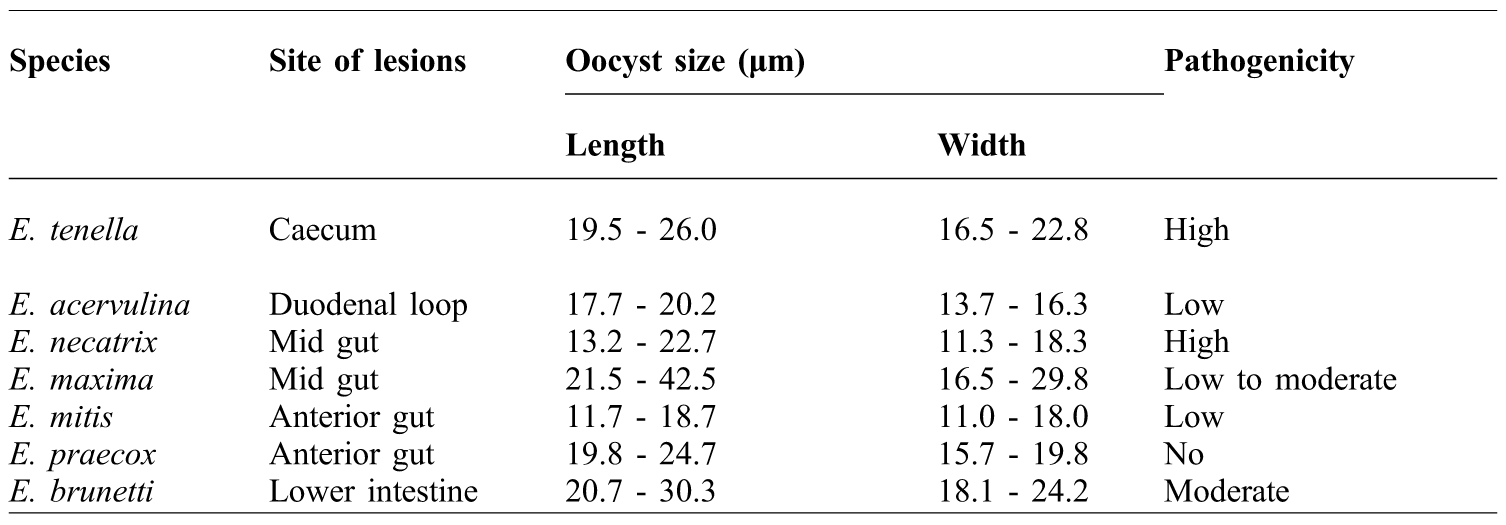
Table 1 summarises the morphology characteristics of Eimeria spp. in chickens. Coccidiosis is one of the most serious diseases in chicken production as economic losses are possible even before the manifestation of clinical signs of the disease and requires the administration of various drugs through feed and water. In other poultry breeds such as geese, ducks, turkeys, pheasants, etc. coccidiosis occurs rarely and mainly in young animals. Coccidiosis is traditionally treated by chemotherapy but the appearance of drug-resistant types of coccidia indicate the importance of developing alternative strategies.
Morphology and pathogenicity of chicken coccidia species (Levine, Reference LEVINE1985; Williams, Reference WILLIAMS1999).

Management has always been important to control coccidiosis in poultry, however it is very difficult to keep chickens coccidia free as oocytes are omnipresent and spread widely in the poultry house. Management focuses on decreasing coccidial numbers to keep infection at a minimum until immunity is established in young birds since species-specific immunity develops rapidly. Hygiene, anticoccidial drugs and vaccines all play major roles in commercial operations.
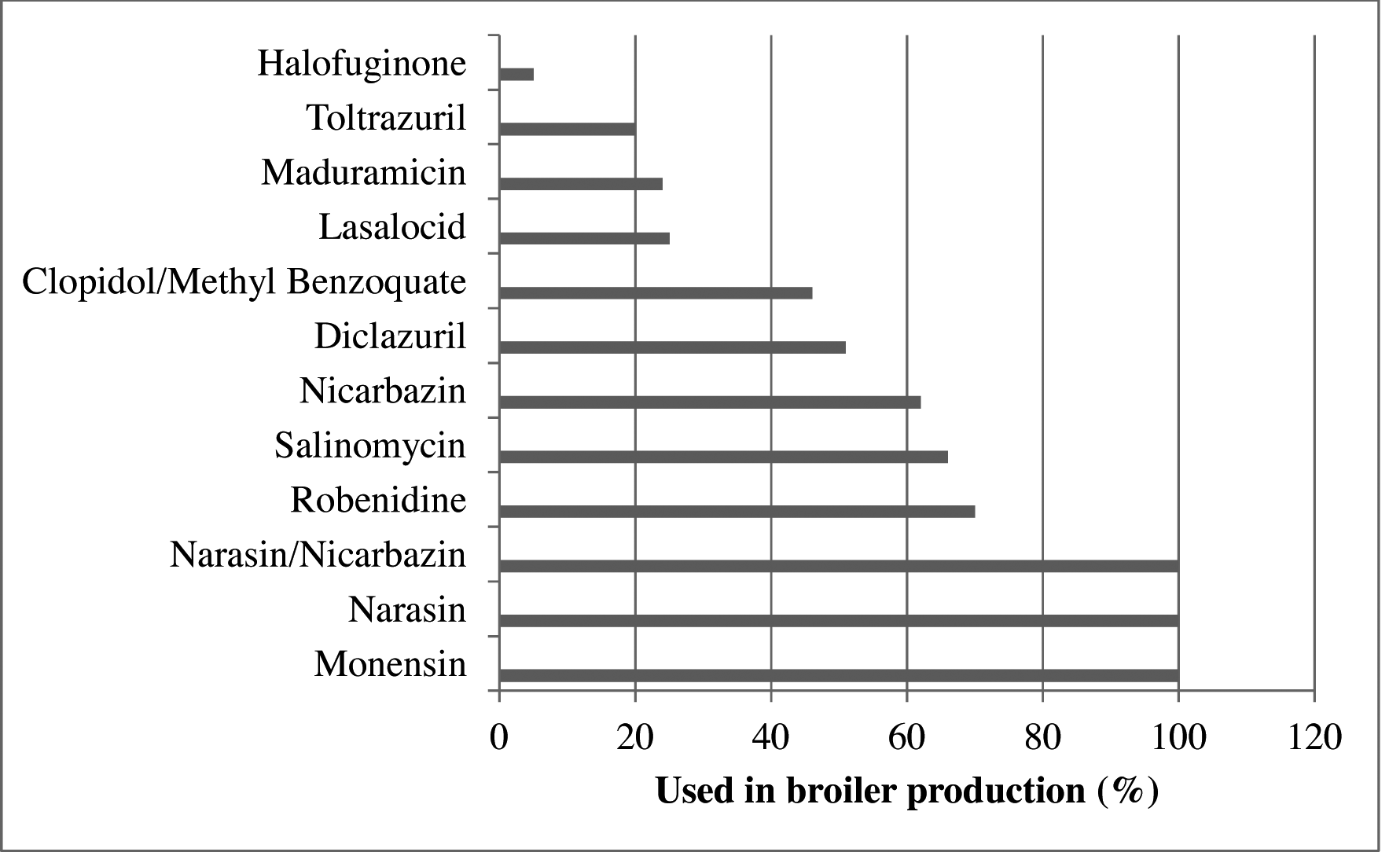
Figure 1 shows the percentage share of drugs and their combinations that are commonly used in the prevention of coccidiosis in broiler farms. The most commonly applied is narasin, monensin and nicarbazin. Widely used are salinomycin and robenidine, while the least used are diclazuril, lasalocid, maduramicin, clopidol, toltrazuril and halofuginone (Elliot, Reference ELLIOT2003).
The continuous use and misuse of anticoccidial drugs have led to the emergence of drug-resistant species (Ruff and Danforth, Reference RUFF and DANFORTH1996), and their residues in poultry products are undesirable for consumer health (McDougald and Seibert, Reference McDOUGALD and SEIBERT1998). Most anticoccidial drugs have a withdrawal period of seven days before marketing (McDougald, Reference MCDOUGALD2003). Legislation that banned the use of medication until slaughter was introduced due to the concern that residues from drugs may contaminate poultry and be toxic for human health (Vermeulen et al., Reference VERMEULEN, SCHAAP and SCHETTERS2001). However if the drug is removed then the bird is susceptible to infection because there may be no protective immunity acquired while the chicken is on anti-coccidial drugs; any infective oocytes in the litter may thus cause a severe infection (Reid, Reference REID1990). Subsequently there is a need to discover safe alternatives for the control of avian coccidiosis. In this context, a number of botanical supplements and herbal products have been found to be effective for a wide range of parasites such as protozoa, arthropods and helminths (He and Zhang, Reference HE and ZHANG1989; Matsuda et al., Reference MATSUDA, YAMADA, KIMURA and HAMADA1991; Dutta et al., Reference DUTTA, MOHAN and TRIPATHI1990; Quan, Reference QUAN1990).
Anticoccidial drugs in broiler production.
Botanical supplements as coccidiostats in poultry
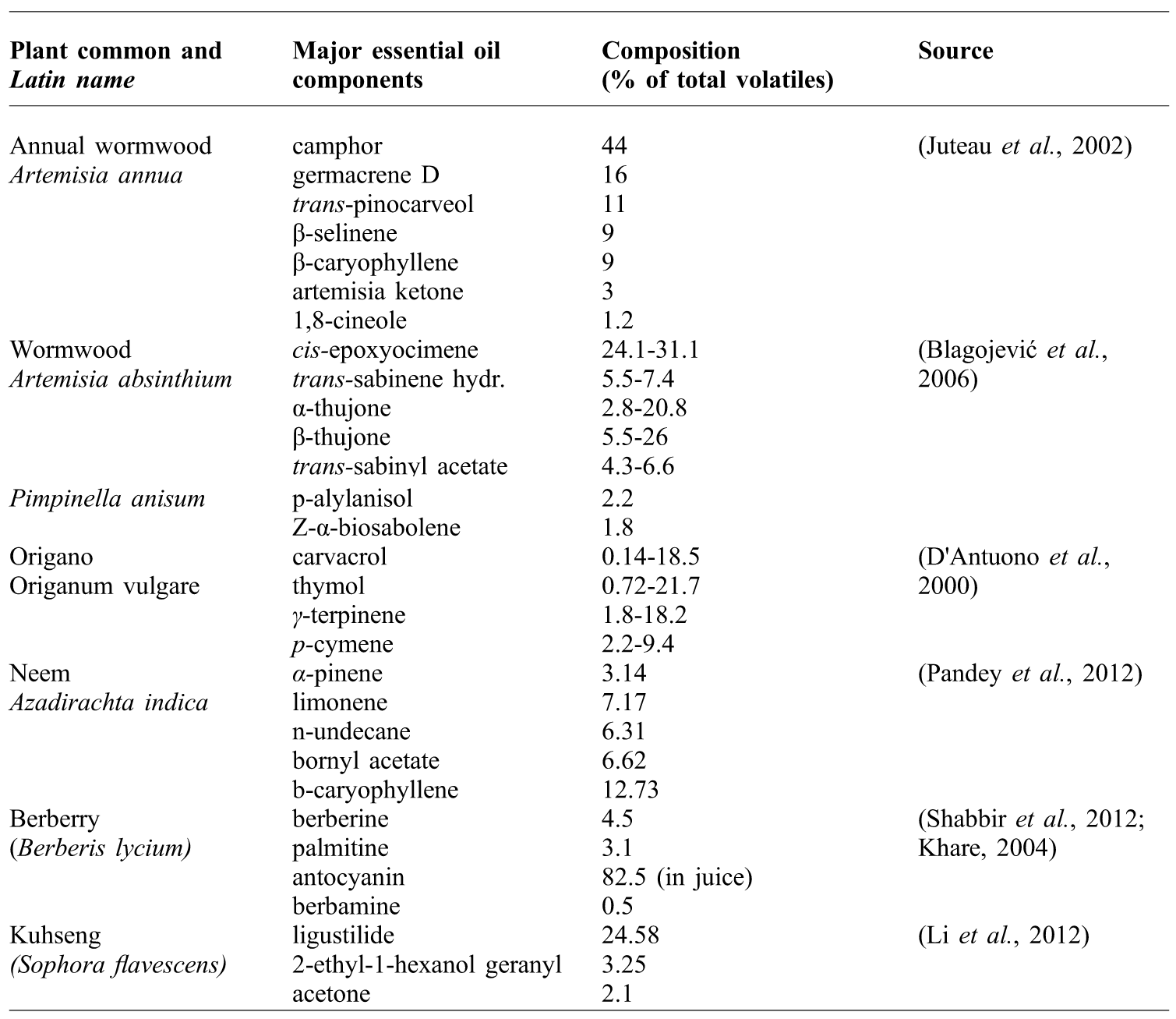
A number of natural feed additives have shown anticoccidial activity and the plants Azadirahta indica, Hobrrhena antidysentrica, Barberis aristata, Embelia ribes, Acorus calamus, Artemisia annua and Artemisia absinthium have been shown to possess strong anti-cocidial activity. Most botanical supplements do not have residual effects, and if they have an approved application in human medicine, they can be added to animal feed for the control of different animal diseases. Plants and their active ingredients that exhibit the most pronounced anti-coccidial effects are shown in Table 2.
Examples of botanical supplements with anti-coccidial activity.
Neem (Azadirachta indica) is a traditional medicinal plant (Biswas et al., Reference BISWAS, CHATTOPADHYAY, BAERJEE and BANDYOPADHYAY2002) which contains limonoids, protolimonoids, tetranortriterpenoids, pentanortriterpenoids, hexanortriterpenoids nonterpenoid, some of which are thought to have an influence on eimeria life cycle switching (Koul et al., Reference KOUL, GHARA and GANGAR2006). Tippu et al. (Reference TIPPU, PASHA and ALI2002) compared the anti-coccidial efficacy of salinomycin sodium and neem fruit in boilers. It was concluded that the addition of 0.3% ground neem fruit in the boiler diet showed efficiency in repression of coccidiosis as compared to salinomycin sodium. Similarly, Allen et al. (Reference ALLEN, LYDON and DANFORTH1997) investigated the influence of Artemesia annua on poultry infected with Eimeria acervulina, E. tenella or E. maxima. Four experiments were conducted to investigate the anti-coccidial activities of Artemisia annua leaves when added to broiler chicken diets. In the first investigation broilers were fed a mixture containing 5% dried leaves of A. annua. A statistically significant reduction in the number of oocytes E. tenella but not E. acervulina or E. maxima was observed. In the second investigation chickens were fed a diet containing 1% dry A. annua leaves for five weeks. This leaf amount provided a reduction in oocyte numbers of E. acervulina and E. tenella. When the broiler chickens were fed a diet containing 17 ppm of pure artemisinin for three weeks there was a decrease in the number of oocytes of E. tenella but not E. acervulina. Other components such as A. annua - camphor, and 1.8 - cineole in an amount of 119 ppm were shown to increase chicken body weight and decrease the number of lesions caused by E. tenella. When chickens were fed for four weeks with a diet containing 2, 8.5 and 17 ppm of artemisinin, a significant reduction in the number of oocytes of E. acervulina and E. tenella in the case of mixed infections were observed. These findings led to a conclusion that pure artemisinin is the most effective against all species of Eimeria when used as an additive in the diet. Chemically artemisinin is a sesquiterpene lactone containing an unusual peroxide bridge and represents a basic active component isolated from plants traditionally known in Chinese medicine - Artemisia annua, Asteraceae (sweet worm wood). It is believed that the peroxide is most responsible for the artemisinin interaction.
It is known that several other compounds contain such peroxide bridges and one of them is Askaridol (bicyclic monoterpene) (Miller and Su, Reference MILLER and SU2011). The genus Artemisia of the family Compositae (Asteraceae) includes over 300 species that have spread around the world. In the last ten years or so several studies have been conducted with Artemisia species whereby it was found that crude extracts of some of them containing artemisinin, exhibit anti-parasitic, or anti-coccidial effects and a high antioxidant capacity (Ferreira, Reference FERREIRA2009). Kostadinović et al. (Reference KOSTADINOVIĆ, LEVIĆ, GALONJA-COGHILL and RUŽIČIĆ2012) investigated the anti-coccidial activity of artemisinin obtained by the extraction of white wormwood (Artemisia absinthium L.). The study was conducted in vivo on 150 broiler chickens of Arbor Acres heavy line hybrids of both sexes infected with E. tenella oocytes (20000 oocytes/per bird). Infected chickens were treated with the extract of Artemisia absinthium mixed in the chicken's diet at levels of either 1, 2 or 3 mg/kg per day. It was found that the extract obtained from A. absinthium reduced the number of oocytes of Eimeria tenella in the faeces of infected broilers when mixed in broiler feed in an amount of 3 mg/kg per day. The results showed that Artemisia absinthium L. added to broiler feed in an amount of 3% expressed anti-coccidial activity and therefore can be used as an alternative to standard coccidiostatic drugs which may cause resistance of the microorganisms that cause coccidiosis or lead to the appearance of residues in the meat of broilers (Kostadinović et al., Reference KOSTADINOVIĆ, LEVIĆ, GALONJA-COGHILL and RUŽIČIĆ2012).
An in vivo study testing the anti-coccidial activities of artemisinin isolated from the plant Artemisia sieberi on Ross 308 broilers showed that the extract reduced the number of E. tenella and E. acervulina oocytes, but not E. maxima (Arab et al., Reference ARAB, RAHBARI, RASSOULI, MOSLEMI and KHOSRAVIRAD2006). The anti-coccidial activity of the plants Artemisia annua and Pimpinella anisum on E. tenella oocytes were examined by Dragan et al. (Reference DRAGAN, TITILINCU, DAN, DUNCA, DRAGAN and MIRCEAN2010). Artemisia annua caused a significant reduction (90.7%) in the number of oocytes in the faeces of broilers infected with E. tenella compared with the infected control group fed a standard diet. P. anisum reduced the number of Eimeria oocytes in the faeces to a smaller extent (58.83%). At the end of the experiment (32 days after infection) chicks which were supplemented with Artemisia annua had the best feed efficiency and increased daily weight gain in comparison to the other experimental groups.
Khan et al. (Reference KHAN, YOUNAS, KHAN, ABBAS and ALI2008) compared the effect of selected botanical supplements (Polygonum bistorta and Agele marmelos) with homeopathic preparations (Mercurius solubilis and Darvisul liquid) on the suppression of coccidiosis in chickens. They concluded that the herb extracts examined expressed anti-coccidial activity and increased feed conversion ratio, daily gain and reduced chicken mortality rate. These results are consistent with other researchers studying the anti-coccidial activity of other plants such as Melia azedarach (Akhtar and Rifaat, Reference AKHTAR and RIFAAT1987) and Indica Azadirahta (Tippu et al., Reference TIPPU, PASHA and ALI2002).
The effect of oregano oil (Origanum vulgare) was investigated on the performances of broilers after experimental infection of coccidia Eimeria tenella (5×10⁴ oocytes/chicken) compared with salinomycin. It was concluded that the essential oil of oregano caused significant reduction of E. tenella but these effects were still lower in the coccidiostatic salinomycin (Kostadinović et al., Reference KOSTADINOVIĆ, LEVIĆ, PAVKOV, DOZET and GALONJA-COGHILL2010c). Giannenas et al. (Reference GIANNENAS, FLOROU-PANERI, PAPAZAHARIADOU, CHRISTAKI, BOTSOGLOU and SPAIS2003) examined the anti-coccidial effect of the essential oils of oregano and found that the essential oil of oregano added to the feed of broilers at an inclusion rate of 300 mg/kg affected the suppression of coccidiosis caused by E. tenella. Youn and Noh (Reference YOUN and NOH2001) reported the most pronounced anti-coccidial effect against Eimeria tenella from fifteen plants studied was from Sophora flavescens extract which was even stronger than Artemisia annua.
Conclusions
Recently botanical supplements have received much attention for their use in animal nutrition. From this review it can be concluded that botanical supplements can be used in animal diets as plant based alternatives for coccidia control in poultry farming and these would also enhance animal wellbeing. Collaborative efforts among scientists and farmers must particularly be directed towards establishing and developing innovative feeding systems using feed additives obtained from natural products, such as essential oils, botanicals and extracts obtained from herbs which have a beneficial effect in coccidian control in poultry production. These additives have not yet shown resistance development in coccidial pathogens, making them appropriate for application in chicken diets. Moreover removal of drug residues in poultry products is also important for consumer health.
Acknowledgments
This paper is a part of the project III 46012 which is financed by Ministry for Science and Technological development of the Republic of Serbia.