Sources of historical height data are relatively abundant—providing the opportunity to compare biological living standards across different regions and periods (López-Alonso Reference López-Alonso2007: 89; Steckel Reference Steckel1995). They are far from unproblematic, however. Not all historical populations were measured and those who were stripped of their shoes and forced to stand straight against an anthropometer were not necessarily representative of the wider populations from which they were drawn. Most historical height series employ data from two sources: military enlistment articles and criminal registers. Both these are likely to be subject to complex selection issues many of which varied over time.
In this article, we link Australian military and prison data to birth registrations to assess the extent to which the fathers of criminals and soldiers were representative of all fathers. We use data from prisoners and soldiers born 1870–99 in the self-governing colony of Tasmania Australia. In this period, Australians of European descent had one of the highest standards of physical well-being experienced anywhere in the world. We use the same data to test the for variations in the operation of recruitment and criminal justice systems that might have influenced the selection of prisoners and soldiers whose heights were recorded.
Height and the Selection of Criminals and Soldiers
Over the years, historians who used information on stature drawn from military or criminal justice series have made various claims about the representative nature of their data. Steegmann (Reference Steegmann1985: 90) claimed, for example, that while British eighteenth-century peacetime recruitment selected against short men, it was “fairly safe to accept wartime recruited cohorts as unbiased stature estimates of the general male population.” A more detailed comparison of late-eighteenth- and nineteenth-century military recruits by Cinnirella (Reference Cinnirella2008: 330) concluded that laborers and manufacturing workers were overrepresented while those employed in the agricultural and commercial sectors were underrepresented. He agreed with Floud et al. (Reference Floud, Wachter and Gregory1993: 109–10 and 147) that soldiers were “‘drawn from the broad spectrum of the working class.” Nicholas and Shergold (Reference Nicholas, Shergold and Nicholas1988) made similar claims of the convicts landed in New South Wales. Guthrie and Jenkins (Reference Guthrie and Jenkins2005), however, argued that height data for criminals recorded on Bertillion cards were more representative of the American nineteenth-century population than were data derived from military sources.
Military recruitment processes are inevitably selective to the extent they target physical active adults (often men). Criminal justice systems are less discriminating—women, juveniles, and the elderly were all regularly measured as a result of encounters with the law. The extent to which these individuals are representative of the wider birth cohorts from which they are drawn, however, is a moot point. Carson (Reference Carson2009: 741) argues that the inmates of nineteenth-century American prisons were disproportionately of low-economic status. As he points out, this could be construed as a virtue because prisoners represent a portion of the population most vulnerable to insults to their health and more likely to be affected by economic change. More precise measures of the extent to which historical height samples are representative of wider populations are clearly required to take full advantage of such data characteristics however. There is substantial evidence that the heights of both soldiers and criminals were influenced by a number of different selection processes. While these do not necessarily invalidate the claims made in the height literature—as with all aspects of historical research—the sources of potential selection bias require careful scrutiny. This is particularly the case as the findings of historical height studies are often at odds with conclusions drawn from the analysis of other data sources. There are a number of issues that are of particular concern.
Military recruits were frequently selected on the basis of height. Many armies imposed minimum height restrictions, although these were not always observed and varied according to recruiting demands. The mean height of recruits enlisting in the eighteenth-century British army increased when the country was not at war, for example (Steegmann Reference Steegmann1985: 82–84). There was also selection across different military units. Specialized regiments targeted shorter or taller recruits. The marines that composed part of the British military sample assembled by Floud, Wachter, and Gregory, for example, were noticeably shorter than other recruits.Footnote 1 In the British army grenadier companies, the guard, heavy cavalry, and other elite units targeted taller recruits, while light cavalry recruits could find themselves subjected to maximum, rather than minimum, height standards (Mansfield Reference Mansfield2016: 124; Myerly Reference Myerly1996: 17–18). Such variations were common in other armies too (Ewert Reference Ewert2006).
There is some evidence that across military forces a desire to recruit personnel that conformed to certain height requirements was in part driven by the available technology (Fourie et al. Reference Fourie, Inwood and Marrioti2020). The restricted space available between decks probably explains why marines were significantly shorter than other British military recruits. The standard sea service pattern musket they were issued with was also two inches shorter than the India pattern employed by other British military units in the years 1797–1854.
Different recruiting systems affected selection too. There were noticeable changes in the age structure of British military recruits after the abolition of the Ballot Militia in 1820 (Cinnirella Reference Cinnirella2008: 329). While it is often argued that the problem of selection is largely restricted to those armies that relied on voluntary recruitment, conscript armies were subject to selection too. In Tsarist Russia, for example, only sons were often exempt, while criminals and other troublemakers were overrepresented amongst conscripts (Mironov and A’Hearn Reference Mironov and A’Hearn2008: 908). It was common practice for wealthy would-be recruits to avoid enlistment across most recruitment systems (Alter et al. Reference Alter, Neven and Oris2004: 235).
While most criminal justice systems do not select on the basis of minimum height, it is likely that they discriminate in the opposite direction. As the economist John Kenneth Galbraith, himself 206 cm tall, once put it, the favoritism bestowed on the tall is one of society’s “most blatant and forgiven prejudices” (Unger Reference Unger1977). All convictions result from a complex set of circumstances. Not only has an individual to be caught, but they also have to be prosecuted. Many cases are settled out of court; in the past (as now) the policing of crime has been the subject of many discretionary practices (Godfrey Reference Godfrey2014: 30–46; King Reference King1984). Because class is likely to have played a part in this, and height is strongly associated with class, it would be surprising if height and the risk of prosecution were not inversely correlated. Even when a case reached court, only a minority of successful prosecutions resulted in a custodial sentence. Selection played a role here too. The use of fines as a pecuniary measure is common in most judicial systems. Those with sufficient resources to pay will avoid a custodial sentence, while those who do not will find themselves imprisoned.
The mean height of offenders can also be influenced by other factors. Those charged with forgery and other white-collar offences in nineteenth-century Tasmania tended to be taller than others who found themselves before the courts, for example (Inwood et al. Reference Inwood, Maxwell-Stewart, Oxley and Stankovich2015: 200–1). The relationship between height and conviction history is explored in more detail elsewhere in this special edition. Suffice it to say that several studies have found significant differences in stature between prisoners with single- and multiple-recorded convictions. Male recidivists tended to be shorter than nonrecidivists, and there is evidence of a reverse trend amongst female offenders (Inwood et al. Reference Inwood, Maxwell-Stewart, Oxley and Stankovich2015: 194–9).
Others have found a relationship between stature and the age at which a prisoner is admitted to an institution. A comparison of the heights of male prisoners aged greater than 20 in early-nineteenth-century Pennsylvania revealed that those who had not previously been admitted tended to be taller and older than prisoners with a previous incarceration record (Bodenhorn et al. Reference Bodenhorn, Moehling and Price2012). It is also not unusual for mean stature to vary across those convicted in different court systems. Analysis of convictions in Tasmania later in the century revealed that those arraigned before the Supreme Court or Court of Quarter Session were significantly taller than those convicted before a magistrates’ bench or police court (Inwood et al. Reference Inwood, Maxwell-Stewart, Oxley and Stankovich2015: 200–1). This matters because the sentencing powers invested in different types of courts vary. Those admitted to state penitentiaries might prove to be taller than those detained in local lock-ups and county gaols, for example, because of the way that different offences are prosecuted.
All these processes might be affected by changes in the law leading to differences in the socioeconomic composition of those prosecuted for indictable and summary offences. The English legislation that accompanied the introduction of automobiles or compulsory schooling, for example, had large impacts on the prosecution process (Godfrey Reference Godfrey2014: 40–45). More subtle changes might stem from the targeting of particular populations by the police. Those with a previous conviction history, or with parents or other close relatives already known to the police, were invariably at greater risk of prosecution than others in a study of men born 1953–54 in London England (Besemer et al. Reference Besemer, Farrington and Bijleveld2017).
An important difference between military and criminal records is that those accused or convicted of committing offences are measured at different points in the judicial process. Military stature is usually recorded at point of enlistment. It is also unusual to have more than one measurement for a soldier, unless they reenlist later in life (although some enlistment registers record height details for those rejected as well as those selected for service). The height of offenders, by contrast, might be committed to paper multiple times as they progress through the judicial system. They are commonly measured on arrest, conviction, admission, and discharge from an institution. All these measurements are likely to be influenced by different selection processes. Records taken on arrest will include height measurements for those who are subsequently discharged or found not guilty, while those taken on conviction may include prisoners who were awarded noncustodial sentences. There can even be a difference between admission and discharge records because some inmates die while still incarcerated and others are transferred to other institutions before they are released (a process commonly referred to as prison churn).
It has been argued that both judicial and military sources of height data might be prone to selection bias caused by fluctuations in the business cycle. As economic conditions improve the pool of available recruits might decline reflecting a decrease in the attraction of military employment compared to alternatives. The extent to which economic cycles affected military recruitment and other sources, for example, is the subject of some debate within the literature of economic development in the antebellum United States (Bodenhorn et al. Reference Bodenhorn, Guinnane and Mroz2017; Komlos and A’Hearn Reference Komlos and A’Hearn2019; Zehetmayer Reference Zehetmayer2011; Zimran Reference Zimran2019).
Selection along these lines might also influence spatial comparisons. Regional differences in stature within nineteenth-century Britain and Ireland appear to have been associated with variations in different employment opportunities in addition to any influences from early childhood experience (Mokyr and Ó’Gráda Reference Mokyr, Ó’Gráda and Komlos1994, Reference Mokyr and Ó’Gráda1996). The recorded heights of prisoners arrested during the severe 1890s depression in the Australian colony of Victoria neither decreased nor increased while increases in the conviction rate in the neighboring colony of Tasmania are associated with a decrease in mean height, rather than an increase (Inwood et al. Reference Inwood, Maxwell-Stewart, Oxley and Stankovich2015: 202). A similar process might affect criminal recruitment too. Some might be driven to crime as a result of reduced employment opportunities influencing the selection of prisoners over time in line with changing economic conditions.
Historians have adopted a number of techniques attempting to deal with the broad issues of representation. A common approach is to compare the distribution of occupations for prisoners or recruits with those of the wider population as recorded, for example, in census data. A problem here is that occupational information collected to suit different purposes might differ in subtle ways. Historical records often contain answers to questions but omit the precise instructions that were provided to informants. The 1841 English and Welsh census enumerators were supposed to ask heads of households “what they called themselves”—although there was almost certainly much variation in the way that this question was framed across the estimated 35,000 individuals employed as enumerators. Most occupations recorded in the census returns reflect current employment, or at least the description of the last substantive task for which the head of household had been employed, although there is some evidence that part-time and casual work was underenumerated (Higgs Reference Higgs1995: 702–4).
Colonial administrators charged with running Britain’s Australian penal colonies appear to have delved deeper into their charges’ past. It is thus not surprising that transported convicts provided more detailed answers than those supplied to the census enumerator. They frequently listed multiple occupations, or supplied details of apprenticeships served, as well as information about former military service. Rather than an attempt to gather data about employment at the moment of arrest, it appears that the colonial state attempted to draw up a list of skills that might be useful in the colony (Maxwell-Stewart Reference Maxwell-Stewart2016: 419–20). Prison administrators were interested in information about occupation for different reasons. Because there was much less emphasis on labor outputs in British nineteenth-century correctional institutions, the occupations of inmates were usually recorded to gauge social status. As a result, the proportion recorded as laborers is often higher than that for convicts interviewed on arrival in Australia. Age profiles further complicate such comparisons. Most military recruits and criminals are young. Skill, of course, is highly dependent upon age—further blunting the usefulness of simple comparative measures.
An alternative approach is to link those individuals whose stature is known, to record groups that cover a wider section of the population. British and Irish census records, for example, enumerated both institutionalized and noninstitutionalized sections of the population, enabling direct comparison between the two. The increasing availability of micro-level census data has considerably enhanced the efficacy of this approach (Williams and Godfrey Reference Williams and Godfrey2016). Yet, it is not the adult lives of prisoners or soldiers that are of primary interest to historians of height, but their childhoods. An alternative approach is to link adult height observations to registered births, to determine the extent to which the households that prisoners and soldiers were raised in were representative of all households. This article explores this approach in relation to male prisoners and soldiers born in the Australian colony of Tasmania in the period 1870–99.
Comparing Soldiers and Prisoners Born in Late-Nineteenth-Century Tasmania
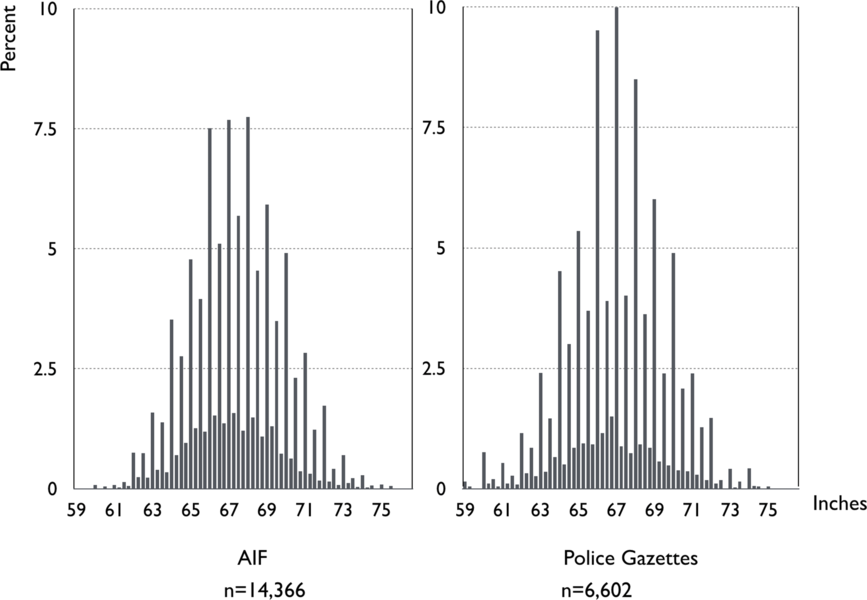
Australia was unusual in that all recruits for World War I military service were volunteers. Although two referenda were conducted during the course of the war to garner public support for the introduction of conscription, both measures were defeated. Despite the fact that service was voluntary, the proportion of male citizens who enlisted was significant. In Tasmania, 6 percent of all males born in the decade 1870–79 enlisted between August 1914 and November 1918; 14 percent of those born 1880–89; and 33 percent of those born 1890–99. Examination of the heights of recruits over the age of 19 years accepted for service reveals that those that enlisted in 1914 were half an inch taller than those who enlisted subsequently. Early recruits also had a higher average body mass index than those recruited later in the war (the mean for 1914–15 recruits was 22.7 compared to 22.2 for those enlisting in 1916–19). While this would indicate that early intakes were disproportionately composed of taller and better nourished recruits, there is little evidence of left-side truncation in the distribution of heights overall (see figure 1).
Distribution of male heights for 1870–99 birth cohorts aged 18 or greater.
In all, 15,171 Tasmanian-born men enlisted for service in the Australian Imperial Force (AIF) between August 1914 and April 1919. A further 4,000 attempted to enlist but were rejected as unfit for service for medical reasons or because they were too young or old. Only a minority of men were rejected because they failed to meet the minimum height standard, initially set at 5 feet 6 inches in August 1914 (Pilger Reference Pilger1992: 11). Some of those rejected for service were later accepted on reapplication—a reflection of the manner in which the various barriers to recruitment were lowered over the course of the war. The minimum height standard was reduced first to 5 feet 4 inches in January 1915 and then to 5 feet in April 1917. Age requirements also changed over time. Initially, recruits were required to be between the ages of 19 and 35 years, the minimum age was later relaxed to 18 years and the maximum extended to 45 (Whitwell et al. Reference Whitwell, Da Souza, Nicholas, Steckel and Floud1997: 414–15).
A total of 23,800 descriptions of Tasmanian-born prisoners were circulated in the Victorian and Tasmanian police gazettes in the years 1864–1924. The majority of these notices, 13,994, contain information about individuals recently discharged from prison. The remaining 9,806 descriptions provide information on recently convicted prisoners. Both notices provide details of the prisoner’s year and place of birth, occupation, offence, date of trial, and sentence together with details of their physical appearance including height to the nearest quarter of an inch. While most descriptions were of male prisoners, 4,878 (20 percent of the total) were for females. The information contained in the police gazettes has been internally linked to identify multiple descriptions pertaining to the same individual. Sometimes this occurred when a prisoner was described on conviction and discharge for the same offence. More often, however, multiple observations were generated by a series of different encounters with the courts.
In the rest of this article we take advantage of the differences between two subpopulations—male prisoners and soldiers born 1870–99 and convicted or enlisted over the age of 18 years.
A mix of patriotic, adventurist, and labor market concerns motivated the soldiers, all of whom volunteered. Peer pressure, status seeking, and the desire to avoid the charge of cowardice undoubtedly had some influence. The larger canvas of Imperial versus Irish republican sympathies was also influential in Australia. While the motivations to enlist as soldiers were varied and complex, nobody volunteered to enter prison. The distinguishing characteristic of prisoners was a propensity to contravene legal prescriptions of acceptable behavior and to be caught, prosecuted, and considered enough of a societal threat to have their descriptions circulated.
The state of the labor market influenced both military service and criminal activity, but in different ways, and was almost certainly only one of multiple motivating factors for enlisting or breaking the law. The relevant labor market for soldiers was that of 1914–18, whereas prisoners enter the sample in varying labor market conditions over a prolonged period: 1864–1924. Soldiers met modest standards for physical and mental fitness, in contrast to prisoners who faced no fitness requirement at all.
Thus, the two samples are selected on the basis of entirely different principles. As such they present an opportunity to explore the representativeness of stature in two subpopulations selected in fundamentally different ways.
A comparison of the distribution of heights for male prisoners and AIF volunteers aged 18 or greater and born in the years 1870–99 reveals that greater care was taken in the measurement of recruits. Their heights were more likely to be recorded to the nearest quarter or half inch (see figure 1).
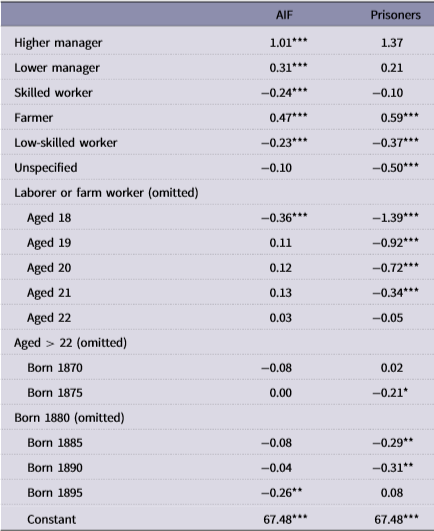
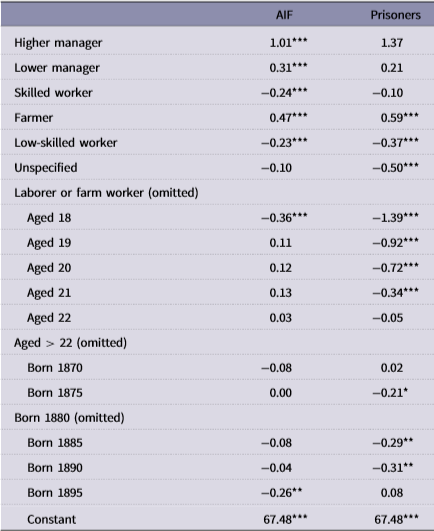
Multivariate regression models for soldiers and prisoners reveal few differences in stature between different occupational groups. There was, however, some variation between birth cohorts and this was particularly pronounced for the late 1890s. There was also substantial evidence of delayed growth for prisoners from lower socioeconomic groups compared to their military counterparts (see table 1).
Ordinary least squares (OLS) linear regression models of stature (in inches) for soldiers and prisoners born 1870–99
N = AIF 14,452
Prisoners 6,612
Sources: First Australian Imperial Force Personnel Dossiers, 1914–20, National Archives of Australia, B2455; Tasmanian Police Gazette 1865–1924; Victorian Police Gazette 1864–1907.
*.1. **p < .05. ***p < .01.
To explore possible variations in height between soldiers and prisoners who otherwise shared similar characteristics, all occupational information was organized into six HISCLASS categories: higher managers; lower managers; skilled workers; farmers and fishermen; low-skilled workers; and laborers and farmworkers. Estimations of height by occupational category produced by OLS regression (controlling for age and birth cohort) produced remarkably similar results for prisoners and soldiers.
Those who were employed as higher managers at the time of their arrest or recruitment were more than an inch taller than those employed as laborers or farm workers. Those employed as farmers were half an inch taller and those who reported lower managerial occupations had a third of an inch advantage in stature (in the case of soldiers), and a fifth of an inch (in the case of prisoners). By contrast skilled and low-skilled workers were shorter than their unskilled equivalents. After accounting for age and birth cohort, there was no difference in stature for prisoners and soldiers recorded as laborers and farmworkers.
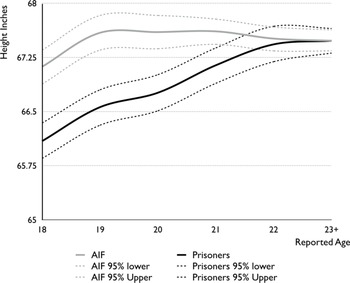
The regression analysis did, however, reveal evidence of delayed growth in prisoners compared to soldiers (see figure 2). While AIF recruits with unskilled occupations had ceased to grow by the age of 19 years, their prisoner equivalents did not reach terminal stature until they were aged 22. The delayed growth pattern we observe for prisoners mirrors findings for other historical populations. Beekink and Kok (Reference Beekink and Kok2017), for example, found evidence of delayed growth in former Dutch conscripts who were measured at age 19 and then subsequently at age 25 when they entered the civic guard. While 18-year-old Tasmanian born prisoners were 1.03 inches shorter than their military counterparts, the difference had reduced to 0.6 of an inch by aged 20. At aged 22 there was no difference in estimated stature, the prisoners having effectively caught up with their military equivalents.Footnote 2
Heights of unskilled prisoners and soldiers born Tasmanian 1870–99.
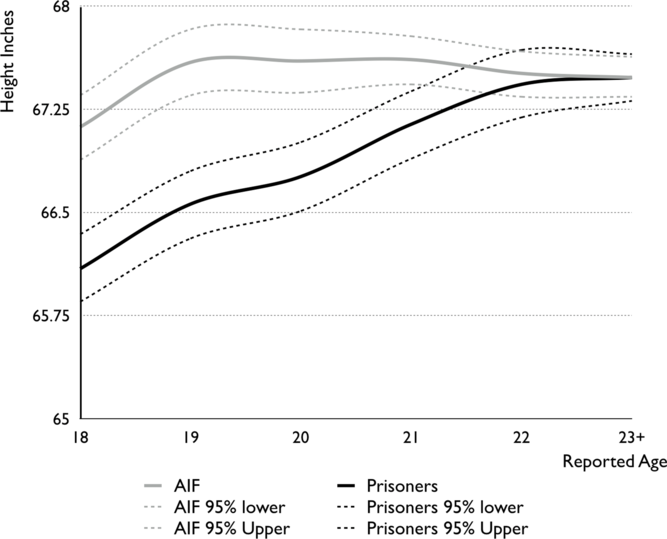
These results provide strong evidence that the relative advantage enjoyed by unskilled soldiers (compared to unskilled prisoners) varied over the life course. It is possible that unskilled prisoners were comparatively disadvantaged in early childhood and subsequently caught up. It might also be the case that differences in timing of the adolescent growth spurt exaggerated stature differentials at particular ages. These different growth patterns might reflect variations in family income, family size, and or region of birth (or a combination of these). It is possible, for example, that prisoners were disproportionately born in cities and thus exposed to childhood infections as a result of poorer water quality, or the increased rates of infection associated with more densely populated areas. In rural communities, wallabies and rabbits were often shot or snared, providing a source of protein that was not so readily available for urban populations. These results might also be a product of misreporting of ages. The police, for example, may have systematically overestimated the age of prisoners making them appear shorter for their age than they were.
A comparison of the height estimations for different birth cohorts revealed no significant difference in stature for prisoners and soldiers born in the period 1870–94. There was a difference for the 1895–99 birth cohort. Unskilled prisoners born in these years were a third of an inch taller than their AIF equivalents. Selection at point of arrest or recruitment might account for some of this variation. The limited period in which recruits were selected into the AIF—August 1914 to November 1918—is an area of particular concern. Older soldiers (and hence, earlier birth cohorts) may, for example, be less representative of the population as a whole than younger soldiers (Shlomowitz Reference Shlomowitz2007). This is certainly true of officers. Those who enlisted at the rank of second lieutenant or above were two years and three months older on average than rank-and-file recruits, and 2.21 inches taller.
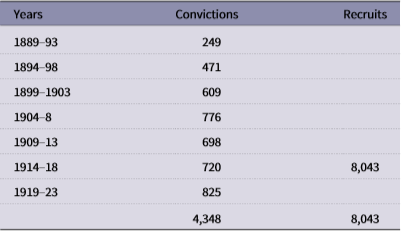
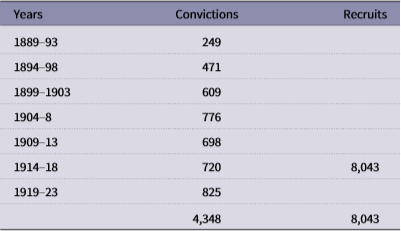
While prisoners with a single conviction history tend to be taller and older than other offenders, a longer run of observations should ensure that the effects of this are distributed across birth cohorts (ibid.). It is possible, however, that World War I also impacted on the operation of the criminal justice system. The recruitment of police into the armed forces may have reduced the capacity of the state to effectively prosecute a large volume of cases, leading to overconcentration on serious offences. This might impact upon stature because petty offenders tend to be shorter than those convicted of crimes in a higher court (Bodenhorn et al. Reference Bodenhorn, Moehling and Price2012). There was no reduction in the number of descriptions of prisoners circulated in the Police Gazette in the war years (table 2). However, a plot of male convictions in Tasmania per 1,000 men confirms that there was a fall in the conviction rate during the period of World War I, although, there was a fall of an even greater magnitude during the decade 1892–1902 (see figure 3).
Convictions resulting in the circulation of a description in the Police Gazette and Recruits to AIF
Male conviction rate and reporting rate in the Police Gazette, Tasmania 1890–1920.
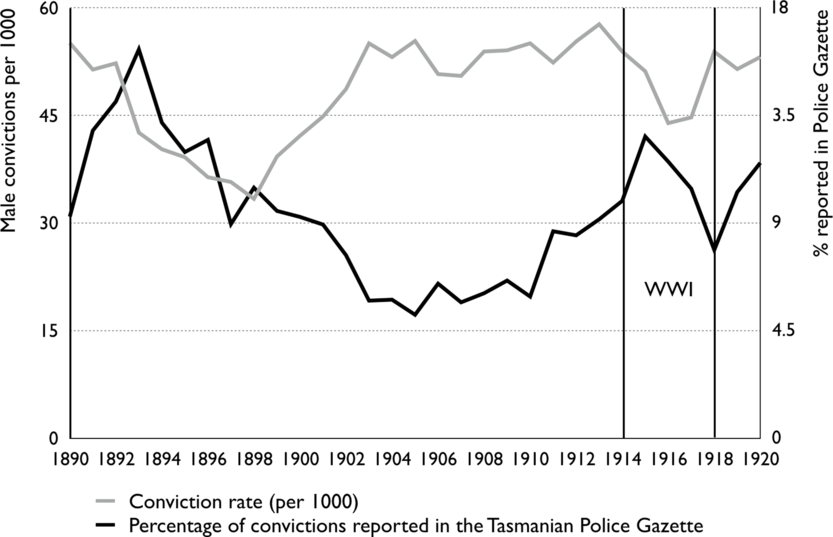
The percentage of convictions that resulted in the circulation of a physical description of the prisoner in the pages of the Tasmanian Police Gazette also varied over time. Because only a minority of convictions were awarded a noncustodial sentence, it is not surprising that comparatively few offenders were gazetted. The proportion varied from a high of 16 percent of all convictions in 1893, to a low of 5 percent in 1905. While this is worrying in principle, previous research failed to find evidence that the number of reported convictions was associated with variations in the stature of prisoners as recorded on arrest or discharge. This was not the case for conviction rates. A rise in successful prosecutions was associated with a reduction in the average height of prisoners (aged 21–49 years). This probably reflects the extent to which an increase in recorded convictions was associated with police targeting of lower socioeconomic groups (Inwood et al. Reference Inwood, Maxwell-Stewart, Oxley and Stankovich2015: 202).
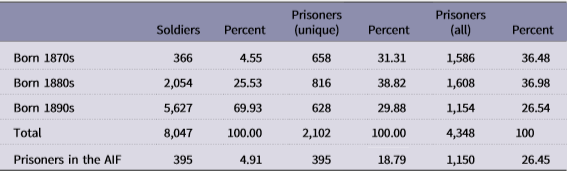
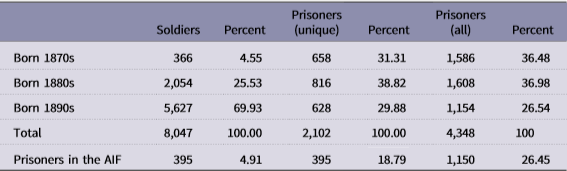
To explore these potential selection issues in greater depth, our sample of male soldiers and prisoners born in Tasmania in the years 1870–99 were linked to birth certificates. The details of the two linked subsamples are provided in table 3. A total of 8,047 AIF records were matched to a birth certificate. The distribution of births reflects the short recruitment window for the AIF, the majority of whom were born in the 1890s. The birth dates of the 2,102 male prisoners linked to birth were more evenly distributed. As many of the prisoners appeared in the Police Gazette more than once, there are 4,348 height measurements in total (an average 2.01 per prisoner). A subset of prisoners also enlisted in the AIF. These 395 individuals account for 4.91 percent of the AIF cohort and 18.79 percent of the prisoners. The prisoners who enlisted were more likely to make multiple appearances in the Police Gazette (an average of 2.91). This increase is largely due to an elevated prosecution risk among returned soldiers.
Prisoners and soldiers linked to births
Linkage to birth certificates enabled verification of the ages provided by soldiers on enlistment and prisoners on conviction and discharge. While there is a widespread belief that information forwarded by prisoners is less likely to be trustworthy than data obtained from other populations, our data reveals that soldiers were more likely to lie about their age. Many recruits aged 17 years and younger stated that they were 18 to meet the minimum age requirements. Linkage to birth registration data reveals that the youngest recruit had not yet turned 14. Roy Stanley Chilcott enlisted in Ulverstone in North West Tasmania on New Year’s Eve 1915, perhaps seeking to take advantage of end-of-year celebrations to conceal his true age.Footnote 3 In all, 42 percent of those who claimed to be 18 were 17 or under, suggesting widespread collusion among recruiters, recruits, and parents—the latter were required to give their permission if the would-be soldier was under the age of 21. Many recruits lied about their age to circumvent this obstacle too; only 70 percent of those who claimed to be 21 had reached this age at which recruits were no longer required to obtain parental consent.
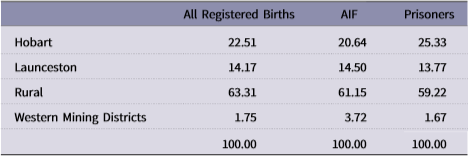
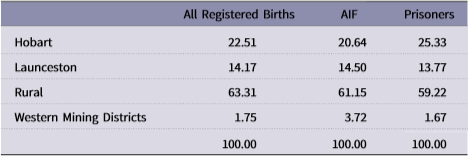
The geographical distribution of births for both prisoners and soldiers closely conformed to that of the population as a whole, although prisoners were more likely to be born in Tasmania’s principal city, Hobart (see table 4). AIF recruits born on the rugged west coast of Tasmania were also overrepresented. This area, much of it dominated by moorland and rainforest, experienced a mineral boom in the 1890s. The discovery of deposits of copper, zinc, and silver attracted migrants from elsewhere to the mining centers at Lyell, Zeehan, and Waratah and the small service port of Strahan. As AIF recruits were disproportionately born in this decade, they were also overrepresented amongst children born in these mining districts.
Place of birth (percentage)
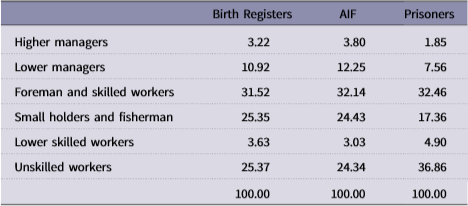
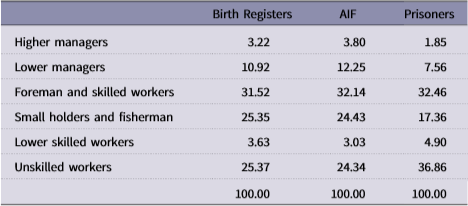
Analysis of parental occupations reveals that AIF recruits were born into households headed by fathers who possessed skills that were broadly representative of all fathers (see table 5). While prisoners were less likely to be born into households headed by a higher manager, lower manager, or small holder, the difference was not as great as might be expected. In all, 1.8 percent of prisoners could be linked to a household of birth headed by a higher manager compared to 3.8 percent of soldiers and 3.2 percent of the population as a whole. The defendants who appeared before Tasmanian courts included some whose fathers were solicitors, barristers, and high-ranking civil servants. Prisoners were also disproportionately born into households headed by lower-skilled and unskilled workers. This was especially the case for those with multiple conviction histories. Prisoners who could be linked to just one conviction were 1.2 times more likely to be born into a household headed by an unskilled laborer or farm worker compared to Tasmanian-born children as a whole. This rose to 1.4 for those with two convictions and 1.5 for those with three or more.
Father’s recorded occupation at birth
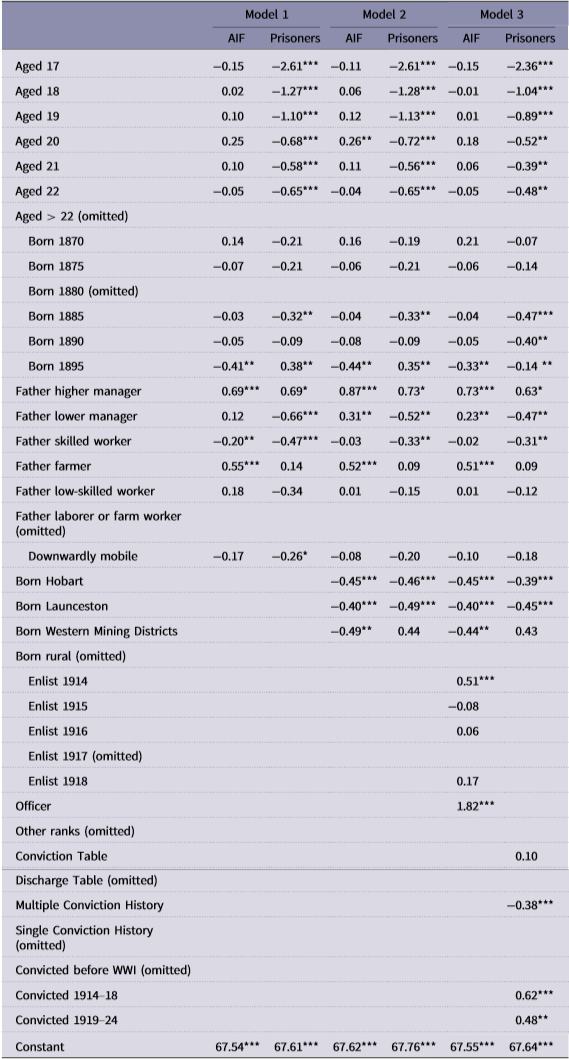
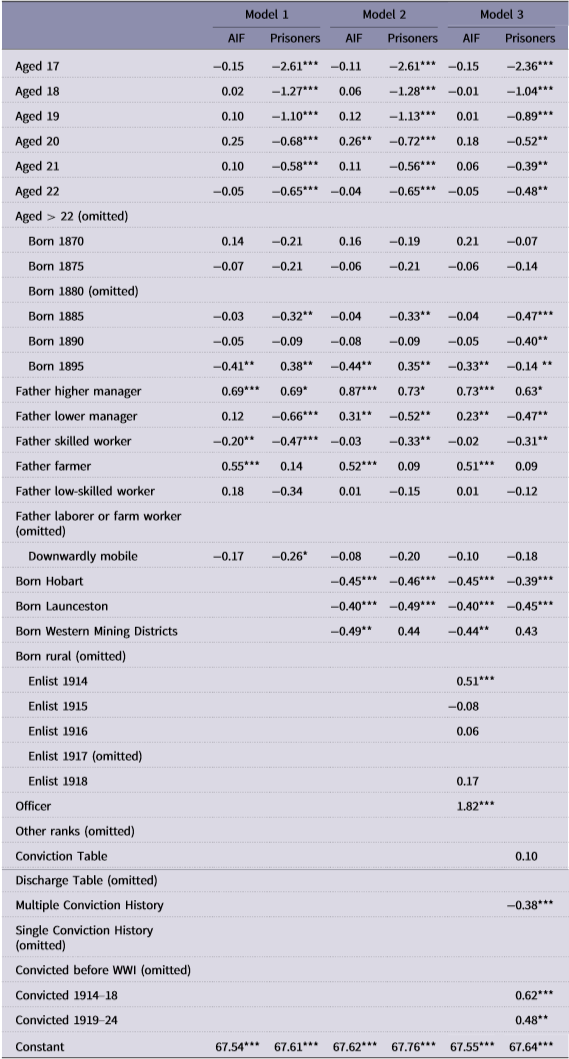
Three multivariate models were constructed to explore variations in observed stature for prisoners and AIF recruits linked to a birth certificate (see table 6). In all three models, the true age of prisoners and soldiers at last birthday was substituted for the reported age. This enabled the use of data for 17-year-olds. The occupation of the father as recorded on the birth certificate was also substituted for the son’s occupation as a more direct indicator of early-life socioeconomic status.
Ordinary least squares (OLS) linear regression models of stature (in inches) of soldiers and prisoners born in Tasmanian 1870–99
Number of observations: AIF = 8,047; Prisoners = 4,348.
Sources: First Australian Imperial Force Personnel Dossiers, 1914–20, National Archives of Australia, B2455; Tasmanian Police Gazette 1888–1924; Victorian Police Gazette 1888–1907; Tasmanian Birth Register, Tasmanian Archive and Heritage Office, RGD 33/1 1870–99.
*p < .1. **p < .05. ***p < .01.
Model 1 reveals that improving the accuracy of age reporting by linking to birth certificates had little if any impact on the results obtained using unlinked data. The linked data confirms that prisoners were more likely to be born into households with lower socioeconomic status and experienced a cumulative height disadvantage at age 17. Thereafter, the penalty associated with earlier life lessened, disappearing altogether by age 23. These results lend some support to the argument that conditions experienced in adolescence might ameliorate the impact of earlier life insults (Depauw and Oxley Reference Depauw and Oxley2018). The availability of cheap food in the Australian colonies may have meant that young men of all backgrounds could draw on sufficient resources to live well. The model also confirmed the variation in estimated height for the 1895–99 birth cohort. The estimation for unskilled prisoners’ heights suggests an advantage over the 1880–84 birth cohort of 0.4 inches, while the reverse was true for soldiers.
Occupational-based height differentials using data for fathers approximate those for the occupations reported by sons with the exception of the one group of prisoners.Footnote 4 Prisoners who reported lower managerial occupations were taller on average than unskilled while the opposite was true for prisoners whose fathers were lower managers (see table 1). Perhaps surprisingly, occupation recorded at point of measurement appears to be a reasonable proxy for socioeconomic status of parents as recorded on birth certificates—a result that suggests limited opportunities for intergenerational mobility. There was some evidence, however, that downward social mobility was associated with a height penalty. Low-skilled and unskilled sons with fathers who reported managerial, farming, or skilled occupations were shorter than their peers, although this difference was only statistically significant for prisoners.
Model 2 utilizes birth district information recorded on birth certificates. The estimations reveal the existence of a significant urban height penalty of between 0.4 and 0.5 of an inch. Despite their relatively small size (Hobart had a population of 24,905 in 1891 and Launceston 17,208), soldiers and prisoners born in the colony’s two largest conurbations, were significantly shorter than those born in rural districts (Tasmanian Government 1891: xxiii–xxxiv). The estimate for the heights of AIF recruits born in the western mining districts suggests a penalty of a similar magnitude. These areas experienced rapid urbanization in the 1890s. Food prices were significantly higher because of transport costs, while sewerage and other facilities remained rudimentary. West coast towns experienced outbreaks of typhoid in the 1890s and were lacking in supplies of fresh milk and vegetables. While there was no shortage of rainwater runoff, this was often contaminated with heavy metals, and miners complained that sulphur fumes tainted tank water (Blainey Reference Blainey1954: 92–101). It is perhaps not surprising that such conditions should prove as injurious to growth as those associated with more established conurbations. Notably, however, the divergence in the estimation of stature for prisoners and soldiers born 1895–99, evident in model 1, survives the introduction of controls for place of birth.
Model 3 introduces a series of variables designed to explore the extent to which the height estimations in the previous models were influenced by selection at point of recruitment into the AIF or the pages of the Police Gazette. The model confirmed that the first recruits to the AIF were significantly different from those who enlisted subsequently. Those who answered the call to arms before January 1915 were 0.5 of an inch taller than later recruits. This probably reflects the higher barriers to enlistment placed on this cohort in the form of the 5-foot, 6-inch minimum height standard in operation at the start of the war, although it is also possible that those who first rushed to the colors were atypical in other ways too. The 1914 enlistment cohort was relatively small, however, and the model provides no evidence that there was significant variation in the heights of volunteers recruited in subsequent years. It does confirm that officers were significantly taller than rank and file, even after controlling for paternal occupation and hence socioeconomic status.
The model fails to confirm that there was a statistically significant difference in the height of prisoners described in a conviction table as opposed to a discharge notice. It does confirm that prisoners with a multiple conviction history were likely to be shorter than those whose details were circulated just once in the pages of the Police Gazette. It also provided evidence that World War I impacted upon the reporting of information about convicted offenders, if not the operation of the criminal justice system as a whole. The estimation for the heights of unskilled prisoners who were described in the pages of the Police Gazette during the war was 0.62 inches greater than those who were convicted before 1914.
After the outbreak of the war, the percentage of convictions that resulted in the circulation of a description of the offender increased, later falling back to prewar levels (see figure 3). The rise in stature in the war years does not therefore appear to be the result of more selective reporting. It might, however, be associated with changes in the way that the courts operated. The recruitment of police, court officials, gaol warders, and other criminal justice personnel into the armed forces is likely to have impacted on the decision to prosecute offenders and perhaps also impacted on the decision to award custodial or noncustodial sentences.
As figure 3 indicates, there was a reduction in the male conviction rate during the war from a high of 57.7 prosecutions per 1,000 male inhabitants to a low of 43.9 in 1916. While this was not as pronounced (or as prolonged) as the reduction in male prosecution rates that occurred between 1892 and 1910, that it was driven by wartime contingencies means that it is likely to have impacted on the prosecution process in particular ways. It is also possible that a prewar tendency to show leniency to the tall was reversed after 1914. Tall individuals who had not volunteered for service and found themselves before the courts may well have been discriminated against in ways that did not apply to the operation of the courts before the outbreak of war.
Whatever the effects leading to an increase in the average stature of prisoners, model 3 suggests that these persisted after the cessation of hostilities. The estimation for the stature of unskilled prisoners recorded in gazette notices in the years 1919–24 was 0.48 inches taller than the estimate for their prewar equivalents. Many of the male defendants that appeared before Tasmanian courts in these years were returned soldiers—a fact that cannot have been lost on police, magistrates, judges, and juries. The aftermath of the war impacted on policing decisions and the operation of courts as the criminal justice system had to pick its way through a slew of domestic violence cases and other criminal acts that might be attributed to war trauma (Damousi Reference Damousi1999: 18; Stanley Reference Stanley2010).
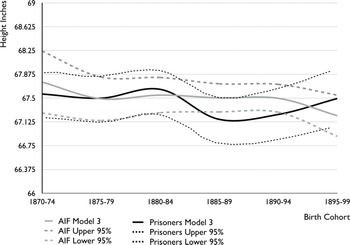
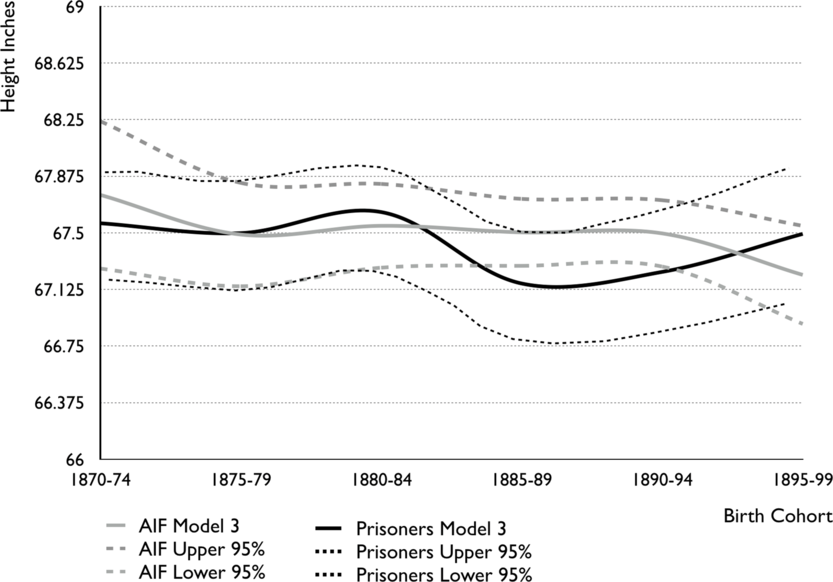
Model 3 suggests that the outbreak of World War I impacted on the manner in which soldiers were selected into the army and prisoners were selected into the Police Gazette. These effects impacted little on the stature estimates for soldiers, however, they did affect prisoners’ heights, raising the estimates for those born prior to 1885 and lowering them for those born after 1889 (see figure 4). This reduced much of the variation in estimated heights for soldiers and prisoners born 1895–99 evident in model 1.
Estimated heights for unskilled prisoners and soldiers aged 23 or greater born in rural Tasmania 1870–99.
Selection, Stature, and the Industrial Puzzle
The recent emphasis on the potential effects of selection on historical stature estimates can be partly explained by the manner in which height studies have resulted in outcomes that are at odds with other indicators of societal affluence. As we have seen in the case of Tasmania, those born in rural areas appear to have grown up taller on average than their higher-income-earning urban neighbors (Cinnirella Reference Cinnirella2008: 326). Many stature series for birth cohorts born in Europe and North America in the period 1750–1900 suggest that rising per capita income, or an increase in estimated real wages, did not always lead to increases in height. The issue is contentious because measures based on real wages and the consumption of goods suggest that economic growth led to rising prosperity, while those that employ height and mortality data suggest that industrialization was accompanied by deteriorations in physical health, if not material circumstances more generally.
The tendency for different measures of human welfare to move in opposite directions is generally referred to as the “early industrial growth puzzle” (Komlos Reference Komlos1998: 792). “Puzzle” may not be the most appropriate characterization. We use a variety of indicators precisely because they measure different things and therefore provide different information. Real wages for example, only measure the formal economy. Even after estimating for the impact of unemployment and underemployment, they can tell us little about the ways in which informal exchange systems, food quality, and disease environments have influenced the well-being of past populations (Scholliers Reference Scholliers1996). By contrast, a nutritional based measure, such as mean stature, is likely to be sensitive to such factors. Real wage estimates are also particularly susceptible to shifts in female employment patterns, nonpecuniary contributions made by family members, and changes in household size. A rise in the number of individuals dependent on each wage earner can have a profound impact on household income (Whitwell et al. Reference Whitwell, Da Souza, Nicholas, Steckel and Floud1997: 382). They can also be a blunt tool when applied to societies characterized by substantial variations in wealth (Floud and Harris Reference Floud, Harris, Steckel and Floud1997: 95). A particular problem is that individual-level data can be hard to come by. This can make it difficult to ground truth real wage estimates through linkage to population-wide registers such as census and birth data.
However, height is a measure of more than the ability of a household head to put food on the table. The extent to which any individual will realize their genetically programmed potential height largely depends upon their formative experiences. Poor fetal and early childhood nutrition can impact upon the timing of juvenile growth and lead to adult stunting, but so too can a range of other insults including disease, opiates in children’s medicine, maternal smoking and alcohol consumption, stress, and lack of sunlight (Ashford and LeCroy Reference Ashford and LeCroy2009; Frank Reference Frank and Drotar1985; Steckel Reference Steckel1995; Watamura Reference Watamura, Benson and Haith2009). Synergistic interactions can further complicate the growth process. A decrease in nutrition can weaken immune systems leading to increased risk of infection, while diarrhea, malabsorption, a reduction in appetite, nutrient diversion to bolster the immune response, and urinary nitrogen loss can heighten the effects of malnutrition (Katona Reference Katona2008). Infant inflammatory responses—the body’s attempt to heal following tissue damage—are particularly associated with stunting and risk of cardiovascular disease later in life (Finch and Crimmins Reference Finch and Crimmins2004).
For all these reasons, it is not particularly surprising that historical estimates of well-being based on height trends diverge from income-based measures. Even in contemporary populations the association between per capita income and height is not straightforward. There is evidence, however, of a strong relationship between rates of postnatal mortality and adult height, especially for children suffering from gastro-intestinal and respiratory disease (Bozzoli et al. Reference Bozzoli, Deaton and Quintana-Domeque2009: 647).
While it is prudent to check for the impact of potential selection on height estimates derived from criminal justice and military recruitment series, both those institutions generated abundant data to assist with this process. Triangulation techniques might further assist. The linking of data derived from subpopulations of soldiers and prisoners to birth registers and other population-wide series enables further testing of the manner in which stature estimates derived from those populations can be used as a proxy for wider height trends. While the subtle selection effects revealed by our analysis of linked data for Tasmanian-born prisoners and soldiers are in themselves interesting, none of them substantially alter the results obtained using unlinked samples. Overall, we are struck by the similarity in military- and prison-based estimates for adult stature (although interestingly not for adolescents). The difference in estimated heights for unskilled prisoners and soldiers remains remarkably consistent across all our models. We find little evidence to suggest that the results obtained from using military and prison data vary significantly or that these data cannot be used to infer wider societal stature trends.
Acknowledgments
We thank the Australian Research Council and the Social Sciences and Humanities Research Council of Canada for funding of this research and Bernard Harris, anonymous referees of this journal and participants at meetings of the Economic History Society, the European Historical Economics Society, the Australia and New Zealand Economic History Society, the Social Science History Association, and workshops at the Netherlands Institute for the Study of Crime and Law Enforcement and the University of Guelph for helpful comments and discussion.