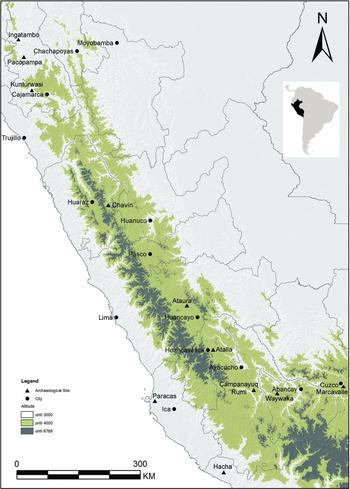
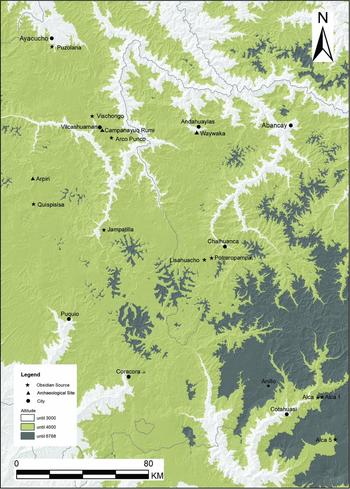
The Early Horizon (800–400 BC) was characterized by important socioeconomic changes in the Central Andes of Peru. During this time, much of ancient Peru was closely linked in a widespread exchange network referred to as the Chavín Horizon or Chavín Interaction Sphere (Burger Reference Burger and Keatinge1988, Reference Burger and Rice1993, Reference Burger, Silverman and Isbell2008, Reference Burger2012; Figure 1). This network was centered at the urban and ceremonial center of Chavín de Huántar and promoted long-distance exchange, partially through the expansion of religious ideology (Burger Reference Burger and Keatinge1988, Reference Burger, Silverman and Isbell2008; Patterson Reference Patterson and Benson1971). Exotic goods comprised crucial elements of the political economy of the Chavín Interaction Sphere (Burger Reference Burger, Silverman and Isbell2008, Reference Burger, Hirth and Pillsbury2013), with obsidian figuring prominently among the exchanged exotic materials. Geochemical analyses over the last four decades demonstrate that the important obsidian quarries are situated over a large area of the south-central highlands (Figure 2), some 600 kilometers to the south of Chavín de Huántar (Glascock et al. Reference Glascock, Speakman, Burger, Glascock, Speakman and Popelka-Filcoff2007). One source known as Quispisisa was used intensively, comprising roughly 90% of all obsidian circulated throughout the Chavín Interaction Sphere (Burger and Glascock Reference Burger and Glascock2009). The significant distances traversed to obtain obsidian and other exotic goods raises the question of precisely how these materials were distributed and acquired within this interaction sphere. To address this question requires the study of obsidian procurement from the perspective of the south-central highlands rather than from obsidian consumers in the north. In this article, we detail the changing role of the south-central highlands with respect to obsidian exchange in the Chavín Interaction Sphere. To illustrate these changes and their significance, we present the results of a recent portable X-ray florescence (pXRF) sourcing study of 370 obsidian artifacts from the civic-ceremonial center of Campanayuq Rumi. Campanayuq Rumi is critical to understanding the circulation of obsidian because it is one of the largest known centers in the south-central highlands of Peru and is located in close proximity to the Quispisisa quarry, as well as other important south-central highland obsidian sources. Furthermore, Campanayuq Rumi has a long history of occupation, permitting a diachronic perspective on changing patterns of obsidian exploitation between circa 1100 and 450 BC. As a result, we were able to document how Campanayuq Rumi became embedded in the Chavín Interaction Sphere through time.
The location of Campanayuq Rumi and other Chavín-related centers mentioned in the text.

Key obsidian localities in the south-central highlands of Peru.

The Chavín Interaction Sphere and Long-Distance Exchange
The Chavín Interaction Sphere was a cosmopolitan system of interacting polities spread over a large area of the north and central Peruvian highlands, coastal areas, and tropical forest regions (Burger Reference Burger, Silverman and Isbell2008, Reference Burger2012; Contreras Reference Contreras2011). While these polities exhibited a great deal of regional diversity, they were also linked through shared religious ideology (Burger Reference Burger and Keatinge1988). The core of this area was centered in the north and north-central highlands, where several large, regional centers, including Chavín de Huántar, Kuntur Wasi, and Pacopampa interacted as peer-polities (sensu Renfrew Reference Renfrew, Renfrew and Cherry1986; see also Burger Reference Burger and Rice1993). Within this network a variety of exotic goods rapidly appeared, including gold jewelry, foreign pottery, cinnabar pigment, and obsidian tools, as well as Spondylus and Strombus shells from coastal Ecuador (Burger Reference Burger and Keatinge1988, Reference Burger, Silverman and Isbell2008, Reference Burger, Hirth and Pillsbury2013; Burger and Matos Reference Burger and Matos2002; Burger, Lane, and Cooke Reference Burger, Lane and Cooke2016; Cooke et al. Reference Cooke, Hintelmann, Ague, Burger, Biester, Sachs and Engstrom2013; Druc Reference Druc2004; Lothrop Reference Lothrop1941; Onuki Reference Onuki1995; Rick Reference Rick, Vaughn, Ogburn and Conlee2005, Reference Rick, Conklin and Quilter2008; Sayre Reference Sayre2010; Seki et al. Reference Seki, Villanueva, Alemán, Ordoñez, Sakai, Walter, Inokuchi, Espinoza and Morales2010). Coinciding with this intensification of interaction is strong evidence for the development of social hierarchies. For instance, excavations at both Kuntur Wasi and Pacopampa have revealed burials of elite individuals accompanied with gold ornamentation, cinnabar, and Strombus shells (Onuki Reference Onuki1995; Seki et al. Reference Seki, Villanueva, Alemán, Ordoñez, Sakai, Walter, Inokuchi, Espinoza and Morales2010).
The evidence for the importance of long-distance trade is, however, best exemplified at the urban and ceremonial center of Chavín de Huántar. Chavín de Huántar had a long history of development that began around 1000 BC, reaching its maximal size in the Janabarriu Phase, around ca. 700 BC (Burger Reference Burger1984, Reference Burger, Silverman and Isbell2008). Chavín de Huántar consisted of a large ceremonial core that included a U-shaped platform complex that functioned as a temple (Burger Reference Burger1992; Kembel Reference Kembel, Conklin and Quilter2008). Archaeological excavations in the temple core demonstrate that since its foundation around 1000 BC, Chavín de Huántar was a center that received a significant amount of foreign goods from distant locations (Lumbreras Reference Lumbreras2007; Rick Reference Rick, Vaughn, Ogburn and Conlee2005, Reference Rick, Conklin and Quilter2008; Sayre et al. Reference Sayre, Miller and Rosenfeld2016).
Chavín de Huántar also has a large residential occupation with strong evidence for craft production activities and status distinctions (Burger Reference Burger1984; Rick Reference Rick, Vaughn, Ogburn and Conlee2005; Sayre Reference Sayre2010). Archaeological excavations indicate that the residential component grew significantly during the Janabarriu Phase (ca. 700–400 BC) to cover an area of at least 40–50 ha. The explosive growth of Chavín de Huántar corresponded with increased elite demand for the exotic materials circulated within the Chavín Interaction Sphere of the Early Horizon described above.
Obsidian and the Chavín Interaction Sphere
Diachronic studies suggest that the exploitation of obsidian at Chavín de Huántar changed through time (Burger et al. Reference Burger, Asaro, Michel and Burger1984; Burger, Lau, Ponte, and Glascock Reference Burger, Lau, Ponte, Glascock, Herrera, Orsini and Lane2006). For instance, during the Urabarriu Phase (ca. 950–800 BC), obsidian use at Chavín de Huántar was rare. The paucity of obsidian suggests that obsidian did not form a significant component of Chavín de Huántar's political economy during its earliest occupation phases.
In the Janabarriu Phase (ca. 700–400 BC) obsidian was found in significant quantities at Chavín de Huántar, implying close relations with the south-central highlands during this time. Obsidian was found in ceremonial and temple deposits, suggesting that the material was used as an offering and/or ritual paraphernalia (Mesía Montenegro Reference Mesía Montenegro2014). The symbolic value of obsidian could be related to its exotic provenance (Helms Reference Helms1993), as well as its color and reflective glass-like properties.
There are also strong indicators that during the Janabarriu Phase, obsidian formed a significant component of the political economy. Investigations in Chavín de Huántar's residential sectors showed that obsidian was ubiquitous, replacing chert, quartzite, and basalt as the dominant lithic material (Burger Reference Burger1984). Obsidian was distributed widely in high quantities and was a common artifact in both high- and low-status households. It was recently argued that this distribution pattern (sensu Hirth Reference Hirth1998) implies that a form of market exchange system operated at Chavín de Huántar in the Janabarriu Phase (Burger Reference Burger, Hirth and Pillsbury2013:325–327).
Obsidian was used to manufacture bifaces and scrapers, though the vast majority of artifacts consisted of utilized flakes and debitage (Burger Reference Burger1984:190–192; Burger, Lau, Ponte, and Glascock Reference Burger, Lau, Ponte, Glascock, Herrera, Orsini and Lane2006; Contreras and Nado Reference Contreras, Nado, Peterson and Dudgeon2018). Burger (Reference Burger1984:238) suggests that the flakes were used in crafting activities such as processing animal hides in the residential sectors of Chavín de Huántar. It is also plausible that obsidian flakes were used as tools for shearing camelids in the production of wool textiles. The increase in obsidian at Chavín de Huántar correlates with an intensification in the use of domestic camelids, especially llamas, which were valued for human consumption, transport, and wool production (Miller and Burger Reference Miller and Burger1995; Rosenfeld and Sayre Reference Rosenfeld and Sayre2016). Ethnographic accounts suggest that obsidian would have been suitable for wool-processing activities. Bandelier (Reference Bandelier1904:446) notes that obsidian was a preferred material for Aymara herders to shear llamas, while Flores-Ochoa (Reference Flores-Ochoa1979:94) points out that contemporary herders in isolated communities in south-highland Peru employed shards of bottle glass for shearing their animals.
Two geochemical sourcing studies suggest that roughly 90% of the obsidian from Chavín de Huántar came from the Quispisisa source (Burger et al. Reference Burger, Asaro, Michel and Burger1984; Burger, Lau, Ponte, and Glascock Reference Burger, Lau, Ponte, Glascock, Herrera, Orsini and Lane2006; Contreras and Nado Reference Contreras, Nado, Peterson and Dudgeon2018). The source area of Quispisisa obsidian was a massive quarry found near the towns of Sacsamarca and Huanca Sancos in the Department of Ayacucho (Burger and Glascock Reference Burger and Glascock2000a, Reference Burger, Glascock, Isbell and Silverman2002). A recent survey of one locality, Cerro Jichja Parco, documented more than 30 ancient quarrying pits. Some pits are as large as 80 m in diameter, a testament to the intensity of exploitation of this source in the past (Tripcevich and Contreras Reference Tripcevich and Contreras2011, Reference Tripcevich, Contreras, Tripcevich and Vaughn2013). Smaller amounts of obsidian come from the Jampatilla, Potreropampa, and Alca sources (Burger et al. Reference Burger, Asaro, Michel and Burger1984; Contreras and Nado Reference Contreras, Nado, Peterson and Dudgeon2018). All of these sources are significantly greater than 600 km to the south of Chavín de Huántar. The long distances involved raise the question of how obsidian was acquired. To address this problem requires a consideration of the situation of the south-central highlands at sites closer to the sources of archaeological obsidian.
Archaeological Research at Campanayuq Rumi
One of the largest late Initial Period and Early Horizon settlements in the south-central highlands is Campanayuq Rumi, a civic-ceremonial center in the Department of Ayacucho (Figure 1). The site is located at an altitude of 3,600 m asl, just above the town and former Inca administrative center of Vilcashuaman. Importantly, Campanayuq Rumi is only 52 km to the east of the Quispisisa source area.
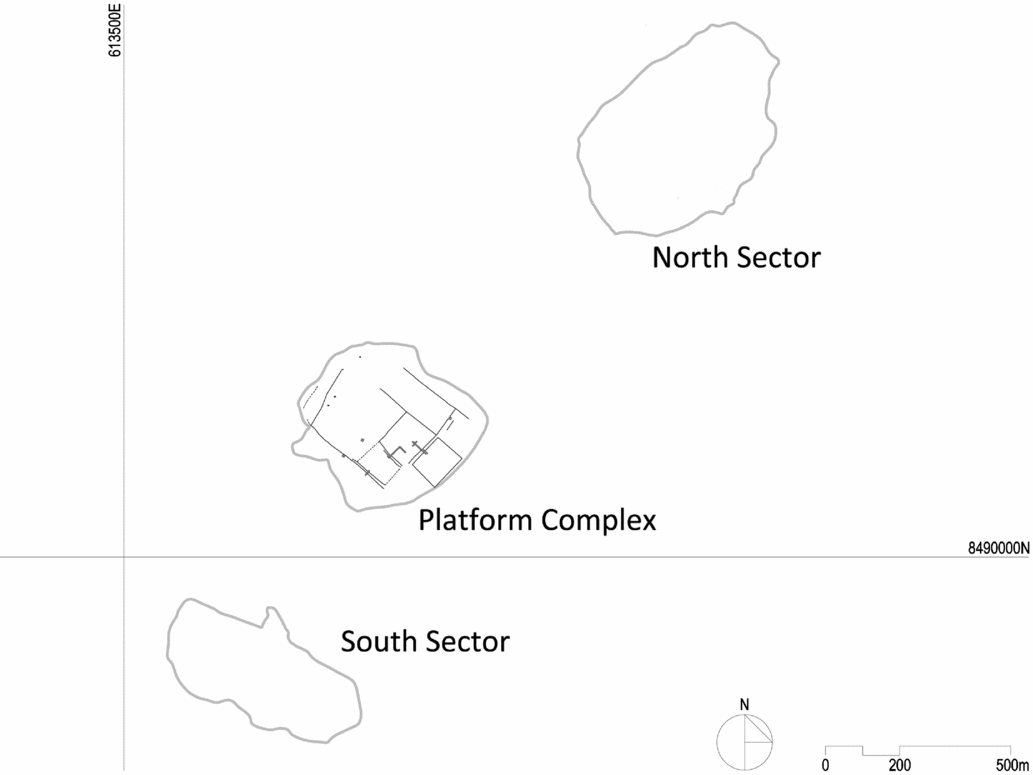
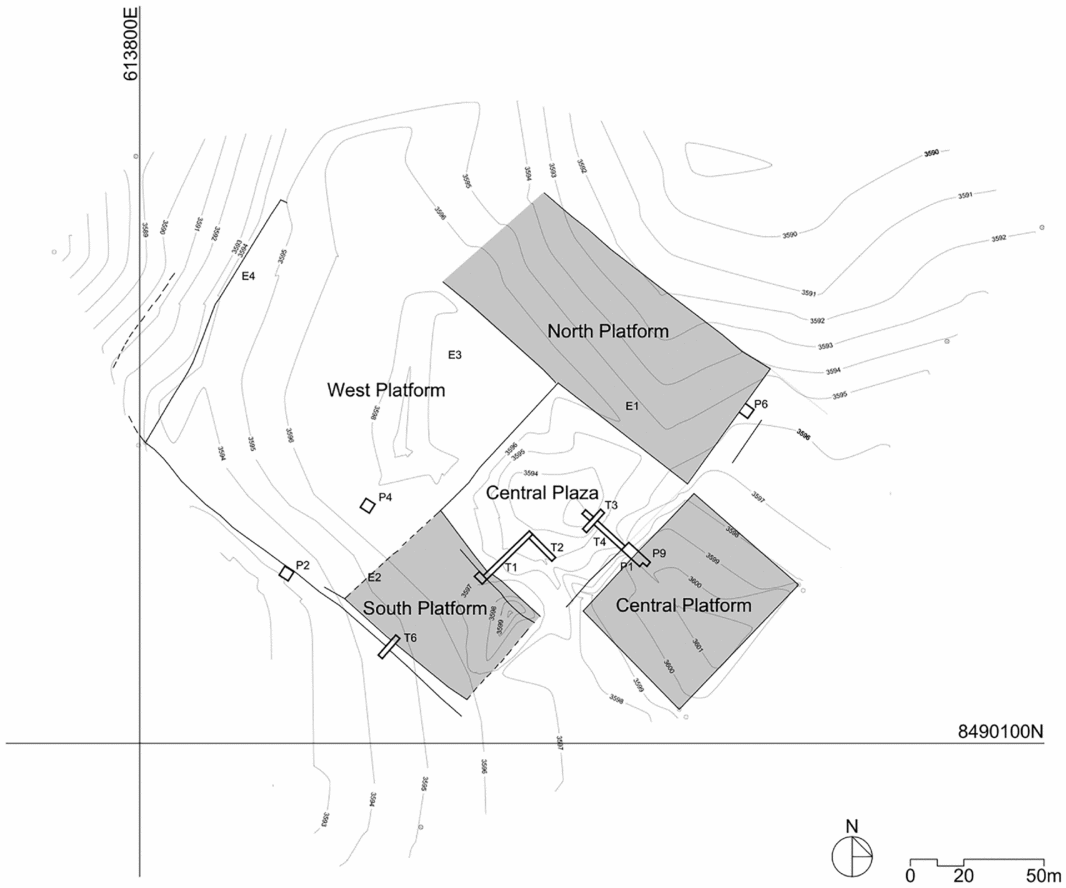
Campanayuq Rumi is composed of a monumental core of artificial stone platforms arranged in a U-shaped pattern that covers an area of 3.5 ha (Figures 3 and 4), and is surrounded to the north and south by at least two residential sectors (Matsumoto Reference Matsumoto2010; Matsumoto and Cavero Palomino Reference Matsumoto and Palomino2010; Matsumoto et al. Reference Matsumoto, Palomino and Silva2013, Reference Matsumoto, Nesbitt, Cavero and Mendoza2016). While modern construction activity makes it difficult to estimate the full extension of the residential areas, recent investigations suggest that late Initial Period and Early Horizon settlement covered at least 12 ha.
Map of Campanayuq Rumi and the surrounding residential settlements.

Map of the monumental core of Campanayuq Rumi exhibiting a U-shaped pattern (T1, T2, T3, T4, T6, P1, P2, P6, and P9 indicate excavation units).

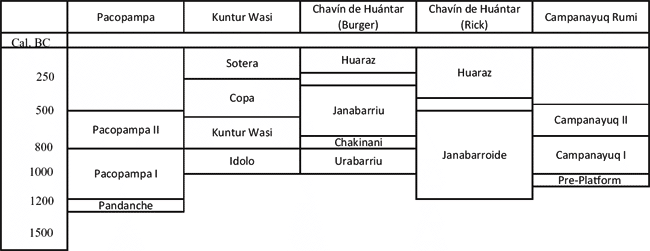
Using absolute and relative dating, the occupation of the site has been divided into three phases (Table 1). During this time, Campanayuq Rumi grew from a small village in the Initial Period into one of the largest ceremonial and residential centers of its time in the south-central highlands (Matsumoto Reference Matsumoto2010; Matsumoto and Cavero Palomino Reference Matsumoto and Palomino2010). In the following sections we provide a brief overview of how the site changed through time.
Chronology of Campanayuq Rumi and Other Key Sites Mentioned in the Text.

Pre-Platform Phase (1100–950 BC)
The first phase of occupation at Campanayuq Rumi is referred to as the Pre-Platform Phase (1100–950 BC). The Pre-Platform Phase corresponds to an occupation that pre-dates the construction of temple architecture (Matsumoto Reference Matsumoto2010). Excavations in both the monumental core and occupational contexts suggest that during the Pre-Platform Phase there was a small village-level Initial Period settlement at Campanayuq Rumi. If this was the case, Pre-Platform Phase Campanayuq Rumi was probably one of a number of small-scale settlements that characterized the south-central highlands during the second millennium BC (Bauer et al. Reference Bauer, Kellett and Silva2010:53–55; Grossman Reference Grossman1972, Reference Grossman1983).
The Campanayuq I Phase (950–700 BC)
The Campanayuq I Phase marks a radical change in which the site transformed into a ceremonial center that was tied in important ways to Chavín de Huántar. Architecture, ceramic style, and absolute dates support this view (Matsumoto Reference Matsumoto2010; Matsumoto and Cavero Palomino Reference Matsumoto and Palomino2010; Nesbitt and Matsumoto Reference Nesbitt and Matsumoto2014). By this time, Campanayuq Rumi displays a scale of monumentality that is significantly greater than other public centers in the Ayacucho region, such as Chupas or Wichqana (Cruzatt Reference Cruzatt1971; Lumbreras Reference Lumbreras, MacNeish, Cook, Lumbreras, Vierra and Nelken-Terner1981).
The monumental core of Campanayuq Rumi forms a U-shaped pattern with four stone masonry platforms surrounding a sunken rectangular plaza. This architectural pattern resembles the architectural layout of Chavín de Huántar. Shared characteristics between the two centers include the presence of at least one gallery within Campanayuq Rumi's southern platform that is similar to some of the gallery complexes for which Chavín de Huántar is famous (Matsumoto Reference Matsumoto2010:424–425). In addition, excavations in 2016 uncovered a sunken circular plaza on the summit of the central platform, which is highly similar to the one found at Chavín de Huántar (Lumbreras Reference Lumbreras2014).
The combination of a U-shaped arrangement and the use of an interior gallery indicate a close relationship with Chavín de Huántar, despite a distance of over 600 km separating these two centers (Matsumoto Reference Matsumoto2010). Given the greater scale and elaboration of the Chavín de Huántar public architecture, as well as earlier radiocarbon dates (Kembel and Haas Reference Kembel and Haas2015), it seems reasonable to assume that from the outset, the public center at Campanayuq Rumi was emulating Chavín architectural conventions.
Despite the strong similarities observed in monumental architecture, the ceramic styles that characterize the Campanayuq I Phase do not show clear affiliation to those of contemporary late Initial Period (or Urabarriu Phase) Chavín de Huántar (see Burger Reference Burger1984). Rather, the ceramic assemblage of the Campanayuq I Phase was composed of styles that exhibit affinities with pottery documented in the south-central highlands and parts of the south coast (Matsumoto Reference Matsumoto2010, Reference Matsumoto, Burger, Seki and Salazar2018a). For instance, stylistic linkages exist between Campanayuq Rumi and Pirwapukio in the Mantaro Valley (Browman Reference Browman1970), Muyo Moqo in Andahuaylas (Bauer et al. Reference Bauer, Kellett and Silva2010:51–52; Grossman Reference Grossman1972), Hacha in the Acari Valley (Neira and Cardona 2000–Reference Neira, Cardona, Ziólkowski and Franco2001; Riddell and Valdéz 1987–Reference Riddell and Valdéz1988; Robinson Reference Robinson1994), and Marcavalle in Cuzco (Mohr-Chavez Reference Mohr Chávez1977).
The Campanayuq II Phase (700–450 BC)
Several changes in architecture, ceramic styles, and social organization occur during the Campanayuq II Phase (Matsumoto Reference Matsumoto2010). Around 700 BC, the pottery of the previous Campanayuq I Phase was largely replaced by pottery that shows strong similarities to the ceramic style of the contemporary Janabarriu Phase at Chavín de Huántar (Burger Reference Burger1984; see also Rick et al. Reference Rick, Mesía, Contreras, Kembel, Rick, Sayre and Wolf2010), as well as the Early Paracas style of the south coast (see Dulanto Reference Dulanto2015; García and Pinilla Reference García and Pinilla1995; Isla and Reindel Reference Isla and Reindel2006).
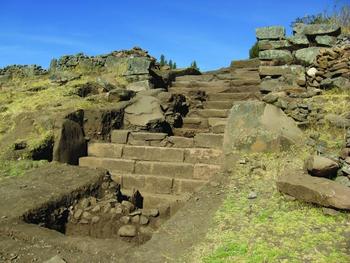
This radical change in ceramic assemblage was associated with modifications in the monumental architecture. For instance, Campanayuq Rumi incorporated an innovative masonry technology of cut and polished stone referred to as ashlar construction (Figure 5). This new technique is especially important because it was popularized by the Chavín de Huántar temple (e.g., Kembel Reference Kembel, Conklin and Quilter2008). It is also during this time that the residential settlement of Campanayuq Rumi was occupied more intensively (Figure 3) (Matsumoto et al. Reference Matsumoto, Palomino and Silva2013, Reference Matsumoto, Nesbitt, Cavero and Mendoza2016).
Image of the central platform showing the central staircase and ashlar construction.

The changes in material culture observed during the Campanayuq II Phase serve as a proxy for significant socioeconomic transformations occurring at the site. Personal ornaments such as stone beads, bone ornaments with incised iconography, ear spools, and gold jewelry suggest that social organization became much more hierarchical during this phase (Matsumoto Reference Matsumoto2010, Reference Matsumoto2012; Matsumoto et al. Reference Matsumoto, Palomino and Silva2013, Reference Matsumoto, Nesbitt, Cavero and Mendoza2016). It is also during the Campanayuq II Phase that the percentage of obsidian artifacts increases from nearly 80 to almost 90% (see discussion below).
Summary
The data presented above reveal how the character of Campanayuq Rumi changed through time from a small village to a major civic-ceremonial center. Because Campanayuq Rumi emulated Chavín architectural conventions as a ceremonial center during the Campanayuq I Phase, the relationship between these two centers seems to have been religious rather than economic, and might have caused significant—but infrequent—interactions. During the Campanayuq I Phase, Campanayuq Rumi was a ceremonial center of regional importance within the south-central highlands and upper valleys of the south coast. Though Campanayuq Rumi likely benefited from its links to Chavín de Huántar, it also maintained much of its independence.
In the Campanayuq II Phase, Campanayuq Rumi exhibits much stronger influence from Chavín de Huántar, both in terms of material culture and social organization. Based on Richard Burger's model of a pilgrimage network centered at Chavín de Huántar (Burger Reference Burger and Keatinge1988, Reference Burger and Rice1993), Matsumoto has hypothesized that Campanayuq Rumi could have been incorporated into this religious network and functioned as a branch shrine (Matsumoto Reference Matsumoto2010). As we will argue later in this paper, one of the reasons that Campanayuq Rumi became embedded within this pan-regional interaction sphere was due to its proximity to the highly prized Quispisisa obsidian source.
Obsidian Use at Campanayuq Rumi
Obsidian was the most important lithic material used during the Campanayuq I and Campanayuq II Phases. Matsumoto (Reference Matsumoto2010:294, 574–593) studied a sample of 2,846 stone artifacts and concluded that there was a marked increase in obsidian usage in the ceremonial core from 76.2% in the Campanayuq I Phase to 89.2% in the Campanayuq II Phase. In both phases, obsidian was pervasive and was found in significant quantities in the monumental/ceremonial core, ritual offering deposits, and residential areas (Matsumoto Reference Matsumoto2010, Reference Matsumoto2012).
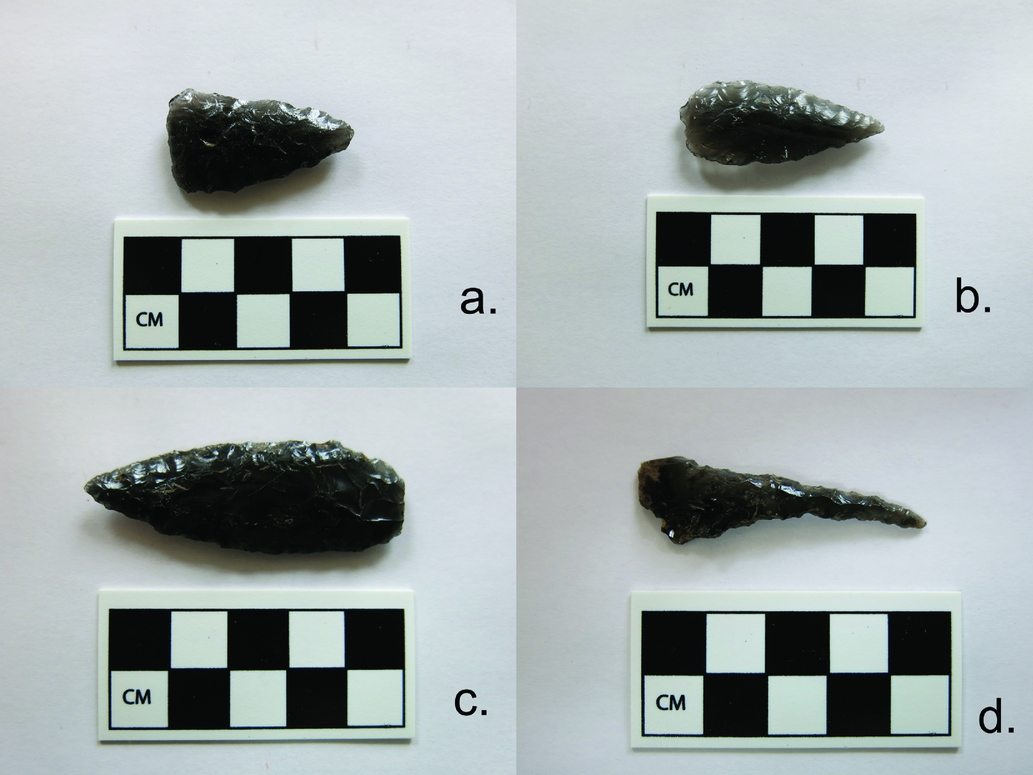
The vast majority of obsidian artifacts at Campanayuq Rumi consisted of flakes and shatter. Formal artifacts were rare at Campanayuq Rumi, consisting of unifacial tools such as scrapers, perforators, and drills, as well as bifaces, and projectile points (Figure 6). In addition, there is a great deal of lithic material, including primary flakes with cortex, that point to some lithic production in residential contexts. However, this will only be confirmed by a more detailed study of the lithic assemblage in the future.
Examples of obsidian implements from Campanayuq Rumi. a–c are biface projectile points; d is a drill.

pXRF Methodology and Sampling
The pXRF analysis presented in this paper was undertaken in August of 2014 at the UNSAAC-Yale International Center for the Study of Machu Picchu and Inca Culture in Cuzco, Peru. Obsidian artifacts from Campanayuq Rumi were analyzed using a Bruker Tracer Series III-SD pXRF spectrometer. The pXRF spectrometer used in this study was a prototype designed for application at high altitudes. Some of the previous attempts to use the standard production models of the Bruker pXRF spectrometer at high altitude failed due to an electrical discharge that damaged the X-ray tube.
All measurements with the pXRF were performed with an operating voltage of 40keV and current of 30 microamps. Measurement times were 60 seconds per sample. While other studies have employed longer measurement times (Craig et al. Reference Craig, Speakman, Popelka-Filcoff, Glascock, Robinson, Shackley and Aldenderfer2007; Rademaker et al. Reference Rademaker, Glascock, Kaiser, Gibson, Lux and Yates2013), the XRF that we used had a sufficiently high count rate that permitted us to reduce the counting time to 60 seconds and still obtain reliable data. The XRF was calibrated for analysis of obsidian by using the University of Missouri Research Reactor (MURR) suite of 40 obsidian source specimens and their associated concentration data (Glascock and Ferguson Reference Glascock and Ferguson2012). The elements for which the concentrations could be determined in obsidian include Mn, Fe, Zn, Ga, Rb, Sr, Y, Zr, Nb, and Th.
Obsidian Sample from Campanayuq Rumi
The sample analyzed in this study consisted of 370 obsidian artifacts. As mentioned earlier in this paper, the understanding of obsidian exchange and its changing relationship to larger interaction spheres requires a diachronic perspective. For this reason, obsidian was sampled from Pre-Platform, Campanayuq I, and Campanayuq II contexts. Obsidian was selected by site sector, including samples from the monumental/ceremonial core, and from residential sectors located to the north and south of the temple core. Obsidian also was taken from a circular structure in the South Sector that includes a number of deep pits that were used for the placement of various types of offerings (Matsumoto et al. Reference Matsumoto, Nesbitt, Cavero and Mendoza2016). Eleven artifacts were sampled from the Pre-Platform Phase, 93 from Campanayuq I Phase and 266 from Campanayuq II Phase contexts. Artifacts consisted of debitage including flakes (n = 289), shatter (n = 49), and cores (n = 6); and complete or semicomplete tools such as projectile points (n = 24), scrapers (n = 1), and drills (n = 1).
Results of the pXRF Analysis
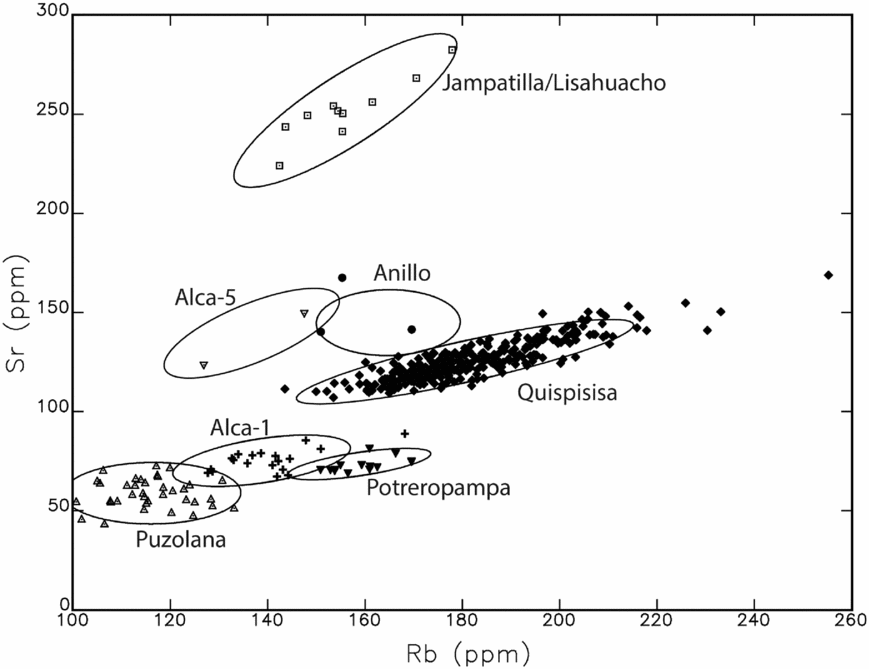
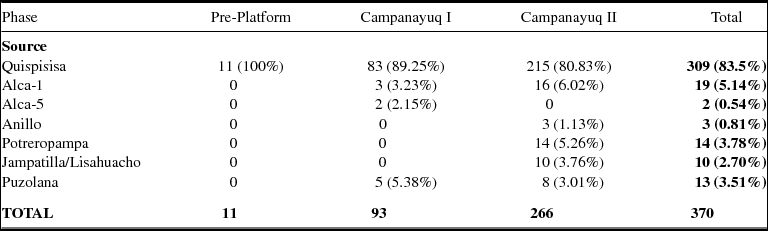
Obsidian at Campanayuq Rumi came from at least six, and perhaps seven, sources including Quispisisa, Potreropampa, Anillo, Alca, Puzolana, and Jampatilla and/or Lisahuacho (Figure 7). Of particular significance was the dominance of obsidian from the Quispisisa source, which comprised just under 84% (n = 309) of the total sample from all three phases of occupation (Table 2; see also Supplemental Table 1).
Bivariate scatterplot of rubidium (Rb) versus strontium (Sr) for obsidian artifacts from Campanayuq compared to sources in Peru. Sources are displayed as 90% confidence ellipses.

Obsidian Counts Overall by Phase (n = 370).

The Pre-Platform Phase (ca. 1100–950 BC)
Though the sample from the Pre-Platform Phase is quite small (n = 11), it nonetheless provides important insight into obsidian use at Campanayuq Rumi prior to its transformation into a large civic-ceremonial center. All 11 obsidian artifacts come from the Quispisisa quarries located 52 km to the west of Campanayuq Rumi. These data therefore suggest that from the time of its foundation in the second millennium BC, the population of Campanayuq Rumi was provisioned with high-quality Quispisisa obsidian.
Campanayuq I Phase (950 BC–700 BC)
The sources of obsidian artifacts changed during the Campanayuq I Phase. Quispisisa obsidian continued to dominate, making up close to 90% (n = 83) of the total sample (n = 93). Nevertheless, obsidian from other quarries appears, albeit in low quantities.
Over 5% (n = 5) of the artifacts come from Puzolana, a diffuse source that consists of volcanic deposits containing relatively small nodules in comparison with obsidian from the Quispisisa source region. Two localities with nodules of sufficient size to produce tools are known; one location is situated just to the south of the city of Ayacucho, approximately 60 km to the north of Campanayuq Rumi (Burger and Glascock Reference Burger and Glascock2000b), and the second location, Arco Punco, is just over 8 km to the southeast of Campanayuq Rumi. Arco Punco has nodules measuring 5–7 cm in diameter, which is adequate for fabricating usable flakes. Given its proximity to Campanayuq Rumi, we hypothesize that the Puzolana artifacts were probably obtained from Arco Punco rather than the source situated near the city of Ayacucho. Because of the proximity of Arco Punco, it is noteworthy that the exploitation of Puzolana obsidian was so rare at Campanayuq Rumi.
More surprisingly, low amounts of obsidian from the Alca source (n = 5) appear. Situated in the headwaters of the Cotahuasi River and more than 200 km to the south of Campanayuq Rumi, Alca is a large obsidian deposit. Research at Alca has shown the obsidian from this locality to be geochemically complex, consisting of six distinct subsources distributed over an area of at least 330 km² (Rademaker et al. Reference Rademaker, Glascock, Kaiser, Gibson, Lux and Yates2013; see also Burger, Asaro, Trawick, and Stross Reference Burger, Asaro, Trawick and Stross1998; Jennings and Glascock Reference Jennings and Glascock2002). At Campanayuq Rumi, obsidian comes from the Alca-1 (n = 3) and Alca-5 (n = 2) subsources.
Campanayuq II Phase (700–450 BC)
The Campanayuq II Phase is marked by substantial diversification of obsidian procurement at Campanayuq Rumi. Though obsidian from the Quispisisa source still makes up the vast majority of the assemblage, it comprises a lower proportion (just under 81%: n = 215) of the assemblage than in the Campanayuq I Phase. There is likewise a slight increase in obsidian coming from the Alca source discussed earlier (6%: n = 16).
It is also during the Campanayuq II Phase that obsidian from three or possibly four new sources appears. Five percent of the obsidian sample comes from Potreropampa, located in the southwest part of the Department of Apurímac, near the town of Chalhuanca, and 104 km to the southeast of Campanayuq Rumi (Burger, Fajardo Rios, and Glascock Reference Burger, Rios and Glascock2006). An additional 4% of the obsidian comes from either Jampatilla or Lisahuacho, which are 62 km and 102 km to the south of Campanayuq Rumi, respectively (e.g., Burger, Schreiber, Glascock, and Ccencho Reference Burger, Schreiber, Glascock and Ccencho1998). The pXRF cannot discriminate between the Jampatilla and Lisahuacho sources, but this uncertainty can be resolved in the future using instrumental neutron activation analysis or a more permanent, elaborate XRF facility.
Finally, 1% of the sample comes from the Anillo source. This source is located in the headwaters of Acari, relatively close to the Alca quarries, more than 200 km from Campanayuq Rumi (Tripcevich Reference Tripcevich, Capriles and Tripcevich2016:213; Tripcevich and Contreras Reference Tripcevich, Contreras, Tripcevich and Vaughn2013:30). Thus far, Campanayuq Rumi is the only known archaeological site with artifactual materials from this source. Apparently it was not an important locality for obsidian procurement, at least during the late Initial Period and Early Horizon.
Discussion
Diachronic Perspectives on Obsidian Use at Campanayuq Rumi
Examination of obsidian sourcing from Campanayuq Rumi shows diachronic changes in obsidian consumption. When taken together with other evidence, changes in obsidian consumption can help shed light on the changing identities that characterize the first half of the first millennium BC and show how Campanayuq Rumi became incorporated into a much wider interaction sphere associated with the expansion of Chavín religious ideology.
While the data from the Pre-Platform Phase are limited, they are significant in revealing that from its inception, Campanayuq Rumi, even as a village-level settlement, had a special connection with Quispisisa. Further, it is interesting to note that obsidian was not commonly distributed outside of the south-central highlands during the second millennium BC. The limited circulation of obsidian seems to reflect a pattern of local distribution observed at other contemporary south-central highland archaeological sites (Kellett et al. Reference Kellett, Golitko and Bauer2013).
In the Campanayuq I Phase, Quispisisa continued to be the predominant exploited source of obsidian, but small proportions of obsidian from other sources appear for the first time. Among these are local sources such as Puzolana, as well as obsidian from the distant Alca source. The presence of Alca obsidian indicates that Campanayuq Rumi was involved in a wider interaction sphere situated in the south-central highlands. At the same time, obsidian from Lisahuacho and Potreropampa are absent at Campanayuq Rumi at this time. This pattern suggests that obsidian was principally exchanged with local trading partners in the south-central highlands. For instance, recent obsidian characterization studies suggest that contemporary settlements in the Andahuaylas region, such as Waywaka (Grossman Reference Grossman1972, Reference Grossman1983), obtained obsidian from nearby sources such as Potreropampa and Jampatilla, with lesser quantities from Quispisisa (Burger, Schreiber, Glascock, and Ccencho Reference Burger, Schreiber, Glascock and Ccencho1998; Burger, Fajardo Rios, and Glascock Reference Burger, Rios and Glascock2006:112; Kellett et al. Reference Kellett, Golitko and Bauer2013).
The alterations in obsidian procurement in the Campanayuq I Phase correspond with the transformation of Campanayuq Rumi into a large ceremonial center. Though Campanayuq Rumi was related to Chavín de Huántar during this phase, there appears to be little evidence for the high-volume exchange of obsidian outside of the south-central highlands. As mentioned earlier, obsidian is a rare commodity in the Urabarriu Phase at Chavín de Huántar. Furthermore, there is no obsidian found in other contemporary northern highland centers such as Kuntur Wasi and Ingatambo during the late Initial Period (Sakai and Shimizu Reference Sakai, Shimizu and Kato2002; Yamamoto Reference Yamamoto2014).
It is notable that during the Campanayuq I Phase there is an increase in the number of sources represented in the obsidian assemblage. Local Puzolana obsidian occurs in low percentages; this shows that this material, though located in close proximity to Campanayuq Rumi, was eschewed as an important location to obtain obsidian. This is probably a result of the relatively small size of the nodules that were available at any of the different Puzolana source areas (Burger, Bencic, and Glascock Reference Burger, Bencic and Glascock2016).
Despite the small quantities of obsidian from minor sources, Quispisisa obsidian dominates, pointing to continuity in the close relationship between Campanayuq Rumi and Quispisisa. We argue that in the Campanayuq I Phase, Campanayuq Rumi became an agent in pooling obsidian and exchanging it with other southern trading partners in the upper valleys of the south coast and other contemporary settlements in Cotahuasi, as well as Andahuaylas and Apurímac.
These conclusions are supported by other lines of archaeological evidence. Comparative analysis of the ceramic styles of the Campanayuq I Phase show that the pottery assemblage shared stylistic affinities primarily with contemporary assemblages throughout the south-central and southern highlands, and to some extent the south coast (Matsumoto Reference Matsumoto, Burger, Seki and Salazar2018a). Thus, there is an emerging picture that throughout the Campanayuq I Phase, Campanayuq Rumi appears to have been one of the major centers within an interaction sphere that was associated with the south-central highlands.
Campanayuq Rumi during the Early Horizon
Though Quispisisa remains the most important source, artifacts from as many as six additional obsidian sources were used during the Campanayuq II Phase. It is worth stressing that the diversity of obsidian at Campanayuq Rumi is greater than any contemporary center of the Early Horizon, including Chavín de Huántar, which has obsidian from four sources (Quispisisa, Alca, Potreropampa, and Lisahuacho; see Burger et al. Reference Burger, Asaro, Michel and Burger1984; Burger, Lau, Ponte, and Glascock Reference Burger, Lau, Ponte, Glascock, Herrera, Orsini and Lane2006; Contreras and Nado Reference Contreras, Nado, Peterson and Dudgeon2018).
The diversification of obsidian at Campanayuq Rumi serves as a proxy for open networks of interaction during the first millennium BC. Obsidian from distant sources such as Alca or Anillo, which came to Campanayuq Rumi in small quantities, can be interpreted as indicators for ephemeral interactions in which outsiders visited Campanayuq Rumi as pilgrims or traders, thus producing a cosmopolitan atmosphere radically different from that of the Pre-Platform village.
This argument is strengthened by other lines of archaeological evidence. Matsumoto (Reference Matsumoto2010, Reference Matsumoto, Burger, Seki and Salazar2018a, Reference Matsumoto2018b; Matsumoto and Cavero Palomino Reference Matsumoto and Palomino2010) observed that during the Campanayuq II Phase there was an influx of ceramic material that shows contact with more distant communities than in the Campanayuq I Phase. Pottery during this time includes the sudden appearance of Paracas-related assemblages from the south coast of Peru. At the same time that Paracas pottery appears at Campanayuq Rumi, there is a corresponding influx of obsidian at Early Horizon Paracas settlements (DeLeonardis and Glascock Reference DeLeonardis and Glascock2013; see also Burger and Asaro Reference Burger and Asaro1977), suggesting exchange relationships between these two regions. Equally significant is the appearance of pottery styles with iconographic motifs that are clearly linked to the Janabarriu Phase of Chavín de Huántar (Burger Reference Burger1984; Matsumoto Reference Matsumoto2010; Matsumoto and Cavero Palomino Reference Matsumoto and Palomino2010). Taken together, the opening up of interaction networks reflects how Campanayuq Rumi, and parts of the south-central highlands more generally, became embedded within the Chavín Interaction Sphere during the early first millennium BC.
While we stress the importance that the diversity of sources has for understanding changing interaction patterns, it is worth pointing out the information we can infer from sources absent from the assemblage. For example, the sample from Campanayuq Rumi does not contain any obsidian from the Chivay source, which is located in the headwaters of the Colca Valley in the Department of Arequipa, some 340 km to the southeast of Campanayuq Rumi (Burger, Asaro, Stross, and Salas Reference Burger, Asaro, Stross and Salas1998:210; Tripcevich and MacKay Reference Tripcevich and MacKay2011). Research indicates that during the Early Horizon, Chivay obsidian was occasionally used at sites in the Cuzco region and much more heavily consumed at sites such as Qaluyu and Chiripa near Lake Titicaca (Burger, Asaro, Stross, and Salas Reference Burger, Asaro, Stross and Salas1998:210; Burger et al. Reference Burger, Chávez and Chávez2000; Tripcevich Reference Tripcevich2007:229, Figure 3–12). The absence of Chivay obsidian therefore points to a southern boundary of interaction during the Early Horizon, in which Campanayuq Rumi was part of an interaction sphere oriented toward the south-central and north-central highlands, rather than the southern highland regions of Cuzco or Titicaca. Conversely, sites in the southern highlands did not exploit Quispisisa obsidian, supporting the argument that this region was isolated from the interaction spheres to the north during the Early Horizon (Burger et al. Reference Burger, Chávez and Chávez2000:304).
Campanayuq Rumi and the Chavín Interaction Sphere
As discussed earlier, there is a dramatic increase in obsidian at Chavín de Huántar in the Janabarriu Phase assemblage, and obsidian tools were an important component of the crafting economy. This demand for obsidian was linked with a number of socioeconomic changes at Chavín de Huántar, including marked growth of the urban settlement, the presence of craft specialists, and emergence of an elite class (Burger Reference Burger1984, Reference Burger1992; Sayre Reference Sayre2010).
We argue that by the Campanayuq II Phase, Campanayuq Rumi developed into an important “gateway community” (Hirth Reference Hirth1978) that served as a central redistributive point to provide a reliable flow of obsidian to Chavín de Huántar and other centers during the Early Horizon (Matsumoto Reference Matsumoto2010). Campanayuq Rumi was situated on an advantageous trade route that connected this site to the Quispisisa obsidian quarries (cf. Contreras Reference Contreras2011; Matsumoto Reference Matsumoto2010).
Demand for Quispisisa obsidian therefore necessitated intensified connections with the south-central highlands. Given the close connection with Quispisisa, and its role as the preeminent Early Horizon center of the south-central highlands, we posit that Campanayuq Rumi directed the long-distance trade of obsidian to centers such as Chavín de Huántar in the north. This argument is based on several lines of evidence.
First, one of the unique characteristics of Campanayuq Rumi is its imitation of the architectures and layout of Chavín de Huántar. Similarities between the two sites include a U-shaped plan and the incorporation of galleries and a sunken circular plaza into the monumental architecture. In contrast, many of the other highland civic-ceremonial centers involved in the Chavín Interaction Sphere, such as Atalla, Kuntur Wasi, and Pacopampa, have architectural characteristics that are quite distinct from Chavín de Huántar. The fact that Campanayuq Rumi so clearly emulates Chavín de Huántar indicates a unique relationship between these two centers. One of the reasons for this close relationship was rooted in Campanayuq Rumi's access to high-quality Quispisisa obsidian.
The broader pattern of obsidian distribution in the central highlands in the region situated between Campanayuq Rumi and Chavín de Huántar is a second line of evidence suggesting direct trade between the two regions. For instance, Burger (Reference Burger and Rick1980) argued that the puna grasslands of Junín formed a conduit for camelid caravans transporting obsidian from the southern highlands to the north. Quispisisa obsidian artifacts were found in low quantities at remote cave sites in this region, suggesting that caravans passed through these areas, resulting in the exchange of obsidian as they moved goods to the north.
A possible exception to this pattern is the civic-ceremonial center of Atalla near Huancavelica, where abundant obsidian was reported on the surface (Burger and Matos Reference Burger and Matos2002). Geochemical analysis of two flakes demonstrates that they came from Quispisisa (Burger and Matos Reference Burger and Matos2002:169). Recent excavations at Atalla by Michelle Young have recovered large quantities of artifactual obsidian in Early Horizon contexts at the site (Michelle Young, personal communication 2017). It is possible that this obsidian arrived from traders from Campanayuq Rumi, who used settlements such as Atalla as stopover points on the way to Chavín de Huántar. Atalla itself was an important node in the Chavín Interaction Sphere and its occupants apparently were consumers of the high-quality volcanic glass. We therefore hypothesize that the spatial patterns of obsidian utilization speak to a probable direct trading relationship between Campanayuq Rumi and Chavín de Huántar, rather than down-the-line exchange. For instance, at Chavín de Huántar we do not see the kinds of fall-off in obsidian quantity that would suggest down-the-line trade (Renfrew Reference Renfrew, Sabloff and Lamberg-Karlovsky1975). Obsidian is found in high quantity at Chavín de Huántar, and was distributed widely in the temple core and the residential occupation (Burger Reference Burger1984, Reference Burger, Hirth and Pillsbury2013; Burger, Lau, Ponte, and Glascock Reference Burger, Lau, Ponte, Glascock, Herrera, Orsini and Lane2006; Contreras and Nado Reference Contreras, Nado, Peterson and Dudgeon2018). This contrasts with the low numbers of obsidian found at coastal and highland centers situated to the north of Chavín de Huántar, such as Cerro Blanco, Kuntur Wasi, and Pacopampa (Burger and Glascock Reference Burger and Glascock2009). The paucity of obsidian at these centers would appear to demonstrate the fall-off patterns more indicative of down-the-line exchange (Renfrew Reference Renfrew, Sabloff and Lamberg-Karlovsky1975).
Long-distance movement of obsidian from the south-central highlands was facilitated by llama caravans. At Campanayuq Rumi, faunal analysis shows that domesticated llamas were a critical component of the economy since Campanayuq I times (Matsumoto Reference Matsumoto2010:344–353). In the central highlands, llamas were used as pack animals for the transportation of bulk goods such as obsidian during the late Initial Period and Early Horizon (Browman Reference Browman1975; Tripcevich Reference Burger2010). As pack animals, llamas can carry between 25 and 40 kilograms, depending on the length of the trip (Flores-Ochoa Reference Flores-Ochoa1979:95). The distance between Campanayuq Rumi and the Quispisisa quarries at Cerro Jichja Parco is roughly 60 km. If llama caravans traveled between 15 and 20 kilometers per 10-hour day (Flores-Ochoa Reference Flores-Ochoa1979:95; see also Tripcevich Reference Tripcevich2007), then a round trip would take somewhere between 8 and 12 days along the high puna routes that link the two localities. Caravan expeditions between Campanayuq Rumi and Chavín de Huántar consisted of an approximately 600-kilometer journey (Contreras Reference Contreras2011:386, Table 2) which would have been a round-trip travel time of at least 30 days.
The type of trade that we describe in this paper raises the question of how the movement of goods and people over such long distances was structured. Burger (Reference Burger and Keatinge1988) argued that much of the Chavín expansion could be explained through the widespread acceptance of a common religious ideology. Shared religion aided in the rapid diffusion of exotic goods and people from distant localities (Burger Reference Burger and Keatinge1988, Reference Burger and Rice1993, Reference Burger, Silverman and Isbell2008, Reference Burger2012, Reference Burger, Hirth and Pillsbury2013). Use of religious mechanisms in long-distance trade has been documented in other parts of the world. Among the precolonial Igbo of West Africa, traders were known to travel significant distances under the protection of powerful oracles (Northrup Reference Northrup1978). Given the architectural and iconographic evidence, Campanayuq Rumi and other highland centers may have served as branch shrines (Burger Reference Burger and Keatinge1988; Matsumoto Reference Matsumoto2010). Furthermore, long-distance exchange may have been aided by common language. Recent research suggests that the Chavín Interaction Sphere partly drove the expansion of Aymara, which may have served as a prestigious and/or religious lingua franca spoken over a wide swath of highland Peru during the Early Horizon (cf. Burger Reference Burger2012; Heggarty and Beresford-Jones Reference Heggarty and Beresford-Jones2010; Hornborg Reference Hornborg2014).
Conclusions
This paper shows the value of geochemical characterization studies of large assemblages of obsidian and analyzing the results from a diachronic perspective (e.g., Hirth et al. Reference Hirth, Cyphers, Cobean, De León and Glascock2013). By focusing on a single site we have been able to demonstrate how Campanayuq Rumi shifted from involvement in a local interaction sphere to an interregional network centered in the north-central highlands.
In the Pre-Platform and Campanayuq I Phases, Campanayuq Rumi obtained obsidian almost exclusively from the Quispisisa obsidian source. We believe that the preponderance of obsidian from this source is a proxy for the close ties Campanayuq Rumi had with the Quispisisa locality. During the Campanayuq I Phase, Campanayuq Rumi appears to have been one of the largest civic-ceremonial centers in the south-central highlands. The access that Campanayuq Rumi had to this high-quality obsidian was a factor in the site's preeminence in a localized interaction sphere centered in the south-central highlands during the late Initial Period.
It is in the subsequent Campanayuq II Phase that we witness a major change in obsidian use. This period is notable for the diverse obsidian sources present at Campanayuq Rumi. The presence of six minor sources serves as a proxy for visitors who came to this large civic-ceremonial center on pilgrimages or for other purposes. Further, these patterns also point to an expansion of the interaction networks that characterize the Chavín Interaction Sphere. As part of the widening interaction spheres of this time period, the ties between Campanayuq Rumi and Chavín de Huántar were particularly pronounced. As Chavín de Huántar's economy was growing during the Janabarriu Phase and social stratification was increasing, demand for exotics from the south, including obsidian, cinnabar, and sodalite, strengthened preexisting connections with communities in the south-central highland region. We posit that Campanayuq Rumi was critical to supplying Chavín de Huántar with the high-quality obsidian that formed a crucial component of its ritual and political economy.
These connections stimulated important socioeconomic changes at Campanayuq Rumi, and the south-central highlands more broadly. While the relationship between Campanayuq Rumi and Chavín de Huántar was significant, obsidian analysis likewise confirms the continued and broadened importance of Campanayuq Rumi as part of a regional interaction sphere centered within the south-central highlands, one that included portions of Arequipa, Apurímac, and the Peruvian south coast. The existence of a regional interaction sphere in south-central Peru during the Early Horizon is paralleled by a regional interaction sphere in northern Peru that incorporated portions of highland Cajamarca and the north coast. These regional interaction spheres articulated with each other to constitute the pan-regional Chavín Interaction Sphere. They can be viewed as constituting two of its best-documented components.
Furthermore, our conclusions should prompt a rethinking of regions once thought peripheral to developments in the north-central highlands of Peru during the late Initial Period and Early Horizon and a better appreciation of the role of the prehistoric communities of the south-central highlands in producing and transporting the exotic raw materials that were the hallmark of the Chavín Interaction Sphere. At the same time, the transformative power of the Chavín cult and the economic forces associated with it must be taken into account in order to understand the socioeconomic changes that occurred at Campanayuq Rumi during the first millennium BC.
Acknowledgements
The excavations at Campanayuq Rumi were financed by the Coe Fund, Albers Fund, and Williams Fund of Yale University, The Roger Thayer Stone Center for Latin American Studies, Tulane University, JSPS KAKENHI Grant-in-Aid for Young Scientists (B) 25770282 (2013), and JSPS KAKENHI Grant-in-Aid for Young Scientists (A)15H05383 (2014–). The pXRF analysis in Cuzco was carried out as part of the archaeometry workshop in the Casa Concha with the financial support of Yale University as part of the ongoing educational exchange program between the archaeology programs of Yale and UNSAAC. Costs for analysis of the artifacts were also covered by a National Science Foundation grant (1415403) to the Archaeometry Lab at the University of Missouri Research Reactor. Special thanks to Edison Mendoza Martinez, Ruben Cisneros Cardenas, Jhon Rene Huamani Diaz, Hilda Mirtha Bellido Huaña, Jorge Ronald Sulca Flores, Maribel Gutierrez Solier, and Roy Gutiérrez Silva for working in the excavations at Campanayuq Rumi. Our deepest appreciation goes to Daniel Contreras, Lucy Salazar, Yuji Seki, Kurt Rademaker, Christopher Rodning, Marcello Canuto, Tatsuya Murakami, Michelle Young, Alina Alvarez Larraín, Bebel Ibarra, Rachel Horowitz, Ryan Hechler, and Rachel Johnson for providing us with valuable suggestions for shaping the ideas presented in this article.
Data Availability Statement
The materials excavated and collected by the Proyecto de Investigaciones Arqueológicas, Campanayuq Rumi, Vilcashuaman-Ayacucho 2007–2008 and 2013 are curated in the facilities of the Ministerio de Cultura in Ayacucho, Peru. All detailed scientific data are recorded in reports in possession of the authors, and they are available by request to Yuichi Matsumoto (ymatsu@human.kj.yamagata-u.ac.jp).
Supplemental Materials
For supplementary material accompanying this paper, visit https://doi.org/10.1017/laq.2017.64
Supplemental Table 1. Obsidian samples from Campanayuq Rumi.