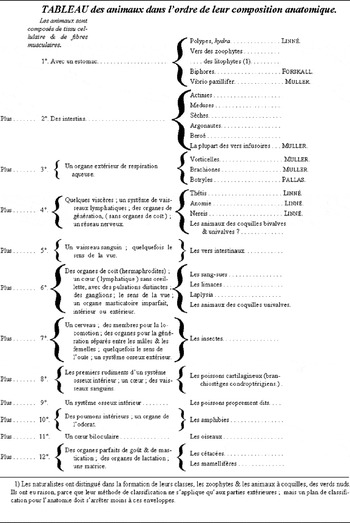
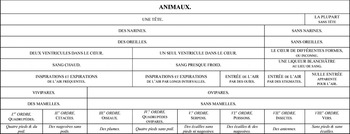
The spectacular development of comparative anatomy after 1800, particularly in France, Germany, and Great Britain, is a rather well-known feature in the history of the life sciences. From a conceptual standpoint, some major concepts of animal morphology (homology, unity of type. . .) that emerged in the early nineteenth century are generally considered to be among the conditions for the success of evolutionary theory after 1859 (see e.g. Russell Reference Russell1916; Coleman Reference Coleman1971; Balan Reference Balan1979; Nyhart 1995; Richards Reference Richards2002; Schmitt Reference Schmitt2004). A reorganization of the biological sciences took place concomitantly, so that comparative anatomy won a central position at the meeting point of many fields including classification, palaeontology, embryology, and physiology. There were also transformations on the institutional level: for example, chairs of comparative anatomy that did not exist before the late eighteenth century were created at most European scientific institutions. Furthermore, the first part of the nineteenth century was dominated by heroic figures such as Cuvier, Geoffroy Saint-Hilaire, Goethe, von Baer, and Owen. The famous debate between Cuvier and Geoffroy Saint-Hilaire in 1830 concerned comparative anatomy: the fact that a wide audience followed it closely and that it had a variety of non-scientific (philosophical, political, social. . .) meanings shows how important comparative anatomy had become at that time (Appel Reference Appel1987).
The previous period in the history of comparative anatomy pales in comparison with this golden age. Natural history was the main field cultivated during the Enlightenment among the life sciences. We might get the impression that a rupture occurred between Buffon's death in 1788 and Cuvier's nomination to the Muséum National d'Histoire naturelle in 1795 (e.g. Foucault Reference Foucault1966; Jacob Reference Jacob1970). This would be all the more plausible since many French scientists precisely at that time wanted to break with the Buffonian tradition of natural history (i.e. anti-Linnaeism, popularization, ornaments of style, etc.) and radically reform this field by making it more rigorous and more professional, particularly since the emergence of comparative anatomy appeared to be one of the main elements of this reform (Gillispie Reference Gillispie1980 and Reference Gillispie2004; Spary Reference Spary2000; Corsi Reference Corsi2001, especially chap. 1).
Nevertheless, Cuvierian comparative anatomy did not appear ex nihilo, and we should not ignore its earlier history, in particular the role played by two comparative anatomists in France in the eighteenth century, Louis-Jean-Marie Daubenton (1716–1800) and Félix Vicq d'Azyr (1748–1794). The latter was a major actor in the transformations of science from the 1770s to the 1790s. He tried to do with anatomy, and especially comparative anatomy, what Buffon had done with natural history some decades earlier, i.e. radically reorganize the biological sciences around the field and give it a pivotal role. In this paper, I suggest that in spite of the apparent diversity of his work, this program was the basis of his whole career and his professional and social success. He used anatomy in order to promote himself, and, in turn, he did everything he could to promote anatomy as a core science at the conceptual as well as the political and institutional level. He had to modify his strategy somewhat when the Revolution broke out, but his project remained fundamentally the same (section 1). He tried to subordinate all bio-medical sciences to anatomy: he claimed that anatomy was the basis of all physiological knowledge (section 2), and he showed that the comparative approach in anatomy could lead to a better understanding of the diversity of life and the laws of organization (section 3), as well as a new classification of animals (section 4). He also proposed a reform of the method and vocabulary of comparative anatomy in order to make this field more rigorous and professional (section 5). His attempt could appear as a model for younger scientists after 1795, and I discuss his possible influence on some figures such as Cuvier.
1. Promoting a Field and Promoting Oneself: Vicq d'Azyr's Strategy
Vicq d'Azyr's career is a model of success under the Old Regime, if we consider that he came from a relatively modest background.Footnote 1 He surely benefitted from a general context which favored sciences as a way to social advancement (see e.g. Gillispie Reference Gillispie1980 and Reference Gillispie2004). But in his case it is notable that the science he used to promote himself as early as 1773 was anatomy, more precisely comparative anatomy, even though other fields were considerably more fashionable at that time. In particular, natural history had developed considerably and held a key position in French culture and society (see e.g. Jardine, Secord, and Spary Reference Jardine, Secord and Spary1996; Spary Reference Spary2000). Spary has analyzed the social, political, and institutional stakes of natural history in the eighteenth century. Buffon's career is the most typical example of this development, with a close interconnection of scientific and social aspects. He tried to wholly reorganize the sciences of nature and to bring natural history (instead of physics) to the center of the field. In order to do that, he had to break with the Baconian classification of sciences and make natural history a science that looked for the causes of things and for the general laws of nature, whereas it had generally been considered a purely descriptive science, in contrast with physics (see Buffon and Daubenton Reference Buffon and Daubenton1749–1767, 1:1–62, and my introduction in Buffon Reference Buffon, Schmitt and Crémière2007-). Buffon included within the scope of natural history questions that had been traditionally dealt with by physics or natural philosophy (geology, cosmology. . .), so that almost every object or phenomenon in nature could be legitimately studied by naturalists. He promoted natural history in the whole society, in particular by being careful about his style, and he developed an ambitious and effective editorial program (including rich illustrations). Thus he became a first-rank actor in the République des Lettres and entered the Académie Française in 1753. He relied on the support of an important institution, the Jardin du Roi, of which he was the intendant from 1739 to his death in 1788. From there, he set up an effective network of correspondents in France and abroad, which provided him with information (texts or images) and objects for the royal collection. He therefore gave natural history unprecedented importance among scientists as well as gentlemen and, in turn, natural history made him one of the most famous scientists and writers of his time, and raised his status in the Kingdom, when Louis XV made him Comte de Buffon in 1772. Of course, Buffon's case was an extreme one, but for ambitious young men of the 1770s, he showed that it was possible to attain the most prestigious positions in society by doing science.
Vicq d'Azyr's career shows many similarities to Buffon's, but one important difference is that he chose anatomy instead of natural history. The main reason for this is probably his familial origin, since his father was a physician in Valognes and he was pushed to take up a career in medicine.Footnote 2 Thus, by contrast with Buffon, whose medical training was very short if it existed at all, and who was initially a mathematician, Vicq d'Azyr built his own project for science as a physician, and around a field traditionally controlled by physicians (or surgeons). He showed an early interest in anatomy, since, among the dissertations he had to defend, one was devoted to the mechanical absorption of shocks by the bones of the head (Vicq d'Azyr Reference Vicq d'Azyr1772).Footnote 3 But as early as 1773 he decided not to content himself with human anatomy but to turn towards comparative anatomy. This choice was not quite natural for a physician, and we do not know exactly why he took it. According to the biographers, he attended courses at the Jardin du Roi around 1770; perhaps he met Daubenton and was influenced by him at that time.
In the 1770s, comparative anatomy was not a prestigious field. Like natural history and unlike human anatomy, it had nearly no institutional existence; furthermore, it was not fashionable and could not be easily practiced by amateurs. Indeed, it was only a marginal activity for some physicians and surgeons. A tradition of studies on animal anatomy had been perpetuated at the Académie des Sciences since the late seventeenth century with the works of Perrault and Duverney, but if we look at the Mémoires de Mathématique et de Physique (the Academy's official publication) after 1750, we notice that very few papers were devoted to this kind of study.Footnote 4 Comparative anatomy also survived in the shadow of natural history and human anatomy at the Jardin du Roi. But the professors of anatomy (Antoine Petit from 1769 to 1778, Antoine Portal after 1778) mainly dealt with human anatomy.
In fact, the most important figure in the field of comparative anatomy in 1770 was Daubenton, the garde et démonstrateur at the Jardin du Roi, who was famous, among other things, because he had been collaborating on Buffon's Histoire naturelle, générale et particulière since the early 1740s and had written all the anatomical parts in the volumes concerning quadrupeds (Buffon and Daubenton Reference Buffon and Daubenton1749–1767).Footnote 5 This contribution was considerable since it represented more than half the text of volumes 4 to 15, but it was not considered as prestigious as Buffon's texts. Although Daubenton was initially convinced that he would also participate in contributing to the next part of the work, the Histoire naturelle des oiseaux (Buffon Reference Buffon1770–1783),Footnote 6 Buffon decided not to include anatomical chapters in these new volumes, so that anatomy was definitively excluded from the Histoire naturelle. Afterwards, Daubenton dealt with a variety of subjects, and when he became professor at the Muséum National d'Histoire naturelle in 1793, he was given the chair of mineralogy. It is not clear why Buffon and Daubenton's collaboration ended, but the most probable reason is that anatomical chapters made the books too big and too expensive, and would therefore attract a limited audience. In 1769 Buffon authorized the publication of an edition of the Histoire naturelle, générale et particulière without Daubenton's contributions, which shows that comparative anatomy was by no means a major element in his program.
Furthermore, from a conceptual standpoint, the scope of comparative anatomy remained vague. Although some authors (including Daubenton) recommended a real comparative study of man and animals, every work on the anatomy of a single animal could be referred to as anatomie comparée (see e.g. Tarin Reference Tarin1751, 416). Thus, comparative anatomy was a relatively neglected field in many respects; however, it offered wide prospects since everything remained to be done on the conceptual or institutional level. It was potentially a link between natural history, which was so successful, and medicine, Vicq d'Azyr's initial field, so that it could become the core of his ambitious program of reorganizing the biological and medical sciences.
It is not clear whether Vicq d'Azyr chose this program as a result of Daubenton's influence, or if he chose Daubenton as his main patron because he had already decided to work on comparative anatomy, but both were obviously connected. Indeed, under the Old Regime the patronage system spread throughout French society, and an important condition of success for an ambitious young man was to choose good patrons. In many respects Daubenton was a good choice. He was originally a physician and an anatomist, so Vicq d'Azyr had probably more natural affinity with him than with pure naturalists. Furthermore, Daubenton held a strategic position in the Parisian scientific network. As a former collaborator to the Histoire naturelle, he was involved in Buffon's glory and was a key element in the Buffonian patronage system, even after 1767; but he also had connections with other groups, in particular with Linnaean circles (Duris Reference Duris1993). He was considered an affable man, a good and modest scientist, and had few enemies (fewer than Buffon), and was generally appreciated: he was surely less powerful than Buffon, but his support could prove to be more effective in certain circumstances.Footnote 7
Vicq d'Azyr probably came into contact with Daubenton very early, around 1770. He married Daubenton's niece, Zélie, in 1773, which anchored him in a complex familial and professional clan, connected with Buffon's family.Footnote 8 Unfortunately she died eighteen months after the marriage, and Vicq d'Azyr never remarried. But his bonds with Daubenton remained very close on the personal as well as the scientific level, and they exchanged favors. Indeed, on many occasions he showed his admiration and gratefulness towards Daubenton, whom he considered his model and his friend (Vicq d'Azyr Reference Vicq d'Azyr1778b, 516; Reference Vicq d'Azyr1786b, 17). He arranged things so that Daubenton was elected associé libre in the Société Royale de Médecine as early as April 1777, and he sometimes made observations with him (Vicq d'Azyr Reference Vicq d'Azyr1782b, 212). On a practical level, Daubenton was in charge of the natural history collections of the Jardin du Roi, and he gave Vicq d'Azyr access to some objects and provided him with animals for dissection (Vicq d'Azyr Reference Vicq d'Azyr1781a, 388; Reference Vicq d'Azyr1782a, 180; Reference Vicq d'Azyr1782b, 213; Reference Vicq d'Azyr1786b, 35 n. 1). Furthermore, Daubenton sent him unpublished works and information. In particular, he surely had accumulated considerable information on bird anatomy for the Histoire naturelle des oiseaux over a long period of time,Footnote 9 which he never published (see above), and he communicated at least a part of it to Vicq d'Azyr, as the latter wrote on several occasions (1776h, 620; 1778b, 493). This information was presented in tables that Vicq d'Azyr partly reproduced in the Encyclopédie méthodique (1792, lxxj, lxciii). He used these works, in particular, for his zoological classification (Vicq d'Azyr Reference Vicq d'Azyr1778b, 516; 1786b, 23; 1792, lxxiii, xcv).Footnote 10
Thus, this scientific relationship represents a key to the understanding, not only of Vicq d'Azyr's career, but of his scientific program. Daubenton's thought has been relatively neglected by historians. As early as the eighteenth century, many people considered him the humble collaborator of Buffon, a hard-working observer totally devoid of imagination and genius, excelling in descriptive work but incapable of general views (see e.g. Blainville Reference Blainville1845, 3:77). On the other hand, some people praised his scientific qualities: in the last decade of the century, when it became common to challenge Buffon's scientific value, to criticize his taste for systems and conjectures, and to see him as a good writer but a bad scientist, Daubenton appeared as the savior of natural history because of his exactness and sobriety (on Daubenton's reputation, see Loveland Reference Loveland2006, 467–471). So, in both cases, Daubenton's general ideas were mostly underestimated. But Vicq d'Azyr took them very seriously and acknowledged him as the founder of “comparative anatomy proper” (Vicq d'Azyr Reference Vicq d'Azyr1786b, 17).Footnote 11 Indeed, Daubenton's patronage was probably an important factor in the development (if not the formation) of Vicq d'Azyr's thought in comparative anatomy, of which Daubenton could appear as the leader in France, even though he was no longer working in this field. Vicq d'Azyr borrowed many ideas or themes of reflection from Daubenton in order to build a new science. In the following sections we shall analyze this construction of a new comparative anatomy, with new scope, methods, language, and concepts, but we will first look at some elements of the strategy Vicq d'Azyr used in order to promote this program, elements that have many similarities with Buffon's strategy for natural history.
Like Buffon, Vicq d'Azyr aimed at a wide audience and sought the recognition of the République des Lettres. He attached importance to styleFootnote 12 and was considered a remarkable writer.Footnote 13 As the permanent secretary of the Société Royale de Médecine, he had to write forty or so academic eulogies. Far from neglecting these obligations, he took advantage of them in order to develop his own ideas and to demonstrate his literary skill. This part of his work was particularly appreciated by contemporaries and represented, according to Moreau de la Sarthe, “one of the richest and most brilliant parts of the literary and philosophical history of the eighteenth century” (Moreau de la Sarthe Reference Moreau de la Sarthe1805, iv). More generally, in addition to his academic papers, he ambitiously pursued editorial activities. He published the first and only volume of an ambitious Traité d'anatomie et de physiologie, a beautiful work composed of text and illuminated plates, i.e. painted etchings (Vicq d'Azyr Reference Vicq d'Azyr1786b). This first volume was entirely devoted to the anatomy of the brain and included a long introduction on the scope and method of anatomy.Footnote 14 Such a luxurious book, dedicated to the King, not only had scientific importance, but also brought prestige to the study of anatomy. Vicq d'Azyr was also involved in one of the most ambitious encyclopaedic ventures ever undertaken, the Encyclopédie méthodique planned by the publisher Charles-Joseph Panckoucke (1736–1798) (see Braunrot and Hardesty Doig Reference Braunrot and Hardesty Doig1995; Blanckaert and Porret Reference Blanckaert and Porret2006). He was the driving force behind the first six volumes of the Médecine set, an extensive dictionary for which he composed many entries (Vicq d'Azyr Reference Vicq d'Azyr1787–1793). He also began the set on Systême anatomique, i.e. comparative anatomy, but he was able to publish only one volume (Vicq d'Azyr Reference Vicq d'Azyr1792), of which he was the sole author.Footnote 15 The fact that a whole part of the Encyclopédie méthodique was devoted to comparative anatomy was meaningful in itself for it showed that this field was acquiring an important position in the life sciences. All this editorial activity was effective since Vicq d'Azyr symbolically succeeded Buffon at the Académie Française in December 1788; on that occasion he delivered a subtle eulogy of his predecessor, where he praised Buffon's genius and style, but also expressed some criticism, so that he could appear favorable to other approaches (e.g. Linnaeism) without breaking with the Buffonian tradition (Vicq d'Azyr Reference Vicq d'Azyr1788b).
Like Buffon, Vicq d'Azyr made use of institutions to spread his ideas and enhance his position. The first institution in which he took an active interest was the Faculté de Médecine, where he was a student. As early as the holidays of 1773 he felt himself competent enough in anatomy to give a public course in the lecture hall, and this course was apparently very successful. According to biographers, his success aroused envy, so that he was not allowed to use the Faculty's rooms after the end of the holidays. Vicq d'Azyr continued to give lessons at home for a time, but the Faculty recalled him and gave him a position. He taught there for two years and perhaps followed a plan similar to the one he proposed later in the Encyclopédie méthodique.Footnote 16 But very early on he was also interested in the two major Parisian scientific institutions. He was not successful at the Jardin du Roi, despite the support and protection of Daubenton and of his professor in the Faculty, Antoine Petit (1722–1794), who also held the chair of anatomy at the Jardin. When Petit was about to retire, he chose him as a substitute in 1775, and he proposed to Buffon to name Vicq d'Azyr as his successor. But Buffon was forced to appoint Antoine Portal (1742–1832), who was supported by more powerful people including the minister the Duc de La Vrillère.Footnote 17 Vicq d'Azyr had more success at the Académie Royale des Sciences. In 1773 when he began to spit up blood (probably the first sign of a pulmonary tuberculosis), he spent time in Normandy for his convalescence and took the opportunity to study the anatomy of marine fishes. He wrote two papers which he sent to the Académie; they were published in the so-called Recueil des Savants étrangers (Vicq d'Azyr Reference Vicq d'Azyr1776e; 1776f). This first work in comparative anatomy, combined with the probable support of eminent figures in the Académie such as Daubenton, Laplace (who had been his classmate at the collège of Caen), and Joseph-Marie-François de Lassone (1717–1788), the first physician of King Louis XVI, earned him his election to the Académie in March 1774 as adjoint anatomiste, in place of Portal who became associé.Footnote 18 It is noteworthy that, unlike Buffon, he never neglected the Académie, even after becoming the permanent secretary of the Société Royale de Médecine, and he continued publishing papers on comparative anatomy in the Mémoires de Mathématique et de Physique (his contributions were almost the only ones in this field before Broussonet's election in 1785).
But above all, Vicq d'Azyr was the major actor in the creation of a new institution were he was quite powerful, namely, the Société Royale de Médecine. This project was initiated in autumn 1774, when he was commissioned to study and fight an epizooticFootnote 19 disease which had become rife in southwest France for several months. The minister Turgot asked the Académie des Sciences to send one of its members to solve the problem.Footnote 20 Vicq d'Azyr was chosen and left in November. He travelled in several provinces (in the Midi, then in Flanders, Picardy, Normandy, etc.) for two years, doing observations, looking for the causes of the disease and taking difficult measures (quarantine, systematic slaughtering. . .). He wrote a lot of short books of “observations,” “notices,” or “instructions” for the inhabitants of the infested areas (Vicq d'Azyr Reference Vicq d'Azyr1774c; Reference Vicq d'Azyr1774d; Reference Vicq d'Azyr1775a-Reference Vicq d'Azyri; Reference Vicq d'Azyr1776a; Reference Vicq d'Azyr1776b; this list is not exhaustive). He published these writings in a large volume when he returned to Paris (Vicq d'Azyr Reference Vicq d'Azyr1776c). These two years played a determining role in his life and work and enhanced his status in the Parisian medical and scientific world. He was clever at convincing the authorities that medical expertise would be useful to the state and that a special institution should be created in order to assist the government in the fight against epizootic diseases and, more generally, against every health problem concerning animals and humans. He suggested that a committee of physicians collect information with the help of a network of correspondents in all provinces and make decisions at the scale of the whole kingdom.Footnote 21 With Lassone's support, the Société Royale de Médecine by the Conseil d'État was created on 29 April 1776, and was registered in the Parlement of Paris on 1 September 1778. The Société Royale de Médecine would play a major part in the development of a policy of public health in France during the last decades of the eighteenth century. For Vicq d'Azyr, it was a wonderful way to spread his ideas on medicine and science. He became the permanent secretary of the new institution and, as such, edited the ten volumes of Histoire and Mémoire, on the model of the publications of the Académie des Sciences (Vicq d'Azyr Reference Vicq d'Azyr1779-An VI [1797/1798]).Footnote 22 In this journal, he could promote, for example, a connection between medicine and surgery, or between human and animal medicine; eulogies and book reviews were of prime importance in his strategy.
The creation of the Société Royale de Médecine was important for it built a network of correspondents in France and Europe on the model of naturalist networks such as the correspondents of the Jardin du Roi. The advantage of such a network was that it could be used not only to collect information and materials, but also to spread ideas, to get recognition, to involve a variety of actors (including amateurs, gentlemen. . .) in his project, and to develop patronage relationship. Vicq d'Azyr was particularly successful in that kind of lobbying activity. He was able to obtain the support of the Court, with which he had close connections. As physician of the Count of Artois, brother of the King, he became the first physician of Queen Marie-Antoinette in 1789, after Lassone's death. For the son of a humble Norman physician, it was the most brilliant career conceivable in France under the Old Regime. Of course the Revolution drastically changed everything, but he was able to adapt to the new conditions. Even if he remained faithful to the monarchy up to the end, he could appear to be progressive since he took a very active part in reflections on the reform of medicine, and he used the Société Royale de Médecine for that. In November 1790 the Société published a Nouveau plan de constitution pour la médecine en France the main author of which was probably Vicq d'Azyr himself (Vicq d'Azyr Reference Vicq d'Azyr1790).Footnote 23 He was not able to prevent the suppression of the Société in 1793, but he continued to involve himself in the reforms undertaken by the revolutionary authorities. He participated in the Commission temporaire des Arts and wrote a report on a method for writing inventories of the objects seized in the suppressed institutions (academies. . .) or in private collections (Vicq d'Azyr An II [Reference Vicq d'Azyr1793–1794]). In this text, it is noticeable that he was able to adopt a new rhetoric in order to promote his ideas.Footnote 24 Concerning anatomy, he wrote that “in the laboratory of the anatomist lies the immutable basis of our equality” (ibid., 36). Thus he presented himself as a good citizen, and at the same time presented his favorite science as a virtuous activity according to the new criteria.
So he was able to go through the first months of the Terror without being bothered. But his health deteriorated in spring 1794 and he died on 20 June. The exact cause of his death is not known with certainty: according to the first biographers, the last months of his life were painful since he was afraid of being arrested because of his connections with the royal family, and this anxiety would have aggravated his condition. Forced to be present at the cult of the Supreme Being, on 20 Prairial, An II (8 June, 1794), he would have suffered from hyperthermia and this would have killed him. These early accounts are suspect, since they were written in a moment when it was common to paint a black picture of the Terror. In fact, Vicq d'Azyr probably died of tuberculosis. It is quite noticeable for the Queen's physician under Robespierre.
2. Physiology Subordinated to Anatomy
An important part of Vicq d'Azyr's program consisted in subordinating all studies on the functions of organisms and their dysfunctions to anatomy. For this, he borrowed and freely adapted some elements from the work of the Swiss physiologist Albrecht von Haller (1708–1777), who was (with Daubenton) one of the most admired authors in Vicq d'Azyr's texts.Footnote 25
From his first writings to his last works, Vicq d'Azyr continually praised the study of anatomy and maintained its central position within the life sciences and medicine. He described the advantages of this discipline, despite its austerity, its difficulty, the disgust and prejudice it inspires, etc., and laid stress on the importance of studying the organization of the body (Vicq d'Azyr Reference Vicq d'Azyr1786b, 1, 7). But, above all, he considered it the foundation of all exact knowledge about the functioning of organisms and put forward Bacon's metaphor of the pyramid of sciences, “of which the very high top vanishes in the skies and represents the metaphysical questions, whereas the natural sciences support it and the rest of knowledge is distributed in between according to the different degrees of certainty or probability.” Thus, for the understanding of the functions of living creatures, he claimed that the anatomical dissections are “a firm base, growing with as much reliability as slowness,” and a necessary support for more abstract and subtle subjects (ibid., 5). The theory of the senses, for instance, must use an exact description of “the nerves, their origin and connections,” rather than a likely wrong reasoning (ibid., 7). Far from being “a dry, sterile and repugnant science,” anatomy “alone can teach man everything he is allowed to know on these diverse subjects, maybe the greatest ones which present themselves to his meditation and study” (ibid., 7).Footnote 26 The first reason why it is necessary to study anatomy is, therefore, the exactness of the method in physiology. This is particularly true in the case of nervous and cerebral functions, the study of which is amongst the most dangerously speculative, giving rise for example to endless disputes over the center of the soul (ibid., 10). Metaphysicists may have invented obscure systems because they were not given a sufficient amount of data by anatomists (Vicq d'Azyr Reference Vicq d'Azyr1776f, 255). That is why when Vicq d'Azyr undertook an anatomical study, he carefully emphasized that it was a modest but firm contribution on which more general views would be able to be built later (ibid.; 1786b, 10).
In that respect, he appreciated the work of Haller and acknowledged him as the one who had transformed physiology from being a mere collection of systems into a real science, built on the firm basis of anatomical data, and stated his own intention to do the same (Vicq d'Azyr Reference Vicq d'Azyr1786b, 3–4). Indeed, Haller explicitly promoted the connection between anatomy and physiology; more exactly, he considered physiology an “animated anatomy,” and he himself had launched a research program by applying his recommendations, for example, to the study of the cardiac functioning.Footnote 27 Similarly, this theme of a necessary link between the two disciplines was very common in Vicq d'Azyr's work. According to him (1787–1793, 2:575), physiology without anatomy is just a web of speculations, whereas “Anatomy alone is only, as it were, the skeleton of science; it is Physiology that gives it movement: the latter is the study of life, the former the study of death.” In turn, physiology is essential to anatomy, since anatomy studies only dead bodies, where the “vital actions” no longer exist. Therefore, understanding vital phenomena demands the methods of both anatomy and physiology, namely, observation (i.e. dissection) and experiment (vivisection).Footnote 28 Vicq d'Azyr was particularly aware of this question at the institutional level, especially concerning medical teaching. He wrote. for example, in the teaching plan he proposed in the Encyclopédie méthodique:
The teaching of Anatomy can be separated from the teaching of Physiology, in the same way that, in physics, we can examine the different parts of a machine without inquiring into its uses. But to teach Physiology without Anatomy would mean to move away from the knowledge that can alone be the basis of a sound theory; it would leave from all sides a clear field to error. (Vicq d'Azyr Reference Vicq d'Azyr1787–1793, 2:575)
He also attributed this innovation to Haller and emphasized its revolutionary character as well as the difficulty of applying it in the faculties. He recommended the anatomical and physiological lessons to be given by the same professor, contrary to the habit of most universities (Vicq d'Azyr (Reference Vicq d'Azyr1787–1793, 2:575).Footnote 29 He went even further and asked “to join together these two studies, and let them progress at a same pace, so that they serve each other as proof and complement,” instead of dealing with them successively. Anatomy, a science that many students do not like, will acquire a new appeal, “the students will hear more willingly, and they will better remember what they hear with pleasure, and what will be offered to their spirit in a beautiful order.” One important practical consequence was the necessity to unify the degree course in medicine and surgery: this was the first reform he proposed in the Nouveau plan de constitution pour la médecine en France (Vicq d'Azyr Reference Vicq d'Azyr1790, see especially 5–6).Footnote 30
Vicq d'Azyr often introduced functional considerations into his own anatomical work. For example, he used anatomical arguments in order to refute the hypothesis of Walter Needham (1632–1691) on the role of the fish's swim bladder in digestion (Vicq d'Azyr Reference Vicq d'Azyr1776f, 241). In the same way, when he described the bones and muscles of birds, he continuously tried to show a connection between their morphology and their role in the life of the animal: the wishbone allows the air to go easily through the trachea and the aliments through the oesophagus, and it guides the movement of the pectoral muscle; furthermore, since it is elastic, it breaks the air column when the bird is flying and it can absorb shocks (Vicq d'Azyr Reference Vicq d'Azyr1776h, 632). So anatomy can explain the mechanism of bird flight (Vicq d'Azyr Reference Vicq d'Azyr1777, 577–578), the movements of the limbs of man and quadrupeds (Vicq d'Azyr Reference Vicq d'Azyr1778a; Reference Vicq d'Azyr1780b), the functioning of vocal organs (Vicq d'Azyr Reference Vicq d'Azyr1782a), etc. Vicq d'Azyr did not take a clear side in the debate concerning the status of teleology in life sciences. He observed the remarkable conformity between structures and functions and asked: “However circumspect we should be towards the final causes, does it not seem that, by examining such in detail the works of Nature, and by comparing them each other, we are pleased enough to glimpse some of its intentions?” (Vicq d'Azyr Reference Vicq d'Azyr1777, 570). But we do not know if this cautious position expressed a real interrogation or a rhetorical device.
He wrote that anatomy, a source of knowledge on the normal functioning of organs, also enables us to understand their dysfunctions, namely, illnesses, in men as well as in animals. It is the scope of anatomical pathology, to which Vicq d'Azyr devoted two long entries in the Encyclopédie méthodique (Long Reference Long1965; Risse Reference Risse and Grmek1996).Footnote 31 He acknowledged that this discipline, whose progress is noticeable in all of Europe in the eighteenth century,Footnote 32 is sometimes “useful to anatomy proper”: “the swelling, the alteration of certain parts can give a new knowledge on their structure.” Even if, in his own research, he often contented himself with describing lesions without trying to making sense of their origin (see e.g. Vicq d'Azyr Reference Vicq d'Azyr1776g, 304), he attempted to build an anatomical research program on the exact seat or the physiological causes of human and animal pathologies. Thus, in Vicq d'Azyr's program, not only physiology, but every kind of knowledge related to illnesses and their treatment was subordinated to anatomy.
In itself, this will to base the understanding of functions on the study of structures was not a novelty: the iatro-mechanism flourishing from Borelli to Boerhaave was already built on the same principle. But the context was very different. In the late seventeenth century, it was possible to conceive of organisms as machines functioning according to the general laws of Cartesian mechanics. But in the 1770s, this kind of mechanism had been rejected for a long time by most physiologists and physicians, who were more inspired by Newtonian mechanism, if not Stahl's animism. The development of the notions of organism or animal economy and the spread of the vitalist movement showed these deep mutations of the life sciences in general and in particular the conception of the structure-function relationship (see in particular Balan Reference Balan1975; 1979, 69–104; Duchesneau Reference Duchesneau1982; Rey Reference Rey2000; Wolfe and Terada Reference Wolfe and Terada2008; Cheung Reference Cheung2000, Reference Cheung2006a, Reference Cheung2006b, Reference Cheung2008). Thus Vicq d'Azyr had to take this evolution into account, and his claim for building physiology on anatomy had to be connected to an acceptable modern physiological theory. He turned to Haller's theory, which was one of the most praised in Europe. We shall not examine here the complex debates provoked by Haller's conceptions in France, where the reflections on irritability and sensibility awakened much interest as well as much criticism from the vitalist physicians among others. We will give just a few elements of his theory and will analyze how Vicq d'Azyr adapted it to his own program.
As early as 1739, in a footnote to his edition of Boerhaave's Praelectiones academicae, Haller observed that heart beating could still be produced after death, as the result of an “unknown cause” that did not lie in vessels or brain but was “hidden in the structure itself of the heart” (Haller, in Boerhaave Reference Boerhaave and Haller1739–1744, vol. 2, 129, n. i). His first full account on this “cause” was given in 1752 (Haller Reference Haller1753). He clearly distinguished between sensibility, i.e. the ability to feel, to transmit a received impression to soul, and irritability, i.e. the ability to contract in response to a stimulus. This physiological distinction corresponded to an anatomical one: sensibility was a property of nerves, whereas irritability belonged to muscular fibers. More precisely, irritability was a force lying within the fibers and leading them to contract when stimulated, independently of sensibility, hence such phenomena as the involuntary movements, or the contraction of certain organs after death. He would later call irritability a vis insita (Haller Reference Haller and Göttingen:1765, § 400) or vis contractilis musculis insita (Haller Reference Haller1756–1766, vol. 4, 446), borrowing this adjective from Newton. “What therefore hinders us,” he questioned,
from granting irritability to be that property of the animal gluten in the muscular fibre, such that upon being touched and provoked it contracts, to which moreover it is unnecessary to assign any cause, just as no probable cause of attraction or gravity is assigned to matter? It is a physical cause, hidden in the intimate fabric, and discovered through experiments, which are evidence enough for demonstrating its existence, [but] which are too coarse to investigate further its cause in the fabric. (Haller Reference Haller1753, 154, translated by Roe Reference Roe1981, 33)
The reference to Newtonian gravitation was very meaningful: like gravitational attraction, irritability could be inferred from observed facts, but its ultimate cause remained inaccessible (or attributed to God himself). Haller's argument was based on a number of experiments he did himself, for example stimulations of some parts of animals in different ways and in diverse conditions. He observed in particular some cases in which there was a contraction without an apparent sensibility. So irritability acquired an operating value, especially as it could be measured: the stronger the observed contraction for a given stimulation, or the weaker the stimulation necessary for a given contraction, the more irritable was the fiber in question. Sensibility could be appreciated too by the “signs” that clearly showed the pain when the fiber was exposed to a lesion by burning, cutting, etc. An experimental research program therefore became possible.
Vicq d'Azyr applied this program precisely on the occasion of his mission against epizootic disease when he tested irritability and sensibility of different animal tissues (Vicq d'Azyr Reference Vicq d'Azyr1779b). More generally, he accepted the Hallerian concepts, especially the notion of irritability, and used them recurrently in order to explain some normal or pathological phenomena, for example inflammation.Footnote 33 He did not give an extensive presentation of his own physiological conceptions, but some elements were scattered in different texts, as in the glossary of his Traité d'anatomie et de physiologie. He spoke about the forces motrices which animate living creatures (Vicq d'Azyr Reference Vicq d'Azyr1786b, 73, “Économie”); he also used the terms mouvement vital, force vitale or principe vital (ibid., 95, “Mouvement” and 122, “Vital”). This “vital movement” was opposed to the “mechanical” movement (for example the spatial motion of bones and muscles) and to the “chemical” movement (such as the action of gastric juice on the aliments); the relationship between them was not specified (ibid.). This notion was obviously inspired by Newton (probably via Haller), since the vital movement was considered a “force” which “penetrates the masses, like gravity” (ibid., 122). Its “main modifications” are irritability and sensibility; both of them “have an influence on functions” but cannot explain all organic phenomena alone:
There are, in growth and reproduction, some phenomena which seem to have only remote connections with [irritability and sensibility] . . .. The result of this brief analysis is that we have to reduce the main modifications of life to three, namely, the forces of movement, of feeling [sentiment] and of reproduction, of which growth is just an extension. Vis movens, vis sentiens, vis generans. (Ibid.)
Thus, Vicq d'Azyr recognized nine “functions” characterizing life, which meant that a body is living as soon as it possesses at least one of them, and he distributed them into three groups according to the “force” from which they proceed:
The functions of the living bodies . . . can be divided into three main orders. In the first one we have to put the functions whose product is some preparation, some coction of the juices or fluids destined for either nutrition, development or reproduction of these bodies [footnote: “Digestion, nutrition, ossification, secretions in general, respiration, generation”]. The second class consists of all kinds of movements animating them: those that are done in the fleshy fibres [footnote: “Irritability, circulation”], or the turgescence that we notice in the parts made up of intertwined and networked arteries and nerves, or the tone, the force [ce ton, ce ressort] always proportionate to the vital energy [énergie vitale], enhanced or weakened by illness, and which is just an extension of the irritability Haller restricted within too narrow limits. To the third class belong all marvels of concentrated or reflected sensibility, considered in the sense organs, or in the medullary centre of the nervous fibres, or in the cords separating these two centres, internal and external, from which our sensations come and where they meet together. (Ibid., 5)
This hierarchical taxonomy of vital “forces” (or “properties”) and “functions,” the latter being subordinate to the former, is not devoid of ambiguity. The lexicon is a little bit uncertain: “sensibility” and “irritability” appear at both levels, being “forces” (or “property”) and “functions” at the same time.Footnote 34 In fact, Vicq d'Azyr's thought on this point seems to have remained an incomplete sketch. More generally, if we compare his views with contemporary attempts to making sense of life in terms of “forces” or related concepts, they do not seem very original. In France and Europe, Haller's theory gave rise to diverse developments, and one general trend consisted in considering that irritability alone is not sufficient to explain the diversity of vital manifestations, and that it is therefore necessary to postulate the existence of many “vital forces” whose exact list, limits, and connections have to be determined. Different solutions have been proposed, in particular by German scientists. To give just one example of this, Johann Friedrich Blumenbach (1752–1840), observed that many different kinds of observable effects exist in organisms (the formation and growth of the body, the motion of already constituted parts, and the ability of some parts to experience sensations), and, in order to make sense of them, he distinguished five vital forces (Blumenbach Reference Blumenbach1787; see Larson Reference Larson1979; Schmitt Reference Schmitt2006b, 11–18; Reference Schmitt and Huneman2007). The nisus formativus or Bildungstrieb (“formative drive”), the most universal one, governs the production of genital fluids and their organization during development, as well as cicatrisation, regeneration, and assimilation of nutriments.Footnote 35 Three other kinds of forces, corresponding to Haller's irritability, result in motions of certain tissues: vis cellulosa (mucous tissue), vis muscularis (muscles), and vitae propriae (certain organs, e.g. iris). Finally, vis nervea corresponds to Haller's sensibility.
We can find similarities between this list of forces proposed by Blumenbach and Vicq d'Azyr's classification of functions: in particular, the first group of “coction” functions according to Vicq d'Azyr is not very different from Blumenbach's Bildungstrieb: in both cases, irritability is considered unable to explain such phenomena as nutrient assimilation, growth, and development, so that it is necessary to postulate the existence of another more specific “force” or “function.” We do by no means argue that there is a direct link between Vicq d'Azyr's attempt and Blumenbach's, and it is likely that the two systems developed independently (there is at present no evidence to the contrary), but these similarities show that Vicq d'Azyr's views were not isolated at that time and that he used a theme that was relatively common in the whole of Europe. But what seems to be peculiar to him was his anatomical approach of the division into nine functions (which appeared as early as 1774 in his writings; see Reference Vicq d'Azyr1774b), not only at the conceptual, but at the pedagogical level: for example he used it as a plan for teaching anatomy at the university (Vicq d'Azyr Reference Vicq d'Azyr1787–1793, vol. 2, 575–612). By considering functions instead of forces, and by connecting one function to one (or few) organ(s), he made the appropriation of physiological questions by anatomy easier. Furthermore, as we shall see, he used the nine functions as a key for the classification of living beings, so he connected this problem of natural history to anatomy and physiology as well.
3. Comparative Approach and the Subordination of Natural History to Anatomy
One of the main issues in Vicq d'Azyr's program for the reform of life science around comparative anatomy was the status of comparison in anatomy and natural history and its implications on the scope and methods of both disciplines. In this respect, he borrowed reflections partly from Daubenton, but went further and subordinated natural history to anatomy.
The significance of the comparative approach in science is a commonplace in Buffon's as well as Daubenton's contributions to the Histoire naturelle. In his Premier Discours, Buffon claimed that comparison was necessary since, according to him, “to know” meant “to compare” (Buffon and Daubenton Reference Buffon and Daubenton1749–1767, vol. 1, 1–62; and Schmitt's introduction in Buffon Reference Buffon, Schmitt and Crémière2007-, vol. 1, 22–27). He gave comparison a major epistemological role, especially in the understanding of animal economy (Buffon, in Buffon and Daubenton Reference Buffon and Daubenton1749–1767, vol. 4, 3–4). But, in the reorganization of natural sciences he proposed that the comparative science par excellence was natural history, not anatomy. In fact, he included anatomical data in natural history, but these data were not as important as other criteria such as the habits of animals. Naturalists had to choose the most remarkable anatomical characters; the rest did not belong to natural history but to comparative anatomy, i.e. a descriptive and compilatory science, of a lower epistemological rank than natural history (ibid., vol. 1, 30).Footnote 36
In 1753 Daubenton developed similar views. It is not always easy to determine whether his position was totally sincere or whether he felt forced to conform to Buffon's ideas.Footnote 37 In any case, he placed the particular position of natural history at the meeting point of many fields (zoology, botany, anatomy, medicine, chemistry, etc.). According to him, natural history included “learning that is the exclusive possession of neither the anatomist nor the physician, the surgeon, the chemist, etc., but that characterizes the naturalist” (Daubenton, “De la Description des Animaux,” in Buffon and Daubenton Reference Buffon and Daubenton1749–1767, vol. 4, 127). However, he emphasized that the naturalist had to carefully study anatomy, since he had to “develop the inside, and . . . recognize, by the inspection of the inside, the mechanism of the motions appearing at the outside, and the causes of the appetites and inclinations peculiar to each animal species” (ibid., 118–119), namely, to understand the “animal economy.” But this anatomical work, made with a view to natural history, was different from anatomy proper. The anatomist studies isolated organisms, the structure of which he examines in minute detail: no organ, no fiber escapes him, and he aims at exhaustiveness of analysis. In contrast, the naturalist adopts a synthetic approach and “looks for similarities and differences in the productions of Nature, so that when he is observing one of them he never loses sight of the others” (ibid., 128). As a consequence, comparison is his main activity, since the descriptions of the different species throw light on each other:
When we examine the productions of Nature, we often meet with obscure clouds that we are able to disperse only by borrowing light from everywhere, and by taking it from the variety of its works, in order to attempt to know them by comparing them to each other. When we examine only the human body, we can get an idea only of the organ visible in it; but when we compare the human body with the bodies of animals, we can appreciate the organs hidden in man by the organs of the same kind appearing in animals. This way of comparison and induction leads us to some terms we would not have been able to see by the examination of a single object. (Ibid., 132–133)
The anatomist aims to give a clear and complete account, whereas the naturalist must select the facts he uses, and compare them to each other in order to make sense of the internal economy. Thus Daubenton tried to show the importance of anatomical studies, but, in order to give them a higher rank, he distinguished between an anatomy proper, which is descriptive, and a comparative anatomy which is a part of natural history and shares with it a higher epistemological status. Interestingly, he considered himself a naturalist rather than an anatomist.
Vicq d'Azyr's strategy was different: he took up Daubenton's argument, but he used it in order to reverse the hierarchy between comparative anatomy and natural history. He wrote for example:
All natural bodies can be divided into two kingdoms, the organic kingdom and the inorganic kingdom; the former includes all bodies composing the living system, from man to plant: this kingdom wholly belongs to Anatomy; Anatomy alone knows its workings [ressorts] and is able to develop its structure; let us stop to criticize it for the narrowness of its field and the slowness of its progress. Natural History, less deep in its researches, more attractive in its results, more pleasant in its practice, had to go further more quickly. But we should give to both of them a fair recognition, if we consider them from the right standpoint. Indeed, what is Natural History, if not a superficial Anatomy which only deals with certain characters easy to be seen? And is not Anatomy, with respect to the individuals it analyzes, a Natural History more minute in its details, and more disheartening in its practice? Anatomy has not been able to consider the same number of individuals, since a sole individual requires it to do as much research as many families demand from the Naturalist. Probably for the same reason, almost all living bodies are ordered according different systems, and their external form has been described, whereas only few have been dissected. (Vicq d'Azyr Reference Vicq d'Azyr1776h, 617)
Here a touch of condescension towards natural history is perceptible. Anatomy is more austere than natural history, but above all, it is less superficial and more rigorous, and it is not a job for amateurs (Vicq d'Azyr Reference Vicq d'Azyr1786b, 1; 1792, i). This idea will become commonplace after 1795, especially when Cuvier and many authors try to separate natural history from natural sciences, the latter being the exclusive prerogative of professional scientists (Corsi Reference Corsi2001). It is noteworthy that a similar rhetorical device appeared as early as 1776 in Vicq d'Azyr's writing: it meant that the challenge of natural history and the praise of anatomy as a scientifically acceptable alternative existed twelve years before Buffon's death and nearly twenty years before Cuvier's first attacks.
For Vicq d'Azyr anatomy meant comparative anatomy. He totally agreed with Daubenton about the importance of comparison for the understanding of the animal economy. That is precisely why he considered it the right method, not only in natural history, but in anatomy proper. For a long time, he said, physicians studied animal anatomy because they had no choice, not being allowed to work on human bodies; but after human anatomy had made great progress, it became necessary, not only to turn again to the study of animal organization, but to synthesize information and to look for connections (Vicq d'Azyr Reference Vicq d'Azyr1776e, 18–19; 1777, 566; 1786b, vol. 1, 2). Indeed, like Daubenton, Vicq d'Azyr was convinced that “comparison of organs, considered at different intervals in the system of beings, can throw the most light on the mechanism and use of their parts” (Vicq d'Azyr Reference Vicq d'Azyr1792, i). He claimed that superposing different organs enables us to understand them better (Vicq d'Azyr Reference Vicq d'Azyr1778a, 254). According to him, some characters that are hardly visible in one species (e.g. man) can appear more clearly in another: for example, the vessels of the pituitary membrane of the horse have the same arrangement as the same vessels in man, but, since they are bigger, they can be studied more easily (Vicq d'Azyr Reference Vicq d'Azyr1782b, 228). In the same vein, bird organization is interesting in itself, but it is more interesting when compared with that of man, when we “see how similar and how dissimilar are two individuals so different, the functions of which seem to have so few analogies” (Vicq d'Azyr Reference Vicq d'Azyr1778b, 489). This comparison was a valuable source of information on the function of certain parts: the fact that the birds, compared with humans, lack certain muscles, was interesting for the understanding of the role of these muscles, as well as the mechanism of flight (Vicq d'Azyr Reference Vicq d'Azyr1778b, 489); the specific differences regarding the form of scapula could be related to the locomotion of the different species (Vicq d'Azyr Reference Vicq d'Azyr1776h, 632–633); etc. This approach was particularly heuristic, according to Vicq d'Azyr, in the case of the study of the nervous system, whose functioning remained so mysterious (Vicq d'Azyr Reference Vicq d'Azyr1786a, 469; 1786b, vol. 1, 10–11). He recommended this comparative method even in vegetal anatomy (Vicq d'Azyr Reference Vicq d'Azyr1792, vii).
Anatomical comparison proved very helpful in the research of adaptive relations between the organization of animals and the environment where they live (Vicq d'Azyr Reference Vicq d'Azyr1781a, 389; 1786b, vol. 1, 20; 1792, lxxvii) or the kind of food they eat (1776e, 32). But the most original aspect of Vicq d'Azyr's reflection is his attempt to find the laws governing the relations between the organization of the different parts of a same animal. Indeed, he observed “constant relations . . . between the structure of teeth of carnivores and the structure of their muscles, digits, claws, tongue, stomach and gut” (Vicq d'Azyr Reference Vicq d'Azyr1786b, vol. 1, 29). In the same way, in a given species, the organization of the larynx corresponds to the structure of the auditory organs (ibid., 19). More generally, there must be a correlation in the changes affecting the different organs from one species to another:
There cannot be great changes or great varieties in some organs if the others do not participate in them. So, among quadrupeds and birds, the species eating flesh have sharp digits and powerful jaws, but their stomachs are not very robust; all the resistance of the prey occurs on the outside, its flesh is softened and is easily digested. By contrast, animals taking their food from vegetal substances have the tips of their digits covered by thick claws; their teeth are flattened on their superior face, composed with layers and lack salient angles and points; but their stomachs and guts are more muscular and large. (Ibid., 8)
Vicq d'Azyr thus suggested that comparative anatomy was able to make sense of connections in nature, for example between structures within an individual or between one species and his milieu, and he thought about comparative anatomy as a key for discovering the laws of organization. This enabled him to integrate anatomy with questions concerning the order of nature and the unity of living beings. In particular he focused his attention on structural similarities among different species and was led to the notion of a common type from which all species would proceed.
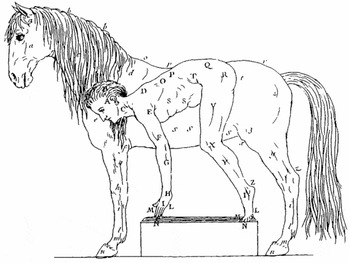
In its most general sense, this idea has very deep origins. Aristotle himself evoked an analogia (i.e. a relation of proportion similar to a mathematical ratio and not reducible to a functional similarity) between parts of different organisms (Aristotle [Reference Louis1964–1969]Historia animalium, I, 1, 486b).Footnote 38 In 1555, French naturalist Pierre Belon (1517–1564) presented a human and an avian skeleton side by side, with the same letters indicating corresponding bones in both species (Belon Reference Belon1555, 40–41).Footnote 39 In 1645, Neapolitan physician Marco Aurelio Severino (1580–1656) also observed similarities between different animal species and interpreted them as the mark of the unity of the divine archetypus (Severino Reference Severino1645, 102). This idea of a common type similarly appears in the writings of many naturalists in the late seventeenth and early eighteenth century (see e.g. Perrault Reference Perrault1680, vol. 3, 333). Buffon admitted that man and animals share the same organization and spoke about the “prodigious resemblance that necessarily conveys the idea of an original design [dessein] upon which the whole has been conceived”; he asked if the “constant uniformity of design, to be traced from man to quadrupeds, from quadrupeds to cetaceans, from cetaceans to birds, from birds to reptiles, from reptiles to fishes, etc. in which the essential parts, as the heart, the intestines, the dorsal spine, the senses, etc. are always included, does not seem to indicate that the Supreme Being, in creating animals, employed only one idea, and, at the same time, diversified it in every possible manner, to give men an opportunity of admiring equally the magnificence of the execution and the simplicity of the design?” In fact, this text is a polemical one where Buffon was fighting at the same time against the Linnaean classification and the transformist hypothesis (Buffon in Buffon and Daubenton Reference Buffon and Daubenton1749–1767, vol. 4, 379–381).Footnote 40 But what is important here is that the unity of type of animals was common enough in the mid-eighteenth century to be used as a rhetorical device. It was even well represented in the visual culture of science. Belon's plates were well known (see e.g. Vicq d'Azyr Reference Vicq d'Azyr1776h, 618), and there were a number of plates emphasizing the similarities between man and quadrupeds in different fields. For example, Dutch naturalist Petrus Camper (1722–1789), in a lecture given to the Amsterdam Drawing Academy in 1778, showed that he could easily transform the sketch of a human body into a horse or another animal (Camper [Reference Camper1778] 1803; see also Visser Reference Visser1985, 85–95; Meijer Reference Meijer1999, 149–153). But a similar figure can be found as early as 1741 in a veterinary book published by François Alexandre de Garsault (1693–1778), the capitaine of the French stud farms. There the anatomy of the horse was systematically compared to the human anatomy, since “some parts that would not be known to be connected with the human parts, are nevertheless built like them, and can be compared to them with good reason” (Garsault Reference Garsault1741, 2). More generally, veterinarians often referred to structural correspondences between man and animals.Footnote 41 Vicq d'Azyr was aware of this tradition, since he was interested in uniting the art vétérinaire with medicine (see fig. 1).
Comparison of the external parts of man and horse (according to Garsault Reference Garsault1741, Plate, II, figure B).

But however common the idea of unity of type may have been, it generally remained an abstract idea and was not used in a heuristic way in anatomical works before 1750. Daubenton seems to be the first anatomist not only to admit this uniformity, but to use it as a guide in his dissections. For example, he found the nipples of the male horse (they were considered absent since Aristotle) by comparing the anatomy of this animal with the organization of the male ass (where the nipples were already known) (Daubenton in Buffon and Daubenton Reference Buffon and Daubenton1749–1767, vol. 4, 321).
Vicq d'Azyr went much further, and he referred more systematically to the concept of common type. He presented it as a general law of nature which could be revealed by comparative anatomy and, in turn, gave comparative anatomy a strong conceptual basis. In his early papers he emphasized the “analogy” of the head of the fish with “the head of the birds, whose jaws are arranged in a nearly similar way” (Vicq d'Azyr Reference Vicq d'Azyr1776f, 236). He also noticed the similarities between birds and man: “we shall find with pleasure these great features of analogy between individuals apparently so remote from each other” (Vicq d'Azyr Reference Vicq d'Azyr1777, 573). In later texts, he was led to a more precise formulation of the idea of common model, in order to make sense of the existence of apparently functionless structures in certain species. For example, certain quadrupeds lacking clavicles possess yet hardly visible “clavicular bones”:
We may ask what are the uses of these bones formed in imitation of the clavicles, of which, nevertheless, they have not the solidity, since they do not stretch out from the scapula to the sternum; but do we not find here obviously the march of nature, which seems to work always according to a primitive and general model, from which it deviates only with regret, and of which we find everywhere the trace? (Vicq d'Azyr Reference Vicq d'Azyr1786b, 9)
He had similarly discovered in man the trace of the intermaxillary bone (a bone of the palate bearing the upper incisors), that had been known to exist in most quadrupeds but previously considered lacking in the human skull since it is perfectly joined to the upper maxillary (Vicq d'Azyr (Reference Vicq d'Azyr1784a, 490; 1786b vol. 1, 9–10, 25).Footnote 42 The existence of the common type makes anatomy a predictive science: for example, Vicq d'Azyr anticipates that the clavicular bone “will be found in most other fissipèdes” (Vicq d'Azyr Reference Vicq d'Azyr1788a, 351).
He also tried to extend this study of a structural uniformity in the animal anatomy to the comparison of the different parts of a single organism:
If comparative Anatomy has done such important services, could one not institute another one, which would only deal with the connections of the parts of the same individual? Would these new considerations not throw more light on the uses and the mechanism of the parts composing it? Would it be not possible that they would make visible amazing analogies? And if the parts that differ the most in appearance resemble each other in essence, could one not conclude with more certainty that there is only a single set, a single essential form, and that one recognizes everywhere this fecundity of Nature which seems to have given to all beings two characteristics not at all contradictory, namely, the constancy of the type and the variety in the modifications (Vicq d'Azyr Reference Vicq d'Azyr1778a, 254; see also idem 1786b vol. 1, 12).
If this kind of study seemed to him to be “a pure curiosity” (1778a, 270), it opened the way to a research program that would be very successful in the nineteenth century (Schmitt Reference Schmitt2004).
An important feature in the characterization of the animal type was the recognition of a clear distinction between functional similarities and connections independent from function.Footnote 43 For example, as Vicq d'Azyr compared the insertion of a muscle on the femur in man and birds, he emphasized the “wonderful uniformity, which seems to relate all to the same model,” and he claimed that if this insertion had a clear function in man, “in birds, by contrast, it seems that Nature has formed it only in order not to deviate from its first plan” (Vicq d'Azyr Reference Vicq d'Azyr1778b, 513–514). He not only acknowledged the existence of the common type, but he also attempted to find the laws that governed its modifications and the criteria that enabled him to determine the anatomical correspondences between different species. He was again inspired by Daubenton, who had looked for a rigorous way to find correspondences between parts of different species. In particular Daubenton compared not only single parts, but relative positions of many parts (mostly bones) towards each other: in this way he showed that the digit lacking in the pig (in comparison with fissipeds and man) is the thumb and not the little finger (Buffon and Daubenton Reference Buffon and Daubenton1749–1767, 5, 168). Vicq d'Azyr used the same criterion (1786b vol. 1, 22–23); that is why he asked that the anatomical plates represent sets of organs instead of isolated parts, in order to easily show their connections to each other (ibid., 13).
Vicq d'Azyr also sketched a law of the variation of organs in different species, taking into account the necessity of a functional correlation between the different systems of organs as well as a principle of compensation (Svagelski Reference Svagelski1981, esp. chap. 8). By comparing the organs of nutrition and digestion in different quadrupeds, he observed not only the mutual adaptation of these parts (e.g. sharp teeth and claws of carnivores correspond to a small stomach, whereas herbivores have less powerful external parts but a very developed and strong digestive tract), but “an opposition between external and internal organs intended to these uses; the more strain the former have to undergo, the less work the latter have to do, so that, by a kind of compensation, this function requires nearly the same amount of effort and movement in all organs, with respect to their volume” (Vicq d'Azyr Reference Vicq d'Azyr1786b vol. 1, 8). He seemed to apply this principle to other characteristics not directly linked to the function of parts: for example, he showed a correspondence between the increase of the size of the face and the decrease of the volume of the skull; or that “by a striking contrast, as the brain becomes smaller, the size of the nervous cords which it produces grows” (ibid., 19).
It is remarkable that a number of these reflections on the laws of organization (within an individual or between different species) at first glance seem to foreshadow essential concepts of comparative anatomy in the nineteenth century. For example, the idea of a correlation of parts will be of prime importance in Cuvier's thought; furthermore there are some similarities between Vicq d'Azyr's views and Geoffroy Saint-Hilaire's principe des connexions and loi de balancement des organes, and the notion of a morphological unity of the whole animal kingdom will be the main issue in his théorie des analogues. Thus, Vicq d'Azyr could paradoxically appear as an inspiring source for both Cuvier and Geoffroy.Footnote 44 As a matter of fact, it is possible that Cuvier and Geoffroy found elements in favor of their own theories by reading Vicq d'Azyr's works, since these texts are mainly programmatic, not very precise, and leave a clear field to a variety of interpretations. For example, as we have seen, he sometimes emphasized the existence of pure morphological relations between organs of different species, but at the same time he attached great importance to the functional analysis of the similarities between the organisms, as can be seen in the vocabulary he used to describe them. For instance he refused to apply the terms “clavicle” or “scapula” (omoplate) to morphologically corresponding fish bones, since these bones “are far from having the degree of perfection and mobility that [the scapula and clavicle of quadrupeds] give to the arms and legs, which the family of fishes obviously lacks (1786b, vol. 1, 44). Indeed, the radical opposition between morphological and functional approaches, which culminated with the Geoffroy-Cuvier debate, was not relevant in Vicq d'Azyr's work.
For him, the most important thing was that all these ideas on the laws lying behind the apparent diversity of the animal structures contributed to legitimate the pivotal position of comparative anatomy. Just as Buffon had built a new natural history on the research of relations between natural (living or non-living) objects and proposed theories to explain these relations, for example the theory of climates, so Vicq d'Azyr reallocated these questions to comparative anatomy. His strategy was remarkable in the case of man. In 1749, Buffon created a “natural history of man” and integrated into natural history issues traditionally belonging to medicine (description of the “ages of life”), or to travel accounts (physical and cultural description of different peoples). He generally dismissed anatomical arguments in discussions concerning man. In particular, in the debate on the nature of the difference between man and the animals that resemble man the most, i.e. apes and monkeys, he considered that organization alone was not sufficient to explain the differences (Buffon, in Buffon and Daubenton Reference Buffon and Daubenton1749–1767, vol. 2, 439).Footnote 45 By contrast, Daubenton and Vicq d'Azyr both tried to reintegrate this question into anatomy. Daubenton observed that there is a close connection between the situation of the occipital foramen and the upright position of the human being and, in that respect, there is a clear discontinuity between man and apes (Daubenton Reference Daubenton1767). Vicq d'Azyr agreed with him and tried to find other anatomical differences between man and apes. He showed that the human larynx is different from the same organ in apes, so that man alone is capable of speech (Vicq d'Azyr Reference Vicq d'Azyr1782a, 187–188). He was interested particularly in the consequences or the limb organization and noted that the difference between forelimbs and hind limbs is the most considerable in man, which may “give the solution of many problems proposed for a long time and differently solved by different philosophers” (Vicq d'Azyr Reference Vicq d'Azyr1778a, 264). He emphasized the specificity of man regarding the upright position (la station parfaite) and its anatomical basis, whereas the structure of the feet of monkeys and apes was perfectly adapted to their life in the trees (Vicq d'Azyr Reference Vicq d'Azyr1786b, vol. 1, 8, 22). For him, the emergence of art and industry resulted from the anatomy of the human hand and its ability to flex the thumb independently of the other fingers, an ability that apes, monkeys and quadrupeds all lack (ibid., 22–23). Comparative anatomy, instead of natural history, was thus the best way to deal with such an important philosophical question as the nature of man.
The generalization of the comparative approach also led Vicq d'Azyr to take over another competence field. Since he had established, on the one hand, a link between medicine, pathology, and anatomy, and, on the other hand, the importance of the comparative approach in anatomy, he inferred the necessity of combining human medicine with veterinary medicine, in spite of the traditional contempt of physicians for the latter (Vicq d'Azyr Reference Vicq d'Azyr1776d, 11; idem 1790, 136). Indeed, he devoted a lot of effort to the study of epizootic diseases. He showed the “perfect analogy” between bovine and human plague, not only at the level of symptoms, but at the level of the “internal ravages” (Vicq d'Azyr Reference Vicq d'Azyr1776c, 28–29), so that the anatomical comparison of man and animals could be very helpful in the study of their respective illnesses and the perfecting of efficient treatments in both cases (ibid., 57). Accordingly, he viewed favorably the creation of a real comparative medicine, based on comparative (normal and pathological) anatomy (ibid., 56). This parallel between the studies of the diseases of animals and men would play a determining part in the transformation of maréchalerie (the care of horses) or art vétérinaire into a real médecine vétérinaire. On the other hand, human medicine was to be enriched with its close connection (in theory, practicing and teaching) with animal anatomy and pathology.Footnote 46 That is why a substantial part of the The Société Royale de Médecine, in accordance with its statutes, attached importance to the studies on epizootic diseases. Footnote 47
4. The Idea of Series: Methodological Order of Anatomical Descriptions and the Quest for an “Anatomo-Physiological Classification”
In analyzing Vicq d'Azyr's attempt to subordinate natural history to comparative anatomy, we must lay stress on classification of living beings. This question was a matter of great debate in the late eighteenth century (see e.g. Daudin Reference Daudin1926a and 1926b; Callot Reference Callot1965a and 1965b; Stevens Reference Stevens1994). Not all naturalists admitted the necessity of classification, and those who did were divided on different points. In this respect, botany was more advanced than zoology, but the problems were fundamentally similar in both fields. One important question was whether classification was a representation of the real order of nature, or an artificial device which had only convenient practical use. Many authors influenced by nominalism considered taxonomic categories such as class or genus nothing but names. It was a common criticism againt classification: Buffon and Daubenton, for example, repeatedly blamed Linnaeus for this (Buffon and Daubenton Reference Buffon and Daubenton1749–1767, vol. 1, 1–62; vol. 4, 114–118; see also Sloan Reference Sloan1976; Barsanti Reference Barsanti1984). In the late eighteenth century many botanists, especially in France, called Linnaeus’ system “artificial,” whereas Jussieu's method was considered “natural” (Stafleu Reference Stafleu1971; Duris Reference Duris1993; Stevens Reference Stevens1994). Another question, connected to the previous one, was how many and which sort of characters had to be used for botanical and zoological classification. One reason why Buffon, Daubenton, and others considered Linnaeus’ classification artificial was precisely that it relied on the description of a single set of characteristics (sexual organs in plants, teeth in quadrupeds), which led to false and absurd links. Instead, Buffon and Daubenton thought it necessary to examine a diversity of characters to know an animal, but they did not propose any classification based on this principle. On the other hand, botanists tried to classify plants by using a combination of many characters. Michel Adanson, for example, showed that he obtained as many different kinds of classification as single characters he considered, and he claimed that the real “natural” distribution could be found only by combining all these characters (Adanson Reference Adanson1763).
Regarding the choice of characters up to the mid-eighteenth century, zoological classification, on the model of botanical classification, used mainly external and visible characters, for example limbs and digits for quadrupeds. In the tenth edition of the Systema naturae, Linnaeus claims that “the natural division of animals is indicated according to the internal structure” (Linnaeus Reference Linnéa1758, vol. 1, 11), but, indeed, this had only a few consequences for his classification, which he based mainly on external morphology. Before the 1790s, even if some authors of zoological systems or methods were aware of the interest of anatomical criteria, they did not use them very much, whereas the emerging comparative anatomy was not much interested in taxonomy. The contrast was striking with the development of zoological classification after 1795, which took into account the internal organization or the “economy” of the animals for the formation of taxonomical groups; this culminated with Cuvier's work (see e.g. Daudin Reference Daudin1926a and 1926b; Outram Reference Outram1986; Appel Reference Appel1987).
The third source of tension centered around the idea of a linear hierarchy of living beings, gradually leading from the most simple to the most complex. This notion of the great chain of being, or scala naturae, always played a considerable role in the representation of the diversity of life, especially in the eighteenth century, but it was challenged more and more in the last decades of the century. In particular many authors questioned the continuity and the linearity of the chain and proposed more complex kinds of relationships in the representation of species, for example maps, networks, or trees (Daudin Reference Daudin1926a; Lovejoy [Reference Lovejoy1936] 1964; Anderson Reference Anderson1982; Rheinberger Reference Rheinberger1986; Barsanti Reference Barsanti and Gayon1992; Ehrard [Reference Ehrard1963] 1994, 186–198). Furthermore, the epistemological status of the chain of being was complex. Whereas some naturalists like Charles Bonnet considered it a representation of the real order of nature, others, like Buffon, used it as a rhetorical device against systems of classification, emphasizing the existence of intermediary species, of nuances between taxonomic groups, but did not believe in a real linear, continuous, and complete chain of being (Loveland Reference Loveland2001, 77–99).
Daubenton's hesitating position reveals these tensions. Like Buffon, he rejected as artificial every system of classification, but he used the notion of series as a guide for the selection of the described species and the arrangement of anatomical descriptions. In the Histoire naturelle, he began with the horse (just after the man) and ended with the monkeys. According to him, the comparison of the horse and the man is of particular significance since, as a solidungulate (solipède), the horse is the quadruped whose anatomy is the most different from the human anatomy. Horse and man are therefore the two extreme points of the quadruped series, and the right method, for Daubenton, consisted in relating each species to the extreme point to which it is the closer (Daubenton, in Buffon and Daubenton Reference Buffon and Daubenton1749–1767, vol. 4, 259). He did not seem to reject totally the idea of a natural order that could be revealed by science. For example, when he took up the traditional Aristotelian division of quadrupeds into solipèdes, fissipèdes, and pieds-fourchus, he claimed that the single criterion of the number of digits was largely arbitrary (ibid., vol. 5, 24), but he seemed to recognize that this classification had a more essential character than others, since the number of digits correlated with other important characters concerning the external morphology as well as the internal organization (ibid., vol. 4, 475). So Daubenton implicitly admitted that some natural divisions existed within viviparous quadrupeds that corresponded to differences in the animal economy, and he used these divisions in his descriptions: he dealt with the horse, the bull, and the dog more completely than with other species, because they represented models for the solipèdes, the fissipèdes, and the pieds-fourchus respectively. For the other animals, he just gave abridged descriptions with tables of dimensions (ibid., vol. 5, 27). Thus, in the Histoire naturelle, Daubenton acknowledged that a serial classification based upon a single character connected to the general economy (i.e. internal organization) of animals had a practical as well as an essential value. In later texts he adopted more precise views (see below).
Vicq d'Azyr's attitude towards classification of natural objects also reflected these tensions. He sometimes considered them purely practical: for example he described the different mineral concretions formed in living beings, and he distributed them “into classes and sections, like the naturalists, . . . so that it will be easy to relate to them those which will be observed, or to create new genus” (Vicq d'Azyr Reference Vicq d'Azyr1782b, 206). Here all taxonomical categories were artificial, and genera were “created” by naturalists. On the other hand, Vicq d'Azyr admitted the existence of a linear gradation of living beings according to the perfection of their anatomical organization, as well as the perfection of their functions. In fact, whatever organ he considered, he found its most perfect form in the human species, and he could follow all its successive degradations as he moved away from it. He observed such a succession in the case of the vocal organs (Vicq d'Azyr Reference Vicq d'Azyr1782a, 180) or of the heart and the nervous system:
How many times, in the course of my researches, was I delighted in advance to see ordered in a single line all the brains that, in the succession [suite] of the animal kingdom, seem to decrease with the activity [industrie]; all the hearts whose structure becomes simpler as there are less organs to invigorate and to move? (Vicq d'Azyr Reference Vicq d'Azyr1786b, vol. 1, 7)
Like Daubenton, Vicq d'Azyr used such a series as a guide for the comparative description of structures in different animals. He admitted the need “to choose, among the living bodies from the man to the plant, those of which the differences give the most remarkable characters, and to form with them a succession of anatomical genera to which we could relate the intermediary species and the works already done” (ibid., 4). He called these reference species the “keys of comparison” (clefs de comparaison), and he recommended that they be spread at regular intervals along the animal scale (Vicq d'Azyr Reference Vicq d'Azyr1792, ii). For example, in his study of vocal organs, he dealt only with “the most remarkable links [anneaux]” (Vicq d'Azyr Reference Vicq d'Azyr1782a, 180). Regarding the limbs of quadrupeds, he only described those of man, of horse, and of “one of those who are roughly in the middle of the intermediary space, in order that, by showing the same analogy at both ends and in the middle of the chain, we can draw conclusions from it for the rest of the individuals, of which the considerable number would be too large a field for our researches” (Vicq d'Azyr Reference Vicq d'Azyr1778a, 255).Footnote 48
The plan of each study always followed the animal series, from the most to the least organized species. In his paper on vocal organs, Vicq d'Azyr began with man, then dealt successively with apes, quadrupeds (ending with the horse), birds, reptiles, and snakes. He applied the same principle on a smaller scale: for example, among fishes, the cartilaginous ones were studied first since they were (according to Vicq d'Azyr) the most organized, i.e. the closest to quadrupeds and man (Vicq d'Azyr Reference Vicq d'Azyr1776e, 34); among the bony fishes, he begins with anguilliformes for the same reason (Vicq d'Azyr Reference Vicq d'Azyr1776f, 233), and he ended with the flat prickly fishes because they “are so arranged that their strange form, their oblique motion, the position of their eyes, seem to take them, more than others, away from the model we consider the best achieved, the most perfect one, namely, man” (ibid., 251).
More ambitiously, the idea of series was applied at the level of whole organisms. As early as 1774, Vicq d'Azyr presented to the Académie des Sciences a Table pour servir à l'histoire anatomique et naturelle des corps vivants whose title is by itself a program. This folio document was composed of two unequal parts. On the left, a two-column table presented a chain of being similar to Bonnet's: the first column is the list of “chiefs” (chefs) or “anatomical genera,” from the “organic molecules” (a concept borrowed from Buffon) to man, the second column indicated transitional forms, “the “individuals who serve as transition or link between the different classes;” a single species could be presented in both columns. The rest of the table was divided into nine parts, each of which presented a classification of living beings according to one of the nine functions characteristic of life (see above). The classification based on circulation was the most precise and occupied the largest space, namely, more than one-third of the whole table. In each of these classifications, we find a linear distribution of organisms from the simplest to the most organized (with respect to the considered function). This distribution was not always the same: for example, according to irritability, insects and polyps were above quadrupeds, whereas in other cases they were below. But for most functions, the succession corresponded to the one given in the two-column table, from plants to quadrupeds.Footnote 49
This table gave rise to many comments in relation with the above-mentioned tensions. It suggested that, in 1774, Vicq d'Azyr admitted the continuity of the scale of organic beings. Indeed, he claimed on several other occasions that the living world forms a continuous whole, and that no major discontinuity exists between animals and plants, since all these organisms, unlike minerals, are characterized by certain vital functions or properties (Vicq d'Azyr Reference Vicq d'Azyr1776h, 617; 1786b, 5–6; 1792, iii, xi).Footnote 50 Some organisms of uncertain position, such as fungi, corallines, or algae, represented a transition from the animal to the vegetal kingdom.
Another important point was the use of a diversity of characteristics to classify animals. Vicq d'Azyr reaffirms these principles on several occasions, for example in the Encyclopédie méthodique:
A natural class results from the assemblage of a certain number of species linked to each other by more connections than between each of these species and the species of the other classes. In order that an individual can be a part of a class considered from this standpoint, it is not necessary that it possess all its characters; it only has to present most of them; the result of this is that it would be possible that a class would be very natural and that no character would be common to all species that make it up. (Vicq d'Azyr Reference Vicq d'Azyr1792, xxv)
This definition of a natural class was very close to Adanson's claim, and it was likely that Vicq d'Azyr was inspired by botanists (Adanson Reference Adanson1763, vol. 1, clviii).Footnote 51 But there is a specificity in his classification since he favored anatomical and physiological criteria. It seems that this was the first attempt of this kind; this was at least the opinion of the anonymous editor of the Journal de Physique, where the Table was reproduced: “This work, he writes, is the first one executed in this kind, and it does not appear that someone has already thought about using anatomical characters” (Anonymous 1774).
But by building a natural classification upon such criteria, Vicq d'Azyr was led to some hesitations in his conception of the linearity and continuity of the chain of being. If many characters had to be used and if it was possible that none of them was common to all species making up a natural class, then species did not form a perfect linear sequence. The notion of animal series was also challenged when Vicq d'Azyr wrote: “the animals, without the man, seem to be remote from their type, and we do not know to which centre they have to be related” (Vicq d'Azyr Reference Vicq d'Azyr1786b, vol. 1, 7). The metaphor of the “centre” was not very much in accordance with the conception of the linear series of beings of which Man would form [constitute] the upper end.
As regards the continuity of the series, in 1774 Vicq d'Azyr emphasized the existence of nuances (he did not give, however, any anatomical justification to his list of intermediary forms). But, on the other hand, his will to use many anatomical and physiological characteristics, i.e. a global view of the economy of organisms, forced him to notice ruptures and gaps in the chain of being, especially in later texts. The ostrich is an interesting case: whereas many naturalists considered this animal a transitional form between birds and quadrupeds (e.g. Buffon Reference Buffon1770–1783, vol. 1, 396–397, 422; Bonnet Reference Bonnet1781, 112), Vicq d'Azyr, in contradiction with his earlier opinion, affirmed in 1786 that the organization of ostrich unambiguously makes it a bird:
Who considers a quadruped after becoming acquainted with the exact structure of man, finds between them so close connections that he has no surprise when he examines them one after the other. But from the quadruped to the bird, the chain is broken: the ostrich itself cannot serve to connect them, since, except its pubis, it has none of the characters peculiar to quadrupeds. Its skeleton, its lungs, its stomach, all take it away from this class of animals. So the anatomist, enlightened by his works and severe in his comparisons, has to reject superficial links and to be careful not to join what nature has separated. (Vicq d'Azyr Reference Vicq d'Azyr1786b, vol. 1, 42)
In the Encyclopédie méthodique (idem 1792, clxii), he again rejected the idea of a continuity from one class to another, and he proposed a new linear classification built on an anatomical basis. He gave (ibid., lxiii) a “Table of animals in the order of their anatomical composition,” from polyps to mammals (mamellifères), with every link in the chain corresponding to a greater perfection of existing organs, as well as the addition of a new organ or system of organs (see Table 1).
The distribution of animals according to Vicq d'Azyr (adapted from Vicq d'Azyr Reference Vicq d'Azyr1792, xxvi).

Vicq d'Azyr applied the same principle within each class.Footnote 52 Since his conception of anatomy was deeply functional, this anatomical system was physiological as well. This appeared clearly, for example, in the title of the table that presented the classification of insects: “Essay of a physiological classification of insects, largely based on their exterior organs, on the number and nature of the functions exercised, and on the vital phenomena they show” (Vicq d'Azyr Reference Vicq d'Azyr1792, xlii). This linear and cumulative conception of animal diversity led him to consider the most organized species, especially man, a sort of summary of the whole animal kingdom, which combined all possible animal structures and functions.Footnote 53
One of the sources of this new classification may be the series proposed in 1782 by Daubenton, who divided the animal kingdom into eight “orders” and tried to “arrange them successively along a same line, beginning with the animals having the greatest number of organs [i.e. quadrupeds], and ending with those having the smallest number [i.e. worms]” (Daubenton Reference Daubenton1782, xvii; see Table 2).
The distribution of animals according to Daubenton (adapted from Daubenton Reference Daubenton1782, between pages xvi and xvii).

Daubenton's classification was based on the anatomical and functional organization of the body as a whole, the “animal economy,” and, more precisely, on the number of organs that characterized each group. He distinguished between external characteristics which enabled him to recognize easily a group (the last line of the table) and the internal organization which enabled him not only to define the eight ordres, but to find the right series.
It is difficult to know to what extent Daubenton's attempt had inspired Vicq d'Azyr, but it is probable that they discussed this issue in the 1780s. In any case, Vicq d'Azyr was convinced after 1786 that the natural order could be inferred not only from the study of separate structures and functions in each group, but from the combinations of and the relationship between these structures and functions (Vicq d'Azyr Reference Vicq d'Azyr1786b, vol. 1, 4). He observed for example that worms were the animals having the most irritability (Vicq d'Azyr Reference Vicq d'Azyr1792, xxvii), whereas insects had not only a lot of irritability, but a great capacity for reproduction (depending on the stages of their life) (ibid., xxxvii).
Most importantly, his conception of the “combination” of organs was not a static one: it was not only a characteristic of each level in the series, but a gradual process leading from the most simple to the most complex animals (ibid., xxvi). That is why, even if he adopted a “downward” plan, from the most to the least organized species, in the rest of the book, he admitted that he did that in order to respect the common practice and that he would have preferred the opposite order, “since, if it is true that the life of a warm-blooded animal is only the life of a cold-blooded animal, plus certain properties, and that the life of a cold-blooded animal is only the life of a plant, plus certain modifications, can we not say that, in order to acquire a logically arranged knowledge on the nature of these beings, we have to begin with those whose composition is the most simple?” (ibid., vii). This was an original point which distinguishes Vicq d'Azyr from most contemporary naturalists, including Daubenton, who generally considered a descending series.Footnote 54
This attempt to classify animals in a linear and progressive way according to their number and combination of organs and functions may be interpreted from different standpoints. In relation to Vicq d'Azyr's career and strategy, it appeared as an important element of his program of reorganization of all life sciences around comparative anatomy, since it suggested that a traditional concept of natural history, which aimed at making sense of the diversity of living forms, could be expressed in terms of anatomical structures. Just as comparative anatomy was the best way to understand the functioning of every living being, it provided good criteria for a renewed zoological classification which could be built only by professional anatomists, not by amateurs. It was thus a new legitimization of Vicq d'Azyr's own field.
If we consider the development of the life sciences after 1795, Vicq d'Azyr's reflections retrospectively appear as essential. Some ideas he expressed in a general and quite imprecise way acquired a much more central position in more elaborate programs, in particular in Cuvier and Lamarck. The above-mentioned tensions which were latent in his works increased and culminated in the Cuvier-Lamarck opposition, since one of the main points of disagreement between them concerned the idea of series, which Lamarck held and Cuvier rejected. For the latter, the correlation of parts which characterized the economy of every animal as revealed by comparative anatomy implied that the organization in an embranchement could not be related to another group, whereas Lamarck was less interested in internal correlations and emphasized the progression of organization (Daudin Reference Daudin1926b; Coleman Reference Coleman1964; Corsi Reference Corsi2001). These conceptions of the logic of life could both coexist in Vicq d'Azyr because they were among the many elements in his general program, whereas Lamarck built his whole theory on the idea of ascending series, and the correlation of parts in the animal economy was central in Cuvier's thought. It is very likely that Cuvier and Lamarck knew Vicq d'Azyr's work very well, considering his institutional and intellectual position in France up to his death, the wide distribution of his texts, and the fact that he and Daubenton were the main (if not the only) comparative anatomists in Paris before the Revolution. Cuvier probably never met him, but Lamarck, as he himself said, attended his lessons (Lamarck Reference Lamarck1802, 86). Each of them borrowed the elements from his program that they wanted or were able to use for their own purpose. Vicq d'Azyr's possible influence on Lamarck and Cuvier was not, however, symmetrical, at least for generational reasons: Lamarck was born in 1744 (five years before Vicq d'Azyr) and Cuvier in 1769. The former was a naturalist whose patron was Buffon himself, and, even if he probably found similarities between his thought and Vicq d'Azyr's, he had no intention to reorganize the life sciences around comparative anatomy, and he remained faithful to the Buffonian tradition of natural history. By contrast, Cuvier's scientific life began in the late 1780s, when the necessity of a deep reform of science was a commonplace, and Vicq d'Azyr's works could appear to him as an example of what it was possible to do in order to create a new science of nature.
5. Reforming the Style and the Vocabulary of Comparative Anatomy
Questions of form played a very important role in every program of scientific reform. For example, in many fields that underwent a complete reform in the eighteenth century, such as botany (Linnaeus, Jussieu), chemistry (Lavoisier), and crystallography (Haüy), the scientists introduced new kinds of descriptions (e.g. short sentences with no verb in Linnaean nomenclature) or a new vocabulary, in general borrowed from the Greek language, in order to make their fields more rigorous as well as more “professional” (Acton Reference Acton1956; Crosland Reference Crosland1962; Corsi Reference Corsi2001, 40–47). A similar strategy was used by Vicq d'Azyr in order to build a new comparative anatomy.
For this, he borrowed some elements from Daubenton's reflection, who attached great interest to the form of descriptions in science. Daubenton claimed that, since natural history was, above all, an account of observed facts, it was important to express these facts with rigor and clarity. A good description was a source of knowledge as well as the best vehicle of its transmission (Daubenton in Buffon and Daubenton Reference Buffon and Daubenton1749–1767, 4, 113).Footnote 55 Whereas the first step in science, namely, observation, was a fundamentally subjective process and, accordingly, did not require a particular method, description must be governed by strict rules since it was intended for many readers. Vicq d'Azyr defended the same idea, and in particular recommended using a sober style, on the model of Linnaean diagnosis, with no theoretical digressions (Vicq d'Azyr Reference Vicq d'Azyr1786b, vol. 1, 45, 49–50), without “these useless verbs that only overload the discourse, and that the anatomist, like the naturalist, must suppose without ever expressing them in the sentences” (Vicq d'Azyr Reference Vicq d'Azyr1792, iii).Footnote 56
But as regards vocabulary and nomenclature in anatomy, Vicq d'Azyr disagreed with Daubenton. Indeed, like Buffon, Daubenton thought that, in order to write clear and intelligible descriptions, it was preferable to use simple and precise terms borrowed from vernaculars that everybody could understand. Thus he denounced the abuse of new complex words, coined with Greek roots, which bring confusion in science and, according to Buffon, “make the language of science more complicated than science itself” (Buffon in Buffon and Daubenton Reference Buffon and Daubenton1749–1767, 1, 9; see also Daubenton in ibid., 4, 119–120; and Daubenton Reference Daubenton1782, v-vi). For Daubenton, anatomical descriptions had to make the comparison between species easier, so he accepted a specific term only if it designated a part of an animal of which there existed no equivalent in other species (see e.g. Buffon and Daubenton Reference Buffon and Daubenton1749–1767, 4, 475–477). In other cases, it was better to use the same term for every species: that is why, for example, he applied “the denominations of the bones of the human skeleton to those of the skeleton of the horse and the other animals” (Daubenton, in Buffon and Daubenton Reference Buffon and Daubenton1749–1767, vol. 4, 338). He also criticized the use of the term hippomanès, which is etymologically linked to the horse (hippos) although this substance also exists in other animals such as asses: if we want to keep this name, we should either improperly apply it to other species, either coin similar new terms for each species (onomanès for the ass, etc.). Daubenton preferred to use a simple and universal term, sédiment de la liqueur de l'allantoïde, valid in every case (ibid., 433).
Vicq d'Azyr also advocated an anatomical nomenclature that would facilitate interspecific comparisons. For example he reproached the anatomist François-David Hérissant (1714–1773) for using too different terms to describe bird and human structures (Vicq d'Azyr Reference Vicq d'Azyr1777, 584). But unlike Daubenton, he thought that the common terms were not always the best ones: for him, the accuracy and the conformity between signifier and signified were essential. For instance, the names of the bird muscles should not only “fix the ideas and help memory,” but also “be connected to their analogy, uses, or situation” (Vicq d'Azyr Reference Vicq d'Azyr1776h, 621). Referring to Bacon, Condillac, and Rivarol, he wanted to change totally the language of anatomy, since he was convinced that the abundance of knowledge rested on the richness of the vocabulary (Vicq d'Azyr Reference Vicq d'Azyr1786b, vol. 1, 46–47, 50). He regretted that whereas botany had made progress with the new Linnaean nomenclature, anatomy continued to use the same number of words since Galen's time, even though many new structures had been discovered (ibid., 46–47).Footnote 57 Like Linnaeus, he praised the Greek language that enabled one to say with one word “very complex ideas that previously required periphrasis to be understood” (ibid., 49).
The adjectives were particularly meaningful since they were often a way to indicate connections between object (for example spatial arrangement) and new facts; in sciences, there are precisely “new connections found between some of the parts of the great system of nature” (ibid., 48). Anatomy, thus, had to banish ambiguous adjectives: for example Vicq d'Azyr rejected such forms as “posterior” or “anterior” since the position of a same organ can be different from one species to another, according to the posture (e.g. “posterior” limbs of quadrupeds correspond to “inferior” limbs of man) (ibid., 52–53; idem 1792, cxv-cxvi), and he used adjectives emphasizing correspondences or oppositions (Vicq d'Azyr Reference Vicq d'Azyr1786b, vol. 1, 48, 49).Footnote 58 On the model of Haüy's nomenclature for crystals, he borrowed many terms from geometry (ibid., 52; see also Haüy Reference Haüy1784). These principles were applied in the Vocabulaire anatomique, augmenté d'un grand nombre de termes nouveaux added to his Traité d'anatomie et de physiologie.Footnote 59
In addition to the vocabulary, the organization of the description was of capital importance in Vicq d'Azyr's reform program. Daubenton had already claimed that all descriptions of natural history must follow the same plan in order to make the comparison easier (Daubenton, in Buffon and Daubenton Reference Buffon and Daubenton1749–1767, vol. 4, 130–131, 133–134). This question was closely linked with the choice of a reference organism: since the human species was the better known, Daubenton compared every animal with it, and that decided the plan (see e.g. Daubenton in Buffon and Daubenton Reference Buffon and Daubenton1749–1767, vol. 5, 168). For example, his order of exposition of the bones of the horse copied the usual plan in human osteology, rather than the plan followed by most books in hippiatrie, which was good for the description of the horse alone but had disadvantages for comparing many animals (ibid., vol. 4, 338). The form, dimension and position of every organ were often compared with the corresponding properties of the same organ in man (for example, ibid., 312). On this point Vicq d'Azyr wholly agreed with Daubenton. He always took man as the model, for example, in his description of the auditory organs or the larynx (Vicq d'Azyr Reference Vicq d'Azyr1781a, 382; 1782a, 180). Further, he claimed that “all articles are done in order to come to the article [of man]” (Vicq d'Azyr Reference Vicq d'Azyr1792, cxiv; see also 1786b, vol. 1, 6). This central position of man resulted not only from a pragmatic methodological necessity (man is the best known species, and the most interesting to know), but from a more essential reason, namely, the ontological perfection of the human organization and its position at the top of the great chain of being (see above).
As regards the parts to be studied, Daubenton thought that anatomical descriptions in natural history did not have to be exhaustive: on the contrary, the naturalist must deal only with the organs that have significance for his field, namely, for the comparative approach. That is why his descriptions were limited to the skeleton and to the main internal organs (brain, heart, lungs, diaphragm,Footnote 60 liver, pancreas, spleen, kidneys, bladder, and genital organs). By contrast, the muscles, the veins, the arteries, the nerves and the other tissues were not treated, since “the light that we could gain from the description of those parts would not have so much influence on our knowledge of the animal economy, as the results of the comparison of viscera and bones” (Daubenton in Buffon and Daubenton Reference Buffon and Daubenton1749–1767, vol. 4, 138; see also 337).
For Vicq d'Azyr, Daubenton had perfectly performed his functions as a naturalist, by dealing with only some parts of the animals; but, as an anatomist, Vicq d'Azyr thought that Daubenton should have studied all organs (Vicq d'Azyr Reference Vicq d'Azyr1786b, vol. 1, 17–18), including vessels (ibid., 8) and muscles (Vicq d'Azyr Reference Vicq d'Azyr1776h, 618–619; 1777, 577). For example, it was the careful observation of the muscles of certain quadrupeds that led him to the discovery of clavicular bones (Vicq d'Azyr Reference Vicq d'Azyr1786b, vol. 1, 9). He totally agreed with Daubenton about the uniformity of the plan of the anatomical descriptions (idem 1776h, 62; 1786b, 12; 1792, i-ii) and he tried to follow this recommendation himself. He generally dealt first with the skeleton, then with the muscles and finally the viscera including nerves and vessels (idem 1776e, 20; 1778a, 256). For each kind of structure, he also tried to find a rational order, even though he was hesitant in his first papers. For example, concerning bird anatomy, he used the method of Bernhard Siegfried Albinus (1697–1770), which was elaborated in view of human anatomy, but which made the comparison between different groups easier, since it divided the organism into several morphological regions, without consideration of function (Vicq d'Azyr Reference Vicq d'Azyr1776h, 620–621). But in other cases he adopted a functional plan: when he dealt with the muscles of cartilaginous fishes, he began with those that served the general movement of the body and ended with those that moved only one part (Vicq d'Azyr Reference Vicq d'Azyr1776e, 21). In later writings, he attempted to follow a more constant plan, and he used quantitative tables of dimensions similar to those that Daubenton had introduced in the Histoire naturelle (Vicq d'Azyr Reference Vicq d'Azyr1786b, vol. 1, 12, and the tables in 1784a). But he finally adopted an even more radical solution in the Encyclopédie méthodique: taking the man and the viviparous quadrupeds as a reference, since the “organization of these living bodies is the most complicated as well as the better known,” he drew up an extremely detailed list of every part of which they are composed and of every (anatomical or physiological) property characterizing them, and he numbered them from 1 to 1339 (Vicq d'Azyr Reference Vicq d'Azyr1792, cxviii-cliii). This numbered list was then constantly used for the description of each animal species:
The results of this disposition are, 1° that in my descriptive method the order does not vary, since it is the same for every [species]; 2° that the same numbers indicate the same organs, so that comparison to one other is easy since we can always find them and put them together without any difficulty; 3° that, if there are gaps in the series of numbers, they have to be attributed to the fact that the organs for which the descriptions are lacking do not exist in the considered animal, or they have not yet been studied by the anatomists; . . .. This method will enable the reader to compare himself the different organs he studies, and to put in tables the data he needs. (Vicq d'Azyr Reference Vicq d'Azyr1792, cxviii)
Indeed, Vicq d'Azyr used this method in all the parts of the Systême anatomique he was able to write, and his successor Hippolyte Cloquet did the same up to the last volume in 1830. It clearly showed a quest for an extreme rationalization of science and of standardization of its method, typical of the time in other fields (chemistry. . .) but apparently with no equivalent in the life sciences before 1800.Footnote 61 Furthermore, one interesting point in this method is that it presupposed that reference organisms, i.e. man and viviparous quadrupeds, contained all conceivable anatomical or physiological characters. Even if Vicq d'Azyr admitted that his list was intended, above all, for these organisms, he explicitly affirmed that “the tables [he used] in the history of the other classes of living beings will be taken from this first one, to which they will correspond in every main issue” (Vicq d'Azyr Reference Vicq d'Azyr1792, cxviii). In other words, there may have been gaps in the tables for snakes, worms, insects, etc., but there were never elements in those tables that were absent from the first table. Of course, this conception had important consequences for animal classification and for the interpretation of the anatomical connections between the different groups of animals (see above). But, above all, by changing form and vocabulary of comparative anatomy, Vicq d'Azyr intensified his control of the field and presented himself as its main reformer. This strategy could be successful, judging by the example of chemistry: if we read texts written by chemists before Lavoisier, they look like alchemy, because by altering the language of the science Lavoisier reinforced the impression of rupture resulting from his own work. But Vicq d'Azyr was not able to bring his program to completion.
Conclusion
Vicq d'Azyr's position in the history of life sciences is paradoxical. In 1789, he was one of the most important members of the Parisian scientific and intellectual milieus, he was close to the government and his institutional power was considerable. After Buffon's death, in April 1788, Vicq d'Azyr became one of the leaders of the biomedical sciences, and his program for reorganizing this whole field conceptually, methodologically, and institutionally around a renewed comparative physiological anatomy was one of the most promising attempts in the general climate of reform in the late eighteenth century. This is in striking contrast with his position in the nineteenth century when he sank into oblivion. Many eulogies were written after Robespierre's fall and during the first decades of the nineteenth century, and, in 1805, Jacques-Louis Moreau de la Sarthe (1771–1826), a sub-librarian at the École de Médecine, published six volumes of selected works with an extensive presentation of his life and work (Vicq d'Azyr Reference Vicq d'Azyr1805).Footnote 62 But afterwards his fame gradually vanished. His untimely death and the incompleteness of his work incontestably explain a part of this decline. The phenomenal development of comparative anatomy after 1800 and the emergence of much more “media-friendly” figures such as Cuvier and Geoffroy Saint-Hilaire also contributed to the decline of his status. Unlike Lavoisier or Condorcet, he could hardly be presented as a martyr of science. In 1845, Blainville devoted a whole chapter in his Histoire des sciences de l'organisation et de leurs progress to him. He considered him the founding father of comparative anatomy and claimed that his ideas were plagiarized by his “successors” (Blainville Reference Blainville1845, vol. 3, 62–63). Blainville was surely not totally objective. He used Vicq d'Azyr's thought in a polemic in order to promote his own ideas (e.g. his conception of the animal series) and to denigrate Cuvier, with whom he had bad relations.Footnote 63 But he was correct in claiming that Vicq d'Azyr had been nearly forgotten.
A whiggish history of science could present Vicq d'Azyr as the forgotten hero of French biological thought, and we have shown that, by considering isolated parts of his work, he could appear as a forerunner of Cuvier, Geoffroy Saint-Hilaire, and Lamarck as well. But the fact that Vicq d'Azyr's works incited such conflicting trends proves that he could not even have conceived these tensions that would structure the life sciences in the nineteenth century, for example the morphological vs. the functional approach of animal organization, or the difficult dialogue between the concept of a linear series and the notion of common type or a classification built on the observation of animal economy. In fact, so many different readings of his works were possible because of the vague and general way he manipulated all these notions. For him, the most important thing was to show that comparative anatomy was able to provide a good conceptual and methodological frame that could include all bio-medical sciences. By promoting this field, he paradoxically contributed to its internal contradictions, which became too obvious to be ignored. But, above all, his work was extremely suggestive for a young scientist in the mid-1790s, since it showed that comparative anatomy could be used to successfully describe the order of nature, to build the life sciences on new foundations, to challenge traditional approaches (especially Buffonian natural history), and to promote one's career. In this sense, Vicq d'Azyr's attempt was probably a model for Cuvier's own program.
Acknowledgments
I am very grateful to Jeff Loveland (University of Cincinnati) for his reading of this paper and his very helpful advice. Furthermore, I would like to thank Philippe Huneman (IHPST, Paris), as well as my colleagues of the research group on Vicq d'Azyr, Céline Chérici, Emmanuel D'Hombre, Antoine Ermakoff (REHSEIS, Paris), Rafael Mandressi (Centre Koyré, Paris), Marion Thomas (Université Louis Pasteur, Strasbourg), and two anonymous referees for their help and suggestions.
Abbreviations
HSRM: Histoire de la Société Royale de Médecine. [. . .]. Avec les Mémoires de Médecine et de Physique Médicale [. . .], Tirés des Registres de cette Société (part “Histoire”).
MARS: Mémoires de mathématique et de physique, tirés des registres de l'Académie Royale des Sciences.
MSRM: Histoire de la Société Royale de Médecine. [. . .]. Avec les Mémoires de Médecine et de Physique Médicale [. . .], Tirés des Registres de cette Société (part “Mémoires”).