Introduction
Global populations are ageing at an increasing rate, such that by 2050 those aged 80 and over will represent 10% of the population of Europe.1, Reference Christensen, Doblhammer, Rau and Vaupel2 Many older people are living healthily into older age and expect access to the best treatment, including surgery, regardless of chronological age. Indeed, the number of older people undergoing surgery is increasing faster than the demographic changes of society.Reference Birrell, Johnell and Silman3 However, advanced age is linked to the presence of co-morbidity, multi-morbidity (three or more co-existing medical problems) and frailty, all of which are strong predictors of adverse post-operative outcome.Reference Roche, Wenn, Sahota and Moran4, Reference Farhat, Velanovich and Falvo5
Despite this change in the surgical population, models of surgical care in older people have not evolved and remain most suited to patients with single surgical pathology. A national UK survey of processes of care in patients over 80 who died within 30 days of surgery identified a number of concerns throughout the surgical pathway.6 These included inadequate pre-operative assessment of co-morbidity, frailty and risk plus sub-optimal intra- and post-operative care. It recognized that the problems faced by older surgical patients were complex and in many cases specifically medical. A major recommendation of this report was that older surgical patients should have daily access to a geriatrician.6 Such models of care are now paving the way for geriatric collaboration across a range of surgical specialties with increasing support from surgeons.Reference Harari, Hopper and Dhesi7 Recently published guidelines from the American College of Surgeons and American Geriatrics Society advocate a process of comprehensive assessment of the older person undergoing surgery.Reference Chow, Rosenthal and Merkow8 Comprehensive Geriatric Assessment (CGA) is the cornerstone of geriatric medicine and these guidelines add momentum to the evolving role of the geriatrician in peri-operative care of the older person.
An article on this topic was previously published in this journal in 2007.Reference Harari and Dhesi9 Since then there have been a number of important advances with the publication of several guidelines and a growing evidence base. This review aims to provide an accessible and practical overview of the literature on this topic to all disciplines working in this field.
Cardiovascular health
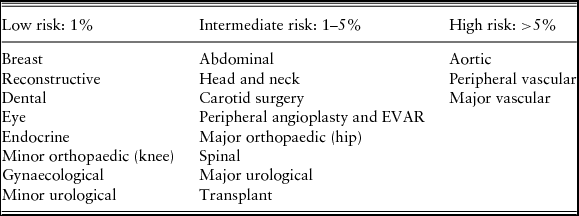
Since the 2007 review, comprehensive guidelines on the peri-operative management of cardiac disease have been published.Reference Poldermans, Bax and Boersma10, Reference Fleisher, Beckman and Brown11 The nature of the surgical procedure determines the 30-day risk of cardiovascular death and myocardial infarction, and this is summarized in Table 1. In this section we will address some of the frequently asked questions when preparing older patients for surgery.
30-day risk of cardiovascular death or myocardial infarction according to surgical site, modified from Poldermans et al.Reference Poldermans, Bax and Boersma10
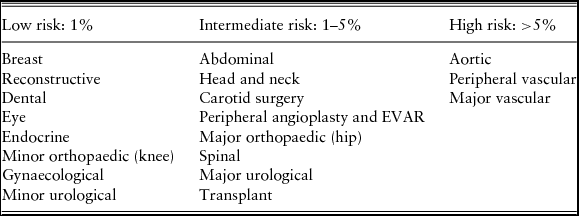
EVAR, endovascular aneurysm repair.
1. Which patients need pre-operative echocardiography?
In asymptomatic valvular heart disease, low and intermediate risk surgery can safely be performed without echocardiography.Reference Kapetanakis, Medlam and Boyce18 Moderate to severe aortic (AS) and mitral stenosis (MS) represent the highest peri-operative risk and may be of haemodynamic significance even when asymptomatic.Reference Vahanian, Baumgartner and Bax12 When AS or MS is ‘clinically suspected’ echocardiography is recommended before elective surgery. If severe disease is identified, valvular intervention is indicated before elective surgery.Reference Poldermans, Bax and Boersma10, Reference Fleisher, Beckman and Brown11 In the emergency setting, the need for pre-operative echocardiography remains controversial.Reference Heyburn and McBrien13 In such situations the benefits of delaying surgery for echocardiography must be balanced against the risks of anaesthetizing a patient with undiagnosed severe aortic stenosis.
2. Which patients need cardiac stress testing and pre-operative intervention?
Whilst reduced cardiovascular fitness and exercise tolerance are common in older people, these factors are also important predictors of adverse post-operative cardiovascular outcomes. Exercise tolerance should be objectively assessed pre-operatively using the scale of metabolic equivalents (METS).Reference Poldermans, Bax and Boersma10, Reference Fleisher, Beckman and Brown11 The ability to climb two flights of stairs is defined as METS = 4. Cardiovascular prognosis is excellent at this functional capacity, and further investigation does not change outcomes.Reference Poldermans, Bax and Boersma10–Reference Morris, Ueshima, Kawaguchi, Hideg and Froelicher14
The patient group most likely to benefit from stress testing includes patients with both cardiovascular risk factors and functional performance less than 4 METS, who are due to undergo high or intermediate risk surgery. In older people, musculoskeletal co-morbidity often limits the value of exercise testing, in which case pharmacological stress testing can be utilized (negative predictive value of 90–99% for peri-operative myocardial infarction).Reference Sicari, Nihoyannopoulos and Evangelista15 Coronary angiography should be reserved for patients with high risk features on stress imaging who are candidates for revascularization.Reference Poldermans, Bax and Boersma10, Reference Fleisher, Beckman and Brown11 These features include the presence of reversible large anterior wall defects, multiple reversible defects, ischaemia occurring at a low heart rate, extensive stress-induced wall motion abnormalities or transient ischaemic dilatation.Reference Poldermans, Bax and Boersma10, Reference Fleisher, Beckman and Brown11 In these cases re-vascularization should be achieved pre-operatively. The type of coronary intervention utilized must be carefully considered as deployment of stents may mandate dual anti-platelet therapy with consequent effects on surgical procedure (risk of bleeding). Balloon-only angioplasty may be preferred in this instance.Reference Poldermans, Bax and Boersma10, Reference Fleisher, Beckman and Brown11
3. Should anti-platelet agents be discontinued?
Coronary plaques are unstable after angioplasty. Surgery induces a pro-thrombotic state that increases the risk of in-stent thrombosis. In patients undergoing surgery within 45 days of angioplasty, the risk of myocardial infarction, revascularization or death is 6.7% for bare metal stents (BMS) and 20% for drug eluting stents (DES). The risk is 2.6% (BMS) and 4% (DES) between 45 and 180 days.Reference Wijeysundera, Wijeysundera and Yun16 Elective surgery should therefore be delayed for at least 6 weeks after deployment of BMS and for 12 months after DES: it should then be performed on aspirin alone.Reference Poldermans, Bax and Boersma10, Reference Fleisher, Beckman and Brown11 The risks of bleeding on aspirin are outweighed by the risk of thrombotic events if it is withdrawn, except in a minority of procedures (neurosurgery, posterior ophthalmic, middle ear and prostatic surgery).Reference Burger, Chemnitius, Kneissl and Rücker17
In patients where surgery cannot be delayed, a risk–benefit compromise must be reached. Withdrawal of anti-platelets increases the risk of ischaemic events with increased cardiac mortality. Though anti-platelets increase the risk of surgical bleeding by 50% with dual therapy, this increased bleeding is not associated with increased surgical mortality.Reference Kapetanakis, Medlam and Boyce18
Cardiology guidelines support withdrawal of the second anti-platelet agent only in surgery perceived to be of high bleeding risk, or where bleeding has catastrophic consequences. Surgeons are encouraged to operate on dual anti-platelet agents for all other procedures.Reference Poldermans, Bax and Boersma10 Acceptance of these guidelines is not yet universal.Reference Douketis, Spyropoulos and Spencer19
4. Does long-term anticoagulation need to be bridged in the peri-operative setting?
In anticoagulated patients, the risks of thrombo-embolism need to be balanced against the risks of surgical bleeding. Patients with valvular atrial fibrillation, prosthetic heart valves, mitral valve repair (<3 months), recent venous thrombo-embolism (<3 months) or thrombophilia are considered high risk.Reference Klamroth, Gottstein, Essers and Landgraf20 Controversy surrounds best practice and local policies vary;Reference Spyropoulos21, Reference Douketis22 however, European guidance recommends cessation of anticoagulation 5 days prior to surgery. Bridging with low molecular weight heparins should occur from day 3 until the evening before surgery. The majority of clinical guidance advocates the use of unfractionated heparin infusion in patients with mechanical heart valves.Reference Poldermans, Bax and Boersma10, Reference Fleisher, Beckman and Brown11
Increasing numbers of older patients are now using the new oral anticoagulants that have emerged as alternatives to vitamin K antagonists. Advice about when to stop the new oral anticoagulants before surgery is available, with timing being influenced by haemorrhagic risk of surgery, patient renal function and drug half-life.Reference Heidbuchel, Verhamme and Alings23 Institutions are advised to agree a policy that is widely communicated and readily available.
5. Should beta-blockers be given pre-operatively?
Early studies into peri-operative beta-blockade demonstrated reduced cardiovascular events and mortality.Reference Poldermans, Boersma and Bax24 However, this was followed by data showing increased incidence of stroke and mortality.Reference Devereaux, Yang and Yusuf25 This led to some controversy regarding the safety of peri-operative beta-blockade. However, the findings of the later study may have been related to fixed dose administration with no titration to heart rate. This resulted in frequent peri-operative hypotension. Meta-analysis data now support the judicious use of beta-blockers in the peri-operative period.Reference Bangalore, Wetterslev, Pranesh, Sahney, Gluud and Messerli26 Current European guidance recommends initiation in all patients undergoing high risk surgery,Reference Poldermans, Bax and Boersma10 though American guidelines advocate only in patients with known or probable ischaemic heart disease, or more than one cardiovascular risk factor. Beta-blockers should also be considered in patients with cardiovascular risk factors undergoing intermediate risk surgery.Reference Poldermans, Bax and Boersma10, Reference Fleisher, Beckman and Brown11 Long-acting agents are preferable and should be commenced at least one week before surgery.Reference Poldermans, Bax and Boersma10, Reference Fleisher, Beckman and Brown11 Dosing should be titrated to a target heart rate of 60–65 b.p.m. Older surgical patients often have other clinical indications for beta-blockade such as cardiac failure and atrial fibrillation.
6. What is the role of peri-operative statins?
Clinical trials using pre-operative statins have demonstrated a reduction in peri-operative cardiovascular events and mortality. This is particularly notable in vascular surgery.Reference Hindler, Shaw, Samuels, Fulton, Collard and Riedel27 In all patients undergoing high risk procedures and regardless of cardiac risk factors, statins should be started between 7 and 30 days before surgery.Reference Poldermans, Bax and Boersma10, Reference Fleisher, Beckman and Brown11 In patients with multiple cardiovascular risk factors, statins may also improve outcomes in intermediate risk surgery and initiation should be considered.Reference Williams and Harken28
7. What is the pre-operative role of brain natriuretic peptide?
Brain natriuretic peptide (BNP) is produced primarily in ventricular myocytes in response to cardiac ischaemia or wall stress. The sensitivity and specificity and normal range of BNP in older people with underlying co-morbidities such as renal disease is not yet established. However, BNP has been closely associated with both short- and long-term peri-operative complications and mortality.Reference Ryding, Kumar, Worthington and Burgess29 It is sensitive and specific for peri-operative cardiovascular events and carries a strong negative predictive value.Reference Leibowitz, Planer, Rott, Elitzur, Chajek-Shaul and Weiss30 BNP is most likely to play a role in patients of intermediate risk where cardiac disease is suspected.Reference Fox and Body31 A positive result allows risk stratification, investigation and optimization of function. Anaesthetic technique, invasive monitoring and high dependency care can be planned.
8. Does an implanted cardiac device need review before surgery?
Permanent pacemakers
Permanent pacemakers (PPM) must be distinguished from implanted cardiac defibrillators (ICD). Key questions for a PPM are battery life and programming. Guidelines require confirmation of adequate battery life within 3 months of surgery. Electromechanical interference from diathermy, lithotripsy and radiofrequency ablation can disrupt electrical sensing and inhibit pacing. Where surgery is expected to generate electromechanical interference within 15 cm of the device, pre-operative programming is required in patients who are pacing dependent.Reference Stone, Salter and Fischer32
Implanted cardiac defibrillators
Electromechanical interference can be sensed by ICD devices and interpreted as ventricular arrhythmia. This can result in inappropriate discharge of the ICD. If a source of electromagnetic interference is to be used intra-operatively, the ICD must be deactivated before surgery.Reference Stone, Salter and Fischer32
Pulmonary health
Post-operative pulmonary complications are common in older patients undergoing surgery and strongly contribute to peri-operative morbidity and mortality.Reference Smetana33 Data exist to support pre-operative cessation of smokingReference Myers, Hajek, Hinds and McRobbie34 and to support the optimization of poorly controlled pulmonary function in COPD and asthma.Reference Qaseem, Snow and Fitterman35 Even in patients undergoing general and vascular surgery without respiratory disease, peri-operative programmes of respiratory muscle training reduce the incidence of post-operative pneumonia and unplanned intubation.Reference Cassidy, Rosenkranz and McCabe36
With endemic obesity also affecting the older population, the prevalence of obstructive sleep apnoea (OSA) in older people is rising. OSA is increasingly recognized as a risk factor for peri-operative complications, length of stay and mortality.Reference Adesanya, Lee, Greilich and Joshi37 Screening of obese patients with tools such as the Epworth Sleep Scale may allow pre-operative diagnosis.Reference Lopes Neto, Brandão, Loli, Leite and Weber38 In patients with OSA, anaesthetic agents should be selected to minimize respiratory depression. Pre-operative continuous positive airway pressure ventilation (CPAP) has been shown to reduce pulmonary complications and length of stay in patients with OSA. Post-extubation, CPAP should be continued for up to 24–48 h.Reference Adesanya, Lee, Greilich and Joshi37
Diabetes mellitus
Diabetes is a common co-morbidity in surgical patients of all ages, yet increases with age and is present in 33% of those undergoing cardiothoracic surgery.Reference Feldman-Billard, Joubert and Morello39 Peri-operative diabetic control is complicated by starvation, interruption of normal drug regime and the stress response to surgery.40, Reference Lipshutz and Gropper41 Medication errors related to insulin prescription, and in particular variable rate insulin infusion, are common in surgical patients.42 Increased wound infection, medical complications and mortality occur more frequently in diabetic patients undergoing surgery. Sub-optimal pre-operative diabetic control is associated with adverse surgical outcomes.Reference Lipshutz and Gropper41 Though direct trial evidence does not exist to support a specific target HbA1c, expert consensus recommends aiming for pre-operative HbA1c of 65–75 mmol/mol (8–9%).Reference Gustafsson, Thorell, Soop, Ljungqvist and Nygren43 In the immediate peri-operative period, improved glycaemic control is associated with improved outcomes. However, both hypoglycaemia and hyperglycaemia have been shown to have deleterious effects and must be avoided.Reference Frisch, Chandra and Smiley44 Guidelines recommend that peri-operative capillary blood glucose should be in the range 6–10 mmol/l.40
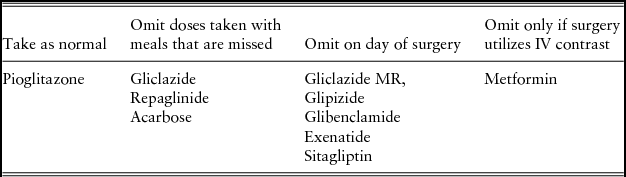
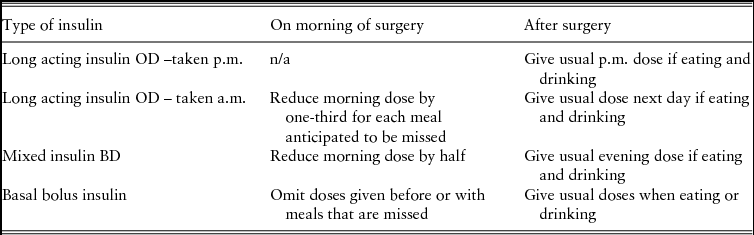
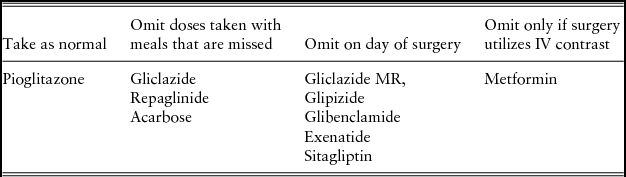
Management of the diabetic surgical patient has been standardized with the publication of a national guideline. This provides explicit instructions for the peri-operative management of hypoglycaemic medications (Table 2), subcutaneous insulin (Table 3) and avoidance of unnecessary intravenous insulin infusions.40
Day of surgery management of oral hypoglycaemic agents, modified from NHS Diabetes40
Peri-operative management of subcutaneous insulin, modified from NHS Diabetes40

Anaemia
Anaemia is common in older people undergoing elective and emergency surgery. Even mild anaemia is associated with increased peri-operative complications, length of stay, adverse functional outcomes and mortality.Reference Partridge, Harari, Gossage and Dhesi45 Many older patients proceed to surgery without comprehensive assessment of anaemia and opportunities for optimization are missed. This often results in allogenic blood transfusion, which is associated with poorer outcomes. This is due not only to complications directly related to transfusions, but also to the immunomodulatory effects, which are being increasingly recognized.Reference Glance, Dick and Mukamel46
Anaemia is best managed using the tailored approach of patient blood management aiming to optimize pre-operative haemopoiesis, reduce intra-operative blood loss and optimize tolerance of anaemia. Guidelines recommend checking haemoglobin (Hb) and haematinics 28 days before surgery.Reference Goodnough, Maniatis and Earnshaw47 Deficiencies should be replaced. Oral iron has been shown to be effective in orthopaedic and colorectal patients. Where pre-operative timeframes are short or oral iron is not tolerated, parenteral iron is feasible and effective.Reference Beris, Muñoz, García-Erce, Thomas, Maniatis and Van der Linden48 Some evidence supports the use of erythropoietin in anaemia of chronic disease where nutritional deficits have been excluded or corrected.Reference Hardwick, Morris and Colwell49
Liberal post-operative transfusion has not been shown to improve outcomes.Reference Carson, Carless and Hebert50 Restrictive transfusion policies have become mainstream, with typical transfusion Hb thresholds between 70 and 80 g/l. Restrictive transfusion thresholds in patients with advanced cardiorespiratory disease do not appear to be harmful, though data in this patient group are limited.Reference Carson, Terrin and Noveck51 It is unclear whether rehabilitation in older people is affected by post-operative anaemia.Reference Foss, Kristensen, Jensen, Palm, Krasheninnikoff and Kehlet52 Expert opinion advises considering cautious transfusion in symptomatic patients.Reference Carson, Terrin and Noveck53, Reference Carson, Grossman and Kleinman54
Frailty
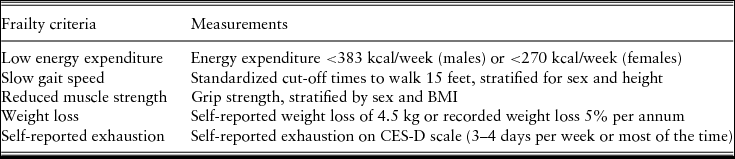
The importance of frailty in older surgical patients is being increasingly recognized in the surgical and anaesthetic literature. The clinical features of the frailty phenotype are summarized in Table 4. Recent studies have demonstrated an association between pre-existing frailty and adverse surgical outcomes. These include post-operative functional decline, institutionalization, morbidity and mortality.Reference Partridge, Harari and Dhesi55, Reference Makary, Segev and Pronovost56
Frailty phenotype criteria, derived from Makary et al.Reference Makary, Segev and Pronovost56
CES-D, Centre for Epidemiological Studies Depression scale.
Identification of frailty through pre-operative screening is now recommended.Reference Chow, Rosenthal and Merkow8 The reason for this is twofold: firstly to inform decision-making and proactive planning; and secondly to identify avenues for modifying frailty. In terms of decision-making, identification of frailty may inform peri-operative risk assessment, the risks of functional decline and need for rehabilitation or long-term care. This can allow proactive post-operative care and discharge planning.
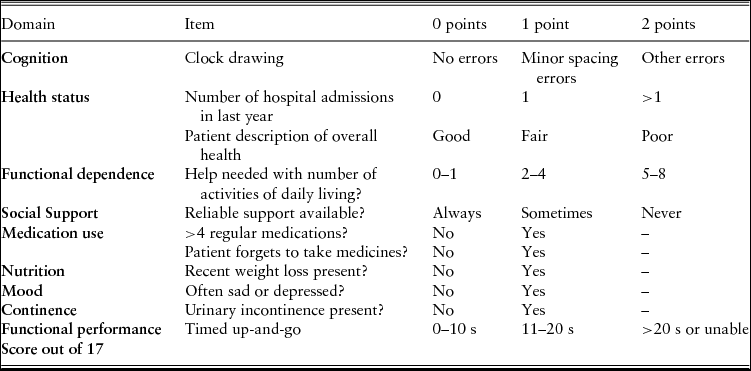
Many of the assessment tools and proxy measures used to identify frailty have not been validated for use in surgical populations. However, there is growing interest in the Edmonton Frailty Scale in this clinical setting. This is a 17-point tool (illustrated in Table 5) that is derived from the frailty index. It can be conducted in less than 5 minutes and is validated for use by non-specialists in surgical patients. It has good inter-rater reliability and is suitable for use in the pre-assessment clinic. Increasing scores represent increasing frailty. Scores >7 have been shown to correlate with increased complications, length of stay and institutional discharge in orthopaedic patients.Reference Dasgupta, Rolfson, Stolee, Borrie and Speechley57
Edmonton Frailty Scale, modified from Dasgupta et al.Reference Dasgupta, Rolfson, Stolee, Borrie and Speechley57
The natural history of frailty is not associated with universal progression, and in some patients frailty may be reversible.Reference Xue58 Exercise has been shown to prevent onset and delay progression of frailty.Reference Peterson, Giuliani and Morey59 A recent systematic review of pre-operative rehabilitation reports increased cardiopulmonary fitness and quality of life. This may translate into a reduction in intensive care use and length of stay.Reference O'Doherty, West, Jack and Grocott60 Details of the optimal type, duration and intensity of exercise are currently unknown.
Other avenues for modification of frailty include nutritional supplementation, including vitamin D replacement.Reference Rolland, Dupuy, Abellan van Kan, Gillette and Vellas61 This is based on evidence emerging from the literature on sarcopenia. Small trials are now reporting the outcomes of multi-component intervention specifically targeting aspects of the frailty syndrome. Functional outcomes and mortality appear to be improved, and the prevalence of frailty may be reduced.Reference Singh, Quine and Clemson62, Reference Cameron, Fairhall and Langron63
Peri-operative cognitive disorders
International guidance advocates cognitive screening of all older patients undergoing surgery,Reference Chow, Rosenthal and Merkow8 particularly as it is clear that cognitive impairment is widely under-diagnosed in older people.Reference Rait, Fletcher and Smeeth64 The benefits of pre-operative cognitive screening are threefold. First, dementia is a treatable condition and identification of a cognitive disorder allows referral to a specialist for diagnosis and treatment. Second, the identification of cognitive impairment mandates careful attention to the assessment of mental capacity and consent. Third, pre-existing cognitive impairment is a risk factor for delirium and the risk of delirium may be modifiable. Currently, no robust evidence supports the use of any specific cognitive screening tool pre-operatively. However, the mini-Cog™ is suitable because in combining clock drawing with recall, it tests a range of cognitive domains in under 4 minutes.Reference Borson, Scanlan, Chen and Ganguli65
There is growing interest in the impact of surgery and anaesthesia on post-operative cognitive function.Reference Crosby, Culley and Hyman66 The literature refers to three conditions, post-operative delirium (POD), post-operative cognitive dysfunction (POCD) and dementia. POD is common in older surgical patients. It is associated with prolonged hospitalization, increased peri-operative complications, institutionalization and mortality.Reference Robinson, Raeburn, Tran, Angles, Brenner and Moss67 The identification of risk factors for delirium should trigger prevention strategies such as those described in the HELP model. These multi-component delirium interventions have been demonstrated to prevent delirium and functional decline in older patients undergoing orthopaedic and general surgery.Reference Marcantonio, Flacker, Wright and Resnick68, Reference Chen, Lin, Tien, Yen, Huang and Inouye69 There is a suggestion that prophylactic anti-psychotic agents including haloperidol, risperidone and olanzapine may reduce the incidence and duration of post-operative delirium, but there is no consensus on their use in routine clinical practice.Reference Teslyar, Stock, Wilk, Camsari, Ehrenreich and Himelhoch70 Prophylactic melatonin may reduce delirium in older medical patientsReference Al-Aama, Brymer, Gutmanis, Woolmore-Goodwin, Esbaugh and Dasgupta71 and a larger randomized control trial is ongoing in orthogeriatric patients.
In comparison with POD, which is clearly defined by DSM-V,72 POCD, although frequently referred to in the literature, lacks a precise definition. It is considered to be a change in neurocognitive state persisting beyond the immediate post-operative period, but lacks a universally accepted definition. The largest study to date on POCD quoted a point prevalence of 25% at 1 week post-operatively, and 10% at 3 months, but this work did not adequately screen for, or exclude delirium or underlying dementia.Reference Moller, Cluitmans and Rasmussen73
Recent epidemiological studies have reported an association between anaesthesia in older people and dementia.Reference Sztark, Le Goff, André, Ritchie, Dartigues and Helmer74 Interestingly, inhalational anaesthetic agents have been shown to promote cerebral amyloid oligomerization in animal models, which is part of the pathophysiology of Alzheimer's disease. There is a pressing need for further research in this field.
Polypharmacy and medication review
Both the pharmacokinetics and pharmacodynamics of drug metabolism are altered with ageing. In particular, there is altered volume of drug distribution, which together with altered renal excretion, hepatic metabolism and hypoalbuminaemia affects drug plasma concentration.Reference Kristjansson, Spies and Veering75 These factors make older people vulnerable to unpredicted side-effects and toxicities. This may be further complicated by polypharmacy, which in itself is associated with cognitive impairment, increased morbidity and mortality.Reference Gnjidic, Hilmer and Blyth76 It is therefore not surprising that adverse drug reactions, prescribing errors and hospital admissions are more common in patients on polypharmacy, the majority of whom are old.
It is therefore imperative that pre-operative assessment includes a medication review. The focus should be on optimization of medical co-morbidities, but this is also an opportunity to reduce or withdraw drugs that are redundant or associated with adverse post-operative outcomes, such as delirium.Reference Chow, Rosenthal and Merkow8
Depression
Depression is common in older patients and more likely in those with multi-morbidity. It is associated with poorer outcomes in cardiothoracic, spinal, orthopaedic and colorectal surgery. Complications not only reflect poor rehabilitation, higher pain perception and increased length of stay, but also post-operative infection and mortality.Reference Balentine, Hermosillo-Rodriguez, Robinson, Berger and Naik77, Reference Bozic, Lau, Kurtz, Ong and Berry78 Screening for depression is recommended, but data to support the use of a specific tool is limited.Reference Chow, Rosenthal and Merkow8
The effect of pre-operative treatment of depression on surgical outcomes has not yet been studied. Furthermore, concerns exist surrounding the peri-operative safety of selective serotonin uptake inhibitors (SSRI). Recent evidence shows that SSRIs are associated with increased risk of bleeding, readmission and peri-operative mortality.Reference Auerbach, Vittinghoff, Maselli, Pekow, Young and Lindenauer79 Routine cessation of long-standing SSRIs is however not advised pre-operatively because it results in increased post-operative depressive symptoms and delirium.Reference Kudoh, Katagai and Takazawa80 Many older patients undergoing surgery are frail and underweight. Mirtazepine may successfully treat depression whilst also promoting weight gain.
Pain control
Nociception does not change with ageing. However, the recognition of pain in older patients may be complicated by cognitive disorders, communication difficulties, language and cultural barriers. Unsurprisingly, pain is under-recognized and under-treated in older people.Reference Abdulla, Adams, Bone, Elliott, Gaffin, Jones, Knaggs, Martin, Sampson and Schofield81 Under-treated post-operative pain is associated with delirium, delayed mobilization and functional recovery. Furthermore, the incidence of thrombo-embolism, ileus, respiratory and cardiac complications are more common with uncontrolled pain.Reference Bader, Echtle, Fonteyne, Livadas, De Meerleer, Paez Borda, Papaioannou and Vranken82 Peri-operative pain control in older people should employ a multimodal approach.
Pre-operative management of chronic pain
Uncontrolled pre-operative pain is a risk factor for poorly controlled post-operative pain and increased opiate use. Surgical pain cannot be managed solely by maintenance of long-term analgaesia. Post-operatively, patients taking long-term opiates typically need 2–4 times the doses used by the opioid-naive. Oral modified-release opiates should be given pre-operatively on the morning of surgery and restarted as soon as a patient is able to take them orally. Transdermal patches are increasingly used to control chronic pain in older people. They should not be discontinued pre-operatively, but are not pharmacokinetically suited to the titration of acute pain. Drug absorption from patches may be increased where surgical stress or infection has triggered a systemic inflammatory response. In patients fasting for a prolonged period, or those with poor oral absorption, opiate analgaesia should be delivered parenterally as a background infusion. Conversion tables allow calculation of equivalent parenteral doses. Supplementary patient controlled analgesia should be used to meet acute pain requirements.Reference Abdulla, Adams, Bone, Elliott, Gaffin, Jones, Knaggs, Martin, Sampson and Schofield81–Reference Farrell and McConaghy83
If anti-convulsants for chronic neuropathic pain are withdrawn pre-operatively, patients can suffer from increased pain and opiate requirements. Peri-operative use of anti-convulsants has been shown to be safe and therefore should not be discontinued.Reference Ho, Gan and Habib84
Post-operative pain
Post-operative pain control should begin intra-operatively to reduce the surgical stress response. This may involve the use of epidural anaesthesia, wound infiltration, local and regional nerve blocks. These improve pain control and reduce post-operative opiate requirements. They are safe and effective in older people and may also reduce post-operative respiratory complications and delirium.Reference Bader, Echtle, Fonteyne, Livadas, De Meerleer, Paez Borda, Papaioannou and Vranken82, Reference Aubrun and Marmion85
Post-operative pain assessment should be conducted using adapted pain scales for patients with cognitive or communication difficulties. Non-opiate adjuncts such as non-steroidal anti-inflammatory drugs (NSAIDS) and paracetamol reduce opiate requirements. Paracetamol should be used as a first-line drug for treating pain. The use of NSAIDs in older people is limited by side-effects. Guidelines recommend co-administration of a proton pump inhibitor where NSAIDs are used systemically.Reference Abdulla, Adams, Bone, Elliott, Gaffin, Jones, Knaggs, Martin, Sampson and Schofield81
Where paracetamol and NSAIDS are unable to control pain, weak opiates are indicated. Genetic polymorphism causes variable metabolism of codeine to active metabolites. This leads to unpredictable efficacy and toxicity. Accumulation of metabolites occurs where renal excretion is impaired, and weak opioid use is often limited by side-effects such as constipation. There is no evidence to suggest either codeine or dihydrocodeine is better tolerated in older adults.Reference Abdulla, Adams, Bone, Elliott, Gaffin, Jones, Knaggs, Martin, Sampson and Schofield81 Tramadol, however, has secondary monoamine oxidase activity. This can induce delirium and it should be avoided in older patients. All opioid analgaesia should be co-prescribed with laxatives to prevent constipation.Reference Abdulla, Adams, Bone, Elliott, Gaffin, Jones, Knaggs, Martin, Sampson and Schofield81–Reference Aubrun and Marmion85
Strong opioid analgaesia
Post-operative pain can often only be controlled with opiate analgesia. Concern over the use of strong opioids in older people has led to under-use of opioid analgesia. However, opioid patient-controlled analgesia is safe and effective in older age. It reduces respiratory complications and increases patient satisfaction.Reference Lisi86 Morphine metabolism is complex and conversion to renally excreted active metabolites occurs. In older patients with reduced glomerular filtration rate (GFR), cautious dose-adjustment for renal function should be exercised. Oxycodone displays pharmacokinetics independent of age, renal function and serum albumin concentration. It is preferred in patients with impaired GFR. Transdermal preparations are increasing in popularity. Fentanyl and buprenorphine are useful for controlling stable pain, though less useful acutely due to slow onset. Fentanyl is metabolized by the liver with minimal renal excretion, making it suitable for those with renal impairment.Reference Abdulla, Adams, Bone, Elliott, Gaffin, Jones, Knaggs, Martin, Sampson and Schofield81, Reference Bader, Echtle, Fonteyne, Livadas, De Meerleer, Paez Borda, Papaioannou and Vranken82, Reference Aubrun and Marmion85
Nutrition
Malnutrition is present in up to 19% of hospitalized older patients.Reference Edington, Boorman and Durrant87 Poor nutritional status is associated with increased risk of post-operative complications including infection, anastamosis leak, and increased length of stay.Reference Charlton, Nichols and Bowden88 Pre-operative screening for malnutrition is essential. Guidelines recommend recording height, weight, albumin, BMI and unintentional weight loss.Reference Chow, Rosenthal and Merkow8 Abnormal levels of proposed nutritional biomarkers such as albumin and transferrin have been shown to be associated with adverse surgical outcomes. However, they are both flawed by their low sensitivity and specificity for impaired nutritional state.Reference Banh89 Screening tools, such as the Malnutrition Universal Screening Tool, can be used in the surgical setting to accurately identify malnutrition and predict post-operative complications.Reference Lomivorotov, Efremov and Boboshko90
Pre-operative measures
In severely undernourished patients, feeding should be supplemented for 10–14 days before major surgery. Where enteral feeding cannot achieve this, parenteral nutrition is indicated.Reference Braga, Ljungqvist, Soeters, Fearon, Weimann and Bozzetti91 The enhanced recovery programme emphasizes other areas of evidence-based practice that minimize disruption to pre-operative nutrition. These include a reduction in duration of pre-operative fasting to 6 h pre-anaesthesia. Clear fluids may also now be taken until 2 h before surgery. Routine pre-operative bowel preparation for gastrointestinal surgery is no longer recommended because it has no effect on surgical complication rates but has been shown to promote dehydration.Reference Brady, Kinn and Stuart92 Carbohydrate polymer drinks should be consumed the night before and 2 h before surgery. These drinks have been shown to prevent reduction of post-operative lean body mass and length of stay.Reference Gustafsson, Scott and Schwenk93
Post-operative feeding
Early feeding after gastrointestinal surgery reduces post-operative infection and length of stay. Where enteral nutrition is not feasible or tolerated in a malnourished patient, parenteral nutrition should be commenced. Parenteral nutrition may also be required in previously well-nourished patients where complete nutritional needs are not met enterally for 7 days due to gastrointestinal compromise.Reference Braga, Ljungqvist, Soeters, Fearon, Weimann and Bozzetti91, Reference Gustafsson, Scott and Schwenk93
Alcohol dependence
Alcohol dependence in older people is under-recognized. Alcohol withdrawal is associated with increased peri-operative infection, length of stay and poorer outcomes of surgery.Reference Genther and Gourin94 Pre-operative screening of patients for alcohol dependence allows referral to a cessation programme pre-operatively.Reference Oppedal, Møller, Pedersen and Tønnesen95 Though the CAGE questionnaire has been validated in older patients, other novel tools have been designed and studied in the peri-operative setting and may prove more suitable to surgical pre-assessment.Reference Agabio, Gessa and Montisci96 Guidelines recommend the prophylactic use of peri-operative vitamins, thiamine and protocolized pharmacological treatment of withdrawal.Reference Chow, Rosenthal and Merkow8 Further research is needed to identify optimal drug regimens, timing and intensity of treatment.Reference Oppedal, Møller, Pedersen and Tønnesen95
Risk assessment and admission to intensive care
Age is not an independent risk factor for intensive care unit (ICU) mortality. However, factors that are age-related, including disease severity, co-morbidity and poor functional capacity, are closely linked to adverse ICU outcomes.Reference Nguyen, Angus, Boumendil and Guidet97 However, selected older patients do benefit from ICU admission. Following ICU discharge, the majority demonstrate good cognition, quality of life, functional independence and are discharged to home.Reference Tabah, Philippart and Timsit98 Late admission to ICU in critically ill older people results in higher mortality compared with early, planned admission.Reference Simchen, Sprung and Galai99
Which patients should have planned ICU admission?
The use of planned ICU admission following surgery has not been studied extensively. In elective surgery, planned admissions to ICU are typically based on expert opinion. Specific co-morbidities that may trigger ICU admission include severe cardiac, renal or respiratory disease, obstructive sleep apnoea and coagulopathy. Mortality rates using this approach are lower than would be predicted by validated risk prediction tools for the study population.Reference Cavaliere, Conti, Costa, Masieri, Antonelli and Proietti100
Risk assessment provided by an individual can be difficult to reproduce and standardize. Cardiopulmonary exercise testing (CPET) has been shown to identify patients at high risk of peri-operative mortality. Low anaerobic thresholds (<11 ml/kg/min) allow triage of high risk patients to planned ICU admission.Reference Stringer, Casaburi and Older101 Risk prediction tools have also been developed to predict post-operative morbidity and mortality. POSSUM and its variants generate percentage scores on the basis of clinical, biochemical, haematological and surgical factors.Reference Tran Ba Loc, du Montcel and Duron102 No work yet provides clear guidance on specific percentage thresholds at which ICU admission should be planned.
A recent study in hip replacement surgery found that age >74 years, revision surgery, chronic kidney disease (CKD) stages 3–5, previous myocardial infarction and body mass index (BMI) >35 were independent risk factors for post-operative ICU admission. Unplanned admission to ITU occurred in 75% of those with two risk factors, and 94% with three.Reference Kamath, McAuliffe, Baldwin, Lucas, Kosseim and Israelite103 An intervention study based on this work triaged ICU admission in patients with two or more risk factors. Complications, unplanned ICU admission and mortality were significantly reduced.Reference Kamath, Gutsche, Kornfield, Baldwin, Kosseim and Israelite104 However, the resource implications of using this model are currently prohibitive. Until such tools have been refined and validated across a variety of surgical disciplines, planned ICU admission should be conducted on the basis of multidisciplinary risk assessment. This process should be informed by predictive risk assessment tools such as POSSUM.
Models of surgical care
Pre-operative surgical pathways are designed primarily to assess anaesthetic and intra-operative risk. Protocolized assessment is typically conducted by junior doctors or nurses with little senior supervision. Whilst this may be sufficient for some patients, it is not suited to the complex older person with multiple medical problems. Without skilled assessment and optimization, these patients suffer high cancellation and complication rates.Reference Farhat, Velanovich and Falvo5, 6
Outcomes data clearly demonstrate that anaesthesia and surgical procedures are becoming safer. Complications in older surgical patients often occur after return to the ward.Reference Khuri, Henderson, DePalma, Mosca, Healey and Kumbhani105 Medical care is delivered by junior surgical doctors, with varied levels of senior supervision, and nursing care is not always focused on the needs of the older person. Complications are treated reactively rather than through proactive anticipation. Pathways for early medical review may not exist.
Various models of care exist to counter these weaknesses. Examples include the enhanced recovery programme (ERP).106 This incorporates four key elements of care into a protocolized patient pathway. Robust pre-operative assessment with planning, patient education and preparation pre-admission occurs. Intra-operative surgical and anaesthetic technique are standardized to conform to evidence-based practice. Immediate post-operative pain control and monitoring is protocolized. Early mobilization and nutrition are emphasized. Evidence to support ERP is extensive in varied surgical specialties. It is becoming standard practice, though evidence for its efficacy in older patients is less extensive.
Pre-assessment clinics supported by senior anaesthetists have also been used successfully and shown to reduce cancellations, complications and peri-operative mortality.107 Though this model of care has been used very successfully, the anaesthetic focus is naturally on the immediate peri-operative period. Complications of surgery in older people typically occur when anaesthetic support has withdrawn. In older patients, common complications are exacerbated by the geriatric syndromes, in particular functional decline and failure to rehabilitate.Reference Farhat, Velanovich and Falvo5–Reference Harari, Hopper and Dhesi7 The expertise for managing these syndromes lies with geriatricians. Proactive geriatric surgical liaison incorporates pre-operative comprehensive geriatric assessment (CGA). This multidisciplinary process allows assessment of both recognized and unrecognized disease, peri-operative risk assessment and medical, functional and psychosocial optimization.Reference Kamal, Conway, Littlejohn and Ricketts108 This is followed by post-operative medical review and multidisciplinary discharge planning. This model reduces both post-operative complications and length of stay, and is becoming more widespread.Reference Harari, Hopper and Dhesi7
Conclusions
Global populations are rapidly ageing. Degenerative and neoplastic diseases increase with advancing age, and surgery is increasingly being performed on older patients. Though surgical procedures and anaesthesia are increasingly safe, age is closely linked with increasing medical co-morbidity and frailty. The physiological changes of ageing add complexity to the peri-operative management of older people. These factors combined result in poorer outcomes of surgery in older patients.
The evidence base for the peri-operative management of co-morbidities and geriatric syndromes is expanding. The challenges of delivering the best quality care have been identified, and innovative models of care are evolving to suit the needs of older surgical patients. Highly skilled, specialist surgeons cannot be expected to become experts in geriatric medicine and there is an increasing call for collaborative work between surgeons, anaesthetists and geriatricians.
Conflicts of interest
The authors declared no conflicts of interest.
Financial support
D.J.H.S. received financial support from Guy's and St Thomas’ Charity. D.H. received support from Macmillan Cancer Support and Guy's and St Thomas’ Charity.