





Introduction
With the largest Muslim population in Southeast Asia, Indonesia plays a key role in developing Islamic economics and finance. However, it also faces complex socio-environmental challenges that require urgent solutions. Within this context, Islamic philanthropy instruments, especially waqf, have gained significant attention because of their dual function of promoting social welfare and economic development (Tahiri Jouti, Reference Tahiri Jouti2019). Previous studies have highlighted the potential of waqf to support social welfare and economic development, beyond its capacity to alleviate poverty, as noted by Uluyol et al. (Reference Uluyol, Secinaro, Calandra and Lanzalonga2021) and Ari and Koc (Reference Ari and Koc2021). Another study showed that waqf can also help reduce inequality and provide essential public services typically funded by the government, such as education, healthcare, food security, housing, and transportation (Mohsin, Reference Mohsin2013). Cash waqf has emerged as a more accessible and scalable alternative in Indonesia (Aldeen et al., Reference Aldeen, Ratih and Sari Pertiwi2022). The potential for cash waqf remains largely untapped, with annual estimates reaching IDR 180 trillion (USD 11 billion) but actual collections totaling only IDR 3.02 trillion (USD 183 million) as of December 2024 (Ascarya et al., Reference Ascarya, Hosen and Rahmawati2022, Reference Ascarya, Sukmana, Rahmawati and Masrifah2023).
Despite Indonesia’s significant socioeconomic potential, public literacy and inclusion in the Islamic economy and financial instruments, particularly waqf, remain relatively low. According to the 2020 National Waqf Literacy Survey conducted by the BWI, BAZNAS, and the Ministry of Religious Affairs, the Waqf Literacy Index was at 50.48 out of 100, categorized as low to moderate. This disparity highlights a crucial gap in the public understanding of waqf, despite its critical role in supporting social welfare. Therefore, greater efforts are needed to improve public understanding, strengthen intention, and encourage wider participation in waqf. At the same time, technology has become increasingly embedded in daily life and plays a central role in decision-making, financial management, and social participation (Kim & Yang, Reference Kim and Yang2016). It also offers unique opportunities to accelerate financial inclusion, particularly for underutilized instruments such as waqf (Benson et al., Reference Benson, Hand and Hartshorne2019; Sun-Keung Pang et al., Reference Sun-Keung Pang, Wang and Lai-Mei Leung2016). Therefore, game-based learning (GBL) has emerged as a promising solution that integrates interactive experiences with structured educational objectives.
In this study, Roblox was chosen as the learning platform due to its widespread use by young people and its immersive, social, and interactive environment, which appeals to the preferences of adolescent learners. According to Han et al. (Reference Han, Liu and Gao2023), Roblox has considerable educational potential because it can support collaborative and socially interactive learning, foster positive student attitudes, and enhance both cognitive and non-cognitive learning outcomes. This platform is particularly relevant to high school students, who represent an important early audience for waqf education. High school students are a strategically significant target demographic due to their ability to make small independent spending decisions, such as charitable giving from their allowance, and their ability to transmit newly acquired knowledge to their peers and families (Berakon et al., Reference Berakon, Aji and Hafizi2022; Choi et al., Reference Choi, Kim, Chung and Lee2019; Deng et al., Reference Deng, Jiang, Li and Ye2024). In addition, they possess a profound understanding of digital and interactive media, making them particularly well-suited for technology-based educational interventions.
The suitability of Roblox for high school students is also consistent with broader findings in the literature on GBL. GBL enhances empathy, critical thinking, and intention to engage in socially responsible actions, including in nonprofit and philanthropic settings (Gugenishvili & Nyström, Reference Gugenishvili and Nyström2024; Leitner et al., Reference Leitner, Greenwald, Wang, Montgomery and Merchant2023). Rahman et al. (Reference Rahman, Wahid, Ahmad and Ali2024) also found that the use of GBL is effective in increasing students’ knowledge and motivation. In the context of financial and philanthropic domains, the integration of GBL into education aligns with broader behavioral research trends. In nonprofit studies, experimental designs have shown how specific interventions, such as reputation signals or expert endorsements, can shape the intention to donate or other prosocial behaviors (Ogiso & Mano, Reference Ogiso and Mano2025; Peng et al., Reference Peng, Kim and Deat2019). These findings reinforce the use of behavioral frameworks, such as the theory of planned behavior (TPB), to understand and predict intention formation, especially when combined with interactive and digitally mediated learning experiences.
Therefore, this study aims to examine the effect of a GBL intervention on the intention of individuals to participate in waqf. Although previous studies on waqf have provided valuable insights into the determinants of waqf participation, the literature remains dominated by qualitative inquiries and cross-sectional quantitative designs, with limited use of direct interventions or experimental approaches to examine how intention can be strengthened in practice (Aldeen et al., Reference Aldeen, Ratih and Herianingrum2020; Mohamad et al., Reference Mohamad, Yahaya, Abd Latib, Ishak, Izham and Hasbullah2023; Sukmana, Reference Sukmana2020). Similarly, while TPB has been widely applied to explain waqf intention, intervention-based empirical studies remain scarce in this field (Ismail et al., Reference Ismail, Ismail, Mohamad, Suyurno and Hashim2023; Shofiatin et al., Reference Shofiatin, Supriani, Al-Kilani and Widiyanti2025; Uluyol et al., Reference Uluyol, Secinaro, Calandra and Lanzalonga2021). Recent reviews and meta-analyses have highlighted the need for more rigorous empirical research to validate behavioral models and reduce the limitations of correlational findings in waqf studies (Aldeen et al., Reference Aldeen, Ratih and Herianingrum2020; Mohamad et al., Reference Mohamad, Yahaya, Abd Latib, Ishak, Izham and Hasbullah2023). To address this gap, this study adopts a pre- and post-test experimental design grounded in the TPB framework to evaluate how GBL influences literacy and behavioral intention in the context of waqf.
This study advances a twofold behavioral theory on the formation of philanthropic intention. First, the determinants of the TPB are treated as configurations that a designed intervention can reshape rather than as fixed antecedents. Second, it develops an experiential learning extension of the framework, in which GBL alters the pathways through which intention is formed. These contributions are developed in detail in the Section “Theoretical contribution of the study.”
Literature review
Determinants of Waqf intentions
Waqf is a vital Islamic philanthropic instrument that involves the perpetual dedication of assets or funds for charitable, social, and religious purposes. It is not only an act of spiritual devotion but also a sustainable form of social investment for the collective welfare of the community (Ahmed, Reference Ahmed2004; Rizal & Amin, Reference Rizal and Amin2017). Historically, waqf financed key services like education, healthcare, and welfare (Cizakça, Reference Cizakça2000; Listiana et al., Reference Listiana, Alhabshi and Harjunadhi2020) and remains relevant for today’s socioeconomic challenges (Ari & Koc, Reference Ari and Koc2021; Elmahgop et al., Reference Elmahgop, Alsulami, Mohammed, Abdel-Gadir and Elhassan2025). In Indonesia, productive waqf shows strong potential to reduce poverty, especially when supported by government policy and instruments such as cash waqf–linked sukuk and Islamic bank partnerships (Ascarya et al., Reference Ascarya, Sukmana, Rahmawati and Masrifah2023; Putra et al., Reference Putra, Saputra, Possumah and Hasyim2023). These findings underscore the evolving potential of waqf as a strategic instrument for inclusive development in Muslim societies.
As waqf evolves as a development tool, it is crucial to identify the drivers of individual participation. Religiosity is a consistent predictor (Alimusa et al., Reference Alimusa, Sukmana, Ratnasari, Machfud and Latif2025; Kasri & Chaerunnisa, Reference Kasri and Chaerunnisa2022; Masrizal et al., Reference Masrizal, Huda, Harahap, Trianto and Sabiu2023; Shukor et al., Reference Shukor, Anwar, Aziz and Sabri2017), but its influence varies. Among Indonesian SME owners, religiosity was less significant than business motives, financial literacy, and institutional benefits (Laila et al., Reference Laila, Ratnasari, Ismail, Hidzir and Mahphoth2023), suggesting that pragmatic factors may outweigh spiritual ones in entrepreneurial contexts.
Beyond religiosity, literacy in waqf significantly shapes participation. It directly influences intention and strengthens the effects of attitude, norms, and perceived control. Higher waqf knowledge increases trust in digital platforms and reinforces the translation of positive attitudes and social expectations into participation intention (Asyari et al., Reference Asyari, Hoque, Susanto, Begum, Awaluddin, Marwan and Mamun2024; Kasri & Chaerunnisa, Reference Kasri and Chaerunnisa2022). In support of these findings, Rohmana et al. (Reference Rohmana, Juliana, Utami, Ismail and Marlina2024) showed that among university students, waqf literacy was primarily influenced by education level and access to media, whereas religiosity had a more marginal effect. This suggests that improving waqf literacy through education and information access may be especially effective in shaping intention among younger and digitally engaged populations.
As previously mentioned, TPB has consistently been recognized as a robust framework for explaining behavioral intention across various contexts. According to the TPB, intention is primarily influenced by three psychological constructs: attitudes, subjective norms, and perceived behavioral control (PBC) (Ajzen, Reference Ajzen1991). Several empirical studies confirms the relevance of TPB in the waqf context, for instance Najmuddin et al. (Reference Najmuddin, Johari, Alwi, Mansour and Bujosa Vadell2023) and Sulaiman et al. (Reference Sulaiman, Shukor, Mursidi and Aziz2024).
Beyond TPB, Millán et al. (Reference Millán, Retamosa and Carranza2024) demonstrated that emotional identification with nonprofit institutions also significantly strengthens donor commitment. This result indicates that the perceived alignment between personal identity and organizational values is also a key motivator of philanthropic engagement. Similarly, Naeem and Zaman (Reference Naeem and Zaman2016) emphasized that cultural context, gender, and income levels also influence charitable behavior. Income-segmented studies similarly found that middle- and upper-income Muslims were less influenced by subjective norms and more driven by personal conviction (Maulina et al., Reference Maulina, Dhewanto and Faturohman2025). Additionally, Jatmiko et al. (Reference Jatmiko, Haidlir, Azizon, Laksmono and Kasri2024) supported these findings through an intergenerational analysis, which revealed that older generations were more influenced by religious values, whereas younger generations emphasized digital access and knowledge. Therefore, these findings underscore that waqf intention is shaped not only by individual psychological constructs, as emphasized in the TPB model, but also by generational characteristics, institutional trust, and sociocultural dynamics that must be addressed through tailored engagement strategies.
Game-based learning and behavioral intention
Literacy acts both as a direct and mediating factor that positively influences behavioral intentions toward waqf behavior (Asyari et al., Reference Asyari, Hoque, Susanto, Begum, Awaluddin, Marwan and Mamun2024; Kasri & Chaerunnisa, Reference Kasri and Chaerunnisa2022). Digital literacy, transparency, and user convenience have become crucial as contemporary waqf becomes increasingly digital, personalized, and trust-sensitive, especially among younger demographics (Kasri & Chaerunnisa, Reference Kasri and Chaerunnisa2022). Although previous studies have established the determinants of waqf intention, they provide limited insight into how educational interventions can strengthen these determinants. In this regard, GBL has emerged as a promising educational approach that combines structured learning objectives with immersive and interactive experiences that facilitate deeper understanding and long-term knowledge retention.
Evidence from the broader GBL literature consistently suggests that interactive learning environments enhance both cognitive and behavioral outcomes, although different studies have emphasized different mechanisms. Research on gamification demonstrates that game-informed instructional strategies improve learners’ comprehension and literacy through active participation and structured challenges (AlZuhair & Alkhuzaim, Reference AlZuhair and Alkhuzaim2022; Yuriananta et al., Reference Yuriananta, Suyitno, Basuki and Susanto2023). Similarly, educational initiatives such as InfoSkills2Go and Fantasy Brand Leagues illustrate how badges and gamified learning activities can improve students’ understanding of complex literacy concepts (Kingsley & Grabner-Hagen, Reference Kingsley and Grabner-Hagen2015). Extending these findings, broader GBL research has shown positive effects on learner motivation, engagement, academic performance, and critical thinking across various educational settings (Mao et al., Reference Mao, Cui, Chiu and Lei2022; Tokac et al., Reference Tokac, Novak and Thompson2019; Wang et al., Reference Wang, Chen, Hwang, Guan and Wang2022). Collectively, these studies suggest that the educational value of GBL lies not merely in the use of game elements, but also in their ability to create meaningful learning experiences that encourage active cognitive engagement.
Roblox represents a particularly suitable environment among the available GBL platforms because of its widespread adoption among young learners and its capacity to support collaborative, social, and user-generated learning experiences. Roblox fosters positive attitudes toward learning while enhancing both cognitive and non-cognitive outcomes (Han et al., Reference Han, Liu and Gao2023). Roblox is also perceived by students as an engaging digital learning environment that supports multimodal literacy development and collaborative learning (Sinar et al., Reference Sinar, Budiman, Ganie and Rosa2023). Accordingly, Roblox was selected in this study not as the object of investigation but as a platform capable of operationalizing the experiential characteristics of GBL within the context of waqf education.
In addition to improving learning outcomes, GBL has also demonstrated considerable potential to influence real-world prosocial behavior. Rather than merely increasing knowledge, immersive game experiences appear to be capable of strengthening intrinsic motivation and encouraging behavioral transfer beyond the learning environment. For example, Kammermann et al. (Reference Kammermann, Türkay, Johnson and Tobin2025) found that players who voluntarily engaged in helping behaviors during gameplay were significantly more likely to donate real money to charity afterward. Importantly, the authors linked this behavioral transfer to psychological mechanisms that closely resemble the TPB, showing that favorable attitudes toward helping and perceived moral responsibility contributed to charitable behavior. Several studies have reported that learners’ perceptions of game effectiveness positively influence motivation, self-efficacy, engagement, and behavioral intentions across diverse educational contexts (Egashira et al., Reference Egashira, Son and Ema2022; Leitner et al., Reference Leitner, Greenwald, Wang, Montgomery and Merchant2023; Rahman et al., Reference Rahman, Wahid, Ahmad and Ali2024; Videnovik et al., Reference Videnovik, Vold, Kiønig, Madevska Bogdanova and Trajkovik2023). Although these studies were conducted outside the context of waqf, they collectively suggest that behavioral change depends not only on what learners know but also on how they perceive and experience the educational intervention itself. This provides a strong rationale for examining Perceived Game Effectiveness as a mechanism through which GBL may strengthen the psychological determinants of waqf intention.
Methods
Subjects
This study employed a quasi-experimental approach that targeted high school students as research subjects (Manu & Gala, Reference Manu and Gala2023; Sconti, Reference Sconti2022). Although high school students generally do not have their own income, they are typically capable of making independent decisions, including allocating a portion of their allowance to charitable donations. Advancements in technology have further facilitated this behavior by enabling easier donation processes, often without requiring large amounts of donation (Berakon et al., Reference Berakon, Aji and Hafizi2022; Choi et al., Reference Choi, Kim, Chung and Lee2019). In addition to understanding the significance of waqf and cultivating empathy, students can also act as agents of change by conveying the knowledge gained from waqf education to their families and close circles (Deng et al., Reference Deng, Jiang, Li and Ye2024).
This study employed a within-subjects quasi-experimental design, specifically a one-group pre-test–post-test model, to assess the impact of GBL on students’ waqf literacy and intention. The within-subject approach allows each participant to serve as their own control, enabling a more accurate observation of changes before and after the intervention. By comparing the responses of the same group under both conditions, this design helps reduce individual variability and increases the reliability of the findings.
The use of experimental and quasi-experimental methods has been increasingly applied in nonprofit and philanthropic research to examine how targeted interventions shape behavioral intentions. Studies on nonprofit reputation, expert endorsements, and dictator game experiments show that social cues, framing effects, and donation schemes can significantly influence charitable behavior (Cartwright & Thompson, Reference Cartwright and Thompson2023; Ogiso & Mano, Reference Ogiso and Mano2025; Peng et al., Reference Peng, Kim and Deat2019). Although these studies did not employ GBL, they collectively underscore the value of experimental approaches in identifying causal relationships between educational and social cues and behavioral intention.
Data collection
Field experiments were conducted as part of the Waqf Goes to School program, which was implemented across seven high schools between September 2024 and February 2025. During this period, students participated in a structured intervention involving a GBL activity focused on waqf education through the Roblox platform. At the beginning of the session, the purpose of the visit was explained to ensure clarity and create a comfortable atmosphere. An introductory presentation about the institution was delivered, followed by preliminary questions regarding the familiarity of participants with Roblox and whether the application had already been installed. Assistance was provided for those who had not yet installed the application to ensure that everyone was equipped with the necessary tools before proceeding.
Subsequently, a brief explanation of the game was provided, including its objectives, gameplay mechanics, and overall structure. A short video demonstration was provided to give a clearer understanding of the game. A pre-test was administered to assess participants’ initial knowledge of the content embedded within the game before gameplay started. After completing the pre-test, the students were instructed to play Giving Legacy for approximately 20–40 minutes, depending on the duration allocated by each school. During gameplay, participants explored a virtual environment that included the Waqf Center, an in-game institution designed to introduce the concept, urgency, and practice of waqf. When entering the Waqf Center, students were exposed to educational content explaining the importance of waqf and the ways it can be practiced. Through this feature, students received educational content about waqf and were given the opportunity to engage with the game’s waqf-related choices.
Upon completion of the game, a post-test was distributed to evaluate changes in participants’ understanding after the intervention. While the post-test was being completed, a short game-related quiz was conducted to reinforce key concepts. Finally, the selected student representatives provided feedback and suggestions regarding the game. The session concluded with an expression of gratitude and a summary of the key activities conducted.
A total of 593 completed questionnaires were collected from eight cohorts across seven Islamic schools in the Greater Jakarta area. After a thorough screening process to ensure the data’s completeness and validity, 442 questionnaires were deemed suitable for further data processing and analysis. To validate the results and confirm the absence of a demand effect, an additional data collection involving 78 respondents as a control group was conducted in February 2026. This control group underwent the same experimental procedure but played a different Roblox game that was unrelated to giving or cooperation. Rather than playing a single prescribed game, the control participants were directed to play casual, skill-based games of their own choosing on the Roblox platform, such as obstacle-course (obby) and other recreational games, subject to the condition that the game be unrelated to the Giving Legacy content, that is, containing no waqf, giving, cooperative, or charitable themes. Confining the control condition to this genre exposed participants to the general Roblox environment without the waqf-specific educational material, and without prosocial or cooperative mechanics that could themselves activate giving-related dispositions. Control participants otherwise followed the same protocol, completing the identical pre- and post-test instruments and playing for a comparable duration of approximately 20–40 minutes. This design isolated the effect of the waqf-specific content embedded in Giving Legacy from the general experience of playing on Roblox. Therefore, 520 respondents were included in the analysis.
Conceptual framework
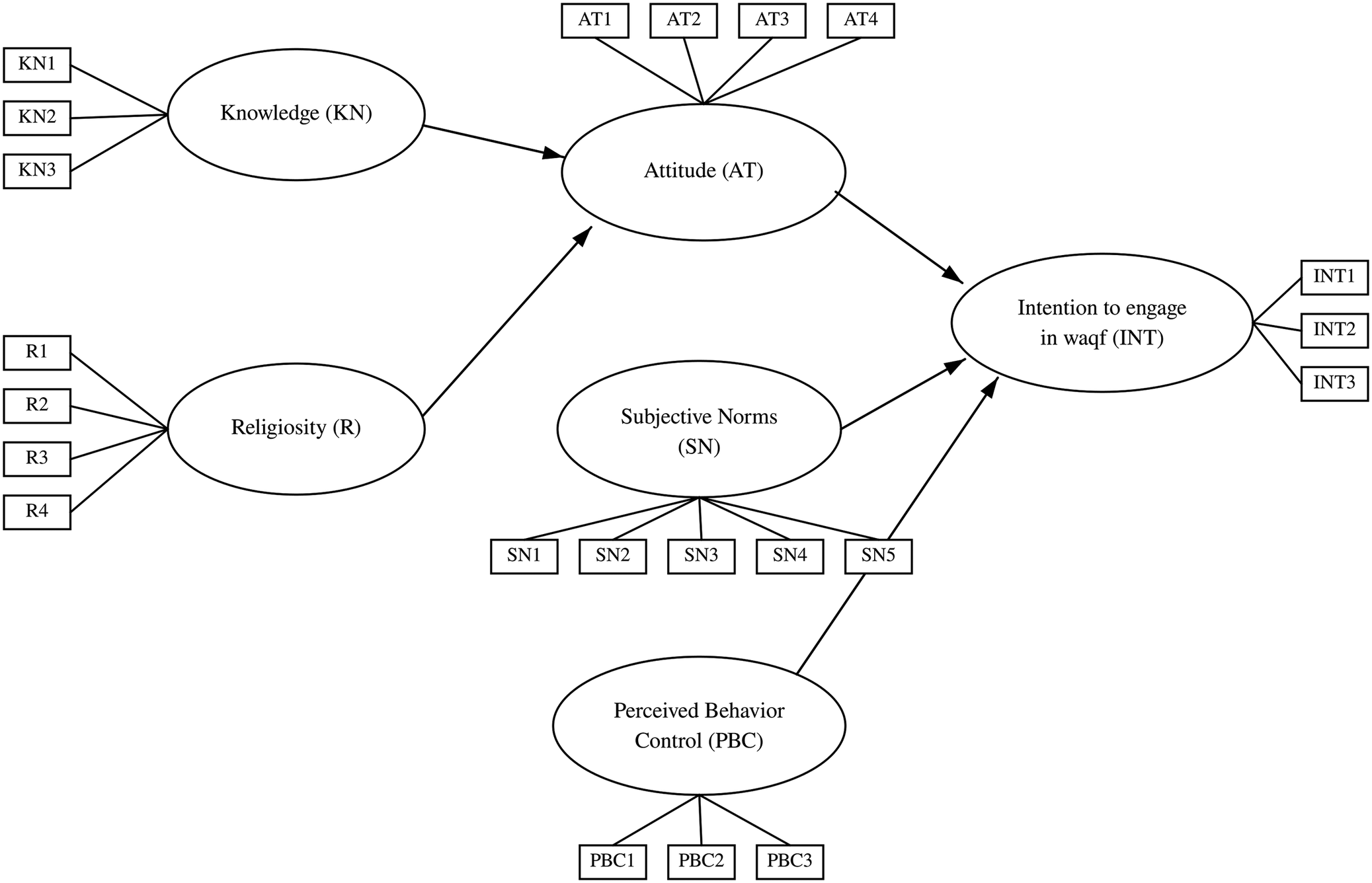
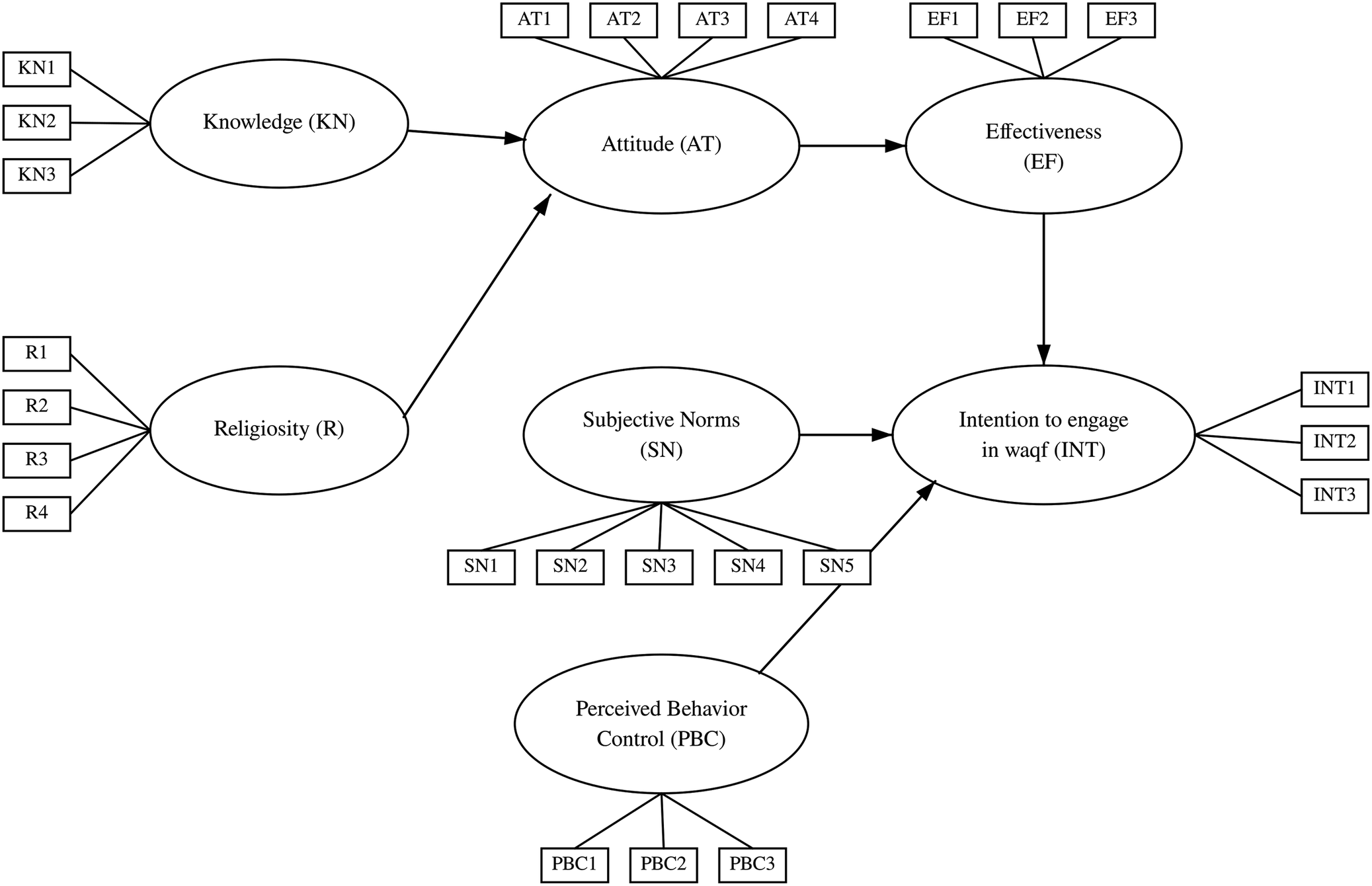
This research adopts the TPB framework to examine the factors influencing the intentions of individuals to participate in waqf. Figure 1 illustrates the pre-test, which includes six key variables: intention, attitude, PBC, subjective norms, religiosity, and knowledge. In the post-test phase, as illustrated in Figure 2, an additional variable, perceived effectiveness, is included to capture participants’ evaluation of the GBL intervention. Data from the pre- and post-tests were analyzed using paired sample t-tests to identify statistically significant differences in students’ waqf literacy and intention scores. The Wilcoxon signed-rank test was used as an alternative when the data did not meet parametric assumptions. This analytical approach enabled the researchers to directly assess the effectiveness of GBL as a strategy for improving educational outcomes related to waqf.
Pre-game model.
Source: Figure by authors.

Fig. 1 Long description
A structural equation model flowchart. On the far left, two latent variables are shown in ovals. Knowledge K N is at the top left, connected to three rectangular indicators K N 1, K N 2, and K N 3. Below it is Religiosity R, connected to four indicators R 1, R 2, R 3, and R 4. Arrows point from both Knowledge K N and Religiosity R toward a central oval labeled Attitude A T. Attitude A T is connected to four indicators above it labeled A T 1, A T 2, A T 3, and A T 4. Below Attitude A T are two more latent variables. Subjective Norms S N is in the center, connected to five indicators below it labeled S N 1, S N 2, S N 3, S N 4, and S N 5. At the bottom center is Perceived Behavior Control P B C, connected to three indicators below it labeled P B C 1, P B C 2, and P B C 3. On the far right is the final latent variable, Intention to engage in waqf I N T. Arrows point to this variable from Attitude A T, Subjective Norms S N, and Perceived Behavior Control P B C. The Intention I N T variable is connected to three indicators on its right labeled I N T 1, I N T 2, and I N T 3.
Post-game model.
Source: Figure by authors.

Fig. 2 Long description
The flowchart consists of six oval latent variables and twenty-two rectangular measurement indicators.
On the far left, two latent variables serve as inputs. Knowledge K N is measured by indicators K N 1, K N 2, and K N 3. Religiosity R is measured by R 1, R 2, R 3, and R 4. Arrows from both Knowledge K N and Religiosity R point to the central latent variable Attitude A T.
Attitude A T is measured by indicators A T 1, A T 2, A T 3, and A T 4. An arrow points from Attitude A T to Effectiveness E F. Effectiveness E F is measured by E F 1, E F 2, and E F 3.
In the lower-middle section, Subjective Norms S N is measured by S N 1, S N 2, S N 3, S N 4, and S N 5. Below it, Perceived Behavior Control P B C is measured by P B C 1, P B C 2, and P B C 3.
On the far right is the final outcome variable, Intention to engage in waqf I N T, which is measured by I N T 1, I N T 2, and I N T 3. This variable receives arrows from Effectiveness E F, Subjective Norms S N, and Perceived Behavior Control P B C.
Data analysis
SmartPLS 4.0 was used to analyze the proposed framework for two main reasons. First, it is well-suited for exploratory studies and theory development, as in this research on educational game Giving Legacy on waqf, where new variables (knowledge and religiosity) were added to the TPB (Sarstedt et al., Reference Sarstedt, Ringle, Cheah, Ting, Moisescu and Radomir2020). Second, the software is user-friendly and widely accepted, offering a graphical interface and bootstrapping for significance testing, making it popular in social sciences and Islamic philanthropy (Hair et al., Reference Hair, Risher, Sarstedt and Ringle2019). These merits make SmartPLS 4.0 appropriate for testing the relationships hypothesized in this study.
Findings and discussions
Table 1 presents a descriptive summary of the respondents’ demographic characteristics and their prior engagement in philanthropic activities across the treatment and control groups. The respondents predominantly consisted of individuals aged between 15 and 17 years old, with the majority being 17-year-olds (34.8%), followed by 16-year-olds (33.3%) and 15-year-olds (21.2%). Almost all participants (98.8%) previously made a personal donation, indicating a high baseline level of charitable participation among respondents. More specifically, regarding waqf-related experiences, slightly over half of the respondents (58.1%) had previously contributed to waqf, while 41.9% had never participated. Moreover, a notable majority of respondents (75.6%) also reported prior exposure or learning experiences related to waqf, suggesting moderate to high initial awareness levels among the participants.
Descriptive statistics results

Table 1 Long description
The table consists of five columns: Questions, Range, Treatment (n = 442), Control (n = 78), and Total (n = 520).
* Age: The majority of participants are aged 16 (33.3 percent) and 17 (34.8 percent). In the Treatment group, age 16 is the largest cohort (33.7 percent), while in the Control group, age 17 is the largest (57.7 percent). Ages 14 and 19 represent the smallest cohorts at 0.8 percent each.
* Ever made a personal donation: Nearly all participants in both groups answered Yes (98.8 percent total), with only 1.2 percent answering No.
* Ever given waqf: 58.1 percent of the total sample answered Yes. There is a notable difference between groups: 53.6 percent of the Treatment group versus 83.3 percent of the Control group.
* Ever learned about waqf: 75.6 percent of the total sample answered Yes. This includes 74.2 percent of the Treatment group and 83.3 percent of the Control group.
Source: Table by authors.
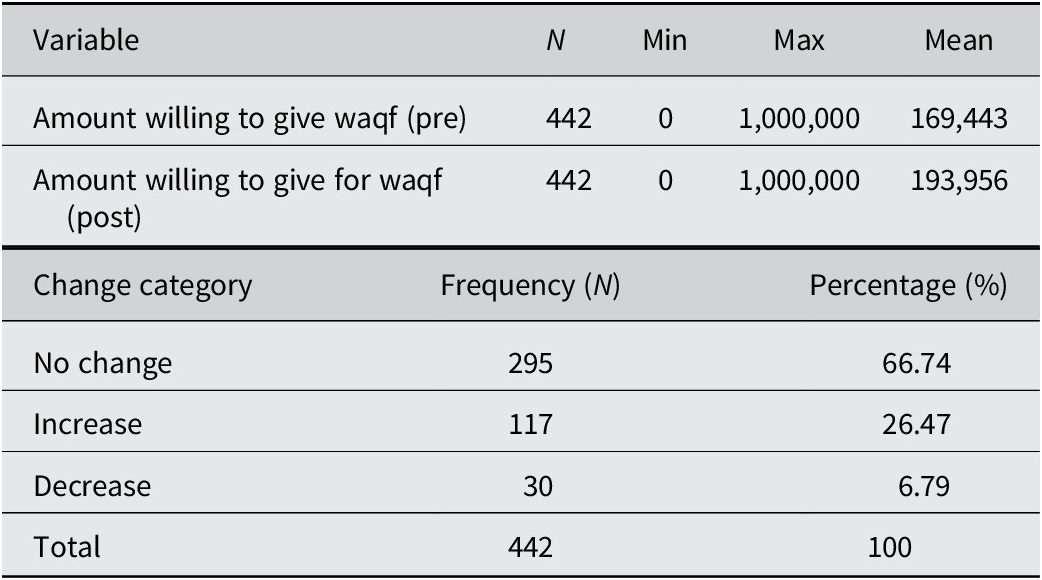
Furthermore, Table 2 presents respondents’ answers to the question “If you had one million rupiah, how much of that amount would you allocate for waqf?” and the results show an increase in willingness to give money for waqf after the intervention. Initially, respondents were willing to allocate an average of IDR 169,443 for waqf (pre-intervention). The average IDR increased to 193,956 (post-intervention), reflecting a 14.5% increase. This preliminary finding suggests that the intervention had a positive influence on participants’ willingness to engage financially with waqf. At the individual level, most respondents (295 people or 66.74%) reported no change in their waqf contributions, indicating that their giving behavior remained stable. Meanwhile, 117 respondents (26.47%) experienced an increase in their waqf giving, suggesting a positive shift for approximately a quarter of the sample. Conversely, only 30 respondents (6.79%) reported a decrease.
Respondents’ willingness to give for waqf in the treatment group

Table 2. Long description
The table consists of five columns: Variable, N, Min, Max, and Mean.
* Row 1: Amount willing to give waqf (pre). N is 442. Min is 0. Max is 1,000,000. Mean is 169,443.
* Row 2: Amount willing to give for waqf (post). N is 442. Min is 0. Max is 1,000,000. Mean is 193,956.
A second related table shows the change category:
* No change: Frequency (N) 295, Percentage 66.74 percent.
* Increase: Frequency (N) 117, Percentage 26.47 percent.
* Decrease: Frequency (N) 30, Percentage 6.79 percent.
* Total: Frequency (N) 442, Percentage 100 percent.
Source: Table by authors.
The assessment of the measurement model, encompassing the estimation of average variance extracted (AVE), discriminant validity (DV), and the reliability of indicators, as delineated by Hair et al. (Reference Hair, Hult, Ringle and Sarstedt2016), indicates that all criteria have been fulfilled.
Figures 3 and 4 compare the measurement and structural models before and after the Giving Legacy educational game. Overall, the post-game model demonstrates substantial improvements in both measurement quality and explanatory power, suggesting that the intervention not only strengthened the reliability of the constructs but also altered the mechanism through which students develop intentions to perform waqf.
Pre-game result.
Source: Figure by authors.

Fig. 3 Long description
The diagram consists of blue circular latent variables and yellow rectangular indicators.
Latent Variables and Indicators:
* K N (top left) has three indicators: K N 1 (0.603), K N 2 (0.758), and K N 3 (0.870).
* R (middle left) has four indicators: R 1 (0.676), R 2 (0.854), R 3 (0.837), and R 4 (0.878).
* A T (center) contains the value 0.552 and has four indicators: A T 1 (0.883), A T 2 (0.907), A T 3 (0.868), and A T 4 (0.885).
* S N (center bottom) has five indicators: S N 1 (0.614), S N 2 (0.803), S N 3 (0.828), S N 4 (0.778), and S N 5 (0.818).
* P B C (bottom) has three indicators: P B C 1 (0.851), P B C 2 (0.822), and P B C 3 (0.859).
* I N T (right) contains the value 0.596 and has three indicators: I N T 1 (0.844), I N T 2 (0.904), and I N T 3 (0.888).
Structural Paths:
* Arrows point from K N and R toward A T.
* Arrows point from A T, S N, and P B C toward I N T.
* A specific path connects P B C to S N 4.
Post-game result.
Source: Figure by authors.

Fig. 4 Long description
The diagram consists of blue circular latent variables and yellow rectangular observed indicators.
On the left side, three exogenous constructs are shown:
* K N is connected to indicators K N 1, K N 2, and K N 3 with loadings of 0.822, 0.884, and 0.895 respectively.
* R is connected to indicators R 1, R 2, R 3, and R 4 with loadings of 0.886, 0.926, 0.911, and 0.941.
* S N is connected to indicators S N 1 through S N 5 with loadings ranging from 0.723 to 0.909.
In the center and right, the endogenous constructs are:
* A T has an R-squared value of 0.790 and is influenced by K N and R. It connects to indicators A T 1 through A T 4 with loadings between 0.938 and 0.948.
* E F has an R-squared value of 0.463 and is influenced by A T. It connects to indicators E F 1, E F 2, and E F 3 with loadings of 0.944, 0.939, and 0.901.
* I N T has an R-squared value of 0.770 and is influenced by A T, E F, and S N. It connects to indicators I N T 1, I N T 2, and I N T 3 with loadings of 0.899, 0.922, and 0.912.
* P B C is located at the bottom, connected to indicators P B C 1, P B C 2, and P B C 3 with loadings of 0.911, 0.888, and 0.901, and has a path pointing toward the S N indicator S N 5.
From a measurement perspective, nearly all constructs exhibited stronger indicator loadings following the intervention. Knowledge (KN) improved from 0.603–0.870 in the pre-game model to 0.822–0.895 in the post-game model, indicating a more consistent understanding of waqf concepts among students after playing the game. Similar improvements were observed for Religiosity (0.676–0.878 to 0.886–0.941), Attitude (0.868–0.907 to 0.938–0.948), Subjective Norms (0.614–0.818 to 0.723–0.909), PBC (0.822–0.859 to 0.888–0.911), and Intention (0.844–0.904 to 0.899–0.922). Furthermore, the post-game model introduced a new construct, Perceived Game Effectiveness (EF), whose indicators loaded strongly (0.901–0.944), confirming that students perceived the game as a coherent and meaningful learning experience. Collectively, these improvements indicate that the intervention enhanced the internal consistency of the measurement model and strengthened the relationship between the observed indicators and their respective latent constructs.
Comparison of the structural model before and after the Giving Legacy intervention
Beyond improving the measurement quality of the constructs, the Giving Legacy intervention substantially reconfigured the structural relationships underlying students’ intention to perform waqf, as seen in Table 3. Prior to the intervention, students’ intention was predominantly explained by PBC (β = 0.538, p < 0.001) and subjective norms (β = 0.292, p < 0.001), indicating that students were primarily motivated by their perceived ability to perform waqf and the influence of their surrounding social environment. This finding is consistent with previous studies demonstrating that PBC is one of the strongest determinants of waqf intention, particularly among young individuals with limited prior experience in philanthropic activities (Kasri & Chaerunnisa, Reference Kasri and Chaerunnisa2022). Likewise, the significant influence of subjective norms corroborates evidence that encouragement from family, teachers, and peers plays an essential role in fostering participation in Islamic charitable behavior (Najmuddin et al., 2023).
Comparison of path analysis before and after the Giving Legacy intervention

Table 3. Long description
The table contains six columns: Relationship, Pre-game beta, p-value, Post-game beta, p-value, and Interpretation.
* Knowledge yields Attitude: Pre-game beta 0.236 (p < 0.001), Post-game beta 0.222 (p < 0.001). Interpretation: Stable positive effect.
* Religiosity yields Attitude: Pre-game beta 0.628 (p < 0.001), Post-game beta 0.725 (p < 0.001). Interpretation: Stronger after intervention.
* Attitude yields Intention: Pre-game beta 0.001 (p 0.979), Post-game beta 0.122 (p < 0.001). Interpretation: Became significant.
* Subjective Norms yields Intention: Pre-game beta 0.292 (p < 0.001), Post-game beta 0.318 (p < 0.001). Interpretation: Slightly strengthened.
* Perceived Behavioral Control yields Intention: Pre-game beta 0.538 (p < 0.001), Post-game beta 0.447 (p < 0.001). Interpretation: Slightly weakened but remained the strongest predictor.
* Knowledge yields Effectiveness: Pre-game data is null, Post-game beta 0.151 (p < 0.001). Interpretation: New pathway.
* Religiosity yields Effectiveness: Pre-game data is null, Post-game beta 0.494 (p < 0.001). Interpretation: New pathway.
* Attitude yields Effectiveness: Pre-game data is null, Post-game beta 0.681 (p < 0.001). Interpretation: New pathway.
* Effectiveness yields Intention: Pre-game data is null, Post-game beta 0.179 (p < 0.001). Interpretation: New mediating pathway.
As shown in Table 3, attitude has consistently been recognized as a central determinant within the TPB (Ajzen, Reference Ajzen1991; Asyari et al., Reference Asyari, Hoque, Susanto, Begum, Awaluddin, Marwan and Mamun2024). In addition, attitude appeared to function primarily as a cognitive evaluation shaped by knowledge (β = 0.236, p < 0.001) and religiosity (β = 0.628, p < 0.001), supporting previous findings that waqf literacy and religious commitment are fundamental antecedents of favorable attitudes toward Islamic philanthropy (Masrizal et al., Reference Masrizal, Huda, Harahap, Trianto and Sabiu2023; Rohmana et al., Reference Rohmana, Juliana, Utami, Ismail and Marlina2024).
Following the implementation of the Giving Legacy game, the predictive structure considerably evolved. Most notably, attitude emerged as a significant predictor of intention (β = 0.122, p < 0.001), indicating that the positive evaluations of students were successfully transformed into behavioral intentions. This finding supports the educational psychology literature suggesting that GBL enhances affective engagement, allowing cognitive understanding to be translated into behavioral readiness (Egashira et al., Reference Egashira, Son and Ema2022; Kammermann et al., Reference Kammermann, Türkay, Johnson and Tobin2025). Rather than merely increasing students’ knowledge of waqf, the intervention appears to strengthened their attitudes’ motivational value.
Although PBC remained the strongest direct determinant of intention after the intervention (β = 0.447, p < 0.001), its coefficient declined relative to that of the pre-game model. The influence of subjective norms increased modestly (β = 0.318, p < 0.001). These findings suggest that the intentions of students’ became less dependent solely on perceptions of capability and social encouragement and were increasingly influenced by internal cognitive and affective processes. Such a shift reflects an expansion of the conventional TPB framework toward a more experiential learning process, consistent with studies arguing that educational games strengthen intrinsic motivation in addition to cognitive acquisition (Iten & Petko, Reference Iten and Petko2018; Wouters et al., Reference Wouters, van Nimwegen, van Oostendorp and van der Spek2013).
A distinctive contribution of the post-game model is the introduction of EF as a new explanatory mechanism. The results reveal that students’ perceptions of the game’s effectiveness were strongly predicted by attitude (β = 0.681), followed by religiosity (β = 0.494) and knowledge (β = 0.151), while effectiveness itself significantly enhanced intention (β = 0.179, p < 0.001). These relationships suggest that the educational game served not merely as a medium for knowledge transfer but also as an experiential platform capable of transforming favorable beliefs into behavioral intentions. This finding is highly consistent with the growing body of literature demonstrating that GBL promotes emotional engagement, experiential immersion, and deeper behavioral commitment compared with traditional instructional approaches (Cannistrà et al., Reference Cannistrà, De Beckker, Agasisti, Amagir, Poder, Vartiak and De Witte2024 Charsky & Ressler, Reference Charsky and Ressler2011).
The post-game model also indicates that religiosity assumed a broader role after the intervention. Besides exerting a stronger influence on attitude (β increased from 0.628 to 0.725), religiosity also developed a direct effect on intention (β = 0.088, p < 0.001), implying that the educational experience enabled students to translate religious values more directly into philanthropic intentions. Meanwhile, knowledge maintained a relatively stable influence on attitude (β = 0.236 versus β = 0.222) but additionally exhibited a modest direct effect on intention (β = 0.027, p = 0.003), suggesting that increased literacy alone is insufficient unless accompanied by meaningful learning experiences capable of activating behavioral motivation.
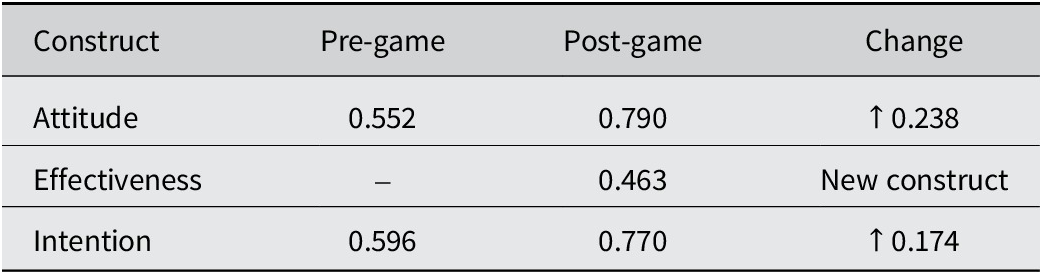
These structural changes were accompanied by a marked improvement in the explanatory power of the model, as seen in Table 4. The coefficient of determination for intention increased from R 2 0.596 in the pre-game model to R 2 0.770 after the intervention, indicating that the expanded framework explained an additional 17.4% of the variance in students’ intention to perform waqf. Likewise, the explanatory power for attitude increased substantially from R 2 0.552 to 0.790, reflecting the stronger influence of knowledge and religiosity following participation in the game. Furthermore, the newly introduced effectiveness construct achieved an R 2 of 0.463, suggesting that students’ perceptions of the educational game were meaningfully explained by their cognitive and affective characteristics. Collectively, these findings demonstrate that the Giving Legacy intervention not only enhanced students’ understanding of waqf but also fundamentally reshaped the psychological pathways underlying intention formation. Rather than operating solely through the traditional TPB mechanisms dominated by PBC, the post-intervention model evolved into a richer experiential framework in which attitude and perceived game effectiveness became pivotal mechanisms linking knowledge and religiosity to students’ intention to perform waqf.
Model explanatory power (R 2)

Table 4. Long description
The table consists of four columns: Construct, Pre-game, Post-game, and Change.
* Attitude: Pre-game R super 2 is 0.552, Post-game is 0.790, showing an increase of 0.238.
* Effectiveness: Pre-game is not applicable, Post-game is 0.463, noted as a new construct.
* Intention: Pre-game R super 2 is 0.596, Post-game is 0.770, showing an increase of 0.174.
In summary, the post-game measurement model demonstrates robust indicators, with all reliability and validity criteria satisfactorily met as can be seen in Table 5. Internal consistency is well above the accepted thresholds, as indicated by Cronbach’s alpha and composite reliability values that substantially exceed the 0.70 benchmark. Convergent validity is confirmed by AVE values far exceeding the 0.50 standard, while DV is established through both the Fornell–Larcker criterion and acceptable Heterotrait-monotrait ratio (HTMT) ratios. Collectively, these results affirm that the measurement model is both reliable and valid, providing a sound basis for subsequent structural analyses.
Correlation between latent variables and discriminant validity in post-game

Table 5. Long description
The table consists of eight columns and seven rows of data. The columns are labeled Construct, Attitude, Effectiveness, Intention, Knowledge, Perceived behavior control, Religiosity, and Subjective norms. The diagonal values represent the square root of the average variance extracted for each construct.
* Row 1: Attitude correlates with itself at 0.944.
* Row 2: Effectiveness correlates with Attitude at 0.681 and itself at 0.928.
* Row 3: Intention correlates with Attitude at 0.699, Effectiveness at 0.746, and itself at 0.911.
* Row 4: Knowledge correlates with Attitude at 0.704, Effectiveness at 0.588, Intention at 0.533, and itself at 0.868.
* Row 5: Perceived behavior control correlates with Attitude at 0.779, Effectiveness at 0.752, Intention at 0.843, Knowledge at 0.625, and itself at 0.900.
* Row 6: Religiosity correlates with Attitude at 0.873, Effectiveness at 0.669, Intention at 0.671, Knowledge at 0.664, Perceived behavior control at 0.733, and itself at 0.916.
* Row 7: Subjective norms correlates with Attitude at 0.818, Effectiveness at 0.723, Intention at 0.815, Knowledge at 0.635, Perceived behavior control at 0.821, Religiosity at 0.746, and itself at 0.847.
Source: Table by authors.
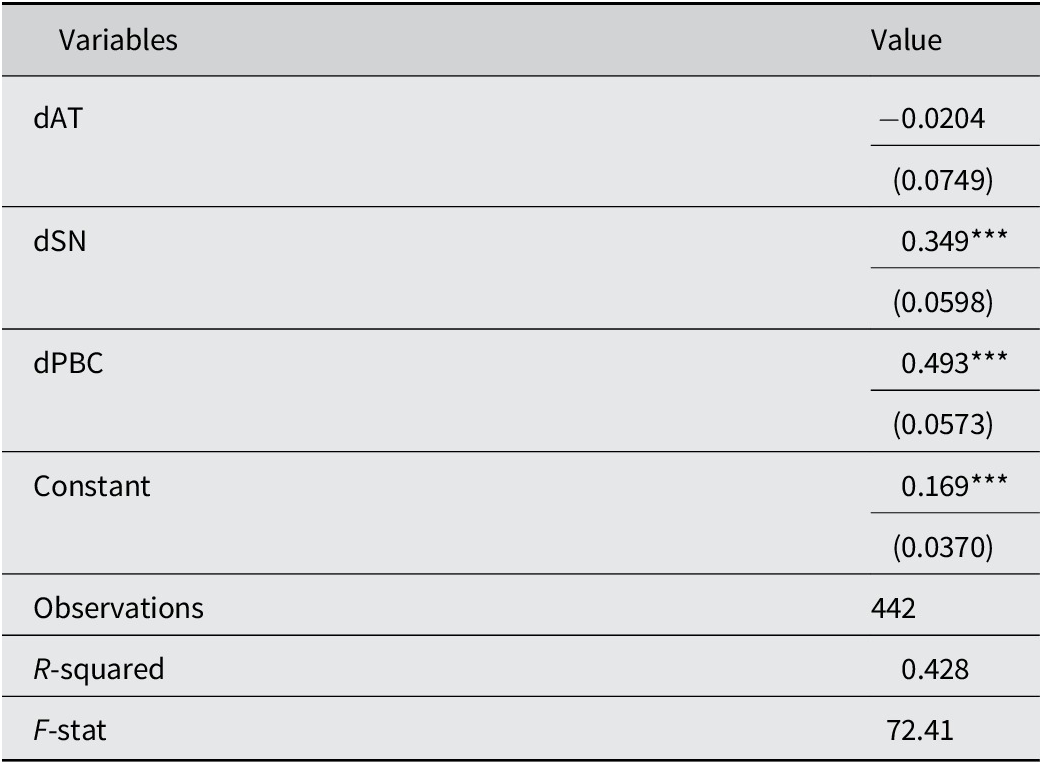
Table 6 indicates that changes in subjective norms (dSN) and change in PBC (dPBC) have a positive and statistically significant effect on the change in willingness to give, at the 1% significance level. In contrast, change in attitude (dAT) is not statistically significant, suggesting that dAT does not meaningfully influence the outcome. The findings using the change in willingness to give are consistent with the results obtained from the analysis of absolute amounts before and after the intervention, indicating robustness across different model specifications.
Change in the willingness to give (pre–post)

Table 6. Long description
The table consists of two columns: Variables and Value.
* d A T: -0.0204 with a standard error of 0.0749.
* d S N: 0.349 with three asterisks indicating significance at p < 0.01 and a standard error of 0.0598.
* d P B C: 0.493 with three asterisks indicating significance at p < 0.01 and a standard error of 0.0573.
* Constant: 0.169 with three asterisks indicating significance at p < 0.01 and a standard error of 0.0370.
* Observations: 442.
* R-squared: 0.428.
* F-stat: 72.41.
Robust standard errors are provided in parentheses below each coefficient. Significance levels are denoted by asterisks: three asterisks for p < 0.01, two for p < 0.05, and one for p < 0.1.
Robust standard errors in parentheses.
*** p < 0.01.
Source: Table by authors.
Collectively, these findings substantiate the assertion that GBL enhances literacy and actively shapes authentic attitudes and intentions toward Islamic philanthropic behavior. Interventions of this nature are particularly pertinent within the Indonesian context, which faces ongoing challenges related to low waqf literacy (BWI, 2020), and they resonate with the pressing need for engaging and interactive educational methodologies (Kingsley & Grabner-Hagen, Reference Kingsley and Grabner-Hagen2015; Wong et al., Reference Wong, Zhang and Chan2022). This theoretical framework validates the proposition that interactive experiences can amalgamate cognitive and conative dimensions in waqf-related behaviors, thus providing groundbreaking empirical insights into the academic dialogue surrounding the TPB in the contemporary landscape of Islamic education and philanthropic activities.
Wilcoxson result
A Wilcoxon signed-rank test was conducted to complement the structural analysis using SEM-PLS to evaluate changes in students’ waqf knowledge and intention before and after the educational game intervention. The results revealed a statistically significant improvement in both knowledge (z = 14.153; p < 0.0001) and intention (z = 12.063; p < 0.0001). Additional data were collected to ensure the absence of experimenter demand effects, showing a decrease in knowledge (z = −2.182; p > 0.01) and no change in intention (z = 0.721; p > 0.05). These findings indicate that the “Giving Legacy” GBL intervention effectively enhanced students’ understanding of waqf and strengthened their behavioral commitment to engaging in waqf activities.
This result reinforces previous literature suggesting that interactive and immersive educational approaches can drive meaningful changes in cognitive and affective domains (Cannistrà et al., Reference Cannistrà, De Beckker, Agasisti, Amagir, Poder, Vartiak and De Witte2024; Egashira et al., Reference Egashira, Son and Ema2022). Moreover, the significant increase in behavioral intention supports the core assumptions of the TPB (Ajzen, Reference Ajzen1991), where changes in perception and attitude are expected to translate into actual behavioral commitments.
The results revealed significant and positive relationships among the key variables that influence respondents’ intentions toward waqf participation. In this case, attitude, subjective norms, PBC, and perceived effectiveness were found to have a significant impact on waqf intention. PBC and subjective norms were found to be the most influential determinants of waqf intention. These findings are consistent with those of previous studies, such as Najmuddin et al. (Reference Najmuddin, Johari, Alwi, Mansour and Bujosa Vadell2023) and Sulaiman et al. (Reference Sulaiman, Shukor, Mursidi and Aziz2024), who found that PBC was the strongest predictor of cash waqf intention and waqf-based investment participation. Additionally, the significant role of subjective norms aligns with the findings of Shukor et al. (Reference Shukor, Anwar, Aziz and Sabri2017) and Masrizal et al. (Reference Masrizal, Huda, Harahap, Trianto and Sabiu2023), who emphasized the influence of perceived social pressure and moral obligation on individuals’ intention to participate in waqf. These results underscore the importance of building individuals’ confidence in their ability to participate in waqf and leveraging social influence to encourage participation.
The results also underscore the important roles of religiosity and waqf knowledge in shaping individuals’ attitudes and perceptions toward waqf. Religiosity significantly strengthens positive attitudes, highlighting the need to ground educational efforts in spiritual and moral principles. Moreover, greater waqf knowledge increased both attitudes and perceived effectiveness, suggesting that waqf knowledge is a significant determinant of behavioral intention. These findings are consistent with prior research that found that religious commitment has an impact on increased philanthropic motivation (e.g., Alimusa et al., Reference Alimusa, Sukmana, Ratnasari, Machfud and Latif2025; Masrizal et al., Reference Masrizal, Huda, Harahap, Trianto and Sabiu2023; Shukor et al., Reference Shukor, Anwar, Aziz and Sabri2017). Similarly, Kasri and Chaerunnisa (Reference Kasri and Chaerunnisa2022), Asyari et al. (Reference Asyari, Hoque, Susanto, Begum, Awaluddin, Marwan and Mamun2024), and Rohmana et al. (Reference Rohmana, Juliana, Utami, Ismail and Marlina2024) demonstrated how waqf literacy, especially when supported by digital tools and structured educational efforts, can significantly shape behavioral intention. While these insights highlight the importance of waqf literacy, they also signal the need to evolve and scale educational strategies for greater reach and relevance. Given Indonesia’s moderate literacy levels and the increasing use of digital platforms, more innovative and accessible learning methods are needed. GBL presents a compelling way to enhance understanding while engaging younger and digitally native audiences through interactive and motivating experiences.
The results of this study also confirmed the effectiveness of the GBL intervention, particularly in influencing participants’ motivation and behavioral intention toward waqf. Respondents who perceived the game as effective were more inclined to have stronger positive attitudes toward waqf and a greater willingness to contribute financially. This suggests that, beyond improving understanding, the game also succeeded in reframing waqf as an accessible and personally relevant act to perform. Given Roblox’s popularity among younger generations, these findings also highlight the potential of gaming environments to promote awareness of social and philanthropic values beyond formal learning settings. This result also aligns with the findings of Egashira et al. (Reference Egashira, Son and Ema2022), which showed that the perceived effectiveness of a health-focused serious game increased individuals’ sense of control and behavioral intention. Similarly, Videnovik et al. (Reference Videnovik, Vold, Kiønig, Madevska Bogdanova and Trajkovik2023) and Leitner et al. (Reference Leitner, Greenwald, Wang, Montgomery and Merchant2023) found that immersive GBL environments enhanced learner engagement, motivation, and problem-solving abilities, which in turn influenced future learning intentions. In the philanthropic context, Kammermann et al. (Reference Kammermann, Türkay, Johnson and Tobin2025) also found that serious games that promote intrinsic motivation led to increased post-game charitable behavior. Therefore, educational approaches grounded in interactivity and innovation, such as GBL, hold transformative potential not only for increasing waqf literacy but also for the sustainable shaping of behavioral outcomes.
Theoretical contribution of the study
This study offers two contributions to the TPB and to scholarship on philanthropic behavior. The first concern is the malleability of the TPB determinants. Studies of waqf and charitable giving typically apply TPB in cross-sectional designs that treat attitude, subjective norms, and PBC as stable antecedents of intention (Ajzen, Reference Ajzen1991; Najmuddin et al., Reference Najmuddin, Johari, Alwi, Mansour and Bujosa Vadell2023). Locating TPB within a pre- and post-intervention field experiment moves the framework from a predictive model toward an intervention-responsive one, in which the determinants of giving emerge as configurations that a designed educational experience can influence rather than as fixed traits.
The second contribution makes an experiential-learning extension of TPB explicit. Attitude shifted from a non-significant to a significant predictor of intention after the intervention, a change that signals a reconfiguration of the pathways to giving rather than a uniform rise in intention. This consolidates the expansion toward experiential learning that the analysis indicates, in which the growing salience of attitude and perceived game effectiveness marks a learning-driven rather than a dispositional route to intention (Iten & Petko, Reference Iten and Petko2016; Wouters et al., Reference Wouters, van Nimwegen, van Oostendorp and van der Spek2013), with waqf literacy serving as the mechanism that connects GBL to the TPB structure (Asyari et al., Reference Asyari, Hoque, Susanto, Begum, Awaluddin, Marwan and Mamun2024; Kasri & Chaerunnisa, Reference Kasri and Chaerunnisa2022). Thus, the framework accounts for how prosocial intentions are cultivated rather than only how they are measured.
Conclusions, limitations, and future research
The intervention, which was implemented through a waqf legacy-giving educational game on the Roblox platform, demonstrated effectiveness in enhancing the understanding and intention of high school students toward waqf. The results of the PLS-SEM analysis showed that the majority of the measured variables, including knowledge, PBC, subjective norms, religiosity, and attitude, became significant predictors of intention after the intervention. Notably, attitude, which was previously non-significant in the pre-test model, became a significant post-intervention factor. Statistical analysis using the Wilcoxon signed-rank test revealed a significant difference between pre-test and post-test scores, confirming the positive impact of the intervention. This finding is validated by the additional data from the control group. These findings suggest that GBL in a digital environment can effectively influence both cognitive and attitudinal aspects of waqf education, making it a promising tool for youth engagement in Islamic philanthropy.
The results of this study should be interpreted with caution. First, this study was conducted with only high school students from seven schools during the research. Although the results show promising effects of GBL, they may not be representative of other groups such as university students, working adults, and rural communities. Future studies should highlight these populations to extend the findings. Another limitation concerns the timing of the control group inclusion, which was not part of the original research design. Although this may limit the internal rigor of the experimental setup, the control group serves as an important benchmark for validating the observed effects and enhancing the robustness of the findings. Future research could employ a fully planned experimental design with concurrently recruited treatment and control groups to provide stronger evidence regarding the effectiveness of GBL interventions. This study relied on pre- and post-intervention surveys conducted within a short time frame. While the outcomes imply an immediate improvement in knowledge and intention, the research did not track whether these effects are sustained over time. A further limitation of this study is that it measures behavioral intention rather than actual waqf participation. Therefore, future research should examine whether increased intention translates into real philanthropic behavior over time. Future research should consider employing longitudinal designs to capture changes in intention over time and to assess the observed effects’ persistence beyond the experimental setting. Furthermore, conducting regional or cross-country studies would help examine the generalizability of the findings across different sociocultural contexts. Expanding the sample to include more diverse participants in terms of demographics, socioeconomic background, and familiarity with digital platforms is also recommended to enhance the results’ external validity. Despite the flaws reported here, this study provides a foundation for future interventions that combine Islamic philanthropy with digital innovation, at best, creating scalable models that can reach wider communities, at best.
Funding statement
This research was funded by Universitas Indonesia under grant number NKB-143/UN2.RST/HKP.05.00/2024.
Competing interests
The authors declare that they have no conflict of interest.
Ethical standards
This study received ethical approval from the Research Ethics Committee, Faculty of Social and Political Sciences, Universitas Indonesia.





 Open access

