Introduction
Traumatic injuries are a leading cause of death for individuals up to the age of 45 years. 1 In the United States (US), trauma accounts for over 42 million emergency department (ED) visits Reference Rui, Kang and Ashman2 and over 150,000 deaths per year. 3
Police transport has become an important component of many US State trauma systems, primarily in the transport of individuals with penetrating injuries such as stab wounds and gunshots. Reference Branas, Sing and Davidson4 The rationale for involving police in trauma transport is related to the golden hour concept, which suggests that the survival of critically injured patients largely depends on early medical and surgical care provided in hospitals. Police units often reach the trauma scene before Emergency Medical Services (EMS), Reference Cornwell, Belzberg and Hennigan5 which can therefore result in shorter prehospital times for police-transported trauma patients. Prehospital care capabilities with this mode of transportation are, however, limited to life-saving or basic interventions related to minimal medical training and unavailable equipment, which may result in potentially worse outcomes.
With a growing number of initiatives to empower first responders to provide basic trauma care, particularly bleeding control mainly with tourniquet use, increasing engagement of police officers in the initial management of injured patients is expected in the coming years. Reference Jacobs6
Current evidence regarding trauma patient outcomes in non-EMS transport is scarce. Previous studies showed that EMS transport offers no advantage to police transport, Reference Band, Salhi, Holena, Powell, Branas and Carr7,Reference Band, Pryor, Gaieski, Dickinson, Cummings and Carr8 and some showed improved survival with police transport when only severely injured patients were included. Reference Band, Salhi, Holena, Powell, Branas and Carr7,Reference Wandling, Nathens, Shapiro and Haut9 Critically injured, non-EMS-transported patients had also shorter prehospital times compared to patients transported by EMS. Reference Cornwell, Belzberg and Hennigan5
Given the increasing utilization of non-EMS transport in prehospital trauma care and the need for more evidence-based involvement of police in trauma care and transport, this study uses a US national trauma database to describe factors associated with survival to hospital discharge for adult trauma patients transported by police.
Methods
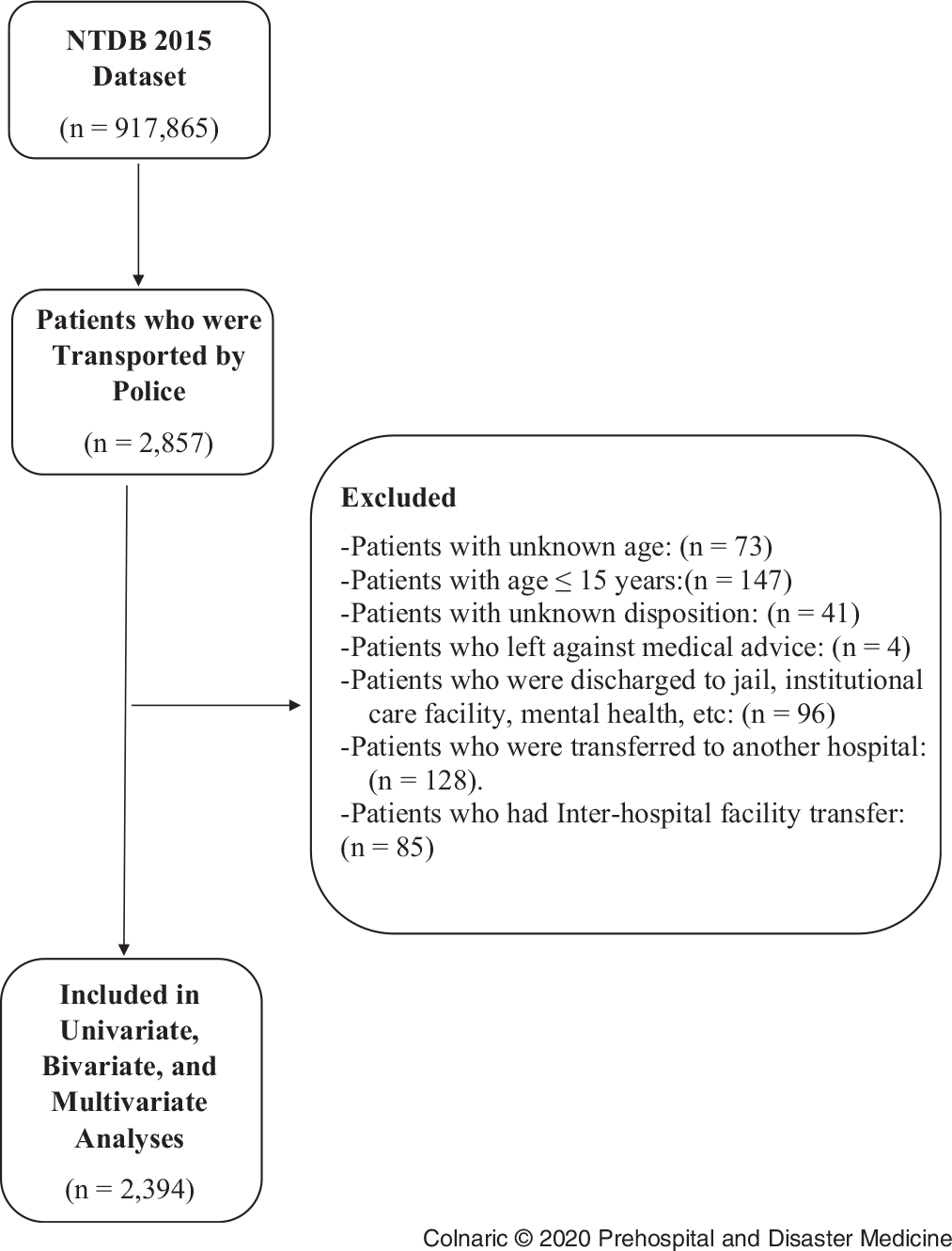
The National Trauma Data Bank (NTDB; American College of Surgeons; Chicago, Illinois USA) is the largest trauma registry in the US. 10 This retrospective study used NTDB 2015 to identify trauma patients who had police transport from scene. The NTDB 2015 includes a total of 917,865 patients with sustained injuries. The sample selection was based on an available variable in NTDB that indicates which mode of transportation was used for each patient. It encompassed the following categories: ground ambulance, helicopter ambulance, fixed-wing ambulance, police, private/public vehicle/walk-in, and other. The selection revealed that 2,857 patients were transported by police only. Exclusion criteria were patients with unknown age, those whose age ≤15 years, those with inter-hospital transfers, and those who had unknown outcomes as ED discharge disposition (ie, not known/not recorded; not applicable; left against medical advice; discharged to jail, institutional, or mental health facility; or transferred to another hospital). A flowchart was added to illustrate the inclusion and the exclusion criteria (Figure 1). A total of 2,394 patients met the inclusion criteria and were included in the data analysis.
Inclusion and Exclusion Flowchart.
Abbreviations: ED, emergency department; NTDB, National Trauma Data Bank.
Note: There are overlaps among the categories of the excluded variables. More specifically, some patients who had inter-hospital facility transfer had as ED disposition one of the excluded categories. Also, some patients whose age was not recorded or were 15 years or younger were transferred or had as ED disposition one of the excluded categories. These overlaps explain why the final number on which the data analysis was conducted cannot be calculated just by subtracting the number of excluded patients from the selected sample.

Collected variables included patient demographics, hospital characteristics, trauma mechanism, injury body location, severity and type of injury, hospital disposition, and outcomes. The primary outcome was defined as survival to hospital discharge.
An exemption was obtained from the institutional review board at the American University of Beirut (Beirut, Lebanon) for the use of the de-identified NTDB dataset.
Data Cleaning and Statistical Analysis
Data cleaning was done before initiating any statistical analyses. No inconsistencies between variables were noticed and this ensured the validity of the dataset. For instance, the reported mechanism of injury for all patients was consistent with the corresponding trauma type. More specifically, penetrating trauma included patients who sustained cut/pierce or firearm injuries, while blunt trauma involved patients sustaining injuries from fall, motor vehicle traffic (MVT), or struck by/against. It is indicated in the NTDB data dictionary that the data quality in terms of validation and error checks is maintained upon submission of the data files from all contributing hospitals by the validator – NTDB’s edit check program. Further, according to the NTDB manual, the out-of-range values were considered as being not recorded/unknown. 10
Statistical analyses were conducted using the Statistical Package for the Social Sciences (SPSS version 24; IBM Corp.; Armonk, New York USA). Categorical variables were tabulated by calculating the frequencies and percentages, whereas age was summarized through the median and the interquartile range (IQR). All independent variables were stratified by the outcome variable (ie, survived to hospital discharge: yes/no) and compared using the Pearson’s Chi-Square or Fishers’ exact tests. The descriptive analysis revealed that “not known/not recorded” constituted more than five percent of the following variables: race, ethnicity, whether patient used alcohol, whether patient used drug, location where injury occurred, and Glasgow Coma Scale (GCS) in ED. Missing data were handled through an automatic multiple imputation to provide accurate estimates. Multivariate logistic regression analysis was conducted to identify the associated factors with patients’ survival after adjusting for all clinically and statistically significant factors identified at the bivariate level. P value of ≤.05 was used to denote statistical significance.
Results
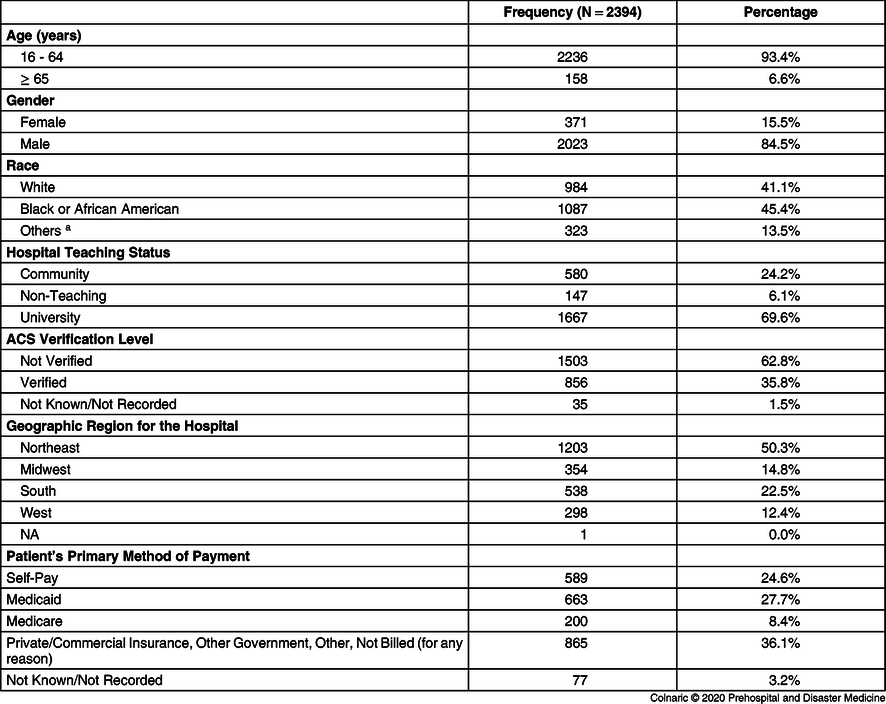
A total of 2,394 patients met the inclusion criteria and were included in this study. Demographic characteristics of the study population are presented in Table 1. The majority of the patients were in the age group 16-64 years (93.4%) with a median age of 34.0 years (IQR 25-48) and were males (84.5%). Close to one-half (50.3%) of the patients were transported to a hospital in the Northeast geographic region, followed by the Southern region (22.5%). Patients were covered mainly by private insurance (36.1%), followed by Medicaid (27.7%), and self-pay (24.6%).
Demographic Characteristics of the Study Population

Abbreviation: ACS, American College of Surgeons.
a Others include: Asian, American Indian, Native Hawaiian or Other Pacific Islander, and Other Race.
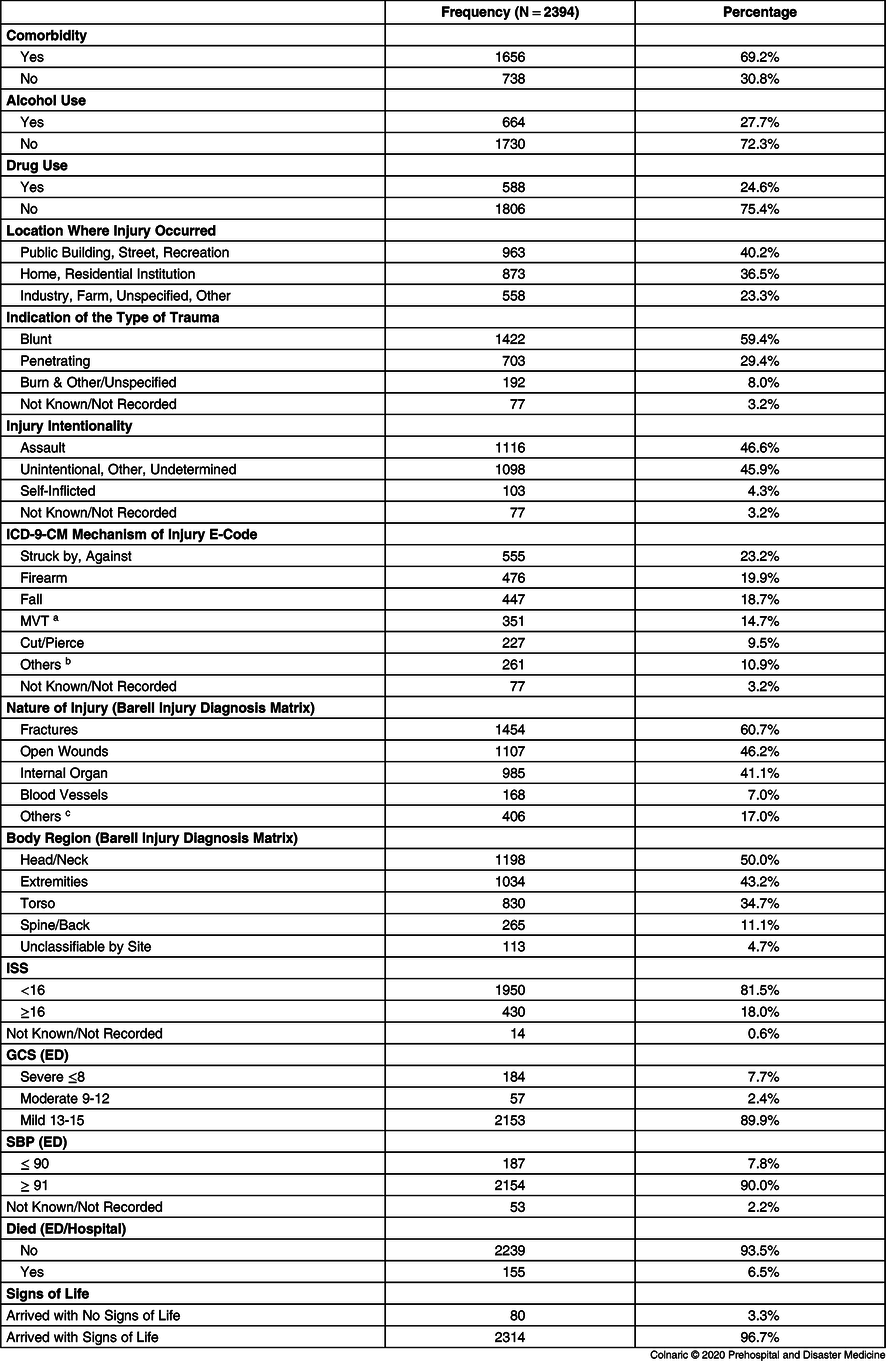
Clinical characteristics are presented in Table 2. The majority of the patients had recorded comorbidity (69.2%). Few patients had reported alcohol use (27.7%) or drugs use (24.6%). The majority of the injuries occurred in public buildings, streets, and recreation locations (40.2%) or home and residential locations (36.5%). Blunt trauma was more common than penetrating injuries (59.4% versus 29.4%). Injuries resulted mainly from an assault (46.6%). The most common mechanism of injury was being struck (23.2%), followed by firearm injuries (19.9%) and falls (18.7%). Injury types were mostly fractures (60.7%) and open wounds (46.2%). One-half of injuries (50.0%) affected the head and neck region, followed by injuries of the extremities (43.2%).
Clinical Characteristics of the Study Population

Abbreviations: ED, emergency department; GCS, Glasgow Coma Scale; ISS, Injury Severity Score; MVT, motor vehicle traffic; SBP, systolic blood pressure.
a MVT is the combination of the following variables: MVT Motorcyclist; MVT Occupant; MVT Other; MVT Pedal Cyclist; MVT Pedestrian; MVT Unspecified.
b Others is the combination of the following variables: Drowning/submersion; Fire/flame; Hot object/substance; Machinery; Pedal cyclist, other; Pedestrian, other; Natural/environmental, Bites, and stings; Natural/environmental; Other; Overexertion; Poisoning; Suffocation; Other specified and classifiable; Other specified, not elsewhere classifiable; Transport, other; Unspecified.
c Others includes: Amputations; Burns; Crush; Dislocation; Nerves; Sprains/strains; System wide; Late effects; Unspecified.
On arrival to the ED, the majority of the patients had an Injury Severity Score (ISS) of <16 (81.5%) and GCS of 13-15 (89.9%), and most patients (90.0%) were hemodynamically stable with systolic blood pressure (SBP) ≥91mmHg. Few patients had no signs of life (3.3%). Admissions were mainly to a general unit bed (43.9%) and to an intensive care unit (21.4%); 18.9% required direct admission to the operating room. Only 5.6% of the patients were discharged home from the ED with or without home services. Over one-half (54.6%) of the patients who were admitted to the hospital were discharged home. Overall survival rate was 93.5% (Table 2).
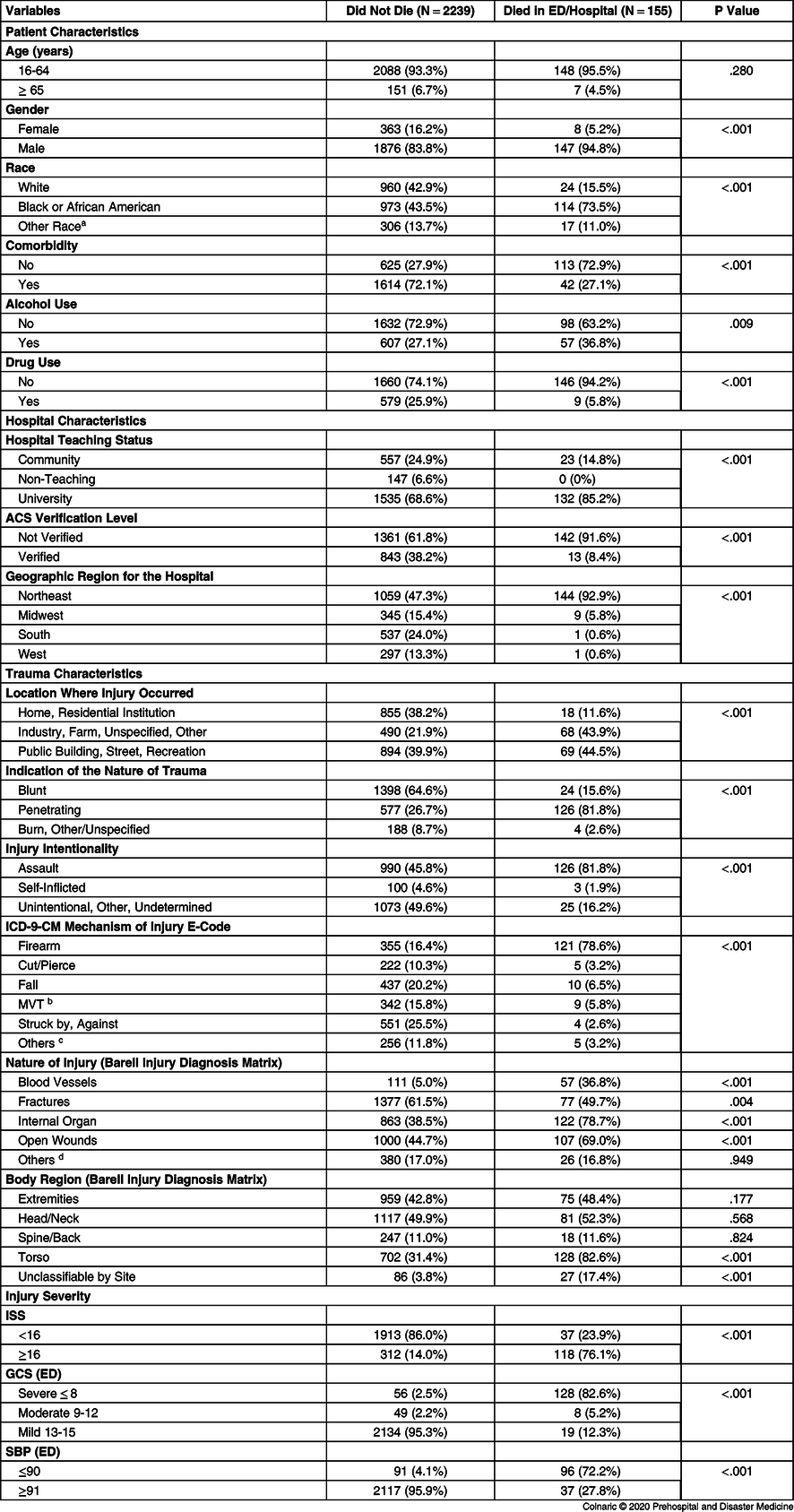
The results of the bivariate analysis are shown in Table 3. Significant differences between the two groups (survived to hospital discharge: yes/no) were observed in most examined variables, except for age and three body regions (ie, extremities, head/neck, and spine/back).
Patient, Hospital, and Injury Characteristics Stratified by Survival to Hospital Discharge

Abbreviations: ED, emergency department; GCS, Glasgow Coma Scale; ISS, Injury Severity Score; MVT, motor vehicle traffic; SBP, systolic blood pressure.
a Other race includes: Asian; American Indian; Native Hawaiian or Other Pacific Islander; Other Race.
b MVT is the combination of the following variables: MVT Motorcyclist; MVT Occupant; MVT Other; MVT Pedal Cyclist; MVT Pedestrian; MVT Unspecified.
c Others is the combination of the following variables: Drowning/submersion; Fire/flame; Hot object/substance; Machinery; Pedal cyclist, other; Pedestrian, other; Natural/environmental, Bites, and stings; Natural/environmental, Other; Overexertion; Poisoning; Suffocation; Other specified and classifiable; Other specified, not elsewhere classifiable; Transport, other; Unspecified.
d Others includes: Amputations; Burns; Crush; Dislocation; Nerves; Sprains & strains; System wide; Late effects; Unspecified.
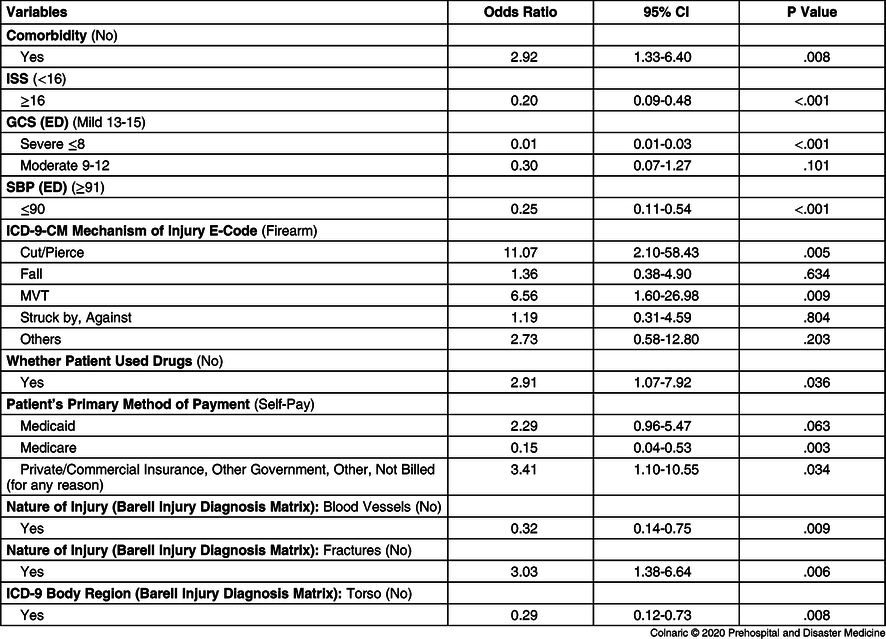
Table 4 displays the variables that were found to be significantly associated with survival to hospital discharge in this patient population. Factors positively associated with survival included: comorbidity (odds ratio [OR] = 2.92; 95% CI, 1.33-6.40; P = .008); drug use (OR = 2.91; 95% CI, 1.07-7.92; P = .036); cut/pierce (OR = 11.07; 95% CI, 2.10-58.43; P = .005); MVT mechanisms (OR = 6.56; 95% CI, 1.60-26.98; P = .009); fractures (OR = 3.03; 95% CI, 1.38-6.64; P = .006); and private/commercial insurance (OR = 3.41; 95% CI, 1.10-10.55; P = .034. Factors negatively associated with survival included: ISS ≥16 (OR = 0.20; 95% CI, 0.09-0.48; P <.001); GCS ≤8 (OR = 0.01; 95% CI, 0.01-0.03; P <.001); hemodynamic compromise (SBP ≤90; OR = 0.25; 95% CI, 0.11-0.54; P <.001); trauma to blood vessels (OR = 0.32; 95% CI, 0.14-0.75; P = .009); trauma to the torso (OR = 0.29; 95% CI, 0.12-0.73; P = .008); and Medicare insurance (OR = 0.15; 95% CI, 0.04-0.53; P = .003).
Logistic Regression Model of Patients’ Survival to Hospital Discharge

Abbreviations: ED, emergency department; GCS, Glasgow Coma Scale; ISS, Injury Severity Score; MVT, motor vehicle traffic; SBP, systolic blood pressure.
Note: Odds Ratio was adjusted for: age, gender, race, hospital teaching status, ACS Verification Level, Geographic region for the hospital, comorbidity, Injury Severity Score reflecting the patient’s injuries directly submitted by the facility regardless of the method of calculation, GCS in ED, SBP in ED, Indication of the type (nature) of trauma produced by an injury, Injury Intentionality as defined by the CDC Injury Intentionality Matrix, ICD-9-CM Mechanism of Injury E-Code, Location where injury occurred, Whether patient used alcohol, Whether patient used drug, the patient’s primary method of payment, ICD-9 body region as defined by the Barell Injury Diagnosis Matrix (Extremities, Head/Neck, Spine/Back, Torso, Unclassifiable by site), Nature of injury as defined by the Barell Injury Diagnosis Matrix (Blood vessels, Fractures, Internal organ, Open wounds, Other).
Discussion
In this study using the largest US national trauma data set to examine police transport in trauma patients, several patients and injury characteristics were identified to be significantly associated with survival to hospital discharge. These findings are important for planning for more evidence-based involvement of police in trauma management and transport.
Police transports of trauma patients were most common in the Northeastern region, accounting for approximately one-half of all police transports in the study. Current practices concerning trauma patient transport by police vary across US geographical regions and are likely affected by different factors such as resources availability and local prehospital policies. In Philadelphia, Pennsylvania, for example, police officers are instructed to transport patients with penetrating injuries to the nearest trauma center without delay or need to wait for EMS arrival. Reference Band, Salhi, Holena, Powell, Branas and Carr7,Reference Maher, Goldberg and Lewis11 Similar findings were reported previously by Wandling, et al with 60.6% of all penetrating trauma-related police transports in the NTDB cohort study occurring in Philadelphia. Reference Wandling, Nathens, Shapiro and Haut9
The survival rate of 93.5% observed in this study is higher than the survival rates reported in several studies evaluating outcomes in trauma patients using EMS services. A recent study using NTDB evaluated outcomes after blunt trauma in adult patients transported to a Level I trauma center by either ground EMS services or helicopter EMS services and reported in-hospital survival rates of 90% and 82%, respectively. Reference Taylor, Rasnake, McNutt, Mcknight and Daley12 Furthermore, several studies examining patients with penetrating trauma transported by EMS demonstrated similar outcomes compared to those transported by police services Reference Band, Salhi, Holena, Powell, Branas and Carr7-Reference Wandling, Nathens, Shapiro and Haut9 or private transportation. Reference Zafar, Haider and Stevens13 Interestingly, however, in the study by Band, et al, police transportation was associated with improved survival compared to EMS transport in patients with penetrating trauma (ie, gunshot or stab wound) and high ISS (>15). Reference Band, Salhi, Holena, Powell, Branas and Carr7 Overall, lower survival rates in these studies could be attributed to different inclusion criteria (ie, patients who only had penetrating injury; Reference Band, Salhi, Holena, Powell, Branas and Carr7-Reference Wandling, Nathens, Shapiro and Haut9 or specific injury location such as thorax, abdomen, and proximal extremity Reference Band, Salhi, Holena, Powell, Branas and Carr7,Reference Band, Pryor, Gaieski, Dickinson, Cummings and Carr8 ) or more specific criteria Reference Taylor, Rasnake, McNutt, Mcknight and Daley12 than this study, which included all trauma patients who were transported by police.
Another interesting finding is that while police transport is expected in patients with penetrating trauma, blunt trauma was noted to be the most common injury type in this study. Previous research using the Pennsylvania Trauma Outcome Study registry data reported that the majority of police transports were for trauma patients with penetrating injuries. Reference Kaufman, Jacoby and Sharoky14 This may not be surprising, as according to the Philadelphia state police protocol, 15 only patients with penetrating injuries should be transported from the scene by the police units. However, other state and regional police protocols 16-18 allow for transport of patients with different injury types. Due to the high prevalence of blunt injuries in the overall population, such liberal police practice may translate into a higher proportion of blunt trauma patient transports, similar to ground EMS.
This study also is the first to identify factors associated with outcomes in trauma patients transported by police. The finding that GCS ≤8 and SBP below 90mmHg are associated with lower survival to hospital discharge is not surprising. These factors, which reflect higher injury severity, are used as criteria in the Centers for Disease Control and Prevention’s (Atlanta, Georgia USA) National Field Trauma Triage algorithm to indicate high-priority and time-sensitive trauma patients. Reference Sasser, Hunt and Faul19 Additional criteria also include signs of thoracic and blood vessel trauma, notably hypo- and hyperventilation, chest wall instability, and hemodynamic compromise, some of which were negatively associated with survival in this study.
Presence of comorbidity and presence of fractures were positively associated with survival in this patient population, and this may be related to increased reporting in patients who survive the initial trauma and who have less severe injuries. Comorbidities are usually considered to contribute to adverse outcomes after trauma Reference Sasser, Hunt and Faul19 and have been previously associated with longer hospital length-of-stay, increased morbidity, and mortality after injury. Reference Wardle20-Reference Tran, Bliuc and Hansen25
Private insurance status was also found to be positively associated with survival with privately insured adult trauma patients being three-times more likely to survive compared to uninsured (self-pay) patients. This finding is consistent with other adult trauma patient studies demonstrating that the lack of insurance had adverse effects on survival after trauma. Reference Salim, Ottochian and DuBose26-28 Factors contributing to this survival difference have been previously examined and may include access to medical facilities and advanced care services after admission. 28
Limitations
Potential limitations of this study are related to the database used and to its retrospective nature. Patients who died on scene and were not taken to the ED were not included in the NTDB, which can over-estimate the overall survival rate. The quality of the data differs among hospitals. Nevertheless, data are continuously monitored and reviewed to assure they are of high caliber. Prehospital medical interventions by police are not reported in NTDB and were not analyzed. Despite these limitations, NTDB is the largest registry of trauma patients across the US and findings of this study can be generalized to the US health care system and other similar systems.
Conclusion
In this study, survival rate for adult trauma patients transported by police was high (93.5%). Transport of patients with blunt trauma was unexpectedly more common. Several patient and injury characteristics were identified to be significantly associated with survival to hospital discharge in this patient population. These factors can be used to implement more standardized and protocol-driven risk stratification tools of trauma patients on scene to improve police involvement in transport of trauma patients.
Conflicts of interest/funding
none
Author Contributions
ME designed the study, oversaw the analysis, and contributed to the writing and editing of the manuscript. RB performed the data analysis and contributed to the writing of the manuscript. JC helped with the analysis tools and contributed to the writing of the manuscript.