


Introduction
Whenever I am nervous I nearly always experience a wave of fearing incontinence. I go to the bathroom about 10–15 times a day and often go days without drinking liquids. I am also really skinny. (Participant id: 428455)
When I go out I get a sudden urge to open my bowels when I am nowhere near a toilet. I panic and try to find a [toilet] - all the time the mental images are going on in my head. When I get to the toilet I cannot open my bowels. (Participant id: 498368)
These quotes typify the concerns of individuals whose symptoms of anxiety relate to a feared catastrophe involving a loss of control over basic bodily functions. The first quote also illustrates the use of extreme safety behaviours in an attempt to prevent such catastrophes. The main symptoms of bowel/bladder-control anxieties include an overwhelming fear of urinary or faecal incontinence; checking for bowel/bladder sensations; frequent and intense viscerally-focused urgency during periods of anxiety; behavioural urges to use the toilet and avoidance of situations where anxiety or urges might be experienced (Beidel and Bulik, Reference Beidel and Bulik1990; Cosci, Reference Cosci2013; Eldridge, Walker and Holborn, Reference Eldridge, Walker and Holborn1993; Epstein and Jenike, Reference Epstein and Jenike1990; Hatch, Reference Hatch1997; Jenike, Vitagliano, Rabinowitz, Goff and Baer, Reference Jenike, Vitagliano, Rabinowitz, Goff and Baer1987; Lyketsos, Reference Lyketsos1992; Porcelli and Leandro, Reference Porcelli and Leandro2007; Sharma, Reference Sharma1991). The repetitive nature of these urges and checking behaviour has led some researchers to conceptualize these symptoms as aspects of obsessive compulsive disorder and the term “bowel obsession” has commonly been used to describe bowel-control anxiety (e.g. Beidel and Bulik, Reference Beidel and Bulik1990; Cosci, Reference Cosci2013; Hatch, Reference Hatch1997; Jenike et al., Reference Jenike, Vitagliano, Rabinowitz, Goff and Baer1987; Lyketsos, Reference Lyketsos1992; Porcelli and Leandro, Reference Porcelli and Leandro2007; Sharma, Reference Sharma1991). Descriptions of bladder-control anxiety appear less frequently in the literature but clinical experience suggests that its prevalence is not trivial (Epstein and Jenike, Reference Epstein and Jenike1990; Lelliot, McNamee and Marks, Reference Lelliot, McNamee and Marks1991).
Panic symptoms are commonly observed in people with bowel/bladder-control anxieties, along with intense social concerns about the consequences of the feared catastrophe. However, a factor analytic study examining a mixed group of patients with anxiety disorders found that those with concerns about incontinence formed a distinct group with different demographic and clinical features compared to those with panic ± agoraphobia or social anxiety (Lelliot et al., Reference Lelliot, McNamee and Marks1991). The clinical presentation of bowel/bladder-control anxieties is complicated by the presence of intense somatic symptoms, which have some features of functional disorders like irritable bowel syndrome (IBS; Lydiard, Laraia, Fossey and Ballenger, Reference Lydiard, Laraia, Fossey and Ballenger1988; Porcelli and Carne, Reference Porcelli and Carne2008).
Perusal of the relevant literature suggests that bowel/bladder control anxieties represent a particular type of viscerally-focused phobic syndrome. In some respect this syndrome resembles a situational-type specific phobia such as emetophobia (e.g. Lelliot et al., Reference Lelliot, McNamee and Marks1991; van Hout and Bouman, Reference Van Hout and Bouman2011). In both syndromes the “phobic situation” is one in which the locus of sensations is in the gastrointestinal tract/visceral systems; the primary concern relates to bodily (dys)function resulting in the involuntary release of bodily products associated with disgust; both types of anxiety tend to be accompanied by situationally-bound panic attacks (e.g. when experiencing nausea or bowel/bladder distension; van Hout and Bouman, Reference Van Hout and Bouman2011) and concerns about the social consequences of loss of control. Finally, both are associated with intrusive flash-forward and flashback imagery (Pajak, Langhoff, Watson and Kamboj, Reference Pajak, Langhoff, Watson and Kamboj2013; Price, Veale and Brewin, Reference Price, Veale and Brewin2012). A common psychophysiological-cognitive vulnerability akin to “interoceptive sensitivity” may underlie both emetophobia and bowel/bladder control anxieties, although the bodily locus of this sensitivity is the visceral/gastrointestinal, rather than the cardiovascular system with which interoceptive sensitivity is usually associated (cf Herbert, Muth, Pollatos and Herbert, Reference Herbert, Muth, Pollatos and Herbert2012). This is significant because the functioning of the brain-gut axis is increasingly recognized as pivotal in the regulation of the stress response as well as being implicated in anxiety disorders (Aziz and Thompson, Reference Aziz and Thompson1998).
Anxiety UK (formerly The National Phobics Society), a major charity in the UK that deals with anxiety and other mental health problems, has recognized that “toilet-related phobias” are a major concern and has developed a booklet and DVD that deal with various toilet-related anxiety issues, including bowel- and bladder-control anxiety. In 2006, the BBC ran a story on their website outlining the prevalence and nature of toilet-related anxieties (Millions Hit by Toilet Phobia, 2006). A Google search for “toilet anxiety” produces more 8.5 million hits. The absence of systematic research on these anxieties is therefore striking.
In the current study we aimed to obtain initial clinical and demographics details about bowel and/or bladder-control anxieties to support the development of a psychological model and theory-derived treatment for these syndromes. By using an internet survey we offered complete anonymity, aiming to overcome potential recruitment difficulties related to shame/concealment. In addition, an internet survey had the advantage of potentially targeting a large population, which is especially useful given that the prevalence of bowel/bladder control anxieties is unknown.
Our main aim was to determine whether some basic features observed in our clinical practice and other small-scale studies are found in a larger sample of individuals with these anxieties, and to begin to systematically describe these. We aimed in particular to obtain preliminary data on help-seeking and problem-disclosure, as our impression was that these anxieties are experienced as shame-inducing and associated with (self-)disgust, thus promoting concealment and reluctance to seek help (see Nicolson, Kopp, Chapple and Kelleher, Reference Nicolson, Kopp, Chapple and Kelleher2008). The extent to which bowel/bladder anxieties are associated with panic is of particular interest given the association of panic with viscerally-focused functional disorders like IBS (e.g. Noyes, Cook, Garvey and Summers, Reference Noyes, Cook, Garvey and Summers1990) and the fact that intense periods of anxiety are likely to contribute to an exacerbation of visceral symptoms and to a vicious cycle of symptom escalation (Clark and Salkovskis, in press). Furthermore, an influential treatment manual suggests that bowel/bladder-control anxieties should be treated with reference to the cognitive model of panic (Clark and Salkovskis, in press). As such we were interested to examine the presence of cognitive and behavioural features that might be specific to bowel/bladder anxiety (i.e. specific beliefs related to shame and disgust).
Given that a central assumption of cognitive models of anxiety disorders in general is that the experience of anxiety is based on an over-estimation of feared outcomes (their occurrence or their consequences) we wanted to examine the degree to which bowel/bladder-control anxieties may have been based on past experiences of such outcomes, especially in the context of panic. In other words, do people with bowel/bladder-control anxieties have past experience of losing bowel/bladder control and has this occurred during a panic attack? Clinical experience suggests that mental imagery (i.e. future-oriented images of losing control of bodily functioning and related themes) is prevalent among people with bowel/bladder anxieties, so we also sought to gain some preliminary data on the prevalence of “catastrophic” mental imagery and its relationship with primary symptoms of avoidance and impairment in our sample. An association between imagery-related distress and avoidance/impairment would support the idea that imagery is an important maintenance factor in bowel/bladder-control anxiety.
Finally, we explored similarities and differences between those with bowel-control anxiety on one hand and bladder-control anxiety on the other, as well as those with both bowel and bladder control.
Method
Participants
The study was approved by University College London/University College London Hospital Research Ethics Committee.
In a cross-sectional design, a self-selected community-sample was recruited through internet advertisements. Participants responded to an online advertisement that contained a link to the Fear of Incontinence Survey (FOIS; available from corresponding author).
In order to ensure respondents tended to be those with predominantly anxiety-related difficulties, rather than frequent or recent experiences of incontinence (e.g. those associated with a disorder of bowel/bladder physiology or anatomy, or some neurological disorders) only those who reported an absence of organic conditions as a cause for their fear of incontinence were included. Advertisements did not refer to this exclusion criterion given that respondents’ health beliefs will vary and we did not want participants to exclude themselves on the basis of specific beliefs about bowel and bladder structure and function. For example, we did not exclude those reporting functional disorders (e.g. IBS), or those indicating physiological or anatomical dysfunctions which in and of themselves are not usually associated with an inability to voluntarily control excretory function (e.g. having a “small bladder”).
According to study criteria, participants were sought for whom a fear of incontinence was a principal pre-occupation. Therefore only those indicating strong agreement to the statement “My worst fear is that I would be incontinent in public” were included in the final sample. Study inclusion criteria were deliberately conservative to ensure that participants reflected, as far as possible, the characteristics of patients seen in clinical practice and those reported in previous studies of bowel/bladder-control anxiety.
Adverts or “tweets” were placed on sites for people anxiety-related problems (e.g. Anxiety UK; No More Panic) although more general online advertisement resources (Gumtree and a university-based advertisement system) and social networking websites (Facebook) were also used.
The period of recruitment for this sample was April 2011-February 2012. A total of 373 respondents gave informed consent and complete the FOIS (see below). Eighty-seven responses were excluded based on survey responses indicating the presence of an underlying organic problem that might be associated with regular occurrences of incontinence (e.g. multiple sclerosis, stress and urge incontinence, adverse consequences of surgical procedures, inflammatory bowel diseases). Of the resulting 286 respondents, further filtering according to their response to the “worst fear” question resulted in a final sample of 140 participants (37.5% of respondents). This group did not differ from the 233 respondents who were not included in terms of gender and age (p values>.1).
Internet survey: Fear of Incontinence Survey (FOIS)
Since there are no specific assessment instruments relating to fear of losing bowel/bladder control, a set of questions was devised by the research team based on clinical experience and consultation with experts. The FOIS contained items relating to demographics, chronicity of the problem, help-seeking specifically related to fear of losing bowel/bladder control, clinical symptoms (presence, severity and frequency of panic attacks; avoidance), beliefs about the “cause” of their fear of incontinence and presence of panic attacks. In addition, a series of questions inquiring about avoidance and safety behaviours (e.g. “I limit the amount of food I eat and/or the amount of fluids I drink to reduce the chance of being incontinent”), attentional symptoms and checking (e.g. “I often check for sensations in my bladder or bowels”), catastrophizing, shame and disgust (e.g. “I often think about how awful it would be if I was actually incontinent in a public place”, “Being incontinent in public would mean I am a disgusting person”) as well as catastrophizing about non-bowel/bladder-control concerns (e.g. “I worry about having a heart attack or choking”). The latter item was included to determine whether catastrophizing was general, or more specific to bowel and bladder-control related concerns. These statements were rated on a nominal rating scheme according to degree of agreement: 1 = strongly disagree (very untrue of me); 2 = mildly disagree (somewhat untrue of me); 3 = neither agree nor disagree; 4 = mildy agree (somewhat true of me); 5 = strongly agree (very true of me).
The phenomenal characteristics of catastrophic thinking were evaluated by asking participants whether they experienced intrusive mental images related to being incontinent. Participants responded “yes/no” to this question. If they responded yes, they were asked to indicate frequency (number of times per week) and associated distress on a 0–8 scale (0 not distressing at all, 8 = very severely distressing).
The Work and Social Adjustment Scale (WASAS; Mundt, Marks, Shear and Greist, Reference Mundt, Marks, Shear and Greist2002) was used to assess the degree to which bowel/bladder-control anxiety impairs ability to perform work, home management, social leisure, private leisure and family/relationship activities. Responses are on a 0–8 scale (not at all to very severely) and the range of total scores is 0–40. Scores of 25 are associated with moderate to severe levels of distress; 15.5 mild to moderate and 6.5 with sub-clinical levels of distress.
Following a detailed description of a panic attack (a sudden increase in anxiety accompanied by four or more symptoms (American Psychiatric Association, 2000); Wells, Reference Wells1997), participants indicated the presence or absence of panic attacks. If present, participants rated the frequency of panic on a 0–4 scale (0 = no panic attacks; 1 = one panic attack per fortnight; 2 = one or two panic attacks per week; 3 = at least three panic attacks per week; 4 = one or more panic attacks per day; Wells, Reference Wells1997) and severity on a 0–8 scale (0 = not at all disturbing/disabling; 8 = very disturbing/disabling). They also indicated whether their main concern was that they would be incontinent during a panic attack and whether they have ever been incontinent during a panic attack.
Avoidance was assessed using the Improving Access to Psychological Therapies (IAPT) phobia scale, which is a condensed (3-item) version of the Fear Questionnaire (Marks and Mathews, Reference Marks and Mathews1979) assessing social, agoraphobic and specific-phobic domains on a 0 -8 scale (e.g. 0 = would not avoid it; 4 = definitely avoid it; 8 = always avoid it). A score of four or greater is indicative of possible clinical disorder (IAPT National Programme Team, 2011).
At the end of the survey there was space for participants to add additional comments (the source of the comments at the head of the Introduction) and to leave personal details if they wished to participate in future research.
Statistical analysis
Continuous data are presented as means ± standard deviations. Ordinal and nominal data are presented as medians or modes. Data were analysed in Statistical Package for Social Sciences version 19 using independent sample t-tests or one-way ANOVA for continuous data and chi-square for categorical data. Frequency data are analysed when there were sufficient observations per cell. The alpha level for the main analyses was set at 0.05 although post-hoc pair-wise tests were Bonferonni corrected.
Results
Demographics and problem history
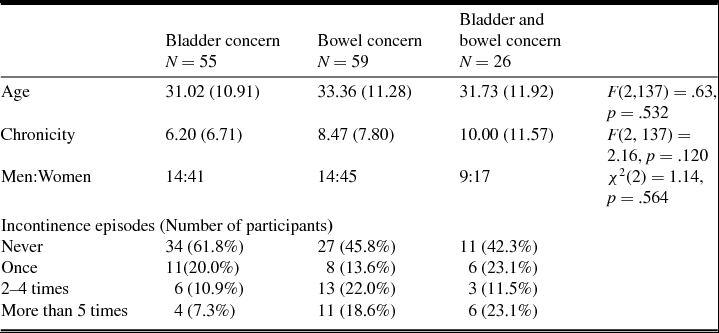
The mean age of eligible respondents (n = 140) was 32.14 ± 11.23 years. One hundred and three (73.6%) were women. The predominant concern of 55 respondents (39.3%) was bladder-control, for 59 (42.1%) it was predominantly bowel-control, and for 26 (18.6%) both bowel and bladder. The chronicity of the problem and gender ratio did not differ significantly between the three groups (Table 1). One hundred and nine (77.9%) respondents were in employment or education, 7 (5%) were on sick leave, 3 retired (2%), 4 homemakers (3%), 16 unemployed (11.4%) and 1 was “other”. Seventy-five (53.6%) were single, 57 married or co-habiting (40.7%), 6 were divorced (4.3%) and 2 widowed.
Sample characteristics

In line with study goals, a relatively small proportion of participants (15%) had experienced incontinence ≥5 times suggesting that symptoms and impairment outlined below are generally not a response to frequent experiences of incontinence. Table 1 shows that while experiences of public incontinence (≥1 episode) had been common, on average across the three groups, 50.7% of respondents had never had such an experience.
In terms of beliefs about the main “cause” of fear of incontinence, participants indicated “past experiences of incontinence” or “near misses” (40.0 %), “infection” (4.3%), “anxiety” or “stress,” (54.3%), IBS (19.3%) and “don't know” or “other” (18.6%). Of those that indicated they believed IBS to be the cause of their fear, all except one were in the bowel-control or bowel and bladder control groups; 35.6% (bowel-control) and 19.2% (bowel and bladder control) indicated that they believed IBS was the main cause of bowel/bladder-control anxiety.
Avoidance, impairment and panic attacks
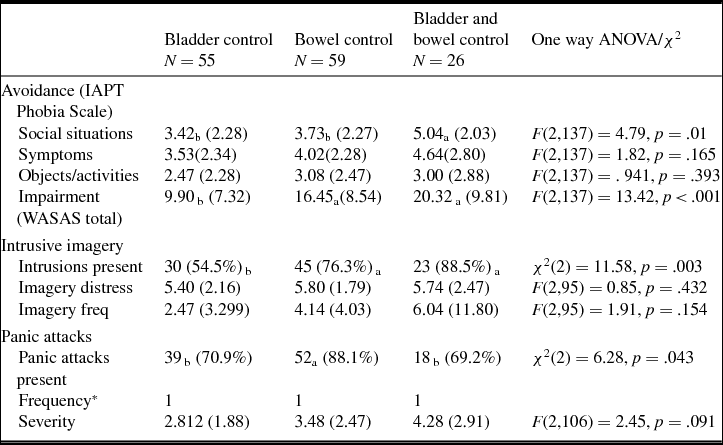
Avoidance levels are displayed in Table 2. Social avoidance was close to the clinical cut-off score in the bladder and bowel groups. The group with both bowel and bladder anxiety had significantly higher social avoidance scores.
Symptom characteristic. IAPT phobia scale scores are means (± SD). Intrusions and panic data comprises prevalence (n, %), and means (± SD) except where indicated
Notes: Post hoc comparisons: a > b: p<.05 (Pair-wise comparisons of IAPT social avoidance scale and WASAS totals are Bonferroni corrected)
*Median frequency: 1 = one panic attack per fortnight
Agoraphobic avoidance scores were close to the clinical cut-off (bladder anxiety) or exceeded it (bowel and both bowel and bladder anxiety). All three groups showed relatively low scores for the specific phobia avoidance item. Impairment was highest in the group with bowel and bladder-control anxiety although the difference in impairment between this group and the bowel anxiety group was not significant (p>0.1). Both of these groups’ impairment scores were higher than those of the bladder anxiety group (Table 2).
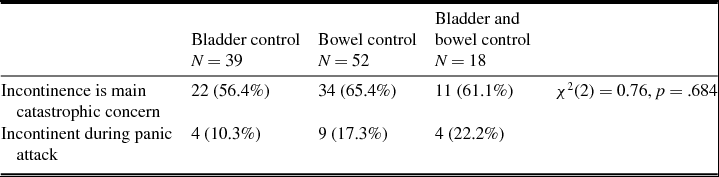
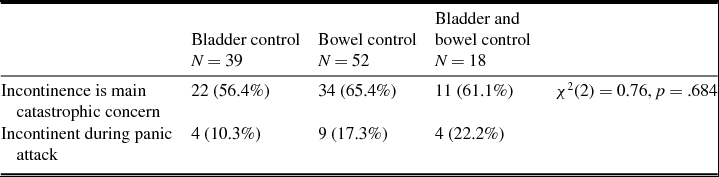
One hundred and nine respondents (77.9%) indicated the occurrence of panic attacks; these were reported more frequently in the bowel anxiety group compared to the bladder, and both bowel and bladder groups. The majority of these respondents (61.5%) indicated that their main concern (i.e. their catastrophic fear) was that they would be incontinent during a panic attack (Table 3). Those who did not indicate that incontinence was their main fear during a panic attack were not more likely to positively endorse the statements (see below) relating to other catastrophic concerns (i.e. having a heart attack/choking: χ2(1) = 2.42; p>0.1 or losing control/going crazy: χ2(1) = 1.49; p>0.1). Across the three groups, 17 participants (15.60%) indicated that they had in fact been incontinent during a panic attack, suggesting that in some individuals, catastrophic fear has a basis in reality (Table 3).
Prevalence of catastrophic incontinence fears and occurrence of incontinence during panic (number of participants and percentages per group)
Considering only the bowel-control group, comparing those who endorsed the belief that the main cause of their anxiety was IBS compared to those who did not, there was no significant difference in terms of presence of panic attacks, panic frequency, and social and specific phobic avoidance (all p values >.1). However, those indicating a belief in IBS as a cause had lower social avoidance scores (2.81 ± 1.91 compared to 4.24 ± 2.31; t(57) = 2.41, p = 0.019) and lower panic severity (2.58 ± 2.44 versus 4.00± 2.32; t(50) = 2.06, p = .045).
Intrusive imagery
Intrusive visual imagery relating to loss of bowel/bladder control was reported by 70% (n = 98) of the sample. The occurrence of intrusive imagery was strongly associated with the presence of panic attacks, being reported by 76.15% of those with panic compared to 48.39% of those with no panic (χ2(1) = 8.857, p<.003). Intrusions were more frequent among participants with bowel anxiety and bowel and bladder anxiety compared to the bladder anxiety group (Table 2). However, intrusion-related distress and frequency of intrusions were statistically equivalent in the three groups.
As expected, intrusion-related distress correlated moderately with agoraphobic avoidance (agoraphobia item, IAPT phobia scale; r(111) = 0.426, p<.001), social avoidance (social phobia item, IAPT phobia scale, r(111) = 0.032, p = .001) and functional impairment (WASAS total; r(91) = 0.331, p = .001).
Beliefs and behaviours relating to loss of bowel/bladder-control
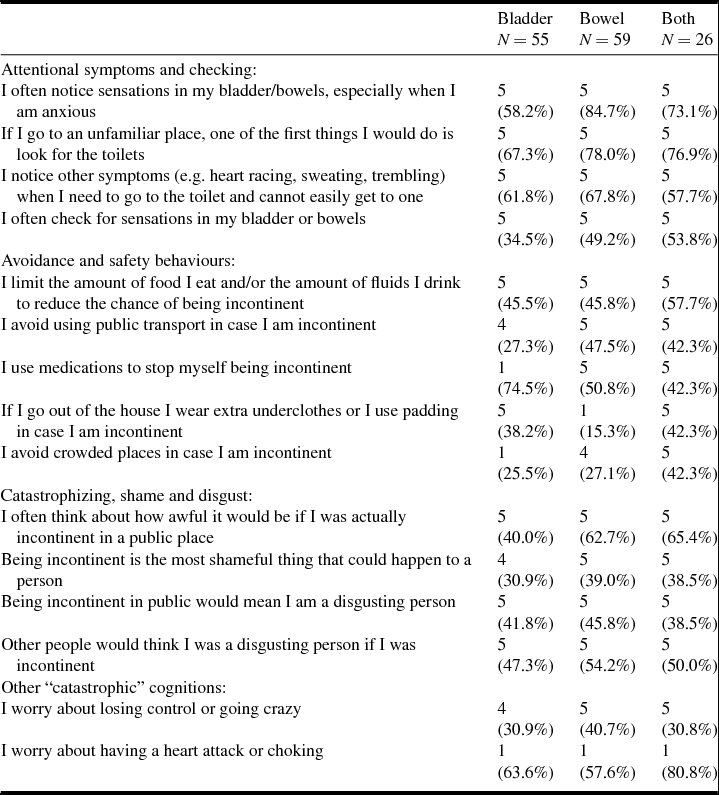
Table 4 summarises the data for the three groups, which for brevity presents modal responses along with percentage of modal responses for each item. As can be seen in Table 4, there was a general tendency towards responding with strong agreement (or “very true of me” responses). However, the level of skew differed between different items, as indicated by the proportion of modal strongly agree/very true of me responses (e.g. ranging from 30.5 to 80.8% in the dual concern group; third data column Table 4).
Bowel and bladder control specific questions (modal values).Percentage values are the proportion of participants in each group scoring the modal value
Notes: 5 = Strongly agree, 4 = mildly agree, 3 = neither agree/disagree, 2 = mildly disagree; 1 = strongly disagree
Participant expressed strong agreement to statements about attending to internal, viscerally-centred sensations as well as relevant external stimuli (location of toilets in unfamiliar places). In relation to avoidance/safety behaviours, the groups differed most obviously in terms of medication-use as a way of controlling symptoms, with the predominantly-bowel and dual concern groups tending to use this strategy whereas those with predominantly-bladder concerns tending to show the opposite extreme response (strongly disagree/very untrue of me). In addition, the latter group also tended to strongly disagree that they avoided crowed places in case of incontinence whereas the other two groups tended to respond in the opposite way.
Other catastrophic concerns about losing (mental) control were also present in the three groups, with stronger agreement on this item among individuals in the predominantly-bowel and dual concern groups. In contrast, the majority of participants in all three groups expressed strong disagreement on the item about more general somatic concerns (having a heart attack or choking).
Problem disclosure and help-seeking
Sixty-seven individuals (48%) had sought help for their anxiety (i.e. for their fear of losing bowel/bladder control). Of these, the majority (n = 57; 85%) had consulted their general practitioner. Mental health professionals were consulted by 45 help-seekers (67.16%; in order of frequency: psychologist and/or psychiatrist, hypnotherapist, other psychotherapist, other mental health professional). Fifteen (22.39%) had seen a gastrointestinal specialist.
On the other hand, 57 respondents (40.70%) had not disclosed their fears to anyone (including friends/family). However, non-disclosure did not seem to be related to positive endorsement (mildly/strongly agree) on shame, self-disgust or other-disgust items from the FOIS (χ2 values <1.5, p>.2). Similarly agreement on these items did not relate to help-seeking (χ2 values <3.3, p>.07); instead, help-seeking was associated with symptom severity and impairment. In particular help-seekers reported higher levels of agoraphobic avoidance (t(138) = −3.392, p = .001) as well as WASAS total scores (t(112) = −3.485, p = .001). There was also an association between the presence of panic attacks and help seeking (χ2 = 3.88, p = .049).
Discussion
This study outlines for the first time some basic characteristics of bowel- or/and bladder-control anxieties. Despite comprising non-treatment-seekers, our sample exhibited significant levels of avoidance, distressing symptoms, and role impairment. Furthermore, the sample showed characteristics very similar to those described in the only other study of a group of patients with bowel/bladder-control anxieties, such as a high prevalence of panic and preponderance of women sufferers (Lelliot et al., Reference Lelliot, McNamee and Marks1991). In addition, the proportion of participants with bladder versus bowel, versus bladder and bowel anxiety in the current sample was exactly the same as that described by Lelliot et al. (Reference Lelliot, McNamee and Marks1991).
With the exception of the Lelliot et al. study (Reference Lelliot, McNamee and Marks1991) previously published studies have only provided case descriptions of treatment of these symptoms. No study that we are aware of has outlined their phenomenology, associated impairment, nature of beliefs or safety behaviours in a systematic way. A significant aspect of this study is our systematic description of bladder-control anxiety separately from bowel-control anxiety. The presence of a group of participants who were equally concerned about bladder and bowel-control, though smaller, is consistent with cross-sensitization of visceral structures in some individuals (Francis, Duffy, Whorwell and Morris, Reference Francis, Duffy, Whorwell and Morris1997; Malykhina, Reference Malykhina2007; Brumovsky and Gebhart, Reference Brumovsky and Gebhart2010). Nonetheless, given the similarities observed between many of the measures used here, we largely discuss bowel and bladder-control anxieties as a single category.
Descriptions of bowel/bladder-control anxiety appear only sporadic in the psychiatric literature, and often in journals dealing with psychosomatic concerns, i.e. the interplay between psychological and physical symptoms (e.g. Cosci, Reference Cosci2013; Porcelli and Leandro, Reference Porcelli and Leandro2007). This may partly be accounted for by the fact that symptoms of bowel/bladder-control anxiety do not feature prominently in the main psychiatric diagnostic manuals. In outlining panic disorder ± agoraphobia and social anxiety, DSM IV refers only to gastrointestinal/abdominal distress or diarrhoea as symptoms of anxiety, rather than the constellation of symptoms (i.e. the syndrome) that is expressed in bowel/bladder-control anxiety. The tendency to use non-specific descriptors associated with visceral sensations in studies of phenomenology and outcome of anxiety disorders (e.g. “gastrointestinal distress” or “gastrointestinal fears”) or references to only the upper gastrointestinal tract in symptom descriptions may obscure the specific content related to bowel and bladder functioning. In DSM IV (e.g. American Psychiatric Association, 2000) only in the description of agoraphobia without history of panic is there a specific reference to a fear of losing control of bladder functioning, although this is given as an example of a symptom (along with fear of vomiting) rather than a possible diagnostic criterion. A further reason for the relative neglect of this topic is that bowel/bladder-control anxiety symptoms may be relatively uncommon, although, as we have already noted, the prevalence does not seem to be substantially different from emetophobia.
Studies that have relied on DSM-III-R or DSM-IV criteria have not tended to identify visceral or gastrointestinal-specific symptom clusters, especially when examining panic disorder or agoraphobia (Kircanski, Craske, Epstein and Wittchen, Reference Kircanski, Craske, Epstein and Wittchen2009; Wittchen, Gloster, Beesdo-Baum, Fava and Craske, Reference Wittchen, Gloster, Beesdo-Baum, Fava and Craske2010). On the other hand, those studies that report the prevalence of patients’ primary concerns qualitatively, without the constraints of diagnostic criteria, or have used instruments that specifically inquire about fears of losing control of bowel or bladder function (e.g. the Agoraphobic Cognitions Questionnaire; Chambless, Caputo, Bright and Gallagher, Reference Chambless, Caputo, Bright and Gallagher1984) show that symptoms of bowel/bladder-control anxiety have a non-trivial prevalence that is similar to that of emetophobia in clinical samples, i.e. 2–8% (e.g. Lelliot et al., Reference Lelliot, McNamee and Marks1991; Raffa, White and Barlow, Reference Raffa, White and Barlow2004; Hollifield, Finley and Skipper, Reference Raffa, White and Barlow2004; Hollifield, Finley and Skipper, Reference Hollifield, Finley and Skipper2003; Thorpe and Salkovskis, Reference Thorpe and Salkovskis1995). In the only study to examine the prevalence of fear of incontinence among agoraphobic patients, 10% were found to have a fear of (faecal) incontinence during a panic attack (unpublished data cited in Lelliot and Bass, Reference Lelliot and Bass1990).
Our survey-based data set does not allow us to address the issue of diagnostic status of bowel/bladder control anxieties. The presence of functional symptoms of the bowel/bladder (along with an absence of other features of somatization disorders), and overlap with social anxiety disorder, panic, agoraphobia and specific phobia (e.g. emetophobia) suggests that research progress on this topic will likely depend on a syndromal approach that pays due attention to the interaction between biopsychological (e.g. gut-brain axis) and interpersonal factors (e.g. disgust and shame). Given this, and the fact that a proportion of individuals presenting with bowel/bladder control anxiety will have experienced their “worst fear” (including a smaller proportion who have actually been incontinent during a panic attack), existing models for treating catastrophically interpreted bodily symptoms may need to be modified when treating people with bowel/bladder control anxiety (cf Clark and Salkovskis, in press).
As expected from previous findings (Lelliot et al., Reference Lelliot, McNamee and Marks1991), our study showed that most participants had experienced panic attacks. For the majority of these participants, their main fear was that they would be incontinent during a panic attack. On the other hand, a sizeable minority (~35–45%) indicated that this was not their main catastrophic fear. This may suggest that panic attacks associated with other catastrophic beliefs pre-date the development of bowel/bladder-control anxiety in these individuals. Alternatively, since these participants were not more likely to agree with the statements relating to other catastrophic beliefs (i.e. losing control/going crazy, or choking/having a heart attack) it may be that they were not yet aware of a connection between panic and specific catastrophic cognitions.
As noted above, the three groups were similar in most respects. However, those with bladder anxiety showed a lower occurrence of panic attacks and intrusive imagery (especially compared to the predominantly-bowel-control anxiety group). It is not yet clear whether this lower level of distressing symptoms - as well as lower levels of functional impairment - are a general feature of individuals with bladder-control anxiety (in contrast to bowel-control anxiety) or if this represents a sampling bias. Differences between groups were also found in the use of medication, wearing of extra under-clothes/padding and avoidance of crowded places in case of incontinence. Medication was used most frequently by those with bowel anxiety. While we did not collect any data on the types of medications people use, these results are consistent with the relatively easy availability of prescription-free anti-diarrheal medication (e.g. loperamide)Footnote 1. While most of those with bladder anxiety strongly disagreed with the statement “I avoid crowded places in case I am incontinent”, there was a larger spread of responses to this item among these participants. Nonetheless, this is perhaps a somewhat surprising finding. While our data do not allow us to explore this, it is possible that avoidance of crowded places in this group is overcome by the relatively frequent use of safety behaviours such as the wearing extra underclothes/use of padding.
In the clinical context, the degree to which symptom-related behaviours should be categorized as “safety behaviours” would need to be considered carefully in bowel/bladder-control anxiety (Helbig-Lang and Petermann, Reference Helbig-Lang and Petermann2010). While certain behaviours assessed in this study (Table 4) seem to clearly represent avoidance or safety behaviours (i.e. they are likely to be anxiety-driven), others, especially those that are primarily intended to manage visceral symptoms associated with bowel/bladder distress – for example, avoiding spicy food to prevent irritation of the gut, and thus prevent diarrhoea – are less easily distinguished from adaptive coping. Alternatively, for some patients, exposure to avoided activities that provoke symptoms (e.g. eating spicy foods) may allow important beliefs to be tested (e.g. “if I feel an urge to use the toilet, I need to go immediately”).
As expected, there was frequent strong endorsement of disgust- and shame-based cognitions in our sample. However, in contrast to our prediction, the endorsement of disgust and shame items on the FOIS was not significantly associated with avoidance of help-seeking. On the other hand, help-seeking showed a clear relationship with symptom severity and the presence of panic attacks. The latter finding is consistent with previous studies on panic (Wittchen, Reed and Kessler, Reference Wittchen, Reed and Kessler1998).
The prevalence of intrusive imagery was high among participants in the sample, especially when compared to patient groups with anxiety disorders (Brewin, Gregory, Lipton and Burgess, Reference Brewin, Gregory, Lipton and Burgess2010). Again this seems to support the clinical relevance of our findings. As predicted, imagery distress was correlated with avoidance and impairment. This supports the idea that imagery has an important role in maintenance of bowel/bladder-control anxiety, although clearly, we cannot be confident about causation. We have recently obtained further support for this idea in a study examining imagery content and processes in bowel/bladder-control anxiety sufferers (Pajak et al., Reference Pajak, Langhoff, Watson and Kamboj2013).
Limitations
Our study is based on a selected community sample responding to a relatively brief internet survey. This means that some participants would be characterized as “sub-clinical”. The bladder-control anxiety group in particular showed lower levels of avoidance and impairment and the current absence of a reliable and valid measure of a fear of incontinence means that we have no way of verifying that the three groups were matched in terms of severity of symptoms.
In our attempt to examine the most clinically meaningful group, we restricted our data analysis to those who strongly agreed with the statement “my worst fear is that I would be incontinent in a public place”. This may have led to the skew towards endorsing items about beliefs and behaviours specifically related to bowel/bladder control in the FOIS with strong levels of agreement. On the other hand, we did seem to identify beliefs and behaviours of relevance to the development of an instrument that assesses fear of incontinence, although such a scale would ideally use a continuous severity scale rather than degree of agreement to items. The focus on incontinence in a public place means that there may have been an additional bias towards higher levels of social anxiety and avoidance in our sample. However, our experience of bowel/bladder-control anxieties suggests that it is strongly driven by social concerns and therefore the sample is unlikely to be unrepresentative in terms of social-evaluative concerns. For example, we have not yet encountered (or identified in the literature) cases where there was not a very strong component of social concerns.
Because our data are collected anonymously using an internet survey, reliability and validity is less easily established compared to treatment seeking samples. On the other hand, an authoritative review (Gosling, Vazire, Srivastava and John, Reference Gosling, Vazire, Srivastava and John2004) and a recent empirical study (Moritz, Van Quaquebeke, Hauschildt, Jelinek and Gönner, Reference Moritz, Van Quaquebeke, Hauschildt, Jelinek and Gönner2012) suggest that the quality of data collected through internet surveys is robust and respondents are not fundamentally different in terms of characteristics desirable of a research sample compared to those involved in more traditional testing. Nonetheless, we acknowledge that this study is preliminary and should be followed up by clinical studies.
It is also acknowledged that the presence of IBS and other functional disorders may contribute to a very real threat of incontinence and that our study did not adequately address the contribution of functional disorders to the expression of bowel/bladder-control anxiety. Even if we collected diagnostic information on functional disorders (e.g. through self-reported confirmation of a diagnosis from a gastroenterologist or urologist), there was still the possibility of under-reporting because some participants with these conditions may not have received a formal diagnosis. Determining the effects of functional disorders on bowel/bladder control-anxieties (and a comparison between those with and without functional disorders) would require thorough diagnostic work-up of individuals presenting with these anxieties, which was obviously beyond the scope of this study. Our preliminary exploration of this issue suggests that the majority of those with bowel-control anxiety did not believe that IBS was the main cause of their anxiety. This does not, however, rule out the possibility that they suffered from IBS; nor is the reported belief in the presence or absence of this disorder an adequate substitute for formal diagnosis. Future research should investigate the effects of functional disorder on bowel/bladder control-anxiety more thoroughly.
In summary, our study provides an initial description of bowel and/or bladder-control anxieties. We suggest that while relatively uncommon, these anxieties are by no means rare and are associated with considerable distress and impairment. Future studies of bowel/bladder-control anxieties should use a wider range of validated instruments (e.g. the Agoraphobic Cognitions Questionnaire) and contrast the characteristics of these participants with a suitable control group (e.g. those with emetophobia). Such effort at thorough characterization will enable a theory-led cognitive-behavioural model to be developed, allowing more effective treatment of a syndrome that has been neglected for too long.
Acknowledgements
This research was partly funded by an award from the UCL Graduate School. The authors thank Paul Salkovskis for advice during the early stages of this project, and Chris Brewin, Peter Scragg and David Veale for advice on developing items for the Fear of Incontinence Survey.



Comments
No Comments have been published for this article.