I. INTRODUCTION
Rational design of new materials or identification of new functionalities in underexplored materials, especially semiconductors, has been a key contributor to electronic, photonic, and energy technologies. Transition metal perovskite chalcogenides (TMPCs), a class of materials with rich tunability and functionality, are currently of high interest for applications such as solar cells and infrared detectors among other applications. TMPCs have a general chemical formula of ABX3, where A is an alkaline earth metal such as Ba, Sr, and Ca, B is a transition metal such as Ti, Zr, and Hf, and X is a chalcogen such as S and Se. Specifically, materials with early transition metals such as Ti, Zr, and Hf on the B site have recently been explored for optoelectronic and photonic applications.Reference Sun, Agiorgousis, Zhang and Zhang1–Reference Gross, Sun, Perera, Hui, Wei, Zhang, Zeng and Weinstein10 Further exploration of the chemical and thermal stability for these materials, with respect to heating or exposure to moisture and air, is one of the key remaining questions to extend their potential for large-scale applications.Reference Wang and Kovnir11
TMPCs share a lot of exciting features with the well-studied oxide counterparts, including rich tunable chemistry, high stability, and environmentally friendly and earth-abundant composition. Similarly to the perovskite oxides, the valence band and the conduction band of TMPCs are primarily composed of chalcogen p orbitals and transition metal d orbitals, respectively. High density of states (DOS) is thus expected from the combination of a highly symmetric structure and degenerate transition metal d orbitals. These features are desirable attributes for high temperature thermoelectric candidates.Reference He, Liu and Funahashi12 In fact, perovskite oxides have been extensively studied for thermoelectrics due to this advantage.Reference Muta, Kurosaki and Yamanaka13–Reference Yasukawa and Murayama18 However, the high lattice thermal conductivity and large band gaps limit their thermoelectric performance. With the replacement of oxygen with larger, heavier, and less electronegative chalcogen elements, TMPCs are expected to possess lower thermal conductivity and lower band gaps spanning IR to visible spectrum, thereby mitigating those issues in the oxide counterparts for both thermoelectric and optoelectronic applications. Thus, it is also important to study the high temperature thermal properties of TMPCs to evaluate their potential for thermoelectrics.
In our previous studies, we have demonstrated high quality synthesis of polycrystalline TMPCs through solid state reaction in sealed ampoules,Reference Niu, Huyan, Liu, Yeung, Ye, Blankemeier, Orvis, Sarkar, Singh, Kapadia and Ravichandran9 as well as single crystal growth with chemical vapor transport and salt flux methods.Reference Niu, Joe, Zhao, Zhou, Orvis, Huyan, Salman, Mahalingam, Urwin, Wu, Liu, Tiwald, Cronin, Howe, Mecklenburg, Haiges, Singh, Wang, Kats and Ravichandran19–Reference Niu, Sarkar, Williams, Zhou, Li, Bianco, Huyan, Cronin, McConney, Haiges, Jaramillo, Singh, Tisdale, Kapadia and Ravichandran21 We have also evaluated their physical properties for photovoltaics and anisotropic infrared photonic materials.Reference Niu, Huyan, Liu, Yeung, Ye, Blankemeier, Orvis, Sarkar, Singh, Kapadia and Ravichandran9,Reference Niu, Joe, Zhao, Zhou, Orvis, Huyan, Salman, Mahalingam, Urwin, Wu, Liu, Tiwald, Cronin, Howe, Mecklenburg, Haiges, Singh, Wang, Kats and Ravichandran19–Reference Niu, Sarkar, Williams, Zhou, Li, Bianco, Huyan, Cronin, McConney, Haiges, Jaramillo, Singh, Tisdale, Kapadia and Ravichandran21 In this work, we will study the thermal stability of several transition metal perovskite-related sulfides in air, including α-SrZrS3 (α-SZS), β-SrZrS3 (β-SZS), BaZrS3 (BZS), Ba2ZrS4 (BZS214), and Ba3Zr2S7 (BZS327).
II. MATERIALS AND METHODS
A. Materials synthesis
Synthesis of all samples were performed via solid state reaction in sealed quartz ampoules. Binary sulfides, elemental metal powders, and sulfur pieces were used as precursors. As described in our previous work, the addition of a small amount of iodine can effectively reduce the reaction time and avoid the laborious repeated cycles of grinding, pelletizing and heating. To avoid potential oxidation, the synthetic procedure was performed in a controlled atmosphere. The starting materials, barium sulfide powder (Sigma-Aldrich, St. Louis, Missouri, 99.9%), strontium sulfide powder (Alfa Aesar, Ward Hill, Massachusetts, 99.9%), lanthanum sulfide powder (Alfa Aesar, 99%), zirconium powder (STREM, Newburyport, Massachusetts, 99.5%), sulfur pieces (Alfa Aesar, 99.999%), and iodine pieces (Alfa Aesar, 99.99%) were stored and handled in an argon-filled glovebox. Stoichiometric quantities of precursor powders with a total weight of ∼0.5 g were ground and loaded into a quartz tube along with approximately 0.5–2 mg/cm3 iodine inside the glovebox. The quartz tube has an outside diameter of 19 mm and an inner diameter of 15 mm. The tube was capped with ultra-torr fittings and a bonnet needle valve to avoid exposure to the air during transfer. The tube was then evacuated with an anticorrosive rotary vane pump to below 5 mtorr and then sealed using a blowtorch with an oxygen and natural gas combustion mixture without exposing the contents of the ampoule to air. All tubes were first dwelled at 400 °C to avoid an explosion due to rapid vaporization of sulfur and then ramped to the growth temperature at 100 °C/h. All samples were quenched to room temperature after the dwell time using a sliding furnace setup at a cooling rate of around 100 °C/min. BZS, α-SZS, β-SZS, BZS214, and BZS327 samples were held at 600 °C, 850 °C, 1100 °C, 1050 °C, and 1100 °C, respectively, for 60–100 h. Then, the obtained samples were ground and pressed into 13 mm diameter pellets under uniaxial stress of around 600 MPa using a hydraulic cold press for further studies. All samples were handled in air after the heat treatment.
B. Structural characterization
X-ray diffraction (XRD) studies were performed on the as-synthesized materials and materials after the heat treatment in air. The powder XRD scans were recorded using a Bruker D8 Advance X-ray diffractometer (Billerica, Massachusetts) with Cu Kα radiation in the Bragg–Brentano symmetric geometry. The sample stage was rotated at 15 rpm. The spectra was taken for a 2θ range of 10°–75° with a step of 0.015° and an integration time of 0.25 s.
C. Analytical characterization
Energy dispersive X-ray spectroscopy (EDS) measurements were performed on the as-synthesized powders and powders after the heat treatment in air. The EDS spectra were obtained in a JEOL 7001F analytical field emission scanning electron microscope (JEOL USA, Peabody, Massachusetts) equipped with energy dispersive X-ray spectrometer. EDS spectra were taken on cold-pressed pellets for the samples before heating and on the pressed powder on carbon tape for samples after heating. All EDS spectra were acquired with settings of 15 kV accelerating voltage, around 67 μA emission current, and a working distance of 15 mm. Different magnifications were used from 100× to 1000× to confirm the consistency across the powder collection. The spectra shown in Figs. 5 and 6 were recorded at 200×.
D. Raman spectroscopy
Raman spectroscopy measurements were performed in a Renishaw inVia confocal Raman microscope with a 532 nm laser and a 20× objective lens. For samples before heating, Raman spectra were taken on the cold-pressed pellets. To eliminate the possible signals from surface contaminations, measurements were performed right before and after sanding the surface using sand paper. The results were consistent. For samples after heating, the spectra were taken on loosely compacted powders.
E. Thermal stability test
Differential scanning calorimetry (DSC) and thermogravimetric analysis (TGA) measurements were performed simultaneously on a Netzsch STA 449 F3 Jupiter (Netzsch Instrument North America LLC, Burlington, Massachusetts). Prior to each sample run, a correction was performed using both the reference and sample crucibles to account for any variations within the crucibles themselves. Sample powders obtained were weighed into alumina crucibles, equilibrated isothermally for 15 min, and heated to 1200 °C at a heating and cooling rate of 8 °C/min in air.
III. RESULTS AND DISCUSSION
A. Structural diversity
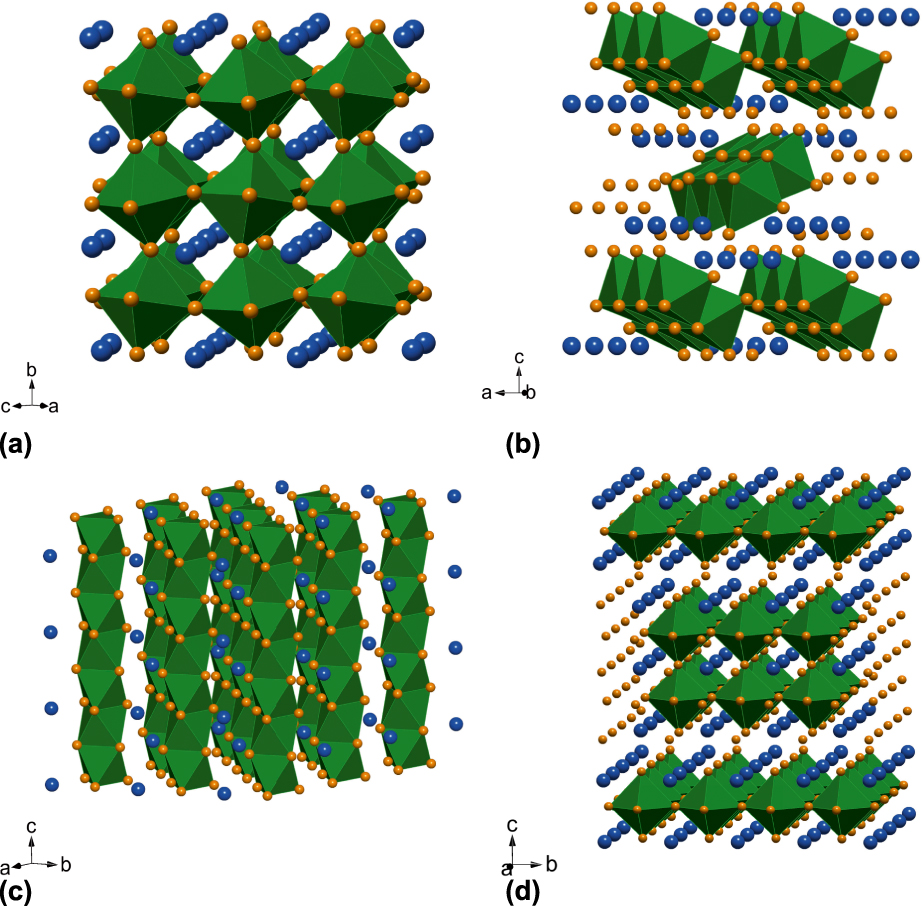
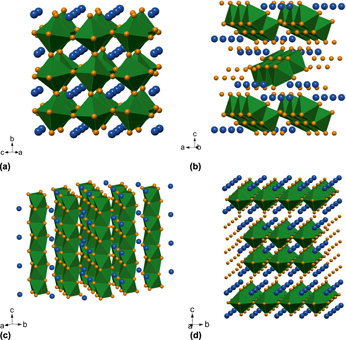
Synthetic efforts of these ternary chalcogenides started more than half a century ago and their structural diversity has been studied experimentally and theoretically.Reference Sun, Agiorgousis, Zhang and Zhang1,Reference Ju, Dai, Ma and Zeng4–Reference Kuhar, Crovetto, Pandey, Thygesen, Seger, Vesborg, Hansen, Chorkendorff and Jacobsen6,Reference Niu, Huyan, Liu, Yeung, Ye, Blankemeier, Orvis, Sarkar, Singh, Kapadia and Ravichandran9,Reference Brehm, Bennett, Schoenberg, Grinberg and Rappe22–Reference Bennett, Grinberg and Rappe31 Due to the significantly larger size of chalcogen atoms when compared to the O atom, TMPCs display more structural distortions from the ideal cubic perovskite structure. Four major types of structural variations are of high interest, including the distorted perovskite phase, needle-like phase, hexagonal perovskite phase, and the Ruddlesden–Popper (RP) phases. Schematics for these structural types are shown in Fig. 1. The five compounds reported in this work cover distorted perovskite and needle-like structural types along with the RP phases.
Schematics of various ABX3 crystal structures for (a) the distorted perovskite phase, (b) the needle-like phase, (c) the hexagonal perovskite phase, and (d) the Ruddlesden–Popper phases (n = 2). The blue and orange spheres represent A site atoms and X site chalcogen atoms, respectively. The BX6 octahedra are highlighted in green.

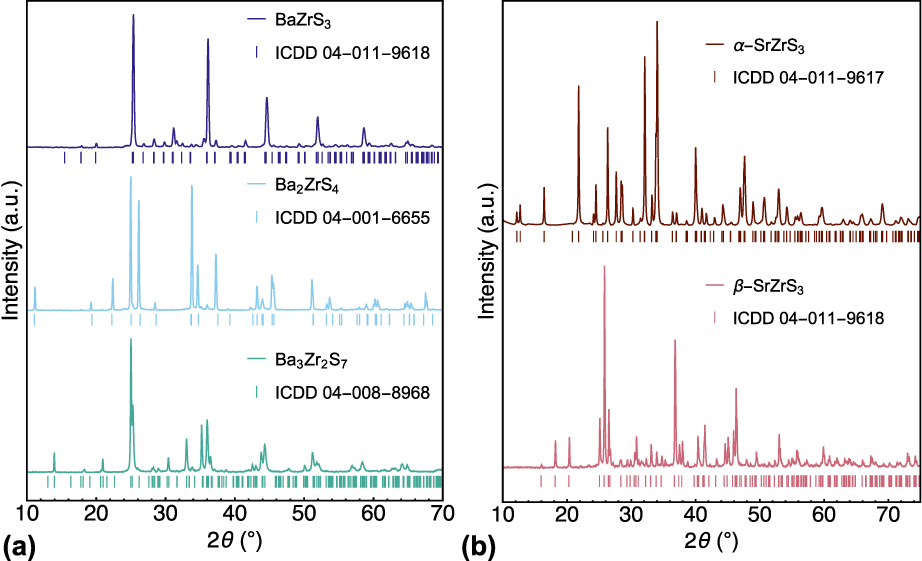
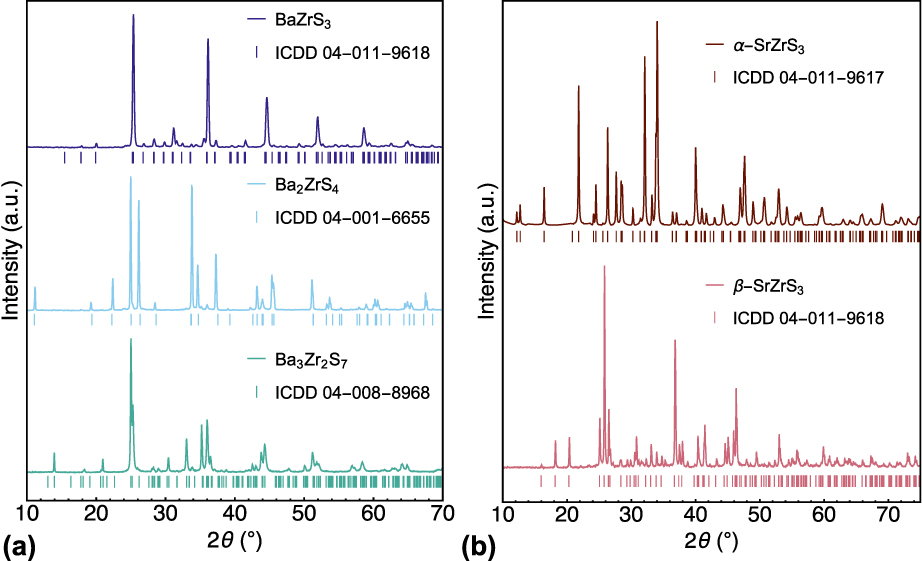
These structural variations can be viewed as different ways in which the BX6 octahedra are connected in the extended three-dimensional (3D) space. The structure that is closest to the ideal cubic perovskite is the GdFeO3 (GFO) structure with a typical space group Pnma, where the BX6 octahedra are connected through a corner-sharing 3D network [Fig. 1(a)]. Tilting of the octahedra breaks the cubic symmetry and ends up with a distorted perovskite phase with an orthorhombic structure. Among the compounds reported in this work, BaZrS3 and the higher temperature phase of SrZrS3 (β-SZS) possess this structure. In the powder patterns of BZS and β-SZS [Figs. 4(a) and 4(b)], we can see most intense peaks qualitatively resembling peaks from the ideal perovskite structure, with weaker satellite peaks arising from the symmetry breaking due to the octahedra tilting. The lower temperature phase of SrZrS3 (α-SZS) is the needle-like phase in the NH4CdCl3 structure. In such a structure, the octahedra are connected by sharing the edges, and two columns of edge-sharing octahedra form a chain. These parallel chains are extended along one direction and form a quasi-one-dimensional (quasi-1D) structure [Fig. 1(b)]. The two structurally distinct phases can both be stabilized at room temperature by quenching from different growth temperatures.Reference Niu, Huyan, Liu, Yeung, Ye, Blankemeier, Orvis, Sarkar, Singh, Kapadia and Ravichandran9,Reference Lee, Kleinke and Kleinke30 Powder patterns of both SZS polymorphs are shown in Fig. 4(b), which agree well with the previous structural study.Reference Lee, Kleinke and Kleinke30 When smaller transition metals, such as Ti, sit in the B site, these compounds tend to stabilize in the BaNiO3 structure, with a typical space group P63/mmc. BX6 octahedra share opposing faces and form parallel single column chains. These chains are arranged in a hexagonal symmetry [Fig. 1(c)]. BaTiS3 stabilizes in such a hexagonal perovskite phase. The Ti–Ti bond length is much shorter along the single column chains than across the chains. These strongly bonded TiS6 chains are separated by Ba chains, forming a highly symmetric and yet also highly anisotropic quasi-1D structure. Notably, the strong bonding along the chain also ensures that the natural cleavage of the crystal is along the chain direction, leading to a prismatic plane with easily accessible anisotropy. Such an easily accessible in-plane anisotropy could lead to interesting anisotropic transport and physical properties. One example is the giant birefringence we have reported in BaTiS3 very recently.Reference Niu, Joe, Zhao, Zhou, Orvis, Huyan, Salman, Mahalingam, Urwin, Wu, Liu, Tiwald, Cronin, Howe, Mecklenburg, Haiges, Singh, Wang, Kats and Ravichandran19 Sr1+xTiS3 (STS) has similar Quasi-1D chains with BTS, but the structure is more distorted and complex. STS samples adopt a composite crystal modulated structure, where the TiS6 columns and Sr columns share common periodicities in the basal plane, yet have different repeating patterns along the chain direction.Reference Tranchitella, Fettinger, Dorhout, Van Calcar and Eichhorn32–Reference Gourdon, Jeanneau, Evain, Jobic, Brec, Koo and Whangbo34 This leads to a slight off-stoichiometry of the composition, Sr1+xTiS3. The synthesis of STS and its anisotropic optical properties will be reported subsequently. The RP phases of perovskites are formed by alternating a set number (n) of perovskite layers with the chemical formula ABX3 and a rock salt layer AX. One schematic crystal structure for n = 2 is shown in Fig. 1(d). Such a 2D perovskite has a general formula of An+1BnX3n+1 for the case of the same cations in perovskite and rock salt layer. The RP phases could host interesting, different sets of octahedra tilting and distortion compared to the parent perovskite phases. Several theoretical studies explored the possibility of achieving static polarization in such materials to demonstrate bulk photovoltaic effect.Reference Wang, Gou and Li3,Reference Zhang, Shimada, Kitamura and Wang35 Ba3Zr2S7 and Ba2ZrS4 are the n = 2 and n = 1 Ruddlesden–Popper phases of the perovskite sulfide BaZrS3, respectively. The perovskite slabs with corner-sharing ZrS6 octahedra are intercalated by one BaS layer and the adjacent perovskite blocks are offset by half a unit cell along the face diagonal of the in-plane square lattice. Powder patterns of Ba3Zr2S7 and Ba2ZrS4 are shown in Fig. 4(a). We can see the signature low-angle peaks corresponding to the larger lattice cell constants along the stacking directions.
B. Thermal stability
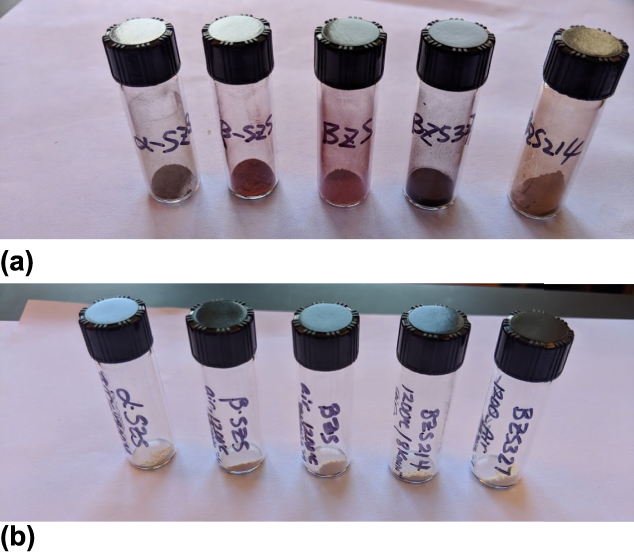
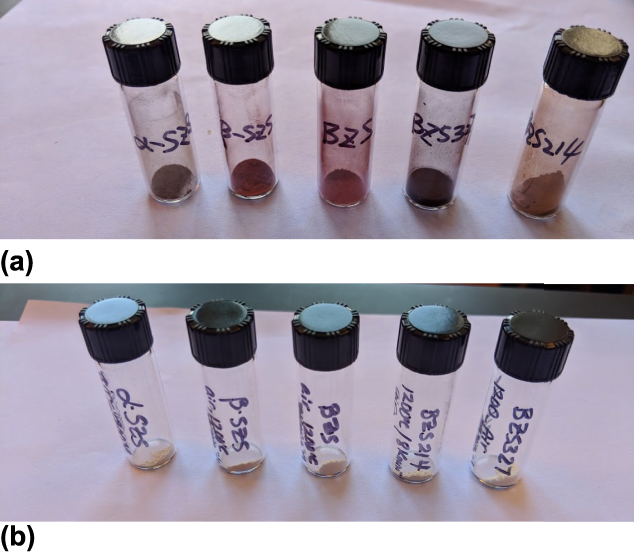
TGA and DSC were performed on the as-synthesized samples in powder form to evaluate their thermal stability. All powders appear dark or dark brown before the heat treatment, as shown in Fig. 2(a). These powders are stable in ambient conditions. There is no visible color change or measurable degradation over the course of a year. Around 30 mg of powders were used for each sample and gradually heated to 1200 °C in air. After the measurement, all samples turned into white powders, as shown in Fig. 2(b).
Optical pictures of five samples before (a) and after (b) heat treatment. The materials in (a) from left to right are α-SrZrS3, β-SrZrS3, BaZrS3, Ba3Zr2S7, and Ba2ZrS4. The materials in (b) from left to right are α-SrZrS3, β-SrZrS3, BaZrS3, Ba2ZrS4, and Ba3Zr2S7, respectively.
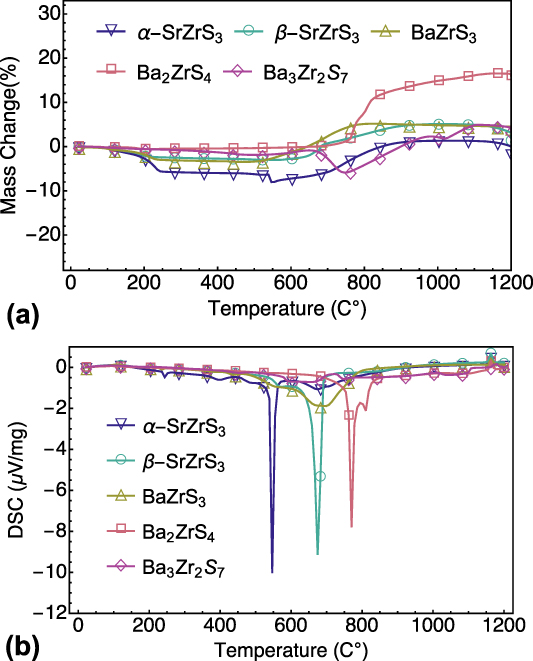
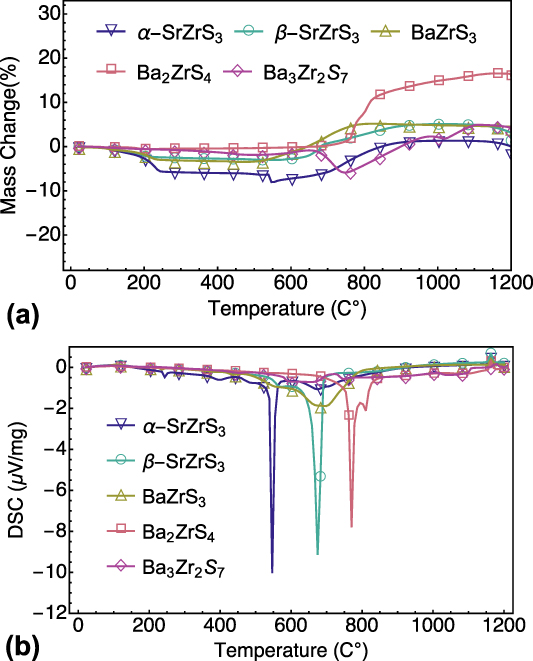
The weight change and DSC spectra as a function of temperature are shown in Figs. 3(a) and 3(b). We can see that a loss of weight in most samples occurs around 200 °C and there are corresponding small peaks in the DSC spectra. We attribute this to the evaporation of iodine, which was used as catalysis in the sample synthesis. This was most obvious in α-SZS samples, as those samples needed slightly higher iodine concentrations to stabilize the desired needle-like phase. Apart from the loss of iodine in the powder mixture, all samples remain fairly stable in air until being heated well beyond 500 °C. The needle-like phase α-SZS is the first one subject to oxidation at ∼550 °C with a sudden weight loss and a subsequent gradual weight gain. The oxidation of the two distorted orthorhombic phases, BZS and β-SZS, happens at very close temperatures of just above 650 °C. And the two RP phases of BZS showed the highest stability with an oxidation onset a little below 800 °C. All these oxidation reactions are signified by endothermic peaks in their corresponding DSC spectra. Another interesting feature in the TGA spectra is that α-SZS and BZS327 experienced sharp weight loss followed by weight gain, while other materials experienced no appreciable weight loss and only gradual weight gain. The weight loss can be understood by the replacement of S with lighter O atoms. And the competing weight gain at higher temperatures is attributed to the formation of metal sulfates, as indicated by the XRD measurement of the powders after heating. The TGA and DSC data indicate that the lower symmetry needle-like phase α-SZS is the most vulnerable to degradation in elevated temperatures, and all other higher symmetry phases, including distorted perovskite phases (BZS and β-SZS) and RP phases (Ba3Zr2S7 and Ba2ZrS4), remain fairly stable in air up to well beyond 600 °C.
(a) TGA mass change and (b) DSC of five samples as a function of temperature.
C. Oxidation products
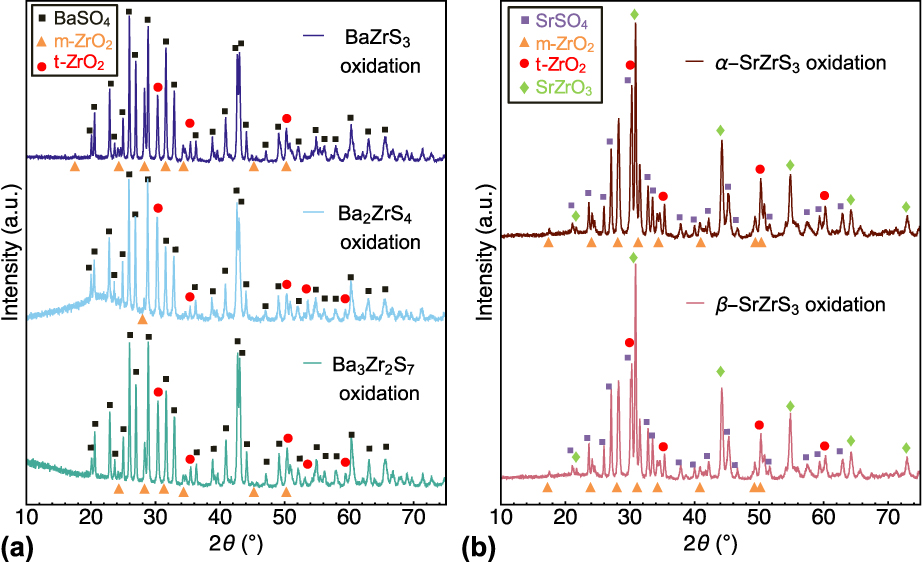
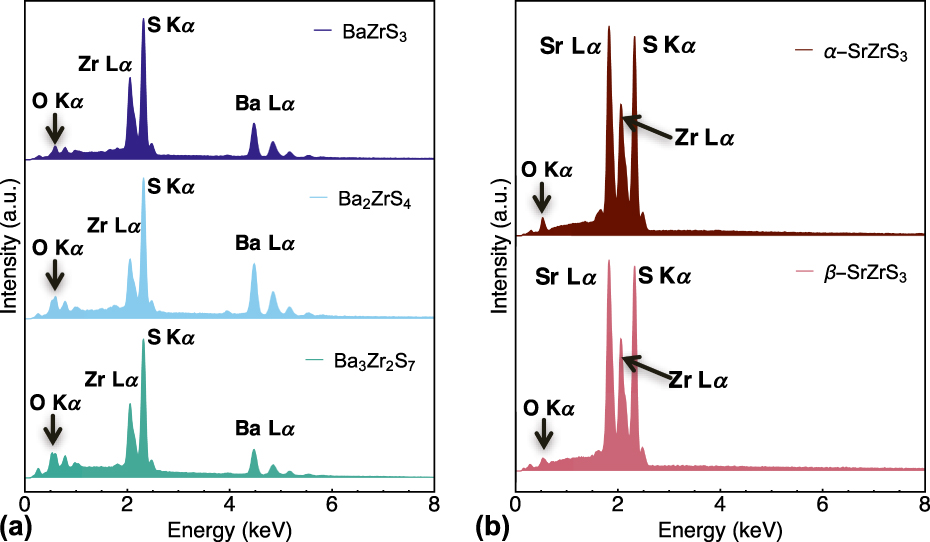
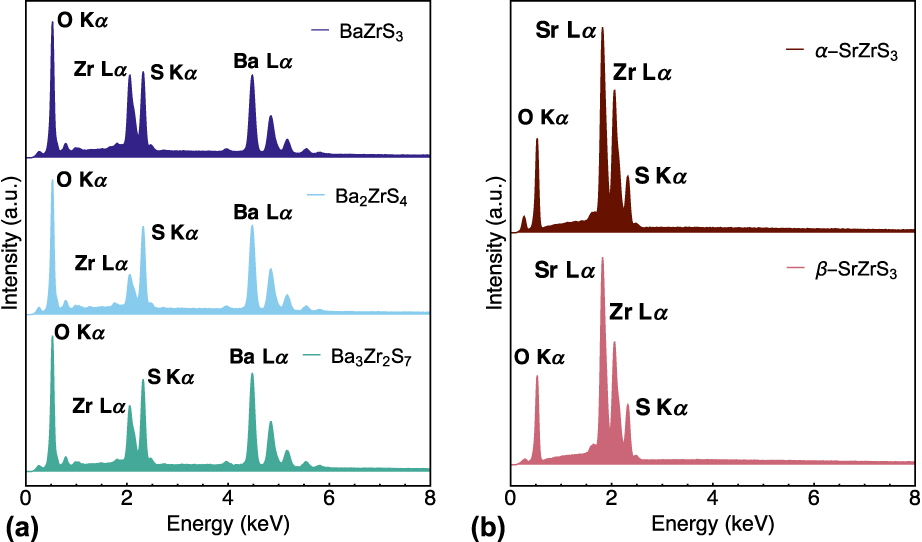
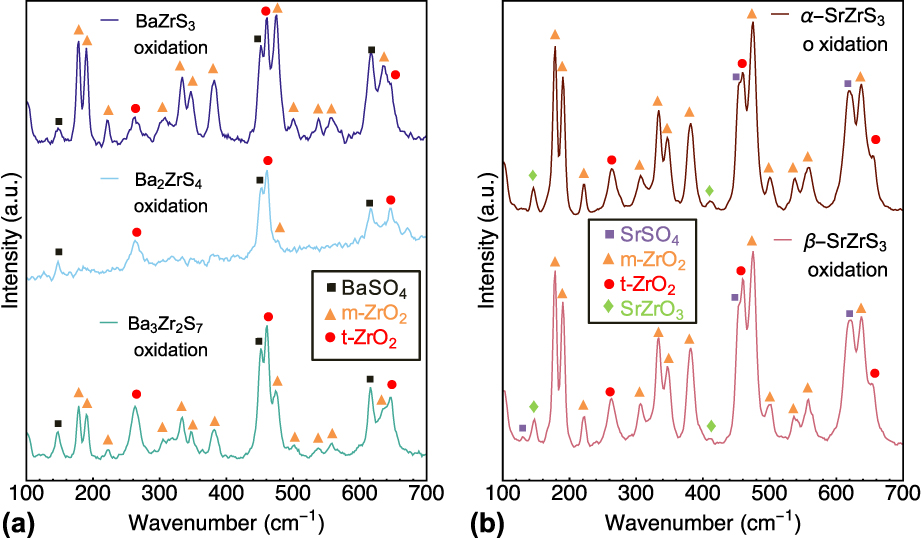
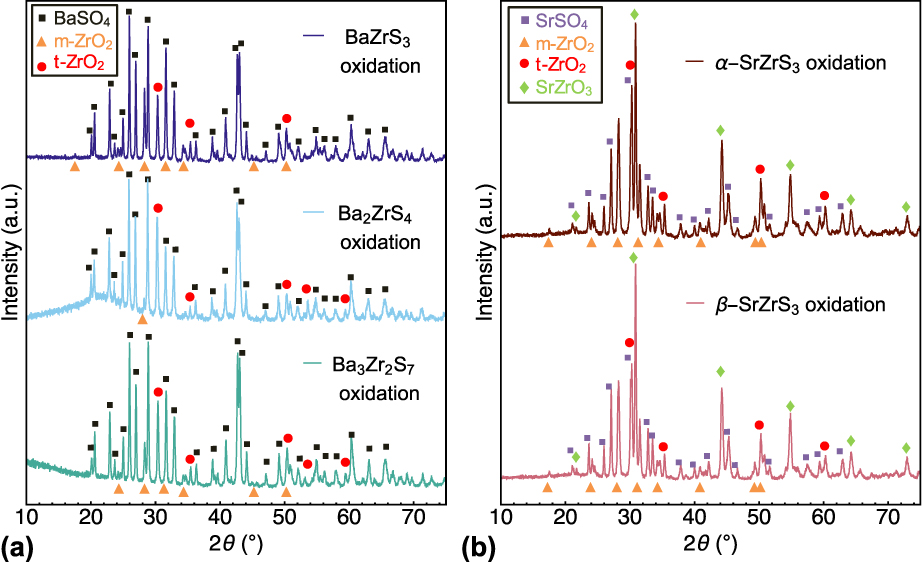
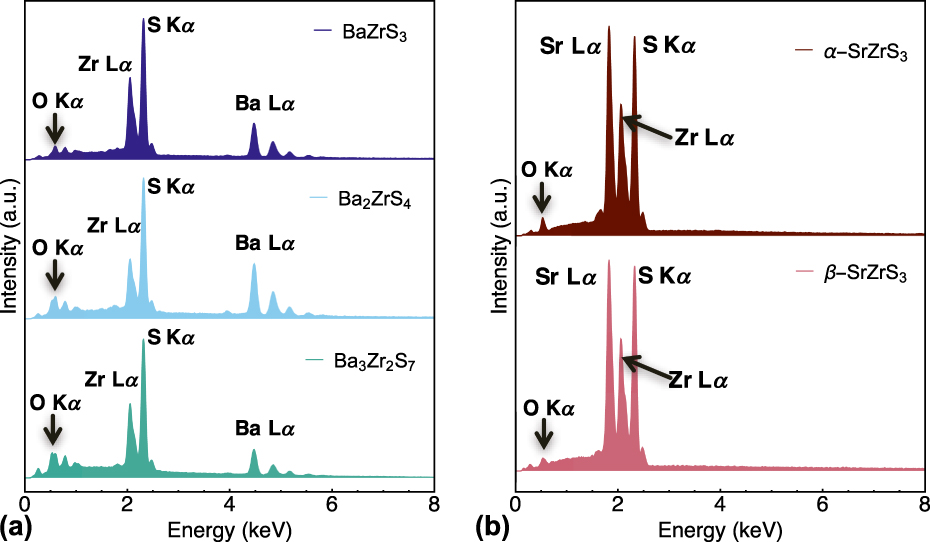
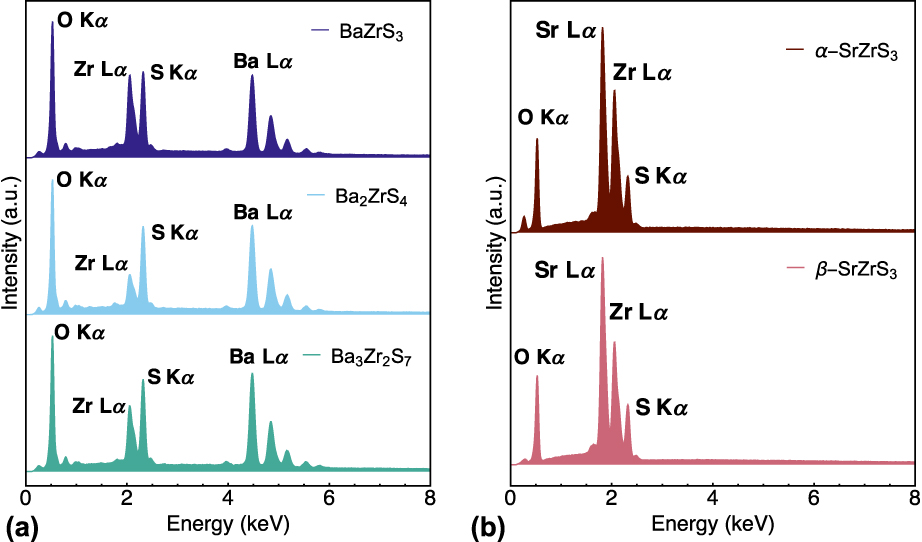
To further evaluate the effect of heat treatment in air and understand the oxidation end products, we performed XRD, Raman spectroscopy, and EDS studies on the samples before and after heat treatment. Comparison of the results is shown in Figs. 4–9. As mentioned earlier, in the pre-treatment XRD, one can clearly see distinctive patterns for the SZS polymorphs and the BZS RP phases. However, the post-treatment XRD of two SZS polymorphs appear almost identical. The peaks can be attributed to a mixture of SrZrO3, SrSO4, and ZrO2. After the heat treatment, BZS RP phases, with similar chemical compositions, showed very similar XRD patterns. The peaks can be attributed to a mixture of BaSO4 and ZrO2. Such oxidation results for these ternary chalcogenides are surprising and interesting, as it confirms the formation of sulfates for the A site cations and binary oxides for the B site cations, instead of the dominant formation of corresponding ternary oxides. The formation of sulfates also explained the unexpected weight gain at high temperatures. Results of the chemical composition study with EDS are in agreement with those of the structural study. Pre-treatment EDS spectra for all materials showed the expected composition with minimal O signal. The Ba:Zr:S elemental ratios obtained from EDS studies for BaZrS3, Ba3Zr2S7, and Ba2ZrS4 are 1.06:1:2.73, 1.61:1:3.03, and 2.29:1:3.59, respectively. The Sr:Zr:S elemental ratios for α-SrZrS3 and β-SrZrS3 are 1.06:1:2.44 and 1.08:1:2.57, respectively. Post-treatment EDS spectra showed a much stronger O signal. Notably, S signal did not completely vanish, but just grew significantly weaker because of the transformation into sulfates.
Powder XRD patterns overlaid with reference peak positions for BaZrS3 RP series (a) and two SrZrS3 polymorphs (b) before heat treatment. The reference peak positions are adopted from the International Centre for Diffraction Data (ICDD) database.
Powder XRD scans of oxidation products after heat treatment for BaZrS3 RP series (a) and two SrZrS3 polymorphs (b). The BaSO4, monoclinic ZrO2 (m-ZrO2), tetragonal ZrO2 (t-ZrO2), SrSO4, and SrZrO3 are adopted from ICDD database patterns 04-012-0293, 00-065-0687, 01-072-2743, 04-008-8385, and 04-009-3984, respectively.
EDS spectra of BaZrS3 RP series (a) and two SrZrS3 polymorphs (b) before heat treatment.
EDS spectra of oxidation products after heat treatment for BaZrS3 RP series (a) and two SrZrS3 polymorphs (b).
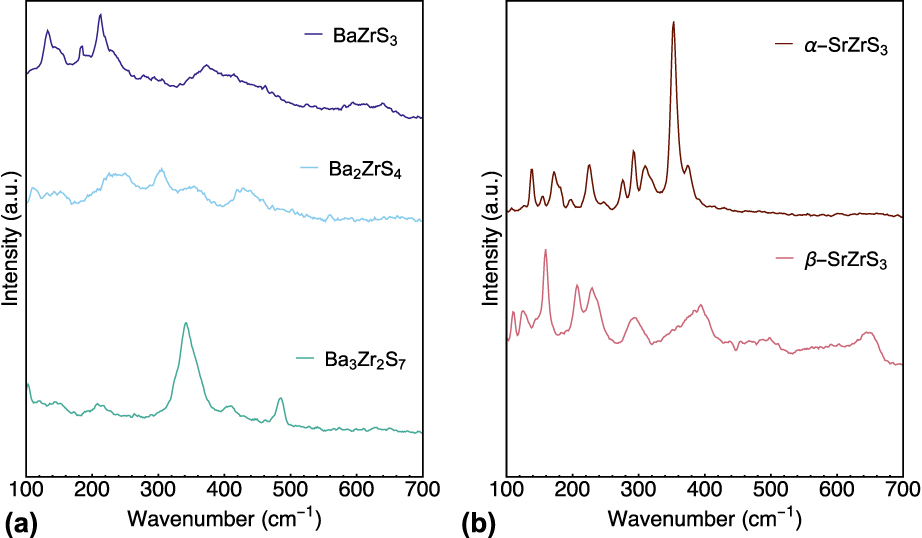
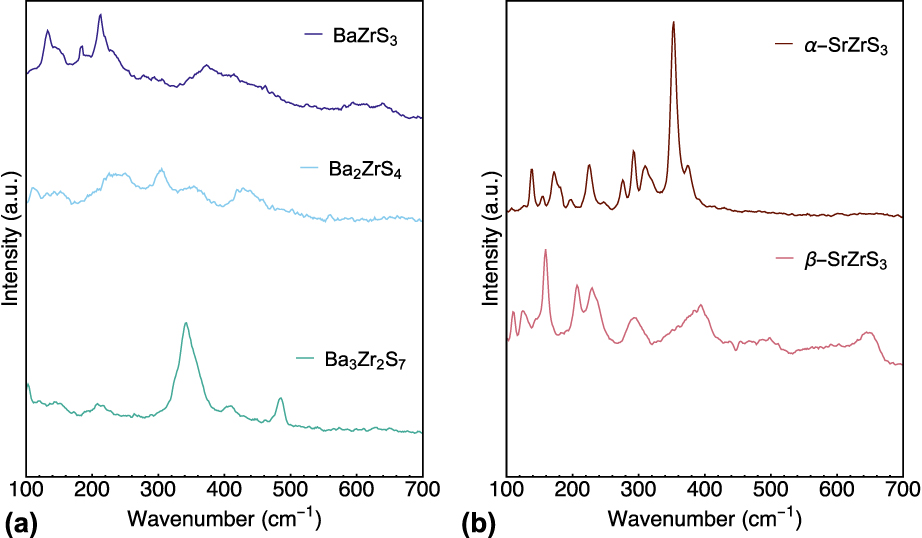
Raman spectra of BaZrS3 RP series (a) and two SrZrS3 polymorphs (b) before heat treatment.
Raman spectra of oxidation products after heat treatment for BaZrS3 RP series (a) and two SrZrS3 polymorphs (b). The BaSO4, monoclinic ZrO2 (m-ZrO2), tetragonal ZrO2 (t-ZrO2), SrSO4, and SrZrO3 Raman spectra are adopted from several reports.Reference Quintard, Barberis, Mirgorodsky and Merle-Mejean36–Reference Kamishima, Hattori, Ohta, Chiba and Ishigame38
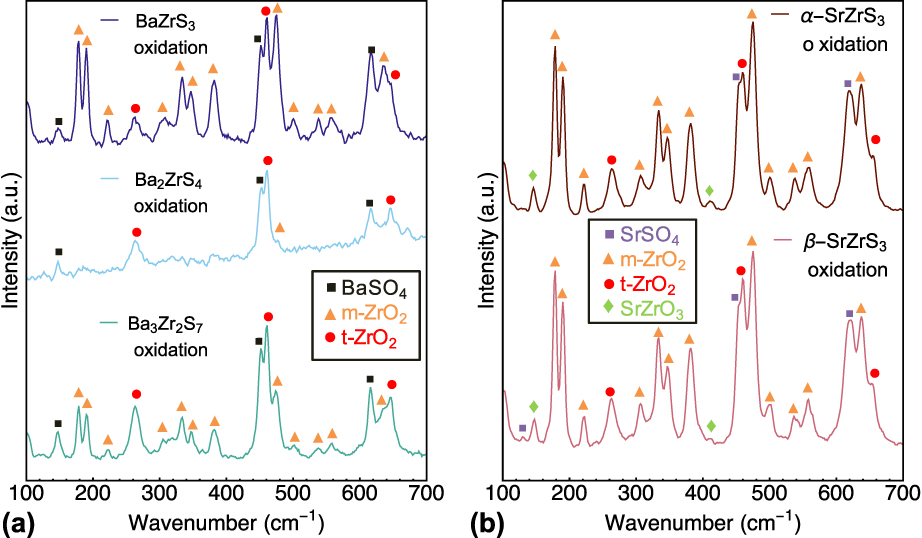
The Raman spectra for any given material changed dramatically before and after heat treatment. The Raman spectra comparison across the materials revealed a trend consistent with XRD. Pre-treatment samples showed distinctive Raman spectra due to the different structures. BZS showed two signature Ag peaks at ∼130 cm−1 and ∼210 cm−1, which agrees well with a previous extensive Raman study,Reference Gross, Sun, Perera, Hui, Wei, Zhang, Zeng and Weinstein10 while Ba2ZrS4 and Ba3Zr2S7 showed signature A1g Raman peak at ∼305 cm−1 and ∼210 cm−1, respectively. The post-treatment samples showed very similar Raman spectra, which agree well with the previously reported Raman spectra for the corresponding oxides and sulfates.Reference Quintard, Barberis, Mirgorodsky and Merle-Mejean36–Reference Kamishima, Hattori, Ohta, Chiba and Ishigame38 The spectra are dominated by peaks from monoclinic and tetragonal phases of ZrO2, and the corresponding sulfates. Only two weak peaks at ∼150 cm−1 and ∼410 cm−1 in the post-treatment SZS polymorph Raman spectra can be attributed to the ternary oxide, SrZrO3. The Raman spectra again confirmed the dominant oxidation products to be the B site metal binary oxides and A site metal sulfates.
IV. CONCLUSION
This work evaluated the thermal stability of several perovskite sulfides, including BaZrS3 in distorted perovskite phase, two polymorphs of SrZrS3 (needle-like phase and distorted perovskite phase) as well as two Ruddlesden–Popper phases, Ba2ZrS4 and Ba3Zr2S7. All samples used in this work were synthesized in high quality polycrystalline form with solid state reaction in sealed quartz ampoules. Iodine was used to catalyze the reaction and reduce the synthesis time. TGA and DSC measurements were performed while these materials were heated to 1200 °C in air. The needle-like phase of SrZrS3 is the one subject to degradation at the lowest temperature, 550 °C. All other phases appear more stable in air with an oxidation onset well beyond 600 °C. XRD, EDS, and Raman studies confirmed the dominant oxidation products as a mixture of A site metal sulfates (SrSO4 and BaSO4) and B site metal oxides, ZrO2. The desirable high thermal stability of this class of materials opens up possibilities for alternative thermoelectric materials with earth benign and abundant composition. Furthermore, we believe that the rich tunability from the structural diversity and vast chemical composition in these TMPCs offers an exciting platform to realize innovative, desired functionalities for energy and optoelectronic applications in general.
ACKNOWLEDGMENTS
This work is supported by USC Viterbi School of Engineering Startup Funds and the Air Force Office of Scientific Research under award number FA9550-16-1-0335. S.N. acknowledges Link Foundation Energy Fellowship. J.M.G. and B.C.M. gratefully acknowledge support from the Office of Naval Research Grant No. N00014-15-1-2411.