Introduction
Flexible nasolaryngoscopy is an important diagnostic procedure that allows visualisation of structures from the nasal cavity to the larynx and hypopharynx. This procedure is not usually taught in medical schools and does not form part of the routine training of junior doctors. However, otolaryngologists, speech and language therapists, maxillofacial surgeons, and anaesthetists may routinely use it. ‘See one, do one and teach one’ has often been the training method used for such a procedure, which can be difficult to master and uncomfortable for patients.Reference Nankivell and Pothier1
Simulation and ex vivo training have become much more popular in a number of surgical specialities over the past two decades. Despite the significant benefits of simulation,Reference Sturm, Windsor, Cosman, Cregan, Hewett and Maddern2 one factor limiting its widespread adoption is the considerable financial expense that may be involved.Reference Rozman, Duh, Petrinec-Primozic and Triller3, Reference Zendejas, Wang, Brydges, Hamstra and Cook4 The advanced mannequins associated with many new training schemes may be too expensive for non-specialist teaching hospitals. However, efforts have been made to make simulation more accessible and cheaper models have been used effectively in simulation training for medical procedures.Reference Langeron, Mercier, Lima, Chauleur, Golfier and Seffert5–Reference Burge, Bunegin, Weitzel and McMains9
Simulation teaching for flexible nasolaryngoscopy using a high-cost, commercially produced mannequin can improve performance, reduce the time taken to reach the vocal folds and minimise patient discomfort.Reference Smith, Leung, Sharma, Nazeer and McFerran10 One study suggested that training with a very basic simulator could reduce the time taken for a candidate to perform a flexible nasolaryngoscopy task, although the findings did not reach statistical significance.Reference Benadom and Potter11
This study was designed to assess whether high quality training can be provided using inexpensive equipment and ‘home-made’, low fidelity models compared with commercially available, anatomically accurate teaching mannequins. A secondary aim was to further validate simulation as a flexible nasolaryngoscopy training method for novices. A three-armed, single-blinded, randomised control trial of flexible nasolaryngoscopy training was undertaken to compare lecture-based teaching with simulation training using either a professional mannequin or a ‘home-made’, low-cost model.
Materials and methods
Participants
Fifth year medical students were recruited with full knowledge of the study design, and written consent was obtained from all participants. None of the students had prior experience of observing or performing flexible nasolaryngoscopy.
Study design
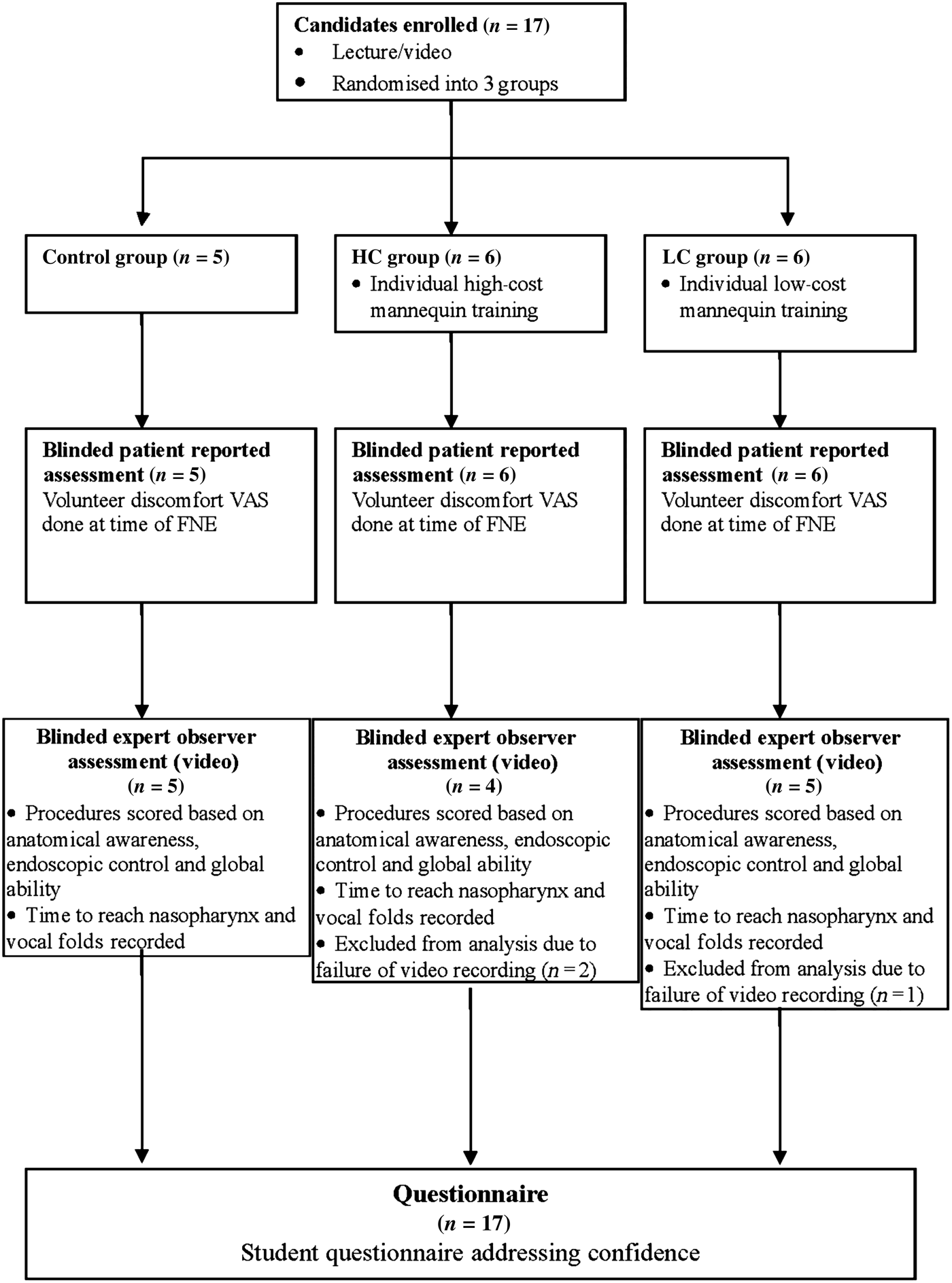
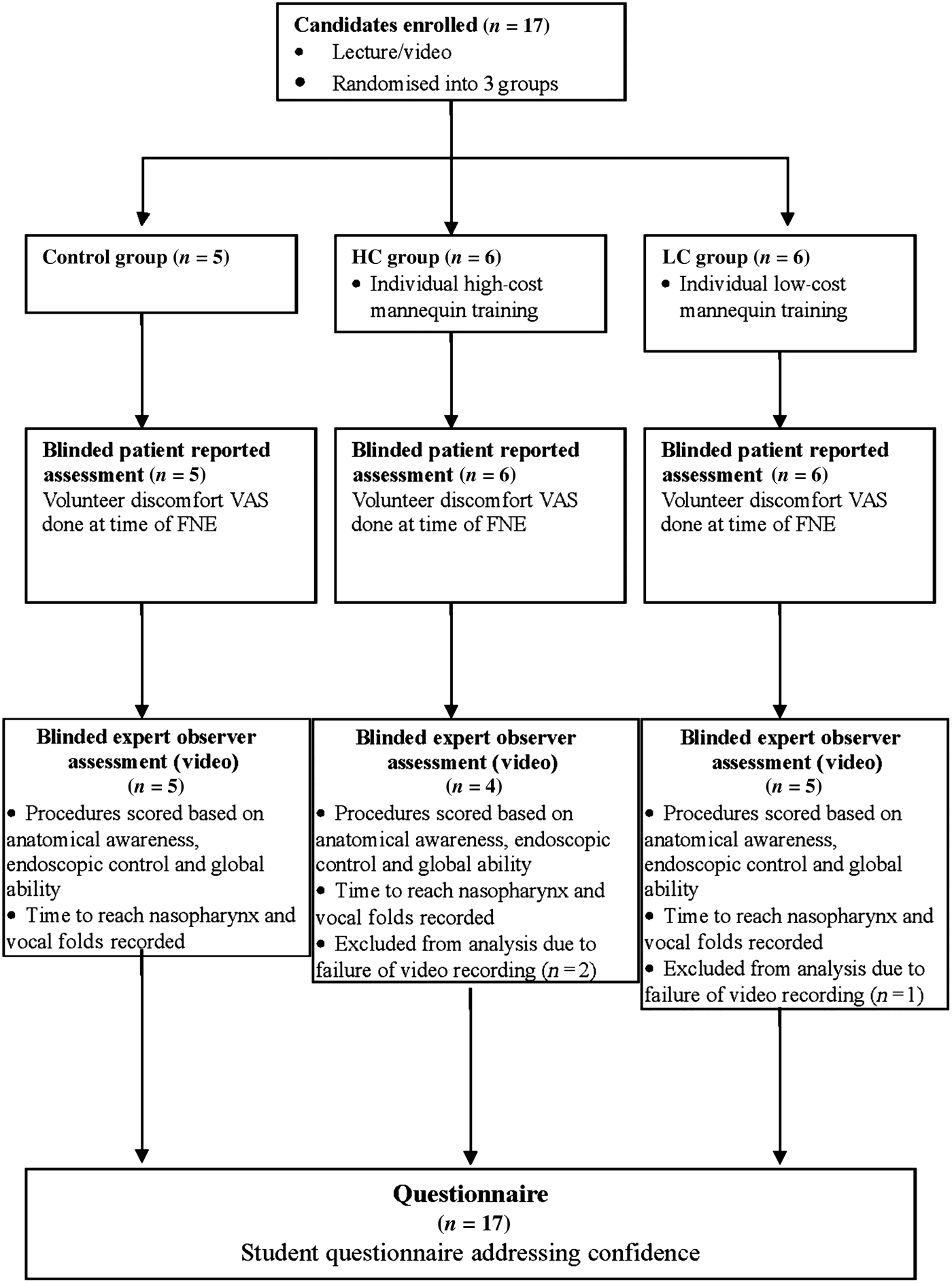
A randomised, controlled study design was implemented, with the candidates having an equal chance of being assigned to one of three groups. Randomisation was performed via the sealed envelope method. Participants were randomly assigned into study groups and assessors were blinded to the training technique used for each candidate. Both training and assessment took place within a single session. Figure 1 outlines the study design.
Consolidation standards of reporting trials flow diagram. Candidates were randomised into three groups. C = control; FNE = flexible nasolaryngoscopy; HC = high-cost mannequin training; LC = low-cost mannequin training; VAS = visual analogue scale
Low-cost model
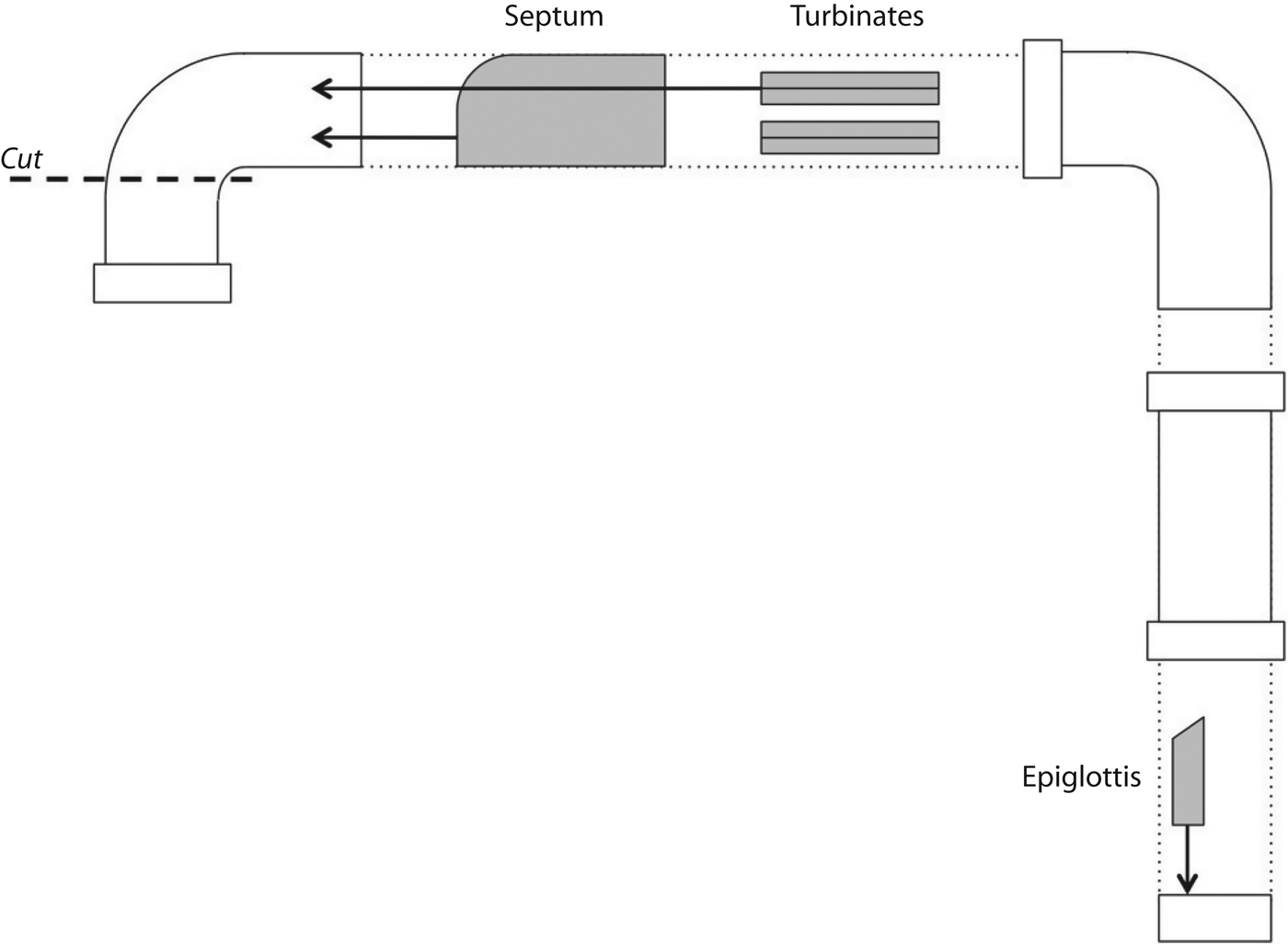
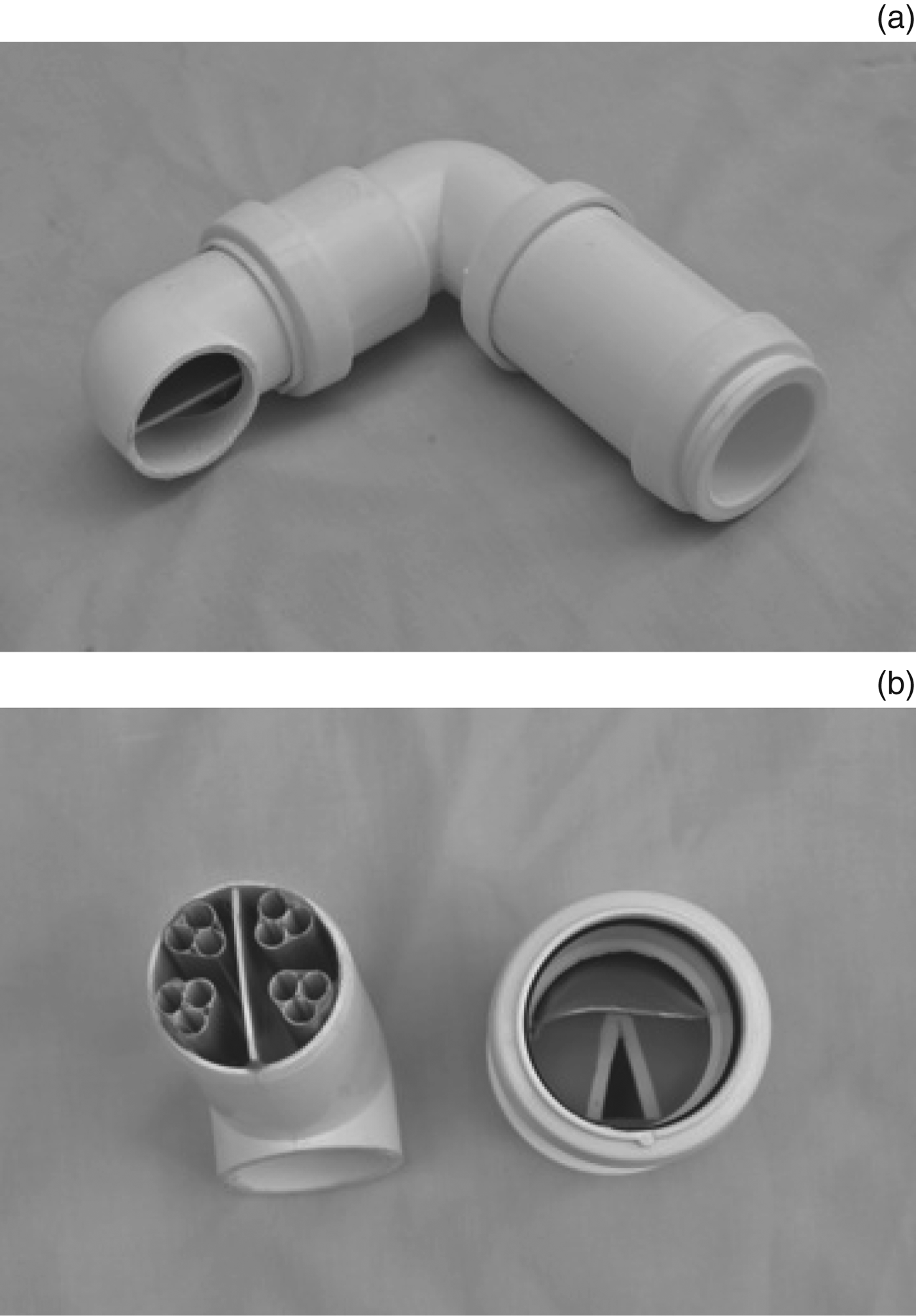
A basic anatomical model was constructed using easily obtainable plumbing parts and household materials. The main components were 32-mm domestic plumbing pipe fittings. The nose, nasopharynx and oropharynx were made from two 90° angled pipes, another was cut to form the ‘nostrils’ and the hypopharynx was made from a straight connector fitting. A plug was used to represent the larynx, with a triangular cut-out made to simulate the glottis. Additional pieces of plastic cut from food containers were used to form the nasal septum and epiglottis. The middle and inferior turbinates were made from drinking straws wrapped in tape. Figure 2 shows a design template for the model. The materials required to make the model (including adhesive) cost less than £8. Figure 3 shows the model.
Drawing showing the design of the low-cost model. Structures include 90° angled and straight pipe fittings (representing the nasal cavity and pharynx), shaped pieces of plastic from a food container (representing the septum and epiglottis) and drinking straws (representing the turbinates). The different parts are either push-fit or glued into place.

(a) & (b) Photographs showing different views of the low-cost model.
Training
All participants initially attended a 30-minute lecture on the anatomy of the nose and pharynx that also described the flexible nasolaryngoscopy equipment and technique. The lecture included a video of the procedure being performed on a patient. Candidates were then randomised into three groups. The control group received no additional training, while the other two groups had simulation training. The high-cost model group were allowed two attempts to pass a fibre-optic endoscope (ENF-GP; Olympus Medical Systems, Southend-on-Sea, UK) through the nose and pharynx of a high-cost mannequin (AirSim Multi; TruCorp, Belfast, Northern Ireland, UK). The low-cost model group were given two attempts to pass the same fibre-optic endoscope through the low-cost model. For both groups, video images were displayed on a laptop computer using a low-cost modified universal serial bus camera mounted on the endoscope.Reference Howes and Repanos12 During training, individuals in both the low- and high-cost model groups received instructor guidance on the procedure, with feedback afterwards.
Assessment
All participants underwent the same assessment procedure. Participants were randomly allocated to perform flexible nasolaryngoscopy on one of three volunteers acting as a patient. Each volunteer's nose was prepared before the session with 0.1 per cent xylometazoline hydrochloride. Vasoconstriction without local anaesthetic administration permitted improved visualisation by reducing mucosal bulk without affecting the volunteer's pain perception. In all, three volunteers examined prior to the assessments were found to have minor septal deviations or spurs, but no anatomy or pathology that would prove unusually difficult to negotiate by flexible nasolaryngoscopy. A video-endoscope allowed visualisation of the procedure and recording of the assessments (ENF-V2 videoscope, OTV-S1 camera system and Medi-Capture 200 recorder; Olympus Medical Systems). A trained otolaryngologist was present to terminate any procedure that could have harmed a volunteer but did not provide guidance. Participants were assessed on their ability to pass the endoscope through the nose and visualise the vocal folds. Both the assessor and the volunteer ‘patient’ were blinded as to which training each participant had received.
Outcome measures
The ability of each participant to perform flexible nasolaryngoscopy was assessed in several ways. Each participant was assessed by the volunteer patient on a visual analogue scale (VAS) according to the level of discomfort experienced during the procedure (0, no discomfort; 10, maximum discomfort). The VAS method has been validated as a sensitive outcome measure for assessing an individual's pain or discomfort.Reference Breivik, Bjornsson and Skovlund13 A video recording of each participant's flexible nasolaryngoscopy attempt was assessed by two experienced otolaryngologists after the training session. Performances were assessed according to the speed of the procedure (i.e. time taken to reach the nasopharynx and to obtain a steady view of the vocal folds). Assessment was also conducted using a Likert-type score (0 = very poor; 10 = excellent) to grade each participant on (1) anatomical awareness within the nose and pharynx when manoeuvring the endoscope (i.e. ability to adhere to a suggested course through the nose); (2) control of the endoscope (i.e. avoidance of strikes to the mucosa, maintenance of a clean endoscope tip and smoothness of movement); and (3) an overall score for ability to complete the task.
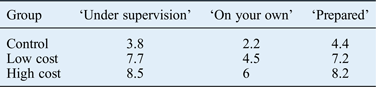
At the end of the session, each candidate completed a three-item evaluation questionnaire in which they rated (1) how confident they would be at performing flexible nasolaryngoscopy on a patient if supervised; (2) how confident they would be at performing flexible nasolaryngoscopy on a patient unsupervised; and (3) whether they felt that they had been adequately prepared to perform flexible nasolaryngoscopy on a patient. Answers were recorded on a Likert-type scale ranging from 0 (not at all confident) to 10 (very confident).
Statistical analysis
Excel 2008 (Microsoft, Redmond, Washington, USA) was used to perform data analysis. Between-group differences were analysed using the Student's t-test; a p value less than 0.05 was used to indicate statistical significance throughout. Inter-rater variability was assessed using the Spearman rank test.
Results
In all, 17 medical students were recruited and randomised into three groups: five in the control group, six in the high-cost model group and six in the low-cost model group. Although all 17 attempts at flexible nasolaryngoscopy could be assessed on procedure discomfort, the video recordings of three candidates failed to save; therefore, blinded assessment was not possible. Two candidates failed to reach the vocal folds in their assessment.
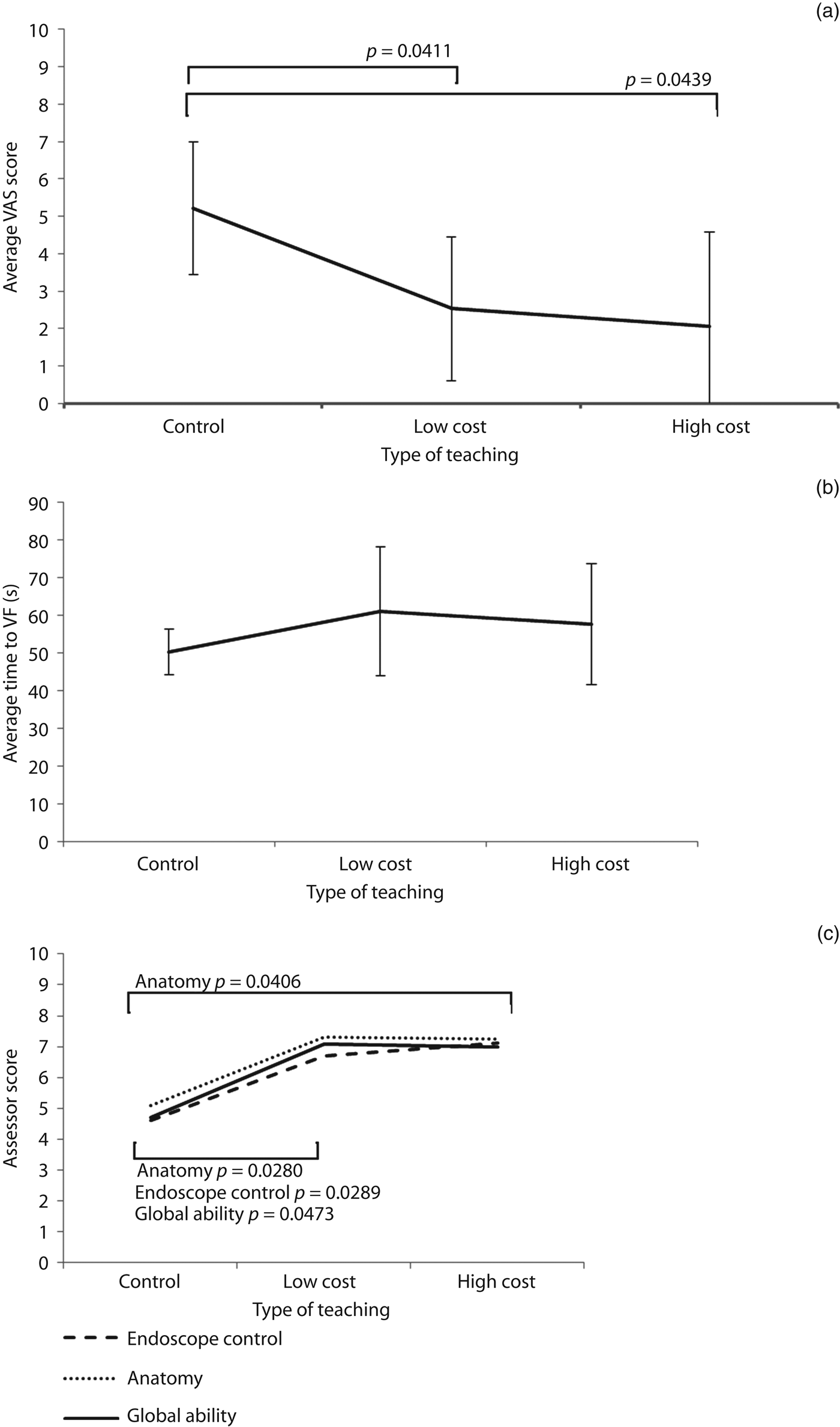
The high- and low-cost model groups had significantly better VAS scores compared with the control group (Figure 4a and Table I). There was a significant difference between the low-cost model and control groups regarding endoscope control, anatomical awareness and overall ability. There were significant differences between the high-cost model and control groups regarding anatomical awareness, but they were similar in terms of endoscope control and overall ability. There was no significant difference among the three groups regarding the time taken for nasopharynx vocal fold visualisation (Figure 4b). For all sections of the questionnaire, the high- and low-cost model groups were rated significantly higher than the control group. There was no significant difference between the high- and low-cost model groups for any parameter, including candidate confidence (Figure 4c and Table II).
(a) Graph showing the level of discomfort measured using a visual analogue scale (VAS). 0 = no discomfort; 10 = maximum discomfort. P values are shown for significant results only. (b) Graph showing the time taken to visualise the vocal folds (VF). There were no significant between-group differences. s = seconds. (c) Graph showing the assessment of laryngoscope control, anatomical awareness and overall ability on a 0–10 Likert-type scale. 0 = very poor; 10 = excellent. P values are shown for significant results only. Data are the mean ± standard deviation.
Mean scores for the three training groups*
*Blinded assessor rating of endoscope control, anatomical awareness and overall ability, patient discomfort rating (on a VAS) and time to visualise the vocal folds. VAS = visual analogue scale
Mean questionnaire results for candidate confidence after training
Inter-rater reliability was found to be very good. There were strong positive associations between assessor marking of anatomy and overall ability (with p < 0.005) and of endoscope control and time taken to reach the vocal folds (p < 0.025; see Tables I and II).
Discussion
Medical and surgical simulation-based training have become increasingly popular over the last two decades. It is therefore important to determine the most beneficial and cost-effective method of providing this style of training. In this study, participants trained using a simple, inexpensive model had significantly improved confidence, caused less patient discomfort and had an improved overall ability to perform the endoscope procedure compared with the control group. The levels of these assessment parameters were similar to those of the group trained using a high-cost mannequin previously demonstrated to be an effective training aid.Reference Smith, Leung, Sharma, Nazeer and McFerran10
The lack of a significant difference between the control and high-cost model groups regarding overall ability and endoscope control may be related to the limited sample size, inability of some individuals to complete the task and recording difficulties which meant that five videos could not be fully assessed. The pre-training visual–spatial awareness of candidates entering the study was not assessed and, given the limited sample size, could be a confounding factor.
Interestingly, despite both the high- and low-cost model groups having an improved patient discomfort rating and higher participant confidence, there was no significant difference in time taken to complete the procedure among the three groups. Although time taken to complete a procedure will typically decrease with experience, this is not a good marker of skill: a short procedure, although desirable, should not be the clinician's primary aim.
This study supports the current literature that simulation teaching is beneficial to both clinicians and patients.Reference Sturm, Windsor, Cosman, Cregan, Hewett and Maddern2, Reference Nagendran, Gurusamy, Aggarwal, Loizidou and Davidson14–Reference Walsh, Sherlock, Ling and Carnahan17 In laparoscopic surgery, advanced simulation training has been shown to increase the skill and accuracy of surgeons and reduce the procedure time.Reference Nagendran, Gurusamy, Aggarwal, Loizidou and Davidson14, Reference Zendejas, Brydges, Hamstra and Cook15 The teaching of gastrointestinal endoscopy improves the physician's skill and reduces patient discomfort.Reference Sedlack, Kolars and Alexander16 Inexpensive simulation teaching has also been shown to be effective for other procedures. Laparoscopic surgery training using simple box trainers is effective and becoming widely adopted.Reference Kiely, Stephanson and Ross8 Tasks such as peeling a clementine fruit laparoscopically have been shown to provide transferrable skills.Reference Andreatta, Marzano, Curran, Klotz, Gamble and Reynolds6
Procedural memory is considered an important component of surgical skill.Reference Park, Suh, Chien, Paik, Ritter and Oleynikov18 When undergoing simulation training, participants can familiarise themselves and gain confidence with their equipment; they may also begin to develop a procedural memory for the associated task. This can be obtained through using lower cost models in which the anatomy is not fully simulated.
• Flexible nasolaryngoscopy can be challenging to master and uncomfortable for patients
• Simulation-based training is effective for many procedures, including flexible nasolaryngoscopy
• Equipment expense can limit the implementation of simulation training
• Effective flexible nasolaryngoscopy simulation training can be provided with a ‘home-made’, low-cost model
Our findings may change attitudes toward simulation teaching, not only for flexible nasolaryngoscopy but also for other medical procedures. The cost of current high-cost models for flexible nasolaryngoscopy simulation ranges from £1000 to £1700. The ability to successfully train candidates using models that cost less than £8 and a standard endoscope (with or without an inexpensive modified camera and laptop) could enable the provision of simulation teaching in locations other than large tertiary teaching hospitals. Thus, flexible nasolaryngoscopy simulation teaching could become more widely available in medical schools and in developing countries. Low-cost models can be more readily accessible to individual candidates, thus allowing them to practise flexible nasolaryngoscopy in their own time and build up their confidence. The model can easily be modified to include complicating factors to flexible nasolaryngoscopy such as a septal deviation. Alternatively, simulated vocal fold lesions can also be included to test candidates’ recognition and management of ‘pathology’ in more advanced simulation scenarios.
Besides the anatomical model, the other expensive equipment required for flexible nasolaryngoscopy training is the flexible endoscope. However, in most institutions, this equipment will already be available and, with supervision, damage can be avoided. Studies have shown that effective simulation training can be provided using less expensive, home-made imaging devices.Reference Langeron, Mercier, Lima, Chauleur, Golfier and Seffert5, Reference Trivedi7 It would be interesting to investigate whether inexpensive mannequins and such inexpensive endoscopes could be used together to provide effective simulation training.
Conclusion
By training medical students to perform flexible nasolaryngoscopy using a simulation technique including an inexpensive model, subsequent patient discomfort can be significantly reduced and student ability and self-reported confidence can be improved. For all parameters assessed, no benefit was obtained from training with high-cost mannequins over training with low-cost models. This finding could make simulated flexible nasolaryngoscopy training more accessible to medical teaching organisations around the world.
Acknowledgements
The authors thank Olympus Medical Systems, UK, for the loan of flexible endoscopes and video-recording equipment.