Care and Crisco
It was a typical, sweaty New York City summer in 2019 and I was meeting my friend, Erin, at the Museum of Sex. My queer aunties, artists Annie Sprinkle and Beth Stephens, had invited us to a book launch facilitated by the arts and advocacy organization Visual AIDS.Footnote 1 What I remember most clearly about that evening is a story Annie told about her experience during the early days of HIV/AIDS. She first talked about the fabulous sex parties—complete with shared vats of Crisco—that she participated in before people were aware of the virus. Annie then shared a story about a friend and lover, Michael, who was admitted to the hospital for a spinal tap in the early ’80s. She knew Michael was very sick, and assumed she had whatever he had. Annie did not know at the time that this friend and lover had AIDS. Although there were already several terms for the illness that was rapidly spreading throughout the gay community, there was still a degree of mystery around the virus, and the term AIDS would not become widely known until after August 1982, when it was officially named by the CDC (HIV.gov n.d.). She visited Michael in the hospital and had sex with him to cheer him up.
After the event, Erin and I could not stop talking about that story. What moved us was that Annie was using touch and pleasure as a form of mutual aid. Through having sex with Michael, she was asserting that he still deserved pleasure—despite being ill. As I would later find out, many others mobilized the tactile, sensual, and sexual as a form of mutual aid during the early days of the AIDS crisis. Given the way in which the bodies of those with HIV/AIDS were often framed as toxic by many media outlets and those holding formal political power at the time, these acts of touch—which I call activist intimacies—were radical.
These underrecognized activist intimacies during the early days of the AIDS crisis comprise forms of mutual aid that prioritize the body and its diverse needs: safer-sex education, massage, touch and embrace, food preparation, medicine drops, healthcare, and house cleaning. I pinpoint efforts during the early AIDS crisis that centered on pleasure, care, and collective learning as methods of contending with the crisis, with a particular focus on the New York Healing Circle (NYHC), which received little attention from scholars and journalists and is often overlooked in the historical record of HIV/AIDS activism. During New York Healing Circle gatherings, participants shared experiences and knowledge, disco danced, experimented with healing practices, and collectively grappled with grief. I met NYHC members whose words are featured here through Annie.Footnote 2
The New York Healing Circle falls within the broader scope of activist intimacies in the 1980s, which includes the work of the People with AIDS Coalition, Gay Men’s Health Crisis (GMHC), the sex work community, and the thriving New York City queer dance club scene. The NYHC’s efforts were notable for the way its members continued to address the diverse needs and pleasures of the body, despite the way in which the queer body was portrayed as a site of toxicity, of viral danger. Interviews with core organizers and participants and analysis of relevant visual and material ephemera demonstrate how these less visible models of creative activism prefigured the degree of care that communities most affected were urgently demanding from the government, while they met more nuanced bodily needs. This collective history of physically oriented and relational practices of mutual aid formed a crucial yet underrecognized element of organizing during the early days of the HIV/AIDS crisis.Footnote 3 Moreover, they provided a space for people at all stages of illness to find community at one of the loneliest times of day: the evening.
Picking Up the Missing Pieces in Genealogies of HIV/AIDS Organizing
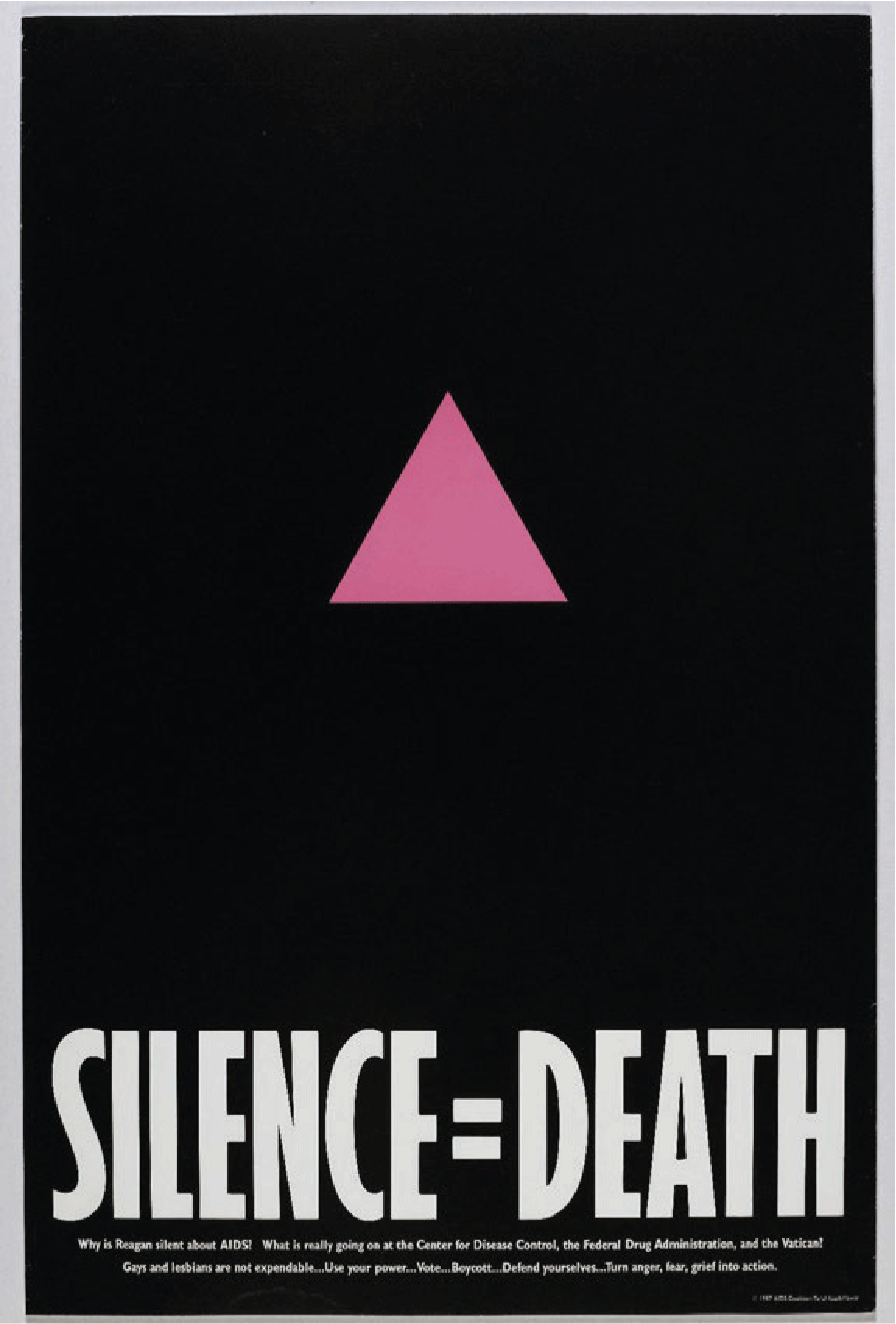
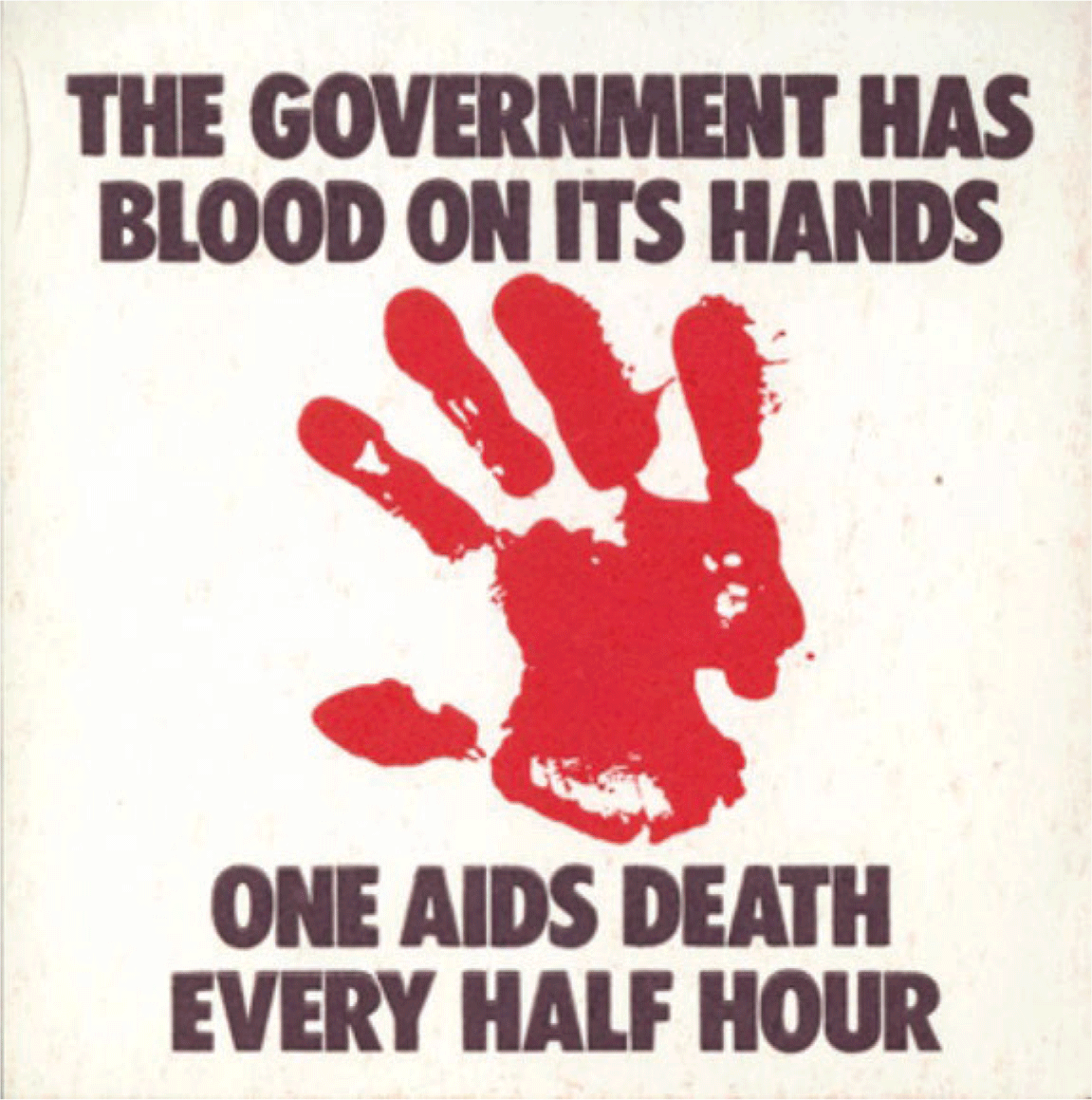
Creative activism during the early years of the HIV/AIDS crisis has long been primarily associated with the direct actions of ACT UP (AIDS Coalition to Unleash Power) and their various affinity groups. Images such as the quintessential Silence = Death graphic and actions explicitly accusing the government of having “blood on their hands” have become synonymous with early HIV/AIDS activism (figs. 1 and 2). ACT UP’s work has arguably been the most heavily documented, in part because of their confrontational and performative aesthetic and the large number of visual artists involved in the group. In addition to ACT UP’s loud and spectacular actions, quieter forms of organizing were occurring—forms that have long been overshadowed, and at times completely excluded, from the discourse around early HIV/AIDS activism (see also Vider Reference Vider2019:169).
Silence = Death, poster by Gran Fury, ACT UP, Silence = Death Project, 1986. Gran Fury collection, Manuscripts and Archives Division, New York Public Library.

The Government Has Blood on Its Hands. One AIDS Death Every Half Hour, poster by Gran Fury, 1988. ACT UP New York records, Manuscripts and Archives Division, New York Public Library.

Importantly, while ACT UP’s highly visible organizing featured the body in some of their direct actions (such as the Ashes Action and Political Funerals), they often focused on mortality rather than aliveness—a strategy that was likely intended to point toward the urgency of the situation (ACT UP 2024). For ACT UP, the work was about the dying or dead body rather than the body allowed to die (Arellano Reference Arellano2022). The NYHC made “space for bodies with illness,” and challenged fear of the ill body (see Cage Reference Cage2021). They concurrently ruptured narratives of bodily toxicity while asserting visions of flourishing despite illness. This fundamentally challenged society’s fear of the ill body and asserted a way of seeing the body that challenged harmful media narratives. Participants therefore were asserting a practice of truly seeing each other—a practice centered in care and acceptance (but not passivity) rather than in “fixing,” hiding, or avoiding. This relational gaze was enabled through multisensory activist intimacies, such as the NYHC’s practices grounded in touch. These practices allowed participants to challenge the medicalized and discriminatory gaze so prevalent at the time (see Tanner Reference Tanner1996).
Key in the exclusion of quieter forms of activism from the most visible accounts of HIV/AIDS activism was the hierarchy identified by Douglas Crimp between mourning and militancy (Crimp Reference Crimp1989). Even in a movement that was confronted so profoundly with death, illness, and injustice, those involved with ACT UP have noted the relative absence of the act of grieving in their organizing (Gould Reference Gould2009:9). This absence is understandable, considering the urgency of the work that needed to be done. However, Crimp problematizes the prioritization of militancy over mourning in early HIV/AIDS organizing. He notes that mourning is often seen as a waste of time, particularly when urgent changes are needed. Crimp argues that overlooking the importance of mourning is a mistake. We need both “mourning and militancy” (Crimp Reference Crimp1989:18). The privatization of pain caters to the desires of the state, rather than the needs of queer (and otherwise marginalized) communities. When pain is collectivized, the atomization of community members is challenged and community power is built (Milstein Reference Milstein and Milstein2017).
Founding member of NYHC Samuel Kirschner notes:
There were some people from ACT UP who used to come to the Healing Circle, and vice versa. I think that we served different needs. ACT UP was very vocal and protesting and angry; and the Healing Circle was more about healing, soothing, emotional support, things of this nature. The two groups, sometimes it looked like they were at odds, but we needed both. We needed ACT UP, ACT UP did some amazing things. And we needed the Healing Circle. They were not mutually exclusive. (Kirschner Reference Kirschner2020)
The activists who created space for mourning have been largely overlooked and undervalued, resulting in a significant gap in how we understand not just HIV/AIDS activism but also activism more broadly. The implications of this absence are deep—from the lack of recognition of pivotal efforts in HIV/AIDS organizing to the related challenges of learning from an incomplete queer activist genealogy. Thinking alongside scholars such as Stephen Vider (Reference Vider2019), who argues for the importance of activism in domestic spaces during the AIDS crisis, I seek to pick up some of the missing pieces.
A Brief History of the New York Healing Circle
I had friends that stopped talking to me. I had friends—a straight couple—who invited me to dinner, but I had to eat off of paper plates. And they wouldn’t touch me.
—Eli Andrew Ramer (Reference Ramer2020a; emphasis added)
In the early 1980s, Samuel Kirschner was a bodyworker in the West Village. He and several friends were discussing the then-unnamed crisis in a West Village lobby. Samuel had recently attended a workshop with Louise Hay, best known as a controversial and esoteric purveyor of self-love as a healing modality. Samuel had been inspired to start his own group using some of the same tools that focused on supporting each other and the broader queer community. Of the challenges at the time, Samuel says,
it was a double whammy. It was both the health issue that it was and the atmosphere was very antigay, with the Reagan administration. It was a tremendous thing to carry, especially for those that were diagnosed with it. (Kirschner Reference Kirschner2020)
This group of friends spread the word, and the first New York Healing Circle gathering was attended by a small group of 30–40 people. The New York Healing Circle eventually grew to weekly convergences of around 400 people, often held in St. Francis Xavier Elementary School Auditorium on West 17th St., though it was also held in many other locations over the years it was active (1985–1990) including the prominent gay nightclub the Saint. The main healing circle on West 17th Street was bolstered by smaller affinity group meetings held on other evenings—for instance, a Wednesday evening Healing Circle that was only for women. Samuel describes the regular activities of the New York Healing Circle:
[W]hat we did there were three things. We meditated, we touched each other—we had something called healing touch, which was basically three people sitting together, sometimes more, and just laying hands—and most of the people were diagnosed with HIV, and their family and loved ones—and then we danced for celebration. (Kirschner Reference Kirschner2020)
Key figures in the New York Healing Circle also included photography agent Nelson Bloncourt, writer Eli Andrew Ramer, photographer Kim Hansen, and John Fletcher-Harris. Other core members were health advocate Cy O’Neill; sex worker, author, and founder of Miss Vera’s Finishing School, Veronica Vera; theatre producer, author, and sex educator Barbara Carrellas; and sex worker and performance artist Annie Sprinkle. Women were central to the group’s organizing from the beginning.
Advocacy organizations such as the Gay Men’s Health Crisis had also recently been established (1982), and the People with AIDS Coalition was in the process of coalescing (1985). ACT UP would not emerge until several years later (in 1987). The New York Healing Circle was part of the quickly growing and closely interconnected initiatives—both grassroots and official—that sought to address the crisis from different angles.
Dancing in Grief, Advocacy, and Celebration
Although the early 1980s through early 1990s HIV/AIDS epidemic in the United States was an undeniably difficult time, it was also a time of cathartic partying. Longstanding queer dance club nights suddenly became more than spaces to be close to each other and meet potential friends and lovers; they became places to commiserate, to bask in some convivial relief from the grief many were experiencing, and to raise money for HIV/AIDS research and support through ticket sales. As Che Gossett notes in their article on queer nightlife written after the Pulse shooting,
Queer and/or trans nightlife has always been about survival and creating temporary autonomous and temporary fabulous zones that are as much affective—a structure of queer and trans feeling—as material in its electric choreography of bodies. (Gossett Reference Gossett2016)
And with reference to Deleuze and Guattari, Gossett continues, “nightlife has always been about lines of flight.” In the ’80s and ’90s, these dance parties were certainly spaces where other realities could be lived, even if only temporarily; where community members could enjoy being together in space free from the damaging gaze of those who demonized the queer community.
At these dance parties, the community collectively insisted on feeling alive despite their heightened awareness of mortality. They danced as if to exorcise the pain of what was happening. They danced in grief and in joy. The parties created a space to maintain closeness with each other, and to refuse to foreclose pleasure rather than succumbing to fear and living apart. At dance parties, as well as meetings such as those of the NYHC, community members found ways to practice safe forms of pleasure and touch. They refused isolation and instead built solidarity during these evening gatherings.
Organizers also used the dance parties as an opportunity to educate the community through screening pornographic sex ed films. Video technology was crucial to cultural production at this time—MTV was founded in 1981 and home video players were also becoming popular—and it quickly became an important tool for educating people, without judgment, about safer sex. A quintessential example was GMHC’s Safer Sex Shorts series, one of which featured Healing Circle participant Annie Sprinkle. Karisa Butler-Wall writes about these videos, stating that they provided “a platform that linked burgeoning forms of gay and lesbian erotic cultural production to new activist media strategies and tactics” (Butler-Wall Reference Butler-Wall2016).
Producers Jean Carlomusto and Gregg Bordowitz started working on GMHC’s Safer Sex Shorts series in 1989. Carlomusto states: “The purpose of the Safer Sex Shorts was to get the message out that safer sex can be hot” (1990:216). Annie was featured in Current Flow (1989), the only short out of the series that was created for queer women. Current Flow was in direct response to the relative invisibility of the impact that HIV/AIDS was having on the lesbian community and “the Centers for Disease Control’s persistent refusal to include data on woman-to-woman transmission” (216). Moreover, it was an unapologetic call to acknowledge lesbian sexuality at a time when most of the focus was on gay men.
Recalling her experience making Current Flow Annie states:
Eventually they [the GMHC] started making porn, which was really exciting for me because I thought AIDS was going to put a stop to my porn making career, and then I was invited by GMHC to make a sex ed porn which was very exciting and interesting because this could save a lot of lives. […] The Gay Men’s Health Crisis got a grant to pay for people to make short, hardcore sex films to be made in discos or bars to educate people how to have safer sex. It was my first time using a dental dam and I had a blast with it. (Sprinkle Reference Sprinkle2020a)
The Safer Sex Shorts manifested an ethic of what Carlomusto has called “militant eroticism”; the films represented the queer community’s refusal to give up their erotic lives as well as their insistence on finding ways to keep themselves and each other safe (1990:215). Safer sex was thus a form of community care and creative resistance (Butler-Wall Reference Butler-Wall2016). Of their approach, Carlomusto noted, “Our videotapes are an effective way to share knowledge and strategies. […] We make videos on extremely low budgets and get them out quickly. They are videotapes made in crisis mode” (215). While these videos asserted a form of celebratory visibility intended explicitly to save lives while preserving queer eroticism, the NYHC created other intimate spaces for relational recognition.
Against Invisibility
Each NYHC meeting began with welcomes and announcements. A special guest speaker or activity featuring a particular healing modality would usually comprise the breadth of each meeting, and, importantly, everyone would be given the chance to share announcements and stories. Special guests included well-known voices such as Louise Hay and spiritual leader Ram Dass, as well as experts (and nonexperts) in various healing techniques. It is also clear that there were some cases where Indigenous and other healing modalities from the global majority were appropriated within the Healing Circle. Drumming that was informed by Indigenous practices, for instance, was sometimes led by non-Native people (along the lines of broader New Age trends to treat Indigenous spiritual practices as “common property”) (see Deloria Reference Deloria1998:154–80).Footnote 4 The impact of this capacious, at times flawed approach to gathering and experiencing knowledge is something that former Healing Circle members are still grappling with.
Core member Nelson Bloncourt recalls:
We had visitors from everywhere, all kinds of talks from people on spirituality, health, whatever people wanted to share that would help us get through this wild and terrifying experience. And then it became also a group that was going out from the Healing Circle to take care of people at home, to get them to the doctors, to take them to hospitals, and eventually we were going from one memorial to another, sometimes three or four in a week. (Bloncourt Reference Bloncourt2020)
Notably, the New York Healing Circle was an intentionally supportive space for people in all stages of illness:
There were people that would come with their friends literally sometimes carrying them in because they were at that stage, being covered with KS lesions and not being able to breathe. It was devastating, but we were all holding one another. There were tons of other experiences and I can’t remember them all, but it was just a room filled with absolute beauty and all its despair and all its horror. Horror of seeing our brothers, friends, and lovers dying in front of us. In that time, I lost over fifty colleagues, friends, lovers, and three of my partners died within a month of one another. So, it wasn’t a happy room all the time. But it was miraculous. (Bloncourt Reference Bloncourt2020)
The fact that people with serious Kaposi sarcoma (KS) lesions were willing to be seen by people at the Healing Circle gatherings is a testament to the culture of care present in the community of participants.Footnote 5 Some of the organizers I interviewed shared stories of people they knew who had KS lesions and would not go out in daylight. The Healing Circle was a space where people with late-stage AIDS were not seen as toxic, but rather as worthy of physical touch, love, and support. Perhaps their willingness to be seen in this space was connected to the fact that NYHC participants were not looking at others with judgment; they were really seeing them. In the Healing Circle, seeing was not unidirectional, distanced, and judgmental; it was intimate, reciprocal, and circular (as reflected in the name). It was a relational gaze grounded in tactile practices of mutual aid.
Networks of Care
The NYHC’s weekly meetings were also a place to voice needs and find people who could meet them. Though the impetus for the Healing Circle was aligned with illness and death, it was “a source of life. Attention, life, food, love, care, bathing” (Bloncourt Reference Bloncourt2020). Healing Circle participants supported their friends and lovers in myriad ways. They often visited each other at the hospital during a period when many people were still afraid to even go near people who were sick. When people were ill at home, Healing Circle participants visited them, brought them food, helped them eat. There was also a drug network (Ramer Reference Ramer2020b). Like the circle itself, the drug network was grounded in mutual, rather than unidirectional, support.
We picked people up to take them to the doctor because they couldn’t get there, they didn’t even have the money for a taxicab drive. Everyone was willing to step up, and it was incredible. (Bloncourt Reference Bloncourt2020)
Supporters were sometimes called upon to oversee assisted dying efforts. One participant, whom I will call Tom Jacobson, shared:
We tried to do everything and anything that needed to happen, especially for those that were alone. And there were many because so many, as you well know, their families rejected them, turned them away, would not show up, so we did. So that took running errands, walking their dogs, bringing food, just sleeping in their place or at the hospital so they wouldn’t be alone. Gosh, absolutely everything. There were massage volunteers who would go to their homes and give them massage. It went to the extreme where I know one or two that were assisted in their last breath by members of the Healing Circle. That was pretty intense. But it was humane. It was their choice and they were of very sound mind. (Jacobson Reference Jacobson2021)
In addition to insisting on the importance of pleasure, and tending to the graver forms of mutual aid, community members were performing activist intimacies through their continued care for and reciprocal closeness with those who were terminally ill. Those who needed to be touched articulated that need, and it was fulfilled. This approach was clearly informed by Louise Hay’s work, particularly the way in which she centered hugging practices and positive thinking during her “Hayrides.” Though Hay has been criticized for spreading what Sarah Schulman and others interpreted as an approach to healing that blamed individuals for their own illnesses, members of the Healing Circle insist that was not how they experienced Hay’s work. Schulman argued that what bothered her most about Hay’s work was her “emphasis on blame, considering the susceptibility of gay people to shame” (Schulman Reference Schulman2019:159). In an article published after Hay’s death in 2017, David Groff wrote, “The last thing people with AIDS needed to hear was that they had caused their own illness” (Groff Reference Groff2017). Former NYHC members acknowledge that some of Hay’s published work could have been written more clearly (and that Hay herself acknowledged this), to prevent such interpretations (Carrellas and Sprinkle Reference Carrellas and Sprinkle2025). Healing Circle member and Hay’s close friend Barbara Carrellas states, “Louise’s argument that you could create your own reality was not about blaming people but on helping them reframe their experience” (Carrellas Reference Carrellas2026). Hay’s own writings track a shift in her perspective on AIDS. In The AIDS Book: Creating a Positive Approach, she states, “As this dreaded disease has advanced,
I feel I know less and less. And yet my understanding and compassion has increased enormously. I see the issue in a more expanded light” (Hay 1998:1). Barbara elaborates: “Yes, she [Louise Hay] once believed that we created everything in our lives, positive and negative, including diseases. That’s true. And AIDS changed that. She kept the belief that changing our thinking could create positive changes in our life, but blame was never part of her message” (Carrellas Reference Carrellas2026).
Samuel describes the Healing Circle as
an emotional spiritual support group. There was not anything like that. It filled a deep need that was out there, and kind of built itself from that need […] And there were people who didn’t even think of themselves as spiritual, but something about the experience, the empathy, the unconditional love that was in the room, people were very touched by it. (Kirschner Reference Kirschner2020)
Similar Healing Circles eventually emerged in other cities such as Chicago, San Francisco, and Miami (Ramer Reference Ramer2020b; Bloncourt 1989).
Sensual Ephemera
Participants also cultivated a culture of resistant joy through their flyers and newsletters. These flyers were one element of the tactile culture of community building during the HIV/AIDS crisis, which connected clearly to broader cultures of aesthetically innovative, sensuous printed matter in the 1980s.
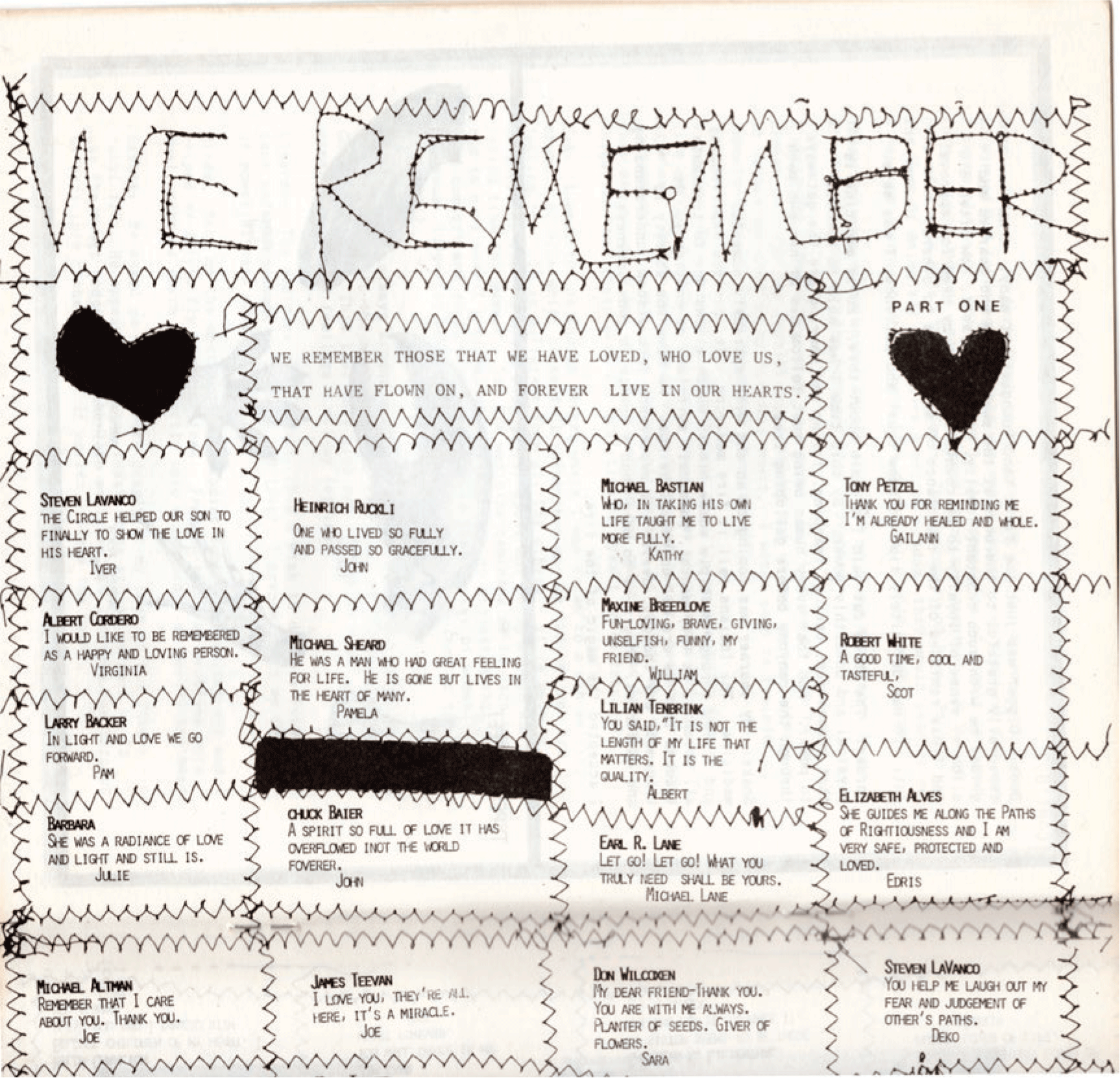
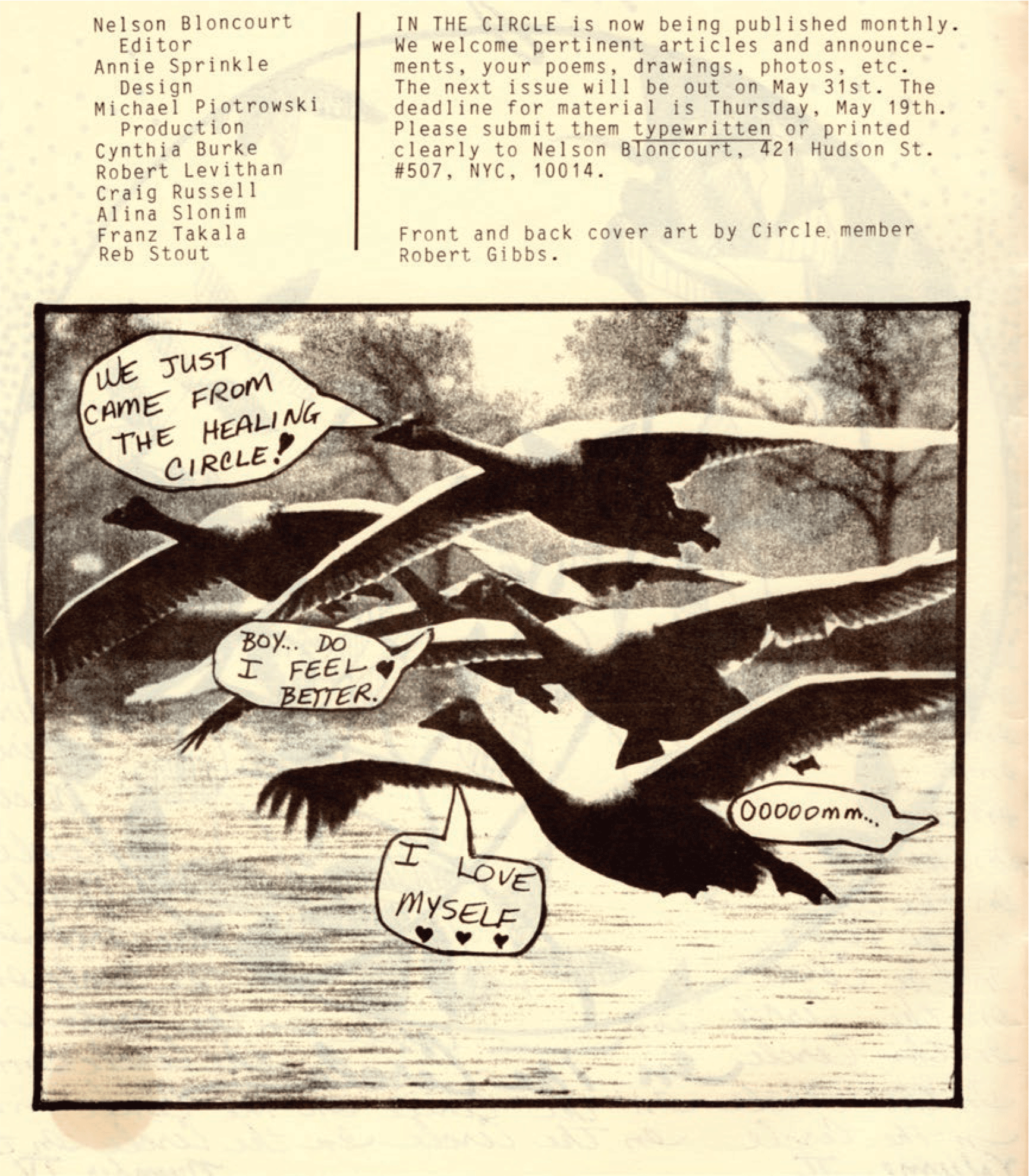
The only outward-facing initiative put forward by the Healing Circle was its monthly newsletter, In the Circle. Edited by Nelson Bloncourt and designed by Annie Sprinkle, with the collaboration of Eli Andrew Ramer, Veronica Vera, Barbara Carrellas, and many other interested NYHC members over the years, the first issue of the newsletter was printed in June 1987. By 1989, they were printing around 1,000 copies per issue, and mailing copies to several hundred subscribers every month (Bloncourt 1989). In the Circle was also distributed at Healing Circle meetings. Annie describes the newsletter as “a funky little Xerox thing. It was much like a church bulletin. I hate to compare it to church because there was no religion, but love and compassion was the religion” (Sprinkle Reference Sprinkle2020b). The newsletter united the Healing Circle community around information sharing. It centered the role of education and pooling resources as part of healing, grieving, and pleasure. Healing Circle participants interested in working on the newsletter would meet at Annie’s place to put each issue together (Ramer Reference Ramer2020b). Usually, around 10 people worked on each issue. They cut things out of magazines, books, and other printed media, taped them onto paper, and xeroxed each issue before making copies—a low-budget predigital method.
In the Circle, Special Angel Issue, April/May, vol. 3, #6, p. 19.

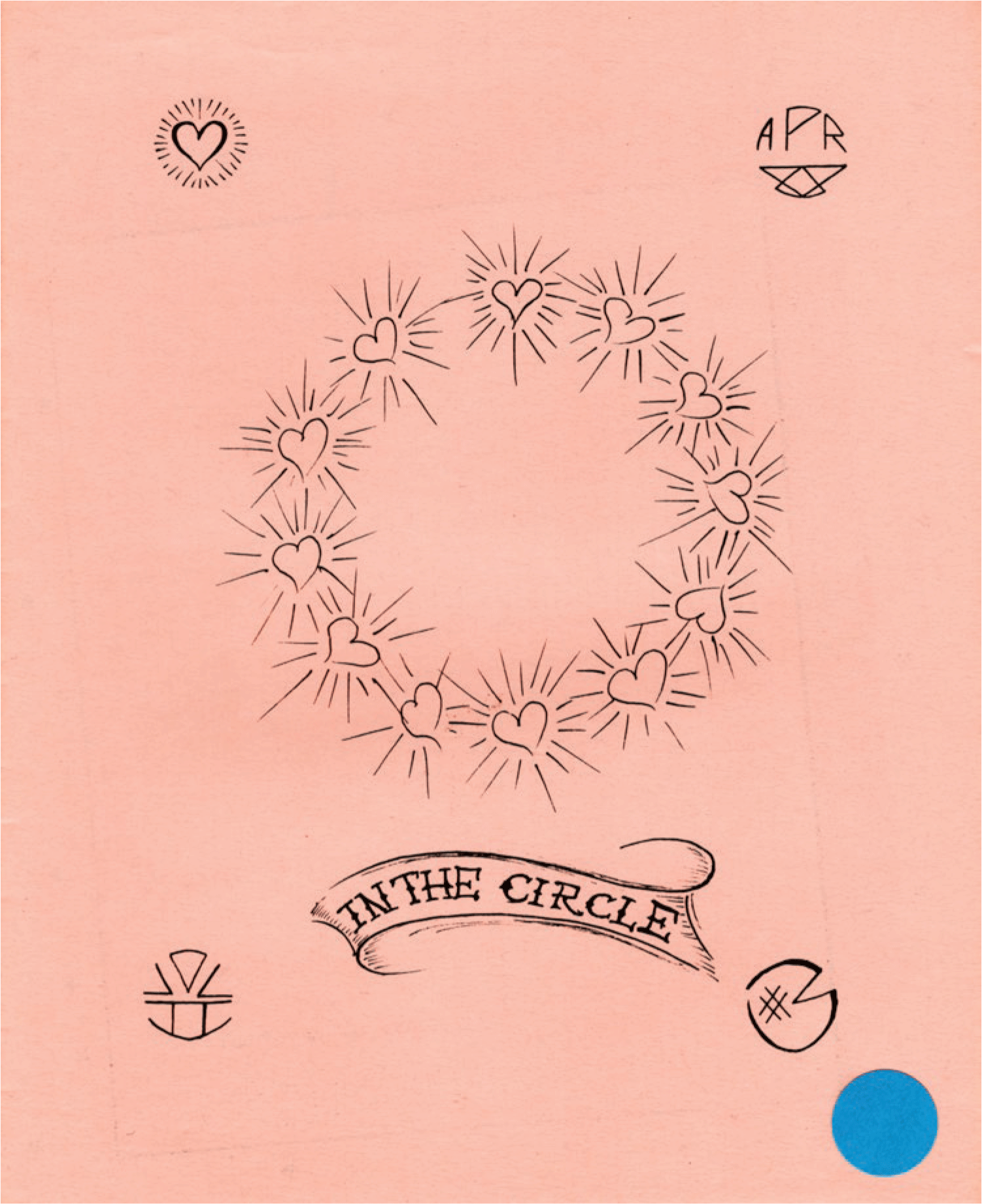
The resulting aesthetic of the newsletter was a mixture between a RIOT GRRRL zine and, as Annie noted, a homemade church bulletin. Fluxus artist Willem de Ridder taught Annie how to create DIY printed matter. Annie shared,
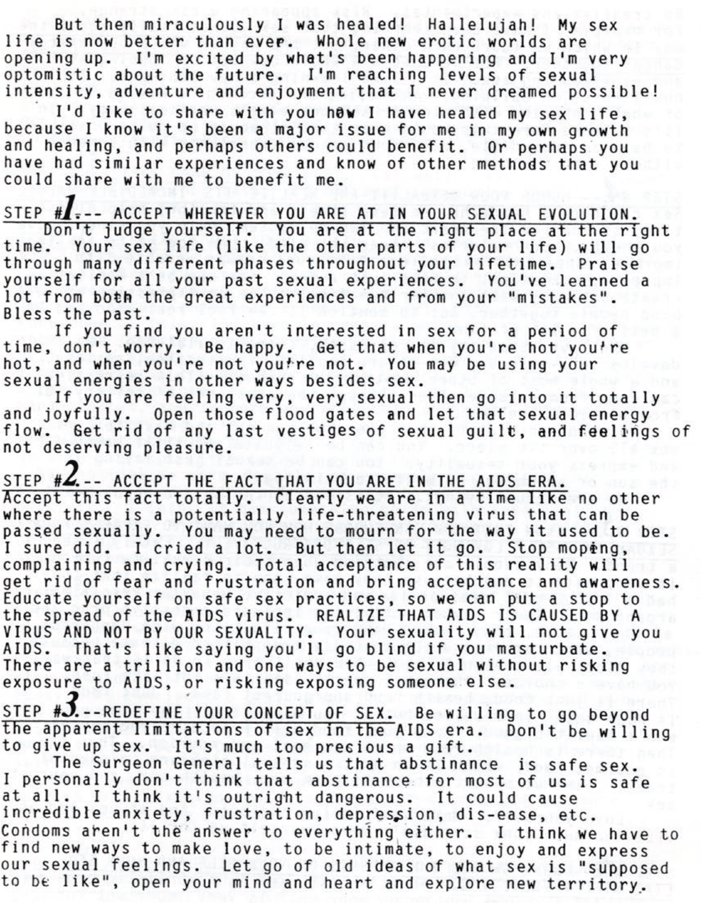
I had been working on sex magazines as a writer and photographer so I thought we should make a newsletter. Word processors had just come out, and I bought one. We used it to make the newsletters. My goal was to really have a community come to my apartment and do a shared project. Then they handed it out to everybody once a month and people really enjoyed it. I did “13 Steps to Remake your Sex Life.” (Sprinkle Reference Sprinkle2020a)
Annie’s instructional article was concurrent to many other efforts—sex education was burgeoning in the 1980s. Rather than give up sexual exploration, many saw the HIV/AIDS crisis as an opportunity to rethink what it meant to have sex. There was a growing interest in sensual touch, breathwork, and how sex with barrier protection could still be fun.
Annie Sprinkle’s “13 Steps to Remake your Sex Life” was published in the December 1988/January 1989 (vol 2, no. 9) issue of the newsletter. Nestled between a note of encouragement from a Healing Circle participant and a list of recommended books for subscribers, the first step, which incorporates Veronica Vera’s concept of sexual evolution, reads:
Accept wherever you are at in your sexual evolution. […] Your sex life (like other parts of your life) will go through many different phases throughout your lifetime. […] If you find you aren’t interested in sex for a period of time, don’t worry. Be happy. When you’re hot you’re hot, and when you’re not you’re not. […] If you are feeling very sexual, go into it totally and joyfully. […] Get rid of any last vestiges of sexual guilt and feelings of not deserving pleasure. (Sprinkle 1988/89:12)
In the Circle, April, year unknown. Cover illustration by Spider Webb.

Other steps are oriented around “redefining” one’s concept of sex, taking care of one’s body, and accepting the necessity of safe sex—while recognizing the need to “mourn the way it used to be” (12). Clearly geared toward readers having to rethink pleasure due to the HIV/AIDS crisis, Annie’s refreshing approach was informed by her experience as a sex worker.
Though Annie, Eli, Barbara, Veronica, and Nelson were some of the most regular participants in publishing the newsletter, it was a collaborative effort across the NYHC. As Nelson notes,
We talked about what was going on, it was obituaries, it was funny stuff, […] it was spirituality in wherever we could find that would help whoever; we wanted to be as inclusive as possible. Some members would write their stories and submit them and we would print them if they were appropriate. And then we distributed them, I think it was once a month. (Bloncourt Reference Bloncourt2020)
The newsletter was a tool for promoting the NYHC’s practices of “militant eroticism,” collective grief, resource sharing, joy, and community building. It also sometimes featured the aforementioned appropriated knowledge and healing strategies.
In the Circle, May 1988 vol. 2, #4, p. 1.

The Necessity of Political Education, Then and Now
The NYHC participants’ efforts were laudable, but they were not perfect. Issues related to class, race, and privilege showed up here, just as they did in many other contemporaneous activist groups. As Peter Cohen has noted, most organizers in ACT UP were white men, “many of whom were quite well-off financially” (Cohen Reference Cohen1998:17). Participants in the NYHC were mostly working- or middle-class young white and Latinx people, involved in the theatre and art worlds. Those involved with the NYHC found themselves navigating an urgent crisis without the political education that could have helped them see that some communities were being left out, and question their engagement with cultural practices that were not theirs to share. Former organizers generally acknowledge this reality and express a sense of being humbled by what they have since learned. This nonetheless underscores the critical importance of political education in contemporary struggles and activism to ensure safer spaces and a more porous circle.
“13 Steps to Remake your Sex Life,” In the Circle, December 1988/January 1989, vol. 2, #9, p. 12.

Touch as Mutual Aid
Those involved with the New York Healing Circle insisted that those who were ill still deserved to be touched, despite the widespread though unwarranted fear of contagion. This was a radical affront to the ways in which people with HIV/AIDS were portrayed by many of those who held formal political power at the time. The group also addressed different but intersecting needs than those met by official care workers. While care workers, such as the nurses working in 5B in San Francisco General Hospital (the first AIDS ward in the world), have been recognized for holding the hands of those with AIDS when many would not (Krauss and Haggis Reference Krauss and Haggis2018), those involved with the New York Healing Circle held each other in a different way. They held each other physically both inside hospitals and out; and they held each other emotionally. What made the New York Healing Circle exceptional was the way it merged reciprocal touch—an intentional affront to the popular narrative of toxicity related to people with HIV/AIDS at the time—with safer sex education, experimentation with healing modalities, collective dancing, and more standard forms of mutual aid (cooking, giving someone a ride to the hospital, and so forth). At the time, participants did not see their work together as activism. Today, they look back on their collective labor of care as highly political.
Eli states, “We weren’t like ACT UP. We didn’t make the nightly news. We weren’t out in the streets. Our impact was different [; …] I think we did a great deal of good, invisibly” (Ramer Reference Ramer2020b).
The New York Healing Circle filled a need that community members sought: comfort in being present in a room together, as well as the opportunity to share mutual vulnerabilities, fears, and potential sources of hope. Participants offered each other community, support, and importantly, physical closeness in its myriad forms. They were also part of a broader current at the time, enacting forms of care for each other that did not foreclose the importance of pleasure. This ethic continues through the work of other organizers today, such as those involved with the What Would an HIV Doula Do? (WWHIVDD) collective, whose members are engaged with ongoing questions around multivalent support for those with HIV/AIDS and their communities. HIV Doula Diana Cage asks in her work, how do we “make space for sexuality in an ill body”? (Cage Reference Cage2021). To answer this question, WWHIVDD works for people who are ill through their discursive materials and organizing. WWHIVDD continues to build upon the questions that Annie, others within the NYHC, and contemporaneous groups such as the GMHC were asking around four decades ago.
The NYHC formally ended in 1990 (Kirschner Reference Kirschner2020). When I asked Samuel what he wanted to remember about the Healing Circle, he responded,
I want to remember the joy and the aliveness and the kindness and the compassion of this space called the Healing Circle. It was a space, it wasn’t just a place. I would say for me, it continues to be—I am now 35 years older—and it continues to be one of the most unique celebrations of my life, including also a lot of sadness and loss. A very unique way of turning loss into love. (Kirschner Reference Kirschner2020)