Introduction
The face of heart failure is changing
Heart failure (HF) results when an abnormality of cardiac structure or function leads to failure of the heart to deliver oxygen at a rate commensurate with the requirements of metabolizing tissues, despite normal filling pressures, or only at the expense of increased filling pressures.Reference McMurray, Adamopoulos and Anker1 HF results in poor exercise tolerance, fatigue, fluid retention and reduced quality of life and survival.Reference McMurray and Pfeffer2 HF is an ancient syndrome. Egyptian papyri dating back to 1500 BC, as well as ancient Greek and Roman texts, depict individuals with classical features of HF, including exertional dyspnea, exercise intolerance, orthopnea, paroxysmal nocturnal dyspnea and edema.Reference Saba, Ventura, Saleh and Mehra3–Reference Ventura and Mehra5 During antiquity, HF affected relatively young individuals with the sequelae of rheumatic fever or congenital cardiac conditions, and survival was limited.
Leaping forward 3500 years, HF remains an important condition today. However, while rheumatic heart disease remains common in underdeveloped nations, the most important aetiologies of HF in developed nations are hypertension and ischaemic heart disease.Reference Khatibzadeh, Farzadfar and Oliver6 Significant strides in the management of these conditions during the latter part of the 20th century have led to greater patient survival, yet, paradoxically, this very success, coincident with improvements in the management of HF itself, has contributed to an epidemic of HF in developed countries.Reference Barker, Mullooly and Getchell7
Heart failure has become a chronic illness
The HF epidemic is occurring during a period of unprecedented population ageing. The incidence of HF rises with age, affecting many people in their eighth decade and beyond.Reference Bleumink, Knetsch and Sturkenboom8–Reference Go, Mozaffarian and Roger10 Older people with HF often have concurrent multiple chronic illnesses and age-related co-morbidities. For this reason, the management of HF can be challenging and optimal outcomes difficult to achieve.Reference Lee, Chien and Bidwell11,12 The course of HF is characterized by periods of relative stability, punctuated by unpredictable exacerbations leading to emergency department visits and hospitalizations.Reference Goodlin13 Between 25 and 50% of individuals with HF can die suddenly, at times early in the disease process, and presumably from ventricular arrhythmias.Reference Cleland, Chattopadhyay, Khand, Houghton and Kaye14 Those who escape sudden death experience over time and with each HF exacerbation, progressive loss of functional capacity.Reference Goodlin13 These individuals become increasingly reliant on community support services and ultimately many require institutionalization. The course of HF is depicted in Fig. 1.
The course of HF in older people is unpredictable and marked by intermittent exacerbations, progressive loss in functional capacity, and an increasing need for health services resources. Red arrows illustrate potential differences in the timing of death. Adapted, with permission, from Fig. 1 in Goodlin, SJ. Palliative care in congestive heart failure. J Am Col Cardiol 2009; 54: 386–96.

Heart failure has primarily become a chronic illness of older people
The objectives of this narrative review are fourfold:
(1) to review the epidemiology and health system impact of HF in the ageing population;
(2) to describe the clinical complexities and needs of older people with HF;
(3) to discuss the management of key concurrent chronic conditions and age-related co-morbidities; and
(4) to discuss how health care systems can be redesigned to optimize HF patient and system outcomes.
Epidemiology and system impact: the changing face of heart failure
Worldwide, over 23 million people have HF. In Western countries, the prevalence of HF rises exponentially with age, from less than 1% under the age of 65 years to almost 20% among octogenarians.Reference Khatibzadeh, Farzadfar and Oliver6,Reference Bleumink, Knetsch and Sturkenboom8,Reference Curtis, Whellan and Hammill9 In Canada and the USA, over 50,000 and 800,000 incident cases of HF are diagnosed annually, respectively.Reference Go, Mozaffarian and Roger10,Reference Dai, Walsh, Wielgosz, Gurevich, Bancej and Morrison15 These numbers are expected to increase almost 50% by 2030.Reference Go, Mozaffarian and Roger10,Reference Dai, Walsh, Wielgosz, Gurevich, Bancej and Morrison15 While some studies suggest that the incidence of HF has recently declined in some jurisdictions, the overall prevalence continues to increase with population ageing.Reference Yeung, Boom, Guo, Lee, Schultz and Tu16
HF has a substantial impact on patient health outcomes. In the early 1970s, mortality rates in the first year after HF onset were 47% in men and 27% in women; over the course of the subsequent two decades these rates fell to 33 and 28%, respectively, but have not declined further since.Reference Barker, Mullooly and Getchell7,Reference Chen, Normand, Wang and Krumholz17,Reference Jong, Vowinckel, Liu, Gong and Tu18 Overall mortality at 5 years has remained over 50%, the median survival is approximately 2 years, and the 10-year mortality rate approaches 99%.Reference Barker, Mullooly and Getchell7,Reference Go, Mozaffarian and Roger10,Reference Chen, Normand, Wang and Krumholz17–Reference Chun, Tu and Wijeysundera19 Older people with co-morbid conditions fare worse. In a population-based study from Ontario, Canada, older people with Charlson co-morbidity scores of 3 or more had 1-year mortality rates approaching 60% after a first HF hospitalization.Reference Jong, Vowinckel, Liu, Gong and Tu18
HF is a leading diagnosis among hospitalized patients, present either as a primary or secondary diagnosis in almost 5% of hospitalizations in one Canadian cohort; lengths of stay are also longer than for other medical diagnoses.Reference Dai, Walsh, Wielgosz, Gurevich, Bancej and Morrison15 Hospital costs attributable to HF exceed $30 billion annually in the USA alone.Reference Go, Mozaffarian and Roger10 Older people with HF are often discharged from hospital having experienced functional decline from which many do not recover.Reference Dai, Walsh, Wielgosz, Gurevich, Bancej and Morrison15,Reference Burns, McCarthy, Moskowitz, Ash, Kane and Finch20–Reference Allen, Hernandez and Peterson24 Readmission rates with HF are also high and have increased over the past decades, approaching 20% at 1 month in a recent study of USA Medicare beneficiaries.Reference Bueno, Ross and Wang25 The rise in readmission rates has coincided with a decline in length of hospital stay and an increase in post-discharge mortality rates, as well as increases in post-discharge use of home care services and discharges to skilled nursing or long-term care (LTC) facilities.Reference Bueno, Ross and Wang25 Inadequate transitional follow-up care may account for a large proportion of these poor outcomes.Reference McAlister, Youngson, Bakal, Kaul, Ezekowitz and van Walraven26,Reference Hernandez, Greiner and Fonarow27 Data from a population-based study of 24,373 HF patients in Alberta, Canada found that 22% had no physician follow-up visits within 30 days of hospital discharge.Reference McAlister, Youngson, Bakal, Kaul, Ezekowitz and van Walraven26 These patients were often older women, high system users, with concomitant dementia and multiple co-morbidities.Reference McAlister, Youngson, Bakal, Kaul, Ezekowitz and van Walraven26 They were more likely to die, be readmitted to hospital, or admitted to LTC.Reference McAlister, Youngson, Bakal, Kaul, Ezekowitz and van Walraven26 Data from Ontario demonstrate that 23% of people hospitalized with HF in Ontario in 2011 were discharged with home care services, and that a further 13.3% were discharged to LTC.28 Similar findings have been reported in other North American jurisdictions.Reference Burns, McCarthy, Moskowitz, Ash, Kane and Finch20–Reference McAlister, Youngson, Bakal, Kaul, Ezekowitz and van Walraven26
Studies suggest that not only are HF patients ageing, but they are also increasingly clinically complex, and vulnerable to poor outcomes, progressive functional decline, and increased health service utilization.Reference Dai, Walsh, Wielgosz, Gurevich, Bancej and Morrison15,Reference Bueno, Ross and Wang25,Reference McAlister, Youngson, Bakal, Kaul, Ezekowitz and van Walraven26,28 Moreover, health care systems may not be prepared to adequately meet their needs. In the following section, key aspects of this clinical complexity and its management are discussed.
Vulnerability: impact of frailty and co-morbidity
HF patients are at increased risk of poor outcomes, particularly those with concomitant co-morbidities. Poor outcomes not only include higher hospitalization rates, but progressive functional decline that threatens the ability to live independently. Frailty denotes a state of increased vulnerability to health stressors that stems from accumulated impairments in multiple physiological systems, and that results in loss of homeostatic reserve.Reference Bergman, Ferrucci and Guralnik29 HF patients are more likely to be classified as frail than those without HF.
While consensus on a standard definition of frailty remains elusive, agreement exists on the core features of increased vulnerability and reduced homeostatic reserve.Reference Bergman, Ferrucci and Guralnik29 Frailty is often associated with chronic disease, disability and geriatric syndromes.Reference Bergman, Ferrucci and Guralnik29,Reference Theou, Rockwood, Mitnitski and Rockwood30 The prevalence of chronic disease increase with age and multimorbidity has been associated with worse outcomes and greater health service utilization.Reference Rapoport, Jacobs, Bell and Klarenbach31–Reference Cigolle, Langa, Kabeto, Tian and Blaum33 Similarly, the proportion of older people unable to perform one or more basic or instrumental activities of daily living (ADL) rises with age.Reference Gilmour and Park34 Yet, the concepts of co-morbidity and disability are insufficient to fully describe frailty: not all older people with multimorbidity are frail, and not all frail persons are disabled.Reference Bergman, Ferrucci and Guralnik29,Reference Rockwood, Song and MacKnight35 The prevalence of geriatric syndromes, including cognitive impairment, functional decline, falls, sarcopenia, sensory impairment and incontinence also increases with age.Reference Cigolle, Langa, Kabeto, Tian and Blaum33 The occurrence of these syndromes in a person is often considered a hallmark of frailty and, particularly if associated with multimorbidity and disability, denotes an increased risk for further disability, functional decline and other poor outcomes.Reference Bergman, Ferrucci and Guralnik29,Reference Terner, Reason, McKeag, Tipper and Webster32,Reference Fried, Tangen and Walston36,Reference Mitnitski, Graham, Mogilner and Rockwood37
A recent systematic review demonstrated that a history of cardiovascular disease is associated with frailty.Reference Afilalo, Karunananthan, Eisenberg, Alexander and Bergman38 The prevalence of frailty among older people with HF ranges from 25 to 50%.Reference Newman, Gottdiener and McBurnie39,Reference Harkness, Heckman and McKelvie40 The implications of concurrent frailty are significant. In a prospective study of 448 community-dwelling HF patients with a mean age of 73 ±13 years and followed for an average of 2 years, the population attributable risk associated with any degree of frailty, as assessed using the Fried criteria, was 35% for emergency department visits and 19% for hospitalizations.Reference McNallan, Singh and Chamberlain41 Frail HF patients are more vulnerable to reduced quality of life, poor outcomes from concurrent conditions such as community-acquired pneumonia or hip fractures, and increased health service utilization and mortality.Reference Allen, Hernandez and Peterson24,Reference Afilalo, Karunananthan, Eisenberg, Alexander and Bergman38,Reference Wolinsky, Smith, Stump, Overhage and Lubitz42–Reference Buck and Riegel48 Moreover, frail older people presenting with an acute HF exacerbation are more likely to display non-specific signs and symptoms such as delirium, falls, acute functional decline or immobility, leading to diagnostic delays and worse clinical outcomes.Reference Jarrett, Rockwood, Carver, Stolee and Cosway49 The high prevalence and impact of frailty on HF patients has led the Canadian Cardiovascular Society HF guidelines to recommend screening for frailty.Reference Arnold, Howlett and Dorian50 A number of validated screening instruments and performance measures for frailty have been developed and interested readers are invited to access specific reviews on the topic.Reference Afilalo, Alexander and Mack51,Reference Auyeung, Lee, Leung, Kwok and Woo52
Co-morbidities frequently complicate the management of frail older people with HF. Fewer than 3% of patients with HF have no co-morbid conditions.12 In a population-based cross-sectional study of 264,030 community-dwelling home care recipients aged 65 years and over in Ontario, Canada, 14.9% had a diagnosis of HF.Reference Foebel, Hirdes, Heckman, Tyas and Tjam53 Notably, those with HF had an average of four co-morbidities, and 45% had five or more. The most common co-morbidities were hypertension, arthritis, coronary artery disease, diabetes mellitus, chronic obstructive pulmonary disease, stroke and osteoporosis. Disability was also common among clients with HF, with almost 38% having some degree of dependency in basic ADL and almost 98% having dependency in instrumental ADL. The burden of symptoms and of geriatric syndromes such as cognitive impairment, depression, falls, urinary incontinence and pain were also very high. LTC residents with HF suffer from the same co-morbidities affecting home care clients, but with a greater and more severe burden of concomitant geriatric syndromes.Reference Heckman, Misiaszek and Merali54–Reference Foebel, Heckman and Ji56
In addition to multimorbidity, older people with HF in the home care and LTC settings are also linked through higher rates of acute care utilization. In the home care study by Foebel et al. (2011), clients with a history of HF were more likely than those without to have visited the emergency department (21.9 vs 18.3%, P<0.0001) and to have been hospitalized (37.4 vs 26.1%, P<0.0001) in the 90 days prior to their home care assessment.Reference Foebel, Hirdes, Heckman, Tyas and Tjam53 In a prospective study of 546 newly admitted LTC residents, 21% had a history of HF: of these, 60% were admitted to LTC directly from hospital, and the average number of hospitalizations in the year before institutionalization was 3 ± 2, compared with 1.3 ± 1.2 for those without HF.Reference Foebel, Heckman and Ji56
The journey of older people with HF is often one of repeated exacerbations and progressive functional decline, leading to increasing needs for home care support and ultimately institutionalization. More optimal HF management earlier in this journey could potentially slow the pace of decline, reduce acute care utilization and delay the need for more intensive, and expensive, support and institutional services. The key to success may lie in the optimal management of concurrent co-morbidities in frail older people with HF.Reference McCauley, Bixby and Naylor57 Below, we discuss the management of HF in frail older people in the context of particularly challenging co-morbidities.
Managing HF in frail older people
Goals of HF management should be individualized according to patient needs and wishes, and not only focus on reducing mortality, but also on alleviating symptoms and optimizing function. Patients should be monitored to identify and treat HF exacerbations early, thus preventing hospitalization and maintaining functional capacity.Reference McMurray, Adamopoulos and Anker1,Reference Hunt, Abraham and Chin58,Reference McKelvie, Moe and Ezekowitz59 Eliciting patient preferences for treatment priorities and discussing shared goals of care are integral aspects of any approach aimed at caring for older people with multimorbidity.60
Core HF management modalities include medications, exercise and dietary measures, as well as symptom monitoring and tracking fluid balance and weight.Reference McMurray, Adamopoulos and Anker1,Reference Hunt, Abraham and Chin58,Reference McKelvie, Moe and Ezekowitz59 International guidelines advocate that most recommended treatments for HF are applicable to older people.Reference McMurray, Adamopoulos and Anker1,Reference Hunt, Abraham and Chin58,Reference McKelvie, Moe and Ezekowitz59 The selection of optimal pharmacotherapy is contingent on the assessment of left ventricular ejection fraction (LVEF).Reference McMurray, Adamopoulos and Anker1,Reference Hunt, Abraham and Chin58,Reference McKelvie, Moe and Ezekowitz59 While a large body of evidence exists to guide the treatment of HF with reduced ejection fraction (HFREF), where LVEF is usually below 45%, there have been few trials to provide conclusive guidance on the management of HF with preserved ejection fraction (HFPEF). This is of particular concern as almost half of older people with HF have HFPEF.Reference Alagiakrishnan, Banach, Jones, Datta, Ahmed and Aronow61,Reference Oktay, Rich and Shah62 As older people with HFPEF are also more likely to be women with multiple co-morbidities, this may explain in part why HF outcomes improved more among men than women during the 1970s to the 1990s.Reference Barker, Mullooly and Getchell7
A key element of successful HF management is ongoing patient education to promote self-care skills. These skills include understanding and adhering to prescribed medications and positive health practices, self-monitoring of symptoms and fluid balance through regular weights, and effecting cognitive, behavioural and emotional responses to avert a HF exacerbation.Reference Riegel, Moser and Anker63 Patient self-care education has been shown to reduce the frequency of HF exacerbations and acute care utilization.Reference Riegel, Moser and Anker63–Reference Naylor, Brooten, Campbell, Maislin, McCauley and Schwartz67 Most patients will require a loop diuretic for symptom control, with doses reduced to a minimum to maintain an ideal target weight.Reference McMurray, Adamopoulos and Anker1,Reference Hunt, Abraham and Chin58,Reference McKelvie, Moe and Ezekowitz59 Below, we summarize the essential aspects of HF pharmacotherapy; readers wishing for more in-depth information are referred to guidelines and recent reviews.Reference McMurray, Adamopoulos and Anker1,Reference Hunt, Abraham and Chin58–Reference Riegel, Moser and Anker63,Reference Alagiakrishnan, Banach, Jones, Ahmed and Aronow68.
Heart failure with reduced ejection fraction
First-line pharmacotherapy for HFREF includes an angiotensin converting enzyme inhibitor (ACEi) and a β-adrenergic blocker (β-blocker).Reference McMurray, Adamopoulos and Anker1,Reference Hunt, Abraham and Chin58,Reference McKelvie, Moe and Ezekowitz59 ACEi and β-blockers have been shown to improve symptoms and functional capacity, and reduce mortality and hospitalization rates.Reference McMurray, Adamopoulos and Anker1,Reference Hunt, Abraham and Chin58,Reference McKelvie, Moe and Ezekowitz59,Reference Abdulla, Pogue and Abildstrøm69–Reference Shibata, Flather and Wang71 Mineralocorticoid receptor antagonists (MRA) have been shown to improve symptoms and reduce hospitalization and mortality rates in symptomatic persons with HFREF already receiving optimal ACEi and β-blocker treatment, and patients should be monitored regularly for the development of hyperkalaemia.Reference McMurray, Adamopoulos and Anker1,Reference Hunt, Abraham and Chin58,Reference McKelvie, Moe and Ezekowitz59,Reference Juurlink, Mamdani and Lee72,Reference Zannad, McMurray and Krum73 Angiotensin receptor blockers (ARB) may be used if patients are intolerant of ACEi or β-blockers, and hydralazine and nitrates can be used in those who cannot tolerate either an ACEi or an ARB, or in addition to first-line therapies in HF patients of African descent.Reference McMurray, Adamopoulos and Anker1,Reference Hunt, Abraham and Chin58,Reference McKelvie, Moe and Ezekowitz59 Ivabradine, a novel agent that targets ion channels in the sinoatrial node and decreases heart rate, has been shown to decrease cardiovascular death and heart failure hospitalization in patients with a LVEF less than 35%, and persistent heart rate over 75 beats per minute despite optimal first-line therapy.Reference Swedberg, Komajda and Böhm74 Digoxin, carefully dosed based on renal function, can improve functional capacity in patients who remain symptomatic despite optimal ACEi, β-blockers and MRA therapy.Reference McMurray, Adamopoulos and Anker1,Reference Hunt, Abraham and Chin58,Reference McKelvie, Moe and Ezekowitz59 Cardiac resynchronization therapy has been shown to reduce mortality and hospitalization rates and improve ongoing HF symptoms in patients with LVEF < 35% and evidence of ventricular dysynchrony.Reference McMurray, Adamopoulos and Anker1,Reference Hunt, Abraham and Chin58,Reference McKelvie, Moe and Ezekowitz59 While frail older people with HF have been excluded from most clinical trials of HF pharmacotherapy, leading to speculation about their effectiveness in this population, several large observational studies and small randomized controlled trials, primarily assessing the effects of ACEi, suggest that optimizing HF therapy in frail older people may lead to improved mood, cognition and function, and prevention of LTC placement.Reference Hutcheon, Gillespie, Crombie, Struthers and McMurdo75–Reference Foebel81
Heart failure with preserved ejection fraction
Relatively few clinical trials have examined the pharmacological treatment of HFPEF, and most of these have shown marginal benefits.Reference McMurray, Adamopoulos and Anker1,Reference Hunt, Abraham and Chin58,Reference McKelvie, Moe and Ezekowitz59 The management of HFPEF rests therefore on the careful management of fluid status and underlying contributing conditions such as ischaemic heart disease, hypertension and atrial fibrillation.Reference McMurray, Adamopoulos and Anker1,Reference Hunt, Abraham and Chin58,Reference McKelvie, Moe and Ezekowitz59 Consequently, a significant proportion of patients with HFPEF are ultimately prescribed ACEi, ARB and β-blockers. The recently published results of TOPCAT, a clinical trial of 3445 participants with HFPEF who were randomized to the MRA spironolactone or placebo and followed over 3 years, showed that the MRA did not reduce overall cardiovascular outcomes or mortality, and marginally reduced hospitalization rates.Reference Pitt, Pfeffer and Assmann82 Event rates among participants in some trials of HFPEF were low compared with actual patient cohorts, and it has been suggested that some may not truly have had HF, leading to an underestimate of the benefits of treatment.Reference McMurray, Adamopoulos and Anker1,Reference Hunt, Abraham and Chin58,Reference McKelvie, Moe and Ezekowitz59,Reference McMurray and O’Connor83 These concerns reinforce the importance of appropriately diagnosing HF.
Despite guidelines suggesting that recommended HF pharmacotherapy is applicable to all patients regardless of age, these medications remain relatively underutilized in older people.Reference Foebel, Heckman and Ji56,Reference Litaker and Chou84,Reference Foebel, Heckman and Hirdes85 Qualitative studies have identified concerns from prescribers, particularly primary care physicians, about recommended HF therapies in older people, including uncertainty about the HF diagnosis itself in frail subjects with non-specific symptoms. Other barriers include concerns over the applicability of clinical trial evidence to frail older people, poor information transfer during transitions from one care setting to the next, and fears of triggering adverse events such as falls.Reference Foebel, Heckman and Hirdes85–Reference Heckman, Boscart and McKelvie90
Managing co-morbidities in frail older people with HF
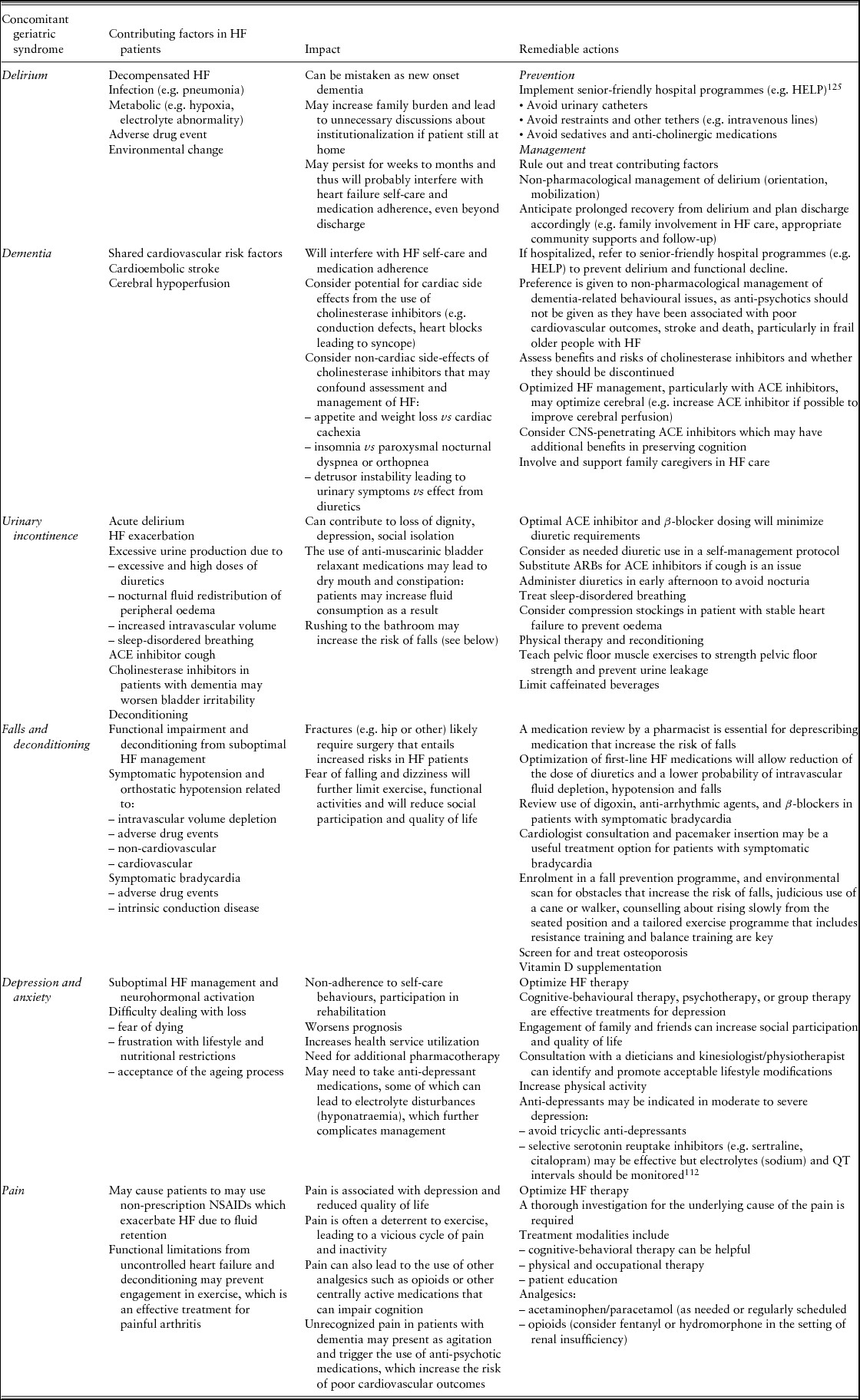
Table 1 lists important co-morbidities that frequently occur in frail HF patients, contributing factors and effects, and remediable actions to prevent further decline. The management of HF can often be complicated by therapeutic competition, a form of adverse drug event in which the management of one co-morbidity (e.g. urinary incontinence associated with diuretic usage) is exacerbated by the management of HF, and vice versa (e.g. reduction of diuretics to avoid incontinence but leading to a HF exacerbation).Reference Tannenbaum and Johnell91 Understanding the nature of common co-morbidities in older people with HF, and the associated potential risks of adverse drug events, can lead to more optimal management of all conditions and to better outcomes.
Important co-morbidities that frequently occur in frail HF patients, contributing factors and effects, and remediable actions to prevent further decline
Cognitive impairment
Cognitive impairment is common among older people with HF and is associated with worse outcomes. A systematic review found that patients with HF were more likely to demonstrate cognitive impairment based on cognitive testing (odds ratio 1.62; 95% CI 1.48–1.79).Reference Vogels, Scheltens, Schroeder-Tanka and Weinstein92 Delirium may affect up to 50% of hospitalized HF patients, in whom it is associated with a higher risk of readmission, institutionalization and death.Reference Heckman, Patterson, Demers, St.Onje, Turpie and McKelvie93,Reference Uthamalingam, Gurm, Daley, Flynn and Capodilupo94 Longitudinal studies also suggest that a history of HF is associated with cognitive decline and progression to dementia.Reference Harkness, Heckman and McKelvie40 HF patients with cognitive impairment are at increased risk of rehospitalization, functional decline and mortality.Reference Zuccala, Onder and Pedone95–Reference McLennan, Pearson, Cameron and Stewart99 Even HF patients with mild cognitive impairment may be at increased risk of poor outcomes.Reference McLennan, Pearson, Cameron and Stewart99–Reference Cameron, Worrall-Carter, Page, Riegel, Lo and Stewart101 Potential mechanisms for these complications include deficits that impede self-care, such as failure to recognize early HF symptoms.Reference Dickson, Tkacs and Riegel102 It is essential that clinicians anticipate the presence of cognitive impairment in older HF patients, and ensure that self-care education include not only the patient, but also family caregivers. As caregiver stress has been associated with decreased adherence to medication among home care clients with HF, it is essential to ensure that appropriate community resources are in place to support both the patient and the caregivers.Reference Foebel, Hirdes and Heckman103 Moreover, evidence suggests that optimizing HF pharmacotherapy, particularly with ACEi, can improve cerebral perfusion and exert a protective effect on cognition.Reference Zuccala, Onder and Marzetti77,Reference Paulson, Jarden, Godtfredsen and Vorstrup104–Reference Ohrui, Tomita, Sato-Nakagawa, Matsui, Maruyama, Niwa, Arai and Sasaki107
Urinary incontinence
Urinary incontinence refers to the involuntary loss of urine and is an important geriatric syndrome that can lead to embarrassment, isolation, depression, falls, functional decline and institutionalization.Reference Tannenbaum and Johnell91 Urinary incontinence is common among older people with HF, both in the community and in LTC.Reference Foebel, Hirdes, Heckman, Tyas and Tjam53,Reference Daamen, Schols, Jaarsma and Hamers55,Reference Foebel, Heckman and Ji56 Urine production may increase in the setting of diuretic use, as well as in a state of intravascular volume overload, particularly when peripheral oedema is mobilized to the central circulation when the patient is recumbent.Reference Tannenbaum and Johnell91 In addition, natriuretic peptides, released in the setting of HF due to ventricular wall tension, are associated with nocturnal polyuria.Reference Tannenbaum and Johnell91 Sleep-disordered breathing is common in HF patients and has been associated with nocturia.Reference Gulur, Mevcha and Drake108 Deconditioning can lead to functional incontinence and ACEi cough can precipitate stress incontinence in predisposed patients.Reference Tannenbaum and Johnell91 Optimizing HF therapy and weight monitoring may reduce symptoms of incontinence through reduction of natriuretic peptide levels, inhibition of the renin–angiotensin–aldosterone system, and maintenance of an ideal intravascular volume. Administration of diuretics approximately 6 hours before bedtime has been shown to reduce nocturnal urine production.Reference Reynard, Cannon, Yang and Abrams109
Falls and deconditioning
HF patients are at increased risk of falls through several mechanisms. Deconditioning, frailty-associated sarcopenia and cardiac cachexia lead to leg weakness and poor exercise tolerance, leading to falls, further activity reduction and accelerated deconditioning.Reference Harkness, Heckman and McKelvie40 Adverse drug events may lead to symptomatic hypotension, orthostatic hypotension or bradycardia, and thus potentially trigger falls.Reference Zang110 Symptomatic hypotension usually reflects intravascular volume depletion: up-titration of ACEi and β-blocker doses often lead to reduced diuretic requirements, and failure to decrease diuretic doses leads to volume depletion.Reference Arnold, Liu and Demers111 Withdrawal of other cardiovascular medications, such as nitrates, vasodilators and calcium-channel blockers, if symptomatic hypotension persists, should be considered before altering first-line medication doses.Reference Arnold, Liu and Demers111 Asymptomatic hypotension does not necessarily warrant reducing doses of first-line HF medications, particularly ACEi which can preserve cerebral perfusion in patients with reduced LVEF even if mean blood pressure is reduced.Reference Paulson, Jarden, Godtfredsen and Vorstrup104–Reference Ohrui, Tomita, Sato-Nakagawa, Matsui, Maruyama, Niwa, Arai and Sasaki107 Symptomatic bradycardia may not only reflect β-blockade, but also concurrent use of other atrioventricular nodal blocking agents or intrinsic conduction disease.Reference Arnold, Liu and Demers111 Dose reduction or elimination of potentially offending medications, or cardiology referral, could be considered. Other medications associated with falls or orthostatic hypotension, such as psychotropics, anti-cholinergics or α-blockers, should be reviewed.Reference Woolcott, Richardson and Wiens112 Patients should be considered for rehabilitation.Reference Woolcott, Richardson and Wiens112 Occupational therapist assessment may help in reducing environmental risk factors for falls and educate patients on energy conservation techniques to optimize function.Reference Chase, Mann, Wasek and Arbesman113 Finally, while the risk of falls may be decreased, it will not be eliminated: measures to prevent fractures are important and patients should be assessed for osteoporosis and prescribed vitamin D.Reference Tinetti and Kumar114
Depression and anxiety
Depression and anxiety are common co-morbidities in older HF patients and have both been linked to poor outcomes, particularly when occurring together.Reference Page and Lindenfeld115–Reference Suzuki, Shiga and Kuwahara120 Depression has been associated with an increased risk of functional decline, impaired quality of life, cognitive dysfunction, HF exacerbation, health service utilization, hospitalization and mortality.Reference Alosco, Spitznagel and van Dulmen116–Reference Fan, Yu and Zhang119 Potential mechanisms include non-adherence to therapy and self-care behaviours, and reduced cardiovascular fitness from deconditioning.Reference Lee, Chien and Bidwell11,Reference Fan, Yu and Zhang119 Anxiety has also been associated with increased health service utilization and more frequent HF exacerbations, potentially caused by reduced medication adherence.Reference De Jong, Chung, Wu, Riegel, Rayens and Moser121 The relationship between HF and psychiatric co-morbidities may be bidirectional and mediated through complex neurohormonal mechanisms involving systemic inflammation, increased sympathetic tone, and activation of cortisol and the renin–angiotensin pathway.Reference Page and Lindenfeld115 Data from a small number of cross-sectional studies suggest that suboptimal HF therapy may be associated with increased use of anti-depressants and benzodiazepines.Reference Heckman, Misiaszek and Merali78,Reference Connolly, Silke, McGavock and Wilson-Davies122 Whether these associations reflect neurohormonal activation or misattribution of mild HF symptoms (e.g. fatigue, insomnia, poor energy) to a psychiatric condition remains to be elucidated. Management of depression and anxiety is predicated on optimal HF management, physical activity promotion, supporting both the patient and informal caregiver, and treating the underlying psychiatric condition using appropriate supportive psychotherapy and pharmacotherapy.
Pain
Pain is highly prevalent among older people with HF and may reflect angina, peripheral vascular disease, arthritis, deconditioning or depression.Reference Goodlin13,Reference Goebel, Doering and Shugarman123,Reference Herr, Salyer, Lyon, Goodloe, Schubert and Clement124 Consequences of pain include reduced quality of life, inability to participate in physical activity and rehabilitation, and depressive symptoms.Reference Light-McGroary and Goodlin125,Reference Rastogi and Meek126 In addition to optimal cardiac pharmacotherapy, treatment modalities include non-pharmacological interventions such as education, nutritional counselling, supportive and spiritual care, and physical and occupational therapy.Reference Rastogi and Meek126 Non-steroidal anti-inflammatory drugs should be avoided as they may precipitate fluid retention, renal dysfunction and electrolyte abnormalities; acetaminophen (paracetamol) is thus a preferred first-line analgesic.Reference Light-McGroary and Goodlin125 Opioids may be used not only for more severe pain, but also to manage dyspnea in patients with more advanced HF symptoms.Reference Goodlin13,Reference Light-McGroary and Goodlin125 However, certain opioids and their active metabolites can accumulate in the setting of concurrent renal insufficiency; in this situation, fentanyl may be preferable to others.Reference Light-McGroary and Goodlin125,Reference Murtagh, Chai, Donohoe, Edmonds and Higginson127 A common cause of pain in older HF patients is acute gout, particularly since diuretic therapy can cause hyperuricaemia.Reference Zhu, Pandya and Choi128,Reference Fravel and Ernst129 Acute gout should treated with colchicine or short courses of corticosteroids.Reference Fravel and Ernst129 Prevention includes optimizing HF therapy to minimize the burden of diuretics as well as the use of allopurinol.Reference McMurray, Adamopoulos and Anker1,Reference Hunt, Abraham and Chin58,Reference McKelvie, Moe and Ezekowitz59,Reference Fravel and Ernst129
Implications on the organization of patient care
HF in older people is often complicated by a perfect storm of concurrent co-morbidities, disabilities and geriatric syndromes (Fig. 2). The interactions between these conditions are often bidirectional, further complicate their management leading to poorer outcomes, and have specific implications on the organization of care for patients.
Conceptual relationship between heart failure, co-morbidities, disabilities and geriatric syndromes.
Patient level interventions
Optimizing the care of older people with HF is predicated on understanding that while clinical complexity will increase over time, individual trajectories are not easily predictable. Therefore, a proactive approach is required in which older HF patients are regularly screened for frailty and associated risks, and if required, that they undergo a comprehensive symptom and geriatric assessment.Reference Arnold, Liu and Demers111 Similarly to advance care planning interventions, such assessments should occur shortly after diagnosis and be periodically repeated after significant clinical events, in the presence of severe or intractable symptoms, when invasive therapies are being considered, or at the request of the patient.Reference O’Leary130,Reference McKelvie, Moe and Cheung131
An essential underpinning of HF management in older people is the need for optimal pharmacotherapy, not only to improve symptoms, but also to facilitate the management of co-morbidities. The provision of self-care education and required community supports for both the patient and the caregiver is therefore essential. Self-care support is a key component within the broader strategy of system navigation support, which aims to reduce barriers to care and promote access to the most appropriate medical and community services at the most appropriate time.Reference Heckman, Hillier, Manderson, McKinnon-Wilson, Santi and Stolee132,Reference Manderson, McMurray, Piraino and Stolee133 Essential features of system navigation include:Reference Manderson, McMurray, Piraino and Stolee133
(1) planning care during care transitions (e.g. discharge from hospital);
(2) medication reconciliation and management;
(3) service or care provider access and co-ordination;
(4) skilled home visits and/or phone support/availability;
(5) liaison with medical and community services;
(6) assessment and management of health status;
(7) patient and caregiver education on self-care;
(8) patient advocacy; and
(9) collaboration among health care providers.
A recent systematic review suggests that system navigation interventions with an explicit focus on increasing patient and caregiver self-care capacity, as well as extensive follow-up starting early during hospitalization and lasting up to several months after discharge, lead to significant improvements in patient health, and reduced health service utilization and related costs.Reference Manderson, McMurray, Piraino and Stolee133,Reference Vedel, Stampa and Bergman134
An essential accompaniment to the assessment of patient needs is the concurrent and regular discussions with patients and family regarding advance care planning.Reference McKelvie, Moe and Cheung131 Early identification and ongoing involvement of a substitute decision-maker is highly desirable.Reference McKelvie, Moe and Cheung131 Optimal control of patient symptoms requires regular symptom assessment, discussion of patient care goals, and care provided according to the advance care wishes of the patient.
Practice level interventions
The organization and delivery of care to complex older people should be responsive to the broad range of health needs that may arise along the HF journey. These extend beyond the medical realm to encompass psychological, rehabilitative, supportive, palliative and spiritual needs.Reference Light-McGroary and Goodlin125 To meet these requirements, multidisciplinary HF management programmes have been developed and shown to be particularly effective for community-dwelling frail older people with complex co-morbidities.Reference McMurray, Adamopoulos and Anker1,Reference Hunt, Abraham and Chin58,Reference McKelvie, Moe and Ezekowitz59,Reference Pulignano, Del Sindaco and Di Lenarda135 Initially modelled after multidisciplinary geriatric assessment teams, these programmes aim to optimize pharmacological and non-pharmacological care for HF and other co-morbidities, focus on self-care support for both the patient and informal caregiver, and provide close follow-up and system navigation support.Reference Rich136 At minimum, a HF management programme should include a physician and a nurse with specific expertise in the care of HF and who work closely with primary care providers.Reference McMurray, Adamopoulos and Anker1,Reference Hunt, Abraham and Chin58,Reference McKelvie, Moe and Ezekowitz59 The availability of dieticians, pharmacists, social workers, physical and occupational therapists, geriatricians and palliative care clinicians to the HF management programme may lead to significant additional benefits to patients.Reference Abete, Gianluca and Della-Morte137
Despite their demonstrated benefits, access to specialized HF management programmes remains relatively limited as most programmes are based in acute, often tertiary care, facilities, and often only admit patients who have already had multiple HF exacerbations.Reference Howlett, McKelvie and Arnold138 A small number of studies have shown that HF management programmes in LTC can reduce acute care utilization, though these programmes benefited from resources generally unavailable in many LTC homes, such as ready access to acute care services, health records, specialists and diagnostic testing.Reference Heckman, Boscart and McKelvie139 Other programmes targeted LTC residents expected to return to the community, or excluded those with cognitive impairment. None of the programmes was developed with involvement of LTC stakeholders, a requirement for the development of successful and sustainable HF management programmes in LTC.Reference Heckman, Boscart and McKelvie139 Given the high prevalence of older patients with HF, the limited availability of specialized HF clinics, an approach to care that is more reactive than proactive, and evidence suggesting lack of persistence of optimal management interventions following discharge from specialized clinics, system level interventions are necessary to further develop HF management capacity in community-based and primary care settings.Reference Luttik, Brons and Jaarsma140
System level interventions
The management of complex older people with HF must be rooted in primary care and involve a truly collaborative shared-care approach between primary care clinicians, specialists and interprofessional health providers.Reference Lee and Heckman141 This principle recognizes the importance of generalist oversight in the management of complex patients, and evidence to suggest that this approach can be effective.Reference Rothman and Wagner142–Reference Detsky, Gauthier and Fuchs145 The fundamental characteristics of primary care are:Reference Starfield144,Reference Starfield146
(1) first-contact care: implies ready access and the ability to reduce unnecessary specialty resource use;
(2) person-focused and comprehensive care: the nature of primary care allows continuous patient care while factoring knowledge of concurrent co-morbid medical conditions and unique cultural and socioeconomic circumstances; and
(3) care co-ordination.
Emerging data suggest that shared-care approaches between specialized and primary care can lead to improved outcomes among HF patients, compared with management by primary care alone or cardiologists alone.Reference Ahmed, Allman and Kiefe147–Reference Cancian, Battaggia and Celebrano152 A recent randomized controlled trial suggests that primary care follow-up of medically optimized HF patients (921 patients, median age 69 years, mean LVEF 30%, minimally symptomatic, and not demented) over a 2.5-year period is not associated with more adverse events than follow-up in a specialized HF clinic.Reference Schou, Gustafsson and Videbaek153
Building greater capacity to manage HF within primary care requires care process redesign. A systematic review identified the essential elements for successful chronic disease management in primary care:Reference Rothman and Wagner142,Reference Coleman, Mattke, Perrault and Wagner154,Reference Okie155
(1) redesign and reorganization of care processes and practice in order to engage clinicians into a longitudinal, planned and preventative approach to care, rather than one focused on reacting to acute issues;
(2) engagement of interprofessional resources, recognizing unleveraged scope of practice and considering interprofessional substitution of tasks with an emphasis on reducing duplication, with the overall aim to promote self-care, close follow-up, and care co-ordination; and
(3) electronic medical records.
Primary care providers need to become more proficient in the management of HF, which is often under-investigated and under-treated in this setting.Reference Mavaddat and Mant156 Specific training needs include enhancing:Reference Fuat, Hungin and Murphy88,Reference Heckman, Boscart and McKelvie90,Reference Persson, Erntell, Eriksson, Johansson, Swedberg and Dahlstrom150–Reference Cancian, Battaggia and Celebrano152,Reference Cawley and Cote Grantham157–Reference Olofsson, Edebro and Boman160
(1) clinical skills in the assessment of frail older HF patients;
(2) knowledge of the management of HF and of associated co-morbidities; and
(3) interprofessional skills training, the lack of which has been identified as a barrier to the effectiveness of primary care.Reference Collier161
Beyond providing direct clinical service, specialists can play an important leadership role in advocating for care process redesign and helping develop primary care capacity to manage complex older HF patients.Reference Heckman, Boscart and McKelvie90,Reference Rothman and Wagner142,Reference Starfield146,Reference Coleman, Mattke, Perrault and Wagner154,Reference Okie155,Reference Starfield162,Reference Brand, Scott, Greenberg and Sargious163 Specialists can also contribute to clinical skills development through bedside mentorship opportunities, the development and refinement of protocols and decision-support tools to implement practice guidelines, and promote quality assurance.
Implicit in the reorganization of primary care processes is the need to stratify patients according to the risk of a poor outcome, and tailor the intensity of interventions accordingly.Reference Scott164,Reference Mukamel, Chou, Zimmer and Rothenberg165 Patients present with variable degrees of complexity: low complexity older people do well with relatively simple interventions, others require more intensive multidisciplinary management, and the most complex require assessment by a specialist, an approach consistent with the Chronic Disease Prevention and Management model.Reference Scott164–Reference Singh and Ham166 This stepped-care approach would see stable HF patients receive usual primary care. Those experiencing clinical instability would be referred to an intermediate level of care supervised by a primary care physician or specialist with expertise in HF and supported by an appropriately trained nurse and interprofessional resources.Reference Brand, Scott, Greenberg and Sargious163,Reference Scott164 Patients stabilized at the intermediate care level can be referred back to usual primary care, whereas those requiring more intensive care would be referred to a tertiary and specialized HF clinic. A similarly structured programme of care for patients with cognitive complaints has been shown to provide high quality of care, build capacity about managing cognitive disorders at all levels of care, and provide more efficient access to specialists.Reference Lee, Hillier and Stolee167,Reference Lee, Heckman, Stolee, Gagnon, Borrie and Harvey168
System integration
The journey of the older HF patient is characterized by care needs that evolve and multiply over time, and which are met by multiple providers across multiple care settings. Systems of care for complex older people with HF are thus often fragmented, with multiple, unco-ordinated entry points, difficulties in system navigation, and poorly executed transitions between care sectors, thus resulting in poor outcomes for such patients.Reference Mavaddat and Mant156,Reference Coleman169 Integration is a system-wide process of co-ordinating social and health services, through alignment of financial, clinical and administrative incentives and modalities, to meet the needs of older people.Reference Hofmarcher, Oxley and Rusticelli170–Reference Vedel, Studies, Hospital, Monette, Monette and Bergman172 Integrated systems have shown improved patient outcomes while maintaining or reducing health care costs.Reference Johri, Beland and Bergman173 Many of the characteristics of a well-integrated system, such as timely and co-ordinated access and enhanced primary care capacity for proactive and interprofessional care, can be addressed by the stepped care framework described above.Reference Brand, Scott, Greenberg and Sargious163–Reference Mukamel, Chou, Zimmer and Rothenberg165
Transitional care interventions for frail older people with HF have been shown to be effective at reducing health system utilization and mortality.Reference Feltner, Jones and Cené174 The most effective models offer intensive assessment by an advance practice nurse, starting in hospital and extending as many as 3 months after discharge with frequent home visits and telephone contacts.Reference Feltner, Jones and Cené174,Reference Naylor, Brooten, Campbell, Maislin, McCauley and Schwartz175 The goals of transitional programmes are to support patients during the care transition episode and optimize their self-care skills.Reference Naylor, Brooten, Campbell, Maislin, McCauley and Schwartz175–Reference Coleman, Parry, Chalmers and Min177
Access to standardized comprehensive health information is a key feature of integrated health systems.Reference Hollander and Price178–Reference Williams, Lum and Deber180 This requirement can be effectively met by the widespread adoption of InterRAI instruments as the standard assessment for complex older people.Reference Heckman, Gray and Hirdes181 Implemented in multiple health care settings internationally, InterRAI instruments are standardized, reliable and validated suites of tools for comprehensive assessment and that offer multiple functionalities, including:
(1) compatibility with electronic health records;
(2) helping clinicians identify important health issues among patients and support care planning;
(3) exchange of clinical information within and across sectors;
(4) longitudinal assessment of patient outcomes within and across sectors; and
(5) facilitation of cross-sectoral comparisons and evaluation of system-level interventions in patient populations usually excluded from clinical trials.
Conclusion
Improving survival from cardiovascular disease, coupled with population ageing, has led to an epidemic of HF in developed nations. Patients with HF are older, frail and affected by multiple, complex co-morbidities, and as a result are vulnerable to a host of poor outcomes. Over time and with repeated HF exacerbations, these patients experience loss of functional capacity, worsening quality of life, and increased reliance on formal community and institutional resources. Effective management of concurrent co-morbidities in ageing HF patients has the potential to improving outcomes for both patients and the health system. Interventions are required to further develop capacity among providers, particularly within primary care, to effectively manage concurrent co-morbidities in ageing HF patients. Interventions are also required to foster greater health care system integration. These changes have the potential to provide ageing HF patients with more proactive and comprehensive care that addresses all of their needs and concerns, and thus improve their quality of life, reduce the pace of functional decline, alleviate the burden on health care resources and, ultimately, make the journey of the ageing patient with HF a less challenging one.
Conflicts of interest
None