Introduction
Fungal otitis externa, or otomycosis, is not typically associated with the Irish climate. It is more prevalent in hot and humid climates, which provide optimal conditions for the growth of fungi. Jackman et al.Reference Jackman, Ward, April and Bent1 stated that ‘the number of paediatric patients diagnosed with otomycosis has increased over the past decade’. At the University Hospital Limerick, Ireland, there has been a noticeable but anecdotal increase in positive fungal ear infections during the past two decades.
Fungal and bacterial otitis externa typically present with unilateral pruritis, otorrhoea, otalgia and changes in hearing.Reference Gohar, Anwar and Gohar2 Otorrhoea is a cardinal feature to several pathologies of the external auditory canal and the middle ear; for example, acute, chronic and malignant otitis externa, acute otitis media, chronic suppurative otitis media, and cholesteatoma, while also occurring in otomycosis and following tympanostomy tube insertion.Reference Rosenfeld, Schwartz, Cannon, Roland, Simon and Kumar3
Traditionally, the incidence rate of otomycosis has been low in western Europe, with 16 and 24 per cent of cases diagnosed by general practitioners and ENT departments, respectively.Reference Gutiérrez, Álvarez, Sanudo, García, Sánchez and Vallejo Valdezate4 Thus, when we consider the common clinical features, it is reasonable to understand how it can easily go misdiagnosed at initial presentation, and hence why ineffective treatment modalities are subsequently implemented.Reference Fasunla, Ibekwe and Onakoya5,Reference Jyothi, Shah, Mohan, Sathyaki, Mannur and Nazir6 The majority of confirmed fungal otitis externa cases are identified in persistently discharging ears following topical antibiotic treatment for assumed otitis media or externa, as found by Llor et al.Reference Llor, McNulty and Butler7
Several studies have reported aspergillus and candida species as the commonest isolated organisms in otomycosis, with aspergillus species being the predominant fungi.Reference Jia, Liang, Chi and Cao8–Reference Nowrozi, Arabi, Mehraban and Tavakoli11
Otorrhoea is a recognised post-operative sequela following grommet insertion; it is estimated to occur in one out of six patients within six weeks of surgery.Reference Kinsella, Fenton, Donnelly and McShane12 Martin et al.Reference Martin, Kerschner and Flanary13 discovered that in the last decade there has been an increase in positive fungal cultures in cases of otorrhoea following grommet insertion, with candida being the commonest causative organism. This evidence is further supported by Vennewald et al.,Reference Vennewald and Klemm10 who determined that the presence of fungal species on culture is of infectious cause rather than contamination.
Topical fluoroquinolones, such as ciprofloxacin, have been shown to be as effective as topical aminoglycosides, like gentamycin, in the treatment of otitis media and otitis externa.Reference Sabater, Maristany, Villar and Traserra14 Topical ciprofloxacin has been favoured over gentamycin in recent years, in light of minimal ototoxicity and a favourable side-effect profile. However, it has been hypothesised that the neutral pH of ciprofloxacin creates a less acidic environment in the external auditory canal, thus encouraging the proliferation of opportunistic fungi.Reference Munguia and Daniel15
Currently, there is no Food and Drug Administration approved treatment for a positive diagnosis of otomycosis. The azole class of antifungals, such as clotrimazole, fluconazole, ketoconazole and miconazole, is effective and with no ototoxic complications.Reference Munguia and Daniel15
This study aimed to review the children diagnosed with otomycosis at the University Hospital Limerick from 2001 to 2015, with reference to frequency, causative organism, predisposing factors and management.
Materials and methods
A retrospective review was carried out of cases from 2001 to 2015 in the ENT Department at the University Hospital Limerick, Ireland. The study population consisted of paediatric patients, aged 0–14 years, with ear swabs positive for fungal otitis externa, as identified by the Microbiology Department at the University Hospital Limerick. The causative organisms, frequency and distribution of otitis externa cases with positive fungal swab results were obtained. The population was divided into two cohorts: those treated in primary care and those treated by the ENT Department at the University Hospital Limerick, the latter of which is the focus of this study.
Patients identified as having positive fungal swabs who were treated by the ENT Department were reviewed in relation to: (1) the number of positive diagnoses per year; (2) causative organisms; (3) preceding use of topical fluoroquinolones; (4) the presence of a tympanostomy tube at time of diagnosis (inclusive of patients prescribed topical fluoroquinolones for otorrhoea following tympanostomy tube insertion); and (5) the treatment of otomycosis in these patients.
Statistical analysis was carried out using Microsoft Excel® and RStudio software. The relationship between the use of topical fluoroquinolones and incidence of fungal otitis media was examined using Spearman's rank-order correlation.
Results
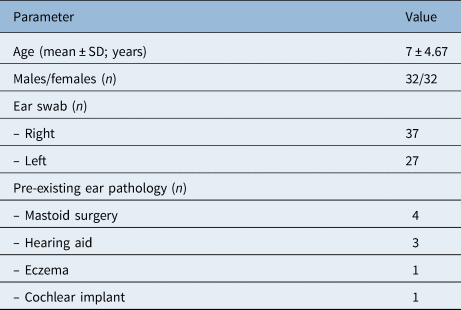
A total of 104 patients were diagnosed with otomycosis based on positive fungal ear swabs from 2001 to 2015 at the University Hospital Limerick. The mean (± standard deviation) age was 7 ± 4.67 years, with an equal number of male and female patients. The positive cases of fungal otitis media were unilateral (37 right side, 27 left side). Nine patients were found to have pre-existing inner-ear pathology or dysfunction. One patient had eczema, a co-morbidity affecting the external auditory canal, making them more susceptible to otomycosis (Table 1).
Clinical and demographic data for patients with positive fungal ear swabs*

* For patients presenting from 2001 to 2015 at the University Hospital Limerick (n = 64). SD = standard deviation
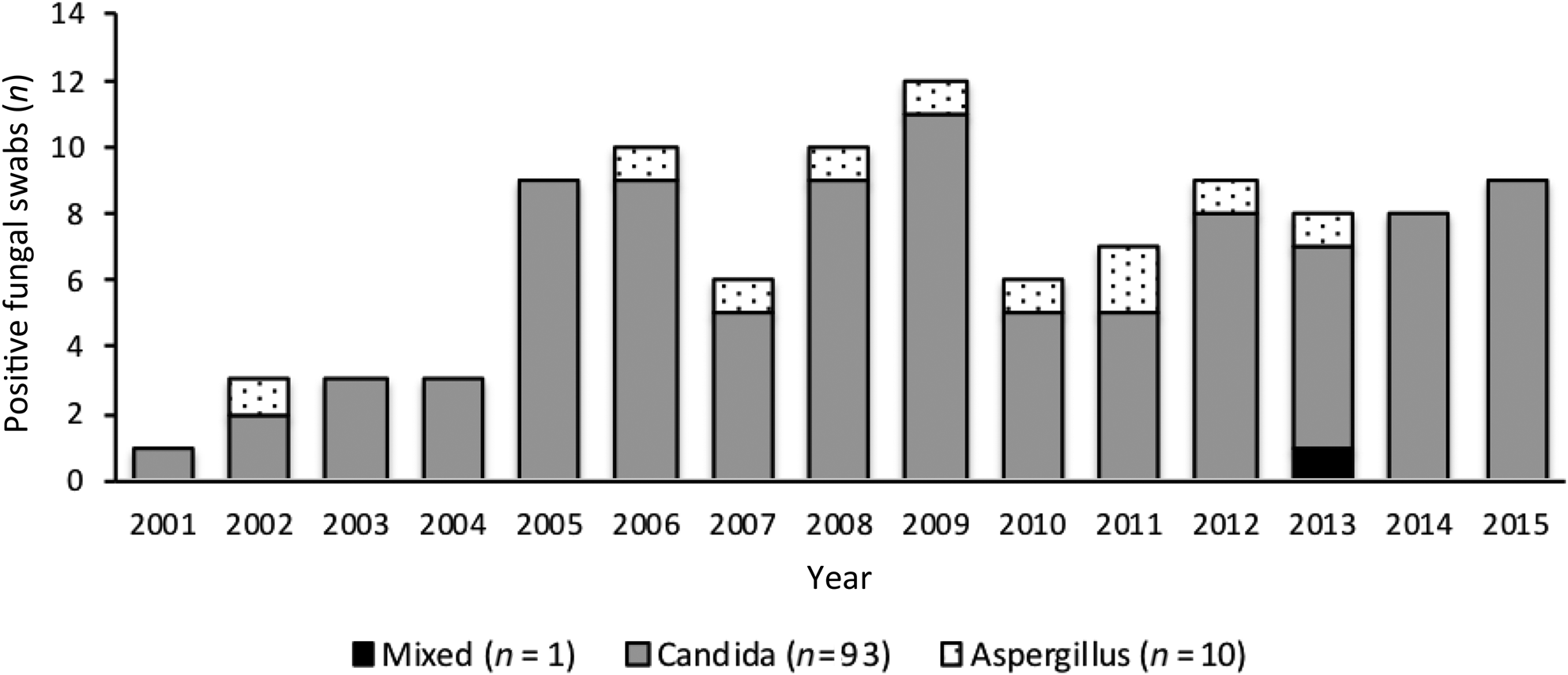
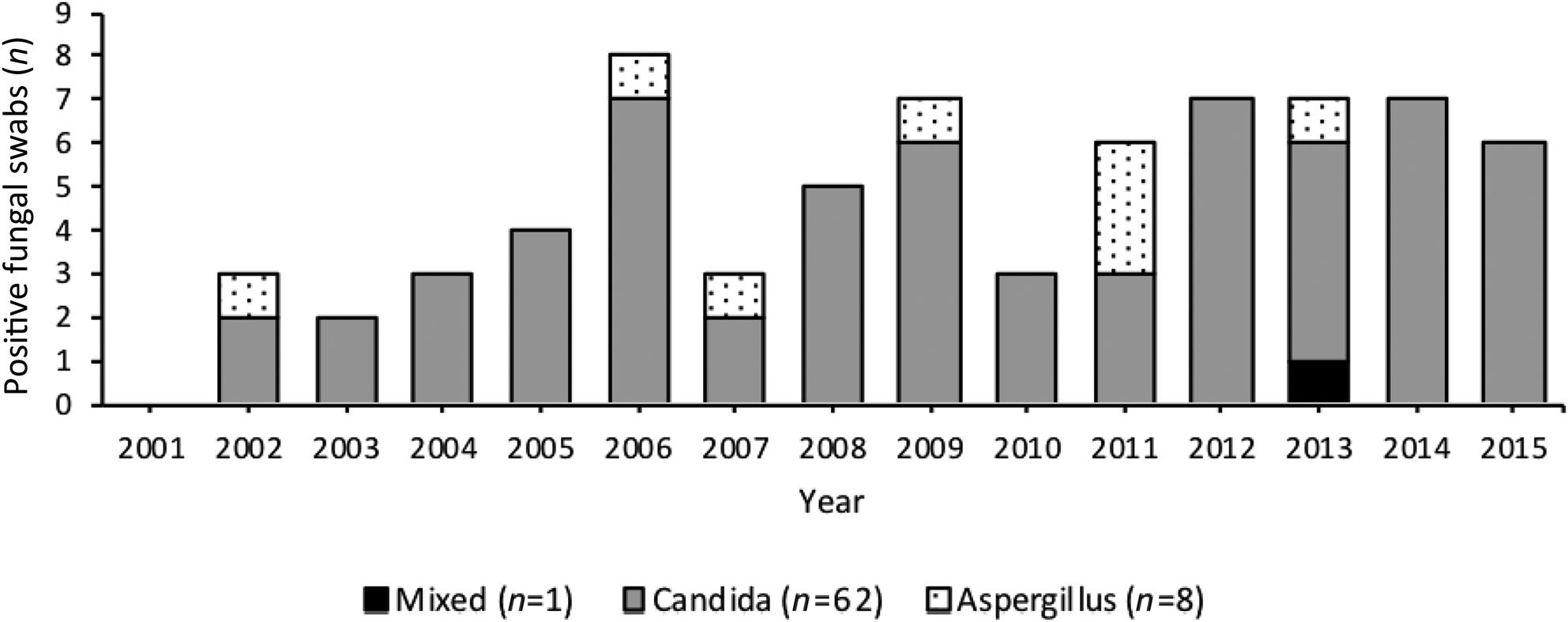
It is evident from the swab results that there has been an increase in otomycosis over the past two decades, with a peak incidence in 2009 (Figure 1). The population was divided into two groups: cases treated in primary care (n = 33) and cases treated by the ENT Department at the University Hospital Limerick (n = 71). Figure 2 illustrates the sample size treated by the ENT Department at the University Hospital Limerick and that group subsequently became the focus group of this study.
Overall incidence of otomycosis from 2001 to 2015 (n = 104). This graph illustrates the increase in fungal otitis externa, with a peak incidence in 2009. It is also evident that candida species predominates as the causative organism (n = 93) (aspergillus species, n = 10; mixed, n = 1).

Distribution of patients diagnosed with otomycosis who were treated specifically by the ENT Department at University Hospital Limerick (n = 71). The distribution and predominate causative organism are comparable to what is shown in Figure 1. Documentation could not be located for 7 patients; therefore, the sample size was further reduced to 64 cases.

Overall, candida (n = 93) was the commonest causative organism in comparison to aspergillus (n = 10), with one case of mixed infection containing both candida and aspergillus (Figure 1). When we compare this to the cases treated specifically by the ENT Department at the University Hospital Limerick, the numbers naturally decrease. However, the hierarchy of causative organism remains unchanged, with 62 patients positive for candida and 8 positive for aspergillus, with a single case of mixed fungal infection (Figure 2). The distribution of positive fungal swabs also reveals an increased incidence of fungal otitis externa from 2001 to 2015; however, the peak incidence of this cohort occurred in 2006.
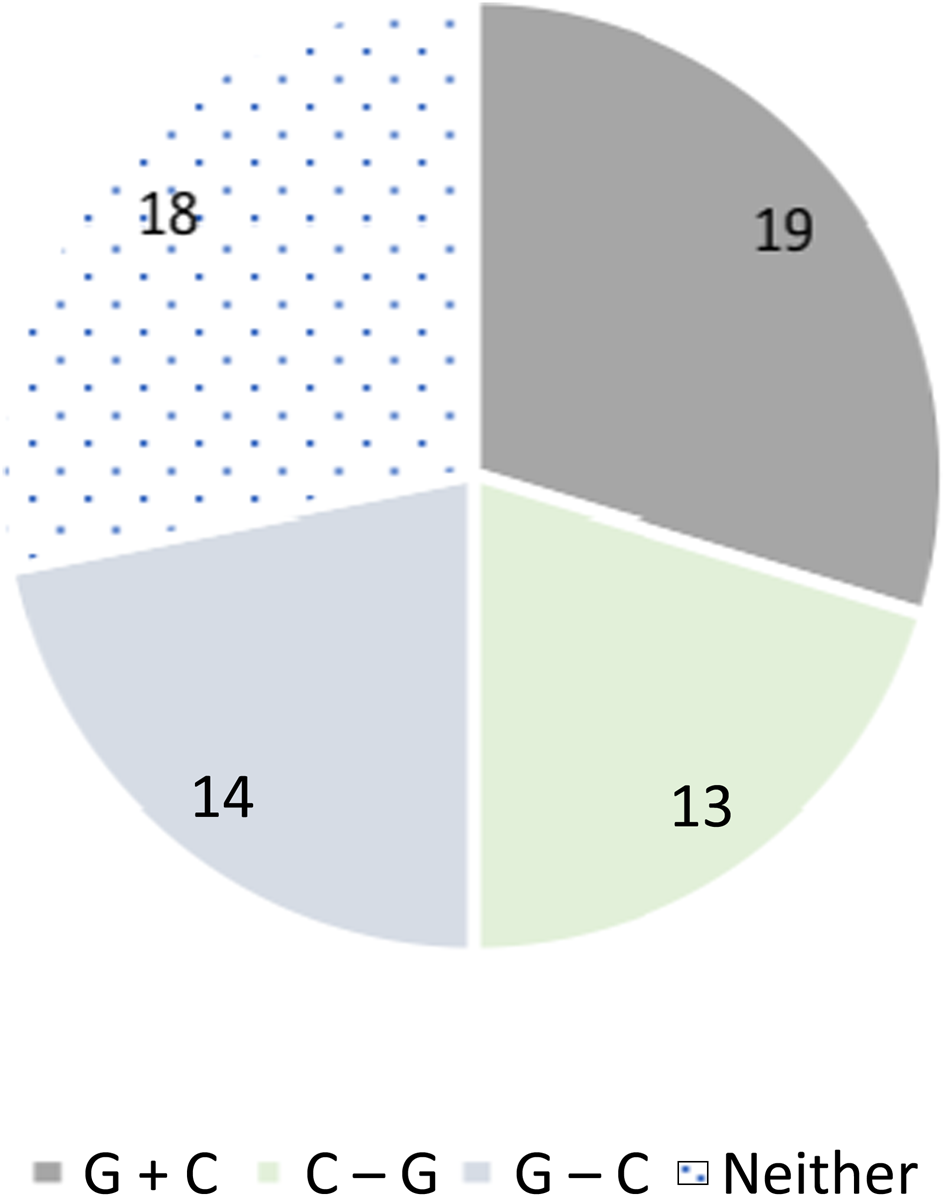
Patients treated by the ENT Department at the University Hospital Limerick were analysed according to the presence of a tympanostomy tube at time of diagnosis, with and without concurrent use of ciprofloxacin (Figure 3). Of the patients with positive fungal ear swabs treated with topical ciprofloxacin (n = 32), 19 were found to have tympanostomy tubes in situ at the time of diagnosis (grommets plus ciprofloxacin group), compared with 13 patients in the ciprofloxacin without grommets group, while the remaining patients had no documented evidence of topical ciprofloxacin use (14 of these patients had tympanostomy tubes in situ (grommets without ciprofloxacin group). Eighteen patients were found to have no documented evidence of topical ciprofloxacin use or tympanostomy tube insertion prior to a positive ear swab for fungal otitis externa.
Otomycosis in the presence of tympanostomy tubes. ‘G + C’ = patients with grommets who were treated with ciprofloxacin prior to an otomycosis diagnosis; ‘C – G’ = patients treated with ciprofloxacin but who did not have grommets; ‘G – C’ = patients with grommets with no documented evidence of topical ciprofloxacin use; ‘Neither’ = no documented evidence of topical ciprofloxacin use or tympanostomy tube insertion.

Thirty-two patients had documented evidence of being treated with topical ciprofloxacin prior to a diagnosis of fungal otitis externa. A positive relationship (Spearman's rho correlation, r = 0.8) between a diagnosis of otomycosis and prior treatment with topical ciprofloxacin was found. The correlation coefficient was statistically significant (p < 0.01).
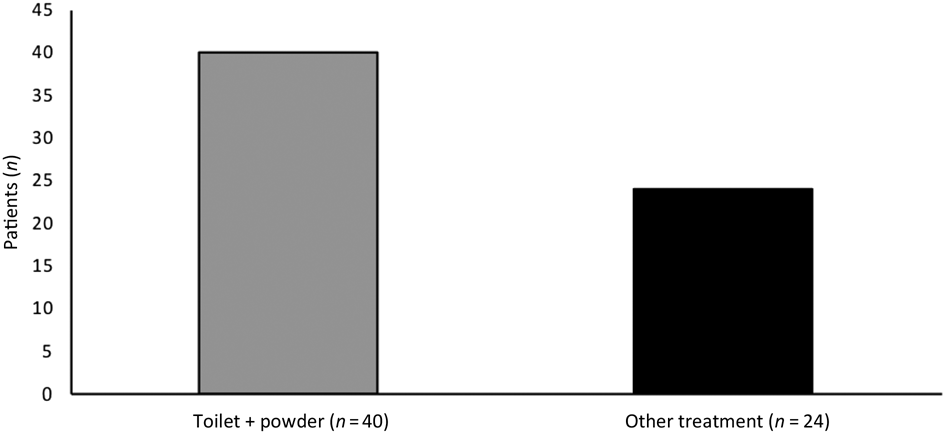
Several methods have been implemented for the treatment of otomycosis. The data gathered in this study revealed that aural toilet and the insufflation of mastoid powder is an effective modality for the treatment of fungal otitis externa. The majority of patients diagnosed with fungal otitis externa at the University Hospital Limerick were treated with mastoid powder (n = 40) compared to other methods (n = 24) (Figure 4). Mastoid powder contains a drying agent, ciprofloxacin, clotrimazole and a steroid. Based on expert opinion, it is effective in the eradication of common fungal pathogens, such as candida and aspergillus, while also providing antimicrobial coverage and symptomatic control of an inflamed external auditory canal with the inclusion of a steroid.Reference Coates, Hawke, Manning, Vesterhauge, Haynes and Deitmer16
Otomycosis treatment methods (total n = 64). Forty patients were treated with aural toilet and mastoid powder; 24 received other treatments.

Discussion
The number of confirmed cases of otomycosis, based on positive fungal ear swabs, has increased at the University Hospital Limerick from 2001 to 2015. Swab results, obtained from the Microbiology Department of the University Hospital Limerick, indicate that candida species were the most prevalent fungi isolated, followed by aspergillus species. These findings are important, as they confirm the initial hypothesis that fungal otitis externa has increased among the paediatric population, and they identify candida species as the most prevalent organism, rather than aspergillus, which is in contrast to current literature.Reference Jyothi, Shah, Mohan, Sathyaki, Mannur and Nazir6,Reference Kazemi, Majidinia, Jaafari, Ayatollahi Mousavi, Zarei Mahmoudabadi and Alikhah9–Reference Nowrozi, Arabi, Mehraban and Tavakoli11,Reference Viswanatha and Naseeruddin17 One hypothesis that might explain the prevalence of candida over aspergillus as the commonest causative organism in this study concerns the Irish climate, as most investigations on otomycosis were based in tropical and sub-tropical regions.
It has been stated that fungal otitis externa is commonly diagnosed following antimicrobial treatment for presumed otitis media infection which typically presented with a discharging ear.Reference Seedat18 Topical fluoroquinolone use has increased in recent years because it has been found to be as effective as topical agents such as gentamicin, but with no ototoxicity.Reference Sabater, Maristany, Villar and Traserra14 Literature has suggested that the increased use of topical ciprofloxacin may be a contributing factor in the rising numbers of fungal otitis externa seen over the past two decades.Reference Jackman, Ward, April and Bent1
The current study found a statistically significant (p < 0.01) positive correlation (r = 0.8) between fungal otitis externa and prior topical ciprofloxacin use (Figure 3). Although the aetiology of otomycosis is multifactorial, we can say with confidence that prior use of topical ciprofloxacin should be considered as a contributing factor. This correlation is supported by the fact that topical fluoroquinolones have a neutral pH, which decreases irritation of the external auditory canal, but in turn facilitates the growth of opportunistic fungi such as candida and aspergillus.Reference Jackman, Ward, April and Bent1
Grommet insertion is a frequently performed procedure in the paediatric population, and the most common associated complication is post-operative otorrhoea.Reference Kinsella, Fenton, Donnelly and McShane12,Reference Garcia, Gates and Schechtman19,Reference Hochman, Blakley, Abdoh and Aleid20 The literature has shown that post-operative otorrhoea caused by fungal species accounts for less than 5 per cent of cases.Reference Roland, Parry and Stroman21,Reference Dohar, Garner, Nielsen, Biel and Seidlin22
Thirty-three patients in the current study had grommets in situ when they presented with a discharging ear and were subsequently found to have positive fungal ear swabs. Nineteen of these patients were treated with topical ciprofloxacin prior to diagnosis. This is not unreasonable as topical ciprofloxacin is recommended for antimicrobial prophylaxis following grommet insertion.Reference Morpeth, Bent and Watson23 Fourteen patients were found to have grommets in situ at the time of diagnosis; however, there was no documented evidence of prior topical ciprofloxacin use. Eighteen patients diagnosed with otomycosis had no documented evidence of grommets in situ or prior topical ciprofloxacin use, indicating that there are other contributing factors related to fungal otitis externa. Although the sample size is not large enough for statistical analysis, these findings are in line with the correlation between otomycosis and prior ciprofloxacin use.
As already stated, there is no Food and Drug Administration approved treatment for fungal otitis externa; however, several studies have shown that other antifungals, such as clotrimazole, are effective as monotherapy, or in conjunction with one or more alternative methods.Reference Munguia and Daniel15 Literature states that fungal otitis externa can be effectively treated by: discontinuing any antimicrobial treatment, or performing debridement or aural toilet, and subsequently applying a topical antifungal or combination powder.Reference Jackman, Ward, April and Bent1,Reference Vennewald and Klemm10,Reference Munguia and Daniel15,Reference Coates, Hawke, Manning, Vesterhauge, Haynes and Deitmer16
• There has been an increased incidence in fungal otitis externa in recent years
• Candida was found to be the commonest causative organism
• The pathogenesis of otomycosis is multifactorial; however, this study indicates that topical fluoroquinolones play a key role
• Multimodal approaches are important for the successful eradication of offending fungi
• Combination powders are favourable for symptomatic control, and provide adequate coverage for both bacterial and fungal pathogens
Aural toilet followed by insufflation of a combination powder has been the approach used in the ENT Department at the University Hospital Limerick. The combination powder recipe was obtained via personal communication from a North American otorhinolaryngology expert. This ototopical powder contains ciprofloxacin, clotrimazole, dexamethasone and boric acid.Reference Coates, Hawke, Manning, Vesterhauge, Haynes and Deitmer16 The clinical results to date indicate that this method is effective in achieving a clinical cure for fungal otitis externa. The method was implemented in two-thirds of the University Hospital Limerick ENT Department population, with successful outcomes; thus, it can be considered a promising approach in the field of ENT.
Conclusion
This study revealed that the incidence of otomycosis in Ireland has increased in recent years. Candida was found to be the commonest causative organism, which is contrary to findings reported in the literature. This increase can be attributed to a rise in the use of topical fluoroquinolones such as ciprofloxacin given their favourable side-effect profile. Aural toilet and insufflation of a combination powder shows promising results, not only in the eradication of fungal otitis externa, but potentially as a routine post-operative prophylactic treatment. Further large-scale studies are needed to fully elucidate the role of combination powders, such as the ototopical powder used in this study, and increase their use in the field of ENT.
Competing interests
None declared