




No CrossRef data available.
Article contents
A multiplex PCR assay for the simultaneous detection and discrimination of the seven Eimeria species that infect domestic fowl
Published online by Cambridge University Press: 17 October 2003
Abstract
This study reports the development of a novel multiplex PCR assay based on SCAR (Sequence-Characterised Amplified Region) markers for the simultaneous diagnosis of the 7 Eimeria species that infect domestic fowl. Primer pairs specific for each species were designed in order to generate a ladder of amplification products ranging from 200 to 811 bp. Sensitivity tests for each species were carried out, showing a detection threshold of 1–5 pg, which corresponds approximately to 2–8 sporulated oocysts. Distinct isolates of the 7 Eimeria species from different geographical sources were tested and successfully detected by the assay. All the species were amplified homogeneously, whether or not one of them was present in a high quantity, indicating that there was no cross-interference. The assay was also tested with different sources of Taq DNA polymerase and thermocycler models, confirming the high reproducibility of the reaction. The economy of consumables and labour represented by a single-tube reaction greatly facilitates the molecular diagnosis of a large number of samples, making it appropriate for field epizootiological surveys. We propose the use of this multiplex PCR assay as a rapid and cost-effective diagnostic method for the detection and discrimination of the 7 Eimeria species that infect domestic fowl.
Keywords
Information
- Type
- Research Article
- Information
- Copyright
- 2003 Cambridge University Press
INTRODUCTION
Coccidiosis of domestic fowl is a widespread enteric disease caused by obligatory intracellular protozoa of the genus Eimeria. Seven distinct Eimeria species can infect chickens, causing intestinal lesions of variable extent and severity, reducing the absorptive function of the mucosa, and thus leading to weight loss, diarrhoea, poorer feed conversion and higher mortality of the affected flocks (McDougald & Reid, 1997). Control measures, especially for broiler chickens, are still predominantly based on the prophylactic use of anticoccidial drugs in the feed, but live vaccines are being increasingly used in the field (Allen & Fetterer, 2002; Chapman et al. 2002). Because different species and/or strains can vary in pathogenicity, drug resistance, and other biological parameters, the precise discrimination is important for epizootiological and population biology studies. Another important application of species diagnosis is the purity control of the strains used to prepare live vaccines, thus avoiding potential cross-contamination.
Species identification has been classically performed using morphological and pathological criteria, including oocyst shape and size, pre-patent period, sporulation time, intestinal site and shape of the lesions, and characteristics of the endogenous stages in the intestinal mucosa (Joyner & Long, 1974). However, these analyses require highly trained personnel and are limited by the overlap of characteristics among different species (Long & Joyner, 1984). Furthermore, mixed infections can pose a problem for the precise determination of the intestinal site of the lesions, and the development of precocious strains used as attenuated vaccines (Jeffers, 1975; McDougald & Jeffers, 1976; Shirley et al. 1984) has eliminated the pre-patent period as a good criterion for species identification. Initial efforts aiming at species identification through molecular polymorphism were based on isoenzyme analysis (Shirley, 1975; Johnston & Fernando, 1997). This method, however, requires large numbers of parasites, is time-consuming and cumbersome. Moreover, the limited number of variable enzymes and the low level of polymorphism have considerably restricted the application of this method. DNA hybridization was proposed as an alternative method for species and strain discrimination (Shirley, 1994), but the requirement of a high number of parasites and the complexity were comparable to those of isoenzyme analysis. Since very little genomic information was available in the early nineties, the first PCR-based assays for Eimeria discrimination utilized the randomly amplified polymorphic DNA (RAPD) method (MacPherson & Gajadhar, 1993; Procunier, Fernando & Barta, 1993; Shirley & Bumstead, 1994; Johnston & Fernando, 1995; Cere, Licois & Humbert, 1995), which generates specific fingerprints with no previous sequence information being required (Welsh & McClelland, 1990; Williams et al. 1990). The low reliability and reproducibility of the method, caused by several factors such as the source of enzyme, thermocycler model, primer and DNA concentrations, buffer composition, etc. (MacPherson et al. 1993; Schierwater & Ender, 1993), severely impaired its broad use across different laboratories. Another restriction was posed by the inherent inability of the method to deal with mixed samples, generating overlapping band profiles that are not informative. Several reports described the development of PCR assays for species discrimination of Eimeria spp. using as targets different regions of the ribosomal cistrons, including the 5S rRNA (Stucki, Braun & Roditi, 1993), the small subunit rRNA (Tsuji et al. 1997), the ribosomal internal transcribed spacer 1 (ITS-1) (Schnitzler et al. 1998, 1999), and ITS-2 (Woods et al. 2000; Gasser et al. 2001).
Paran & Michelmore (1993) described a new marker, the Sequence-Characterised Amplified Region (SCAR), which is derived from RAPD fragments and can be amplified by a pair of specific primers under stringent conditions. RAPD-derived markers have been successfully developed for the molecular diagnosis of Cryptosporidium parvum (Morgan, O'Brien & Thompson, 1996) and Eimeria media (Cere et al. 1996). Brisse, Dujardin & Tibayrenc (2000) obtained SCAR markers for the differentiation of 6 lineages of Trypanosoma cruzi and showed for the first time the feasibility of these markers for discriminating genetic subdivisions of a unicellular parasite. Our laboratory has recently reported an approach for the development of reliable and species-specific markers for Eimeria spp. of domestic fowl (Fernandez et al. 2003). In the present study we describe the generation of a novel set of SCAR markers and the development of an integrated, cost-effective and simple multiplex PCR assay that permits the simultaneous discrimination of the 7 Eimeria species that infect the domestic fowl.
MATERIALS AND METHODS
Parasites
A total of 33 strains comprising the 7 Eimeria species that infect domestic fowl, obtained from different geographical locations, including South America, North America and Europe, were used (Table 1). The correct species assignment and purity of all samples were confirmed by PCR employing an assay directed towards the ribosomal internal transcribed spacer 1 (Schnitzler et al. 1998, 1999). A commercial vaccine (Coccivac® D, Schering-Plough Animal Health Corporation, USA) was also employed as a mixed sample.

Parasite propagation and purification
Parasites were propagated by passage in 3 to 4-week-old White Leghorn (Babcock) chicks. One-day-old chicks were supplied by a commercial hatchery (Granja Kunitomo, Mogi das Cruzes, SP, Brazil) and reared in a coccidia-free environment with ad libitum supply of filtered water and a specially formulated initial growth feed for broilers, free of anticoccidials and antibiotics (Braswey S.A. – Indústria e Comércio, Campinas, SP, Brazil). The chicks were orally infected with purified oocysts at the doses recommended by Shirley (1995). Oocyst collection, purification and sporulation followed standard procedures (Long et al. 1976). Experimental procedures employing animals followed the institutional guidelines for the care and use of animals for research purposes.
DNA extraction
For DNA extraction, 5×10⁷ oocysts of each sample were cleaned with sodium hypochlorite solution (5–6% active chlorine) for 10 min at 4 °C, washed 3 times with deionized water and resuspended in extraction buffer (10 mM Tris–HCl, pH 8·0; 50 mM EDTA, pH 8·0). The oocysts and sporocysts were fully disrupted by vortexing with half the volume of 425–600 μm acid-washed glass beads (Sigma-Aldrich Corp., St Louis, MO, USA). The lysate was centrifuged at 14000 g for 10 min to eliminate debris and digested with DNAse-free RNAse A (20 μg/ml) at 37 °C for 1 h. A further digestion with proteinase K (100 μg/ml) and SDS (0·5%) was carried out at 50 °C for 2 h. The DNA was then extracted once with 1 volume of phenol, phenol/chloroform and chloroform, and precipitated with ethanol and ammonium acetate. The pellet was washed with 70% ethanol and resuspended in TE (10 mM Tris–HCl, pH 8·0; 0·1 mM EDTA, pH 8·0). DNA was quantified by absorbance at 260 nm or by electrophoresis on agarose gels stained with ethidium bromide and visualized under UV light.
SCAR markers and primer design
RAPD markers previously characterized in our laboratory (Fernandez et al. 2003) were selected and converted into a new set of SCAR markers. RAPD fragments were separated on agarose gels and DNA of the selected bands was purified from the gel using the GFX™ PCR DNA and Gel Purification Kit (Amersham Biosciences Inc., Piscataway, NJ, USA), and ligated to the pGEM-T Easy vector (Promega Corporation, Madison, WI, USA). The resulting clones were sequenced in both directions in an automatic DNA sequencer (ABI PRISM® 3700 DNA Analyzer) using the ABI PRISM® BigDye™ Terminator Cycle Sequencing Ready Reaction Kit Version 2.0 (Applied Biosystems, Foster City, CA, USA). The sequences corresponding to the progenitor decamer primers used in the RAPD reaction were identified and new SCAR primers were designed, comprising the 10-mer sequence at the 5′ end plus a contiguous 3′ stretch varying from 12 to 20 bases, except when specified. Table 2 lists the primers used for the multiplex PCR assay and their respective sequences. All the primers presented a length varying from 22 to 29 bases, with a melting temperature around 62 °C.

Multiplex PCR
Standard PCR amplifications were initially tested for individual reactions of each primer pair in order to obtain a common reaction condition for the 7 Eimeria species. This condition was then adapted for multiplex reactions following the recommendations of Henegariu et al. (1997). Multiplex amplifications were typically performed with 200 μM dNTP, 2·4 mM MgCl2, 5 U of BIOLASE™ DNA polymerase (Bioline Ltd, London, UK), and 1·6× amplification buffer (supplied by the manufacturer) in a final volume of 35 μl. Different primer concentrations were used as follows: 0·85 μM for each primer of Br-01 pair; 0·70 μM for Ac-01, Pr-01 and Nc-01; and 0·55 μM for Tn-01, Mt-01 and Mx-01. In order to increase specificity and reproducibility, the reaction assembly was always performed on ice using pre-chilled reagents. To estimate the effect of different enzymes on the reaction, native (Amersham Biosciences, Inc., Piscataway, NJ, USA) and recombinant (Invitrogen Brasil Ltd, São Paulo, SP, Brazil) Taq DNA polymerases were comparatively tested at the same concentration. Except when specified, DNA template mixtures were composed of 10 ng of genomic DNA of each Eimeria species. Cycling conditions consisted of an initial denaturation at 96 °C for 5 min and 30 cycles of 1 min at 94 °C and 2 min at 65 °C, with a final extension step at 72 °C for 7 min. All amplification reactions were performed with a PTC-100/96V thermocycler (MJ Research, Inc., Waltham, MA, USA), except for assaying the influence of different types of equipment on the multiplex reaction, when the following machines were used: PTC-150HB MiniCycler™ (MJ Research), PTC-225 DNA Engine Tetrad™ Cycler (MJ Research), 96-Well GeneAmp™ PCR System 9700 (Applied Biosystems) and PE 9600 thermocycler (Applied Biosystems – former Perkin-Elmer). All the amplification products were analysed by separation on 1·5% agarose gels followed by ethidium bromide staining and visualization under UV light.
RESULTS
Development of a multiplex PCR assay
In a previous work, our group reported the isolation of RAPD markers for the 7 Eimeria species that infect domestic fowl and their conversion into SCAR markers (Fernandez et al. 2003). In the present study, 2 formerly described markers plus a newly developed set of species-specific Eimeria markers were used. These SCAR markers presented different amplicon sizes, permitting their use for the development of a single-step multiplex PCR assay. In a first trial, all the markers were tested in individual reactions against samples of the 7 species to check their specificity. Following this approach, we initiated a standardization of the multiplex reaction changing different parameters, according to the recommendations of Henegariu et al. (1997): extension and annealing temperature and time, number of cycles, buffer, magnesium chloride and dNTP concentration, relative primer pair concentration, enzyme concentration and brand, and the use of DMSO and glycerol. In addition to these parameters, touchdown programs and different ramping times between annealing and extension steps were also evaluated. After exhaustive tests, the E. maxima, E. necatrix and E. praecox markers consistently presented a heterogeneous pattern of amplification bands. Since no other SCARs presenting the same amplicon size were available, 3 other SCARs were selected and nested primers spanning more internal regions of these new markers were designed, constituting nested SCARs. Since the specificity of the original SCARs had been determined using the external primers, this new set of nested markers were tested again, confirming their species-specific character. The final optimized multiplex PCR conditions are described in the Materials and Methods section. It is noteworthy that the annealing and extension steps were merged in the final cycling program, thus constituting a single stage. The 7 primer pairs were tested in a multiplex PCR using DNA samples of each Eimeria species (Fig. 1, lanes 1–7) and confirmed their species-specificity. This set of primers was also tested with a sample containing a DNA mixture of the 7 species. As can be seen in Fig. 1 (lane 8), a homogenous band ladder was observed, showing that the assay permitted the simultaneous detection of all the species in a single-tube reaction.

Fig. 1. Agarose gel electrophoresis of multiplex PCR products using DNA samples of Eimeria acervulina (lane 1), E. brunetti (lane 2), E. tenella (lane 3), E. mitis (lane 4), E. praecox (lane 5), E. maxima (lane 6), E. necatrix (lane 7), a mixture of the 7 Eimeria species (lane 8) and a control with no starting DNA (lane 9). Molecular size markers (lane M) in base pairs are indicated on the left.
Detection of multiple strains
The ability to detect multiple strains of each species was assessed by using a set of 33 strains of the 7 species, with at least 2 distinct strains from different continents being tested for each species. DNA samples of different strains were tested with the 7 primer pairs in multiplex reactions (Fig. 2). All the tested strains of each species were detected and presented amplification bands of the expected size, thus showing the universal application of the assay. No inter-species cross-reactivity was observed for any strain, corroborating the species-specific nature of the markers.
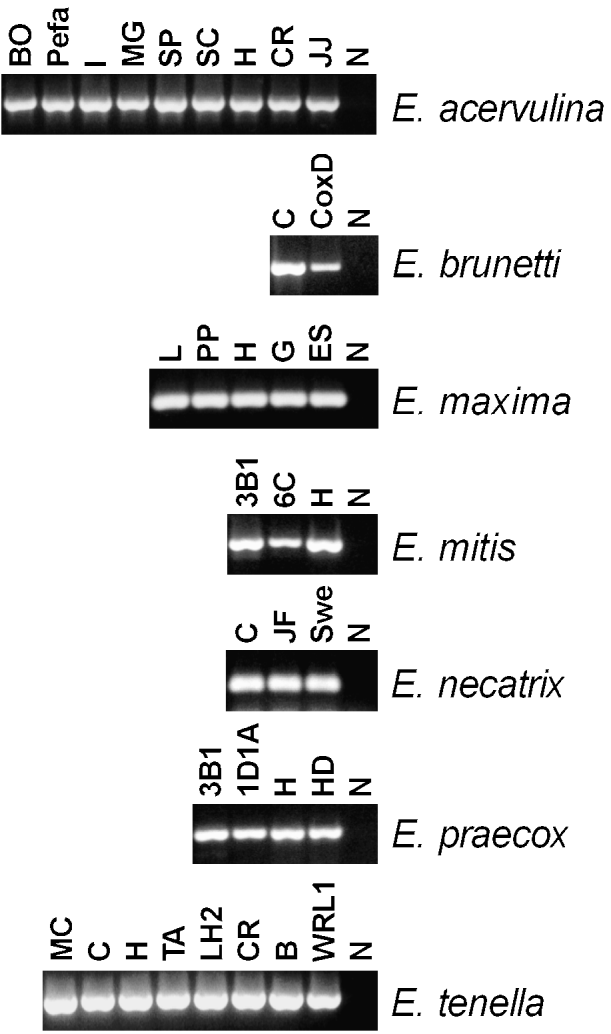
Fig. 2. Amplification products separated by electrophoresis on 1·5% agarose gels and stained with ethidium bromide. DNA samples from different strains and isolates of each Eimeria species were used and are indicated. Samples with no starting DNA (N), used as negative controls, are also indicated. The CoxD sample refers to a mixed DNA sample purified from Coccivac® D (Schering-Plough Animal Health Corporation, USA), a commercial vaccine containing E. brunetti in its composition. Except for Coccivac® D, all the samples were amplified in a multiplex reaction.
Sensitivity tests
The sensitivity tests were carried out using either individual primer pairs or the complete set of primers in a multiplex reaction. DNA samples of each Eimeria species were serially diluted and assayed in a range varying from 10 ng to 500 fg per reaction. For individual reactions, 5 pg of DNA was the detection limit for E. mitis, E. necatrix and E. praecox, while the other species were detected with as little as 1 pg (Fig. 3). Assuming a DNA content of 75 fg per eimerian cell (Cornelissen, Overdulve & van der Ploeg, 1984), the detection threshold varied from 13 to 67 sporozoites, which correspond approximately to 2–8 sporulated oocysts, respectively. When the amplifications were performed using multiplex reactions, the detection threshold was maintained for 5 species, while E. acervulina and E. maxima showed a sensitivity decrease from 1 to 5 pg (Fig. 3). In order to test the sensitivity of the assay in a more realistic situation, a preliminary test was performed using oocyst suspensions. E. acervulina, E. tenella and E. maxima oocysts were serially diluted and samples varying from 5000 to 10 oocysts were used for DNA isolation. The samples were submitted to individual and multiplex reactions and, for both E. acervulina and E. maxima, the detection thresholds found were 50 and 500 oocysts, respectively. In the case of E. tenella, the detection limit was 100 oocysts, either utilizing individual or multiplex reactions (see supplementary material).

Fig. 3. Sensitivity of individual and multiplex PCR amplifications using serially diluted samples of purified DNA of each Eimeria species. Individual reactions were performed with the corresponding species-specific primer pair, whereas multiplex amplifications employed the 7 primer pairs in a single tube. Amplification products were separated on 1·5% agarose gels and stained with ethidium bromide. The Eimeria species used for each sample and the respective DNA quantities are indicated. Samples with no starting DNA were used as negative controls and are also indicated.
Influence of different conditions on the assay
To determine the reliability and robustness of the multiplex PCR assay, different factors that can potentially interfere with the reaction were assessed. First, the influence of a very high DNA concentration of 1 species on the amplification rate of the others was evaluated. Each reaction was performed with a DNA mixture containing quantities varying from 0 to 500 ng of 1 species and 10 ng of each one of the other 6 species. As can be seen in Fig. 4, the amplification pattern of the 7 species was uniform even in the presence of increasing amounts of E. acervulina (Fig. 4A), E. maxima (Fig. 4B) or E. tenella (Fig. 4C) DNA, excluding the possibility of one species displacing the others during amplification. Secondly, the polymerase enzymes from 2 other sources were compared under the same standardized PCR conditions (see supplementary material). The most intense amplification pattern was observed with BIOLASE™ polymerase, but native and recombinant Taq DNA polymerases of others brands also generated a uniform and consistent band ladder. Finally, the multiplex assay was tested by comparing 5 different models of thermocyclers of 2 distinct brands and no noticeable differences could be observed, thus implying that the assay might be performed in different laboratories with similar results (see supplementary material).

Fig. 4. Cross-influence of high DNA quantities of a particular Eimeria species on the amplification pattern of the other species. Multiplex reactions were performed with DNA quantities varying from 0 to 500 ng of E. acervulina (A), E. maxima (B) and E. tenella (C), and 10 ng of each one of the other species. Amplification products were separated on 1·5% agarose gels and stained with ethidium bromide. Molecular size markers (lane M) in base pairs are indicated on the left. Samples with no starting DNA, used as negative controls, are also indicated.
DISCUSSION
This work describes the development of a new PCR-based diagnostic assay for the simultaneous detection of the 7 Eimeria species that infect domestic fowl. The test can be performed using either individual or single-tube multiplex reactions with similar results, thus implying that a considerable economy of plastics and reagents can be attained when compared to tests that rely solely on the individual detection of each species. Furthermore, because all the species can be detected in a single tube, the test allows a 7-fold increase of the throughput, thus permitting its application to large-scale studies with less human resources being required. Beside the advantages presented by a multiplex PCR, standardization of this kind of assay is much more difficult than conventional individual amplification reactions. Because multiple primers are used in the same reaction, each one presenting distinct binding efficiencies, different reaction kinetics occur simultaneously, leading to heterogeneous amplification patterns (Henegariu et al. 1997). This aspect is even incremented by the complex molecular cross-interactions that can take place during cycling, thus altering the dynamics of primer binding and contributing to a differential amplification rate for each product. In this regard, after standardizing the reaction conditions, potential factors that could interfere with the efficacy of the reaction were also assessed, including the use of different enzymes and thermocyclers, and the effect of a high concentration of a given species on the amplification rate of the others. The assay proved to be highly robust and reliable, without being affected by these factors.
Regarding sensitivity, individual and multiplex reactions were able to detect 5 pg of parasite DNA, similar to the sensitivity reported for other PCR-based tests (Stucki et al. 1993; Gasser et al. 2001). To evaluate the sensitivity in a more practical situation, we performed a very preliminary test using diluted oocysts. Our first results showed that the sensitivity was reduced by one order of magnitude, indicating that the DNA isolation step could represent the limiting factor for a better detection. In fact, our data suggest that the DNA yield is not linear with respect to the number of oocysts, especially when a low concentration of parasites is present in the sample. This observation might be explained by a decreasing efficiency of the mechanical oocyst disruption in low-concentration suspensions. Oocysts of avian coccidia are known to be more resistant to chemical or enzymatic agents (Hammond & Long, 1973). In order to overcome this limitation, several protocols based on the chemical disruption of the oocyst shell were devised, using long-time incubations with hot-phenol (Stucki et al. 1993), hypochlorite (Zhao, Duszynski & Loker, 2001) and FTA (Whatman Inc., Newton, MA, USA) filters (Orlandi & Lampel, 2000). Our multiplex PCR assay, using either purified DNA or whole oocysts, nonetheless detects a number of parasites which is still much lower than that required to elicit clinical signs and economic losses in a flock.
Another important issue concerns the usability of this method worldwide, as multiple strains of each species must be universally detected. To address this issue, we tested strains from distinct geographical sources, including samples from at least 2 different continents for each species. The results suggest that this PCR assay is not affected by intra-specific variations and could be used broadly with a high level of confidence. Our multiplex PCR assay is highly cost-effective, since no complex or expensive equipment or consumables are employed. Schnitzler et al. (1999) reported a colorimetric assay for Eimeria spp. based on the capture of biotinylated PCR products by paper chromatography (PACHA), which was claimed to simplify the read-out and reduce the total assay time. However, PACHA kits are still highly expensive, limiting their widespread use. In addition, because the amplification products are not analytically separated and visualized on a gel, specific and non-specific amplicons are not differentiated. Another PCR-based test with an alternative read-out was recently described by Gasser et al. (2001) for a ribosomal ITS-2 target. Because distinct species present slightly different amplicon sizes, a single-tube PCR using fluorescently labelled primers, followed by polyacrylamide gel electrophoresis, allowed the simultaneous detection of the 7 Eimeria species. However, this assay requires a highly expensive DNA sequencer and due to intra-specific polymorphisms, some band profiles present overlaps, thus making species assignment more difficult in mixed samples. The multiplex PCR assay reported here could also be converted in the future to a quantitative assay by the use of fluorescent probes in a real-time PCR equipment. Using this approach, one could not only identify which species are present in a given sample, but also their relative concentrations. This kind of analysis would be very interesting for epizootiological studies, permitting the assessment of dynamic changes that can occur in coccidia populations due to vaccination, drug rotation and other factors. Because the technology involved in this assay is rather complex, the final cost is still prohibitive for large-scale surveys. Nevertheless, this promising approach is probably going to gain more application in the near future, especially for reference laboratories, leading to a refinement over the current available tests.
The approach employed for the development of our multiplex PCR assay was primarily based on the identification of RAPD markers, their conversion into SCARs and a final multiplex PCR optimization procedure. We have no information on the copy number of the SCAR markers used for composing this assay. However, it is known that RAPD reactions frequently result in the amplification of repetitive regions, thus implying that the corresponding SCAR markers can also be composed of reiterated sequences (Paran & Michelmore, 1993). In fact, Brisse et al. (2000) have found varying levels of reiteration in SCAR markers of Trypanosoma cruzi. Since no previous knowledge of the target sequence is required, the step-by-step procedure reported here might be easily extended to other parasites, especially for those species whose genomic information is still scarce. Another interesting feature of this assay is the fact that any SCAR composing the multiplex reaction can be easily replaced by other markers of similar sizes, with a few optimization steps being required (data not shown), thus meaning that the test proposed here is totally interchangeable. To our knowledge, this is the first report of such a flexible and interchangeable multiplex diagnostic assay based on anonymous markers which may represent a novel approach to the development of new molecular tools for the diagnosis of parasitic diseases.
The authors are grateful to Drs J. di Fabio (JF Laboratório de Patologia Animal, Brazil), M. A. Almeida (formerly at Roche, Brazil), J. Solis (Laboratório Biovet S/A, Brazil), U. Kawazoe (Universidade Estadual de Campinas, Brazil), P. Bedrnik (BIOPHARM – Research Institute of Biopharmacy and Veterinary Drugs, Czech Republic), B. E. Schnitzler (formerly at the Swedish University of Agricultural Sciences and National Veterinary Institute, Sweden), M. W. Shirley (Institute for Animal Health, UK) and H. D. Danforth (USDA, USA) for kindly providing us Eimeria strains and/or DNA samples used in this work. We also wish to thank Granja Kunitomo (Mogi das Cruzes, Brazil) and Braswey (Campinas, Brazil) for supplying 1-day-old chicks and the especially formulated feed, respectively. The authors thank Dr Hernando del Portillo (USP, Brazil) for the critical review of this manuscript. The technical assistance of Ms Lívia Rodrigues da Silva and Ms Camila Malta Romano is also acknowledged. This work was supported by FAPESP and CNPq. S. F. received a fellowship from FAPESP and the work presented herein formed part of her Ph.D. thesis.
Footnotes
Note: Additional figures not included in this paper are available as supplementary material at the web address http://www.lbm.fmvz.usp.br/eimeria/multiplex/
References
REFERENCES
ALLEN, P. C. &
FETTERER, R. H.
(2002).
Recent advances in biology and immunobiology of Eimeria species and diagnosis and control of infection with these coccidian parasites of poultry.
Clinical Microbiology Reviews 15, 58–65.CrossRefGoogle Scholar
BRISSE, S.,
DUJARDIN, J. C. &
TIBAYRENC, M.
(2000).
Identification of six Trypanosoma cruzi lineages by sequence-characterised amplified region markers.
Molecular and Biochemical Parasitology 111, 95–105.CrossRefGoogle Scholar
CERE, N.,
HUMBERT, J. F.,
LICOIS, D.,
CORVIONE, M.,
AFANASSIEFF, M. &
CHANTELOUP, N.
(1996).
A new approach for the identification and the diagnosis of Eimeria media parasite of the rabbit.
Experimental Parasitology 82, 132–138.CrossRefGoogle Scholar
CERE, N.,
LICOIS, D. &
HUMBERT, J. F.
(1995).
Study of the inter- and intraspecific variation of Eimeria spp. from the rabbit using random amplified polymorphic DNA.
Parasitology Research 81, 324–328.Google Scholar
CHAPMAN, H. D.,
CHERRY, T. E.,
DANFORTH, H. D.,
RICHARDS, G.,
SHIRLEY, M. W. &
WILLIAMS, R. B.
(2002).
Sustainable coccidiosis control in poultry production: the role of live vaccines.
International Journal for Parasitology 32, 617–629.CrossRefGoogle Scholar
CORNELISSEN, A. W. C. A.,
OVERDULVE, J. P. &
VAN DER PLOEG, M.
(1984).
Determination of nuclear DNA of five eucoccidian parasites, Isospora (Toxoplasma) gondii, Sarcocystis cruzi, Eimeria tenella, E. acervulina and Plasmodium berghei, with special reference to gamontogenesis and meiosis in I. (T.) gondii.
Parasitology 88, 531–553.Google Scholar
FERNANDEZ, S.,
COSTA, A. C.,
KATSUYAMA, Â. M.,
MADEIRA, A. M. B. N. &
GRUBER, A.
(2003).
A survey of the inter- and intraspecific RAPD markers of Eimeria spp. of the domestic fowl and the development of reliable diagnostic tools.
Parasitology Research 89, 437–445.Google Scholar
GASSER, R. B.,
WOODS, W. G.,
WOOD, J. M.,
ASHDOWN, L.,
RICHARDS, G. &
WHITHEAR, K. G.
(2001).
Automated, fluorescence-based approach for the specific diagnosis of chicken coccidiosis.
Electrophoresis 22, 3546–3550.3.0.CO;2-8>CrossRefGoogle Scholar
HAMMOND, D. M. &
LONG, P. L.
(1973).
The Coccidia.
University Park Press, Baltimore, USA.
HENEGARIU, O.,
HEEREMA, N. A.,
DLOUHY, S. R.,
VANCE, G. H. &
VOGT, P. H.
(1997).
Multiplex PCR: critical parameters and step-by-step protocol.
Biotechniques 23, 504–511.Google Scholar
JEFFERS, T. K.
(1975).
Attenuation of Eimeria tenella through selection for precociousness.
Journal of Parasitology 61, 1083–1090.CrossRefGoogle Scholar
JOHNSTON, D. A. &
FERNANDO, M. A.
(1995).
Eimeria spp. of the domestic fowl: analysis of genetic variability between species and strains using DNA polymorphisms amplified by arbitrary primers and denaturing gradient-gel electrophoresis. Parasitology Research 81, 91–97.Google Scholar
JOHNSTON, D. A. &
FERNANDO, M. A.
(1997).
Isoenzymes of Eimeria from the domestic fowl: Electrophoretic variants among species, strains and clones.
Parasitology Research 83, 464–470.CrossRefGoogle Scholar
JOYNER, L. P. &
LONG, P. L.
(1974).
The specific characters of the Eimeria, with special reference to the coccidia of the fowl.
Avian Pathology 3, 145–157.CrossRefGoogle Scholar
LONG, P. L. &
JOYNER, L. P.
(1984).
Problems in the identification of species of Eimeria. Journal of Protozoology 31, 535–541.CrossRefGoogle Scholar
LONG, P. L.,
MILLARD, B. J.,
JOYNER, L. P. &
NORTON, C. C.
(1976).
A guide to laboratory techniques used in the study and diagnosis of avian coccidiosis.
Folia Veterinaria Latina 6, 201–217.Google Scholar
MacPHERSON, J. M.,
ECKSTEIN, P. E.,
SCOLES, G. J. &
GAJADHAR, A. A.
(1993).
Variability of the random amplified polymorphic DNA assay among thermal cyclers, and effects of primer and DNA concentration.
Molecular and Cellular Probes 7, 293–299.CrossRefGoogle Scholar
MacPHERSON, J. M. &
GAJADHAR, A. A.
(1993).
Differentiation of seven Eimeria species by random amplified polymorphic DNA.
Veterinary Parasitology 45, 257–266.CrossRefGoogle Scholar
McDOUGALD, L. R. &
JEFFERS, T. K.
(1976).
Eimeria tenella (Sporozoa; Coccidia): gametogony following a single asexual generation. Science 192, 258–259.CrossRefGoogle Scholar
McDOUGALD, L. R. &
REID, W. M.
(1997).
Coccidiosis. In
Diseases of Poultry,
10th Edn (ed. Calnek, B. W., Barnes,
H. J., Beard, C. W.,
McDougald, L. R. & Saif, Y. M.), pp. 865–883. Iowa State University Press, Ames, USA.
MORGAN, U. M.,
O'BRIEN, P. A. &
THOMPSON, R. C. A.
(1996).
The development of diagnostic PCR primers for Cryptosporidium using RAPD PCR.
Molecular and Biochemical Parasitolology 77, 103–108.CrossRefGoogle Scholar
ORLANDI, P. A. &
LAMPEL, K. A.
(2000).
Extraction-free, filter-based template preparation for rapid and sensitive PCR detection of pathogenic parasitic protozoa.
Journal of Clinical Microbiology 38, 2271–2277.Google Scholar
PARAN, I. &
MICHELMORE, R. W.
(1993).
Development of reliable PCR-based markers linked to downy mildew resistance genes in lettuce.
Theoretical and Applied Genetics 85, 985–993.CrossRefGoogle Scholar
PROCUNIER, J. D.,
FERNANDO, M. A. &
BARTA, J. R.
(1993).
Species and strain differentiation of Eimeria spp. of the domestic fowl using DNA polymorphisms amplified by arbitrary primers.
Parasitology Research 79, 98–102.Google Scholar
SCHIERWATER, B. &
ENDER, A.
(1993).
Different thermostable DNA polymerases may amplify different RAPD products.
Nucleic Acids Research 21, 4647–4648.CrossRefGoogle Scholar
SCHNITZLER, B. E.,
THEBO, P. L.,
MATTSSON, J. G.,
TOMLEY, F. M. &
SHIRLEY, M. W.
(1998).
Development of a diagnostic PCR assay for the detection and discrimination of four pathogenic Eimeria species of the chicken.
Avian Pathology 27, 490–497.CrossRefGoogle Scholar
SCHNITZLER, B. E.,
THEBO, P. L.,
TOMLEY, F. M.,
UGGLA, A. &
SHIRLEY, M. W.
(1999).
PCR identification of chicken Eimeria: a simplified read-out.
Avian Pathology 28, 89–93.CrossRefGoogle Scholar
SHIRLEY, M. W.
(1975).
Enzyme variation in Eimeria species of the chicken.
Parasitology 71, 369–376.CrossRefGoogle Scholar
SHIRLEY, M. W.
(1994).
Coccidial parasites from the chicken: discrimination of different populations of Eimeria tenella by DNA hybridisation.
Research in Veterinary Science 57, 10–14.CrossRefGoogle Scholar
SHIRLEY, M. W.
(1995).
Eimeria species and strains of chickens. In
Biotechnology – Guidelines on Techniques in Coccidiosis Research
(ed. Eckert, J., Braun, R., Shirley, M. W. & Coudert,
P.), pp. 1–24. European Commission COST 89/820, Luxembourg.
SHIRLEY, M. W. &
BUMSTEAD, N.
(1994).
Intra-specific variation within Eimeria tenella detected by the random amplification of polymorphic DNA.
Parasitology Research 80, 346–351.CrossRefGoogle Scholar
SHIRLEY, M. W.,
McDONALD, V.,
CHAPMAN, H. D. &
MILLARD, B. J.
(1984).
Eimeria praecox: selection and characteristics of precocious lines.
Avian Pathology 13, 669–682.CrossRefGoogle Scholar
STUCKI, U.,
BRAUN, R. &
RODITI, I.
(1993).
Eimeria tenella: characterization of a 5S ribosomal RNA repeat unit and its use as a species-specific probe.
Experimental Parasitology 76, 68–75.CrossRefGoogle Scholar
TSUJI, N.,
KAWAZU, S.,
OHTA, M.,
KAMIO, T.,
ISOBE, T.,
SHIMURA, K. &
FUJISAKI, K.
(1997).
Discrimination of eight chicken Eimeria species using the two-step polymerase chain reaction.
Journal of Parasitology 83, 966–970.CrossRefGoogle Scholar
WELSH, J. &
McCLELLAND, M.
(1990).
Fingerprinting genomes using PCR with arbitrary primers.
Nucleic Acids Research 18, 7213–7218.CrossRefGoogle Scholar
WILLIAMS, J. G. K.,
KUBELIK, A. R.,
LIVAK, K. J.,
RAFALSKI, J. A. &
TINGEY, S. V.
(1990).
DNA polymorphisms amplified by arbitrary primers are useful as genetic markers.
Nucleic Acids Research 18, 6531–6535.CrossRefGoogle Scholar
WOODS, W. G.,
WHITHEAR, K. G.,
RICHARDS, D. G.,
ANDERSON, G. R.,
JORGENSEN, W. K. &
GASSER, R. B.
(2000).
Single-strand restriction fragment length polymorphism analysis of the second internal transcribed spacer (ribosomal DNA) for six species of Eimeria from chickens in Australia.
International Journal for Parasitology 30, 1019–1023.CrossRefGoogle Scholar
ZHAO, X.,
DUSZYNSKI, D. W. &
LOKER, E. S.
(2001).
A simple method of DNA extraction for Eimeria species.
Journal of Microbiological Methods 44, 131–137.CrossRefGoogle Scholar

Table 1. Geographical origin of the Eimeria isolates and strains used in this study
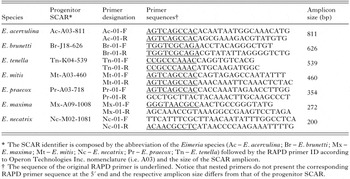
Table 2. Primer sequences of the SCAR markers of Eimeria spp. of domestic fowl used for the multiplex PCR assay

Fig. 1. Agarose gel electrophoresis of multiplex PCR products using DNA samples of Eimeria acervulina (lane 1), E. brunetti (lane 2), E. tenella (lane 3), E. mitis (lane 4), E. praecox (lane 5), E. maxima (lane 6), E. necatrix (lane 7), a mixture of the 7 Eimeria species (lane 8) and a control with no starting DNA (lane 9). Molecular size markers (lane M) in base pairs are indicated on the left.
Fig. 2. Amplification products separated by electrophoresis on 1·5% agarose gels and stained with ethidium bromide. DNA samples from different strains and isolates of each Eimeria species were used and are indicated. Samples with no starting DNA (N), used as negative controls, are also indicated. The CoxD sample refers to a mixed DNA sample purified from Coccivac® D (Schering-Plough Animal Health Corporation, USA), a commercial vaccine containing E. brunetti in its composition. Except for Coccivac® D, all the samples were amplified in a multiplex reaction.
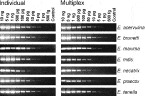
Fig. 3. Sensitivity of individual and multiplex PCR amplifications using serially diluted samples of purified DNA of each Eimeria species. Individual reactions were performed with the corresponding species-specific primer pair, whereas multiplex amplifications employed the 7 primer pairs in a single tube. Amplification products were separated on 1·5% agarose gels and stained with ethidium bromide. The Eimeria species used for each sample and the respective DNA quantities are indicated. Samples with no starting DNA were used as negative controls and are also indicated.
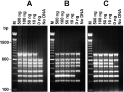
Fig. 4. Cross-influence of high DNA quantities of a particular Eimeria species on the amplification pattern of the other species. Multiplex reactions were performed with DNA quantities varying from 0 to 500 ng of E. acervulina (A), E. maxima (B) and E. tenella (C), and 10 ng of each one of the other species. Amplification products were separated on 1·5% agarose gels and stained with ethidium bromide. Molecular size markers (lane M) in base pairs are indicated on the left. Samples with no starting DNA, used as negative controls, are also indicated.
 You have
Access
- 84
- Cited by