





Plain language summary
Past network research examines how people in the past were connected through friendship, family, trade, religion, politics, or the objects they made and used. Researchers reconstruct these connections and their development over time as maps of relationships, drawing on historical sources such as inscriptions, letters, administrative records, or archaeological assemblages. Over recent decades, many such network datasets have been created, but they have been published in inconsistent ways, stored in different file formats, with variable levels of documentation, and with few shared rules about how data should be described, licensed, or shared. This makes it very difficult for other researchers to find, trust, reuse, or compare these datasets, particularly when working at a large scale across multiple historical periods or regions.
This article tackles that problem directly and provides a tangible solution to the most pressing issues. The authors reviewed how past network datasets are currently documented and identified what is missing or inconsistent across the field. Drawing on widely adopted open science principles, specifically the FAIR (Findable, Accessible, Interoperable, and Reusable) and LOUD (Linked Open Usable Data) principles, they propose a set of practical documentation standards, distributed over 55 attributes, for how researchers should document and share network data derived from historical sources. These standards address key questions that any potential data user needs to answer before reusing someone else’s dataset: Where did the data come from? Under what conditions can it be used? Is it suitable for a particular research question?
Crucially, the authors do not just propose standards in the abstract; they built a tool to put them into practice. The Past Networks Repository is an openly accessible online resource where researchers can deposit, find, and reuse historical network datasets that conform to these shared standards. By bringing data together in one place with consistent documentation, the repository makes it easier for researchers to build on each other’s work, run large-scale comparative studies across different times and places, and reproduce published findings.
The ultimate goal is to make the study of past social networks more collaborative and reproducible and provide an infrastructure enabling future growth of the discipline: a field where individual research efforts contribute to a shared, growing body of high-quality, well-documented data rather than remaining isolated and difficult to access.
Introduction
The volume of published network data about the human past has experienced significant growth in recent times (Brughmans and Peeples Reference Brughmans and Peeples2023; Brughmans et al. Reference Brughmans, Mills and Munson2023; Collar Reference Collar2022; Graham, Milligan, and Weingart Reference Graham, Milligan and Weingart2015). This surge in data availability, however, is accompanied by a major obstacle hindering large-scale research of past phenomena: the lack of structured and standardised data documentation, as well as the community-wide adoption of such practices (Middle Reference Middle2023). Without consistent documentation standards, the reproducibility of computational analyses, that is, the ability to re-run the same workflow on the same data and obtain identical results, and the replicability of broader findings, that is, the ability to apply equivalent methods to independent datasets and reach comparable conclusions, remain severely compromised. A recent survey of the community revealed that data-related and network construction issues topped the list of challenges practitioners experience in the field (Weiß et al. Reference Weiß, Von Welczeck and Vogl2025). Only a third of the respondents had experience with open data publication, and “Only a minority of scholars were able to follow guidelines or find orientation concerning the best practices for publishing data, code and results online” (Weiß et al. Reference Weiß, Von Welczeck and Vogl2025).
For past network research, the situation is attributable to several factors. Despite long-standing standardisation efforts in the Digital Humanities, exemplified by initiatives such as the Text Encoding Initiative (TEI) (TEI Consortium 2026) or the CIDOC Conceptual Reference Model (CIDOC CRM) (Bekiari et al. Reference Bekiari, Bruseker and Canning2024), past network data lack dedicated documentation frameworks, in part due to its cross-disciplinary scope. This absence is further compounded by a shortage of repositories specifically tailored to the historical network data, as well as hesitant attitudes towards open science within certain segments of the community (Marwick Reference Marwick2017; Marwick et al. Reference Marwick, Guedes and Michael Barton2017; Nicholson et al. Reference Nicholson, Kansa and Gupta2023; Olsson, Sköld, and Andersson Reference Olsson, Sköld and Andersson2024).
To address these challenges and prevent further exacerbation, we formulate past network data standards that reflect current usage, identify any missing components, and expand these standards to attain the highest level of best practice while adhering to the FAIR (Findable, Accessible, Interoperable, and Reusable) and LOUD (Linked Open Usable Data) data principles (Laguna-Palma and Barruezo-Vaquero Reference Laguna-Palma and Barruezo-Vaquero2024; Nicholson et al. Reference Nicholson, Kansa and Gupta2023; Thiery Reference Thiery2019; Wilkinson et al. Reference Wilkinson, Dumontier and Aalbersberg2016). The existence of documentation standards facilitates our understanding of the data’s provenance, licensing, and feasibility for specific research scenarios and alerts us to potential data flaws. Furthermore, standardised documentation promotes reproducibility and replicability while facilitating the automation of data reuse processes. This opens new avenues for large-scale comparative and longitudinal research, allowing for innovative methodologies and insights. To encourage widespread adoption, we maintain simplicity in the minimum documentation requirements while allowing for extensibility to optimise data accessibility.
To support the uptake of common standards, enhance resource discoverability, and establish a sustainable infrastructure for future growth, we have developed a new open repository, the Past Networks Repository (Brughmans et al. Reference Brughmans, Heřmánková and Mazzamurro2025). It provides a platform to document past network datasets deposited elsewhere using the newly established standards, thereby operationalising them through a dedicated, practical outlet.
This article is intended for researchers working with network data for the study of the human past, students and scholars who are collecting and publishing such data, as well as interested individuals from related disciplines seeking inspiration or a deeper understanding of how past network data is structured and managed.
Community stocktaking
Authors of this article conducted a thorough stocktaking among past network research community members and practitioners to gain an overview of the current landscape of challenges in the field. This scoping exercise took place in January 2023 during a workshop at Aarhus University (Denmark) and later that year at the Santa Fe Institute (United States). Over 30 researchers and practitioners identified two issues that significantly hinder both the research process and collaboration within and beyond the community: limited practice of structured data documentation and the absence of documentation standards. The results of the stocktaking were further confirmed by a recent online survey conducted among the community, which focused on the reflections of 129 respondents on the current practices and methods in historical network research (Weiß et al. Reference Weiß, Von Welczeck and Vogl2025).
Cultural shift
Reproducibility has become a contested norm across academic disciplines. While it is increasingly required in computational and natural sciences, its application to humanities research remains debated: humanistic inquiry is seen as interpretive, context-dependent, qualitative assessment-driven, and typically small-scale in scope, and resistant to the notion that analyses can or should be independently replicated (Joyeux-Prunel Reference Joyeux-Prunel2024; Nicholson et al. Reference Nicholson, Kansa and Gupta2023). Nevertheless, computationally intensive humanities research, such as past network analysis, occupies a middle ground: full replication in the natural-science sense may not be feasible given the fragmentary nature of historical data, but the community should strive for computational reproducibility. Without it, results remain isolated and difficult to evaluate, compare, or build upon, and compromise the cumulative potential of the field (Burrows Reference Burrows2023; Sobotkova and Hermankova Reference Sobotkova, Hermankova, Watrall and Goldstein2022). The ability to rerun documented code and apply consistent methodology across geographically and temporally diverse datasets enables systematic investigation of large-scale social phenomena, such as the development of urbanism, patterns of human mobility, or the diffusion of ideas across regions and periods or evolving the structure of the society (Brughmans et al. Reference Brughmans, Mills and Munson2023; Collar Reference Collar2022).
Achieving this, however, requires overcoming two interrelated challenges. The first challenge is primarily cultural and extends beyond practitioners of past network research (Nicholson et al. Reference Nicholson, Kansa and Gupta2023; Thiery Reference Thiery2019). There is limited practice in documenting the processes for network dataset creation and analysis in a manner that enables replication (Weiß et al. Reference Weiß, Von Welczeck and Vogl2025). This issue can be gradually addressed, particularly once the technical obstacles and standard formulations of the second challenge are resolved.
While methods and coding languages are often mentioned in academic publications, the specific software implementations, libraries used, and transformations applied to the input data are frequently omitted from both the main text and supplementary materials. As a result, readers are unable to replicate the analysis, verify critical steps in the data analysis pipeline, or reuse relevant portions of the code. Data analysis typically involves a series of decisions and tasks that significantly shape both the dataset and the analytical outcomes. As a community, we should collectively encourage and support researchers in publishing their code alongside their data in open and accessible formats, such as Jupyter or Quarto Notebooks, to foster transparency, reproducibility, and reusability. Best practice recommendations should, however, go beyond merely sharing code and data. They need to include comprehensive documentation: well-annotated code, detailed READ.ME files, a summary of software requirements, specification of libraries and packages used, minimal software versions, and, where applicable, virtual or containerised environments and implementation of version control best practices (Huskey Reference Huskey2024; Marwick Reference Marwick2017). Many journals with a computational focus already require this as a standard practice, and high-quality documentation is recognised as the key factor in (re)usability and reproducibility in Digital Humanities and beyond (Middle Reference Middle2023). However, more traditional humanities journals lag behind in this regard. A further crucial role is played by educational initiatives, such as creating teaching/learning resources, organising networking events, and presenting case studies that illustrate the practical benefits of data documentation. The Barcelona Past Networks Summer School (Mazzamurro et al. Reference Mazzamurro, Brughmans and Diaz-Guilera2026) offers an example, where the community actively promotes best practices each year among a group of new practitioners and learners.
Technical barriers
The second identified group of challenges is more technical and more readily solvable. It concerns conceptual and semantic variability, as well as the absence of minimally agreed-upon standards (Middle Reference Middle2023).
The development of universal standards has been a core focus across the Digital Humanities for the past decades. Built to solve the fragmentation of siloed collections and enable computational analysis on complex cultural data, foundational frameworks like CIDOC CRM (Bekiari et al. Reference Bekiari, Bruseker and Canning2024; CIDOC CRM Special Interest Group 2006), Machine-Readable Cataloguing (MARC) (Library of Congress 1999), and Dublin Core (Dublin Core Metadata Initiative 1995) established the core infrastructure for heritage information management and modelling, bibliographic discovery, and resource description, while the TEI (TEI Consortium 1987) provided a rich XML schema for structural text encoding. As specialised sub-fields emerged, whose datasets frequently underpin past network science research, scholars adapted these foundational frameworks into domain-specific extensions to capture localised nuances. For instance, EpiDoc XML adapted TEI for epigraphy (Elliott et al. Reference Elliott, Bodard and Cayless2006–2026), while semantic initiatives like the ARCH-ON Project (Deckers et al. Reference Deckers, Hyvönen and Lewis2026) developed standardised infrastructure for archaeological object classification, the Sampo model (Hyvönen Reference Hyvönen2023) for cultural heritage semantic portals, CIDOC CRMtex (Murano, Felicetti, and Fafalios Reference Murano, Felicetti and Fafalios2023) for ancient text modelling, and EpOnt (Bodard et al. Reference Bodard, Cayless and Cenati2021; Prag and Asif Reference Prag and Asif2026) for epigraphic ontologies and controlled vocabularies (Heřmánková et al. Reference Heřmánková, Asif and Horster2025) – while leveraging the Linked Open Data model (Berners-Lee Reference Berners-Lee2006) to bridge disciplinary siloes. However, because network research spans diverse pathways from the Humanities to the Natural Sciences, standardisation remains a complex, ongoing process balancing disciplinary requirements with unified interoperability.
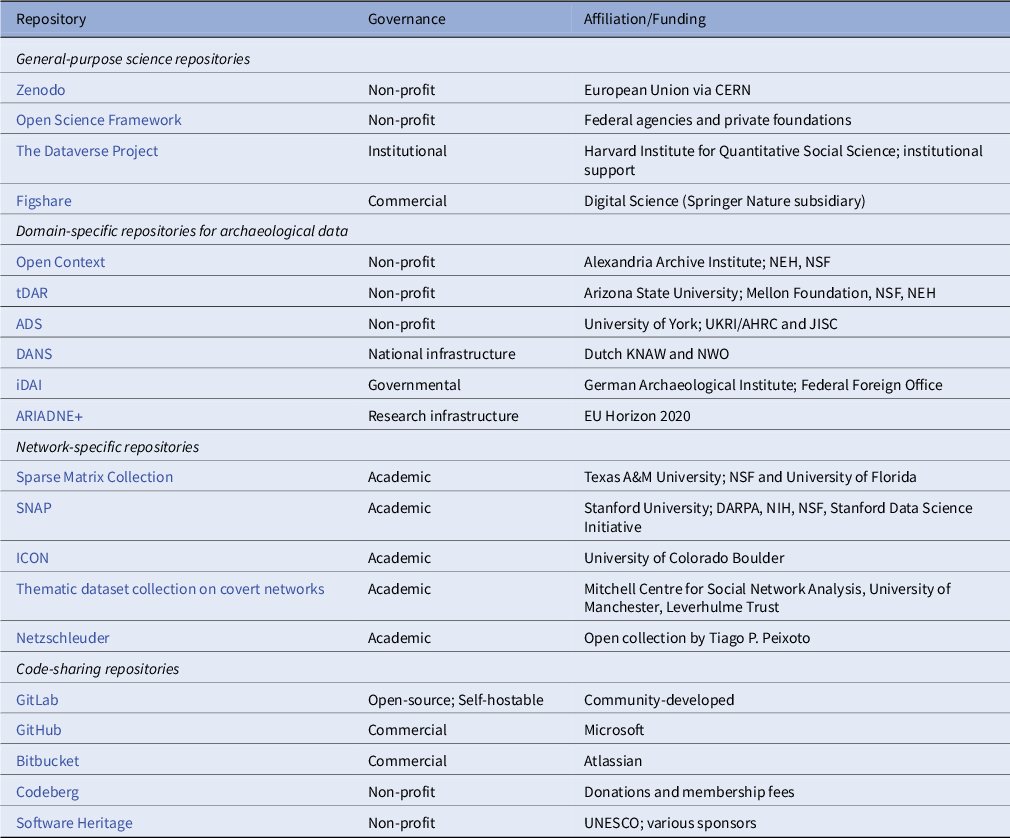
A review of the existing projects and network data repositories, such as the Colorado Index of Complex Network (ICON) (Clauset, Tucker, and Sainz Reference Clauset, Tucker and Sainz2016), Stanford Large Network Dataset Collection (Leskovec and Sosič Reference Leskovec and Sosič2016), and The SuiteSparse Matrix Collection (Davis and Hu Reference Davis and Hu2011), revealed the set of commonly used attributes and their protocols, but also noted high semantic variability as well as uneven level of granularity of the provided metadata. Moreover, the licensing information was not always included, potentially hindering data reuse and not adhering to the basics of the FAIR and LOUD data principles. We have compiled a list of commonly used general-purpose and domain-specific repositories for data and code sharing, with the source of their funding, as shown in Table 1. Currently, the discoverability of past network research and related data remains a challenge, severely limiting their potential reusability. Datasets and related analyses are scattered across various outlets, ranging from specialised network publications and collections to general disciplinary journals and repositories, making initial discovery time-consuming and inconsistent.
Examples of existing repositories and their disclosed sources of funding
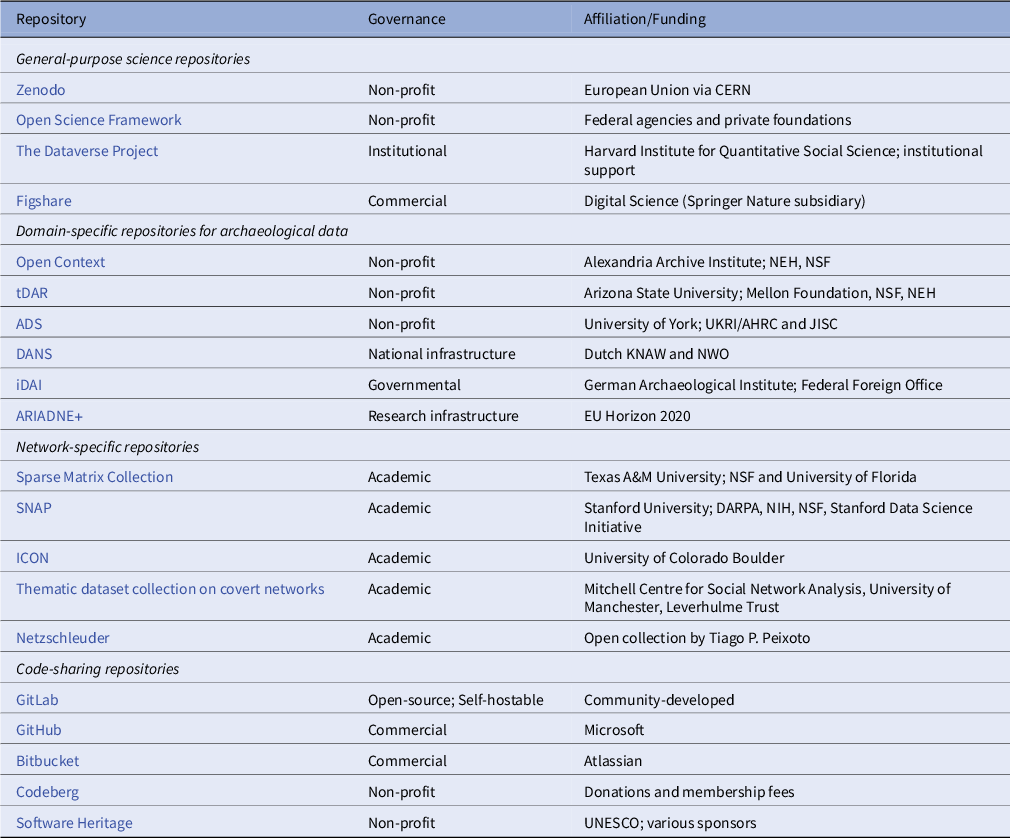
Table 1 Long description
The table lists examples of best-practice of scientific data deposition as of 2025, built both for general and domain-specific purpose. It shows examples of four main general-purpose science repositories, six domain-specific repositories for archaeological data deposition, five network-specific repositories and five code-sharing repositories. The examples contain the name, hyperlink to the source and information about their governance and institutional affiliation and source of funding.
Note: More extensive information is available in Nicholson et al. (Reference Nicholson, Kansa and Gupta2023).
Community-defined scenarios
To design a solution aligned with current and emerging practices, we further invited community members at the Aarhus workshop to define user scenarios that reflect both actual and ideal workflows. These community-defined scenarios highlight the diverse use cases envisioned for the Past Networks Repository and emphasise the importance of interoperability, documentation, and openness.
Participants identified the wish to reproduce existing analyses by accessing the original datasets, whether hosted in the repository or linked from associated publications. To support comparative studies, the repository must provide access to standardised datasets and metadata, enabling scholars to identify broader patterns, test for structural similarities, and evaluate how unique or representative their networks are in different regional or thematic contexts. Researchers may wish to collate disparate datasets, potentially separated by time, geography, or diverging conceptual and structural conventions, into larger-scale structures. This requires procedures for reconciling differing data standards and their alignment. In addition, a repository should support innovation, allowing researchers to repurpose existing datasets to explore new questions not originally anticipated. This, in turn, relies on rich and precise metadata that facilitates reinterpretation and creative reuse. Some intended scenarios involve adapting or expanding existing datasets, which requires access to raw data to assess the original modelling choices and compare alternative interpretations, as well as clearly defined licensing information.
The members of the community agreed that the technical solution has to remain simple, relying on straightforward aggregation of metadata indexes. When depositing data or code, authors must supply a basic metadata set, specify the repository storing the raw data and/or network in a non-proprietary format, and list the parameters used to generate the network. This metadata needs to be detailed enough to allow others to replicate the methods and understand the underlying decisions, yet remain easy to use. To support this, depositors can emphasise key elements and present them in a user-friendly way. This approach allows for flexibility in defining the network according to the user’s specific needs, rather than being constrained by the original curator’s interpretation (Sobotkova and Hermankova Reference Sobotkova, Hermankova, Watrall and Goldstein2022).
In an ideal scenario, each repository entry includes key descriptive metadata and basic network properties, such as the number of nodes and edges, average degree, and network density. This information provides researchers with an initial overview of the dataset, helping them assess its relevance and inform their decision-making process (Middle Reference Middle2023). To further support the discoverability of the research and data, authors need to be able to assign a set of tags from a controlled thesaurus, ideally maintained by a dedicated working group of practitioners. These tags are supplemented by author-defined keywords to provide additional specificity. An autofill feature suggests keywords based on previous entries. Additionally, creators of the repository entry are able to provide an unconstrained, detailed description to guide potential users on the possibilities and limitations of the dataset, facilitating its effective reuse. Over time, once a critical amount of data is collected, the community-based working group should then review and refine the keyword set to promote consistency and improve standardisation across records.
Minimal documentation requirements
Clear, comprehensive documentation of minimal data standards is essential for reproducibility in Digital Humanities and a prerequisite for the usability of digital resources and transferability of methods (Middle Reference Middle2023). Drawing on community input, we defined a set of minimal documentation requirements and developed a foundational yet adaptable protocol for past network data. This protocol is intended as a practical guide for practitioners, students, and researchers when creating and depositing new entries, and encourages revision and enhancement of existing resources. In practice, it directly shaped the design and structure of the Past Networks Repository, as discussed below.
We identified 55 attributes reflecting best practice and grouped them into several categories by their thematic focus, such as essential identification and authorship, or semantic and technical descriptions of the network and its construction process. Of these attributes, 27 are mandatory and form the best practice minimal documentation requirements, while the remaining 28 are optional based on recommendations from the community. This attribute selection balances the need for presenting essential information with practical considerations of what researchers can reasonably be expected to provide during the documentation process. The groups are:
-
1. Essential identification and authorship information: An overview of where the network data is deposited and published, and details of how to access it (22 attributes, 13 mandatory).
-
2. Network topic: The network’s topic, time period, geographical area, and description of uncertainty (13 attributes, six mandatory).
-
3. Technical parameters: Quantitative descriptors of network structure and network size (14 attributes, four mandatory).
-
4. Network construction and provenance: An overview of the data curation process and sources (six attributes, four mandatory).
Essential identification and authorship information
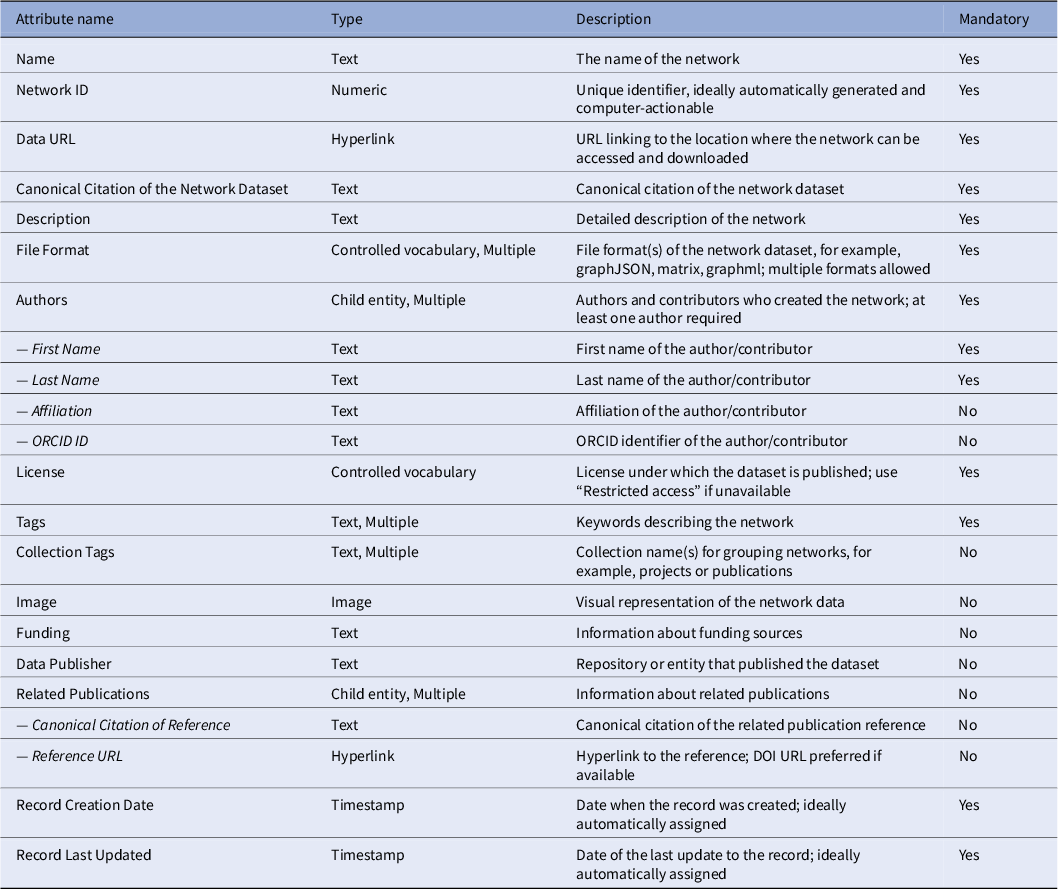
Network datasets require systematic documentation to ensure their discoverability, reusability, and correct attribution within the research community. The group of 22 essential identification attributes enables researchers to locate and access relevant datasets through searchable metadata, provide essential context about the network’s construction and limitations, ensure proper citation and credit to original creators of the data and published research, and facilitate reproducible research by documenting technical specifications and methodological details, all in line with FAIR data principles and Open Science best practice, listed in Table 2. Of these attributes, 13 are mandatory to ensure minimal documentation standards and enhance discoverability, while nine remain optional to provide additional context. The mandatory attributes provide a basic means for the identification of the network, its deposition location, format, authorship, and access to the published data. The optional attributes provide details about related projects, publications, and funding sources, as well as topics covered by the data, to improve the findability of recorded datasets.
Essential identification and authorship information attributes required for network dataset documentation
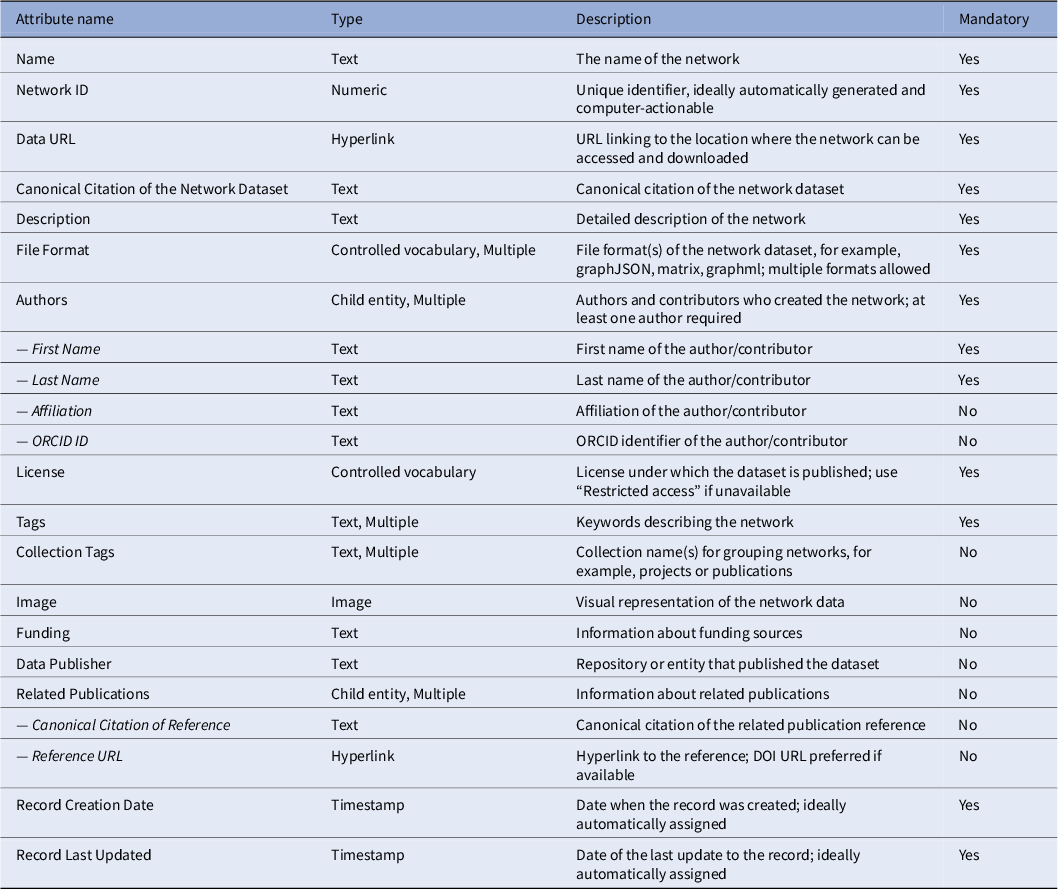
Table 2 Long description
List of 22 attributes related to authorship identification and research attribution, necessary for network documentation. The 22 attributes range from basic dataset identification (name, description, link to data URL, date of publication, source of funding) to authorship details, file format and licensing information. Of these, 13 are mandatory to ensure minimal documentation standards and enhance discoverability and replicability of research, while nine remain optional to provide additional context, such as funding, list of related publications, tags for grouping of related projects or publications.
Note: The 22 attributes range from basic identification (name, ID, and data URL) to authorship details and licensing information. Of these, 13 are mandatory to ensure minimal documentation standards and enhance discoverability, while nine remain optional to provide additional context.
Network topic
Network datasets contain rich semantic information that defines their topical scope and temporal boundaries. Understanding the meaning and context of network elements, that is, what the nodes and edges represent, when and where the network existed, and what additional attributes are captured, is crucial for researchers to assess the dataset’s relevance to their research questions and to interpret findings appropriately.
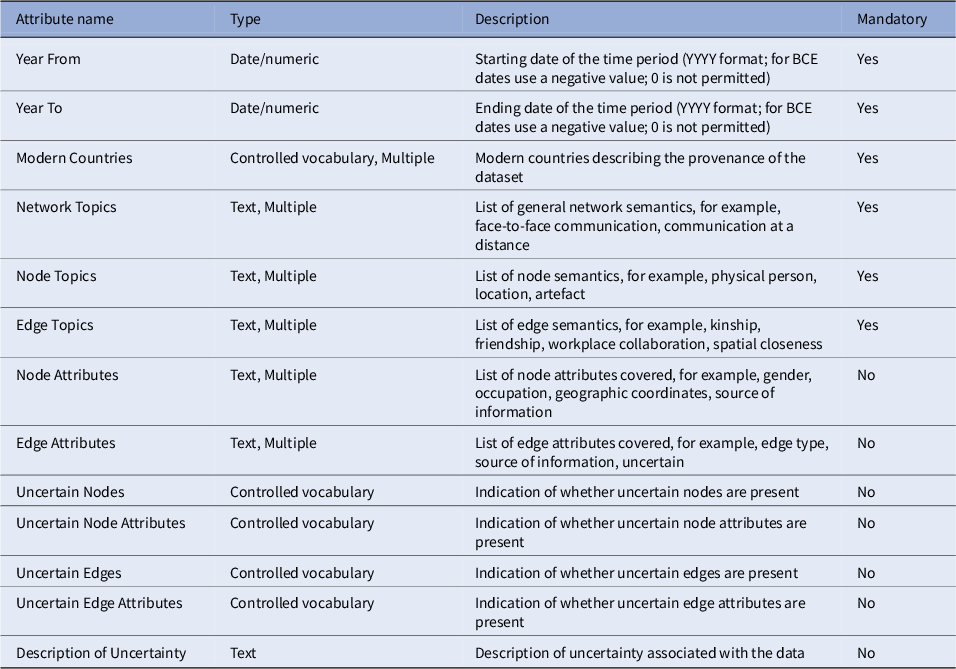
The 13 semantic attributes in Table 3 provide essential context about the network’s subject matter, geographical and temporal scope, and the types of relationships and entities it captures. Of these 13 attributes, six are mandatory to ensure basic semantic documentation, while seven are optional attributes that provide enhanced detail about node and edge characteristics, including uncertainties that often accompany network data, particularly in historical or observational contexts.
The semantic attributes describe the topical and contextual dimensions of network datasets, covering temporal scope, geographical provenance, and the meaning of network components
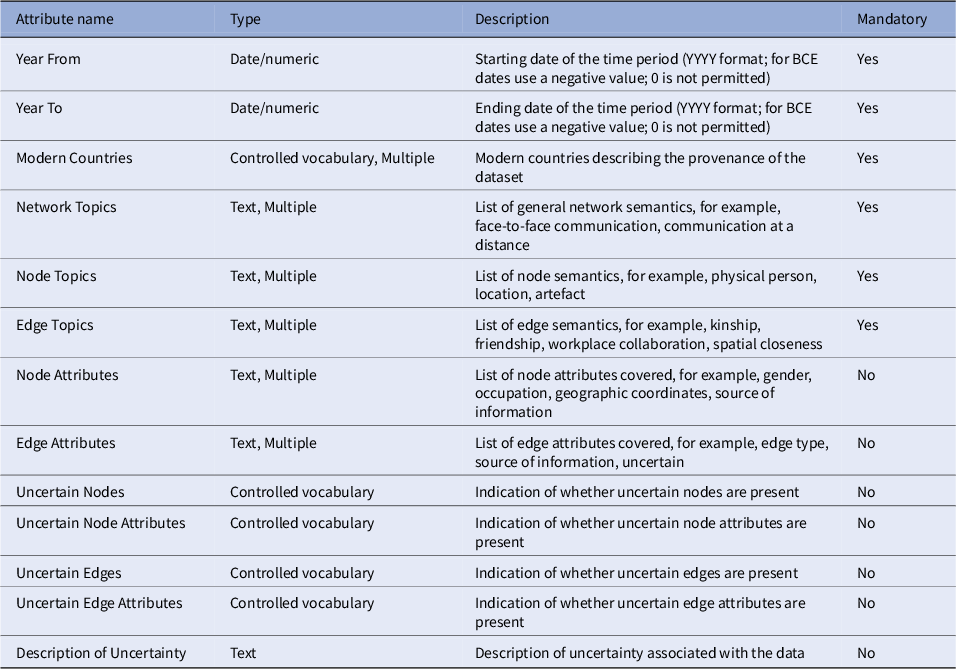
Table 3 Long description
The table lists the total of 13 attributes, six are mandatory to ensure basic semantic documentation, including temporal and spatial extent of the data, and the dimensions of the network, while seven are optional attributes that provide enhanced detail about node and edge characteristics and data uncertainty.
Note: Of these 13 attributes, six are mandatory to ensure basic semantic documentation, while seven are optional attributes that provide enhanced detail about node and edge characteristics and data uncertainty.
Technical parameters
Most of the technical attributes are optional, since not all projects collect every technical detail; we strongly encourage contributors to publish quantitative descriptors whenever possible. Doing so enhances the analytical value of the dataset and supports more robust comparative and computational research. The technical attributes are divided into Network Structure and Network Size.
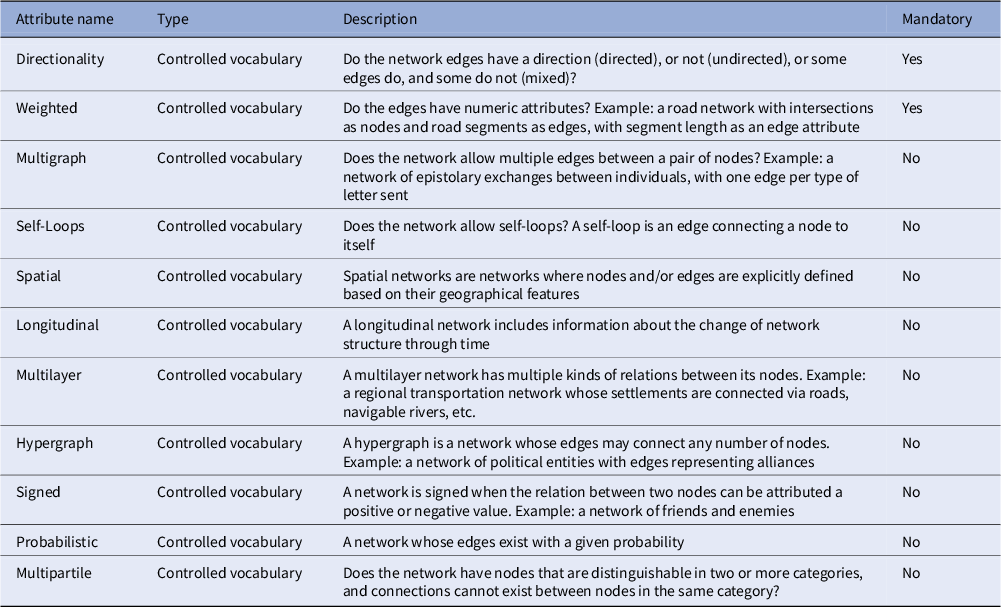
The Network Structure attributes concern the fundamental graph-theoretic properties that determine how data are organised and what analytical methods can be applied. They include basic characteristics like directionality and edge weights to more complex structural features, such as multilayer configurations and temporal dynamics. Of these 11 structural attributes, listed in Table 4, only two are mandatory (directionality and network weight), while nine optional attributes capture specialised network types, including multilayer, temporal, and spatial configurations.
The structural characteristics containing the structural properties of network datasets, specifying fundamental graph-theoretic features such as directionality, edge weighting, and topological complexity
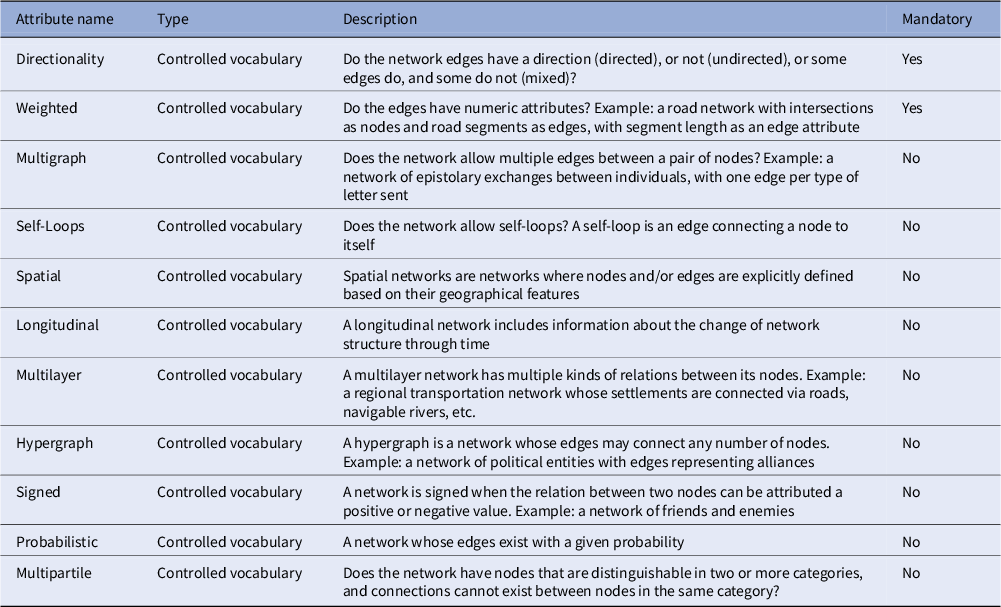
Table 4 Long description
The table lists the total of 11 attributes of which only two are mandatory, while nine optional attributes capture specialisednetwork types, including multilayer, temporal, and spatial configurations. All attributes have a form of predefined controlled vocabulary.
Note: Of these 11 structural attributes, only two are mandatory, while nine optional attributes capture specialised network types, including multilayer, temporal, and spatial configurations.
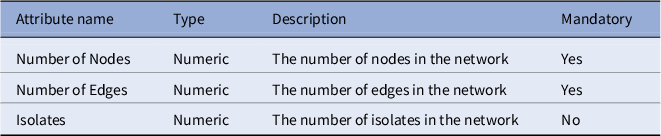
The Network Size attributes capture the fundamental dimensions of each network (see Table 5). It includes two mandatory descriptors, Number of Nodes and Number of Edges, which provide essential information about the network’s scale. Additionally, the optional Isolates attribute indicates how many nodes are not connected to any others. Although small in number, these attributes are technically significant and form the basis for understanding the overall structure and complexity of the network, and are reported in all network science publications and network data repositories.
Core attributes describing the quantitative dimensions of network datasets
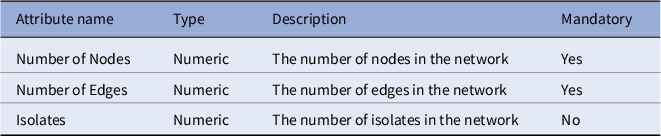
Table 5 Long description
The table lists core attributes that store dimensional information of the network, such as the mandatory attributes with number of nodes and edges, and optional attribute number of isolates.
Note: The number of nodes and edges are mandatory attributes, while the number of isolates is optional and provides additional insight into network connectivity.
Network construction and provenance
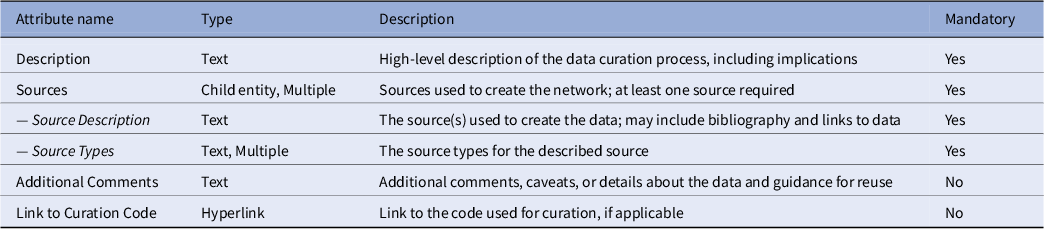
This section captures the details of how the network was constructed, providing essential context for understanding its provenance and the reliability of represented information (see Table 6). Contributors are expected to include high-level descriptions of the data curation process, outlining the actions taken during network construction and their implications, for example, “only named entities which could be disambiguated against Wikidata were considered.” Each dataset must also include a list of sources used to create the network, along with detailed descriptions and source types. These may include bibliographic references or links to primary data repositories or publications that detail the source material. Where applicable, contributors should provide a link to the code used for data curation or to a publication that explains the curation methodology. An optional field for additional comments allows contributors to note caveats, elaborate on relational models or processes underlying the network, and suggest how the data might be reused.
Attributes describing the network construction process, including mandatory documentation of sources and methodology
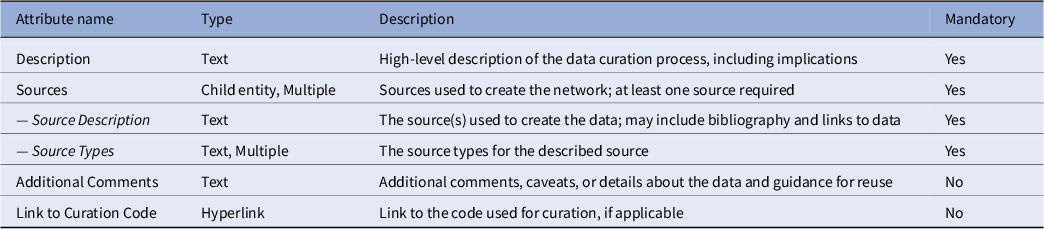
Table 6 Long description
The table lists attributes describing the data’s provenance and details of used methodology, including further context of data curation and link to code that created the network datasets.
Note: Optional fields provide further context and support for reproducibility and reuse.
Past Networks Repository
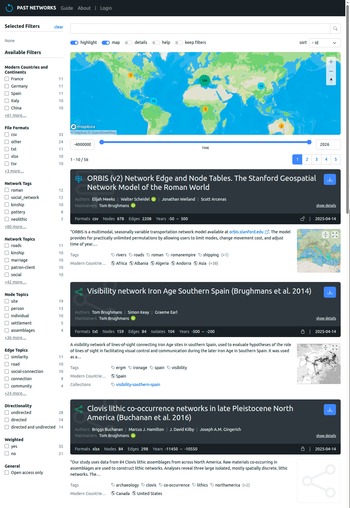
The Past Networks Repository is an online portal for discovering open-access datasets related to the human past, hosted by Aarhus University (see Figure 1). The repository does not store datasets directly, but provides metadata and links to external storage locations and serves as a point of discovery for practitioners and students of network research of the past.
The Past Networks Repository landing page, providing an interactive search interface for the discovery of past network data. Screenshot taken on 5 March 2026.
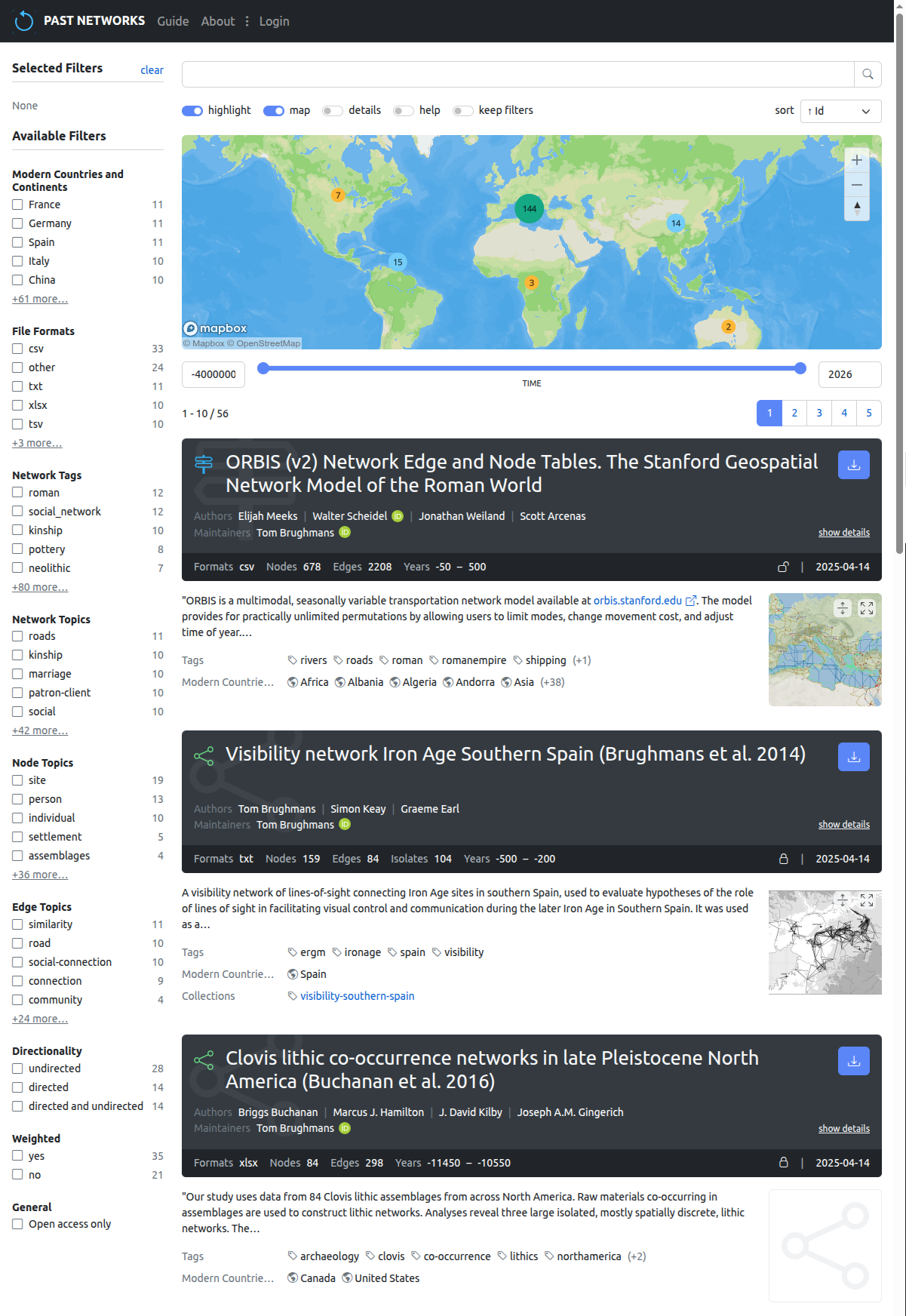
Figure 1 Long description
Screenshot taken on 05 Mar 2026, depicting the The Past Networks Repository landing page, that provides an interactive search interface for the discovery of past network data. The page lists all available datasets at once, that can be queried via user-friendly interface based on multiple criteria, such as temporal dimension, provenance, type of data, licensing, file format, semantic focus of the network data and many others.
The core focus of the Past Networks Repository is on collecting information about networks of the human past, setting it apart from other network repositories and collections. Any data that can be used in past networks research for the study of social networks can be added, including historical and archaeological sources that either directly document interpersonal connections or from which such connections can be inferred or studied. Time, historical context, and data uncertainties are essential features of how data are structured, searched, and interpreted. To ensure chronological consistency and support for meaningful comparisons across datasets, contributors are required to specify both from and to years for each record. This design supports a wide range of time scales, accommodating projects that span from the distant past to more recent history. There is no concrete temporal focus to ensure that data relevant to the whole of the human past can be added – the data can represent networks from two million years ago, as well as from 2025. This flexibility makes the repository broadly applicable while maintaining a clear temporal structure and ease of data entry and search.
The repository is designed to be self-explanatory, requiring no manuals, and prioritises usability, standards compliance, and flexibility for non-standard data, including datasets with uncertain parameters. The main page, as seen in Figure 1, represents a primary point of access, where users can browse datasets through various visualisations, such as lists, maps, timelines, topic clusters, and co-authorship networks, and filter results interactively. The repository’s design is grounded in the community-defined minimal documentation requirements, complemented by optional features that reflect best practices and aspirational standards. In cases where community recommendations were not followed, this was a deliberate choice to preserve simplicity and avoid unnecessary complexity, such as refraining from integrating third-party tools like Zotero, which would require a more dependent and intricate system architecture. However, with the current design, users still retain flexibility and can include DOIs, URLs, or formatted references using a free-form text field to preserve informational richness.
Technical infrastructure
The Past Networks Repository is built as a hybrid JSON and relational database using SQLite, designed for robustness and minimal future maintenance to ensure long-term sustainability. SQLite was specifically chosen for its archival stability; as a self-contained, serverless database, it ensures that research data remain highly portable and readable over the long term without the overhead of complex server administration.
The platform’s overall architecture leverages Node.js for a fast, scalable backend and Svelte for a high-performance, reactive user interface.
The repository is hosted on Aarhus University servers and managed by the Center for Humanities Computing (CHC), Aarhus University. The infrastructure adheres to university policies for research data and information security, ensuring confidentiality, integrity, and accessibility for as long as there is funding.
Development and testing
The Past Networks Repository was developed through an iterative process involving Past Social Network Project team members during the alpha stage and volunteer practitioners during the beta stage, including a closed beta test in April–May 2025 by the former participants of the 2023 Aarhus workshop. This development approach focused on implementing community desirables, enabling data replication, supporting reuse, and ensuring clarity in both the documentation and the underlying data structure. Continuous feedback helped shape a user-friendly and reliable platform tailored to the needs of the past networks research community. Throughout its development, the repository was presented at various academic fora, including meetings, workshops, and conferences, where researchers and practitioners were invited to provide feedback. These engagements played a key role in refining the platform and aligning it with community expectations and scholarly practices.
Access and user management
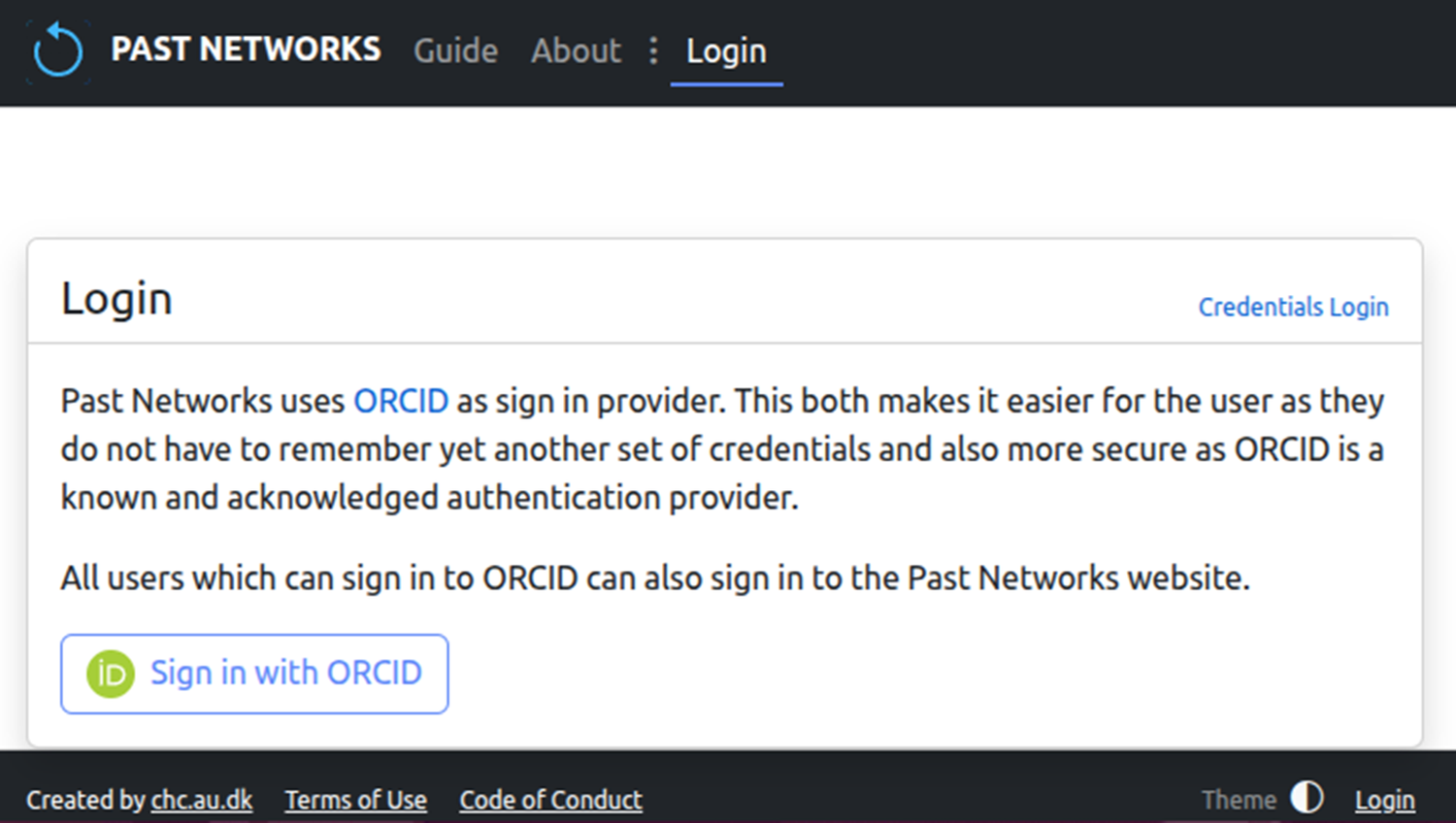
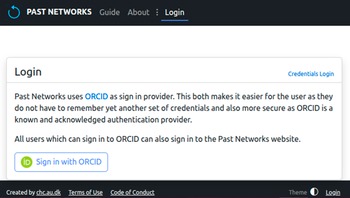
Browsing the Past Networks Repository is free and open to all. To contribute data, users must have an active ORCID profile. Login and profile setup are handled via ORCID authentication, allowing users to securely access the platform using their existing credentials (see Figure 2). By logging in, users agree to abide by the site’s Code of Conduct and agree to the Terms of Use. To enhance author discoverability and ensure data consistency, ORCID IDs are used not only for login but also as the primary method of identifying dataset creators and contributors, providing researchers with a unique, persistent digital identifier that disambiguates their work from others with similar names, ensures proper attribution across publications and academic activities, and improves the visibility of their contributions across publications and academic platforms.
Login page of the Past Networks Repository using ORCID authentication. Screenshot taken on 5 March 2026.
For legacy data predating the widespread use of ORCID, identification by name and/or institutional affiliation is permitted. However, the use of ORCID is strongly encouraged as a best practice.
Data entry and data management
Once authenticated via ORCID, users can create and manage records (maintainer role), as well as invite other registered users to collaborate on their records. The maintainer of a record does not necessarily have to be one of the authors who created the original dataset or the publication. However, the maintainer will be responsible for the quality of the record entered into the repository. The maintainer can draft, publish, edit, and download the data they created as an ndJSON file, including mapping of Past Networks data structure to established Linked Data standards (PN JSON-LD). Maintainers can be informed of incorrect information on the records they maintain via their ORCID profile. Importantly, only the original maintainer, who created the record or a repository administrator, has the authority to delete it. The repository administrator has complete control over the data and user management and can delete them if they don’t abide by the Code of Conduct. The project co-directors are the default repository administrators, and over time, the repository will transition to a community-driven administration and quality control model.
To facilitate projects involving multiple related datasets, the repository supports record duplication. This feature allows maintainers to replicate essential identification information from existing records, streamlining the data entry process. However, technical parameters must be entered manually to ensure each record remains unique and accurately reflects the specific network being documented. This approach enables users to efficiently record multiple networks within a single project while maintaining data integrity.
To prevent the creation of duplicate records, a warning system has been implemented: when creating a new record with a Data URL (a unique URL pointing to the location of the dataset) that already exists in the repository, an automated warning will be displayed alongside a link to the existing record. The user must then decide whether the records are duplicate or warrant a new entry.
Standardisation versus flexibility
The design of the Past Networks Repository carefully balances the need for standardised formats with the realities of historical datasets, which often contain uncertainties and reflect the topical diversity of the research community. Rather than enforcing rigid structures, the repository accommodates variation while maintaining usability and searchability.
One of the community-requested features that balances user freedom with input standardisation is the “suggester.” Users are presented with a list of existing categories, or tags, drawn from the existing data, sorted from most to least popular, which they can choose from. If a suitable category does not exist, users can create new ones, which are then added to the list for future use. This dynamic tagging system ensures consistency where possible, while allowing flexibility for unique or emerging topics.
The “suggester” functionality is used to populate project-level tags that define the scope of a dataset, as well as network-level topics; for details, see the “Network Topic” section. Users can also group related datasets by assigning them to the same project tag, enabling the creation of collections that reflect broader research initiatives or thematic clusters.
To further bridge project-specific flexibilities and established Digital Humanities standards, the repository aligns its internal metadata schema with widely adopted external vocabularies. Historical standardisation initiatives, such as Dublin Core (DCMI) and Schema.org, provide a stable infrastructure for semantic interoperability across domain-specific boundaries. The resulting machine-actionable schema files and their corresponding documentation are openly accessible via the web portal at https://pastnetworks.org/terms/ and can be downloaded directly with every dataset export. This semantic alignment ensures that flexible, user-generated categories remain fully discoverable and reusable within the broader linked data ecosystem.
Search and filtering
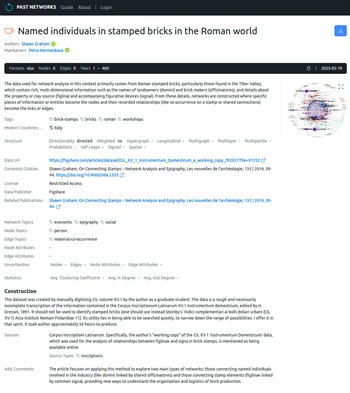
Discovery is central to the design of the Past Networks Repository, and users are provided with multiple intuitive ways to explore the data: browse, faceted search, full-text search with a built-in query language for advanced querying, map search, and chronological search. As seen in an example record in Figure 3, users can filter networks easily based on their properties, such as topics, types of networks, and keywords, using pre-populated filters and tag-based suggester fields. A time slider allows for temporal exploration of datasets, while a spatial map provides a visual overview of dataset locations. For more advanced use, the repository supports full-text search and Query Syntax, complete with eloquent examples to guide precise queries, available under the “help” toggle option below the search box at the repository’s landing page. Additionally, results can be sorted by criteria such as ID, name, or creation date, enabling users to quickly locate relevant records. This multi-layered approach to data access ensures that both casual browsers and expert researchers can navigate the repository efficiently and uncover meaningful connections across historical networks.
Metadata record for Named individuals in stamped bricks in the Roman world (Graham Reference Graham2014) as displayed in the Past Networks Repository [record ID 19], maintainer of the record Petra Heřmánková. Screenshot taken on 5 March 2026.
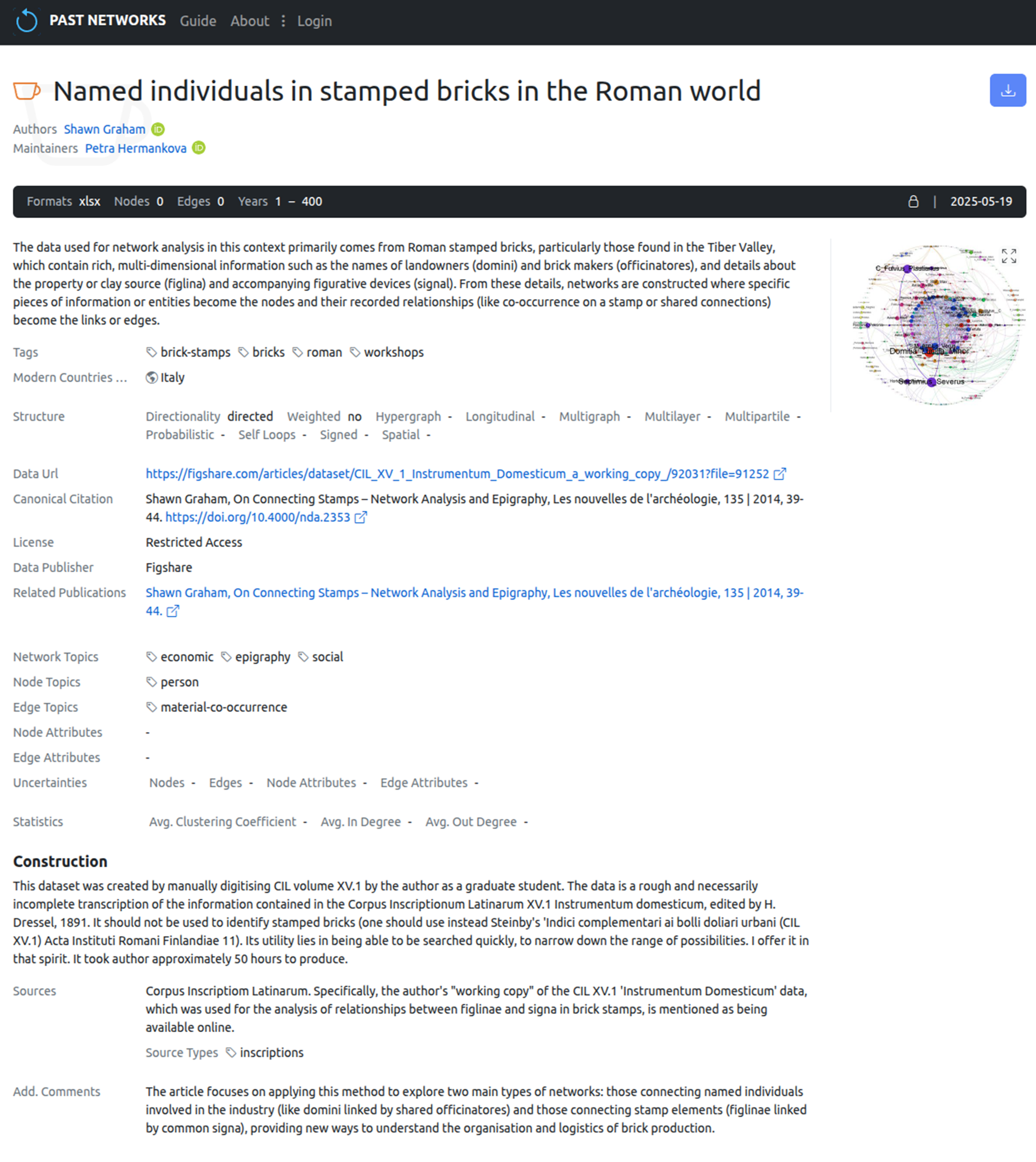
Figure 3 Long description
Screenshot taken on 05 Mar 2026, depicting Metadata for record ID 19, titled Named individuals in stamped bricks in the Roman world by Shawn Graham (Graham 2014) as displayed in the Past Networks Repository, with the listed maintainer of the record Petra Heřmánková. The record shows basic description of the dataset, all the available attributes, including hyperlinks, image of one of the networks from related publication and semantic tags that allow for user-friendly classifications and searchability.
Licensing and data export
Licensing and data rights are central to the mission of the Past Networks Repository. Therefore, we strongly encourage practitioners to publish their datasets and findings under open licenses, such as the Creative Commons licenses, as a standard practice. Open licensing promotes transparency, reuse, and collaboration across the research community. However, the Past Networks Repository also accommodates research data published under a restricted access option for cases where licensing constraints, privacy concerns, or institutional policies necessitate limited availability.
Metadata for individual dataset records contain their own licensing information. The responsibility for data quality, accuracy, and updates lies with the original record creators, not with the Past Networks Repository. The repository serves as a discovery platform and does not assume liability for errors or outdated information.
All information and metadata collected by the Past Networks Repository are available for export via the Past Networks Repository website (https://pastnetworks.org/about) under the No Rights Reserved Public domain license (CC0). Each night, a full export of all published network records is automatically generated in ndJSON format, with each line representing a single JSON network object. The export includes mapping of Past Networks data structure to established Linked Data standards (PN JSON-LD).
Desiderata: Community aspirations and future possibilities
Throughout the development of the Past Networks Repository, the community has expressed interest in a number of features that, while valuable, have not yet been implemented due to considerations of cost, sustainability, and technical complexity.
Dataset feedback mechanisms
A frequently requested feature is the ability for users to leave feedback or comments on datasets. While technically feasible, implementing such a system would require robust infrastructure, likely resembling a discussion forum restricted to registered users. Developers would also need to address potential security concerns, such as spam or compromised accounts, making this a non-trivial addition. Thus, it was ultimately decided that substantial feedback should be handled directly between users. Contributors are identifiable, and users are encouraged to contact them individually if they have meaningful input.
Data quality and curation
Ensuring the quality and reliability of datasets is a key concern for the Past Networks Repository. While a series of automated checks has been implemented to ensure that data are entered in the correct format, the validity and accuracy of the content itself remain the responsibility of the contributors. This approach balances usability with flexibility, allowing for a wide range of historical data while maintaining basic structural consistency.
Looking ahead, the repository aims to transition from administrator-led oversight to a more community-driven quality-control model. Initiatives such as the Barcelona Past Networks Summer School (BPNSS), or The Connected Past (TCP) and the Historical Network Research (HNR) communities may play a central role in this process. To support such a shift, enhanced user management features, such as account creation, password recovery, and role-based permissions, would be necessary.
To further support transparency and encourage high-quality contributions, the repository is considering implementing either a data completeness indicator or a tiered accreditation system. The completeness indicator could take the form of a visual progress bar, reflecting the proportion of fields populated. Alternatively, a tiered system, inspired by Standards for Networking Ancient Prosopographies (SNAP:DRGN) model or the Berners-Lee 5-Star LOD scheme (Berners-Lee Reference Berners-Lee2006), could be adapted to suit the repository’s needs. Over time, such a framework could help institutionalise standards, incentivise contributors, and support scholarly recognition. However, implementing this system would require a substantial time commitment from community members, both to define the ranking criteria and to apply them consistently across datasets.
Conclusion
This article addresses key challenges impeding large-scale research into past human social network structure, specifically the lack of standardised documentation and inconsistent community adoption of data practices. To resolve these issues, the authors propose past network data standards that align with current usage, identify missing components, and adhere to FAIR and LOUD data principles. Because past network research is inherently interdisciplinary, bridging disciplines such as history, archaeology, physics, and network science, these standards are vital to improve data provenance, licensing clarity, and analytical applicability across fields, while supporting reproducibility and enabling automated data reuse.
Crucially, the Past Social Networks Project developed the Past Networks Repository (https://pastnetworks.org/) to operationalise these standards, facilitate community adoption, enhance resource discoverability, and foster collaborative research dissemination. By setting up a sustainable and accessible infrastructure, this initiative directly confronts key challenges identified through community engagement: the necessity of a cultural shift towards meticulous documentation of dataset transformation and analysis processes, and the technical hurdles arising from conceptual variability and the absence of agreed-upon standards. The repository’s design is meticulously shaped by community-defined minimal documentation requirements, mandating 27 out of 55 identified attributes for essential identification, authorship, network data properties, topics, and construction. The platform prioritises simplicity, intuitive use, and adaptability for historical data, balancing standardisation with flexibility. While automated checks ensure format consistency, the responsibility for data quality and accuracy rests with contributors, with future aspirations for a community-driven quality control model.
By championing transparency, reusability, and robust documentation, this framework provides essential infrastructure for those working with past network data and advances open science in the humanities. It enables impactful, collaborative, and interdisciplinary inquiries into the human past, facilitating systematic discovery and comparison while preserving methodological flexibility and academic rigour.
Data availability statement
All information and metadata collected by the Past Networks Repository are available for export via the Past Networks Repository website, under the No Rights Reserved Public domain license (CC0). Each night, a full export of all published network records is automatically generated in ndJSON format, with each line representing a single JSON network object, and mapping to established Linked Data standards (PN JSON-LD). Metadata for individual dataset records contain their own licensing information.
Acknowledgements
This article was inspired by a workshop held at Aarhus University (Denmark) in January 2023, organised by the Past Social Networks Project, and a similar workshop held at the Santa Fe Institute (United States) later that year. We would like to thank participants of both workshops for their feedback and valuable comments.
Author contributions
Conceptualisation: P.H., T.B., and M.M.; Data curation: All authors; Formal analysis: None; Funding acquisition: T.B.; Investigation: P.H., T.B., and M.M.; Methodology: P.H., T.B., and M.M.; Project administration: P.H. and T.B.; Resources: P.H., T.B., M.M., and P.B.V.; Software: P.B.V. and P.M.-D.; Supervision: P.H. and T.B.; Validation: P.H., T.B., and M.M.; Visualisation: P.B.V.; Writing – original draft: All authors. Writing – review and editing: All authors approved the final manuscript.
Funding statement
This work was made possible thanks to The Carlsberg Foundation’s Young Researcher Fellowship (CF21-0382) awarded to the Past Social Networks Project.
Competing interests
The authors declare none.
Declaration of artificial intelligence use
AI-assisted tools, such as Grammarly, Overleaf AI, and Claude Sonnet 4.6, were used for proofreading purposes. All intellectual content, original ideas, their execution, and any errors remain the sole responsibility of the authors.
Ethical standards
The research meets all ethical guidelines, including adherence to the legal requirements of the study country.

 Open access


Rapid Responses
No Rapid Responses have been published for this article.