

[begin 184r]
The state of Germany.Footnote 1
The Revenewes, and forces, of everie particuller Province; The forme of the Emperors sitting in the Dyett, and a particuler of expences, howe 6000 Horsemen, and Two Regimentes are entertained for one whole yeare, by the Kinges of Fraunce and Spaine.
Germany is divided into Tenn Provinces,Footnote 2 which are Called the Circutes, or Circles of the Empeire, Whereof the first Circute is of the fower Electors, besides the River of Rheine, That is,Footnote 3 of the Archbishopps of Mentz, Collen, and Trier, and the Counte Pallatine. The second is the Circute of Franconia, The third of Bauaria, The fowreth of Austria, The fifte of Sueuia, The sixth of ye Rheine, The seaveneth of Westphalia, The eight of Saxonia, superior, The nynth of Saxonia Inferrior, And the Tenth of Burgundia.Footnote 4
AllFootnote 5 the which <Circuits> are governed, by Ten seuerall
[begin 184v]
Heades, that are Chosen out of the Nobillitie, and doe vse that office Comonlie during their life,Footnote 6 or according to the will of the Emperor, and the States of the Empire, As heereafter in the ende of this booke shall appeere, Where the devicion of the same Provinces, shall more att large be sett forth.Footnote 7
And as all these <ten> Circutes, and Circles,Footnote 8 are but one body, soe doe they Consistes in theirFootnote 9 estates, vizt of Churches,Footnote 10 and temporall Potentates, and ffree Citties, The which all have one Head, that is the Emperor, whoe presentlieFootnote 11 hath his Residence at Vienna in Austria,Footnote 12 To whome as for Hommage they paie yearlie some little Tribute, and in Cases needefull for the State of the Empire, they Contribute, Men, Weapons, and Monie extraordinary everie one According to the Assesse{ment} made in the Devicion of the said Tenn Circles,Footnote 13 of the Empire.Footnote 14 The which extraordinary Contribucion, is given by the Conscent<s> of those Three estates, being lawfully Called, to somme place Certaine, by the Emperor, vnto a Parliament which they terme a Dyett.Footnote 15
[begin 185r]
The Churchmen have Three Heades, which are Archbishopps and Electors, of the which the first is the Archbishopp of Mentz, high Chauncellor of Germanie, with whome remayne all the Actes of the Dyettes.Footnote 16 And hee that hath Authoritie (sede vacante) to Call the rest of the Electors to a Dyett, ffor the Choosing of an Emperor, which is alwaies done at ffranckfford, vppon the River of Mene.Footnote 17
Next vnto him is the Archbishopp of Collen, High Chauncellor of Italie, And after him the Archbishopp of Triere, high Chauncellor of ffraunce, The which two doe take theire place in the Session{s} Alterius vicibus <, by turnes>.Footnote 18
And heere is to be noted, That these Three Spirituall Electors, have not their office of Electorshipp, nor their preffermente of the Archbishopprick by succession of Inheritance, But by Eleccion of the Channons, of theire Cathedrall Churches, whoe Commonlie Choose such to be theire Archbishopps as is a gentleman of a good howse.
Further in this Ecclesiasticall estate are Comprehended, all the other Archbishopps, & Bishopps of Germany, As the Archbishopp of Saltzburge,Footnote 19
[begin 185v]
which is one of the Auncientest, and in respect of his Mynes of Salte, Silver, and Gold, is Counted the Richest, whose Reveniewe is yearely to the value {comonlie}Footnote 20 of one hundred and fiftie Thowsand Guilders.Footnote 21
The Archbishopp of Magdeburge,Footnote 22 whoe is, Called the primate of the Empire,Footnote 23 whose reveniewe is likewise great, ffor out of one Cittie Called Hall,Footnote 24 hee receaveth for ye profitt of Salte (that thereFootnote 25 is gotten) every satterday att night, 500 Dollers, all Charges deducted.Footnote 26
The Archbishopp of Breame, & Bisontz,Footnote 27 with aboute xxv Bishopps that have great possessions and in respect of their Citties, Castles, and Provinces, are Called Princes of the Empire, Amongst the which the Bishopp of Munster in Westphalia, whoe is alsoe Bishopp of Osenburge and Padborne,Footnote 28 is Counted one of the Cheifest.
Of the Temporall Lordes,Footnote 29 there are <counted> likewise threeFootnote 30 Cheiffe, the which are alsoe Called Princes Electors, and have each one a severall office (which they vse in theire stiles for anFootnote 31 honnor in the service of the Emperor, att his Coronation).
[begin 186r]
The Counte Pallatine of the Rheine,Footnote 32 is ye greatest amonge them, and <is> the Cheife Sewer to the Empire,Footnote 33 and (sede vacante) vicarius Imperij in Palatinatu, whose Cheife Court is Commonlie at Heidelberge, vppon the River of Mellar,Footnote 34 his Livetenante in the office of Sewershipp is alwaies one of the howse of Nortenberge by Inheritance.Footnote 35
Next to him in all sessions of ParliamentesFootnote 36 AndFootnote 37 before him in the Warrs (the Emperor being personall{ie} in the field) is the Duke of SaxonFootnote 38 (whose principall howse is at Dresden in Misnia vppon the River AlbisFootnote 39 ) whoe is high Marshall of the Empire, and beareth in all Tryumphes the sworde before the Emperor. His Leiuetenant in that office of High Marshallshipp, is alwaies one of the Howse of Papenheim by Inheritance.Footnote 40
The third place of the Temporall Lordes,Footnote 41 and the vjth place of the Electors, hath ye Marquesse of BrandenburgeFootnote 42 who is high Chamberlaine, Whose Court is Cheifelie att Barlyn,Footnote 43 in Marchia, vppon the River Spree. his Leivetanant in the office of high Chamberlyne is alwaies one of the howse of EalkensteineFootnote 44 by Inheritance.
[begin 186v]
There is alsoe a vijth Ellector,Footnote 45 whoe is Cup-bearrer, and hath noe other office, nor Authoritie in the Empire, But onlie a voice in the Eleccion,Footnote 46 when the other vio are equallie devided. And then on whatFootnote 47 side <that> hee giveth his voice, there doth the matter prevale. & the same is ever the King of Bohemia, which is nowe the Emperor himselfe;Footnote 48 His Levietenant in the office of Cupbearrer, is allwaies one of the howse of LympurgeFootnote 49 by Inheritance.Footnote 50 This vijth Elector was appointed longe after the other sixe, vizt in Charles the 4thes <his> time, and the rest in the time of Othoe Tertius.Footnote 51
All these fower Temporall Electors, have theire Authoritie by succession of heritage, and the eldest of the howse, hath alwaies ye place of Electorshipp. They have power and Authoritie, after the Death of the Emperor, to Choose a newe, when they list,Footnote 52 or dureing the Emperors life, to Electe a King of the Romans, whoe allwaies doth succeede the Emperor, As the Prince of Wales doth in {England} the Kingdome of England And the Dolphine of ffraunce, toFootnote 53 the ffrench King.
After the Lordes Electors are Reckoned,
[begin 187r]
The noble men, and Princes of their Howses, As for example the Duke of BauareFootnote 54 whose Residence is at Monachum <or Munchen> in Bauaria, where isFootnote 55 yearelie revenewe is said, to be 600 thowsand Guilders, with the rest of the Palsgraves, whose ffeodaries are the Ringraues, The Earles of Erbach, and IsinbergeFootnote 56 &c.
The Dukes of Saxone, whose ffeodaries are the Countesses of Mansfeild, Swartberge,Footnote 57 Stotberge,Footnote 58 &c.
The Marquesse{s}Footnote 59 of Brandenburge, whose ffeodaries are the Earles of Reepeyn,Footnote 60 and vier Rotten, (which Earldome) nowe the Earle of HousteineFootnote 61 possesseth, & the Barons of Potlus.Footnote 62
The Dukes of Brunsweeke (whose yearlie Revenewe is 200 Thowsand Gilders)Footnote 63 The eldest of theFootnote 64 Howse whoe is Called Duke Julius of Walffenbittle,Footnote 65 receaveth everie daie throughout the yeare 100 Dollers, out of one Silver Myne at Goster,Footnote 66 only. Besides theFootnote 67 other Mynes of Lead and Copper &c. His Vassales are the CountesseFootnote 68 of Regensteine and Barons of Warberge.Footnote 69
The Dukes of Lymberge,Footnote 70 and Harburge whoe are of the howse of Brunswicke.
[begin 187v]
The Dukes of Lawneburge,Footnote 71 and Princes of Anhalte, which are of the Auncientest howse of Saxon.Footnote 72 The Landsgraue{s} of Hessia,Footnote 73 whose Countrie is verie greate, ffor they be alsoe, Earles of Catznelbogem,Footnote 74 , and have in Hessia 70 Citties. Theire Vassales are the Earles of Rippen, of Hoy, of Ticffeild,Footnote 75 of Lipp, of Sulmos, of Witsteine, of Nassawe, & of Shaumbrock.Footnote 76
The Dukes of Wertinberge (whose yearlie revenewe, is 200 Thowsand florences or guilders).Footnote 77
The Dukes of Pomer, and Michelburge.Footnote 78 The Marquasses of Baden, with a nomber of other Princes, Marquesses, Earles, & Barons of all the which, in all Convencions & Dyettes of the Empire, next after the vijo Electors, the fower Dukes, which are of Sueuia, Brunswicke, Bauaria, and LatheringFootnote 79 doe take theire place. And after them the iiijor Marquesses of Misnia, Marchia, Baden, and Brandenburge.Footnote 80 TheFootnote 81 next vnto them the iiijor Landsgraves, of Thuringe, Hasse, Lichenberg & Elsatz.Footnote 82 After them the iiijor Burgraves of Magidenberge, Noriberg, Renecke, and Struburge.Footnote 83 And after them the iiijor Earles of Sauoy, Cleve, Zilie and Schwartzburge.Footnote 84 And
[begin 188r]
next to them the iiijor Barons of Limperge, Tusis,Footnote 85 Westerburge, and Aldenwald.Footnote 86 And last of all the iiijor Knightes of Andolawe, Meldin, Stonnecke, and Erawenberge.Footnote 87
The Third estate Consisteth, in {the} ffree Citties which are in nomber <at present> as somme saie Lxxijo and have beene heertofore, iiijxxv:Footnote 88 All {the}Footnote 89 which doe Acknowledge noe other head but the Emperor, to whome they paie a smale tribute yearlie, not a movnting in all, <to> the somme of xvFootnote 90 thowsand Guilders, ffrom the which payment <also>Footnote 91 Certaine of these Citties are exempted, & paie nothing, Butt att the generall Contribucion of all the States att the Dyett, as shall heerafter appeere.Footnote 92
Touching the Pollice of these Three estates, of the Empire, it is to be vnderstoodFootnote 93 that everie one hath within theire owne Dominyons, {an} Absolute power to Coyne Mony{s}, which serue not in anie other Territorie but in their owne, except Dollers which according to theire Rate are Currant in all places, to {determyne by law, to execute Iustice, to dispense and} deale with theire subiectes According to Right, and equitie as they list.Footnote 94 But for asmuch as it would be to tediouse to speake of everie Princes goverment
[begin 188v]
a parte, namelie, seeing that in most thinges they have one order and forme, I shall therefore give an example of one or two of the most Principall, which may serue for all the rest. And because amonge the Temporall estates, The Counte Palatine (as wee saieFootnote 95 ) is the Cheiffest, I will begine with him.Footnote 96
Att Heidelberg, Where his Court is, he hath a verie faire howse, adioyning to his Castle which is Called his Chauncery, in the which place are fiue principall Councelles or Courtes.Footnote 97
The first is his privateFootnote 98 Councell, Where himselfe is,Footnote 99 with a fewe others, (whereof the Cheiffest areFootnote 100 Doctors of the Civill Lawe) doe dailie sitt to CouncellFootnote 101 of matters of Importance, toucheing the estateFootnote 102 of his Countrie, The Aunswering of fforreigne Princes Ambassadors, Dispatching of his Ambassadors, to fforreigne Princes, The bestowing of his Children in Marriage <&c>.Footnote 103
The second Councell (whereof the Chauncellor is Cheiffe{)}, is of a fewe Civillyans, where all matters, extraiudicyall (as they terme it{)}, are handled, and Compromitted,Footnote 104 and
[begin 189r]
in Case they Cannott by the Arbitrators bee ended, then are they by the Chauncellor referred to the Third Councell, Which is Called Hoffgetichte,Footnote 105 which is of a great{er}Footnote 106 nomber of both Doctors, and gentlemen. in the which all Civill Causes, and Controversies,Footnote 107 betweene his Subiects and Accions both personall and Reall, are by Lawe Decyded, And in the which, the subiect If hee be Iniured by his Prince, maye have the lawe against him, ffrom {this}Footnote 108 which Court it is not lawfull to appeale vnto the Chauncellor, of the Empire,Footnote 109 except the Cause doth surmount the somme of 600 Gelders.
The fowerth Councell is the Consistorie Court, and is of Civillyans and Spirituall Men, where<in> all Church matters, both {for}Footnote 110 Doctrine, and disipline are Determyned, Testamentes proved, and Controversies in Marriages Decyded.
This Prince, hath reformed this Court and where<as> before it had noe other Councellor{s}Footnote 111 then spirituall Men, nowe hee hath ioyned togather, with them Certaine honest, and discreete Mynisters, some of his wysest and best Learned Councellors.Footnote 112
The firstFootnote 113 Councell (whereof the Chamber
[begin 189v]
Master, that is the Chamberlynne or ThesaurerFootnote 114 is President) is of Certaine doctors and <of> howshold officers, in the which there is a CounteFootnote 115 taken of all his Revenewes, howe his Debtes are to be paid, his howshold ordered, and served, his Landes sett, and Lett, his Customes, and Tolles examinied.
This Prince mayntaineth ordinarelyFootnote 116 in his Court of all sortes of People, iiijxx Footnote 117 Tables eight persons to everie Table, <the> which dothFootnote 118 eate Commonlie in two severall places. In the one place, which is a fayer Large Chamber, sitteth himself, his wife, and Children standing att one Table, aloneFootnote 119 in the vpper end of the Chamber, And his gentleweomen and Preachers att Two other Tables, and a boute Tenn Tables more adioyning to those two Tables, which stand in a Rowe ofFootnote 120 one side of the said Chamber, whereatt doe sitt his gentlemen, whoe Imediatelie after the Prince beFootnote 121 sett downe, doe likewise sitt and eate Continually att one hower, which is at Tenn in the morning, and five of the Clocke att night.Footnote 122
In the other place, areFootnote 123 the rest of his familie, as his guarde, which are xxiiijo
[begin 190r]
Holberders, with other<s> of his yeomen and groomes Togather with all the officers, and gentlemens seruauntes whoe likewise eate togather, att one hower,Footnote 124 which is at Nyne, and iiijor of the Clocke, before which howers they are Continewally warned by the noyse of viij Trumpettes and two LittleFootnote 125 Drommes.
His Howshold officers be the Marshall, The Steward, The Treasurer, The Secretary, {and}Footnote 126 The Clarke of the Kitchine. The Marshall first placeth all Men, and seeth good order kept. The Steward seeth all thinges provided for hisFootnote 127 howse, and howshold. The Treasurer disburseth the mony. The Secretarie taketh the Accomptes, and writeth hisFootnote 128 Letters. The Clerke of the Kitchine seeth all thinges ordered in the Kitchine, and everie one serued according to their degree<s>, and of all the Howshold expences keepeth a book.Footnote 129
The Prince is served withFootnote 130 silver, with fower Courses (besides fruite) and in everie Course Nyne Covered dishes, which Three gentlemen with their Capps on their Heades, doe all waies bringe to the Carver, haveing the Marshall to goe before them with his staffe. And when they haue deliuered their dishes
[begin 190v]
they sitt downe likewiseFootnote 131 att <a> Table, appointed onlie for them in the same Chamber. There wayteth ordinarily vpponFootnote 132 the Prince att the Table, A Sewer, a Carver, a gentleman of his Chamber, that wayteth on his Cupp, and taketh the same, And ij or iije Pages that wayte on his Trencher,Footnote 133 which the Carver all waies {The Ca} giveth. {The Carver} everie one to eate,Footnote 134 in like sorte, as it is att the Maior of Londons Table.Footnote 135 All the other Tables be served by the Princes Guarde. In the Princes Chamber one of his Preachers doth allwaies saie grace, <both> before and after meate, And in the Common Hall, The Clerke of the Kitchen {(}whoe is there in the place of the Marshall{)}, Causeth likewise thankesFootnote 136 to be given to God, by one of the poore Schollers that the Prince keepeth of purpose. The meate that is left in both places, is allwaies <forthwith> given to the poore, by the Amnor.Footnote 137
His Councellors, have <alwayes> allowed them euerie one according to his virtue, and quallitie, a verie good stipend, both for his fee & dyett in their owne howses.Footnote 138 (There is streight discipline in his Court against swearing, Blasphemy, <and> dronkenness, whoredome, fighting, and all other kindes of vyces,
[begin 191r]
in which Cases, Notwithstanding, some more respect {is} had inFootnote 139 the punishment of a gentleman, then of a nother, and yett none spared.Footnote 140
DaunsingFootnote 141 is alsoe forbiddenFootnote 142 in his Courte and throughout all his Land.)
The Charge of his Stable, hath the Master of his Horses, and everie gentleman that by his Commaundement hath an Horse,Footnote 143 is allowed Oates sufficient, and for everie Horse xxv Dollers, the yeare, towardes Hey, and stable Rometh,Footnote 144 and everie yeoman xxvo Gelders.
And because I have entred into some discourse of his howshold matters, it shall not be impertinent to shewe the Princes order, and Conversacion, howe hee spendeth his time, both because the {e}xample is noteable and worthie of all good Princes to be followed, As alsoe because that therebyFootnote 145 hee wynneth great fauor of hisFootnote 146 people.
His Order is to Aryse everie morning att fiue of the Clocke, and att sixe hee Commeth to his Chamber,Footnote 147 with his wife, &Footnote 148 Children, and familie, where one of hisFootnote 149 Three Mynisters, <(>which hee alwaies keepeth in his Court to saie grace, (Preacheth, and
[begin 191v]
MynistrethFootnote 150 the Sacramentes) after a Psalme sonnge by the Children, which are kept in his Court, for that purpose, doth Preache and Praye vntill seaven of the Clocke, and then the Prince goeth streight waieFootnote 151 vnto his Chauncerie,Footnote 152 where hee tarieth vntill tenn, which is the hower to dyne; Att dynner hee Comonlie vseth to sittFootnote 153 two howers, And after dynner anFootnote 154 hower, talking with his wife and Children. After hee ryseth vpp, which is a boute one of the Clocke, Hee goeth streight waies into his Clossett, where hee tarryeth till five, {in}Footnote 155 pervseing and Reading his Subiectes supplicacions, which are dailyFootnote 156 given to him, As hee goeth and Commeth from his Chauncery, The which supplicacions that are dailie given,Footnote 157 the next daie hee sendeth to everie Court, As the matter requireth, Where Imediatelie Iustice is mynistred.Footnote 158 Att vo of the Clocke hee goeth to supper, where hee sitteth two howers, And afterwardes either walketh, or otherwise passeth ye time with his wife and Children, vntill it be ix, And then hee Calleth both the gentlemen, groomes, and Pages, of his Chamber, to his priuie Chamber Dore, where they heere him praie halfe an hower and soe <he> goeth to rest. This is the Con-
[begin 192r]
versacion Commonlie of this good Prince, The which order hee breaketh not, but vppon some verie goodFootnote 159 occasion.
Sometyme{s} as hee sitteth att {his} Table, hee heareth theFootnote 160 Musicions, whereof hee hath five playeing exceedingFootnote 161 well, on shalbmes,Footnote 162 that be made, The one like a Holbert,Footnote 163 The 2 like a Crosbowe, The 3 like a Bore staffe, The 4 like a Handgunn, and the 5 like a Iavelin.Footnote 164 The same Musitians haue alsoe Cornettes, Vyolins, and Virginalles which they mingle one with an other, as it is the Princes pleasure to heare them. Other pastime<s> hee exerciseth not, except when hee hath noe supplicacions of his subiectes to Reed (which is verie seldome). Hee <then> Hunteth the Stagg or Hinde,Footnote 165 according to the season of the yeare[,] or ells seeth his sonnes orFootnote 166 gentlemen Ryde, his greate horses, And Runn att the Ringe, or ells rydeth aboute certaine villages and Converteth the Curates, to the vnderstanding of the true doctrine, of the Sacramentes, wherein a nomber of his Countrie are not yett well perswaded.Footnote 167
When this Prince hath any Warre towardes, or otherwise vppon some vrgent
[begin 192v]
Cause, for the weale of his Countrie, and Conservacion of his State, hee Calleth (as ye manner is) of all other Princes in GermanyFootnote 168 a Parliament, which they tearme a Landstage, to the which all the Nobilitie of his Country and Certaine burgesses of everie Cittie, within his domynion{s} doe Come, by whose Common Conscent either a subsedie is graunted to be leavied of all his Subiectes or ells newe Statutes are made, or ould revoked, or reformed according to the State, and necessitie of the time, The which statutes are Called Landtz-ordinance,Footnote 169 and are allwaies expounded by rules of the Civell Lawe, when there intent is not well otherwise to be vnderstood.Footnote 170
This Princes Countrie lyeth partlie a longeFootnote 171 both the sides of the Riuer of RhineFootnote 172 from Argentine vnto Cullen, The which hee governeth himselfe, and partlie in Bauaria superior, whereof the Principall Cittie is Amberge vppon the River Eills,Footnote 173 where his eldest sonne Duke Lewis,Footnote 174 doth governe vnder him, and hath the same order in Administring Iustice (as neere as the manner as the Countrie will permitt) As his father hath att Heidelberge, from {the} which place Notwithstanding the Subiectes may appeere
[begin 193r]
attFootnote 175 Heidelberge because that is the higherFootnote 176 Court, By reason that the Elector (whoe is the Cheife of that howse) dwelleth there.
The Prince, although his father wereFootnote 177 a greate Papist, yett hee being perswaded by one of his sisters, that was of the Religion and Cheifflie instructed by Eberhard Earle of EerbackFootnote 178 a godlie and wise gentleman, and then Steward to Otho Henry his Predecessor in the Electorshipp,Footnote 179 assoone as hee Came to the saidFootnote 180 estate which was in Anno 1558Footnote 181 hee reformed the Religion in his Countrie as much as was possible, for the obstinacie of the Lutherans.Footnote 182 and att this daie, throughout all is dominion<s>, The gospell is sinceerelie preached, Images, and other superstitious Ceremonies (which the Lutherans throughout all Germany besides) yett vse,Footnote 183 <were> Abollished, And the Sacramentes aswell Mynistred, as presentlieFootnote 184 in the Church of England.Footnote 185 ffor the which his reformacion, hee was like to {have} receaue{d} trouble,Footnote 186 in the dyett at Augusta in Ao 1566: where the Emperor Maximilian that now is, with all the Electors and States of the Empire, his eldest sonne Duke Lewis, And his sonnes in Lawe the dukes John ffredrick, and John William of Wymar
[begin 193v]
of Saxonie, and the dukes of Swebrooke and Wittenberge,Footnote 187 were soe ernestlie bent a gainst him, for the same, That in Case Duke Augustus the present Elector of Saxon had not beene, many supposed, that hee would beeFootnote 188 Comitted to Prison, and deprived of his Electorshipp. In the which Convencion, hee did soe wyselie, godlie, and Constantlie defend his Cause before them, and against them all (haveing only Duke Casimeere,Footnote 189 his second sonne that stood allwaies by him, with the Bible in the one hand, and the Confession of Augusta, in the other{)}, that hee did Convince them, and putt them all to scilence, And dureing his aboade there, Caused his Preacher<s> openlie to sett forth, the true doctrine of the Eucharist,Footnote 190 in their sermons in his howse in Augusta, where they had a wonderfull Audience, To the greate <grief and> despight of all the Lutherans.Footnote 191 And to knitt vpp thisFootnote 192 discourse of this good Princes gouerment {& godlie conversacion},Footnote 193 I thinke it not superfluos to shewe what worde hee vsedFootnote 194 in <all> purposes, and eventes[,] and the which I heard him vtter, the viijth <day> of Aprill last <in> Anno 1569 when a greate parte of his CastleFootnote 195 att Heidelberge was <sodenly> by Casuallity in the night sett on ffyer
[begin 193*r]
and the whole in great danger to bee vtterlie Burnt <and consumed>, Notwithstanding the great exceedingFootnote 196 watch that is Nightlie there Kept, by 4 men thatFootnote 197 everie quarter of an hower doe blowe greate base hornes, and att everie howers ende doe sound Trumpettes in 4 quarters of theFootnote 198 said Castle att that time, even in the extremitie of the flame, hee said with his handes lift vpp to Heaven, and ConfirmedFootnote 199 not once butt often, (hernach deyne will domine secundum voluntatem tuam).Footnote 200
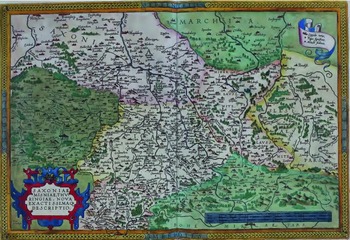
Map of Saxonia in Abraham Ortelius, Theatrum Orbis Terrarum (Antwerp, 1570), following fo. 23. Reproduced by permission and with the courtesy of the Norman B. Leventhal Map Center at the Boston Public Library, Boston, MA.

<Now> Like as before is shewed of the Counte Pallatines order of Iustice, In like sort may be said of the Duke of Saxon now Elector saveing that his Councelles orFootnote 201 Courtes of Iustice, be not all att one place[.] ffor his Chauncery {(}where hee houldeth his Privie Councell{)}, and the Exchequer are holden atFootnote 202 Dresden, which I declared before to be the Cheife place of his Residence, vnto the which all the rest of his Courtes doe appeale <and from the which his Subjects doe in no case appeal> to the Chamber of the Empire, as was said, that the Palsgraves Subiectes maie.Footnote 203 And further his Court the HoffogerichtFootnote 204 {(}where the differences betweene his Subiectes are Decyded, and wherevnto heeFootnote 205 himselfe
[begin 193*v]
If hee doe his Subiectes wronge, maye be Cyted{)}, is kept allwaies in the Cittie of LaeiptzigkeFootnote 206 in {Miss} Missina. And his Consistorie Court (which is not soe well reformed as the Palsgraves Court) is houlden in two places, the one at Missen in Missina, and the other at WittenbergeFootnote 207 in Saxonie. In all theseFootnote 208 Princes Provinces, Adultrie is punished with death, and fornicacion, with punishment,Footnote 209 and banishment. This Elector albeit hee keepeth not soe manie Tables in his Court, as the Count Pallatine doth, yett hee keepeth a greater State, and giveth ordinarie enterteynement, to more then the Palsgrave doth. for besides his ordinary Guarde, (Whereof theire bee xv Halberters,Footnote 210 and as manie Harquebuziers{)} to whome hee giveth monethlie, besides theFootnote 211 liueries which are blacke Cloakes, for theire dyett, and ffee, five guilders when they sitt still, and sixe guilders when they travell. Hee hath Continewallie aboute him xiiij RottmastersFootnote 212 (that is Captaines) which are able to bring him on the suddaine for all eventes 300 {horses} horses apeece, of the which everie one keepeth ordinarily xij horses, for the which xij horses, eache of them hath allowance of the Prince yearely five hundred
[begin 194r]
ffrench Crownes, And for theire yearlie fee of Captaineshipp, one hundred and fiftie ffrench Crownes a peece.Footnote 213
And these Captains are all gentlemen, yat are for the most parte married, and keepe howses themselues at Dresden, where the court is. To the rest of his traine (to whome hee giveth meate, and drinke in his Court{)}, Hee alloweth besides provender yearlie fore everie Horse ffifteneFootnote 214 dollars, And toFootnote 215 some gentlemen hee alloweth sixe horses, to some more to some lesse, according as hee favoreth them, and according to their quallitie. And for everie Horse, hee alloweth them a servaunt, whoe hath his liverie, meate and drinke, att the Princes Charges in the Towne.
Of all the Princes inFootnote 216 Germany, the present Elector of Saxonie is the ritchest, and of the greatest power, both of Men and mony, for his yearlie Rent of Assize is Reckoned to be a boue 700 Thowsand dollersFootnote 217 besides his Taxes, Tolles, and Imposicions of Beere and Wyne &c. which is accompted to amount yearelie to as much and more.Footnote 218 The said duke hath Cxxxiiij Seignories, and in the
[begin 194v]
same xxtie Earledomes, and xvjo BaroniesFootnote 219 . Hee hath of late gotten into his handes, by the Conscent of the Channons (for the tearme as hee hath promised but of xxj yeares, but as it is thought for ever,) Three Bishoprickes of Mersburgh, Misen, Mawinburge,Footnote 220 out of the which onlie {two} towne of MawinburgeFootnote 221 hee hath yearlie for Impost of Beere {about} xxiiij Thowsand dollers;Footnote 222 His Mynes of Silver, Copper, Brasse, Tynn, Leade, &c which hee hath at his Citties of ffriberge, Anneberge, Mariberge, Sneberge,Footnote 223 and Swertzberge &c, (which be fayer Townes, and mayntained {by} onlie by the {said} Mynes,)Footnote 224 doe yeild him yearly a wonderfull deale of Riches,Footnote 225 Whereof I could learne noe Certaine <yearly> somme, because the Comodities areFootnote 226 vncertaine, somme yeares more, somme yeares Lesse,Footnote 227 according to the goodnes of the Vaines, In {the}Footnote 228 which there are workeing a boue Tenn Thowsand able Men, for the Warres, besides a great nomber of poore Impotent men, weomen, and Children, which have theire liveinges onlie by the same. Of the which workes, there is one att ffribert,Footnote 229 wherein is a singuler Arte vsed in drawing of {the} Water, out of a Well which is {above} 100Footnote 230 fathome deepe, and in most places not a fadomeFootnote 231 broade,
[begin 195r]
Into the which I went downe with Maister Henry Killigrewe and Doctor Christopher ffhenmiusFootnote 232 the Counte Pallatines Ambassador, the xxj June 1569 wee all being apparrelled inFootnote 233 such Garmentes, as the Workemen, and Mynners thereof {do}Footnote 234 vse, And as the manner is for all such as will see their workes. But when wee were descended a boue 400 staves,Footnote 235 by verie narrowe Ladders, They two were almost dead with the dampt and Close Ayre, soe as they were Constrained to Cause the guides, whoe Conducted everie of {vs}Footnote 236 with a Lampe, to Retourne. By meanes whereof I Could not see the bottome of the Water workes, whereof I did not greatlie passe, because those workes and the Engines vsed in them, be exactlie sett forth By Georgius Agricola of Keumitz in SaxonieFootnote 237 in two greate volumes printed at Basill by ffrobennius.Footnote 238
But a monge other Comodies, which greweFootnote 239 out of these Mynes, There are three <sorts of> stones in a worke in the Towne of Swertzberge, whereof the one is {called} named Magnes, Comonlie Called the Loadstone, which properlie draweth Iron to it, And the other AndroinadazFootnote 240 which putteth Iron
[begin 195v]
from it[.] The Third is Called Merga, which being beate intoFootnote 241 powder, and drunke in a little White wyne andFootnote 242 warmed, is approved to be verie MedicinableFootnote 243 for a bruse.Footnote 244
By the benefitt and great quantitie of Iron, and Copper, which are gotten in those Mynes, the Prince hath furnished such an Armorie att his Cittie of Dresden, as by theFootnote 245 Reporte of them that have travelled farr, the like is not to be founde, in anie other place ofFootnote 246 Europe. I shall describe the order thereof, As I did see it the xxiiij of June 1569.Footnote 247
First the howse is {builded} verie ffayer, and fowerFootnote 248 square of ffreestone. The two lengthes are eache {one}Footnote 249 of them 300 foote Longe, and the breadeth of eache of them is 173Footnote 250 foote broad. AndFootnote 251 everie one of these Lengthes, and breadethes, hath Three Roomes, or Stories.Footnote 252 in the Lowest Romes are the greate ordinance, being a boute fiftieFootnote 253 double Cannons, that Carrie a shott which wayeth, 160 pound, And 350 Cullveringes, halfe Cannons, Cannon poriors,Footnote 254 Sacres, ffaulconns RobonettesFootnote 255 and other smale {feild}Footnote 256 peeces, all of Brasse, readie movnted on verie good Carriages,
[begin 196r]
and furnished with all thinges necessarie, As shott made with the Hamor, to an infinite nomber, Chargers, Scowrers, Horsetraze, PyonersFootnote 257 Tooles &c.Footnote 258
And for everie of theseFootnote 259 iije or iiijor great Peeces, there areFootnote 260 hanging on the Walles, xijFootnote 261 Harquebusses, a Crocke. In the two vpper most Roomes or stories, are Armor andFootnote 262 Corslettes, Blacke and porcellFootnote 263 White, verie good of the Newest fashion, Quallivers,Footnote 264 Longe Curriors, dagges, Pikes, Arscinde, and vnarscinde, Launces,Footnote 265 Holbertes, Partizons hole water sprinckles, Two hand swordes, and swordes with Baskett hiltes, xxxvjo Ensignes, drumms, Phiffes,Footnote 266 and all other thinges necessarie for the furniture of iiijor Regimentes. To everie Regiment Tenn Ensignes, and to everie Ensigne 300 Men, which is xij Thowsand ffootemen, and Curettes,Footnote 267 ffor the proofe for 2000 Horsemen, Soe that of the suddaine, this Prince is able to furnishe vntoFootnote 268 ye field xiiij Thowsand Men, with Armor in everie pointe, which is onlie in the Cittie of Dresden.Footnote 269
His Citties besides at Lispia, Wittenberge
[begin 196v]
and Suisca,Footnote 270 are said to have {also}Footnote 271 their seuerall Armories, besides that everie Subiect in all his domynion<s> (accordingFootnote 272 to his Abillitie) is bound to have his proper furniture, both for himselfe and his servauntes, for as manie as everie man keepeth, a Corslett, a Horquebusse, a Halbert, and Pike, of the which (that are able to beare ArmesFootnote 273 ) the Prince if neede require, may well make into the ffield iiijxx ThowsandFootnote 274 Men, whereof six Thowsand shalbe Horsemen, Leaveing his Countrie Notwithstanding with sufficient guarde.Footnote 275
This Prince, As hee hath not the perfect knowledge of God, like vnto the Counte Pallatine, even soe is his Conversacion such as misliketh all men vniuersallie. hee is misliked for his inaffabillitie, for ever since the Warrs of Gattha,Footnote 276 hee hath, kept himselfe soe secrett, as noe man (except one or two of his prive Councell) Can either see him, or speake with him.Footnote 277 hee Keepeth himselfe still with his privie Chamber, where {he} hee Learneth {presently} to plaie on the Virginalls, the which exercise hee doth {so}Footnote 278 ernestlie Applye, as almost hee never Ceaseth, But when hee must
[begin 197r]
either eate or sleepe. Nott longe since his Mynde was to learne the Lattine Tounge, Whereof hee was vtterlie Ignorant, And nowe he hath soe profited in a shorte time therein, that hee is able Comonlie to vnderstand anie thing that is either spoken or written in Lattine. The greate delight hee hath in hunting the stagg, orFootnote 279 wilde boare bringeth him sometyme a broad, But then hee is soe Accompanied on either side, with all his {gra} guard, And with att {the}Footnote 280 least fower hundred Horsemen, that noe man almost for what Cause soever, it bee, is suffered to Come to his speeche.Footnote 281 Hee sildome giveth anie Princes Ambassadors Audience, in his owne Person, but aunswereth himFootnote 282 by his Chauncellor, or Cheiffe Councellor. The Princes of Germany doe not love him, {(}although by reason of his greate power {and aucthoritie}Footnote 283 they flatter him{)}, because of his extreame dealing with his kindsman, duke John ffredericke, from whose ffather duke Maurice this Electors brother, heeFootnote 284 did take the Electorshipp and the most parte of his Liveing besides, (All which the said duke Maurice dyeing without issue Male left vnto thisFootnote 285 duke Augustus, his Brother). Where vppon such displeasure grewe betweene
[begin 197v]
the twoFootnote 286 howses, as I shall heereafter declare, that the Eldest sonne of John ffredericke the ould Elector is spoiled, both of all his Land and Libertie.Footnote 287
Further this Duke Augustus, is hated of his Nobillitie, and gentlemen, aswell for the Cause last Recyted, As alsoe for purchasing of late, the Landes of one MilritzFootnote 288 a gentleman in MisinaFootnote 289 in a manner against his Will, for the which hee paid 160 Thowsand Guilders, And as it is said, the Woodes onlie on the saideFootnote 290 Landes, are as much worthFootnote 291 . Hee offendeth his Nobillitie alsoe for his other Cruellties, in Tormenting of Men with such death<s>, And especiallieFootnote 292 for Cutting in iiijor peeces {of late}, one CorluciusFootnote 293 a gentleman of an Auncient Howse, and one of his Howshould servauntesFootnote 294 who albeit theyFootnote 295 had Comitted thinges worthe of death, yett the manner of his execution seemed soe straunge and was soe odyous, to the gentlemen of his Courte As they all went forth of the Cittie, that daie that hee suffered death. The People of his Citties love him not for his Coveteousnes, because there is noe Trafficque nor handlinge whereof there maye Arise anie Comodite
[begin 198r]
or gaine, butt hee getteth it into his owne handes. As for example, The gaine that they were wonte to have in buyeing, and selling the Mettas that Riseth of his Wynes,Footnote 296 hee hath nowe taken into his owne handes. Besides that, hee maketh silke, dyeth Cloathes,Footnote 297 selleth Malte, and handleth everie thing himselfe, whereof anie profitt may growe.Footnote 298
Hee hath furthermore raysed such Taxes,Footnote 299 and Imposicions vppon his people, and hath turned {his} the Tenauntes out of Certaine Landes, that hee hathFootnote 300 Latelie purchased, whose Ancestors haue held the same, tyme out of mynde,Footnote 301 and they knowe not {now}Footnote 302 where to place themselues, againe, and hath Converted the same to his owne vse, in such sorte, that inFootnote 303 all his Countrie, there is greate Complaint of him. All these thinges are the more grevious, and specialle marked by reason ofFootnote 304 the memorie of the Late Princes his Predecessors is freshe, {&} Whoe albeit {in}Footnote 305 somme respectes wanted not their faultes, yett generallie for affabillite, Mercifullnes, and Liberallitie were much Comended. The Cause whie this Elector was stirred to deale soe extreamlie
[begin 198v]
with his Cozen John ffrederick I thinke it not a misse to inscerte in this place. Aswell because it is not yett to my knowledge sett forth trulie by anie other, As alsoe for that vppon the similitudeFootnote 306 betweene the Princes of this howse, dependeth almost the Weale or Ruyne of all Germany, By reason of AllyanceFootnote 307 that either parteFootnote 308 hath, with the most noblest howses {not onely}Footnote 309 in Dutchland, but in other kingdomes neere a bout. The storie as I haue heard it Credibly Reported is this.Footnote 310
In Anno 1567 John ffrederick of Wymar in Saxonie, sonne toFootnote 311 John ffrederick {the}Footnote 312 late Elector of Saxonie, kept within his Iurisdiccion one William Grombach and Certaine other Lebelles inFootnote 313 the Empire, ffor the which Cause hee was alsoe declared by a Publique decree a Rebell to the same State of the Empire. This Grombach was an Auncient Captaine about lxxFootnote 314 yeares ould, borne in ffranconia of a Noble and Auncient howse, And from his youth was brought vpp in the exercise{s}Footnote 315 of Warr, And was of Nature seditiously disposed, allwaies attempting new disignes in his Countrie. ffor in the Warres that Marquesse Albert made against the Bishopps
[begin 199r]
and Churchmen, hee tooke parte with him and never left him, soe longe as hee kept ye field and although hee was oftentimes, Called home by the Bishopp of Wirtzburge (whose Vassall hee was{)}, vnder {the}Footnote 316 paine of Confisscacion, yett hee Continewed with the said Marquesse, vntill hee was overthowne. Wherevppon the Bishopp seazed ofFootnote 317 his goodes and Landes (after the overthrowe of Marquess Albert), hee went into ffrance to Henry 2d of whome hee received greate sommes of mony to Leavie soldyers, to serue against the Emperor Charles, but peace being Concluded betweene them att AmyensFootnote 318 in Ao 1558 hee retourned into his countrie, Where beforeFootnote 319 by secrett meanes, hee had Caused the Bishopp of Wirtzburge to be slayne in Anno 1557 because hee had Confiscated his Landes.Footnote 320 Afterwardes in Ao 1564Footnote 321 hee was Comaunded by the Duke of GuyseFootnote 322 to Leavie Certaine soldyers for the seruice of the ffrench King, (whose Colonell hee was) against them of the Religion in ffraunce, but Peace being then alsoe Concluded, hee was not there Imployed. Wherevppon hee retorned home, and with parte of those soldyers, whome hee had tooke vpp with the ffrench Kinges mony, hee marched against the other
[begin 199v]
Bishopp of Wirtzburge, and Bamburge the which succeded him, that GrombachFootnote 323 had killed, wereFootnote 324 hee not onlie by force recouered his goodes taken a waie by the said Bishopp, but alsoe spoiled and made hauock of both those Bishoprickes. ffor which Cause hee procured {to}Footnote 325 himselfe the Banne of the Empire and was proclamed a Rebell, By reason whereof hee was forced allwaies to keepe a good guarde of soldyers, about him, for the saffetie of his person. Butt in the last dyett houlden vnder the Emperor fferdinando an Edict was published, that noe man of whatt degree soeuer hee was,Footnote 326 should keepe anie MenFootnote 327 in Armes, except heeFootnote 328 were by the publique Conscent of the States of the Empire. Notwithstanding Grombach did not onlie keepe his ould Band of {ba} Men still together, Butt alsoe leavied newe and practized with some Personages of name, and Authoritie to enterprize somewhat for the Libertie of such as were oppressed, and susteyned wronge in the Empire.Footnote 329
Of the which enterprize the a forenamed John ffrederick of Weymar, was one of the CheiffeFootnote 330 ffauerors, being perswaded by the said Grombach that then the time serued for him, to recouer the Electorshipp
[begin 200r]
the which was taken by force from his father, and that the most parte of the Princes in Germanie would sideFootnote 331 him therein[.] wherevppon in the dyett houlden by Maximillian the Emperor, that nowe is, at Augusta, in Ao 1566, By the Comon Consent of all the States, the said Grombach was declared an Enemie toFootnote 332 the Empire, with all his Adherentes, And order taken to extendFootnote 333 againste him, as a gainst a seditious Man, and disturber of the Common wealth.Footnote 334 This Notwithstanding, Grombach ContinewedFootnote 335 his ffaccion, AndFootnote 336 was receiued by John ffrederick into his Castle atFootnote 337 Gottha, the which was of suche force, as they in all respectes thought themselues safe from theire enemies.Footnote 338 But Augustus now Elector of Saxonie being in the a foresaid dyett, Appointed the Emperors Leivetenant for this Warre,Footnote 339 and having forFootnote 340 the Charges of the EmpireFootnote 341 6000 Horses, 30Footnote 342 Ensignes of ffootemen, {and}Footnote 343 40 Peeces of great Ordinance, beseeiged the towne of Gottha, and the Castle {of} Grimsteines,Footnote 344 which thing the Citizens and certaine Captaines there perceiueing, & weighing with themselues, that the matter was taken in hand by all the Estates of the Empire, were nowFootnote 345 Contented to yeild both Grombach
[begin 200v]
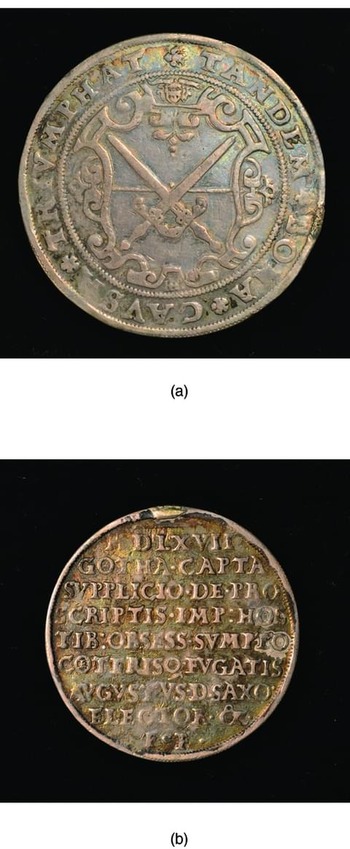
the Towne, and the Castle, to the said Elector, Whoe as soone as hee was entred, tooke John ffrederick and sent him with a sufficient Guard to the Emperor, with whome hee remayneth still, <a> Prysoner, in the Cittie of Prespurge in Hungaria,Footnote 346 a boue a hundred {English}Footnote 347 Miles beyond Vienna, <near Turkey,> And executed aboueFootnote 348 xx of the Cheiffest Robbers,Footnote 349 Whereof Grombach & Doctor {Pounta} Pontanus,Footnote 350 Chauncellor to the Duke John ffrederick, with Certaine others were quartered quicke. This Victorie was soe ioyefull to the Elector Augustus, That in memorie thereof, hee Caused dollers to be Coyned with this Inscripcion (Tanden Footnote 351 bona causa triumphat) <A good cause at last prevails>. After hee had sent duke John ffrederick {away}Footnote 352 Prisoner, hee Caused his Castle which was one of the fayrest howses and strongest fortresses, in all Germanie and the Principall {he} MaunsionFootnote 353 howse of the old Elector, John ffrederick to be vtterlie Razed, and destroyed, soe as there is not left one stoneFootnote 354 vppon a nother. I heard as I passed through theFootnote 355 Towne of Gettha yat the Raceing onlie of that Castle of Greimsteine, and the Walles of Gottha, Cost him 73 thowsand Guilders, which the States of the Empire, as I heardFootnote 356 doe grudge to Repaie, because they alleadged
[begin 201r]
that theyFootnote 357 did not Conscent to the Razeing thereof.Footnote 358
Grombach and diuerse others that were executed with him, and sithence,Footnote 359 before their death Confessed that their intent was to haue killed Augustus, And to have reduced the Electorshipp to John ffrederickes howse, whome Notwithstanding Grombach in that respect did declare,Footnote 360 as not privie to that enterprize,Footnote 361 for the killing of Augustus, and protested that hee was not Culpable in anie thing, But in defending him, to the which hee said hee wasFootnote 362 by greate perswations hee had alsoe allured him.Footnote 363 And moreover because his Brother Duke John WilliamFootnote 364 would not agree to this enterprise, but ever with stood the same, The said Grombach found meanes to sett disencion betwixt him and his Brother, A bout the particion of the ThirdFootnote 365 Brothers parte, whoe dyed a Little before, the said time[.] ffor the which Cause, Duke John William was Content to Assist Augustus the Elector against his Brother in the seige of Gottha. By meanes whereof both his Brothers partes were given vnto him, the which he presentlyFootnote 366 enioyeth. Notwithstanding there is nowe
[begin 201v]
a heart burning,Footnote 367 betwixt the Elector Augustus and the said Duke John William, Aswell for the Cause of theFootnote 368 Electorshipp, that moved his foresaid Brother to the former enterpize, As alsoe for Certain Controuersies, in Religion, that are betweene theire Preachers, Whereof I shall speake further heereafter.
Nowe because I haue not heeretofore touched the manner and Customes, that the Princes of Germanie haue in the division of their Landes, I thinke it good in this place to shewe, what I haue {hard} Learned heereof. The manner Commonlie of all the Noblemen, Princes, {and gentlemen in Germany is by their last will to dispose to euerie Childe their porcion both of landes and money. The womanFootnote 369 (so long as there liveth any male of the ma name) dothFootnote 370 never inherit any land. He that hath many sonnes and beareth an effection to one more then to another (if he be a great Prince) then he calleth the gentlemen and <great> states of his Cuntrey and Citties together, and by their consent establisheth in his life tyme the devision of his childrens porcions and giveth to some more to some lesse according as he favoreth and his estates will agree, whose consent commonly dependeth vpon the princes pleasure. But to disheritFootnote 371 any any sonne or to make to much an vnequall devision of landes is very dan[gerous]Footnote 372 [begin LPL, fol. 8v] As it appeareth by that which John SleidbnFootnote 373 writeth in the 14 booke of his historie touching the devisions of the landes of the Dukes of Saxonie, whereof sprungFootnote 374 the first quarrell betwixt them of that howse and was cause of a great Civill warr in Germany.Footnote 375 Such inequalitie in particion is not therefore lightly seene except it be for certaine such causes as are prescribed in the Civill law; that is, in case the sonne conspireth his fathers death or doth not his endevor to redeeme him out of prison if he be taken by theFootnote 376 enemies &c. If the father dyeth intestate}Footnote 377 then dothFootnote 378 his Children, divide his goodes equallie (Pro rata porcione). TheFootnote 379 sonnes haue the Landes, and the daughters the monie, And in Case there be noe Mony left, Then the sonnes are bound, everie one out of his porcion of Land to paie Certaine somesFootnote 380 of Mony, towardes the Dowrye of theirFootnote 381 sisters, in which Cases there are Certaine ordynances, whereby everie one knoweth what to have, according to their quallitie.Footnote 382
The Subiectes of all the Princes, and gentlemen
[begin 202r]
in Germany doe hold their Landes either in ffeode,Footnote 383 for payeing a Cheiffe Rent, and Acknowledging Homage, or in ffee ffarme, payeing a Certaine Rent, either in Mony, Corne, or Wyne, or in all. Or ells theyFootnote 384 are Tenauntes att the will of the Lord, for soe manie yeares, And for soe much Rent, as is agreed betweene the Lord, and the Tenaunt. There is almost noe Prince, Nobleman, orFootnote 385 gentleman, But hath Certaine Vassalles that of Right, doe owe them their Laboure, some to sowe, some to Mowe, Tyll, Carrye, Ditch, Hedge &c. By whose Labour their demeasnes for the most parte are mayntained.Footnote 386
Thus have IFootnote 387 Breiffely as I Could, sett forth {by thexamples of} the Count Pallatines, and the Elector of Saxonies {the}Footnote 388 fform of goverment, in polliticiall Matters, of the two first estates, That is to saie of the Spirituall, and Temporall Potentates, whoe both in their Howshold seruice, and Civill affayres, haue all forFootnote 389 the most parte the same order, and forme, that the foresaid Electors have.
Touching the Third estate which I said was of the ffree Citties, Thus much is to be
[begin 202v]
vnderstood,Footnote 390 that {of} the saidFootnote 391 ffree Citties some are meerelie to be vnderstood subiect to the Empire, as Augusta, Aconia, Argentina, ffranckfforda Adund,Footnote 392 Lubeca, Hamburgum, Vlma, Colonia, Spira, Norimberga &c.Footnote 393 And other some, for that they were once vnder a nother Lord, to whome everie one yettFootnote 394 acknowledgeth a certaine dutie, doe therefore yeild noe such Contribucion as the EmperorsFootnote 395 Citties doe. As for example Magdaburga, Erfforda, Breame, Brunswick, Luneburg &c have eache of them a severall Lord, whoe is either the Bishopp or duke of the name, that euerie one is Called by, To whome they owe their Homage, and a smale dutie, besides.Footnote 396 But they vse notwithstanding their owne proper Municipall Lawes, which haue their ground, on the Civill Lawes, and their owneFootnote 397 Auncient Customes, As the Emperiall Citties doe. ffrom the which their Lawes, Ordinances and Customes, it is Lawfull for the Citizens in some Cases,Footnote 398 to Appeale to the Chamber of the Empire which is at Spire.Footnote 399
They are all governed, either by democritie, that is by Certaine Chosen out of the Multitude of the Comon People, or by the State of Oligarchee, that is, by a fewe of the wealthiest, and most principall of the People, Or ells by
[begin 203r]
Aristocratie, that is, by a fewe of the best sorte, not in respect of their wealth,Footnote 400 but of their virtue.
They gott themFootnote 401 Liberties either by purchase of Monyes,Footnote 402 or ells by the ffavor of the Emperor, or by force of Armes, from that Prince that was their sovereigne, and haue by that meaneFootnote 403 of Libertie such Traffique and handling, as they are growne soe Riche, that they haue fortified their townes,Footnote 404 and Territories, in such sorte as they feare not the force of the Enemie, bee heeFootnote 405 never soe mightie. There are iiijor Citties which are Called by theirFootnote 406 auncient name, the iiijor Citties of the Empire, and are ffree, that is Augusta, Metis, Acena,Footnote 407 Lubica, Whereof Metis is presentlieFootnote 408 vnder the ffrench King, and is not free as the rest bee. Alsoe there are iiijor other Citties which are named the dorffes, that is, the Townes of the Empire vizt Bamberga, Salistadium,Footnote 409 Haganoa, Vlma, Whereof Bamberga is nowe vnder a Bishopp and Salistadium vnder Archduke ffardinando the Emperors Brother, that now is.Footnote 410 There be alsoe iiijor other Citties which are termed ye Boores, of the Empire, that is, the Villages, But yett <are> notwithstanding greate Citties ofFootnote 411 Collen, Regensburge, Constantia, & Saltzburge
[begin 203v]
the which three, last, are all noweFootnote 412 Subiect<s> to the Bishopps of that name.Footnote 413
There be manie other Citties of greate fame and force, as Magdburge,Footnote 414 which susteined, beseigedFootnote 415 by the space of xiij monethes, togather, of the Emperors Leivetenant, Duke Maurice Elector of Saxon,Footnote 416 and others the mightest Princes of Germany. In {the}Footnote 417 which seidge they tooke prisoner, George duke of Mechelburge,Footnote 418 And in the end Compounded not with soe vnreasonable Condicions as the other Citties did, in the Warres of Smalcalde,Footnote 419 for they would never agree inFootnote 420 the Intrim, noe more then the otherFootnote 421 Citties of Brunswick, Hamburge, Lubeck and the Sonnes of John ffrederick the Elector of Saxon did.Footnote 422
Breame standing vppon the Riuer of Weser is likewise famous, for resisting ofFootnote 423 Duke Erick of Brunswick,Footnote 424 Leiuetenant generall to the Emperor, Charles the first,Footnote 425 where hee beseidged the same, in vaine, and was in the ende by the helpe of the Hamburgers, Connducted by Counte PemingFootnote 426 Chaced a waie, from thence, and forced to Leave his great Ordinance behinde him.Footnote 427
Brunswick standeth neere the Riuer {of}Footnote 428 Owkar
[begin 204r]
which takeing in a nother little Riuer, Called the Scowder,Footnote 429 aboue the Towne of Zell, falleth in to the Wiser.Footnote 430 The which Cittie of Brunswick hath bine att variance with their dukes, from the yeare <of> 1536 vntill this present yeare 1569. Henricus senior, andFootnote 431 duke of Brunswick, beseidged it an whole yeare in vaine. Henricus Iunior, the father of Duke Julius that now is, beseiged it twice, Once by the space of vj weekes, and a nother time viij weekes togather, and prevailed not.Footnote 432 The said Duke Julius is now agreed with them, and entreth the towne with 700 Horses, the 3 of October next, but <is> not to remayne there with anie force.Footnote 433 In this Cittie is an Auncient Monument of a monsterous brassenFootnote 434 Lyon, The which beast duke Henricus sirnamed Leo is said to haue brought <thither> with him out of England.Footnote 435 There is alsoe made in this Cittie the best ArmesFootnote 436 for the prooffe and otherwise, and the best dagges, and ffyer Lockes, that bee in all Europe.Footnote 437
Lubecke vppon the Riuer of Trowe, hath as it were Conserved, the King of Denmarke in his estate,Footnote 438 against the Sweden, But it isFootnote 439 att this daie greatlie Impouerished because of the Continewall warres, they
[begin 204v]
haue had with the king of Sweden,Footnote 440 And stopping of a Riuer betweene them, and ye Cittie of Hamburge, Called the Trowe, whichFootnote 441 Jasper Bucolt a gentleman of that Country,Footnote 442 because they refused to paie a smale Toll, vnto him, hath of Malice throwne a nomber of great Trees, and stones into it, soe that they Cannot passeFootnote 443 to and fromFootnote 444 {Hab} Hamburge by water, as they were wont to doe, But are drawneFootnote 445 to Carrie all their Wares by Land which is greatlie to their discomodities,Footnote 446 Hamburge standethFootnote 447 att the mouth of the greate River <of> Albis and isFootnote 448 a boute 100 English Miles beneath, andFootnote 449 is famous for the nomber of Beerebrewers, Whereof there are dwelling {there}Footnote 450 howsholders 720.Footnote 451
There is alsoe Auspurge, vppon the Riuer {of}Footnote 452 Lech in the which are the ritchest Marchauntes in Europe, namely the Fowlkers, Piemells, Schorers, Bawingatners.Footnote 453
ffrankford, standing vppon the Riuer Mene famous for {the}Footnote 454 two great Martes, that are kept there yearlie, and for Eleccion of ye Emperor.Footnote 455
Regenspurge as was be fore said is now vnder theFootnote 456 Bishopp but once was meerelie Subiect to the Empire where Caesar ffrederick the 3 in
[begin 205r]
Anno 1446 did hould a dyett, to the which dyett for Certaine respectes, a streight Comaundement was given by the Emperor, that noe Earle should bringe more servantes then three, nor noe knight, nor gentleman more then one. Att the same time there was a gentleman Called BuboFootnote 457 of Abenspurge, the which by two lawefull wives, had viij daughters, & xxijFootnote 458 sonnes, all liveing at one tyme, & of good Age, and Stature, and hearing of this dyett, brought his xxijFootnote 459 sonnes thether, being all Apparrelled in Redd, {and} xxiijFootnote 460 servantes with them, all well movnted, his sonnes Ryding before him, and his servauntes after him[.] And when the Emperor heard that the said BuboFootnote 461 was come to the dyett, with soe manie Horses, hee sent for him, and asked him whieFootnote 462 hee had broken his Commaundement. To whome BuboFootnote 463 Answered, Maie it please your Maiestie I haue not Transgressed your will, for I haueFootnote 464 my xxijFootnote 465 sonnes of my bodie lawefullie begotten, (and therefore Right gentlemen{)} andFootnote 466 haue but xxiijFootnote 467 servauntes, which is <for> everie gentleman a servaunt, according to your Maiesties Comaundement. The Emperor, marveling at thatFootnote 468 blessing of god, gave vnto him att that present great possessions to mayntaine his geneallogie with all, and Caused a Monument to be made
[begin 205v]
in the Cittie of Regenspurge of him, and his Children, the which att this daie remayneth {yet}Footnote 469 to be seene. But nowe there is none a live of that howse, for in the Warres that were betweene the Dukes Albert, and Christopher of Bavaria in Anno 1485[,] Nicholas of Abensberge whoeFootnote 470 onlie remayned of {all}Footnote 471 that stocke, was slayne by a servant of the said duke Christopher, and his Inherritance wasFootnote 472 given a waye.
Erfford vppon the River of Vnstrott,Footnote 473 an ould Vniuersitie founded in Anno 1392Footnote 474 in the which Martine Luther first studdied and became a ffryer, in that Cittie, And there remayneth to this daie, for a monument of him aFootnote 475 Pulpitt, wherein hee made his first sermon.Footnote 476
NorimbergeFootnote 477 vppon the River BequitzFootnote 478 noteable aswell for the good goverment, As alsoe for Resisting the force of Albert, Marquesse of Brandenburge,Footnote 479 and for all kind of <Iron> worke which is there made exceedinglyFootnote 480 well.
Lineburg,Footnote 481 vppon the Aller, & EllmanoweFootnote 482 famous for the Golden Table, which is in St. NicholasFootnote 483 Abby and is allmost two yardes
[begin 206r]
Longe, and a yard broad, sett full of ould Rubies, &c. It was given by duke Ernest of Stuppelcorne, whoe was Elector {Spa} of Saxon{ie}Footnote 484 and Duke of Brunswick and Luneburge &c, whoe wannFootnote 485 the saidFootnote 486 Table at dyce of a Iewe as is reported.Footnote 487 There is in the Cittie of Luneburge a Maine sea, which is distant abouteFootnote 488 viij English miles from a salt pitt,Footnote 489 out of the which sixe Men by a Plumpe,Footnote 490 doe Continually both daie, and night, (Chaunging everie night five howers fresh men) drawe soe much salte water, as serueth 54 howses, in euerie of the which howses, there be iiijor Leaden panns and everie Leaden pann boylethFootnote 491 in a daie and a night, a Waggon load of Salte, which is sould for vj dollers,Footnote 492 one time with a nother, Which a mounteth yearely to a boue one hundred thowsand pound sterling. The Spirituallity hath the most parte of the Comoditie thereof. There are in euerie howse 3 Laborers att the least, soe as by the benefitt thereof a nomber of Poore people are sett aFootnote 493 worke.Footnote 494
Collen is an Auncient vniuersitie founded in Anno 1388 and a greate Cittie, wherin is said to bee, for everie daie of the yeare
[begin 206v]
a Church. In it alsoe are 3 Idolls of pure gold, which the blynde Papistes beleeue to bee the Images of the wise men, that offered to our Savior Christ, and are thought to be brought thether by the Bishopp of that Cittie from Millan in Lombardi. In the same cittie are alsoe I cannott tillFootnote 495 howe manie thowsand Virgins sculls, which the doteing Antiquitie beleiued, to be slayne in England, for the testimony of the Gospell.Footnote 496
Vlma, standing vppon the River Danubius, a verie great, and Riche Cittie.Footnote 497
Acquisgraue, that once was the seate of Carolus Magnus, and after the place of his sepulchure, where the Emperor ought {also}Footnote 498 to receiue his first Crowne as King of the Romanes, In <the> which Cittie is kept for a Relicque, an ould Lynnen Cloth, {wch} which ye grosse Papistes shame not to affirme {it}Footnote 499 to be the Virgine Maries smocke, (like as not) fforFootnote 500 at TriereFootnote 501 they dreame alsoe to have the shirte of our Savior {Christ},Footnote 502 by the which noe smale gayne Ryseth to the prowde Prelates, from the poore simple People.Footnote 503
[begin 207r]
Argentine or Strausberge, standing vppon the River {of}Footnote 504 Brush is one of the strongest peeces in Germany, in the which there are 700 and odd gardyners that are Howshoulders, and are noe smale maynteyners of the Common Wealth.
Spire is alsoeFootnote 505 the Chamber of the Empire, where all Controversies in Lawe betweene the Princes and ffree Citties of the Empire are decyded. in the which Court the Emperor presentith the President, (whoe is Commonly either an Earle, or aFootnote 506 Baron{)}, andFootnote 507 hath for his fee yearlie 3000 Guilders, And two other Barons AssestersFootnote 508 which have 1500 Guilders a peece. And everie Elector hath a Councellor there, all wayes Resident, And everie Circle of the Empire {hath likewise}Footnote 509 one which are Called (Cessors CameraFootnote 510 ) whoe solicite the CausesFootnote 511 of their Princes, or estate, And have for theire yearelie ffee,Footnote 512 500 Guilders a peece, allowed them out of the Chamber of the Empire. To this Court all other Courtes {exc} (except before excepted) both of the Princes, and ffree Citties, doe in Germany appeere,Footnote 513 and receiue, by the Civill Lawe there a deffinitiue sentence.Footnote 514
[begin 207v]
All these ffree Citties doe stand for the most parte doe stand vppon Rivers, (Whereof the principall are Danubius, Rhenis, Albis, Menus, Mosa, Mosella, Anncia,Footnote 515 Visurgis, Egra, Odera, Vistula, &c.Footnote 516 ) of the which Danubius falleth into Mare Euxinum,Footnote 517 by Constantinople, And the rest into the Ocean. And by the benifitt of these Riuers and other smale Riuers, that fall into these, The {abovesaid} a foresaidFootnote 518 ffree Citties are Cheifely mayntained, for by meanes thereof they have Trafficque with the most parte of all other Nacions.Footnote 519
The Comodities that Comonlie are had in Germany isFootnote 520 Copper, Brasse, Rhenishe Wyne, Rye, ffirr tree wood, Woll, Madder, Sopes,Footnote 521 Waxe, fflax, Blewslate, {harnesse,}Footnote 522 Harquebushes, dagges, Lockes, and all kind of Iron worke, Horses, Oxen, seede PayFootnote 523 ffurres, glasses for wyndowes, and drinking glasses, with such like, The which are Transported from one Cittie to a nother, and soe to other Nacions, for other Commodities that they have neede of.Footnote 524 There bee alsoe in Germany, diuerse great and Rich Citties that partlie are fallen a waye, from the obedyence of the Empire,
[begin 208r]
and partlie areFootnote 525 forced, vnder the obedyenceFootnote 526 of other Princes, or States, adiacent, As Basilia, Geneua, Schaffhawson, and Mÿlhowsen, The which at diuerse times have bine wonn to the Confederatie of the Helvetians or Switzers.Footnote 527
Danszick, standing vppon the River Vistula, neare the Ocean, a greate Cittie and Cheiffe Markett of all the North parte is become subiect togather with EluinaFootnote 528 and a greate parte of Prusia to the king of Polonia in Anno 1524.Footnote 529
Restocke is taken by the Duke of Mechelburghe.
ConstancieFootnote 530 is vnder the King of ye Romanes.
Meltz, ThonieFootnote 531 and Verdune, are possessed by the ffrench King.
VtrickFootnote 532 & Cambray, King Phillipp enioyeth with manie others, which {are} nowe are <not> Contributaries to the Empire, as other ffree Citties are.Footnote 533 The ffree Citties because they Cannot be otherwiseFootnote 534 Comaunded are Called in all Necessarie affayres of the Empire (as is a foresaid,{)} By the Emperor to aFootnote 535 dyett. In the which dyett, As there be Called three estates, soe there are three Councellors.Footnote 536 Into
[begin 208v]
the first Councell, Come vi onlie the vijo Electors. Into the second the Princes, Spirituall and Temporall, And for euerie Abbot of the Empire enter two persons, And for everie Counte and Baron, enter likewise two. And into the Third Councell Come those, that are sent from the ffree Citties.
Vnto all theseFootnote 537 Three severall Councelles are propounded such matters, as either the Emperor, or the King of the Romanes, or anie other Prince of the Empire, hath to intreate of, vppon the which euerie of them give their aduise a parte, And in this dyett, the ffree Citties give onelie their aduice, But are allowed noe sentence.
Thus much, touching the polliticall goverment, of these Three estates, in Civill Affayres. Nowe it remayneth that I speake some thing of their Religion, whereof in Germany there be three kindes, spetially vsed, vizt Poperie, Caluenismee, (as they terme it) and Lutheranismee.Footnote 538
They which abyde in Poperie are the three Spirtuall Electors,Footnote 539 AndFootnote 540 all the rest of ye
[begin 209r]
ArchBishopps, and Bishopps (except the ArchBishoppFootnote 541 of {Magdelburge who is the Elector} Magdeburgh whoe is the Elector of Brandenburgh{es} eldest sonnes heire,Footnote 542 And the ArchBishopp of Breame, whoe is the eldestFootnote 543 sonne to Duke ffraunces of LawinburgeFootnote 544 The which two reducedFootnote 545 their dyoces from Poperie to Lutheranisme).Footnote 546
Of the Three ArchBishopps Electors, The Archbishopp of Triere (whoe is of a meane gentlemans howse,{)} is the most vehement in Poperie and the greatest enemie to the other Professors.Footnote 547 The ArchBishopp of Mentz, whoe is alsoe of aFootnote 548 meane gentlemans howse in Hessia, Called Daniell Brendell albe it hee favoreth Poperie, with all his Harte, yett doth hee suffer everie man to vse the Libertie of his Conscience, through out all his Countries,Footnote 549 And in manie of his Citties the Lutheraines preach the Gospell.Footnote 550 The like may be said of the ArchBishopp of Collen, whoe is the onlie Heire Male, of the CountFootnote 551 of Isenburge,Footnote 552 And is by reason thereof ffeodarie to the Counte Pallatine Elector, whoe writt vntoFootnote 553 him in December last in Anno 1568 (Att which time the Inheritance of the said CounteFootnote 554 fell to the aforesaidFootnote 555 ArchBishopp)
[begin 209v]
That according to the Lawes ofand Customes ofFootnote 556 Germanie, hee should within one yeare next following, (being the onlie Heire Male left of hisFootnote 557 howse) either take a wife, or ells hee would, {(}as by right hee might, being Cheife Lord{)}, Seaze vppon the said Countie. Wherevppon the ArchBishopp made answere that hee would within the said time <marry a Wife>, which thing he hath not done as yett.Footnote 558
Of all the rest of the Ecclesiasticall Princes, the Bishopp of MunsterFootnote 559 is the greatest enemie to the true Religion, and the greatest supporters, to the Countrie.Footnote 560
The Abbot of ffelda,Footnote 561 whoe is the EmpressFootnote 562 Chauncellor by Inherritance hath in his territorie<s>, all sortes of Religion vizt Iesuites, Iewes, Lutherans, Annabaptistes, &c.Footnote 563
Of the Temporall Lordes, that dwell in Germany, the duke of BaueireFootnote 564 only maketh open profession of Poperie, whose Countrie abideth still in the dreges thereof, As alsoe the Countrie of Tyrolis and Absetiado {do},Footnote 565 that are vnder theFootnote 566
[begin 210r]
Archeduke fferdinando, and Stiria, and Carnertha,Footnote 567 that are vnder theFootnote 568 Archeduke Charles, the Emperors Bretherin.
Duke ffraunces of Lawinburge, and duke John William of Saxonie, albeit they professedFootnote 569 Lutheranisme, yett being provoked partlie by povertie and meekeness,Footnote 570 and partlie by the sinister perswations, of {the} their Preachers, (whoe make<th> them beleiue yat the Caluinstes be worse then the papistes{)} They have bin Contented to Ayde the Papistes, against them of the Religion[.] The one with the duke of Alua, in whose higerFootnote 571 hee yett remayneth, And the other thatFootnote 572 is the duke John William in the second Civill Warres in ffraunce, serued the ffrench king.Footnote 573 The like alsoe did of late Philibert Marquesse of Badon whoe was slayne by the Admirall, in ye last Conflict in ffrance.Footnote 574
There bee alsoe other Noblemen of Germanie that this daie areFootnote 575 out of their Countrie, partlie for lacke of Liveing, and partlie because their Countree is against their willesFootnote 576 reformed in Religion, As duke Erich of Brunswick,Footnote 577 and Peter EgustFootnote 578
[begin 210v]
{of} Mansfeild, whoe have abondoned their Countrie, and live presentlieFootnote 579 vnder the Duke of Alua,Footnote 580 and the Counties of RingraveFootnote 581 {who serve the ffrench king.}Footnote 582
But all these that thus have, and doe serue a gainstFootnote 583 the Religion, are with the most parte withFootnote 584 the Nobillitie and States of their native Countrie the worse esteemed, and have the lesse Creditt.Footnote 585 The Counte Pallatine, and the Elector<s> of Saxonie have through outFootnote 586 all their domynions and Circles of the Empire, Comaunded all theFootnote 587 Subiectes of what estate, or degree soever, theyFootnote 588 bee, (by Publicque Edicte) which nowe are in the seruice of anie Papist that they within a Certaine time, vppon paine of Confiscacion of their Landes and goodes, shall retorne home, And haue by the same given Comaundement to all other their Subiectes that they, nor anie of them, vppon like paine, shall heereafter goe intoFootnote 589 the seruice, of the ffrench King, The duke of Alua, or of anie other fforreigne Potentate, without theire Lycence, and Consent.Footnote 590
Of the ffree Citties that are not Subiect to anie other power, then onlie to the
[begin 211r]
Empire, (Besides, Munster, Aquisgraue and CollenFootnote 591 {)}, I knowe not anie, that professeth altogather Poperie. And yett in all these, anie Man may vse his Conscyence without Constraint, to live after their order. And in Collen, a nomber of those, which are banished out of the Lowe Countries, for theFootnote 592 Religion, have Libertie at this daie, to remayne, whereof the Principall, are the PrincesFootnote 593 of Orange, The Countesse of Horne, and the Countesse of Killingbrooke <&c>.Footnote 594
The Citties of Connar, Sleidsteit, Kerserberge,Footnote 595 &c in Alsatia superior, Notwithstanding that they are after a sorte Imperriall, yett they be properlie vnder <the> Archeduke fferdinando, and therefore doe {mains} maynetaine Poperie still, The which Religion, the Comen <people>, and most parte of the Citizens, there doe soe little regarde, As if they had meanes they would reforme it, in like sorte as their neighbours of Hagona, Turkem,Footnote 596 Munster, &c of late, about 3 yeares past have done.Footnote 597
The second kinde of Religion, yat is vsed in Germanie, is that which they Call CaluenismeeFootnote 598
[begin 211v]
of the which a mongest the Nobillitie, onlie the Counte ofFootnote 599 Pallatine, and the grave of Embden maketh profession, and have accordinglie reformed their Countries.Footnote 600 And of the ffree Citties Breame onlie begynneth to inclyne that waie, by reason that the Cheiffest Burge Master Daniell Van Bruen, & Millenus,Footnote 601 the Cheiffe Schoolemaster there, are ernestlieFootnote 602 in that opynion, And Laboure all that they may to reduce the State there to their mynd.
All the rest, both of the Princes & ffree Citties in Germany, (except before excepted) are Lutherans in profession of doctrine, and Papistes in Ceremonies, for they have at this daie {in their Churches} Images, Lampes, Torches, {Copes, vestmentes, Albes, Surplesses, Crosses,}Footnote 603 Alters, and the verie same superstious rightes, and Ceremonies, both in Administring <the> Communion, {(}saveing that they deliuer it in both kindes, into their Mouthes, and Tounges,Footnote 604 without anie Elevacion[)] in Baptismee, {in}Footnote 605 Marriage, Arriculer Confession and buryeing, even as the Papistes have.Footnote 606
[begin 212r]
There is att this daie, two sortes of the Lutherans in Germany, whereof the one sorte is Called Truncistae, because they affirme that a man is borne, Quasi truncus Footnote 607 in Regeneratione, haveing noe power of himselfe to doe well, and that workes be not necessarie to saluacion, And that the Church is to much burthened with Ceremonies. This opynion dothFootnote 608 Mathias fflaccus IshricusFootnote 609 att Argentine mayntaine, to be the doctrine of Luther, whome Wigandus of Gera,Footnote 610 with all the rest of Duke John William of Weymars Preachers doe followe.Footnote 611
The other sorte, are {termed}Footnote 612 Sunergistae, because theyFootnote 613 saie that god draweth hominem Footnote 614 volentem, in Regeneratione, and that good workes are requisit, to follow faith, in Mans Iustificacion, and that theFootnote 615 Ceremonies be αδιæφοχα:Footnote 616 thinges indifferent.Footnote 617
Of this sorte is Georgius Maior whoe with all the devines, in the vniuersities both of WirtenbergeFootnote 618 and Leiptzeighe, and with all the Preachers of the Elector Augustus doe mayntaine this to be the doctrine of Phillipp Melancthon.Footnote 619 This Contencione
[begin 212v]
is gon soe farr betweene thoseFootnote 620 Preachers, and devines of both sides, that the Princes of eache side are become parties therin. ffor the pacyfieing whereofFootnote 621 it was thought good forFootnote 622 the wysest of either side, to haue the matter openlie disputed, The which was done at Aldenburge, a Towne in Saxonie, betweene both the said Princes, domynions, in ffebruarie last 1569, The which disputacion is sett forth in Printe.Footnote 623 Butt the ffaccion Notwithstanding Contineweth, and to what end itFootnote 624 will Come, the Lord in Heaven onlie knoweth. But wise men doubt,Footnote 625 that these are {but}Footnote 626 the begyningesFootnote 627 of a further mischeife to Come vppon {Germay} Germanie, and the Dutch Nacion, whoe both for their securitie in Religion, dissolute liveing, and horrible drunkennesse, doe exceedingly provoke the Plague of god vnto them.Footnote 628
To these Three kindes of Religion vsed in Germanie, there may be Added a fowerth, which is of Newtralls,Footnote 629 such as are the duke of Cleve, and the Emperor. And first touching the duke of Cleeve, albeit for his owne parte hee professeth Lutheranismee, yett by meanes of his wife,
[begin 213r]
Whoe is the Emperors sister, and of his Chauncellor, whoe is an ernest Papist, the Romish Religion is Adpermitted <throughout all his Dominions>, to as manie as like the same, whoe are not a fewe.Footnote 630
On the other side, The Emperor, although he makethFootnote 631 publicque profession of Poperie, in his Court, {yet}Footnote 632 aswell in his Countrie of Austria, which is a member of the Empire, As allsoe in all his other domynions, for the most parte the profession ofFootnote 633 Augusta, is for Certaine respectes and after a sorte graunted, to such as are desirous thereof.Footnote 634 but the greatest nomber of his Subiectes doe dwell still in Poperie, The which Religion The Emperor himselfe, as it is reported doth not in Conscience like, Although for some worldlie respectes, hee dare not but ResembleFootnote 635 the same. ffor their are both some of his priuie CouncellFootnote 636 whome I knowe that professethFootnote 637 openlie the Reformed Religion and diuerse both noble, and LearnedFootnote 638 Men, in Germanie, the which haue had secrett Conference with him, in that behalfe <who> doe affirme assuredlie, that hee knoweth the truth in Religion, And that for Pollicie{s}Footnote 639 sake hee dissembleth the same. But howsoeuer the matter doth stand, and
[begin 213v]
whattsoever hee maketh men to beleeue {to}Footnote 640 the Contrarie, sure I am, that in all his Accions both publicque and priuate, hee hath shewed himselfe an Em Enemie to all those of ye Religion, And on the Contrarie parte, hath fauored and supported, the Romishe ffaccion. ffor the which respect hee hath at this present soe little fauor, with the Princes Protestantes in Germanie, As both his Authoritie is with them the lesse regarded, and their myndes soe Alyenated from him, As they are purposed never in their time to establishe the succession of the Empire in his howse, neither yett dureing his raigne, to Come anie more themselues in person to anie dyett, that hee shall appointe, for what Cause soeuer it bee.Footnote 641
Wherefore, Considering the premisses, a Man may gather heereof a state, Coniecturall,Footnote 642 And Conclude with the saieing in the Gospel, That for asmuch as this Nation of Germanie is in soe manie respectes devided in it selfe, yat it shall in the ende, suffer desolation.Footnote 643
Commemorative Thaler, Saxony, 1567. Reproduced by permission of the National Numismatic Collection, National Museum of American History, Smithsonian Institution.

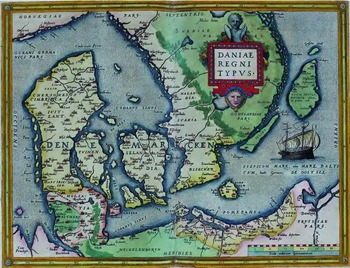
Map of Dania in Abraham Ortelius, Theatrum Orbis Terrarum (Antwerp, 1570), following fo. 21r. Reproduced by permission and with the courtesy of the Norman B. Leventhal Map Center at the Boston Public Library, Boston, MA.