




No CrossRef data available.
Extract
Frank R. Baumgartner, professor, political sciencedepartment, Pennsylvania State University, will spend the 2004–2005academic year on sabbatical leave at the European UniversityInstitute in Florence, Italy and at Science Po in Paris, France.
Jonathan Bendor, Walter and Elise Haas Professor ofPolitical Economics and Organizations, Graduate School of Business,Stanford University, was appointed a member of the American Academyof Arts and Sciences.
Michael Berkman, associate professor, political sciencedepartment, Pennsylvania State University, will spend the fall 2004semester on sabbatical leave completing a book on educationalpolitics.
Information
- Type
- Departments
- Information
- Copyright
- © 2004 by the American Political Science Association
Activities
Frank R. Baumgartner, professor, political science department, Pennsylvania State University, will spend the 2004–2005 academic year on sabbatical leave at the European University Institute in Florence, Italy and at Science Po in Paris, France.
Jonathan Bendor, Walter and Elise Haas Professor of Political Economics and Organizations, Graduate School of Business, Stanford University, was appointed a member of the American Academy of Arts and Sciences.
Michael Berkman, associate professor, political science department, Pennsylvania State University, will spend the fall 2004 semester on sabbatical leave completing a book on educational politics.
Charles Boix, associate professor, department of political science, University of Chicago, received a fellowship from the John Simon Guggenheim Memorial Foundation to research the emergence of party democracy in advanced countries, 1880–1930.
Steven J. Brams, professor, department of politics, New York University, was selected president of the Public Choice Society for 2004–2006.
Richard C. Elling, chair, department of political science, Wayne State University, will be stepping down from his position as chair and travelling in Canada consulting with Canadian scholars with the support of a Faculty Enrichment Grant from the government of Canada.
Jeffrey Herbst, professor, department of political science, Princeton University, received a fellowship from the John Simon Guggenheim Memorial Foundation to research geography and the development of states.
Brad R. Roth, associate professor, department of political science, Wayne State University, has been appointed to a 2004–2005 Career Development Chair. He will use a combination of research assistance and leave to complete his book, The Continuing Significance of State Sovereignty in International Law.
Helen E. Williams, assistant dean of arts and sciences, University of Delaware, was chosen to participate in the 2004–2005 American Council on Education Fellowship program.
David Yalof, associate professor, department of political science, University of Connecticut, was chosen to participate in the 2004–2005 American Council on Education Fellowship program.
Administrative Appointments
Donna L. Bahry, head, political science department, Pennsylvania State University.
Glenn Barkan, dean, school of arts and sciences, Aquinas College.
Daniel Geller, chair, department of political science, Wayne State University.
Scott P. Mainwaring, director, Kellogg Institute for International Studies, University of Notre Dame.
Nancy Lipton Rosenblum, chair, department of government, Harvard University.
New Appointments
Navin Bapat, assistant professor, political science department, Pennsylvania State University.
Lilian A. Barria, assistant professor, department of political science, Eastern Illinois University.
Melissa Bass, assistant professor, department of politics and government, University of Puget Sound.
Oksan Bayulgen, assistant professor, department of political science, University of Connecticut.
Robert G. Boatright, assistant professor, department of government, Clark University.
Tim Buthe, assistant professor, department of political science, Duke University.
Michaelena Cox, assistant professor, department of politics and government, Illinois State University.
Alexander B. Downes, assistant professor, department of political science, Duke University.
Jeffrey R. Dudas, assistant professor, department of political science, University of Connecticut.
Richard Engstrom, assistant professor, department of political science, Georgia State University.
Jennifer Gandhi, assistant professor, department of political science, Emory University.
Thad Hall, assistant professor, political science department, University of Utah.
Mark Hallerberg, associate professor, department of political science, Emory University.
Shareen Hertel, assistant professor, department of political science, University of Connecticut.
Benjamin Judkins, assistant professor, political science department, University of Utah.
Anthony Lang, lecturer, school of international relations, University of St. Andrews.
Geoffrey Layman, associate professor, department of government and politics, University of Maryland.
Jeffrey Lazarus, assistant professor, department of political science, Georgia State University.
Frances E. Lee, associate professor, department of government and politics, University of Maryland.
Douglas Lemke, associate professor, political science department, Pennsylvania State University.
Steven Lobell, associate professor, political science department, University of Utah.
Bryan Marshall, assistant professor, department of political science, Miami University, Ohio.
Kenneth Mulligan, post-doctoral teaching fellow in American politics, department of political science, University of Georgia.
Stefanie E. Nanes, assistant professor, department of political science, Hofstra University.
Abdulahi Osman, assistant professor, department of international studies, University of Georgia.
Paul W. Posner, assistant professor, department of government, Clark University.
Kathy Powers, assistant professor, political science department, Pennsylvania State University.
Kyle Saunders, assistant professor, department of political science, Colorado State University.
Mark Setzler, assistant professor, department of history and political science, High Point University.
Gulnaz Sharafutdinova, assistant professor, department of political science, Miami University, Ohio.
Srinivisan Sitaraman, assistant professor, department of government, Clark University.
Promotions
D. Scott Bennett, College of the Liberal Arts Research Professor, political science department, Pennsylvania State University.
Kellie Butler, assistant professor, political science department, Pennsylvania State University.
Ann N. Crigler, professor, department of political science, University of Southern California.
Lane Crothers, professor, department of politics and government, Illinois State University.
Shela Croucher, professor, department of political science, Miami University, Ohio.
Brian Frederking, associate professor with tenure, political science department, McKendree College.
Ewa Golebiowska, associate professor with tenure, department of political science, Wayne State University.
Deborah Guber, associate professor with tenure, department of political science, University of Vermont.
Patrick J. Haney, professor, department of political science, Miami University, Ohio.
Jeanne A. K. Hey, professor, department of political science, Miami University, Ohio.
Kristin A. Kelly, associate professor with tenure, department of political science, University of Connecticut.
Janie Leatherman, professor, department of politics and government, Illinois State University.
W. Wesley McDonald, professor, department of political science, Elizabethtown College.
Susan M. Olson, professor, political science department, University of Utah.
Mitchell A. Orenstein, associate professor with tenure, department of political science, Syracuse University and senior research associate, Moynihan Institute for Global Affairs.
Warren Phillips, professor emeritus, department of government and politics, University of Maryland.
Alison Dundes Renteln, professor, department of political science, University of Southern California.
Steven D. Roper, associate professor with tenure, department of political science, Eastern Illinois University.
Lyle A. Scruggs, associate professor with tenure, department of political science, University of Connecticut.
Linda Williams, professor, department of government and politics, University of Maryland.
Ernest Williams, professor, department of government and politics, University of Maryland.
Retirements
Lucy Creevey, professor, department of political science, University of Connecticut.
Visiting and Temporary
Gretchen G. Casper, visiting scholar, International Peace Research Institute, Oslo, Norway.
Samuel A. Chambers, visiting assistant professor, political science department, Pennsylvania State University.
Janet Donavan, visiting assistant professor, department of politics and government, University of Puget Sound.
James H. Mittelman, distinguished visiting fellow, Helsinki Collegium for Advanced Studies, University of Helsinki.
Steven D. Roper, visiting associate professor, department of strategy and international security, Air War College.
Holloway Sparks, visiting assistant professor, department of political science, Emory University.
Awards
C. Fred Alford, professor, department of government and politics, University of Maryland, received the 2003–2004 Behavioral and Social Science Academic Scholars Mentor Award.
Lauren Bell, assistant professor, department of political science, Randolph-Macon College, won the College's campus-wide Thomas Brach Award for Excellence in Teaching. This is her second award in three years.
Charles Butterworth, professor, department of government and politics, University of Maryland, received both the Fellow of the University of Maryland Academy for Excellence in Teaching and Learning and the 2003–2004 Behavioral and Social Science Academic Scholar Mentor Award.
Kenneth Conca, professor, department of government and politics, University of Maryland, received both the Fellow of the University of Maryland Academy for Excellence in Teaching and Learning and the 2003–2004 Behavioral and Social Science Academic Scholar Mentor Award.
Sheila Croucher, professor, department of political science, Miami University, Ohio, received the University's College of Arts and Science Distinguished Educator Award.
Stephen Elkin, professor, department of government and politics, University of Maryland, received the Behavioral and Social Science Academic Scholar Mentor Award 2003–2004.
Marcus Franda, professor, department of government and politics, University of Maryland, received the Behavioral and Social Science Academic Scholar Mentor Award 2003–2004.
James L. Gibson, Sidney W. Souers Professor of Government, Washington University, St. Louis, is the recipient of the Alexander L. George Book Award for the best book published in the field of political psychology in 2003, presented by the International Society of Political Psychology for Overcoming Intolerance in South Africa: Experiments in Democratic Persuasion (2003, Cambridge University Press, co-authored with Amanda Gouws). The award will be presented at the July meeting of ISPP in Lund, Sweden.
Mark Graber, professor, department of government and politics, University of Maryland, received the Behavioral and Social Science Academic Scholar Mentor Award 2003–2004.
Karen Kaufmann, professor, department of government and politics, University of Maryland, received the Behavioral and Social Science Academic Scholar Mentor Award 2003–2004.
James McCormick, professor and chair, department of political science, Iowa State University, received the 2004 College of Liberal Arts and Sciences Award for Excellence in Departmental Leadership.
Joe Oppenheimer, professor, department of government and politics, University of Maryland, received the 2004 Behavioral and Social Science Excellence in Teaching Mentorship Award and the Behavioral and Social Science Excellence in Teaching Award.
Frederic Pearson, professor, department of political science and director, center for peace and conflict studies, Wayne State University, has received the University's 2004 Outstanding Graduate Mentor Award. He was also awarded a Gershenson Distinguished Faculty Fellowship for 2004–2005.
Margaret Pearson, professor, department of government and politics, University of Maryland, received the 2004 Behavioral and Social Science Excellence in Teaching Award.
Matthew Potoski, assistant professor, department of political science, Iowa State University, received the 2004 College of Liberal Arts and Sciences Award for Early Achievement in Research/Artistic Creativity.
George Quester, professor, department of government and politics, University of Maryland, received the 2004–2005 Distinguished Scholar-Teacher Award.
Steffen Schmidt, professor, department of political science, Iowa State University, received both the 2004 College of Liberal Arts and Sciences Award for Excellence in Undergraduate Introductory Teaching and the 2004 College of Liberal Arts and Sciences Award for Distinguished International Service.
Mark Schneider, professor, department of political science, Stony Brook University, received a Distinguished Professorship in recognition of his research in urban politics and public policy.
Miranda Schreurs, professor, department of government and politics, University of Maryland, received the 2003–2004 Behavioral and Social Science Academic Scholar Mentor Award.
Sean D. Sutton, visiting professor, department of political science, Rochester Institute of Technology, was awarded the Richard and Virginia Eisenhart Provost's Award for Excellence in Teaching for the 2003–2004 academic year. He is the first visiting professor to win the Eisenhart Provost's Award.
Ronald Terchek, professor emeritus, department of government and politics, University of Maryland, received the 2003–2004 Behavioral and Social Science Academic Scholar Mentor Award.
Ronald Walters, professor, department of government and politics, University of Maryland, received in 2003 the Career Award from the APSA Convention.
Jonathan Wilkenfeld, professor, department of government and politics, University of Maryland, received the 2004 Distinguished Scholar Award from the International Studies Association's Foreign Policy Section.
Linda Williams, professor, department of government and politics, University of Maryland, received the W. E. B. Dubois Best Book Award.
FOR THE RECORD
William D. Berry, department of political science, Florida State University, has been appointed to the department's newly established Syde P. Deeb Eminent Scholar Chair. Berry came to Florida State in 1990, after having taught for 10 years at the University of Kentucky following the receipt of his doctoral degree at the University of Minnesota. In 1999, he was awarded the first named professorship in the College of Social Sciences at Florida State as Marian D. Irish Professor of Political Science.
Berry is a student of public policy, American state politics, and research methodology. He has conducted research on public policy innovation and diffusion in the American states, state welfare policy, state tax policy, the growth of government in the United States, public-sector budgeting, economic regulation and electoral politics. He has written (or coauthored) five books, and published numerous articles in journals such as American Political Science Review, American Journal of Political Science, and Journal of Politics. He has also served on the editorial board of at least one of these journals continuously since 1985.
Berry's work has been supported by multiple grants from the National Science Foundation. In 1997, he received the Policy Studies Organization's Harold Laswell Award for outstanding career contributions to the study of the policy making process. He is a former president of the State Politics and Policy section of APSA.
The Syde P. Deeb Eminent Scholar Chair is endowed in memory of Syde Deeb, a Tallahassee entrepreneur and philanthropist. Deeb was a generous and unwavering supporter of Florida State University. Among his many other contributions to the University was the endowment of a program that awards scholarships to adopted children.

William D. Berry
Peter Skerry has joined the department of political science at Boston College. He was previously professor of political science at Claremont McKenna College, and is currently a Nonresident Senior Fellow at the Brookings Institution. Skerry's research focuses on social policy, racial and ethnic politics, and immigration. His writings on politics, racial and ethnic issues, immigration, and social policy have appeared in a variety of scholarly and general interest publications. His book, Mexican Americans: The Ambivalent Minority (Harvard University Press), was awarded the 1993 Los Angeles Times Book Prize. His most recent book is Counting on the Census? Race, Group Identity, and the Evasion of Politics, published by the Brookings Institution Press. His current project is a study of the social, cultural, and political integration of Muslims and Arabs in the United States.
Renu Khator, professor, department of government and international affairs and dean of the college of arts and sciences, University of South Florida, was appointed University provost and vice president of academic affairs. Khator has published four books, numerous book chapters and journal articles in leading national and international journals in environmental policy, public administration and political science disciplines. Her areas of specialization include water policy and the impact of globalization on the environment.

Renu Khator
Gary Marks was promoted to Burton Craig Distinguished Chair of Political Science at the University of North Carolina, Chapel Hill. Marks is the director of the University's Center for European Studies and was recently appointed chair in multilevel governance at the Free University of Amsterdam. Marks' most recent book project, European Integration and Political Con ict: Citizens, Parties Groups (co-edited with Marco Steenbergen) is forthcoming from Cambridge University Press.

Gary Marks
Allyson M. Lowe, Hillman Chair in Politics, Chatham College, was appointed director of the College's Pennsylvania Center for Women, Politics, and Public Policy. Her work at the Center includes fostering student civic engagement, building connections with the curriculum and cocurricular programs, and community outreach and engagement activities especially focused on encouraging women's participation in public leadership. Her research interests include comparative politics, women and politics, and the European Union.

Allyson M. Lowe
William Morgan, research scientist and co-director of the Center for Participation and Citizenship at Indiana University, has been named a John Glenn Scholar in Service-Learning at Ohio State University's John Glenn Institute. The program recognizes scholars from any discipline whose scholarship contributes to advancing the understanding or adoption of service-learning in K–12 classrooms. Over the past decade, Morgan has focused on studying and building connections between citizenship and service-learning. Notably, Morgan has developed statewide programs to embed servicelearning in Indiana K–12 education.

William Morgan
Kudos
Gary W. Cox, professor, department of political science, University of California, San Diego, was awarded the William H Riker Prize for his work in legislative and electoral politics. The Riker Prize was established in 2000 to honor practitioners of political science who combined excellent empirical analysis with incisive and well-developed deductive theory. Previous winners are Robert H. Bates of Harvard University and Norman J. Schofield of Washington University in St. Louis.
Cox's research focuses on formal theories of politics and other topics. He has received numerous awards for his writing and research. He is author of Making Votes Count: Strategic Coordination in the World's Electoral Systems (1997, winner of the Woodrow Wilson Award and the Gregory Luebbert Prize), and The Ef cient Secret: The Cabinet and the Development of Political Parties in Victorian England (1987, winner of the Samuel H. Beer dissertation prize), and the co-author of Elbridge Gerry's Salamander: The Electoral Consequences of the Reapportionment Revolution (2002), and Legislative Leviathan: Party Government in the House (1993), which won the Richard F. Fenno, Jr., Prize for the year's best book in legislative studies.
Cox is a member of the American Academy of Arts and Sciences and a former Guggenheim Fellow. He received his bachelor of science degree in history and his Ph.D. in social science from the California Institute of Technology.
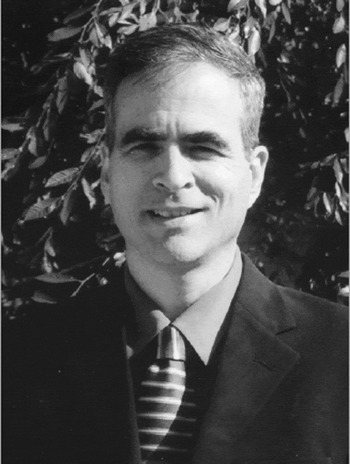
Gary W. Cox
In the News …


Brigid Harrison, Montclair State University, New York Times, on the impact of the broadcast radio advertisements endorsing the governor's plan to increase property tax rebates for middle class and elderly on the ongoing race for the gubernatorial office.
Benjamin Ginsberg, Johns Hopkins University, Jewish Week, on the House Democratic leadership's efforts to court the American Jewish community.
Rajeev Bhargava, Jawaharlal Nehru University, Christian Science Monitor, on the return of the Congress Party domination of the Indian government via the election of foreigner Sonia Ghandi.
Thomas F. Schaller, University of Maryland, Baltimore County, Baltimore Sun, on the Maryland Governor Robert Ehrlich's remarks regarding multiculturalism and their impact on urban vs. rural voters.
Don Desserud, University of New Brunswick, St. John, Canadian Press, on the rising gas prices and their role in the decision-making process of voters in the upcoming federal election.
Rosario Espinal, Temple University, New York Newsday, on the Dominican Republic's presidential race and the allegations of corruption which dog the campaign of the incumbent President Hipòlito Mejìa and his opponent Leonel Fernàndez.
Jeri Cabot, College of Charleston, Post and Courier, on the televised debate between the six republican candidates for the seat in the U.S. Senate currently held by Fritz Hollings.
William Rosenau, Rand Corporation, Christian Science Monitor, on the reorganization effort underway by the FBI to accommodate domestic intelligence initiatives.
Larry Gerston, San Jose University, Los Angeles Times, on the opposition of Democrats, who traditionally have backed issues related to corrections personnel, in the California State Senate to the 11.3% raise in the salaries of the state's correctional officers.
Ruth Ann Lariscy, University of Georgia, New Republic Online, on the Bush campaign's use of Spanish-language ads to court the Latino vote.
Robert Papp, University of Chicago, Daily Star, on the importance of politics over religious fundamentalism in the development of suicide bombers.
Kim Soo-jin, Ewha Women's University, Associated Press, on the looming verdict by the Constitutional Court of Korea on whether to unseat or reinstate impeached South Korean President Roh Moo-hyun.
Wayne Parent, Louisiana State University, Houston Chronicle, on the attempts of states to replace their state primary systems with one modeled on the one currently used by the state of Louisiana.
Fritz Plasser, University of Innsbruck, Associated Press, on the favorable opinions of Austrians towards Arnold Schwarzenegger despite their disapproval of the United States political and economic hegemony in the international sphere.
William Mayer, Northeastern University, National Review, on democratic presidential candidate John Kerry's refusal to don the “liberal” label, despite his platform's strong ties to the liberal democratic tradition, in order to appeal to moderate and conservative voters.
Daryll Paulson, University of South Florida, Tampa Tribune, on the rise of independent campaign organizations that seek to organize and influence voter turnout in the upcoming presidential and congressional elections.
James Thurber, American University, USA Today, on the impact of the human rights scandal and rising cost of war on the reelection hopes of George W. Bush.
David Bostis, Joint Center for Political and Economic Studies, Associated Press, on President Bush's speech marking the 50th anniversary of the landmark Brown v. Board of Education case and the impact of black voters on the presidential election.
Kevin Hill, Florida International University, South Florida Sun-Sentinel, on the race for the Miami-Dade State Attorney's office between Cuban-Americans Al Milian and Katherine Fernandez Rundle.
Eliot Slotnick, Ohio State University, Chicago Tribune, on the compromise struck between Senate Democrats and Republicans and the White House which clears the way for the confirmation of President Bush's less controversial nominees.
Jerry Polinard, University of Texas-Pan American, Associated Press, on the liklihood that Texas will eventually adopt a state income tax.
Saundra Ardrey, Western Kentucky University, Lexington Herald-Leader, on Democrats need to run on conservative ideals to win in Kentucky.
Anthony Corrado, Colby College, Washington Post, on networking connections that prove President Bush's biggest donors and on the preferential treatment they may expect for their efforts post-campaign.
Jon Miller, Northwestern University, Los Angeles Times, on how the science literacy level of Americans has been rising and now stands unsurpassed in the world.
William D. Berry
Renu Khator
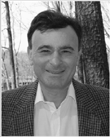
Gary Marks
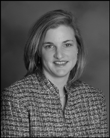
Allyson M. Lowe
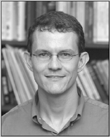
William Morgan
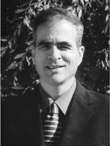
Gary W. Cox

 You have Access